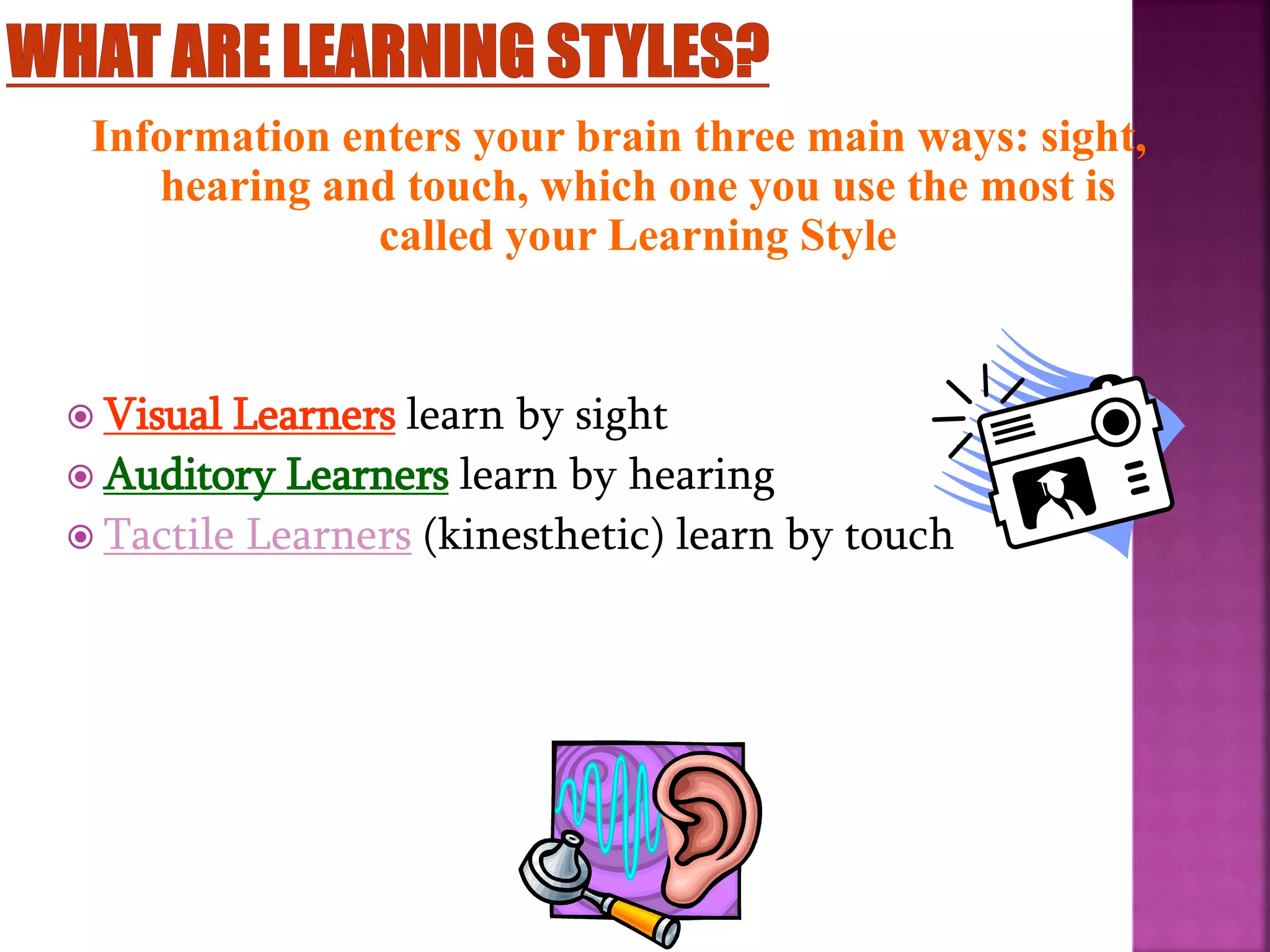
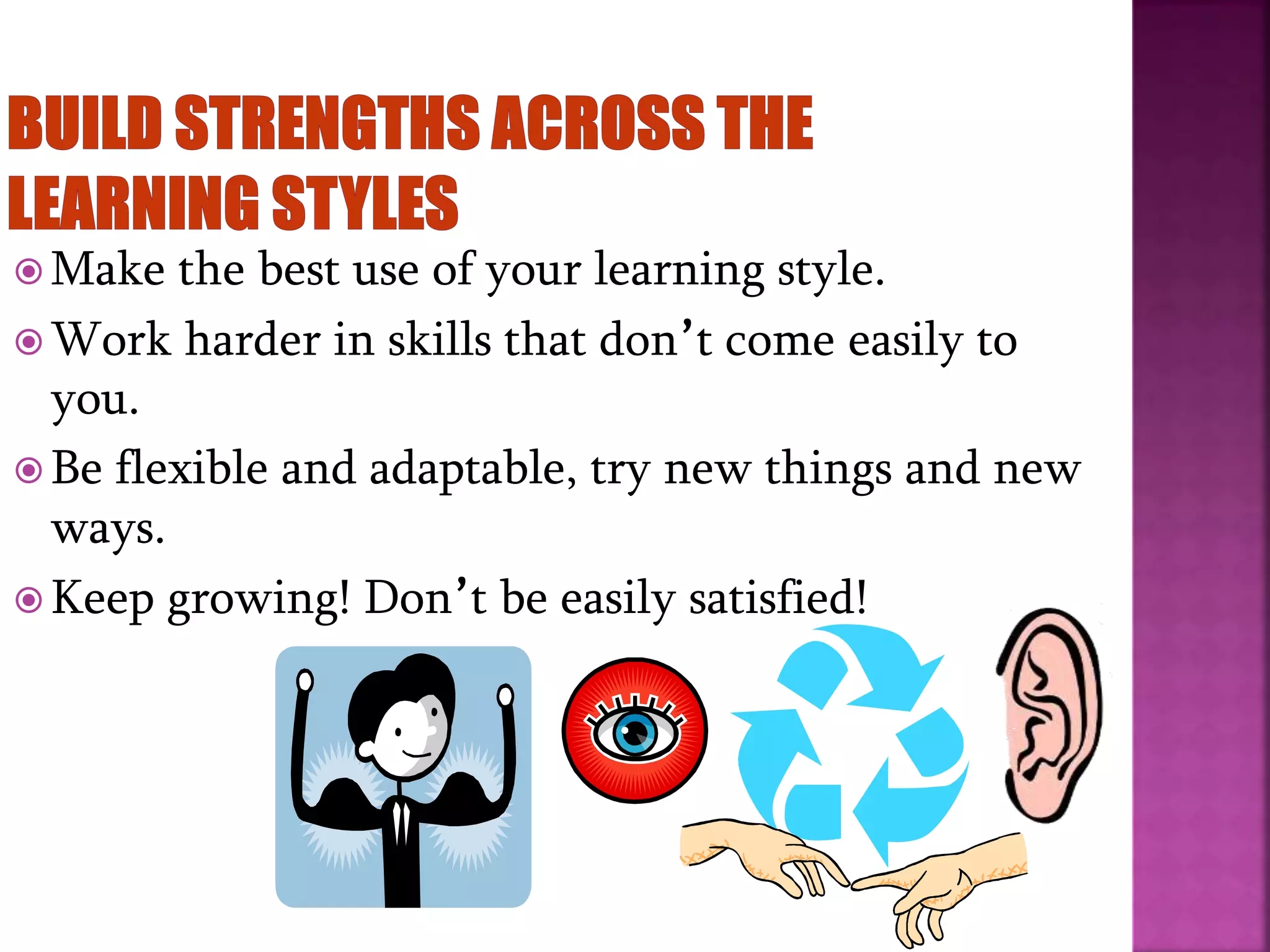
Information enters your brain three main ways: sight,
hearing and touch, which one you use the most is
called your Learning Style
 Visual Learners learn by sight
 Auditory Learners learn by hearing
 Tactile Learners (kinesthetic) learn by touch
 Prefer to see information such as pictures,
diagrams, cartoons, demonstrations
 Picture words and concepts they hear as images
 Easily distracted in lecture with no visual aids
 Overwhelmed with intense visuals
accompanied by lecture
 Benefit from using charts, maps, notes, and
flash cards when studying
 Prefer to hear information spoken
 Can absorb a lecture with little effort
 May not need careful notes to learn.
 Often avoid eye contact in order to concentrate
 May read aloud to themselves
 Like background music when they study
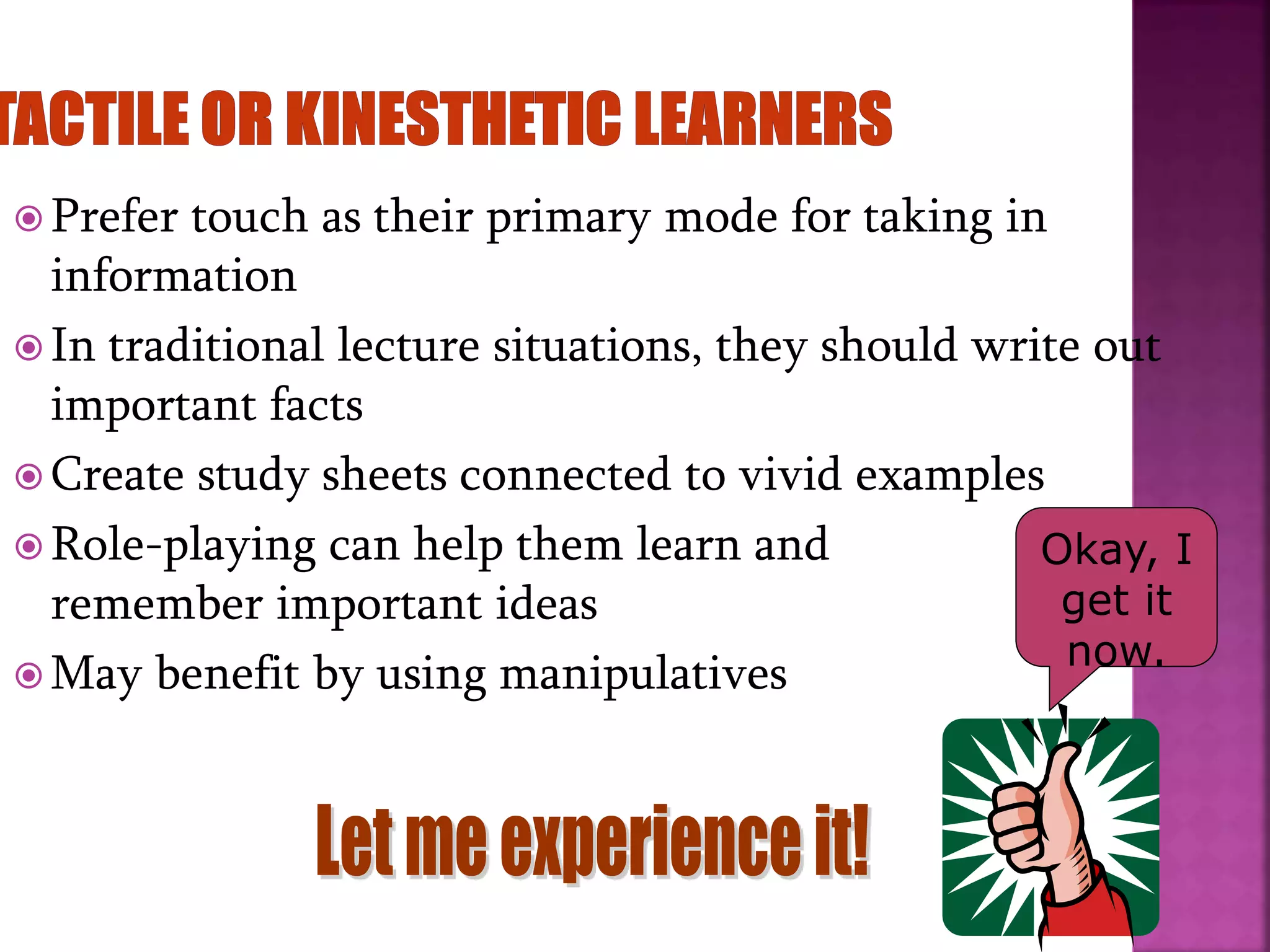
 Prefer touch as their primary mode for taking in
information
 In traditional lecture situations, they should write out
important facts
 Create study sheets connected to vivid examples
 Role-playing can help them learn and
remember important ideas
 May benefit by using manipulatives
Okay, I
get it
now.
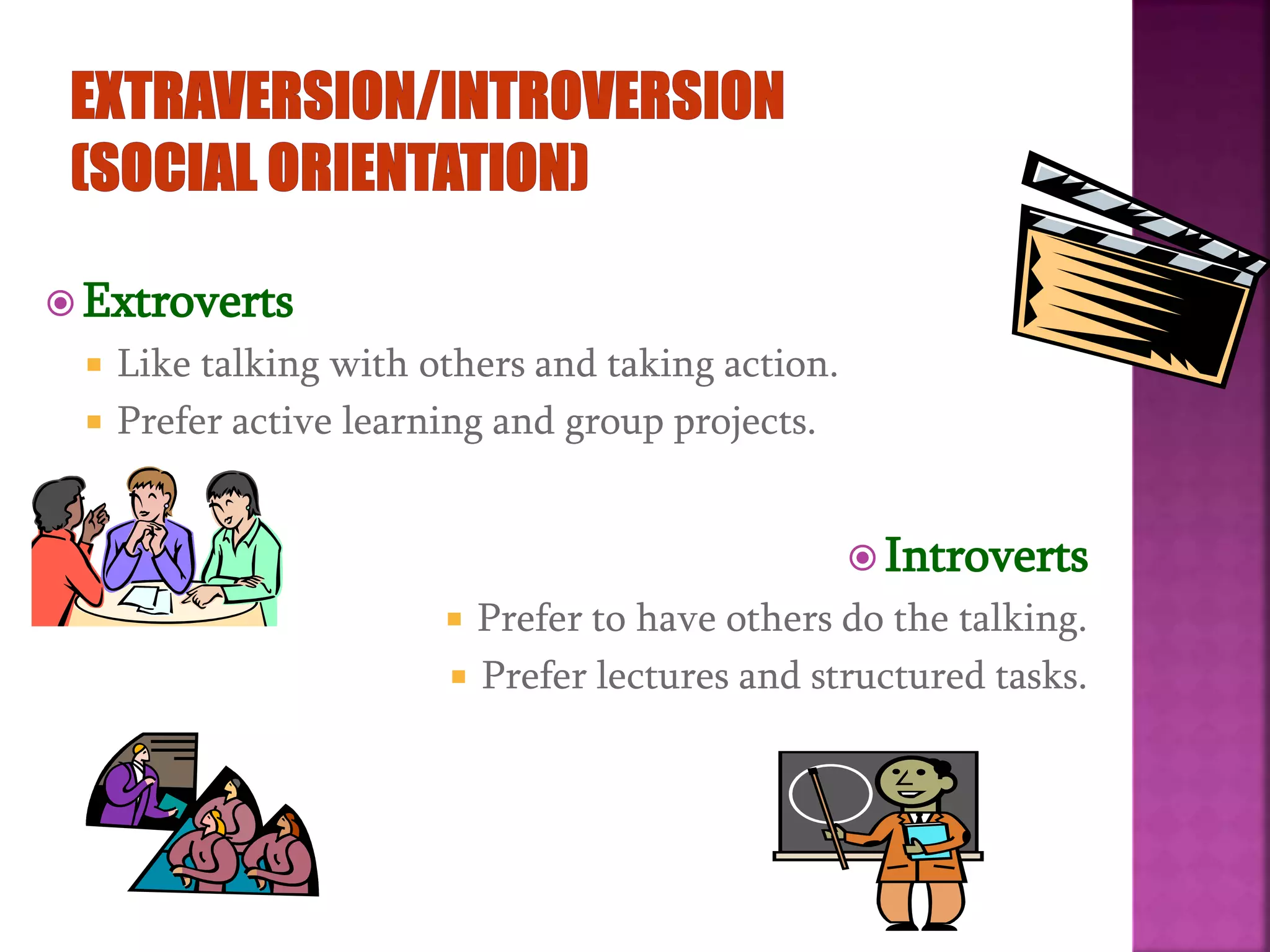
 Extroverts
 Like talking with others and taking action.
 Prefer active learning and group projects.
 Introverts
 Prefer to have others do the talking.
 Prefer lectures and structured tasks.
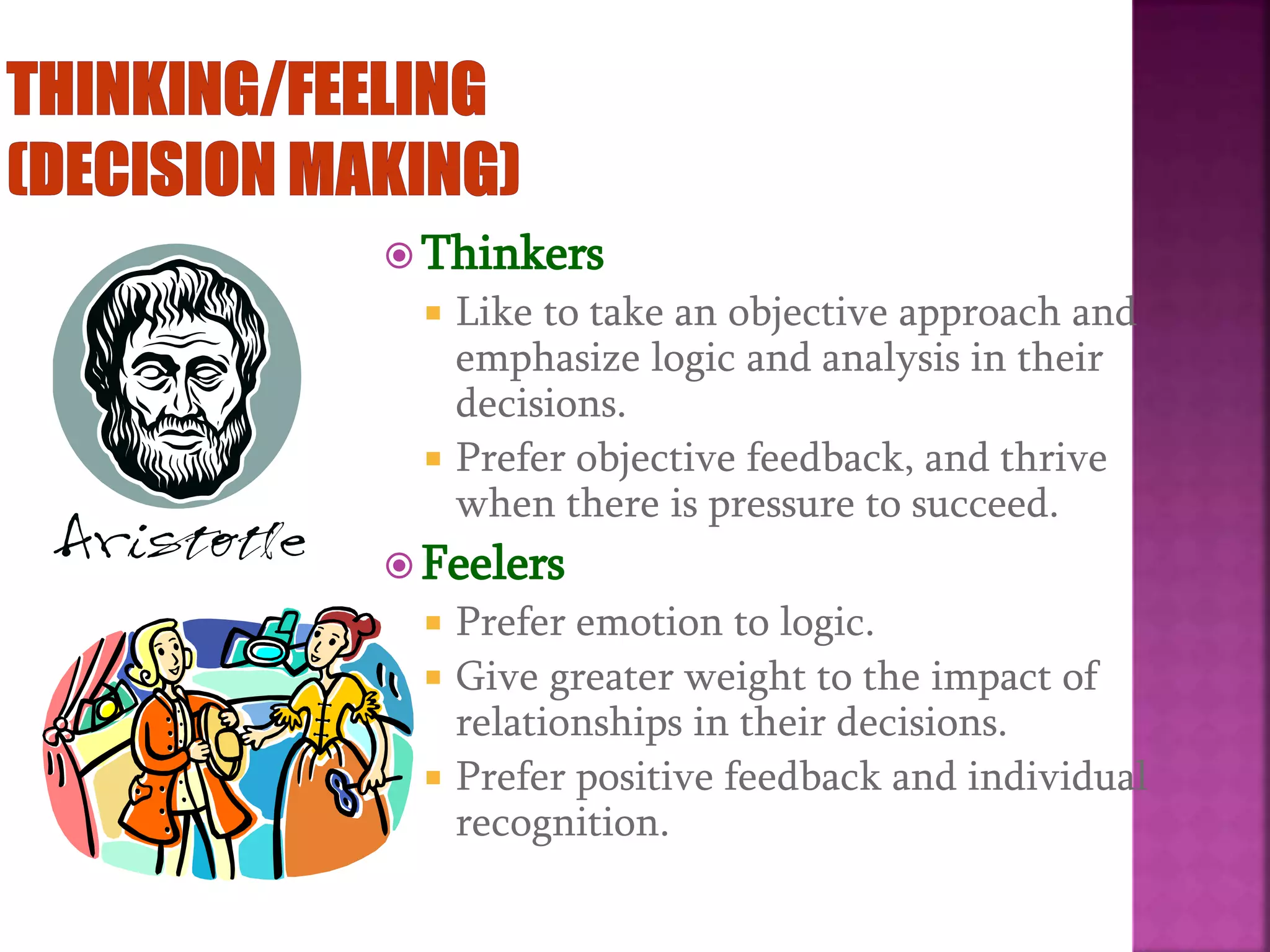
 Thinkers
 Like to take an objective approach and
emphasize logic and analysis in their
decisions.
 Prefer objective feedback, and thrive
when there is pressure to succeed.
 Feelers
 Prefer emotion to logic.
 Give greater weight to the impact of
relationships in their decisions.
 Prefer positive feedback and individual
recognition.
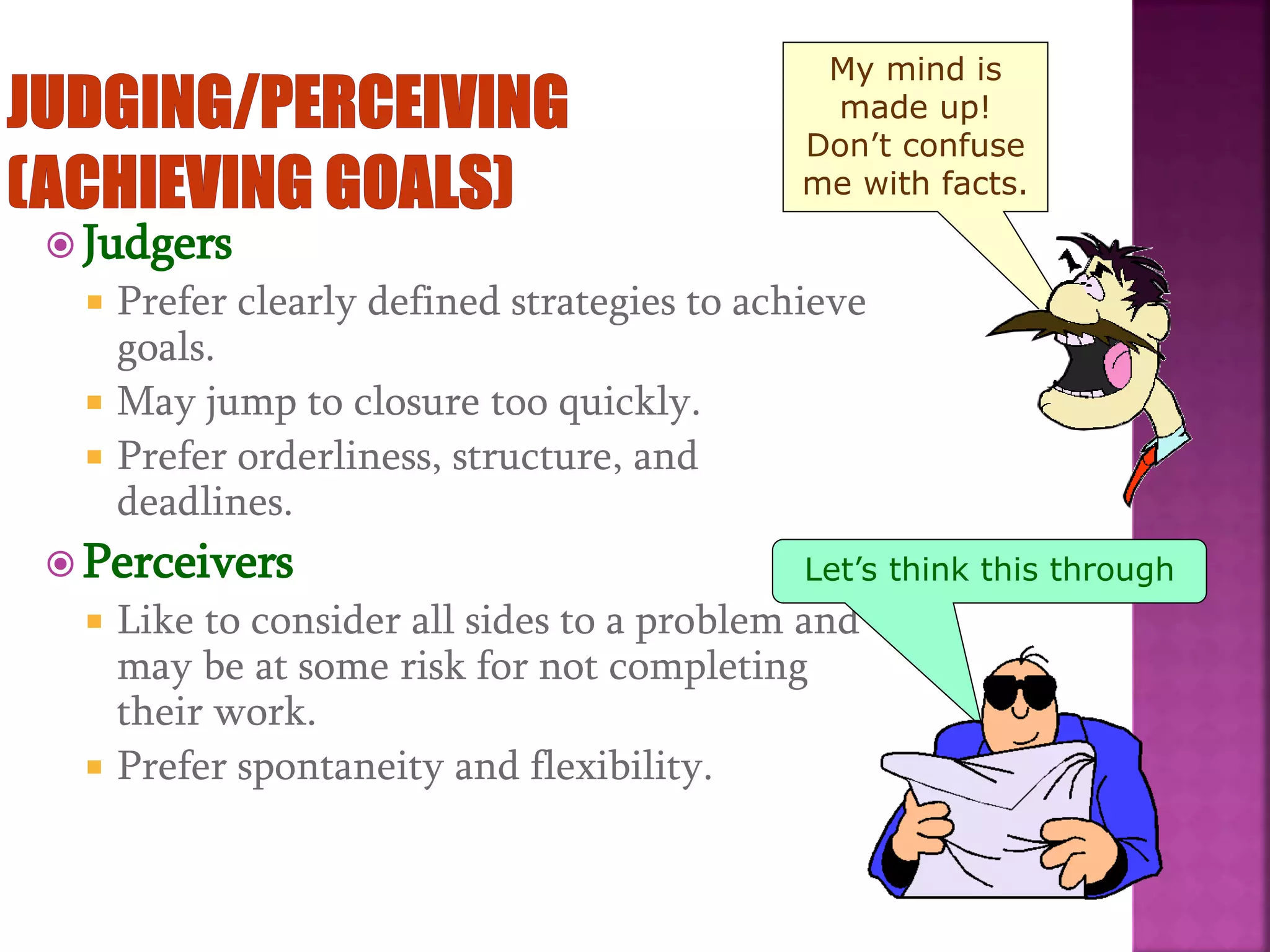
 Judgers
 Prefer clearly defined strategies to achieve
goals.
 May jump to closure too quickly.
 Prefer orderliness, structure, and
deadlines.
 Perceivers
 Like to consider all sides to a problem and
may be at some risk for not completing
their work.
 Prefer spontaneity and flexibility.
My mind is
made up!
Don’t confuse
me with facts.
Let’s think this through
 Take a Learning Styles test.
 Think about your favorite classes so far. What do they have
in common? Did you like…
 mastering facts?
 discussion? or working on your own?
 lecture? or pairing or grouping?
 hands-on activities?
 How do you think you learn?
 Make the best use of your learning style.
 Work harder in skills that don’t come easily to
you.
 Be flexible and adaptable, try new things and new
ways.
 Keep growing! Don’t be easily satisfied!
 Be involved in class – participate!
 Link classroom experience to the outside world
 Relate class concepts to your own life.
 Ask questions and offer criticism.
 Stimulate further relevant discussion.
 Don’t get distracted – stay “on-task”
 Keep an open mind: there are many ideas beyond
your own.
Learning Style.ppt

Learning Style.ppt

  • 2.
    Information enters yourbrain three main ways: sight, hearing and touch, which one you use the most is called your Learning Style  Visual Learners learn by sight  Auditory Learners learn by hearing  Tactile Learners (kinesthetic) learn by touch
  • 3.
     Prefer tosee information such as pictures, diagrams, cartoons, demonstrations  Picture words and concepts they hear as images  Easily distracted in lecture with no visual aids  Overwhelmed with intense visuals accompanied by lecture  Benefit from using charts, maps, notes, and flash cards when studying
  • 4.
     Prefer tohear information spoken  Can absorb a lecture with little effort  May not need careful notes to learn.  Often avoid eye contact in order to concentrate  May read aloud to themselves  Like background music when they study
  • 5.
     Prefer touchas their primary mode for taking in information  In traditional lecture situations, they should write out important facts  Create study sheets connected to vivid examples  Role-playing can help them learn and remember important ideas  May benefit by using manipulatives Okay, I get it now.
  • 6.
     Extroverts  Liketalking with others and taking action.  Prefer active learning and group projects.  Introverts  Prefer to have others do the talking.  Prefer lectures and structured tasks.
  • 7.
     Thinkers  Liketo take an objective approach and emphasize logic and analysis in their decisions.  Prefer objective feedback, and thrive when there is pressure to succeed.  Feelers  Prefer emotion to logic.  Give greater weight to the impact of relationships in their decisions.  Prefer positive feedback and individual recognition.
  • 8.
     Judgers  Preferclearly defined strategies to achieve goals.  May jump to closure too quickly.  Prefer orderliness, structure, and deadlines.  Perceivers  Like to consider all sides to a problem and may be at some risk for not completing their work.  Prefer spontaneity and flexibility. My mind is made up! Don’t confuse me with facts. Let’s think this through
  • 9.
     Take aLearning Styles test.  Think about your favorite classes so far. What do they have in common? Did you like…  mastering facts?  discussion? or working on your own?  lecture? or pairing or grouping?  hands-on activities?  How do you think you learn?
  • 10.
     Make thebest use of your learning style.  Work harder in skills that don’t come easily to you.  Be flexible and adaptable, try new things and new ways.  Keep growing! Don’t be easily satisfied!
  • 11.
     Be involvedin class – participate!  Link classroom experience to the outside world  Relate class concepts to your own life.  Ask questions and offer criticism.  Stimulate further relevant discussion.  Don’t get distracted – stay “on-task”  Keep an open mind: there are many ideas beyond your own.