Download to read offline
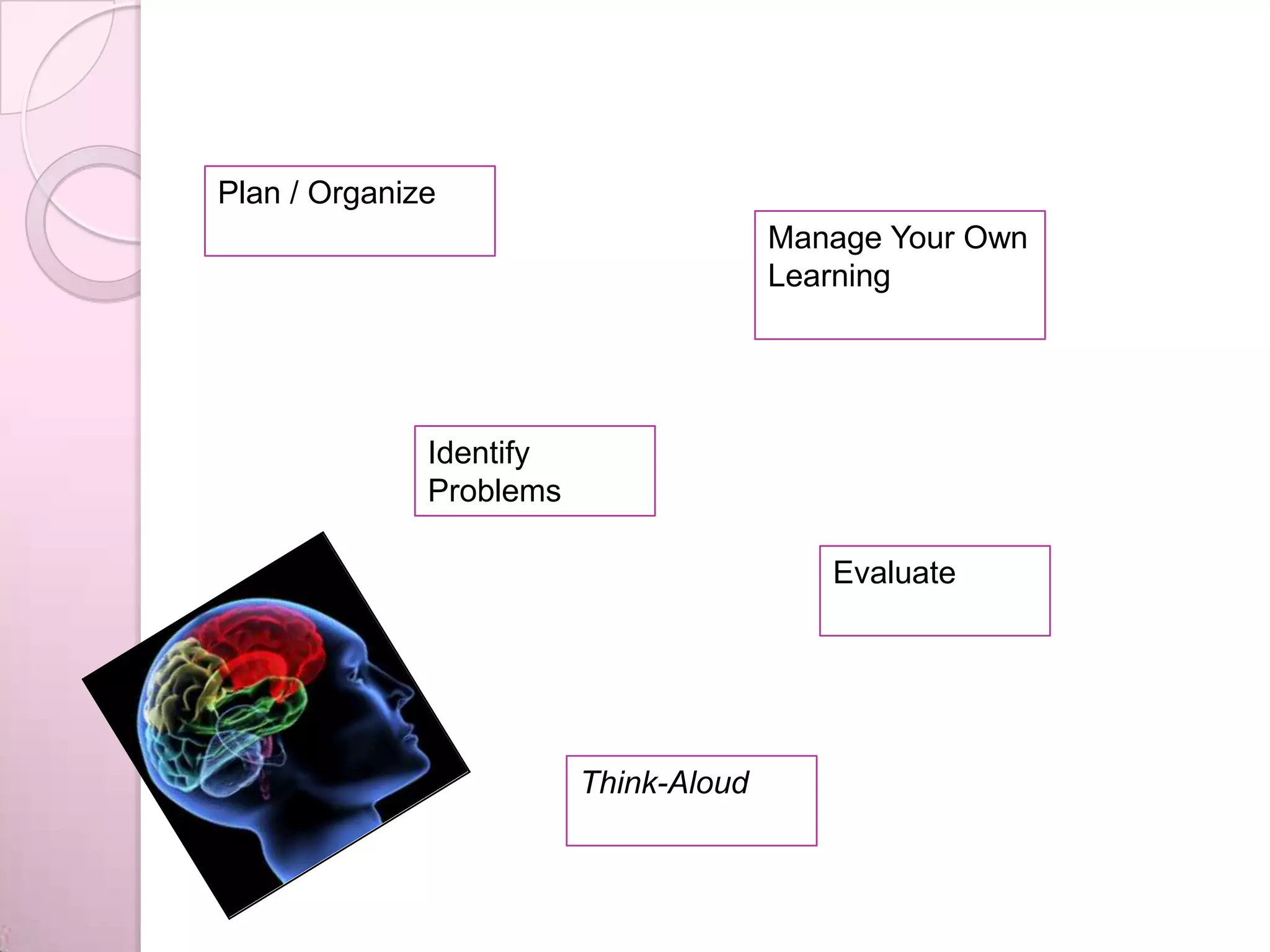
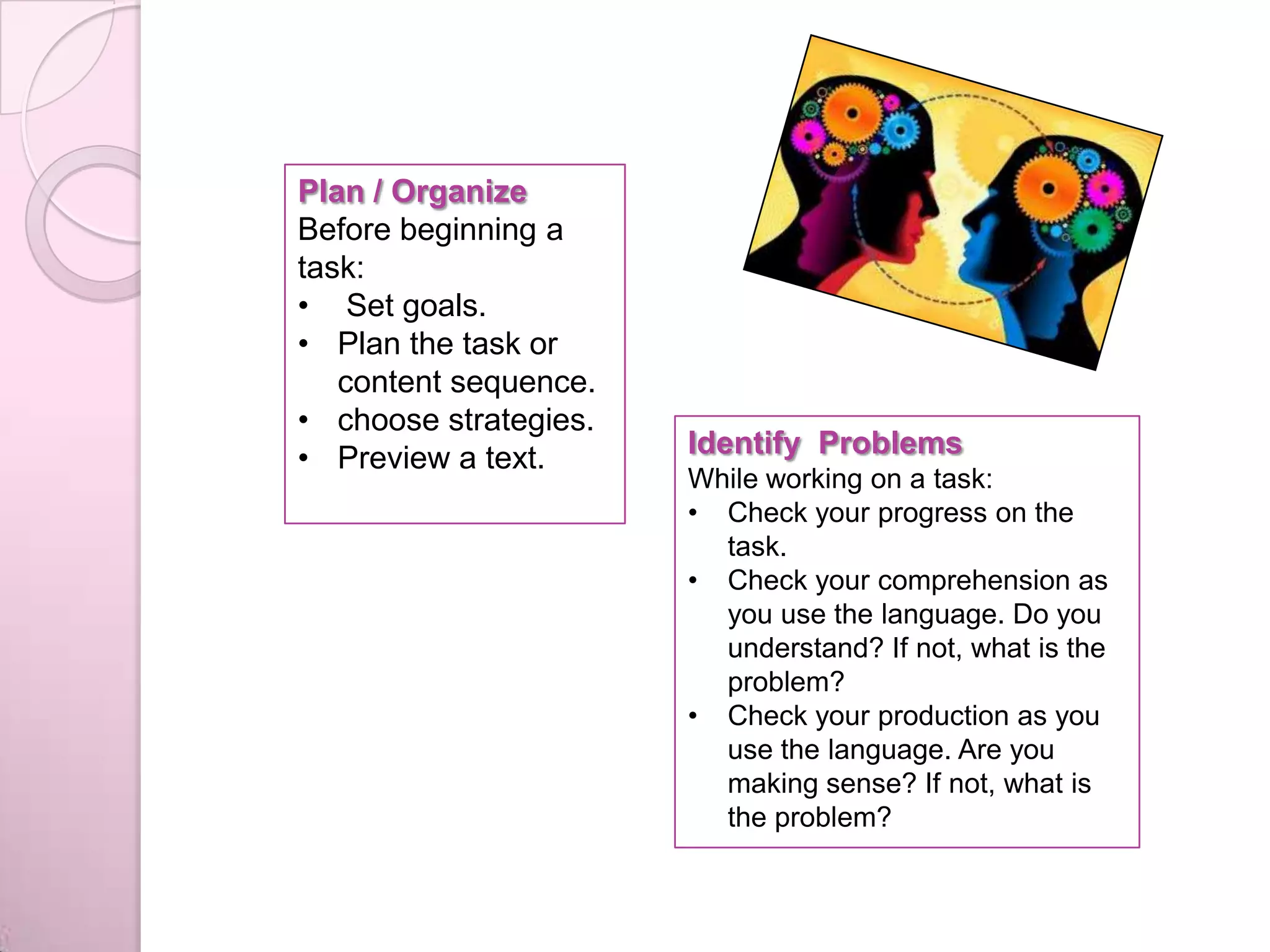
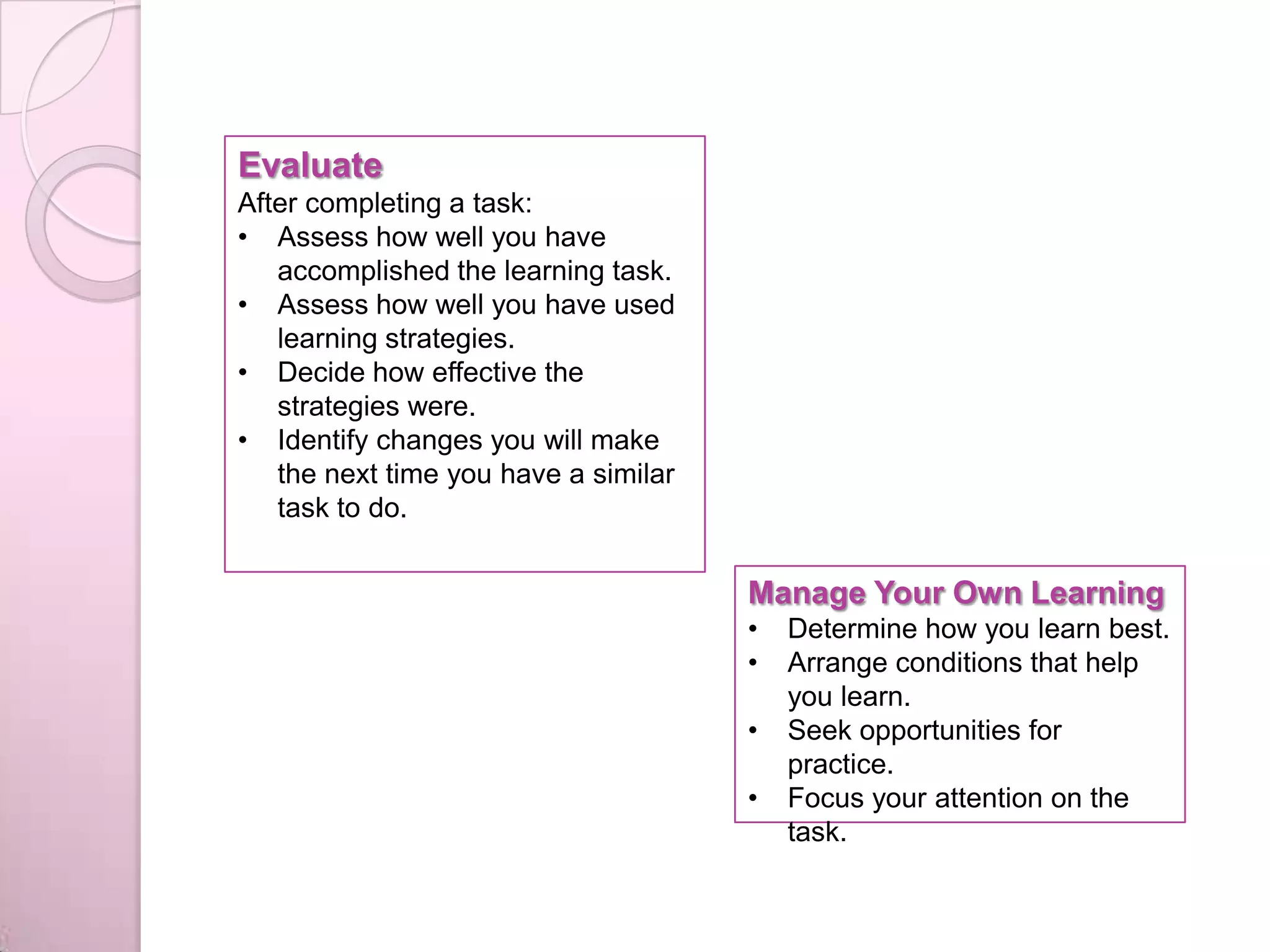
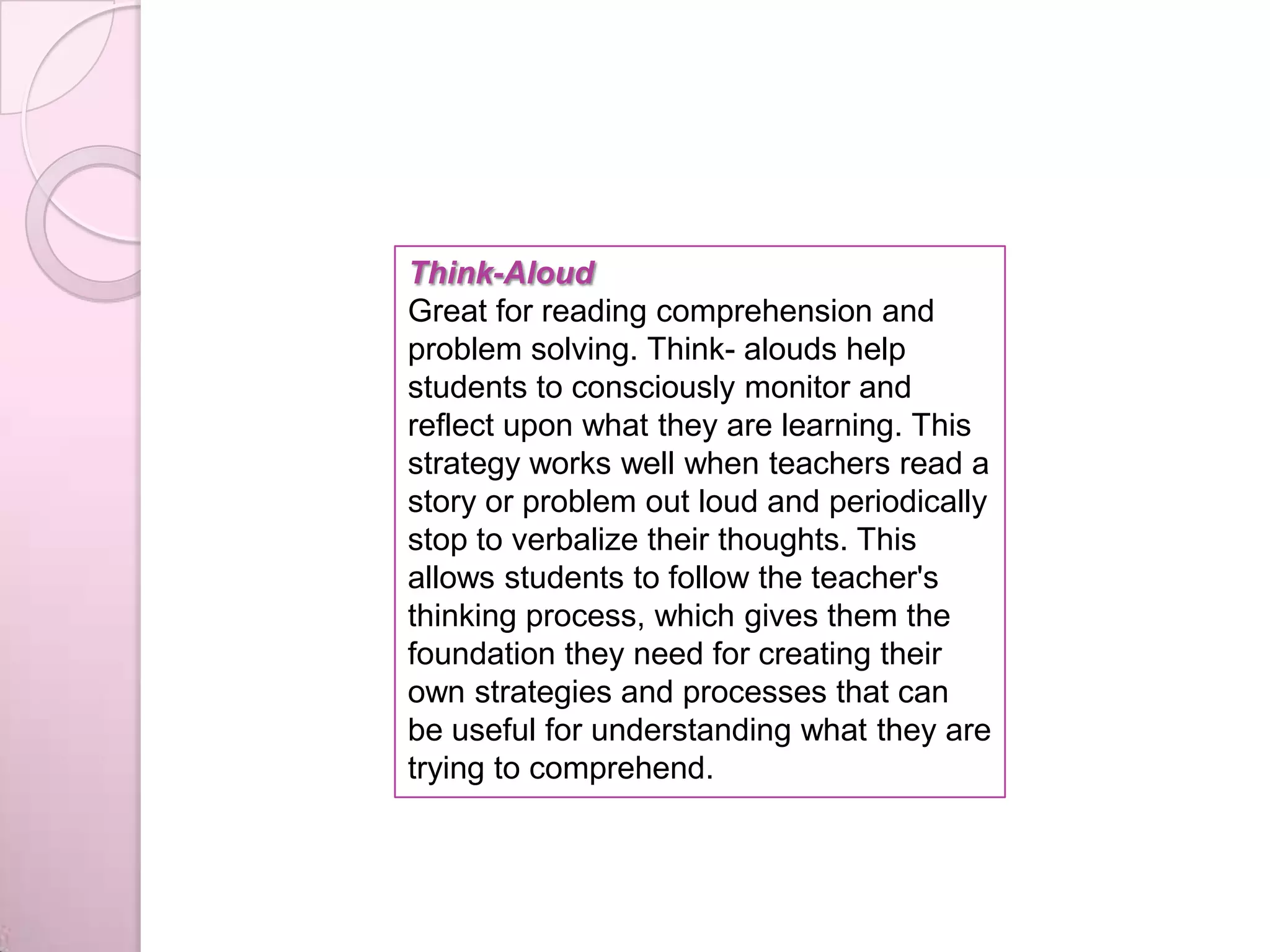
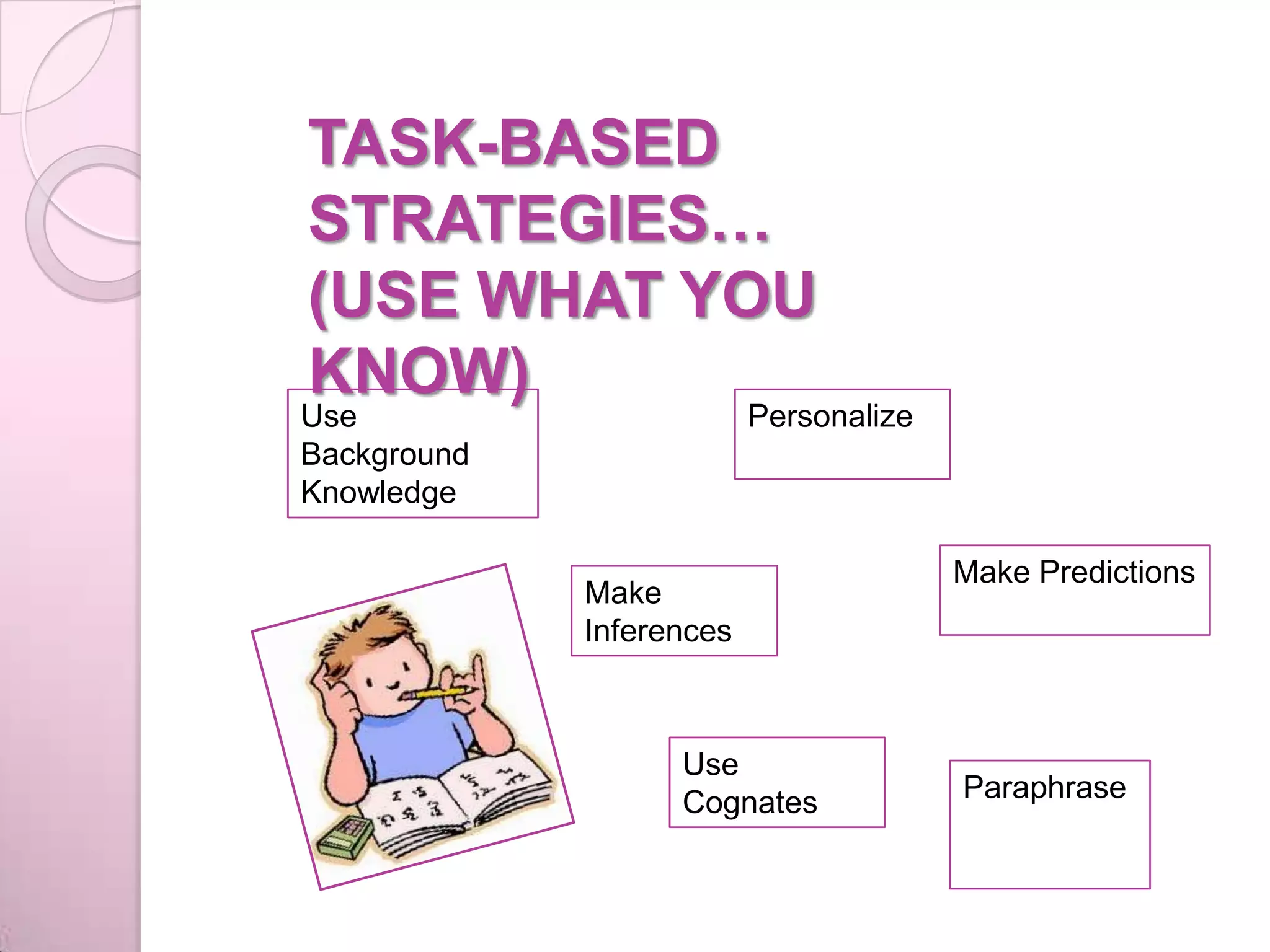
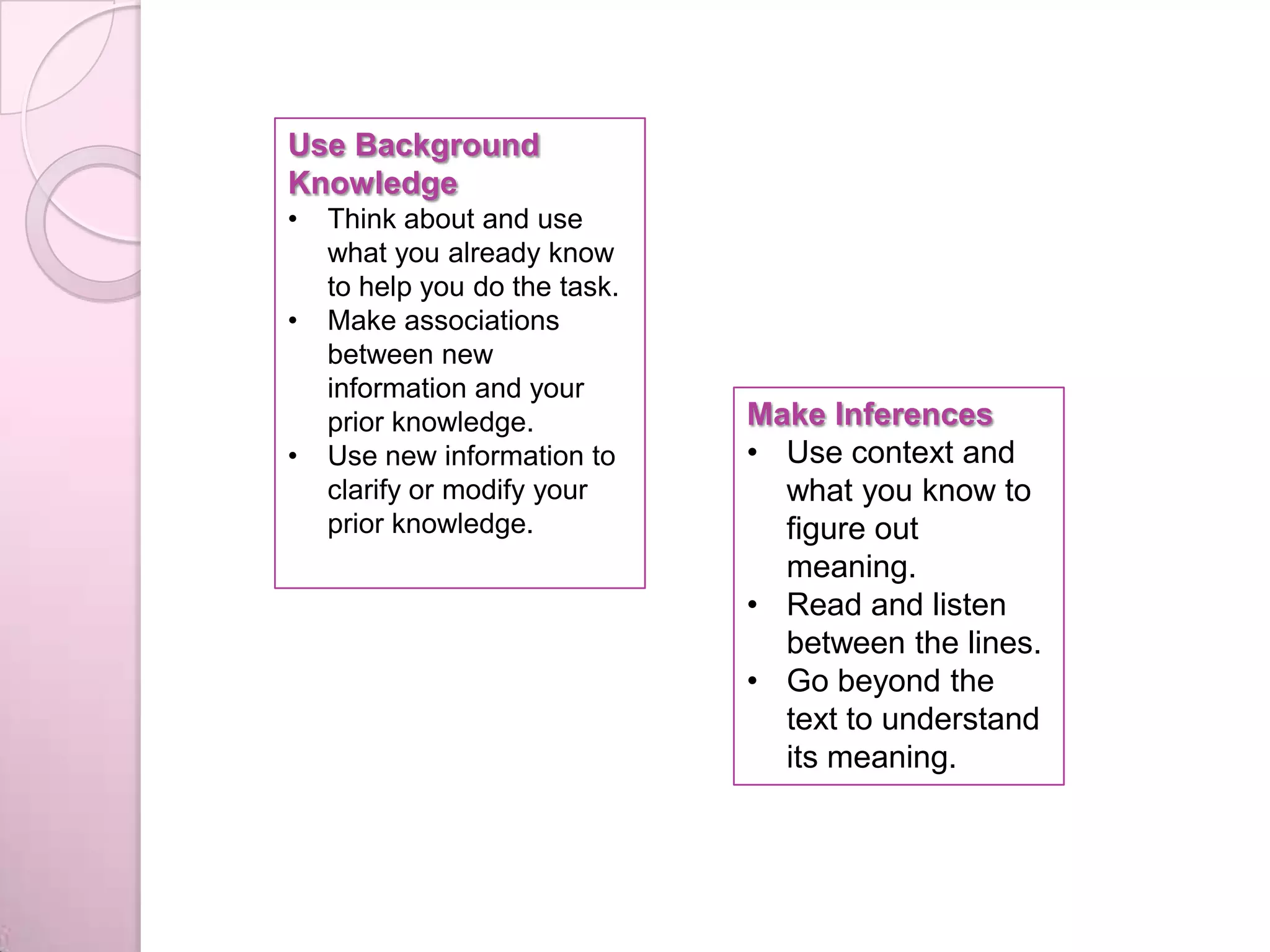
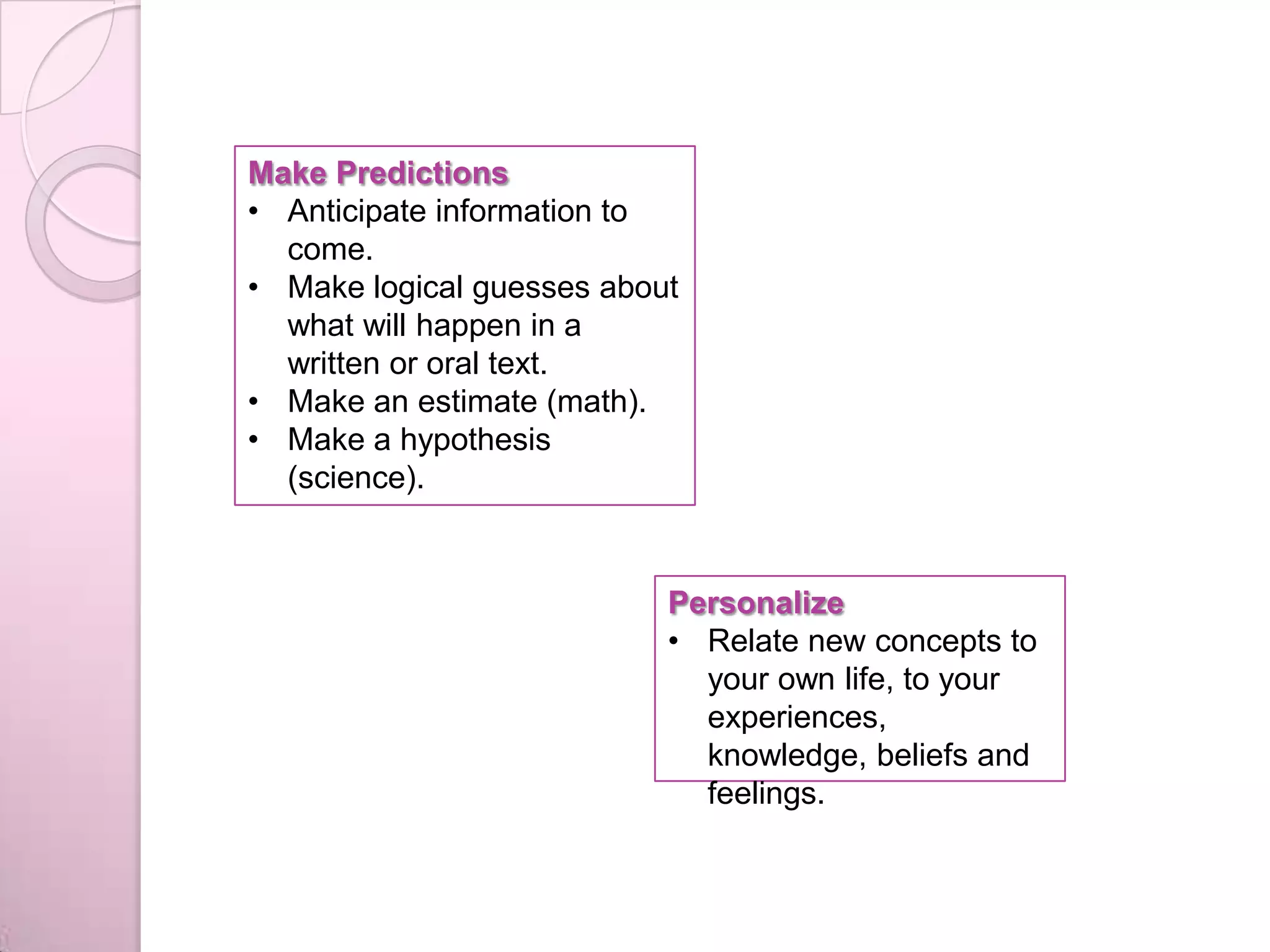
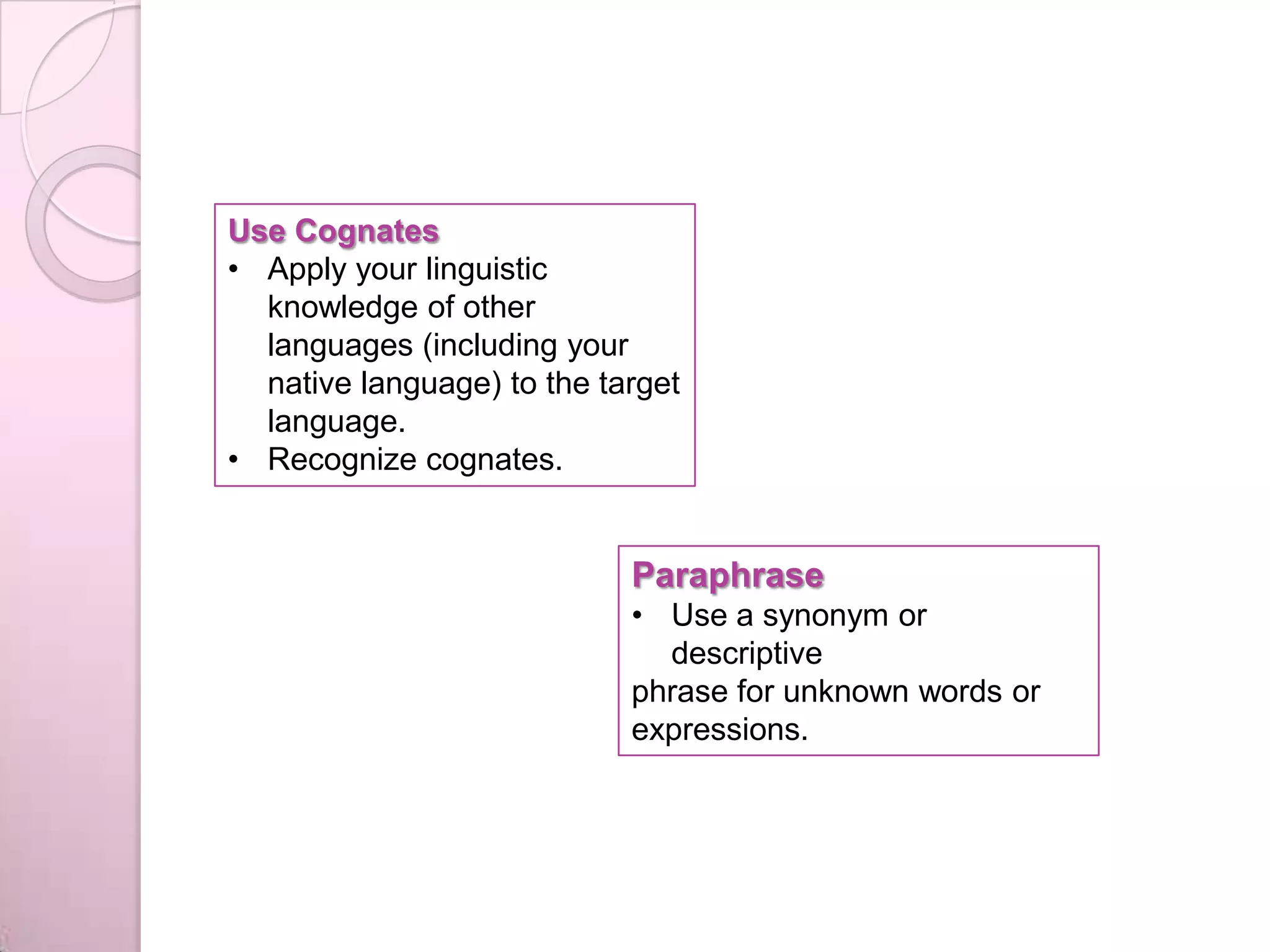
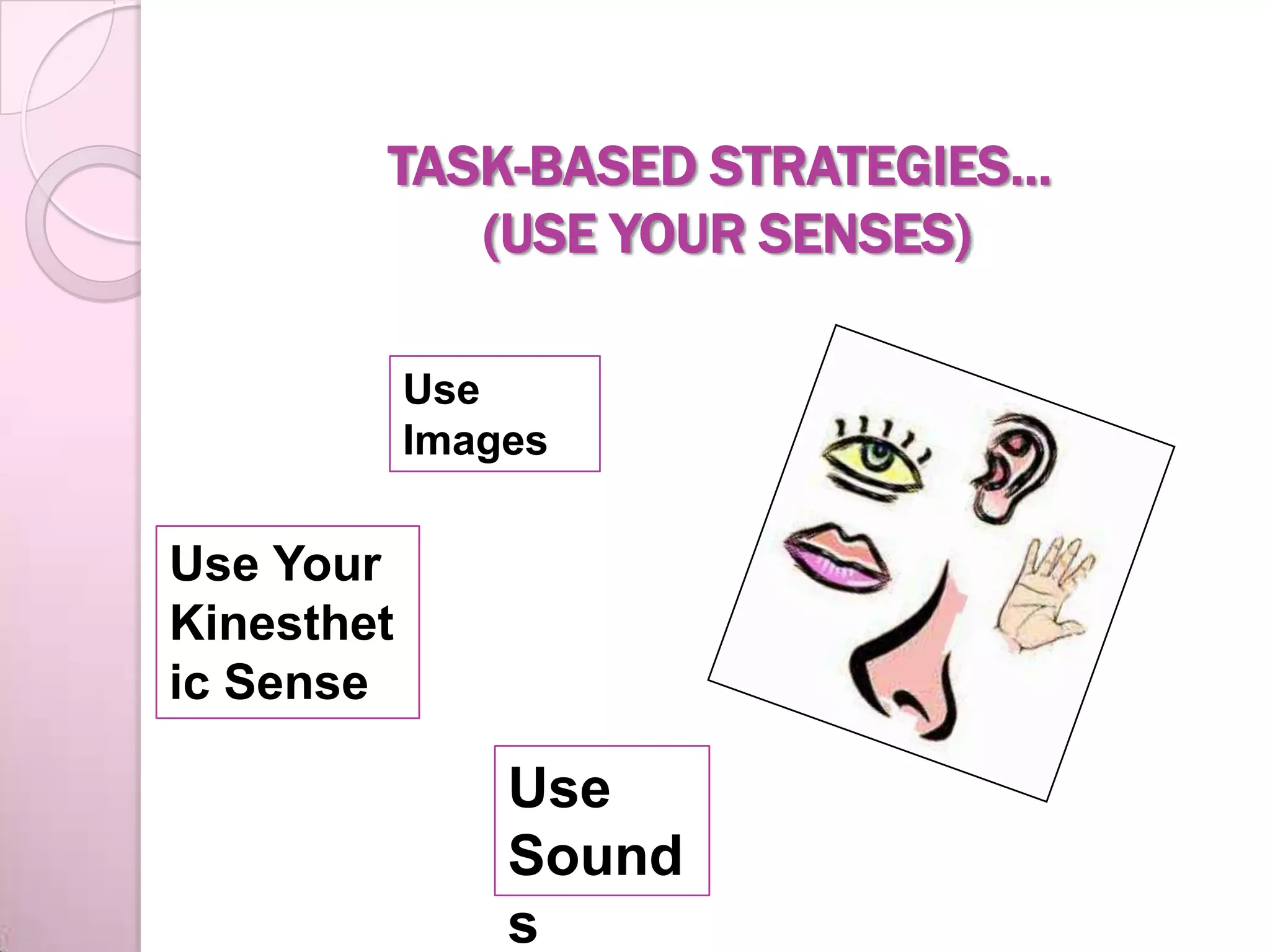
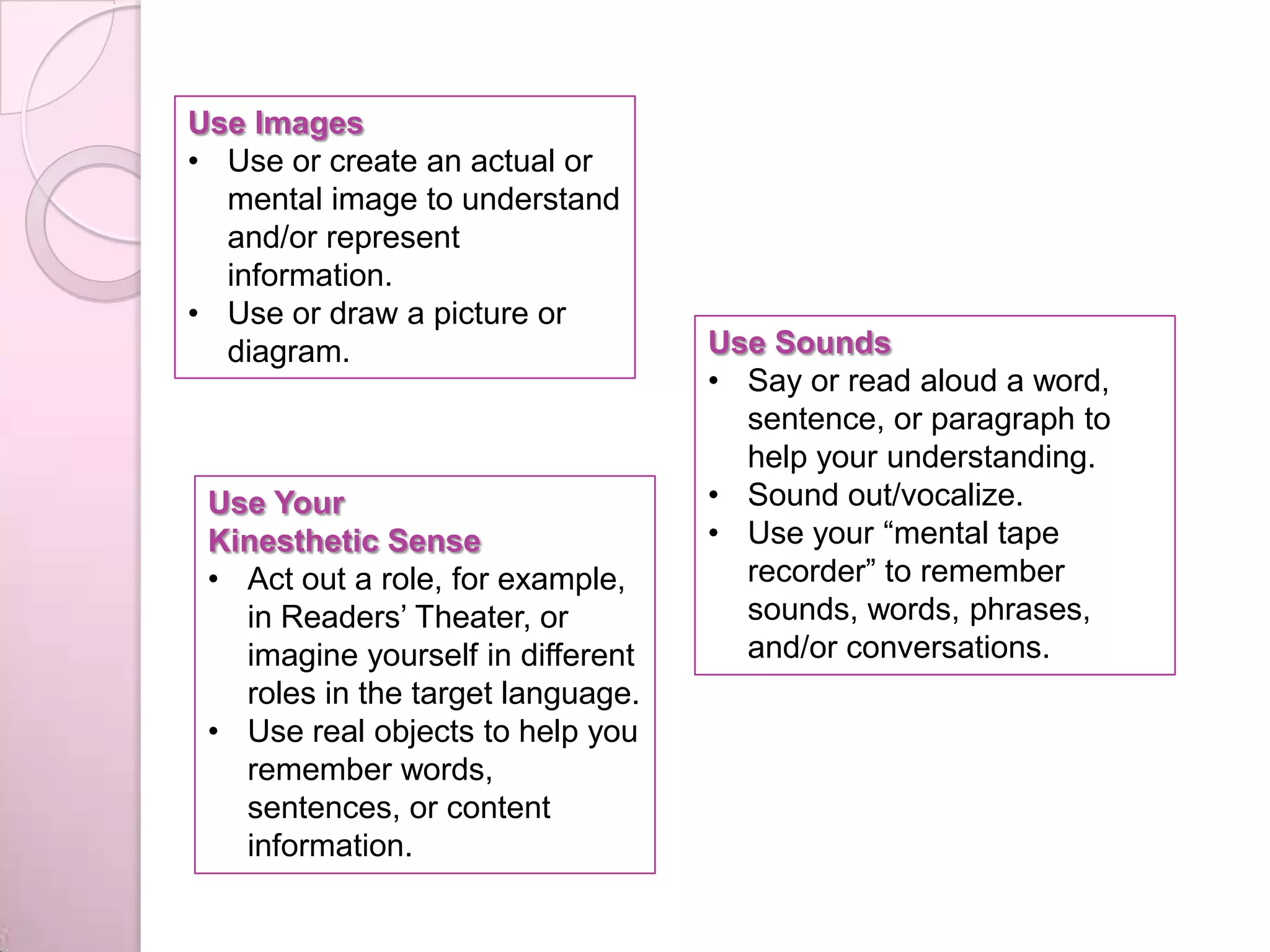

The document discusses various cognitive and metacognitive learning strategies that teachers can use to help students, particularly those with learning disabilities. It describes metacognitive strategies as methods that help students understand how they learn by thinking about their own thinking. Specific metacognitive strategies discussed include planning/organizing, identifying problems, evaluating work, managing one's own learning, and thinking aloud. Cognitive strategies are mental processes used to accomplish cognitive goals, such as outlining for essay writing. The document provides examples of task-based cognitive strategies involving using background knowledge, inferences, predictions, personalization, cognates, paraphrasing, images, sounds, kinesthetic senses, patterns, classification, note-taking, graphic organizers, summarization,


