Downloaded 148 times
![Comments
Use // or /*...*/
pragma solidity ^0.4.0;
/*
Multisignature Wallet for requiring multiple owners to approve a transaction
*/
contract MultiSigWallet{
address[] public owners;
uint public required; // the number of owner approval required
}](https://image.slidesharecdn.com/learningsoliditypresentation-170128003400/75/Learning-Solidity-6-2048.jpg)
![Boolean Expressions
Widely used for throw, which reverses all side effects
function transfer(address _to, uint256 _value) returns (bool) {
var senderBalance = balances[msg.sender];
if (senderBalance >= _value && _value > 0) {
senderBalance -= _value;
balances[msg.sender] = senderBalance;
balances[_to] += _value;
Transfer(msg.sender, _to, _value);
return true;
}
return false;
}](https://image.slidesharecdn.com/learningsoliditypresentation-170128003400/75/Learning-Solidity-13-2048.jpg)

This document provides an overview of Solidity programming concepts for developing smart contracts on Ethereum, including how to compile contracts, basic language features like comments and data types, documentation features like NatSpec, structs, conditional expressions, variables, mappings, inheritance, and function modifiers. It also discusses gas costs and calling methods between contracts.
Overview of Ethereum development by Arnold Pham from Lunyr Inc. Focus on learning Solidity, licensed under Creative Commons.
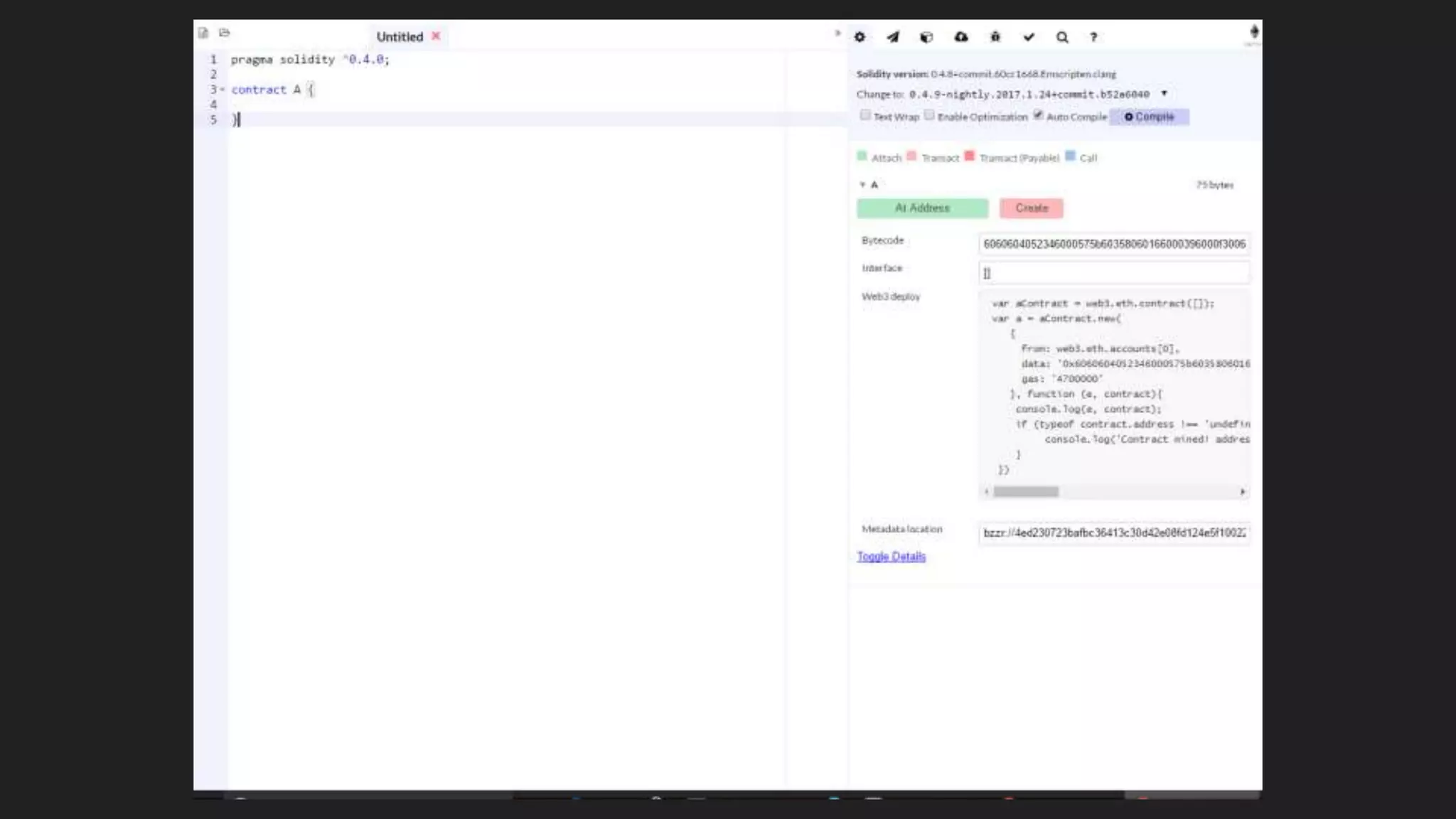
Methods for compiling Solidity code using Browser-Solidity and the geth console.
Key features of Solidity such as comments, primitive types, arrays, conditionals, and loops.
Explanation of version pragma in Solidity indicating compiler versioning using semantic versioning principles.
How to document Solidity code using comments, with an example of a multisignature wallet contract.
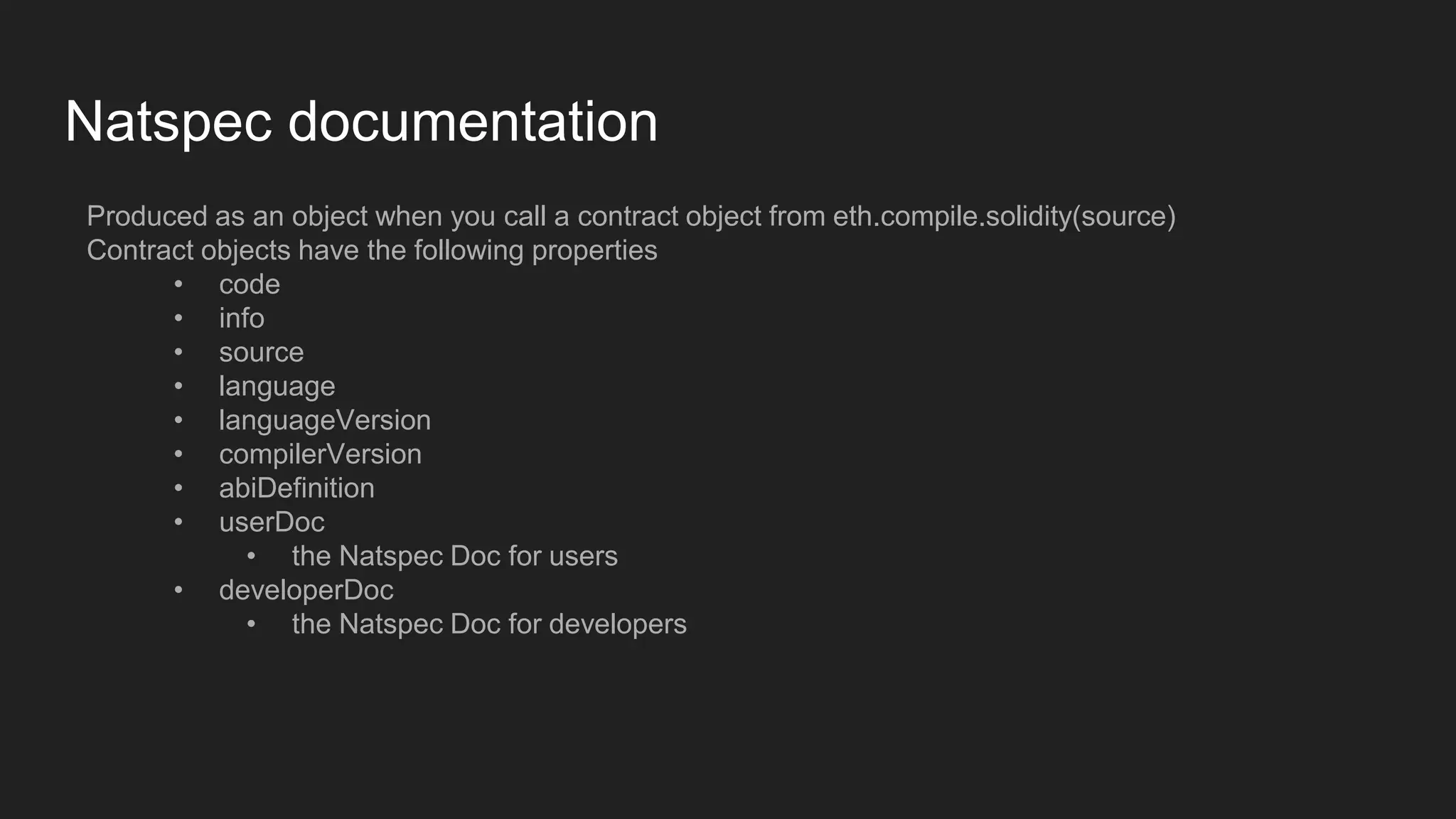
Overview of Natspec documentation generated for contracts; properties like code and user/developer documentation.
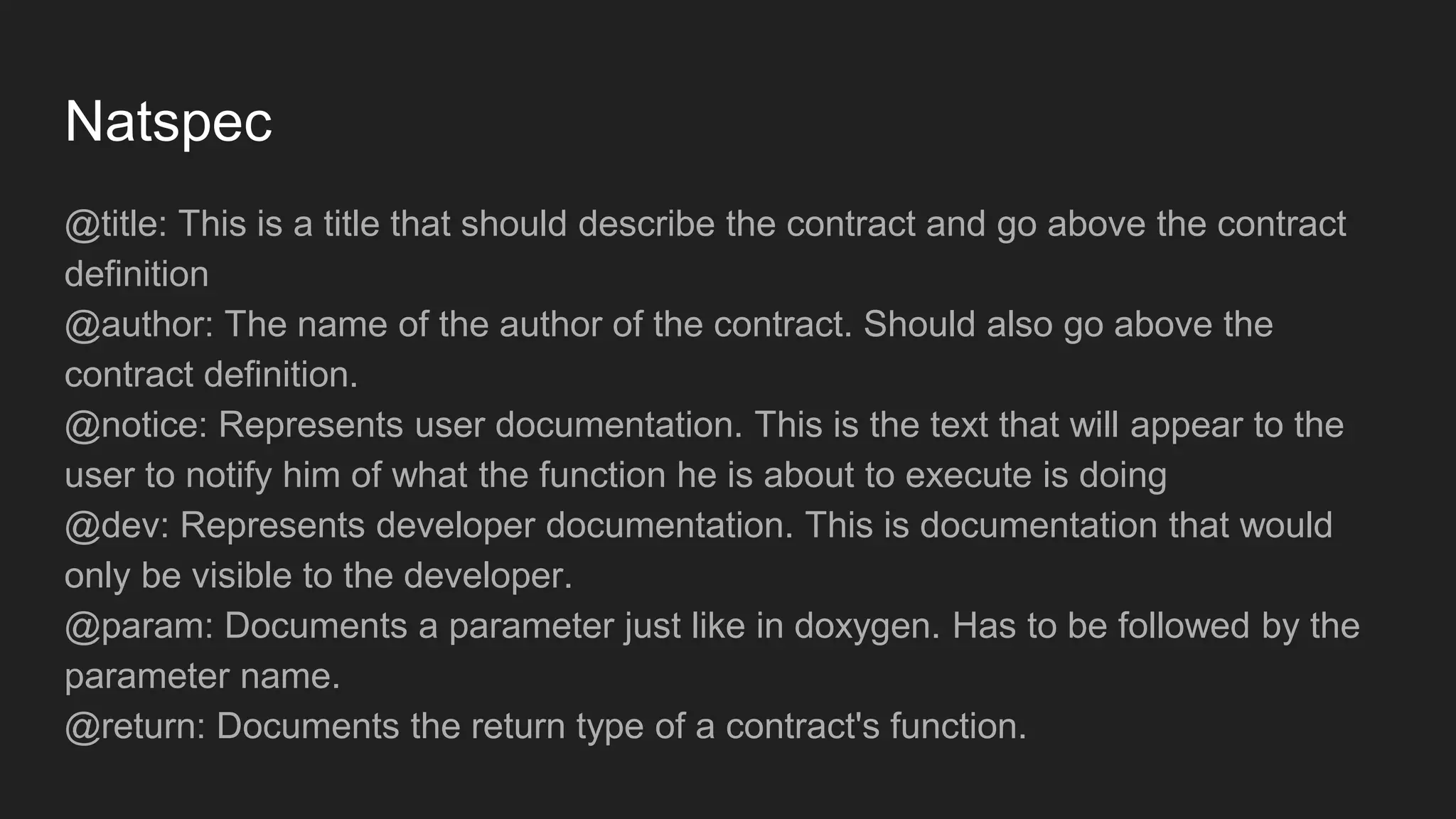
Details on annotating Solidity contracts with Natspec, including @title, @author, and user/developer documentation.
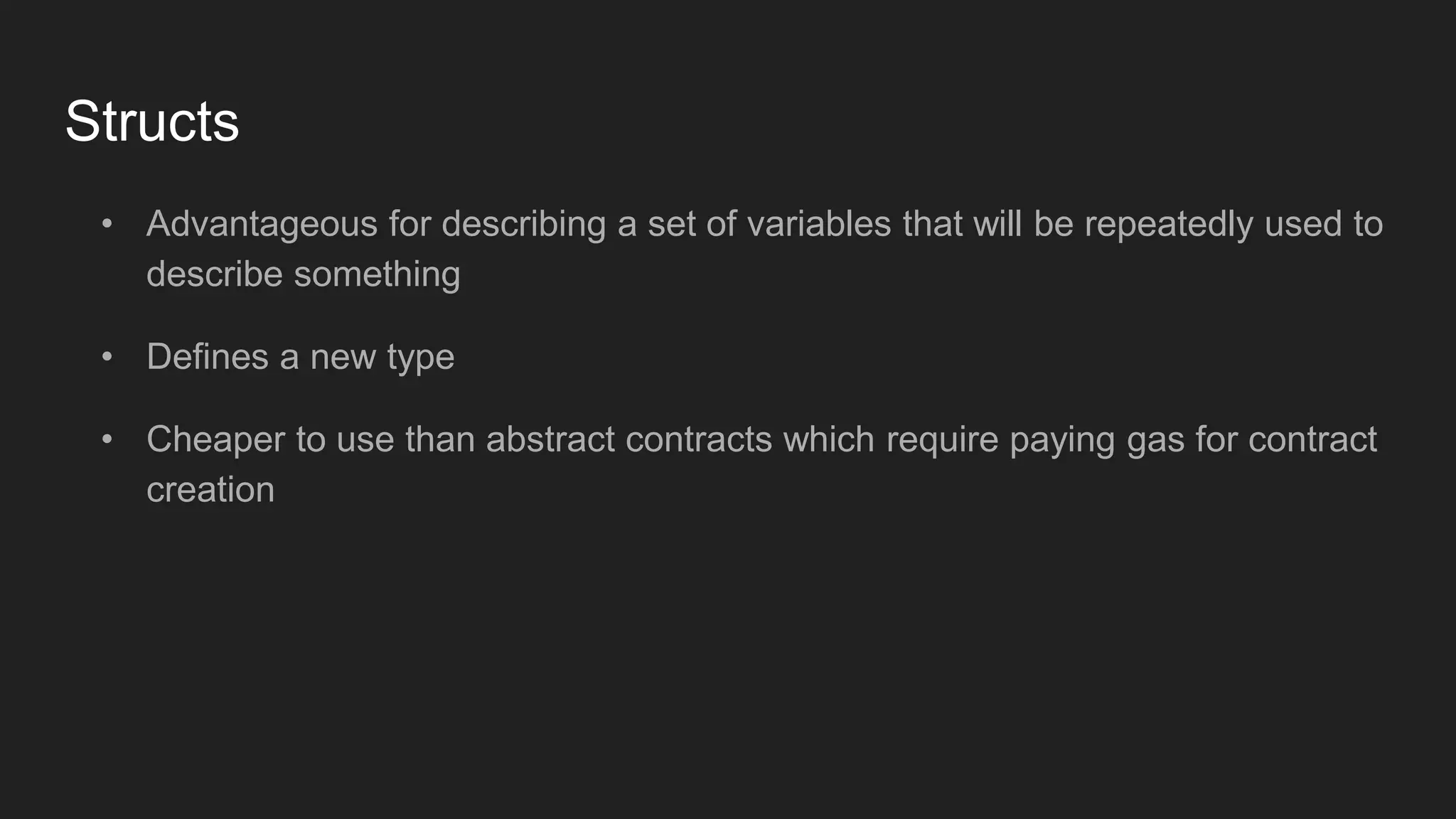
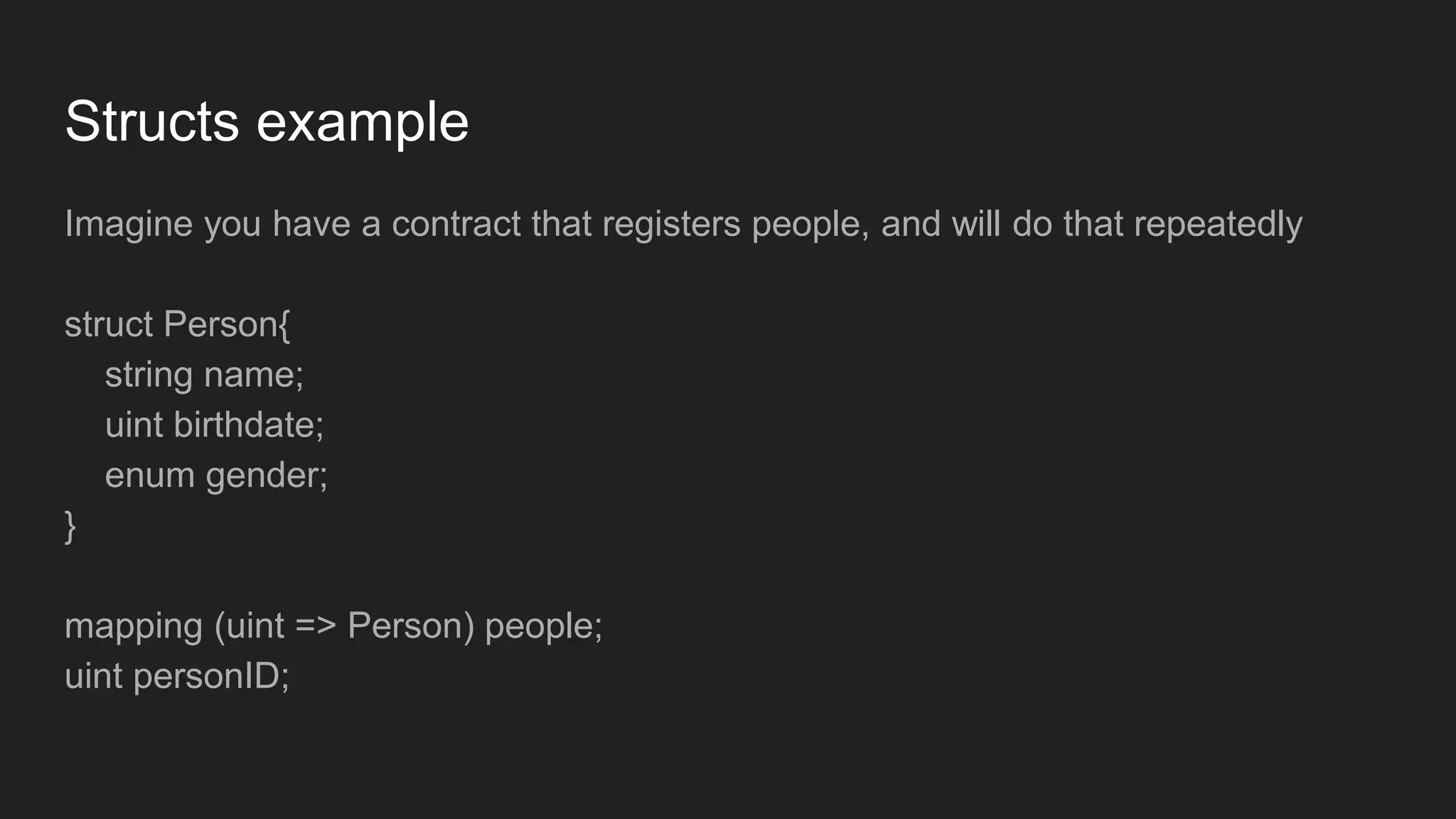
Introduction to structs in Solidity for creating complex data types with an example of a Person structure.
Detailed example of using a struct to register people in a contract, illustrating use of mappings.
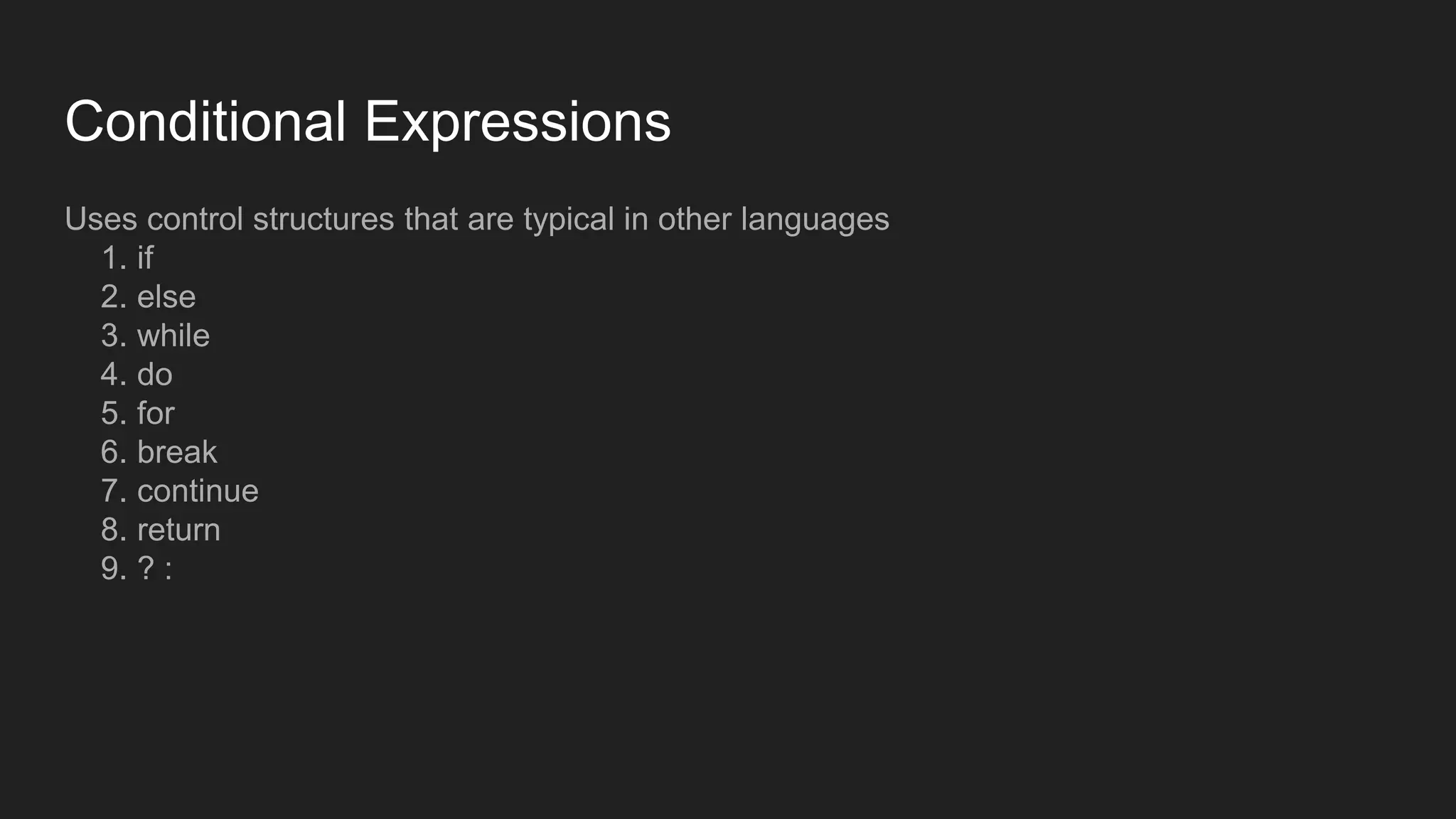
Explanation of conditional expressions and control structures like if, else, and for, and their applications.
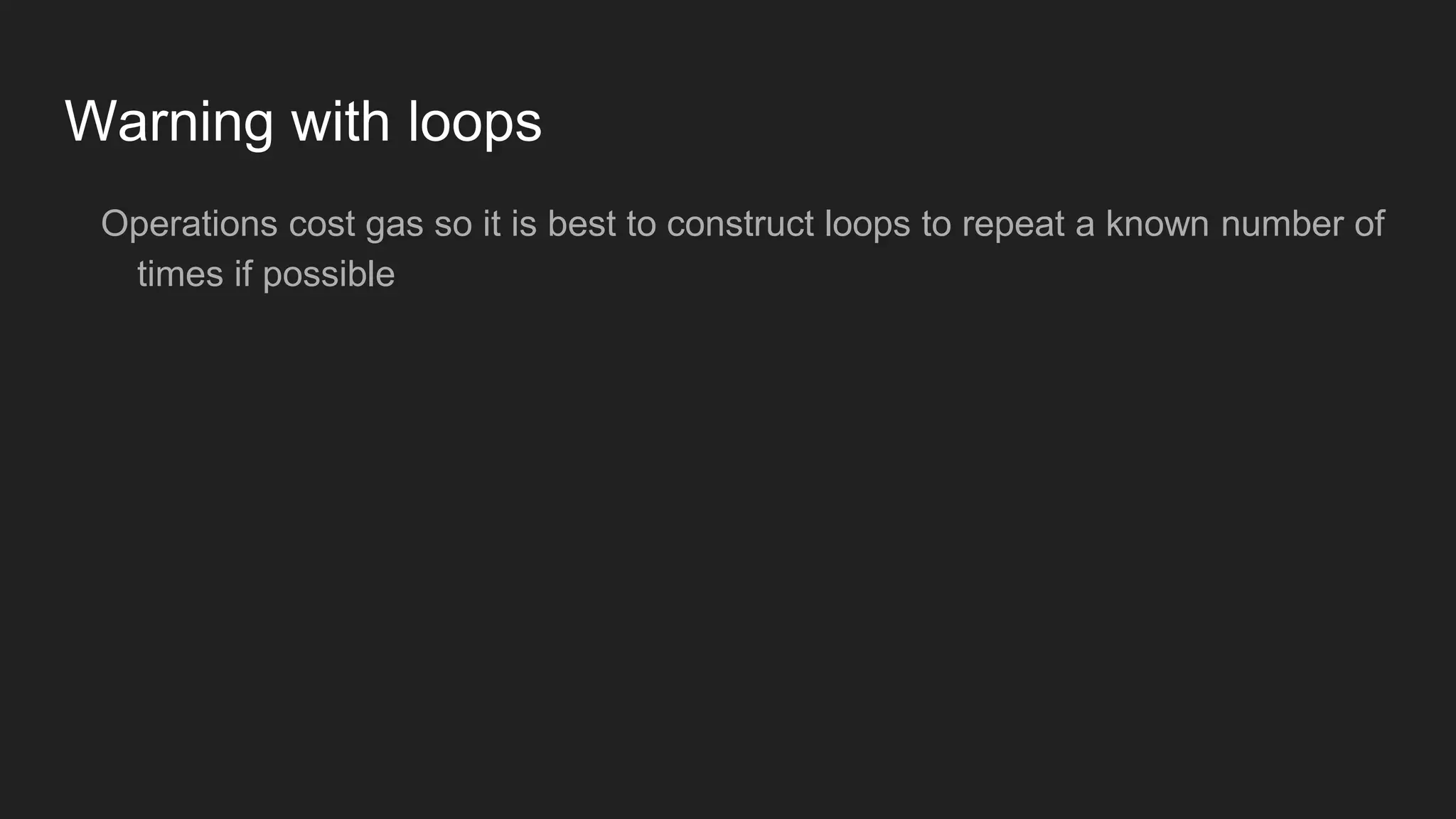
Importance of managing gas costs when using loops; suggestion to limit loop iterations.
Use of boolean expressions to manage transactions, illustrated with a transfer function example.
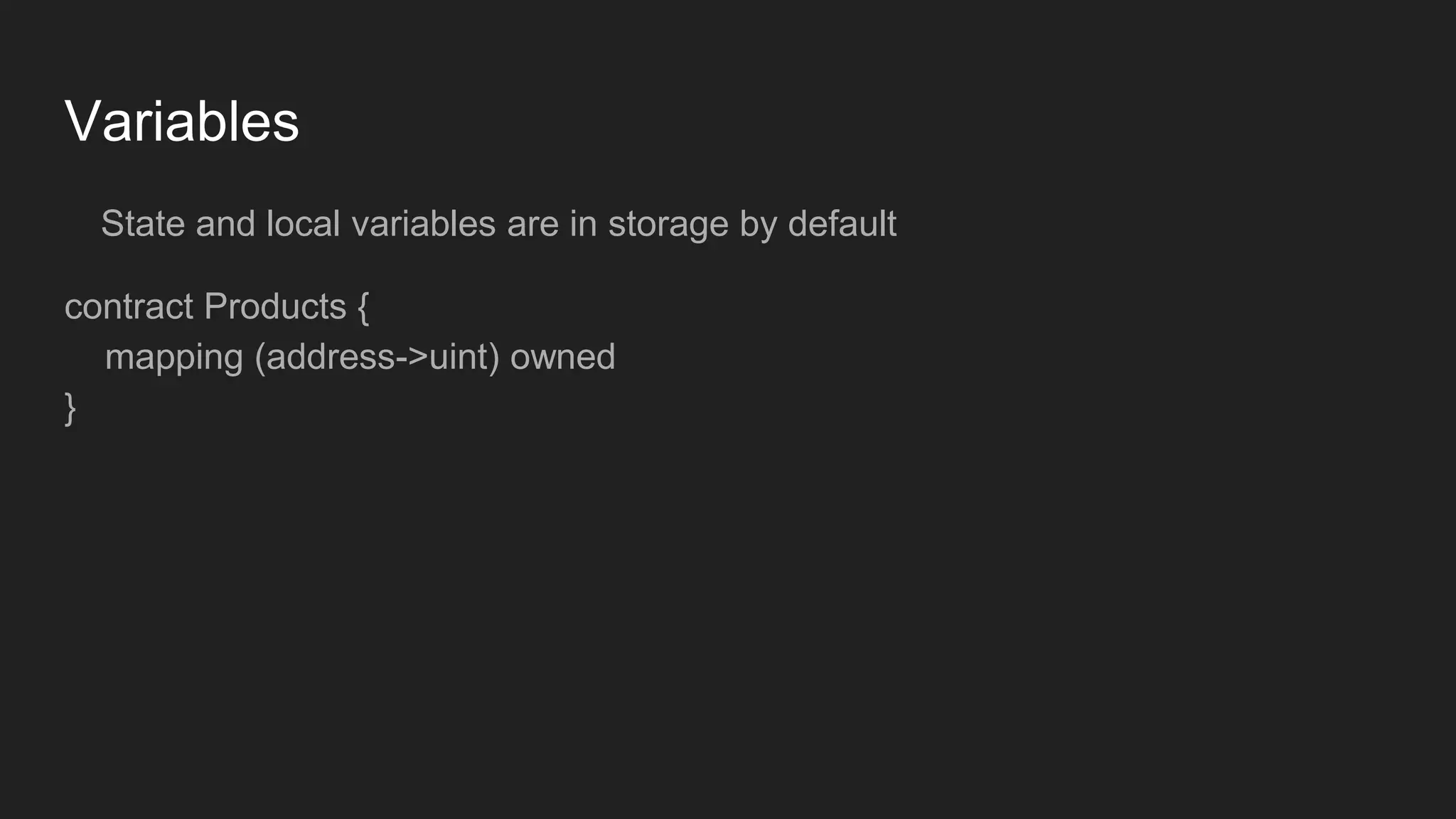
Discussion on state and local variables, including their management in contracts.
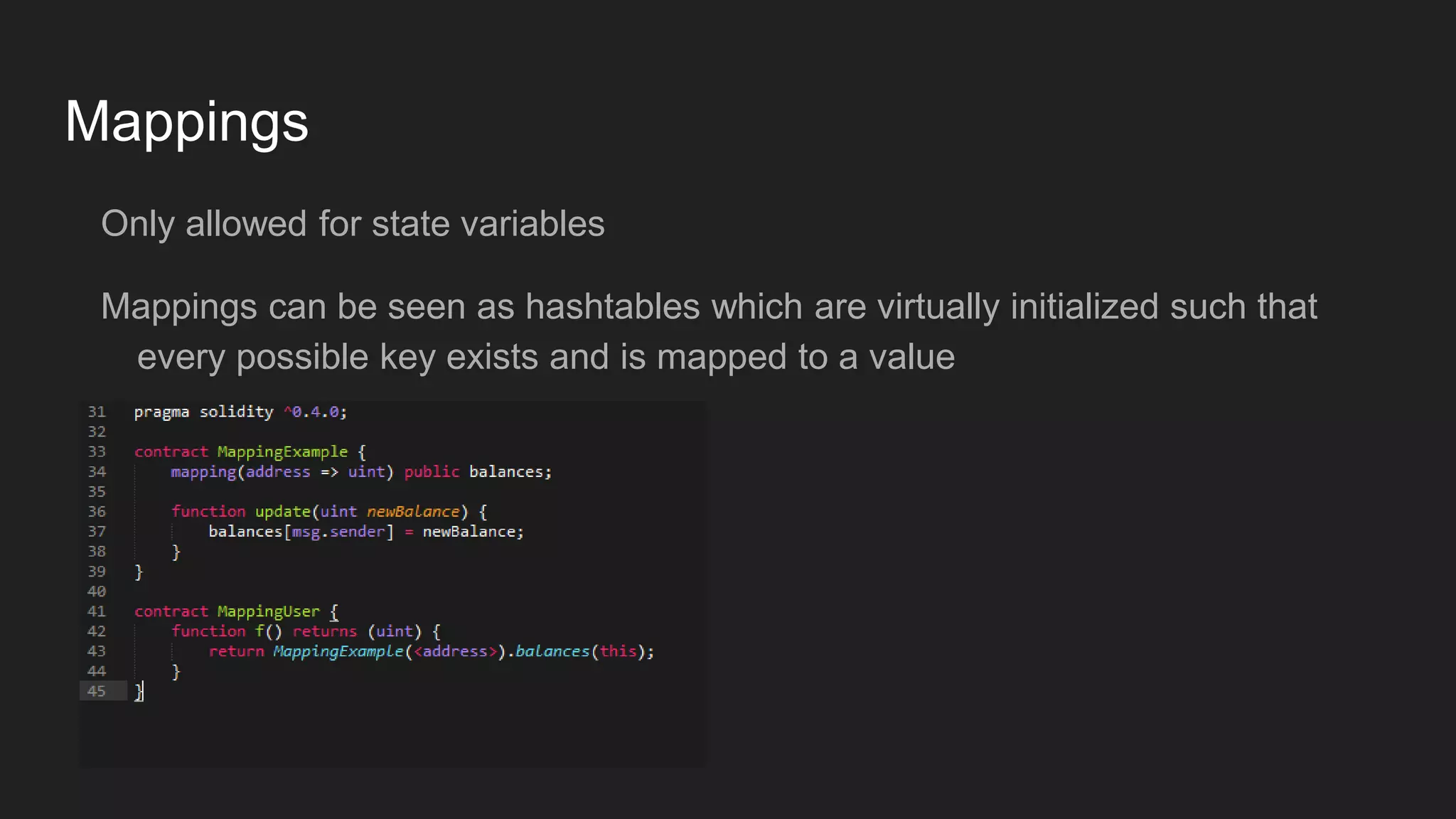
Introduction to mappings as state variables, compared to hashtables for data storage.
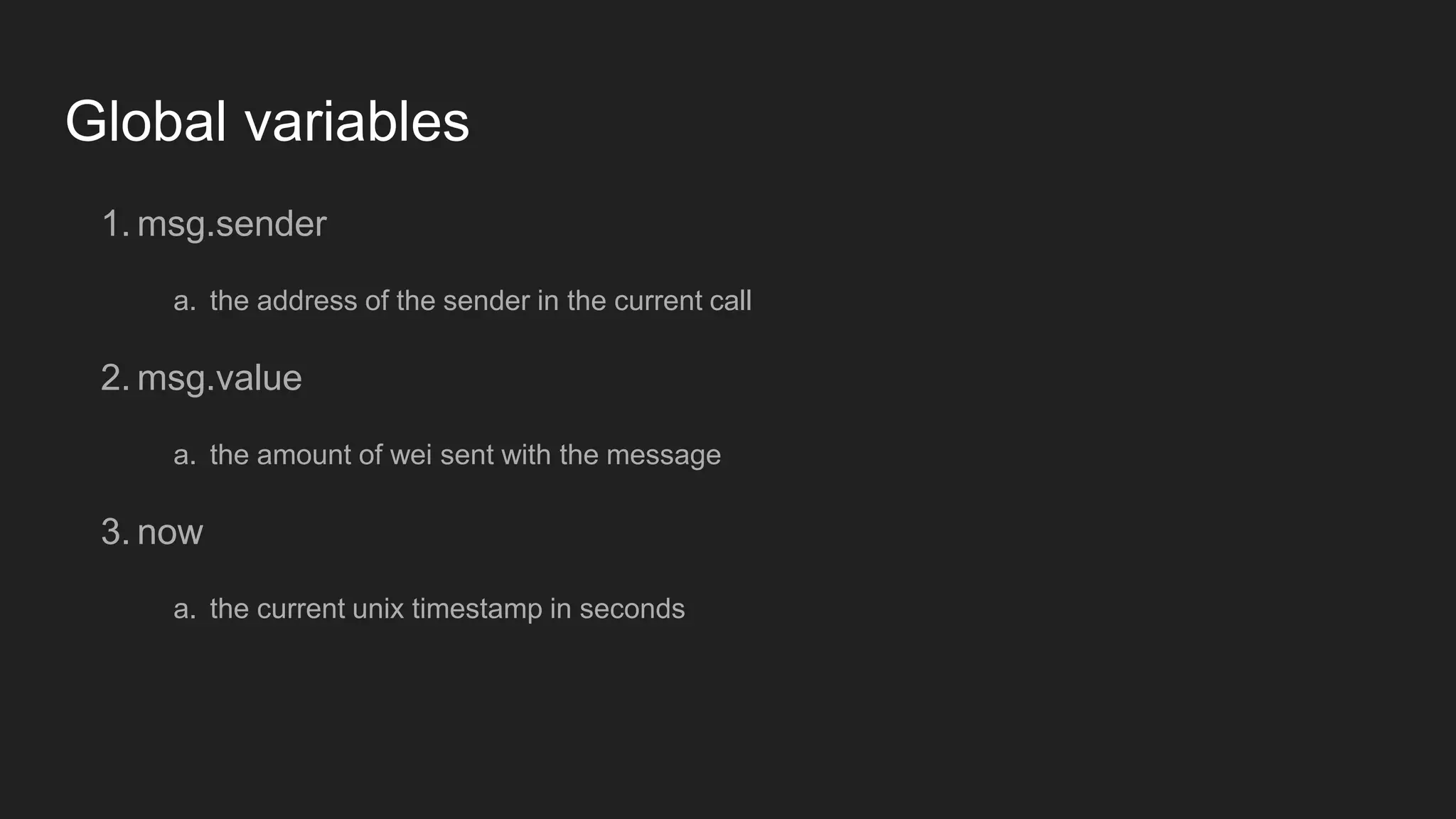
Overview of global variables like msg.sender, msg.value, and now for transaction context.
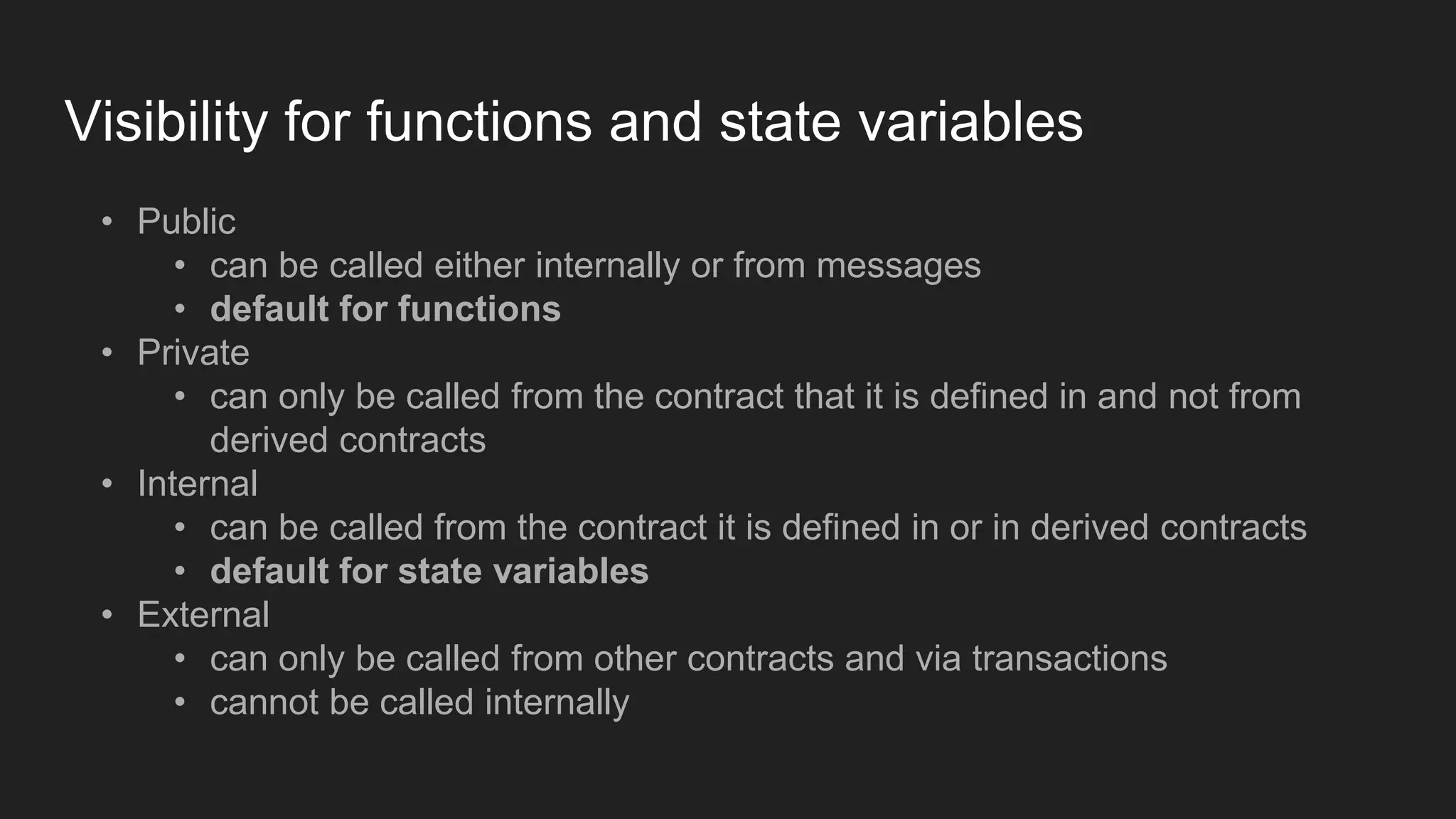
Different visibility options for functions and state variables: public, private, internal, and external.
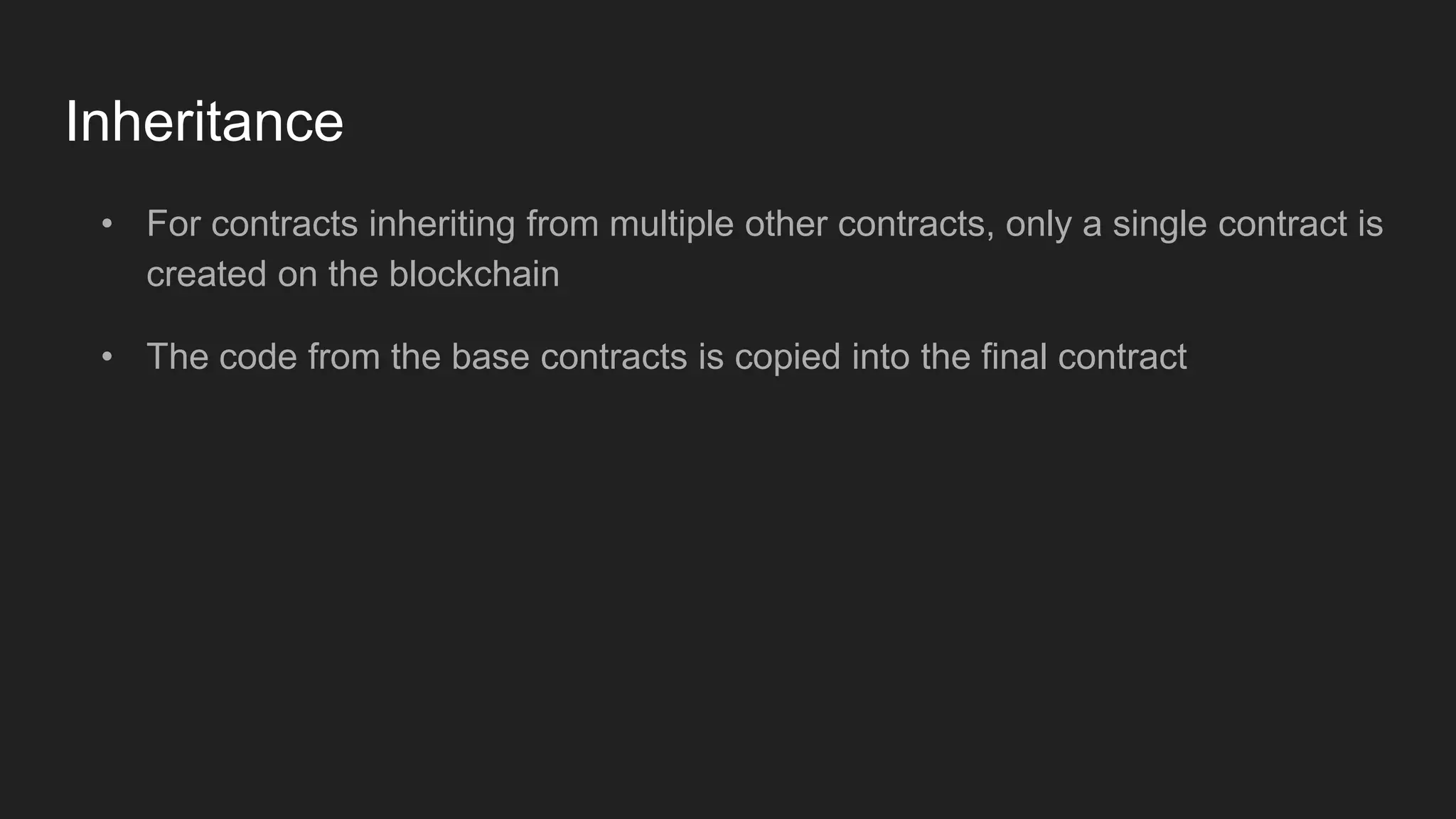
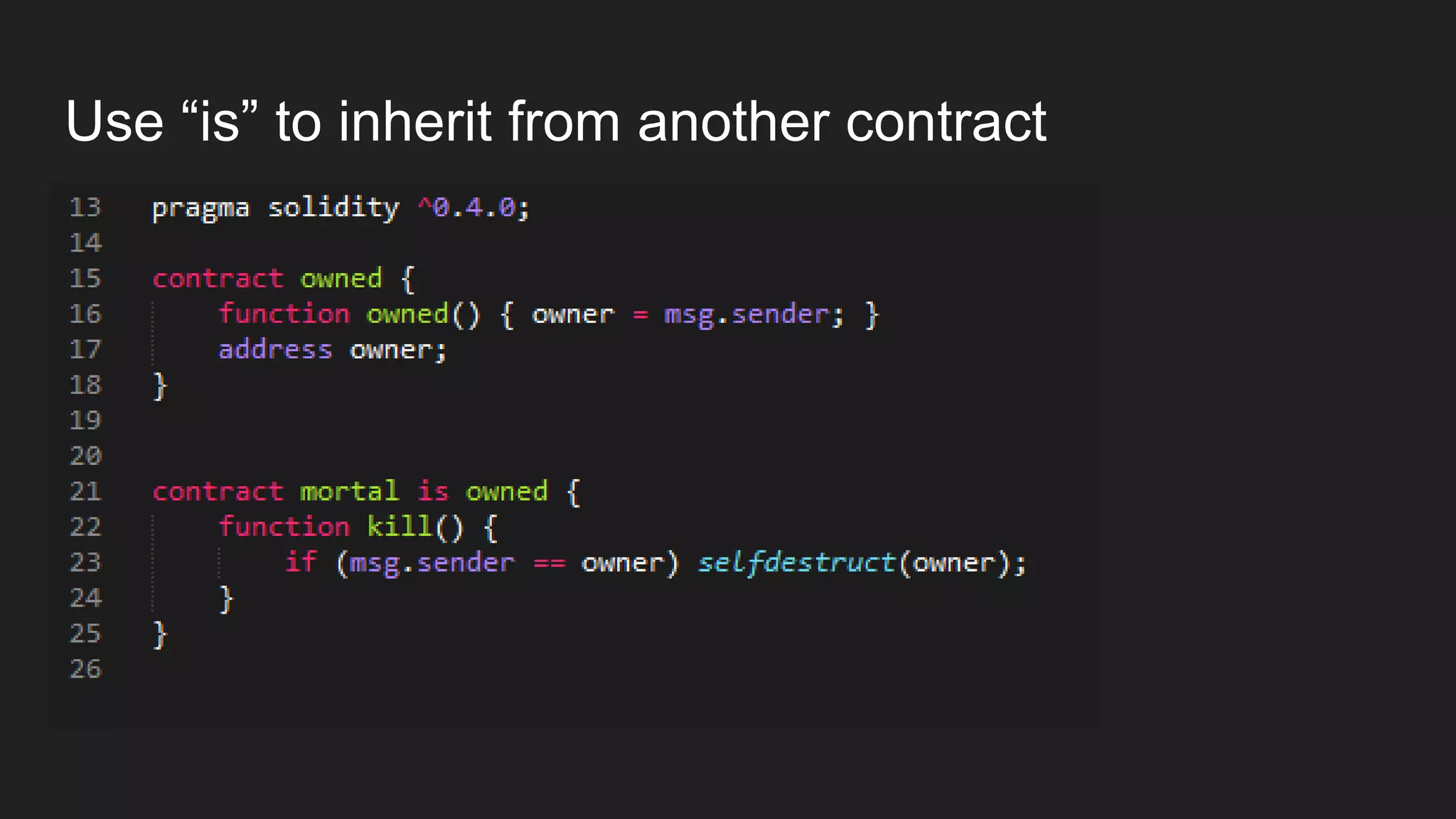
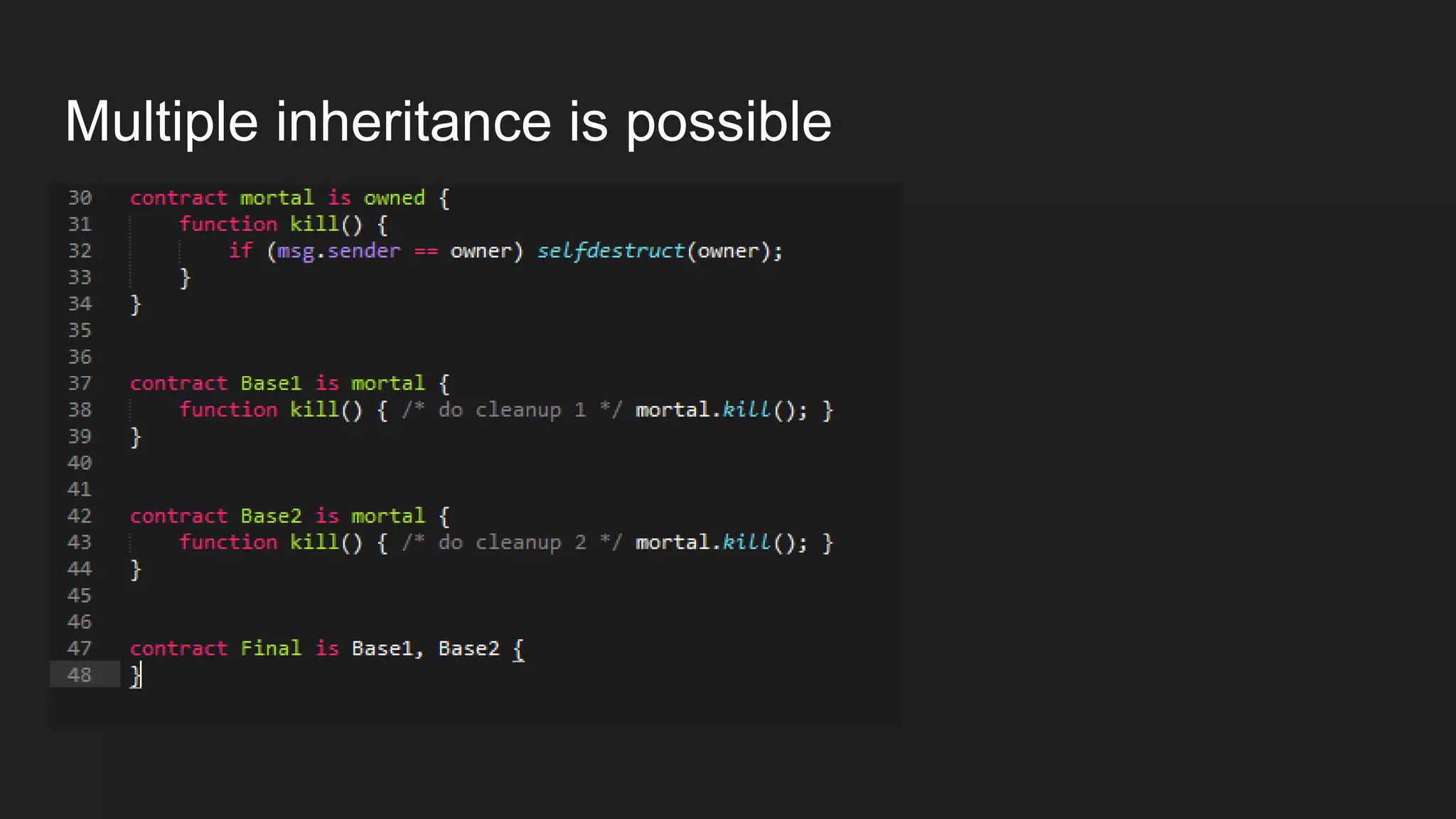
How inheritance works in Solidity, allowing contracts to inherit functions and properties from multiple contracts.
Syntax for inheriting from other contracts in Solidity using the 'is' keyword.
Allows contracts to inherit from multiple parent contracts, including implications.
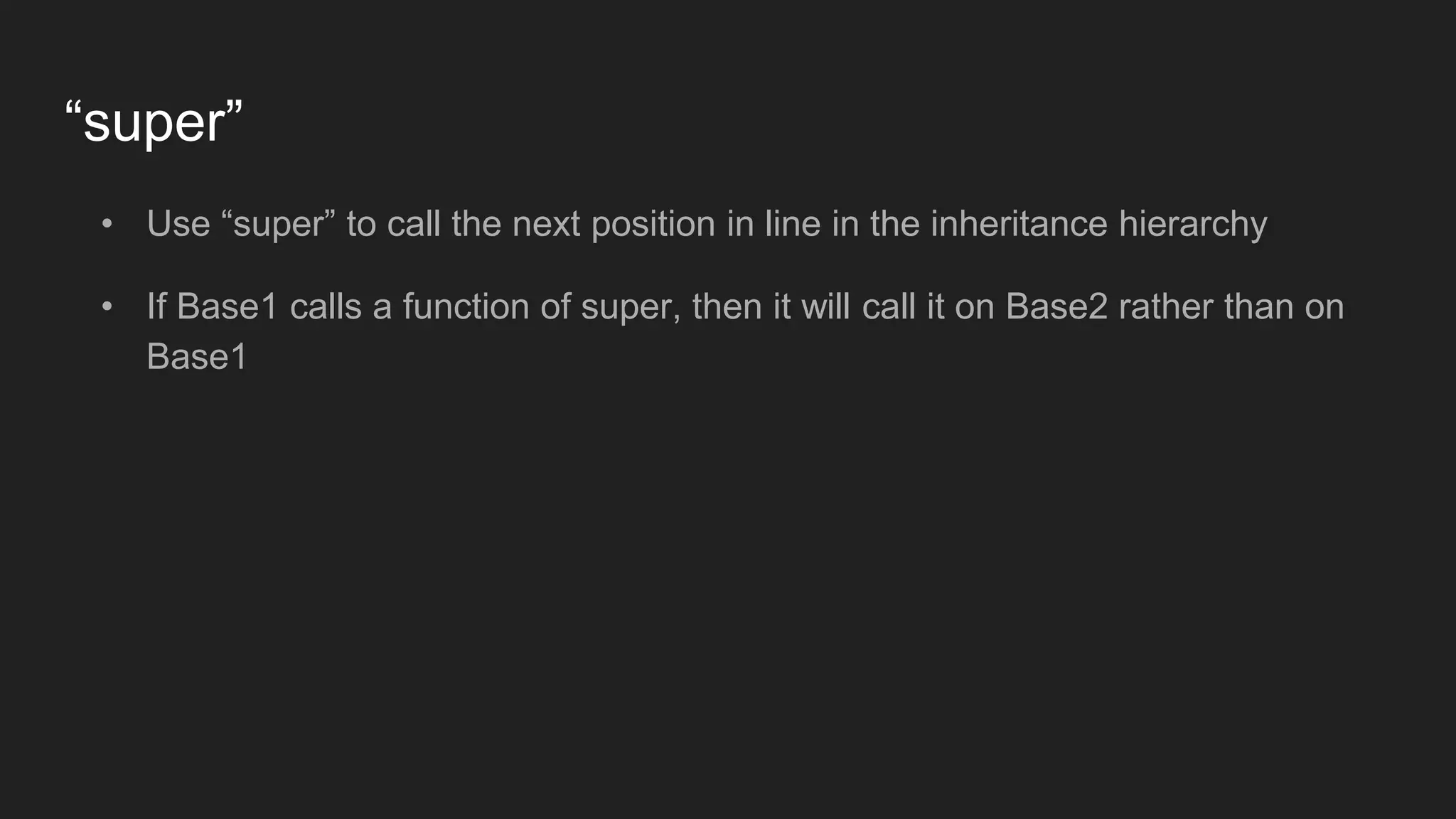
Demonstration of how to use 'super' to navigate the inheritance chain for calling functions.
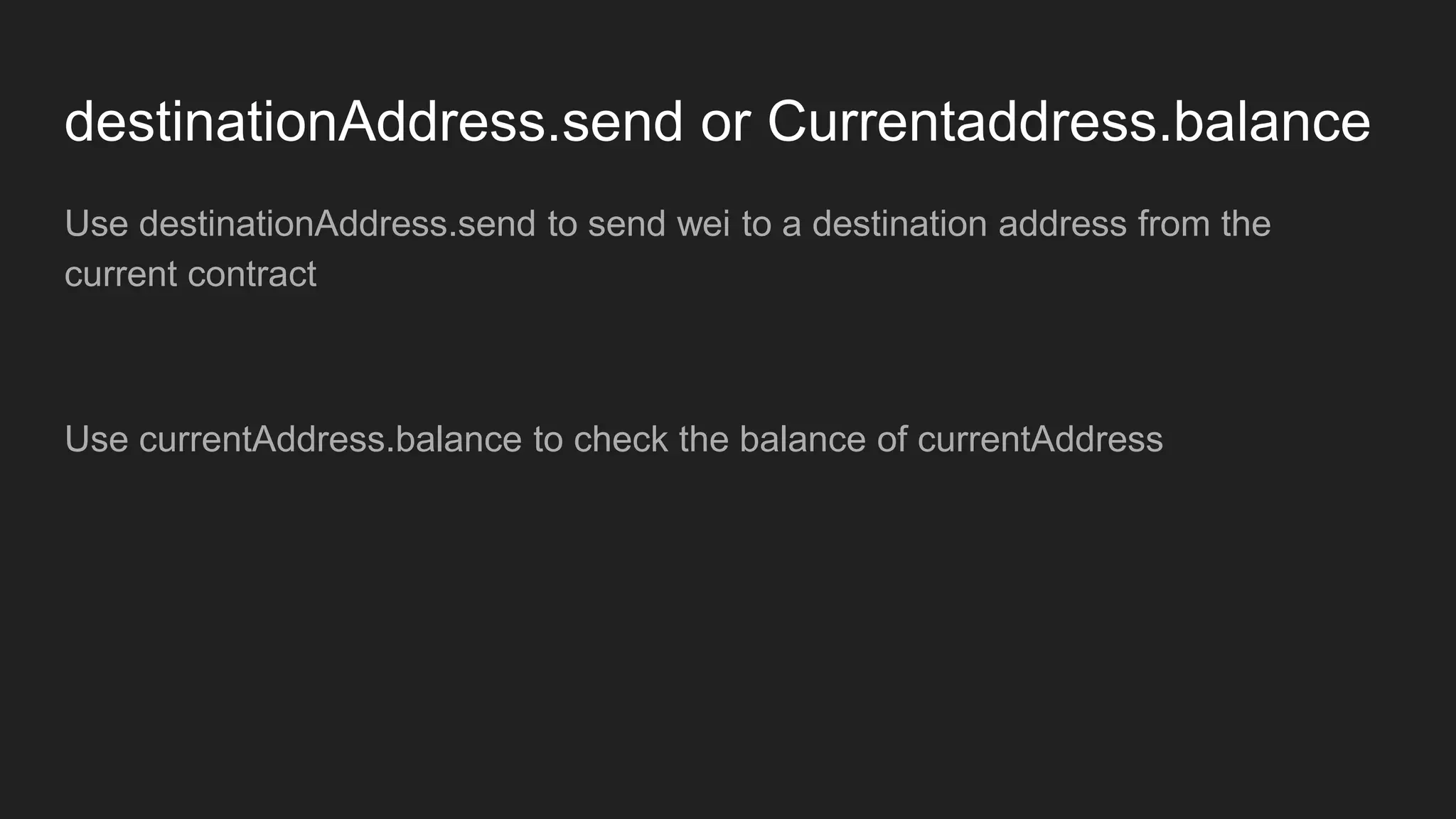
Methods for sending Wei to addresses and checking contract balances using Solidity functions.
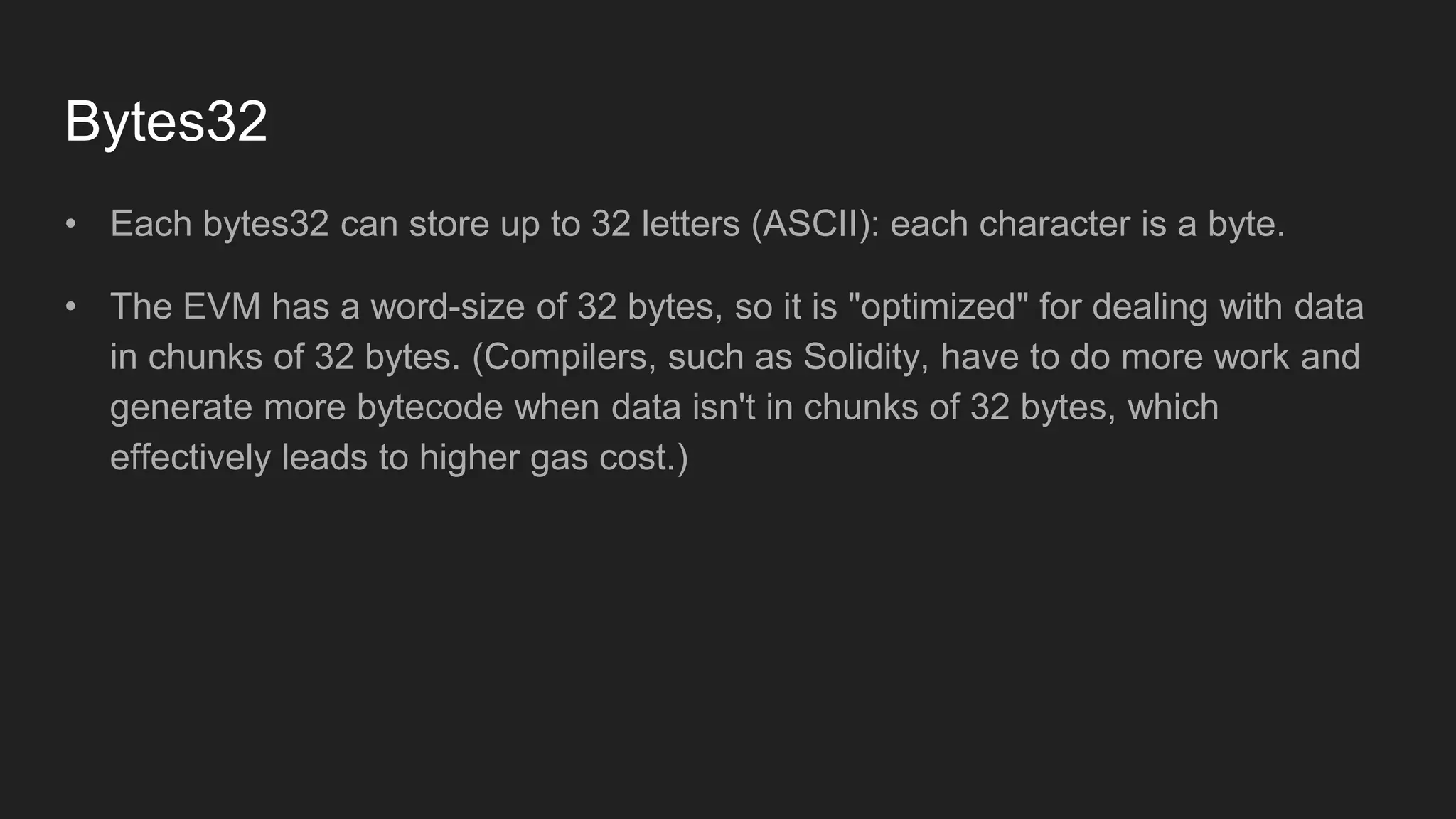
Data storage in Solidity, specifically using bytes32 for efficient data handling.
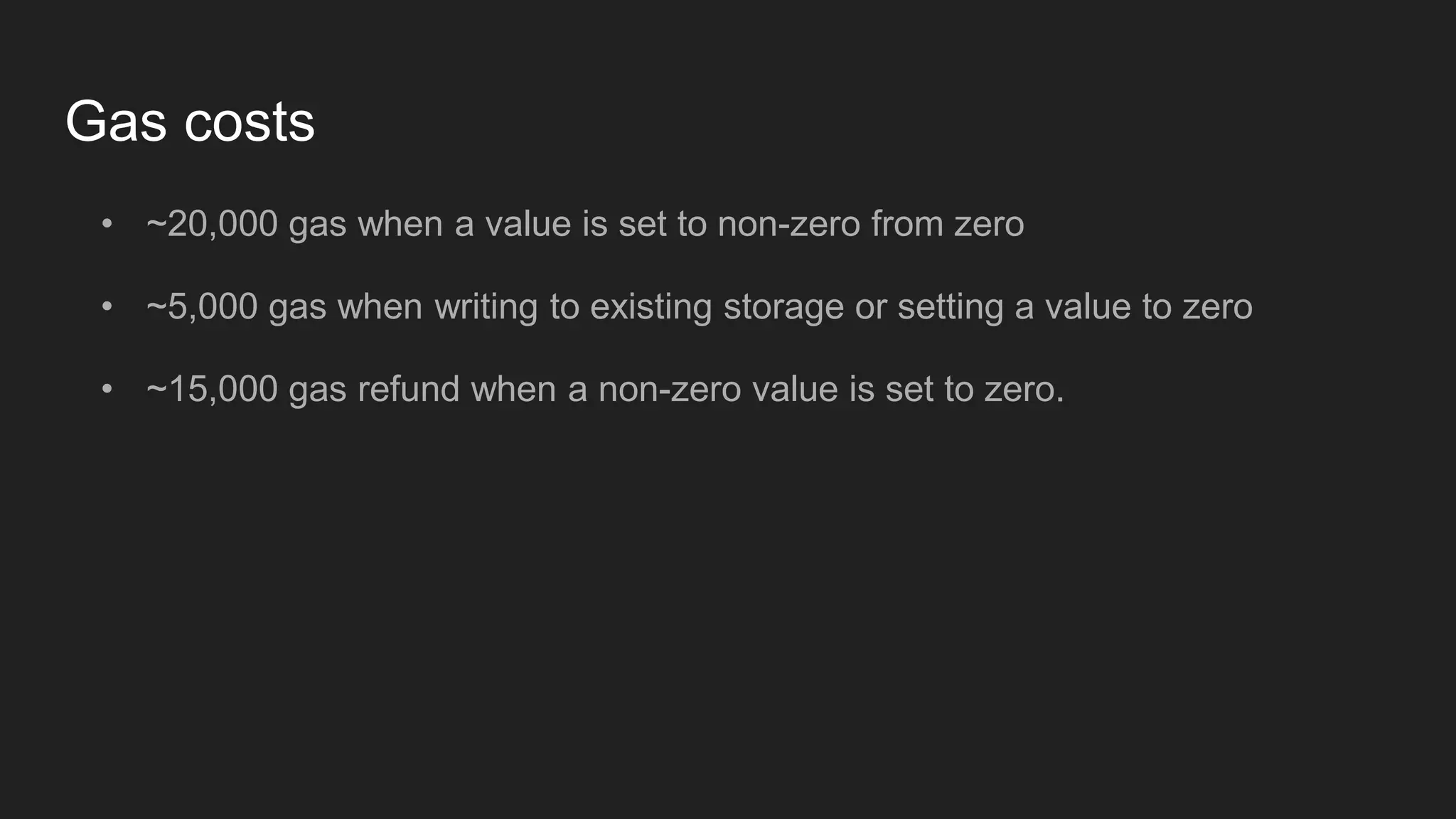
Details on gas costs associated with different operations in Solidity, highlighting best practices.
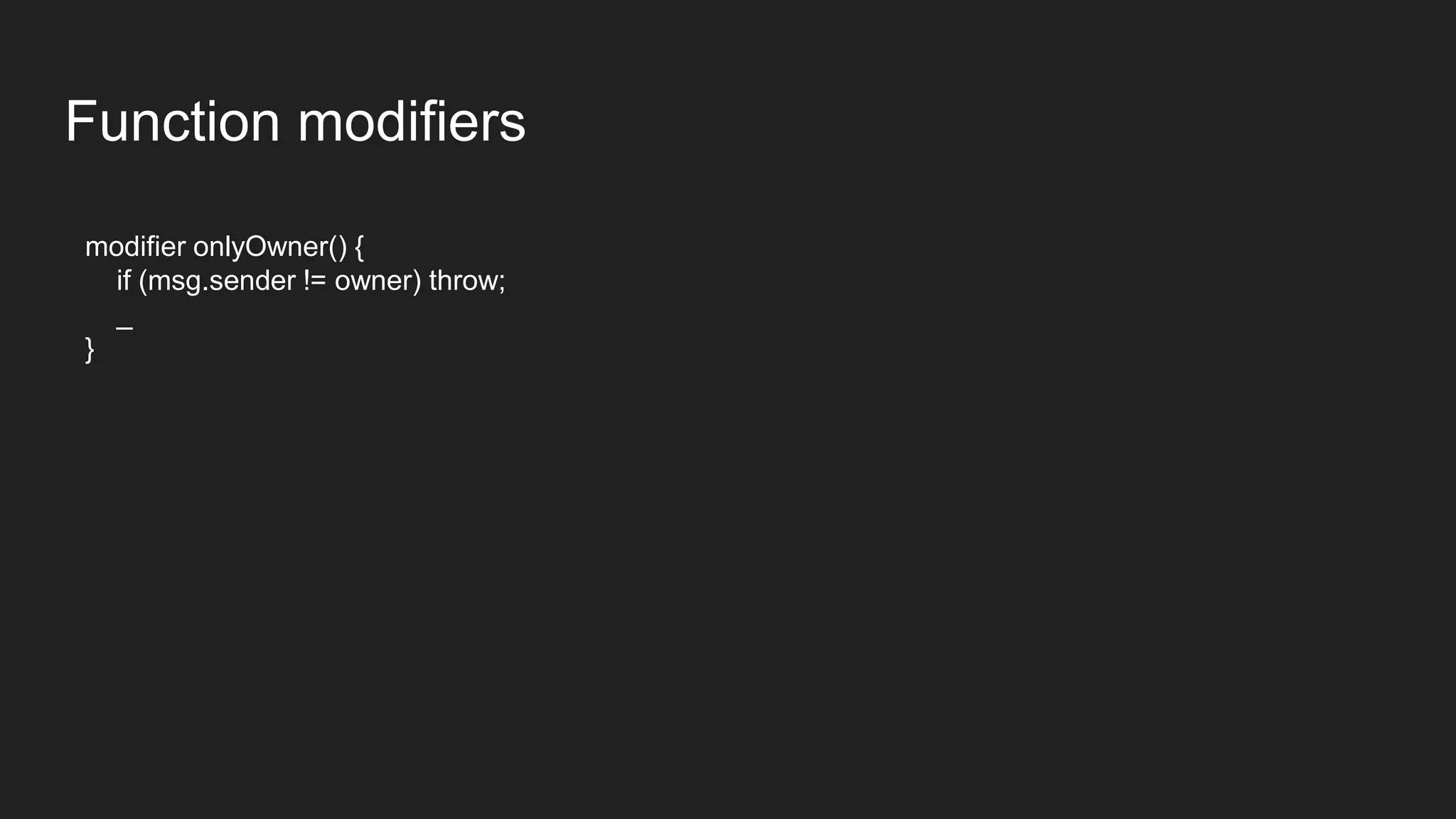
Introduction to constructing function modifiers for access control in contracts.
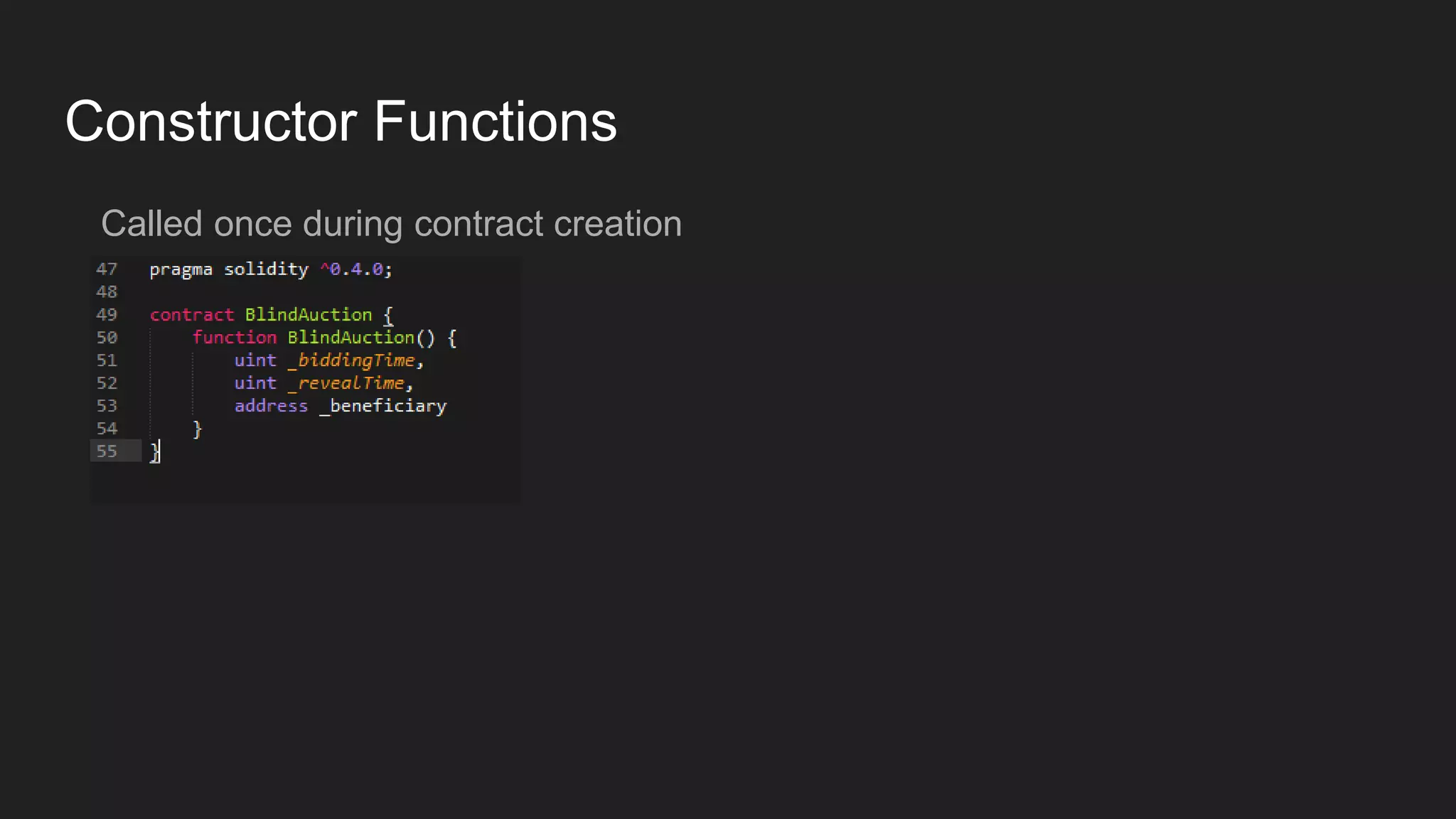
Basics on constructor functions which are executed during contract creation.
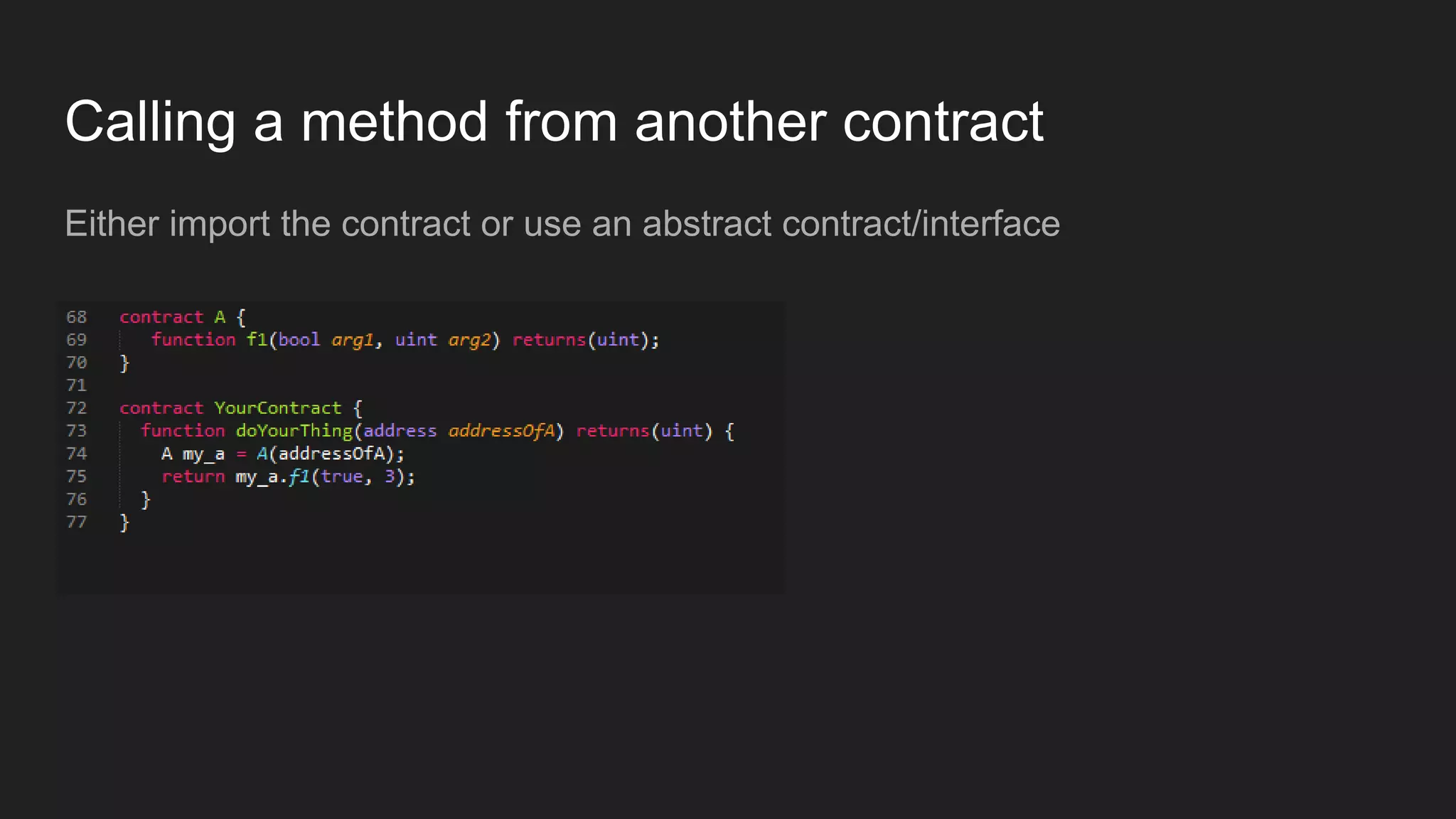
Approaches to calling methods from other contracts including importing contracts and using interfaces.
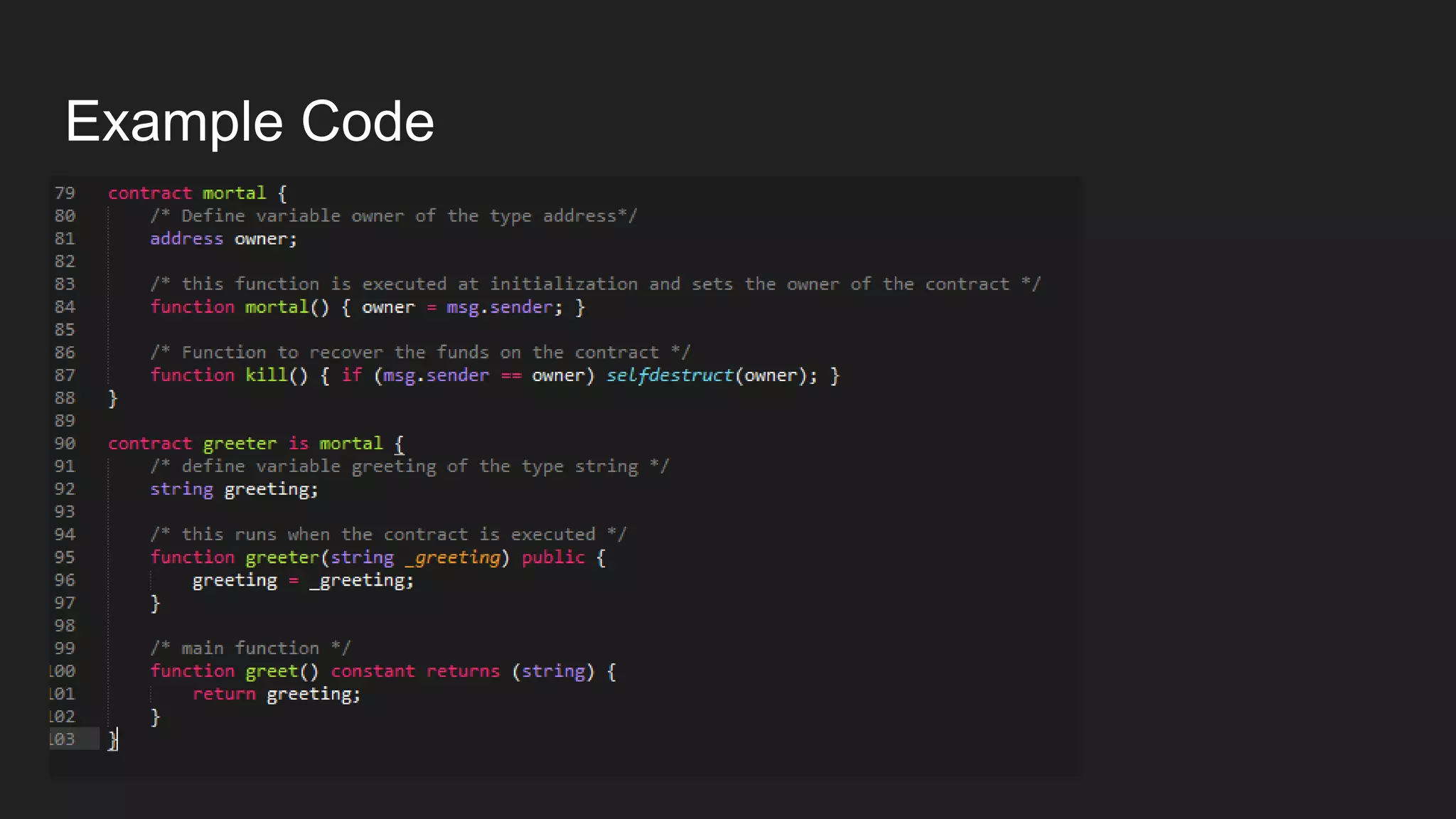
Presentation of example code to illustrate practical usage of discussed concepts in Solidity.


