Downloaded 42 times

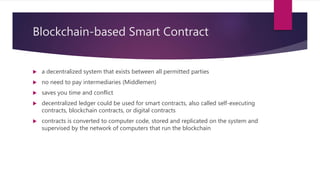
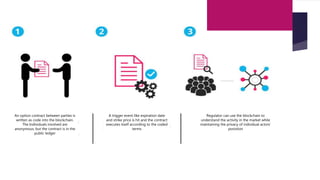
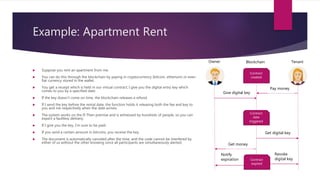
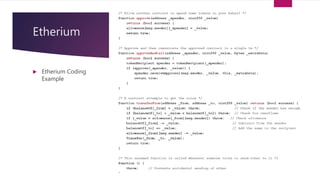


Blockchain-based smart contracts allow parties to enter into agreements without third-party intermediaries by automating the execution and enforcement of the contract terms through code stored on the blockchain. Smart contracts can be used for rental agreements, option contracts, and other scenarios where payments or asset transfers are triggered by predefined conditions. For example, a smart contract for renting an apartment could automatically refund a tenant if the landlord fails to provide a digital key by the lease date, or release payment to the landlord once the key is sent before the rental period begins. All transaction details are recorded on the distributed ledger for transparency, with the terms enforced autonomously according to the original code.


