Learning from Nature
  Beyond Carbon Zero
  从大自然中学习
  不止于零碳排放
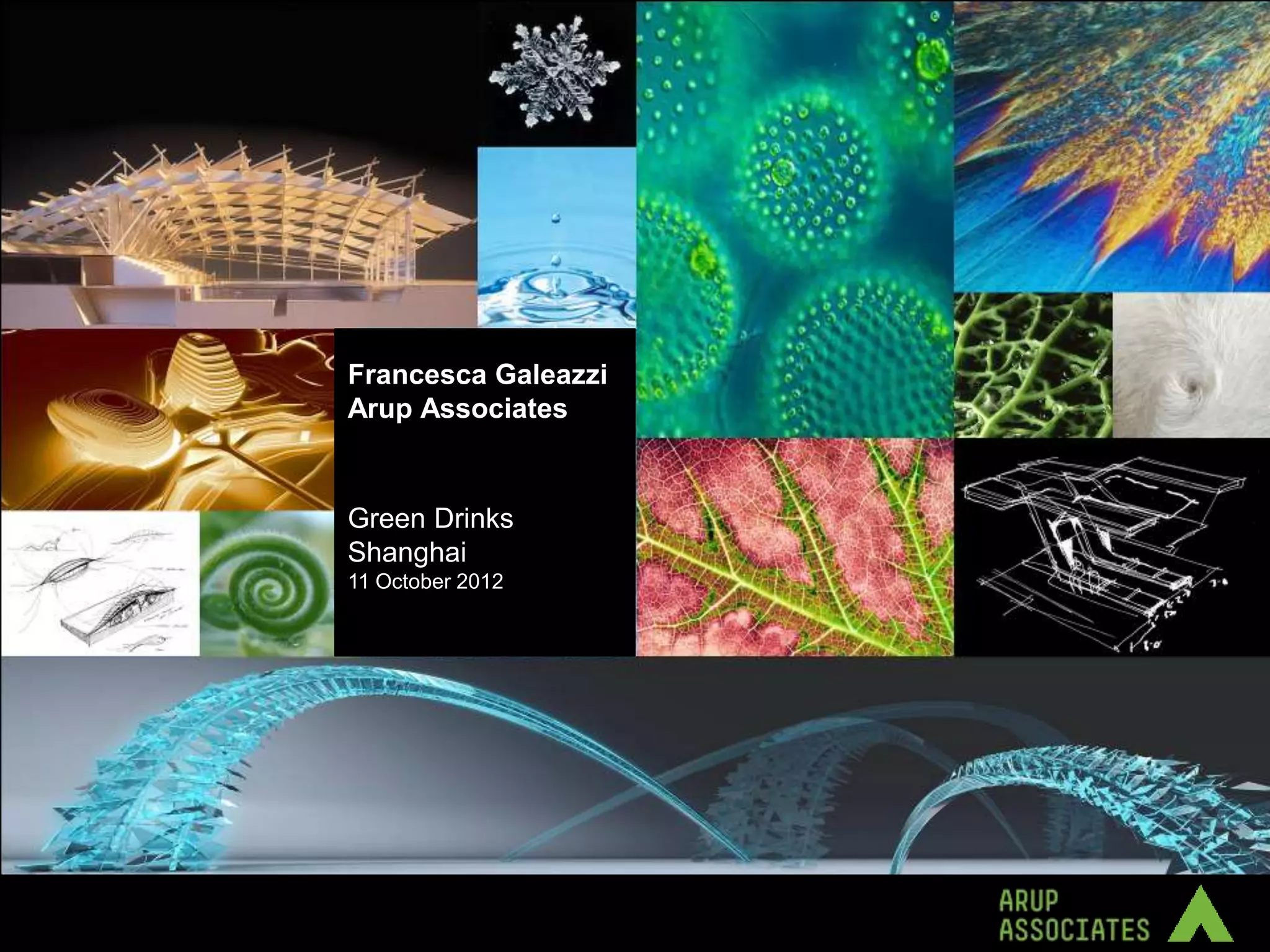
Francesca Galeazzi
Arup Associates


Green Drinks
Shanghai
11 October 2012
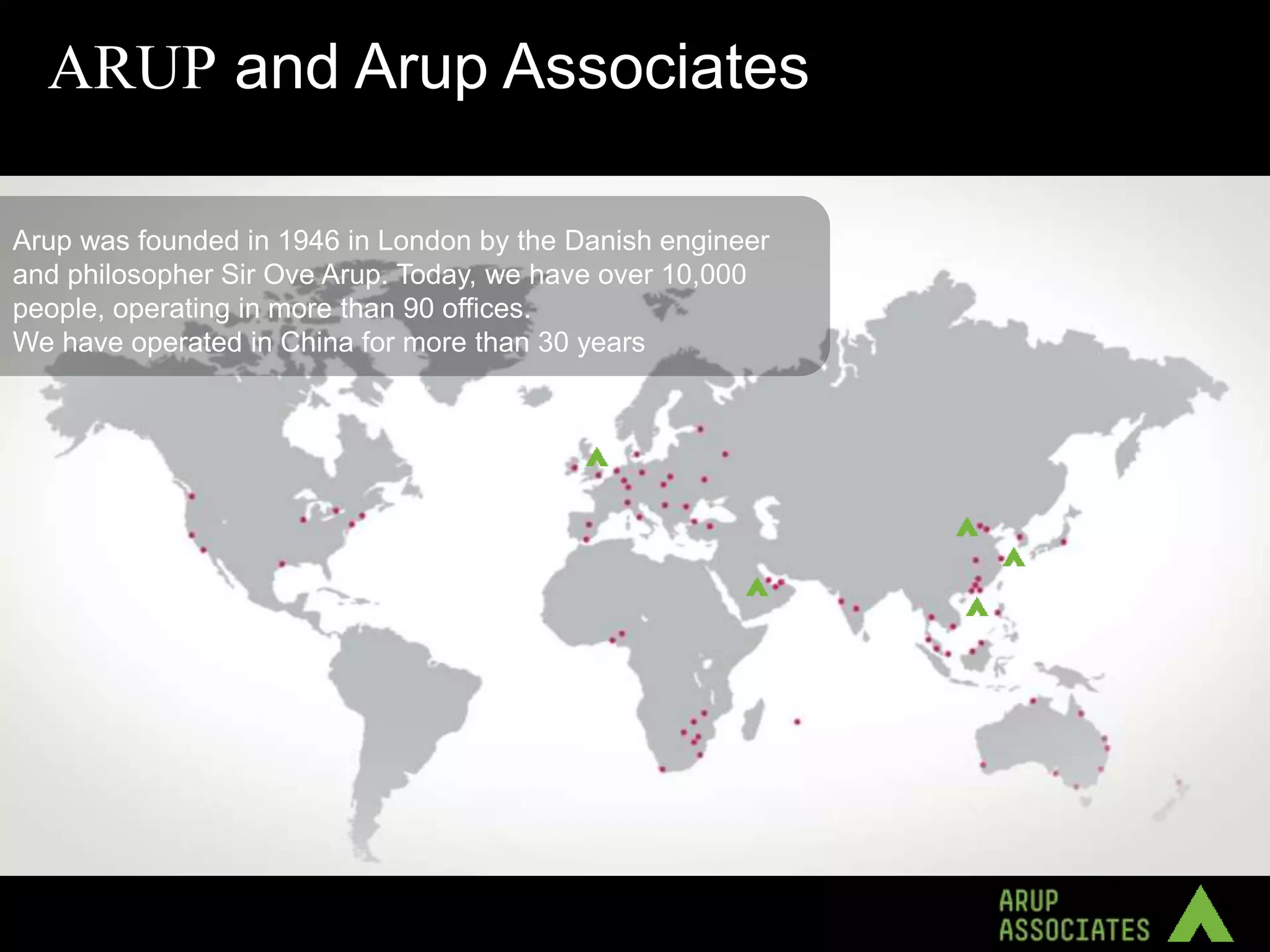
ARUP and Arup Associates

Arup was founded in 1946 in London by the Danish engineer
and philosopher Sir Ove Arup. Today, we have over 10,000
people, operating in more than 90 offices.
We have operated in China for more than 30 years
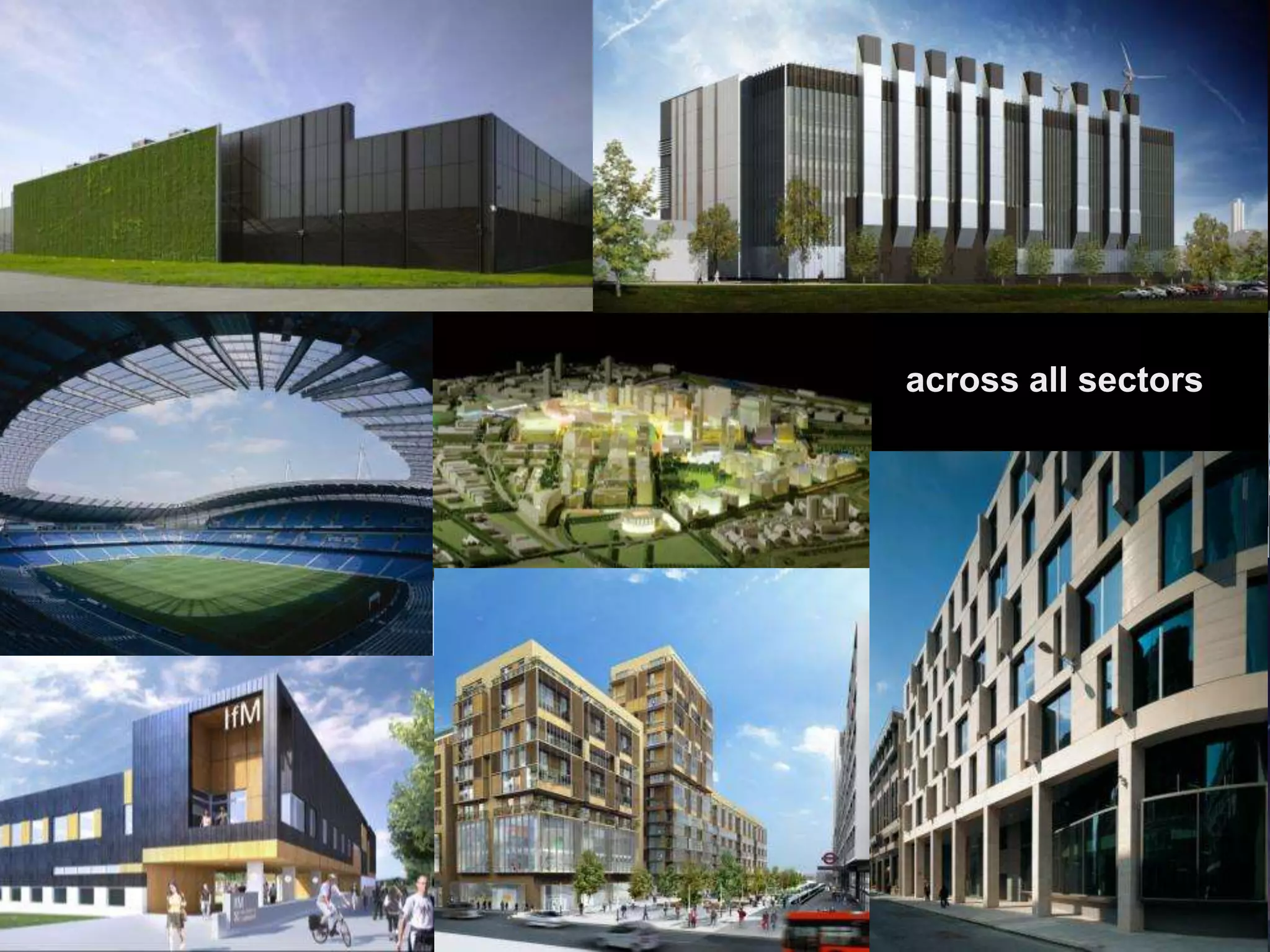
across all sectors
across all sizes


                   across geographies
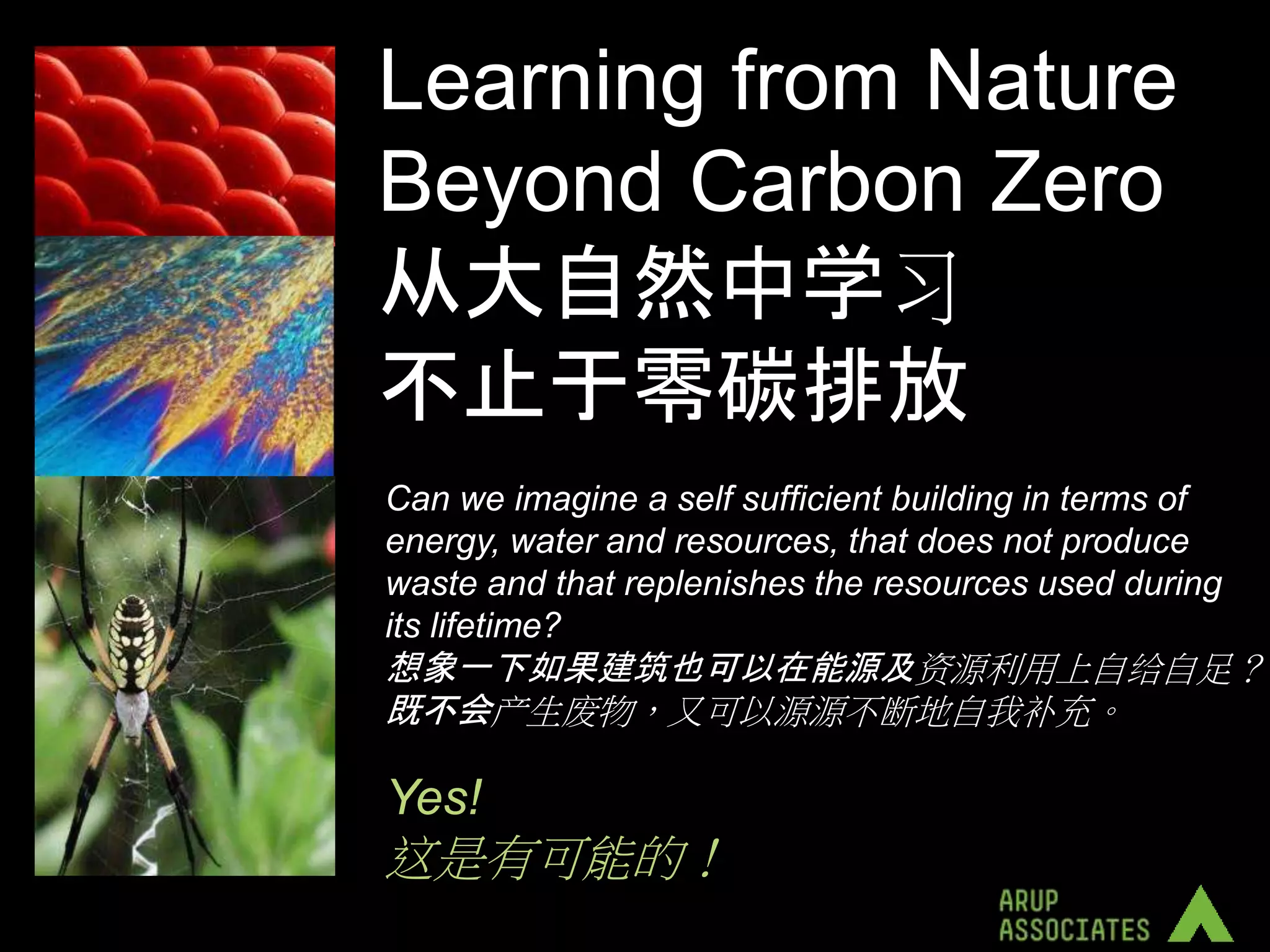
Learning from Nature
Beyond Carbon Zero
从大自然中学习
不止于零碳排放
Can we imagine a self sufficient building in terms of
energy, water and resources, that does not produce
waste and that replenishes the resources used during
its lifetime?
想象一下如果建筑也可以在能源及资源利用上自给自足?
既不会产生废物,又可以源源不断地自我补充。

Yes!
这是有可能的!
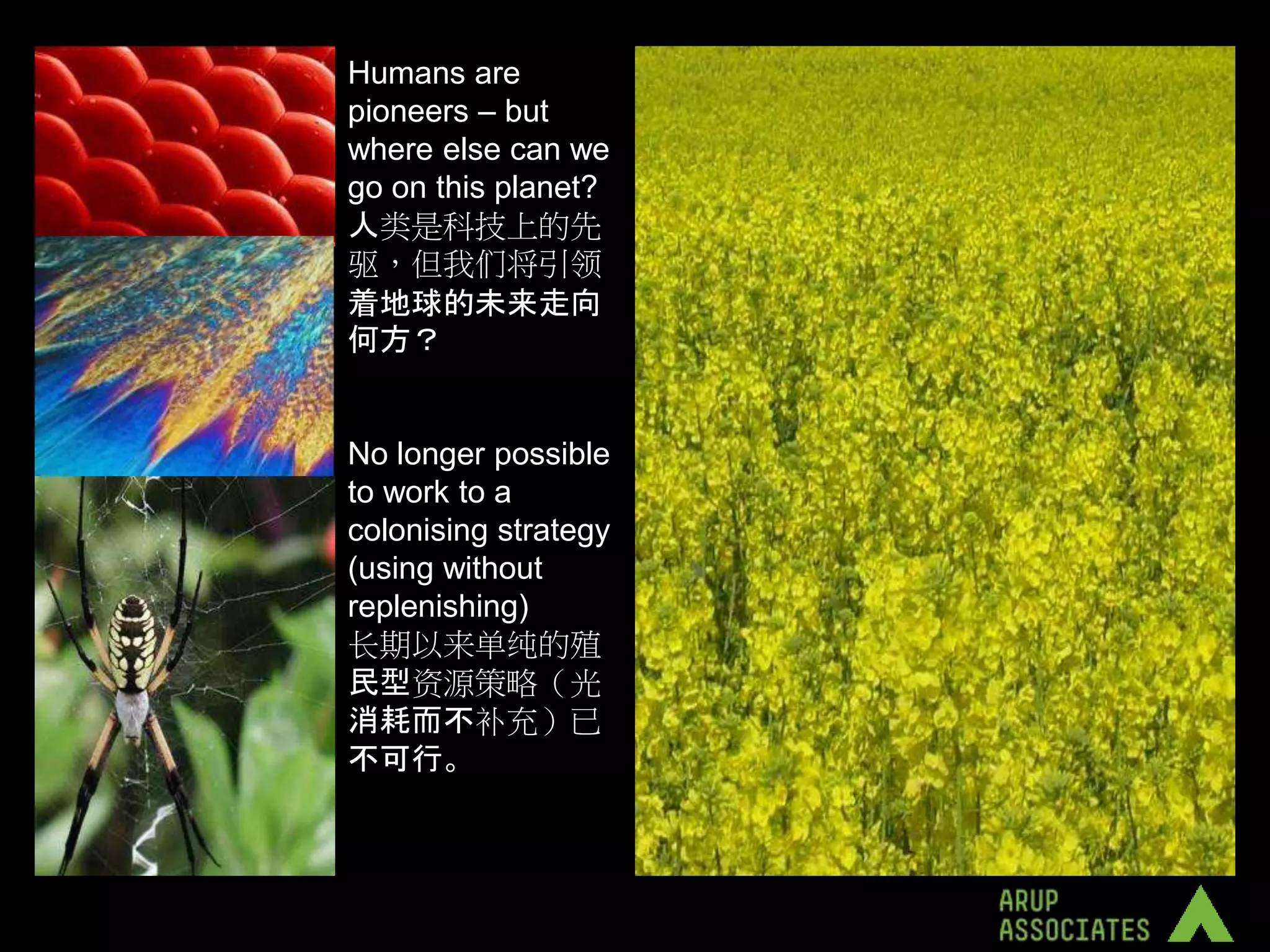
Humans are
pioneers – but
where else can we
go on this planet?
人类是科技上的先
驱,但我们将引领
着地球的未来走向
何方?


No longer possible
to work to a
colonising strategy
(using without
replenishing)
长期以来单纯的殖
民型资源策略(光
消耗而不补充)已
不可行。
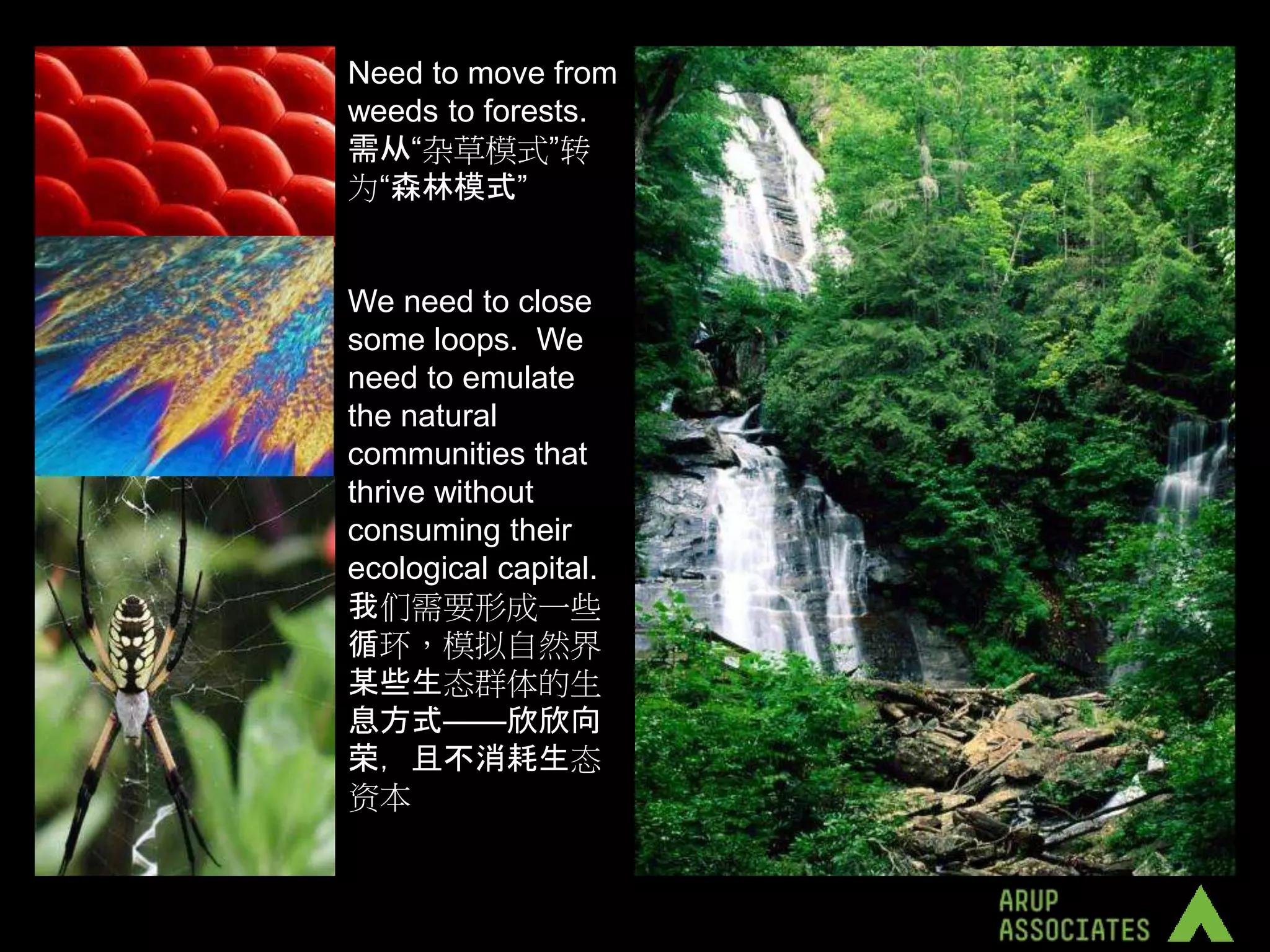
Need to move from
weeds to forests.
需从“杂草模式”转
为“森林模式”


We need to close
some loops. We
need to emulate
the natural
communities that
thrive without
consuming their
ecological capital.
我们需要形成一些
循环,模拟自然界
某些生态群体的生
息方式——欣欣向
荣,且不消耗生态
资本
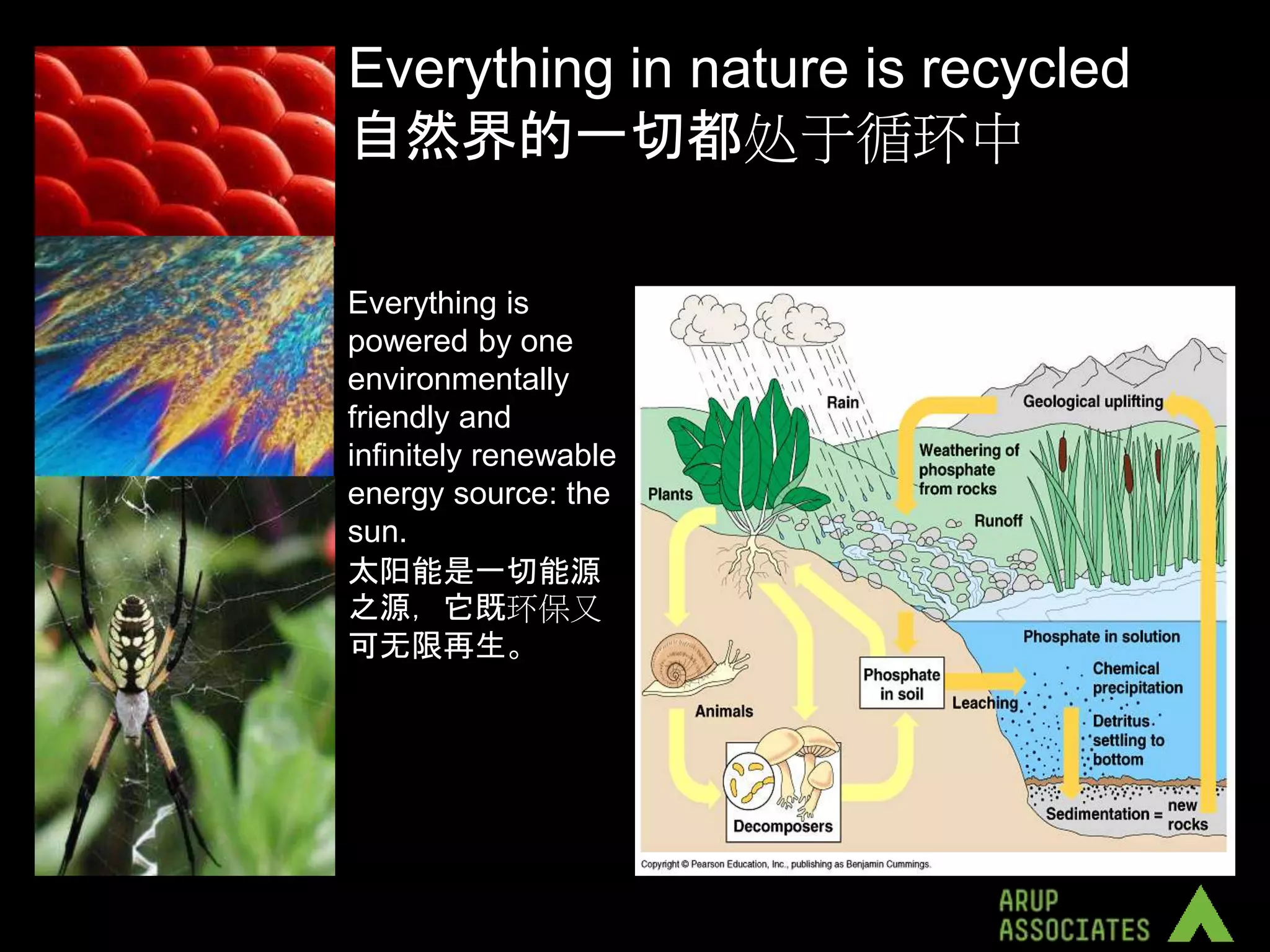
Everything in nature is recycled
自然界的一切都处于循环中

Everything is
powered by one
environmentally
friendly and
infinitely renewable
energy source: the
sun.
太阳能是一切能源
之源,它既环保又
可无限再生。
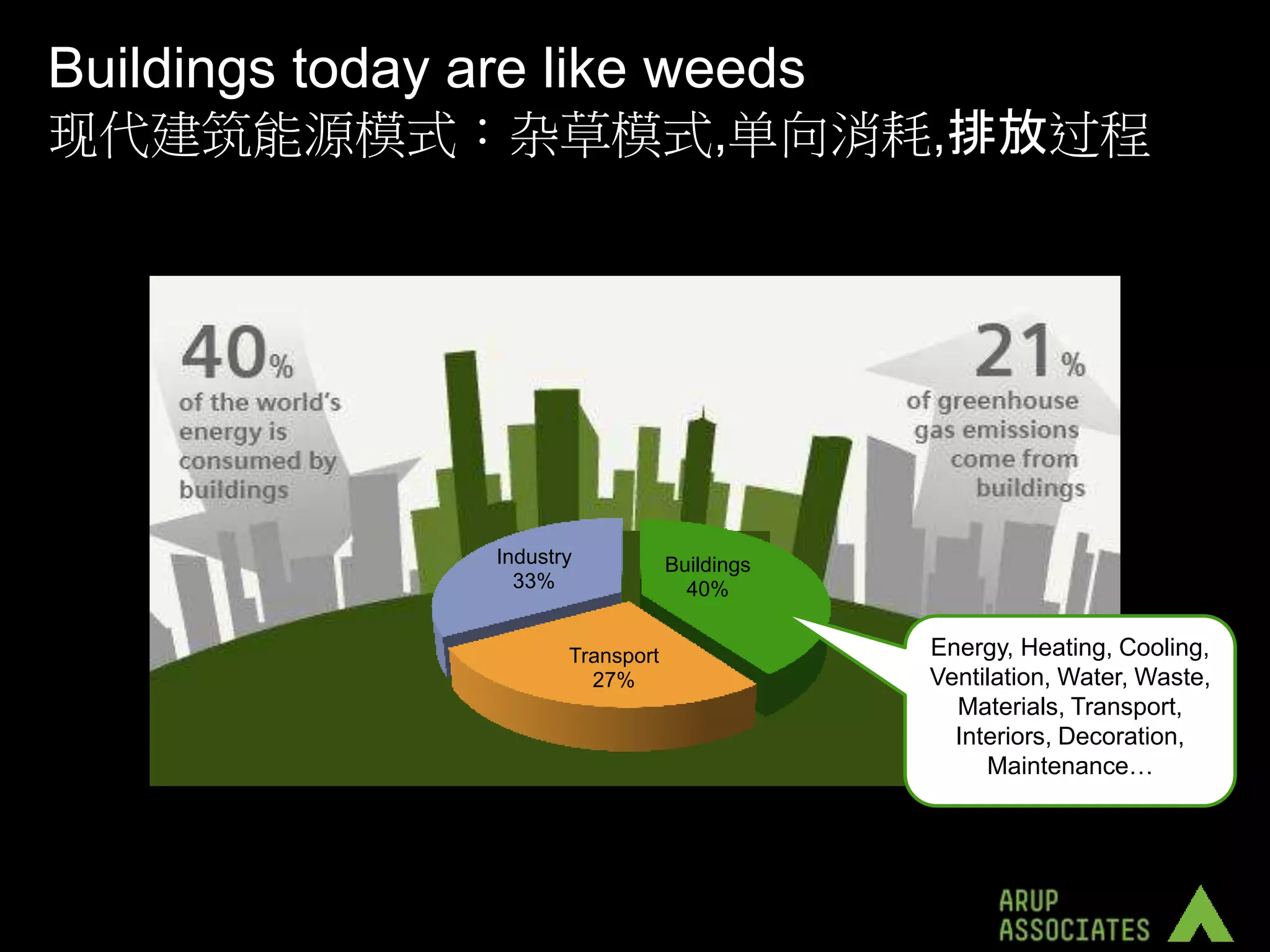
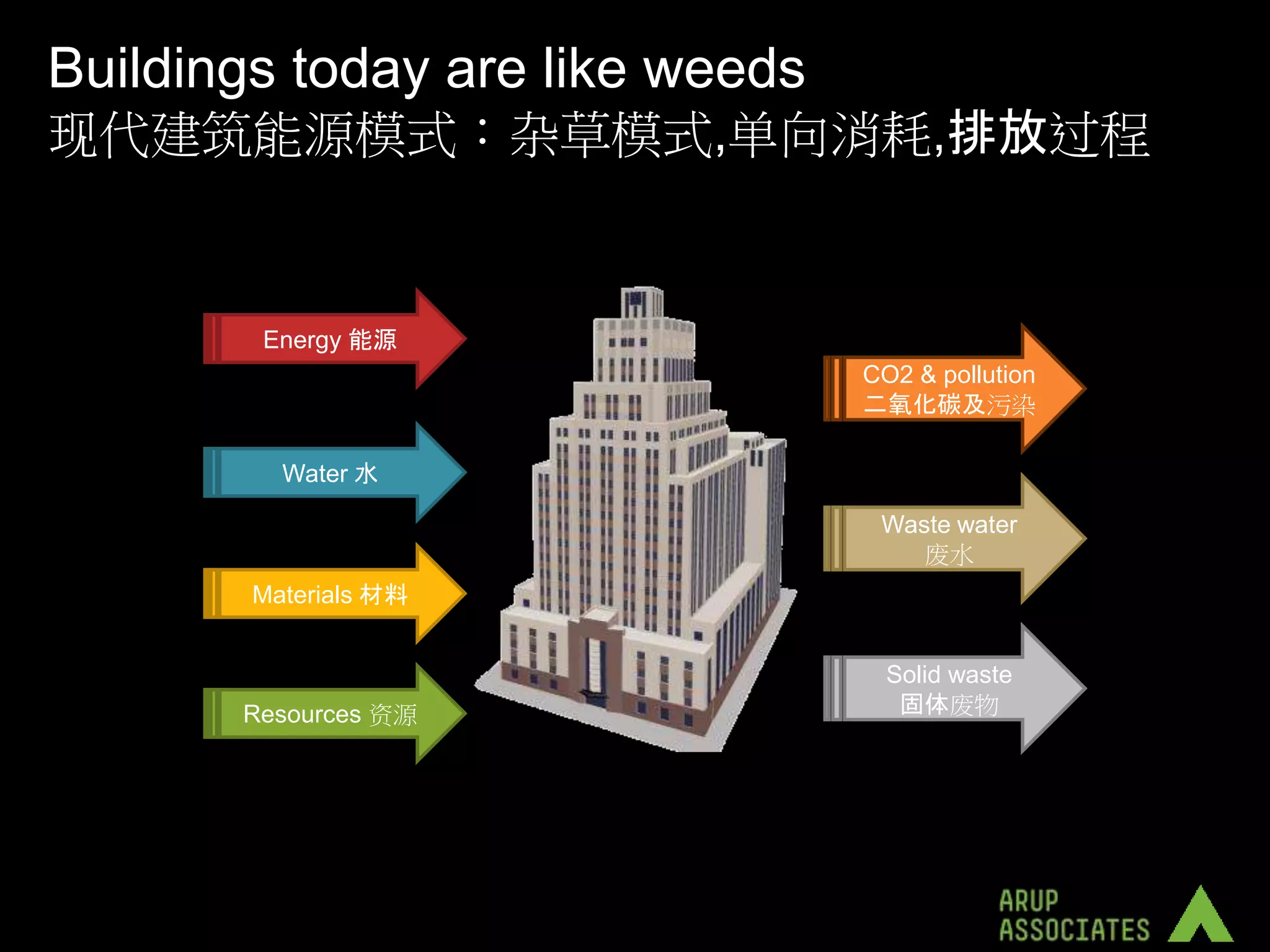
Buildings today are like weeds
现代建筑能源模式:杂草模式,单向消耗,排放过程


                 Industry           Buildings
                   33%                40%


                        Transport               Energy, Heating, Cooling,
                          27%                   Ventilation, Water, Waste,
                                                  Materials, Transport,
                                                  Interiors, Decoration,
                                                     Maintenance…
Buildings today are like weeds
现代建筑能源模式:杂草模式,单向消耗,排放过程


        Energy 能源
                                 CO2 & pollution
                                 二氧化碳及污染

          Water 水

                                  Waste water
                                     废水
        Materials 材料


                                   Solid waste
       Resources 资源                 固体废物
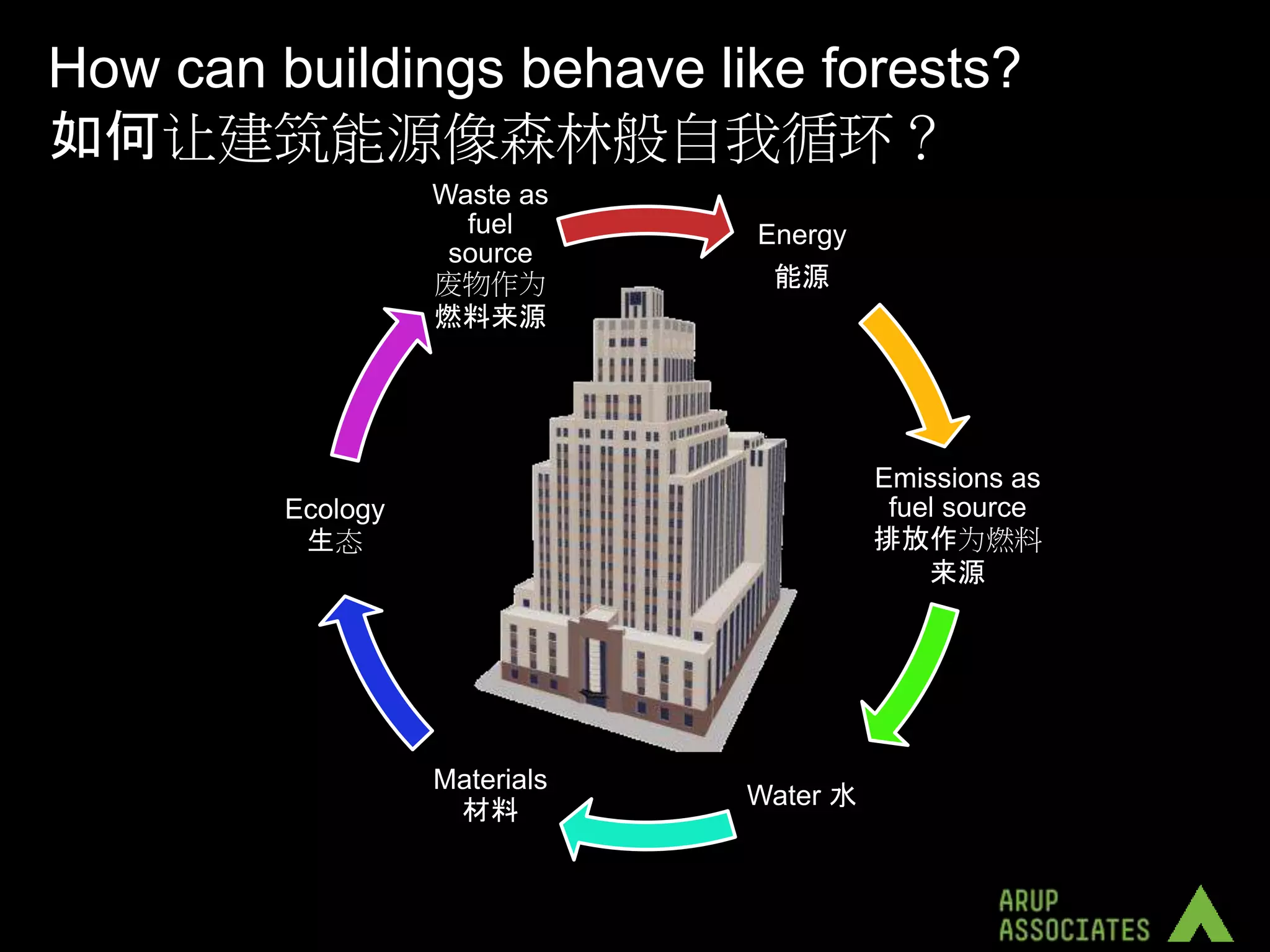
How can buildings behave like forests?
如何让建筑能源像森林般自我循环?
                   Waste as
                     fuel      Energy
                    source
                   废物作为         能源
                   燃料来源


                                         Emissions as
         Ecology                          fuel source
          生态                             排放作为燃料
                                             来源


                   Materials
                               Water 水
                    材料
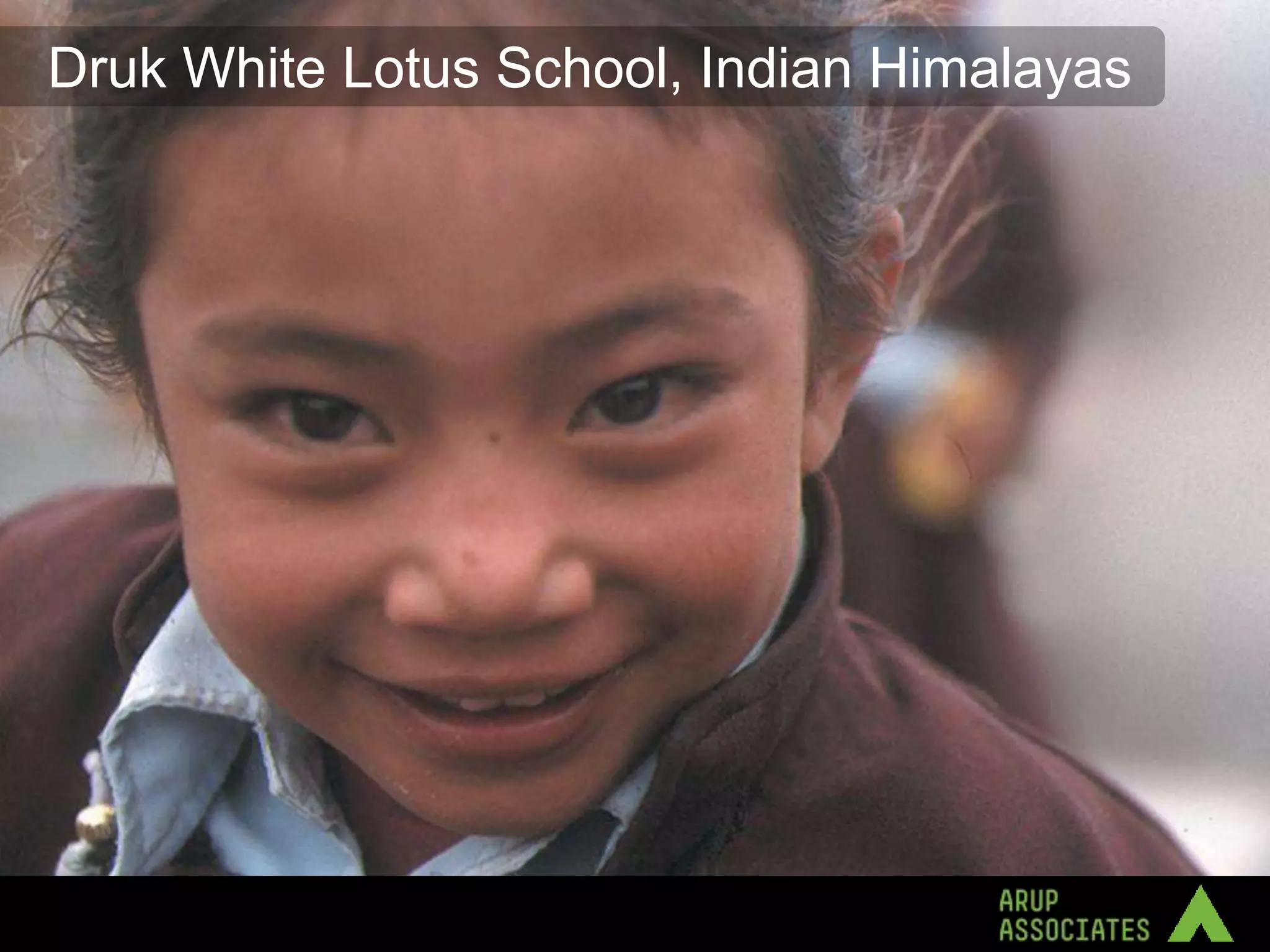
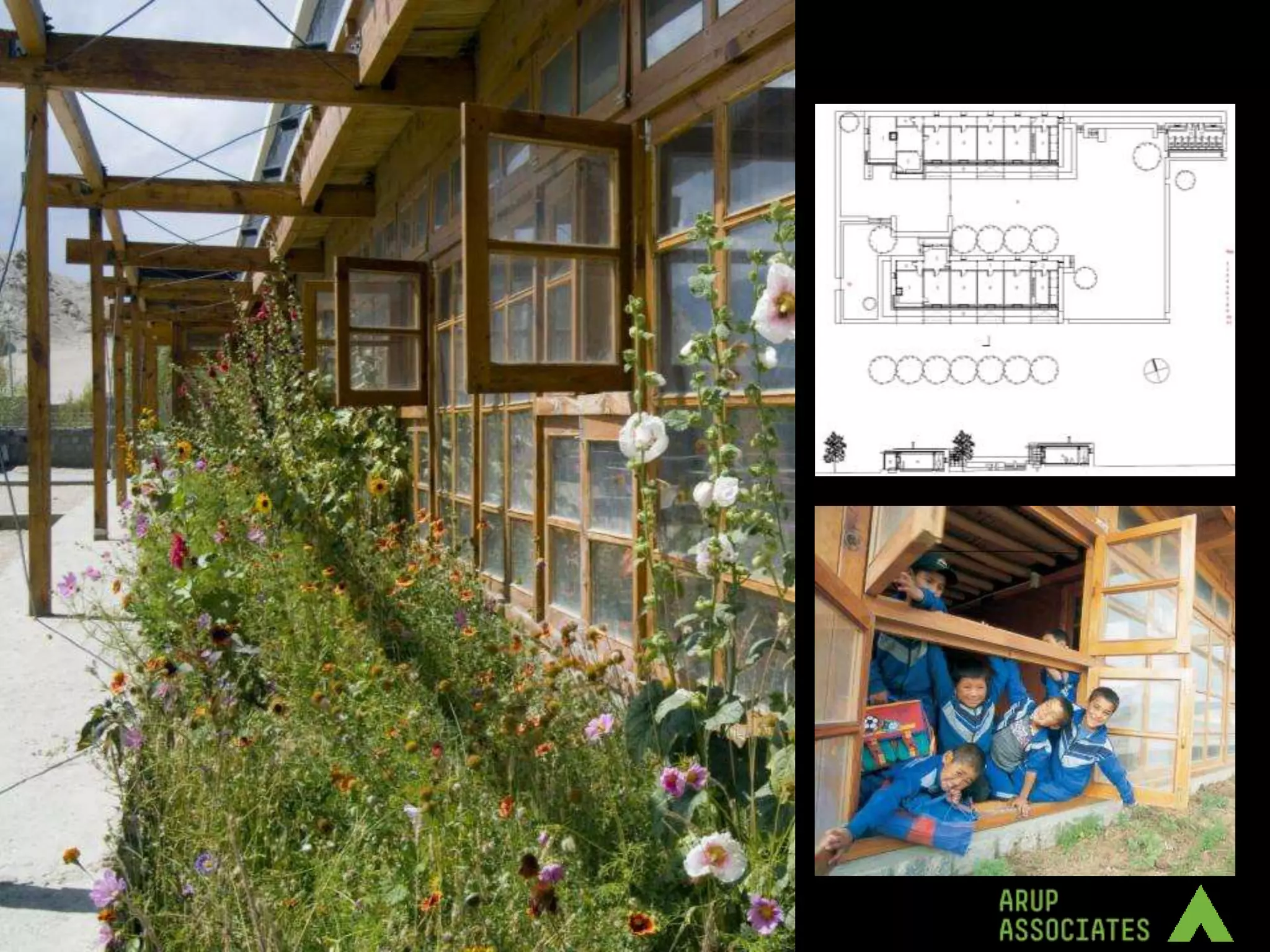
Druk White Lotus School, Indian Himalayas
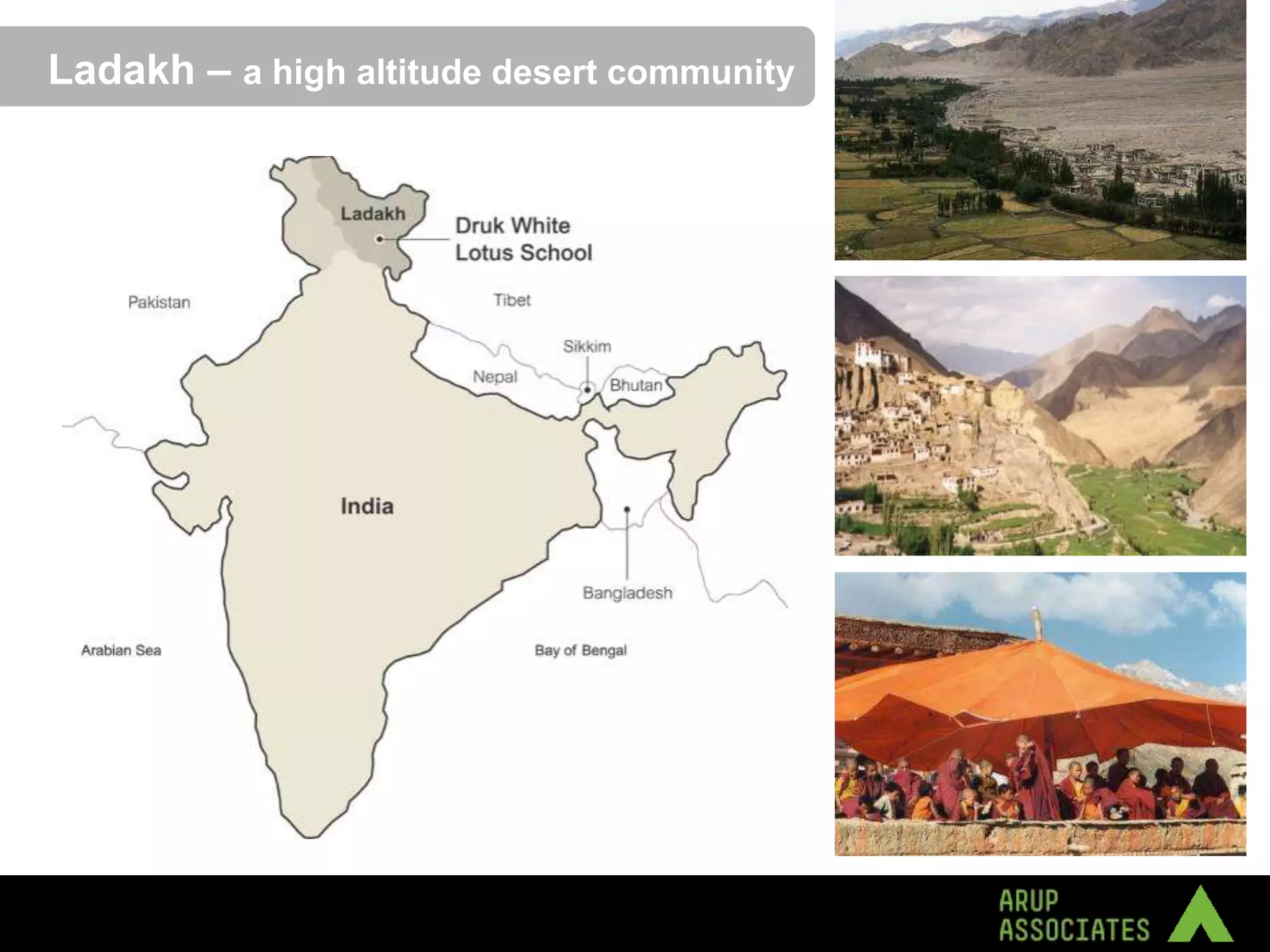
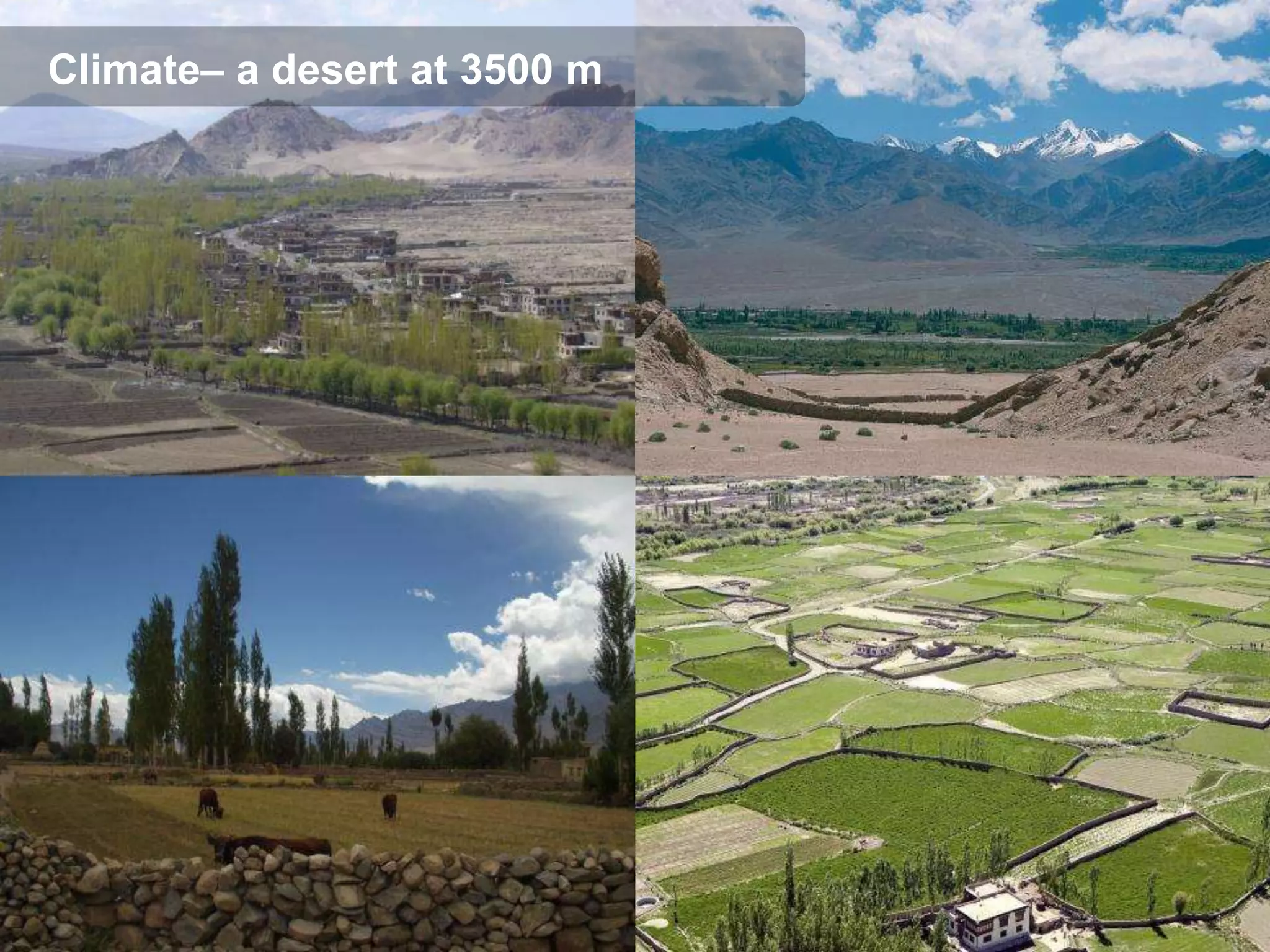
Ladakh – a high altitude desert community
Climate– a desert at 3500 m
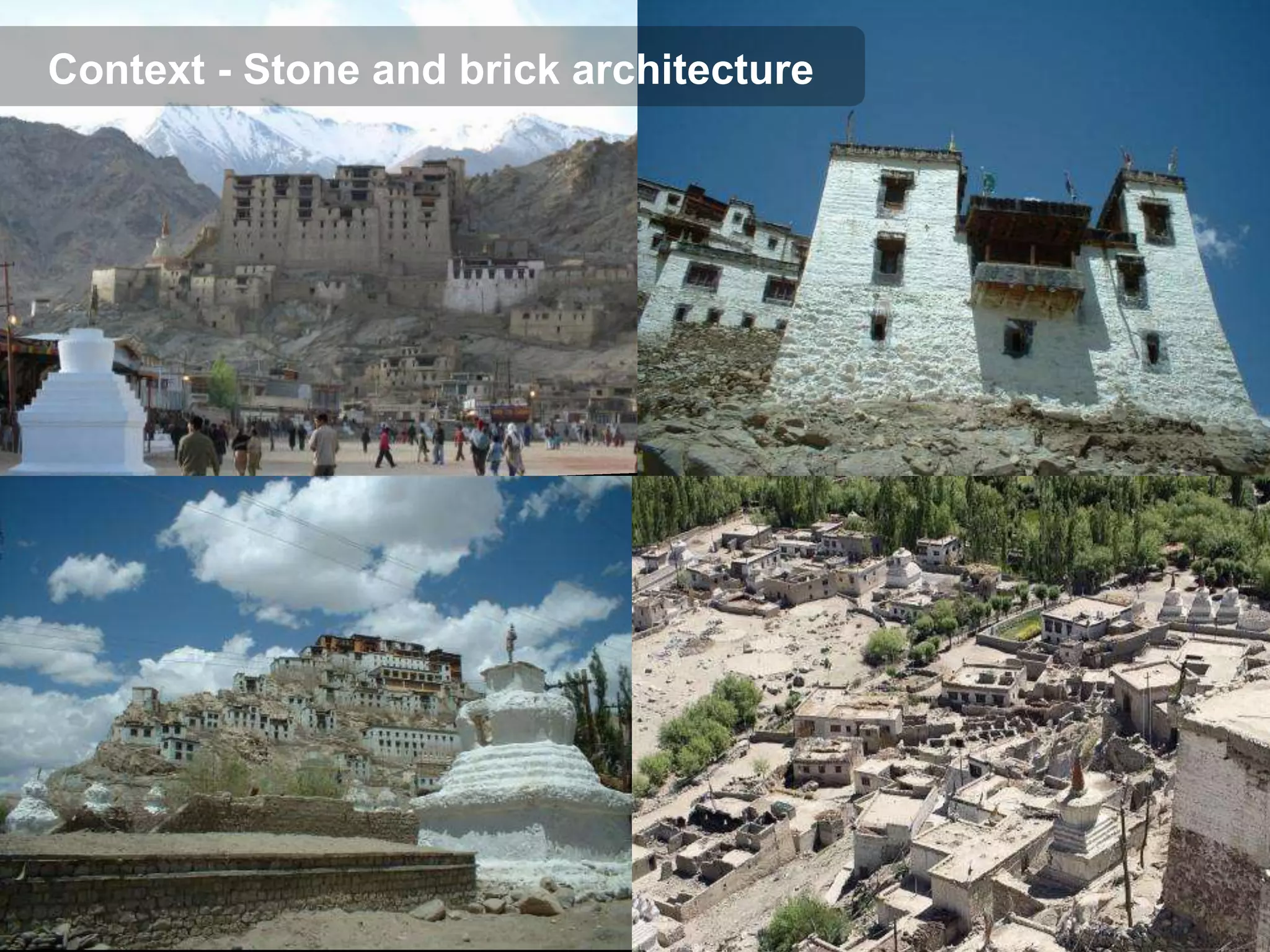
Context - Stone and brick architecture
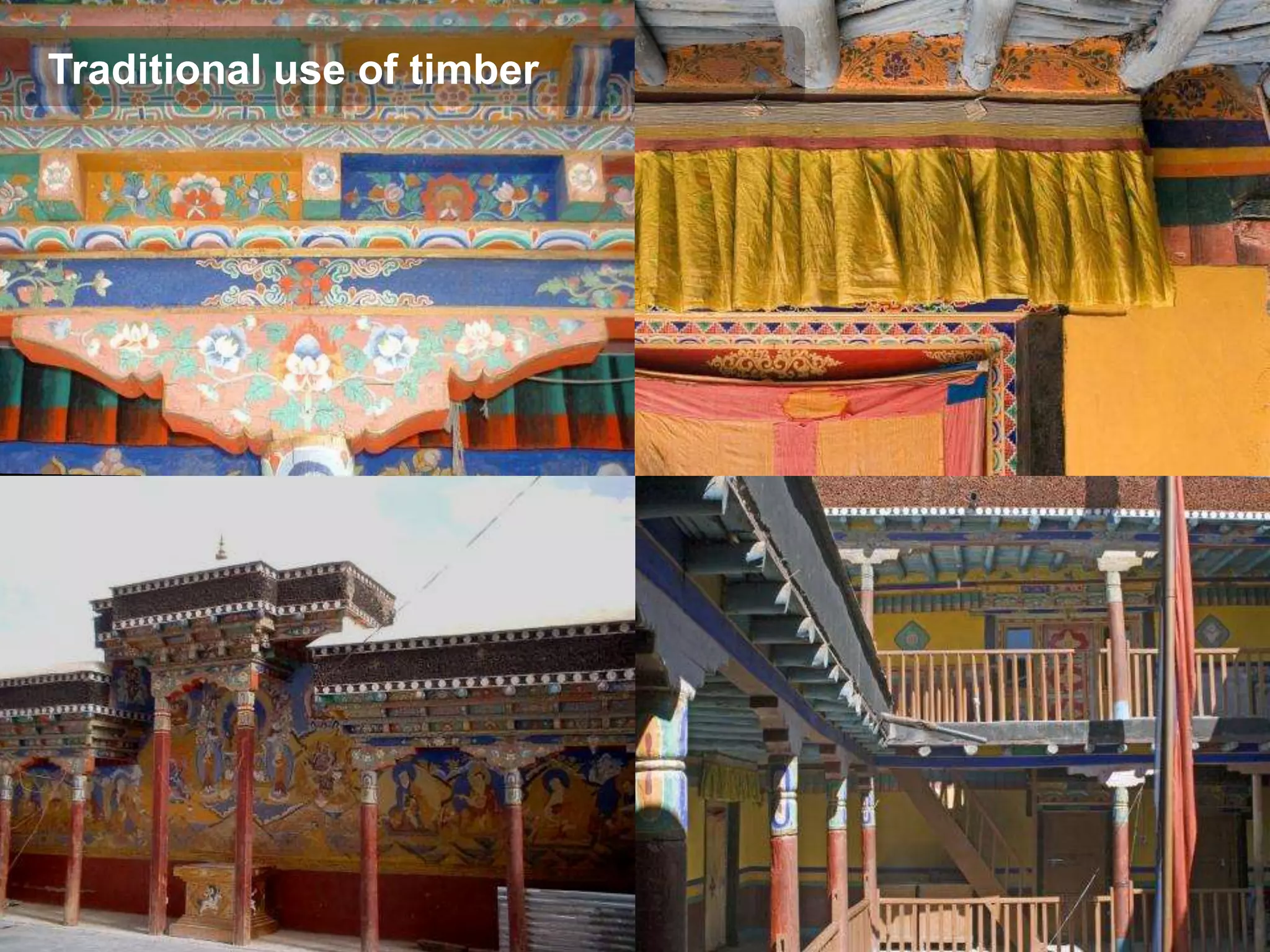
Traditional use of timber
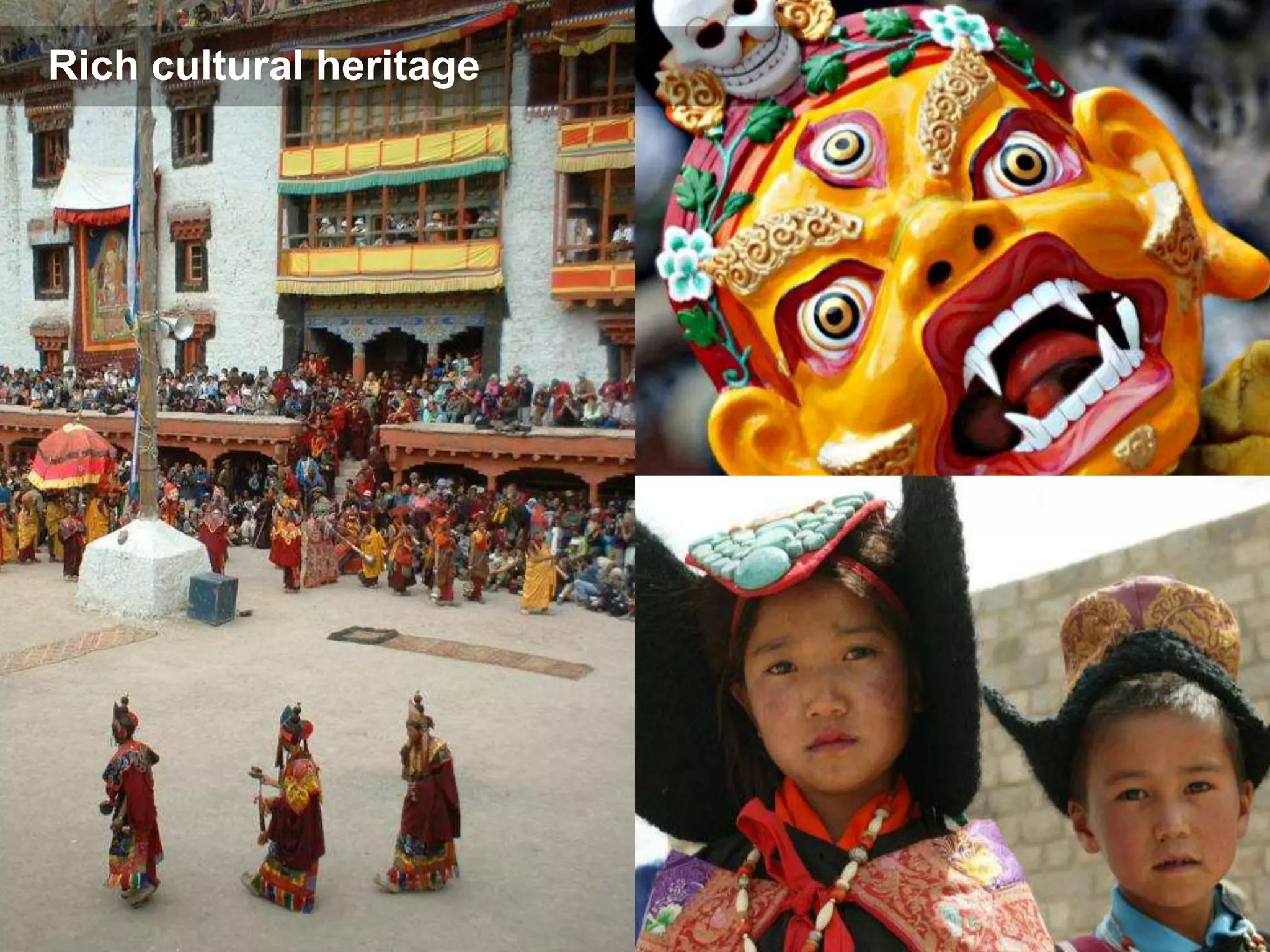
Rich cultural heritage
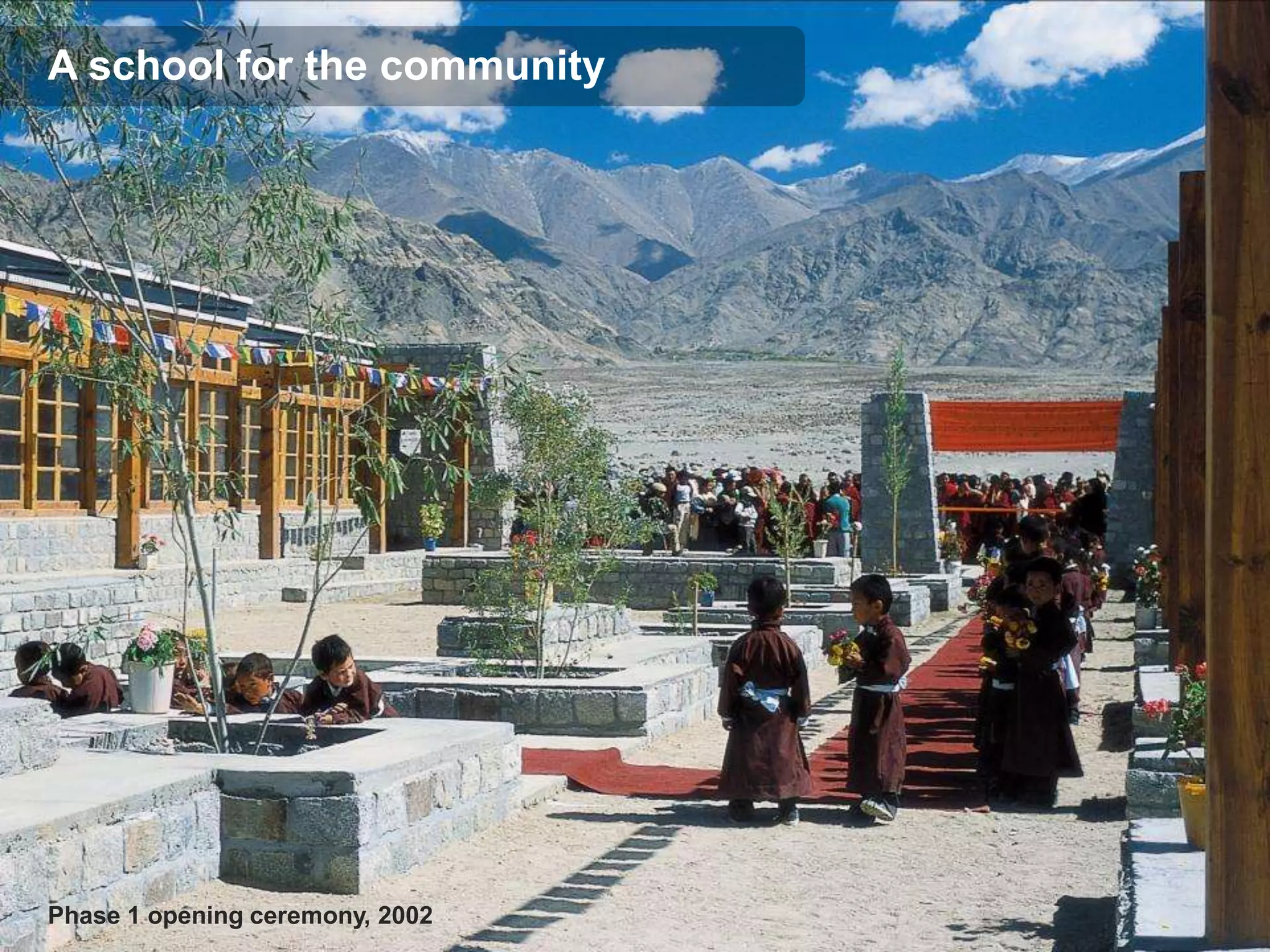
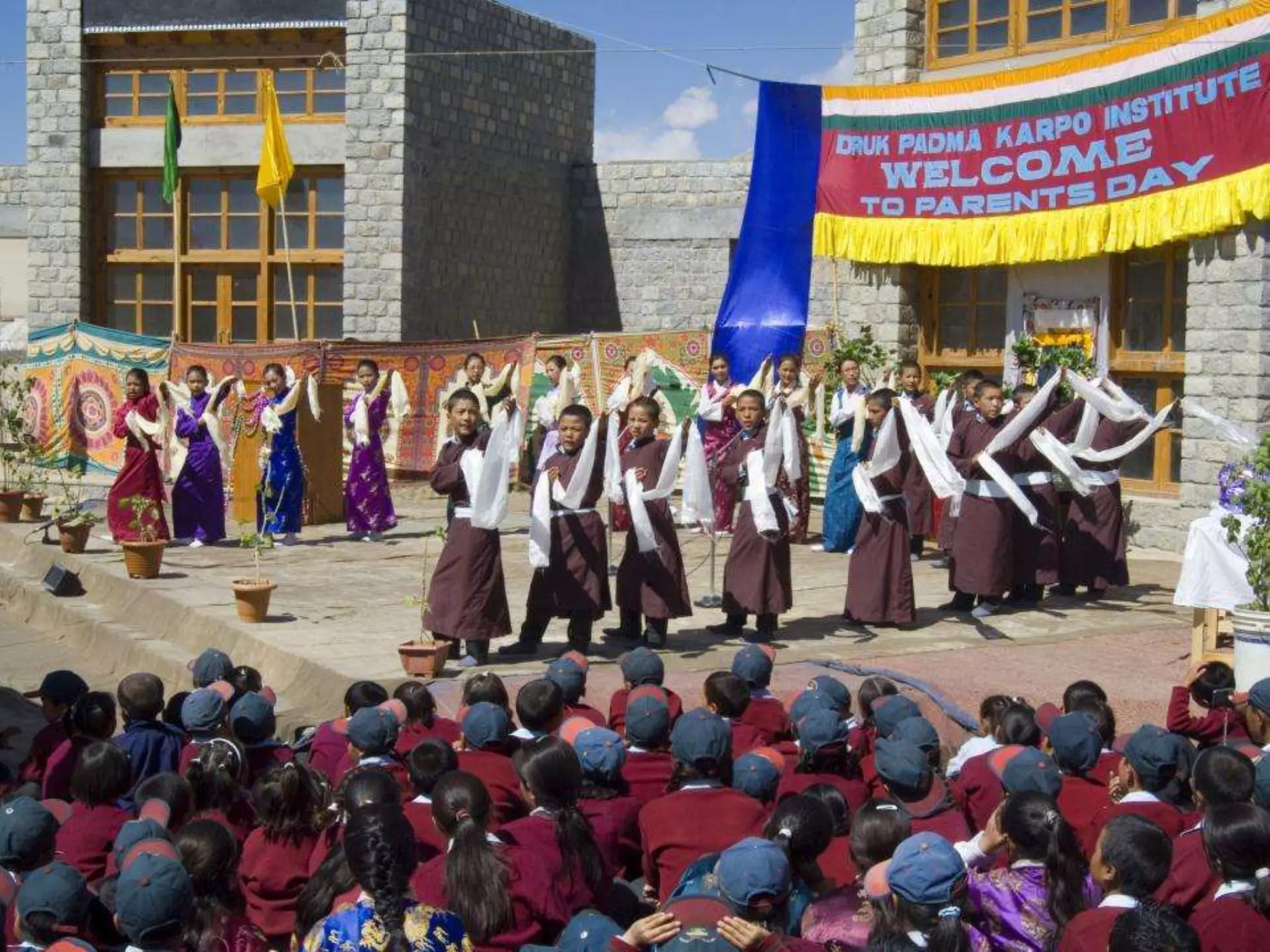
A school for the community


Phase 1 opening ceremony, 2002
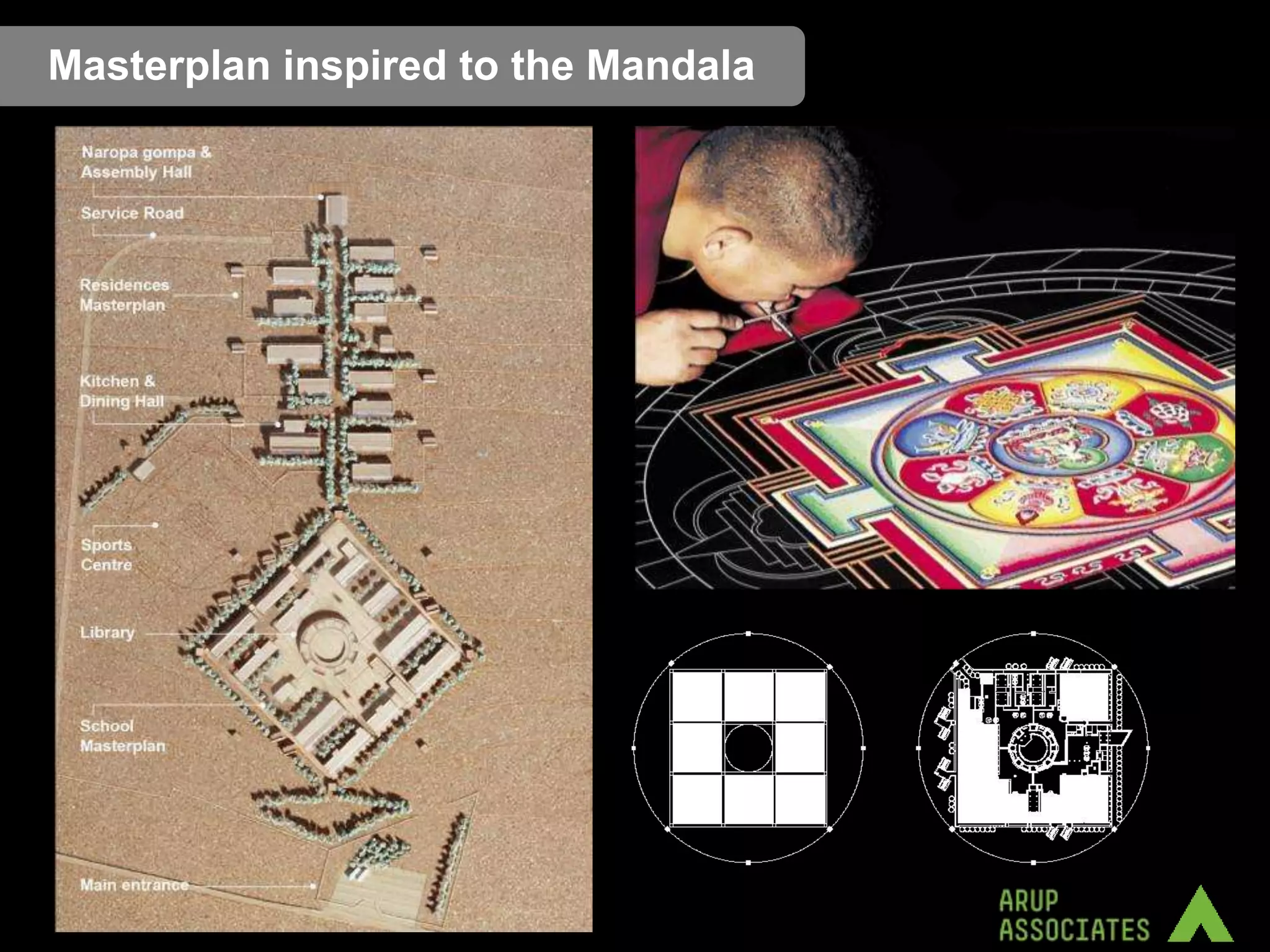
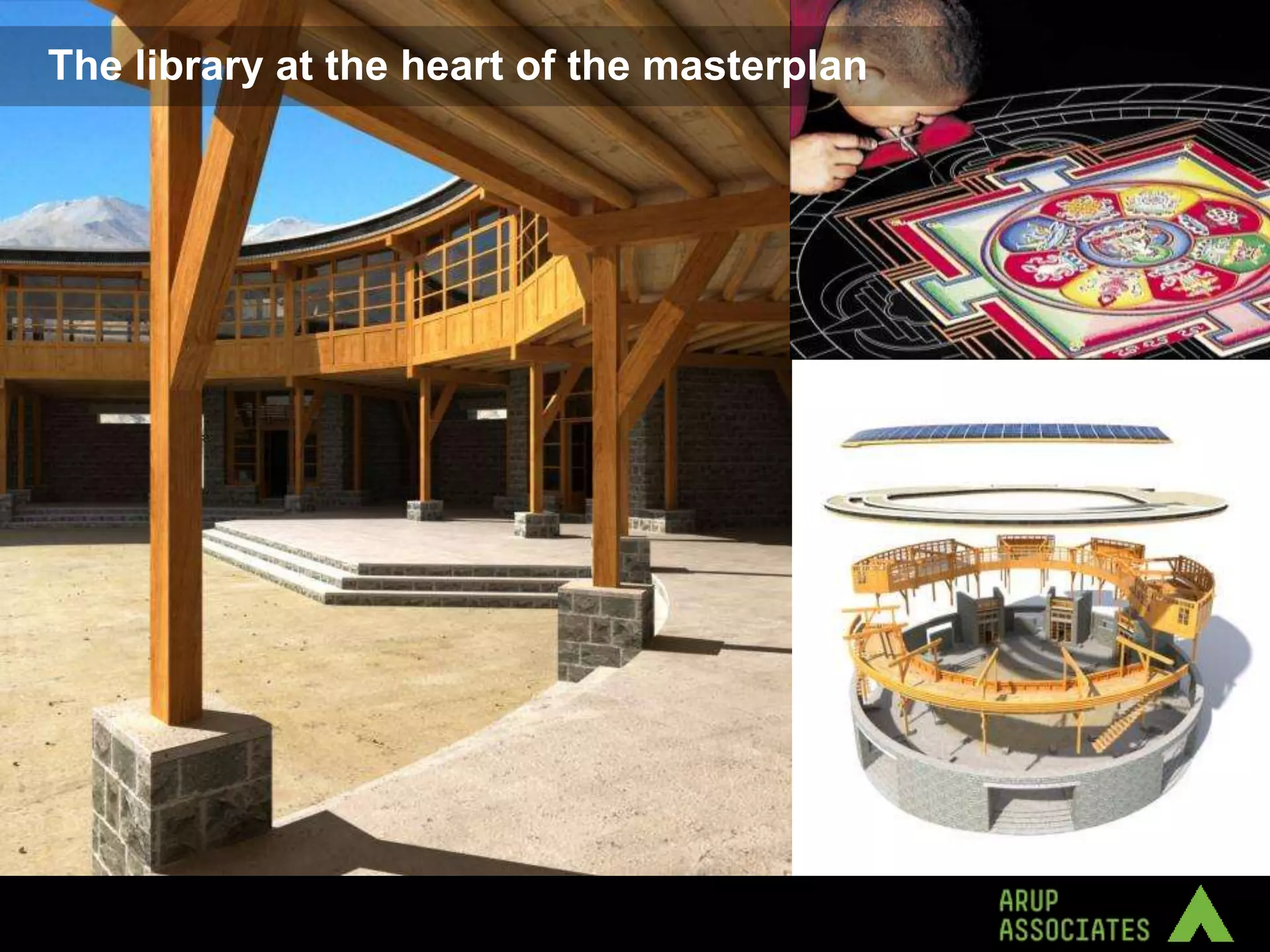
Masterplan inspired to the Mandala
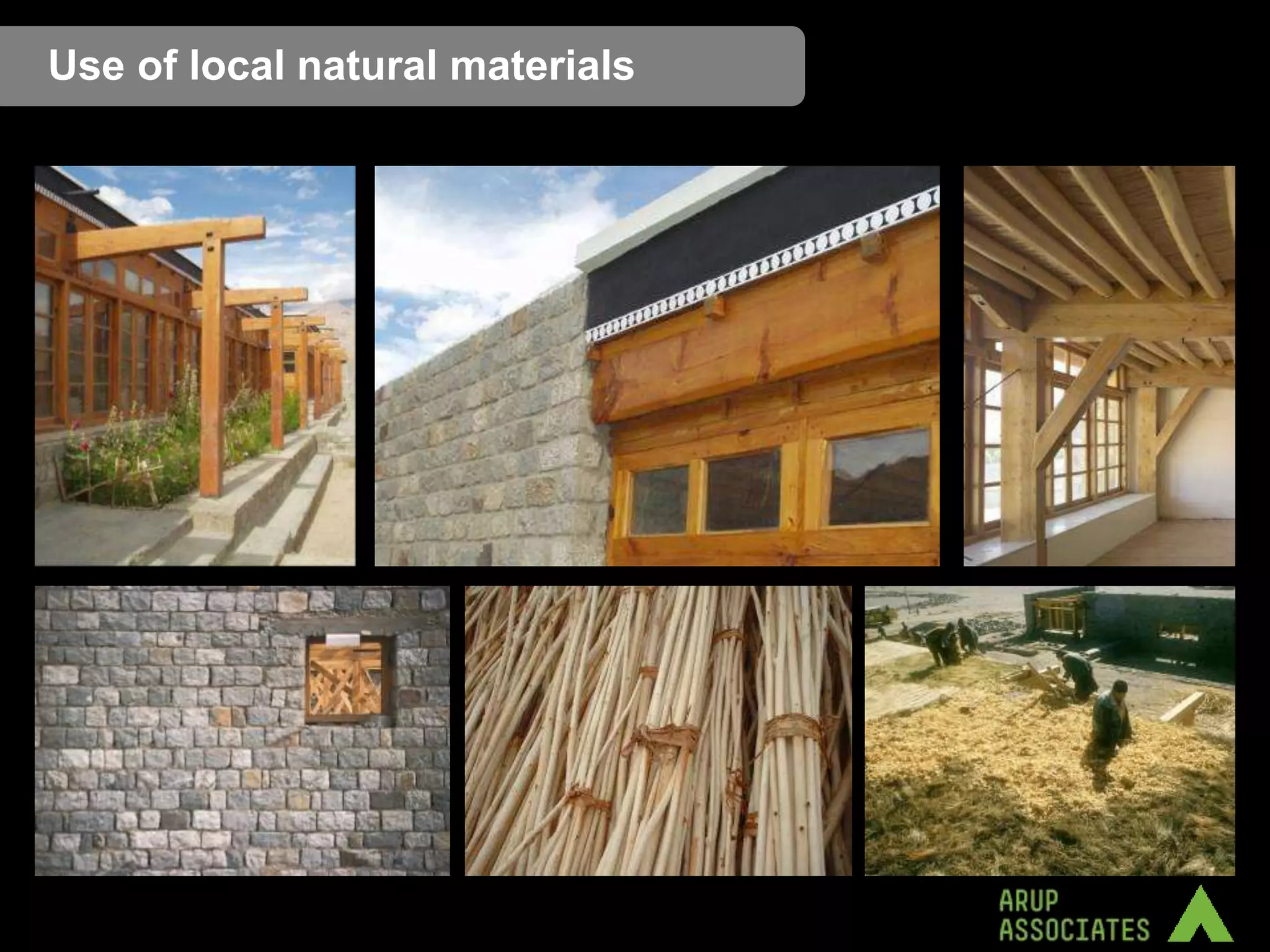
Use of local natural materials
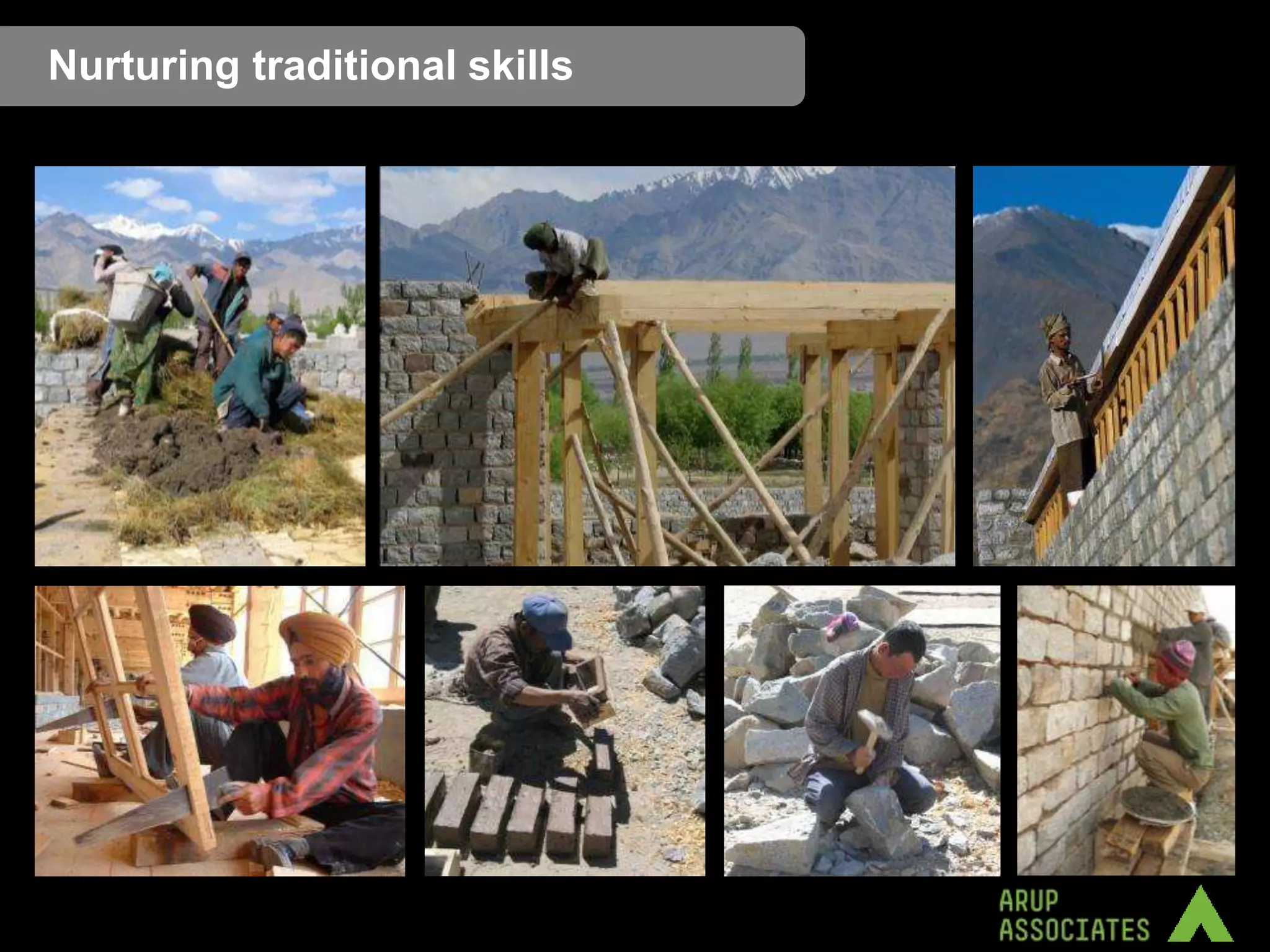
Nurturing traditional skills
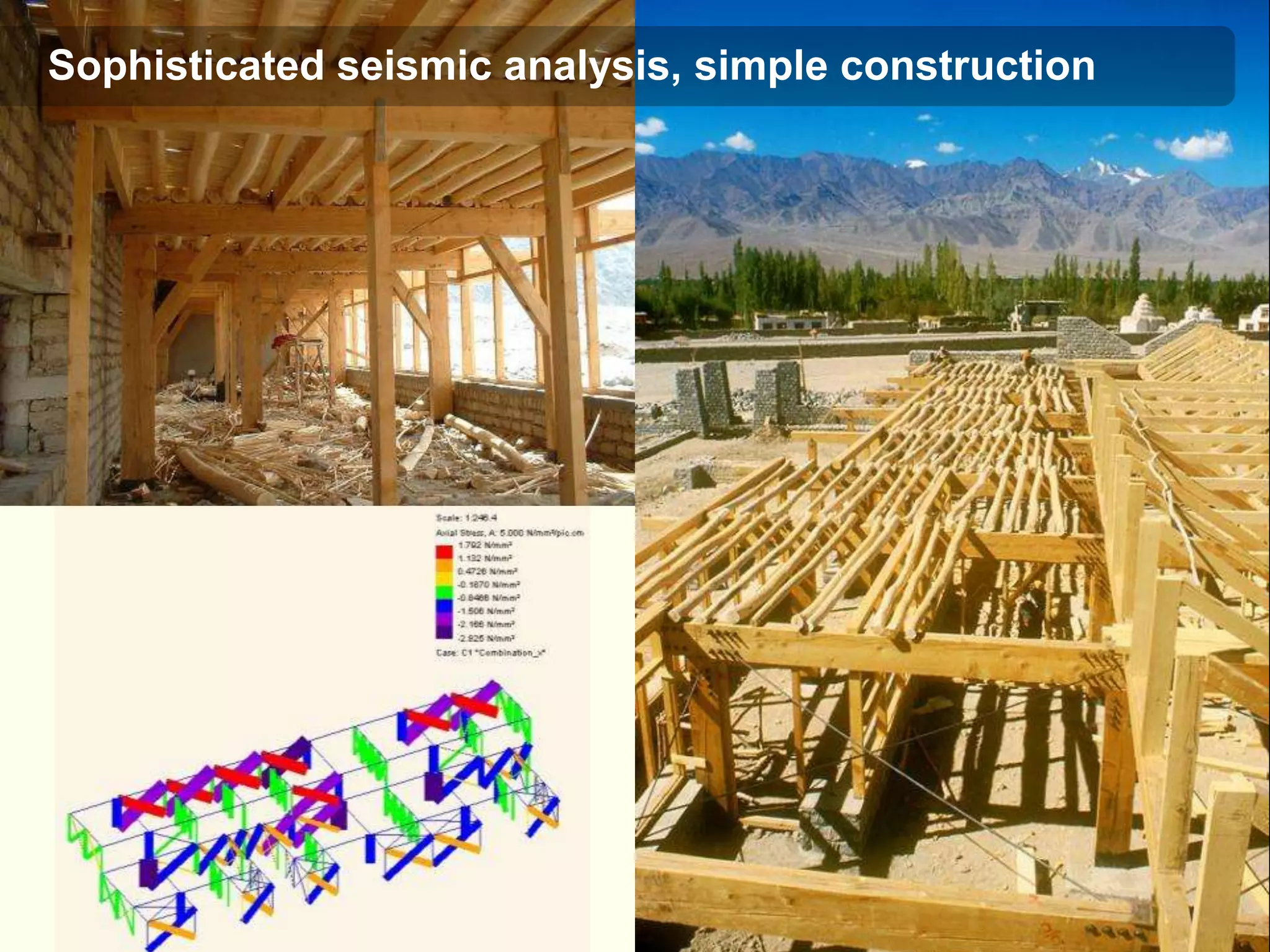
Sophisticated seismic analysis, simple construction
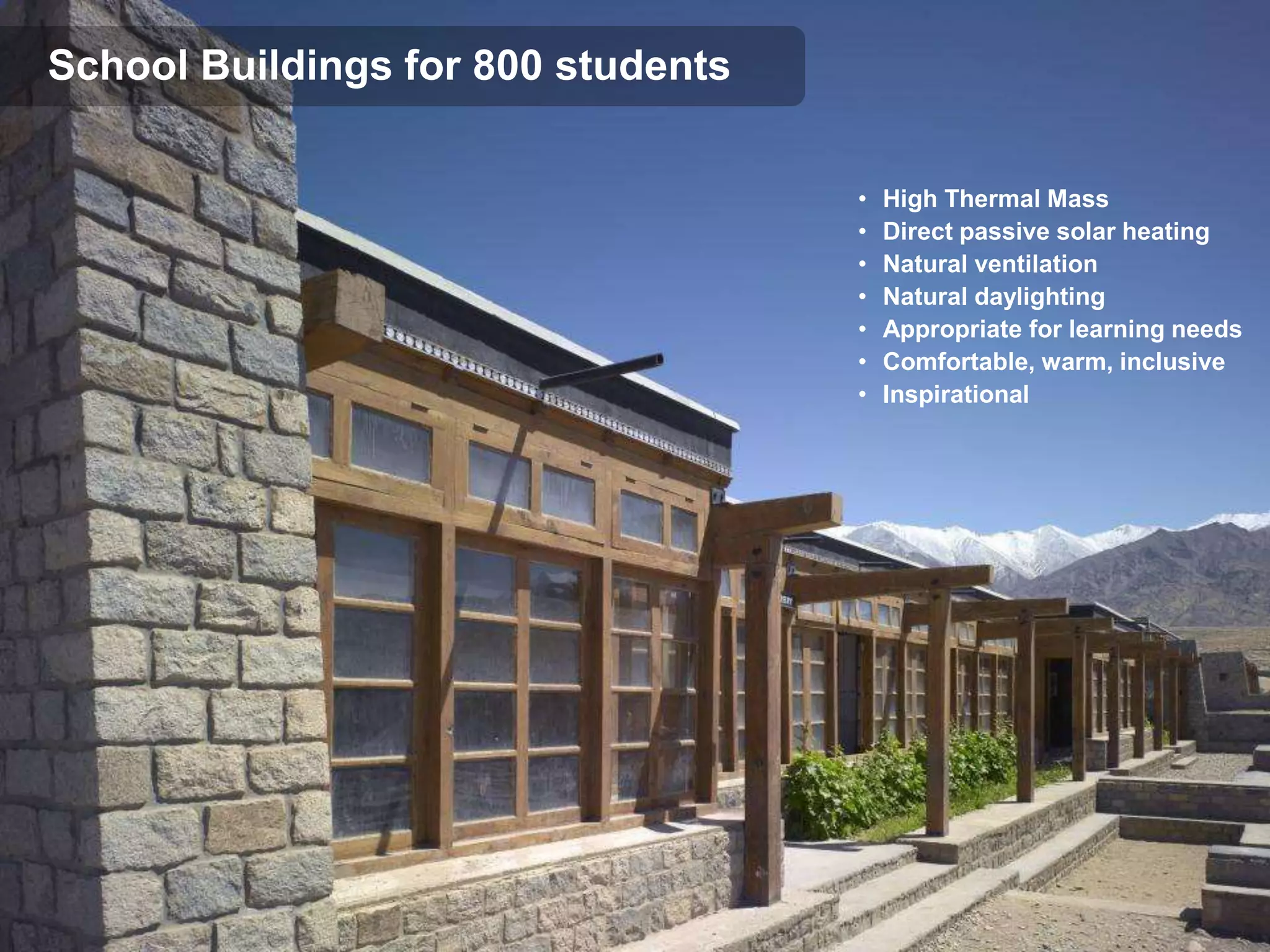
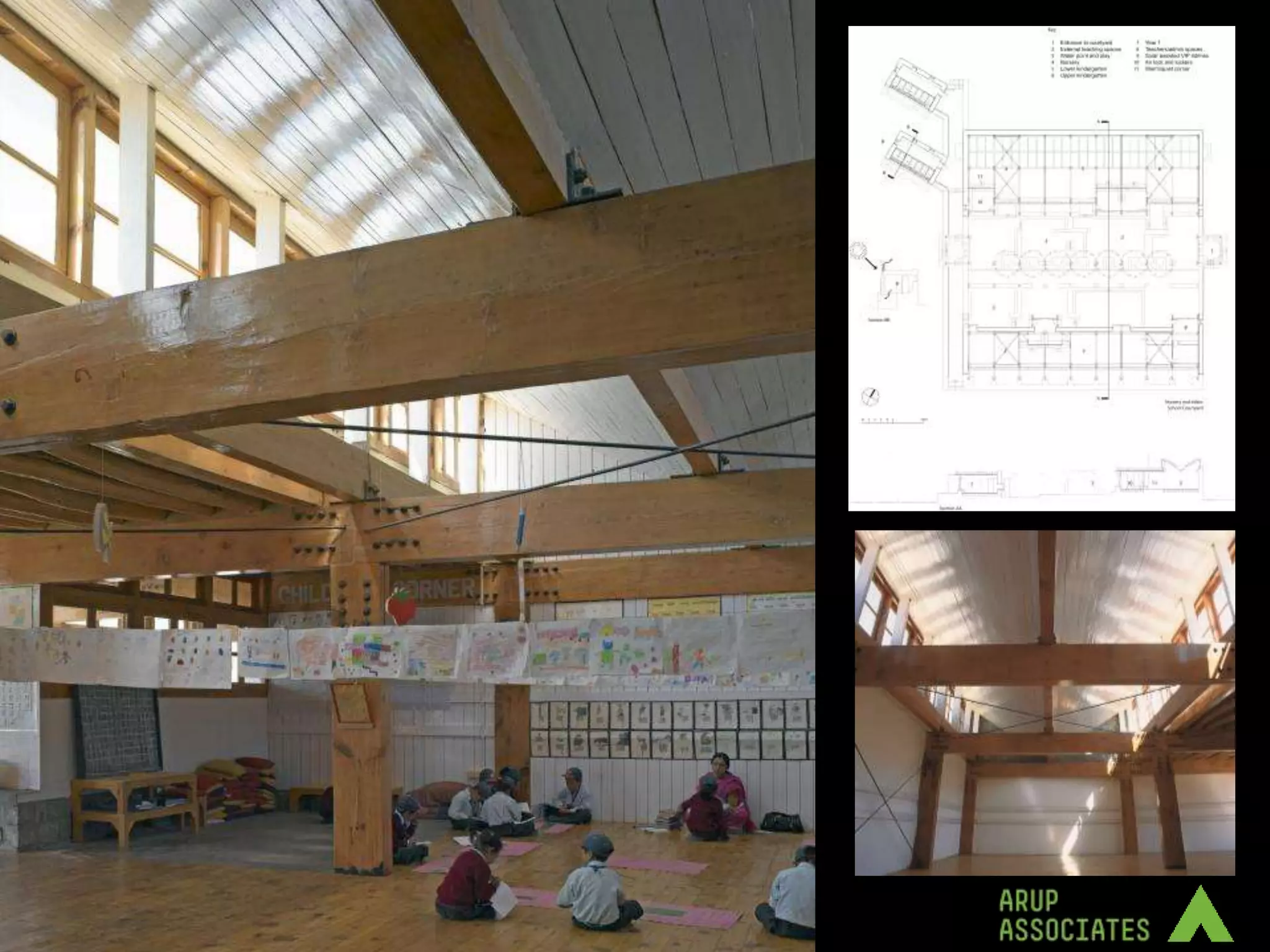
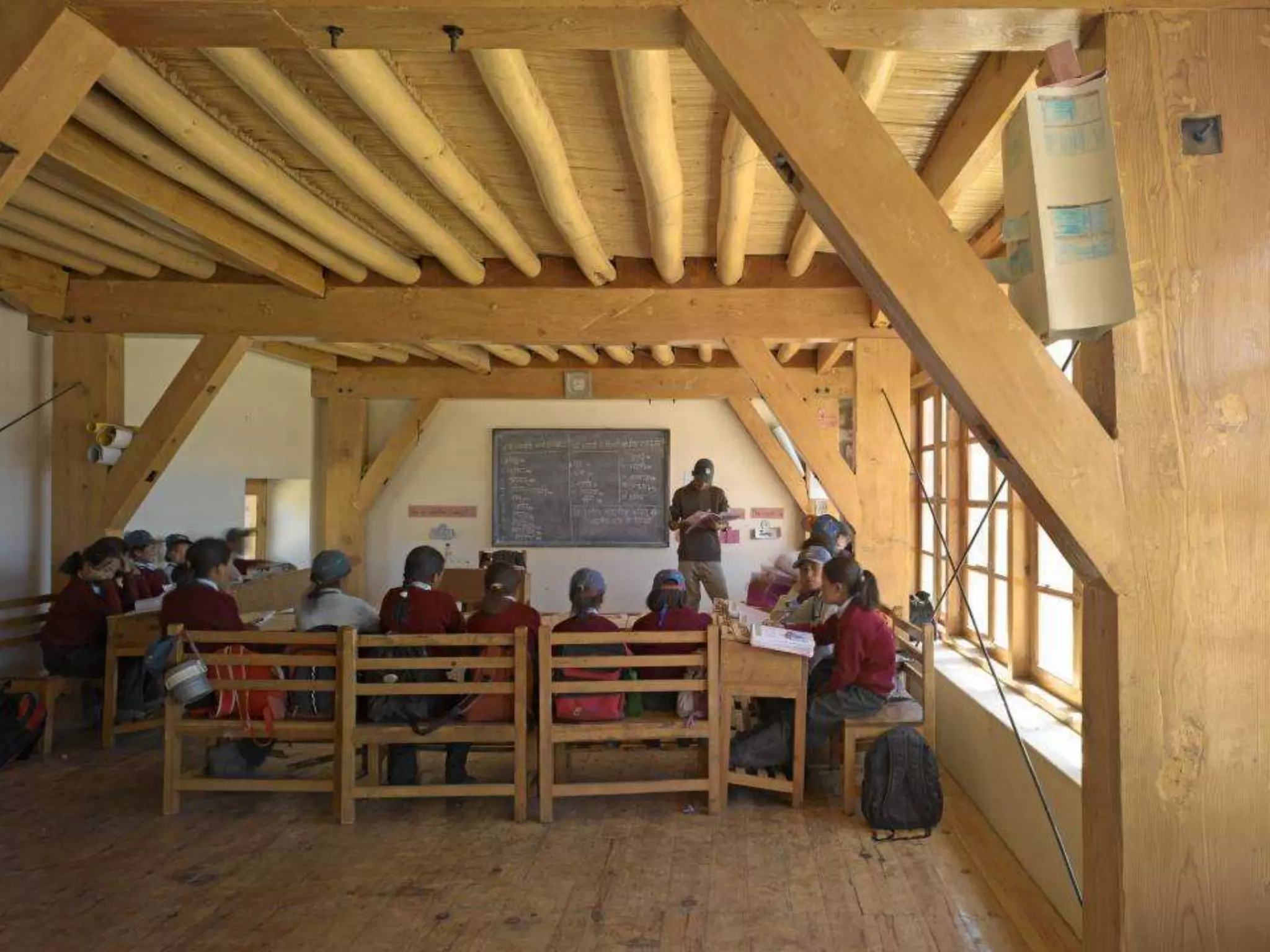
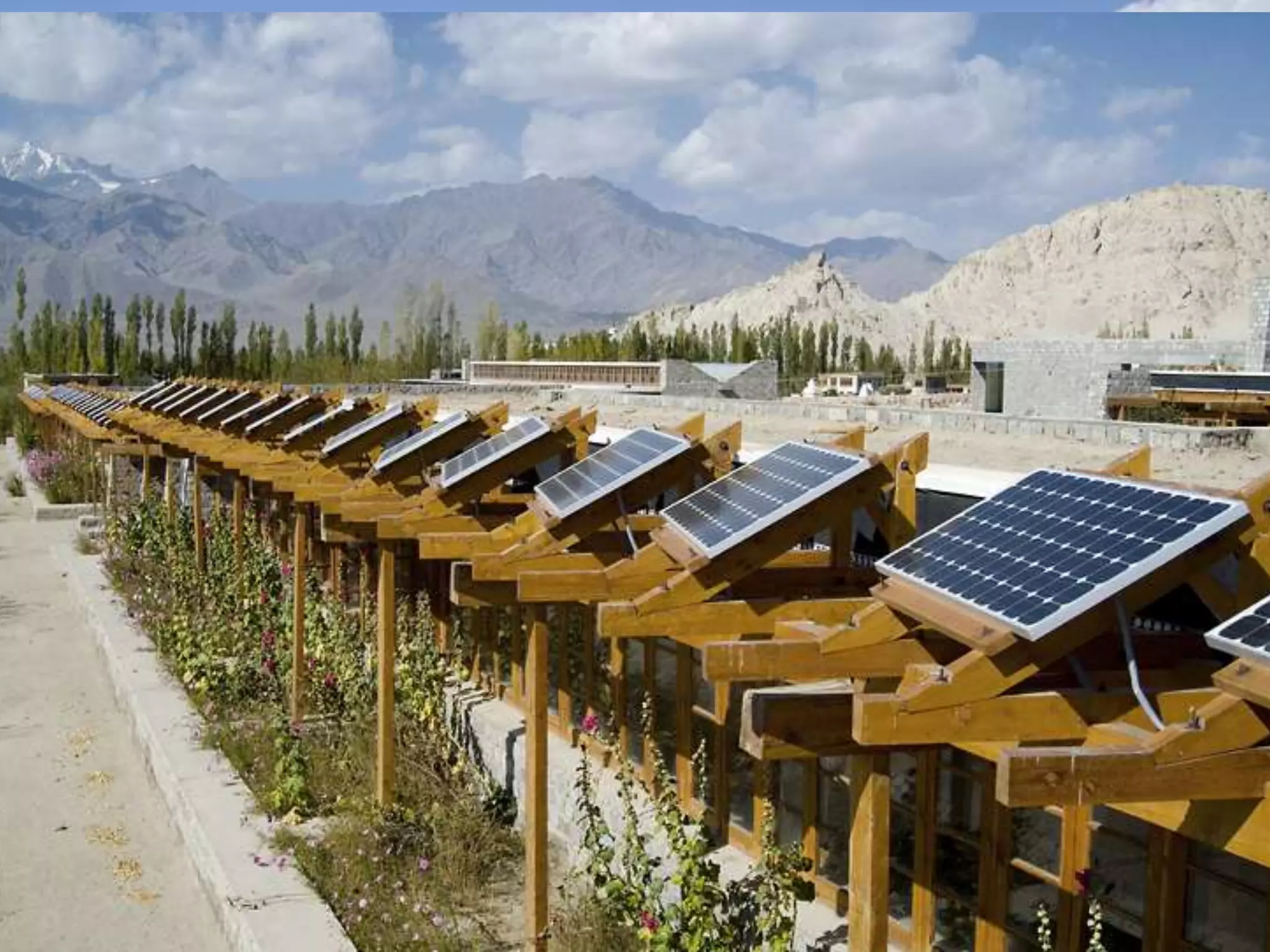
School Buildings for 800 students


                                    •   High Thermal Mass
                                    •   Direct passive solar heating
                                    •   Natural ventilation
                                    •   Natural daylighting
                                    •   Appropriate for learning needs
                                    •   Comfortable, warm, inclusive
                                    •   Inspirational
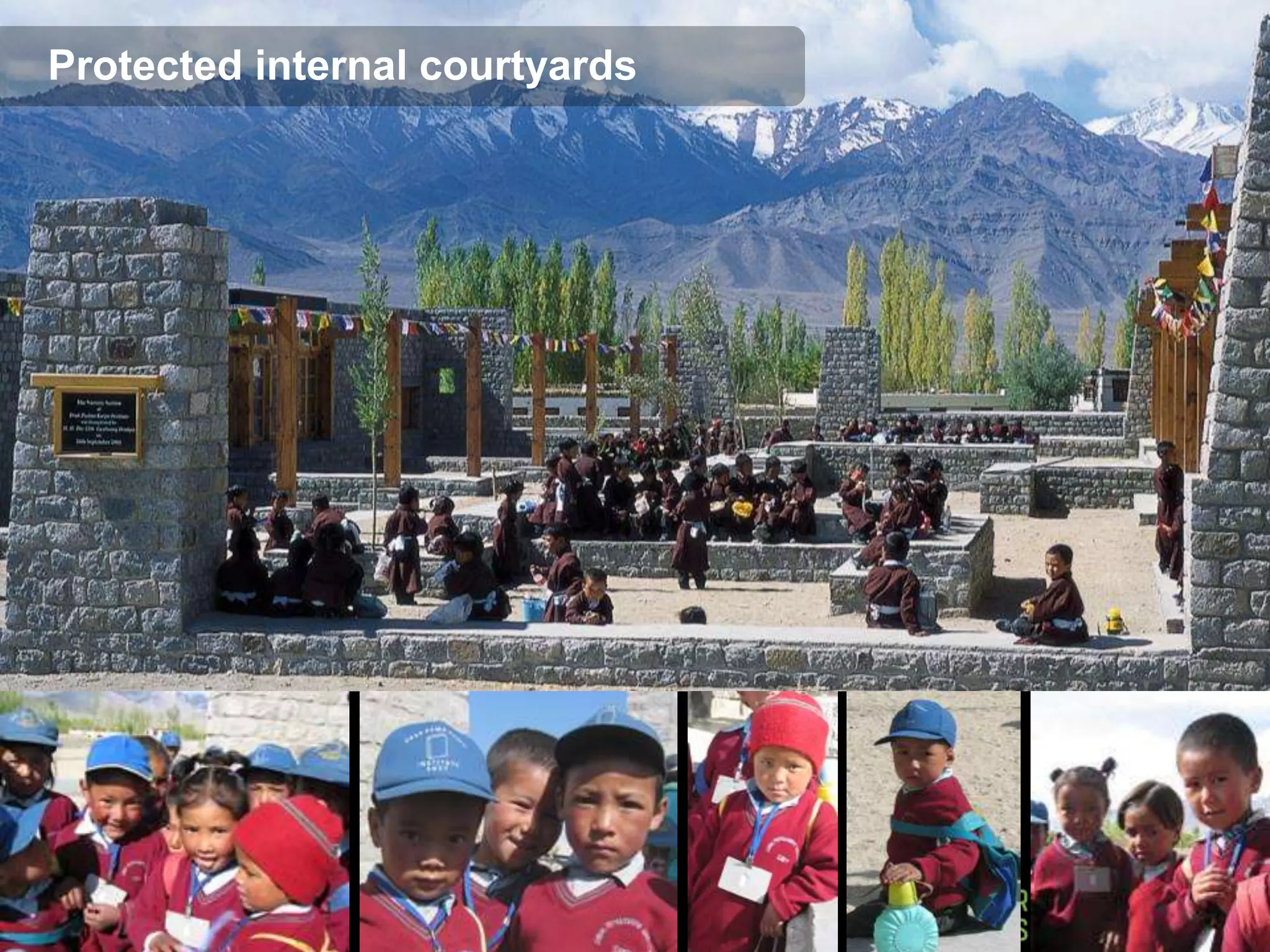
Protected internal courtyards
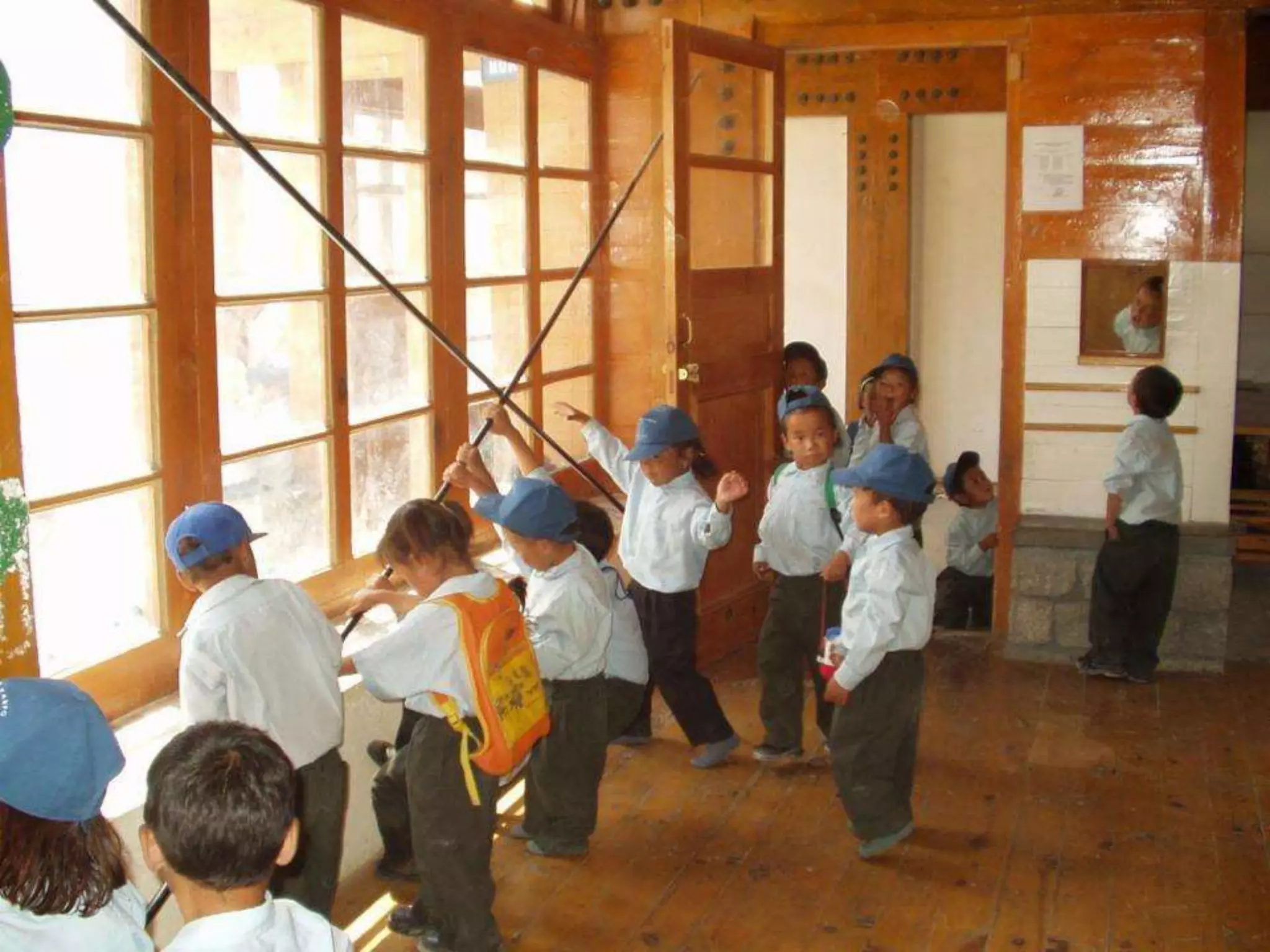
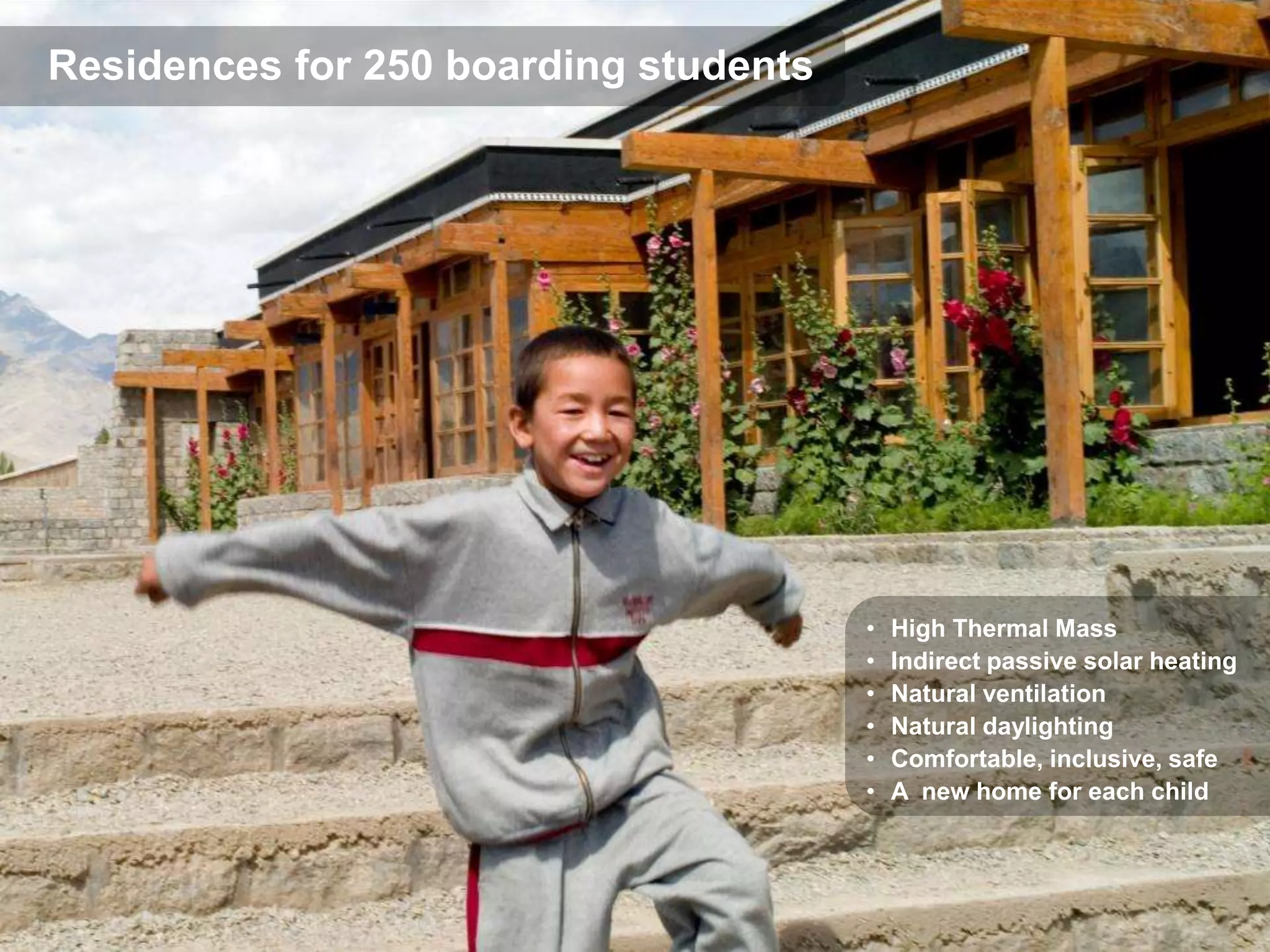
Residences for 250 boarding students


                                       •   High Thermal Mass
                                       •   Indirect passive solar heating
                                       •   Natural ventilation
                                       •   Natural daylighting
                                       •   Comfortable, inclusive, safe
                                       •   A new home for each child
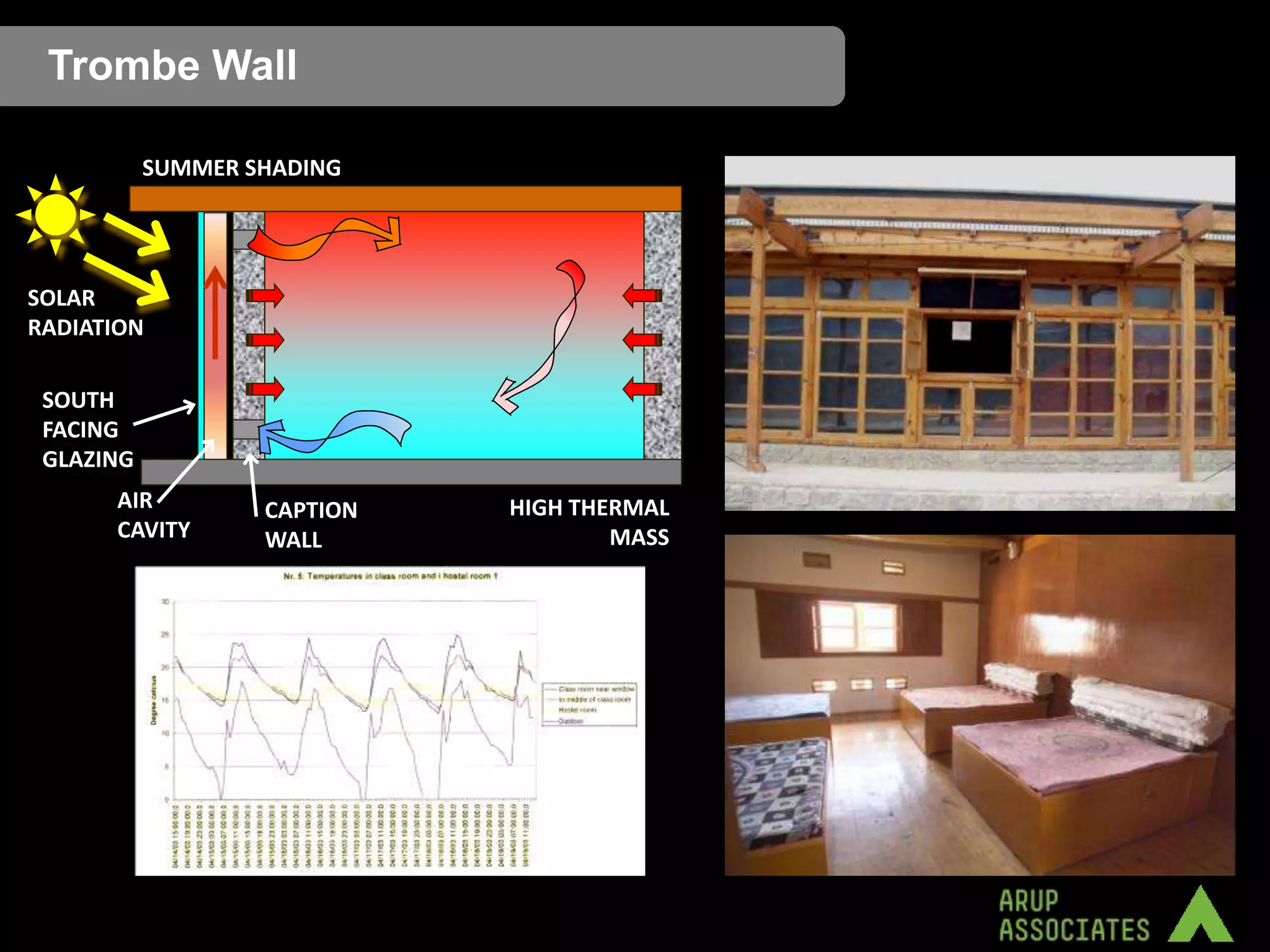
Trombe Wall

           SUMMER SHADING


SOLAR
RADIATION

 SOUTH
 FACING
 GLAZING
      AIR          CAPTION   HIGH THERMAL
      CAVITY       WALL              MASS


                                   External view with dark-painted wall and glazed facade
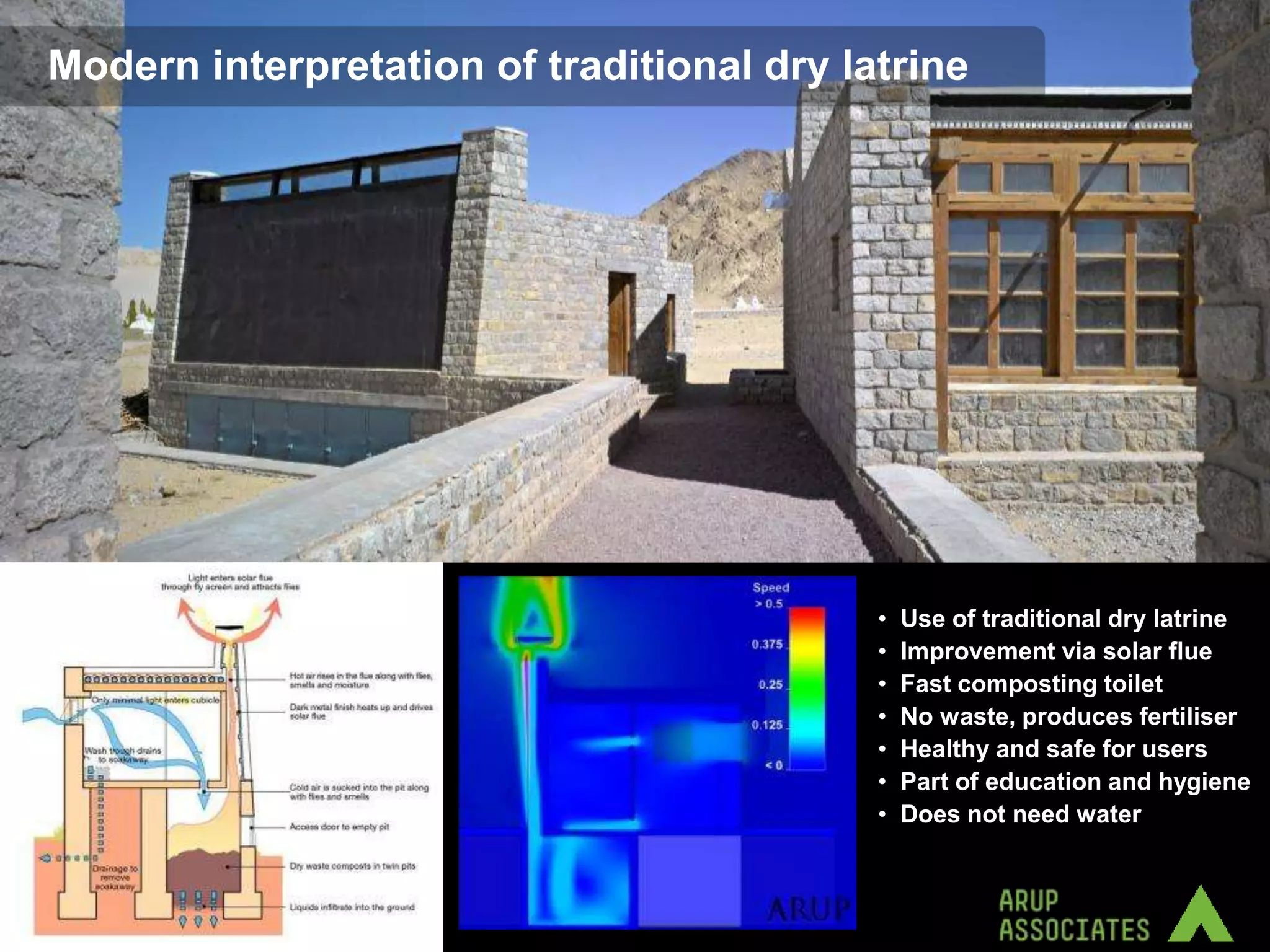
Modern interpretation of traditional dry latrine


                                           •   Use of traditional dry latrine
                                           •   Improvement via solar flue
                                           •   Fast composting toilet
                                           •   No waste, produces fertiliser
                                           •   Healthy and safe for users
                                           •   Part of education and hygiene
                                           •   Does not need water
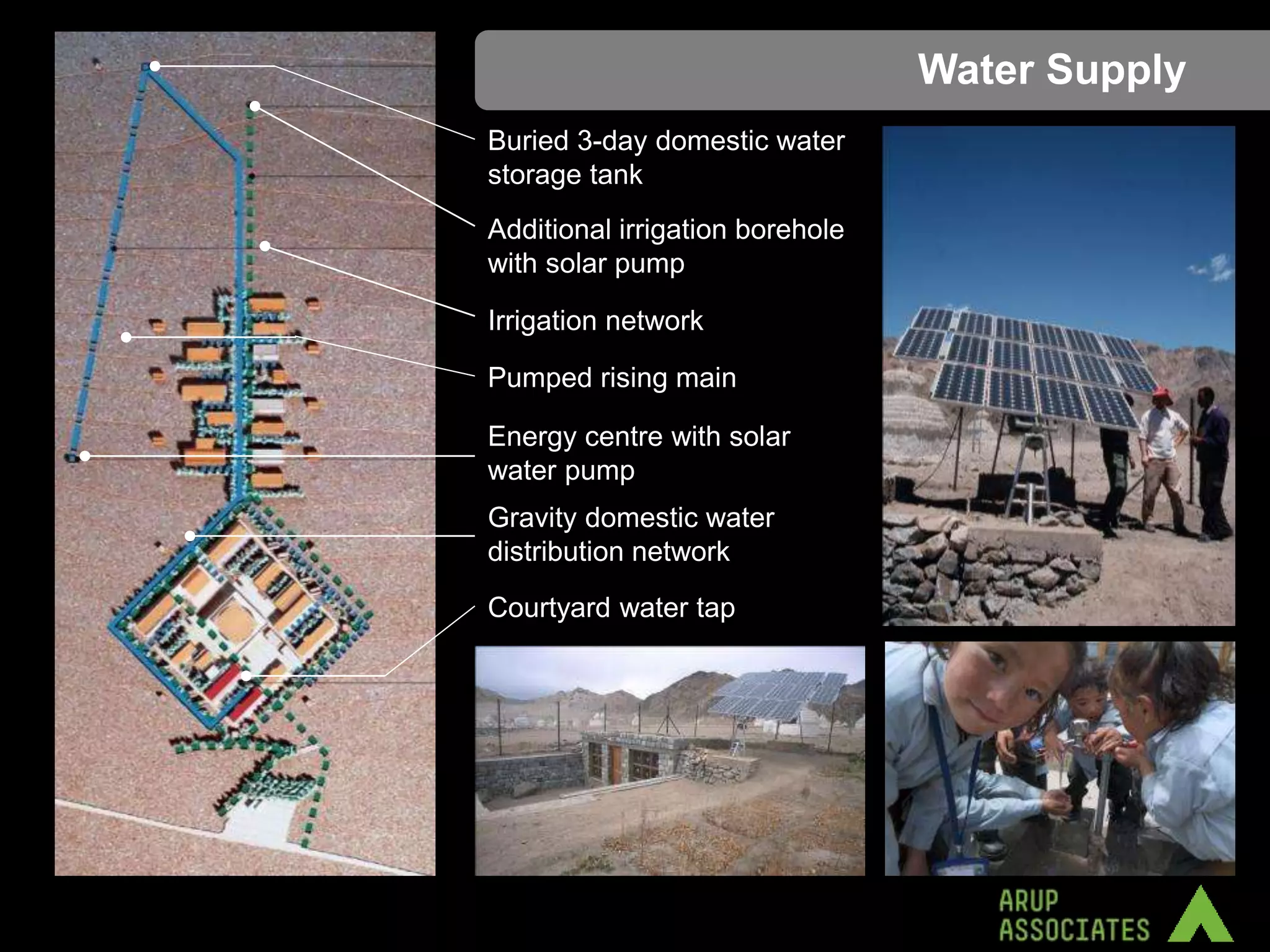
Water Supply
Buried 3-day domestic water
storage tank
Additional irrigation borehole
with solar pump

Irrigation network

Pumped rising main

Energy centre with solar
water pump
Gravity domestic water
distribution network
Courtyard water tap
The library at the heart of the masterplan
Building the library
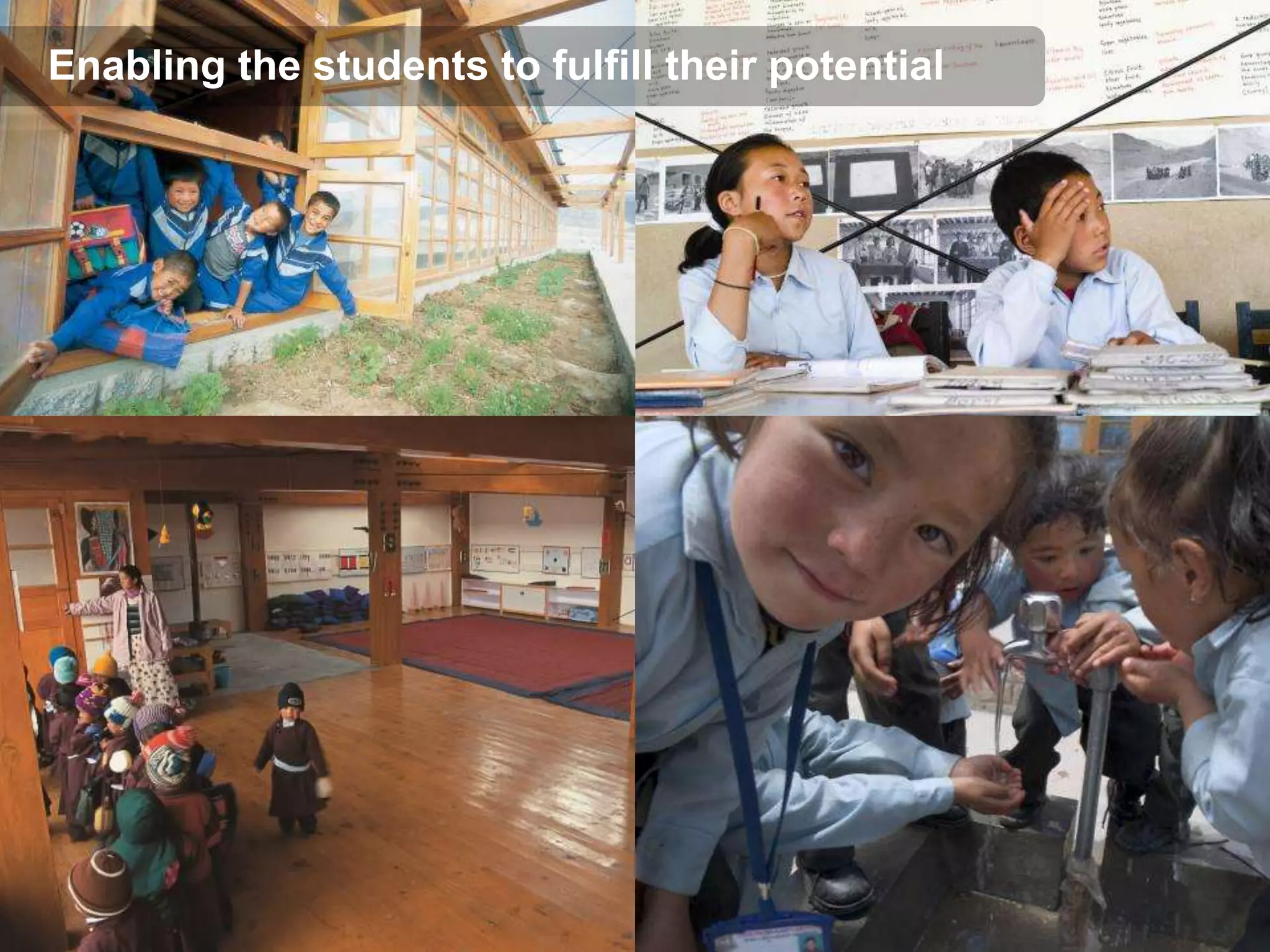
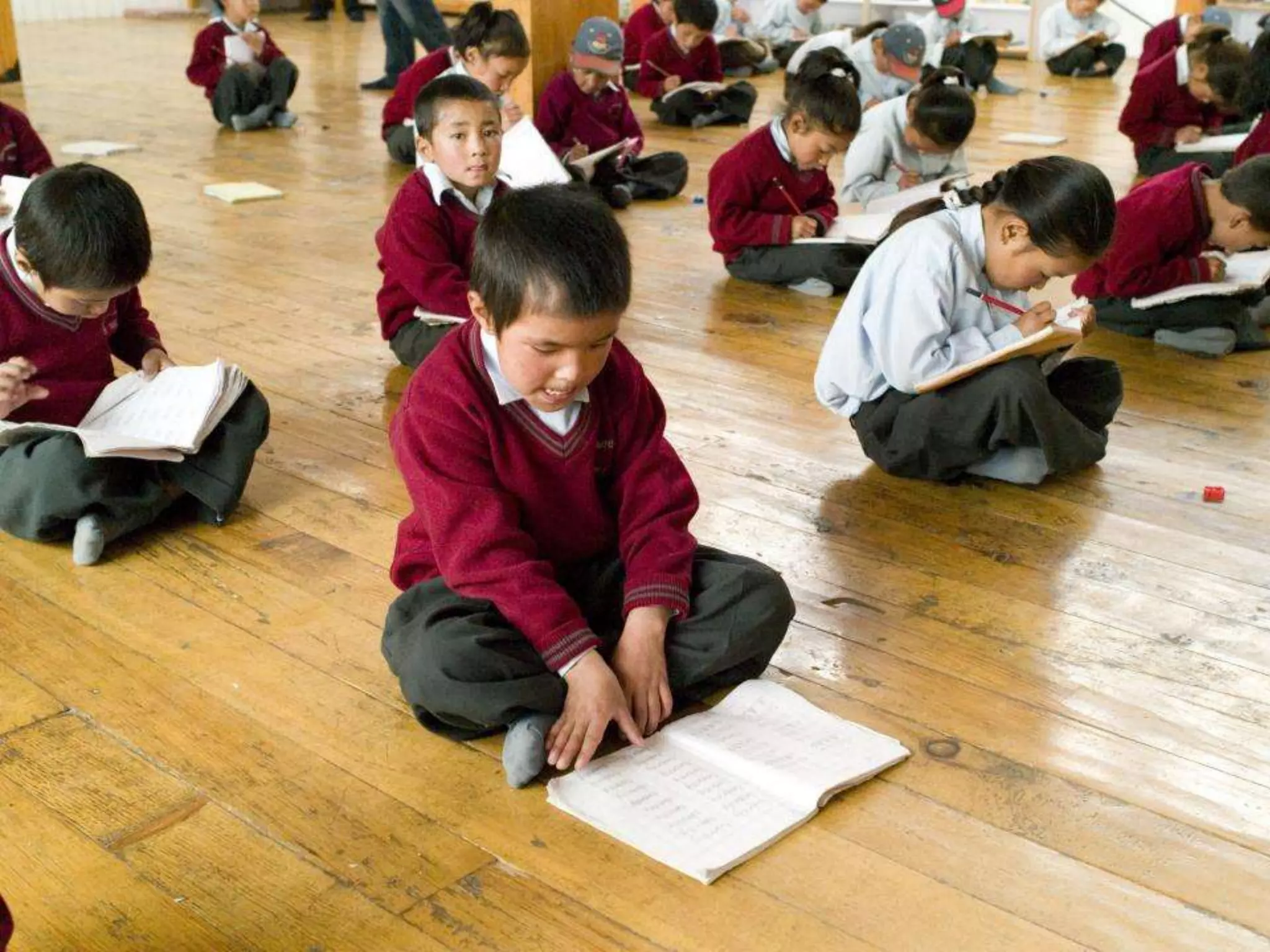
Enabling the students to fulfill their potential
How can we designers help to close the cycle?
作为设计师,我们如何帮助形成这一循环?
   Work with many different professionals, not only designers, as a sustainable solution is
   always the fruit of a true multidisciplinary approach: material experts, ecologists,
   sociologists, engineers, etc.
   与各行各业的专业人士合作,例如材料专家、生态专家、社会学家和工程师等,而不仅
   仅是和设计师;可持续性解决方案终将是多学科共同研究得出的成果。

   Seek for flexible solutions that can be changed or adapted to future changes.
   寻求灵活的解决方案,可适应未来的变化。

   Look for win-win solutions, where a by-product of one process becomes the source for
   another process.
   寻求双赢的解决方案,其中某个过程的副产物可成为另一个过程的能源。

   Incorporate many different strategies; one strategy only will give you only a partial
   benefit but will not achieve a sustainable building alone.
   混合采用多种不同的策略;单一的策略只能带来有局限性的利益,而无法实现可持续性
   建筑的目标。
   Don’t forget that architects and designers have a huge responsibility towards society.
   别忘记建筑师和设计师对社会应负有的重要责任感。
Thank you!

Questions?

Learning from Nature, Beyond Carbon Zero

  • 1.
    Learning from Nature Beyond Carbon Zero 从大自然中学习 不止于零碳排放 Francesca Galeazzi Arup Associates Green Drinks Shanghai 11 October 2012
  • 2.
    ARUP and ArupAssociates Arup was founded in 1946 in London by the Danish engineer and philosopher Sir Ove Arup. Today, we have over 10,000 people, operating in more than 90 offices. We have operated in China for more than 30 years
  • 3.
    across all sectors acrossall sizes across geographies
  • 4.
    Learning from Nature BeyondCarbon Zero 从大自然中学习 不止于零碳排放 Can we imagine a self sufficient building in terms of energy, water and resources, that does not produce waste and that replenishes the resources used during its lifetime? 想象一下如果建筑也可以在能源及资源利用上自给自足? 既不会产生废物,又可以源源不断地自我补充。 Yes! 这是有可能的!
  • 5.
    Humans are pioneers –but where else can we go on this planet? 人类是科技上的先 驱,但我们将引领 着地球的未来走向 何方? No longer possible to work to a colonising strategy (using without replenishing) 长期以来单纯的殖 民型资源策略(光 消耗而不补充)已 不可行。
  • 6.
    Need to movefrom weeds to forests. 需从“杂草模式”转 为“森林模式” We need to close some loops. We need to emulate the natural communities that thrive without consuming their ecological capital. 我们需要形成一些 循环,模拟自然界 某些生态群体的生 息方式——欣欣向 荣,且不消耗生态 资本
  • 7.
    Everything in natureis recycled 自然界的一切都处于循环中 Everything is powered by one environmentally friendly and infinitely renewable energy source: the sun. 太阳能是一切能源 之源,它既环保又 可无限再生。
  • 8.
    Buildings today arelike weeds 现代建筑能源模式:杂草模式,单向消耗,排放过程 Industry Buildings 33% 40% Transport Energy, Heating, Cooling, 27% Ventilation, Water, Waste, Materials, Transport, Interiors, Decoration, Maintenance…
  • 9.
    Buildings today arelike weeds 现代建筑能源模式:杂草模式,单向消耗,排放过程 Energy 能源 CO2 & pollution 二氧化碳及污染 Water 水 Waste water 废水 Materials 材料 Solid waste Resources 资源 固体废物
  • 10.
    How can buildingsbehave like forests? 如何让建筑能源像森林般自我循环? Waste as fuel Energy source 废物作为 能源 燃料来源 Emissions as Ecology fuel source 生态 排放作为燃料 来源 Materials Water 水 材料
  • 11.
    Druk White LotusSchool, Indian Himalayas
  • 12.
    Ladakh – ahigh altitude desert community
  • 13.
  • 14.
    Context - Stoneand brick architecture
  • 15.
  • 16.
  • 17.
    A school forthe community Phase 1 opening ceremony, 2002
  • 18.
  • 19.
    Use of localnatural materials
  • 20.
  • 21.
  • 23.
    School Buildings for800 students • High Thermal Mass • Direct passive solar heating • Natural ventilation • Natural daylighting • Appropriate for learning needs • Comfortable, warm, inclusive • Inspirational
  • 27.
  • 28.
    Residences for 250boarding students • High Thermal Mass • Indirect passive solar heating • Natural ventilation • Natural daylighting • Comfortable, inclusive, safe • A new home for each child
  • 30.
    Trombe Wall SUMMER SHADING SOLAR RADIATION SOUTH FACING GLAZING AIR CAPTION HIGH THERMAL CAVITY WALL MASS External view with dark-painted wall and glazed facade
  • 31.
    Modern interpretation oftraditional dry latrine • Use of traditional dry latrine • Improvement via solar flue • Fast composting toilet • No waste, produces fertiliser • Healthy and safe for users • Part of education and hygiene • Does not need water
  • 32.
    Water Supply Buried 3-daydomestic water storage tank Additional irrigation borehole with solar pump Irrigation network Pumped rising main Energy centre with solar water pump Gravity domestic water distribution network Courtyard water tap
  • 33.
    The library atthe heart of the masterplan Building the library
  • 35.
    Enabling the studentsto fulfill their potential
  • 37.
    How can wedesigners help to close the cycle? 作为设计师,我们如何帮助形成这一循环? Work with many different professionals, not only designers, as a sustainable solution is always the fruit of a true multidisciplinary approach: material experts, ecologists, sociologists, engineers, etc. 与各行各业的专业人士合作,例如材料专家、生态专家、社会学家和工程师等,而不仅 仅是和设计师;可持续性解决方案终将是多学科共同研究得出的成果。 Seek for flexible solutions that can be changed or adapted to future changes. 寻求灵活的解决方案,可适应未来的变化。 Look for win-win solutions, where a by-product of one process becomes the source for another process. 寻求双赢的解决方案,其中某个过程的副产物可成为另一个过程的能源。 Incorporate many different strategies; one strategy only will give you only a partial benefit but will not achieve a sustainable building alone. 混合采用多种不同的策略;单一的策略只能带来有局限性的利益,而无法实现可持续性 建筑的目标。 Don’t forget that architects and designers have a huge responsibility towards society. 别忘记建筑师和设计师对社会应负有的重要责任感。
  • 38.