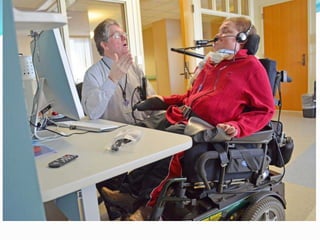
The document discusses how technology has revolutionized possibilities for disabled learners by making things possible that were previously inaccessible. It notes that there are many types of disabilities including physical, sensory, cognitive, psychiatric and health-related. The document then provides four examples of how technology can help disabled people: using tablets to speak, using voice control on smartphones, improving communication skills for those with autism, and Apple's Assistive Touch feature. It defines assistive technology as any item or system that increases functional capabilities for those with disabilities and lists some forms of assistive technology including speech recognition software, text-to-speech software, visual aids, audio aids and physical aids.