Learning at transition for
  new and experienced staff

Anoush Margaryan (with Colin Milligan and Allison
                  Littlejohn)
   Caledonian Academy, Glasgow Caledonian
                  University
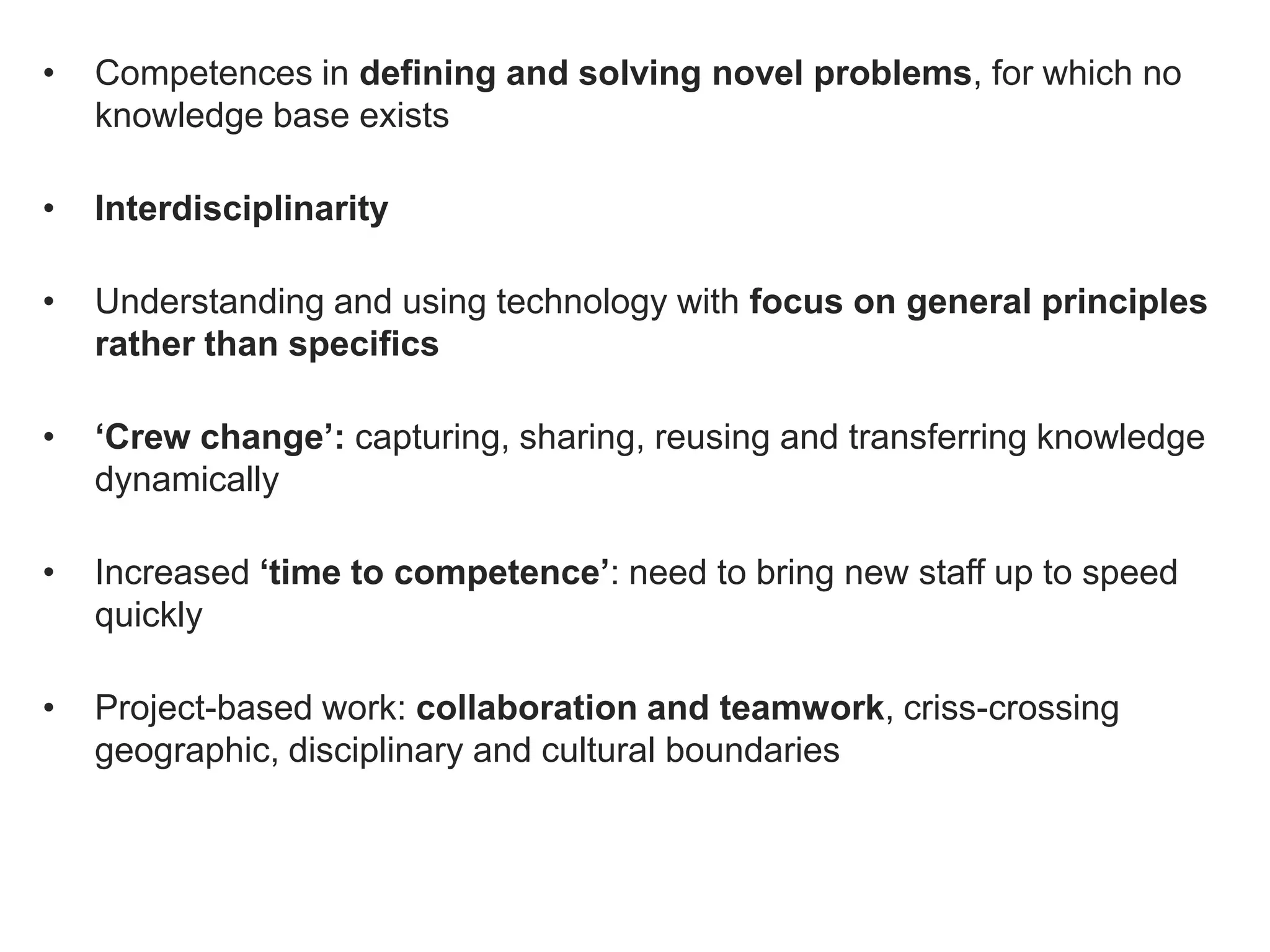
•   Competences in defining and solving novel problems, for which no
    knowledge base exists

•   Interdisciplinarity

•   Understanding and using technology with focus on general principles
    rather than specifics

•   ‘Crew change’: capturing, sharing, reusing and transferring knowledge
    dynamically

•   Increased ‘time to competence’: need to bring new staff up to speed
    quickly

•   Project-based work: collaboration and teamwork, criss-crossing
    geographic, disciplinary and cultural boundaries
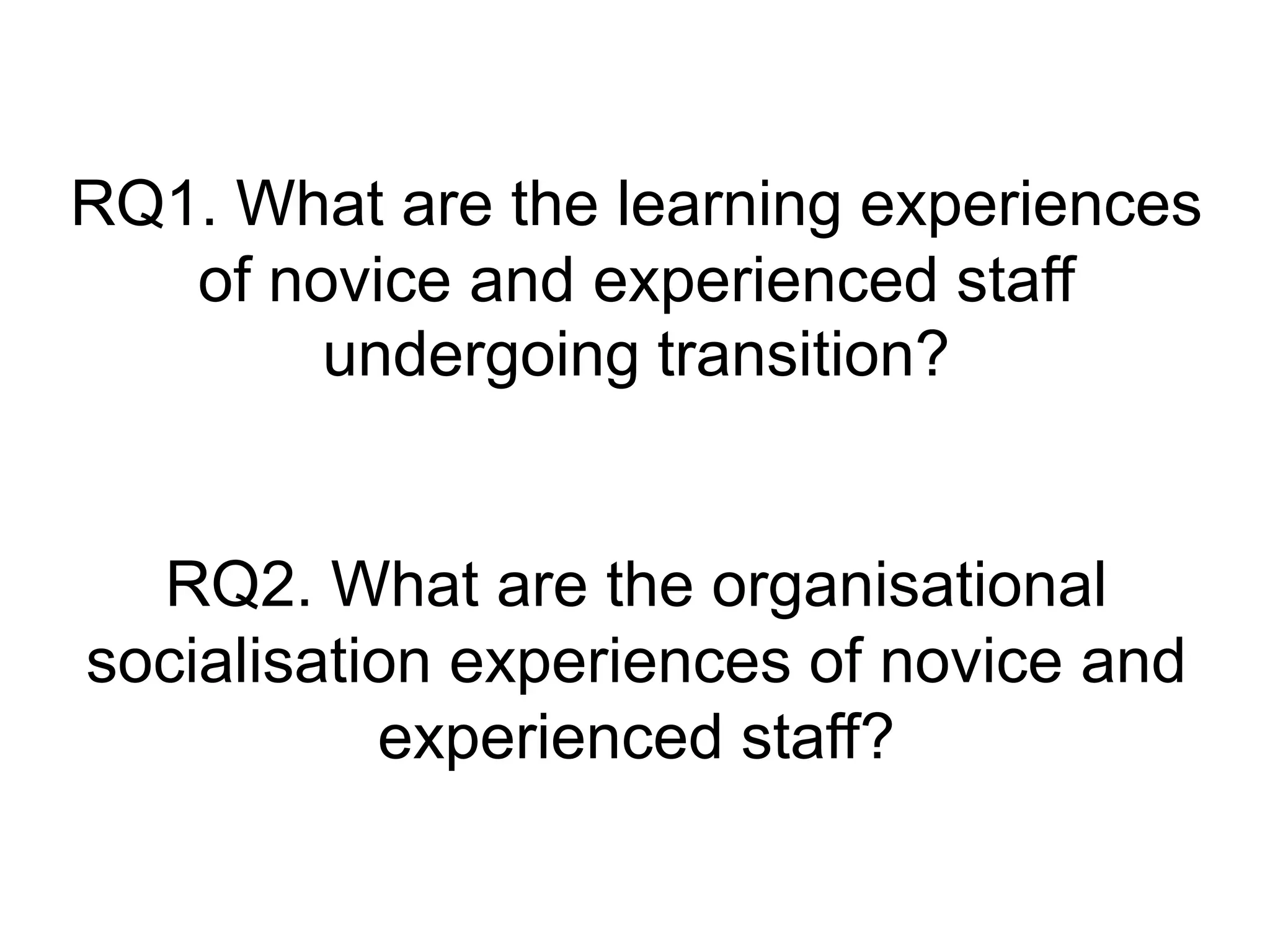
RQ1. What are the learning experiences
   of novice and experienced staff
        undergoing transition?


  RQ2. What are the organisational
socialisation experiences of novice and
           experienced staff?
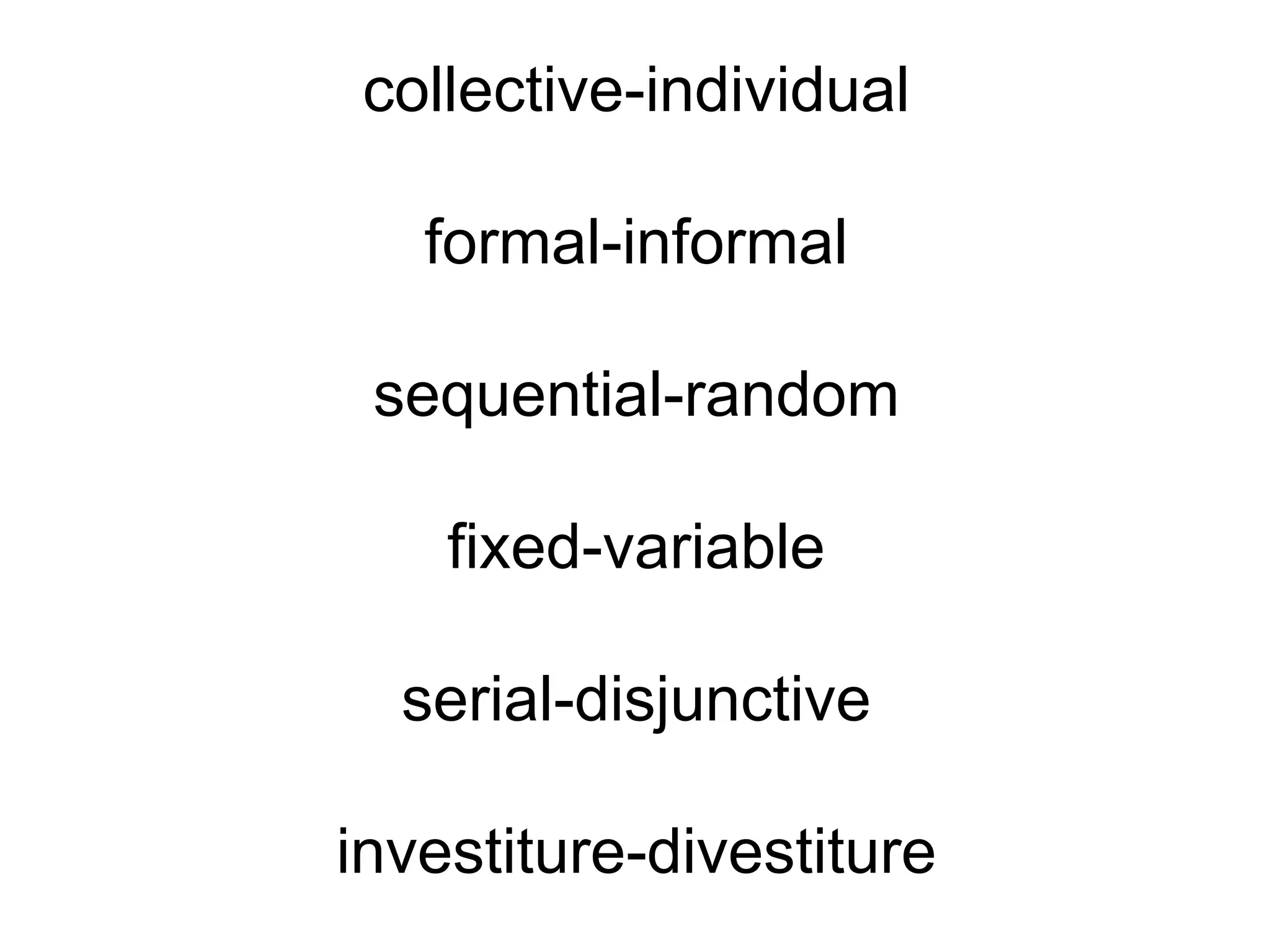
collective-individual

   formal-informal

 sequential-random

    fixed-variable

  serial-disjunctive

investiture-divestiture
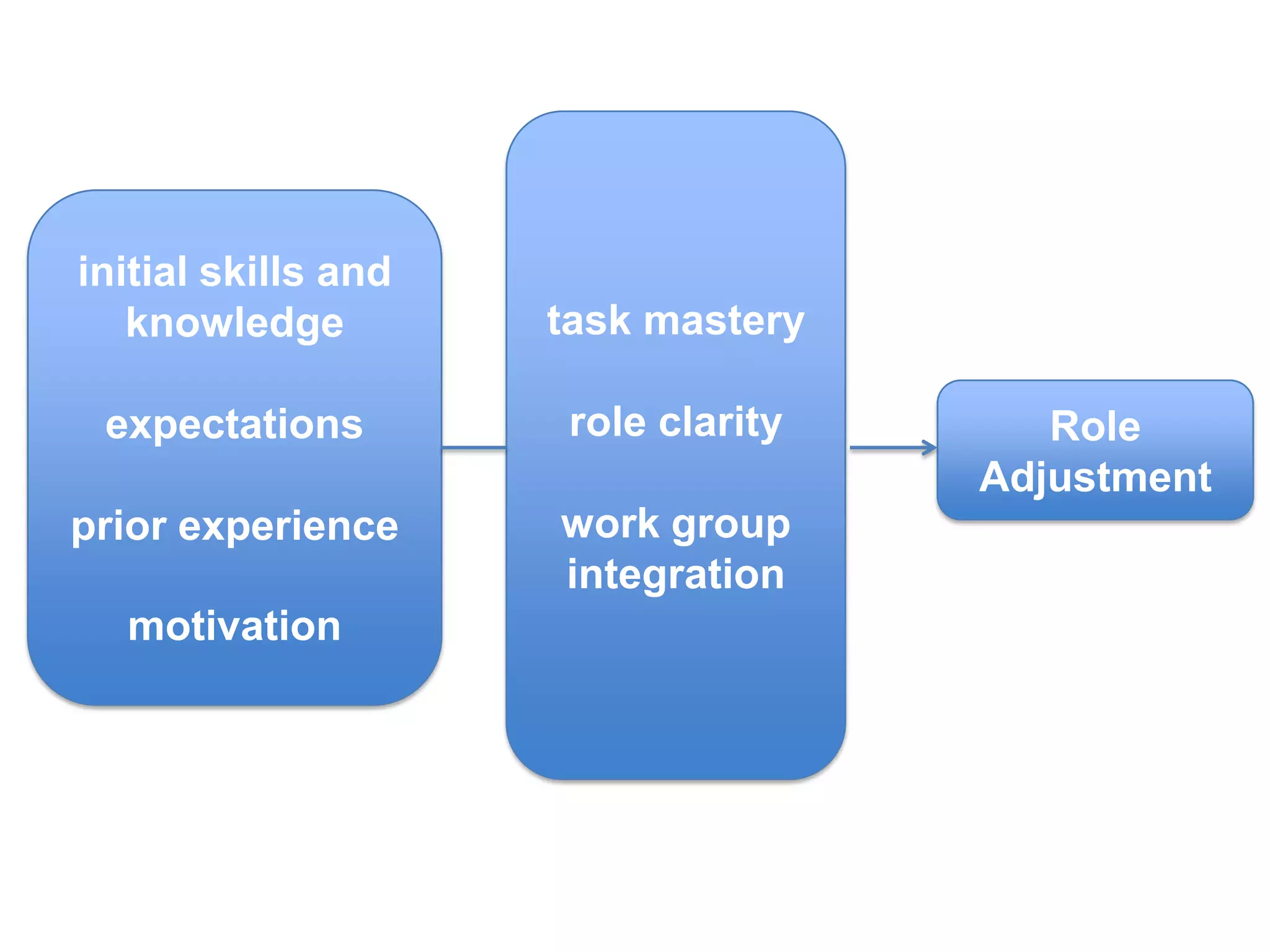
initial skills and
   knowledge         task mastery

 expectations         role clarity      Role
                                     Adjustment
prior experience     work group
                     integration
  motivation
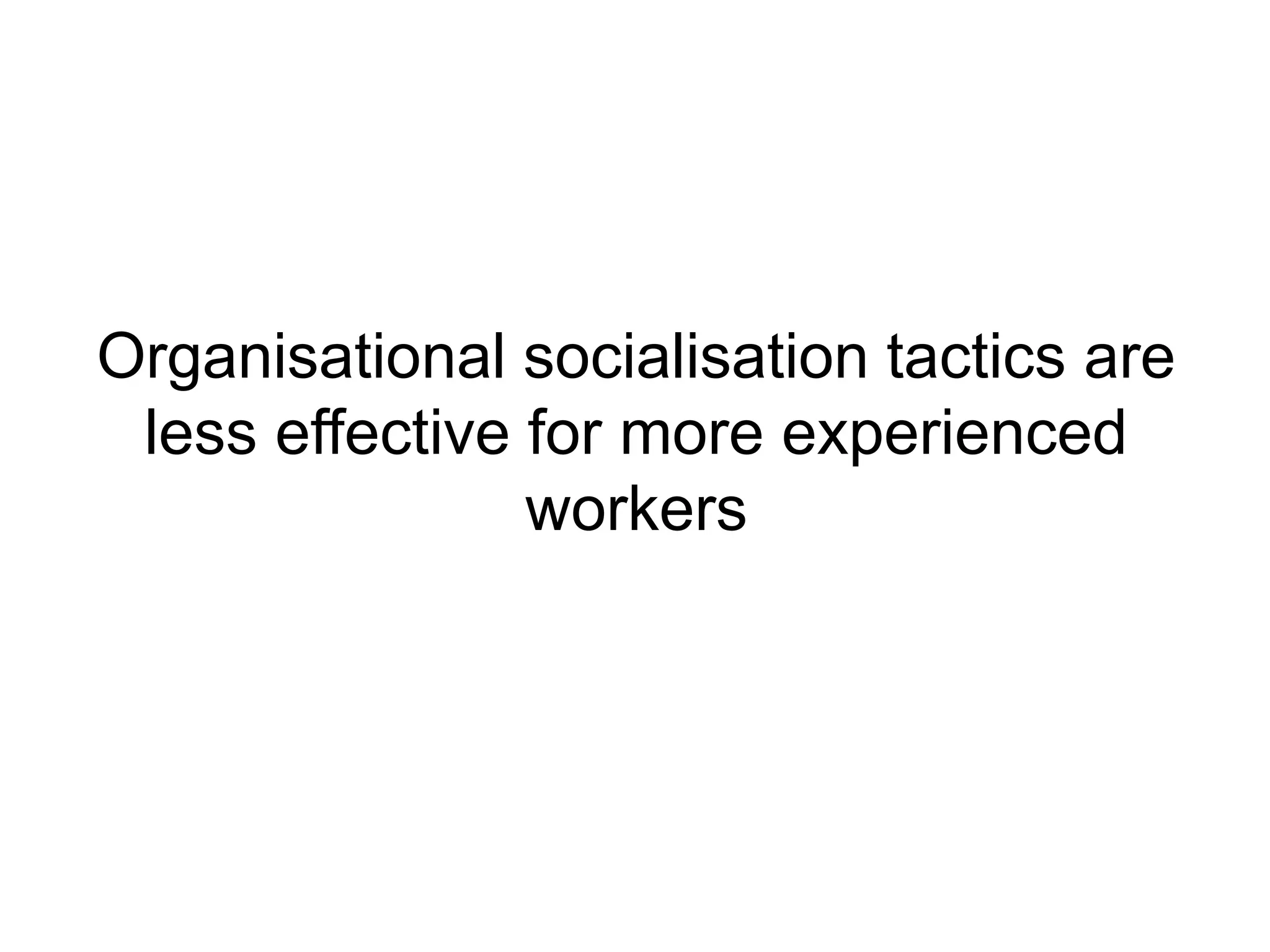
Organisational socialisation tactics are
 less effective for more experienced
                workers
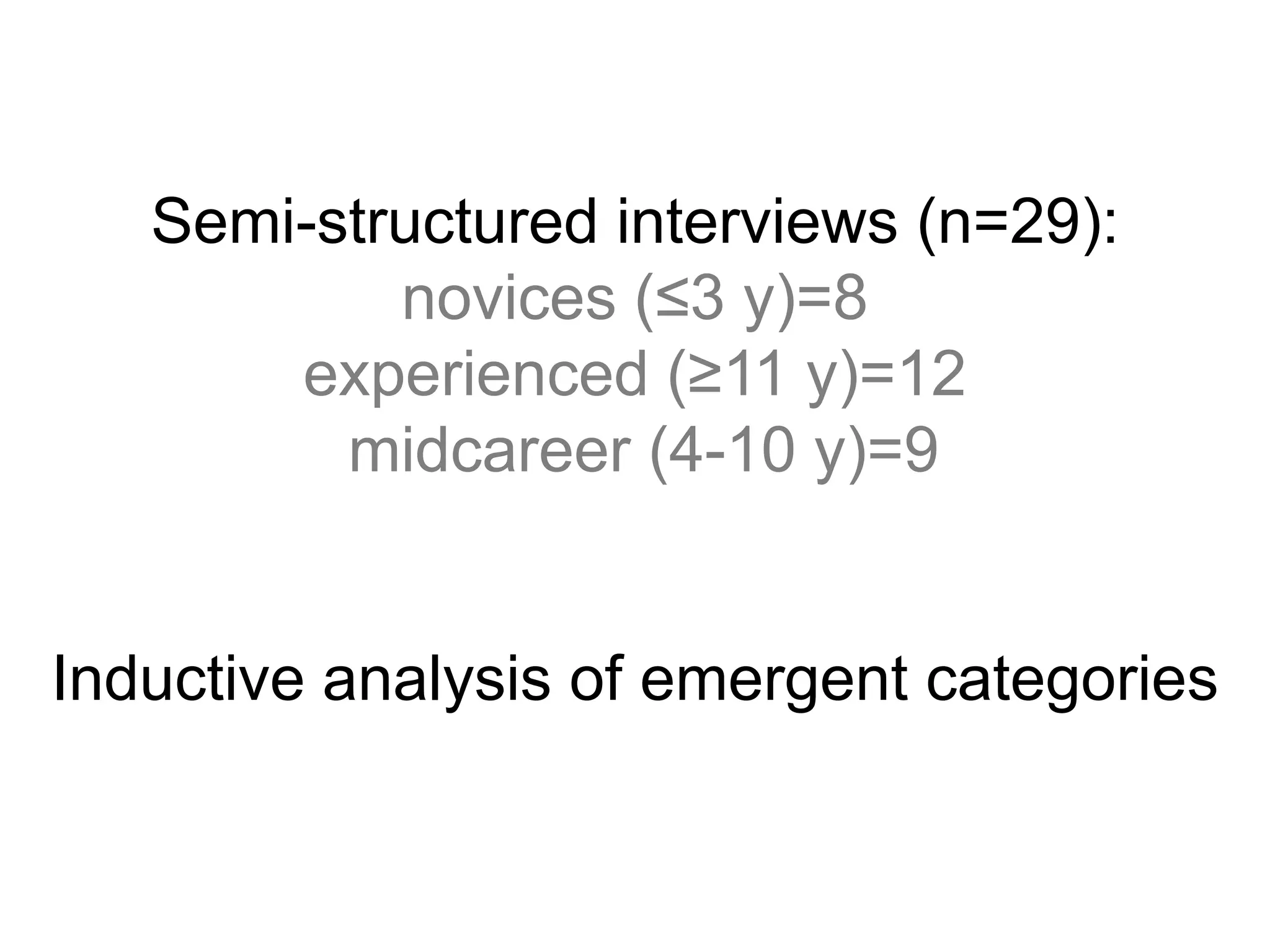
Semi-structured interviews (n=29):
           novices (≤3 y)=8
       experienced (≥11 y)=12
         midcareer (4-10 y)=9


Inductive analysis of emergent categories
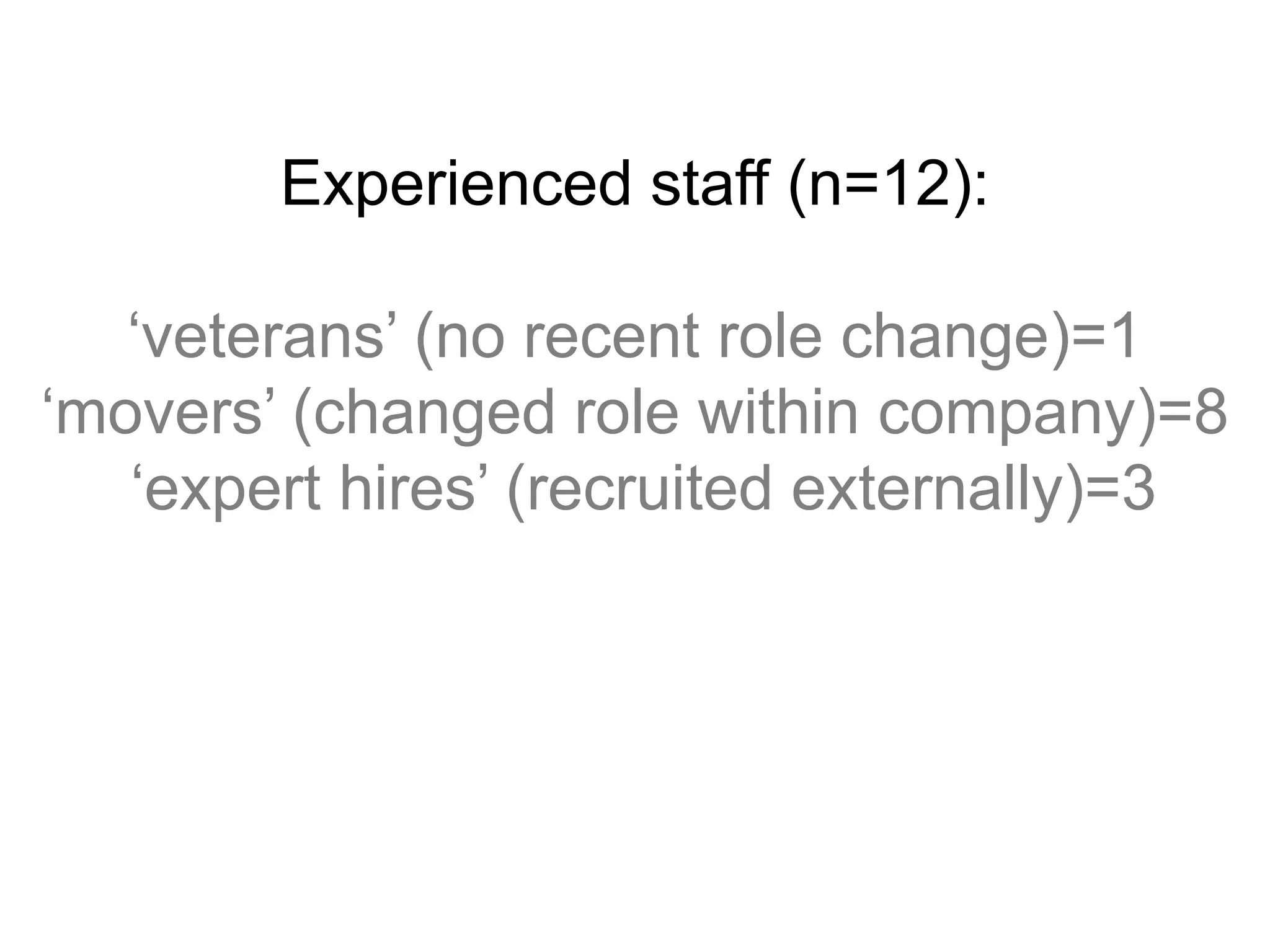
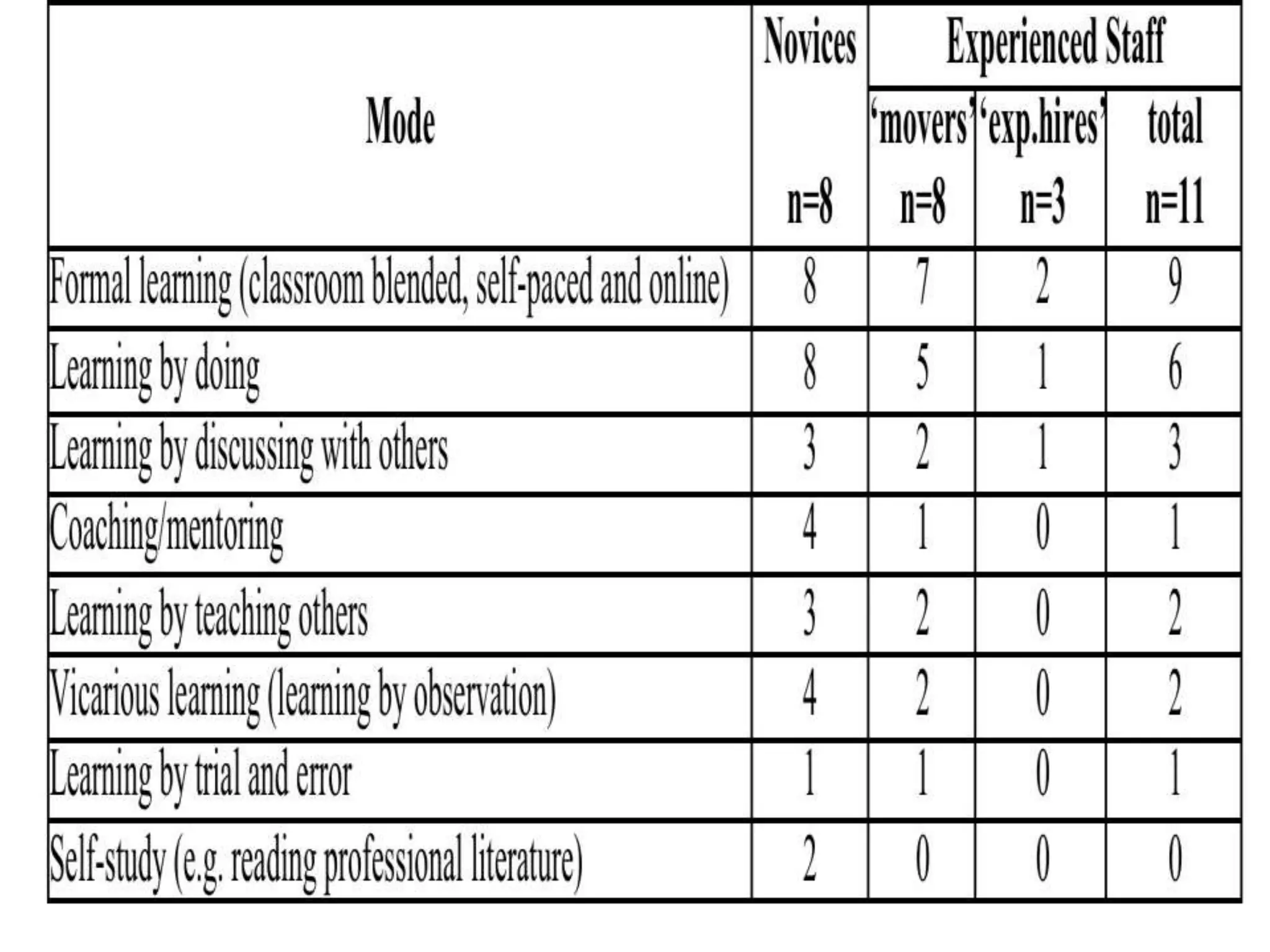
Experienced staff (n=12):

   „veterans‟ (no recent role change)=1
„movers‟ (changed role within company)=8
   „expert hires‟ (recruited externally)=3
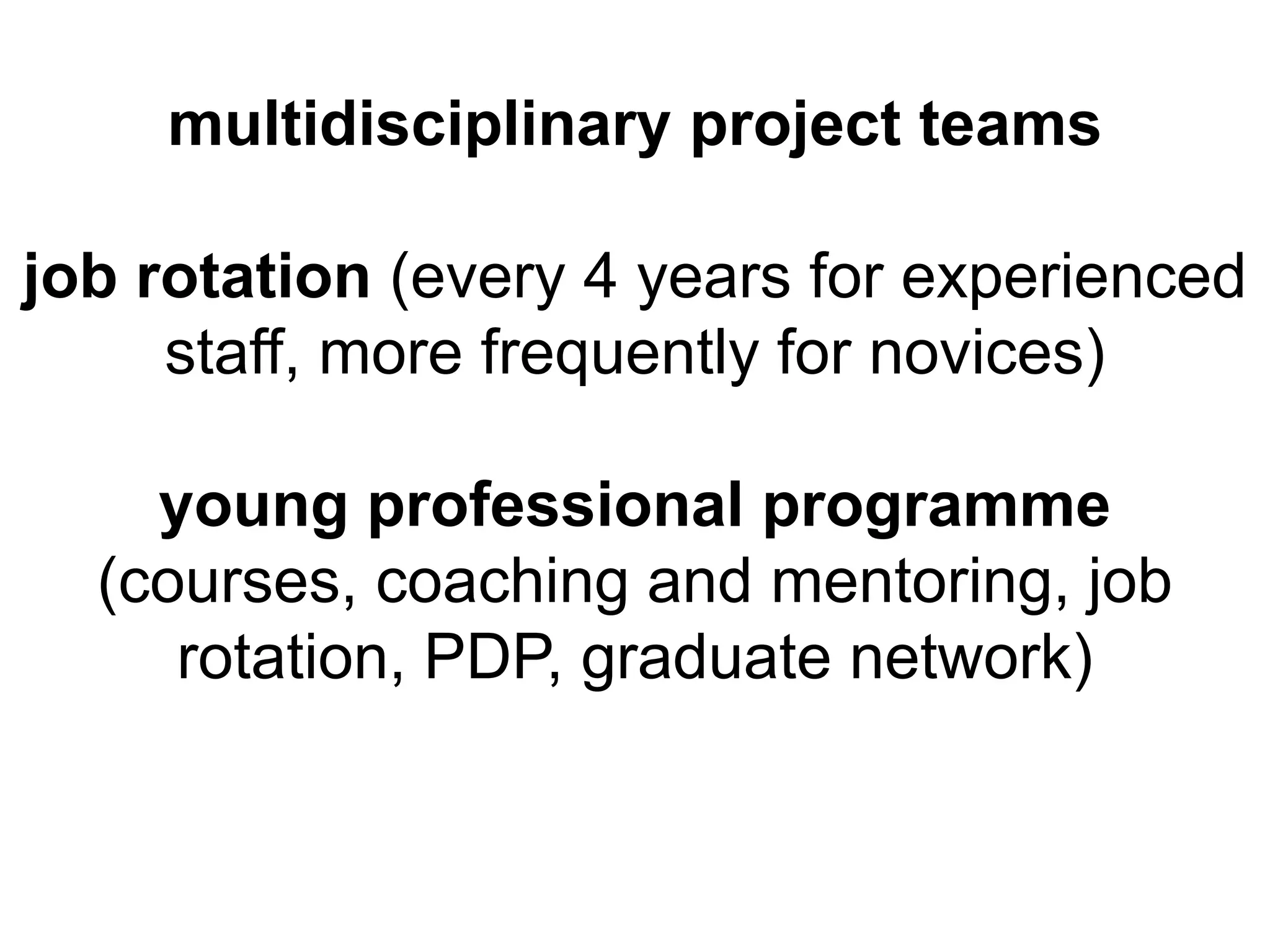
multidisciplinary project teams

job rotation (every 4 years for experienced
     staff, more frequently for novices)

    young professional programme
  (courses, coaching and mentoring, job
     rotation, PDP, graduate network)
“… you move around and you are able to define what
you really want to do and what your gaps in areas of
development should be. So …after a year you should
be in a very good position to identify what you should
be doing from now on”. (N3).


“The networking aspect is part of the whole [company]
culture and it is also in my [performance review] to
build different networks and engage with people. I
have got a mentor and I have got involved in [my
discipline‟s] Graduate Network.” (N1).
“I had done [role] and done [role], I had done literally every
kind of [role] … what I needed was to move into a different
area, you get reinvigorated because you are learning
something new” (E12).


“I moved into [this part of the company] a couple of years
ago now. It was the first time I had ever worked in [this part
of the company]. There is this assumption that because you
have been in [the company] you know everything you need
to know about getting a network and getting connected.
Well, moving from one [part of the company] to another …
is equivalent in the external world to changing company
[but] the whole onboarding process of getting you
connected and getting you a network just doesn’t happen”
(E12).
“I am trying to leverage my own knowledge and
experience regarding my [discipline] … because I
have a large network [outside the company]. I am also
a member of the board of [national professional
network] and I share this knowledge …” (E8).


“[in] my last role one of the things I did was network
across the [domain] industry in the [my country]. I don‟t
feel that has been taken advantage of” (E10).
“Because I have little experience of [this discipline]
within [this company] … I would look for someone who
has more experience than me. I would call him for a
lunch and say „okay I have this negotiation and I am
thinking about doing this kind of approach, what do
you think, … Then I weigh the approach I imagined
and the approach the coach tells to me about and … I
make a hybrid from the two experiences, mine and my
coach‟s.” (E9).
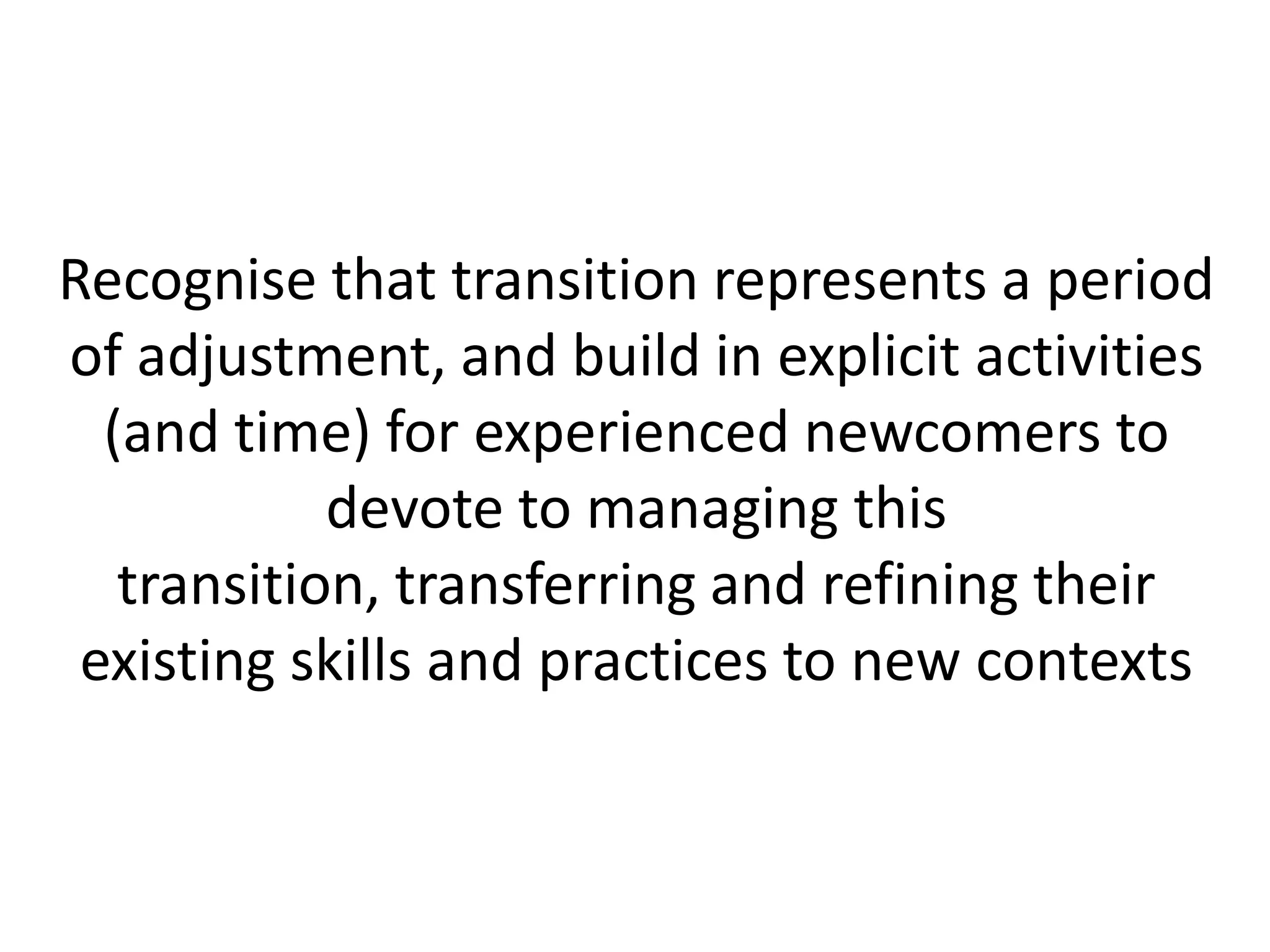
Recognise that transition represents a period
of adjustment, and build in explicit activities
  (and time) for experienced newcomers to
            devote to managing this
   transition, transferring and refining their
 existing skills and practices to new contexts
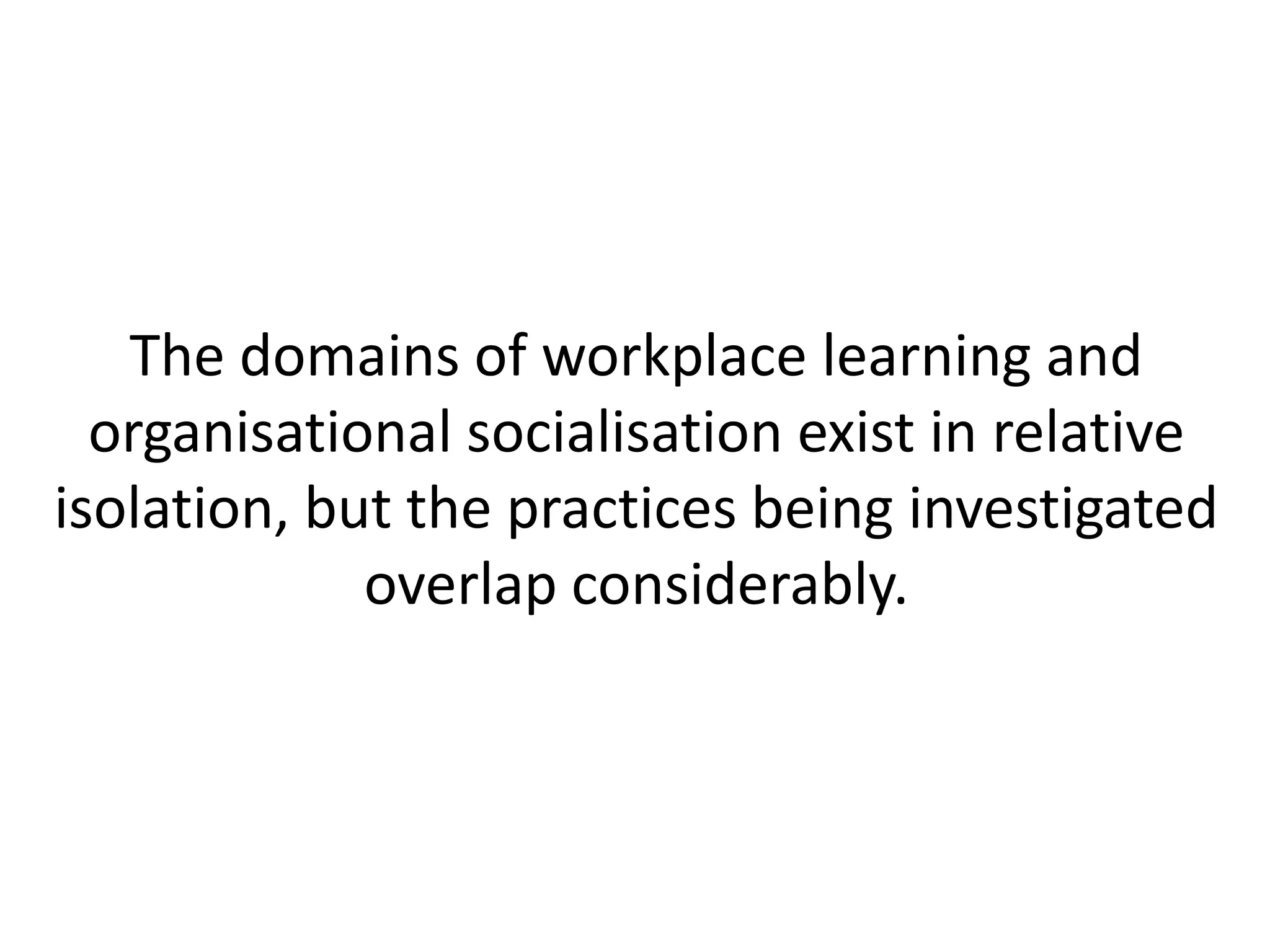
The domains of workplace learning and
  organisational socialisation exist in relative
isolation, but the practices being investigated
             overlap considerably.
Saks, A.M., Uggerslev, K.A. and Fassina, N.E. (2007) Socialization tactics and newcomer
adjustment: A meta-analytic review and test of a model. Journal of Vocational Behavior
70, 413-446.

Van Maanen, J. and Schein, E.H. (1979) Toward a theory of organizational
socialization, Research in Organizational Behavior I, 209-264.

Jones, G. R. (1986) Socialization tactics, self-efficacy, and newcomers‟ adjustments to
organizations. Academy of Management Journal 29, 262-279.

Nicholson, N. (1984) A theory of work role transitions. Administrative Science Quarterly
29, 172-191.

Kammeyer-Mueller, J. and Wanberg, C.R. (2003) Unwrapping the organizational entry
process: disentangling multiple antecedents and their pathways to adjustment. Journal of
Applied Psychology, 88 (5) 779-794.

Bauer, T.N., Bodner, T., Erdogan, B., Truxillo, D.M. and Tucker, J.S. (2007) Newcomer adjustment during
organizational socialization: a meta-analytic review of antecedents, outcomes, and methods. Journal
of Applied Psychology, 92(3) 707-721 41-55.

Cooper-Thomas, H., Anderson, N. and Cash, M. (2012) Investigating organizational socialization: a
fresh look at newcomer adjustment strategies. Personnel Review, 41(1) 41-55

Learning at Transition for Novice and Experienced Staff

  • 1.
    Learning at transitionfor new and experienced staff Anoush Margaryan (with Colin Milligan and Allison Littlejohn) Caledonian Academy, Glasgow Caledonian University
  • 2.
    Competences in defining and solving novel problems, for which no knowledge base exists • Interdisciplinarity • Understanding and using technology with focus on general principles rather than specifics • ‘Crew change’: capturing, sharing, reusing and transferring knowledge dynamically • Increased ‘time to competence’: need to bring new staff up to speed quickly • Project-based work: collaboration and teamwork, criss-crossing geographic, disciplinary and cultural boundaries
  • 3.
    RQ1. What arethe learning experiences of novice and experienced staff undergoing transition? RQ2. What are the organisational socialisation experiences of novice and experienced staff?
  • 4.
    collective-individual formal-informal sequential-random fixed-variable serial-disjunctive investiture-divestiture
  • 5.
    initial skills and knowledge task mastery expectations role clarity Role Adjustment prior experience work group integration motivation
  • 6.
    Organisational socialisation tacticsare less effective for more experienced workers
  • 7.
    Semi-structured interviews (n=29): novices (≤3 y)=8 experienced (≥11 y)=12 midcareer (4-10 y)=9 Inductive analysis of emergent categories
  • 8.
    Experienced staff (n=12): „veterans‟ (no recent role change)=1 „movers‟ (changed role within company)=8 „expert hires‟ (recruited externally)=3
  • 9.
    multidisciplinary project teams jobrotation (every 4 years for experienced staff, more frequently for novices) young professional programme (courses, coaching and mentoring, job rotation, PDP, graduate network)
  • 11.
    “… you movearound and you are able to define what you really want to do and what your gaps in areas of development should be. So …after a year you should be in a very good position to identify what you should be doing from now on”. (N3). “The networking aspect is part of the whole [company] culture and it is also in my [performance review] to build different networks and engage with people. I have got a mentor and I have got involved in [my discipline‟s] Graduate Network.” (N1).
  • 12.
    “I had done[role] and done [role], I had done literally every kind of [role] … what I needed was to move into a different area, you get reinvigorated because you are learning something new” (E12). “I moved into [this part of the company] a couple of years ago now. It was the first time I had ever worked in [this part of the company]. There is this assumption that because you have been in [the company] you know everything you need to know about getting a network and getting connected. Well, moving from one [part of the company] to another … is equivalent in the external world to changing company [but] the whole onboarding process of getting you connected and getting you a network just doesn’t happen” (E12).
  • 13.
    “I am tryingto leverage my own knowledge and experience regarding my [discipline] … because I have a large network [outside the company]. I am also a member of the board of [national professional network] and I share this knowledge …” (E8). “[in] my last role one of the things I did was network across the [domain] industry in the [my country]. I don‟t feel that has been taken advantage of” (E10).
  • 14.
    “Because I havelittle experience of [this discipline] within [this company] … I would look for someone who has more experience than me. I would call him for a lunch and say „okay I have this negotiation and I am thinking about doing this kind of approach, what do you think, … Then I weigh the approach I imagined and the approach the coach tells to me about and … I make a hybrid from the two experiences, mine and my coach‟s.” (E9).
  • 15.
    Recognise that transitionrepresents a period of adjustment, and build in explicit activities (and time) for experienced newcomers to devote to managing this transition, transferring and refining their existing skills and practices to new contexts
  • 16.
    The domains ofworkplace learning and organisational socialisation exist in relative isolation, but the practices being investigated overlap considerably.
  • 17.
    Saks, A.M., Uggerslev,K.A. and Fassina, N.E. (2007) Socialization tactics and newcomer adjustment: A meta-analytic review and test of a model. Journal of Vocational Behavior 70, 413-446. Van Maanen, J. and Schein, E.H. (1979) Toward a theory of organizational socialization, Research in Organizational Behavior I, 209-264. Jones, G. R. (1986) Socialization tactics, self-efficacy, and newcomers‟ adjustments to organizations. Academy of Management Journal 29, 262-279. Nicholson, N. (1984) A theory of work role transitions. Administrative Science Quarterly 29, 172-191. Kammeyer-Mueller, J. and Wanberg, C.R. (2003) Unwrapping the organizational entry process: disentangling multiple antecedents and their pathways to adjustment. Journal of Applied Psychology, 88 (5) 779-794. Bauer, T.N., Bodner, T., Erdogan, B., Truxillo, D.M. and Tucker, J.S. (2007) Newcomer adjustment during organizational socialization: a meta-analytic review of antecedents, outcomes, and methods. Journal of Applied Psychology, 92(3) 707-721 41-55. Cooper-Thomas, H., Anderson, N. and Cash, M. (2012) Investigating organizational socialization: a fresh look at newcomer adjustment strategies. Personnel Review, 41(1) 41-55