Superfactory ÂŽ  Lean Enterprise Series Lean Accounting
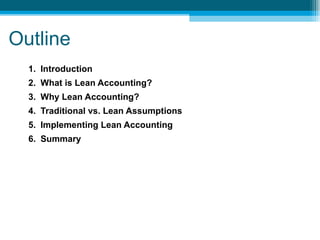
Outline Introduction What is Lean Accounting? Why Lean Accounting? Traditional vs. Lean Assumptions Implementing Lean Accounting  Summary
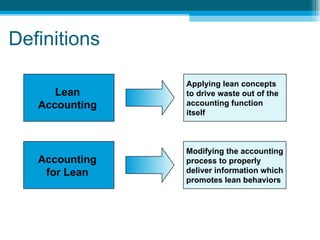
Definitions Lean Accounting Applying lean concepts to drive waste out of the accounting function itself Accounting for Lean Modifying the accounting process to properly deliver information which promotes lean behaviors
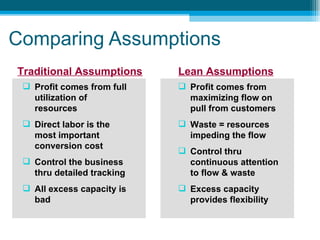
Comparing Assumptions Profit comes from full utilization of resources Direct labor is the most important conversion cost Control the business thru detailed tracking All excess capacity is bad Profit comes from maximizing flow on pull from customers Waste = resources impeding the flow Control thru continuous attention to flow & waste Excess capacity provides flexibility Traditional Assumptions Lean Assumptions
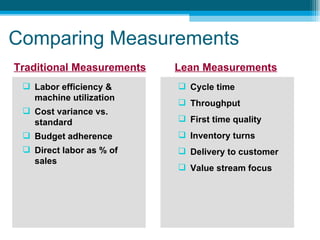
Comparing Measurements Labor efficiency & machine utilization Cost variance vs. standard Budget adherence Direct labor as % of sales Cycle time Throughput First time quality Inventory turns Delivery to customer Value stream focus Traditional Measurements Lean Measurements
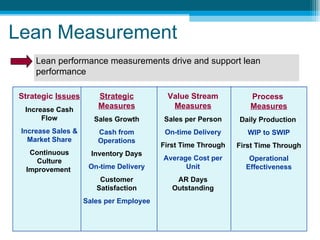
Lean Measurement Lean performance measurements drive and support lean performance Strategic  Issues Increase Cash Flow Increase Sales & Market Share Continuous Culture Improvement  Strategic Measures Sales Growth Cash from Operations Inventory Days On-time Delivery Customer Satisfaction Sales per Employee Value Stream  Measures Sales per Person On-time Delivery First Time Through Average Cost per Unit AR Days Outstanding Process  Measures Daily Production  WIP to SWIP First Time Through Operational Effectiveness
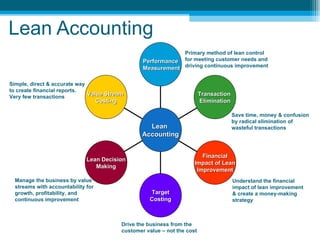
Lean Accounting Primary method of lean control for meeting customer needs and driving continuous improvement Save time, money & confusion by radical elimination of wasteful transactions Understand the financial impact of lean improvement & create a money-making strategy Drive the business from the customer value – not the cost Manage the business by value streams with accountability for growth, profitability, and continuous improvement Simple, direct & accurate way to create financial reports.  Very few transactions Value Stream  Costing Lean Decision Making Target Costing Financial Impact of Lean Improvement Transaction  Elimination Performance Measurement Lean  Accounting
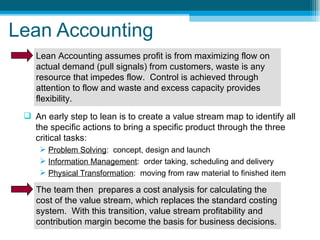
Lean Accounting An early step to lean is to create a value stream map to identify all the specific actions to bring a specific product through the three critical tasks: Problem Solving :  concept, design and launch Information Management :  order taking, scheduling and delivery Physical Transformation :  moving from raw material to finished item Lean Accounting assumes profit is from maximizing flow on actual demand (pull signals) from customers, waste is any resource that impedes flow.  Control is achieved through attention to flow and waste and excess capacity provides flexibility. The team then  prepares a cost analysis for calculating the cost of the value stream, which replaces the standard costing system.  With this transition, value stream profitability and contribution margin become the basis for business decisions.

Lean_Accounting_sample

  • 1.
    Superfactory ÂŽ Lean Enterprise Series Lean Accounting
  • 2.
    Outline Introduction Whatis Lean Accounting? Why Lean Accounting? Traditional vs. Lean Assumptions Implementing Lean Accounting Summary
  • 3.
    Definitions Lean AccountingApplying lean concepts to drive waste out of the accounting function itself Accounting for Lean Modifying the accounting process to properly deliver information which promotes lean behaviors
  • 4.
    Comparing Assumptions Profitcomes from full utilization of resources Direct labor is the most important conversion cost Control the business thru detailed tracking All excess capacity is bad Profit comes from maximizing flow on pull from customers Waste = resources impeding the flow Control thru continuous attention to flow & waste Excess capacity provides flexibility Traditional Assumptions Lean Assumptions
  • 5.
    Comparing Measurements Laborefficiency & machine utilization Cost variance vs. standard Budget adherence Direct labor as % of sales Cycle time Throughput First time quality Inventory turns Delivery to customer Value stream focus Traditional Measurements Lean Measurements
  • 6.
    Lean Measurement Leanperformance measurements drive and support lean performance Strategic Issues Increase Cash Flow Increase Sales & Market Share Continuous Culture Improvement Strategic Measures Sales Growth Cash from Operations Inventory Days On-time Delivery Customer Satisfaction Sales per Employee Value Stream Measures Sales per Person On-time Delivery First Time Through Average Cost per Unit AR Days Outstanding Process Measures Daily Production WIP to SWIP First Time Through Operational Effectiveness
  • 7.
    Lean Accounting Primarymethod of lean control for meeting customer needs and driving continuous improvement Save time, money & confusion by radical elimination of wasteful transactions Understand the financial impact of lean improvement & create a money-making strategy Drive the business from the customer value – not the cost Manage the business by value streams with accountability for growth, profitability, and continuous improvement Simple, direct & accurate way to create financial reports. Very few transactions Value Stream Costing Lean Decision Making Target Costing Financial Impact of Lean Improvement Transaction Elimination Performance Measurement Lean Accounting
  • 8.
    Lean Accounting Anearly step to lean is to create a value stream map to identify all the specific actions to bring a specific product through the three critical tasks: Problem Solving : concept, design and launch Information Management : order taking, scheduling and delivery Physical Transformation : moving from raw material to finished item Lean Accounting assumes profit is from maximizing flow on actual demand (pull signals) from customers, waste is any resource that impedes flow. Control is achieved through attention to flow and waste and excess capacity provides flexibility. The team then prepares a cost analysis for calculating the cost of the value stream, which replaces the standard costing system. With this transition, value stream profitability and contribution margin become the basis for business decisions.