Management Concept
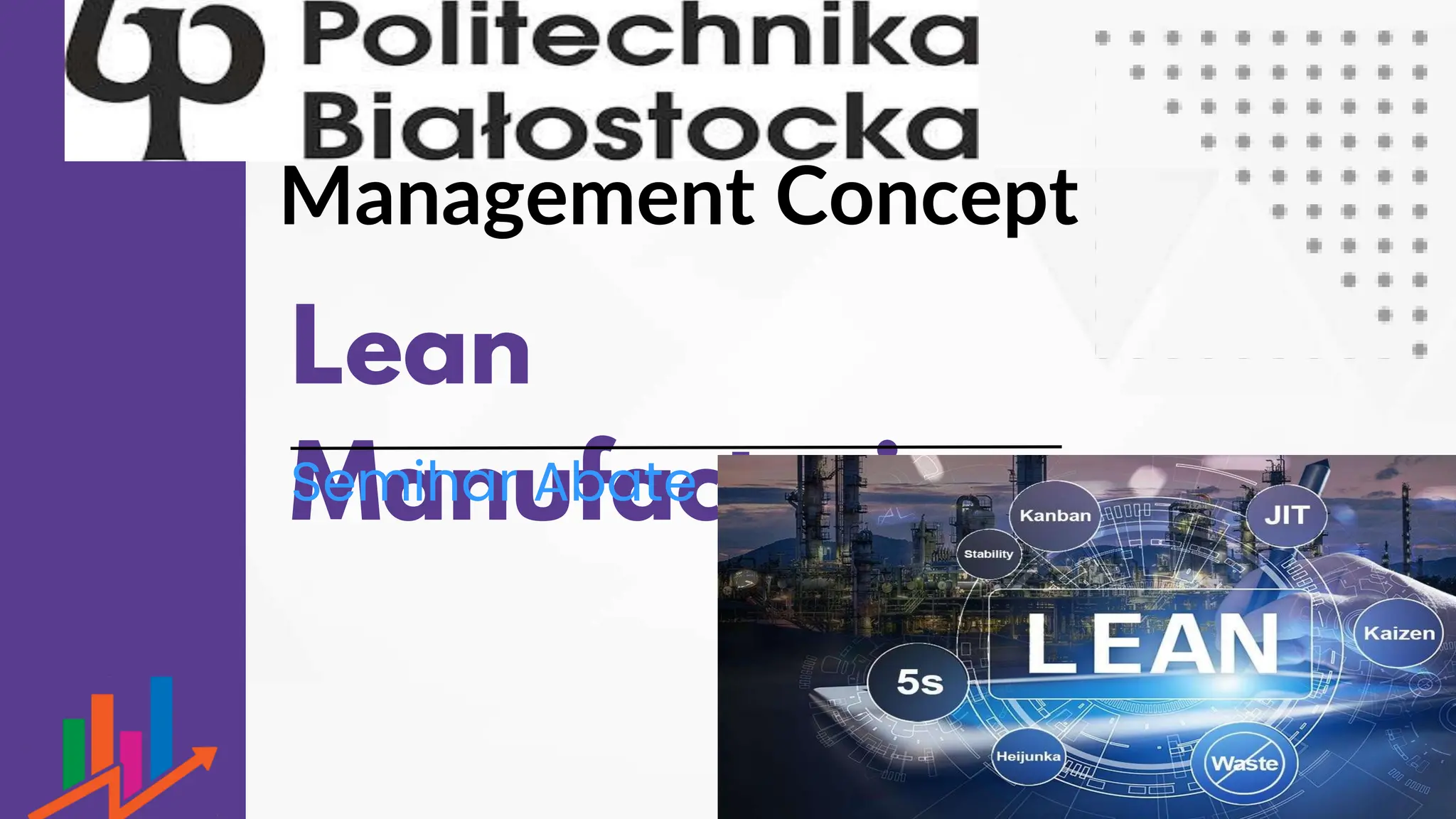
Lean
Manufacturing
Semihar Abate
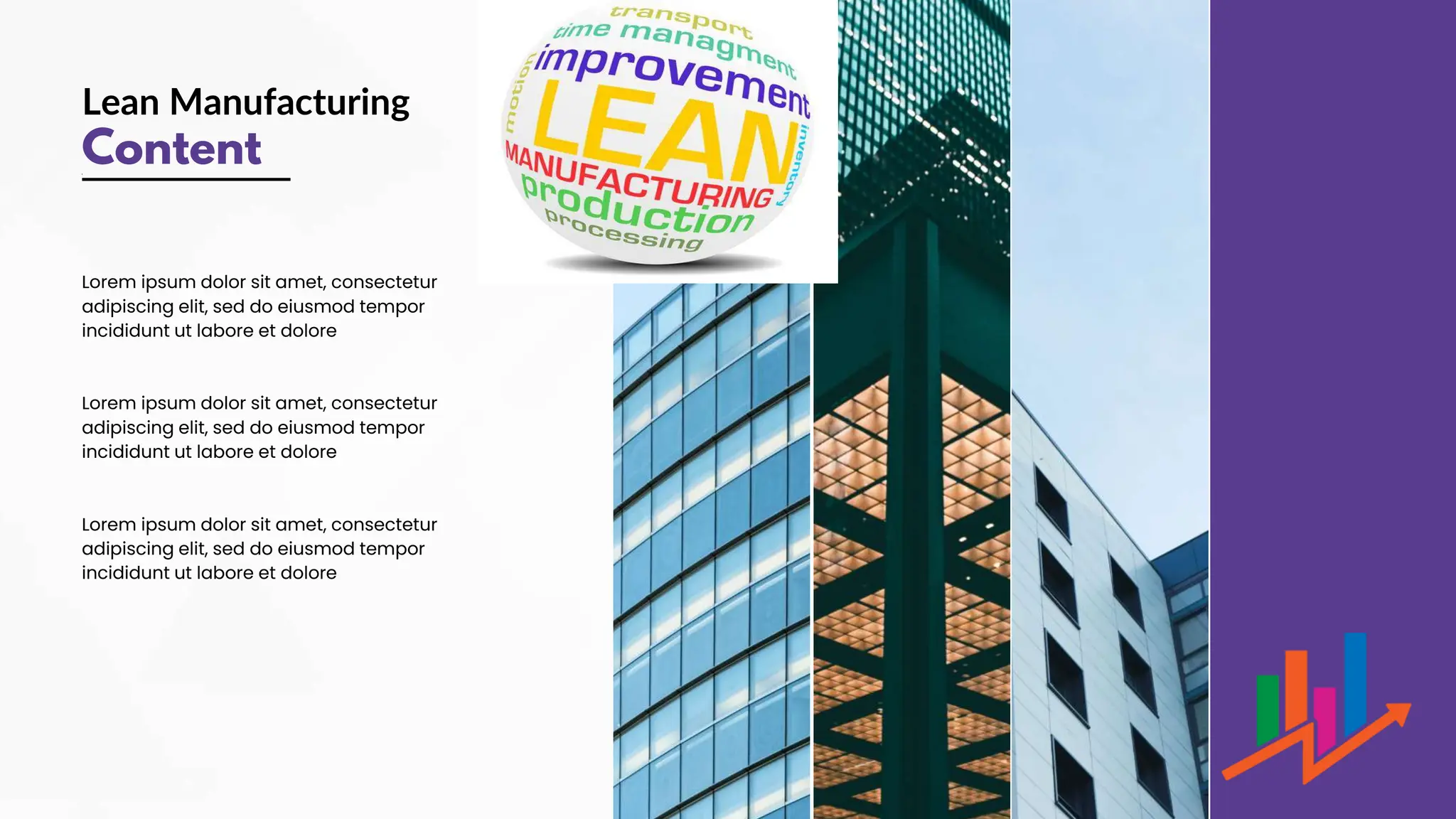
Lean Manufacturing
Content
Lorem ipsum dolor sit amet, consectetur
adipiscing elit, sed do eiusmod tempor
incididunt ut labore et dolore
Lorem ipsum dolor sit amet, consectetur
adipiscing elit, sed do eiusmod tempor
incididunt ut labore et dolore
Lorem ipsum dolor sit amet, consectetur
adipiscing elit, sed do eiusmod tempor
incididunt ut labore et dolore
Genesis of Lean
Manufacturing
Lean Manufacturing
• “Perfection is not attainable. But if
we chase perfection, we can catch
excellence.” Vince Lombardi
• Lean manufacturing or lean
production are reasonably new terms that
can be traced to Jim Womack, Daniel Jones
and Daniel Roos’ book, The Machine that
changed the world [1991]
Toyota Production
System
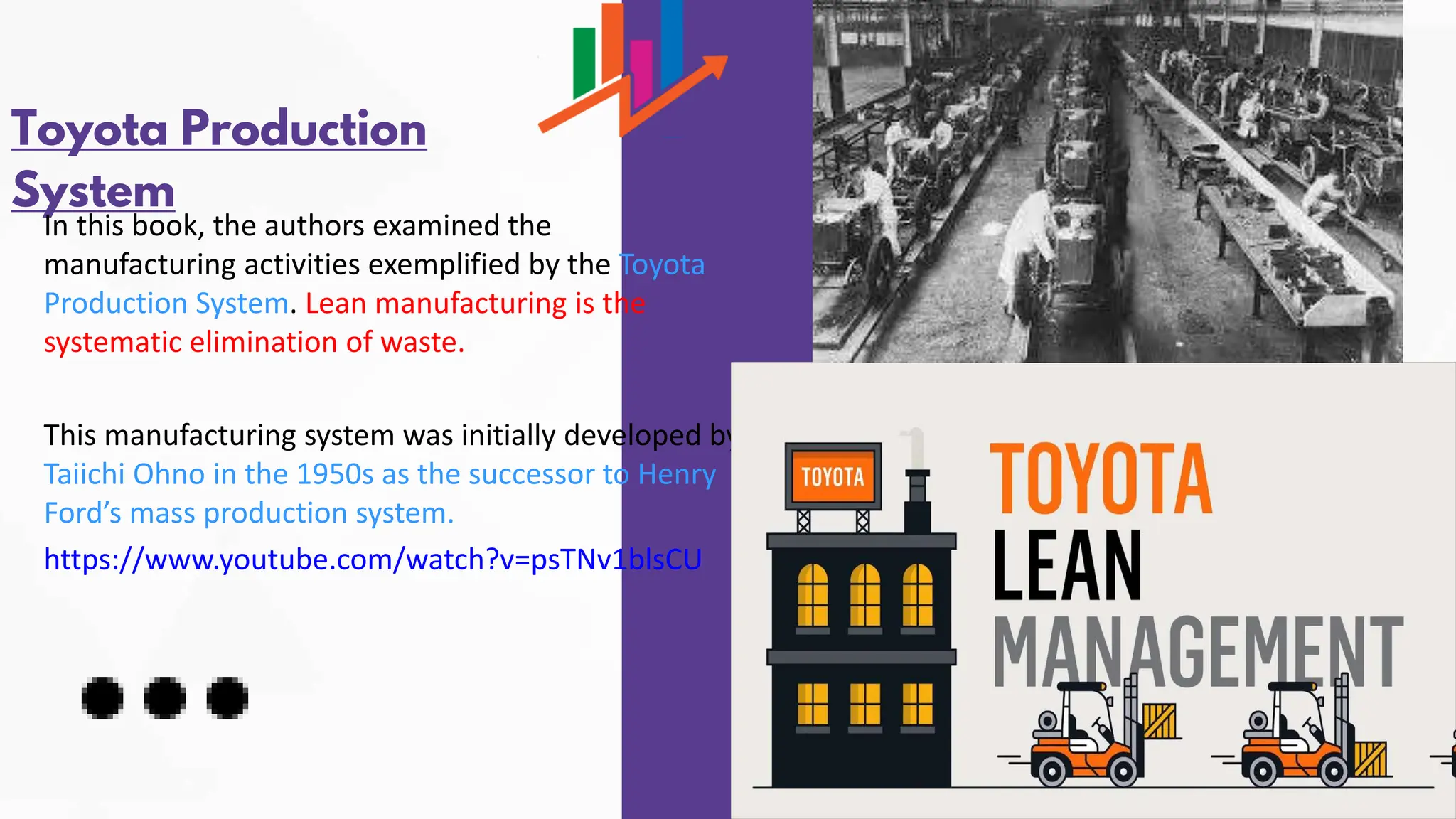
In this book, the authors examined the
manufacturing activities exemplified by the Toyota
Production System. Lean manufacturing is the
systematic elimination of waste.
This manufacturing system was initially developed by
Taiichi Ohno in the 1950s as the successor to Henry
Ford’s mass production system.
https://www.youtube.com/watch?v=psTNv1blsCU
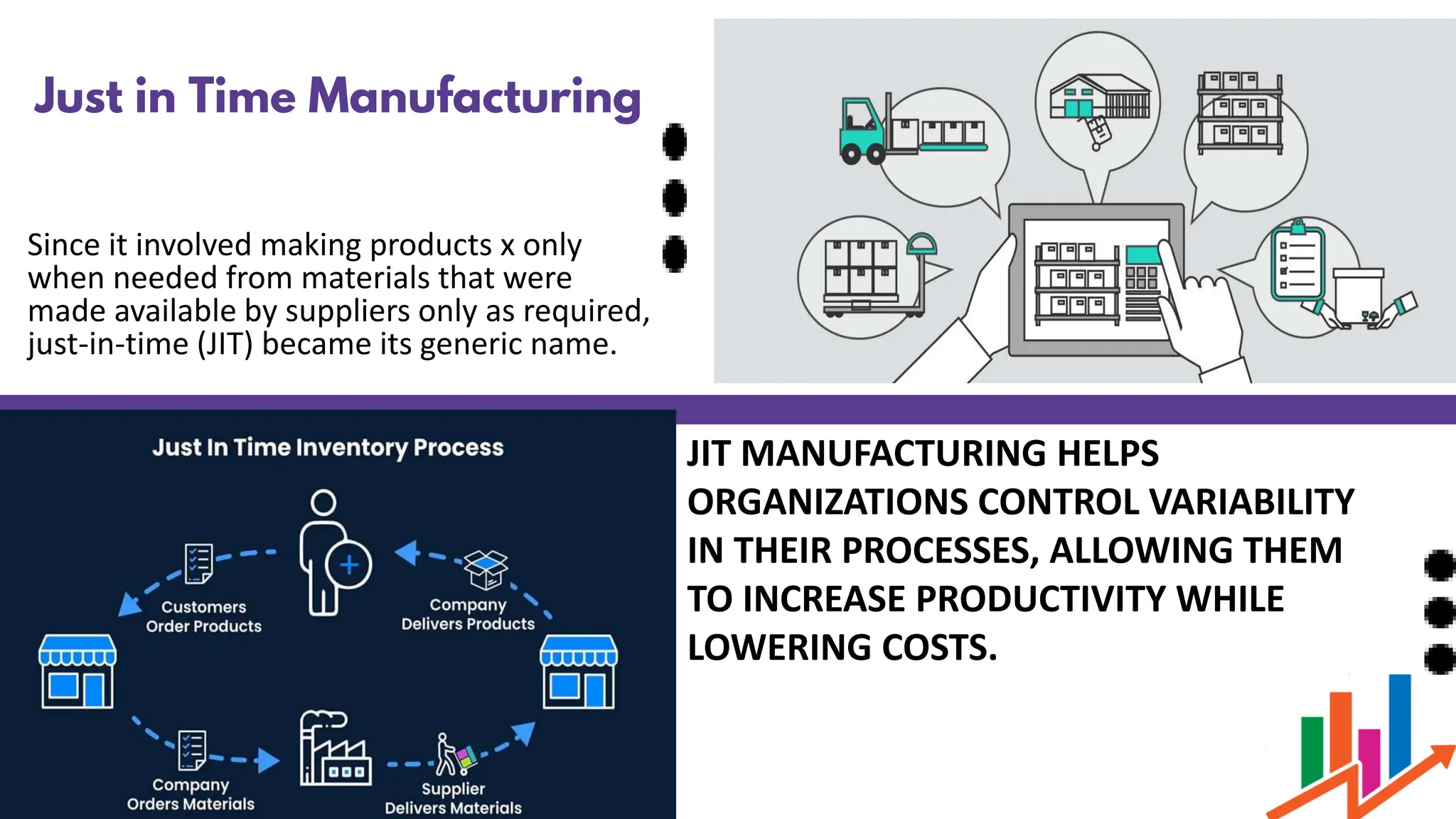
Just in Time Manufacturing
JIT MANUFACTURING HELPS
ORGANIZATIONS CONTROL VARIABILITY
IN THEIR PROCESSES, ALLOWING THEM
TO INCREASE PRODUCTIVITY WHILE
LOWERING COSTS.
Since it involved making products x only
when needed from materials that were
made available by suppliers only as required,
just-in-time (JIT) became its generic name.
JIT
manufacturing is
very similar to
Lean
manufacturing,
and the terms
are often used
synonymously.
3M'S
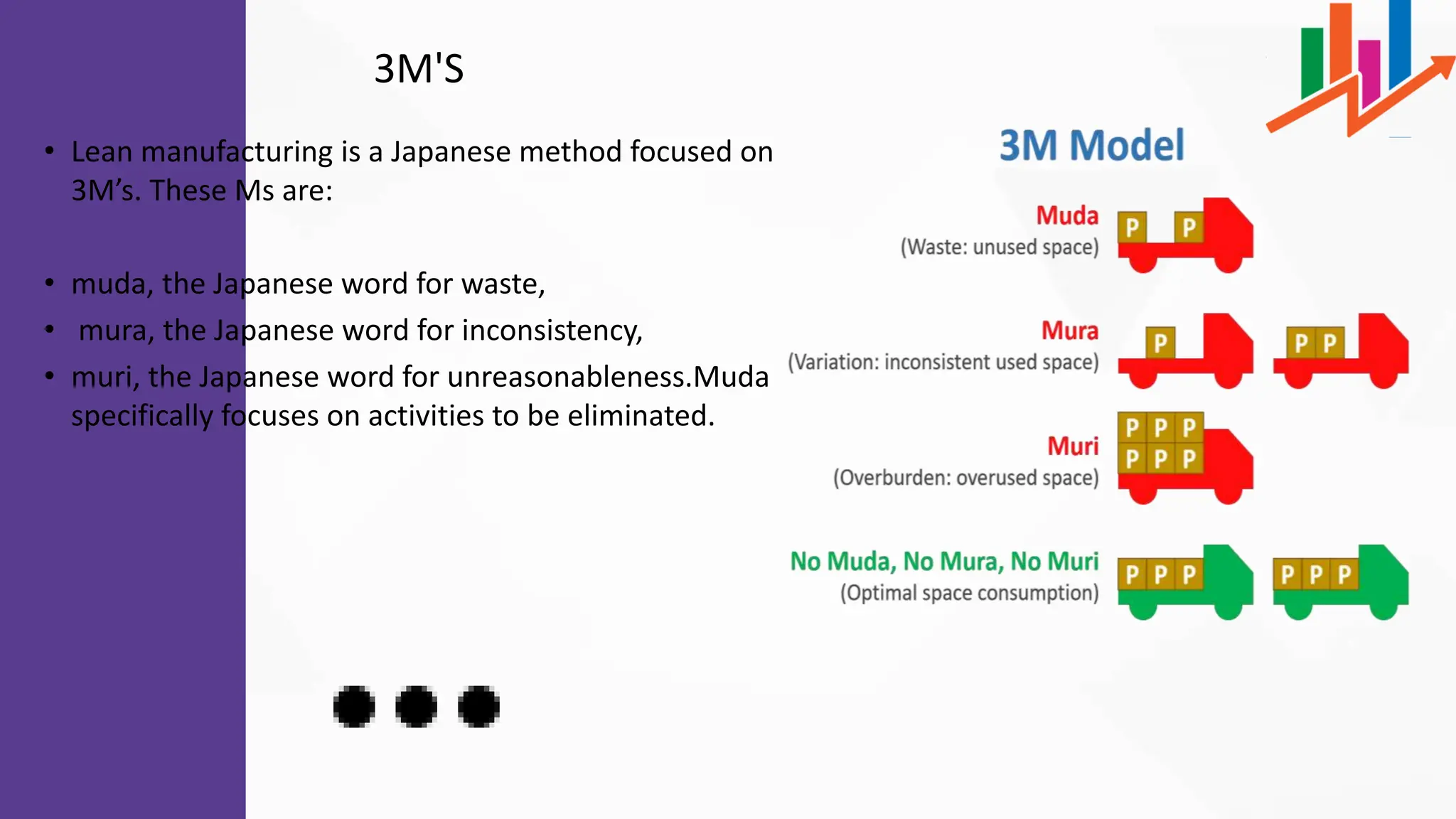
• Lean manufacturing is a Japanese method focused on
3M’s. These Ms are:
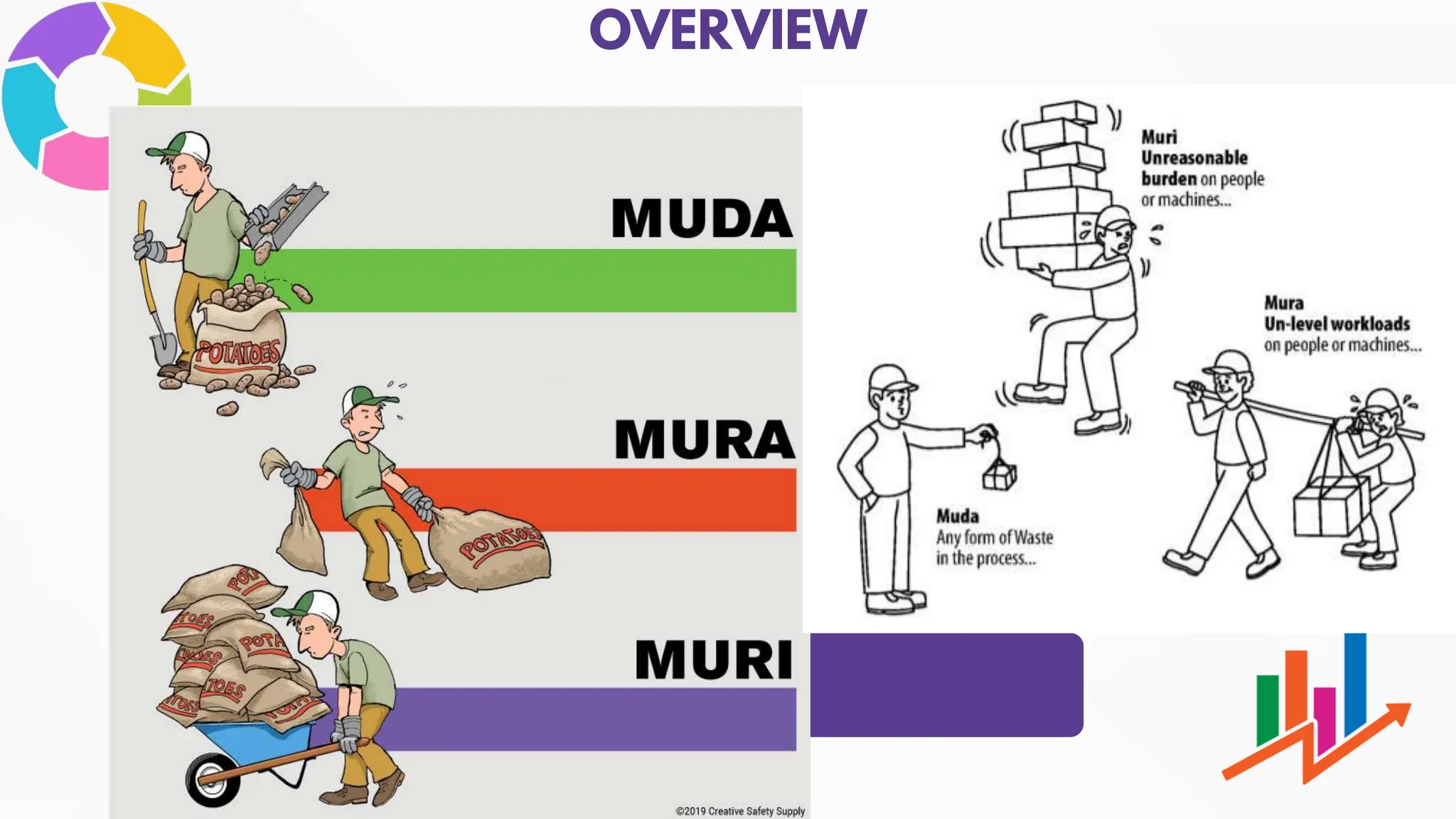
• muda, the Japanese word for waste,
• mura, the Japanese word for inconsistency,
• muri, the Japanese word for unreasonableness.Muda
specifically focuses on activities to be eliminated.
OVERVIEW
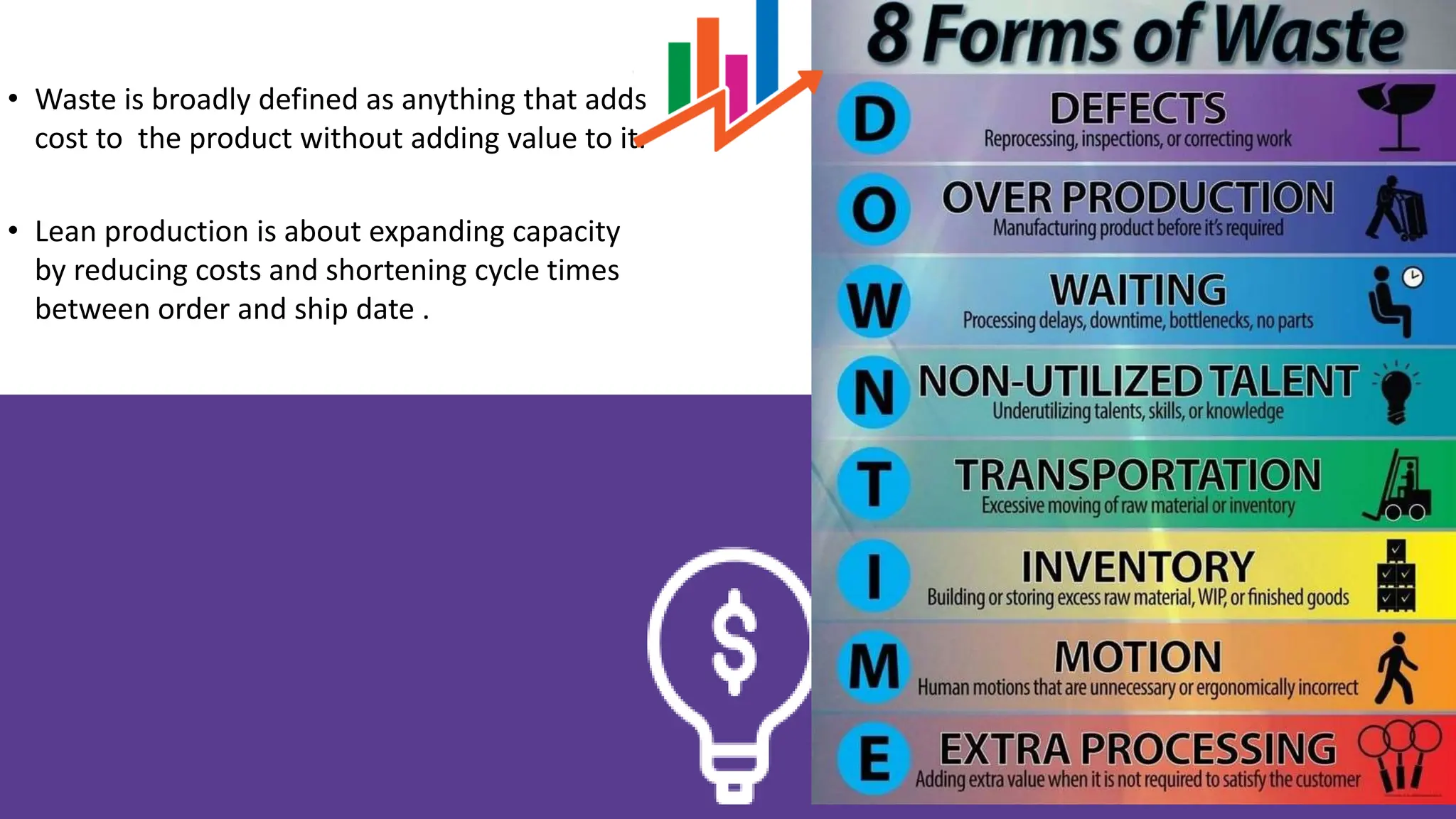
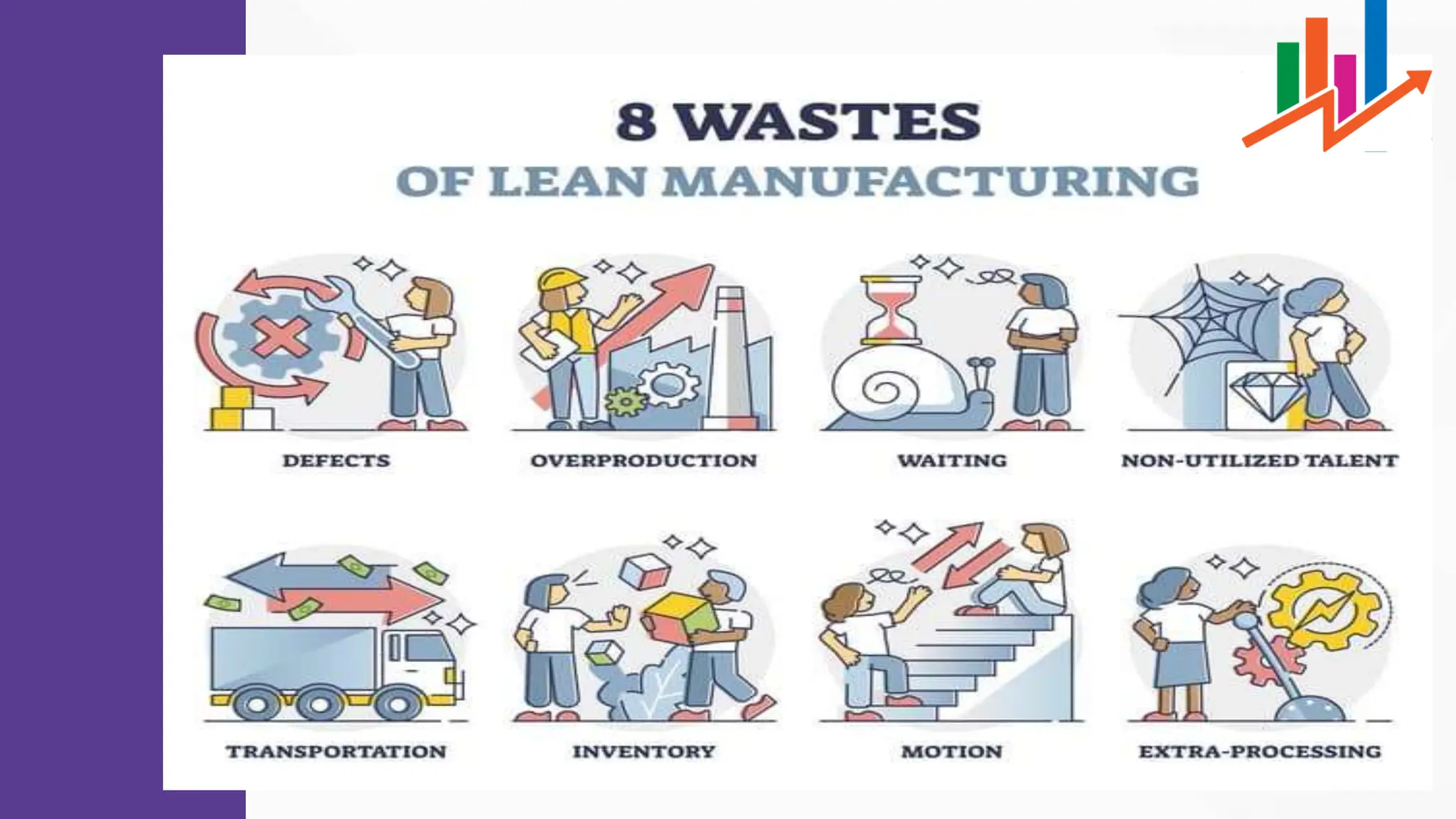
• Waste is broadly defined as anything that adds
cost to the product without adding value to it.
• Lean production is about expanding capacity
by reducing costs and shortening cycle times
between order and ship date .
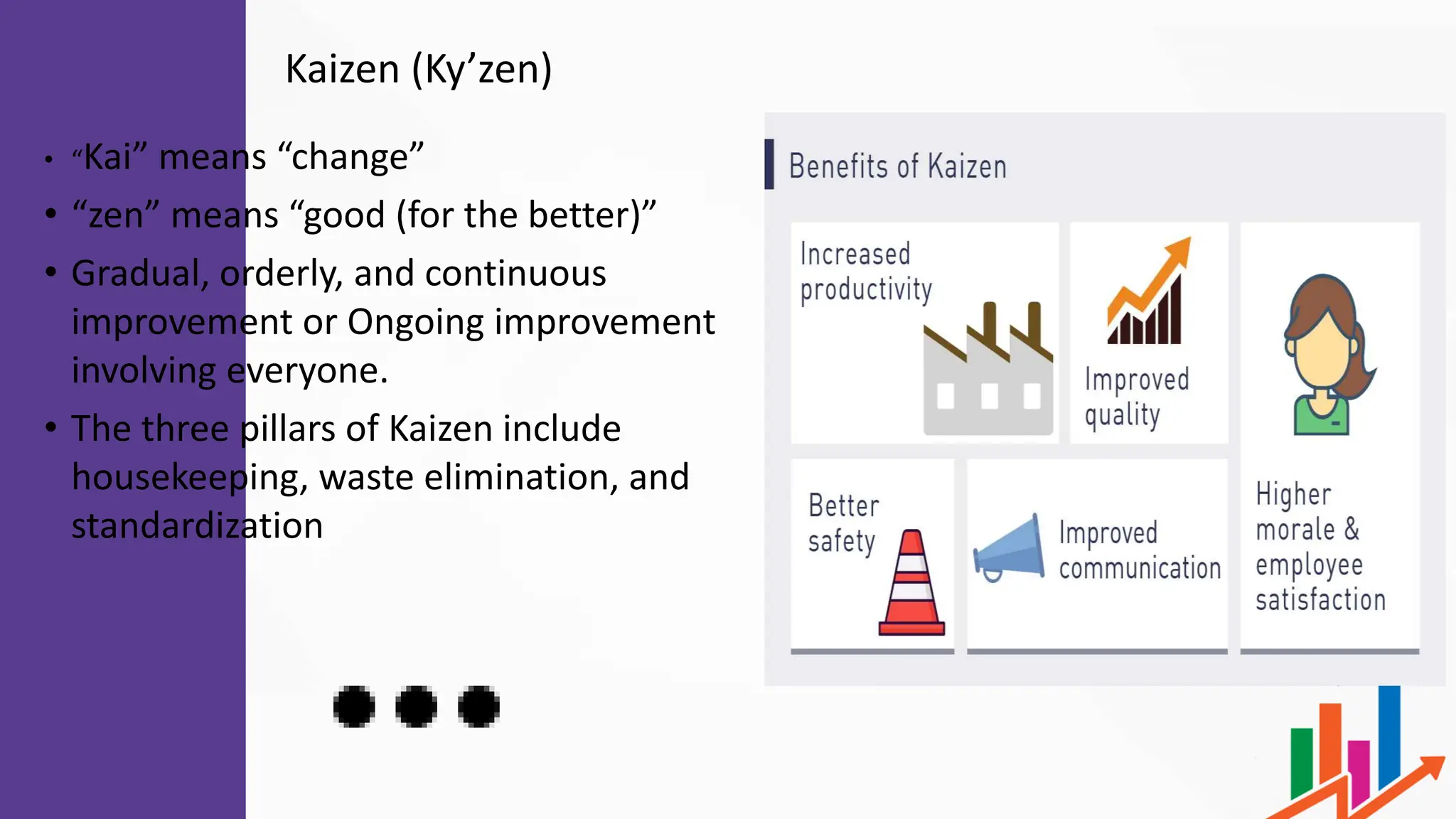
Kaizen (Ky’zen)
• “Kai” means “change”
• “zen” means “good (for the better)”
• Gradual, orderly, and continuous
improvement or Ongoing improvement
involving everyone.
• The three pillars of Kaizen include
housekeeping, waste elimination, and
standardization
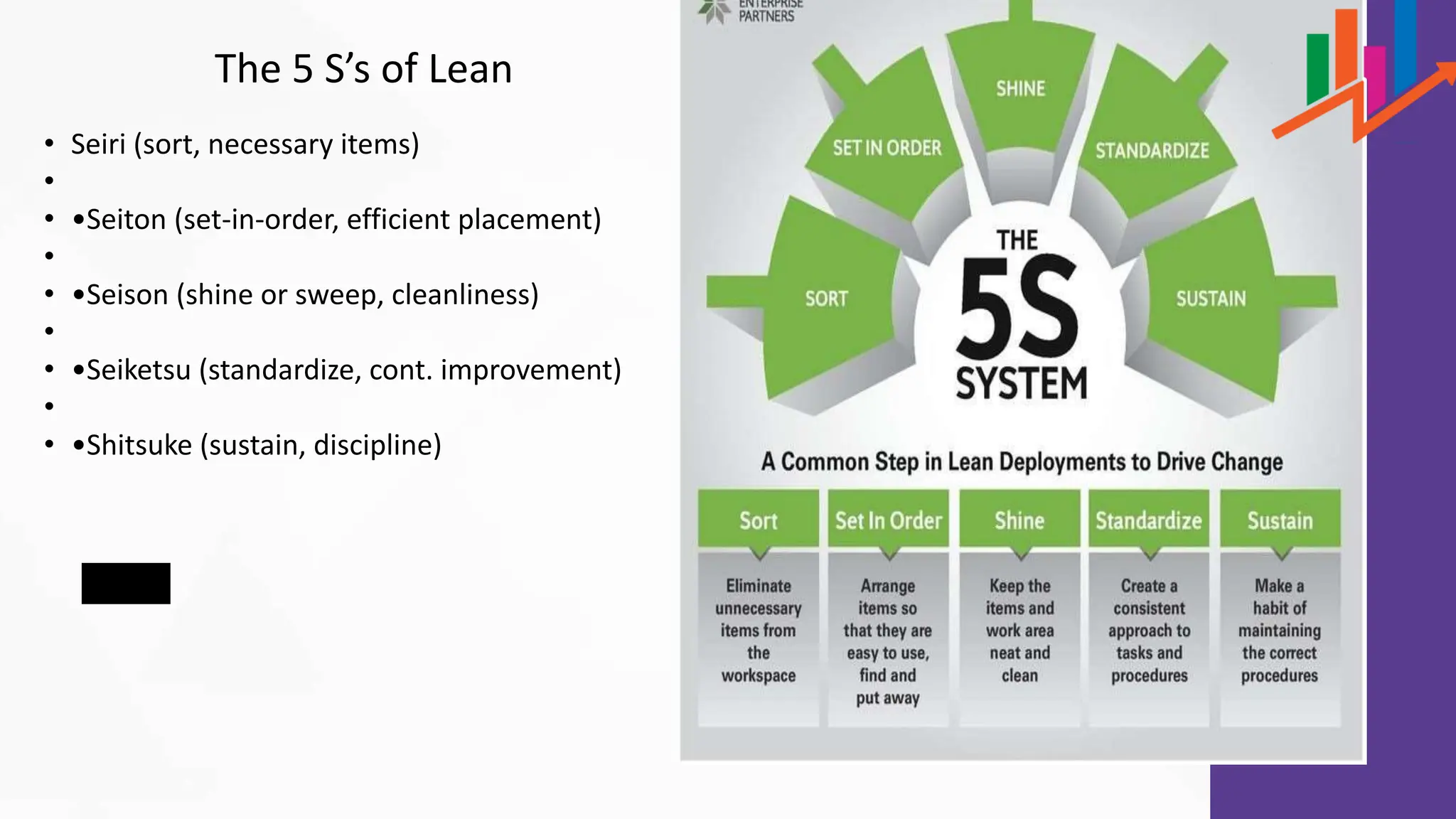
The 5 S’s of Lean
• Seiri (sort, necessary items)
•
• •Seiton (set-in-order, efficient placement)
•
• •Seison (shine or sweep, cleanliness)
•
• •Seiketsu (standardize, cont. improvement)
•
• •Shitsuke (sustain, discipline)
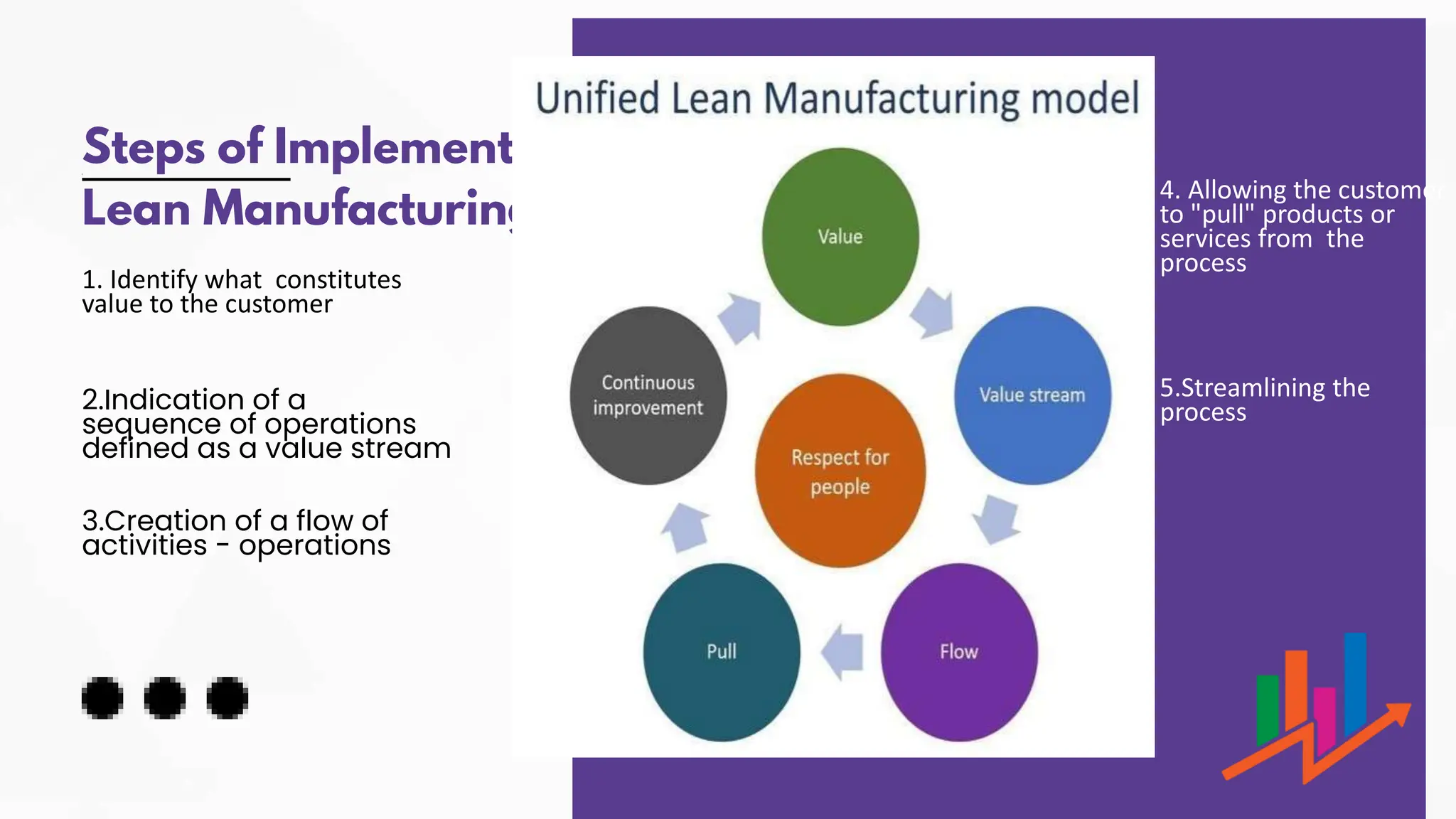
Steps of Implementing
Lean Manufacturing
1. Identify what constitutes
value to the customer
2.Indication of a
sequence of operations
defined as a value stream
3.Creation of a flow of
activities - operations
4. Allowing the customer
to "pull" products or
services from the
process
5.Streamlining the
process
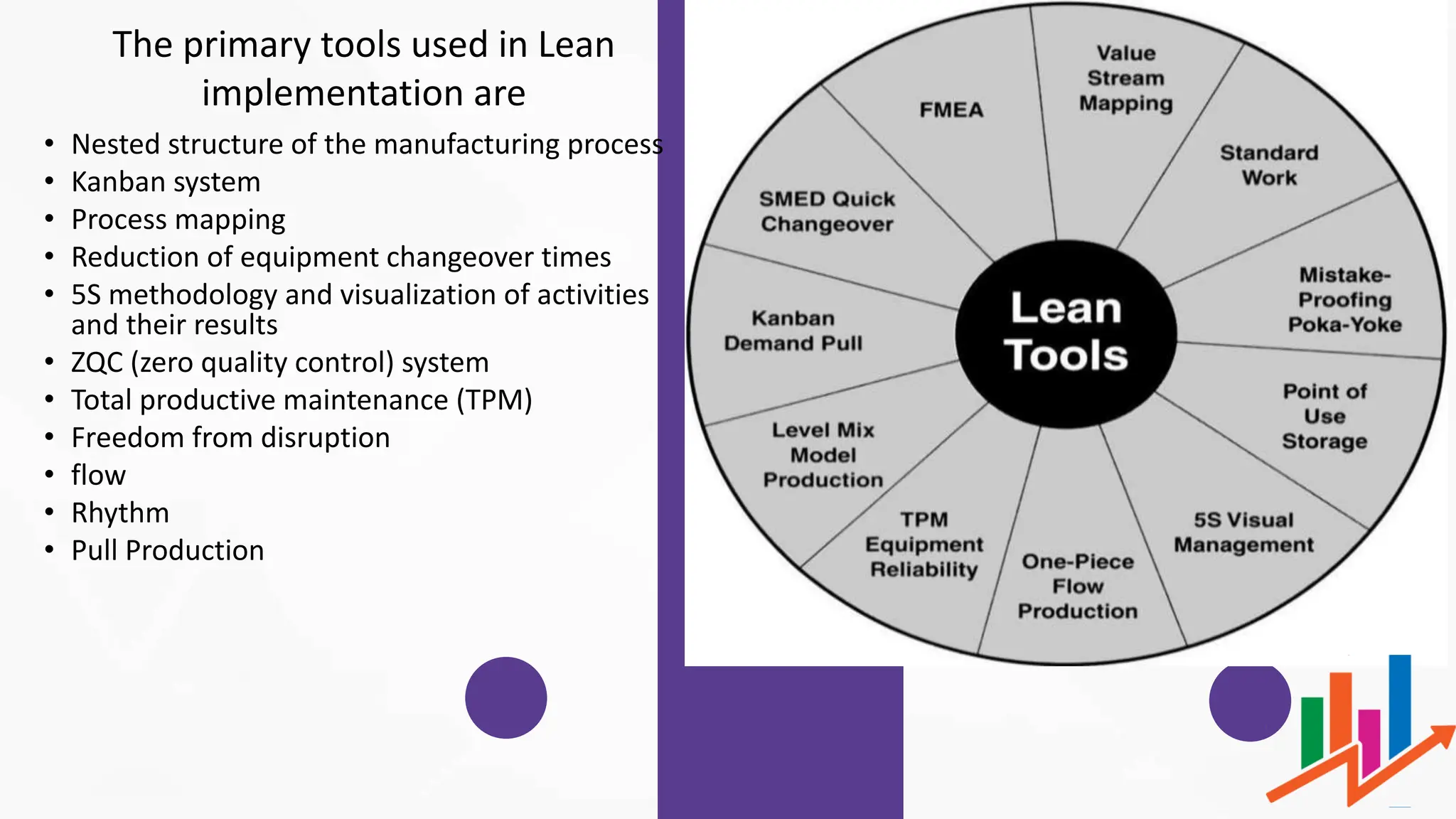
The primary tools used in Lean
implementation are
• Nested structure of the manufacturing process
• Kanban system
• Process mapping
• Reduction of equipment changeover times
• 5S methodology and visualization of activities
and their results
• ZQC (zero quality control) system
• Total productive maintenance (TPM)
• Freedom from disruption
• flow
• Rhythm
• Pull Production
Benefits of Lean
Manufacturing
• Reduces costs not just selling price
• Reduces delivery time, cycle time, set-up time
• Eliminates waste
• Seeks continuous improvement
• Improves quality
• Improves customer ratings and perceptions
• Increases overall customer satisfaction
• Improves employee involvement, morale, and
company culture
• Helps “transform” manufacturers
Lean
Management
THANK YOU

Lean Manufacturing, 5S, 3M, Advantages of Lean Manufacturingng

  • 1.
  • 2.
    Lean Manufacturing Content Lorem ipsumdolor sit amet, consectetur adipiscing elit, sed do eiusmod tempor incididunt ut labore et dolore Lorem ipsum dolor sit amet, consectetur adipiscing elit, sed do eiusmod tempor incididunt ut labore et dolore Lorem ipsum dolor sit amet, consectetur adipiscing elit, sed do eiusmod tempor incididunt ut labore et dolore
  • 3.
    Genesis of Lean Manufacturing LeanManufacturing • “Perfection is not attainable. But if we chase perfection, we can catch excellence.” Vince Lombardi • Lean manufacturing or lean production are reasonably new terms that can be traced to Jim Womack, Daniel Jones and Daniel Roos’ book, The Machine that changed the world [1991]
  • 4.
    Toyota Production System In thisbook, the authors examined the manufacturing activities exemplified by the Toyota Production System. Lean manufacturing is the systematic elimination of waste. This manufacturing system was initially developed by Taiichi Ohno in the 1950s as the successor to Henry Ford’s mass production system. https://www.youtube.com/watch?v=psTNv1blsCU
  • 5.
    Just in TimeManufacturing JIT MANUFACTURING HELPS ORGANIZATIONS CONTROL VARIABILITY IN THEIR PROCESSES, ALLOWING THEM TO INCREASE PRODUCTIVITY WHILE LOWERING COSTS. Since it involved making products x only when needed from materials that were made available by suppliers only as required, just-in-time (JIT) became its generic name.
  • 6.
    JIT manufacturing is very similarto Lean manufacturing, and the terms are often used synonymously.
  • 7.
    3M'S • Lean manufacturingis a Japanese method focused on 3M’s. These Ms are: • muda, the Japanese word for waste, • mura, the Japanese word for inconsistency, • muri, the Japanese word for unreasonableness.Muda specifically focuses on activities to be eliminated.
  • 8.
  • 9.
    • Waste isbroadly defined as anything that adds cost to the product without adding value to it. • Lean production is about expanding capacity by reducing costs and shortening cycle times between order and ship date .
  • 11.
    Kaizen (Ky’zen) • “Kai”means “change” • “zen” means “good (for the better)” • Gradual, orderly, and continuous improvement or Ongoing improvement involving everyone. • The three pillars of Kaizen include housekeeping, waste elimination, and standardization
  • 12.
    The 5 S’sof Lean • Seiri (sort, necessary items) • • •Seiton (set-in-order, efficient placement) • • •Seison (shine or sweep, cleanliness) • • •Seiketsu (standardize, cont. improvement) • • •Shitsuke (sustain, discipline)
  • 13.
    Steps of Implementing LeanManufacturing 1. Identify what constitutes value to the customer 2.Indication of a sequence of operations defined as a value stream 3.Creation of a flow of activities - operations 4. Allowing the customer to "pull" products or services from the process 5.Streamlining the process
  • 14.
    The primary toolsused in Lean implementation are • Nested structure of the manufacturing process • Kanban system • Process mapping • Reduction of equipment changeover times • 5S methodology and visualization of activities and their results • ZQC (zero quality control) system • Total productive maintenance (TPM) • Freedom from disruption • flow • Rhythm • Pull Production
  • 15.
    Benefits of Lean Manufacturing •Reduces costs not just selling price • Reduces delivery time, cycle time, set-up time • Eliminates waste • Seeks continuous improvement • Improves quality • Improves customer ratings and perceptions • Increases overall customer satisfaction • Improves employee involvement, morale, and company culture • Helps “transform” manufacturers
  • 16.
  • 17.