

LEAN
LAUNCHPAD
AT NYU ITP
Class 5 / 12
March 3, 2014
Jen van der Meer | jd1159 at nyu dot edu
Josh Knowles | chasing at spaceship dot com

Rockets Sketches borrowed from Harry Allen Design
TODAY:
6:00 – 6:30: Working through Customer Relationships and Partnerships

6:30 – 7:00 Guest Speaker Travis Hardman
7:00 – 7:15 Break
7:15 – 8:15 Teams Present
8:15 – 8:30 Dev Planning w. Josh
8:30 – 8:55 Guest Speaker John Bachir
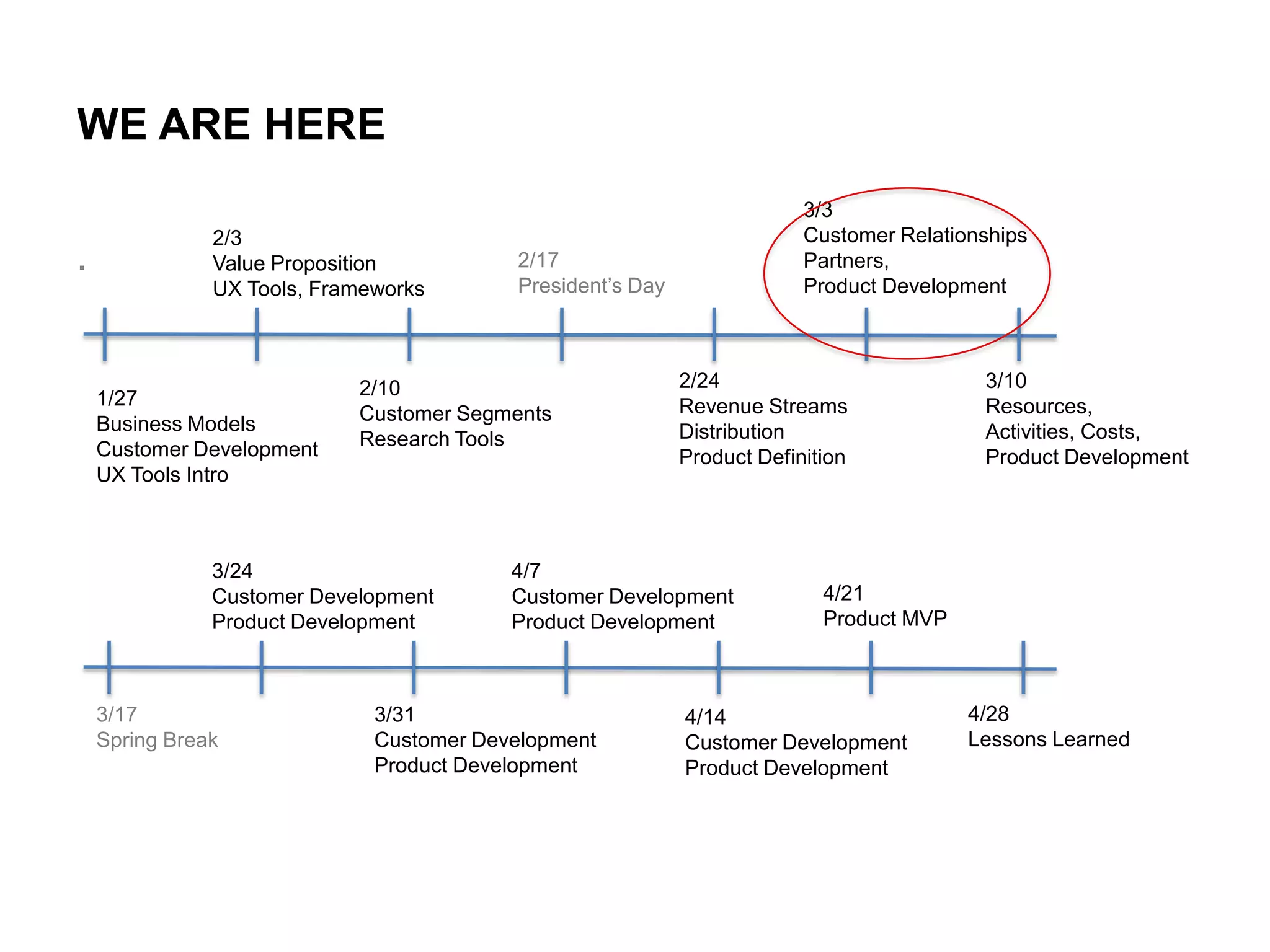
WE ARE HERE
.

2/3
Value Proposition
UX Tools, Frameworks

1/27
Business Models
Customer Development
UX Tools Intro

3/17
Spring Break

2/17
President’s Day

2/10
Customer Segments
Research Tools

3/24
Customer Development
Product Development

3/3
Customer Relationships
Partners,
Product Development

2/24
Revenue Streams
Distribution
Product Definition

4/7
Customer Development
Product Development

3/31
Customer Development
Product Development

3/10
Resources,
Activities, Costs,
Product Development

4/21
Product MVP

4/14
Customer Development
Product Development

4/28
Lessons Learned
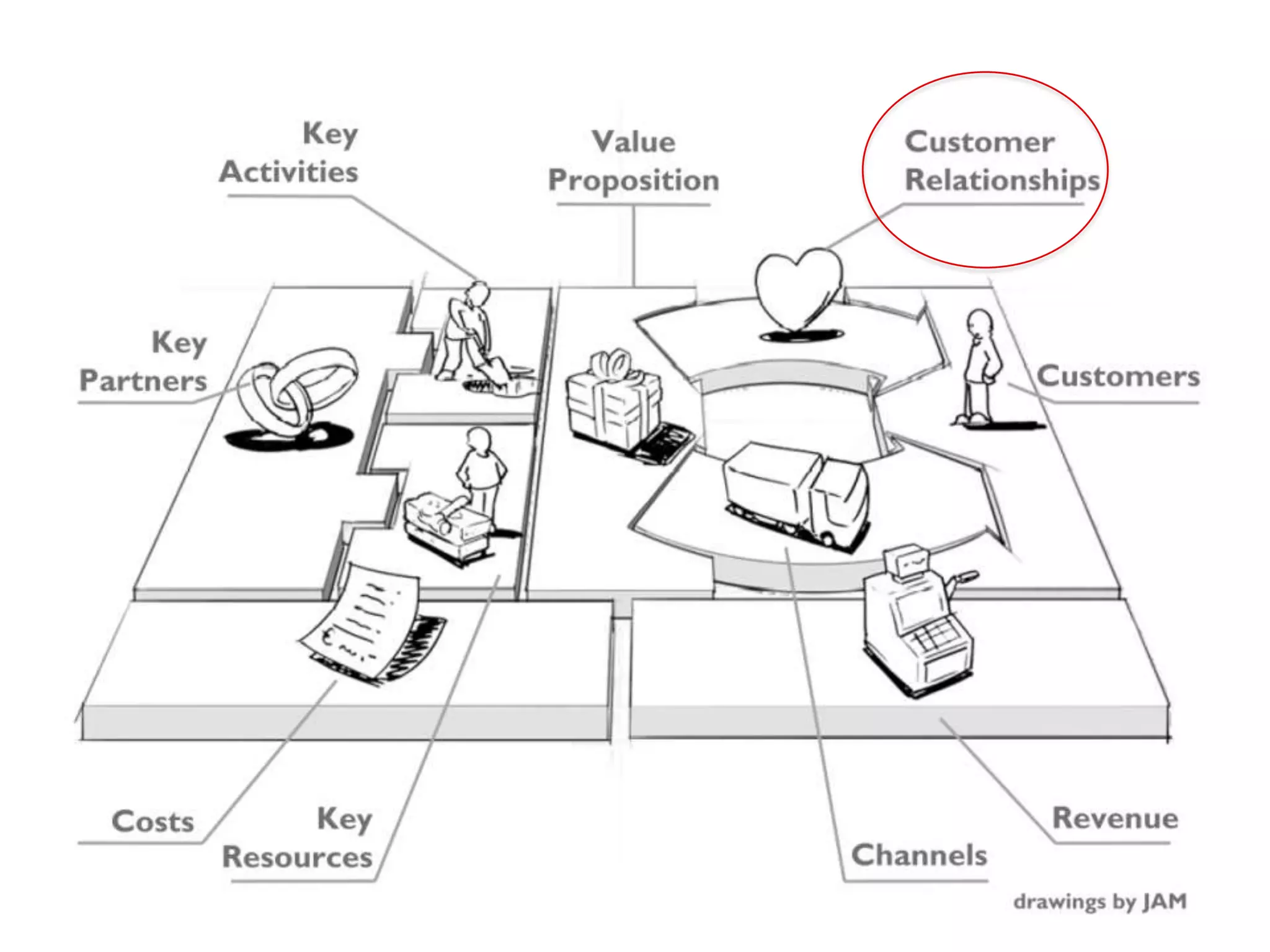
CUSTOMER RELATIONSHIPS
What are the 3 components?

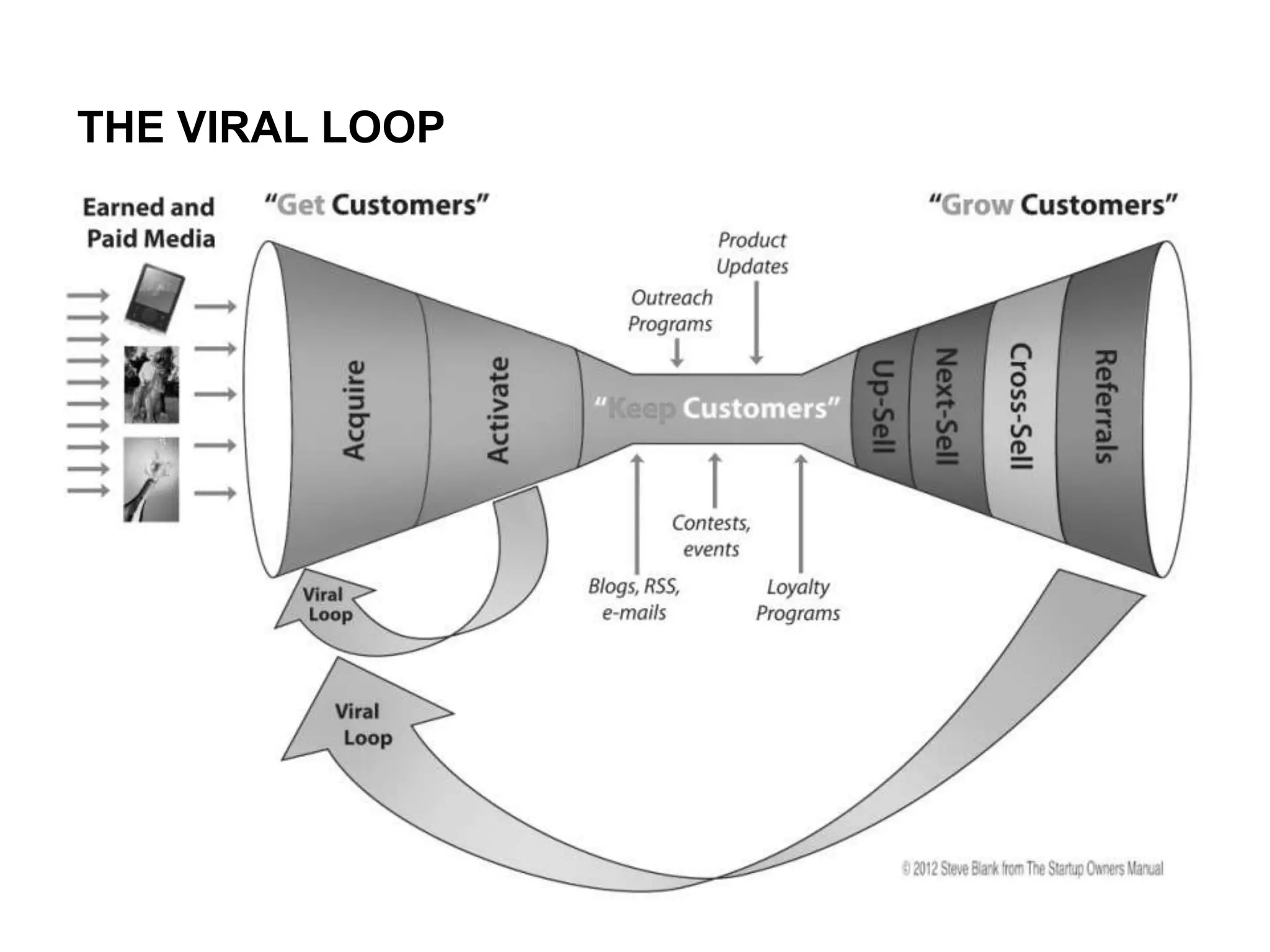
Get

Keep

Grow

(The most important hypothesis)
CUSTOMER ARCHETEYPES
What’s their role

Who are they
How do they buy
What matters
What pain is being solved for them
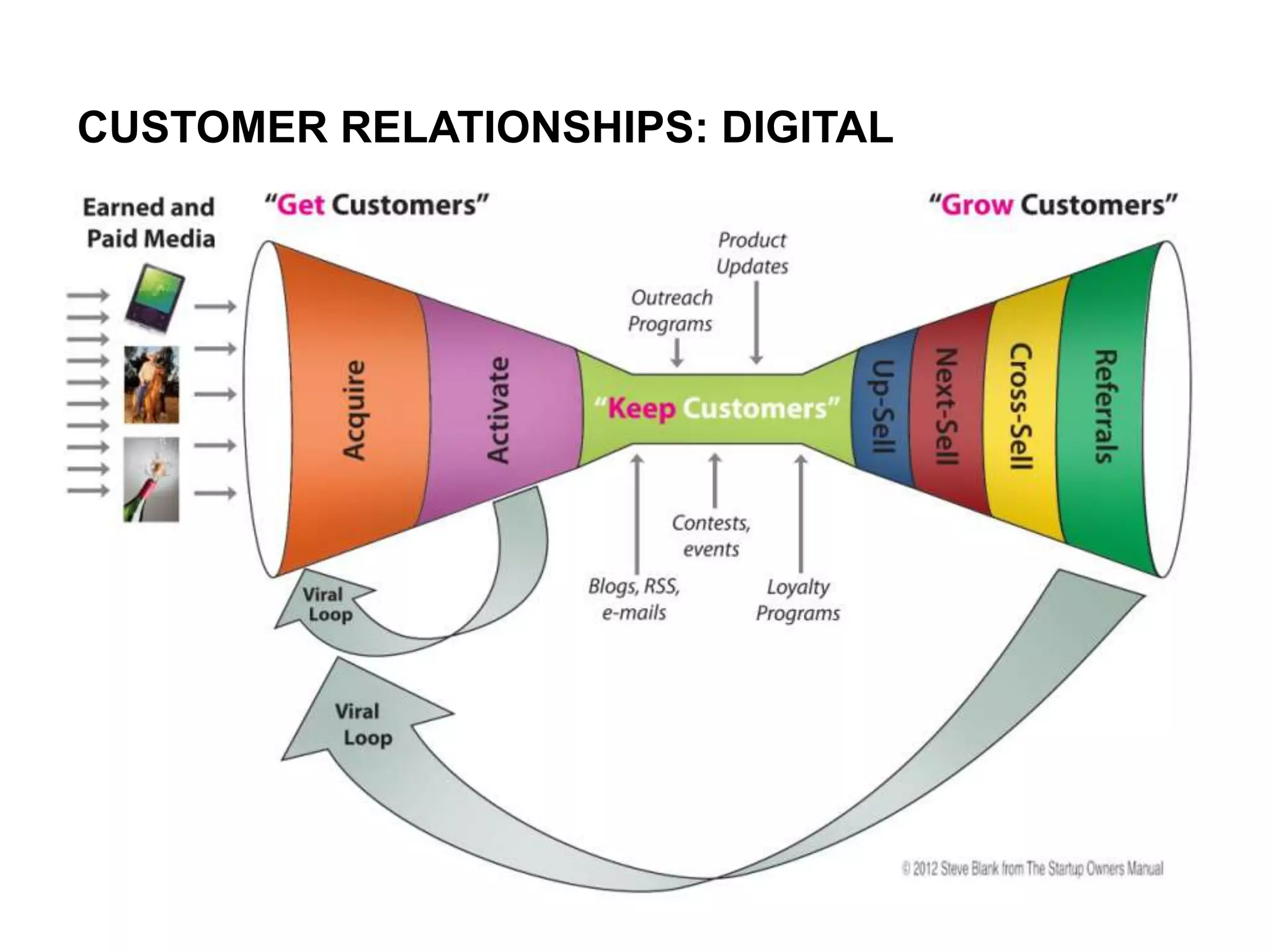
CUSTOMER RELATIONSHIPS: DIGITAL
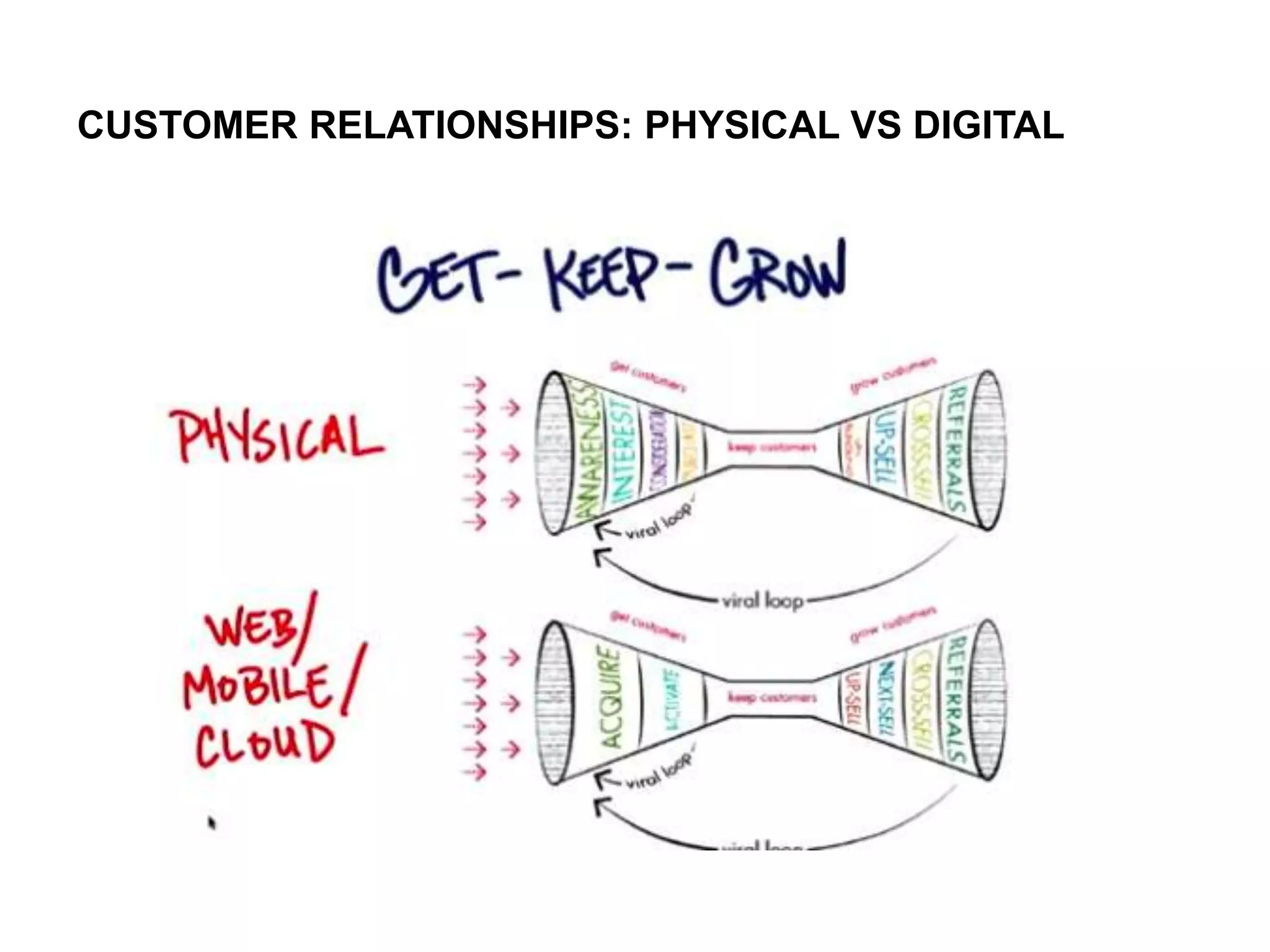
CUSTOMER RELATIONSHIPS: PHYSICAL VS DIGITAL
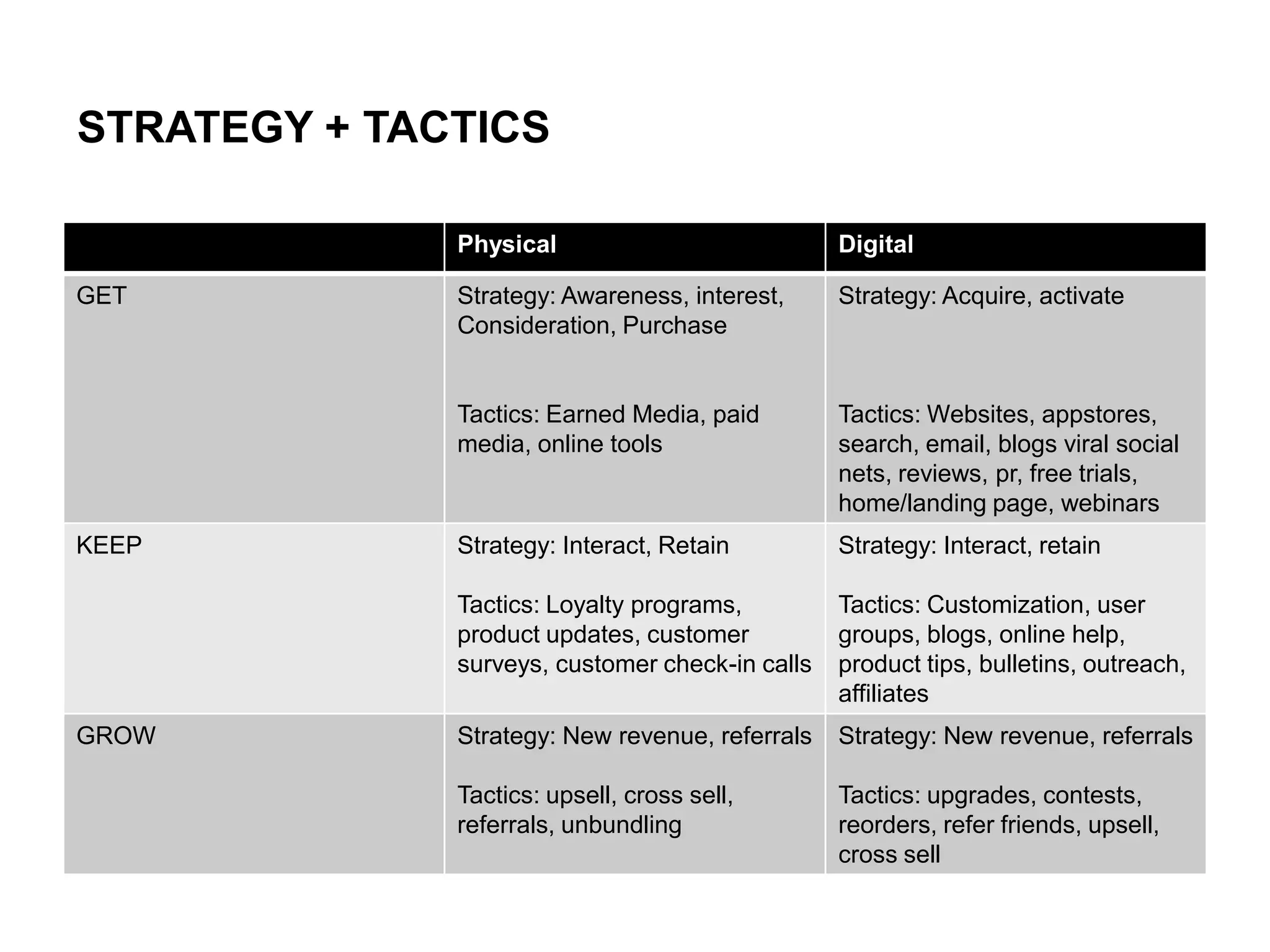
STRATEGY + TACTICS
Physical

GROW

Strategy: Acquire, activate

Tactics: Websites, appstores,
search, email, blogs viral social
nets, reviews, pr, free trials,
home/landing page, webinars

Strategy: Interact, Retain

Strategy: Interact, retain

Tactics: Loyalty programs,
product updates, customer
surveys, customer check-in calls

KEEP

Strategy: Awareness, interest,
Consideration, Purchase

Tactics: Earned Media, paid
media, online tools

GET

Digital

Tactics: Customization, user
groups, blogs, online help,
product tips, bulletins, outreach,
affiliates

Strategy: New revenue, referrals

Strategy: New revenue, referrals

Tactics: upsell, cross sell,
referrals, unbundling

Tactics: upgrades, contests,
reorders, refer friends, upsell,
cross sell
THE VIRAL LOOP
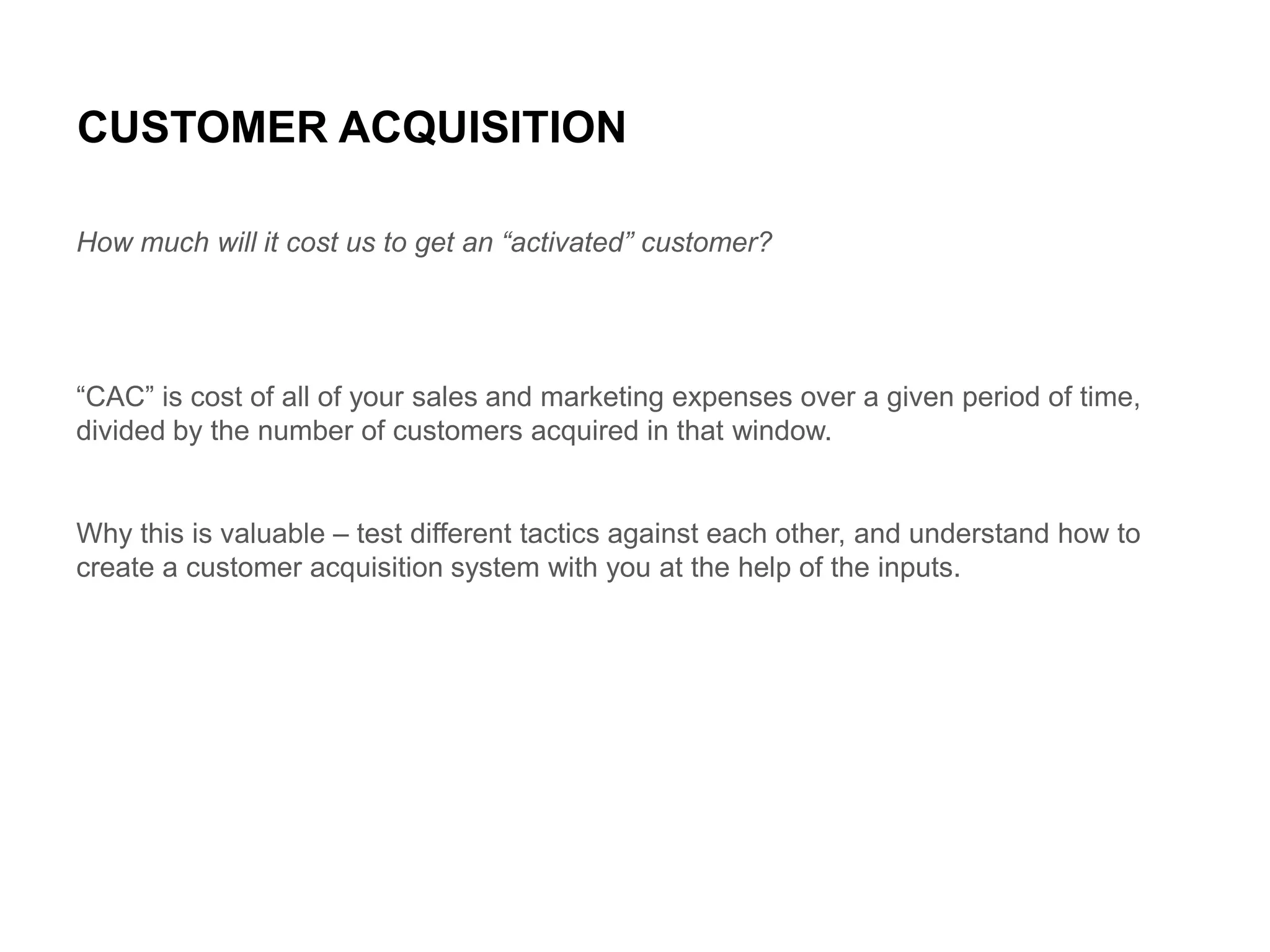
CUSTOMER ACQUISITION
How much will it cost us to get an “activated” customer?

“CAC” is cost of all of your sales and marketing expenses over a given period of time,
divided by the number of customers acquired in that window.

Why this is valuable – test different tactics against each other, and understand how to
create a customer acquisition system with you at the help of the inputs.
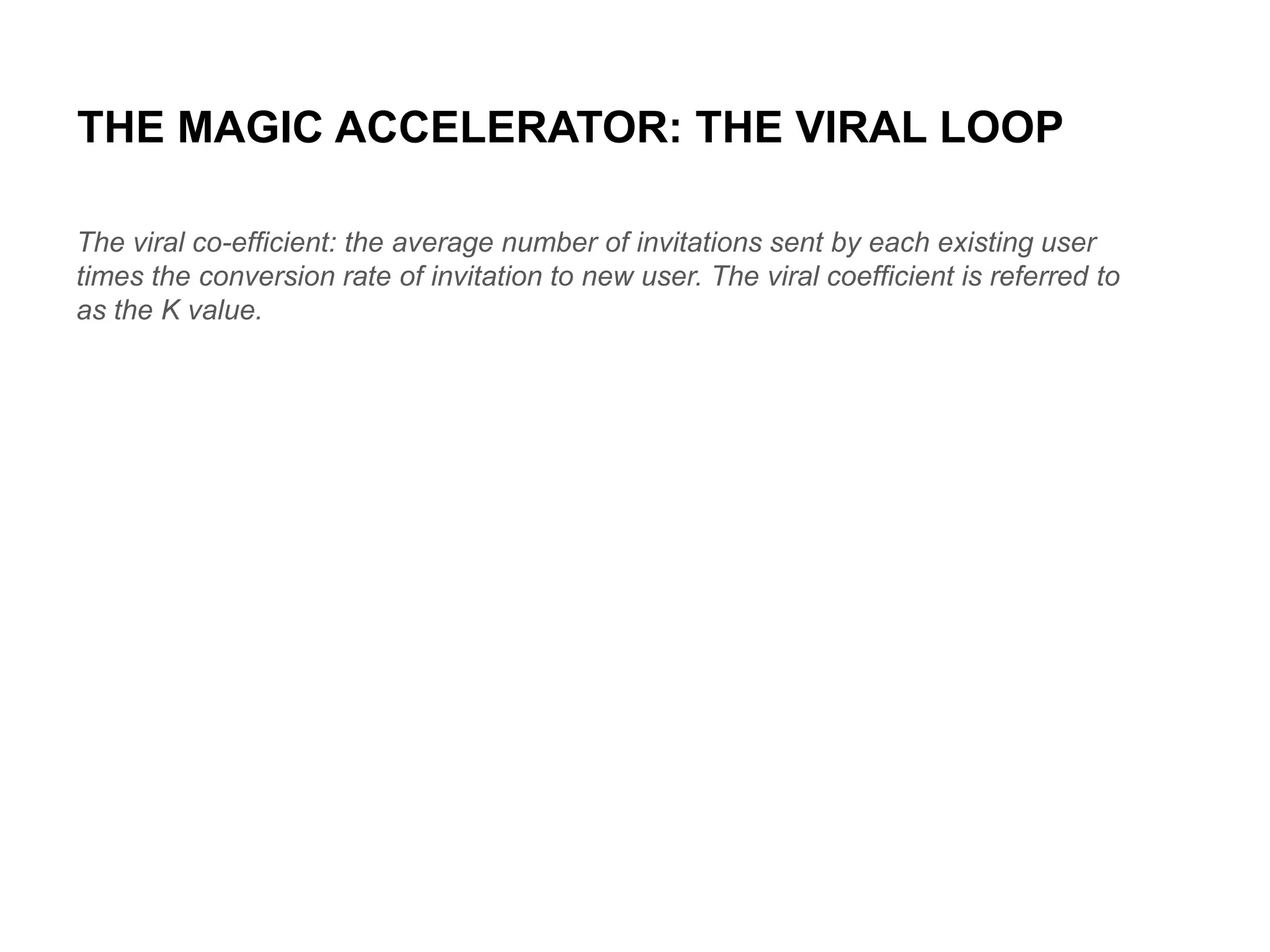
THE MAGIC ACCELERATOR: THE VIRAL LOOP
The viral co-efficient: the average number of invitations sent by each existing user
times the conversion rate of invitation to new user. The viral coefficient is referred to
as the K value.
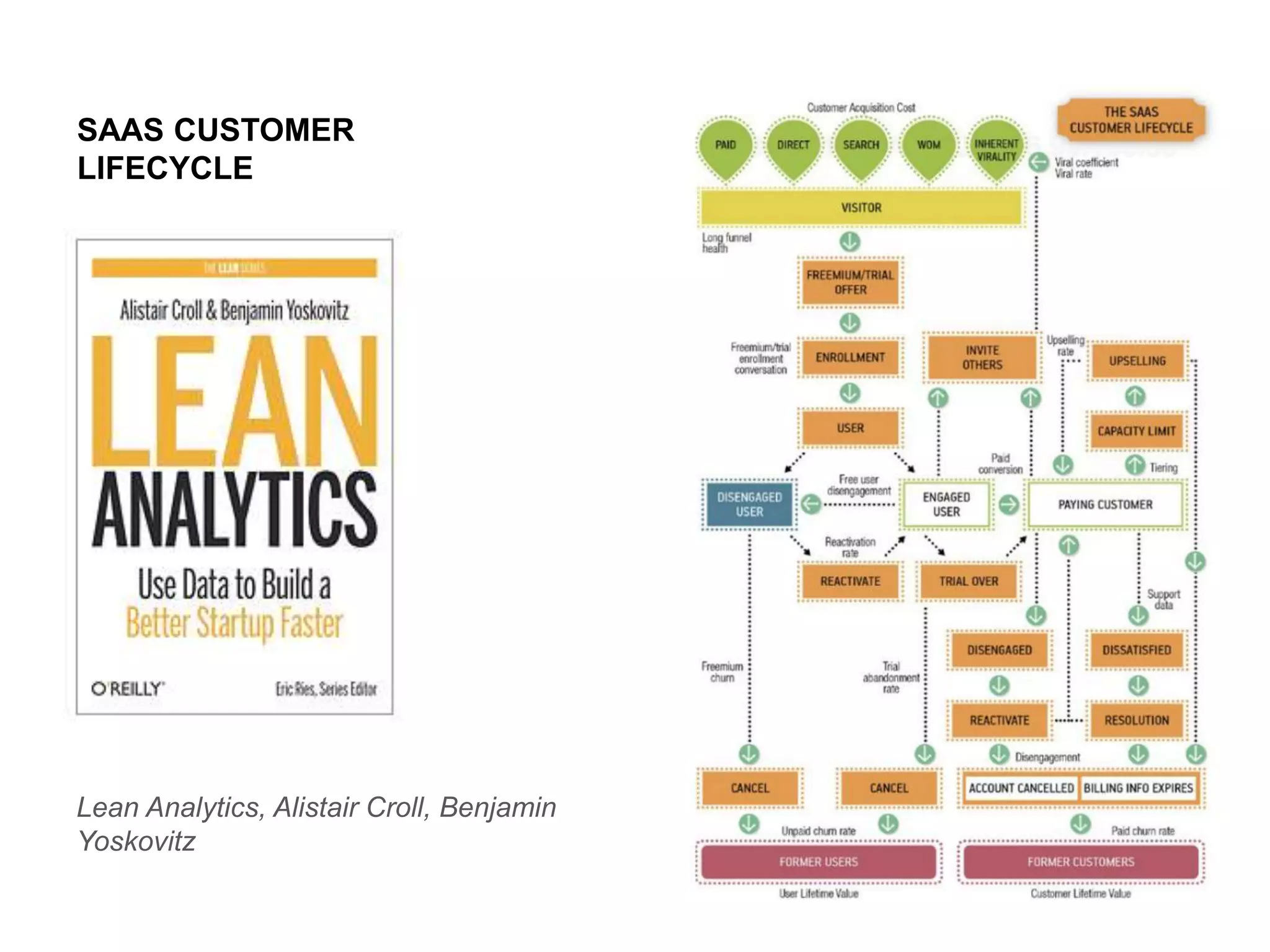
SAAS CUSTOMER
LIFECYCLE

Lean Analytics, Alistair Croll, Benjamin
Yoskovitz
14
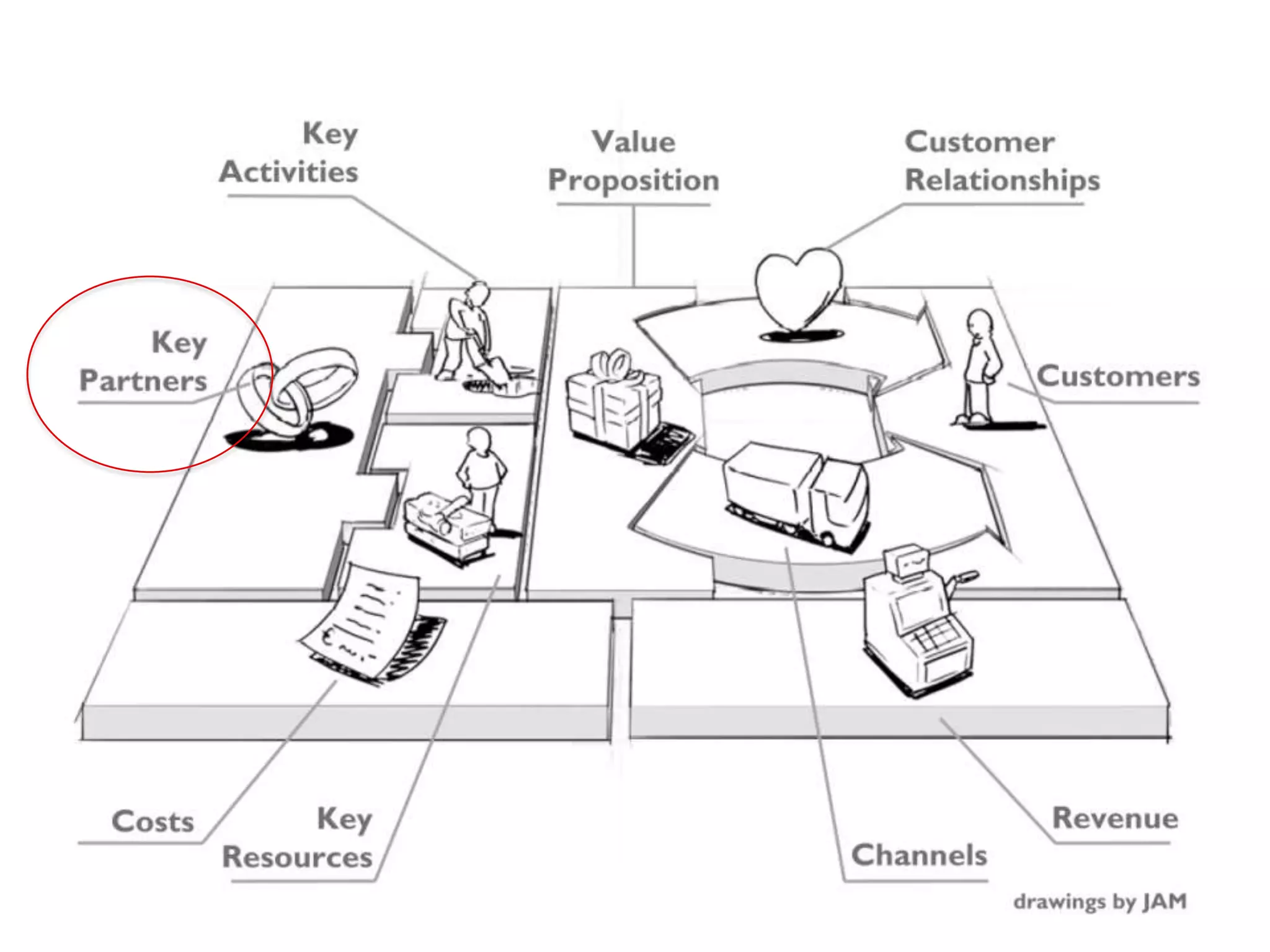
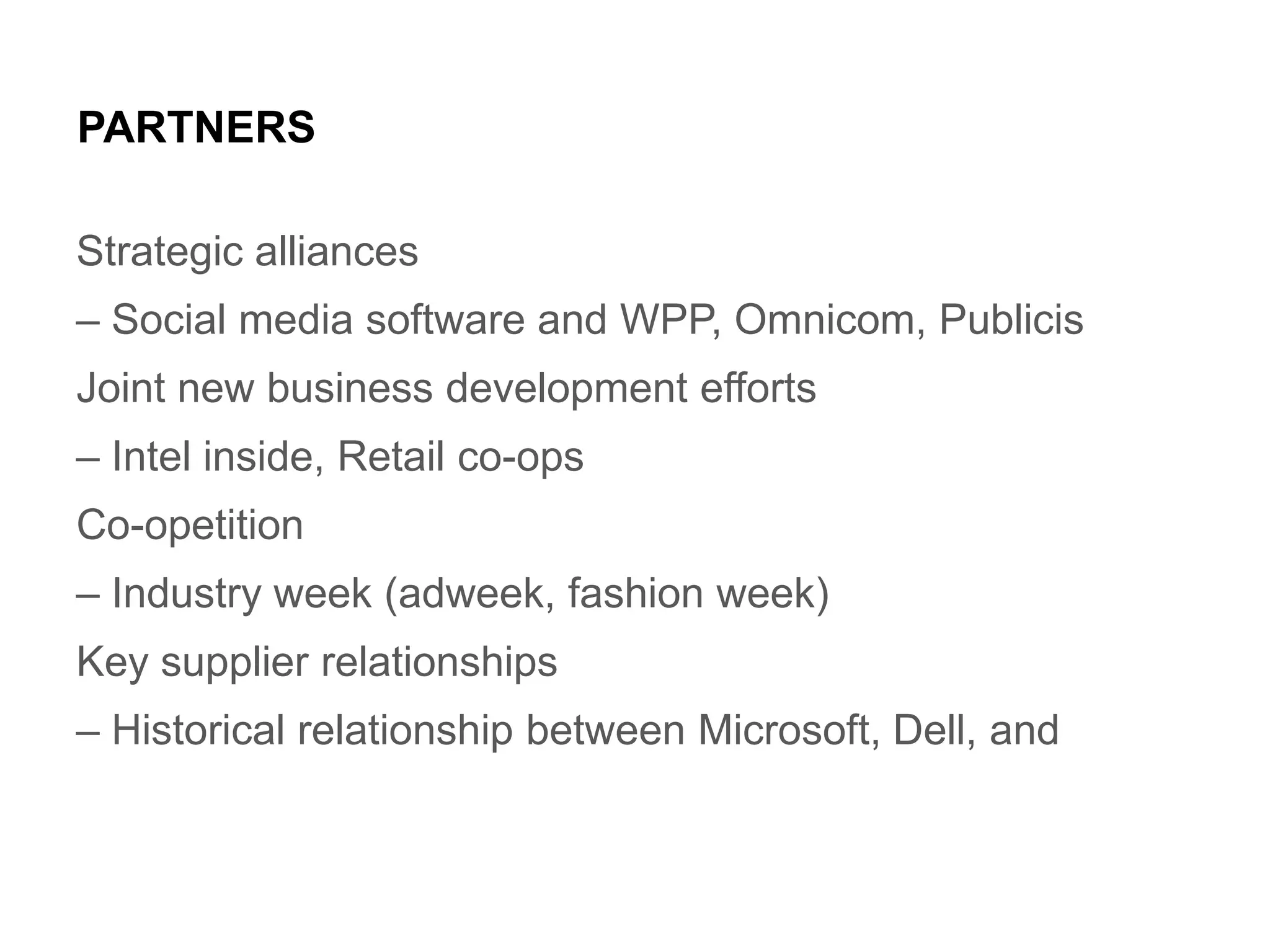
PARTNERS
Strategic alliances
– Social media software and WPP, Omnicom, Publicis
Joint new business development efforts
– Intel inside, Retail co-ops

Co-opetition
– Industry week (adweek, fashion week)
Key supplier relationships

– Historical relationship between Microsoft, Dell, and
WHAT WILL YOU TEST?
Hypothesis to get:
Acquisition
Activation

What is your hypothesis to keep:
Outreach
Events
Loyalty
Product updates

What is your hypothesis to grow:
Upsell
Cross-sell
Next-sell
Referrals
WHAT CAME BEFORE STEVE AND ERIC

17
FOR NEXT WEEK
3/3/14
NEXT WEEK PREP:
. Watch Lecture on Activities, Resources and Costs
Read: Business Model Generation 226-261.
Presentation:
· Cover slide
· Latest version Business Model Canvas with changes marked

· Results of last week’s experiments. What passed, what failed, what did you
learn?
· Proposals for next week’s experiments. What constitutes a pass/fail signal for
each?
NEXT: CANVAS REVIEW AND
FEEDBACK
APPENDIX
ITP TEACHING TEAM
Jen van der Meer, Adjunct Professor at ITP since 2008
ITP courses + workshops: Bodies and Buildings, Products Tell Their
Stories, ITP VC Pitchfest, . Currently: Luminary Labs, Angel Investor,
Health Data Challenges, Judge for startup competitions, + SVA PoD

Josh Knowles, ITP ’07
15+ years as an independent developer/consultant, working with
numerous brands and start-up clients (currently under the aegis of
Frescher-Southern, Ltd.)
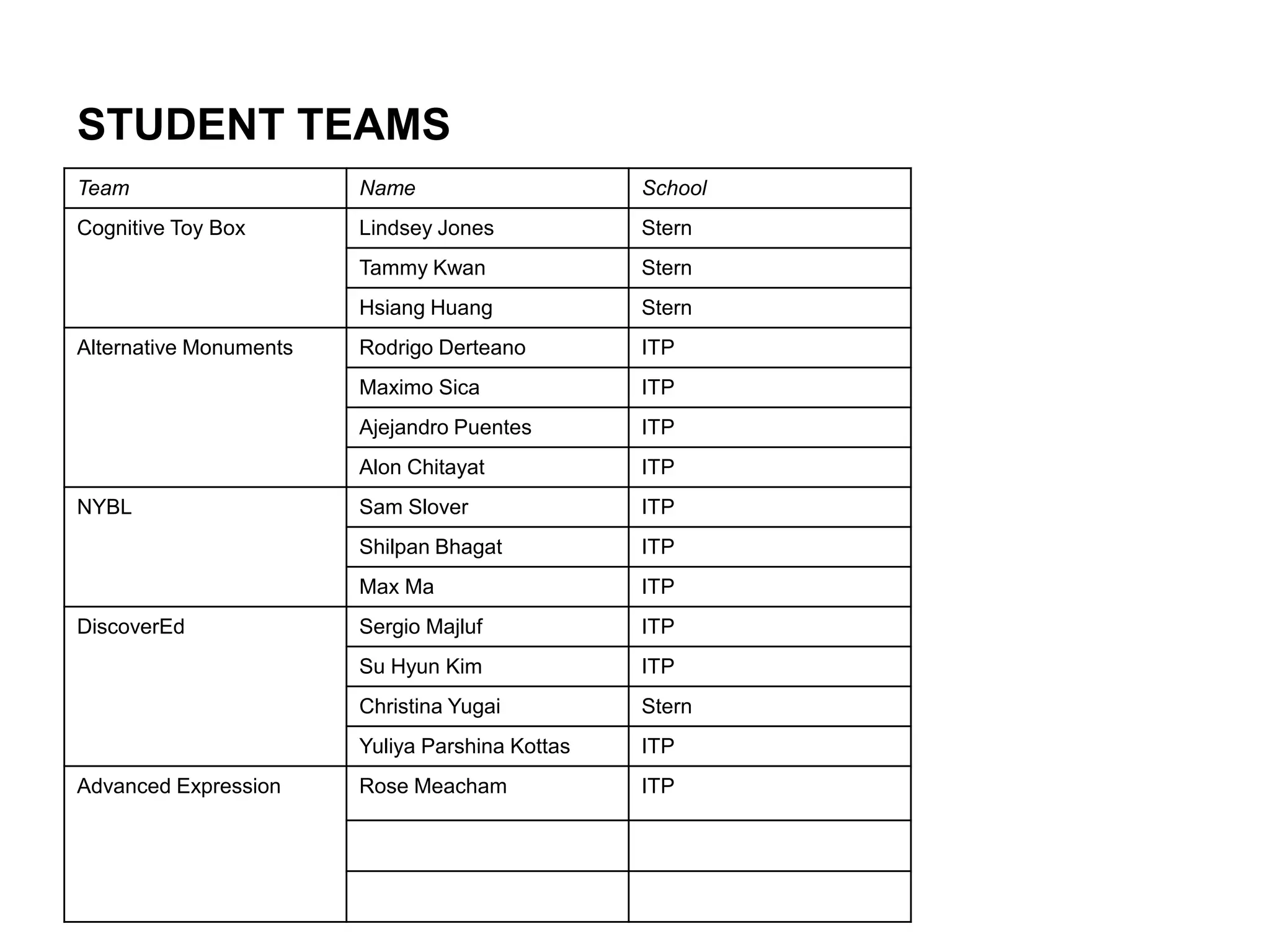
STUDENT TEAMS
Team

Name

School

Cognitive Toy Box

Lindsey Jones

Stern

Tammy Kwan

Stern

Hsiang Huang

Stern

Rodrigo Derteano

ITP

Maximo Sica

ITP

Ajejandro Puentes

ITP

Alon Chitayat

ITP

Sam Slover

ITP

Shilpan Bhagat

ITP

Max Ma

ITP

Sergio Majluf

ITP

Su Hyun Kim

ITP

Christina Yugai

Stern

Yuliya Parshina Kottas

ITP

Rose Meacham

ITP

Alternative Monuments

NYBL

DiscoverEd

Advanced Expression
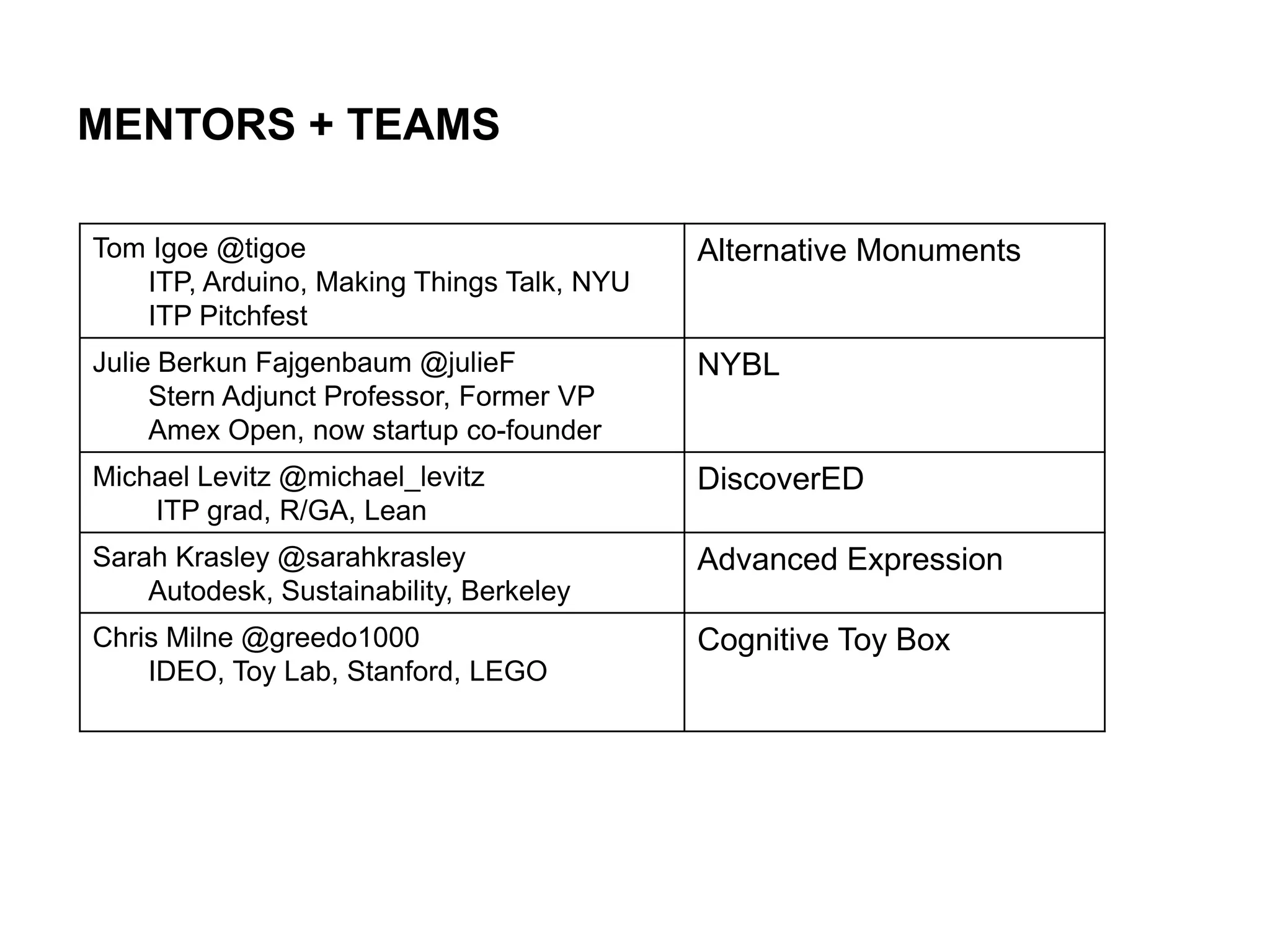
MENTORS + TEAMS
Tom Igoe @tigoe
ITP, Arduino, Making Things Talk, NYU
ITP Pitchfest

Alternative Monuments

Julie Berkun Fajgenbaum @julieF
Stern Adjunct Professor, Former VP
Amex Open, now startup co-founder

NYBL

Michael Levitz @michael_levitz
ITP grad, R/GA, Lean

DiscoverED

Sarah Krasley @sarahkrasley
Autodesk, Sustainability, Berkeley

Advanced Expression

Chris Milne @greedo1000
IDEO, Toy Lab, Stanford, LEGO

Cognitive Toy Box

Lean LaunchPad itp 3.3.2014

  • 1.
    LEAN LAUNCHPAD AT NYU ITP Class5 / 12 March 3, 2014 Jen van der Meer | jd1159 at nyu dot edu Josh Knowles | chasing at spaceship dot com Rockets Sketches borrowed from Harry Allen Design
  • 2.
    TODAY: 6:00 – 6:30:Working through Customer Relationships and Partnerships 6:30 – 7:00 Guest Speaker Travis Hardman 7:00 – 7:15 Break 7:15 – 8:15 Teams Present 8:15 – 8:30 Dev Planning w. Josh 8:30 – 8:55 Guest Speaker John Bachir
  • 3.
    WE ARE HERE . 2/3 ValueProposition UX Tools, Frameworks 1/27 Business Models Customer Development UX Tools Intro 3/17 Spring Break 2/17 President’s Day 2/10 Customer Segments Research Tools 3/24 Customer Development Product Development 3/3 Customer Relationships Partners, Product Development 2/24 Revenue Streams Distribution Product Definition 4/7 Customer Development Product Development 3/31 Customer Development Product Development 3/10 Resources, Activities, Costs, Product Development 4/21 Product MVP 4/14 Customer Development Product Development 4/28 Lessons Learned
  • 5.
    CUSTOMER RELATIONSHIPS What arethe 3 components? Get Keep Grow (The most important hypothesis)
  • 6.
    CUSTOMER ARCHETEYPES What’s theirrole Who are they How do they buy What matters What pain is being solved for them
  • 7.
  • 8.
  • 9.
    STRATEGY + TACTICS Physical GROW Strategy:Acquire, activate Tactics: Websites, appstores, search, email, blogs viral social nets, reviews, pr, free trials, home/landing page, webinars Strategy: Interact, Retain Strategy: Interact, retain Tactics: Loyalty programs, product updates, customer surveys, customer check-in calls KEEP Strategy: Awareness, interest, Consideration, Purchase Tactics: Earned Media, paid media, online tools GET Digital Tactics: Customization, user groups, blogs, online help, product tips, bulletins, outreach, affiliates Strategy: New revenue, referrals Strategy: New revenue, referrals Tactics: upsell, cross sell, referrals, unbundling Tactics: upgrades, contests, reorders, refer friends, upsell, cross sell
  • 10.
  • 11.
    CUSTOMER ACQUISITION How muchwill it cost us to get an “activated” customer? “CAC” is cost of all of your sales and marketing expenses over a given period of time, divided by the number of customers acquired in that window. Why this is valuable – test different tactics against each other, and understand how to create a customer acquisition system with you at the help of the inputs.
  • 12.
    THE MAGIC ACCELERATOR:THE VIRAL LOOP The viral co-efficient: the average number of invitations sent by each existing user times the conversion rate of invitation to new user. The viral coefficient is referred to as the K value.
  • 13.
    SAAS CUSTOMER LIFECYCLE Lean Analytics,Alistair Croll, Benjamin Yoskovitz
  • 14.
  • 15.
    PARTNERS Strategic alliances – Socialmedia software and WPP, Omnicom, Publicis Joint new business development efforts – Intel inside, Retail co-ops Co-opetition – Industry week (adweek, fashion week) Key supplier relationships – Historical relationship between Microsoft, Dell, and
  • 16.
    WHAT WILL YOUTEST? Hypothesis to get: Acquisition Activation What is your hypothesis to keep: Outreach Events Loyalty Product updates What is your hypothesis to grow: Upsell Cross-sell Next-sell Referrals
  • 17.
    WHAT CAME BEFORESTEVE AND ERIC 17
  • 18.
  • 19.
    NEXT WEEK PREP: .Watch Lecture on Activities, Resources and Costs Read: Business Model Generation 226-261. Presentation: · Cover slide · Latest version Business Model Canvas with changes marked · Results of last week’s experiments. What passed, what failed, what did you learn? · Proposals for next week’s experiments. What constitutes a pass/fail signal for each?
  • 20.
    NEXT: CANVAS REVIEWAND FEEDBACK
  • 21.
  • 22.
    ITP TEACHING TEAM Jenvan der Meer, Adjunct Professor at ITP since 2008 ITP courses + workshops: Bodies and Buildings, Products Tell Their Stories, ITP VC Pitchfest, . Currently: Luminary Labs, Angel Investor, Health Data Challenges, Judge for startup competitions, + SVA PoD Josh Knowles, ITP ’07 15+ years as an independent developer/consultant, working with numerous brands and start-up clients (currently under the aegis of Frescher-Southern, Ltd.)
  • 23.
    STUDENT TEAMS Team Name School Cognitive ToyBox Lindsey Jones Stern Tammy Kwan Stern Hsiang Huang Stern Rodrigo Derteano ITP Maximo Sica ITP Ajejandro Puentes ITP Alon Chitayat ITP Sam Slover ITP Shilpan Bhagat ITP Max Ma ITP Sergio Majluf ITP Su Hyun Kim ITP Christina Yugai Stern Yuliya Parshina Kottas ITP Rose Meacham ITP Alternative Monuments NYBL DiscoverEd Advanced Expression
  • 24.
    MENTORS + TEAMS TomIgoe @tigoe ITP, Arduino, Making Things Talk, NYU ITP Pitchfest Alternative Monuments Julie Berkun Fajgenbaum @julieF Stern Adjunct Professor, Former VP Amex Open, now startup co-founder NYBL Michael Levitz @michael_levitz ITP grad, R/GA, Lean DiscoverED Sarah Krasley @sarahkrasley Autodesk, Sustainability, Berkeley Advanced Expression Chris Milne @greedo1000 IDEO, Toy Lab, Stanford, LEGO Cognitive Toy Box

Editor's Notes

  • #2 http://harryallendesign.blogspot.com/2012_06_01_archive.htmlhttp://2.bp.blogspot.com/-Dwr7-a-Yqss/T-jbQTZn_OI/AAAAAAAABmo/4sp5WwPyROo/s1600/Glasslab+Presentation_Page_07_Image_0001.jpg
  • #6 Getting: demand creation. Drives customers into your chosen sales channels.Keeping customers: give customers reasons to stick with the company and product.Growing customers: selling them more of what they’ve bought as well as new and different products, encourages them to refer new customers.
  • #9 Physical channel: the details inside are different
  • #18 http://lifeasahuman.com/files/2011/01/4183278431_9e130bcda5_b.jpgWater goes around a rock