Breakthrough Cost Savings by Process Improvement Workload – Tool Control – Efficiency
Enable “Company” to reduce  overall costs and gain efficiencies through  competitive pricing and a  Lean Calibration strategy.
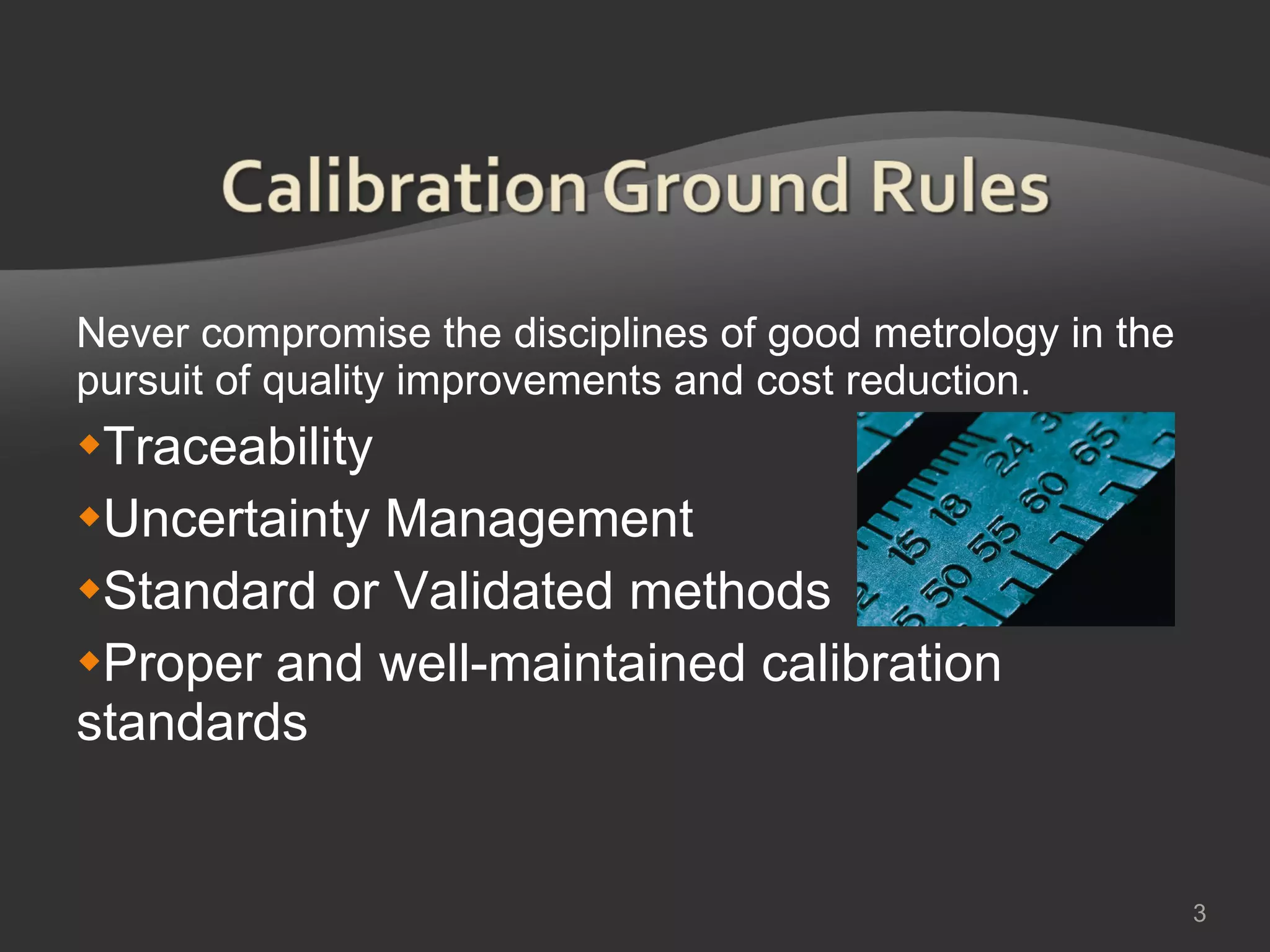
Never compromise the disciplines of good metrology in the pursuit of quality improvements and cost reduction. Traceability Uncertainty Management Standard or Validated methods Proper and well-maintained calibration standards
Manufacturing Companies’ Focus on production efficiencies often diverts attention from inefficiencies in their calibration program.  This often results in calibration practices that can significantly increase cost and put quality at risk. What calibration practices might put cost and quality at risk?
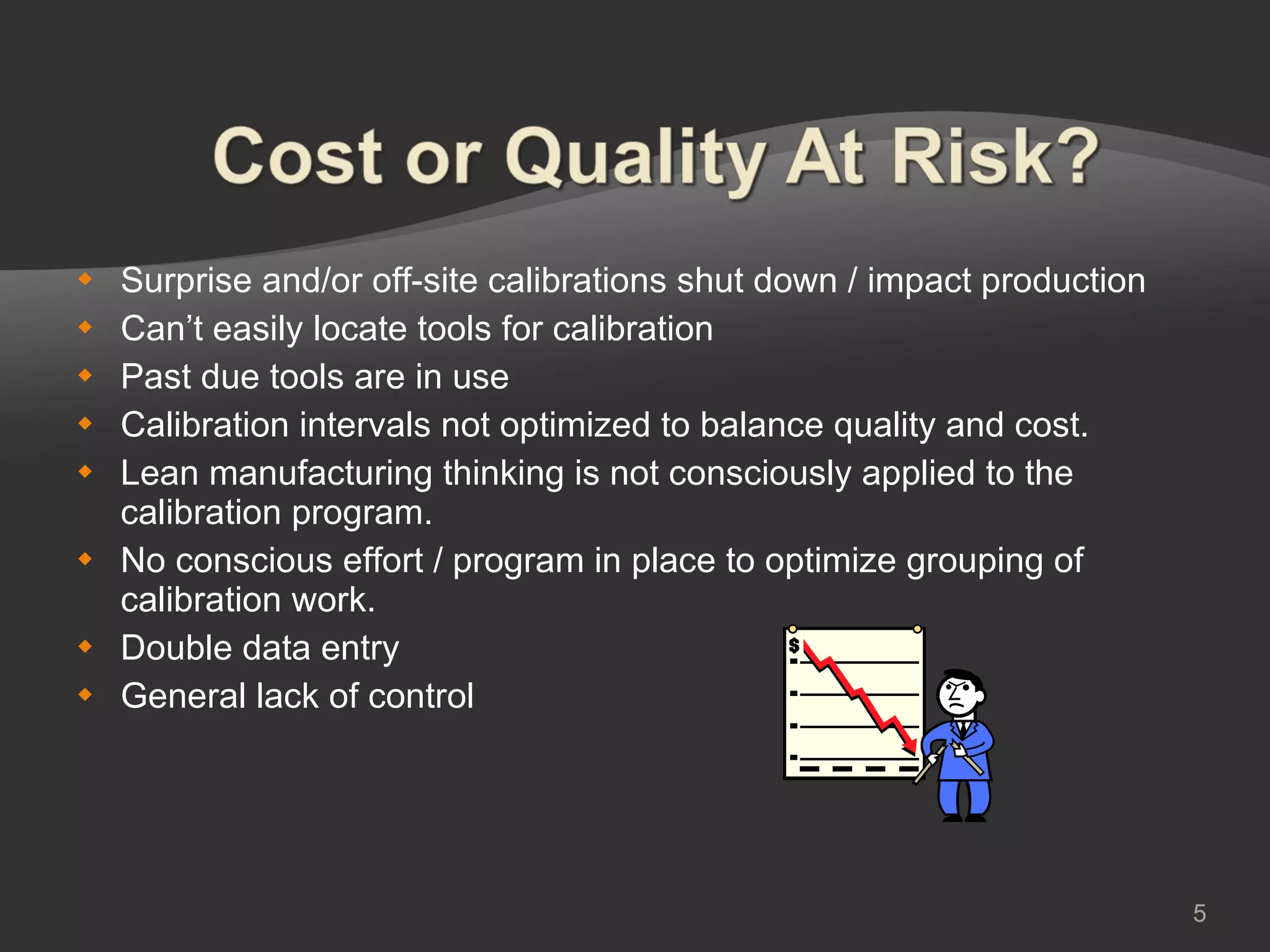
Surprise and/or off-site calibrations shut down / impact production Can’t easily locate tools for calibration Past due tools are in use Calibration intervals not optimized to balance quality and cost. Lean manufacturing thinking is not consciously applied to the calibration program. No conscious effort / program in place to optimize grouping of calibration work. Double data entry General lack of control
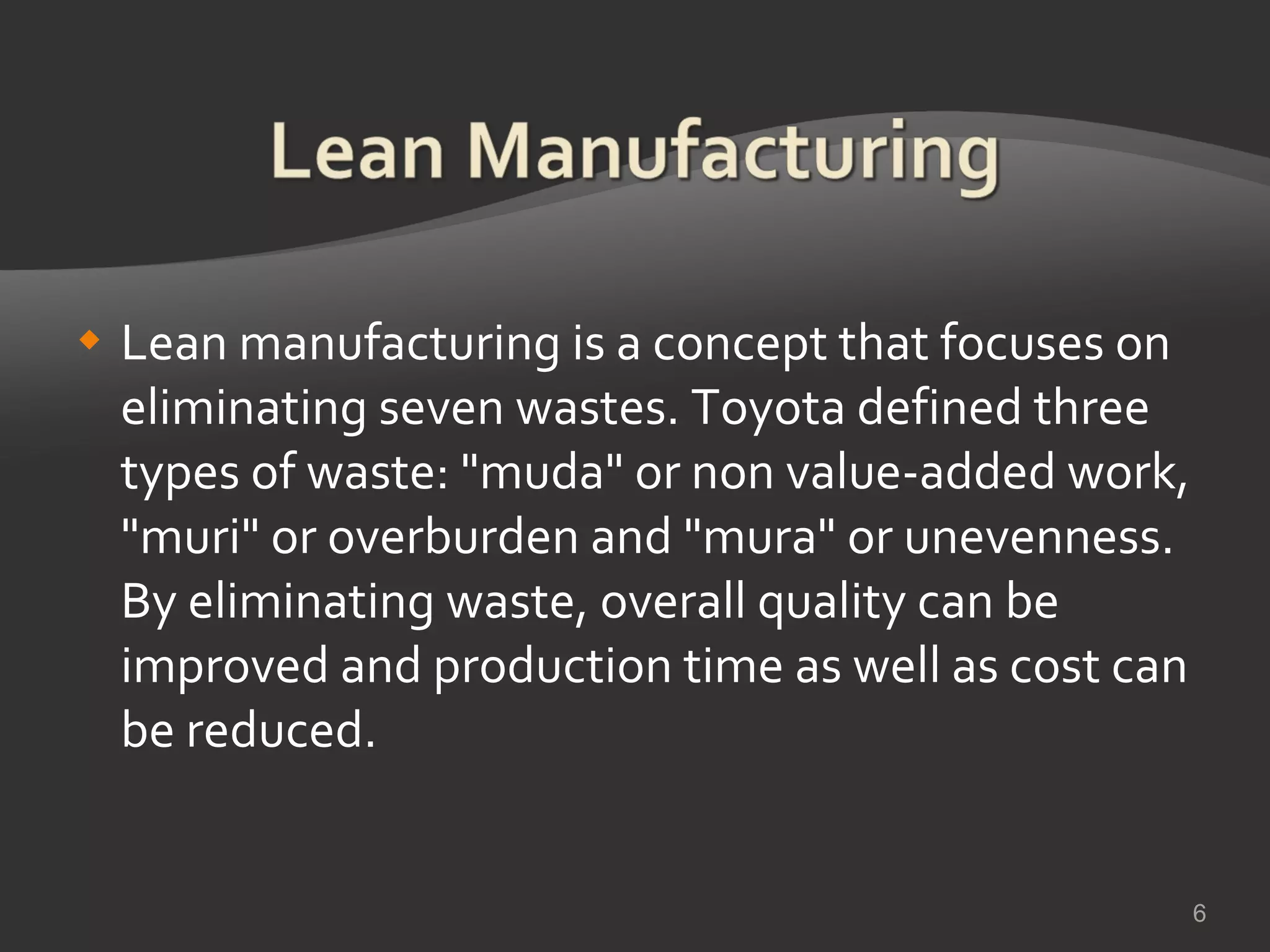
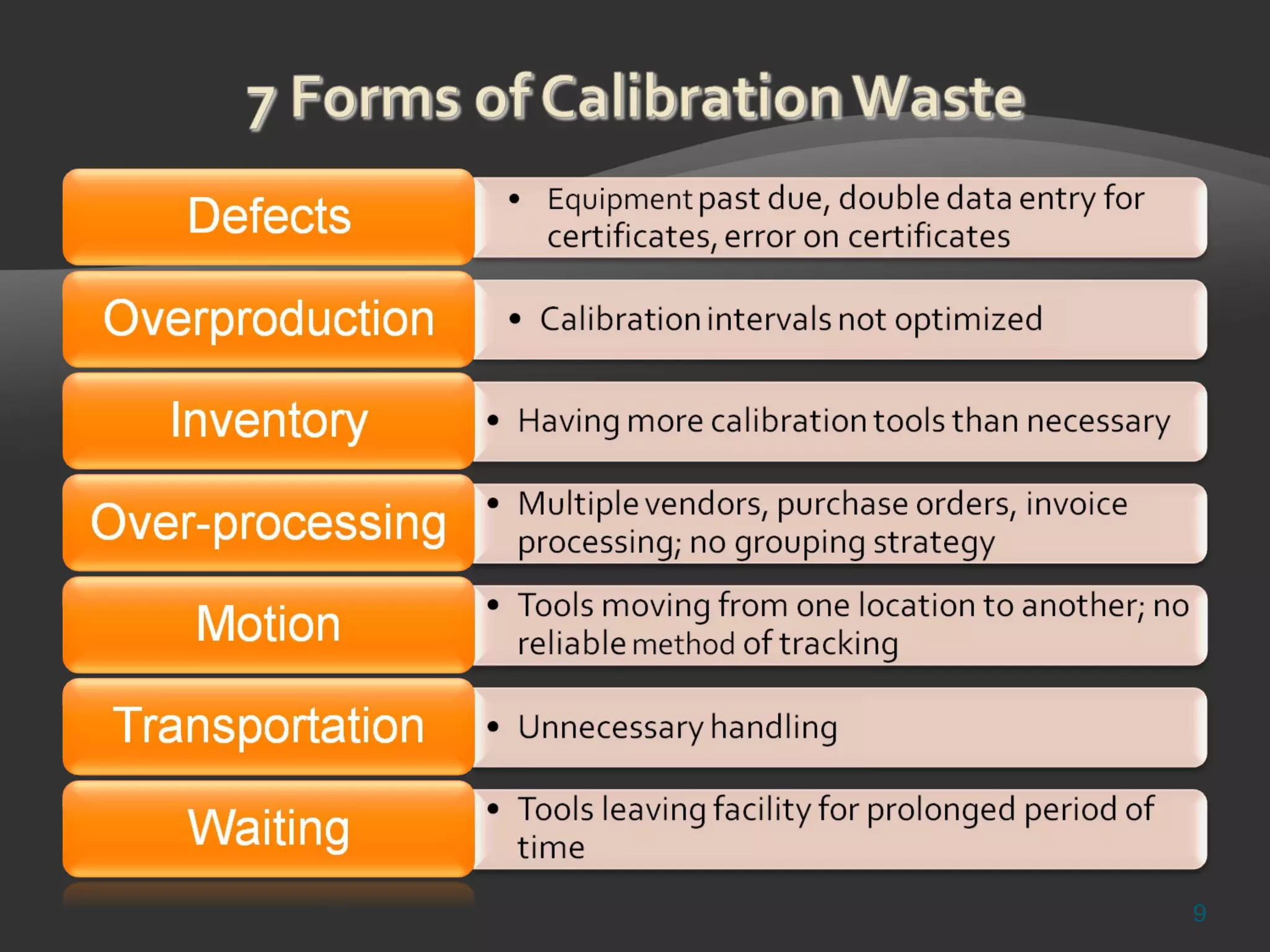
Lean manufacturing is a concept that focuses on eliminating seven wastes. Toyota defined three types of waste: "muda" or non value-added work, "muri" or overburden and "mura" or unevenness. By eliminating waste, overall quality can be improved and production time as well as cost can be reduced.
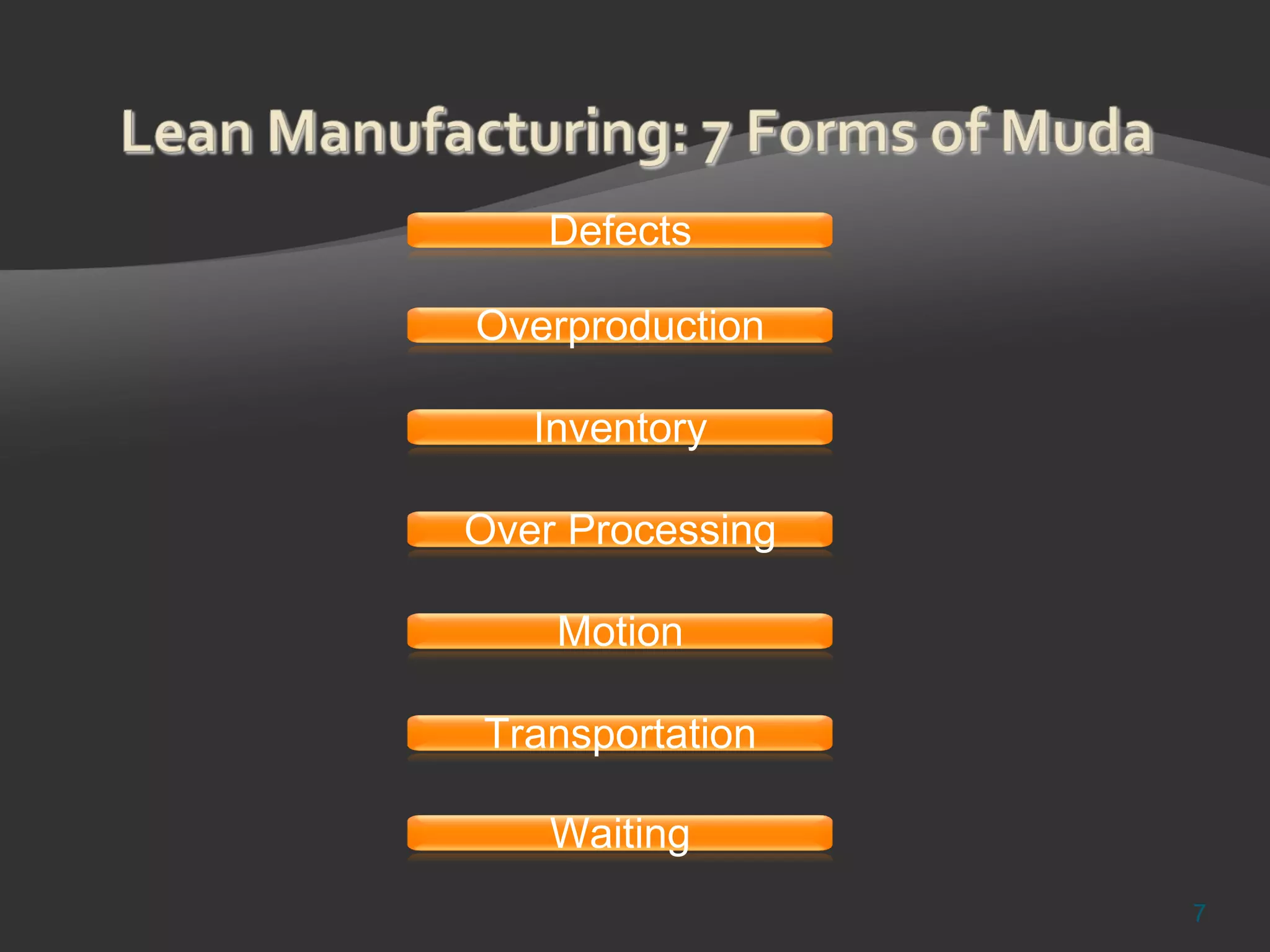
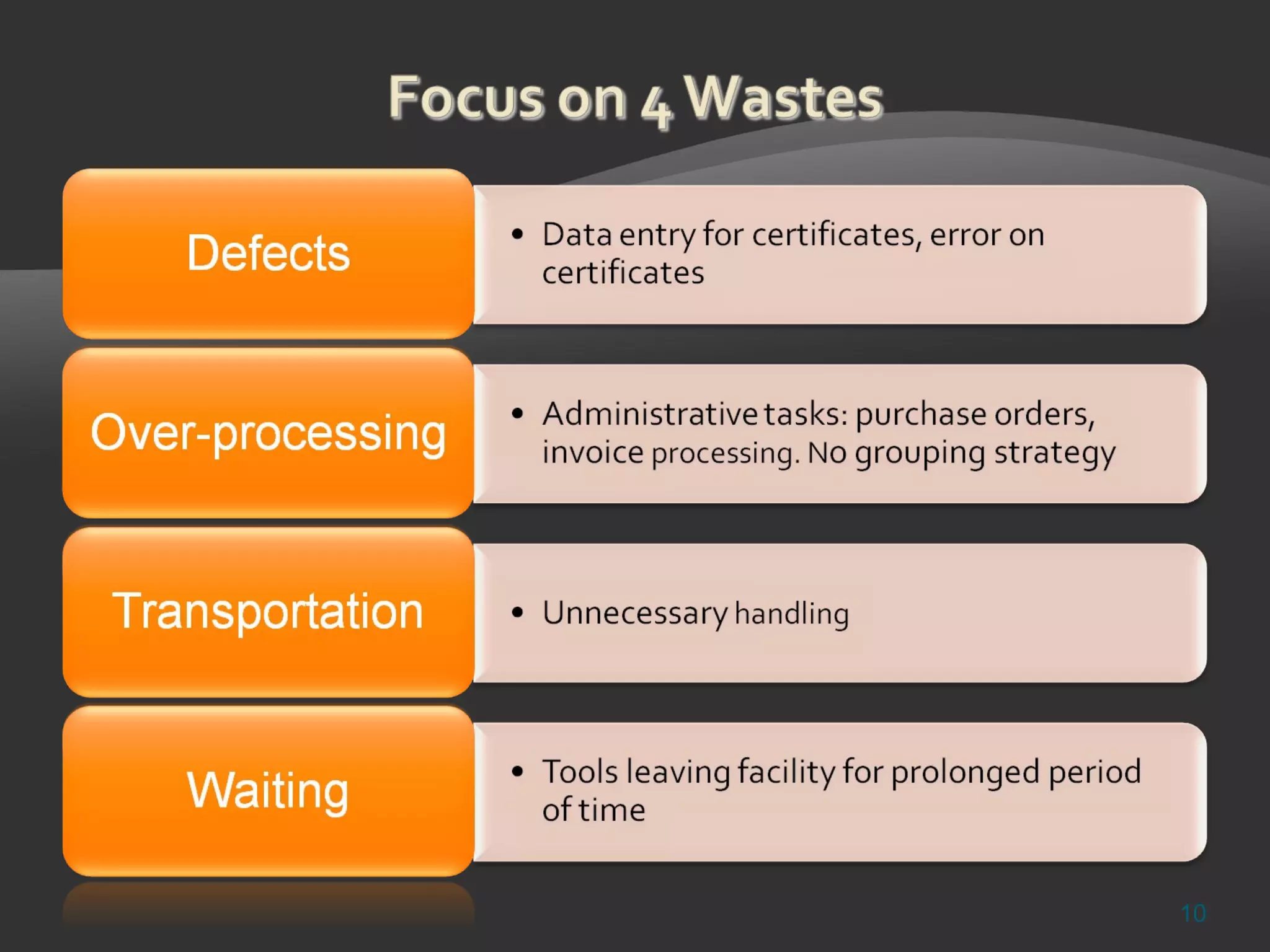
Overproduction Inventory Over Processing Motion Transportation Defects Waiting
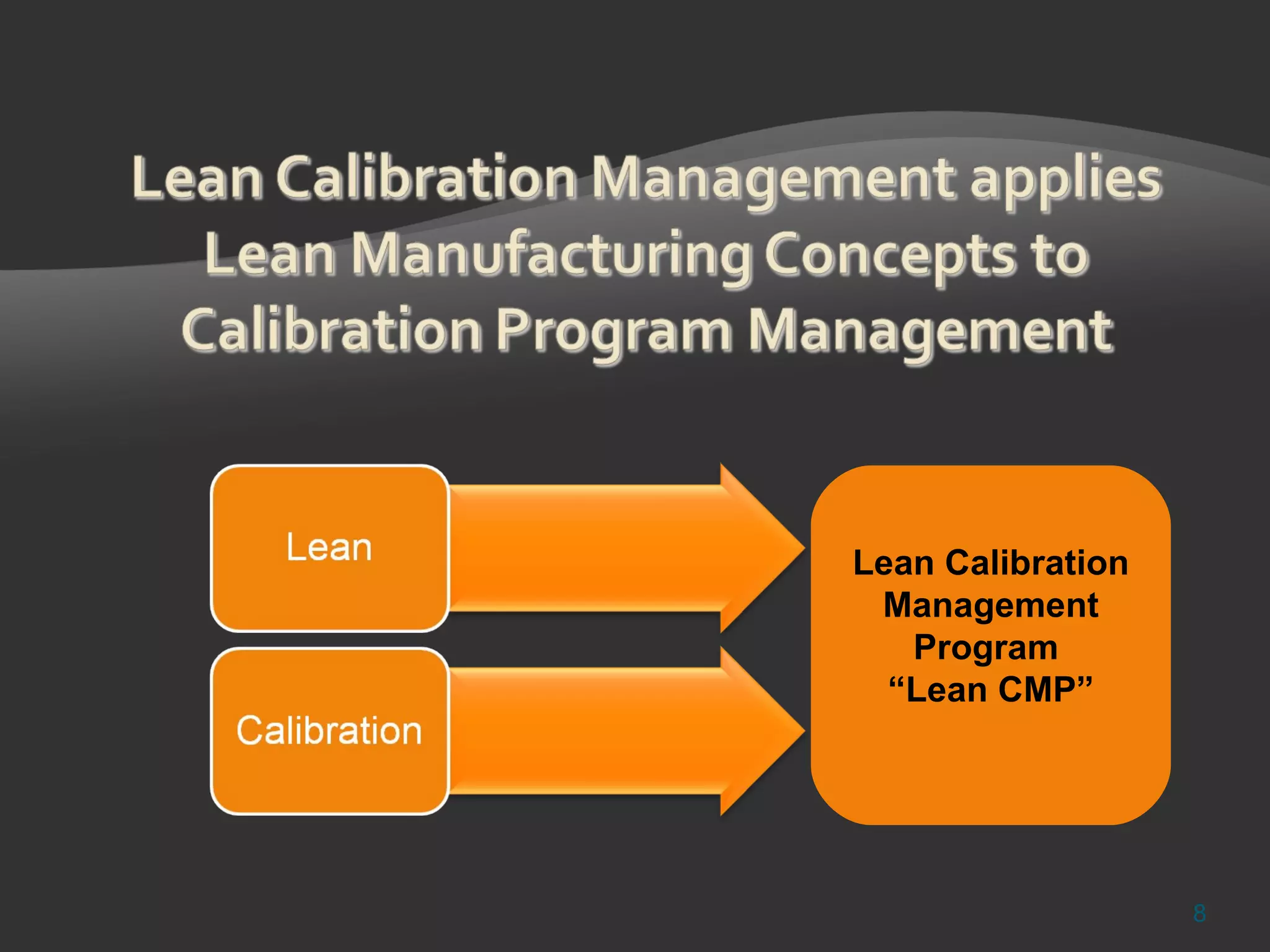
Lean Calibration Management Program  “ Lean CMP”
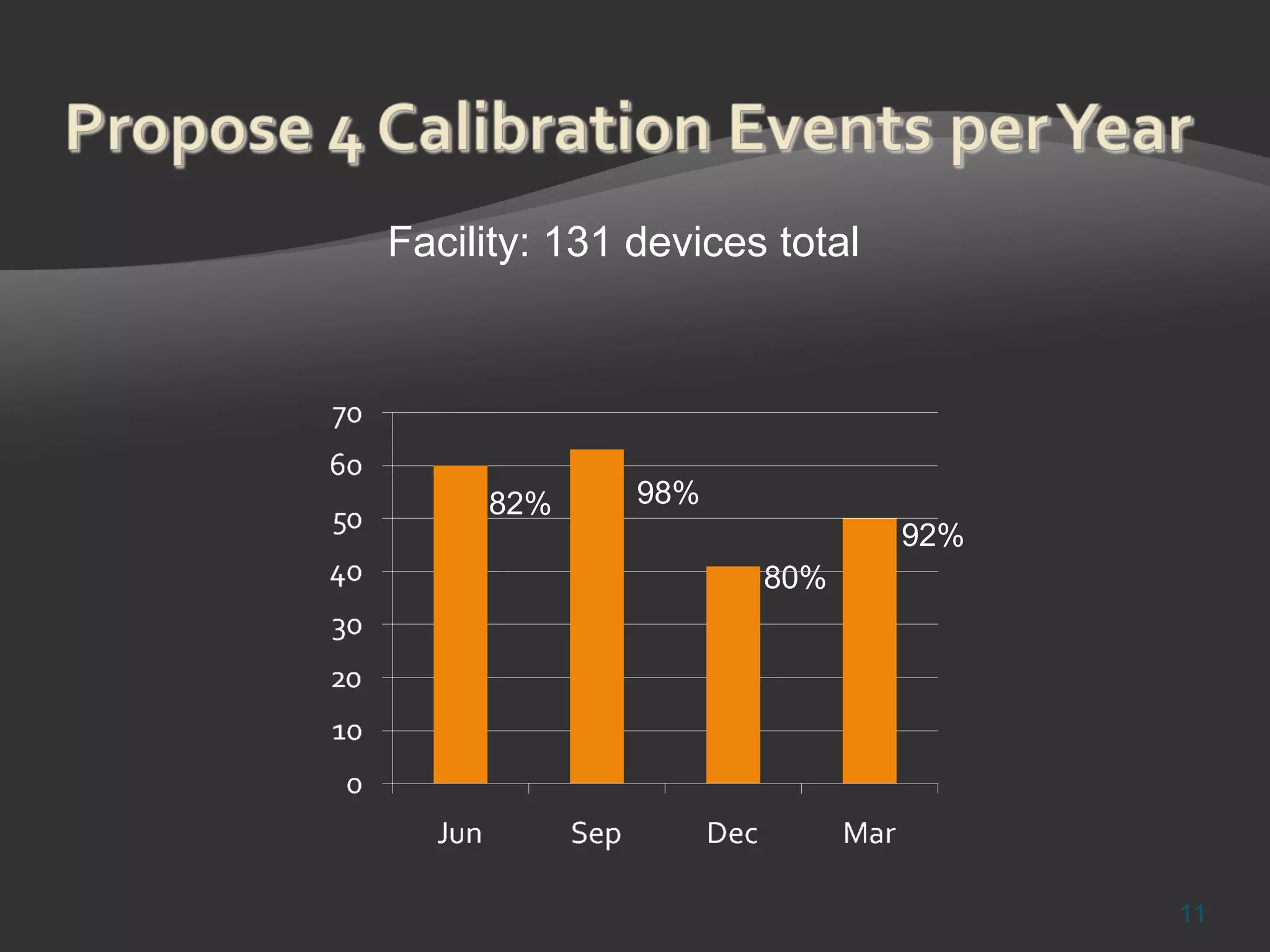
Facility: 131 devices total 82% 98% 80% 92%
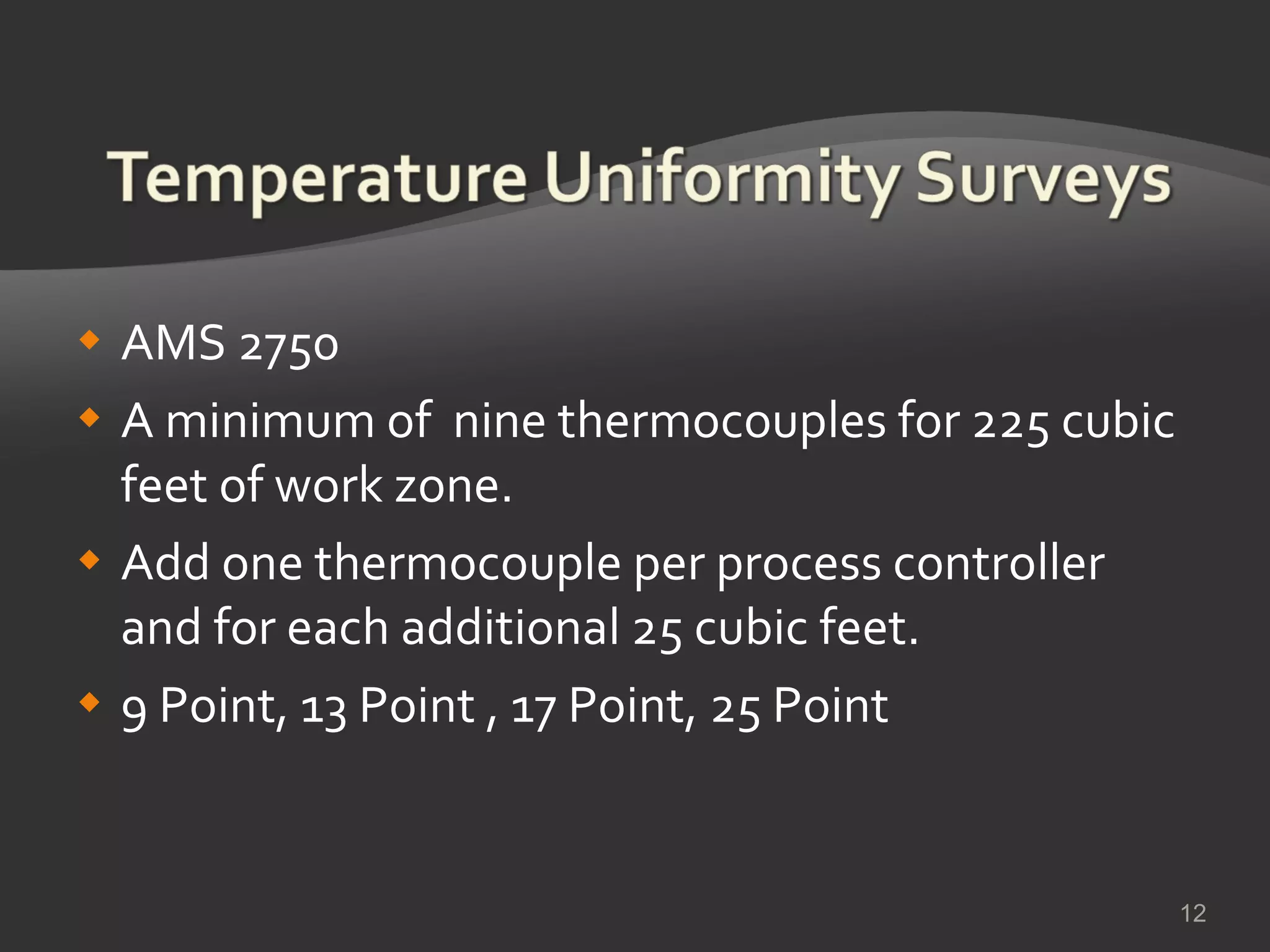
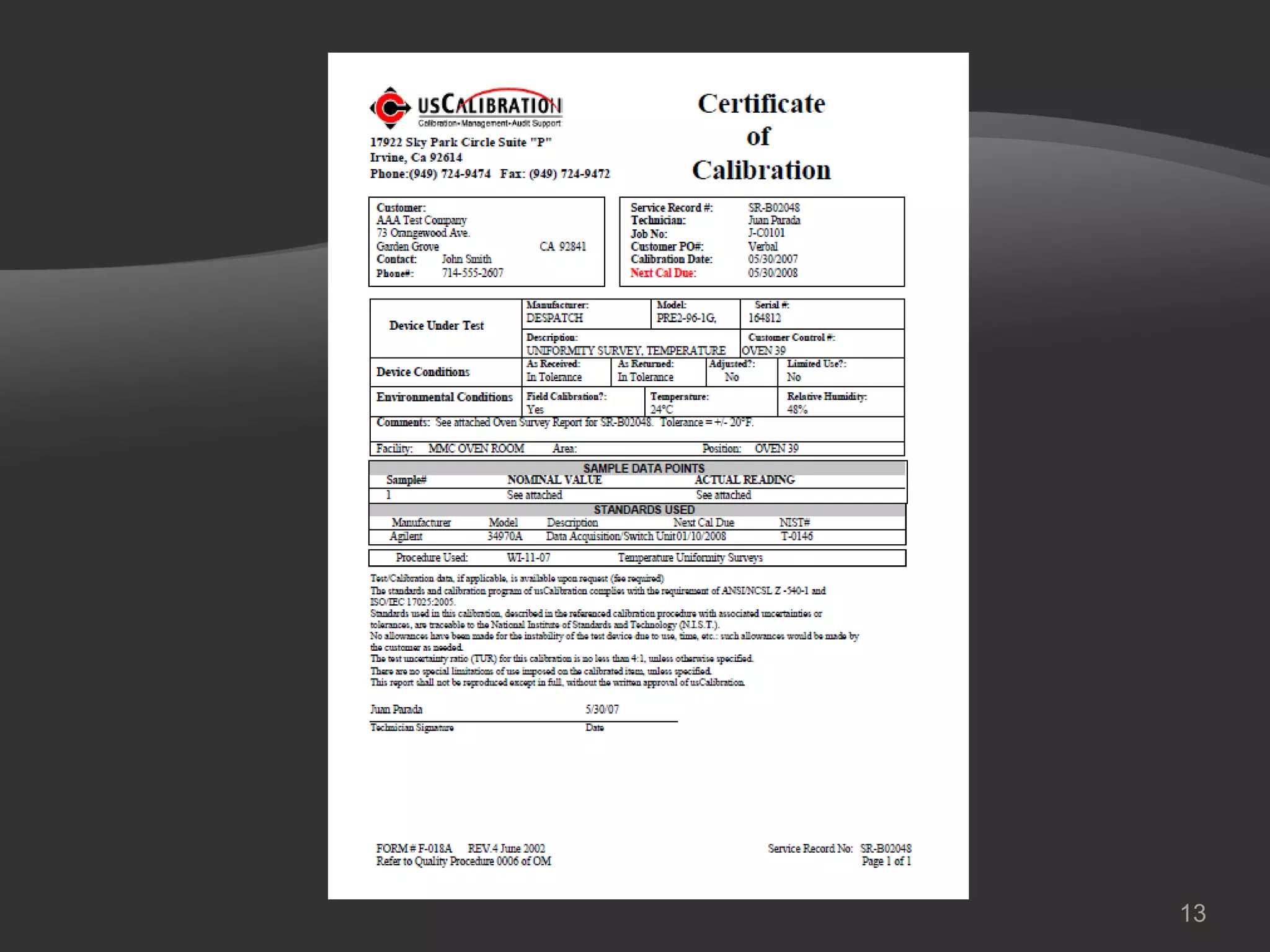
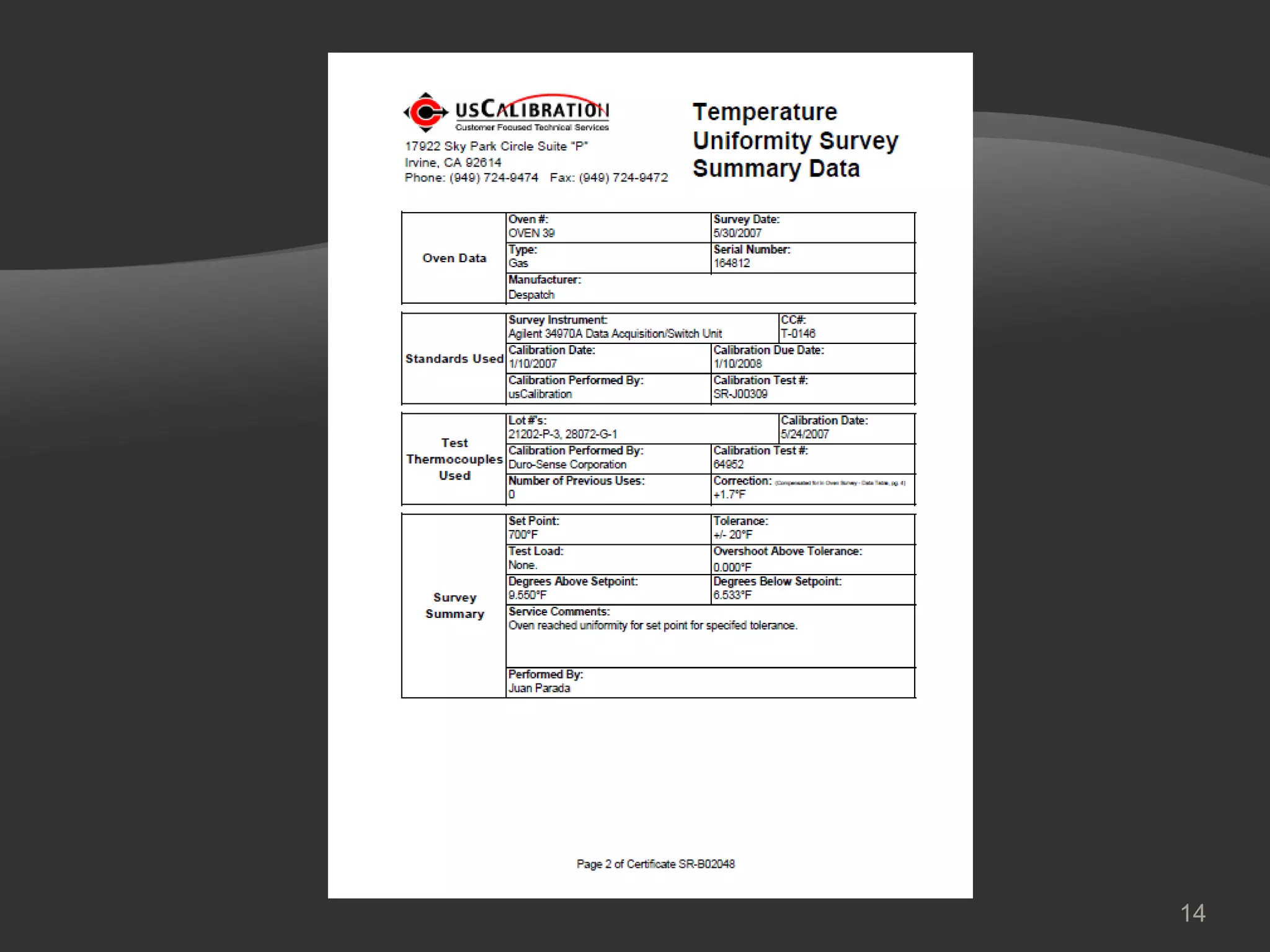
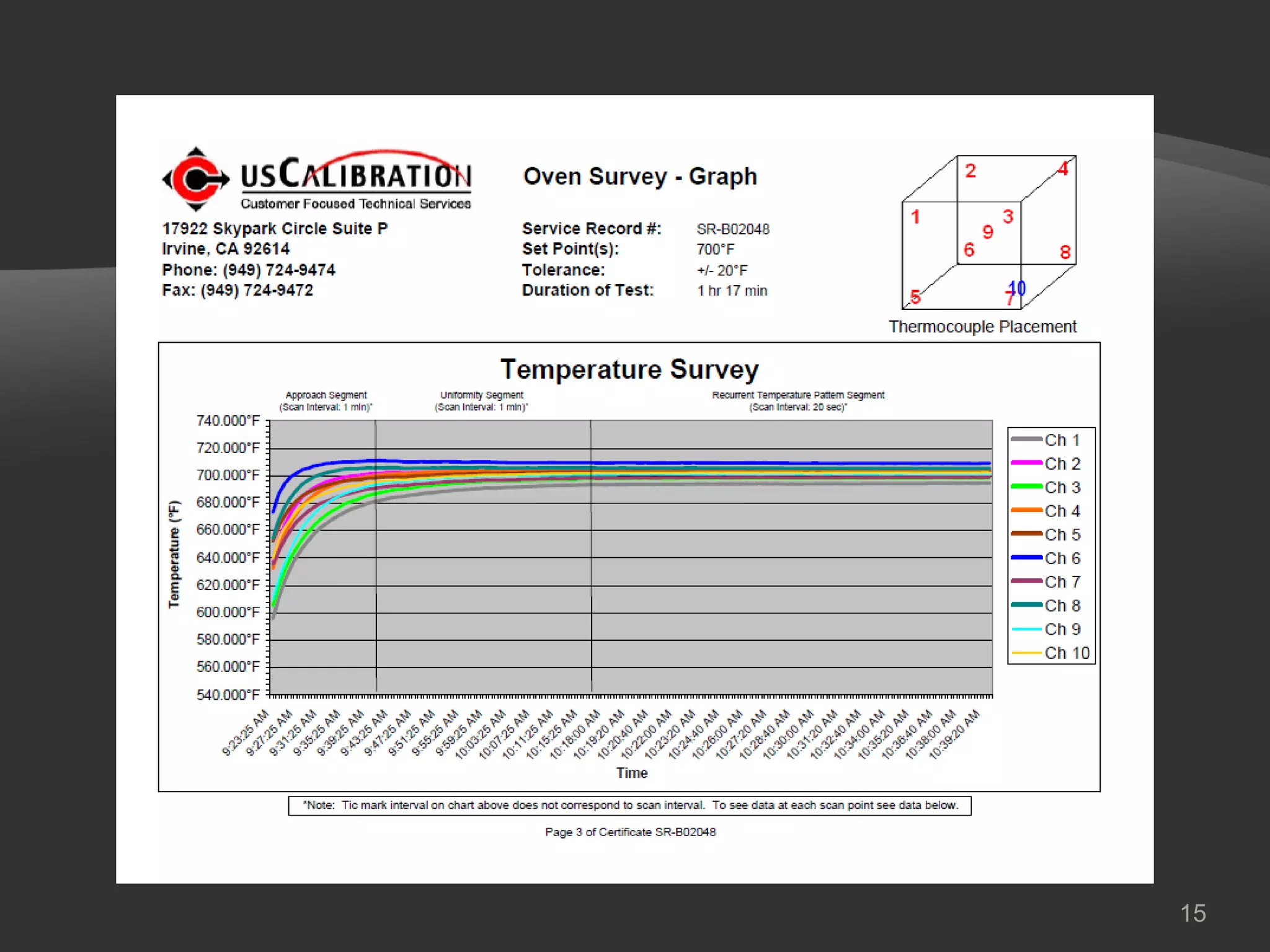
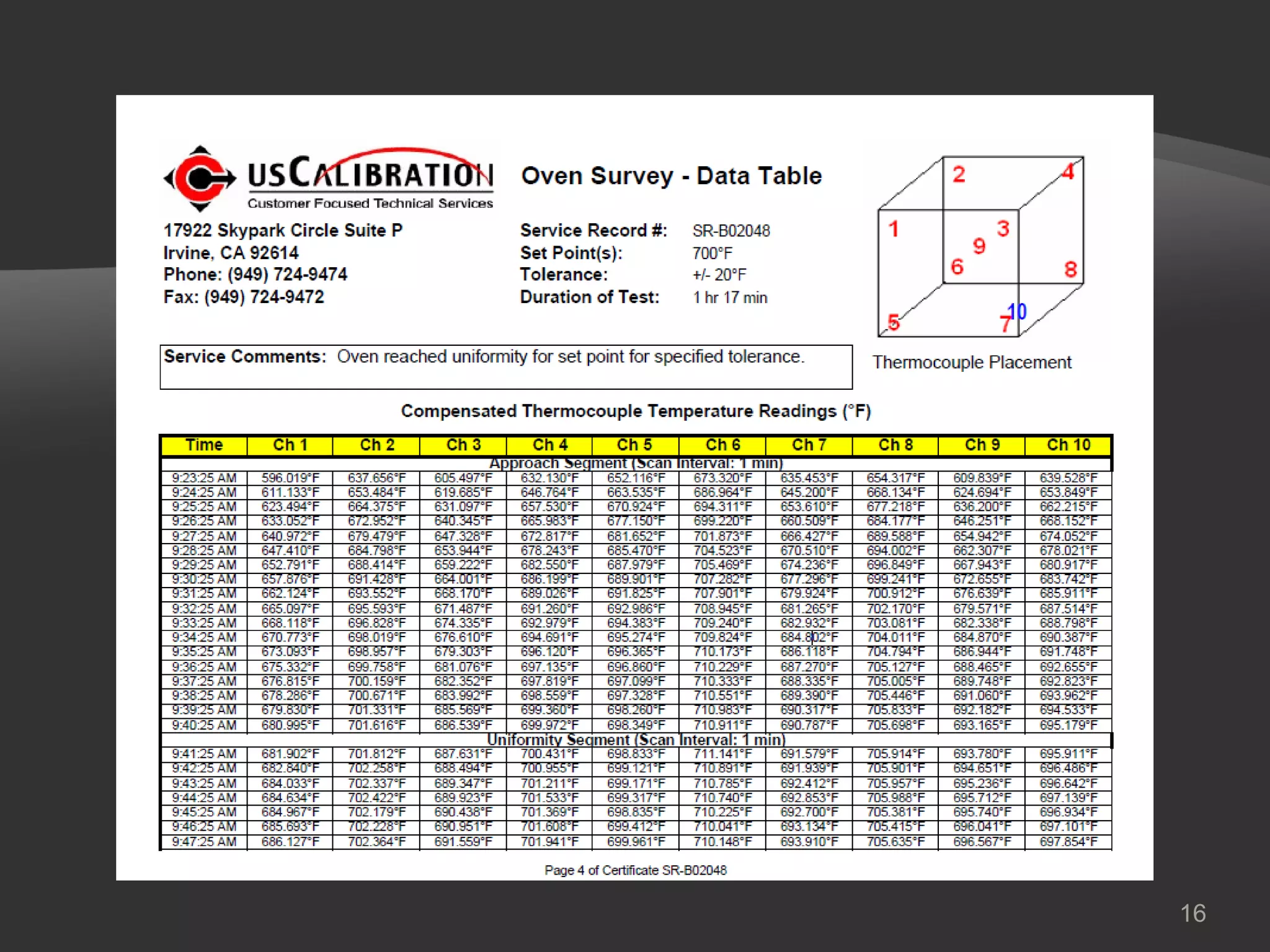
AMS 2750  A minimum of  nine thermocouples for 225 cubic feet of work zone.  Add one thermocouple per process controller and for each additional 25 cubic feet. 9 Point, 13 Point , 17 Point, 25 Point
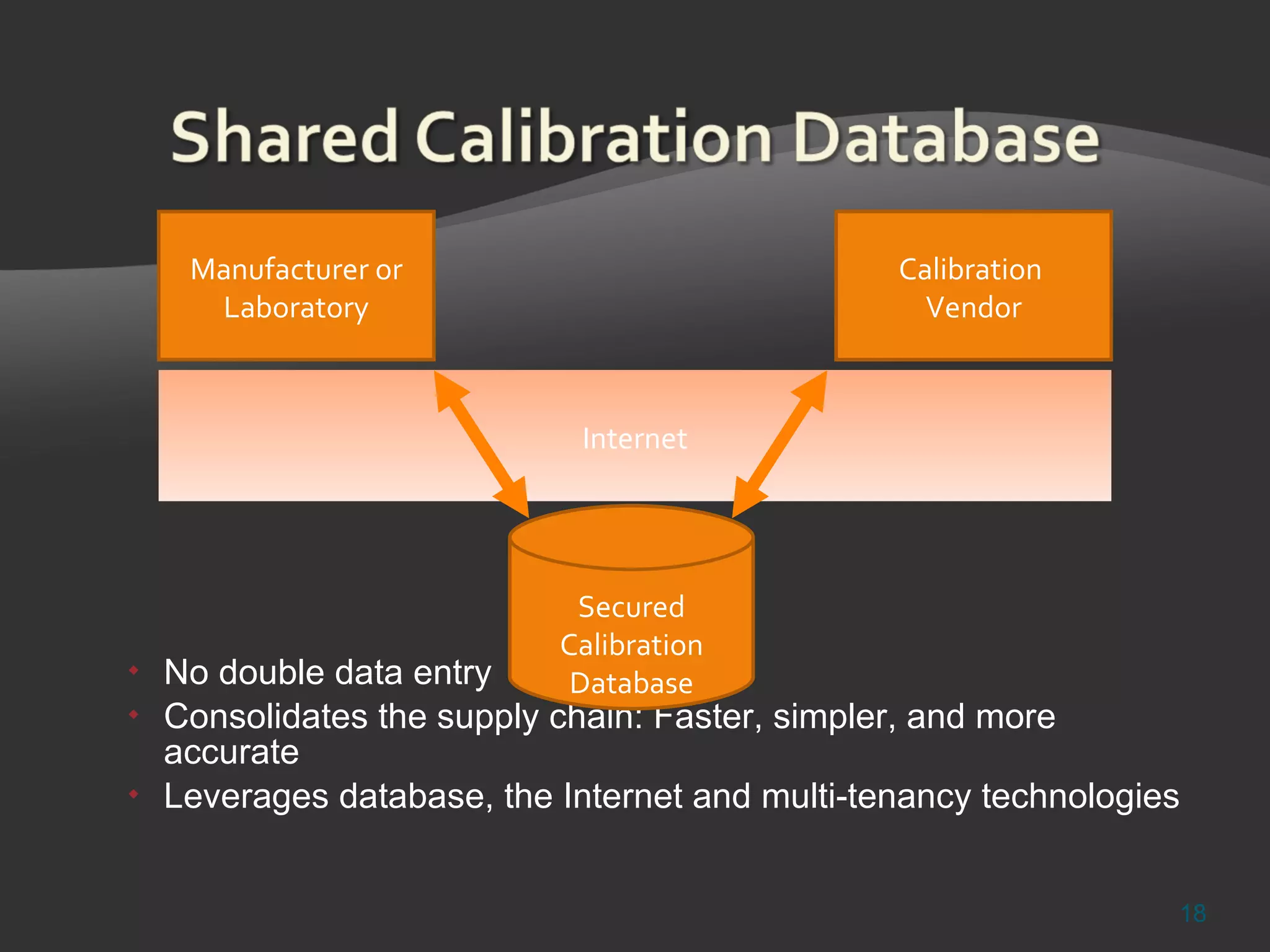
No double data entry Consolidates the supply chain: Faster, simpler, and more accurate Leverages database, the Internet and multi-tenancy technologies Internet Secured Calibration Database Manufacturer or Laboratory Calibration  Vendor
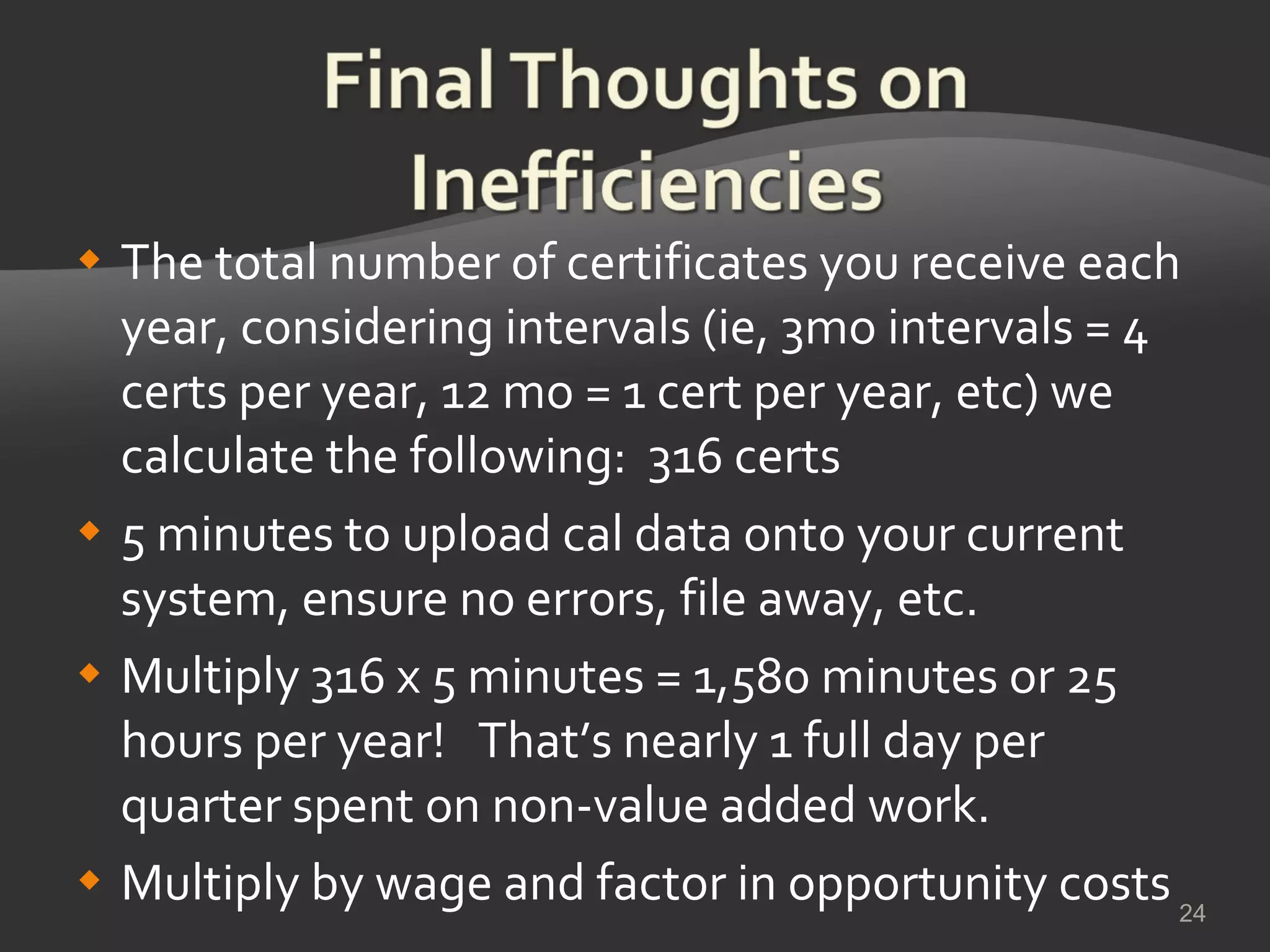
The total number of certificates you receive each year, considering intervals (ie, 3mo intervals = 4 certs per year, 12 mo = 1 cert per year, etc) we calculate the following:  316 certs 5 minutes to upload cal data onto your current system, ensure no errors, file away, etc. Multiply 316 x 5 minutes = 1,580 minutes or 25 hours per year!  That’s nearly 1 full day per quarter spent on non-value added work. Multiply by wage and factor in opportunity costs
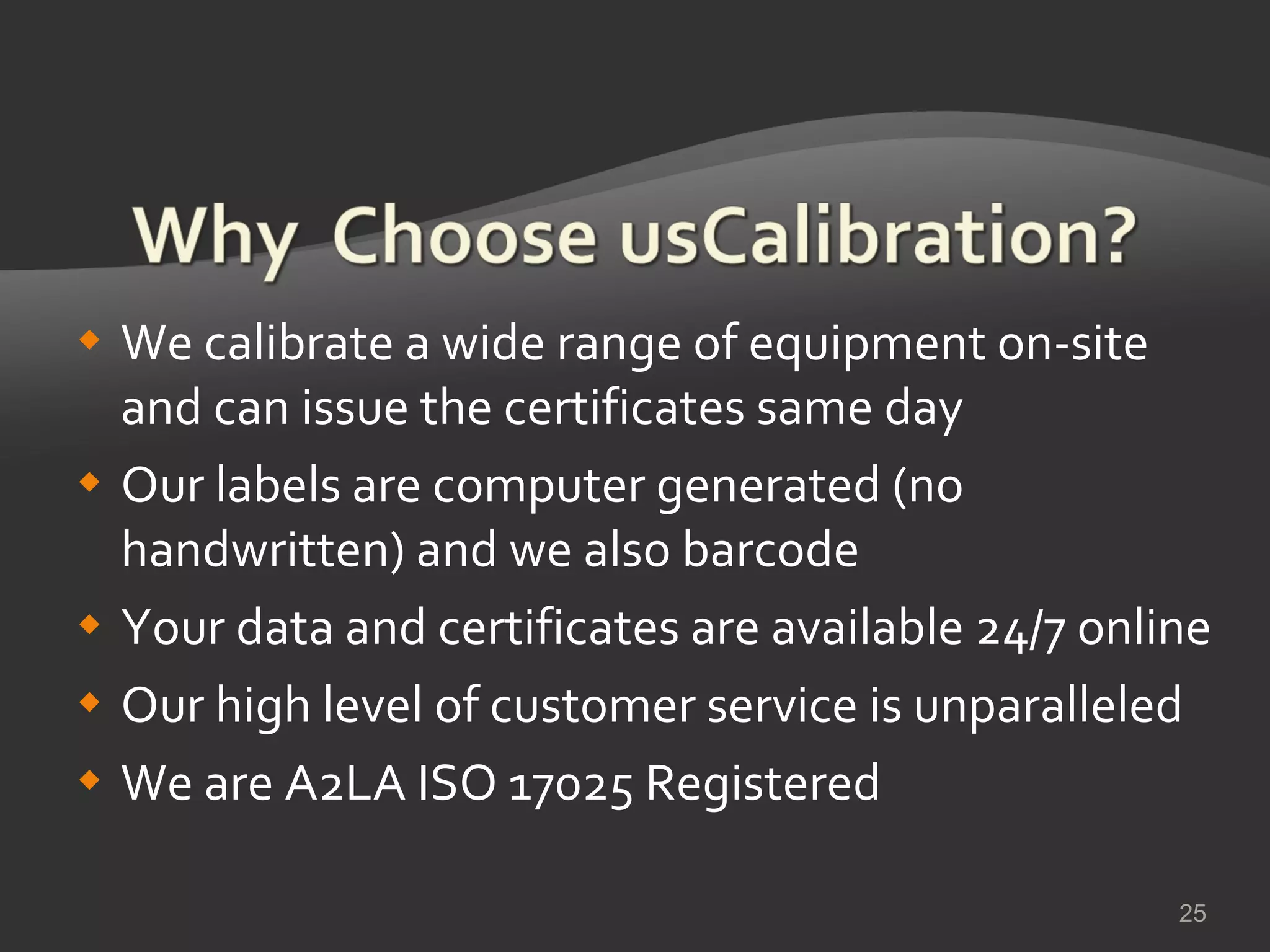
We calibrate a wide range of equipment on-site and can issue the certificates same day Our labels are computer generated (no handwritten) and we also barcode Your data and certificates are available 24/7 online Our high level of customer service is unparalleled We are A2LA ISO 17025 Registered
Lean Calibration Management

Lean Calibration Management

  • 1.
    Breakthrough Cost Savingsby Process Improvement Workload – Tool Control – Efficiency
  • 2.
    Enable “Company” toreduce overall costs and gain efficiencies through competitive pricing and a Lean Calibration strategy.
  • 3.
    Never compromise thedisciplines of good metrology in the pursuit of quality improvements and cost reduction. Traceability Uncertainty Management Standard or Validated methods Proper and well-maintained calibration standards
  • 4.
    Manufacturing Companies’ Focuson production efficiencies often diverts attention from inefficiencies in their calibration program. This often results in calibration practices that can significantly increase cost and put quality at risk. What calibration practices might put cost and quality at risk?
  • 5.
    Surprise and/or off-sitecalibrations shut down / impact production Can’t easily locate tools for calibration Past due tools are in use Calibration intervals not optimized to balance quality and cost. Lean manufacturing thinking is not consciously applied to the calibration program. No conscious effort / program in place to optimize grouping of calibration work. Double data entry General lack of control
  • 6.
    Lean manufacturing isa concept that focuses on eliminating seven wastes. Toyota defined three types of waste: "muda" or non value-added work, "muri" or overburden and "mura" or unevenness. By eliminating waste, overall quality can be improved and production time as well as cost can be reduced.
  • 7.
    Overproduction Inventory OverProcessing Motion Transportation Defects Waiting
  • 8.
    Lean Calibration ManagementProgram “ Lean CMP”
  • 11.
    Facility: 131 devicestotal 82% 98% 80% 92%
  • 12.
    AMS 2750 A minimum of nine thermocouples for 225 cubic feet of work zone. Add one thermocouple per process controller and for each additional 25 cubic feet. 9 Point, 13 Point , 17 Point, 25 Point
  • 18.
    No double dataentry Consolidates the supply chain: Faster, simpler, and more accurate Leverages database, the Internet and multi-tenancy technologies Internet Secured Calibration Database Manufacturer or Laboratory Calibration Vendor
  • 24.
    The total numberof certificates you receive each year, considering intervals (ie, 3mo intervals = 4 certs per year, 12 mo = 1 cert per year, etc) we calculate the following: 316 certs 5 minutes to upload cal data onto your current system, ensure no errors, file away, etc. Multiply 316 x 5 minutes = 1,580 minutes or 25 hours per year! That’s nearly 1 full day per quarter spent on non-value added work. Multiply by wage and factor in opportunity costs
  • 25.
    We calibrate awide range of equipment on-site and can issue the certificates same day Our labels are computer generated (no handwritten) and we also barcode Your data and certificates are available 24/7 online Our high level of customer service is unparalleled We are A2LA ISO 17025 Registered

Editor's Notes

  • #2 Packet: Attendee profile Quick Assessment Form Calibration Interval Management Papers (2) xTrak free trial (full page, not marketing, include guidance/walkthrough) Slide handout (4 x 6 per page)?
  • #4 Don’t throw the baby out with the bath water.