Joy Koller
                          Cel: 984-1052872
                          Jkglobalconnections@gmail.com
                          www.jkteachingportfolio.com


Our goal in Reading Therapy is to diagnostically identify
each child’s struggle in language and to prescribe the
appropriate strategy of instruction that will ensure a
successful experience in understanding how to read.


1. Orton-Gillingham (O.G.) Approach:
                                                                                     taught concepts while growing into
Orton-Gillingham is a highly struc-      O.G. Therapy                                new concepts. O.G. pre/post tests
tured, sequential multisensory,          O.G. Therapy is integrative and direct,     determine the level of instruction
phonic-based approach to teaching        content covered: decoding letter            for each student.
reading and spelling. O.G. is intended   sound relations (using mnemonic
primarily for use with children who      letters), word analysis -six syllable     • Systematic Syllables part of an O.G.
have difficulty with reading, spelling   types, word recognition- sight words,       therapy session: students learn the
and writing. Multisensory techniques     vocabulary (grammar), oral reading,         six types of syllables, their impact
are used to promote better retention     reading comprehension, and spelling         on the pronunciation of vowels and
as students are taught the phonetic      -generalizations and rules.                 rules for dividing words into sylla-
codes of the language. This is much      • Students will be provided special         bles for accurate decoding. It brings
easier than having to memorize             O.G. designed materials that will         together all the rules necessary for
thousands of words by sight. The           provide ample practice and con-           decoding the English language and
44 basic sounds and the letters that       stant reinforcement of previously         directly impacts spelling skills.
represent them are taught one at a
time in building block fashion. Daily
drill on the sounds and plenty of word         Key Features of O.G
decoding practice will help them to
master this foundation. Children read     • Simultaneous, multisensory instruction for reinforcing the name,
material-with controlled vocabulary-        formation, and- sound of letters: vision, hearing, and touch simultaneously
that introduces the sounds in a good        to promote higher retention.
phonics sequence to avoid confusion.      • Teach phonics skills one at a time in building block fashion.
With the proper preparation, students
                                          • Use a sequence that minimizes confusion (systematic).
continually have successful reading
experiences.                              • Teach decoding (reading) and encoding (spelling) skills using the
                                            44 basic sounds of the English language---helping those who cannot
                                            memorize words by sight, and helping all students to read larger words
                                            independently.
                                          • Review DAILY the vowel, phonogram, and digraph sounds until mastered.
                                          • Provide integrated materials that give substantial decoding and encoding
                                            practice to achieve mastery.
                                          • Make the practice FUN--transforming it into a magical experience by using
                                            games, songs, and activities that support the instruction.
                                          • Provide decodable stories with controlled vocabulary that builds on the
                                            skills taught to date---eliminating the tendency to guess.
                                          • Teach comprehension and language arts skills within the context of the
                                            stories (to give the skills meaning and purpose).
2. MIM-Many Interesting Meanings
                                          metacognative environment encour-
                                          ages awareness of thinking. Our              Key Features of MIM Class:
                                          Metacognitve strategies like MIM             MIM tricks are quick, humorous
                                          and activities like the Word Web             mnemonics that teach key
                                          help students’ make connections and          strategies about words.
                                          reflect upon their own learning about
                                          the “web of words” in their heads.           Word Web, a chart that
                                          We begin with the children’s prior           provides a simple, visual way of
                                          knowledge about a word’s meaning             illustrating how words are
                                          by developing explicit elaboration
                                          and depth around “known” words. We
                                                                                       Interconnected to improve
                                          can never assume a child knows the           comprehension and vocabulary
                                          meaning of a word, much less the fact        skills
                                          it might mean several different things.
                                          We need to know what they know and
                                          build from that base. Our fun strat-        does not “see” a picture of the word
                                          egy provides a visual mnemonic for          he/she is reading, they will have dif-
                                          children to store multiple meanings of      ficulty comprehending the meaning
                                          words from the start. We explore the        of the word. Discussion encourages
                                          multiple meanings of “core” words in        students to recognize how words are
                                          English each week with the use of fun       connected to each other. Students see
                                          word web activities. Students learn         how words are like building blocks
                                          how to match multiple definitions to        that can be changed to other words by
                                          each core word.                             adding prefixes and suffixes. We learn
Incorporating metagcognition in                                                       that “every word is connected to many
teaching. Metacognition is thinking       WH Questions – Many students that           other words in a web in our heads”.
about thinking, knowing “what we          struggle with comprehension have            Developing flexibility in word mean-
know” and “what we don’t know”. A         difficulty with vocabulary. If a child      ings increases interpretation of text.


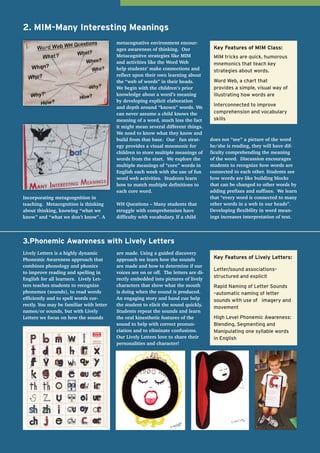
3.Phonemic Awareness with Lively Letters
Lively Letters is a highly dynamic        are made. Using a guided discovery
Phonemic Awareness approach that          approach we learn how the sounds             Key Features of Lively Letters:
combines phonology and phonics            are made and how to determine if our
                                                                                       Letter/sound associations–
to improve reading and spelling in        voices are on or off. The letters are di-
                                                                                       structured and explicit
English for all learners. Lively Let-     rectly embedded into pictures of lively
ters teaches students to recognize        characters that show what the mouth          Rapid Naming of Letter Sounds
phonemes (sounds), to read words          is doing when the sound is produced.         –automatic naming of letter
efficiently and to spell words cor-       An engaging story and hand cue help          sounds with use of imagery and
rectly. You may be familiar with letter   the student to elicit the sound quickly.
                                                                                       movement
names/or sounds, but with Lively          Students repeat the sounds and learn
Letters we focus on how the sounds        the oral kinesthetic features of the         High Level Phonemic Awareness:
                                          sound to help with correct pronun-           Blending, Segmenting and
                                          ciation and to eliminate confusions.         Manipulating one syllable words
                                          Our Lively Letters love to share their       in English
                                          personalities and character!

Leaflet[1]

  • 1.
    Joy Koller Cel: 984-1052872 Jkglobalconnections@gmail.com www.jkteachingportfolio.com Our goal in Reading Therapy is to diagnostically identify each child’s struggle in language and to prescribe the appropriate strategy of instruction that will ensure a successful experience in understanding how to read. 1. Orton-Gillingham (O.G.) Approach: taught concepts while growing into Orton-Gillingham is a highly struc- O.G. Therapy new concepts. O.G. pre/post tests tured, sequential multisensory, O.G. Therapy is integrative and direct, determine the level of instruction phonic-based approach to teaching content covered: decoding letter for each student. reading and spelling. O.G. is intended sound relations (using mnemonic primarily for use with children who letters), word analysis -six syllable • Systematic Syllables part of an O.G. have difficulty with reading, spelling types, word recognition- sight words, therapy session: students learn the and writing. Multisensory techniques vocabulary (grammar), oral reading, six types of syllables, their impact are used to promote better retention reading comprehension, and spelling on the pronunciation of vowels and as students are taught the phonetic -generalizations and rules. rules for dividing words into sylla- codes of the language. This is much • Students will be provided special bles for accurate decoding. It brings easier than having to memorize O.G. designed materials that will together all the rules necessary for thousands of words by sight. The provide ample practice and con- decoding the English language and 44 basic sounds and the letters that stant reinforcement of previously directly impacts spelling skills. represent them are taught one at a time in building block fashion. Daily drill on the sounds and plenty of word Key Features of O.G decoding practice will help them to master this foundation. Children read • Simultaneous, multisensory instruction for reinforcing the name, material-with controlled vocabulary- formation, and- sound of letters: vision, hearing, and touch simultaneously that introduces the sounds in a good to promote higher retention. phonics sequence to avoid confusion. • Teach phonics skills one at a time in building block fashion. With the proper preparation, students • Use a sequence that minimizes confusion (systematic). continually have successful reading experiences. • Teach decoding (reading) and encoding (spelling) skills using the 44 basic sounds of the English language---helping those who cannot memorize words by sight, and helping all students to read larger words independently. • Review DAILY the vowel, phonogram, and digraph sounds until mastered. • Provide integrated materials that give substantial decoding and encoding practice to achieve mastery. • Make the practice FUN--transforming it into a magical experience by using games, songs, and activities that support the instruction. • Provide decodable stories with controlled vocabulary that builds on the skills taught to date---eliminating the tendency to guess. • Teach comprehension and language arts skills within the context of the stories (to give the skills meaning and purpose).
  • 2.
    2. MIM-Many InterestingMeanings metacognative environment encour- ages awareness of thinking. Our Key Features of MIM Class: Metacognitve strategies like MIM MIM tricks are quick, humorous and activities like the Word Web mnemonics that teach key help students’ make connections and strategies about words. reflect upon their own learning about the “web of words” in their heads. Word Web, a chart that We begin with the children’s prior provides a simple, visual way of knowledge about a word’s meaning illustrating how words are by developing explicit elaboration and depth around “known” words. We Interconnected to improve can never assume a child knows the comprehension and vocabulary meaning of a word, much less the fact skills it might mean several different things. We need to know what they know and build from that base. Our fun strat- does not “see” a picture of the word egy provides a visual mnemonic for he/she is reading, they will have dif- children to store multiple meanings of ficulty comprehending the meaning words from the start. We explore the of the word. Discussion encourages multiple meanings of “core” words in students to recognize how words are English each week with the use of fun connected to each other. Students see word web activities. Students learn how words are like building blocks how to match multiple definitions to that can be changed to other words by each core word. adding prefixes and suffixes. We learn Incorporating metagcognition in that “every word is connected to many teaching. Metacognition is thinking WH Questions – Many students that other words in a web in our heads”. about thinking, knowing “what we struggle with comprehension have Developing flexibility in word mean- know” and “what we don’t know”. A difficulty with vocabulary. If a child ings increases interpretation of text. 3.Phonemic Awareness with Lively Letters Lively Letters is a highly dynamic are made. Using a guided discovery Phonemic Awareness approach that approach we learn how the sounds Key Features of Lively Letters: combines phonology and phonics are made and how to determine if our Letter/sound associations– to improve reading and spelling in voices are on or off. The letters are di- structured and explicit English for all learners. Lively Let- rectly embedded into pictures of lively ters teaches students to recognize characters that show what the mouth Rapid Naming of Letter Sounds phonemes (sounds), to read words is doing when the sound is produced. –automatic naming of letter efficiently and to spell words cor- An engaging story and hand cue help sounds with use of imagery and rectly. You may be familiar with letter the student to elicit the sound quickly. movement names/or sounds, but with Lively Students repeat the sounds and learn Letters we focus on how the sounds the oral kinesthetic features of the High Level Phonemic Awareness: sound to help with correct pronun- Blending, Segmenting and ciation and to eliminate confusions. Manipulating one syllable words Our Lively Letters love to share their in English personalities and character!