नेतृत्व 
नेतृत्व
THE DEVELOPMENT OF A LEADER 
एक का नेता ववकास। 
Why should I grow as a leader? 
क्यों मुझेएक नेता के रूप में 
बढना है? 
How can I grow as a leader? 
एक नेता के रूप में मैं कैसे हो 
सकता हैं?
THE TRAITS OF A LEADER 
नेता के ववशेषताओं/अभिलक्षण 
How can I become disciplined? 
 मैं ककस प्रकार अनुशाभसत बन सकता ह ं? 
How should I prioritize my life? 
 मुझे अपने जीवन को कैसे प्राथभमकता देना चाहहए? 
How do I develop trusts? 
 मैं कैसेन्यासों को ववकभसत कर सकता ह ं? 
How can I effectively cast vision? 
 कैसेमेरा पछाड द रदभशिता ढंग से प्रिावशाली हो सकता है?
THE IMPACT OF A LEADER 
एक नेता का प्रभाव 
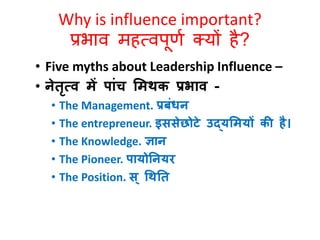
Why is influence important? 
प्रभाव महत्वपूर्ण क्यों है? 
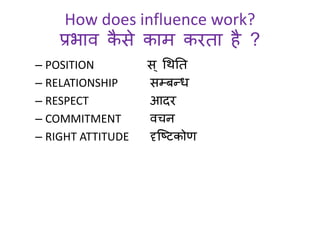
How does influence work? 
प्रभाव कैसे काम करता है ? 
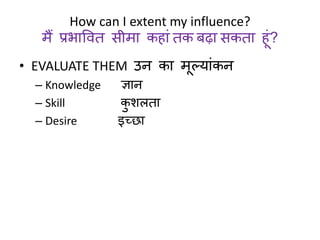
How can I extent my influence? 
मैं प्रभाववत सीमा कहाांतक बढ़ा सकता हूां? 
How can I make my leadership last. 
मैं अपने नेतृत्व को कहाांतक वृद्धि कर पाता 
हूां।
Why should I grow as a Leader? 
क्यों मुझेएक नेता के रूप में 
बढना है?
To grab the new opportunities. 
नए अवसरों लिए । 
To bring change 
पररवतणन िाने के लिए है। 
To make things happen. 
कुछ इच्छा को पूरा करने के लिए है। 
 For good cause 
अच्छी के कारर् 
To reach the highest level of 
effectiveness. 
सवोच्च स्तर तक पहुांचने के लिए ननष्प्प्रभावी 
है।
How can I grow as leader? 
मैं कैसे नेता के रूप में ववकलसत कर 
सकते हैं?
– The four phases of leadership growth 
– नेतृत्व ववकास के चार चरर् 
• I don’t know what I don’t know 
• मॅँ यह नह ां जानता कक मैं नह ां जानता है। 
– Most people fail to recognize the value of leadership and 
they believe that it is only for few peoples. 
– िोगों को मान्यता देने के मूल्य का सबसे असफि नेतृत्व 
और उनका मानना है कक यह केवि कुछ ह िोगों की है। 
• I know that I don’t know 
• मॅँ जानना चाहता हूां कक मुझे पता नह ां है। 
– Success leaders are learners. And the learning process in 
ongoing, a result of self discipline and perseverance. 
– सफिता नौलसखियोन नेता हैं. इस अध्ययन में और चि 
रह प्रकिया के कारर् आत्म सांयम और िैयण, है।
• I grow and know and it starts to show 
• उगाना शुरू करता ह ं और यह हदखाने के भलए कक है। 
– when you recognize your lack of skill and begin the daily discipline of 
personal growth in leadership exciting things starts to happen. 
– जब आप कौशल की कमी और अपने को मान्यता शुरू होने के नेतृत्व 
में प्रततहदन काम तनजी ववकास की अनुशासन होना प्रारंि होता है. 
• I simply go because of what I know . (Learned from others) 
• मॅँ जानता ह ं कक क्या के कारण है। (द सरों से पता चला है) 
– To learn today to lead tomorrow. 
– Fight your way up. 
– Man of action. 
– No overnight success. 
– आज ९ल को जानने की आपकी संघषि ककया है। 
– कारिवाई का मनुष् 
– सफलता नहीं करता है।
 No matter how gifted a leader is, his 
gifts will never reach their maximum 
potential without the application of 
self-discipline. 
 इस बात का कोई नेता प्रनतभाशाि है कक 
उनकी पहुुँच नह ां करेगा, उनकी भेंट का 
अधिकतम उपयोग ककए बबना सांभाववत 
स्व-अनुशासन है ।
How can I become disciplined? 
मैं ककस प्रकार अनुशाभसत बन सकता ह ं? 
• Disciplined Direction. अनुशाभसत हदशा 
• Challenge your excuse. आपके बहाना को 
चुनौती बनाना है। 
• Remove rewards until the job is done. 
• Stay focused on results.
How should I prioritize my life? 
मुझे अपने जीवन को कैसे प्राथभमकता देना चाहहए? 
• A life in which anything goes will ultimately 
be life in which nothing goes. 
जो कुछ िी ककया जाता है तो इससे अन्तत: 
एक जीवन के जीवन में जो कुछ िी हो जाता 
है.
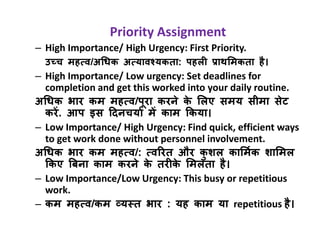
Priority Assignment 
– High Importance/ High Urgency: First Priority. 
उच्च महत्व/अधिक अत्यावश्यकता: पहली प्राथभमकता है। 
– High Importance/ Low urgency: Set deadlines for 
completion and get this worked into your daily routine. 
अधिक िार कम महत्व/प रा करने के भलए समय सीमा सेट 
करें. आप इस हदनचयाि में काम ककया। 
– Low Importance/ High Urgency: Find quick, efficient ways 
to get work done without personnel involvement. 
अधिक िार कम महत्व/: त्वररत और कुशल काभमिक शाभमल 
ककए बबना काम करने के तरीके भमलता है। 
– Low Importance/Low Urgency: This busy or repetitious 
work. 
– कम महत्व/कम व्यस्त िार : यह काम या repetitious है।
• Organize or Agonize : It’s not how hard you 
work, it’s how smart you work. 
• इबन्द्ऍययुक्त करना या agonize : यह काम 
आपको ककतना कठिन है और ककस तरह काम 
आप स ्माटण है।
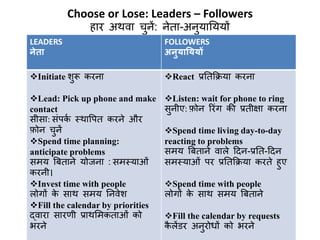
Choose or Lose: Leaders – Followers 
हार अथवा चुनें: नेता-अनुयानययों 
LEADERS 
नेता 
FOLLOWERS 
अनुयातययों 
Initiate शुरू करना 
Lead: Pick up phone and make 
contact 
सीसा: सांपकण स्थावपत करने और 
फोन चुनें 
Spend time planning: 
anticipate problems 
समय बबताने योजना : समस्याओां 
करनी। 
Invest time with people 
िोगों के साथ समय ननवेश 
Fill the calendar by priorities 
द्वारा सारर्ी प्राथलमकताओां को 
भरने 
React प्रनतकिया करना 
Listen: wait for phone to ring 
सुनीए: फोन ररांग की प्रतीक्षा करना 
Spend time living day-to-day 
reacting to problems 
समय बबताने वािे ठदन-प्रनत-ठदन 
समस्याओां पर प्रनतकिया करते हुए 
Spend time with people 
िोगों के साथ समय बबताने 
Fill the calendar by requests 
कैिेंडर अनुरोिों को भरने
EVALUATE OR STALEMENT 
मूल्याांकन अथवा गनतरोि 
• What is required of me? Why I am here? 
मुझे क्या की आवश्यकता है? मैं यहाां क्यों? 
• What gives me the greatest return? 
• मुझे क्या सबसे अधिक प्रनतिाभ है? 
– Abuse: Doing too much. दुरुपयोग: बहुत अधिक कर रहे हैं। 
– Disuse: Doing too little. मॅँकाफी: बहुत कम रहा है। 
– Misuse: Too many doing wrong things. 
दुरुपयोग: बहुत ााित बातें हैं। 
• What is most rewarding? सबसे अधिक फिदायक क्या है? 
– Doing only what is asked or ask what more can be done. 
प छे जाने पर कक यह कर रही है या कहेंऔर क्या ककया जा 
सकता है
Priority Principles 
प्राथलमकता लसद््ाांतों • Priorities never “STAY PUT” : Priorities continually shift 
and demand attention. 
• प्राथलम ९ताएुँ ९भी भी रहते: प्राथलमकताओां िगातार माांग 
हटाकर और ध्यान माांग की है 
– To keep priorities in place:प्राथलमकताओां को स्थान में: 
 Evaluate: Every month review the three 
R’s (Requirements/Return/Reward). 
मूल्याांकन: हर मह ने समीक्षा तीन R’s (आवश्यकताओां/िाभ/प्रनतफि). 
 Eliminate: Ask yourself, “What am I doing that can be done by 
someone else? 
समाप्त करना : अपने आप से पूछें, “क्या मैं वह कर रहा हूुँ कक ककसी 
अन्य द्वारा ककया जा सकता है?” 
 Estimate : What are the top assignments you are doing this 
month, and how long will they take? 
 अनुमान : इस मह ने के श्रेष्प्ि कायण क्या हैं जो कर रहे हैं, वे ककतने 
समय तक िे जाएांगे?
You cannot overestimate the unimportant or practically 
everything. 
यह सब उतना महत्वह न overestimate अथवा 
व्यावहाररक रूप से नह ां कर सकते हैं. 
• Too many are living for the wrong things. बहुत से िोग गित बातों के रह रहे हैं।
In a seminar the speaker asked an old man of 80’s “If You 
could live you life again, what would you do differently?” 
He Replied: 
If I had to do over again: 
I would reflect more. 
I would risk more. 
I would do more things that would live on after I am dead. 
एक सगंोष्ठी में अि ्यक्ष 80 के एक वद्ृि आदमी से कहा की, “"यहद 
आप पुन: जीवन हो सकता है कक, तो क्या भिन्न हो सकता है?“ 
उन्होंने कहा: 
ऐसा करने से अगर मुझे पुन: 
मॅँ अधिक दशािता 
मॅँइससेअधिक खतरा उठाता 
मैं अधिक करता कक मृतक के बाद जीववत रहता
The GOOD is the enemy of the BEST 
अच्छी कक दुश्मन सबसे अच्छी है 
• What if both choices fall comfortably into the requirement, 
return and reward of our work? 
• क्या होगा यठद दोनों में आसानी पतन ववकल्पों की 
आवश्यकता, वापसी और पुण्य कायणहो? 
How to break the tie between two good options 
 Ask you overseer or co-worker. 
आप पूछ सकते हैं अथवा सहकमी दानयत्वोंकी है। 
 Can it be shared or only you can do. 
साझा कर हैं या ऐसा आप ह कर सकते है । 
 Which option would be more benefit to the viewers. 
 आप पूछ सकते हैं अथवा सहकमी दानयत्वोंकी है। 
 Make decision based on the purpose of the organization. 
 सांगिन बनाने के उद्देश्य के आिार पर ननर्णय है।
• Too many priorities paralyze us. 
• हमारे बहुत से प्राथलम ९ता लशधथि करना है। 
– You are at your desk filled with memos and 
papers, heard phone ringing and watched the 
door open all the same time! – Remember the 
“FROZEN FEELING” 
 Prioritize Assignments- High importance/High Urgency 
• When Little priorities demand too much of 
us, big problems arise: 
– We do what you should not. So, balance the 
priority.
Efficiency is the foundation for survival 
जीववत रहने के लिए कुशिता का आिार है। 
Effectiveness is the foundation for success. 
सफिता के लिए ननष्प्प्रभावी आिार है. 
• Time deadlines and emergencies force us to 
prioritize. 
• आपात स्स्थनतयों को प्राथलमकता दें और 
समय-सीमा दे देनी चाठहए। 
• Too often we learn too late what is really 
important. 
• हमें बहुत देर हो चुकी है कक क्या वास्तव में 
महत्वपूर्ण है।
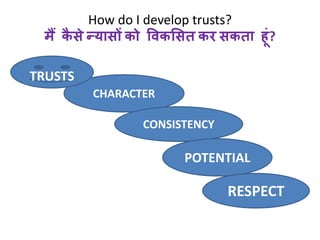
How do I develop trusts? 
मैं कैसेन्यासों को ववकभसत कर सकता ह ं? 
CHARACTER 
CONSISTENCY 
POTENTIAL 
RESPECT 
TRUSTS
How can I effectively cast vision? 
कैसेमेरा पछाड द रदभशिता ढंग से प्रिावशाली हो सकता 
है? 
• Look before you lead. आप पहिे ध्यान ठदया। 
• Vision starts within. 
• Vision draws on you history. दूरदलशणता पर सािक तो आप 
इनतहास रहा है। 
• Vision meets other’s needs. 
• दूरदलशणता की अन्य आवश्यकता होती है। 
• Vision helps you gather resources. 
• दूरदलशणता सांसािन जुटाने में आपकी मदद करता है. 
• Focus on listening. इजी लिसननगां पर केस्न्ित है। 
• The inner voice. अांत:करर् की आवाज में है। 
• The unhappy voice. 
• कटु वार्ी है। 
• The successful voice. सफिता की ध्वनन स्वर
To improve your vision, do the following: 
आपकी दृस्ष्प्ट में सुिार िाने के लिए, ननम्न कायण 
करें: 
• Measure Yourself 
• स्वयां उपाय 
• Do Gut check. 
• ताांत न करें.
THE IMPACT OF A LEADER 
एक नेता का प्रिाव
Why is influence important? 
प्रभाव महत्वपूर्ण क्यों है? 
• Five myths about Leadership Influence – 
• नेतृत्व में पांच भमथक प्रिाव - 
• The Management. प्रबंिन 
• The entrepreneur. इससेछोटे उद्यभमयों की है। 
• The Knowledge. ज्ञान 
• The Pioneer. पायोतनयर 
• The Position. स ्धथतत
How does influence work? 
प्रभाव कैसे काम करता है ? 
– POSITION स ्धथनत 
– RELATIONSHIP सम्बन्ि 
– RESPECT आदर 
– COMMITMENT वचन 
– RIGHT ATTITUDE दृस्ष्प्टकोर्
How can I extent my influence? 
मैं प्रभाववत सीमा कहाांतक बढ़ा सकता हूां? 
• EVALUATE THEM उन का मूल्याांकन 
– Knowledge ज्ञान 
– Skill कुशिता 
– Desire इच्छा
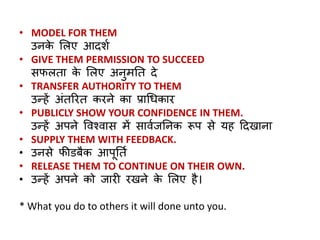
• MODEL FOR THEM 
उनके लिए आदशण 
• GIVE THEM PERMISSION TO SUCCEED 
सफिता के लिए अनुमनत दे 
• TRANSFER AUTHORITY TO THEM 
उन्हें अांतररत करने का प्राधिकार 
• PUBLICLY SHOW YOUR CONFIDENCE IN THEM. 
उन्हें अपने ववश्वास में सावणजननक रूप से यह ठदिाना 
• SUPPLY THEM WITH FEEDBACK. 
• उनसे फीडबैक आपूनतण 
• RELEASE THEM TO CONTINUE ON THEIR OWN. 
• उन्हें अपने को जार रिने के लिए है। 
* What you do to others it will done unto you.
• Lead the group with “LONG VIEW” 
इस ग्रुप में आगे ववचार" "बहुत से 
• Create leadership culture 
नेतृत्व करना सांस्कृनत 
• Pay the price today to assure success tomorrow. 
आज ९ि सफिता सुननस्श्चत करने की कीमत चुकानी 
है। 
• Value team leadership above individual leadership. 
मूल्य ट म नेतृत्ऊपर वैयस्क्तक नेततृ ्है। 
• Walk away from the group with integrity. 
ईमानदार से समूह से अिग हो जाते हैं।
Reference 
• John C Maxwell-LEADERSHIP

LEADERSHIP-Satya Pawan

  • 1.
  • 3.
    THE DEVELOPMENT OFA LEADER एक का नेता ववकास। Why should I grow as a leader? क्यों मुझेएक नेता के रूप में बढना है? How can I grow as a leader? एक नेता के रूप में मैं कैसे हो सकता हैं?
  • 4.
    THE TRAITS OFA LEADER नेता के ववशेषताओं/अभिलक्षण How can I become disciplined?  मैं ककस प्रकार अनुशाभसत बन सकता ह ं? How should I prioritize my life?  मुझे अपने जीवन को कैसे प्राथभमकता देना चाहहए? How do I develop trusts?  मैं कैसेन्यासों को ववकभसत कर सकता ह ं? How can I effectively cast vision?  कैसेमेरा पछाड द रदभशिता ढंग से प्रिावशाली हो सकता है?
  • 5.
    THE IMPACT OFA LEADER एक नेता का प्रभाव Why is influence important? प्रभाव महत्वपूर्ण क्यों है? How does influence work? प्रभाव कैसे काम करता है ? How can I extent my influence? मैं प्रभाववत सीमा कहाांतक बढ़ा सकता हूां? How can I make my leadership last. मैं अपने नेतृत्व को कहाांतक वृद्धि कर पाता हूां।
  • 6.
    Why should Igrow as a Leader? क्यों मुझेएक नेता के रूप में बढना है?
  • 7.
    To grab thenew opportunities. नए अवसरों लिए । To bring change पररवतणन िाने के लिए है। To make things happen. कुछ इच्छा को पूरा करने के लिए है।  For good cause अच्छी के कारर् To reach the highest level of effectiveness. सवोच्च स्तर तक पहुांचने के लिए ननष्प्प्रभावी है।
  • 8.
    How can Igrow as leader? मैं कैसे नेता के रूप में ववकलसत कर सकते हैं?
  • 9.
    – The fourphases of leadership growth – नेतृत्व ववकास के चार चरर् • I don’t know what I don’t know • मॅँ यह नह ां जानता कक मैं नह ां जानता है। – Most people fail to recognize the value of leadership and they believe that it is only for few peoples. – िोगों को मान्यता देने के मूल्य का सबसे असफि नेतृत्व और उनका मानना है कक यह केवि कुछ ह िोगों की है। • I know that I don’t know • मॅँ जानना चाहता हूां कक मुझे पता नह ां है। – Success leaders are learners. And the learning process in ongoing, a result of self discipline and perseverance. – सफिता नौलसखियोन नेता हैं. इस अध्ययन में और चि रह प्रकिया के कारर् आत्म सांयम और िैयण, है।
  • 10.
    • I growand know and it starts to show • उगाना शुरू करता ह ं और यह हदखाने के भलए कक है। – when you recognize your lack of skill and begin the daily discipline of personal growth in leadership exciting things starts to happen. – जब आप कौशल की कमी और अपने को मान्यता शुरू होने के नेतृत्व में प्रततहदन काम तनजी ववकास की अनुशासन होना प्रारंि होता है. • I simply go because of what I know . (Learned from others) • मॅँ जानता ह ं कक क्या के कारण है। (द सरों से पता चला है) – To learn today to lead tomorrow. – Fight your way up. – Man of action. – No overnight success. – आज ९ल को जानने की आपकी संघषि ककया है। – कारिवाई का मनुष् – सफलता नहीं करता है।
  • 11.
     No matterhow gifted a leader is, his gifts will never reach their maximum potential without the application of self-discipline.  इस बात का कोई नेता प्रनतभाशाि है कक उनकी पहुुँच नह ां करेगा, उनकी भेंट का अधिकतम उपयोग ककए बबना सांभाववत स्व-अनुशासन है ।
  • 12.
    How can Ibecome disciplined? मैं ककस प्रकार अनुशाभसत बन सकता ह ं? • Disciplined Direction. अनुशाभसत हदशा • Challenge your excuse. आपके बहाना को चुनौती बनाना है। • Remove rewards until the job is done. • Stay focused on results.
  • 13.
    How should Iprioritize my life? मुझे अपने जीवन को कैसे प्राथभमकता देना चाहहए? • A life in which anything goes will ultimately be life in which nothing goes. जो कुछ िी ककया जाता है तो इससे अन्तत: एक जीवन के जीवन में जो कुछ िी हो जाता है.
  • 14.
    Priority Assignment –High Importance/ High Urgency: First Priority. उच्च महत्व/अधिक अत्यावश्यकता: पहली प्राथभमकता है। – High Importance/ Low urgency: Set deadlines for completion and get this worked into your daily routine. अधिक िार कम महत्व/प रा करने के भलए समय सीमा सेट करें. आप इस हदनचयाि में काम ककया। – Low Importance/ High Urgency: Find quick, efficient ways to get work done without personnel involvement. अधिक िार कम महत्व/: त्वररत और कुशल काभमिक शाभमल ककए बबना काम करने के तरीके भमलता है। – Low Importance/Low Urgency: This busy or repetitious work. – कम महत्व/कम व्यस्त िार : यह काम या repetitious है।
  • 15.
    • Organize orAgonize : It’s not how hard you work, it’s how smart you work. • इबन्द्ऍययुक्त करना या agonize : यह काम आपको ककतना कठिन है और ककस तरह काम आप स ्माटण है।
  • 16.
    Choose or Lose:Leaders – Followers हार अथवा चुनें: नेता-अनुयानययों LEADERS नेता FOLLOWERS अनुयातययों Initiate शुरू करना Lead: Pick up phone and make contact सीसा: सांपकण स्थावपत करने और फोन चुनें Spend time planning: anticipate problems समय बबताने योजना : समस्याओां करनी। Invest time with people िोगों के साथ समय ननवेश Fill the calendar by priorities द्वारा सारर्ी प्राथलमकताओां को भरने React प्रनतकिया करना Listen: wait for phone to ring सुनीए: फोन ररांग की प्रतीक्षा करना Spend time living day-to-day reacting to problems समय बबताने वािे ठदन-प्रनत-ठदन समस्याओां पर प्रनतकिया करते हुए Spend time with people िोगों के साथ समय बबताने Fill the calendar by requests कैिेंडर अनुरोिों को भरने
  • 17.
    EVALUATE OR STALEMENT मूल्याांकन अथवा गनतरोि • What is required of me? Why I am here? मुझे क्या की आवश्यकता है? मैं यहाां क्यों? • What gives me the greatest return? • मुझे क्या सबसे अधिक प्रनतिाभ है? – Abuse: Doing too much. दुरुपयोग: बहुत अधिक कर रहे हैं। – Disuse: Doing too little. मॅँकाफी: बहुत कम रहा है। – Misuse: Too many doing wrong things. दुरुपयोग: बहुत ााित बातें हैं। • What is most rewarding? सबसे अधिक फिदायक क्या है? – Doing only what is asked or ask what more can be done. प छे जाने पर कक यह कर रही है या कहेंऔर क्या ककया जा सकता है
  • 18.
    Priority Principles प्राथलमकतालसद््ाांतों • Priorities never “STAY PUT” : Priorities continually shift and demand attention. • प्राथलम ९ताएुँ ९भी भी रहते: प्राथलमकताओां िगातार माांग हटाकर और ध्यान माांग की है – To keep priorities in place:प्राथलमकताओां को स्थान में:  Evaluate: Every month review the three R’s (Requirements/Return/Reward). मूल्याांकन: हर मह ने समीक्षा तीन R’s (आवश्यकताओां/िाभ/प्रनतफि).  Eliminate: Ask yourself, “What am I doing that can be done by someone else? समाप्त करना : अपने आप से पूछें, “क्या मैं वह कर रहा हूुँ कक ककसी अन्य द्वारा ककया जा सकता है?”  Estimate : What are the top assignments you are doing this month, and how long will they take?  अनुमान : इस मह ने के श्रेष्प्ि कायण क्या हैं जो कर रहे हैं, वे ककतने समय तक िे जाएांगे?
  • 19.
    You cannot overestimatethe unimportant or practically everything. यह सब उतना महत्वह न overestimate अथवा व्यावहाररक रूप से नह ां कर सकते हैं. • Too many are living for the wrong things. बहुत से िोग गित बातों के रह रहे हैं।
  • 20.
    In a seminarthe speaker asked an old man of 80’s “If You could live you life again, what would you do differently?” He Replied: If I had to do over again: I would reflect more. I would risk more. I would do more things that would live on after I am dead. एक सगंोष्ठी में अि ्यक्ष 80 के एक वद्ृि आदमी से कहा की, “"यहद आप पुन: जीवन हो सकता है कक, तो क्या भिन्न हो सकता है?“ उन्होंने कहा: ऐसा करने से अगर मुझे पुन: मॅँ अधिक दशािता मॅँइससेअधिक खतरा उठाता मैं अधिक करता कक मृतक के बाद जीववत रहता
  • 21.
    The GOOD isthe enemy of the BEST अच्छी कक दुश्मन सबसे अच्छी है • What if both choices fall comfortably into the requirement, return and reward of our work? • क्या होगा यठद दोनों में आसानी पतन ववकल्पों की आवश्यकता, वापसी और पुण्य कायणहो? How to break the tie between two good options  Ask you overseer or co-worker. आप पूछ सकते हैं अथवा सहकमी दानयत्वोंकी है।  Can it be shared or only you can do. साझा कर हैं या ऐसा आप ह कर सकते है ।  Which option would be more benefit to the viewers.  आप पूछ सकते हैं अथवा सहकमी दानयत्वोंकी है।  Make decision based on the purpose of the organization.  सांगिन बनाने के उद्देश्य के आिार पर ननर्णय है।
  • 22.
    • Too manypriorities paralyze us. • हमारे बहुत से प्राथलम ९ता लशधथि करना है। – You are at your desk filled with memos and papers, heard phone ringing and watched the door open all the same time! – Remember the “FROZEN FEELING”  Prioritize Assignments- High importance/High Urgency • When Little priorities demand too much of us, big problems arise: – We do what you should not. So, balance the priority.
  • 23.
    Efficiency is thefoundation for survival जीववत रहने के लिए कुशिता का आिार है। Effectiveness is the foundation for success. सफिता के लिए ननष्प्प्रभावी आिार है. • Time deadlines and emergencies force us to prioritize. • आपात स्स्थनतयों को प्राथलमकता दें और समय-सीमा दे देनी चाठहए। • Too often we learn too late what is really important. • हमें बहुत देर हो चुकी है कक क्या वास्तव में महत्वपूर्ण है।
  • 24.
    How do Idevelop trusts? मैं कैसेन्यासों को ववकभसत कर सकता ह ं? CHARACTER CONSISTENCY POTENTIAL RESPECT TRUSTS
  • 25.
    How can Ieffectively cast vision? कैसेमेरा पछाड द रदभशिता ढंग से प्रिावशाली हो सकता है? • Look before you lead. आप पहिे ध्यान ठदया। • Vision starts within. • Vision draws on you history. दूरदलशणता पर सािक तो आप इनतहास रहा है। • Vision meets other’s needs. • दूरदलशणता की अन्य आवश्यकता होती है। • Vision helps you gather resources. • दूरदलशणता सांसािन जुटाने में आपकी मदद करता है. • Focus on listening. इजी लिसननगां पर केस्न्ित है। • The inner voice. अांत:करर् की आवाज में है। • The unhappy voice. • कटु वार्ी है। • The successful voice. सफिता की ध्वनन स्वर
  • 26.
    To improve yourvision, do the following: आपकी दृस्ष्प्ट में सुिार िाने के लिए, ननम्न कायण करें: • Measure Yourself • स्वयां उपाय • Do Gut check. • ताांत न करें.
  • 27.
    THE IMPACT OFA LEADER एक नेता का प्रिाव
  • 28.
    Why is influenceimportant? प्रभाव महत्वपूर्ण क्यों है? • Five myths about Leadership Influence – • नेतृत्व में पांच भमथक प्रिाव - • The Management. प्रबंिन • The entrepreneur. इससेछोटे उद्यभमयों की है। • The Knowledge. ज्ञान • The Pioneer. पायोतनयर • The Position. स ्धथतत
  • 29.
    How does influencework? प्रभाव कैसे काम करता है ? – POSITION स ्धथनत – RELATIONSHIP सम्बन्ि – RESPECT आदर – COMMITMENT वचन – RIGHT ATTITUDE दृस्ष्प्टकोर्
  • 30.
    How can Iextent my influence? मैं प्रभाववत सीमा कहाांतक बढ़ा सकता हूां? • EVALUATE THEM उन का मूल्याांकन – Knowledge ज्ञान – Skill कुशिता – Desire इच्छा
  • 31.
    • MODEL FORTHEM उनके लिए आदशण • GIVE THEM PERMISSION TO SUCCEED सफिता के लिए अनुमनत दे • TRANSFER AUTHORITY TO THEM उन्हें अांतररत करने का प्राधिकार • PUBLICLY SHOW YOUR CONFIDENCE IN THEM. उन्हें अपने ववश्वास में सावणजननक रूप से यह ठदिाना • SUPPLY THEM WITH FEEDBACK. • उनसे फीडबैक आपूनतण • RELEASE THEM TO CONTINUE ON THEIR OWN. • उन्हें अपने को जार रिने के लिए है। * What you do to others it will done unto you.
  • 32.
    • Lead thegroup with “LONG VIEW” इस ग्रुप में आगे ववचार" "बहुत से • Create leadership culture नेतृत्व करना सांस्कृनत • Pay the price today to assure success tomorrow. आज ९ि सफिता सुननस्श्चत करने की कीमत चुकानी है। • Value team leadership above individual leadership. मूल्य ट म नेतृत्ऊपर वैयस्क्तक नेततृ ्है। • Walk away from the group with integrity. ईमानदार से समूह से अिग हो जाते हैं।

  • 33.
    Reference • JohnC Maxwell-LEADERSHIP