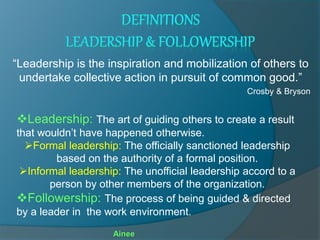
“Leadership is the inspiration and mobilization of others to
undertake collective action in pursuit of common good.”
Crosby & Bryson
Leadership: The art of guiding others to create a result
that wouldn’t have happened otherwise.
Formal leadership: The officially sanctioned leadership
based on the authority of a formal position.
Informal leadership: The unofficial leadership accord to a
person by other members of the organization.
Followership: The process of being guided & directed
by a leader in the work environment.
Ainee
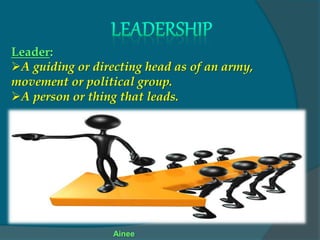
Leader:
A guiding or directing head as of an army,
movement or political group.
A person or thing that leads.
Ainee
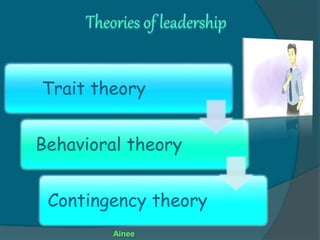
Trait theory
Contingency theory
Behavioral theory
Ainee
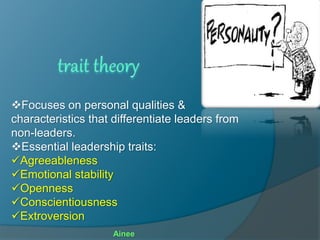
Focuses on personal qualities &
characteristics that differentiate leaders from
non-leaders.
Essential leadership traits:
Agreeableness
Emotional stability
Openness
Conscientiousness
Extroversion
Ainee
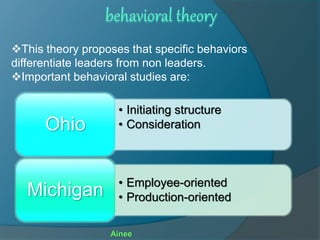
This theory proposes that specific behaviors
differentiate leaders from non leaders.
Important behavioral studies are:
• Initiating structure
• ConsiderationOhio
• Employee-oriented
• Production-orientedMichigan
Ainee
Contingency Theory adds the
environment in which the
leader exists, to our
understanding leadership
effectiveness studies.
Ainee
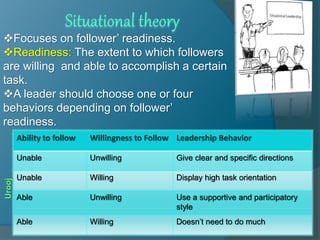
Ability to follow Willingness to Follow Leadership Behavior
Unable Unwilling Give clear and specific directions
Unable Willing Display high task orientation
Able Unwilling Use a supportive and participatory
style
Able Willing Doesn’t need to do much
Focuses on follower’ readiness.
Readiness: The extent to which followers
are willing and able to accomplish a certain
task.
A leader should choose one or four
behaviors depending on follower’
readiness.
Urooj
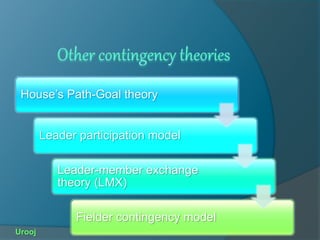
House’s Path-Goal theory
Leader participation model
Leader-member exchange
theory (LMX)
Fielder contingency model
Urooj
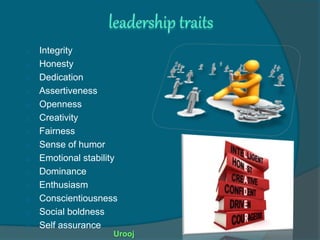
o Integrity
o Honesty
o Dedication
o Assertiveness
o Openness
o Creativity
o Fairness
o Sense of humor
o Emotional stability
o Dominance
o Enthusiasm
o Conscientiousness
o Social boldness
o Self assurance
Urooj
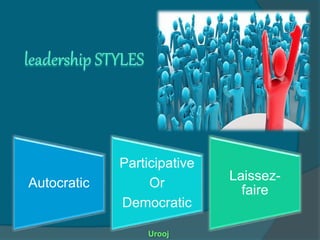
Autocratic
Participative
Or
Democratic
Laissez-
faire
Urooj
Urooj
Maheen
Maheen
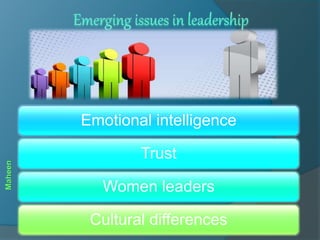
Emotional intelligence
Trust
Women leaders
Cultural differences
Maheen
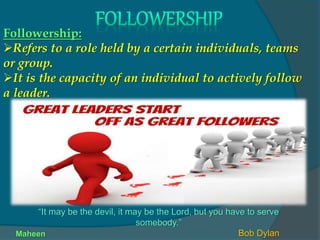
Followership:
Refers to a role held by a certain individuals, teams
or group.
It is the capacity of an individual to actively follow
a leader.
“It may be the devil, it may be the Lord, but you have to serve
somebody.”
Bob DylanMaheen
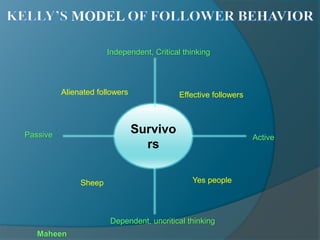
Survivo
rs
Passive Active
Independent, Critical thinking
Dependent, uncritical thinking
Alienated followers
Sheep Yes people
Effective followers
Maheen
Maheen
Saima
Saima
Saima
Saima
Saima
leadership & followership

leadership & followership

  • 3.
    “Leadership is theinspiration and mobilization of others to undertake collective action in pursuit of common good.” Crosby & Bryson Leadership: The art of guiding others to create a result that wouldn’t have happened otherwise. Formal leadership: The officially sanctioned leadership based on the authority of a formal position. Informal leadership: The unofficial leadership accord to a person by other members of the organization. Followership: The process of being guided & directed by a leader in the work environment. Ainee
  • 4.
    Leader: A guiding ordirecting head as of an army, movement or political group. A person or thing that leads. Ainee
  • 5.
  • 6.
    Focuses on personalqualities & characteristics that differentiate leaders from non-leaders. Essential leadership traits: Agreeableness Emotional stability Openness Conscientiousness Extroversion Ainee
  • 7.
    This theory proposesthat specific behaviors differentiate leaders from non leaders. Important behavioral studies are: • Initiating structure • ConsiderationOhio • Employee-oriented • Production-orientedMichigan Ainee
  • 8.
    Contingency Theory addsthe environment in which the leader exists, to our understanding leadership effectiveness studies. Ainee
  • 9.
    Ability to followWillingness to Follow Leadership Behavior Unable Unwilling Give clear and specific directions Unable Willing Display high task orientation Able Unwilling Use a supportive and participatory style Able Willing Doesn’t need to do much Focuses on follower’ readiness. Readiness: The extent to which followers are willing and able to accomplish a certain task. A leader should choose one or four behaviors depending on follower’ readiness. Urooj
  • 10.
    House’s Path-Goal theory Leaderparticipation model Leader-member exchange theory (LMX) Fielder contingency model Urooj
  • 11.
    o Integrity o Honesty oDedication o Assertiveness o Openness o Creativity o Fairness o Sense of humor o Emotional stability o Dominance o Enthusiasm o Conscientiousness o Social boldness o Self assurance Urooj
  • 12.
  • 13.
  • 14.
  • 15.
  • 16.
  • 17.
    Followership: Refers to arole held by a certain individuals, teams or group. It is the capacity of an individual to actively follow a leader. “It may be the devil, it may be the Lord, but you have to serve somebody.” Bob DylanMaheen
  • 18.
    Survivo rs Passive Active Independent, Criticalthinking Dependent, uncritical thinking Alienated followers Sheep Yes people Effective followers Maheen
  • 19.
  • 20.
  • 21.
  • 22.
  • 23.
  • 24.