Appreciating Why the Work of Leaders
Isn’t Easy.
• Looking for Leadership…and Leaders.
• Cooking the stew rather then being in one!
• Experiencing leadership.. Or perhaps not!
Taking the Lead
Seeing your self as a Leader
• Filling the vacuum with the right fluff(stuff).
• Transforming starts with you.
• Rising to all leadership occasions.
Leading People and Teams.
• Knowing what you’re about.
• Engaging people in work and change.
• Leading all types of teams.
• Excelling in leading your senior leadership team.
Spotting the Differences between
Leadership, Leading and Leader.
Leadership is a process.
Leading is a activity.
Being a leader can be a role and/or position.
Deciphering the Language of Leadership.
• Diving into the soup of leadership jargon.
• Sampling leadership competences
Sampling a Few Tasty Bits of Leadership
• Becoming an engaging leader.
• Being an active leader.
• Leading through serving others.
Coming Up with a Meaning that
Works for you.
Flipping Through Your Experience of
Leadership and Management.
• Choosing and working with a new boss.
• Working through your own experiences
• Listing your expectations of leader and
managers.
• Understanding Society’s Changing
Expectations of Leaders.
• Jump! Yes sir, how high?
• Jump! Why should I?
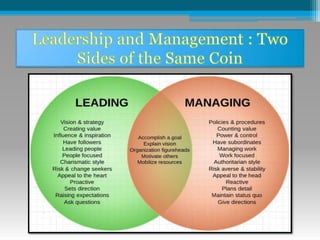
• Pinpointing the Differences between Leading
and Managing.
• Describing the key differences.
• Getting people to follow you.
• Earning the right to lead.
• Leading and managing together.
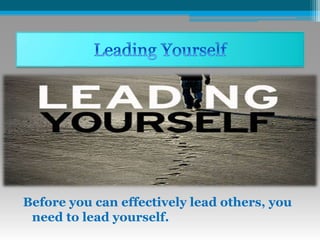
Before you can effectively lead others, you
need to lead yourself.
Leading ‘Inside Out’: Knowing Yourself
TO Become Better Leader.
Leading Others Starts with Leading
Yourself.
• Becoming an authentic leader
• Looking through the Johari Window
Developing Self-Confidence
Leaving Thomas to doubt himself.
Being your best critic
Learning from adversity.
Leading ‘Inside Out’: Knowing Yourself
TO Become Better Leader.
Discovering How to Lead from Your
Experiences.
• Achieving more by learning quickly.
• Harnessing the power of reflection.
• Developing skills in reflecting
• Using leadership learning logs. Finding and
working with your own coach.
Recognizing When You’re Out of Tune.
• Acknowledging when ‘it just doesn’t feel right’.
• Questioning what underpins your leadership.
• Leaving your old baggage behind.
Composing Your Own Leadership Tune.
Working out what’s important to you.
Questioning your assumptions.
Singing Your Leadership Song.
Communicating your values.
Harmonising with others.
Stepping Up to Leadership: Handling
Dilemmas
Dealing with Dilemmas
Surviving being thrown in the deep end.
Being chosen for the right reasons: Few new
Leaders arrive fully trained.
Becoming comfortable with being
uncomfortable.
Getting caught in the middle.
Accepting that leadership can be lonely.
Avoiding the imposter syndrome.
Stepping Up to Leadership: Handling
Dilemmas
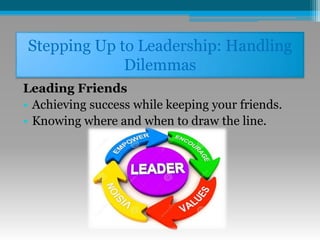
Leading Friends
• Achieving success while keeping your friends.
• Knowing where and when to draw the line.
Having Clarity of Purpose
Avoiding being busy fool.
Being bold: leading with conviction.
Clarifying how you add value.
Focusing on your key results.
Spending the right on the right job.
Becoming a Visionary Leader
• Valuing having a vision.
• Creating your own vision .
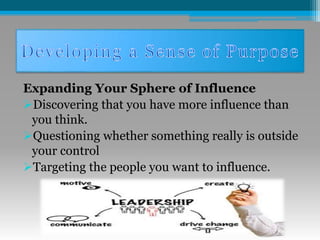
Expanding Your Sphere of Influence
Discovering that you have more influence than
you think.
Questioning whether something really is outside
your control
Targeting the people you want to influence.
Engaging people : The Key of Unlocking
Commitment
Avoiding the black hole of meaningless work.
Making work meaningful
Realising that engaged people go the extra mile.
Building the Foundations for Engaging People
Relating to people.
Being Caption Courageous: Speaking your mind.
Switching on your senses.
Creating shared meanings.
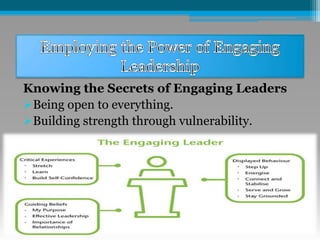
Knowing the Secrets of Engaging Leaders
Being open to everything.
Building strength through vulnerability.
Becoming an Engaging Leader
Recognising Your Existing Skills
Enhancing Relating to People
 ‘Working with’ and not ‘doing to ‘ people.
 Having a genuine interest in others.
 Building strong connections.
 Being non-judgmental.
Developing the Courage to Speak Your Mind
 Standing out from the crowd.
 Remaining aware of being dishonest.
 Asking searching questions.
 Inviting challenge.
 Coping with embarrassment.
Becoming an Engaging Leader
Sensing for Success
Being in the moment.
Seeing what other miss.
Listening for meaning: Getting behind language.
Being Brilliant at Building Commitment
 Starting from pole position.
 Beginning from their grid position.
 Focusing on winning together.
 Agreeing actions to drive success.
 Avoiding meaningless language.
 Keeping on track.
Appreciating the Need for a Range of Styles
Wondering why you seem to get the problem
people.
Choosing horses for courses.
Understanding Different Styles of
Leadership
Exploring leadership styles
Realising how styles impact on people and
performance.
Modifying Your Leadership Style so That It
Works for You and Others
Being true to yourself.
Assessing first, choosing second.
Focusing on outcomes.
Excelling through trial and error.
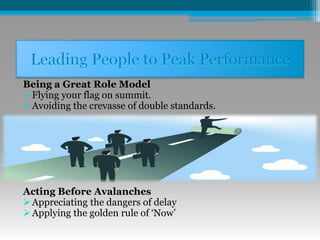
Being a Great Role Model
Flying your flag on summit.
Avoiding the crevasse of double standards.
Acting Before Avalanches
Appreciating the dangers of delay
Applying the golden rule of ‘Now’
Leading Under-performers Towards Your
Peak
Working on commitment and capability.
Approaching cliffhanger conversation.
Roping people into improvements.
Mapping progress towards peak performance.
Coaching the Good Towards Greatness
Taking a time out to coach.
Choosing the right role.
Practicing what great coaches do.
Dealing with New Changes but Perennial
problems
Appreciating what gets up people’s noses
Swimming with sharks-and surviving!
Riding the waves successfully.
Being a Change Agent
Cruising with your crew.
Implementing decision that aren’t yours.
Leading change you disagree with.
Leading Change, Transforming Culture
Looking out for iceberg.
Diving deep to uncover culture.
Hanging onto the diver’s lifeline: Stop, think,
breathe!
Knowing Where and How to begin
Spotting the opportunity for change.
Starting from where you are.
Creating a Plan for Your Change
Experiencing initiative fatigue!
Celebrating people past end points.
Clarifying the start and end point.
Bridging the gap between old and new.
Adopting Approaches for Minimising
Resistance to change
Choosing the right pace for change.
Uncovering people's objections.
Getting buy-in from everyone.
Making change tentative.
Handling resistance to change.
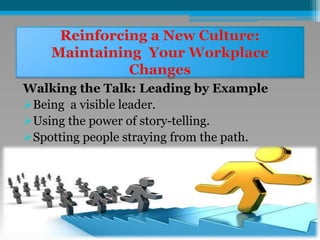
Walking the Talk: Leading by Example
Being a visible leader.
Using the power of story-telling.
Spotting people straying from the path.
Paying Attention to the Right Things
Remembering that what gets measured gets
done.
Keeping everyone up-to-date.
Reacting positively to crises.
Promoting good practice.
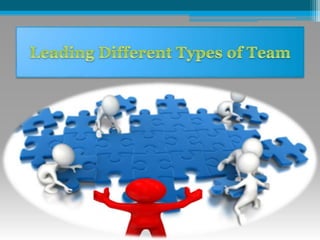
Leading Different types of team
Creating a High-performing Team
Dealing with ‘we’re okay’: leave us alone.
Separating the great from the good
Harnessing the power of team people.
Valuing team values.
Assessing the Effectiveness of Your Team
Rating your team
Conducting a team self-assessment.
Striving for Continuous Improvement
Developing a high-performance atmosphere.
Making the un-discussable discussable.
Getting Your Team Up and Running
Avoiding ‘project-itis’: The scourge of organisations.
Appreciating and using the stages of team
development.
Accelerating through the stages.
Leading Team Members with Multiple
Commitments
Investing time in the project’s purpose.
Challenging unhelpful behavior: Sorry, wrong room,
wrong team!
Developing a Sense of Shared
Accountability
Avoiding slopy shoulders.
Remembering the team process.
Appreciating the power of distributed
leadership.
Understanding Virtual Teams
Naming a team.
Defining virtual teams.
Comprehending the challenges of being a virtual
team leader.
Facing up to ‘we’re not a team because we never
meet’
Establishing Clever Ways of Working
Getting your ‘ducks in a row’.
Tackling ‘out of sight, out of mind’.
Appreciating differences in language.
Working across different cultures.
Accommodating larks and owls.
Ending Your Virtual Team
Developing a Collective Sense of
Responsibility
Breaking the dependency cycle.
Helping managers out of their silos.
Encouraging Courageous Conversations
Keeping your managers heads on.
Critiquing each other’s thoughts and ideas.
Being strong by being vulnerable.
Sharing Accountability for Success
Stopping the blame game.
Creating a healthy environment.
Embedding the behaviors you cherish.
Preparing Others for Leadership
Spotting potential high flyers.
Working yourself out of a job.
Making leadership common sense your common
practice.
Believing that everyone wants to make a
difference.
Rising to every (Leadership) occasion.
Building up, not putting down.
Listening before you leap.
‘Working With ‘ people rather then ‘doing to’
people.
Being uncomfortably comfortable.
Speaking up and speaking out!
Expanding your sphere of influence.
Keeping your head when everyone is losing
their.
Leading yourself first.
Being authentic.
Looking out! You’re always being watched.
Avoiding being a busy fool.
Knowing where to draw the line.
Raising your hand high.
Being a healthy (self) critic.
Taking yourself up.
Modelling yourself.
Avoiding the lonely hearts club.
Earning people’s respect.
Being bolder.
Making things meaningful.
Striving to gain commitment.
Getting the most from measurement.
Avoiding being a victim of change.
Celebrating people’s contributions.
Striking while the iron’s hot.
Making a good team great.
Creating time for coaching.

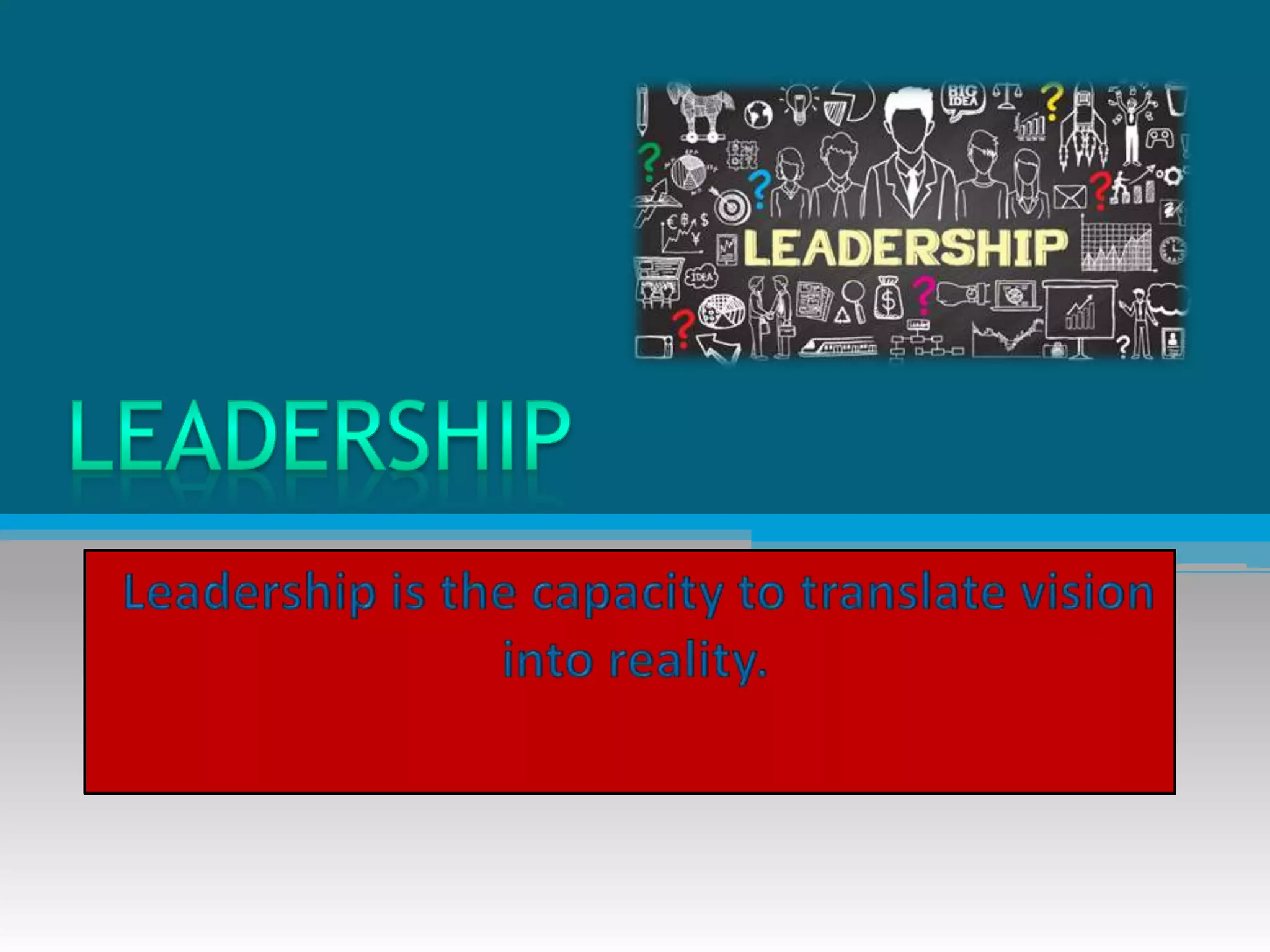
Leadership

  • 2.
    Appreciating Why theWork of Leaders Isn’t Easy. • Looking for Leadership…and Leaders. • Cooking the stew rather then being in one! • Experiencing leadership.. Or perhaps not!
  • 3.
    Taking the Lead Seeingyour self as a Leader • Filling the vacuum with the right fluff(stuff). • Transforming starts with you. • Rising to all leadership occasions. Leading People and Teams. • Knowing what you’re about. • Engaging people in work and change. • Leading all types of teams. • Excelling in leading your senior leadership team.
  • 4.
    Spotting the Differencesbetween Leadership, Leading and Leader. Leadership is a process. Leading is a activity. Being a leader can be a role and/or position.
  • 5.
    Deciphering the Languageof Leadership. • Diving into the soup of leadership jargon. • Sampling leadership competences Sampling a Few Tasty Bits of Leadership • Becoming an engaging leader. • Being an active leader. • Leading through serving others. Coming Up with a Meaning that Works for you.
  • 6.
    Flipping Through YourExperience of Leadership and Management. • Choosing and working with a new boss. • Working through your own experiences • Listing your expectations of leader and managers.
  • 7.
    • Understanding Society’sChanging Expectations of Leaders. • Jump! Yes sir, how high? • Jump! Why should I? • Pinpointing the Differences between Leading and Managing. • Describing the key differences. • Getting people to follow you. • Earning the right to lead. • Leading and managing together.
  • 9.
    Before you caneffectively lead others, you need to lead yourself.
  • 10.
    Leading ‘Inside Out’:Knowing Yourself TO Become Better Leader. Leading Others Starts with Leading Yourself. • Becoming an authentic leader • Looking through the Johari Window Developing Self-Confidence Leaving Thomas to doubt himself. Being your best critic Learning from adversity.
  • 11.
    Leading ‘Inside Out’:Knowing Yourself TO Become Better Leader. Discovering How to Lead from Your Experiences. • Achieving more by learning quickly. • Harnessing the power of reflection. • Developing skills in reflecting • Using leadership learning logs. Finding and working with your own coach.
  • 12.
    Recognizing When You’reOut of Tune. • Acknowledging when ‘it just doesn’t feel right’. • Questioning what underpins your leadership. • Leaving your old baggage behind. Composing Your Own Leadership Tune. Working out what’s important to you. Questioning your assumptions. Singing Your Leadership Song. Communicating your values. Harmonising with others.
  • 13.
    Stepping Up toLeadership: Handling Dilemmas Dealing with Dilemmas Surviving being thrown in the deep end. Being chosen for the right reasons: Few new Leaders arrive fully trained. Becoming comfortable with being uncomfortable. Getting caught in the middle. Accepting that leadership can be lonely. Avoiding the imposter syndrome.
  • 14.
    Stepping Up toLeadership: Handling Dilemmas Leading Friends • Achieving success while keeping your friends. • Knowing where and when to draw the line.
  • 16.
    Having Clarity ofPurpose Avoiding being busy fool. Being bold: leading with conviction. Clarifying how you add value. Focusing on your key results. Spending the right on the right job. Becoming a Visionary Leader • Valuing having a vision. • Creating your own vision .
  • 17.
    Expanding Your Sphereof Influence Discovering that you have more influence than you think. Questioning whether something really is outside your control Targeting the people you want to influence.
  • 18.
    Engaging people :The Key of Unlocking Commitment Avoiding the black hole of meaningless work. Making work meaningful Realising that engaged people go the extra mile. Building the Foundations for Engaging People Relating to people. Being Caption Courageous: Speaking your mind. Switching on your senses. Creating shared meanings.
  • 19.
    Knowing the Secretsof Engaging Leaders Being open to everything. Building strength through vulnerability.
  • 20.
    Becoming an EngagingLeader Recognising Your Existing Skills Enhancing Relating to People  ‘Working with’ and not ‘doing to ‘ people.  Having a genuine interest in others.  Building strong connections.  Being non-judgmental. Developing the Courage to Speak Your Mind  Standing out from the crowd.  Remaining aware of being dishonest.  Asking searching questions.  Inviting challenge.  Coping with embarrassment.
  • 21.
    Becoming an EngagingLeader Sensing for Success Being in the moment. Seeing what other miss. Listening for meaning: Getting behind language. Being Brilliant at Building Commitment  Starting from pole position.  Beginning from their grid position.  Focusing on winning together.  Agreeing actions to drive success.  Avoiding meaningless language.  Keeping on track.
  • 22.
    Appreciating the Needfor a Range of Styles Wondering why you seem to get the problem people. Choosing horses for courses. Understanding Different Styles of Leadership Exploring leadership styles Realising how styles impact on people and performance.
  • 23.
    Modifying Your LeadershipStyle so That It Works for You and Others Being true to yourself. Assessing first, choosing second. Focusing on outcomes. Excelling through trial and error.
  • 24.
    Being a GreatRole Model Flying your flag on summit. Avoiding the crevasse of double standards. Acting Before Avalanches Appreciating the dangers of delay Applying the golden rule of ‘Now’
  • 25.
    Leading Under-performers TowardsYour Peak Working on commitment and capability. Approaching cliffhanger conversation. Roping people into improvements. Mapping progress towards peak performance. Coaching the Good Towards Greatness Taking a time out to coach. Choosing the right role. Practicing what great coaches do.
  • 27.
    Dealing with NewChanges but Perennial problems Appreciating what gets up people’s noses Swimming with sharks-and surviving! Riding the waves successfully. Being a Change Agent Cruising with your crew. Implementing decision that aren’t yours. Leading change you disagree with.
  • 28.
    Leading Change, TransformingCulture Looking out for iceberg. Diving deep to uncover culture. Hanging onto the diver’s lifeline: Stop, think, breathe!
  • 29.
    Knowing Where andHow to begin Spotting the opportunity for change. Starting from where you are. Creating a Plan for Your Change Experiencing initiative fatigue! Celebrating people past end points. Clarifying the start and end point. Bridging the gap between old and new.
  • 30.
    Adopting Approaches forMinimising Resistance to change Choosing the right pace for change. Uncovering people's objections. Getting buy-in from everyone. Making change tentative. Handling resistance to change.
  • 31.
    Walking the Talk:Leading by Example Being a visible leader. Using the power of story-telling. Spotting people straying from the path.
  • 32.
    Paying Attention tothe Right Things Remembering that what gets measured gets done. Keeping everyone up-to-date. Reacting positively to crises. Promoting good practice.
  • 33.
  • 34.
    Creating a High-performingTeam Dealing with ‘we’re okay’: leave us alone. Separating the great from the good Harnessing the power of team people. Valuing team values. Assessing the Effectiveness of Your Team Rating your team Conducting a team self-assessment.
  • 35.
    Striving for ContinuousImprovement Developing a high-performance atmosphere. Making the un-discussable discussable.
  • 36.
    Getting Your TeamUp and Running Avoiding ‘project-itis’: The scourge of organisations. Appreciating and using the stages of team development. Accelerating through the stages. Leading Team Members with Multiple Commitments Investing time in the project’s purpose. Challenging unhelpful behavior: Sorry, wrong room, wrong team!
  • 37.
    Developing a Senseof Shared Accountability Avoiding slopy shoulders. Remembering the team process. Appreciating the power of distributed leadership.
  • 38.
    Understanding Virtual Teams Naminga team. Defining virtual teams. Comprehending the challenges of being a virtual team leader. Facing up to ‘we’re not a team because we never meet’
  • 39.
    Establishing Clever Waysof Working Getting your ‘ducks in a row’. Tackling ‘out of sight, out of mind’. Appreciating differences in language. Working across different cultures. Accommodating larks and owls. Ending Your Virtual Team
  • 40.
    Developing a CollectiveSense of Responsibility Breaking the dependency cycle. Helping managers out of their silos. Encouraging Courageous Conversations Keeping your managers heads on. Critiquing each other’s thoughts and ideas. Being strong by being vulnerable.
  • 41.
    Sharing Accountability forSuccess Stopping the blame game. Creating a healthy environment. Embedding the behaviors you cherish. Preparing Others for Leadership Spotting potential high flyers. Working yourself out of a job.
  • 43.
    Making leadership commonsense your common practice. Believing that everyone wants to make a difference. Rising to every (Leadership) occasion. Building up, not putting down. Listening before you leap.
  • 44.
    ‘Working With ‘people rather then ‘doing to’ people. Being uncomfortably comfortable. Speaking up and speaking out! Expanding your sphere of influence. Keeping your head when everyone is losing their.
  • 45.
    Leading yourself first. Beingauthentic. Looking out! You’re always being watched. Avoiding being a busy fool. Knowing where to draw the line. Raising your hand high. Being a healthy (self) critic. Taking yourself up. Modelling yourself. Avoiding the lonely hearts club.
  • 46.
    Earning people’s respect. Beingbolder. Making things meaningful. Striving to gain commitment. Getting the most from measurement. Avoiding being a victim of change. Celebrating people’s contributions. Striking while the iron’s hot. Making a good team great. Creating time for coaching.