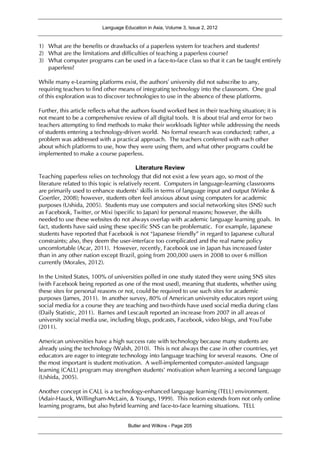
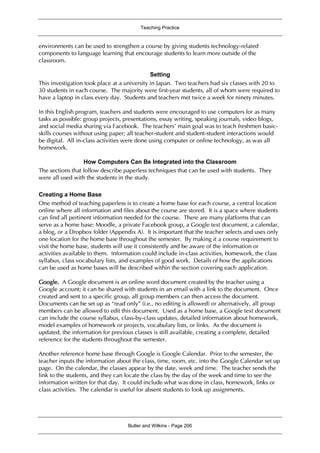
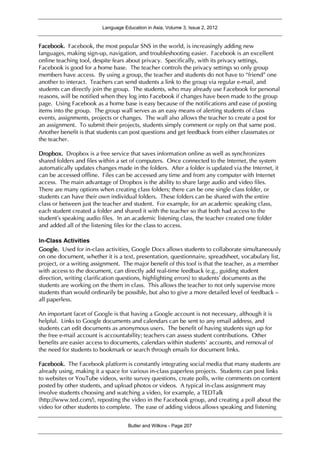
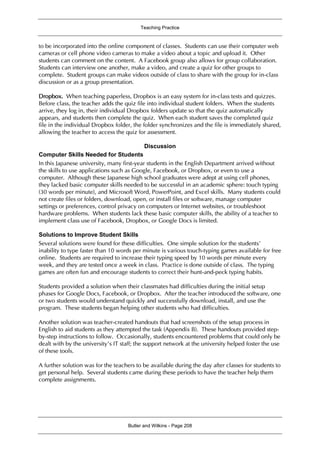
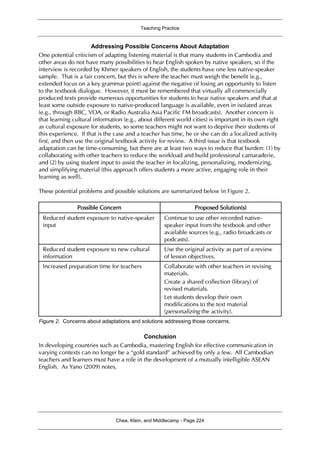
Language Education in Asia, Volume 3, Issue 2, 2012
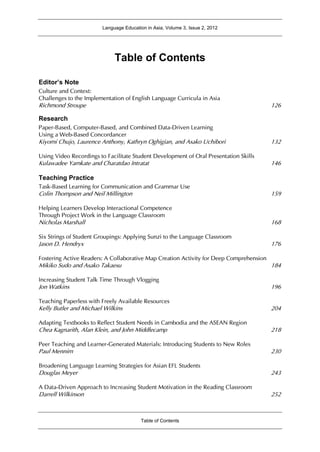
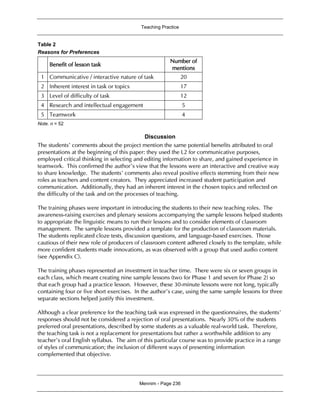
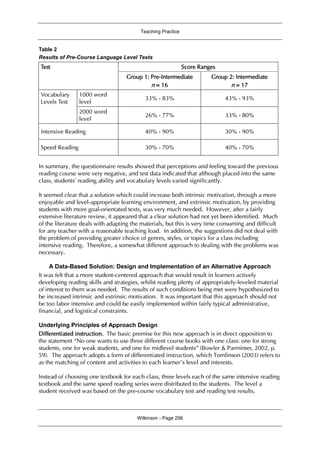
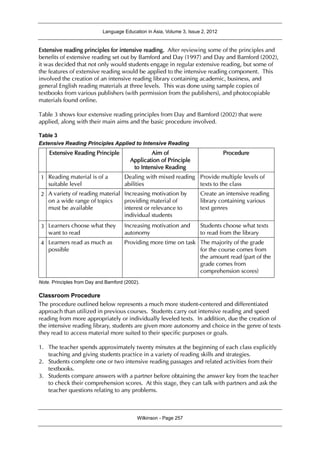
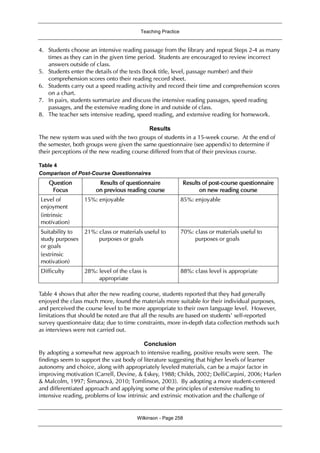
Table of Contents
Table of Contents
Editor’s Note
Culture and Context:
Challenges to the Implementation of English Language Curricula in Asia
Richmond Stroupe 126
Research
Paper-Based, Computer-Based, and Combined Data-Driven Learning
Using a Web-Based Concordancer
Kiyomi Chujo, Laurence Anthony, Kathryn Oghigian, and Asako Uchibori 132
Using Video Recordings to Facilitate Student Development of Oral Presentation Skills
Kulawadee Yamkate and Charatdao Intratat 146
Teaching Practice
Task-Based Learning for Communication and Grammar Use
Colin Thompson and Neil Millington 159
Helping Learners Develop Interactional Competence
Through Project Work in the Language Classroom
Nicholas Marshall 168
Six Strings of Student Groupings: Applying Sunzi to the Language Classroom
Jason D. Hendryx 176
Fostering Active Readers: A Collaborative Map Creation Activity for Deep Comprehension
Mikiko Sudo and Asako Takaesu 184
Increasing Student Talk Time Through Vlogging
Jon Watkins 196
Teaching Paperless with Freely Available Resources
Kelly Butler and Michael Wilkins 204
Adapting Textbooks to Reflect Student Needs in Cambodia and the ASEAN Region
Chea Kagnarith, Alan Klein, and John Middlecamp 218
Peer Teaching and Learner-Generated Materials: Introducing Students to New Roles
Paul Mennim 230
Broadening Language Learning Strategies for Asian EFL Students
Douglas Meyer 243
A Data-Driven Approach to Increasing Student Motivation in the Reading Classroom
Darrell Wilkinson 252
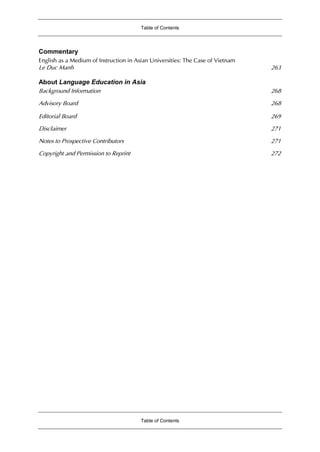
Table of Contents
Table of Contents
Commentary
English as a Medium of Instruction in Asian Universities: The Case of Vietnam
Le Duc Manh 263
About Language Education in Asia
Background Information 268
Advisory Board 268
Editorial Board 269
Disclaimer 271
Notes to Prospective Contributors 271
Copyright and Permission to Reprint 272
Editor’s Note
Stroupe - Page 126
Editor’s Note
Culture and Context:
Challenges to the Implementation
of English Language Curricula in Asia1
Richmond Stroupe, Editor-in-Chief
Soka University, Japan
In the 1990s, the cultural appropriacy of the communicative approach in English as a Foreign
and Second Language (EFL / ESL) instruction in Asia was being questioned (Ellis, 1996). Even
then, researchers were discussing the cultural conflict which could possibly occur in the
language learning environment between western native-speaking English instructors, who
naturally brought with them their preconceptions of an educational context based on their
cultural experiences, and their students, who had studied within and been influenced by
different cultural traditions. This discussion continues, but while the focus in the past was on
the duality of western teachers working with Asian learners, today the landscape of English
language instruction in Asia is far more complex, representing a myriad of stakeholders,
motivational underpinnings, and national education policies (Chen, Warden, & Chang, 2005;
Kam, 2002; Littlewood, 2007; Tan, 2005; Warden & Lin, 2000).
The growing importance of English globally has been well documented in general, and in Asia
in particular (Graddol, 1997, 2006; Kam, 2002; Nunan, 2003; Phillipson, 2001; Su, 2006;
Stroupe, 2010, Suarez, 2005). Driven by the globalization of economic development (Stroupe
& Panda, 2007; Su, 2006), international tourism (Graddol, 2006), regional and international
organizations, and military relationships (Phillipson, 2001), English language education remains
a main avenue for economic opportunity, international exchange, and progress in developing
countries (Graddol, 2006).
In response to these regional developments, national policies have increased emphasis on
English language instruction at multiple levels of local educational systems. The impact
resulting from these initiatives has been dynamic (Kam, 2002; Kim, 2004; Kirkpatrick, 2010; D.
Li, 1998; Nunan, 2003; Su, 2006). While traditionally introduced at the upper secondary and
tertiary levels, increasingly, English language instruction is being implemented at lower
secondary and primary levels, and in some cases at the pre-primary level (Graddol, 2006; Kam,
2002; Kirkpatrick, 2010; Suarez, 2005).
This phenomenon results in far-reaching effects in the region. Considering an approximate
eight-year period necessary to achieve academic proficiency, the age at which students will
reach this goal is decreasing from a post-graduation target when language study is begun at the
tertiary level to a secondary level target when young learners begin their English study at
primary or pre-primary levels. As a result, the numbers of English language learners at the
Language Education in Asia, 2012, 3(2), 126-131. http://dx.doi.org/10.5746/LEiA/12/V3/I2/A01/Stroupe
Language Education in Asia, Volume 3, Issue 2, 2012
Stroupe - Page 127
tertiary level are projected to actually decrease over the next 20 years as more and more
students achieve fluency prior to entering university (Graddol, 2006). In addition, English
proficiency is increasingly seen as a basic skill and less as a competitive advantage, yet much
more of a handicap if learners do not reach expected proficiency levels (Graddol, 2006). At the
same time, local varieties of English are becoming more accepted, with less emphasis being
placed on native-like proficiency as a learning outcome and more emphasis placed on
communicative ability. The value and role of non-native English speaking instructors is
changing accordingly (Graddol, 2006; Higgins, 2003; Liu, 1999; Milambiling, 2000; Tomlinson,
2005; Warschauer, 2000).
Yet the growth of English language instruction in the Asian region has not been without
controversy and challenge (Kam, 2002; Kirkpatrick, 2010; Nunan, 2003). Oftentimes, the
exam-driven curriculum and large classes with mixed level or under-motivated students are
indicated as major challenges to the implementation of communicative methodologies in
English language classrooms in Asia (Gray, 1998; Kam, 2002; Littlewood, 2007; Su, 2006).
Indeed, the motivation of students may be quite different in a learning context where the
practical use of English is to achieve necessary test results for university admission or
employment opportunities rather than learning about and engaging with those from English-
dominant cultures (Chen, Warden, & Chang, 2005; Warden & Lin, 2000).
Another area of concern is the number of teachers necessary at different levels within the
educational systems in the region to implement the language learning policies of local
governments. An illustrative example is China, where the potential implementation of a broad
language learning curricula could result in a demand for hundreds of thousands of English
teachers (Liao, 2004). At the same time, there are concerns over the proficiency and skill levels
of prospective teachers at a time when local governments and international organizations may
be struggling with meeting this increased demand for qualified instructors (Kam, 2002; Kim,
2004; Nunan, 2003; Simpson, 2008).
Furthermore, in an environment where there is high demand for skilled teachers, there may be a
resulting exacerbation of existing socioeconomic and regional (urban and rural) disparities, as
qualified teachers are often attracted to higher salaried positions at urban schools, leaving
teachers in lower socioeconomic or rural areas to rely on more traditional approaches to
language instruction with limited resources (Hu, 2005; Kam, 2002).
How local cultures interact with English language instruction also continues to be a focus of
discussion and research in the region. The passivity of Asian students is often highlighted as a
cultural barrier to successful communicative language instruction. However, other researchers
suggest that this constraint is over-generalized and may not be a result of cultural factors, but
rather due to inappropriate methodologies employed by teachers or learners’ lack of sufficient
proficiency (Cheng, 2000). Culture also affects learning styles (Goodson, 1993; Rao, 2002),
views on testing, expectations of both students and teachers, and perceptions of the overall
learning process (Gray, 1998; Hu, 2002; Kim, 2004; M. Li, 2003; Simpson, 2008; Tan, 2005).
Most authors suggest mediating these cultural differences by striking an appropriate balance
between more western-oriented communicative approaches and more familiar, local,
traditional approaches to language learning (Ellis, 1996; Lewis & McCook, 2002; Simpson,
2008; Tan, 2005; Tomlinson, 2005).
The papers included in the current issue of Language Education in Asia strive to continue to
contribute to the discussion and research on the challenges and successes related to English
language learning curricula implemented in the region. The first two papers report findings
Editor’s Note
Stroupe - Page 128
from research investigations in East and Southeast Asia. Kiyomi Chujo, Laurence Anthony,
Kathryn Oghigan, and Asako Uchibori investigated a data driven learning approach using a
parallel corpus for beginning English language learners in Japan. Their findings indicate that the
students in the study made significant gains in their understanding of grammatical structures
based on this approach. A second research paper considers the utility of using video recordings
to help students develop their presentation skills. Kulawadee Yamkate and Charatdao Intratat
found that the use of video allowed university students in Thailand to improve their self-
evaluation skills, leading to enhanced performance during their presentations.
A number of papers in this issue examine innovative methodologies to enhance language
learning. Colin Thompson and Neil Millington focus on task-based learning, implementing this
approach in Japan in larger classes typical in the Asian context. Project work is the focus of a
paper by Nicholas Marshall, who indicates that the use of such collaborative activities provides
students with the opportunity to develop interactional competence and makes suggestions as to
how this approach can be adapted to the Asian context. Jason Hendryx discusses how a variety
of student groupings can be utilized in the language learning classroom. Here, the author
presents how the use of diverse student groupings can lead to variety within lessons and
increased interest on the part of students. Developing greater understanding of academic texts
is the focus of a paper by Mikiko Sudo and Asako Takaesu. Through presenting concept maps
based on texts, students in Japan have been able to achieve a greater level of reading
comprehension through collaborating with their peers.
Technology is emphasized by Jon Watkins. Through a combination of videoing and blogging,
Watkins’ students were able to increase the time in which they used English outside the
classroom, while at the same time more effectively and efficiently provide and receive feedback.
The use of technology to achieve a “paperless” classroom is the topic of a paper by Kelly Butler
and Michael Wilkins. Based on an investigation at a university in Japan, these two authors
provide explanations on how available programs and technology can be employed to increase
the efficiency of the learning process.
Across the Asian region, local teachers must often work with required materials and texts
selected by institutional or national administrators. In Cambodia, Chea Kagnarith, Alan Klein,
and John Middlecamp provide practical guidelines and encourage local teachers to adapt their
required materials to better suit the interests and needs of their students. In Japan, Paul Mennim
suggests ways that students can actually create materials used in class. With the appropriate
scaffolding and support, the students on which this paper is based were able to generate their
own materials and teach a portion of their class.
The final two teaching practice papers in this issue consider specific needs of students.
Learning strategies are the focus of a paper by Douglas Meyer. A comparison of typical western
language learning strategies and those commonly found in Asia is presented. Then, a number
of specific strategies which could be explicitly taught in the language learning classroom are
discussed. Lastly, Darrell Wilkinson presents ways in which motivation can be increased with
students in relation to intensive and extensive reading. Based on an action research project
conducted with university-level students in Japan, recommendations are made on how to
increase the student-centered focus during reading activities.
The medium of instruction, whether L1 or L2, has long been an issue which elicits passionate
debate. Le Duc Manh critically analyzes the implementation of English medium of instruction
classes at a Vietnamese university. In his commentary, Manh suggests that the use of English as
Language Education in Asia, Volume 3, Issue 2, 2012
Stroupe - Page 129
a medium of instruction, while challenging, is timely and appropriate in this age of increasing
globalization.
The development of an academic publication is a collaborative effort, involving many
professionals, volunteers and specialists, all working in concert to produce a relevant and
applicable addition to the body of knowledge within our field. Under the direction of the
publication’s Advisory Board, the members of the Editorial Board strive to provide a space for
authors in the Asian region to share their experiences, successes, and research findings to a
wider audience. It is our contributing authors, and their willingness to share their ideas and
research, that make the development of this online publication possible. In collaboration with
the Assistant Editors, the Assistant Editor-in-Chief, Kelly Kimura, contributes significantly in
many ways to bring each issue to fruition. It is with great appreciation that I extend heartfelt
appreciation to the Assistant Editor-in-Chief, and to all of the members of the Advisory and
Editorial Boards for their untiring support and commitment to the Language Education in Asia
publication.
While authors may disagree on the most appropriate method to utilize in a particular context,
or on how cultural differences can be best reconciled, most do agree on the growing
importance of English language education in Asia. Challenges will continue to be faced, and
innovative approaches will continue to be developed as more and younger language learners
begin their study of English. In response, researchers and practitioners in the region and
beyond will continue to investigate and improve their instruction, and as a result, the outcomes
of their learners. The role of the Language Education in Asia publication is, and will continue
to be, to provide opportunities to professionals in the region to exchange these ideas, and share
expertise, experiences, and advice.
Editor’s Note
Stroupe - Page 130
References
Chen, J. F., Warden, C. A., & Chang, H. (2005). Motivators that do not motivate: The case of
Chinese EFL learners and the influence of culture on motivation. TESOL Quarterly, 39(4),
609-633. http://dx.doi.org/10.2307/3588524
Cheng, X. (2000). Asian students' reticence revisited. System, 28 (3), 435-446.
http://dx.doi.org/10.1016/S0346-251X(00)00015-4
Ellis, G. (1996). How culturally appropriate is the communicative approach? ELT Journal, 50(3),
213-218. http://dx.doi.org/10.1093/elt/50.3.213
Goodson, T. J. (1993). Learning style preferences of East Asian ESL students. (Doctoral
dissertation). Retrieved from http://trace.tennessee.edu/utk_graddiss/1254
Graddol, D. (1997). The future of English? London, England: British Council.
Graddol, D. (2006). English next. London, England: British Council.
Gray, R. (1998, October 16 - 18). Confucian conundrums: Higher education and ESL teaching
in Korea and Japan. In Korea TESOL (Ed.), Proceedings of the 1998 Korea TESOL
Conference. Paper presented at the 1998 Korea TESOL Conference, Kyunghee
University, Seoul, South Korea (pp. 45-50). Seoul, South Korea: KOTESOL.
Higgins, C. (2003). “Ownership” of English in the outer circle: An alternative to the NS-NNS
dichotomy. TESOL Quarterly, 37(4), 615-644. http://dx.doi.org/10.2307/3588215
Hu, G. (2002). Potential cultural resistance to pedagogical imports: The case of Communicative
Language Teaching in China. Language, Culture and Curriculum, 15(2), 93-105.
http://dx.doi.org/10.1080/07908310208666636
Hu, G. (2005). Contextual influences on instructional practices: A Chinese case for an
ecological approach to ELT. TESOL Quarterly, 39(4), 635-660.
http://dx.doi.org/10.2307/3588525
Kam, W. H. (2002). English language teaching in East Asia today: An overview. Asia-Pacific
Journal of Education, 22(2), 1-22. http://dx.doi.org/10.1080/0218879020220203
Kim, S. J. (2004). Coping with cultural obstacles to speaking English in the Korean Secondary
School context. Asian EFL Journal, September 2004. Retrieved from http://www.asian-
efl-journal.com/september_04_ksj.php
Kirkpatrick, A. (2010). Learning English in ASEAN: Myths and principles. Language Education in
Asia, 1(1), 1-7. http://dx.doi.org/10.5746/LEiA/10/V1/A02/Kirkpatrick
Lewis, M., & McCook, F. (2002). Cultures of teaching: Voices from Vietnam. ELT Journal, 56(2),
146-153. http://dx.doi.org/10.1093/elt/56.2.146
Li, D. (1998). “It’s always more difficult than you plan and imagine”: Teachers’ perceived
difficulties in introducing the Communicative Approach in South Korea. TESOL
Quarterly, 32(4), 677-703. http://dx.doi.org/10.2307/3588000
Li, M. (2003, November 29-December 3). Culture and classroom communication: A case study
of Asian students in New Zealand language schools. Paper presented at the joint
NZARE-AARE Conference 2003 at University of Auckland, New Zealand. Auckland,
New Zealand: NZARE-AARE.
Liao, X. (2004). The need for Communicative Language Teaching in China. ELT Journal, 58(3),
270-273. http://dx.doi.org/10.1093/elt/58.3.270
Littlewood, W. (2007). Communicative and task-based language teaching in East Asian
classrooms. Language Teaching, 40(3), 243-249.
http://dx.doi.org/10.1017/S0261444807004363
Liu, J. (1999). Nonnative-English-speaking professionals in TESOL. TESOL Quarterly, 33(1), 85-
102. http://dx.doi.org/10.2307/3588192
Milambiling, J. (2000). Comments on Vivian Cook’s “Going beyond the native speaker in
language teaching: How nonnative speakers as teachers fit into the equation.” TESOL
Quarterly, 34(2), 324-328. http://dx.doi.org/10.2307/3587955
Language Education in Asia, Volume 3, Issue 2, 2012
Stroupe - Page 131
Nunan, D. (2003). The impact of English as a global language on educational policies and
practices in the Asia-Pacific region. TESOL Quarterly, 37(4), 589-613.
http://dx.doi.org/10.2307/3588214
Phillipson, R. (2001). English for globalization or for the world’s people? International Review of
Education, 47(3/4), 185-200. http://dx.doi.org/10.1023/A:1017937322957
Rao, Z. (2002). Bridging the gap between teaching and learning styles in East Asian contexts.
TESOL Journal, 11(2), 5-11.
Simpson, S. T. (2008). Western EFL teachers and East-West classroom-culture conflicts. RELC
Journal, 39(3) 381-394. http://dx.doi.org/10.1177/0033688208096847
Stroupe, R. (2010). The complexity and challenge of language education in Asia. Language
Education in Asia, 1(1), iii-vii. http://dx.doi.org/10.5746/LEiA/10/V1/A01/Stroupe
Stroupe, R. & Panda, I. (2007, January). A framework for facilitating the teaching of culture in
the EFL classroom. Paper presented at the 27th International Thailand TESOL
Conference and 10th Pan-Asian Consortium International Conference 2007 in Bangkok,
Thailand.
Su, Y. (2006). EFL teachers’ perceptions of English language policy at the elementary level in
Taiwan. Educational Studies, 32(3), 265-283.
http://dx.doi.org/10.1080/03055690600631218
Suarez, S. L. (2005). Does English rule? Language instruction and economic strategies in
Singapore, Ireland and Puerto Rico. Comparative Politics, 37(4), 459-478.
Tan, C. (2005). How culturally appropriate is the communicative approach for primary school
children in Singapore? The Reading Matrix, 5(1), 21-35.
Tomlinson, B. (2005). The future for ELT materials in Asia. Electronic Journal of Foreign
Language Teaching, 2(2), 5-13. Retrieved from http://e-
flt.nus.edu.sg/v2n22005/tomlinson.pdf
Warden, C. A., & Lin, H. J. (2000). Existence of integrative motivation in an Asian EFL setting.
Foreign Language Annals, 33(5), 535-545. http://dx.doi.org/10.1111/j.1944-
9720.2000.tb01997.x
Warschauer, M. (2000). The changing global economy and the future of English teaching.
TESOL Quarterly, 34(3), 511-535. http://dx.doi.org/10.2307/3587741
Research
Chujo, Anthony, Oghigian, and Uchibori - Page 132
Research
Paper-Based, Computer-Based,
and Combined Data-Driven Learning
Using a Web-Based Concordancer1
Kiyomi Chujo
Nihon University, Japan
Laurence Anthony
Waseda University, Japan
Kathryn Oghigian
Waseda University, Japan
Asako Uchibori
Nihon University, Japan
Abstract
Very few studies have investigated the use of data-driven learning (DDL) in the
beginner-level EFL classroom, and few or no studies have compared the use of
paper-based, computer-based and combined approaches. This paper reports on
the results of a three-year comparative case study of computer-based, paper-
based, and combined computer- and paper-based DDL using a parallel corpus
for beginner-level university students. Students followed guided tasks on a
worksheet to inductively understand target grammar patterns, had an explicit
confirmation or correction of their hypotheses, and did follow up practice. The
DDL exercises were done on a bilingual concordancer using newspaper corpus.
It was demonstrated that each DDL approach can be effective for improving
grammar basics such as understanding and producing noun phrases. Pre- and
post-tests showed students made significant gains using all three approaches,
and there does not appear to be any significant difference in effectiveness
among the three approaches.
Literature Review
The Use of Corpora to Develop Resources
The growing speed and capacity of computers have had an impact on language learning, just as
they have impacted so many other aspects of modern life. Using large databases of authentic
language (called corpora, or in the singular, a corpus), it is possible to analyze spoken and
Language Education in Asia, 2012, 3(2), 132-145.
http://dx.doi.org/10.5746/LEiA/12/V3/I2/A02/Chujo_Anthony_Oghigian_Uchibori
Language Education in Asia, Volume 3, Issue 2, 2012
Chujo, Anthony, Oghigian, and Uchibori - Page 133
written texts in various ways, and this has changed how people understand, teach, and learn
language. For example, using a computer and representative corpus, it is possible to determine
the most common word in a language, the top 100 or 10,000 most common words, which
words appear often together, or what grammatical features are prevalent in particular registers
(such as casual conversation or academic writing). In addition to research into language,
corpora can be used in resource development. The Collins COBUILD Dictionary, for example,
is based on a 2.5 billion-word corpus from globally sourced newspapers, magazines, websites,
radio programs and conversations. It provides contextualized definitions so learners can see the
definitions, as well as how words are used, what words are often used together, and how
frequently these words are used (see “Collins COBUILD,” 2012). Another resource, the
Longman Grammar of Spoken and Written English, is based on the analysis of a 40 million-
word corpus and provides an in-depth description of grammar and how it is used in four
registers: academic prose, conversation, fiction, and news reporting (Biber, Johansson, Leech,
Conrad, & Finegan, 1999).
Additionally, corpora can be used to teach translation and for second language acquisition.
Using a software tool called a concordancer, it is possible to explore a corpus of authentic
language to observe patterns and make inductive hypotheses about grammatical rules and
usage. This is student-centered, discovery-based learning. It contrasts with a traditional L2
classroom setting, which is teacher-centered and where the lessons are explicit (explained)
rather than implicit (discovered) and the language data used is limited to whatever is available
in the provided textbook or audio / video tape.
Computer-Based Versus Paper-Based Versus Combined Data-Driven Learning (DDL)
Generally, DDL refers to computer-based corpus exercises. A computer-based approach means
the student is directly interfacing with a computer, corpus, and concordancing tool. It is
student-centered and student-controlled, the data is limitless, and learning is inductive with the
student as researcher (Gavioli, 2001). A paper-based approach means students are looking at
printed concordance lines on paper, not on computer screens. In other words, someone (the
teacher) has already done the searches and is providing the resulting concordance lines for
students to examine. The tasks are more readily understood and time-efficient, and do not
require student-accessed computers (Boulton, 2010). While there have been many studies
looking at the distinct advantages of each, there are few studies comparing computer- and
paper-based approaches (Boulton, 2010) and no known studies investigating a combined
approach.
DDL for EFL Beginners
Using DDL or corpus-based exercises in the second-language classroom is not new (Aston,
2001; Hunston, 2002; O’Keefe, McCarthy, & Carter, 2007; Sinclair, 2004); however, although
the potential for L2 applications using corpora is widely recognized, empirical studies
investigating classroom benefits are still limited (Johansson, 2009). According to Boulton
(2008a), only 4 out of 50 empirical DDL studies surveyed were conducted with beginner or
low-proficiency-level students; he further suggested that “current research encourages the belief
that DDL is only useful for advanced learners in a computer laboratory” (Boulton, 2008b).
There are several reasons for this. First, concordance lines in only the target language can
overwhelm beginner-level students (Tono, 2003). Second, with literally millions of words, it is
difficult for learners to know where to begin and what to look for (Tribble, 1997). Third,
because many languages have various exceptions to grammatical rules, understanding
concordance lines and finding patterns can be challenging (Oghigian & Chujo, 2010). Finally,
some students (and teachers) have difficulty using the hardware and / or software (Boulton,
Research
Chujo, Anthony, Oghigian, and Uchibori - Page 134
2010) and in some regions, computers for classroom use are not available, and free, easy-to-use
concordance tools are not readily available (Chujo & Oghigian, 2008).
To address these issues and investigate the use of DDL with less advanced learners, Chujo and
Oghigian (2008) developed and tested a grammar-based syllabus: a series of guided worksheets
for pairwork-based tasks with a parallel Japanese-English corpus, and a four-step teaching
procedure. Using parallel corpora, they demonstrated that DDL can be effectively used with
beginner-level classes. The first language (in this case, Japanese) in the parallel corpora permits
comprehension of the target-language concordance lines at a glance; students can therefore
focus on grammatical structures. By using a series of specific tasks in a worksheet, students can
be directed to a particular grammar pattern and, working in pairs, can support each other.
Having the teacher provide an explicit explanation of the grammar pattern after students have
analyzed the concordance lines allows them to check their hypotheses and reinforces the
powerful discovery aspect of learning. Edited paper-based concordance lines can be used to
streamline the data, remove confusing exceptions, and address the issues of a lack of or
difficulty with direct use of a computer (Chujo & Oghigian, 2008). Regarding the availability of
concordance tools, in this study, a new, free, web-based bilingual concordancer,
WebParaNews, was used (previously released as AntWebConc-Bilingual) (Anthony, Chujo &
Oghigian, 2011). This is described in more detail below.
A Case Study Using Three DDL Approaches in the EFL Classroom
Computer-Based, Paper-Based and Combined DDL for Beginner-Level Students
The purpose of this study is to report on the results of computer-based DDL, paper-based DDL,
and a combination of both computer- and paper-based DDL for beginner-level university
students learning grammar basics. This study is built on the successes of earlier case studies
and looks specifically at comparing computer-based, paper-based, and combined
concordancing. The efficacy of the syllabus, materials, and teaching procedure has been
established in previous studies; thus, the focus of this study is to determine which approach is
most effective, and in particular, whether or not having direct contact with a computer is
necessary to achieve learning, as measured by student gains in pre- and post-tests. To begin
this section, the study is described. Next, the results are presented and then discussed to clarify
the learning effect of these approaches. Finally, implications for L2 classrooms are discussed.
Background of the Study
Participants. The participants were three groups of engineering students at a Japanese
university in 2009, 2010, and 2011. DDL classes for all groups met weekly for 90 minutes in a
CALL (computer-assisted language learning) classroom for one semester. Each group had 22
first-year beginner-level students. The average TOEIC Bridge test score for each group was 69
out of 100 for Group 1 in 2009, 73 out of 100 for Group 2 in 2010, and 67 out of 100 for
Group 3 in 2011. These scores are equivalent to a TOEIC score range of 300-350. The
majority of students are Japanese males and were 19 years old at the time of participation.
Corpus. The corpus chosen for this study was a parallel Japanese-English Daily Yomiuri
newspaper corpus (Utiyama & Isahara, 2003). Because people or issues in Japan are often
referenced, the content in the concordance lines is generally familiar to students. In addition,
the non-technical vocabulary featured in this corpus is a target for this level of university study.
Concordancing Tool. Until recently, one of the few available tools has been ParaConc, a
commercial CD-ROM-based software developed for researchers. This tool was used both with
Group 1 in 2009 and by the teacher who created the paper-based DDL for Group 2 in 2010.
Language Education in Asia, Volume 3, Issue 2, 2012
Chujo, Anthony, Oghigian, and Uchibori - Page 135
(As of 2012, the cost of a two-year, 15-user site license was US$750 [“Concordancers and
corpora,” n.d.].) Although ParaConc proved to be a useful tool, Group 1 students using it in
2009 reported that it took time to adjust the settings for each use, sometimes kanji (Japanese
characters) in the concordance were garbled, and it could only be accessed in class per the
licensing agreement. Additionally, because ParaConc was designed for researchers, the
interface takes time to learn and is not necessarily geared toward student use. Thus, for Group
3 students, WebParaNews, a more user-friendly version of AntWebConc-Bilingual including a
Daily Yomiuri newspaper corpus was used. WebParaNews is built on a standard Model-View-
Controller (MVC) framework which works much like a Google search and can be viewed with
a standard browser (e.g., Internet Explorer, Firefox, Chrome, Safari, and Opera). There are no
initial settings, so searches can be done immediately. It is free, and because it is web-based,
can be accessed from home as well as the classroom (WebParaNews, 2012).
The DDL Syllabus
In Japan, students and employees typically take the Test of English for International
Communication (TOEIC) to measure English proficiency. The DDL syllabus used in this case
study was based on research findings from Chujo (2003), who analyzed the vocabulary in
retired TOEIC tests and secondary school textbooks used in Japan and created a vocabulary list
addressing the gap. In a later study, Uchibori, Chujo, and Hasegawa (2006) identified
grammatical structures found in TOEIC tests and secondary school textbooks. They found that
secondary-level texts lacked noun phrases (NPs) and verb phrases, which are prevalent in
TOEIC tests. Phrases are an integral element of English; thus, the DDL study was designed to
teach NPs.
The DDL syllabus used in this study is shown in Table 1. It started with lexical-based concepts,
such as identifying word classes and derivations, and progressed to various types of NPs, e.g.,
determiner + adjective + noun (this + business + meeting) or determiner + noun + to-infinitive
(the + decision + to hire). Students used the vocabulary taught in each previous vocabulary
lesson as the DDL search terms in the subsequent lesson. Thus, vocabulary was always taught
first and was spiraled through the curriculum. The vocabulary was also grouped by topic, such
as business, personnel, travel, time, and daily life.
Research
Chujo, Anthony, Oghigian, and Uchibori - Page 136
Table 1
DDL Syllabus
Week Grammar Vocabulary
1 (Pre-Test) Business 1: access, decline . . .
2 Word Classes Business 2: audit, equipment . . .
3 Derivations & Inflections Personnel 1: applicant, apply . . .
4 Count & Non-Count Nouns Personnel 2: accountant, architect . . .
5
NP: adjective (Adj) + noun (N),
NP: determiner (Det) + N + prepositional
phrase (PP)
Meetings: confirm, convention . . .
6 NP: Det + Adj + N Travel: arrangement, arrival . . .
7 NP: Det + N + -ing Money: coverage, credit . . .
8 NP: Det + N + -ed Buying & Selling: assure, brochure . . .
9 NP: Det + N + to-infinitives Time: current, due . . .
10 NP: Det + N + who, which, that Daily Life: appliance, beverage. . .
11 Various NPs -
12 (Post-Test) -
Teaching Procedures
All groups followed the same syllabus and the same four-step teaching procedure. The same
teacher (the first author) taught all three groups. Pairs of students explored specific grammatical
structures recurring in the corpus. In Step 1, students studied vocabulary with a CALL program.
In Step 2, they each had a worksheet with a list of very specific tasks. All groups explored six
DDL tasks; however, Group 1 used computer-based DDL, Group 2 used paper-based DDL, and
Group 3 used a combination. In Step 3, the teacher provided an explicit explanation of the
grammar point or NP, so students could confirm or correct the hypotheses they had made
through the inductive DDL tasks. Finally, in Step 4, they practiced the items and consolidated
the learning for homework.
The Three DDL Approaches
Group 1(2009): Computer-based concordancing. Students typed a search term into a computer
using the ParaConc software, examined the results, and then wrote down an answer on the
worksheet. They inductively noticed a pattern and then thought of a hypothesis. A computer
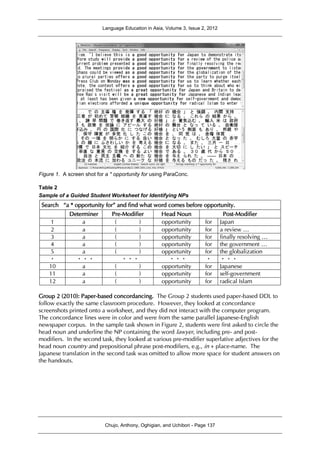
screenshot of concordance lines using ParaConc is shown in Figure 1, and a sample inductive
DDL task for an NP (Det + Adj + N + PP) is shown in Table 2. In this example, students typed
in a * opportunity for (the asterisk indicates a wildcard), looked at the concordance lines, and
filled in the missing adjectives for the supplied phrase, which were good, great, new, and
unique.
Language Education in Asia, Volume 3, Issue 2, 2012
Chujo, Anthony, Oghigian, and Uchibori - Page 137
Figure 1. A screen shot for a * opportunity for using ParaConc.
Table 2
Sample of a Guided Student Worksheet for Identifying NPs
Search “a * opportunity for” and find what word comes before opportunity.
Determiner Pre-Modifier Head Noun Post-Modifier
1 a ( ) opportunity for Japan
2 a ( ) opportunity for a review …
3 a ( ) opportunity for finally resolving …
4 a ( ) opportunity for the government …
5 a ( ) opportunity for the globalization
・ ・・・ ・・・ ・・・ ・ ・・・
10 a ( ) opportunity for Japanese
11 a ( ) opportunity for self-government
12 a ( ) opportunity for radical Islam
Group 2 (2010): Paper-based concordancing. The Group 2 students used paper-based DDL to
follow exactly the same classroom procedure. However, they looked at concordance
screenshots printed onto a worksheet, and they did not interact with the computer program.
The concordance lines were in color and were from the same parallel Japanese-English
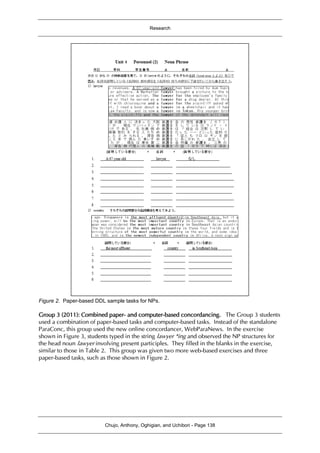
newspaper corpus. In the sample task shown in Figure 2, students were first asked to circle the
head noun and underline the NP containing the word lawyer, including pre- and post-
modifiers. In the second task, they looked at various pre-modifier superlative adjectives for the
head noun country and prepositional phrase post-modifiers, e.g., in + place-name. The
Japanese translation in the second task was omitted to allow more space for student answers on
the handouts.
Research
Chujo, Anthony, Oghigian, and Uchibori - Page 138
Figure 2. Paper-based DDL sample tasks for NPs.
Group 3 (2011): Combined paper- and computer-based concordancing. The Group 3 students
used a combination of paper-based tasks and computer-based tasks. Instead of the standalone
ParaConc, this group used the new online concordancer, WebParaNews. In the exercise
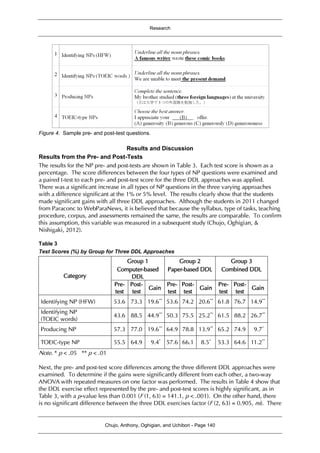
shown in Figure 3, students typed in the string lawyer *ing and observed the NP structures for
the head noun lawyer involving present participles. They filled in the blanks in the exercise,
similar to those in Table 2. This group was given two more web-based exercises and three
paper-based tasks, such as those shown in Figure 2.
Language Education in Asia, Volume 3, Issue 2, 2012
Chujo, Anthony, Oghigian, and Uchibori - Page 139
Figure 3. A screen shot for lawyer *ing using WebParaNews.
Data Collection
Students in each of the three groups were given a pre-test at the beginning of the semester and a
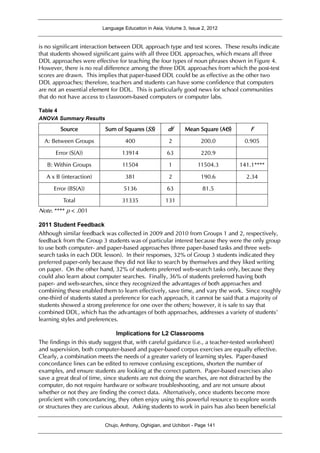
post-test at the end. There were 60 questions categorized into four groups: identifying an NP
using high frequency words (HFW), identifying an NP using more complex TOEIC-level
vocabulary (Chujo, 2003), producing an NP with HFW vocabulary, and understanding a
TOEIC-type NP. Each question was controlled by word level (a HFW or TOEIC-level word),
sentence length, and NP structural pattern (e.g., [Det + Adj + N], [Det + N + PP], and [Det +
Adj + N + to / -ing / -ed]). Sample questions showing the four types of questions and answers
for NPs are shown in Figure 4. Although the tests employed some of the vocabulary used in the
course, the focus was not on vocabulary, but on whether or not students could identify and
produce the target grammar, in this case, NPs. The same test was used for both the pre-test and
post-test, although the order of the questions was changed to protect assessment validity. Since
research has indicated that, due to the time interval between tests and because students are not
given the correct answers at any time, using the same test should not impact the end results
(Takahashi, Suzuki, & Takefuta, 2003). Using open-ended comment questions, feedback was
collected from Group 3 students about the combined DDL, asking which they preferred
(computer-based, paper-based, or combined) and why.
Research
Chujo, Anthony, Oghigian, and Uchibori - Page 140
Figure 4. Sample pre- and post-test questions.
Results and Discussion
Results from the Pre- and Post-Tests
The results for the NP pre- and post-tests are shown in Table 3. Each test score is shown as a
percentage. The score differences between the four types of NP questions were examined and
a paired t-test to each pre- and post-test score for the three DDL approaches was applied.
There was a significant increase in all types of NP questions in the three varying approaches
with a difference significant at the 1% or 5% level. The results clearly show that the students
made significant gains with all three DDL approaches. Although the students in 2011 changed
from Paraconc to WebParaNews, it is believed that because the syllabus, type of tasks, teaching
procedure, corpus, and assessments remained the same, the results are comparable. To confirm
this assumption, this variable was measured in a subsequent study (Chujo, Oghigian, &
Nishigaki, 2012).
Table 3
Test Scores (%) by Group for Three DDL Approaches
Category
Group 1
Computer-based
DDL
Group 2
Paper-based DDL
Group 3
Combined DDL
Pre-
test
Post-
test
Gain
Pre-
test
Post-
test
Gain
Pre-
test
Post-
test
Gain
Identifying NP (HFW) 53.6 73.3 19.6**
53.6 74.2 20.6**
61.8 76.7 14.9**
Identifying NP
(TOEIC words)
43.6 88.5 44.9**
50.3 75.5 25.2**
61.5 88.2 26.7**
Producing NP 57.3 77.0 19.6**
64.9 78.8 13.9**
65.2 74.9 9.7*
TOEIC-type NP 55.5 64.9 9.4*
57.6 66.1 8.5*
53.3 64.6 11.2**
Note. * p < .05 ** p < .01
Next, the pre- and post-test score differences among the three different DDL approaches were
examined. To determine if the gains were significantly different from each other, a two-way
ANOVA with repeated measures on one factor was performed. The results in Table 4 show that
the DDL exercise effect represented by the pre- and post-test scores is highly significant, as in
Table 3, with a p-value less than 0.001 (F (1, 63) = 141.1, p < .001). On the other hand, there
is no significant difference between the three DDL exercises factor (F (2, 63) = 0.905, ns). There
Language Education in Asia, Volume 3, Issue 2, 2012
Chujo, Anthony, Oghigian, and Uchibori - Page 141
is no significant interaction between DDL approach type and test scores. These results indicate
that students showed significant gains with all three DDL approaches, which means all three
DDL approaches were effective for teaching the four types of noun phrases shown in Figure 4.
However, there is no real difference among the three DDL approaches from which the post-test
scores are drawn. This implies that paper-based DDL could be as effective as the other two
DDL approaches; therefore, teachers and students can have some confidence that computers
are not an essential element for DDL. This is particularly good news for school communities
that do not have access to classroom-based computers or computer labs.
Table 4
ANOVA Summary Results
Source Sum of Squares (SS) df Mean Square (MS) F
A: Between Groups 400 2 200.0 0.905
Error (S(A)) 13914 63 220.9
B: Within Groups 11504 1 11504.3 141.1****
A x B (interaction) 381 2 190.6 2.34
Error (BS(A)) 5136 63 81.5
Total 31335 131
Note. **** p < .001
2011 Student Feedback
Although similar feedback was collected in 2009 and 2010 from Groups 1 and 2, respectively,
feedback from the Group 3 students was of particular interest because they were the only group
to use both computer- and paper-based approaches (three paper-based tasks and three web-
search tasks in each DDL lesson). In their responses, 32% of Group 3 students indicated they
preferred paper-only because they did not like to search by themselves and they liked writing
on paper. On the other hand, 32% of students preferred web-search tasks only, because they
could also learn about computer searches. Finally, 36% of students preferred having both
paper- and web-searches, since they recognized the advantages of both approaches and
combining these enabled them to learn effectively, save time, and vary the work. Since roughly
one-third of students stated a preference for each approach, it cannot be said that a majority of
students showed a strong preference for one over the others; however, it is safe to say that
combined DDL, which has the advantages of both approaches, addresses a variety of students’
learning styles and preferences.
Implications for L2 Classrooms
The findings in this study suggest that, with careful guidance (i.e., a teacher-tested worksheet)
and supervision, both computer-based and paper-based corpus exercises are equally effective.
Clearly, a combination meets the needs of a greater variety of learning styles. Paper-based
concordance lines can be edited to remove confusing exceptions, shorten the number of
examples, and ensure students are looking at the correct pattern. Paper-based exercises also
save a great deal of time, since students are not doing the searches, are not distracted by the
computer, do not require hardware or software troubleshooting, and are not unsure about
whether or not they are finding the correct data. Alternatively, once students become more
proficient with concordancing, they often enjoy using this powerful resource to explore words
or structures they are curious about. Asking students to work in pairs has also been beneficial
Research
Chujo, Anthony, Oghigian, and Uchibori - Page 142
since they are able to negotiate and agree on hypotheses they are forming based on what they
are seeing. At a minimum, pairwork eliminates the single silent student who sits at a blank
computer or worksheet not understanding what to do.
These findings also suggest that teachers can use paper-based corpus exercises to teach
grammar basics in schools without computers. Although few pre-made corpus-based materials
are currently available, it is inevitable that more will be published in the coming years as DDL
continues to make inroads in L2 acquisition. Paper-based exercises do require, however, that
the teacher or material developer have access to a corpus and concordancing tool to produce
them. Until pre-made resources are available, there can be lengthy preparation time involved.
This might be minimized by following sample tasks in previously published studies discussed in
this paper. For more information on sample tasks, issues to consider, and resources, see
Oghigian and Chujo (2010).
The case study presented also supports the contention that a bilingual concordancer is
important to use at the beginner level. Low proficiency students tend to be much more relaxed
when they have quick and easy access to the translation (Chujo & Oghigian, 2008). They can
check the translation and then focus on the structure of the grammar, instead of struggling with
the meaning and structure of the concordance line. As noted in the Literature Review,
beginner-level students have difficulty coping with monolingual concordance lines. Trying to
show them a computer, new software, a new type of task, a new grammar structure, and new
vocabulary can be overwhelming for them. For this reason, the bilingual translation helps, as
does easing students into the concept of DDL with paper-based concordancing. Once students
understand the idea of the task, the transition to a computer tends to be smoother. In fact, as
students gradually become accustomed to using DDL and learn to focus just on the grammar
structure, they tend to look at the translation less and less.
Limitations of the Study
The participants in this study were engineering students, and it is not known whether this had
an impact on their interest or skill in using DDL. Certainly there are numerous studies on L2
DDL (some of which are cited in the Literature Review) in which DDL is used with a variety of
first-language students, target languages, and student backgrounds. No studies that look at
student majors as a variable of the efficacy of DDL were found in the literature, however.
Additionally, researchers in DDL are often the classroom teachers, and it is not known if or to
what extent this may impact outcomes.
It should also be noted that one potential problem with using DDL is that students are often
more comfortable studying about a language rather than producing a language. With DDL, the
student becomes the researcher and explores the language in a very powerful and motivating
way; however, it is essential that production be included so students apply what they are
learning to written or spoken constructions.
Conclusion
At the beginner level, DDL has shown to be effective in teaching basic grammar such as NPs,
confirming earlier studies (Chujo & Oghigian, 2008; Chujo, Anthony, & Oghigian, 2009;
Oghigian & Chujo, 2010). Regarding the comparison of paper-based DDL, computer-based
DDL, and combined DDL, the results of this study indicate that there does not appear to be any
significant difference in effectiveness among the three approaches. Students showed significant
gains with all three approaches, and all three clearly have distinct advantages. Since these
inductive corpus-based approaches basically involve the same cognitive processes (e.g.,
Language Education in Asia, Volume 3, Issue 2, 2012
Chujo, Anthony, Oghigian, and Uchibori - Page 143
noticing, hypothesis formation, and hypothesis testing), teachers can choose the approach best
suited for students with regard to class time, learning styles and preferences, and student interest
in exploring beyond classroom-defined parameters. In regard to this final point, to date, there
has been a need for freeware open-access parallel concordance tools that are designed for use
by students and are accessible anytime and anywhere. Such a tool, WebParaNews, has been
developed by the authors of this paper and has been tested in the classroom with positive
results.
Author Note
Kiyomi Chujo, College of Industrial Technology, Nihon University, Chiba, Japan; Laurence
Anthony, Center for English Language Education in Science and Engineering (CELESE), Waseda
University, Tokyo, Japan; Kathryn Oghigian, Center for English Language Education in Science
and Engineering (CELESE), Waseda University, Tokyo, Japan; Asako Uchibori, College of
Industrial Technology, Nihon University, Chiba, Japan.
This research was funded by a Grant-in-aid for Scientific Research (21320107) from the Japan
Society for the Promotion of Science and the Ministry of Education, Culture, Sports, Science
and Technology.
Correspondence concerning this article should be addressed to Kiyomi Chujo, College of
Industrial Technology, Nihon University, 2-11-1 Shin’ei, Narashino-shi, Chiba 275-8576,
Japan. Email: chuujou.kiyomi@nihon-u.ac.jp
Research
Chujo, Anthony, Oghigian, and Uchibori - Page 144
References
Anthony, L., Chujo K., & Oghigian, K. (2011). A novel, web-based, parallel concordancer for
use in the ESL/EFL classroom. In J. Newman, H. Baayen, & S. Rice (Eds.), Corpus-based
studies in language use, language learning, and language documentation (pp. 123-138).
Amsterdam, Netherlands and New York, NY: Rodopi Press.
Aston, G. (2001). Learning with corpora. Houston TX: Athelstan.
Biber, D., Johansson, S., Leech, G., Conrad, S., & Finegan, E. (1999). The Longman grammar of
spoken and written English. London, England: Pearson Education ESL.
Boulton, A. (2008a, March). Evaluating corpus use in language learning: State of play and future
directions. Paper presented at the American Association of Corpus Linguistics, Provo,
Utah.
Boulton, A. (2008b). DDL: Reaching the parts other teaching can’t reach? In A. Frankenberg-
Garcia, I. Rkibi, M. R. Cruz, R. Carvalho, C. Direito, & D. Santos-Rosa (Eds.),
Proceedings of TaLC 8 – Lisbon, 8th
Teaching and Language Corpora Conference (pp.
38-44). Lisbon, Portugal: Associação de Estudos e de Investigação Cientifíca do ISLA-
Lisbo Fichier.
Boulton, A. (2010). Data-driven learning: Taking the computer out of the equation. Language
Learning, 60(3), 534-572. http://dx.doi.org/10.1111/j.1467-9922.2010.00566.x
Chujo, K. (2003). Eigo shokyuusha-muke TOEIC-goi 1 to 2 no sentei to sono kouka [Selecting
TOEIC vocabulary 1 & 2 for beginning-level students and measuring its effect on a
sample TOEIC test]. Journal of the College of Industrial Technology, Nihon University,
36, 27-42.
Chujo, K., Anthony, L., & Oghigian, K. (2009). DDL for the EFL classroom: Effective uses of a
Japanese-English parallel corpus and the development of a learner-friendly, online
parallel concordancer. In M. Mahlberg, V. González-Díaz, & C. Smith (Eds.),
Proceedings of 5th
Corpus Linguistics Conference.
http://ucrel.lancs.ac.uk/publications/cl2009/
Chujo, K., & Oghigian, K. (2008). A DDL approach to learning noun and verb phrases in the
beginner level EFL classroom. In A. Frankenberg-Garcia, I. Rkibi, M. R. Cruz, R.
Carvalho, C. Direito, & D. Santos-Rosa (Eds.), Proceedings of TaLC 8 – Lisbon, 8th
Teaching and Language Corpora Conference (pp. 65-71). Lisbon, Portugal: Associação
de Estudos e de Investigação Cientifíca do ISLA-Lisbo Fichier.
Chujo, K., Oghigian, K., & Nishigaki, C. (2012, November). Beginner level EFL DDL using a
parallel web-based concordancer. Paper presented at the Pan-Asian Conference on
Language Teaching and Learning (PAC) 2012 and 9th FEELTA International Conference,
Far Eastern Federal University, Vladivostok, Russia.
Collins COBUILD dictionaries. (2012). http://www.collinslanguage.com/collins-elt-learners-of-
english/cobuild
Concordancers and corpora. (n.d.). http://www.athel.com/mono.html
Gavioli, L. (2001). The learner as researcher: Introducing corpus concordancing in the
classroom. In G. Aston (Ed.), Learning with corpora (pp. 109-137). Houston: Athelstan.
Hunston, S. (2002). Corpora in applied linguistics. Cambridge, England: Cambridge University
Press.
Johansson, S. (2009). Some thoughts on corpora and second-language acquisition. In K. Aijmer
(Ed.), Corpora and language teaching (pp. 33-44). Amsterdam, Netherlands: John
Benjamins.
Oghigian, K., & Chujo, K. (2010). An effective way to use corpus exercises to learn grammar
basics in English. Language Education in Asia, 1(1), 200-214.
http://dx.doi.org/10.5746/LEiA/10/V1/A17/Oghigian_Chujo
O’Keefe, A., McCarthy, M., & Carter, R., (2007). From corpus to classroom: Language use and
language teaching. Cambridge, England: Cambridge University Press.
Language Education in Asia, Volume 3, Issue 2, 2012
Chujo, Anthony, Oghigian, and Uchibori - Page 145
Sinclair, J. (2004). How to use corpora in language teaching. Philadelphia, PA: John Benjamins.
Takahashi, H., Suzuki, H., & Takefuta, Y. (2003). CALL 教材による自己学習と授業活動を融合
させた大学生英語聴解力の養成(<特集>第二言語学習とその支援に関する教育工学研
究) [An integration of CALL self-study and classroom activities for improving Japanese
college learners’ English listening skills (Special Issue: Educational Technology Research
on Second Language Learning and its Assistance)]. Japan Journal of Educational
Technology, 27(3), 305-314. Available at
http://ci.nii.ac.jp/els/110003026504.pdf?id=ART0003487222&type=pdf&lang=en&host
=cinii&order_no=&ppv_type=0&lang_sw=&no=1356235559&cp=
Tono, Y. (2003). Corpus wo eigo kyouiku ni ikasu [What corpora can do for language
teaching]. English Corpus Studies, 10, 249-264.
Tribble, C. (1997). Improvising corpora for ELT: Quick and dirty ways of developing corpora for
language teaching. In B. Lewandowska-Tomasczczyk & J. Melia (Eds.), Proceedings of
the First International Conference on Practical Applications in Language Corpora
(pp.106-117). Lodz, Poland: Lodz University Press.
Uchibori A., Chujo, K., & Hasegawa, S. (2006). Toward better grammar instruction: Bridging
the gap between high school textbooks and TOEIC. The Asian EFL Journal, 8(2), 228-
253.
Utiyama, M., & Isahara, H. (2003). Reliable measures for aligning Japanese-English news
articles and sentences. In E. Hinrichs & D. Roth (Eds.), Proceedings of the 41st Annual
Meeting of the Association for Computational Linguistics (pp. 72-79). Sapporo, Japan:
The Association for Computational Linguistics. Available at
http://acl.ldc.upenn.edu/acl2003/main/index.html
Research
Yamkate and Intratat - Page 146
Using Video Recordings
to Facilitate Student Development of
Oral Presentation Skills1
Kulawadee Yamkate
King Mongkut’s University of Technology Thonburi, Thailand
Charatdao Intratat
King Mongkut’s University of Technology Thonburi, Thailand
Abstract
Lack of confidence and ineffective preparation are believed to be major
obstacles experienced by Thai students required to give oral presentations in
English. Self-assessment is one possible solution to help students with this
problem. This study was conducted with a group of Thai university students to
find out (a) whether and (b) how video recordings facilitate the students’
evaluation of their oral presentation skills and use of their evaluations to
improve their performance. The research instruments were video recordings of
the students’ two presentations and questionnaires that asked the students to
reflect on their strengths and weaknesses in both presentations. The data shows
that the students had positive attitudes towards video recording their
presentations, especially since this helped them to notice and identify their
weaknesses in non-verbal language use. Overall, the process studied was found
to facilitate the students’ self-evaluation skills, resulting in the improvement of
their presentation skills.
Learner-centeredness has been a concern of educators since the late 1960s (Benson, 2008;
Dickinson, 1987). This concept exemplifies the shift from teacher-directed learning to an
autonomous learning approach that aims to promote learner independence and process-
oriented learning (Sinclair, 2000). Holec (1981, p. 3) defined autonomy as “the ability to take
charge of one’s own learning,” and clarified that this includes “determining the objectives,
defining the contents and progressions, selecting methods and techniques to be used,
monitoring the procedures of acquisition…and evaluating what has been acquired.” Dam
(2000) added that learners’ self-evaluation of their own linguistic competence as well as their
performance and social behavior can increase active involvement in the actual teaching and
learning situation. Additionally, Wenden (1999) stated that it is essential to enable learners to
gain self-monitoring strategies for them to identify the cause of their own difficulties and how to
deal with them. An alternative, according to Oxford (1990), is to get students into the habit of
self-reflection, a metacognitive strategy that enables them to manage their learning.
Despite its importance, assessing speaking activities is difficult for both teachers and students;
judgment can be subjective without any concrete evidence. One way to address this problem
Language Education in Asia, 2012, 3(2), 146-158. http://dx.doi.org/10.5746/LEiA/12/V3/I2/A03/Yamkate_Intratat
Language Education in Asia, Volume 3, Issue 2, 2012
Yamkate and Intratat - Page 147
is to video record the performance, allowing it to be viewed as many times as necessary to
accurately evaluate the speaker’s strengths and weaknesses (Christianson, Hoskins, &
Watanabe, 2009).
Very few empirical studies address self-evaluation of learners’ oral presentation skills, the focus
of this study, particularly in English classes in Thailand. Sintupan (1990) audiotaped and
transcribed eight secondary school students’ oral presentations. The subjects corrected their
transcriptions and recorded their work again. The teacher compared the two recordings. The
results indicated that students corrected their own syntactic and morphological errors more
effectively than lexical errors. Nevertheless, they needed teacher demonstration and guidance
on how to identify the errors. To bridge this gap, Nuchanart (1992) prepared a five-point self-
assessment scale focusing on content, organization, language accuracy, intonation, and
pronunciation. Four undergraduate students audiotaped their presentations and evaluated their
work using the scale. The students audiotaped and evaluated their work again, and then the
researcher compared the forms. The process was done twice. The subjects were able to
minimize their weaknesses, especially in content organization.
The subjects in both studies reflected that they had difficulty in evaluating their language
proficiency and needed teacher support. Moreover, audiotapes, the main instrument, had some
limitations, e.g., nonverbal codes, a crucial feature of oral presentations, could not be included
in students’ reflections. Oscarson (1989) noted earlier that video recordings are more beneficial
than audio recordings for students in that they enable students to experience and evaluate the
full spectrum of their communicative performance.
Objectives
A common problem in academic performance among Thai university students is their lack of
both confidence and competency in oral communication and presentation skills. It is essential
for teachers to help students overcome this obstacle.
This study originated from a teacher’s attempt to help students in her speaking class to develop
their oral presentation skills by drawing individual students’ attention to the strengths and
weaknesses of their videotaped performances. The study was conducted to find out (a) if and
(b) in what ways video recordings facilitate students’ evaluation of their oral presentation skills
and their use of these evaluations to improve their performance.
In this study, the students were given recommendations on how to analyze verbal and
nonverbal aspects of their performance while observing their videotaped presentations.
Viewing these recordings was expected to facilitate students’ self-development in presentation
skills.
Methodology
Subjects
The subjects were nineteen undergraduate students in an Oral Communication course in the
first semester of the 2011 academic year at a university in Thailand. All students were fourth-
year engineering majors. Their language proficiency is at the intermediate level. The purpose
and expected benefits of using video recordings were explained to the students when obtaining
their consent to participate in the study.
Research
Yamkate and Intratat - Page 148
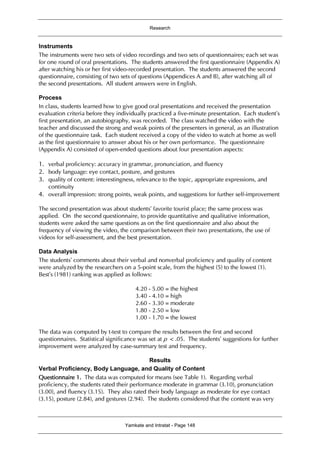
Instruments
The instruments were two sets of video recordings and two sets of questionnaires; each set was
for one round of oral presentations. The students answered the first questionnaire (Appendix A)
after watching his or her first video-recorded presentation. The students answered the second
questionnaire, consisting of two sets of questions (Appendices A and B), after watching all of
the second presentations. All student answers were in English.
Process
In class, students learned how to give good oral presentations and received the presentation
evaluation criteria before they individually practiced a five-minute presentation. Each student’s
first presentation, an autobiography, was recorded. The class watched the video with the
teacher and discussed the strong and weak points of the presenters in general, as an illustration
of the questionnaire task. Each student received a copy of the video to watch at home as well
as the first questionnaire to answer about his or her own performance. The questionnaire
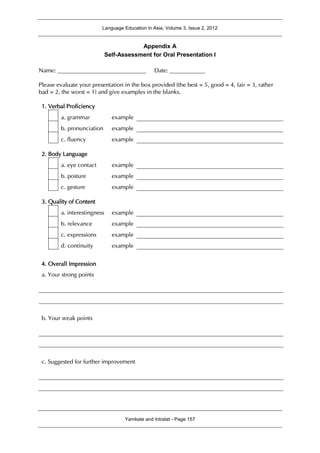
(Appendix A) consisted of open-ended questions about four presentation aspects:
1. verbal proficiency: accuracy in grammar, pronunciation, and fluency
2. body language: eye contact, posture, and gestures
3. quality of content: interestingness, relevance to the topic, appropriate expressions, and
continuity
4. overall impression: strong points, weak points, and suggestions for further self-improvement
The second presentation was about students’ favorite tourist place; the same process was
applied. On the second questionnaire, to provide quantitative and qualitative information,
students were asked the same questions as on the first questionnaire and also about the
frequency of viewing the video, the comparison between their two presentations, the use of
videos for self-assessment, and the best presentation.
Data Analysis
The students’ comments about their verbal and nonverbal proficiency and quality of content
were analyzed by the researchers on a 5-point scale, from the highest (5) to the lowest (1).
Best’s (1981) ranking was applied as follows:
4.20 - 5.00 = the highest
3.40 - 4.10 = high
2.60 - 3.30 = moderate
1.80 - 2.50 = low
1.00 - 1.70 = the lowest
The data was computed by t-test to compare the results between the first and second
questionnaires. Statistical significance was set at p < .05. The students’ suggestions for further
improvement were analyzed by case-summary test and frequency.
Results
Verbal Proficiency, Body Language, and Quality of Content
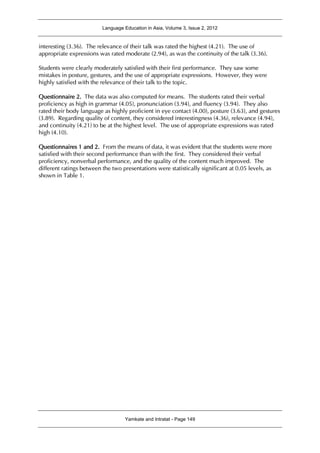
Questionnaire 1. The data was computed for means (see Table 1). Regarding verbal
proficiency, the students rated their performance moderate in grammar (3.10), pronunciation
(3.00), and fluency (3.15). They also rated their body language as moderate for eye contact
(3.15), posture (2.84), and gestures (2.94). The students considered that the content was very
Language Education in Asia, Volume 3, Issue 2, 2012
Yamkate and Intratat - Page 149
interesting (3.36). The relevance of their talk was rated the highest (4.21). The use of
appropriate expressions was rated moderate (2.94), as was the continuity of the talk (3.36).
Students were clearly moderately satisfied with their first performance. They saw some
mistakes in posture, gestures, and the use of appropriate expressions. However, they were
highly satisfied with the relevance of their talk to the topic.
Questionnaire 2. The data was also computed for means. The students rated their verbal
proficiency as high in grammar (4.05), pronunciation (3.94), and fluency (3.94). They also
rated their body language as highly proficient in eye contact (4.00), posture (3.63), and gestures
(3.89). Regarding quality of content, they considered interestingness (4.36), relevance (4.94),
and continuity (4.21) to be at the highest level. The use of appropriate expressions was rated
high (4.10).
Questionnaires 1 and 2. From the means of data, it was evident that the students were more
satisfied with their second performance than with the first. They considered their verbal
proficiency, nonverbal performance, and the quality of the content much improved. The
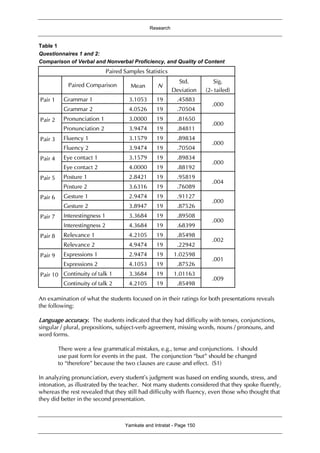
different ratings between the two presentations were statistically significant at 0.05 levels, as
shown in Table 1.
Research
Yamkate and Intratat - Page 150
Table 1
Questionnaires 1 and 2:
Comparison of Verbal and Nonverbal Proficiency, and Quality of Content
Paired Samples Statistics
Paired Comparison Mean N
Std.
Deviation
Sig.
(2- tailed)
Pair 1 Grammar 1 3.1053 19 .45883
.000
Grammar 2 4.0526 19 .70504
Pair 2 Pronunciation 1 3.0000 19 .81650
.000
Pronunciation 2 3.9474 19 .84811
Pair 3 Fluency 1 3.1579 19 .89834
.000
Fluency 2 3.9474 19 .70504
Pair 4 Eye contact 1 3.1579 19 .89834
.000
Eye contact 2 4.0000 19 .88192
Pair 5 Posture 1 2.8421 19 .95819
.004
Posture 2 3.6316 19 .76089
Pair 6 Gesture 1 2.9474 19 .91127
.000
Gesture 2 3.8947 19 .87526
Pair 7 Interestingness 1 3.3684 19 .89508
.000
Interestingness 2 4.3684 19 .68399
Pair 8 Relevance 1 4.2105 19 .85498
.002
Relevance 2 4.9474 19 .22942
Pair 9 Expressions 1 2.9474 19 1.02598
.001
Expressions 2 4.1053 19 .87526
Pair 10 Continuity of talk 1 3.3684 19 1.01163
.009
Continuity of talk 2 4.2105 19 .85498
An examination of what the students focused on in their ratings for both presentations reveals
the following:
Language accuracy. The students indicated that they had difficulty with tenses, conjunctions,
singular / plural, prepositions, subject-verb agreement, missing words, nouns / pronouns, and
word forms.
There were a few grammatical mistakes, e.g., tense and conjunctions. I should
use past form for events in the past. The conjunction “but” should be changed
to “therefore” because the two clauses are cause and effect. (S1)
In analyzing pronunciation, every student’s judgment was based on ending sounds, stress, and
intonation, as illustrated by the teacher. Not many students considered that they spoke fluently,
whereas the rest revealed that they still had difficulty with fluency, even those who thought that
they did better in the second presentation.
Language Education in Asia, Volume 3, Issue 2, 2012
Yamkate and Intratat - Page 151
Body language. In both presentations, every student noticed whether they had made direct eye
contact with the audience and whether they had maintained good posture and made good
gestures.
I did not have eye contact with the audience. Most of the time, I looked at the
slides or the teacher. I also had negative gesture and posture. I noticed that I
often touched my sleeves and sometimes I leaned against the table. (S2)
Content quality. All students responded that their presentations were relevant to the topic and
that they had used expressions needed for the tasks.
The content is relevant to the topic [travel] because it is all about a tourist
attraction, e.g., where it is, what to see, how to go there, and why it is very
interesting. (S3)
I used needed expressions to describe an interesting place and I could do it well.
(S4)
The points, either positive or negative, that the students brought up show they had some doubts
about the interestingness of their presentations and the consistency of the main topic or
continuity in the presentation.
I think my presentation today is not much interesting because the audiences are
familiar with that place. (S5)
The content is interesting because not many people have visited that place and I
added details which some audience may not know. (S6)
I lacked continuity because I did not have a link between each part of the
presentation. The reason was because I was excited and I could not remember
what to say. (S7)
I had good continuity in my presentation because I presented each piece of
information in accordance with the sequence of time and place. (S8)
It can be concluded that the students were concerned about the audience when they judged
whether the content was interesting or not. However, in considering the continuity of the
content, they made judgments based upon the coherence and cohesion of their presentation.
Students’ Overall Impressions
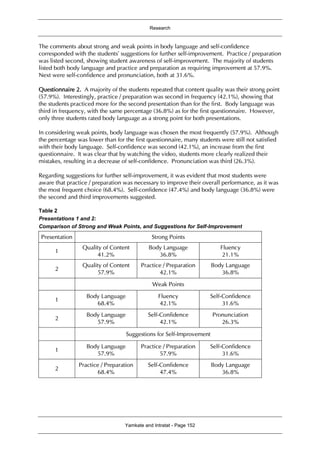
Questionnaire 1. The students listed several aspects of their performance as their strong points,
weak points, and items they thought were required for further self-improvement (see Table 2).
Quality of content (42.1%), body language (36.8%), and fluency (21.1%) were the most
frequently cited strong points. Regarding weak points, the majority of students listed body
language (68.4%). Two students (S5 and S15) reported that they were partly satisfied with their
body language in some aspects, but after watching the video, were aware that they should
improve themselves in other aspects, so they rated body language as both strong and weak
points. The second and third most frequently listed weak points were fluency (42.1%) and self-
confidence (31.6%).
Research
Yamkate and Intratat - Page 152
The comments about strong and weak points in body language and self-confidence
corresponded with the students’ suggestions for further self-improvement. Practice / preparation
was listed second, showing student awareness of self-improvement. The majority of students
listed both body language and practice and preparation as requiring improvement at 57.9%.
Next were self-confidence and pronunciation, both at 31.6%.
Questionnaire 2. A majority of the students repeated that content quality was their strong point
(57.9%). Interestingly, practice / preparation was second in frequency (42.1%), showing that
the students practiced more for the second presentation than for the first. Body language was
third in frequency, with the same percentage (36.8%) as for the first questionnaire. However,
only three students rated body language as a strong point for both presentations.
In considering weak points, body language was chosen the most frequently (57.9%). Although
the percentage was lower than for the first questionnaire, many students were still not satisfied
with their body language. Self-confidence was second (42.1%), an increase from the first
questionnaire. It was clear that by watching the video, students more clearly realized their
mistakes, resulting in a decrease of self-confidence. Pronunciation was third (26.3%).
Regarding suggestions for further self-improvement, it was evident that most students were
aware that practice / preparation was necessary to improve their overall performance, as it was
the most frequent choice (68.4%). Self-confidence (47.4%) and body language (36.8%) were
the second and third improvements suggested.
Table 2
Presentations 1 and 2:
Comparison of Strong and Weak Points, and Suggestions for Self-Improvement
Presentation Strong Points
1
Quality of Content
41.2%
Body Language
36.8%
Fluency
21.1%
2
Quality of Content
57.9%
Practice / Preparation
42.1%
Body Language
36.8%
Weak Points
1
Body Language
68.4%
Fluency
42.1%
Self-Confidence
31.6%
2
Body Language
57.9%
Self-Confidence
42.1%
Pronunciation
26.3%
Suggestions for Self-Improvement
1
Body Language
57.9%
Practice / Preparation
57.9%
Self-Confidence
31.6%
2
Practice / Preparation
68.4%
Self-Confidence
47.4%
Body Language
36.8%
Language Education in Asia, Volume 3, Issue 2, 2012
Yamkate and Intratat - Page 153
Questionnaire 2: Additional questions. Students were asked about the frequency of viewing the
video, the comparison between their two presentations, the use of videos for self-assessment,
and the best presentation. The last question was intended to encourage the students to identify
their own criteria for evaluating oral presentations.
Viewing frequency. The majority of the students (57.90%) watched each recording three times;
about one-third (36.84%) watched it twice. Only one student watched each video only once.
Excerpts of responses show the areas the students concentrated on:
I watched each recording 3 times. The first round is to get the overview of the
presentation. I focused on the body language in the second round while my
focus in the third time was the language accuracy and the content. (S2)
For the third round, I paid attention to the language and the audience to see
whether and how far my presentation caught their attention. (S6)
In the third round, I focused not only on the language and content, but also the
reaction of the audience while they were listening to my presentation. (S9)
My attention was on the overview of my presentation and I concentrated on the
details of my strength and weakness in the second round. (S10)
I concentrated on non-verbal language in the first round and on the language
and content for the second time. (S1)
The last excerpt is from the student who watched the recordings only once.
Before watching each recording, I asked my friends for their comments on my
strength and weakness. Consequently, when I watched the videos, I
concentrated particularly on my weak points and considered how I could
improve myself. (S5)
Presentation preference. The majority of students (89.48%) preferred their second presentation.
Only one student liked the first presentation better and another liked both presentations
equally.
I liked both of them equally because I was more fluent in the first recording, but
the language and content of the second presentation was much better, whereas
my body language was not as good as my first presentation. (S9)
Students who liked their second presentation better responded that they thought they could
perform better because they had seen their difficulties in the first recording, and were well-
prepared, more confident, and able to solve those difficulties.
Advantages of video recording. Students responded that the recordings enabled them to see
their weaknesses and strengths, to repeatedly view any specific part of the recordings to detect
their weak points, and to learn about the strengths of good presenters, which motivated them to
improve themselves.
Research
Yamkate and Intratat - Page 154
It should be noted that a few students mentioned some disadvantages of video-recording
presentations: the camera distracted them from concentrating on the presentation, they worried
that not looking at the camera would be interpreted as a lack of eye contact with the audience,
and watching the recordings was time consuming, particularly when they had to concentrate
on their classmates’ weaknesses and strengths in the second video.
Best presenter criteria. Students gave their criteria when nominating the best presenter. The
top three criteria were the presenter’s body language which reflected his or her confidence, the
interestingness of content, and the presenter’s fluency. Other criteria included pronunciation,
language accuracy, and how much the audience understood the content.
Discussion and Implications
The questionnaire data showed that the students became aware of their verbal and nonverbal
proficiency and mistakes after watching the videos. Even though self-evaluation of this kind has
been criticized for being subjective and for using data from participants’ questionable
recollections, for both presentations, the majority of students reported that their strongest point
was content quality and the weakest was body language. Therefore, it can be surmised that the
students’ awareness of their presentation skills and nonverbal components would not have been
possible without video recordings which they could repeatedly watch. Further, the statistical
evidence of the students’ positive attitude towards video recording and their increased
satisfaction with their second presentations imply that the students benefited from the
recordings. The results indicate that video recordings facilitate both the development of
students’ presentation skills and their use of the evaluations to improve their performance.
Regarding how video recordings facilitate presentation skill development, every student except
one responded that self-assessment was aided by repeatedly watching his or her performance
on video. The evidence is that the students were able to notice and identify their ineffective use
of body language, lack of self-confidence, and unclear pronunciation in both presentations.
Most students also believed that the main cause of their performance weaknesses was a lack of
practice and preparation, which affected their self-confidence and use of body language.
There are four implications of this study concerning the use of video recordings to facilitate
student development of oral presentation skills.
First, self-assessment is an essential part of language learning. It encourages students to identify
the strengths and weaknesses in their own performance. Nonetheless, students who are new to
a self-directed learning approach need guidance and support from the teacher to evaluate
themselves with sound justification. An example of a basic training tool could be a checklist of
particular areas of verbal and nonverbal communication that will improve students’
presentations.
Second, the use of a video recording is beneficial for self-assessment of oral presentation skills,
as it enables students to observe themselves from the viewpoint of the audience. Students still
need some training so they can use video recordings to evaluate and improve the full range of
their verbal and, in particular, nonverbal communication skills.
Third, the visibility of the video camera may distract the speaker’s attention away from the
audience. A ceiling-mounted video camera would be less intrusive than one on a tripod.
When only a regular video camera is available, the teacher and / or the researcher should
discuss the benefits of video recording for learner self-improvement with the students. Students
Language Education in Asia, Volume 3, Issue 2, 2012
Yamkate and Intratat - Page 155
should be encouraged to have a positive attitude towards being videotaped so that they may
experience less anxiety and shift their concentration to the process of self-development.
Lastly, students should be encouraged to be active learners who look for opportunities to
practice and learn to develop themselves through available resources.
In contexts where recording equipment is unavailable, students can develop a checklist of oral
presentation criteria. Individual students or, alternatively, a pair of students can then use the
checklist. Another option is to have individual learners keep a journal for reflection based on
the areas in which they want to improve.
Conclusion
Through viewing their video-recorded presentations, the students in this study realized the
importance of practice and preparation to improve their presentation skills. In fact, the data
supports the idea that students saw the relationship between practice and preparation, self-
confidence, and body language and realized that these aspects are essential to performing well
in oral presentations. From the results of the study, it is evident that using video recordings
facilitated the development of oral presentation skills. Nevertheless, some teacher support
should be given to students to enable them to make full use of the recordings to achieve an
awareness of their own strengths and weaknesses, with the aim of becoming effective oral
presenters.
Author Note
Kulawadee Yamkate, Department of Language Studies, School of Liberal Arts, King Mongkut’s
University of Technology Thonburi; Charatdao Intratat, Department of Language Studies,
School of Liberal Arts, King Mongkut’s University of Technology Thonburi.
Correspondence concerning this article should be addressed to Kulawadee Yamkate,
Department of Language Studies, School of Liberal Arts, King Mongkut’s University of
Technology Thonburi, Bangkok, Thailand, and Charatdao Intratat, Department of Language
Studies, School of Liberal Arts, King Mongkut’s University of Technology Thonburi, Bangkok,
Thailand. E-mail: kunlawadee.yam@kmutt.ac.th; charatdao.int@kmutt.ac.th
Research
Yamkate and Intratat - Page 156
References
Benson, P. (2008). Teachers’ and learners’ perspectives on autonomy. In T. Lamb & H. Reinders
(Eds.), Learner and teacher autonomy: Concepts, realities, and responses (pp. 15-32).
Philadelphia, PA: John Benjamins.
Best, J. W. (1981). Research in education (4th
ed.). Englewood Cliffs, NJ: Prentice Hall.
Christianson, M., Hoskins, C., & Watanabe, A. (2009). Evaluating the effectiveness of a video-
recording based self-assessment system for academic speaking. Language Research
Bulletin, 24, 1-15. Retrieved from http://web.icu.ac.jp/lrb/docs/Christianson-Hoskins-
Watanabe.pdf
Dam, L. (2000). Evaluating autonomous learning. In B. Sinclair, I. McGrath, & T. Lamp (Eds.),
Learner autonomy, teacher autonomy: Future directions (pp. 48-59). Harlow, England:
Pearson.
Dickinson, L. (1987). Self-instruction in language learning. Cambridge, England: Cambridge
University Press.
Holec, H. (1981). Autonomy and foreign language learning. Oxford, England: Pergamon.
Nuchanart, D. (1992). The effects of self-assessment on the development of oral presentation
skills. (Unpublished MA thesis). King Mongkut’s University of Technology Thonburi,
Bangkok, Thailand.
Oscarson, M. (1989). Self-assessment of language proficiency: Rationale and applications.
Language Testing, 6(1), 1-13. http://dx.doi.org/10.1177/026553228900600103
Oxford, R. L. (1990). Language learning strategies: What every teacher should know. New York,
NY: Newbury House.
Sinclair, B. (2000). Learner autonomy: The next phase? In B. Sinclair, I. McGrath, & T. Lamb
(Eds.), Learner autonomy, teacher autonomy: Future directions (pp. 4-14). Harlow,
England: Pearson.
Sintupan, S. (1990). Developing self-correction in speaking activity at secondary school level:
An experiment in learner’s linguistic independence. (Unpublished MA Thesis). King
Mongkut’s University of Technology Thonburi, Bangkok, Thailand.
Wenden, A. L. (1999). An introduction to metacognitive knowledge and beliefs in language
learning: Beyond the basics. System, 27(4), 435-441. http://dx.doi.org/10.1016/S0346-
251X(99)00043-3
Language Education in Asia, Volume 3, Issue 2, 2012
Yamkate and Intratat - Page 157
Appendix A
Self-Assessment for Oral Presentation I
Name: ______________________________ Date: ____________
Please evaluate your presentation in the box provided (the best = 5, good = 4, fair = 3, rather
bad = 2, the worst = 1) and give examples in the blanks.
1. Verbal Proficiency
a. grammar example
b. pronunciation example
c. fluency example
2. Body Language
a. eye contact example
b. posture example
c. gesture example
3. Quality of Content
a. interestingness example
b. relevance example
c. expressions example
d. continuity example
4. Overall Impression
a. Your strong points
b. Your weak points
c. Suggested for further improvement
Research
Yamkate and Intratat - Page 158
Appendix B
Self-Assessment for Oral Presentation II
The self-assessment for the second oral presentation has the same set of questions as in
Appendix A, with the addition of these extra questions:
1. How many times did you watch each video recording?
2. Which recording was better from your point of view?
3. What were the advantages of video recording?
4. Who was the best presenter and on what criteria?
Language Education in Asia, Volume 3, Issue 2, 2012
Thompson and Millington - Page 159
Teaching Practice
Task-Based Learning
for Communication and Grammar Use1
Colin J. Thompson
Shimonoseki City University, Yamaguchi, Japan
Neil T. Millington
University of Nagasaki, Nagasaki, Japan
Abstract
Research has shown how tasks can improve L2 oral skills in different ways (Ellis,
2005). The effectiveness of task-based learning has drawn interest within Asian
educational contexts which have been accustomed to more traditional methods
of language instruction. Authorities in these contexts have recently started to
express a desire for more communicative oral syllabuses. However, large class
sizes, inadequate financial support, and teacher time constraints at many
institutions have often made the implementation of task-based learning
problematic. This paper attempts to address these issues by reporting action
research on an interactive task designed by teachers on a limited budget for use
in an intermediate-level university classroom in Japan. It describes how the task
was used to facilitate interaction and use of a specific grammar form, English
articles.
Task-based learning (TBL) has attracted significant interest ever since it was first implemented
on a major scale in India during the early 1980s, and later published in Prabhu (1987).
Numerous task-based studies since (e.g., Mackey, 1999, Mochizuki & Ortega, 2008) have
investigated how oral tasks in particular can be designed to elicit certain grammatical structures
which learners can use successfully in communication. Task-based research devoted towards
second language (L2) oral communication is of particular relevance to Asian educational
contexts, where East Asian governments have in recent times placed an emphasis on improving
Asian learners’ oral skills (Sakui, 2004).
The aim of this study was to gain greater understanding of the role which task-based learning
could play in a curriculum in an Asian context where, traditionally, large class sizes, limited
financial support, and teacher time constraints have hindered the use of TBL. Other difficulties,
such as limited teaching resources, also prevent the successful implementation of TBL courses,
according to Adams and Newton (2009). The main objective of this study was therefore to
ascertain whether teachers under time constraints and with a limited budget could successfully
Language Education in Asia, 2012, 3(2), 159-167.
http://dx.doi.org/10.5746/LEiA/12/V3/I2/A04/Thompson_Millington
Teaching Practice
Thompson and Millington - Page 160
trial a task-based lesson aimed to promote communication and grammar use within a large
class at a university in Japan.
The paper begins by defining tasks and then demonstrates how oral tasks can be used in the
classroom, referring to Willis’ (1996) TBL framework as a guideline. It then discusses
advantages and disadvantages of TBL within the Asian context and describes in detail how an
interactive task was designed and used in an intermediate-level university classroom in Japan to
promote L2 interaction and grammar use, specifically targeting English articles. Finally, the
paper reflects on the effectiveness of the task and methodology used as a means to promote L2
communication within a large class.
Tasks and Their Use as Teaching Tools
Bygate, Skehan, and Swain define a task as “an activity which requires learners to use language,
with emphasis on meaning, to attain an objective” (2001, p. 11). Tasks therefore allow learners
to communicate freely in the L2 to achieve some sort of real-world goal. However, for
language learning to take place, there needs to be some attention towards language form;
learners need to be corrected on mistakes made during communication and to be introduced to
new forms of grammar or vocabulary that they can incorporate into their language repertoire.
There are various ways language form can be attended to when using tasks, although the TBL
approach most widely regarded is that of Willis’ (1996) framework.
Willis’ (1996) Task-Based Language Teaching (TBLT) Framework
This framework promotes language teaching around a task with three main stages:
・ Pre-task: introduction to the topic and task, preparation
・ Task cycle: task performance, planning and report
・ Language focus: language analysis, practice
The pre-task stage involves the teacher providing instructions about the task and having the
class brainstorm any useful vocabulary that the learners may already know which could help
them during the task. According to Willis (1996), the purpose of the pre-task stage is to activate
students’ own linguistic resources to prepare them for the task cycle. The task cycle consists of
learners participating in the main task in groups, pairs, or individually, depending on whether
the task is interactive. In the task cycle, the learners use their existing linguistic skills to
complete the task while the teacher serves as a facilitator, only providing assistance when
necessary. On completing the task cycle, each group collectively prepares a report on its
findings and presents the report to the rest of the class, with the teacher only commenting as
needed. Finally, in the language focus part of the lesson, students are directed towards
analysing the language forms used during the task. According to Willis, students should already
be “familiar with the meanings expressed” since they “now have the chance to study the forms
which realise those meanings” (1996, p. 102). The teacher is advised to use this part of the
lesson to allow learners to notice new forms of language and then practice using them in
various activities.
TBL in Asia
It has been well documented in recent times how East Asian governments have been pushing
for more communicative approaches towards language learning (Sakui, 2004). For example,
for a decade, the Ministry of Education, Culture, Sports, Science and Technology (2003) in
Japan has expressed the need for improvements in university students’ use of English. This is
due to dissatisfaction with traditional methods of language learning focusing heavily on
Language Education in Asia, Volume 3, Issue 2, 2012
Thompson and Millington - Page 161
grammatical syllabuses and thus contributing to a lack of L2 oral proficiency for graduates.
Consequently, at the university level in Japan, there has been a drive for teaching approaches
that focus on improving learners’ communicative competence and speaking skills. Oral tasks
have been used as a means to help achieve this aim.
Numerous experimental studies within Asian contexts have shown how oral tasks can be used
in different ways to influence learners’ L2 speaking skills (e.g., Mochizuki & Ortega, 2008;
Robinson, 2001). Willis’ (1996) TBLT framework also provides guidelines for teachers to use
tasks in the classroom. However, for reasons already mentioned, successful implementation of
TBL has been problematic in some classroom contexts in Asia. Given the desire for a more
communicative approach towards language teaching, along with the issue posed by large
classes, the authors were thus interested in carrying out a small-scale action research study, as
described by Robson (2002), in an attempt to improve current methods and procedures.
Specifically, the researchers wanted to see whether TBL could function effectively in a large-
sized class at a university in Japan. The authors decided to design an oral interactive task that
could be replicated by teachers who have limited resources, and then implement a task-based
lesson that could facilitate both L2 interaction and grammar use. The targeted grammar form
for this study was the use of English articles, specifically indefinite, definite, and zero articles,
well known to be problematic for Asian learners (Butler, 2002).
The Study
Participants and Teaching Context
The participants were 36 students in a lower-intermediate level English class at an international
university in Japan. The participants’ TOEFL scores ranged approximately from 400 to 450.
They were between 18 and 21 years old, and they were studying a wide range of academic
subjects within their major studies. Some of the students had travelled abroad as part of study-
abroad programs. The data for this study was collected during a regular class. The task was
administered as a supplement to the regular curriculum, which focused on speaking, listening,
and vocabulary. The class was divided into six groups of six people, and one group was
chosen at random for data collection. In Japan, socio-cultural traditions mean some students
are less willing to participate in discussions; to minimize this limitation, students were allowed
to select their own groups. At the start of the lesson, the purpose of the research was read aloud
to the participants and verbal consent was obtained from all participants.
Selecting and Designing an Interactive Task
There were a number of key considerations regarding the selection and design of the interactive
tasks for this study. The first was to develop tasks so that they complemented the content and
the existing materials used in the course. In this case, the course was a general English program
with a focus on speaking, vocabulary, and listening. It was the researchers’ intention therefore
to select and design tasks that would facilitate oral communication and use of specific
vocabulary taken from a module that focused on money, the aim being to promote students’
use of the targeted vocabulary.
The researchers made use of Willis’ (1998) comprehensive list of activities that teachers can
consider when creating tasks:
Teaching Practice
Thompson and Millington - Page 162
1. Listing: brainstorming
2. Ordering and sorting: sequencing and categorizing
3. Comparing and matching: finding similarities
4. Creative: project work
5. Problem solving: analysing and decision making
6. Sharing personal experiences: expressing opinions
The researchers decided that an ordering and sorting task that involved sequencing and
categorising pictures relating to the topic of money would be most suitable. The researchers
then developed a story-telling narrative that consisted of six pictures relating to the content of
the course. The story involves a man who buys a lottery ticket and wins the lottery, then later
loses his lottery ticket and wallet when he is out celebrating with his friends. The authors
considered this task-type desirable because learners would be required to communicate in the
L2 to sequence the pictures in the correct order. Furthermore, stories could involve the use of
English articles, therefore enabling the task to elicit the targeted form. For example, the man’s
actions were illustrated in each picture, thus eliciting the use of the indefinite and definite
articles, e.g., a man versus the man. The pictures, taken using a disposable camera,
contextualized the background environment for learners, thus helping them to understand and
complete the task.
To accommodate large class sizes, the task pictures were replicated with slight alterations so
that each group would have a slightly different story to solve. These changes related to
characters and objects, e.g., a woman wins the lottery instead of a man or a bag is lost instead
of a wallet. Consequently, each group of students had a unique story that consisted of six
pictures. An important point to note is that although the storylines were different, the tasks
remained the same in terms of complexity, i.e., the linguistic demands of the stories were equal
in terms of complex vocabulary and grammar use. The researchers followed Willis’ (1996)
TBLT framework in designing the activity.
Pre-Task Cycle
The pre-task stage involved the teacher giving the instructions of the task to the class. Within
each group, each student was allocated one picture and was told to describe the picture, but
not show it to the other members of the group. The teacher provided some vocabulary on the
whiteboard for each group to use in the task. The teacher also encouraged the learners to try to
use a and the when describing and sequencing the pictures. Although Willis (1996) does not
advocate the pre-instruction of vocabulary and grammar use, the authors felt that in this
context, providing useful vocabulary would help the learners successfully complete the task
cycle. As they were investigating learners’ use of English articles, a lack of guidance could
have resulted in the task’s failure to elicit the targeted form, as students could substitute article
use for other linguistic forms such as pronouns.
Finally, to prevent the groups from using their L1 to complete the task, the teacher informed the
class that each group had a different story, and that each group would have to present their
unique story to the rest of the class in English after they had completed the task. It was
therefore important for all of the students to speak only English during the task.
Task Cycle
The first part of the task cycle involved the learners describing their pictures and then
sequencing them in the correct order. The purpose of this initial stage of the cycle was to allow
learners to engage in free L2 communication to agree on the sequence of the photos. During
Language Education in Asia, Volume 3, Issue 2, 2012
Thompson and Millington - Page 163
this stage of the lesson, the teacher served as facilitator, monitoring each group’s performance
and providing assistance when necessary. An example of the language used from the recorded
group was transcribed and analysed. This part of the task appeared to be successful, as the
learners used a variety of communication strategies to complete the task. For example, the
students used negotiation skills to clarify and understand the characters in the pictures. Figure
1 illustrates this. Student A begins by telling the group that there is a man and woman drinking
in his picture. Student B then checks the number of females in the picture. Student C then asks
if the man is a foreigner, and Student A affirms that he is. This dialogue shows how the students
successfully negotiated with each other in the L2 to confirm the characters of the story.
1 Student A: a man and a woman is drinking in my picture
2 All students: oh
3 Student B: two girls?
4 Student A: no one girl
5 Student C: he is a foreigner?
6 Student A: yes
Figure 1. Students verifying information
Another communication strategy, presented in Figure 2, shows the students confirming and
agreeing on the correct order of the photos. Students E, B, and A clarify the order of the photos,
which is then confirmed by Student D, who successfully sequences the photos. All of the
students in the group agree with the order by saying “OK, OK.” It is important to note however,
that students’ use of phrases such as “OK, OK” may not have the same intention that the
teacher assumes (Samuda & Bygate, 2008). For example, students might produce this language
as a strategy to avoid speaking or to prematurely end the task, rather than to suggest they
understand the order of the photos. In this particular case, the authors believed that the
students produced this language to show agreement about the order of the photos. However, in
future studies, clarification with the learners after they complete the task is suggested.
13 Student E: one, two three, four . . . . and five is he pick up his wallet and go to . . .
14 Student B: ah, go to the police . . .
15 Student A: probably four, five . . .
16 Student D: one, two, three, four, five, six
17 All students: OK, OK
Figure 2. Students confirming and agreeing on information
In the second part of the task cycle, one student from each group narrated the story to the rest
of the class. First, the groups were allowed a few minutes of planning time to practice telling
their story in the L2. This gave the students the opportunity to use the vocabulary provided in
the pre-task and to practice using the indefinite and definite articles correctly. Then one
student from each group was nominated to perform their narration. Figure 3 provides an
example of this.
1 Student E: ah . . . ok . . . in first picture ah a man buying lotto in You Me Town
lottery shop and second picture the man wins a prize
2 Student E: fifth picture . . erm . . . another man picks his wallet up and his pocket
and . . . . steals his wallet but he don’t notice
Figure 3. Student narrating story
Teaching Practice
Thompson and Millington - Page 164
In Line 1 of Figure 3, Student E uses the indefinite article when mentioning the man for the first
time, and then successfully uses the definite article thereafter. Line 2 also shows Student E
successfully using some of the vocabulary words (wallet and steal) that were taught during the
pre-task stage.
Language Focus
During this stage of the lesson, learners’ attention was drawn to the correct use of English
articles. After writing a summary of their story, the students worked in pairs, examining their
texts and editing any errors that they noticed. The teacher also provided feedback about the
correct use of articles. The students then orally practiced their narration in pairs before
rewriting an improved version of their text. This process led to improved use of the targeted
form.
Discussion
After analysing the language produced by the recorded group, the authors were satisfied with
the ordering and sorting task as a means to facilitate L2 interaction and use of the targeted form.
The recorded group produced examples of L2 communication strategies as they sequenced the
order of the pictures; they also produced English articles, especially during the narration of the
story. The learners appeared to enjoy communicating in the L2 to sequence the photos in the
correct order. The authors felt this was partly due to the content of the pictures, which were set
in a local Japanese environment; as a result, the learners could contextualize the content, and
this perhaps motivated them to interact in the L2. As the tasks in this study were constructed
with a limited budget and time-frame, the authors are confident this task type can be of
practical use for teachers in other contexts with limited resources. Ordering and sorting tasks
could be designed to fit any particular context by taking photographs of the local environment
and creating a picture sequencing story which students can relate to and which will hopefully
assist their comprehension and motivation in the task.
In terms of how effective the task-based methodology was in eliciting L2 communication and
grammar use within a large class, the authors were again pleased with the study’s results as L2
use was observed by the teacher across all groups during the task-cycle. The contributing
factor for this appears to be the variation in task design and the methodology used. The fact
that each task was different in terms of storyline appeared to promote students’ use of the L2.
The students were aware that they had to report their group’s unique story to the rest of the
class in English after they had correctly sequenced the pictures, and this appeared to
collectively motivate them to interact in the L2 during the task cycle. The class as a whole was
also interested in listening to each group’s narration, as each story was different. Consequently,
the authors felt that implementing Willis’ (1996) framework using ordering and sorting tasks
with different storylines resulted in more productive L2 use within a large class, compared to
using the same task and storyline.
Furthermore, this study shows how Willis’ (1996) framework can be adapted by encouraging
the use of specific grammar points at the pre-task stage to ensure that learners use the targeted
form during L2 interaction. Ellis (2009) provides an informative account of how TBL can be
tailored so that grammar or vocabulary can be attended to at various parts of the lesson,
depending on the context. For example, attention to language form can occur at the post-task
stage, in the task-cycle, or during the pre-task stage depending on the teacher’s preference. In
this particular case, the authors were interested in Japanese learners’ use of English articles
during the task-cycle, hence their instruction towards the form during pre-task planning, which
successfully elicited the use of the form during the task.
Language Education in Asia, Volume 3, Issue 2, 2012
Thompson and Millington - Page 165
The implications of this study are limited, however, as only one group’s L2 use was recorded
and analysed. In addition, the teacher’s inability to monitor all of the groups all of the time
during the lesson illustrates the management problems that L2 oral interaction will continue to
pose with large classes. One solution to this could be to assign roles to particular students to
serve as group leaders so they can encourage L2 use within their groups. Nevertheless, the
authors hope this study provides some guidelines for minimizing TBL issues relating to task
design, L1 use, and large classes. To assist in this process, the guidelines of this study have
been summarized in Appendix A to serve as a reference point for teachers who may be
interested in designing a task-based lesson to fit their own teaching contexts. There are, of
course, other issues related to TBL which this paper does not address which warrant further
research, such as how to sequence tasks to develop students’ oral language over time.
Conclusion
The aim of this paper was to investigate whether an oral interactive task could be designed
using limited resources and implemented with a large class to promote L2 interaction and
grammar use. The results of the study show that ordering and sorting tasks were successfully
designed to elicit L2 interaction and use of English articles, and this was achieved with limited
financial resources and time. The paper also shows that adapting the storylines of ordering and
sorting tasks for different groups of learners and then implementing them through Willis’ (1996)
framework can help to facilitate L2 use across different groups and minimize some of the
classroom management issues for teaching L2 speaking in large classes. It is hoped that
findings from this study might encourage other teachers and academics to continue oral
pedagogy in this area.
Author Note
Colin Thompson, English Department, Shimonoseki City University, Yamaguchi, Japan; Neil
Millington, Faculty of Global Communication, University of Nagasaki, Nagasaki, Japan.
Correspondence concerning this article should be addressed to Colin Thompson, English
Department, Shimonoseki City University, Yamaguchi, Japan, 751-8510 and Neil Millington,
Faculty of Global Communication, University of Nagasaki, 1-1-1 Manabino, Nagayo-cho,
Nagasaki Prefecture, Japan, 851-2195. E-mail: colinthompson711@gmail.com;
millington@sun.ac.jp
Teaching Practice
Thompson and Millington - Page 166
References
Adams, R., & Newton, J. (2009). TBLT in Asia: Constraints and opportunities. Asian Journal of
English Language Teaching, 19, 1-17. Available at
http://cup.cuhk.edu.hk/ojs/index.php/AJELT/article/view/1208/2098
Butler, Y. G. (2002). Studies in second language acquisition. Cambridge, England: Cambridge
University Press.
Bygate, M., Skehan, P., & Swain, M. (2001). Researching pedagogic tasks: Second language
learning, teaching and testing. Harlow, England: Pearson Education.
Ellis, R. (2005). Planning and task performance in a second language. Amsterdam, The
Netherlands: John Benjamins.
Ellis, R. (2009). Task-based language teaching: Sorting out the misunderstandings. International
Journal of Applied Linguistics, 19(3), 221-246. http://dx.doi.org/10.1111/j.1473-
4192.2009.00231.x
Mackey, A. (1999). Input, interaction and second language development: An empirical study of
question formation in ESL. Studies in Second Language Acquisition, 21(4), 557-587.
http://dx.doi.org/10.1017/S0272263199004027
Ministry of Education, Culture, Sports, Science and Technology. (2003). Regarding the
establishment of an action plan to cultivate “Japanese with English abilities.” Retrieved
from http://www.mext.go.jp/english/topics/03072801.htm
Mochizuki, N., & Ortega, L. (2008). Balancing communication and grammar in beginning-level
foreign language classrooms: A study of guided planning and relativization. Language
Teaching Research, 12(1), 11-37. http://dx.doi.org/10.1177/1362168807084492
Prabhu, N. S. (1987). Second language pedagogy. Oxford, England: Oxford University Press.
Robinson, P. (2001). Task complexity, task difficulty, and task production: Exploring
interactions in a componential framework. Applied Linguistics, 22(1), 27-57.
http://dx.doi.org/10.1093/applin/22.1.27
Robson, C. (2002). Real world research. Oxford, England: Blackwell Publishing.
Sakui, K. (2004). Wearing two pairs of shoes: Language teaching in Japan. ELT Journal, 58(2),
155-163. http://dx.doi.org/10.1093/elt/58.2.155
Samuda, V., & Bygate, M. (2008). Tasks in second language learning. Basingstoke, England:
Palgrave Macmillan.
Willis, J. (1996). A framework for task-based learning. Harlow, England: Longman.
Willis, J. (1998). Task-based learning: What kind of adventure? Retrieved from
http://www.education.auckland.ac.nz/webdav/site/education/shared/about/centres/lipis/
docs/Task-Based%20Learning-What%20Kind%20of%20Adventure.html
Language Education in Asia, Volume 3, Issue 2, 2012
Thompson and Millington - Page 167
Appendix
Guidelines for Desiging and Implementing a Task-Based Lesson
to Promote L2 Interaction and Grammar Use in a Large Class
 Consider the goals of the curriculum
Oral communication, speaking, listening, vocabulary communication
 Select a task-type to meet the goals of the curriculum
Ordering and sorting: oral interaction through sequencing and categorizing, as well as use of
targeted vocabulary
 Consider the topics of the course and linguistic forms (grammar / vocabulary)
Topic: money
Linguistic form: English articles
 Design the task
Story picture sequence of events about a man who wins the lottery
 Select / adapt a task-based methodology
Willis’ (1996) framework with attention to language form at the pre- and post-task stages
 Large or small class size?
Large: adapt the task storyline per group without affecting complexity
Teaching Practice
Marshall - Page 168
Helping Learners Develop
Interactional Competence
Through Project Work
in the Language Classroom1
Nicholas Marshall
Meiji University, Tokyo, Japan
Abstract
The acquisition of interaction itself, rather than language in its formal properties
(or talk, in a monological sense) is captured by the term interactional
competence (IC). This has a bedrock status in human sociality in general, but is
often ironically difficult to achieve in foreign language classrooms. This paper
proposes that elements of project work involving interactive and collaborative
activity, where goals must be negotiated in small groups, are effective in
developing learners’ IC. A central concept here is procedural negotiation,
where learners need to agree on how to proceed on an ongoing basis. Strong
versions of this approach, where it is a key component of the curriculum, may
not always be feasible or even appropriate, especially in traditional Asian
contexts, but can be adopted to lesser or greater degrees. Suggestions are made
about how to structure this kind of learning, and one unit of work is discussed.
This paper proposes a set of teaching practices and also guidelines for a sample unit of work,
for the purpose of developing a basic interactional competence (IC) in English as a foreign
language for students of high school or college level. This is especially applicable in situations,
as in much of Asia, where learners are often not exposed to naturally-occurring contexts of
interaction in English outside of classrooms. Making such generalizations may seem at first
glance to be overly simplistic since the term Asia encompasses the bulk of the world’s
population and the tremendous diversity between nation states as well as great internal
variation within national boundaries. However, if classroom learning is modeled as a set of
institutional practices (Young, 2009) with a focus on the conventions of learner and teacher
roles and the ways that these shape the possibilities of both learner and teacher talk, there can
be remarkable similarities across cultures (Bernstein, 1996). Thus, in this way, general
observations do have considerable validity.
Literature Review
In large classes where the main goal is formal instruction in the phonology, lexis, and grammar
of the foreign language, the usual way of achieving this goal is through transmission models of
education (Wells, 1999). Typically, this means that a body of skills and information is delivered
to a group of passive students, who hopefully develop declarative knowledge, i.e., knowing that
something is so, rather than how to do something, regarding the subject being studied
Language Education in Asia, 2012, 3(2), 168-175. http://dx.doi.org/10.5746/LEiA/12/V3/I2/A05/Marshall
Language Education in Asia, Volume 3, Issue 2, 2012
Marshall - Page 169
(Anderson, 1976). This traditional kind of education is very useful for managing classes with
large numbers of students. In addition, in cases where learners are evaluated through their
understanding of language as a system in terms of grammar and translation, the approach can
be highly effective.
However, if some degree of learning to interact in the foreign language is to be introduced–and
this might be only rudimentary–a different approach is needed. In this case, “what is learned is
not the language, but the practice” (Young, 2007, p. 251). In other words, the focus is not
knowledge about the foreign language itself, but changes in the type of activity or experience of
participation in interaction with others in joint activity mediated by the target language. This IC
(Hall & Doehler, 2011) implies the mutual coordination of action by interactants through turn-
taking, organization, initiation and change of topic using general lexical and grammatical
resources, intonation, and non-verbal resources such as body language and eye contact.
Trying to engage students accustomed to classroom cultures of teacher centeredness to engage
in this kind of activity can be daunting, both from the perspective of devising suitable activities
and materials and from having to justify the approach to students. However the important point
is that this kind of learning is aimed at socializing students into interaction, and it aims at a
proactive identity. It is the start of a process that could extend over several years or even
decades. Generally, it is suited to learners who have enough linguistic resources to interact at
an elementary level in English. For those who do not yet have the necessary proficiency for
basic interaction, the approach is likely to produce only frustration.
The following section exemplifies one approach to developing the kind of interactional
behavior described above (Hall & Doehler, 2011), using elements of simple projects (symbols
used for the transcription data are shown in Appendix A). In very broad terms, project-based
learning in English language education is underpinned by constructivist notions of self-direction,
collaboration, reflective learning, and dialogical learning, with personalized meaning-making at
its core. However, from the perspective of the development of IC on behalf of learners, Fried-
Booth’s (2002) first stage of project work, which concerns planning, is especially relevant. In
Fried-Booth’s account, teachers and students discuss what needs to be done together (although,
in the data following, the teacher is absent from the dialogue). Here, the important point is that
the dilemma about what to do and how to proceed is resolved through peer interaction,
without a teacher; the problem solving consists of several cumulative micro-stages leading
towards a concrete plan. Overall, the planning stage is best thought of as a series of “maxi-
tasks” (Nunan, 2004, p. 133) that lead to a final product.
According to Mori (2002), the instructional design of tasks for classroom learning generates
particular formats of interaction. In the case following, the principle is that learners in small
groups have to negotiate among themselves the content of some kind of small project that they
will present together to the class at a later date. The task is convergent in nature, in that before
they prepare for their presentation, they have to agree on a plan that they will explain to the
teacher. There is also a time limit which creates pressure for an agreed outcome, and it is the
need to arrive at a concrete plan that drives the interaction forward. However, the important
point is that learners, together, must solve several micro-problems and reach agreement about
how to proceed on an incremental basis. Breen and Littlejohn (2000, p. 8) term this procedural
negotiation; it is intrinsic to the IC discussed earlier.
Teaching Practice
Marshall - Page 170
Methodology
Preparing for Interaction
The planning for projects, the subject of this paper, was originally the main part of an expanded
theme-based cycle in an innovative syllabus which was intended to engage learners in
extended peer interaction across a range of activity and discourse types (Marshall, 2003). Table
1 shows the stages. Each stage is organized around a single theme of work (e.g., living overseas,
travel and tourism). Several themes of work were repeated across one academic year. To give
a sense of pacing and time, each individual theme took up about six class hours per week,
continuing for about three weeks each.
Table 1
Prototypical Cycle of Activities
Stage Activity Value
1. Content Building lexis and schema of a theme
Collaborative re-construction of listening
text through dictogloss activity
Receptive skills, basis for
following stages
Analytical
2. Process Negotiation / planning of presentation
content, roles and activities of small
group (3 persons) members
Dialogical-interactional
Experiential / constructivist
3. Public
performance to
peers
Group presentation
Extended talk addressed to whole class
Concern with accuracy and fluency
Monological-interactional
Public “product” of group
work
4. Self-assessment
with peers,
reflection
Evaluation of performance of self and
group with peers
Discussion of goals and learning
strategies
Dialogical-interactional
Self awareness, responsibility
for own learning
The goal of this innovative syllabus was to prepare first-year English majors at a private
university in Japan, who were mostly interactive novices, for active participation in subsequent
English classes and seminars in English. This was intended as a transition from their prior
learning experiences in high school, which consisted mostly of preparing for rigorous tests in
receptive skills and knowledge of rules of usage in English. The heart of the syllabus was Stage
2, the process stage, in Table 1. It was at this stage that learners in small groups (three people)
had to decide on the content and each member’s role for a collaborative presentation
connected with a particular theme (e.g., overseas travel). It was felt that this would be the best
way to engender the kind of interactional competence described earlier.
For this peer interaction to succeed, it is advisable to pre-teach and check understanding of
some functional phrases that are useful when negotiating elements of a collaborative project.
The following activity can be useful, moving from learner awareness to production. Following
from the assertion in the lexical approach that language consists of not only generative items in
the sense of lexis and grammar, but also collocated chunks of words (Lewis, 1993; Willis, 1990),
it can also be helpful to learners to be drilled in items such those in Figure 1, so that these
phrases can be used almost automatically in later group work.
Language Education in Asia, Volume 3, Issue 2, 2012
Marshall - Page 171
Rank the following phrases in order from weakest to strongest:
____ I think we should . . .
____ We could do . . .
____ How about if we do . . .
____ Why don’t we . . .
____ Let’s do . . .
____ Do you think we could . . . ?
Figure 1. Lexical expressions for negotiating content of projects for presentation.
Interaction
In the transcript excerpt shown in Figure 2, the learners are working together in class to decide
what content to present about the experience of living overseas (for Japanese people). They
have previously completed units of work on reading and also a dictogloss connected with the
theme of living overseas in general (Stage 1 in Table 1), and now must apply the vocabulary
and schemata in preparing their presentation. Similar to other small groups of learners in the
class, the three young adults in the transcript are putting together their ideas. They have
seventy minutes to devise a plan of action that they will later explain to the teacher, who will
either approve it or make suggestions for changes.
001 F1 lets first..erm..find lots of questions..we
002 F2 ==we-
003 F1 ==what comes in our mind/ and afterwards lets.. erm/ se- make it in sections/ like
school =life=
004 F2 =yes=//
005 F1 and =( )=
006 M1 =yes, yes=//
007 F1 ho- ho- homestay or how did =she live=//
008 F2 =yes=// [agreement]
009 F1 what else can we ask//
<3 secs>
010 F2 umm.. christmas or halloween,
011 M1 ==hmmm// [agreement] what the difference between the/ japanese and-
012 F2 ==yeah// [agreement]
013 M1 american christmas parties// [animatedly] I heard christmas.. in america/
014 F2 ==uh huh,
015 M1 christmas party, christmas.. at christmas, they… they will stay.. with family,
016 F2 uh huh,
017 M1 not.. =girlfriend=
018 F2 =not=
019 M1 or boyfriend// new years, they stay.. boyfriend or/ ..different//
020 F1 but erm.. christmas and..
021 F2 new year/..
Figure 2. Excerpt from transcript of student interaction
Teaching Practice
Marshall - Page 172
The complete transcript is very long and is not shown here for reasons of space. Instead, one
short segment is used to demonstrate the three young learners engaged in the process of
acquiring interactional competence in the target language, English. The three teenage students,
two female (F1 and F2) and one male (M1), are sitting on chairs arranged in a circle. With
notepaper, they are deciding on questions to use in an interview with one of their peers who
has lived for a period of time in the United States. After interviewing their friend in English
about her experience of living outside of Japan, they will use her responses for a presentation
about Japanese people who have lived abroad. F2 and M1 have just concluded an off-task
joking exchange and in Line 001, F1 takes an initiating role by bringing the other two back to
the activity at hand, collaboratively formulating suitable questions for the interview. The
demands of the activity are perhaps more complex than might be apparent at first glance as
there needs to be some kind of shared understanding about how exactly they should proceed.
F1 proposes (001) that they first come up with a list of questions, as in brainstorming, and then
analyze these into sections. She gives examples of categories to clarify her point (003, 007).
Although F1 is prominent in the exchange, the talk is collaborative. The latching in 002 shows
that F2 is attempting to take the floor; she subsequently interjects with overlapping speech in
004 and 008 to show her agreement, as does M1 in 006. F1 then sets up the next topic in 009
as she solicits suggestions for more questions and hands over the floor. With rising intonation
suggesting tentativeness, F2 proposes Christmas or Halloween as topics for questions (010);
these are both celebrated in Japan, but with some slight differences compared with North
America or other Western societies. M1 picks up on the idea of focusing on these differences in
011, which is supported by F2 in 012. He then enthusiastically elaborates in 013, while F2
demonstrates attention in 014. M1 explains, within the limits of his proficiency, that Christmas
tends to be a family event in the U.S.A. (015, 017), which he finds interesting, as this is often
seen as a significant dating day for young Japanese. F2 shadows his utterances to signal
engagement in 018. M1 concludes this idea in 019 and then begins to explain that New Year’s
Eve in the United States is often a significant evening for young people to date (while in Japan it
is generally a family event). In 020, F1 enters the discussion after being quiet for several turns,
but stalls, presumably to give herself time to process what she intends to say. Demonstrating
engagement and alignment, F2 completes F1’s utterance in 021. Following the segment shown,
the students fall silent for several seconds as they ponder how to continue; they then raise
several other topics which could become the subject of questions for their interviewee.
Discussion
A quick glance at the data above shows short utterances with simplified grammar, and the
overall impression may be that the interaction is not at all sophisticated and therefore of
dubious value. However, the learners are formulating a plan and the context of the talk is
developing online through sequential turns. They are collaboratively working towards a list of
questions for the student who they intend to interview, and they are engaged in mutual
attention as they solve the problem about exactly what to do and how to proceed. It is the
functional need for procedural negotiation that drives the interaction forward. Ideas for
interview questions are put forward and accepted and across the turns in the transcript, the
intersubjective construction of meaning and the subjective reinterpretation of utterances that
reflect IC can be seen.
Despite the relatively short length and syntactic simplicity of the utterances, the transcript
shows a high degree of inter-activity and participation in the joint activity. The overlapping and
frequent latching of turns demonstrates competition for the floor in the first case and a high
degree of reactivity to a prior utterance in the second case. In sum, this data amounts to
evidence of active participation in mutual coordination of the developing context of the talk.
Language Education in Asia, Volume 3, Issue 2, 2012
Marshall - Page 173
Another interesting point is that, although this is a language classroom, in the transcript excerpt,
there is no evidence of teacher talk. Indeed, in the complete transcript, the teacher only briefly
comes over to the group once to ask if there are any problems. This point is not trivial. A
defining point of classroom discourse is that teachers will tend to dominate talk within the room
through regulative discourse (i.e., management, consisting largely of directives and instructional
discourse) that is usually concerned with explanation (Christie, 2002). Removing the teacher
from the interaction means that learners must initiate, develop, and switch topics themselves,
without adopting the subject position of more conventional classroom roles. Put simply, if the
teacher is assigned to a marginal role, the learners assume prominence in interaction – the
exercise of IC.
Conclusion
The kind of approach described here aims at the acquisition of interaction, IC specifically,
rather than language itself. The main focus is on socialization to engage in collaborative
problem-solving activities with others by using learners’ existing linguistic resources. The extent
to which the kind of project work described above is feasible in different settings of English
language education in Asia or elsewhere will vary greatly according to local contexts; important
factors include consideration of student needs and support from institutional management. The
approach can be adopted, either as a key component of an English curriculum (strong
approach), or on an occasional or added-on basis (weak approach). Situations where classes
are smaller, possibly classes where English is an elective subject and learners are more
motivated, are especially suited to more experiential modes of learning. This kind of activity
may also be successful in the English clubs and circles that exist in many high schools and
colleges in Japan and other countries in Asia.
In conclusion, the introductory overview presented here is an example of a post-method
approach that will be useful and viable in some contexts and less so in others. The outline
described is very brief, but in the hands of creative and capable teachers, different variations of
this approach can be successfully applied to a range of teaching and learning situations where
the primary goal is to engage learners in situations of extended interaction with clear goals.
Author Note
Nicholas Marshall, Graduate School, Meiji University, Tokyo, Japan.
Correspondence concerning this article should be addressed to Nicholas Marshall at
nmarshall@gol.com
Teaching Practice
Marshall - Page 174
References
Anderson, J. R. (1976). Language, memory, and thought. Hillsdale, NJ: Erlbaum.
Bernstein, B. (1996). Pedagogy, symbolic control and identity: Theory, research, critique.
London, England: Taylor & Francis.
Breen, M. P., & Littlejohn, A. (Eds.). (2000). Classroom decision-making: Negotiation and
process syllabuses in practice. Cambridge, England: Cambridge University Press.
Christie, F. (2002). Classroom discourse analysis: A functional perspective. London, England:
Continuum.
Fried-Booth, D. L. (2002). Project work. Oxford, England: Oxford University Press.
Gumperz, J. (1992). Contextualization and understanding. In A. Duranti & C. Goodwin (Eds.),
Rethinking context: Language as an interactive phenomenon (pp. 229-252). Cambridge,
England: Cambridge University Press.
Hall, J. K., & Doehler, S. P. (2011). L2 interactional competence and development. In J. K. Hall,
J. Hellerman, & S. P. Doehler (Eds.), L2 interactional competence and development (pp.
1-15). Bristol, England: Multilingual Matters.
Lewis, M. (1993). The lexical approach: The state of ELT and a way forward. Hove, England:
Language Teaching Publications.
Marshall, N. (2003). Framing the discourse: Co-construction and peer interaction in the foreign
language curriculum (Unpublished PhD thesis). Macquarie University, Sydney, Australia.
Mori, J. (2002). Task-design, plan, and development of talk-in-interaction: An analysis of a small
group activity in a Japanese language classroom. Applied Linguistics, 23(3), 323-347.
http://dx.doi.org/10.1093/applin/23.3.323
Nunan, D. (2004). Task-based language teaching. Cambridge, England: Cambridge University
Press.
Wells, G. (1999). Dialogic inquiry: Toward a sociocultural practice and theory of education.
New York, NY: Cambridge University Press.
Willis, D. (1990). The lexical syllabus: A new approach to language teaching. London, England:
Collins.
Young, R. F. (2007). Language learning and teaching as discursive practice. In Zhu Hua, P.
Seedhouse, Li Wei, & V. Cook (Eds.), Language learning and teaching as social inter-
action (pp. 251-271). New York, NY: Palgrave Macmillan.
Young, R. F. (2009). Discursive practice in language learning and teaching. Malden, MA:
Wiley-Blackwell.
Language Education in Asia, Volume 3, Issue 2, 2012
Marshall - Page 175
Appendix
Transcription Scheme
(adapted from Gumperz, 1992)
Symbol Significance
// Final fall
/ Slight fall indicating “more is to come”
? Final rise
, Slight rise as in listing intonation
- Truncation (e.g., what ti- time is it/)
.. Pauses of less than 0.5 seconds
… Pauses greater than 0.5 seconds (unless precisely timed)
<2> Precise units of time (2 second pause)
= Overlap and latching of speaker’s utterances, with spacing and single “=” before
and after the appropriate portions of the text indicating overlap, and turn-initial
double “=” indicating latching of the utterance to the preceding one, e.g.:
R: so you understand =the requirements=
B: =yeah, I under=stand them/
R: so you understand the requirements?
B: ==yeah, I understand them/
R: ==and the schedule?
B: yeah/
[ ] Nonlexical phenomena (e.g., laughter, author’s interpretive comments)
( ) Unintelligible speech
di(d) A good guess at an unclear segment
(did) A good guess at an unclear word
Teaching Practice
Hendryx - Page 176
Six Strings of Student Groupings:
Applying Sunzi to the Language Classroom1
Jason D. Hendryx
National Taiwan Normal University
Abstract
A teacher approach for grouping students in the language classroom derived
from Sunzi’s Art of War and guided by almost a decade of classroom
observations is introduced here and then explained. The six types of student
groupings identified in this approach are 1) individual, 2) pairs, 3) small groups,
4) half the class, 5) the entire class, and 6) combinations and transformations of
these first five groupings. For each student grouping string suggested, a brief
pedagogical rationale supporting its use is offered, several examples of how it
might be employed in the classroom are provided, and teacher and student
points for reflection are suggested. By presenting an approach to student
groupings, it is hoped that language teachers will be intrigued by the
opportunities such groupings can offer and be reminded that their classrooms
are places of language learning with nearly limitless grouping and interactional
possibilities.
Sunzi is the reported author of the Art of War, an ancient Chinese military text written over two
thousand years ago. In recent decades, Sunzi’s work has been employed successfully in
business applications. As education incorporates more business models, it may prove
advantageous for the text to be mined for educational possibilities as well. Applying Sunzi to
the educational endeavor is not so outlandish if Sunzi’s struggle for success on the battlefield is
re-envisioned as a struggle for success in the classroom. In the fifth chapter of the extant
version of the Art of War, the title of which is often translated as “potential force,” a passage
with possible educational applications can be identified:
Musical notes are but five, transform these five notes, and one could not hear
them all. Colors are but five, transform these five colors, and one could not see
them all. Flavors are but five, transform these five flavors, and one could not try
them all. (Translation by author)
By taking these five notes, colors, and flavors, and envisioning them as student grouping strings,
a potentially powerful grouping model emerges. Indeed, Harmer (2001) remarked, “There is no
real limit to the way in which teachers can group students in a classroom” (p. 114). This
approach then is intended to describe one possible orientation for teachers to consider when
grouping students in language classrooms for efficient, effective, and hopefully enjoyable
classroom interaction. The approach is not intended to be either prescriptive or bound to any
one language teaching method. At its heart is an attempt at addressing Van Lier’s (1988) claim
that “we have failed to consider the communicative potential of the classroom itself ” (p. 30).
Language Education in Asia, 2012, 3(2), 176-183. http://dx.doi.org/10.5746/LEiA/12/V3/I2/A06/Hendryx
Language Education in Asia, Volume 3, Issue 2, 2012
Hendryx - Page 177
In the language classroom, language learners not only learn, but hopefully also use and create
language for their immediate linguistic classroom realities as well as train for their possible
linguistic futures. Therefore, “exploiting this potential for learning involves exploring the
meaning which the classroom has for students and the communicative dynamics which it can
generate” (Tudor, 2001, p. 115).
Language teachers can certainly further enhance both the kinds and modes of classroom
interaction which are currently being employed (Rivers, 1987; Walsh, 2011). One way to
enhance current interactional patterns and further engage the communicative as well as the
interactional potential of the classroom would be to embrace a systematic and informed
approach toward grouping students. Many language teachers are familiar with using a variety
of student grouping approaches in their classes. Bassano and Christison (1987) offer six
categories of groupings which are 1) restructuring, getting up and moving around, 2) one-
centered, focusing on one individual, 3) unified group, all group members participate in the
task, 4) dyads, in which a student talks with another student about feelings and emotions, 5)
small group, and 6) large group. Scrivener (1994), meanwhile, suggests five common grouping
formats, “the whole class working together with the teacher, the whole class mixing together as
individuals; small groups (three to eight people); pairs; [and] individual work” (p. 13). These
grouping categories and formats provide a basis from which the six string approach can now be
viewed.
The First String: Individual
The individual string is when a teacher talks to a student individually while the rest of the class
listens in. This exchange could come in the form of a warm-up activity, practicing a new
question pattern, comprehension check query, or just chatting. It is through this type of
interaction that language teachers can learn a great deal about their students and the language
abilities they possess (Brown, 2001). This is one of the most direct ways teachers can discover
who their students are as individuals. At the core of this type of interaction is the Initiation-
Response-Feedback (IRF) framework. It is in this type of grouping where a number of language
instructors spend a great deal of their time, perhaps too much of their time.
While individual grouping is essential in terms of developing teacher-student rapport, such
exchanges during class must be crisp, quick, precise, and meaningful. Too often language
instructors, both novice and experienced, have been observed in classrooms getting bogged
down in individual student interactions. As a result, the class often loses pace and students not
directly involved in the interaction appear to lose focus.
Language teachers have often remarked that they believe when individual exchanges are taking
place, there is some kind of peripheral learning occurring in other learners. One suggestion for
teachers when engaged in individual interactions is to keep the exchanges moving and involve
others in these interactions as much and as soon as possible. Another possibility would be to
develop a worksheet or note card to be used by non-participating students to record some
feature or features of the conversations they are hearing. Such preparation would move
expected peripheral participation and learning to ensured peripheral learning of a type and
kind the language teacher has determined to be of most benefit.
Some points of reflection for teachers in individual interactions are, “Have both old and new
vocabulary and grammatical patterns been used?” “How should corrections be provided if they
are needed?” “Were student views and opinions respected?” Students directly and indirectly
involved in individual interactions could reflect on how much of the interaction they felt they
Teaching Practice
Hendryx - Page 178
understood. “Which parts did they have trouble with and why?” If they spoke, did they feel
comfortable doing so in front of the class and if not, why?
The Second String: Pairs
Two students speaking together about a particular topic, pattern, or question for practice and
production is considered pair work. Pair work is the most commonly employed cooperative
learning student grouping (Brandl, 2008). It is often utilized in the language classroom for
reasons of quantity of language production, control, ease of use, visibility, focus, reduced
anxiety, and accessible task variety (see Brown, 2001; Harmer, 2001; Lewis & Hill, 2002).
A straightforward grouping for students to practice and produce language on their own without
having to wait on instructor contributions is to have them form pairs. With pairs, teachers can
easily see who is or is not engaged and have some measure of control over the situation. In
addition, the language being used in pair work can be highly focused, students do not have the
additional pressure of speaking in front of the entire class or in a larger group, and a great
number of language tasks can be readily employed in pair-work interactions (e.g., information
gap, question / answer).
Oftentimes, however, instructors do not properly model pair-work processes and expectations
(Lewis & Hill, 2002). The result is that students often spend several minutes attempting to
determine precisely what it is they are supposed to do in pair work. While some pair work in
language classes ends abruptly and another segment of the lesson is introduced, often an
instructor selects one or two pairs to go over what they have done to serve as a kind of
comprehension check and activity closure.
Teachers having students engage in pair work may want to consider the following questions: “Is
the pair work properly explained and modeled?” “Are students prepared to engage the
language at the level expected?” “How will the effectiveness of the pair work be assessed?”
“How will the pair work be concluded?” Students involved in pair work might ask themselves,
“Do I know what I am supposed to do?” “How can I use the language I know, both new and
familiar, in this pair work?” (see Brandl, 2008; Shrum & Glisan, 2005).
The Third String: Small Groups
Three to six (or more, depending on class size) students working together are considered a
small group. Group work in the language classroom was, and in some cases still is, seen as a
largely unknown, untried, and unproven approach for students to learn a language. However,
this kind of thinking about small groups is changing. “There is now considerable evidence that
the interactions that take place during group work facilitate language acquisition” (Ellis, 2008,
p. 818). Ellis also remarks that small group learning can increase 1) the quantity of learner
speech, 2) speech acts, 3) motivation, 4) individualized instruction, 5) enjoyment, 6)
independence, 7) social integration, 8) knowledge concerning how to work with others, and 9)
learning; it also reduces anxiety (see Ellis, 2008, p. 814). Small groups are also good for skits,
jigsaw tasks, and various production and / or review activities.
However, as with pair work, the importance of proper modeling for group work to be effective
must be stressed, as should be the need for some kind of student product to be created and
utilized for students to develop a positive association toward group-work processes. For
example, the language, opinions, and beliefs created by students in group work can be
reintegrated back into curriculum by teachers throughout a course. After all, group work
involves more than just putting students together and giving them something to do; it entails
Language Education in Asia, Volume 3, Issue 2, 2012
Hendryx - Page 179
detailed planning and a clear understanding of the goals and outcomes the group work is
aimed at achieving (Jacobs & Hall, 2002).
Language instructors employing group work might consider “How is the group work structured
to maximize involvement, interest, understanding, and interaction?” “How will group work be
integrated back into the larger lesson?” “What small-group language products are being
sought?” “Have students been properly prepared to be able to create such language products?”
“Have student group-work roles and expectations been adequately explained?” Teachers
should be cognizant of the complexities involved in developing and presenting interactional
opportunities for students. Kang (2002) captures many levels of this complexity by identifying
that teachers need to “tailor their instruction carefully to the needs of learners and teach them
how to listen to others, how to talk with others, and how to negotiate meaning in a shared
context” (p. 208).
Students engaged in group work could think about how they will take an active part in the
group, what they should take responsibility for in group work, and how they should interact
with their group partners.
The Fourth String: Half the Class
Half the class grouping is created when the teacher divides the class into two equal or nearly
equal groups. Half of the class is asked to develop a particular stance toward a topic,
statement, or question, while the other half of the class is asked to develop the exact opposite
stance (i.e., Yes / No; For / Against). Each group then defends its stance against the other group
in the form of a debate. Such groupings can serve as head-to-head competitions to either
introduce or conclude a topic of study. Furthermore, if topics are debated in playful ways, such
groupings could further enhance classroom dynamics and aid in the retention of the language
being taught by making it more memorable and situating it within a specific context.
Half-class groupings promote a low-stress environment and foster the potential for different
modes and types of classroom interaction, allowing for the possibility of more spontaneous
language to be produced. These groupings also provide for more complex tasks to be
attempted as the number of students working together is increased, while the number of groups
teachers must monitor is reduced to just two (Jacobs & Hall, 2002). Such groupings also have
the potential to engage several of the factors identified by Dörnyei (2001) as important in
developing cohesive groups, such as students learning about each other, cooperating within
their groups, and entering intragroup competitions.
Teachers could consider if the topic chosen for half-class student grouping is appropriate, how
student-generated concepts and ideas in this type of grouping could be further utilized and
expanded, and how student interactions and language production in such a grouping might be
monitored and assessed. Students in half-class groupings might consider how, when, and what
they can contribute.
The Fifth String: The Entire Class
In entire-class groupings, all students participate simultaneously and questions are directed by
the teacher to the class as a whole and not at any one individual. In this grouping, teachers can
give instructions, provide introductions, offer learning models, seek student input, furnish topics
for study and review, and supply summaries and conclusions. This grouping format “reinforces
a sense of belonging” among classmates while providing teachers with “a general
understanding of student progress” (Harmer, 2001, p. 114). Commands for the entire class to
Teaching Practice
Hendryx - Page 180
carry out could also be given while in this grouping, which would access the common-threat
factor mentioned by Dörnyei (2001), which builds solidarity among “‘fellow-suffers” in the
language classroom (p. 44).
Teachers using this grouping might consider, “How can the entire class be engaged?” “What
are the goals of this grouping?” Students could ask themselves, “What is being presented?”
“How am I being involved in this grouping?” “What can I contribute?”
The Sixth String: Combinations of the First Five Groupings
In the sixth string, the first five student groupings are combined and transformed to provide
potentially limitless combinations of student grouping possibilities (Harmer, 2001). Five
combined student grouping possibilities presented here are 1) individual and small groups, 2)
individual and the entire class, 3) pair work and the entire class, 4) small group and the entire
class, and 5) half the class and the entire class.
A combination of individual and small groups might involve individuals temporarily separating
from their original groups to share and or learn something from other groups, later returning to
their original groups to report what they have learned (i.e., a form of jigsaw). Individuals in an
entire-class interaction are often seen in a mingling activity, where individuals interact with all
their classmates, oftentimes to gather specific information from them (e.g., age, number of
siblings, hobbies).
Pairs applied in an entire-class grouping might involve splitting the class in half, giving each
half a different orientation to a particular topic, and then having students pair up and discuss
the topic, making sure pairs are composed of students who were given differing views (i.e.,
information gap). The entire class could be surveyed to determine which of the views was most
supported by students. Pairs in an entire class grouping may also come in the form of an inner-
outer circle grouping, where the outer-circle student asks the corresponding inner-circle student
a question or series of questions. The inner-circle student answers the questions and then asks
these same questions of the outer-circle student. After the questions have been asked and
answered by both inner- and outer-circle students, the entire outer circle rotates one student to
the left or right and begins the question and answer process again (Brandl, 2008). When
students have asked and answered these questions several times, the entire class could provide
feedback on these questions and how they might edit them to make the questions more
appropriate for different audiences (e.g., employers, friends, family).
Using small groups and the entire class could involve an expert panel or group of judges who
provide advice, feedback, or instructions about a particular topic for the rest of the class. Lastly,
a half-class to entire-class grouping could involve each half of the class being given different
descriptive features about two distinct places, persons, or actions. Half-class groupings must
determine what their features combine to mean and also what the features of the other half of
the class combine to mean. When the two places, persons, or actions have been identified, the
whole class tries to determine how these two fit together to form an altogether new
understanding meaningful to the class as a whole. From these few suggested combined
groupings, it should be apparent that there are a great number of potential student grouping
possibilities available to language teachers.
Language Education in Asia, Volume 3, Issue 2, 2012
Hendryx - Page 181
Discussion
Are language teachers playing all six student-grouping strings outlined here? From almost a
decade of language classroom observations, the answer in most cases is no. Many language
teachers use two strings, moving from entire class to pair work and then back again. Some
teachers occasionally throw in a group activity and an informal chat with an individual student.
However, half-class groupings and other combined groupings mentioned here are not
frequently observed.
While “there are so many possible ways of stimulating communicative interaction” (Rivers,
1987, p. 14), it appears that some language teachers do not utilize many types of classroom
interaction. Student grouping approaches provide a resource for teachers so that every time
they enter the language classroom, they can feel empowered by all of the grouping options
available to them. Language teachers should remember that “interaction formats . . . in the
classroom should reflect the multiple communicative needs and purposes of the social group
engaged in the learning process” (Kramsch, 1987, p. 24). Indeed, language learning has been
framed by scholars as largely dependent on “what goes on inside and between the people in
the classroom” (Stevick, 1998, p. xii).
That being the case, language teachers should push themselves and their students to interact in
as many different ways with as many different pedagogical products in mind as possible. When
reflecting on the language situations their students might face, language teachers might consider
that their students may not always be in cozy encounters with understanding individuals, but
occasionally may be put in positions where they must speak at a meeting or offer comments at
a conference.
Conclusion
By placing learners within a variety of student groupings, language teachers are doing much to
prepare them for or at the very least make them aware at some level of the different kinds and
types of language environments in which they might find themselves (Scrivener, 1994). “Only
by broadening their discourse options in the classroom can learners stop being foreign-
language consumers and become the active architects of interpersonal and intercultural
understanding” (Kramsch, 1987, p. 28).
In addition, employing a variety of student groupings has the potential to help language
teachers enhance their own teaching craft, especially if it allows them to develop new
understandings and insights. Perhaps eventually the use of such groupings can be one element
which contributes to a transformation in their own teaching processes. As Underhill (1989)
suggests, “the job of the facilitator is not to decide what the students should learn, but to
identify and create the crucial ingredients of the psychological climate that helps to free
learners to learn and to grow” (p. 251).
With an informed understanding and approach toward student groupings, language teachers
may also be better equipped to identify and create the “space for learning” called for by Walsh
(2011) which “refers to the extent to which teachers and learners provide interactional space
that is appropriate for . . . promoting interactions that are both appropriate to a particular micro-
context and to specific pedagogical goals” (p. 166). To conclude, while Sunzi intended his
wisdom to be applied to the battlefields of long ago, there is nothing to stop that same
knowledge from being employed in today’s language classrooms to enhance understandings of
student grouping possibilities.
Teaching Practice
Hendryx - Page 182
Author Note
Jason D. Hendryx, Department of Applied Chinese Language and Literature, National Taiwan
Normal University, New Taipei City, Taiwan.
Correspondence concerning this article should be addressed to Jason D. Hendryx, Department
of Applied Chinese Language and Literature, National Taiwan Normal University, No. 2, Sec. 1,
Ren Ai Road, Lin Kou District, New Taipei City, Taiwan, 24449. Email: jhendryx@gmail.com
Language Education in Asia, Volume 3, Issue 2, 2012
Hendryx - Page 183
References
Bassano, S. K., & Christison, M. A. (1987). Developing successful conversation groups. In M. H.
Long & J. C. Richards (Eds.), Methodology in TESOL: A book of readings (pp. 201-207).
Boston, MA: Heinle & Heinle.
Brandl, K. (2008). Communicative language teaching in action: Putting principles to work.
Upper Saddle River, NJ: Pearson.
Brown, H. D. (2001). Teaching by principles: An interactive approach to language pedagogy
(2nd ed.). White Plains, NY: Longman.
Dörnyei, Z. (2001). Motivational strategies in the language classroom. Cambridge, England:
Cambridge University Press.
Ellis, R. (2008). The study of second language acquisition (2nd ed.). Oxford, England: Oxford
University Press.
Harmer, J. (2001). The practice of English language teaching (3rd ed.). Essex, England:
Longman.
Jacobs, G. M., & Hall, S. (2002). Implementing cooperative learning. In J. C. Richards & W. A.
Renandya (Eds.), Methodology in language teaching: An anthology of current practice
(pp. 52-58). Cambridge, England: Cambridge University Press.
Kang, S. (2002). Factors to consider: Developing adult EFL students’ speaking abilities. In J. C.
Richards & W. A. Renandya (Eds.), Methodology in language teaching: An anthology of
current practice (pp. 204-211). Cambridge, England: Cambridge University Press.
Kramsch, C. J. (1987). Interactive discourse in small and large groups. In W. M. Rivers (Ed.),
Interactive language teaching (pp. 17-30). Cambridge, England: Cambridge University
Press.
Lewis, M., & Hill, J. (2002). Practical techniques for language teaching. Independence, KY:
Cengage Learning.
Rivers, W. M. (1987). Interaction as the key to teaching language for communication. In W. M.
Rivers (Ed.), Interactive language teaching (pp. 3-16). Cambridge, England: Cambridge
University Press.
Scrivener, J. (1994). Learning teaching: A guidebook for English language teachers. Oxford,
England: Macmillan.
Shrum, J. L., & Glisan, E. W. (2005). Teacher’s handbook: Contextualized language instruction
(3rd ed.). Boston, MA: Thomson & Heinle.
Stevick, E. W. (1998). Working with teaching methods: What’s at stake? Pacific Grove, CA:
Heinle & Heinle.
Tudor, I. (2001). Dynamics of the language classroom. Cambridge, England: Cambridge
University Press.
Underhill, A. (1989). Process in humanistic education. ELT Journal, 43(4), 250-260.
http://dx.doi.org/10.1093/elt/43.4.250
Van Lier, L. (1998). The classroom and the language learner. London, England: Longman.
Walsh, S. (2011). Exploring classroom discourse: Language in action. London, England:
Routledge.
Teaching Practice
Sudo and Takaesu - Page 184
Fostering Active Readers:
A Collaborative Map Creation Activity
for Deep Comprehension1
Mikiko Sudo
International Christian University, Tokyo, Japan
Asako Takaesu
International Christian University, Tokyo, Japan
Abstract
This paper describes the procedures of a multimodal activity combining
different collaborative, communicative modes—the creation of group concept
maps and oral presentation of the maps—to assist college-level students in
deciphering complex academic texts. Based on the perspective of social
constructivism (Vygotsky, 1978), the authors attempt to explore how the activity
provided Japanese university students with an opportunity to confirm and
validate their own understanding of the texts and modify and integrate their
understanding with that of their classmates with the common goal of attaining a
deeper level of comprehension.
Strong reading abilities are widely regarded as a crucial part of professional success. However,
a considerable number of Japanese readers of English as a foreign language (EFL) are deficient
in this area (Butler & Iino, 2005). While a variety of reasons account for the prevalence of this
phenomenon, one could be attributed to a lack of practical solutions for fostering active reading
(Robinson, 2011). Students in most university reading classes tend to passively consume the
content of assigned texts without penetrating the underlying layers of meaning. Missing from
many pedagogical practices are challenges that foist students into a more active role of
reconstructing ideas through dialogue with texts, their authors, teachers, peers, and above all,
the students themselves.
This paper primarily chronicles the authors’ attempt to use concept maps as a means of
empowering freshmen readers at a Japanese university to gain a deeper understanding of
complex academic texts. Since its development in 1972 by Joseph D. Novak, concept
mapping has been widely used in various educational environments as an effective method to
facilitate the understanding of and relationships between essential concepts presented in texts.
As Novak (1990), Novak and Cañas (2006), and others have pointed out, creating concept
maps facilitates participants’ learning processes by organizing and structuring new knowledge
in relation to previously acquired knowledge. Concept maps work “as a kind of template or
scaffold “ (Novak & Cañas, 2006, p. 7) to visually display networks of interrelated concepts and
enable students to trace the evolution of their thoughts.
Language Education in Asia, 2012, 3(2), 184-195. http://dx.doi.org/10.5746/LEiA/12/V3/I2/A07/Sudo_Takaesu
Language Education in Asia, Volume 3, Issue 2, 2012
Sudo and Takaesu - Page 185
The paper begins with an overview of reading comprehension processes and the social
constructivist approach based on the work of Vygotsky (1978). After a brief description of the
set characteristics of a specific reading course at a Japanese university, the paper describes the
procedures of the multimodal collaborative map creation activity and explores how it plays an
essential role in facilitating students’ reading comprehension at a deeper level.
Reading Comprehension Processes
Current reading models regard reading comprehension processes as multi-level. The quality of
resulting memory, which has considerable impact on learning, varies significantly, depending
on how deeply these processes are activated (Caccamise, Snyder, & Kintsch, 2008). It is
generally agreed that there are two major levels of comprehension: text-based and learners’
mental model-based processes.
Text-based comprehension consists of local meaning operations and overall meaning
operations. The former is primarily activated by decoding syntax or word meaning, whereas
the latter is activated by establishing coherence in text meaning through activities such as
writing summaries or defining key concepts. In either case, the level of comprehension
generally results in memory consisting of only the surface features of texts or the gist of the text
and the words or phrases actually used in it.
More challenges are a prerequisite to promote deeper comprehension processes. To this end,
van Dijk and Kintsch (1983) argued that students must formulate their own mental
representations of the contexts expressed by the authors, because people store knowledge in a
powerful interlinked network by connecting what they read to what they already know. In
other words, by creating a mental model, readers’ newly comprehended information will be
transformed to learned information by becoming a part of their own pre-existing knowledge
network.
Activities necessary to enhance the above processes value what readers bring to the texts more
than what they decode in them. Creating concept maps is therefore effective, since it requires
readers’ active interpretive and inferential analysis of the content, including abstractions or the
author’s emotions implied in the texts. The activity also demonstrates a variety of potentials for
meaning-creation. By reading while focusing on what the key concepts are and how they are
related, as well as expressing comprehension through a visual display, readers go through
multiple tracks to build a stronger knowledge basis. Thus, they go beyond the limitations of
monomodal texts and reach hypertext comprehension by constructing their own
“multidimensional meaning representation” (Caccamise et al., 2008, p. 84).
Collaborative Learning and Social Constructivism
The theory of constructivism echoes the view of the current reading comprehension models
above in that “knowledge is not passively received but actively built up by the cognizing
subject” (Glasersfeld, 1989, p. 162). Drawing on this concept, social constructivism
underscores the social nature of learning in reference to children’s cultural development. In the
initial stages, children learn through culturally meaningful dialogues with others, such as
caregivers or peers. In other words, their initial learning appears on the social plane, as learners
are actively involved in an interpsychological meaning construction as a social being (i.e.,
intermental dialogue) (Vygotsky, 1978). At a later stage of learning, intrapsychological meaning
construction, or learners’ active involvement in meaning transformation in their own mind, is
required. They internalize the shared understanding formulated through collaborative
intermental dialogues and reconstruct the message in their own mind (i.e., intramental
dialogue) to achieve functional and structural transformation of their knowledge. In a
Teaching Practice
Sudo and Takaesu - Page 186
classroom setting, students should have opportunities to appropriate the shared lesson by
reflecting their own understanding gained from involvement in joint activities with peers, and to
use their own initiative to internalize their knowledge toward this goal.
Procedures in a Collaborative Map Creation Activity
Participants and Context
This study took place in a private liberal arts university in western Tokyo. Reflecting the
understanding of the theory and approach described above, an activity was conducted in a 70-
minute Reading Content Analysis (RCA) course, one of the core courses of a 2-year content-
based, intensive English language program. Students meet twice a week, read authentic
unabridged texts, and learn various reading strategies and skills. Overall, 51 students in three
winter RCA classes (average TOEFL score of 463) participated in the collaborative map creation
activity.
Training Stage in Spring and Fall Semesters
Prior to this activity, students learned how to create concept maps as one of the main reading
strategies to tackle authentic academic texts in the spring term. As a preliminary step to map
creation, students learned how to find key words in a short text, “What Every Yale Freshman
Should Know,” by Morgan (1961). On the first day, they received concept map guidelines
(Appendix A) and assessment criteria (Appendix B) and watched the teachers draw sample
concept maps based on the first paragraph of the text. As homework, they drew their own
concept maps of the second paragraph and in the next class shared and discussed their work in
small groups. Teachers selected some of the better concept maps and showed them to the
whole class. The same procedure was repeated three or four times until the students had
created maps covering the whole text. Before finalizing the maps, most teachers met with
students privately for 15 minutes to clarify, confirm, and sort out any problems. Finally, their
maps were collected and teachers evaluated them according to the assessment criteria.
This map creation activity was repeatedly conducted in this course. Teachers gave the students
decreasing degrees of support from the spring to fall to winter terms, gradually leaving initiative
to the students. For example, in the fall term, for the purpose of distinguishing facts from
opinions as well as understanding the interrelationships between historical events, students
drew concept maps for part of one chapter of The Evolution of Racism: Human Differences and
the Use and Abuse of Science by Shipman (1994). Specific instruction was not given except for
teachers showing sample maps created by students in previous years. The text was divided into
four chunks, and students created four maps covering each chunk as homework. In class, they
discussed the content of each segment while sharing their maps and clarifying difficult points.
By the winter term, most students had acquired a certain degree of competence in map creation
skills.
Procedures of the Activity
The reading material used for this activity was “Human Security Now - Protecting and
Empowering the People” by Ogata & Cels (2003). As preparation for the activity, students were
instructed to read a sub-section, “Human Security’s Distinctive Breadth” from the text
(Appendix C). The reading was assigned as homework. In addition, students were asked to
make their own concept maps. In class, students were divided into groups of four, and each
group was given whiteboard markers and an erasable magnetic poster sheet to affix to a wall.
Each group stood in front of their sheet and the group members shared their understanding of
the assigned text, using their individually created maps. As they exchanged ideas, they
produced a new group map synthesizing the ideas of each member. Because the sheets were
Language Education in Asia, Volume 3, Issue 2, 2012
Sudo and Takaesu - Page 187
erasable, students were able to hone their final concept maps as new ideas arose. This segment
of the activity took 25 minutes.
After the group maps were finished, students had 10 minutes to individually plan an oral
summary of their maps. Two students from each group remained in front of their group maps
and explained the maps to visiting students and answered questions in a short poster
presentation format. The other members from each group moved to the other groups’ maps.
Students switched roles until everyone had presented. The poster session lasted for 25 minutes.
Some of the better maps were later posted on the wall near the instructors’ offices to inspire and
motivate students in future map making (Figure 1). After the class, an online survey consisting
of 10 questions was administered to ascertain students’ perceptions of the activity (see
Appendix D) and twenty-nine students responded. Comments made in English have been
edited for fluency; the content is unchanged.
Figure 1. Pictures of student concept maps.
Survey Feedback
Of the 29 respondents, 27 (93%) indicated that the activity helped them to understand the
content of the text. More than half of the students found the activity challenging, as 55% of
them responded that it was either very difficult (7%) or difficult to some extent (48%) to create a
new map while discussing it with other students.
The majority of those students pointed out different interpretations of the texts held by each
student as the main source of the difficulty. One student stated, “In some parts, we had
different interpretations and it was difficult for us to sum up our ideas in one map.” Another
student noted, “. . . because how to interpret the texts differs from each other, our opinions
collided.” As for the new group map created with other students, 7 students (24%) responded
that it was very different and 10 (34%) indicated that it was different to some extent from their
original maps. Out of these 17 students, 14 (82%) reported that their understanding of the parts
that were different from their own maps deepened after the activity. One student mentioned,
“[The group map] showed further improvement from my map and included important points I
had not noticed by myself. Also, the final map became much clearer than mine.” Another
stated, “What I wrote myself had too much information in it, but the group map got clearer and
more organized as we were able to select the most important information through our
discussion.” In other words, it appears that they benefited from the differences, became
Teaching Practice
Sudo and Takaesu - Page 188
actively involved in discussion or intermental dialogue with peers, and strengthened their
understanding while integrating their ideas with others.
Producing new maps as a group was difficult for many students, but at the same time, the
activity provided them with an opportunity to confirm the validity of their own understanding of
the text, and modify and integrate each other’s ideas with a common goal. In particular, having
students conduct this with the poster sheets allowed them to freely express their opinions and
promoted lively and active discussion.
Regarding the poster session in which students explained their group maps to other students
and asked questions about other groups’ maps, 12 (41%) responded that it was very useful and
15 (52%) indicated it was useful in terms of deepening their understanding of the texts. Of the
oral summary, one student commented, “In order to give a presentation, we had to explain
what we had understood. It required us to clarify the structure of the whole section and the
relationship of each paragraph.” Another student noted, “I could more clearly see the flow of
the author’s messages and how they are related.” Another commented, “. . . and in order to
make an explanation for other students, I had to think more about the way we created our map
and its content.” One student mentioned that as audience members, “we were able to clarify
the points that we had not been sure about. Also, [during the question-answer session], we
were able to help students in other groups with the parts they seemed to be having a hard time
understanding.” Another student stated, “It was interesting to see the maps made by other
groups because it allowed us to see different ways to interpret ideas and how differently other
students expressed them.” The results above are summarized in Table 1.
Table 1
Survey Results
Questions Responses n Percent
1. Did this activity help you understand the
content of the text?
Yes
No
27
2
93
7
2. Was creating a new map while discussing it
with others was difficult?
Very difficult
Difficult to some extent
Not difficult
2
14
13
7
48
45
5. Was the group map different from your
individual map?
Very different
Different to some extent
Similar
7
10
12
24
34
41
7. Was your understanding on the different points
deepened?
Yes
No
14
3
82
18
8. Was the poster session useful? Very useful
Useful
Not useful
12
15
2
41
52
7
Note. Q1, 2, 3, and 5: n = 29; Q7: n = 17
Presenting the finished products to other students appeared to have furnished both parties with
a deeper understanding of the text. Even though the time allotted on the poster session was
short—30 minutes including individual planning time—verbally explaining visualized concepts
to others provided the students with opportunities to facilitate their intramental dialogue or re-
examine and re-construct already received messages in their own minds as well as promoted
Language Education in Asia, Volume 3, Issue 2, 2012
Sudo and Takaesu - Page 189
intermental dialogue with the author, texts, and peers. Furthermore, the multimodal and
recursive nature of this activity—drawing maps individually and collectively, discussion with
group members and listening to other groups’ presentations while looking at visual displays of
their comprehension—appeared to have further promoted students’ deeper understanding of
the texts.
Discussion and Conclusion
The activity presented in this paper was introduced to a limited number of students. The
number of respondents to the survey was small as well. Consequently, no precise
generalization as to its effectiveness can be made. Nevertheless, students’ overall responses to
the activity were very encouraging. One of the major challenges in conducting this activity is
when and how to give feedback to students. It is crucial for teachers to identify and correct
students’ misconceptions if they occur during the learning process. However, in this
collaborative student-centered activity, it is probably better if teachers act as facilitators rather
than directors when correcting errors. Excessive teacher guidance in the formulation stage of
the group maps and oral presentations hinders students’ willingness to actively participate. One
method used in this activity was to show a teacher’s map as a model at the end of the class to
point out and correct some misunderstandings, rather than showing it at the beginning of the
class. Additionally, teachers could do the following:
 show a teacher’s map in the following class, if there are time constraints
 provide a whole-class question-answer session at the end
 ask students to write a summary of the part of the text covered by maps
 ask students to draw individual maps which reflect their new understanding gained
through the activity
Another drawback was the limited amount of time designated for this activity. Due to the short
class time of 70 minutes, together with the busy course schedule of the winter term, the total
time spent on the whole activity was only 60 minutes. Therefore, students had to rush through
discussions to complete their group maps and give the presentations on time. Obviously this
hindered students from creating more elaborate group maps as well as from optimizing their
learning experience. To promote deeper comprehension of complex texts, teachers could
stretch this activity into several classes. Table 2 shows suggested lesson plans.
Teaching Practice
Sudo and Takaesu - Page 190
Table 2
Suggested Lesson Plans
Class Lesson
Class 1 As homework, assign a part of a text for individual map creation. Identify key words
with the whole class, if necessary.
Class 2 Using the first half of the class, let students share their maps and discuss the content
of the text in small groups. For the rest of the class, students complete group maps.
As homework, students make notes based on their maps and prepare for a poster
session in the following class.
Class 3 Students rehearse for the poster session with the same group members from the
previous class. The poster session continues for 30-40 minutes. At the end, hold a
question and answer session and discuss any problems encountered related to the
maps.
Class 4 Let students write summaries of the group maps without reading the text.
Note. For assessment, teachers could evaluate group maps from Class 2 and individual summaries
from Class 4. The assessment ratio could be 50% for the group map and 50% for the individual
summary.
In this activity, each class consisted of approximately 20 students. If the class size is larger,
teachers could ask each group to select a representative to give a short presentation of their
group map in front of the class. As an alternative, teachers could set two days for the poster
session.
Many students regarded this activity not only as meaningful, but also as enjoyable. For
instance, one student noted, “we discussed a lot with each other with the goal of making the
group map together, it deepened our communication, and it was fun.” One of the most
important values of this activity lies herein—the students’ enjoyment and excitement in
reaching deeper comprehension of texts through collaboration. Unlike traditional teacher-
centered reading classes, discovering and expressing meaning is imperative for students
throughout the activity, and this imperative functions as a dynamic impetus to transform
students from passive to active readers.
Author Note
Mikiko Sudo, International Christian University, Tokyo, Japan; Asako Takaesu, International
Christian University, Tokyo, Japan.
Correspondence concerning this article should be addressed to Mikiko Sudo, International
Christian University, 3-10-2 Osawa, Mitaka, Tokyo 181-8585, Japan, and Asako Takaesu,
International Christian University, 3-10-2 Osawa, Mitaka, Tokyo 181-8585, Japan. E-mail:
mikikosd@gmail.com; asatakaesu@gmail.com
Language Education in Asia, Volume 3, Issue 2, 2012
Sudo and Takaesu - Page 191
References
Butler, Y. G., & Iino, M. (2005). Current Japanese reform in English language education: The
2003 “Action Plan.” Language Policy, 4(1), 25-45. http://dx.doi.org/10.1007/s10993-
004-6563-5
Caccamise, D., Snyder, L., & Kintsch, E. (2008). Constructivist theory and the situation model:
Relevance to future assessment of reading comprehension. In C. C. Block & S. R. Parris
(Eds.), Comprehension instruction (2nd ed., pp. 80-97). New York, NY: Guilford.
Glasersfeld, E. v. (1989). Constructivism in education. In T. Husen & T. N. Postlethwaite (Eds.),
The international encyclopedia of education: Research and studies (Supplementary
Vol.1, pp. 162-163). Oxford, England: Pergamon Press.
McLeod, H. (2001). Sample rubric for a concept map. Retrieved from
http://www.ohassta.org/resources/generalresources.htm
Morgan, E. S. (1961). What every Yale freshman should know. In D. Danielson & R. Hayden
(Eds.), Reading in English (pp. 27-33). Englewood Cliffs: Prentice Hall.
Novak, J. D. (1990). Concept maps and Vee diagrams: Two metacognitive tools to facilitate
meaningful learning. Instructional Science, 19, 29-52.
http://dx.doi.org/10.1007/BF00377984
Novak, J. D., & Cañas, A. J. (2006). The theory underlying concept maps and how to construct
them (Technical report IHMC CmapTools 2006-01). Pensacola: Florida Institute for
Human and Machine Cognition.
http://cmap.ihmc.us/Publications/ResearchPapers/TheoryUnderlyingConceptMaps.pdf
Ogata, S., & Cels, J. (2003). Human security - Protecting and empowering the people. Global
Governance, 9(3), 273-282. Available at http://www.jstor.org/stable/27800482
Robinson, K. (2011). Out of our minds: Learning to be creative (Rev. ed.). West Sussex,
England: Capstone.
Shipman, P. (1994). The evolution of racism: Human differences and the use and abuse of
science. New York, NY: Simon & Schuster.
van Dijk, T. A., & Kintsch, W. (1983). Strategies of discourse comprehension. New York, NY:
Academic Press.
Vygotsky, L. S. (1978). Mind in society. Cambridge, MA: MIT Press.
Teaching Practice
Sudo and Takaesu - Page 192
Appendix A
Concept Map Guideline
Creating a concept map of a text you’ve read is like
completing a jigsaw puzzle by putting pieces of information together.
Step 1: Prepare a large piece of paper without lines. From your memory, draw a concept map
of what you understand about the text. Write down everything you can remember, following
your train of thought.
- Use capitals to write major key words / ideas
- Leave a lot of space—you will fill it in later
- Show connections and relationships between key words / ideas
 Focus related key words / ideas that radiate out from the center
 Place related key words /ideas together
- Use several different types of lines and arrows and label them with linking words to
show how they are related
- List to indicate the relative importance of each key word / idea
- Use circles to group related key words / ideas
- Add explanatory notes
Break: Look at your concept map and discover the gaps. Can you fill them in? Are
there key words / ideas you don’t quite understand? Are there connections you need
to find out?
Step 2: Go back to the text and fill in the gaps. Find any missing key words / ideas or
connections.
Step 3: Check the quality of your concept map. Randomly take a sentence from the text, and
see if you can find a place for it. If you can, then it is a good concept map!
☆ Optional: Compare your concept map with your partner’s. Discuss the content of the text
and ask clarification questions. As you talk, fill in the gaps in your concept map with more
information from your partner.
Break: Do you still have gaps? Are there some parts that do not make much sense?
Are there key words / ideas you cannot fully explain? What more do you need to find
out?
Language Education in Asia, Volume 3, Issue 2, 2012
Sudo and Takaesu - Page 193
Appendix B
Assessment Criteria for Concept Maps
(Adapted from McLeod, 2001)
Total: / 12
Notes:
Linkages*
mean to indicate relationships between key words / ideas by several different types
of lines, arrows, etc.
Explanatory notes**
mean your explanation about major key words / ideas
Criteria
Performance Indicators
Level 1
(1 point)
Level 2
(2 points)
Level 3
(3 points)
Key words /
Ideas
(Concepts)
Show minimum
number of key words /
ideas related to topic
Show acceptable
number of key words /
ideas, and they
adequately relate to the
topic
Show all significant key
words / ideas, and they
clearly relate to the
topic
Arrange key words /
ideas to demonstrate
basic understanding of
relationships between
them
Arrange key words /
ideas to demonstrate
adequate
understanding of
relationship between
them
Arrange key words /
ideas to demonstrate
insightful
understanding of
relationship between
them
Linkages*
(Relationships)
Indicate few
relationships by
connecting lines,
arrows, etc.
Indicate many
relationships by
connecting lines,
arrows, etc.
Indicate all
relationships by
connecting lines,
arrows, etc.
Explanatory
notes**
Few added Added to show
adequate
understanding of the
contents
Added to show
complete
understanding of the
contents
Teaching Practice
Sudo and Takaesu - Page 194
Appendix C
Human Security’s Distinctive Breadth
from “Human Security - Protecting and Empowering the People”
(Ogata & Cels, 2003)
As a policy tool, the human security approach must demonstrate qualitative
advantages in relation to other strategies. Human security does not replace but
seeks to complement and build upon state security, human rights, and human
development.
State security is essential but does not necessarily ensure the safety of
individuals and communities. No longer can state security be limited to
protecting borders, institutions, values, and people from external aggressive or
adversarial designs. The spread of infectious diseases, massive forced population
movements, human rights violations, famine, political oppression, and chronic
conditions of deprivation threaten human security and, in turn, state security.
Human security thus shifts attention from securing states and their institutions to
protecting people within and across state borders. In doing so, it reinforces the
assertion of sovereignty as a responsibility.9
Correspondingly, human security requires strong and stable states. Whereas
the scope of state security is relatively focused, the breadth of human security is
inherently broad and could lead to a dissipation of efforts if clear priorities are
not established. Under certain conditions, state security can take precedence
over human security interests. In such circumstances, all possible efforts should
be made to protect people and minimize any adverse effects.
Respecting human rights is at the core of protecting human security. The
1993 Vienna Declaration of Human Rights stresses the universality and
interdependence of all human rights. Human security provides a cognitive and
practical framework for identifying the rights and obligations at stake in
particular insecure situations. And human rights help answer the question, How
should human security be ensured? The notion of legal duties and obligations
complements the recognition of the ethical and political importance of human
security.
Finally, in common with human security, human development is about
widening the range of people’s choices to lead lives that they value. But human
security also accounts for unforeseen downfalls, or reversals of development.
Given the volatility in financial and economic flows along with the spread of
diseases and natural disasters, people may suddenly be faced with new
insecurities and deprivations, reversing years of development. To the dictum of
“growth with equity,” human security adds the important dimension of
“downturn with security,” acknowledging the reality that downturns are
common, especially in market economies, and are attributable to a combination
of economic, social, environmental and political factors.10
Language Education in Asia, Volume 3, Issue 2, 2012
Sudo and Takaesu - Page 195
Appendix D
Survey Questions
1. Do you think this activity helped you understand the content of Human Security? このアク
ティビティーはヒューマンセキュリティーの内容を理解する上で役にたったと思います
か?
2. Was it difficult to create a new map while discussing it with other students? 他の生徒と話
しながら新しいマップを作る事は難しかったですか?
3. If you chose “Yes” to Question 2, what made the map creation process difficult? Please
describe your opinion below. 2 番の質問に Yes と答えた場合、マップ制作が難しかった
理由は何だと思いますか?
4. If you chose “No” to Question 2, what made the map creation process smooth? Please
explain your opinion below. 2 番の質問に No と答えた場合、マップ制作がスムーズに行
われた理由は何だと思いますか?
5. Was the collaborative map you created with other students different from your original
map? 協力して作った新しいマップは自分で描いてきたマップと違うものになりました
か?
6. If you chose “Yes” to Question 5, how was it different from your original map? 5 番の質問
に Yes と答えた場合、どんな点が自分で描いてきたマップと異なりましたか?
7. If you replied to Question 6, do you think your understanding of the points you listed in
Number 6 deepened? 6番で挙げた点について、あなたの理解は深まったと思います
か?
8. Was the poster session (in which you explained your group map to other students / and
asked questions about other groups’ posters) useful in terms of deepening your
understanding of the text? ポスターセッションはテキストを理解する上で役に立ちまし
たか?
9. If you chose “Yes” to Question 8, how was it useful? Will you describe particular aspects?
8番の質問に Yes と答えた場合、どんな点が特に役に立ちましたか?
10. Finally, how do you feel this collaborative map creation activity can be improved? How
could it be better? 最後にこの協力してマップを制作するアクティビティーはどうしたら
より良いものになると思いますか?
Teaching Practice
Watkins - Page 196
Increasing Student Talk Time Through
Vlogging1
Jon Watkins
Kwansei Gakuin University, Hyogo, Japan
Abstract
While audio diaries for second language (SL) / foreign language (FL) oral
communication students have been in use for decades, recent advances in
computer technology have enabled students to replace audiocassette tapes with
audio stored on the Internet. Additionally, the rise of Internet video hosting sites
presents both learners and teachers with free virtual space where spoken
recordings can be hosted. This paper details how vlogs —a portmanteau of the
words video and blog—can be used in an oral communication classroom. By
vlogging, students can practice English speaking skills outside the classroom,
give oral feedback on other students’ vlogs, and receive teacher feedback
through the teacher's vlog posting. In addition to describing the software and
hardware needed for both teachers and students, this paper proposes a loose
framework along which such a course could be structured.
Foreign language (FL) learning contexts often suffer a drawback in the communicative approach
to language teaching. While FL students can converse and be communicative with each other
inside the classroom, finding ways to practice oral communication outside the classroom is
often a significant challenge. Occasionally, a student will be lucky to have a local friend who
speaks the L2 or an employment situation in which L2 communication is possible, but for the
most part, class homework is done silently (for reading and writing) or passively (in the case of
listening assignments). As a result, crucial aspects of language learning, such as consistently
accurate pronunciation and oral fluency, are largely rewards for students fortunate enough to
study abroad.
Literature Review
There are a few methods that FL teachers often employ to have their students speak the L2 more
outside the classroom. Assigning practice for an upcoming speech is one way; however, this
practice is one-sided and non-conversational, and students generally get feedback only after
their speech is completed. Another method is to have students form extra-curricular practice
groups or circles. While this activity can be beneficial (particularly if participants come from
diverse linguistic backgrounds and rely on the L2 for effective communication), such meetings
often warp to become more social than academic, causing the L1 to become inadvertently
readopted to ease conversational difficulties. An additional method is to employ audiocassette
diaries, both for FL (Sutude nama & Ramazanzadeh, 2011) as well as distance-learning contexts
(Dahlman & Rilling, 2001).
Language Education in Asia, 2012, 3(2), 196-203. http://dx.doi.org/10.5746/LEiA/12/V3/I2/A08/Watkins
Language Education in Asia, Volume 3, Issue 2, 2012
Watkins - Page 197
As Internet technology continues to advance, however, additional avenues for FL students to
orally practice an L2 are opening up. With the rise of YouTube as a multifaceted video hosting
resource, a number of possible language-learning applications are developing (Watkins &
Wilkins, 2011). One such application is vlogging. A vlog is a portmanteau of the words video
and blog (blog is itself a portmanteau of web and log). Blogs have become an Internet
institution for anyone wanting to express an opinion, disseminate information, or simply keep a
public diary of his or her personal life. SL / FL student blogs have become a popular method for
writing teachers to digitally share, store, and display student composition efforts (Wu, 2008) or
an avenue through which teachers can encourage student collaboration in a digital format
(Godwin-Jones, 2003). While blogs are a useful tool for a writing class, vlogs—the video
equivalent to blogs—are similarly useful for an oral communication class. The purpose of this
paper is to demonstrate how guided vlogging in an FL context can help increase out-of-class
student speaking, encourage student-student oral interaction, and provide a useful medium for
instructor feedback.
A Rationale for Vlogging in an Oral Communication Class
There are several reasons why vlogging might be appropriate for an FL oral communication
class. A significant reason to consider vlogging is that it increases student talk time. More oral
communication practice helps students improve mastery of new vocabulary and grammar,
decrease shyness while bolstering confidence, and develop fluency. If students’ speaking
opportunities are limited to within the walls of the classroom, fluency, confidence, and oral
proficiency are similarly limited. However, if a student has reason to continue speaking English
after the class is done, away from the confines of the classroom, then the student gains
additional practice as well as a personal demonstration that English oral communication
practice can be undertaken independently with good benefit.
Another benefit of vlogging is that it encourages self-monitored speaking. Before students
submit their vlog to the teacher, they should listen to it themselves. Perhaps they will notice a
repeated pronunciation or grammar error or a section of the vlog in which they could have
been clearer. Perhaps a crucial detail of a story they were telling was omitted or, if they were
arguing a point, perhaps they will notice an area where their argument could be bolstered.
Regardless of the reason, if a student decides the original vlog effort was not the best he or she
could have done, the student could try again. Similarly, if the instructor feels the student could
do better, a second try could be suggested.
A third benefit to vlogging pertains to how teachers (and even fellow students) could submit
feedback. While written feedback is always an option, for smaller classes, vlogged feedback
could be considered. If a student’s vlog is critiqued and the grade delivered in similar form,
then that particular student receives listening practice in addition to speaking practice.
Additionally, unlike a face-to-face conference with a student, counseling in vlog form offers
students the possibility of multiple viewings. Sometimes in a face-to-face conference, the
teacher has several pieces of advice for a student; however, the student might be so taken with
one of the suggestions that the others become forgotten before the conference is even over. If
the student has a vlog of the instructor’s advice, then that vlog could be viewed repeatedly
before the student next undertakes the next vlog attempt. Additionally, if class rapport is strong
enough, students can listen to each other’s vlogs and give compliments and criticism where
necessary.
Potential Limitations for Vlogging
The use of video and the Internet might, for some, be a daunting prospect. The notion of
possibly setting up a tripod, pointing a video camera at oneself, talking into the camera, saving
Teaching Practice
Watkins - Page 198
the video, and then converting it to a format readable on most computers before finally finding
an Internet location to host the footage might be too overwhelming for some students (and
teachers). Additionally, teachers in certain countries, areas, or universities might lack the
technology necessary to implement widespread vlogging.
Even if the technology and the capability to use it are present, other practical considerations
ought to be taken into account. Class size, for example, is a significant factor when deciding
whether or not vlog feedback should be rendered in similar vlog form. Vlogged feedback is
time consuming and not recommended to teachers with classes larger than 10 to 15 students.
Other factors to consider include student attitude and aptitude. How badly do the students
want to improve their oral English? Are they ready to speak independently and
extemporaneously alone? Unmotivated students or students on the wrong side of the L2
conversational threshold might create vlogs that are uninspired or merely read aloud from a
manuscript, efforts as painful for teachers to listen to and evaluate as they were for students to
produce.
Method Suggestions
If the technology is accessible, the class size is optimal, and the students are ready and willing
to engage in the activity, then vlogging can be successfully employed as a cornerstone of an
oral communication course. This section will review hardware, software, and hosting web
sites, suggest thematic content of vlogs, and examine ways vlogs can be evaluated.
Hardware
One might assume that students need some type of computer to vlog. While vlogging can
certainly be done with a computer, the smartphones of today—equipped with a video camera
and Internet capability—allow students to create and post vlogs without ever touching an actual
keyboard. If students do want to use a computer, it must have a webcam. A decent webcam, if
not already built into the desktop computer or laptop, can be purchased online for less than the
price of a common textbook. It should be noted that, as a general rule for any technological
application, the newer the hardware, the better the results.
Software
Without wading into a debate over the superiority of PCs or Macs, a versatile teacher should
have the ability to view video files from either format. VLC is an open-source media player that
can be downloaded freely to either platform, and it plays video files from both formats
(VideoLAN, 2012).
With regard to capturing video from various forms of cameras, sometimes additional software is
necessary. PC users can download a freeware version of NCH Debut video capture software
that can transfer videos from a webcam or camera device to a hard drive (NCH Software, n.d.).
Mac users can use the Photo Booth application that comes with Mac OS X and iOS 5.1 for
iPhone and iPad videos.
Although video editing is not necessary for vlogging, students may enjoy adding music, film
clips, images, and written messages into their vlogs. To edit videos, Windows Movie Maker,
which comes with Microsoft Windows, can be used with PCs. Mac, iPhone, and iPad users
can use iMovie to edit videos. Again, such flourishes are not necessary for a vlog audio diary,
but if video editing bolsters student enthusiasm, it should not be discouraged.
Language Education in Asia, Volume 3, Issue 2, 2012
Watkins - Page 199
Video Hosting Websites
Once students have completed their videos, they need to find a way to share them with the
teacher and / or the class. Although this can be most easily accomplished through the Internet,
if access is problematic, students could submit their vlogs via USB memory cards. If Internet
access is available, a number of websites could be considered to host the videos.
YouTube.com is perhaps the most famous online video hosting site, and students are likely to
be quite familiar with it already. Setting up an account and uploading a video to YouTube are
relatively easy activities. The problem with YouTube lies with privacy. Often students, parents,
and / or teachers are concerned with the notion of images being freely viewable by anyone.
However, YouTube users can use certain settings to designate their vlogs as private, viewable
only to those who receive the exact URL (Uniform Resource Locator).
Facebook is another video hosting option. Teachers can create a private Facebook group for
each class, so that the contents are viewable only by class members. Some teachers might be
nervous about being Facebook friends with students (and vice versa); however, separate
Facebook accounts could be created for the designated purpose of academic interaction. A
significant advantage to using YouTube and Facebook for vlogging is that various video types
are not an issue—all videos will play on any computer with an Internet connection.
Another option is an Internet-based service called MailVU.com. This site lets users send videos
to each other as e-mail, making it an ideal private vlogging service. Conceivable drawbacks
are that the service limits each video to 10 minutes in length, and pre-recorded videos cannot
be used unless a plan is purchased. Without paying, video editing cannot be done, and only
webcams can be used. The benefits are the price (free for most functions), video playback
universality (e.g., YouTube and Facebook) and for those very concerned with privacy, a self-
destruct feature, which limits the number of days and times a video can be watched before it
deletes itself.
A final vlog hosting option is another free Internet website, the cloud-based storage service,
Dropbox.com. Dropbox lets users share 2 gigabytes (at a minimum) of web space with each
other. Any kind of file—word processing or PDF documents, audio files, ZIP archives, videos,
etc.—can be privately shared online. Students can record and optionally edit their videos and
then save the videos to a private Dropbox folder to be viewed only by the teacher or authorized
class members.
Lessons and Content
As homework, vlogs can function in several ways. One idea is for the vlog to be simply a
periodic oral diary. Students are encouraged to speak freely and extemporaneously about
whatever is on their minds for a specific number of minutes. A second idea is for the teacher to
give a certain topic or question for the students to talk through for a specific number of minutes.
Some examples might be:
・ a general self-introduction
・ a how-to demonstration of something the student is good at or a meal he or she is skilled at
preparing
・ an interview (and simultaneous translation) of an L1 friend or family member
・ an introduction of a pet
・ a trip to a favorite neighborhood place (if the student is using a smart phone or laptop)
・ anything related to content being discussed in class, or a reaction to assigned reading
Teaching Practice
Watkins - Page 200
Evaluation
With regard to evaluating student vlogging, any number of standards might be employed.
Ideally, these standards ought to reinforce the speaking criteria maintained in class. A possible
evaluative framework is detailed in Table 1.
Table 1
Possible Evaluative Framework for Vlogging Assignments
Proficiency
Area
Evaluative Criteria
Vocabulary ・ Is the student using correct and appropriate word choices?
・ Should the student employ vocabulary more suitable for an academic
audience?
Grammar ・ Is the student making progress with grammar usage?
・ Do the same grammar mistakes keep happening?
・ Do grammar mistakes lead to problems discerning meaning?
Pronunciation ・ Is the student making consistent and predictable pronunciation errors?
・ Do these pronunciation errors make it difficult to understand what the
student is talking about?
Fluency ・ Is the student talking smoothly and confidently, or is the speech interrupted
by long, awkward pauses?
・ Was the speech extemporaneous or obviously read from a manuscript?
Content ・ Did the student talk for the requested amount of time?
・ If the vlog assignment requested reflection on a certain theme or action in
accordance with a set of directions, did the student make efforts to address
this theme and / or follow directions?
In addition to these criteria, students could evaluate each other in accordance to a different set
of criteria, perhaps in accordance to recommendations of the course textbook or to criteria
which more fully reflect the principles of the institution’s program. Finally, although reading
aloud from a pre-written script somewhat negates efforts made at developing students’ ability to
speak extemporaneously, if oral reading suits the goals of a course, vlogging assignments could
be modified to allow it.
Report of Vlogging: Usage in Two Japanese Universities
The information detailed in this paper has been gleaned from the implementation of vlogging at
two Japanese universities during different semesters. Table 2 compares the contexts in the two
universities as well as the students engaged in vlogging.
Language Education in Asia, Volume 3, Issue 2, 2012
Watkins - Page 201
Table 2
Comparison of University Vlogging Contexts
Semester Course Title(s) Number of
Students
Student Level
and Proficiency
Vlog Activities / Topics
Undertaken
Institution 1
Spring 2011
International
Business English
5 (in one
section)
Intermediate to
Advanced
1) Self-introduction
2) Favorite TV show
3) How-to meal
preparation
4) Trip to favorite
neighborhood place
5) Vlogged classmate
feedback
Institution 2
Fall 2011,
Spring 2012
Pre-Advanced
Communication
Advanced
Communication
24 (in two
sections)
3
Intermediate to
Advanced
1) Self-introduction
2) Regular vlog journal
entries
There were a number of similarities in implementation between both universities. Although
students were not asked to complete a survey detailing their reactions to the vlogging
assignment, class discussions in all courses revealed enthusiasm for the endeavor. By vlogging
at home, students at both institutions were able to increase out-of-class speaking time.
Additionally, all three classes engaged in vlogging regularly for about eight to ten weeks.
Finally, for both institutions, instructor vlog examples (both “good vlog” and “bad vlog”) were
shown to students in class during the initial introduction and also made available in class
Dropbox folders to give students an idea as to what was expected.
There were also differences in implementation between the two institutions. A few students in
both courses at Institution 2 privately requested that the contents of their vlog remain private
from their classmates, so vlogged classmate feedback was not undertaken. The students at
Institution 1, however, would do a vlog project one week, and then post vlogged feedback to
classmates during the second week. Another difference in implementation was that the
students at Institution 1 recorded their vlogs as a series of mini-projects, with each vlog having a
distinct theme and instructions to follow. For Institution 2 students, however, vlogging was
more of a weekly journaling activity, with an emphasis on free-flowing thoughts and
spontaneous speaking.
Conclusion
Vlogging in the oral communication classroom, as it has been described in this paper, is the
product of repeated trials and repeated mistakes. The concepts discussed reflect
implementation in oral communication classrooms over three semesters at two Japanese
universities. The concepts discussed in this paper additionally reflect a multitude of different
technologies; problems using those technologies were often very challenging for students and
the instructor. However, a thorough demonstration of how to create a vlog entry and the use of
instructor models and sample vlogs, along with a patient outlook, can help make the cultivation
of a vlogging component much smoother.
From the experience of the author, frustrations and errors dissipate by the second or third week.
As students become used to the activity, vlog quality—and speech quality—steadily improve.
Teaching Practice
Watkins - Page 202
A more definitive study which solicits student input on vlogging methodology as well as
effectiveness or a study in which vlogs are transcribed and student error occurrence and speech
fluency are measured longitudinally would be enlightening and worthy of undertaking.
Author Note
Jon Watkins, Language Center, Kwansei Gakuin University, Hyogo, Japan.
Correspondence concerning this article should be addressed to Jon Watkins, Language Center,
Kwansei Gakuin University, 1-155 Uegahara Ichiban-cho, Nishinomiya, Hyogo, Japan 662-
8501. E-mail: admiral.jon@gmail.com
Language Education in Asia, Volume 3, Issue 2, 2012
Watkins - Page 203
References
Dahlman, A., & Rilling, S. (2001). Integrating technologies and tasks in an EFL distance learning
course in Finland. TESOL Journal, 10(1), 4-8.
Godwin-Jones, R. (2003). Emerging technologies: Blogs and wikis: Environments for on-line
collaboration. Language Learning & Technology, 7(2), 12-16. Available at
http://llt.msu.edu/vol7num2/pdf/emerging.pdf
NCH Software. (n.d.). Debut video capture software [Computer software]. Canberra, Australia.
http://www.nchsoftware.com/capture/index.html
Sutude nama, E., & Ramazanzadeh, A. (2011). The effect of oral dialogue journals on Iranian
EFL learners' communicative competence. Journal of English Language Teaching and
Learning, 53, 161-182. Available at
http://literature.tabrizu.ac.ir/Files/Sutude%20nema222.pdf
VideoLAN. (2012). VLC media player (Version 2.0.1) [Computer software]. Paris, France.
http://www.videolan.org/
Watkins, J., & Wilkins, M. (2011). Using YouTube in the EFL classroom. Language Education in
Asia, 2(1), 113-119. http://dx.doi.org/10.5746/LEiA/11/V2/I1/A09/Watkins_Wilkins
Wu, W.-s. (2008). Using blogs in an EFL writing class. In S. Priya (Ed.), Netlingo: The
Metamorphosis of Language (pp. 86-99). Hyderabad, India: The Icfai University Press.
Teaching Practice
Butler and Wilkins - Page 204
Teaching Paperless
with Freely Available Resources1
Kelly Butler
Kansai University of International Studies, Osaka, Japan
Michael Wilkins
Kansai University of International Studies, Osaka, Japan
Abstract
The world is increasingly going digital. Many universities have one-to-one
computing and campus Wi-Fi networks that allow teachers and students to
interact digitally more than ever before, although the situation does vary from
country to country. Teachers at one Japanese university are rapidly moving
toward teaching paperless using various information and communication
technology (ICT) tools. The article addresses how paperless teaching was
applied in classes with first-year university students having low levels of
computer skills, using specific tools such as Google Docs, Facebook, and
Dropbox. It then provides general ideas of how to implement paperless
teaching in classrooms, specific recommendations on tools and activities to use,
and specific ways that students can be prepared before they enter university.
Across Asia, there is a huge variety of information technology (IT) situations in universities,
ranging from low-tech classrooms with only a whiteboard to classrooms with a full array of
audio / visual materials available. Some universities have high speed Wi-Fi throughout their
campuses. Some students have access to well-equipped computer labs outside of class.
Additionally, schools in various areas around the world are moving to a one-to-one computing
model (Trucano, 2010). With this transition toward more technologically-focused classrooms,
teachers are finding ways to integrate new methods into their practices. This paper targets
instructors with access to IT and highlights teaching practices attempting to make the
technologies more useful for the teacher and students. It is designed as a basic outline for
teaching paperless.
Inspiration for this article came from the blog TeachPaperless (Blake-Plock, 2012), which aims
not only to remove the paperwork from teaching, but to meet students’ technology needs. The
article relates the challenges of employing various online media websites in class for academic
purposes and aims to share how a paperless classroom was accomplished, what online tools
and references were utilized, which skills the students needed to perform the tasks, and finally,
what advantages and disadvantages were discovered during the process. The questions
fostering this exploration were:
1
Language Education in Asia, 2012, 3(2), 204-217. http://dx.doi.org/10.5746/LEiA/12/V3/I2/A09/Butler_Wilkins
Language Education in Asia, Volume 3, Issue 2, 2012
Butler and Wilkins - Page 205
1) What are the benefits or drawbacks of a paperless system for teachers and students?
2) What are the limitations and difficulties of teaching a paperless course?
3) What computer programs can be used in a face-to-face class so that it can be taught entirely
paperless?
While many e-Learning platforms exist, the authors’ university did not subscribe to any,
requiring teachers to find other means of integrating technology into the classroom. One goal
of this exploration was to discover technologies to use in the absence of these platforms.
Further, this article reflects what the authors found worked best in their teaching situation; it is
not meant to be a comprehensive review of all digital tools. It is about trial and error for two
teachers attempting to find methods to make their workloads lighter while addressing the needs
of students entering a technology-driven world. No formal research was conducted; rather, a
problem was addressed with a practical approach. The teachers conferred with each other
about which platforms to use, how they were using them, and what other programs could be
implemented to make a course paperless.
Literature Review
Teaching paperless relies on technology that did not exist a few years ago, so most of the
literature related to this topic is relatively recent. Computers in language-learning classrooms
are primarily used to enhance students’ skills in terms of language input and output (Winke &
Goertler, 2008); however, students often feel anxious about using computers for academic
purposes (Ushida, 2005). Students may use computers and social networking sites (SNS) such
as Facebook, Twitter, or Mixi (specific to Japan) for personal reasons; however, the skills
needed to use these websites do not always overlap with academic language learning goals. In
fact, students have said using these specific SNS can be problematic. For example, Japanese
students have reported that Facebook is not “Japanese friendly” in regard to Japanese cultural
constraints; also, they deem the user-interface too complicated and the real name policy
uncomfortable (Acar, 2011). However, recently, Facebook use in Japan has increased faster
than in any other nation except Brazil, going from 200,000 users in 2008 to over 6 million
currently (Morales, 2012).
In the United States, 100% of universities polled in one study stated they were using SNS sites
(with Facebook being reported as one of the most used), meaning that students, whether using
these sites for personal reasons or not, could be required to use such sites for academic
purposes (James, 2011). In another survey, 80% of American university educators report using
social media for a course they are teaching and two-thirds have used social media during class
(Daily Statistic, 2011). Barnes and Lescault reported an increase from 2007 in all areas of
university social media use, including blogs, podcasts, Facebook, video blogs, and YouTube
(2011).
American universities have a high success rate with technology because many students are
already using the technology (Walsh, 2010). This is not always the case in other countries, yet
educators are eager to integrate technology into language teaching for several reasons. One of
the most important is student motivation. A well-implemented computer-assisted language
learning (CALL) program may strengthen students’ motivation when learning a second language
(Ushida, 2005).
Another concept in CALL is a technology-enhanced language learning (TELL) environment.
(Adair-Hauck, Willingham-McLain, & Youngs, 1999). This notion extends from not only online
learning programs, but also hybrid learning and face-to-face learning situations. TELL
Teaching Practice
Butler and Wilkins - Page 206
environments can be used to strengthen a course by giving students technology-related
components to language learning that encourage students to learn more outside of the
classroom.
Setting
This investigation took place at a university in Japan. Two teachers had six classes with 20 to
30 students in each course. The majority were first-year students, all of whom were required to
have a laptop in class every day. Students and teachers met twice a week for ninety minutes.
In this English program, teachers and students were encouraged to use computers for as many
tasks as possible: group projects, presentations, essay writing, speaking journals, video blogs,
and social media sharing via Facebook. The teachers’ main goal was to teach freshmen basic-
skills courses without using paper; all teacher-student and student-student interactions would
be digital. All in-class activities were done using computer or online technology, as was all
homework.
How Computers Can Be Integrated into the Classroom
The sections that follow describe paperless techniques that can be used with students. They
were all used with the students in the study.
Creating a Home Base
One method of teaching paperless is to create a home base for each course, a central location
online where all information and files about the course are stored. It is a space where students
can find all pertinent information needed for the course. There are many platforms that can
serve as a home base: Moodle, a private Facebook group, a Google text document, a calendar,
a blog, or a Dropbox folder (Appendix A). It is important that the teacher selects and uses only
one location for the home base throughout the semester. By making it a course requirement to
visit the home base, students will use it consistently and be aware of the information or
activities available to them. Information could include in-class activities, homework, the class
syllabus, class vocabulary lists, and examples of good work. Details of how the applications
can be used as home bases will be described within the section covering each application.
Google. A Google document is an online word document created by the teacher using a
Google account; it can be shared with students in an email with a link to the document. Once
created and sent to a specific group, all group members can then access the document.
Documents can be set up as “read only” (i.e., no editing is allowed) or alternatively, all group
members can be allowed to edit this document. Used as a home base, a Google text document
can include the course syllabus, class-by-class updates, detailed information about homework,
model examples of homework or projects, vocabulary lists, or links. As the document is
updated, the information for previous classes is still available, creating a complete, detailed
reference for the students throughout the semester.
Another reference home base through Google is Google Calendar. Prior to the semester, the
teacher inputs the information about the class, time, room, etc. into the Google Calendar set up
page. On the calendar, the classes appear by the date, week and time. The teacher sends the
link to the students, and they can locate the class by the day of the week and time to see the
information written for that day. It could include what was done in class, homework, links or
class activities. The calendar is useful for absent students to look up assignments.
Language Education in Asia, Volume 3, Issue 2, 2012
Butler and Wilkins - Page 207
Facebook. Facebook, the most popular SNS in the world, is increasingly adding new
languages, making sign-up, navigation, and troubleshooting easier. Facebook is an excellent
online teaching tool, despite fears about privacy. Specifically, with its privacy settings,
Facebook is good for a home base. The teacher controls the privacy settings so only group
members have access. By using a group, the teacher and students do not have to “friend” one
another to interact. Teachers can send students a link to the group via regular e-mail, and
students can directly join the group. The students, who may already use Facebook for personal
reasons, will be notified when they log into Facebook if changes have been made to the group
page. Using Facebook as a home base is easy because of the notifications and ease of posting
items into the group. The group wall serves as an easy means of alerting students of class
events, assignments, projects or changes. The wall also allows the teacher to create a post for
an assignment. To submit their projects, students simply comment or reply on that same post.
Another benefit is that students can post questions and get feedback from either classmates or
the teacher.
Dropbox. Dropbox is a free service that saves information online as well as synchronizes
shared folders and files within a set of computers. Once connected to the Internet, the system
automatically updates changes made in the folders. After a folder is updated via the Internet, it
can be accessed offline. Files can be accessed any time and from any computer with Internet
access. The main advantage of Dropbox is the ability to share large audio and video files.
There are many options when creating class folders; there can be one single class folder, or
students can have their own individual folders. These folders can be shared with the entire
class or between just the teacher and student. For example, for an academic speaking class,
each student created a folder and shared it with the teacher so that both had access to the
student’s speaking audio files. In an academic listening class, the teacher created one folder
and added all of the listening files for the class to access.
In-Class Activities
Google. Used for in-class activities, Google Docs allows students to collaborate simultaneously
on one document, whether it is a text, presentation, questionnaire, spreadsheet, vocabulary list,
project, or a writing assignment. The major benefit of this tool is that the teacher, as a member
with access to the document, can directly add real-time feedback (e.g., guiding student
direction, writing clarification questions, highlighting errors) to students’ documents as the
students are working on the them in class. This allows the teacher to not only supervise more
students than would ordinarily be possible, but also to give a more detailed level of feedback –
all paperless.
An important facet of Google is that having a Google account is not necessary, although it is
helpful. Links to Google documents and calendars can be sent to any email address, and
students can edit documents as anonymous users. The benefit of having students sign up for
the free e-mail account is accountability; teachers can assess student contributions. Other
benefits are easier access to documents, calendars within students’ accounts, and removal of
the need for students to bookmark or search through emails for document links.
Facebook. The Facebook platform is constantly integrating social media that many students are
already using, making it a space for various in-class paperless projects. Students can post links
to websites or YouTube videos, write survey questions, create polls, write comments on content
posted by other students, and upload photos or videos. A typical in-class assignment may
involve students choosing and watching a video, for example, a TEDTalk
(http://www.ted.com/), reposting the video in the Facebook group, and creating a poll about the
video for other students to complete. The ease of adding videos allows speaking and listening
Teaching Practice
Butler and Wilkins - Page 208
to be incorporated into the online component of classes. Students can use their computer web
cameras or cell phone video cameras to make a video about a topic and upload it. Other
students can comment on the content. A Facebook group also allows for group collaboration.
Students can interview one another, make a video, and create a quiz for other groups to
complete. Student groups can make videos outside of class to share with the group for in-class
discussion or as a group presentation.
Dropbox. When teaching paperless, Dropbox is an easy system for in-class tests and quizzes.
Before class, the teacher adds the quiz file into individual student folders. When the students
arrive, they log in, their individual Dropbox folders update so that the quiz automatically
appears, and students then complete the quiz. When each student saves the completed quiz
file in the individual Dropbox folder, the folder synchronizes and the file is immediately shared,
allowing the teacher to access the quiz for assessment.
Discussion
Computer Skills Needed for Students
In this Japanese university, many first-year students in the English Department arrived without
the skills to use applications such as Google, Facebook, or Dropbox, or even to use a
computer. Although these Japanese high school graduates were adept at using cell phones,
they lacked basic computer skills needed to be successful in an academic sphere: touch typing
(30 words per minute), and Microsoft Word, PowerPoint, and Excel skills. Many students could
not create files or folders, download, open, or install files or software, manage computer
settings or preferences, control privacy on computers or Internet websites, or troubleshoot
hardware problems. When students lack these basic computer skills, the ability of a teacher to
implement class use of Facebook, Dropbox, or Google Docs is limited.
Solutions to Improve Student Skills
Several solutions were found for these difficulties. One simple solution for the students’
inability to type faster than 10 words per minute is various touch-typing games available for free
online. Students are required to increase their typing speed by 10 words per minute every
week, and they are tested once a week in class. Practice is done outside of class. The typing
games are often fun and encourage students to correct their hunt-and-peck typing habits.
Students provided a solution when their classmates had difficulties during the initial setup
phases for Google Docs, Facebook, or Dropbox. After the teacher introduced the software, one
or two students would understand quickly and successfully download, install, and use the
program. These students began helping other students who had difficulties.
Another solution was teacher-created handouts that had screenshots of the setup process in
English to aid students as they attempted the task (Appendix B). These handouts provided step-
by-step instructions to follow. Occasionally, students encountered problems that could only be
dealt with by the university’s IT staff; the support network at the university helped foster the use
of these tools.
A further solution was for the teachers to be available during the day after classes for students to
get personal help. Several students came during these periods to have the teacher help them
complete assignments.
Language Education in Asia, Volume 3, Issue 2, 2012
Butler and Wilkins - Page 209
Observed Advantages and Disadvantages of Teaching Paperless
This project was devised from two sources: one a blog about teaching paperless and the other,
the desire of two teachers to end the onslaught of emails and the stacks of papers after every
project, essay, or test. There are several advantages of teaching paperless. First, homework
cannot be inadvertently left at home, as it is submitted online. The time and date stamps in all
of the programs allow teachers to check when the work was submitted, making evaluation
more immediate and easy. Another advantage is that by working online, students and groups
can collaborate, but do not need to be in the same location to do group work. Finally, teaching
paperless reduces time spent making copies and saves trees.
The disadvantages of teaching paperless include students and teachers not being
technologically proficient, causing frustration and lost time. Teachers and students need to
have constant access to a computer, an Internet connection, and electricity. Although students
can have a basic understanding of technology, sometimes they cannot productively transfer
their knowledge of this field to language learning, and using technology in this manner can
create anxiety (Ushida, 2005). Technology also constantly changes and requires upgrades.
Conclusion
The year of teaching paperless was a trial for the students as well as the teachers. The first
semester was the most difficult as the students struggled with all of their classes being taught
only in English while their computer competency was on trial every day. Many students risked
failing classes because of their inability to understand how to use the necessary technologies,
and several class periods had to be dedicated to teaching students how to do basic computer
tasks. The twice weekly classes allowed for this necessary input. In addition, several teachers
at the university agreed to use the same media; this overlapping structure benefitted the
students. By the end of the first semester, the majority of the freshman students were competent
at using the basics of the technologies mentioned.
Once students and teachers are proficient at using the required technologies, the paper load for
both is markedly decreased. The tasks using technology seem to be motivating for students: the
students in this investigation liked watching videos and commenting on other student work.
These are advantages for both students and teachers. The main disadvantage and limitation lies
in the learning curve and time needed for students to acclimate to using computers and
technology. However, teaching paperless teaches students 21st
century skills that are
transferable to most major fields of work, making it a viable reason to encourage students to
learn, understand, and make the most out of what they learn in class.
Author Note
Kelly Butler, Kansai University of International Studies, Osaka, Japan; Michael Wilkins, Kansai
University of International Studies, Osaka, Japan.
Kelly Butler is now at Terakki Foundation School, Istanbul, Turkey. Michael Wilkins is now at
Ritsumeikan University, Kyoto, Japan.
Correspondence concerning this article should be addressed to Kelly Butler at
ms.kelly.butler@gmail.com and Michael Wilkins at michaelrwilkins@gmail.com.
Teaching Practice
Butler and Wilkins - Page 210
References
Acar, A. (2011, June 10). The problem with Facebook in Japan. Tech in Asia. Retrieved from
http://www.techinasia.com/problem-with-facebook-in-japan/
Adair-Hauck, B., Willingham-McLain, L., & Youngs, B. E. (1999). Evaluating the integration of
technology and second language learning. CALICO Journal, 17(2), 269-306. Available
at https://calico.org/memberBrowse.php?action=article&id=509
Barnes, N. & Lescault, A. (2011). Social media adoption soars as higher-ed experiments and
reevaluates its use of new communications tools. Retrieved from
http://www.umassd.edu/media/umassdartmouth/cmr/studiesandresearch/higherEd.pdf
Blake-Plock, S. (Ed.). (2012). Teach paperless [Web log]. http://teachpaperless.blogspot.com/
Daily Statistic. (2011). Do professors use Facebook too? [Infographic]. Retrieved from
http://www.dailystatistic.com/2011/05/do-professors-use-facebook-too-infographic/
James, K. (2011, August 4). 100% of colleges and universities are doing social media [Web log
post]. Retrieved from http://doteduguru.com/id7310-100-of-colleges-and-universities-
are-doing-social-media.html
Morales, D. (2012, June 25). Ii ne! Facebook is a perfect place for Japanese immersion. The
Japan Times. Retrieved from: http://www.japantimes.co.jp/text/ek20120625a1.html
Trucano, M. (2010, February 25). 1-to-1 educational computing initiatives around the world
[Web log post]. Retrieved from http://blogs.worldbank.org/edutech/1-to-1-around-the-
world
Ushida, E. (2005). The role of students’ attitudes and motivation in second language learning in
online language courses. CALICO Journal, 23(1) 49-78. Available at
http://calico.org/html/article_131.pdf
Walsh, K. (2010, August 11). Facebook as an instructional technology tool [Web log post].
Retrieved from http://www.emergingedtech.com/2010/08/facebook-as-an-instructional-
technology-tool/
Winke, P., & Goertler, S. (2008). Did we forget someone? Students’ computer access and
literacy for CALL. CALICO Journal, 25(3), 484-509. Available at
https://calico.org/memberBrowse.php?action=article&id=713
Language Education in Asia, Volume 3, Issue 2, 2012
Butler and Wilkins - Page 211
Appendix A
Examples of Home Base Platforms
Google Calendar
Google Document
Teaching Practice
Butler and Wilkins - Page 212
Dropbox
Language Education in Asia, Volume 3, Issue 2, 2012
Butler and Wilkins - Page 213
Appendix B
Lesson Plan: How to Join Dropbox
Main Aim: Students (Ss) will demonstrate their ability to use various computer tools by
successfully navigating the Internet, downloading and installing the Dropbox (DB) software,
and emailing the shared folder to the teacher (T).
Subsidiary Aims: Ss practice installing software onto their laptops. Ss successfully complete an
assignment upload into Dropbox.
Materials / Resources:
Students’ individual laptop computers with webcams and microphones
Teacher computer connected to the overhead projector
Wireless Internet connection
Handout (HO) with instructions for students
Procedure
Stage Aims Procedure
Time
(Min.)
Tools
1. Intro: Tell Ss why
using class to install
software.
2. Demo: Show Ss
what to do.
3. Ss install software.
4. Assignment 1
5. Homework
- T explains paperless classroom.
- All files will be turned in with an
electronic folder shared by the T
and the Ss.
- T demonstrates process of
downloading, installing, and setting
up DB.
- Ss install and set up DB, use
detailed handout (HO) for help.
- T moves from S to S to check
progress.
- Ss record a short video of
themselves in class: Topic - How
technology is useful in the
classroom.
- Ss save video in their DB.
- Assignment complete once
assignment arrives / updates in T’s
shared DB folder.
- Ss must record a dialogue and save
to DB.
2
10
30
10
3
- PowerPoint
- Computer & Internet
- Overhead Projector
- HO (attached)
- Webcams
- Microphones
Anticipated Problems:
1) Ss have difficulty understanding
instructions.
2) Internet is slow / not working.
3) The website is not working.
4) Some Ss computers are not
working.
Possible Solutions:
1) T helps one or two Ss with good computer skills; these
Ss then help other Ss along with the T.
2) T uses HO screenshots to show Ss how to complete
the assignment. Ss complete for homework.
3) Same as Solution 2.
4) Same as Solution 2.
Teaching Practice
Butler and Wilkins - Page 214
How to Join Dropbox Handout
1) First, go to: https://dropbox.com
2) Second, download Dropbox for Mac or PC.
3) Third, install the software according to the instructions.
Language Education in Asia, Volume 3, Issue 2, 2012
Butler and Wilkins - Page 215
4) Once Dropbox has been installed, go to Sign In.
Click: Create New Account
5) Write your name, email address, and a password.
Click: I agree to Dropbox Terms. Click: Create Account.
Teaching Practice
Butler and Wilkins - Page 216
6) In the Dropbox folder, click: New File.
7) After clicking on New File, please type:
Ms B’s Academic Speaking Class: Daisuke K.
Language Education in Asia, Volume 3, Issue 2, 2012
Butler and Wilkins - Page 217
8) Click: Share this file.
9) Invite me to share your folder.
Please write: ms.b@gmail.com
Then write me an email with your name.
10) Congratulations! You have now shared your Dropbox folder with me.
For this class, always save all of your homework,
class activities and notes in the Dropbox folder.
The folder will update automatically.
Every time you have Internet connection and update your folder,
I will receive the same file!
Teaching Practice
Chea, Klein, and Middlecamp - Page 218
Adapting Textbooks to Reflect Student Needs
in Cambodia and the ASEAN Region1
Chea Kagnarith
Australian Centre for Education, Cambodia
Alan Klein
University of British Columbia, Canada
John Middlecamp
Educational Consultant, Canada
Abstract
The authors first discuss the emergence of English as a lingua franca in
Cambodia and elsewhere in Southeast Asia, and the emergence of Kirkpatrick’s
(2011) multilingual model of English teaching in the region. They then consider
the importance of textbook adaptation as a way of supporting this new paradigm
and the role that non-native-speaking teachers have in creating these
adaptations. A detailed example of textbook adaptation, which explains (1) why
to consider adapting materials and (2) how to make well-considered,
manageable changes, is then provided as a model for practioners to consider.
Finally, some practical concerns teachers might have about texbook adaptations
are addressed.
A Japanese-coordinated meeting between delegates from Cambodia and Colombia to plan
training in rural land-mine removal took place in October 2010 in Phnom Penh, Cambodia.
No representatives from an English-speaking country participated. In which language was the
training held? Not surprisingly, the answer is English. (S. Nem, personal communication,
March 20, 2011).
This is just one example of how English is already used in Cambodia as a means of
communication between people who do not share it as their first language. Such interaction in
Cambodia and the other members of ASEAN (Association of Southeast Asian Nations) will
continue to grow. This growth is due, at least partially, to (1) the fact that use of English as the
organization’s sole working language is already mandated (Association of Southeast Asian
Nations, 2007) and (2) the promotion of “English as an international business language at the
work place” being one objective of ASEAN’s plans for regional integration in 2015 (ASEAN
Secretariat, 2009, p. 3). Clearly, English use among non-native speakers is taking on an ever-
increasing role in the spread of professional information in the region.
Language Education in Asia, 2012, 3(2), 218-229.
http://dx.doi.org/10.5746/LEiA/12/V3/I2/A10/Chea_Klein_Middlecamp
1
Language Education in Asia, Volume 3, Issue 2, 2012
Chea, Klein, and Middlecamp - Page 219
This article briefly reviews Kirkpatrick’s “multilingual model” of English teaching (2011, p. 221)
as a rationale for continued professional development for teachers that aims to challenge
traditional assumptions about textbook use and hone the skills necessary for teachers to modify
textbook materials to help their learners use English as a lingua franca (ELF). For the purposes
of this article, Kirkpatrick’s (2011) basic definition of ELF, English that is used in conversation by
two or more people who do not share the same first language (L1), is used.
Moving Toward a Multilingual Model of ELT in Cambodia and the ASEAN Region
Despite the fact that communication between non-native speakers now constitutes the majority
of interactions in ELF worldwide, teachers and learners continue to rely on native-speaker
models as the ultimate standards for judging English language learning (Seidlhofer, 2005).
Kirkpatrick (2010, 2011), reflecting on this paradox in Cambodia and the ASEAN region,
described a regional English that has some nonstandard grammatical and pronunciation
features. He then proposed a different set of benchmarks for measuring students’ progress: the
skills needed by multilingual learners in the ASEAN region as they move toward a Southeast
Asian English. His main argument is that Cambodian speakers of English, for instance, do not
need merely to imitate native speakers, but instead must reach a level of mutual intelligibility
with their regional peers. In other words, a speaker’s reason for using the language determines
when a regional variation is an acceptable alternative to standard varieties of English (e.g., for
day-to-day work conversation with non-L1 speakers) and when it is not (e.g., in preparing for
standardized tests such as IELTS or TOEFL).
Based on this concept, Kirkpatrick (2011, p. 221) suggested a “Multilingual Model of ELT,” in
which multilingual English teachers become the preferred linguistic role models for ASEAN
students. Two pioneering studies of English language learners in Cambodia indicate that this
model could already be beginning to take hold in the country. Keuk (2008, p. 98) succinctly
described Cambodia’s specific language-learning context as one where “learners who have
attended English language training centers and institutions run by Cambodian institutions . . .
pick up another kind of English variety, hybridized between either of the [American or British]
models, and their mother tongue, Khmer.” Young Cambodians, he added, are already using
this blend of language-learning input to create successful communication for personal,
educational, and work-related purposes. Moore and Bounchan’s (2010) survey of the opinions
of students at the Institute of Foreign Languages at the Royal University of Phnom Penh
regarding the value of Cambodian ELT faculty there found that a growing minority of learners
appreciated the value of Cambodian teachers of English because of “how they could help their
students to learn English, whereas native English speakers seem to be valued only as role
models for English pronunciation and spoken interaction” (p. 123). While this finding might not
hold true in other settings, the possible emergence of a trend is an intriguing area for future
research. At present, it seems clear from both Keuk as well as Moore and Bounchan’s
observations that at least some Cambodian students are developing and articulating their own
sense for when instruction by a native speaker is advantageous (e.g., for models of
pronunciation) and when local teachers are more effective (e.g., providing “cultural
understanding of issues” and explaining English grammar in the L1) (Moore & Bounchan, p.
123). Thus, it is fair to say that local, non-native-speaking English teachers, especially those
who are well versed in both regional and standard varieties of English, are in a strong position
to help their students. In addition, by being aware of the language goals that their students have
set for themselves, these teachers can best decide whether, and for which students, grammar
and pronunciation instruction must aim toward international intelligibility or a native-like result.
Teaching Practice
Chea, Klein, and Middlecamp - Page 220
The Teacher’s Role in Adapting Textbooks
Kirkpatrick (2011) observed, however, that progress in developing regional varieties of English is
being impeded by standardized textbooks and other materials currently in use, specifically
American and British texts that largely present native-speaker norms. This is certainly a
situation unlikely to change anytime soon, as Tomlinson (2006, p. 131) remarked:
. . . all the coursebooks I know which are sold on the global market still use one
of these prestige standards as their model of correctness. It would be a brave
publisher who risked financial failure by publishing a global coursebook with an
EIL core or a variety of world Englishes as its model(s).
Fortunately, teachers in Cambodia and throughout the ASEAN region need not wait for either
daring publishers or innovative government policies to start moving toward an ELF multilingual
model of teaching. Teachers themselves can start by making small adaptations in existing,
widely used textbooks. The current reality is, however, that many instructors are hesitant to
make any changes in the textbook, even if their school directors allow it. This hesitancy,
Richards suggested, is often based on the following assumptions about textbooks (1998, cited
by McGrath, 2002):
• Everything in a lesson is equally important for students.
• Explanations and cultural information in textbooks should not be questioned.
• Teachers do not have the authority or expertise to adapt textbook lessons.
• Activities in a textbook are always superior to those created by teachers.
In addition to these beliefs, another factor might limit teachers’ willingness to modify text
activities: lack of experience. However, despite these factors, some Cambodian teachers have
come to recognize that textbook adaptation is not only important, but also achievable, even for
teachers who have limited classroom experience. As shown below, all teachers can learn to
logically, systematically, and simply make changes to their textbook material that will
contribute greatly toward student success in local and international contexts.
Why and How to Adapt Materials
The Why
Once teachers have accepted the idea that they can make changes to the text, the decision to
change has to be made based on the content of each activity. While the objective of an activity
may be important for students, its presentation might be too simple or uninteresting for them.
Of course, care is required before making major changes to textbooks, since doing so could
undermine the student-teacher relationship--students might, for example, question the teachers’
judgment or resent paying for a textbook that is not fully used. Thus, deciding wisely whether
to use an activity (and if so, to use it as is or to modify it) or not to use it (and then whether to
simply omit the activity or replace it with another) (Harmer, 2007) is the key to good textbook
adaptation. Furthermore, if a decision has been made to adapt an activity to better meet the
needs of a particular classroom, the teacher must have and be able to articulate a clear idea
why the material in the text needs to be made better. Among the reasons McGrath (2002) offers
teachers to consider when they are contemplating adaptation of material are the following:
Language Education in Asia, Volume 3, Issue 2, 2012
Chea, Klein, and Middlecamp - Page 221
• To localize it, by replacing a Western setting or context with local or regional
ones that let students focus more on language objectives, rather than on the
culture (e.g., preview a lesson on city life by showing and discussing with
students a photo of a local police officer before they read a text centered on a
British “bobby”).
• To personalize it, by devising examples and activities that relate directly to
students, ones that reflect their academic or professional interests and let
them use their life experience and learned knowledge (e.g., help students
create menus in English featuring their favorite local dishes before they read a
text focusing on a Western restaurant menu).
• To modernize it, by updating language or cultural settings that seem out of
date (e.g., read aloud or have students read a recent article in English on a
work-related issue, such as the use of mobile phones in the workplace, from
an online news source or local newspaper before they listen to a dialogue set
in a conventional office).
• To simplify it, by streamlining procedures to make activities more accessible.
(e.g., edit texts to reduce linguistic difficulty or break down complex tasks
into more manageable pieces).
The How
Any of the above aims can be useful in determining why to customize textbook lessons;
however, a teacher must also decide how to adapt an activity, which can be especially difficult
when time and resources are scarce. Fortunately, Harmer (2007, p. 183) offers a concise set of
techniques for implementing text changes (rearranged from the original list to reflect their
relative ease of use):
• Re-ordering parts of a lesson or lessons within a unit. Example: If many
students in the class find the reading exercises difficult, start with the lesson’s
listening activity to introduce key ideas and vocabulary before they begin the
reading.
• Reducing by cutting out activities that are not necessary for learners to
achieve the lesson’s objectives. Example: When doing in-class exercises on
what is usually considered a difficult grammar point, such as using relative
clauses as modifiers, move on before completing all of the exercises if the
class already “gets it” and doesn’t need further practice.
• Adding more practice or other activities. Example: If, unlike in the situation
above, students are struggling with relative clauses, create simple activities
(e.g., have students work in groups to use relative clauses to write and share
descriptions of important people or places in the community).
• Re-writing or replacing material with Internet-based or “home-grown”
resources. Example: After students skim a textbook reading on transport that
describes subway systems around world, help them use the format of the
article to write their own articles on the use of tuk-tuks, mototaxis, and trucks
as means of public transport.
Teaching Practice
Chea, Klein, and Middlecamp - Page 222
This, of course, is not an all-inclusive list. Any of these techniques can be combined within a
single activity, and teachers can also develop their own types of text adaptations.
A key to the revision process, Harmer concluded, is remembering “that students need to be able
to see a coherent pattern to what we are doing and understand our reasons for change” (2007,
p. 183). So if an activity provides practice in using the present perfect and the teacher
substitutes a different grammar point (e.g., present continuous), the teacher must be able
explain why that change was made, especially if it deviates from the lesson objectives. Then,
should a school director or a student ask why the text was modified, the instructor will be able
to offer a convincing reason (because, for example, the text has covered present perfect
repeatedly and the students, in fact, need more practice in the present continuous). A final
point for teachers to remember, however, is that there is nothing inherently wrong with using
the textbook as is; only when a text lesson does not adequately reflect the needs and interests of
learners must changes be considered. The textbook activity below demonstrates how a
commonplace lesson can be made more effective by increasing its relevance to students.
A hypothetical textbook example. The example listening exercise shown in Appendix A is a
starting point to demonstrate how teachers can fine-tune an activity to increase student interest
in a pre-intermediate class, always keeping in mind that the most important guiding principle is
to stay focused on the objective of the activity (this activity is modeled after a frequently used
type of classroom activity and is not from a commercial textbook). Below is some background
information to consider before analyzing the activity:
• Travel is a common subject covered in textbooks because it is a universally
interesting topic for students.
• Many texts discuss places that are either unknown to students in the ASEAN region or
are not realistic for them to visit.
• This is a listening activity practicing superlatives, at a pre-intermediate to
intermediate level.
Analyzing the activity. Answering questions about the content of an activity, as shown in the
rubric below, can help teachers make a decision about whether they should adapt this listening
activity (or any other type of activity) for their classroom.
Language Education in Asia, Volume 3, Issue 2, 2012
Chea, Klein, and Middlecamp - Page 223
Question Response
Suggestions for
Textbook Adaptation
What is the
objective of the
activity?
Practicing superlatives Be sure to keep the grammar point
as the main focus of the revised
activity.
Is the material
at an
appropriate
level for the
students?
No, there are two new areas of
study being introduced at the same
time (adjective forms, and
information about the cities).
This is also a listening activity, and
these are generally difficult for
students.
Consider spending more time on
this activity and reducing time
spent on less important activities in
the lesson.
Is the activity
important?
Yes, because the students need
practice activities concerning this
grammar point.
Be sure the revised activity gives
students plenty of opportunity to
practice use of the new grammar
point.
Is the activity
interesting to
students?
Not really, because the students
have little or no knowledge of the
cities in the dialogue.
Modify the activity by localizing it
(replacing foreign place names
with Cambodian ones) so students
will more easily remember the
material.
Figure 1. A sample rubric for deciding whether and how to adapt a textbook activity, with possible
reponses and suggestions for adaptations.
Analyzing, implementing, and adjusting the changes made. As shown in Appendix B, the
conversation can be rewritten, based on the above considerations, by changing the interaction
to a dialogue with a hotel clerk. Using McGrath (2002) and Harmer’s (2007) suggestions, the
material could be localized to the ASEAN region and unfamiliar world city names could be
replaced by those of Cambodian towns. Because the objective is to demonstrate the use of
superlatives, the easiest textbook activity for students to complete would be a cloze exercise
where students read the transcript while listening and filling in missing key words, mainly
superlatives, from the conversation. An alternative would be for students to match the
superlative with the accompanying noun, as in the exercise shown in Appendix C.
To make this revised listening activity most beneficial in a school setting, a teacher could find a
colleague to record the conversation. The recording could then be saved for future use, ideally
in an organized library of shared materials. However, if that is not possible, the teacher could
read the rewritten conversation to the students, or students could role play the conversation
themselves. Alternatively, using McGrath’s (2002) ideas, the material could be personalized so
that students develop their own dialogue in which they discuss their favorite cities or places.
Likewise, the instructions could be simplified or changed (e.g., part of the exercise could be
already done for students), so that students would be more likely to understand the purpose of
the activity. Additionally, following Harmer’s (2007) suggestion, the activity could be
reordered so that it comes at a different part of the unit (e.g., if time permits, use the localized
version of the dialogue first and then have the students study the original dialogue as a review,
as suggested below).
Teaching Practice
Chea, Klein, and Middlecamp - Page 224
Addressing Possible Concerns About Adaptation
One potential criticism of adapting listening material is that many students in Cambodia and
other areas do not have many possibilities to hear English spoken by native speakers, so if the
interview is recorded by Khmer speakers of English, the students have one less native-speaker
sample. That is a fair concern, but this is where the teacher must weigh the benefit (e.g.,
extended focus on a key grammar point) against the negative of losing an opportunity to listen
to the textbook dialogue. However, it must be remembered that virtually all commercially
produced texts provide numerous opportunities for students to hear native speakers and that at
least some outside exposure to native-produced language is available, even in isolated areas
(e.g., through BBC, VOA, or Radio Australia Asia Pacific FM broadcasts). Another concern is
that learning cultural information (e.g., about different world cities) is important in its own right
as cultural exposure for students, so some teachers might not want to deprive their students of
this experience. If that is the case and a teacher has time, he or she can do a localized activity
first, and then use the original textbook activity for review. A third issue is that textbook
adaptation can be time-consuming, but there are at least two ways to reduce that burden: (1) by
collaborating with other teachers to reduce the workload and build professional camaraderie,
and (2) by using student input to assist the teacher in localizing, personalizing, modernizing,
and simplifying material (this approach offers students a more active, engaging role in their
learning as well).
These potential problems and possible solutions are summarized below in Figure 2.
Possible Concern Proposed Solution(s)
Reduced student exposure to native-speaker
input
Continue to use other recorded native-
speaker input from the textbook and other
available sources (e.g., radio broadcasts or
podcasts).
Reduced student exposure to new cultural
information
Use the original activity as part of a review
of lesson objectives.
Increased preparation time for teachers Collaborate with other teachers in revising
materials.
Create a shared collection (library) of
revised materials.
Let students develop their own
modifications to the text material
(personalizing the activity).
Figure 2. Concerns about adaptations and solutions addressing those concerns.
Conclusion
In developing countries such as Cambodia, mastering English for effective communication in
varying contexts can no longer be a “gold standard” achieved by only a few. All Cambodian
teachers and learners must have a role in the development of a mutually intelligible ASEAN
English. As Yano (2009) notes,
Language Education in Asia, Volume 3, Issue 2, 2012
Chea, Klein, and Middlecamp - Page 225
The time will come when it will no longer matter whether you naturally acquire
English in the English-speaking community; it will only matter how proficient
you are in understanding others and being understood by others in English. It
will not matter where you have learned the language. (p. 253)
As was noted earlier in this article, the “time” Yano refers to is already arriving in the region.
Cambodian teachers and others must be willing to customize text material that has not caught
up with ELT’s new reality. By doing so, they will take a vital step in helping their students to
join the regional and global communities of multilingual speakers who can use English
successfully in their professional and personal lives.
Author Note
Chea Kagnarith, ACE Santhor Mok, Phnom Penh, Cambodia; Alan Klein, University of British
Columbia English Language Institute, Vancouver, Canada; John Middlecamp, Educational
Consultant, Vancouver, Canada.
The authors would like to thank Layne Kriwoken for his assistance in developing the textbook
activity.
Correspondence concerning this article should be addressed to Kagnarith Chea, ACE Santhor
Mok, #657 Kampuchea Krom Blvd., Khan Touk Kork, Phnom Penh, Cambodia. Email:
kagnarith.chea@idp
Teaching Practice
Chea, Klein, and Middlecamp - Page 226
References
ASEAN Secretariat. (2009, June). ASEAN socio-cultural community blueprint. Retrieved from
http://www.aseansec.org/5187-19.pdf
Association of Southeast Asian Nations. (2007, November 20). The ASEAN charter
(Article 34). Retrieved from http://www.aseansec.org/publications/ASEAN-Charter.pdf
Harmer, J. (2007). The practice of English language teaching (4th ed.). Harlow, England:
Pearson Education.
Keuk, C. N. (2008). English language variety in Cambodia. CamTESOL Conference on English
Language Teaching: Selected Papers, 4, 98-107.
Kirkpatrick, A. (2010). Learning English in ASEAN: Myths and principles. Language Education in
Asia, 1(1), 1-7. http://dx.doi.org/10.5746/LEiA/10/V1/A02/Kirkpatrick
Kirkpatrick, A. (2011). English as an Asian lingua franca and the multilingual model of ELT.
Language Teaching, 44(2), 212-224. http://dx.doi.org/10.1017/S0261444810000145
McGrath, I. (2002). Materials evaluation and design for language teaching. Edinburgh,
Scotland: Edinburgh University Press.
Moore, S. H., & Bounchan, S. (2010). English in Cambodia: Changes and challenges. World
Englishes, 29(1), 114-126. http://dx.doi.org/10.1111/j.1467-971X.2009.01628.x
Seidlhofer, B. (2005). Key concepts in ELT: English as a lingua franca. ELT Journal, 59(4), 339-
341. http://dx.doi.org/10.1093/elt/cci064
Tomlinson, B. (2006). A multi-dimensional approach to teaching English for the world. In R.
Rubdy & M. Saraceni (Eds.), English in the world: Global rules, global roles (pp. 130-
150). London, England: Continuum.
Yano, Y. (2009). English as an international lingua franca: From societal to individual. World
Englishes, 28(2), 246-255. http://dx.doi.org/10.1111/j.1467-971X.2009.01587.x
Language Education in Asia, Volume 3, Issue 2, 2012
Chea, Klein, and Middlecamp - Page 227
Appendix A
Listening Passage from a Hypothetical Textbook
Where to Go?
Charles cannot decide where to go on holiday this year, so he attends a travel fair. He talks to
tourism officials from three cities sitting at a table: Mexico City, Paris, and Sydney.
Charles: Hi, I’m interested in finding out about the most interesting places to visit in
Mexico City.
Representative 1: Well, you can visit the best sites in Mexico City. Most visitors start their
tour of my city at the Zocalo, which is the biggest public square in Mexico.
You’ll also want to be sure to see the Fine Arts Palace. It’s the most
beautiful theater in Mexico City, so you don’t want to miss taking a tour of
the inside of the building.
Charles That sounds like a really interesting place to visit.
Representative 1: I think you’ll like it a lot. Finally, every visitor goes to the Museum of
Anthropology, which has the largest collection of ancient Mexican artifacts
in the country. You could spend the whole day there. And best of all, the
weather in Mexico City is great.
Charles: Okay, thanks for the information. Is it true that tourists say that Paris is the
greatest city in the world?
Representative 2: Oh, yes, they really do say that. Everyone wants to go to the Eiffel Tower,
which is the place to see the most incredible views of the city from the top.
Of course, you don’t want to miss the Louvre Museum, where you can find
the most famous painting of all time, the Mona Lisa.
Charles: I can’t go to Paris and not see the Mona Lisa.
Representative 2: That’s for sure. However, you don’t want to miss taking a boat ride on the
Seine River. Then you will know why Paris is called the most romantic city
in the world.
Charles: That sounds great, but I hear that Sydney is the most exciting city for
young tourists.
Representative 3: You’re right, Sydney is the place to be if you’re young and you love
spending time outdoors. Of course, there’s the world famous Sydney
Harbour Bridge. The fastest guided climb up the Bridge only takes 2 1/2
hours. Also, be sure not to miss walking around the incredible Sydney
Opera House, the most unusual building in the city.
Charles: It must be great seeing the Opera House from the top of the Bridge.
Representative 3: It certainly is. Finally, for those who love sunshine, the Sydney beaches are
the most enjoyable part of being in the city. Bondi Beach, one of the best
known, is also the closest to downtown. So, Sydney has something for
everyone.
Charles: Well, I appreciate you telling me about your three cities. It’s so hard to
make a decision; I guess I’ll need to visit all three places.
Teaching Practice
Chea, Klein, and Middlecamp - Page 228
Appendix B
Listening Passage: Localized Version
Where to Go?
Charles is in Phnom Penh on holiday. This is his first time in Cambodia, so he is asking the
hotel clerk for suggestions on places to visit in the country.
Charles: Hi, I’m interested in finding out about the most interesting sites to visit in
Cambodia.
Hotel Clerk: Well, you can visit the most wonderful places in my country. Since you’re
already in Phnom Penh, you can start right here. Have you been to Wat Phnom
yet?
Charles: No, I just arrived last night. What can I see there?
Hotel Clerk: Wat Phnom is the oldest religious site in the city. It’s great and you’ll love the
wonderful monkeys there. The wat is very close to the river. While you’re in
the area, you can go down to the riverside at dusk.
Charles: Why do people go there at that time of the day?
Hotel Clerk: Oh, because that’s when everyone goes there to walk and also do aerobic
exercise. Join the biggest group of people exercising to music. They’ll be
having the best time.
Charles: That sounds good. What’s the most important museum that visitors go to in
Phnom Penh?
Hotel Clerk: Well, it’s probably the saddest place to visit in the city, but all tourists go to Tuol
Sleng, the Genocide Museum. You shouldn’t miss it if you want to understand
recent Cambodian history.
Charles: Okay, and I also want to go to Angkor Wat. What’s the nearest town?
Hotel Clerk: Of course, Angkor Wat is really the most famous tourist destination in all of
Cambodia. It has the largest collection of temples in Southeast Asia and is a
UNESCO World Heritage Site.
Charles: So, what town is it near?
Hotel Clerk: It’s very close to Siem Reap, and people say it has the nicest hotels and
restaurants in the country. It will probably be the most exciting spot you visit in
Cambodia.
Charles: That sounds great. I was also thinking about going to the beach. Can you
suggest a place?
Hotel Clerk: There’s one place everyone goes, and that’s Sihanoukville. It’s about 5 hours
from Phnom Penh and has the most beautiful beaches in Cambodia.
Sihanoukville is famous for its food and has the tastiest seafood barbecue
anywhere. When you get tired of the traffic and noise of Phnom Penh, go to
Sihanoukville to enjoy the freshest air around.
Charles: Well, I appreciate you telling me about all the great places to visit in Cambodia.
I’m going to have a good holiday here.
Language Education in Asia, Volume 3, Issue 2, 2012
Chea, Klein, and Middlecamp - Page 229
Appendix C
Listening Exercise
Matching
Listen to the conversation between Charles and the hotel clerk. Draw a line between the
superlatives that you hear on the left side and the matching nouns on the right. The superlative
adjectives and accompanying nouns are not listed in the order heard in the conversation.
Phnom Penh
Superlative Noun
1. saddest a. places
2. oldest religious b. time
3. most important c. sites
4. biggest d. museum
5. best e. site
6. most interesting f. group
7. most wonderful g. place
Siem Reap and Sihanoukville
Superlative Noun
1. most famous a. beaches
2. most beautiful b. seafood barbecue
3. largest c. hotels and restaurants
4. tastiest d. spot
5. freshest e. tourist destination
6. nicest f. collection
7. most exciting g. air
Follow-Up
Create a superlative sentence using the words in brackets.
____________________________________________________________ (Phnom Penh, crowded)
____________________________________________________________ (Sihanouk, beautiful)
____________________________________________________________ (Sihanouk, populated)
____________________________________________________________ (Siem Reap, old)
____________________________________________________________ (Phnom Penh, polluted)
Teaching Practice
Mennim - Page 230
Peer Teaching and Learner-Generated Materials:
Introducing Students to New Roles1
Paul Mennim
Aoyama Gakuin University, Tokyo, Japan
Abstract
This paper reports on a classroom teaching project in which Japanese university
students were asked to produce and teach a thirty-minute lesson in English based
around a research topic of their own choice. It explores the feasibility of making
students responsible for creating teaching materials and describes the scaffolded
assistance given to the students to train them into the role of teacher. The paper
reports on the participants’ positive reactions to the teaching project, as reflected in
questionnaire responses, and presents examples of student-generated teaching
materials.
Learner-centered curricula allow students to make decisions about the content of their courses and
how those courses are taught (Nunan, 1988). The project that is the subject of this paper took
place in a course where students were given the responsibility to design and teach their own
English language materials. Students created their goals and objectives, a level of learner-
centeredness that Nunan (1995, p. 138) rated as relatively high on a scale of implementation.
Scharle and Szabó, discussing learner autonomy, pointed out the benefits of granting learners a
high degree of independence: “For one, learners can only assume responsibility for their own
learning if they have some control over the learning process. For another, increasing
independence may evoke and reinforce responsible and autonomous attitudes” (2000, p. 80).
Even so, Scharle and Szabó (2000) and Nunan (1995) cautioned that learner independence does
not come automatically and that learners need training and guidance to adapt to new classroom
roles.
Literature Review
The Context of the Study
Such caution is relevant in the Japanese context. High schools in particular still feel pressure to
prepare students for Japan’s notoriously demanding university entrance exams; because these
exams do not test oral communication skills, the wash-back effect means that most classes are
teacher-fronted, concentrating on the written language and the deductive teaching of grammar
(Sakui, 2004). Learners in such a system have little experience in taking charge of their own
learning. When they reach the tertiary level, however, they may gain some experience, since, as
Language Education in Asia, 2012, 3(2), 230-242. http://dx.doi.org/10.5746/LEiA/12/V3/I2/A11/Mennim
Language Education in Asia, Volume 3, Issue 2, 2012
Mennim - Page 231
Hadley (1999) pointed out, Japanese universities enjoy more freedom to implement innovative
courses and curricula that address the communicative deficit in high schools.
The peer-teaching project in this study took place at a private Japanese university within a general,
obligatory oral English course. The aim of the course was the development of fluency and
experience in a range of oral communication styles. Although the participants were first-year law
majors, this course did not focus on legal English (a legal English course can be taken as an
elective) but on general conversational English; it dealt with a wide range of contemporary topics.
A major course component required students to contribute their own classroom content through a
research project. They investigated a topic of their choice and reported the results to the class in
English.
In the first semester, the report stage was an oral presentation in which students gave a largely
scripted speech and responded to questions afterward. In the second semester, the report stage
was a lesson, with content-based questions, devised and taught by the students. To introduce the
rationale behind the teaching project, a brief discussion of L2 oral presentations follows.
Advantages and Disadvantages of L2 Oral Presentations
Oral presentations give students an opportunity to use the L2 for communicative purposes and to
find ways to present relevant and easily understandable information (Legutke & Thomas, 1991).
Researching the content of the presentations also promotes critical thinking and gives students
collaboration experience (Morita, 2000).
However, McCafferty and Ford (2000) pointed out that there are disadvantages associated with
presentations as well, e.g., passive listening from audience members, a focus on correctness by
speakers, memorization, and non-communicativeness. Some teachers might not view all of these
features as negative (particularly a focus on correctness) but may still share McCafferty and Ford’s
concern that classroom presentations can become stale and thus not reach their full potential as a
communicative event. Yang (2010), for example, reports from her study of Chinese students in
Canada that “in giving oral presentations, ESL students, especially those less fluent in English,
tended to restrict the extemporaneous elements in their speeches and speak from their memory of a
written text” (2010, p. 14).
Legutke and Thomas (1991) stress the importance of overcoming these shortcomings and suggest
that when a presentation becomes a “tedious verbatim account” (p. 276) that leaves the audience
inattentive, then knowledge is not shared and the information gathered essentially becomes
useless. To avoid this outcome, they suggest encouraging students to adopt new classroom roles
and utilize skills more usually associated with the teacher, including preparation of support
material, task design, and even the management of skill training. This suggests a classroom event
rather different from the oral presentations familiar to most teachers. Instead, a report stage where
students devise content to teach their research topic might be imagined.
The Concept of Students as Teachers
At first glance, transforming students into teachers may seem challenging. However, the literature,
briefly sampled here, demonstrates that encouraging students to take on teacher roles and make
contributions to L2 lessons is an already well-established trend.
Teaching Practice
Mennim - Page 232
In an activity that might be viewed as an initial stage in the transfer of classroom roles, Marcus
(2010) describes a “student generated approach” to vocabulary teaching in an advanced university
ESL program in California. The teacher simply asked students to bring in examples of vocabulary
noticed in their daily lives and then wrote each new word on the board, explained its meaning and
highlighted other aspects, e.g., common collocations and pragmatic associations. While the
students were not asked to teach, they were still given some responsibility for selecting lesson
content.
Altschuler (2001) described a speaking activity used in Taiwan in which students took on a teacher
role in a larger sense. In his “Ask the Expert” activity, the teacher assigned topics for individual
students to research as a homework task (e.g., to find out about tourist activities in a certain
country). In the next class, students demonstrated their new status as experts in the topic by
fielding questions from their peers, sharing knowledge orally in a question-and-answer session.
Altschuler suggested this activity promotes the message that learners need not rely on the teacher
as the sole repository of knowledge, since they all “briefly act as teacher . . . and observe one
another doing so” (p. 32). He also suggested that the knowledge and experience the students gain
as independent researchers results in more confident speech compared to traditional oral
presentations.
Two earlier examples also describe a more developed student-as-teacher approach. Villani (1995)
described how a class of EFL learners in Italy, aged 12-13, was asked to create a language exercise
workbook. Trawling through their school textbooks, the students decided which types of exercise
were most appealing or useful and re-employed the formats to make original questions. The
resulting workbooks consisted of form-focused language exercises and were assigned to a younger
class (aged 11-12) as summer vacation homework. In a context more similar to that of this article,
Assinder (1991) reported that in a preparatory course at an Australian university, EFL students
prepared teaching materials to accompany short television news broadcasts. After a few weeks, the
teacher asked the students to create teaching materials. Using a set of videos, they then used the
lesson format introduced by the teacher to create comprehension questions, highlight problem
vocabulary, and prompt discussion on the content.
The studies above show how learners can enter into the role of teacher in different ways. The
learners’ contribution could be relatively small or their performance relatively short. They did not
all have to teach the materials they produced. In the latter two studies, the students’ production of
materials was made easier through familiarity; they replicated a format that they had worked on as
learners and therefore had a clear model in mind. In the project described in this article, the idea
of familiarity was also built in through a process of scaffolded assistance, including task modeling
and practice sessions. However, the project differed from the above studies in that it gave students
even more freedom to innovate. Although students were presented with a template, they were free
to depart from it and create their own exercises; further, they were free to choose any topic.
The Teaching Project
The aim of the project was to investigate the feasibility of giving students the novel and challenging
experience of taking up a teacher role in producing and teaching a relatively long interactive
lesson that explained a topic to the class. It was hoped that this project would have similar
Language Education in Asia, Volume 3, Issue 2, 2012
Mennim - Page 233
advantages to those reported in the previous studies, i.e., increased motivation and confidence, real
communication, and increased student responsibility for their own learning.
The oral English course meets once per week throughout the academic year. The teaching project
took place in three sections; each section had around 22 students whose English proficiency lay
generally between higher intermediate and advanced. The project lasted approximately seven
weeks in the second semester and comprised three phases:
•Phase 1 - Teacher-produced, teacher-taught lessons: one 90-minute class
•Phase 2 - Teacher-produced, student-taught lessons: three 90-minute classes
•Phase 3 - Student-produced, student-taught lessons: three 90-minute classes
Phase 1: Teacher-Produced, Teacher-Taught Lessons
Lesson format. Interactivity was built into the format. First, the lessons were to be team produced
and team taught by groups of three, so collaboration was an essential element in creating the
lessons. Second, the students in the audience were also put into groups of three at the beginning of
the lesson. They completed all of the lesson exercises together, providing opportunities for
discussion and collaboration.
The author produced 30-minute sample lessons. Each lesson was based around a general topic
(e.g., crime, health, environmental issues) and included various tasks and exercises selected to
introduce content, highlight useful linguistic features, and generate discussion. A 30-minute lesson
was judged to be long enough to convey an appropriate amount of content and let each member of
the teaching group take charge of one lesson segment.
The sample lessons were based around a handout and generally began with a paragraph that
introduced the topic and doubled as a cloze exercise for vocabulary relevant to the topic. Each
lesson handout contained group discussion questions to elicit audience opinions and experiences
of the topic. Because the purpose of the course was to give students speaking practice, a group
discussion was the only obligatory element for the lessons.
Exercise types in the sample lessons included:
•Convergent judgment tasks: Requiring interaction aimed at achieving a consensus, these tasks
are considered effective in encouraging negotiation of language form, since a good level of
understanding is necessary to reach agreement (Nation & Newton, 2009). For example, groups
were asked to agree on appropriate punishments for various crimes or to identify the most serious
examples from a list of stress symptoms.
•Interviews: Interviews between groups let members see how another group had responded to the
lesson questions. For example, groups interviewed each other to exchange opinions or to
confirm answers regarding the questions in the lesson.
•Language-based exercises: These were designed to teach vocabulary relevant to the lesson topic.
For example, students translated key vocabulary into Japanese or identified items of English
vocabulary that could appropriately describe a photograph.
Teaching Practice
Mennim - Page 234
•Quiz questions: Short questions based on information pertaining to the topic were used.
The teaching process. As well as familiarizing students with the kind of lesson they would be
expected to produce, the sample lessons focused student attention on decisions they would have to
make as teachers in areas such as classroom management and timekeeping. During Phase 1, the
students were given a worksheet to identify phrases the teacher used to perform various functions.
A worksheet question is shown in Figure 1.
What does the teacher say. . . to make groups of three?
to begin the lesson?
to ask a student to read something?
to move on to the next section?
Figure 1. Example question from a worksheet on identifying teacher phrases for classroom management.
This phase included two sample lessons and was completed during one 90-minute class. At the
end of each teacher-taught lesson, the phrases were discussed in a plenary session. Students
remarked that although they had often heard the teacher say these phrases and readily understood
them, it was difficult to accurately reproduce the phrases. This activity therefore helped to raise
awareness of active use versus passive understanding of functions and forms such as instructions,
questions, and imperatives.
Phase 2: Teacher-Produced, Student-Taught Lessons
In this rehearsal phase, each group taught a 30-minute teacher-produced lesson. This phase took
three weeks, as there were two sample lessons per class. One week before teaching their lesson,
students received the lesson handout and teacher’s notes, including an answer key, a review of the
teaching expressions, and other directions (e.g., items to write on the blackboard or alternative
ways to conduct the same segment). A sample of these notes for a lesson on fair trade is provided
in Appendix A. After each student-taught lesson, there was a short plenary session of around 5 to
10 minutes to discuss issues that had arisen.
The plenary sessions began with the teacher addressing problems and critiquing aspects of each
group’s performance. For example, the teacher remarked that the original list of teaching phrases
had omitted some useful phrases, as some students had struggled with the correct wording for
instructions such as “please turn the page” or “please try to finish soon.” The teacher also pointed
out the reluctance of some student-teachers to check that everyone had understood their
instructions and the tendency for student-teachers to call exclusively on students of their own
gender.
The teacher then called on the student-teachers to comment on aspects of their performance that
they were proud of or that they would change. Some student-teachers cited time management as a
problem; on occasion, too much time (or not enough) was allocated to individual exercises.
However, the student-teachers were sometimes adept at time management even at their first
attempt in Phase 2. Some, for example, imposed time limits to complete the various sections,
while others exercised their judgment and instructed the class simply to skip a section if the lesson
was going overtime. Additionally, some student-teachers remarked that they had adapted and
supplemented the sample lessons unprompted, including, for example, their own introductions and
Language Education in Asia, Volume 3, Issue 2, 2012
Mennim - Page 235
conclusions to the lesson, often in the form of a topic-related personal anecdote. Others had
completed extra research on the topic and introduced new information. In these ways, Phase 2
helped to smooth out unexpected problems and showcase strategies that other groups could adopt
when teaching. The teacher stressed positive points to the class and advised them in the design
and teaching of their own lessons in Phase 3.
Phase 3: Student-Produced, Student-Taught Lessons
In Phase 3, the students produced and taught their own lessons. They had formed groups at the
beginning of Phase 2 and had about three weeks to prepare their lesson. In this phase, three weeks
were required for six groups to teach a lesson. Each 90-minute class had two lessons, including
extra time for preparation, e.g., distributing handouts and writing introductory information on the
blackboard. The lessons ran for the required amount of time, and the students performed their
various teacher duties efficiently. As in Phase 2, they were able to make adjustments for effective
timekeeping. They gave clear instructions and controlled classroom discourse, calling on
individual students for answers and checking on the audience’s progress. They did this by making
frequent use of the phrases studied in Phase 1.
In general, the lessons went smoothly and included a variety of exercises for the audience to
complete. The students chose a wide variety of topics, including ones related to business, science,
technology, and culture. There were 21 lessons from the three sections. Six example exercises are
presented in Appendix C.
Students’ Evaluation of the Teaching Project
In the final week of the second semester, the students in the three classes were given a short open-
ended questionnaire inviting comments on the two main communication tasks they had completed
over the year: “Which did you prefer as a final task for the semester: giving a presentation or
teaching a lesson? Why?”
The responses to the first part are shown in Table 1. A clear majority stated a preference for lessons
as a final semester task.
Table 1
Student Preferences
As teacher or presenter As audience member
Lessons 36 (70%) 35 (67%)
Presentations 16 (30%) 15 (29%)
No preference 0 2 (4%)
Total 52 52
The second part elicited reasons for their preference (see Table 2). There was a wide range of
responses, the majority of which are gathered together here in five general categories, along with
the number of comments representative of these categories. Comments illustrating these points are
shown in Appendix B.
Teaching Practice
Mennim - Page 236
Table 2
Reasons for Preferences
Benefit of lesson task
Number of
mentions
1 Communicative / interactive nature of task 20
2 Inherent interest in task or topics 17
3 Level of difficulty of task 12
4 Research and intellectual engagement 5
5 Teamwork 4
Note. n = 52
Discussion
The students’ comments about the project mention the same potential benefits attributed to oral
presentations at the beginning of this paper: they used the L2 for communicative purposes,
employed critical thinking in selecting and editing information to share, and gained experience in
teamwork. This confirmed the author’s view that the lessons were an interactive and creative way
to share knowledge. The students’ comments also reveal positive effects stemming from their new
roles as teachers and content creators. They appreciated increased student participation and
communication. Additionally, they had an inherent interest in the chosen topics and reflected on
the difficulty of the task and on the processes of teaching.
The training phases were important in introducing the students to their new teaching roles. The
awareness-raising exercises and plenary sessions accompanying the sample lessons helped students
to appropriate the linguistic means to run their lessons and to consider elements of classroom
management. The sample lessons provided a template for the production of classroom materials.
The students replicated cloze tests, discussion questions, and language-based exercises. Those
cautious of their new role of producers of classroom content adhered closely to the template, while
more confident students made innovations, as was observed with a group that used audio content
(see Appendix C).
The training phases represented an investment in teacher time. There were six or seven groups in
each class, which meant creating nine sample lessons (two for Phase 1 and seven for Phase 2) so
that each group had a practice lesson. However, these 30-minute lessons were not long, typically
containing four or five short exercises. In the author’s case, using the same sample lessons for three
separate sections helped justify this investment.
Although a clear preference for the teaching task was expressed in the questionnaires, the students’
responses should not be considered a rejection of oral presentations. Nearly 30% of the students
preferred oral presentations, described by some students as a valuable real-world task. Therefore,
the teaching task is not a replacement for presentations but rather a worthwhile addition to any
teacher’s oral English syllabus. The aim of this particular course was to provide practice in a range
of styles of communication; the inclusion of different ways of presenting information
complemented that objective.
Language Education in Asia, Volume 3, Issue 2, 2012
Mennim - Page 237
Conclusion
The teaching project helped to gradually introduce students to their new teaching roles and
provided guidance in materials production and basic classroom management. The students
successfully accomplished their teaching task by devising creative and informative materials to
report their research. They made a good effort to know the necessary facts to teach their topics and
develop a good command of language to direct the class. The process resulted in classes with a
busy atmosphere and lesson content keenly anticipated by the audience, who knew they would be
asked to engage with the topic. This project suggests the feasibility and value of giving students the
chance to produce and teach their own classroom content.
Author Note
Paul Mennim, Faculty of Law, Aoyama Gakuin University, Tokyo, Japan.
Correspondence concerning this article should be addressed to Paul Mennim, Faculty of Law,
Aoyama Gakuin University, Tokyo, Japan. E-mail: mennim@hotmail.com
Teaching Practice
Mennim - Page 238
References
Altschuler, L. (2001). “Ask the Expert”: Oral presentations that work. TESOL Journal, 10(4), 31-32.
Assinder, W. (1991). Peer teaching, peer learning: one model? ELT Journal, 45(3), 218-229.
http://dx.doi.org/10.1093/elt/45.3.218
Hadley, G. (1999). Innovative curricula in tertiary ELT: A Japanese case study. ELT Journal, 53(2),
92-99. http://dx.doi.org/10.1093/elt/53.2.92
Legutke, M., & Thomas, H. (1991). Process and experience in the language classroom. New York,
NY: Longman.
Marcus, S. (2010). A difference perspective on vocabulary acquisition. TESOL IEP Newsletter,
21(1).
McCafferty, E., & Ford, K. (2000). Making student presentations interactive in the context of
Japanese EFL classrooms. TESOL Journal, 9(3), 30-31.
Morita, N. (2000). Discourse socialization through oral classroom activities in a TESL graduate
program. TESOL Quarterly, 34(2), 279-310. http://dx.doi.org/10.2307/3587953
Nation, I. S. P., & Newton, J. (2009). Teaching ESL/EFL listening and speaking. New York, NY:
Routledge.
Nunan, D. (1988). The learner-centred curriculum. Cambridge, England: Cambridge University
Press.
Nunan, D. (1995). Closing the gap between learning and instruction. TESOL Quarterly, 29(1), 133-
158. http://dx.doi.org/10.2307/3587808
Sakui, K. (2004). Wearing two pairs of shoes: Language teaching in Japan. ELT Journal, 58(2), 155-
163. http://dx.doi.org/10.1093/elt/58.2.155
Scharle, Á., & Szabó, A. (2000). Learner autonomy: A guide to developing learner responsibility.
Cambridge, England: Cambridge University Press.
Villani, D. (1995). Summer workbook project: A purposeful way to exploit student-generated
exercises. English Teaching Forum, 33(1), 33-34.
Yang, L. (2010). Doing a group presentation: Negotiations and challenges experienced by five
Chinese ESL students of commerce at a Canadian university. Language Teaching Research
14(2), 141-160. http://dx.doi.org/10.1177/1362168809353872
Language Education in Asia, Volume 3, Issue 2, 2012
Mennim - Page 239
Appendix A
“Fair Trade”: Teacher’s Notes
Useful expressions:
Okay, let’s get started. / Okay, let’s begin.
Can you please read this paragraph?
Does anyone need more time?
Who would like to volunteer an answer?
Does anyone have the answer?
“Subsidy” (appearing in the introduction) is 補助金. Write this translation on the blackboard.
Answers
1. Products and countries
coffee = Brazil cocoa = Ghana sugar = Brazil tea= India bananas = India
2. Chain of events
( 5 ) The big chocolate company spends a lot of money on advertising to encourage sales.
( 2 ) The farmers sell their cocoa to a middleman for a very low price.
( 4 ) The cocoa is taken by ship to Europe where it is processed.
( 3 ) The middleman sells the cocoa to a big chocolate company in Africa.
( 1 ) Farmers in developing countries work hard to grow crops like cocoa.
3. Who gets what?
Farmers growing cocoa in Ghana 7 pence
The government in Ghana in tax 7 pence
Shops or Supermarkets in the UK 28 pence
The UK government in tax 17.5 pence
UK companies making chocolate 40 pence
4. Fair trade sales
830,000,000 = Eight hundred and thirty million
1,600,000,000 = One point six billion
5. What do you think?
Write these five statements on the board. Leave big spaces between each one – at least 50cm.
1. Unfair trade is unjust. We must change this situation.
2. This is really bad, but I am not sure if we can do anything.
3. I don’t like what is happening, but I need cheap clothes and cheap food.
4. We need produce and local producers need jobs. They would be worse off without our trade.
5. Conditions may not be perfect now, but they may slowly improve naturally.
Ask the class to approach the board and stand beside the statement that matches their opinion.
Teaching Practice
Mennim - Page 240
Appendix B
Comments Representative of Table 2 Categories
1. Communicative / interactive nature of task
Giving a presentation is only speaking a prepared manuscript, but teaching a lesson
have communication.
I prefer lessons to presentations. Because, lessons always have some question, we
can join in our class. And increase the chance that we speak English!
[I prefer] the lessons because during the presentation we audience have to do
nothing but listening to the presentation.
2. Inherent interest in task or topics
I like the lessons because everyone make an interesting lesson.
Because I quite like teaching things to people.
3. Level of difficulty of task
I preferred teaching a lesson because it is very fun and easy to do.
I prefer teaching a lesson. That’s because we can know how difficult it is to tell
other people what we want to teach in another language.
4. Research and intellectual engagement
I prefer the teaching lesson because I can choose the topic I’m interested in and
searching data on the topic is so interesting. I could learn the logical thinking.
I prefer teaching a lesson because for doing that, I had to study about my topic and
make originals questions so it make me confident.
5. Teamwork
I prefer teaching a lesson than presentation because, in my case, presentation was
made only by me, not by [co-operation]. In the other hand, teaching a lesson was
made by all of our team so it was fun.
Language Education in Asia, Volume 3, Issue 2, 2012
Mennim - Page 241
Appendix C
Examples of Student-Produced Exercises
All examples show the students’ own language and original errors.
1. Cloze exercise
Talking of espresso, Italy is the home of it. ( 1 ) coffee for Italian means espresso.
Drip coffee popular in Japan is ( 2 ) in Italy. The word espresso means ( 3 )
because to make this coffee it takes less time for extracting thanks to the machine.
The person who is a ( 4 ) operator of an espresso machine is called a ‘barista’.
normal fast professional minor
This group used the cloze exercise to pass on information they gathered in research about their
topic. It teaches differences in coffee culture between Japan and Italy and explains relevant items
of vocabulary.
2. Quiz question
In a matching exercise, edited somewhat here, students were asked to draw an arrow between the
Mac product and its corresponding description.
Apple I New generation of device that changed our world. It became the
definition of smart-phone.
iPad The first personal computer for non-business purpose. With
reasonable price, it spread globally.
iPhone Third category between laptop and smart phone.
Again, the question allowed the group to share the information they had gathered from their
research. As they revealed the correct answers, they supplemented the descriptions with a mini-
presentation that gave further information on each product and showed images to illustrate them.
The original unedited question covered six products.
3. Discussion question
Do you believe in aliens? (talk about it)
Sometimes on TV, in books, or newspapers, and most on Internet, there are many of
articles written about aliens, and these days, they are not taken as a joke. Speak in
your group, and give us your opinions.
With this short paragraph, the group set up a discussion on the possibility of alien life. The
wording of their instructions shows some sophistication in the way that it addresses the potential
trivial nature of the topic and requests the students to take the discussion seriously.
Teaching Practice
Mennim - Page 242
4. Language-based question
時は金なり ( ) is ( )
toki wa kin-nari
愛は盲目 ( ) is ( )
ai wa moumoku
どしゃぶりの雨が降る It rains ( ) and ( )
doshaburi no ame ga furu
The group had researched idioms and proverbs in English and asked the class to translate Japanese
examples with close English equivalents. The first two take direct translations (time is money; love
is blind). Although the third example (raining cats and dogs) does not translate literally, the
Japanese translation still expresses the meaning of heavy rain.
5. Audio-based question
While all of the Phase 1 and 2 sample lessons were text-based, this Phase 3 example included
audio content by connecting a smartphone to a portable speaker. The class listened to part of a
Beatles track and completed the printed lyrics.
Listen to the music and fill in the blank spaces.
I’d like to be under the ( )
In the ( )’s garden in the shade.
6. Convergent judgment task
A group teaching on the topic of aphorisms or famous sayings (an example they gave was President
Barack Obama’s “Yes We Can” campaign slogan) asked the students to think of their own
examples and agree on which one was the wittiest.
Language Education in Asia, Volume 3, Issue 2, 2012
Meyer - Page 243
Broadening Language Learning Strategies
for Asian EFL Students1
Douglas Meyer
Victoria University of Wellington, New Zealand
Abstract
This discussion paper looks into the field of language learning strategies (LLS)
and makes a comparison to the traditional EFL context of many Asian learners.
It is argued here that there is a noticeable gap between Western LLS and the
manner in which most Asian students are educated, suggesting a need for
either a new culturally sensitive list of strategies or a broadening of existing
strategies. The author first identifies some of the definitions of LLS by early
researchers, and then discusses common traditional Asian learning and
teaching styles. A number of strategies to be explicitly taught are suggested as
a means of enhancing learner study habits and second language acquisition
(SLA).
The topic of language learning strategies (LLS) developed along with the field of cognitive
psychology (Williams & Burden, 1997). Definitions of LLS include “routines used to facilitate
learning and retrieving information” (Wenden & Rubin, 1987, p. 19), “intentional behavior to
learn or remember new information” (Richards, Platt, & Platt, 1992, p. 209), and “attempts to
develop linguistic and sociolinguistic competence in a target language” (Faerch & Kasper, 1983,
p. 67).
A distinction must be drawn between LLS and learning styles. Individual learning styles are
influenced by personality (e.g., self-esteem, anxiety) and cognition – left brain / right brain
orientation and / or ambiguity tolerance (Brown, 2007). Styles are “an individual’s natural,
habitual, and preferred ways of absorbing, processing, and retaining new information and
skills” (Kinsella, 1995, p. 171). Successful language learners know themselves well and are
flexible with regard to their own styles and the myriad of LLS.
What are some specific things learners can do to enhance their second language acquisition
(SLA)? It has been argued by early LLS researchers that good language learners have been
known to engage in some of the following activities:
Language Education in Asia, 2012, 3(2), 243-251. http://dx.doi.org/10.5746/LEiA/12/V3/I2/A12/Meyer
Teaching Practice
Meyer - Page 244
 Taking responsibility for their own learning
 Creatively experimenting with new words and grammar
 Making opportunities for L2 (second language use) outside of the classroom
 Focusing on gist rather than the details of L2
 Using memory strategies (e.g., mnemonics) to aid recalling new words
 Using contextual clues to aid comprehension
 Learning to make intelligent guesses and using strategies to keep a conversation going
(Rubin & Thompson, 1982)
This paper will look at ways that existing Asian LLS can be broadened to foster longer-term
productive skills-based outcomes rather than short-term high-stakes testing outcomes.
The Asian Context: Challenges for EFL Learners
The educational environment. There are approximately 2 billion people in Asia, where
perceived opportunities for socio-economic advantages (Kirkpatrick, 2010) have fueled the
growing EFL market. For most young learners, preparing for high-stakes testing (e.g., entrance
exams) is a priority above all else. For several decades, the traditional grammar-translation
teaching method has ruled classrooms in teacher-centered, book-oriented lessons intended to
help students pass major exams. In addition, small fortunes are spent (in wealthier countries)
on private education in cram schools (Moon, 2006; Weisman, 1992), feeding the never-ending
competition for entry into good schools and brand-name corporations.
Several early western researchers (below) have noted the tendency for many Asian learners to
neither ask questions nor disagree with their teacher in class. From their point of view, Asian
learners are more likely than western learners to exhibit some of the following characteristics:
 Quiet, shy, and reticent
 Avoidance of uncertainty and risk-taking
 Reliance on teachers for knowledge (i.e., independent learning is limited)
 Reliance on memorization, planning, and carefully following guidelines
 Preference to listen (rather than speak) to the teacher
 Rarely raise their hands to answer the teacher’s questions
(Harshbarger, Ross, Tafoya, & Via, 1986; Liu & Littlewood, 1997; Oxford & Burry-Stock, 1995)
Asian students are also often under heavy pressure to succeed from parents and teachers (Kim,
2007; Rampell, 2011). Most Asian students must take entrance exams for admission into
leading high schools and universities. A modern day rite of passage, the intense pressure to
study and succeed amid intense competition is widely known as exam hell. In this kind of
high-pressure educational environment, a considerable toll can be taken on mental and
physical health (Lee & Larson, 2000). Under such stress to perform well, learners are unlikely
to adapt risky, unknown LLS, and may rather study in traditional ways. Indeed, one researcher
argues that in the case of Chinese learners, unfamiliar (i.e., western) teaching methodologies are
the reason behind reticence, passivity, and risk-avoidance in class (Cheng, 2000).
Others have argued that many of these studies of LLS were done in English-speaking countries
or looked at how Westerners learn foreign languages abroad (Rao, 2001). Others have
criticized the East-West dichotomy and the unfair labels it generates for Asian learners (Kubota,
1999). Nonetheless, traditional LLS match the medium and short-term goals of passing high-
Language Education in Asia, Volume 3, Issue 2, 2012
Meyer - Page 245
stakes exams and have thus served Asian students well. Students have been admitted to good
universities and jobs have been secured.
However, the global marketplace is demanding more productive language skills,
communicability, and competence in English. In Asia, which accounts for an increasingly
larger share of global economic output, companies are looking for recruits who possess foreign
language abilities (Gross, 1996) that are usually not taught in schools. Encouraging the addition
of communication-oriented LLS might boost upward mobility in the early years following
graduation.
The physical environment. As shown in Table 1, only a handful of former colonial nations in
Asia maintain English as an official language. In vast areas of East and Southeast Asia, English
remains a foreign language with very small and spread out English target language
communities, making it very difficult for L2 learners to find meaningful opportunities to use the
language with native speakers (NS). In nations such as South Korea and Japan, ethnic
homogeneity approaches approximately 98% (The World Factbook, n.d.).
Of course, in the past few decades, the number of non-native speakers (NNS) has skyrocketed,
far outnumbering NS (Crystal, 2003). Increasingly, discourse will be between NNS using
English as a lingua franca. The idea of integrativeness (Gardner, 1982) is indeed giving way
from NS target language communities to global language NNS communities. With this in mind,
LLS that build on communicative competence will become increasingly important.
Table 1
Asian Countries Using English as an Official Language
Country Official Languages
Hong Kong English and Chinese
India English and Hindi
Pakistan English and Urdu
The Philippines English and Filipino
Singapore English, Chinese, Malay, and Tamil
Note. Lukóczky & Guszlev, 1997.
Challenges in the Asian Context
For many learners, English is primarily a means of upward mobility (Ross, 2008) and a high-
stakes testing subject in their own society. Some researchers (Holliday, 2003; Kubota, 1999;
Rao, 2001; Watkins, 2000) have criticized the common Western approaches to LLS and argued
in favor of a more culturally appropriate approach that recognizes both learner constraints and
instrumental goals. For example, in test-centered learning environments, success is often
defined as passing important entrance exams rather than as actually being able to use a
language. Secondary school teachers spend a lot of time and effort preparing students for these
exams, rendering the Western communication-oriented LLS of lesser importance.
Moreover, existing LLS are aimed at doing well on high-stakes exams (e.g., IELTS, TOEIC,
TOEFL) and rarely require the need for L2 speaking skills (excluding the IELTS interview and
TOEFL iBT speaking tasks). The assessment of speaking skills largely remains a costly,
impractical element for many language exams. As a result, teachers and learners naturally
Teaching Practice
Meyer - Page 246
focus on the elements tested: grammar, vocabulary, listening, reading, summarizing passages,
and, for entrance exams, grammar-translation items.
This paradigm contrasts with the list of LLS drawn up by Western researchers (Table 2) who
have examined cases of foreign students in an English-speaking environment. It is possible at
this point to argue that LLS are connected to desired outcomes, of which two have emerged
dominant: the testing orientation and the communicability orientation. Given that spoken
English is increasingly in demand in the global marketplace (e.g., university admissions,
upwardly mobile employment opportunities), this paper will focus on broadening the scope of
LLS used in Asia to supplement existing test-oriented strategies with those that suit
communicability goals and objectives.
Table 2
Contrasting Traditional Western and Asian Language Learning Strategies
Traditional Western LLS
(Rubin & Thompson, 1982)
Traditional Asian LLS
(Liu & Littlewood,1997)
Students take charge of / responsibility for
their own language learning.
Students often rely on teachers to deliver
detailed guidelines in very structured lessons;
autonomy is generally not supported.
Students creatively develop a feel for L2 by
experimenting with words and grammar.
Students use the grammar-translation method
and are likely to use memorization strategies.
Students use contextual clues to aid in
comprehension.
Students tend to focus on individual word
meanings and grammar points removed from
context.
Students learn to make intelligent guesses. Students tend to avoid risk-taking and a
possible loss of face caused by mistakes.
Students create opportunities for L2 practice
outside of the classroom.
Students rarely have authentic opportunities
for L2 use; some may be reluctant to engage
a native speaker.
Students do not get flustered and continue to
talk or listen without understanding every
word.
Students have very limited experience
engaging in extended discourse; students
dislike uncertainty and a lack of structure.
Broadening LLS Principles: Goals and Outcomes
If teacher is inclined to broaden learner strategies, certain gradual, specific steps must be made
to introduce these strategies in the language classroom. For students who tend to rely
excessively on the teacher, some independence should be granted in the form of an
autonomous framework. Give students a list of assignments to choose from, allowing them to
pursue topics of interest in the target language. The freedom and control over their own
language learning process may, if supported by the teacher, improve students’ intrinsic
motivation due to the satisfactory experience of achieving knowledge on their own. Moreover,
group work goes hand in hand with autonomy and individual responsibility. For example,
small groups can divide language tasks (outlined by the teacher) as homework. In the following
class, each group member presents his or her work. Individual members are unlikely to fail in
their responsibility to the group and will be pressured to take charge of their own learning. This
should work well in societies where group work is common; however, the teacher must
Language Education in Asia, Volume 3, Issue 2, 2012
Meyer - Page 247
package the concept as individual responsibility to the language team, where each member has
an autonomous role to play.
Developing a feel for the language also involves the teacher. Wherever possible, language play
can be encouraged, especially following a grammar lesson. Allow students to play with the
patterns taught, exercising freedom and creativity within the guidelines of lesson objectives. Let
learners write experiment with writing funny English sentences of their own making by using
characters from local anime or lore, rather than stale grammar book patterns. Instead of “Mr.
Smith went to the store to buy milk,” enthusiastic students might practice writing, “Godzilla
went to the game center to eat sushi.” This will reinforce the grammatical pattern while
fostering creativity, motivation, and autonomy, and hopefully push the boundaries of their
abilities.
Using contextual clues to aid comprehension can also be encouraged by removing the abstract
element from grammar lessons. For example, when focusing on form, let students create a class
character that will be the subject in sample sentences. Replace him, her, Student A, etc., with a
concrete character that will connect the grammar patterns in meaningful ways, quite possibly
following a story that appeals to learners while still following lesson objectives.
In regard to risk avoidance, creating a positive classroom atmosphere will make learners more
willing to take risks and tackle ambiguity in an L2. Teachers could share some personal stories
about embarrassing L2 mistakes made while abroad, thereby building deeper relations with
students and demonstrating that mistakes are nothing to dwell upon; rather, they are merely
unplanned learning opportunities. Moreover, the teacher can help reduce foreign language
anxiety by drawing attention to what students are doing right, rather than wrong.
Creating opportunities for meaningful L2 use outside of class can be addressed in this digital
age, with computers and Internet access making headway into even the most remote villages of
Asia. Cyberspace is an inexhaustible source of opportunities for English use. By using sites
such as Facebook, Twitter, English Central, YouTube, or Skype, learners have countless chances
to interact with other Asian students learning English. This could motivate students by showing
that they are not alone in their struggles to learn English.
The final point is perhaps the most daunting. How can young students (many of whom have no
experience talking to a native speaker) be trained to not become flustered when faced with
extensive listening of unplanned speech? Like many teaching points, the answer is to drill and
practice. Allow class time for pairs of students to practice such speech on familiar topics with
little preparation, forcing output and extensive listening. Follow up with a brief question and
answer session, also in pairs. Teachers can also provide opportunities for extensive listening by
sharing three-minute personal stories about their own struggles learning English.
Other activities should be kept simple and not involve a heavy cognitive load, e.g., a telephone
numbers quiz. Students can pair up and take turns reciting a list of eight telephone numbers.
While one partner reads, the other listens and writes. After checking for accuracy, students can
compete against each other (or themselves) by trying to read the numbers as quickly as
possible. Another example is dictogloss; students work together to reconstruct a short text read
by the teacher. Of course, the topic is discussed beforehand, and the students are able to take
notes when listening to the reading a second time.
Teaching Practice
Meyer - Page 248
Explicit Teaching of LLS: Strategies-Based Instruction
Often, Asian EFL teachers are caught up in the instruction of language form and lose sight of
empowering students to acquire knowledge on their own. This complex step requires both
teachers and learners to be fully aware of their strengths and weaknesses, styles, and
preferences as individual learners. This may be a challenging but necessary step to raise
awareness in language learning, for only then can learners adopt strategies for success and
compensate for individual weaknesses in SLA. To motivate students to examine their own
weaknesses, it should be pointed out doing so will help them to become more effective learners
who may be able to boost test scores as a result.
The second step is for teachers to make their students aware of the various LLS available and
make explicit attempts to introduce LLS in class. This can be done through informal class
discussions, readings, lectures, and questionnaires. Strategies for Success: A Practical Guide to
Learning English (Brown, 2002) is an affordable, easy-to-use workbook full of questionnaires
designed to help students discover their learning styles and learn strategies (see Table 3 below)
to compensate for weaknesses in SLA. Such activities may take some time in class, but these
self-discoveries may reward students long after the course has been completed.
The final step involves the active, conscientious application of LLS to classroom instruction and
evaluation. With regard to the latter, alternative means of assessment by the teacher would aid
in forcing students to acquire and practice new learning skills. Ideally, course evaluation could
include pair / group work presentation projects, open-ended free response type questions,
portfolio work, and autonomous writing assignments.
In encouraging students to become better language learners, teachers must encourage new
social constructs and classroom behavior. Teachers wishing to foster a more communicative
approach must first actively work on creating a positive atmosphere for teamwork and learning,
reducing foreign language anxiety, and boosting student self-confidence and autonomy. Such a
bold initiative could even be posted in class as a constant reminder to students (and the teacher)
about what qualities will help with L2 acquisition.
Table 3
Ten Commandments for Good Language Learning (Brown, 2007, p. 268)
Teacher’s Version
Lower inhibitions
Encourage risk-taking
Build self-confidence
Develop intrinsic motivation
Engage in cooperative learning
Use right-brain processes
Promote ambiguity tolerance
Practice intuition
Process error feedback
Set personal goals
Learner’s Version
Fear not!
Dive in
Believe in yourself
Seize the day
Love thy neighbor
Get the BIG picture
Cope with the chaos
Go with your hunches
Make mistakes work FOR you
Set your own goals
A key component of strategies-based instruction will be the transition from testing-oriented LLS
to strategies that promote the L2 as a spoken language. It may be difficult for teachers to make
any radical changes; modifying and broadening existing LLS might make the transition
smoother. For example, shy students can be put into pairs or small groups for discussions on
Language Education in Asia, Volume 3, Issue 2, 2012
Meyer - Page 249
their choice of topics from a list provided by the teacher. Colloquial phrases (not found in
exams) can be memorized as a part of promoting L2 as a living, dynamic language. Students
can be rewarded for asking questions from a teacher who deliberately leaves out critical
information to elicit questions. Opportunities for language use outside the class can be created
in the form of English clubs, parties, or other social events in the area.
Conclusion
This paper looked at some of the common definitions of LLS, as described by early researchers
in the field, and compared them with common strategies used in Asia. The strategies used are
reflected in the goals and objectives of the learners. In test-centered learning environments, the
traditional methods are tried and true.
However, the global marketplace is increasingly calling for recruits who can use language
effectively as a skill rather than an academic subject. A number of strategies were suggested for
the introduction and implementation of communicative LLS in language classrooms. LLS
should be introduced gradually and persistently, since it is possible that some of these new
ideas will initially be met with confusion and resistance.
By broadening existing LLS to include longer-term goals of communicability, Asian learners will
be well situated to become leaders in the global marketplace as non-native speakers of English.
However, it is up to teachers to look beyond high-stakes testing towards the biggest test of all:
success in the modern international workplace.
Author Note
Douglas Meyer, School of Linguistics and Applied Language Studies, Victoria University of
Wellington, New Zealand.
Correspondence concerning this article should be addressed to Douglas Meyer, Victoria
University of Wellington (LALS), P.O. Box 600, Wellington, New Zealand 6140. E-mail:
douglas.meyer@vuw.ac.nz
Teaching Practice
Meyer - Page 250
References
Brown, H. D. (2002). Strategies for success: A practical guide to learning English. New York,
NY: Pearson Education.
Brown, H. D. (2007). Teaching by principles: An interactive approach to language pedagogy
(3rd ed.). New York, NY: Pearson Education.
Cheng, X. (2000). Asian students’ reticence revisited. System, 28, 435-446.
http://dx.doi.org/10.1016/S0346-251X(00)00015-4
Crystal, D. (2003). English as a global language (2nd ed.). Cambridge, England: Cambridge
University Press.
Faerch, C., & Kasper, G. (1983). Communication strategies in interlanguage communication.
London, England: Longman.
Gardner, R. C. (1982). Language attitudes and language learning. In E. Bouchard Ryan & H.
Giles (Eds.), Attitudes towards language variation (pp. 132-147). London, England:
Edward Arnold.
Gross, A. (1996). Recruiting in Asia. Benefits & Compensation International, 26(5), 14-18.
Retrieved from http://www.pacificbridge.com/publications/recruiting-in-asia/
Harshbarger, B., Ross, T., Tafoya, S., & Via, J. (1986). Dealing with multiple learning styles
in the ESL classroom. Symposium presented at the Annual TESOL Meeting, San
Francisco, CA.
Holliday, A. (2003). Social autonomy: Addressing the dangers of culturism in TESOL. In
D. Palfreyman & R. C. Smith (Eds.), Learner autonomy across cultures: Language
education perspectives (pp. 110-128). London, England: Palgrave Macmillan.
Kim, H. S. (2007, October 10). Parents push too much for education. The Korea Times.
Retrieved from
https://www.koreatimes.co.kr/www/news/special/2012/02/%20181_11640.html
Kinsella, K. (1995). Understanding and empowering diverse learners in the ESL classroom. In J.
Reid (Ed.), Learning styles in the ESL/EFL classroom (pp. 170-195). Boston, MA: Heinle
& Heinle.
Kirkpatrick, A. (2010). English as a lingua franca in ASEAN: A multilingual model. Hong Kong
University Press.
Kubota, R. (1999). Japanese culture constructed by discourses: Implications for applied
linguistics research and ELT. TESOL Quarterly, 33(1), 9-35.
http://dx.doi.org/10.2307/3588189
Lee, M., & Larson, R. (2000). The Korean ‘examination hell’: Long hours of studying, distress,
and depression. Journal of Youth and Adolescence, 29(2), 249-271.
http://dx.doi.org/10.1023/A:1005160717081
Liu, N. F., & Littlewood, W. (1997). Why do many students appear reluctant to participate in
classroom learning discourse? System, 25(3), 371-384. http://dx.doi.org/10.1016/S0346-
251X(97)00029-8
Lukóczky, O., & Guszlev, A. (1997). English language – around the world! [Demographic map].
Retrieved from http://lazarus.elte.hu/~guszlev/gb/english.htm
Moon, I. (2006, December 11). Where a teacher can make millions. Bloomberg Businessweek.
Retrieved from http://www.businessweek.com/magazine/content/06_50/b4013056.htm
Oxford, R. L. & Burry-Stock, J. A. (1995). Assessing the use of language learning strategies
worldwide with the ESL/EFL version of the Strategy Inventory for Language Learning
(SILL). System, 23(1), 1-23. http://dx.doi.org/10.1016/0346-251X(94)00047-A
Rampell, C. (2011, September 1). Do parents put too much pressure on students? The New York
Times. Retrieved from http://economix.blogs.nytimes.com/2011/09/01/do-parents-put-
too-much-pressure-on-students/
Language Education in Asia, Volume 3, Issue 2, 2012
Meyer - Page 251
Rao, Z. (2001). Matching teaching styles with learning styles in East Asian contexts. The Internet
TESL Journal, 7(7). Retrieved from http://iteslj.org/Techniques/Zhenhui-
TeachingStyles.html
Ross, S. J. (2008). Language testing in Asia: Evolution, innovation, and policy changes.
Language Testing, 25(1), 5-13. http://dx.doi.org/10.1177/0265532207083741
Richards, J. C., Platt, J. T., & Platt, H. K. (1992). Longman dictionary of language teaching and
applied linguistics. Essex, England: Longman.
Rubin, J., & Thompson, I. (1982). How to be a more successful language learner. Boston, MA:
Heinle & Heinle.
Watkins, D. (2000). Learning and teaching: A cross-cultural perspective. School of Leadership
and Management, 20(2), 161-173. http://dx.doi.org/10.1080/13632430050011407
Wenden, A. L., & Rubin, J. (1987). Learner strategies in language learning. Englewood Cliffs, NJ:
Prentice Hall.
Weisman, S. R. (1992, April 27). How do Japanese students do it? They cram. The New York
Times. Retrieved from http://www.nytimes.com/1992/04/27/world/how-do-japan-s-
students-do-it-they-cram.html?pagewanted=all&src=pm
Williams, M., & Burden, R. L. (1997). Psychology for language teachers: A social constructivist
approach. Cambridge, England: Cambridge University Press.
The World Factbook (n.d.). Retrieved January 4, 2012 from the U.S. Central Intelligence Agency
website: https://www.cia.gov/library/publications/the-world-factbook/index.html
Teaching Practice
Wilkinson - Page 252
A Data-Driven Approach
to Increasing Student Motivation
in the Reading Classroom1
Darrell Wilkinson
Soka University, Tokyo, Japan
Abstract
Reading is widely accepted as one of the most important second-language skills
as it offers language learners the opportunity to acquire a variety of lexical items,
grammatical structures, and additional schematic knowledge. In an EFL or ESL
context, two approaches to teaching reading, intensive and extensive reading,
have generally been adopted. When employing intensive reading in a group
context, the teacher faces many challenges, e.g., finding material interesting to
all students and dealing with mixed levels, individual learner differences, and
low motivation. After describing an action research project designed to indicate
motivation for reading among two groups of Japanese college students and
analyzing the results of that project, the author outlines a nontraditional, more
holistic, and student-centered approach to intensive and extensive reading. This
approach aims to overcome students’ low intrinsic motivation by adopting a
more differentiated learning approach and applying some extensive reading
principles to intensive reading.
Although the ability to read effectively in a foreign language is widely viewed as one of the
most important skills that a foreign language learner can possess, the teaching of reading poses
a range of challenges, both pedagogical and logistical. From a pedagogical perspective, issues
such as what type of reading should be carried out, what skills are necessary, how to teach
these skills, and how to strike a balance between explicit instruction and time on task are still
being discussed and researched (see Carrell, Devine, & Eskey, 1988; Hunt & Beglar, 2005;
Macalister, 2008; Nation, 2009; Sehlaoui, 2001). For designers of the intensive reading
component of a language course, the choice of materials (level, genre, style, and amount) and
the grouping of students into levels are two of the biggest issues. Students’ second language
levels vary considerably in many foreign language courses, causing many problems for students
(Childs, 2002; DelliCarpini, 2006; Prodromou, 1989; Sehlaoui, 2001; Šimanová, 2010).
Literature Review
The Importance of Reading in a Foreign Language
Many educators such as Carrell, Devine, & Eskey (1988) believe reading is the most important
foreign language skill. Reading is vital, as it provides the opportunity for the acquisition and
review of a variety of lexical items and grammatical structures. Krashen and Terrell (1983)
1
Language Education in Asia, 2012, 3(2), 252-262. http://dx.doi.org/10.5746/LEiA/12/V3/I2/A13/Wilkinson
Language Education in Asia, Volume 3, Issue 2, 2012
Wilkinson - Page 253
stated that “reading may . . . contribute significantly to competence in a second language.
There is good reason, in fact, to hypothesize that reading makes a contribution to overall
competence, to all four skills” (p. 131). Additionally, in an EAP setting, reading is essential for
the acquisition of new content knowledge, due to the vast amount of literature worldwide that
is only available in English (Macalister, 2008).
Reading in a Foreign Language: Two Main Approaches
Although an increasing number of reading courses are now including speed reading, for many
years, a large number of foreign language teachers have focused on extensive and intensive
reading. Both approaches, widely researched and written about, offer distinct benefits in the
development of foreign language reading skills.
Extensive reading. With extensive reading, learners read a large quantity of material within
their linguistic level. As Day and Bamford elaborated, “for extensive reading to be possible and
for it to have the desired results, texts must be well within the learners' reading competence in
the foreign language” (2002, p. 139). Another important principle of extensive reading noted
by many authors, including Bell (1998), Nation (1997), Renandya and Jacobs (2002), and
Waring (1997), is that large amounts of level-appropriate material must be read regularly. A
third key principle is that learners should have a wide variety of materials to choose from and
have complete autonomy in the choice of readings. Autonomy and choice are often credited
for increasing motivation levels and developing autonomous learners. Grabe (1991) referred to
these and other benefits: “Longer concentrated periods of silent reading build vocabulary and
structural awareness, develop automaticity, enhance background knowledge, improve
comprehension skills, and promote confidence and motivation” (p. 396).
Intensive reading. Intensive reading material includes many vocabulary items and possibly
grammatical forms that are difficult or new to the student. The intent is for students to explicitly
study new words and employ reading skills (e.g., skimming, scanning, and guessing meaning
from context). Bruton (2002) described intensive reading as “having comprehension and
language-focused tasks completed communally by the whole class” (para 2). Brown (2007)
similarly stated that intensive reading is usually “a classroom-oriented activity in which students
focus on the linguistic or semantic details . . . grammatical forms, discourse markers, and other
surface structure details for the purpose of understanding” (p. 373). Intensive reading is
essential when learning a foreign language, but presents many challenges, especially in a group
context.
Summarizing the literature, extensive reading offers benefits and advantages not attributed to
intensive reading. Overall, extensive reading is seen to be more enjoyable and motivating, and
more easily applied to groups of mixed-ability learners. However, it has its limitations;
therefore, intensive reading is also necessary to develop holistic, well-balanced, and
comprehensive reading skills. Because of the importance of both approaches, the level of
student motivation for extensive and intensive reading is the research focus of this article and
increasing that motivation is the focus of the discussion of the results of the study.
Student Perceptions of Reading Courses
Identification of a Problem
After being responsible for two reading courses for one academic year at one college and one
university and from talking to other reading teachers at each institution, it seemed that students
were lacking in intrinsic motivation, which Deci and Ryan defined as “motivation to engage in
Teaching Practice
Wilkinson - Page 254
an activity because that activity is enjoyable to do” (1985, p. 39). Although many teachers felt
that students had clear reasons and goals for studying and extrinsic motivation (e.g., to achieve
higher standardized test scores, improve overall competency in English to study abroad or to
gain employment), many students did not seem to enjoy reading classes. Students who were
very enthusiastic in other classes, such as oral communication and academic writing, were
seemingly uninterested and unenthusiastic in reading classes.
The hypothesis was that the reading materials were neither interesting nor suitably leveled for
many of the students. Finding material of interest to all learners in a given class is very
problematic for EFL / ESL teachers, as each student has his or her own interests and purpose for
language study. In addition, for reading to be enjoyable and useful, the material must be at a
comprehensible level. Laufer (1989) and Nation (2001) both stated that learners need to
understand at least 95 percent of the words in a text if they are to gain reasonable
comprehension. In many contexts, students are streamed, or split into classes based on
assessment of their ability (Harlen & Malcolm, 1997), and then one textbook is chosen for all
students at that particular level. This is often an issue because streamed classes often still
contain students at quite different language abilities or levels (Childs, 2002; DelliCarpini, 2006;
Prodromou, 1989; Sehlaoui, 2001; Šimanová, 2010). Therefore, when adopting the “one-
book-fits-all approach” (Wilkinson, 2012), it is very unlikely that the chosen textbook will be
interesting or of a suitable level for all the students in the class.
Participants
Basic action research was carried out with two groups of students to discover their perceptions
of their previous reading courses by giving a simple questionnaire. The first group consisted of
16 students placed in a pre-intermediate reading class. The second group comprised 17
students in an intermediate reading class. Both groups had taken two semesters of reading
courses in the previous year, but not the same classes or teachers.
The students’ TOEIC scores, the sole determinant in streaming students, showed that individual
language abilities differed significantly. The score ranges, decided by the administration, were
305 – 500 for the pre-intermediate group and 505 – 700 for the intermediate group. Each
group contained students at either end of the range.
Data Collection
Assessing intrinsic and extrinsic motivation levels. The questionnaire used Likert scales for
students to rate the class in terms of 1) enjoyability (intrinsic motivation) and 2) suitability to
their study goals (extrinsic motivation). Students were also asked to provide open responses
concerning their reasons for their ratings; however, not all students supplied responses. A
summary of the results is given in Table 1.
Language Education in Asia, Volume 3, Issue 2, 2012
Wilkinson - Page 255
Table 1
Questionnaire Results on the Enjoyability and Suitability of Previous Reading Course
Question Focus Results Main Reasons Given
Level of
enjoyment
(intrinsic
motivation)
85%: not very enjoyable or
not at all enjoyable
53%: Boring material
45%: Class was too difficult
33%: Not enough reading carried out
18%: Did not see the purpose of the class
Suitability to
study purposes
or goals
(extrinsic
motivation)
79%: not very useful or
not at all useful
24%: Not enough business- / TOEIC-
based texts
21%: Not enough academic - / TOEFL-
based texts
18%: Not useful for life / Goal is speaking
ability
Note. n = 33
The above results proved the hypothesis that the majority of students did not enjoy their
previous reading courses and had very little intrinsic motivation concerning reading. In
addition, as 79% of the students responded that the course did not match their goals or
purposes for studying, a problem concerning extrinsic motivation was highlighted.
Assessing student perceptions of reading course difficulty level. Students were also asked to
rate the level of difficulty of their previous reading courses. Only 11 out of 33 students (33%)
responded that the level of the course was appropriate, while 14 students (42%) perceived the
course as too difficult or much too difficult and 8 students (24%) indicated it was too easy or
much too easy.
Assessing reading abilities. The above student responses and TOEIC score data highlighted a
need to obtain a more accurate measure of student language level related to reading. Nation’s
(1983, 1990) Vocabulary Levels Test (VLT), an intensive reading test using TOEFL and TOEIC
practice tests, and a speed reading test were given to the students before the course began. For
the reading tests, each group received a different level of texts: Group 1 texts were from pre-
intermediate textbooks and Group 2 texts from intermediate textbooks. Students were given the
same amount of time to complete the tests.
Teaching Practice
Wilkinson - Page 256
Table 2
Results of Pre-Course Language Level Tests
Test Score Ranges
Group 1: Pre-Intermediate
n = 16
Group 2: Intermediate
n = 17
Vocabulary
Levels Test
1000 word
level
33% - 83% 43% - 93%
2000 word
level
26% - 77% 33% - 80%
Intensive Reading 40% - 90% 30% - 90%
Speed Reading 30% - 70% 40% - 70%
In summary, the questionnaire results showed that perceptions and feeling toward the previous
reading course were very negative, and test data indicated that although placed into the same
class, students’ reading ability and vocabulary levels varied significantly.
It seemed clear that a solution which could increase both intrinsic motivation, through a more
enjoyable and level-appropriate learning environment, and extrinsic motivation, by providing
students with more goal-orientated texts, was very much needed. However, after a fairly
extensive literature review, it appeared that a clear solution had not yet been identified. Much
of the literature deals with adapting the materials, but this is very time consuming and difficult
for any teacher with a reasonable teaching load. In addition, the suggestions did not deal with
the problem of providing greater choice of genres, styles, or topics for a class including
intensive reading. Therefore, a somewhat different approach to dealing with the problems was
necessary.
A Data-Based Solution: Design and Implementation of an Alternative Approach
It was felt that a more student-centered approach that would result in learners actively
developing reading skills and strategies, whilst reading plenty of appropriately-leveled material
of interest to them was needed. The results of such conditions being met were hypothesized to
be increased intrinsic and extrinsic motivation. It was important that this approach should not
be too labor intensive and could be easily implemented within fairly typical administrative,
financial, and logistical constraints.
Underlying Principles of Approach Design
Differentiated instruction. The basic premise for this new approach is in direct opposition to
the statement “No one wants to use three different course books with one class: one for strong
students, one for weak students, and one for midlevel students” (Bowler & Parminter, 2002, p.
59). The approach adopts a form of differentiated instruction, which Tomlinson (2003) refers to
as the matching of content and activities to each learner’s level and interests.
Instead of choosing one textbook for each class, three levels each of the same intensive reading
textbook and the same speed reading series were distributed to the students. The level a
student received was based on the pre-course vocabulary test and reading test results.
Language Education in Asia, Volume 3, Issue 2, 2012
Wilkinson - Page 257
Extensive reading principles for intensive reading. After reviewing some of the principles and
benefits of extensive reading set out by Bamford and Day (1997) and Day and Bamford (2002),
it was decided that not only would students engage in regular extensive reading, but some of
the features of extensive reading would be applied to the intensive reading component. This
involved the creation of an intensive reading library containing academic, business, and
general English reading materials at three levels. This was done using sample copies of
textbooks from various publishers (with permission from the publishers), and photocopiable
materials found online.
Table 3 shows four extensive reading principles from Day and Bamford (2002) that were
applied, along with their main aims and the basic procedure involved.
Table 3
Extensive Reading Principles Applied to Intensive Reading
Extensive Reading Principle Aim of
Application of Principle
to Intensive Reading
Procedure
1 Reading material is of a
suitable level
Dealing with mixed reading
abilities
Provide multiple levels of
texts to the class
2 A variety of reading material
on a wide range of topics
must be available
Increasing motivation by
providing material of
interest or relevance to
individual students
Create an intensive reading
library containing various
text genres
3 Learners choose what they
want to read
Increasing motivation and
autonomy
Students choose what texts
to read from the library
4 Learners read as much as
possible
Providing more time on task The majority of the grade
for the course comes from
the amount read (part of the
grade comes from
comprehension scores)
Note. Principles from Day and Bamford (2002).
Classroom Procedure
The procedure outlined below represents a much more student-centered and differentiated
approach than utilized in previous courses. Students carry out intensive reading and speed
reading from more appropriately or individually leveled texts. In addition, due the creation of
the intensive reading library, students are given more autonomy and choice in the genre of texts
they read to access material more suited to their specific purposes or goals.
1. The teacher spends approximately twenty minutes at the beginning of each class explicitly
teaching and giving students practice in a variety of reading skills and strategies.
2. Students complete one or two intensive reading passages and related activities from their
textbooks.
3. Students compare answers with a partner before obtaining the answer key from the teacher
to check their comprehension scores. At this stage, they can talk with partners and ask the
teacher questions relating to any problems.
Teaching Practice
Wilkinson - Page 258
4. Students choose an intensive reading passage from the library and repeat Steps 2-4 as many
times as they can in the given time period. Students are encouraged to review incorrect
answers outside of class.
5. Students enter the details of the texts (book title, level, passage number) and their
comprehension scores onto their reading record sheet.
6. Students carry out a speed reading activity and record their time and comprehension scores
on a chart.
7. In pairs, students summarize and discuss the intensive reading passages, speed reading
passages, and the extensive reading done in and outside of class.
8. The teacher sets intensive reading, speed reading, and extensive reading for homework.
Results
The new system was used with the two groups of students in a 15-week course. At the end of
the semester, both groups were given the same questionnaire (see appendix) to determine if
their perceptions of the new reading course differed from that of their previous course.
Table 4
Comparison of Post-Course Questionnaires
Question
Focus
Results of questionnaire
on previous reading course
Results of post-course questionnaire
on new reading course
Level of
enjoyment
(intrinsic
motivation)
15%: enjoyable 85%: enjoyable
Suitability to
study purposes
or goals
(extrinsic
motivation)
21%: class or materials useful to
purposes or goals
70%: class or materials useful to
purposes or goals
Difficulty 28%: level of the class is
appropriate
88%: class level is appropriate
Table 4 shows that after the new reading course, students reported that they had generally
enjoyed the class much more, found the materials more suitable for their individual purposes,
and perceived the course level to be more appropriate to their own language level. However,
limitations that should be noted are that all the results are based on students’ self-reported
survey questionnaire data; due to time constraints, more in-depth data collection methods such
as interviews were not carried out.
Conclusion
By adopting a somewhat new approach to intensive reading, positive results were seen. The
findings seem to support the vast body of literature suggesting that higher levels of learner
autonomy and choice, along with appropriately leveled materials, can be a major factor in
improving motivation (Carrell, Devine, & Eskey, 1988; Childs, 2002; DelliCarpini, 2006; Harlen
& Malcolm, 1997; Šimanová, 2010; Tomlinson, 2003). By adopting a more student-centered
and differentiated approach and applying some of the principles of extensive reading to
intensive reading, problems of low intrinsic and extrinsic motivation and the challenge of
Language Education in Asia, Volume 3, Issue 2, 2012
Wilkinson - Page 259
dealing mixed abilities were successfully dealt with. Through the implementation of this
approach, students’ enjoyment levels went up, and learners were able to focus more on their
individual areas of interest with regard to reading in English. The approach offers an alternative
choice for teachers charged with teaching reading to medium or large groups of mixed ability
learners.
Author Note
Darrell Wilkinson, World Language Center, Soka University, Tokyo, Japan.
Correspondence concerning this article should be addressed to Darrell Wilkinson, World
Language Center, Soka University, 1-236 Tangi-cho, Hachioji, Tokyo 192-8577, Japan. E-mail:
darrell@soka.ac.jp
Teaching Practice
Wilkinson - Page 260
References
Bamford, J., & Day, R. R. (1997). Extensive reading: What is it? Why bother? The Language
Teacher, 21(12). Available at http://jalt-
publications.org/old_tlt/files/97/may/extensive.html
Bell, T. (1998). Extensive reading: Why? And how? The Internet TESL Journal, 4(12). Available at
http://iteslj.org/Articles/Bell-Reading.html
Bowler, B., & Parminter, S. (2002). Mixed-level teaching: Tiered tasks and bias tasks. In
J. C. Richards & W. A. Renandya (Eds.), Methodology in language teaching; An
anthology of current practice (pp. 59-63). Cambridge, England: Cambridge University
Press.
Brown, H. D. (2007). Teaching by principles: An interactive approach to language pedagogy
(pp. 357-389). Englewood Cliffs, NJ: Prentice Hall Regents.
Bruton, A. (2002). Extensive reading is reading extensively, surely? The Language Teacher,
26(11), 23-25.
Carrell, P. L., Devine, J., & Eskey, D. E. (Eds.). (1988). Interactive approaches to second
language reading. Cambridge, England: Cambridge University Press.
Childs, M. (2002, July 19). Sad fate of students who drop off the pace. The Daily Yomiuri, p. 14.
Day, R. R., & Bamford, J. (2002). Top ten principles for teaching extensive reading. Reading in a
Foreign Language, 14(2), 136-141.
Deci, E. L., & Ryan, R. M. (1985). Intrinsic motivation and self-determination in human
behavior. New York, NY: Plenum Press.
DelliCarpini, M. (2006). Scaffolding and differentiating instruction in mixed ability ESL Classes
using a round robin activity. The Internet TESL Journal, 7(3).
Grabe, W. (1991). Current developments in second language reading research. TESOL
Quarterly, 25(3), 375-406. http://dx.doi.org/10.2307/3586977
Harlen, W., & Malcolm, H. (1997). Setting & streaming: A research review. Edinburgh,
Scotland: Scottish Council for Research in Education.
Hunt, A., & Beglar, D. (2005). A framework for developing EFL reading vocabulary. Reading in
a Foreign Language, 17(1).
Krashen, S. D., & Terrell, T. D. (1983). The natural approach: Language acquisition in the
classroom. Hayward, CA: Alemany Press.
Laufer, B. (1989). What percentage of text-lexis is essential for reading comprehension? In C.
Lauren & M. Nordman (Eds.), Special language: From humans thinking to thinking
machines (pp. 316-323). Clevedon, England: Multilingual Matters.
Macalister, J. (2008). Integrating extensive reading into an English for Academic Purposes
program. The Reading Matrix, 8(1), 23-34. Available at
http://www.readingmatrix.com/articles/macalister/article.pdf
Nation, I. S. P. (1983). Testing and teaching vocabulary. Guidelines, 5, 12-15.
Nation, I. S. P. (1990). Teaching and learning vocabulary. New York, NY: Newbury House.
Nation, I. S. P. (1997). The language learning benefits of extensive reading. The Language
Teacher, 21(5), 13-16.
Nation, I. S. P. (2001). Learning vocabulary in another language. Cambridge, England:
Cambridge University Press.
Nation, I. S. P. (2009). Teaching ESL/EFL reading and writing. New York, NY and Oxon,
England: Routledge.
Prodromou, L. (1989). The mixed-ability class and the bad language learner. English Teaching
Forum, 27(4), 2-8.
Language Education in Asia, Volume 3, Issue 2, 2012
Wilkinson - Page 261
Renandya, W. A., & Jacobs, G. M. (2002). Extensive reading: Why aren’t we all doing it? In J. C.
Richards & W. A. Renandya (Eds.), Methodology in language teaching: An anthology of
current practice (pp. 295-302). Cambridge, England: Cambridge University Press.
Sehlaoui, A. S. (2001). Facing the challenge of teaching and learning EFL reading: Beyond the
language of critique. Reading in a Foreign Language, 13(2), 615-629.
Šimanová, A. (2010) Dealing with mixed ability classes (Master’s thesis). Retrieved from
http://is.muni.cz/th/104237/pedf_m/?lang=en;id=183114
Tomlinson, C. A. (2003). Differentiating instruction for academic diversity. In J. M. Cooper
(Ed.), Classroom teaching skills (7th ed., pp. 149-180). Boston, MA: Houghton Mifflin.
Waring, R. (1997). Graded and extensive reading -- Questions and answers. The Language
Teacher, 21(5), 9-12.
Wilkinson, D. (2012). Student-centered activities in mixed-level classes. In A. Stewart & N.
Sonda (Eds.), JALT2011 Conference Proceedings (pp. 625-635). Available at http://jalt-
publications.org/files/pdf-article/jalt2011-061.pdf
Teaching Practice
Wilkinson - Page 262
Appendix
Pre- and Post-Course Questionnaire
1. Please rate the reading class you took last semester:
1 = Very enjoyable 2 = Enjoyable 3 = Not very enjoyable 4 = Not at all enjoyable
1 2 3 4
Please give reasons for your answer:
2. Please rate the reading class you took last semester:
1= Very useful for your study purposes 2 = Useful 3 = Not very useful 4 = Not useful at all
1 2 3 4
Please give reasons for your answer:
3. Please rate the reading class you took last semester:
1= Much too easy 2 = Too easy 3 = Appropriate 4 = Too difficult 5 = Much too difficult
1 2 3 4 5
Language Education in Asia, Volume 3, Issue 2, 2012
Manh - Page 263
Commentary
English as a Medium of Instruction
in Asian Universities:
The Case of Vietnam1
Le Duc Manh
Hai Phong University, Vietnam
Abstract
This article discusses the usage of English as a medium of instruction (EMI) at
higher education institutions (HEIs) in Asia. In particular, the article aims to
address the possible impacts of EMI at HEIs. A case in Vietnam is used as an
example for considering the prospective implementation and possible impacts of
EMI. The author concludes that although EMI at HEIs in Asia, Vietnam
included, is an appropriate response to globalization, there are interfering
factors at micro levels that must be thoroughly addressed to prevent educational
failures that will seriously impact society in the long term.
Block and Cameron (2002, cited in Coleman, 2006) asserted that globalization has positive and
negative effects on economics, culture, identity, politics, and technology. To meet the resulting
demands in international and domestic labor markets, people everywhere need new skills. Tsui
and Tollefson (2007, p. 1) used the term “global literacy skills” for technological and English
skills, emphasizing that “to respond to the rapid changes brought about by globalization, all
countries have been trying to ensure that they are adequately equipped with these two skills.”
Thus, student proficiency in the English language is important. Recently, many higher
education institutions (HEIs) in Asia have introduced English-medium programs. This article
critically examines the relevance of the issue of English as a medium of instruction (EMI) at HEIs
in Asia and focuses on the possible positive and negative impacts of EMI.
EMI at HEIs in Asia
In Asia, the adoption of EMI at HEIs is considered the “policy fashion” (Byun, Chu, Kim, Park,
Kim, & Jung, 2011, p. 432) to attract foreign students, better equip domestic students for
careers, and curb the high number of talented domestic students studying abroad in the era of
internationalization. Accordingly, a number of HEIs in Asia have reshaped their education
policies to internationalize (Kirkpatrick, 2011) and have begun to offer English-medium
programs. However, reports on the implementation of EMI reflect both positive and negative
outcomes of this trend. While EMI students’ language competence has significantly improved,
they have received less support and instruction from professors (Byun et al., 2011) and have
had difficulties understanding the subject content and fluently expressing their opinions (Chang,
Language Education in Asia, 2012, 3(2), 263-267. http://dx.doi.org/10.5746/LEiA/12/V3/I2/A14/Manh
Commentary
Manh - Page 264
2010; Wu, 2006). Moreover, when discussing unintended negative effects of EMI, De Wit
(2011) pointed out that there has been “a decline in the quality of education” (p. 6) because of
a decreasing focus on other foreign languages and an insufficient focus on the quality of the
English spoken by students and teachers whose native language is not English. Other pitfalls of
EMI include serious divisions between Western-trained and local scholars (Shi, 2003, cited in
Kirkpatrick, 2011), potential loss of indigenous cultures, and displacement and erosion of
national languages (The Observatory on Borderless Higher Education, 2007).
Social inequality is another aspect of concern with EMI. The case of India is an example.
There, EMI is believed to be advantageous for students from wealthy families which have used
English for a generation or more, but disadvantageous for other students who do not have
access to knowledge resources in English (Annamalai, 2004). Students who lack proficiency in
English cannot adequately understand subjects taught in the language and thus may be poorly
educated at university. Another issue is the “unequal linguistic dichotomy in terms of language
ideology” (Annamalai, 2004, p. 190). English may be considered to represent modernity,
progression, and high technology, whereas first languages may be seen as traditional and “as
instruments that fulfill emotional needs and maintain cultural values and practices” (Annamalai,
2004, p. 190).
Regarding policy, EMI at HEIs in Asia is seen to be a top-down approach, with directives issued
from higher levels to those who implement them (Gill, 2006). This is contradictory to Kaplan
and Baldauf (1997) and Baldauf and Kaplan (2005)’s proposal that successful language-in-
education policies rely greatly on efforts from the bottom up. These scholars also suggest that
objectives (e.g., access, personnel, curriculum, methods and materials, resourcing, community,
and evaluation) be addressed at the level they are to be implemented. Discussing success in
meeting these policies, Baldauf and Kaplan (2005) indicated that it “largely depends on policy
decisions related to the teachers, the courses of study, and the materials and resources to be
made available” (p. 1014). In each nation, these areas, in reality, develop depending on the
way the educational system operates (Kaplan & Baldauf, 1997). Malaysia is an interesting
example to consider. EMI was proposed in this nation in 2005; however, the introduction of
this language policy has been deemed sudden (Gill, 2006) and policy makers only “utilize the
beliefs, values and interests of the individuals responsible for the policy,” according to Zaaba,
Ramadan, Anning, Gunggut, and Umemoto (2011, p. 163). Therefore, many Malaysian scholars
and educators doubt the success of the implementation of EMI because of the lack of clarity
with regard to its direction (Gill, 2006). Should EMI be unsuccessful, negative impacts on
society, political and socioeconomic, are likely to occur.
The Case of Vietnam
The Government of Vietnam is devoted to enhancing its human resources in the age of global
integration, technological advances, and internationalization. With the prime minister’s recent
approval of the Teaching and Learning Foreign Languages in the National Education System
2008-2020 project (Ministry of Education and Training, 2008), political will for such a move is
obviously indicated. Accordingly, in the years leading up to 2015, the project proposes to
begin EMI for approximately 20% of national, provincial, and other university students in
certain subjects and sectors. The percentage of students and the number of schools and
provinces will increase every year.
By 2020, all HEIs will have intensive language training programs. Thus, although the idea of
using EMI at HEIs is considered a timely decision by the Vietnamese government in response to
globalization, its implementation will not happen quickly. Employing Kaplan and Baldauf
Language Education in Asia, Volume 3, Issue 2, 2012
Manh - Page 265
(1997) and Baldauf and Kaplan’s (2005) previously presented policy areas, a number of
interfering factors are discussed in the sections that follow.
Student and Teacher Issues
Examination of English language competency in Vietnam shows that students and lecturers
have generally low English proficiency. For example, a recent notable investigation from
Danang University (2012), one of the leading institutions in Vietnam, shows that 70% of the
newly enrolled students have insufficient English proficiency to pursue studies in English. With
such low English language competency, students would be unable to comprehend lectures or
materials in English. Considering lecturers, few have the proficiency to verbally communicate
in English. Lecturers who earned academic qualifications abroad appear to be good at English,
although there are some concerns about their proficiency level, their ability to lecture at a level
suitable for their students, and their interactions with students. If these concerns are not
addressed, it may be difficult for students to learn from lecturers educated abroad.
Curriculum Issues
Curricula at HEIs are considered outdated and inflexible (Dao, 2004) and the teaching
methodology conventional and passive (Hayden & Thiep, 2007). Nevertheless, since 2006,
university education in Vietnam has experienced radical changes as some key HEIs have
embarked on so-called advanced programs using EMI to attract more students. However, in a
recent paper, Hiep (2012) raised concerns about the shortcomings of these programs because of
high tuition fees as well as teachers’ and students’ language competence.
Socioeconomic and Political Impacts
EMI at HEIs in Vietnam are likely to cause socioeconomic inequality, since EMI seemingly
benefits only the well-off minority of students with access to English. This policy marginalizes
most students from rural areas because of their low level of proficiency in English. The
technological and professional knowledge taught in English will be inaccessible to these
linguistically disadvantaged students, who will subsequently be unable to compete for jobs on
an equal basis with students who are fluent in English. In addition, they may not have the same
opportunities for professional development and career advancement. Socioeconomic
inequality may promote socioeconomic and political instability.
Finally, national identity needs consideration. With EMI at HEIs and with companies preferring
employees fluent in English, the long-term effect on the status of the Vietnamese language is in
question. It may become a stepchild, or second-class, language. What will happen if EMI is at
HEIs for generations cannot be predicted.
Conclusion
In summary, the incentive for employing EMI at HEIs is to produce a future labor force which is
sufficiently qualified in terms of professional knowledge and foreign-language competence to
meet the requirements demanded of human resources in the current epoch. For the successful
implementation of EMI at HEIs, sociolinguistic research in the local context, as suggested by
Kaplan and Baldauf (1997), would provide policy makers, educational administrators, and
curriculum developers with insight into the issues involved, so that university students will be
better equipped to acquire English language proficiency and learn in their EMI courses.
Commentary
Manh - Page 266
Author Note
Le Duc Manh, Department of Foreign Languages, Hai Phong University, Hai Phong, Vietnam.
Correspondence concerning this article should be addressed to Le Duc Manh, Department of
Foreign Languages, Hai Phong University, 171 Phan Dang Luu, Kien An, Hai Phong, Vietnam.
E-mail: manhducle_hpu@yahoo.com
Language Education in Asia, Volume 3, Issue 2, 2012
Manh - Page 267
References
Annamalai, E. (2004). Medium of power: The question of English in education in India. In J. W.
Tollefson & A. B. M. Tsui (Eds.), Medium of instruction policies (pp. 177-194). Mahwah,
NJ: Lawrence Erlbaum Associates.
Baldauf, R. B. Jr., & Kaplan, R. B. (2005). Language-in-education policy and planning. In E. Hinkel
(Ed.), Handbook of research in second language teaching and learning (Vol. 1, pp. 1013-
1034). Mahwah, NJ: Lawrence Erlbaum Associates.
Byun, K., Chu, H., Kim, M., Park, I., Kim, S., & Jung, J. (2011). English-medium teaching in
Korean higher education: Policy debates and reality. Higher Education, 62(4), 431-449.
http://dx.doi.org/10.1007/s10734-010-9397-4
Chang, Y.-Y. (2010). English-medium instruction for subject courses in tertiary education: Reactions
from Taiwanese undergraduate students. Taiwan International ESP Journal, 2(1), 55-84.
Coleman, J. A. (2006). English-medium teaching in European higher education. Language
Teaching, 39(1), 1-14. http://dx.doi.org/10.1017/S026144480600320X
Danang University. (2012). Trình độ ngoại ngữ của sinh viên quá yếu[Students' language
competence is too low]. Retrieved from
http://dhdn.hirevietnamese.com/posts/view/226/239
Dao, N. V. (2004, October 16). Giáo dục đại học VN - một vài suy nghĩ [Higher education in Vietnam -
Some concerns]. Tuoi Tre. Retrieved from http://tuoitre.vn/Giao-duc/51862/Giao-duc-dai-
hoc-VN---mot-vai-suy-nghi.html
De Wit, H. (2011). Internationalization misconceptions. International Higher Education, 64(1),
6-7.
Gill, S. K. (2006). Change in language policy in Malaysia: The reality of implementation in
public universities. Current Issues in Language Planning, 7(1), 82-94.
http://dx.doi.org/10.2167/cilp083.0
Hayden, M., & Thiep, L. Q. (2007). Institutional autonomy for higher education in Vietnam.
Higher Education Research and Development, 26(1), 73-85.
http://dx.doi.org/10.1080/07294360601166828
Hiep, P. (2012, 23 September). More university courses in English, in internationalisation drive.
University World News. Retrieved from
http://www.universityworldnews.com/article.php?story=2012091915181783
Kaplan, R. B., & Baldauf, R. B., Jr. (1997). Language planning from theory to practice. Sydney,
Australia: Multilingual Matters.
Kirkpatrick, A. (2011). Internationalization or Englishization: Medium of instruction in today's
universities. Working Paper Series 2011/003. Centre for Governance and Citizenship,
the Hong Kong Institute of Education.
http://repository.ied.edu.hk/dspace/handle/2260.2/6224
Ministry of Education and Training, Vietnam. (2008). Dạy và học ngoại ngữ trong hệ thống giáo dục quốc dân
giai đoạn 2008-2020 [Teaching and learning foreign languages in the national education system
2008-2020] Retrieved from http://vanban.moet.gov.vn/?page=1.15&708&opt=brpage
The Observatory on Borderless Higher Education. (2007). The growth of English-medium
instruction in East Asia: The key to competitiveness? Retrieved from
http://www.obhe.ac.uk/documents/view_details?id=195
Tsui, A. B. M., & Tollefson, J. W. (2007). Language policy and the construction of national
cultural identity. In A. B. M. Tsui & J. W. Tollefson (Eds.), Language policy, culture, and
identity in Asian contexts (pp. 1-24). Mahwah, NJ: Lawrence Erlbaum Associates.
Wu, W. S. (2006). Students' attitude toward EMI: Using Chung Hua University as an example. Journal
of English and Foreign Language and Literature, 4(1), 67-84.
Zaaba, Z., Ramadan, F. I., Anning, I. N. A., Gunggut, H., & Umemoto, K. (2011). Language-in-
education policy: A study of policy adjustment strategy in Malaysia. International
Journal of Education and Information Technologies, 5(2), 157-165.
About Language Education in Asia
Page 268
About Language Education in Asia
Background Information
Language Education in Asia is a publication of papers that presents well-researched aspects of
language education and learning, innovative, practical approaches to classroom practice, and
discussion of relevant issues in the field of TESOL in the Asian region. Papers can be submitted
by educators, educational leaders, and researchers; all papers are blind-reviewed by members
of the Editorial Board. Beginning with the 2011 Volume, accepted papers are published on a
biannual basis. Submissions are welcome and will be considered in an ongoing process
throughout the year. The first issue of each volume will highlight exceptional papers presented
at the annual CamTESOL Conference Series during that publication year.
The current publication includes papers presented at the 8th CamTESOL Conference held on
25-26 February 2012. Each volume is initially online for public viewing on the CamTESOL
website: http://www.camtesol.org/
The Language Education in Asia Advisory Board
In 2011, IDP Education invited a number of eminent ELT professionals, including several recent
CamTESOL plenary speakers, to join an Advisory Board for the Language Education in
Asia publication. The Advisory Board will offer advice as the publication is developed and
expanded.
Mr Damon Anderson
U.S. Department of State
Regional English Language Office
Bangkok
Thailand
Dr Suresh Canagarajah
Pennsylvania State University
USA
Dr Jodi Crandall
University of Maryland,
Baltimore County
USA
Dr Donald Freeman
University of Michigan
USA
Dr Andy Kirkpatrick
Griffith University
Australia
Dr Ma. Milagros Laurel
University of the Philippines –
Diliman
The Philippines
Dr Jun Liu
Georgia State University
USA
Dr Alan Maley
Leeds Metropolitan University
United Kingdom
Dr Suchada Nimmannit
Chulalongkorn University
Thailand
Mr Om Soryong
Royal University of Phnom
Penh
Cambodia
About Language Education in Asia
Page 269
The Language Education in Asia Editorial Board
Editor-in-Chief
Dr. Richmond Stroupe
Soka University
Japan
Assistant Editor-in-Chief
Ms Kelly Kimura
Soka University
Japan
Assistant Editors
Mr Chea Kagnarith
Australian Centre for Education
IDP Education Cambodia
Cambodia
Dr Ben Fenton-Smith
Griffith University
Australia
Ms Deborah Sin
Educational Consultant
United Kingdom
Mr John Middlecamp
Educational Consultant
Canada
Ms Alice Svendson
Jumonji Women’s University
Japan
Editors
Mr William Alderton
Curtin University
Australia
Ms Rheanne Anderson
RMIT University Vietnam
Vietnam
Dr Tatiana Anikeeva
Far Eastern Federal University
Russia
Yohey Arakawa
Tokyo University
of Foreign Studies
Japan
Ms Marion Bagot
NEAS
Australia
Mr Kristofer Bayne
Seisen University
Japan
Ms Juliet Bell
Australian Centre for Education
IDP Education Cambodia
Cambodia
Ms Brenda Billingsley
Macquarie University
Australia
Ms Ann Butler
Keio University
Japan
Ms Victoria Cardone
Educational and Training
Consultant
USA
Mr Chan Sophal
Royal University of Phnom Penh
Cambodia
Mr Chea Theara
Australian Centre for Education
IDP Education Cambodia
Mr Kevin Cleary
Tokyo Medical and Dental
University
Japan
Mr Gregory Converse
Educational Consultant
USA
Mr D. Malcolm Daugherty
Soka University
Japan
Ms Meena David
Australian Centre for Education
IDP Education Cambodia
Cambodia
Mr Dek Sovannthea
Royal University of Phnom Penh
Cambodia
Dr Nicholas J. Dimmitt
The Petroleum Institute
College of Arts and Sciences
United Arab Emirates
About Language Education in Asia
Page 270
Mr Anthony Fenton
University of New England
Australia
Ms Louise FitzGerald
Education Consultant
Australia
Mr Andrew Foley
Bradford College
The University of Adelaide
Australia
Ms Jill Hadfield
Unitec
New Zealand
Mr Steven Herder
Doshisha Women’s College
of Liberal Arts
Japan
Dr Chantarath Hongboontri
Mahidol University
Thailand
Ms Helen Huntley
California State University,
San Bernardino
Vietnam
Dr Koji Igawa
Shitennoji University
Japan
Dr Anita Jeyachandran
(Cooperative Studies, Inc., USA)
Royal University of Phnom Penh
Cambodia
Dr Jeremy F. Jones
University of Canberra
Australia
Dr Alexander Jun
Azusa Pacific University
USA
Dr Kenan Kapukaya
Zaman University
Cambodia
Dr Dorit Kaufman
Stony Brook University
USA
Mr Chan Narith Keuk
Royal University of Phnom Penh
Cambodia
Ms Sonthida Keyuravong
King Mongkut's University
of Technology Thonburi
Thailand
Dr Alan Klein
University of British Columbia
Canada
Ms Jill Knight
Education and Training
Consultant
UK
Lic Silvia Laborde
Alianza Pocitos - Punta Carretas
Uruguay
Dr Leung Yiu-nam
National Ilan University
Taiwan
Dr John Macalister
Victoria University of Wellington
New Zealand
Dr Lary MacDonald
Soka University
Japan
Ms C. Martin
SEA (Sydney English Academy)
Australia
Dr Stephen Moore
Macquarie University
Australia
Dr Jayakaran Mukundan
Universiti Putra Malaysia
Malaysia
Ms Maiko Katherine Nakano
Soka Women’s College
Japan
Mr Nakamura Akira
Tokyo University
of Foreign Studies
Japan
Ms Helen Nankervis
Education and Training
Consultant
Australia
Ms Kathryn Oghigian
Waseda University
Japan
Mr Philip Owen
Kunsan National University
South Korea
Mr Suriyan Panlay
Thammasat University
Thailand
Ms Cristina Peralejo
University of British Columbia
Canada
Mr Geoffrey Pierce
Meiji Gakuin University
Japan
Mr Andrew Pollard
Kangwon National University
South Korea
Dr Natasha Qale Pourdana
Islamic Azad University
Iran
Dr Watanaporn Ra-ngubtook
English Language Institute
Office of the
Basic Education Commission
Thailand
Dr Mehdi Riazi
Macquarie University
Australia
About Language Education in Asia
Page 271
Dr Ubon Sanpatchayapong
Rangsit University
Thailand
Dr Wareesiri Singhasiri
King Mongkut's University
of Technology Thonburi
Thailand
Ms Boramy Sou
Royal University of Phnom Penh
Cambodia
Dr Yilin Sun
South Seattle
Community College
U.S.A.
Dr Vilma Tafani
“A. Xhuvani” University, Elbasan
Albania
Ms Nary Tao
Royal University of Phnom Penh
Cambodia
Dr Donna Tatsuki
Kobe City University
of Foreign Studies
Japan
Ms Shirley Tatton
Indonesia Australia
Language Foundation (IALF),
Surabaya
Indonesia
Dr Saowaluck Tepsuriwong
King Mongkut's University
of Technology Thonburi
Thailand
Mr Tory S. Thorkelson
Hanyang University
South Korea
Dr Tan Bee Tin
The University of Auckland
New Zealand
Dr Carol Waites
United Nations
Staff Development and Learning
Switzerland
Dr Ian Walkinshaw
Griffith University
Australia
Dr Mary Shepard Wong
Azusa Pacific University
USA
Dr Winai Wongsurawat
Asian Institute of Technology
Thailand
Dr Jessica Wu
The Language Training
and Testing Center
Taiwan
Dr Shuang Frances Wu
Azusa Pacific University
USA
Mr Ray Yasuda
Soka University
Japan
Publication Assistants
Mr ChanVeasna Heang
IDP Education Cambodia
Cambodia
Mr Sophearith Ngov
IDP Education Cambodia
Cambodia
Mr Neil Wilford
IDP Education Cambodia
Cambodia
Disclaimer
Every effort has been made to ensure that no misleading or inaccurate data, opinions, or
statements appear in the Language Education in Asia online publication. Articles included in
the publication are the sole responsibility of the contributing authors. The views expressed by
the authors do not necessarily reflect the views of the advisory board, the editorial board, the
conference organizers, the hosting institutions, or the various sponsors of the conference series;
no responsibility or liability whatsoever is accepted by these groups or institutions regarding the
consequences of any information included in the authors’ articles.
Notes to Prospective Contributors
The readership of Language Education in Asia is comprised of Asian and expatriate educators as
well as those from international institutions. Language Education in Asia encourages the
submission of papers presenting innovative approaches of interest to both local and
international audiences. The development context of Asian TESOL should be considered; most
schools have limited resources and teachers often have to contend with large numbers of
About Language Education in Asia
Page 272
students in their classrooms. The Editorial Board takes into account the regional context as well
as areas of interest for international participants when selecting papers for publication.
The Language Education in Asia online publication includes three sections:
• Research highlighting ongoing projects in the Asian region, based on and emphasising a
practical focus in the discussion and conclusion sections. Maximum 5,000 words.
• Teaching Practice focusing on classroom-based and action research more directly related to
the realities of language teaching in the region. Maximum 3,500 words.
• Commentary focusing on well-researched, balanced reports and discussions of current or
emerging issues in the Asian region. Maximum 2,000 words.
For more details concerning specific guidelines, formatting, and submission, please refer to the
Language Education in Asia page on the CamTESOL website at http://www.camtesol.org/
For any questions, please contact the Assistant Editor-in-Chief, Ms. Kelly Kimura, at
language.education.in.asia@gmail.com. Papers for consideration for Volume 4, Issue 1 should
be submitted to Mr. John Middlecamp at language.education.in.asia@gmail.com by 8 March
2013, and those for Issue 2 should be submitted by 7 June 2013.
Copyright and Permission to Reprint
Language Education in Asia, Volume 3, Issue 2, 2012, published December 2012, ISSN 1838-
7365, is copyright 2012 by the individual authors and Language Education in Asia. You may
copy, redistribute, and create derivative works from these papers. However, all such works
must clearly show attribution to the author and Language Education in Asia.

Language education in_asia_vol3_iss2_2012

  • 1.
    Language Education inAsia, Volume 3, Issue 2, 2012 Table of Contents Table of Contents Editor’s Note Culture and Context: Challenges to the Implementation of English Language Curricula in Asia Richmond Stroupe 126 Research Paper-Based, Computer-Based, and Combined Data-Driven Learning Using a Web-Based Concordancer Kiyomi Chujo, Laurence Anthony, Kathryn Oghigian, and Asako Uchibori 132 Using Video Recordings to Facilitate Student Development of Oral Presentation Skills Kulawadee Yamkate and Charatdao Intratat 146 Teaching Practice Task-Based Learning for Communication and Grammar Use Colin Thompson and Neil Millington 159 Helping Learners Develop Interactional Competence Through Project Work in the Language Classroom Nicholas Marshall 168 Six Strings of Student Groupings: Applying Sunzi to the Language Classroom Jason D. Hendryx 176 Fostering Active Readers: A Collaborative Map Creation Activity for Deep Comprehension Mikiko Sudo and Asako Takaesu 184 Increasing Student Talk Time Through Vlogging Jon Watkins 196 Teaching Paperless with Freely Available Resources Kelly Butler and Michael Wilkins 204 Adapting Textbooks to Reflect Student Needs in Cambodia and the ASEAN Region Chea Kagnarith, Alan Klein, and John Middlecamp 218 Peer Teaching and Learner-Generated Materials: Introducing Students to New Roles Paul Mennim 230 Broadening Language Learning Strategies for Asian EFL Students Douglas Meyer 243 A Data-Driven Approach to Increasing Student Motivation in the Reading Classroom Darrell Wilkinson 252
  • 2.
    Table of Contents Tableof Contents Commentary English as a Medium of Instruction in Asian Universities: The Case of Vietnam Le Duc Manh 263 About Language Education in Asia Background Information 268 Advisory Board 268 Editorial Board 269 Disclaimer 271 Notes to Prospective Contributors 271 Copyright and Permission to Reprint 272
  • 3.
    Editor’s Note Stroupe -Page 126 Editor’s Note Culture and Context: Challenges to the Implementation of English Language Curricula in Asia1 Richmond Stroupe, Editor-in-Chief Soka University, Japan In the 1990s, the cultural appropriacy of the communicative approach in English as a Foreign and Second Language (EFL / ESL) instruction in Asia was being questioned (Ellis, 1996). Even then, researchers were discussing the cultural conflict which could possibly occur in the language learning environment between western native-speaking English instructors, who naturally brought with them their preconceptions of an educational context based on their cultural experiences, and their students, who had studied within and been influenced by different cultural traditions. This discussion continues, but while the focus in the past was on the duality of western teachers working with Asian learners, today the landscape of English language instruction in Asia is far more complex, representing a myriad of stakeholders, motivational underpinnings, and national education policies (Chen, Warden, & Chang, 2005; Kam, 2002; Littlewood, 2007; Tan, 2005; Warden & Lin, 2000). The growing importance of English globally has been well documented in general, and in Asia in particular (Graddol, 1997, 2006; Kam, 2002; Nunan, 2003; Phillipson, 2001; Su, 2006; Stroupe, 2010, Suarez, 2005). Driven by the globalization of economic development (Stroupe & Panda, 2007; Su, 2006), international tourism (Graddol, 2006), regional and international organizations, and military relationships (Phillipson, 2001), English language education remains a main avenue for economic opportunity, international exchange, and progress in developing countries (Graddol, 2006). In response to these regional developments, national policies have increased emphasis on English language instruction at multiple levels of local educational systems. The impact resulting from these initiatives has been dynamic (Kam, 2002; Kim, 2004; Kirkpatrick, 2010; D. Li, 1998; Nunan, 2003; Su, 2006). While traditionally introduced at the upper secondary and tertiary levels, increasingly, English language instruction is being implemented at lower secondary and primary levels, and in some cases at the pre-primary level (Graddol, 2006; Kam, 2002; Kirkpatrick, 2010; Suarez, 2005). This phenomenon results in far-reaching effects in the region. Considering an approximate eight-year period necessary to achieve academic proficiency, the age at which students will reach this goal is decreasing from a post-graduation target when language study is begun at the tertiary level to a secondary level target when young learners begin their English study at primary or pre-primary levels. As a result, the numbers of English language learners at the Language Education in Asia, 2012, 3(2), 126-131. http://dx.doi.org/10.5746/LEiA/12/V3/I2/A01/Stroupe
  • 4.
    Language Education inAsia, Volume 3, Issue 2, 2012 Stroupe - Page 127 tertiary level are projected to actually decrease over the next 20 years as more and more students achieve fluency prior to entering university (Graddol, 2006). In addition, English proficiency is increasingly seen as a basic skill and less as a competitive advantage, yet much more of a handicap if learners do not reach expected proficiency levels (Graddol, 2006). At the same time, local varieties of English are becoming more accepted, with less emphasis being placed on native-like proficiency as a learning outcome and more emphasis placed on communicative ability. The value and role of non-native English speaking instructors is changing accordingly (Graddol, 2006; Higgins, 2003; Liu, 1999; Milambiling, 2000; Tomlinson, 2005; Warschauer, 2000). Yet the growth of English language instruction in the Asian region has not been without controversy and challenge (Kam, 2002; Kirkpatrick, 2010; Nunan, 2003). Oftentimes, the exam-driven curriculum and large classes with mixed level or under-motivated students are indicated as major challenges to the implementation of communicative methodologies in English language classrooms in Asia (Gray, 1998; Kam, 2002; Littlewood, 2007; Su, 2006). Indeed, the motivation of students may be quite different in a learning context where the practical use of English is to achieve necessary test results for university admission or employment opportunities rather than learning about and engaging with those from English- dominant cultures (Chen, Warden, & Chang, 2005; Warden & Lin, 2000). Another area of concern is the number of teachers necessary at different levels within the educational systems in the region to implement the language learning policies of local governments. An illustrative example is China, where the potential implementation of a broad language learning curricula could result in a demand for hundreds of thousands of English teachers (Liao, 2004). At the same time, there are concerns over the proficiency and skill levels of prospective teachers at a time when local governments and international organizations may be struggling with meeting this increased demand for qualified instructors (Kam, 2002; Kim, 2004; Nunan, 2003; Simpson, 2008). Furthermore, in an environment where there is high demand for skilled teachers, there may be a resulting exacerbation of existing socioeconomic and regional (urban and rural) disparities, as qualified teachers are often attracted to higher salaried positions at urban schools, leaving teachers in lower socioeconomic or rural areas to rely on more traditional approaches to language instruction with limited resources (Hu, 2005; Kam, 2002). How local cultures interact with English language instruction also continues to be a focus of discussion and research in the region. The passivity of Asian students is often highlighted as a cultural barrier to successful communicative language instruction. However, other researchers suggest that this constraint is over-generalized and may not be a result of cultural factors, but rather due to inappropriate methodologies employed by teachers or learners’ lack of sufficient proficiency (Cheng, 2000). Culture also affects learning styles (Goodson, 1993; Rao, 2002), views on testing, expectations of both students and teachers, and perceptions of the overall learning process (Gray, 1998; Hu, 2002; Kim, 2004; M. Li, 2003; Simpson, 2008; Tan, 2005). Most authors suggest mediating these cultural differences by striking an appropriate balance between more western-oriented communicative approaches and more familiar, local, traditional approaches to language learning (Ellis, 1996; Lewis & McCook, 2002; Simpson, 2008; Tan, 2005; Tomlinson, 2005). The papers included in the current issue of Language Education in Asia strive to continue to contribute to the discussion and research on the challenges and successes related to English language learning curricula implemented in the region. The first two papers report findings
  • 5.
    Editor’s Note Stroupe -Page 128 from research investigations in East and Southeast Asia. Kiyomi Chujo, Laurence Anthony, Kathryn Oghigan, and Asako Uchibori investigated a data driven learning approach using a parallel corpus for beginning English language learners in Japan. Their findings indicate that the students in the study made significant gains in their understanding of grammatical structures based on this approach. A second research paper considers the utility of using video recordings to help students develop their presentation skills. Kulawadee Yamkate and Charatdao Intratat found that the use of video allowed university students in Thailand to improve their self- evaluation skills, leading to enhanced performance during their presentations. A number of papers in this issue examine innovative methodologies to enhance language learning. Colin Thompson and Neil Millington focus on task-based learning, implementing this approach in Japan in larger classes typical in the Asian context. Project work is the focus of a paper by Nicholas Marshall, who indicates that the use of such collaborative activities provides students with the opportunity to develop interactional competence and makes suggestions as to how this approach can be adapted to the Asian context. Jason Hendryx discusses how a variety of student groupings can be utilized in the language learning classroom. Here, the author presents how the use of diverse student groupings can lead to variety within lessons and increased interest on the part of students. Developing greater understanding of academic texts is the focus of a paper by Mikiko Sudo and Asako Takaesu. Through presenting concept maps based on texts, students in Japan have been able to achieve a greater level of reading comprehension through collaborating with their peers. Technology is emphasized by Jon Watkins. Through a combination of videoing and blogging, Watkins’ students were able to increase the time in which they used English outside the classroom, while at the same time more effectively and efficiently provide and receive feedback. The use of technology to achieve a “paperless” classroom is the topic of a paper by Kelly Butler and Michael Wilkins. Based on an investigation at a university in Japan, these two authors provide explanations on how available programs and technology can be employed to increase the efficiency of the learning process. Across the Asian region, local teachers must often work with required materials and texts selected by institutional or national administrators. In Cambodia, Chea Kagnarith, Alan Klein, and John Middlecamp provide practical guidelines and encourage local teachers to adapt their required materials to better suit the interests and needs of their students. In Japan, Paul Mennim suggests ways that students can actually create materials used in class. With the appropriate scaffolding and support, the students on which this paper is based were able to generate their own materials and teach a portion of their class. The final two teaching practice papers in this issue consider specific needs of students. Learning strategies are the focus of a paper by Douglas Meyer. A comparison of typical western language learning strategies and those commonly found in Asia is presented. Then, a number of specific strategies which could be explicitly taught in the language learning classroom are discussed. Lastly, Darrell Wilkinson presents ways in which motivation can be increased with students in relation to intensive and extensive reading. Based on an action research project conducted with university-level students in Japan, recommendations are made on how to increase the student-centered focus during reading activities. The medium of instruction, whether L1 or L2, has long been an issue which elicits passionate debate. Le Duc Manh critically analyzes the implementation of English medium of instruction classes at a Vietnamese university. In his commentary, Manh suggests that the use of English as
  • 6.
    Language Education inAsia, Volume 3, Issue 2, 2012 Stroupe - Page 129 a medium of instruction, while challenging, is timely and appropriate in this age of increasing globalization. The development of an academic publication is a collaborative effort, involving many professionals, volunteers and specialists, all working in concert to produce a relevant and applicable addition to the body of knowledge within our field. Under the direction of the publication’s Advisory Board, the members of the Editorial Board strive to provide a space for authors in the Asian region to share their experiences, successes, and research findings to a wider audience. It is our contributing authors, and their willingness to share their ideas and research, that make the development of this online publication possible. In collaboration with the Assistant Editors, the Assistant Editor-in-Chief, Kelly Kimura, contributes significantly in many ways to bring each issue to fruition. It is with great appreciation that I extend heartfelt appreciation to the Assistant Editor-in-Chief, and to all of the members of the Advisory and Editorial Boards for their untiring support and commitment to the Language Education in Asia publication. While authors may disagree on the most appropriate method to utilize in a particular context, or on how cultural differences can be best reconciled, most do agree on the growing importance of English language education in Asia. Challenges will continue to be faced, and innovative approaches will continue to be developed as more and younger language learners begin their study of English. In response, researchers and practitioners in the region and beyond will continue to investigate and improve their instruction, and as a result, the outcomes of their learners. The role of the Language Education in Asia publication is, and will continue to be, to provide opportunities to professionals in the region to exchange these ideas, and share expertise, experiences, and advice.
  • 7.
    Editor’s Note Stroupe -Page 130 References Chen, J. F., Warden, C. A., & Chang, H. (2005). Motivators that do not motivate: The case of Chinese EFL learners and the influence of culture on motivation. TESOL Quarterly, 39(4), 609-633. http://dx.doi.org/10.2307/3588524 Cheng, X. (2000). Asian students' reticence revisited. System, 28 (3), 435-446. http://dx.doi.org/10.1016/S0346-251X(00)00015-4 Ellis, G. (1996). How culturally appropriate is the communicative approach? ELT Journal, 50(3), 213-218. http://dx.doi.org/10.1093/elt/50.3.213 Goodson, T. J. (1993). Learning style preferences of East Asian ESL students. (Doctoral dissertation). Retrieved from http://trace.tennessee.edu/utk_graddiss/1254 Graddol, D. (1997). The future of English? London, England: British Council. Graddol, D. (2006). English next. London, England: British Council. Gray, R. (1998, October 16 - 18). Confucian conundrums: Higher education and ESL teaching in Korea and Japan. In Korea TESOL (Ed.), Proceedings of the 1998 Korea TESOL Conference. Paper presented at the 1998 Korea TESOL Conference, Kyunghee University, Seoul, South Korea (pp. 45-50). Seoul, South Korea: KOTESOL. Higgins, C. (2003). “Ownership” of English in the outer circle: An alternative to the NS-NNS dichotomy. TESOL Quarterly, 37(4), 615-644. http://dx.doi.org/10.2307/3588215 Hu, G. (2002). Potential cultural resistance to pedagogical imports: The case of Communicative Language Teaching in China. Language, Culture and Curriculum, 15(2), 93-105. http://dx.doi.org/10.1080/07908310208666636 Hu, G. (2005). Contextual influences on instructional practices: A Chinese case for an ecological approach to ELT. TESOL Quarterly, 39(4), 635-660. http://dx.doi.org/10.2307/3588525 Kam, W. H. (2002). English language teaching in East Asia today: An overview. Asia-Pacific Journal of Education, 22(2), 1-22. http://dx.doi.org/10.1080/0218879020220203 Kim, S. J. (2004). Coping with cultural obstacles to speaking English in the Korean Secondary School context. Asian EFL Journal, September 2004. Retrieved from http://www.asian- efl-journal.com/september_04_ksj.php Kirkpatrick, A. (2010). Learning English in ASEAN: Myths and principles. Language Education in Asia, 1(1), 1-7. http://dx.doi.org/10.5746/LEiA/10/V1/A02/Kirkpatrick Lewis, M., & McCook, F. (2002). Cultures of teaching: Voices from Vietnam. ELT Journal, 56(2), 146-153. http://dx.doi.org/10.1093/elt/56.2.146 Li, D. (1998). “It’s always more difficult than you plan and imagine”: Teachers’ perceived difficulties in introducing the Communicative Approach in South Korea. TESOL Quarterly, 32(4), 677-703. http://dx.doi.org/10.2307/3588000 Li, M. (2003, November 29-December 3). Culture and classroom communication: A case study of Asian students in New Zealand language schools. Paper presented at the joint NZARE-AARE Conference 2003 at University of Auckland, New Zealand. Auckland, New Zealand: NZARE-AARE. Liao, X. (2004). The need for Communicative Language Teaching in China. ELT Journal, 58(3), 270-273. http://dx.doi.org/10.1093/elt/58.3.270 Littlewood, W. (2007). Communicative and task-based language teaching in East Asian classrooms. Language Teaching, 40(3), 243-249. http://dx.doi.org/10.1017/S0261444807004363 Liu, J. (1999). Nonnative-English-speaking professionals in TESOL. TESOL Quarterly, 33(1), 85- 102. http://dx.doi.org/10.2307/3588192 Milambiling, J. (2000). Comments on Vivian Cook’s “Going beyond the native speaker in language teaching: How nonnative speakers as teachers fit into the equation.” TESOL Quarterly, 34(2), 324-328. http://dx.doi.org/10.2307/3587955
  • 8.
    Language Education inAsia, Volume 3, Issue 2, 2012 Stroupe - Page 131 Nunan, D. (2003). The impact of English as a global language on educational policies and practices in the Asia-Pacific region. TESOL Quarterly, 37(4), 589-613. http://dx.doi.org/10.2307/3588214 Phillipson, R. (2001). English for globalization or for the world’s people? International Review of Education, 47(3/4), 185-200. http://dx.doi.org/10.1023/A:1017937322957 Rao, Z. (2002). Bridging the gap between teaching and learning styles in East Asian contexts. TESOL Journal, 11(2), 5-11. Simpson, S. T. (2008). Western EFL teachers and East-West classroom-culture conflicts. RELC Journal, 39(3) 381-394. http://dx.doi.org/10.1177/0033688208096847 Stroupe, R. (2010). The complexity and challenge of language education in Asia. Language Education in Asia, 1(1), iii-vii. http://dx.doi.org/10.5746/LEiA/10/V1/A01/Stroupe Stroupe, R. & Panda, I. (2007, January). A framework for facilitating the teaching of culture in the EFL classroom. Paper presented at the 27th International Thailand TESOL Conference and 10th Pan-Asian Consortium International Conference 2007 in Bangkok, Thailand. Su, Y. (2006). EFL teachers’ perceptions of English language policy at the elementary level in Taiwan. Educational Studies, 32(3), 265-283. http://dx.doi.org/10.1080/03055690600631218 Suarez, S. L. (2005). Does English rule? Language instruction and economic strategies in Singapore, Ireland and Puerto Rico. Comparative Politics, 37(4), 459-478. Tan, C. (2005). How culturally appropriate is the communicative approach for primary school children in Singapore? The Reading Matrix, 5(1), 21-35. Tomlinson, B. (2005). The future for ELT materials in Asia. Electronic Journal of Foreign Language Teaching, 2(2), 5-13. Retrieved from http://e- flt.nus.edu.sg/v2n22005/tomlinson.pdf Warden, C. A., & Lin, H. J. (2000). Existence of integrative motivation in an Asian EFL setting. Foreign Language Annals, 33(5), 535-545. http://dx.doi.org/10.1111/j.1944- 9720.2000.tb01997.x Warschauer, M. (2000). The changing global economy and the future of English teaching. TESOL Quarterly, 34(3), 511-535. http://dx.doi.org/10.2307/3587741
  • 9.
    Research Chujo, Anthony, Oghigian,and Uchibori - Page 132 Research Paper-Based, Computer-Based, and Combined Data-Driven Learning Using a Web-Based Concordancer1 Kiyomi Chujo Nihon University, Japan Laurence Anthony Waseda University, Japan Kathryn Oghigian Waseda University, Japan Asako Uchibori Nihon University, Japan Abstract Very few studies have investigated the use of data-driven learning (DDL) in the beginner-level EFL classroom, and few or no studies have compared the use of paper-based, computer-based and combined approaches. This paper reports on the results of a three-year comparative case study of computer-based, paper- based, and combined computer- and paper-based DDL using a parallel corpus for beginner-level university students. Students followed guided tasks on a worksheet to inductively understand target grammar patterns, had an explicit confirmation or correction of their hypotheses, and did follow up practice. The DDL exercises were done on a bilingual concordancer using newspaper corpus. It was demonstrated that each DDL approach can be effective for improving grammar basics such as understanding and producing noun phrases. Pre- and post-tests showed students made significant gains using all three approaches, and there does not appear to be any significant difference in effectiveness among the three approaches. Literature Review The Use of Corpora to Develop Resources The growing speed and capacity of computers have had an impact on language learning, just as they have impacted so many other aspects of modern life. Using large databases of authentic language (called corpora, or in the singular, a corpus), it is possible to analyze spoken and Language Education in Asia, 2012, 3(2), 132-145. http://dx.doi.org/10.5746/LEiA/12/V3/I2/A02/Chujo_Anthony_Oghigian_Uchibori
  • 10.
    Language Education inAsia, Volume 3, Issue 2, 2012 Chujo, Anthony, Oghigian, and Uchibori - Page 133 written texts in various ways, and this has changed how people understand, teach, and learn language. For example, using a computer and representative corpus, it is possible to determine the most common word in a language, the top 100 or 10,000 most common words, which words appear often together, or what grammatical features are prevalent in particular registers (such as casual conversation or academic writing). In addition to research into language, corpora can be used in resource development. The Collins COBUILD Dictionary, for example, is based on a 2.5 billion-word corpus from globally sourced newspapers, magazines, websites, radio programs and conversations. It provides contextualized definitions so learners can see the definitions, as well as how words are used, what words are often used together, and how frequently these words are used (see “Collins COBUILD,” 2012). Another resource, the Longman Grammar of Spoken and Written English, is based on the analysis of a 40 million- word corpus and provides an in-depth description of grammar and how it is used in four registers: academic prose, conversation, fiction, and news reporting (Biber, Johansson, Leech, Conrad, & Finegan, 1999). Additionally, corpora can be used to teach translation and for second language acquisition. Using a software tool called a concordancer, it is possible to explore a corpus of authentic language to observe patterns and make inductive hypotheses about grammatical rules and usage. This is student-centered, discovery-based learning. It contrasts with a traditional L2 classroom setting, which is teacher-centered and where the lessons are explicit (explained) rather than implicit (discovered) and the language data used is limited to whatever is available in the provided textbook or audio / video tape. Computer-Based Versus Paper-Based Versus Combined Data-Driven Learning (DDL) Generally, DDL refers to computer-based corpus exercises. A computer-based approach means the student is directly interfacing with a computer, corpus, and concordancing tool. It is student-centered and student-controlled, the data is limitless, and learning is inductive with the student as researcher (Gavioli, 2001). A paper-based approach means students are looking at printed concordance lines on paper, not on computer screens. In other words, someone (the teacher) has already done the searches and is providing the resulting concordance lines for students to examine. The tasks are more readily understood and time-efficient, and do not require student-accessed computers (Boulton, 2010). While there have been many studies looking at the distinct advantages of each, there are few studies comparing computer- and paper-based approaches (Boulton, 2010) and no known studies investigating a combined approach. DDL for EFL Beginners Using DDL or corpus-based exercises in the second-language classroom is not new (Aston, 2001; Hunston, 2002; O’Keefe, McCarthy, & Carter, 2007; Sinclair, 2004); however, although the potential for L2 applications using corpora is widely recognized, empirical studies investigating classroom benefits are still limited (Johansson, 2009). According to Boulton (2008a), only 4 out of 50 empirical DDL studies surveyed were conducted with beginner or low-proficiency-level students; he further suggested that “current research encourages the belief that DDL is only useful for advanced learners in a computer laboratory” (Boulton, 2008b). There are several reasons for this. First, concordance lines in only the target language can overwhelm beginner-level students (Tono, 2003). Second, with literally millions of words, it is difficult for learners to know where to begin and what to look for (Tribble, 1997). Third, because many languages have various exceptions to grammatical rules, understanding concordance lines and finding patterns can be challenging (Oghigian & Chujo, 2010). Finally, some students (and teachers) have difficulty using the hardware and / or software (Boulton,
  • 11.
    Research Chujo, Anthony, Oghigian,and Uchibori - Page 134 2010) and in some regions, computers for classroom use are not available, and free, easy-to-use concordance tools are not readily available (Chujo & Oghigian, 2008). To address these issues and investigate the use of DDL with less advanced learners, Chujo and Oghigian (2008) developed and tested a grammar-based syllabus: a series of guided worksheets for pairwork-based tasks with a parallel Japanese-English corpus, and a four-step teaching procedure. Using parallel corpora, they demonstrated that DDL can be effectively used with beginner-level classes. The first language (in this case, Japanese) in the parallel corpora permits comprehension of the target-language concordance lines at a glance; students can therefore focus on grammatical structures. By using a series of specific tasks in a worksheet, students can be directed to a particular grammar pattern and, working in pairs, can support each other. Having the teacher provide an explicit explanation of the grammar pattern after students have analyzed the concordance lines allows them to check their hypotheses and reinforces the powerful discovery aspect of learning. Edited paper-based concordance lines can be used to streamline the data, remove confusing exceptions, and address the issues of a lack of or difficulty with direct use of a computer (Chujo & Oghigian, 2008). Regarding the availability of concordance tools, in this study, a new, free, web-based bilingual concordancer, WebParaNews, was used (previously released as AntWebConc-Bilingual) (Anthony, Chujo & Oghigian, 2011). This is described in more detail below. A Case Study Using Three DDL Approaches in the EFL Classroom Computer-Based, Paper-Based and Combined DDL for Beginner-Level Students The purpose of this study is to report on the results of computer-based DDL, paper-based DDL, and a combination of both computer- and paper-based DDL for beginner-level university students learning grammar basics. This study is built on the successes of earlier case studies and looks specifically at comparing computer-based, paper-based, and combined concordancing. The efficacy of the syllabus, materials, and teaching procedure has been established in previous studies; thus, the focus of this study is to determine which approach is most effective, and in particular, whether or not having direct contact with a computer is necessary to achieve learning, as measured by student gains in pre- and post-tests. To begin this section, the study is described. Next, the results are presented and then discussed to clarify the learning effect of these approaches. Finally, implications for L2 classrooms are discussed. Background of the Study Participants. The participants were three groups of engineering students at a Japanese university in 2009, 2010, and 2011. DDL classes for all groups met weekly for 90 minutes in a CALL (computer-assisted language learning) classroom for one semester. Each group had 22 first-year beginner-level students. The average TOEIC Bridge test score for each group was 69 out of 100 for Group 1 in 2009, 73 out of 100 for Group 2 in 2010, and 67 out of 100 for Group 3 in 2011. These scores are equivalent to a TOEIC score range of 300-350. The majority of students are Japanese males and were 19 years old at the time of participation. Corpus. The corpus chosen for this study was a parallel Japanese-English Daily Yomiuri newspaper corpus (Utiyama & Isahara, 2003). Because people or issues in Japan are often referenced, the content in the concordance lines is generally familiar to students. In addition, the non-technical vocabulary featured in this corpus is a target for this level of university study. Concordancing Tool. Until recently, one of the few available tools has been ParaConc, a commercial CD-ROM-based software developed for researchers. This tool was used both with Group 1 in 2009 and by the teacher who created the paper-based DDL for Group 2 in 2010.
  • 12.
    Language Education inAsia, Volume 3, Issue 2, 2012 Chujo, Anthony, Oghigian, and Uchibori - Page 135 (As of 2012, the cost of a two-year, 15-user site license was US$750 [“Concordancers and corpora,” n.d.].) Although ParaConc proved to be a useful tool, Group 1 students using it in 2009 reported that it took time to adjust the settings for each use, sometimes kanji (Japanese characters) in the concordance were garbled, and it could only be accessed in class per the licensing agreement. Additionally, because ParaConc was designed for researchers, the interface takes time to learn and is not necessarily geared toward student use. Thus, for Group 3 students, WebParaNews, a more user-friendly version of AntWebConc-Bilingual including a Daily Yomiuri newspaper corpus was used. WebParaNews is built on a standard Model-View- Controller (MVC) framework which works much like a Google search and can be viewed with a standard browser (e.g., Internet Explorer, Firefox, Chrome, Safari, and Opera). There are no initial settings, so searches can be done immediately. It is free, and because it is web-based, can be accessed from home as well as the classroom (WebParaNews, 2012). The DDL Syllabus In Japan, students and employees typically take the Test of English for International Communication (TOEIC) to measure English proficiency. The DDL syllabus used in this case study was based on research findings from Chujo (2003), who analyzed the vocabulary in retired TOEIC tests and secondary school textbooks used in Japan and created a vocabulary list addressing the gap. In a later study, Uchibori, Chujo, and Hasegawa (2006) identified grammatical structures found in TOEIC tests and secondary school textbooks. They found that secondary-level texts lacked noun phrases (NPs) and verb phrases, which are prevalent in TOEIC tests. Phrases are an integral element of English; thus, the DDL study was designed to teach NPs. The DDL syllabus used in this study is shown in Table 1. It started with lexical-based concepts, such as identifying word classes and derivations, and progressed to various types of NPs, e.g., determiner + adjective + noun (this + business + meeting) or determiner + noun + to-infinitive (the + decision + to hire). Students used the vocabulary taught in each previous vocabulary lesson as the DDL search terms in the subsequent lesson. Thus, vocabulary was always taught first and was spiraled through the curriculum. The vocabulary was also grouped by topic, such as business, personnel, travel, time, and daily life.
  • 13.
    Research Chujo, Anthony, Oghigian,and Uchibori - Page 136 Table 1 DDL Syllabus Week Grammar Vocabulary 1 (Pre-Test) Business 1: access, decline . . . 2 Word Classes Business 2: audit, equipment . . . 3 Derivations & Inflections Personnel 1: applicant, apply . . . 4 Count & Non-Count Nouns Personnel 2: accountant, architect . . . 5 NP: adjective (Adj) + noun (N), NP: determiner (Det) + N + prepositional phrase (PP) Meetings: confirm, convention . . . 6 NP: Det + Adj + N Travel: arrangement, arrival . . . 7 NP: Det + N + -ing Money: coverage, credit . . . 8 NP: Det + N + -ed Buying & Selling: assure, brochure . . . 9 NP: Det + N + to-infinitives Time: current, due . . . 10 NP: Det + N + who, which, that Daily Life: appliance, beverage. . . 11 Various NPs - 12 (Post-Test) - Teaching Procedures All groups followed the same syllabus and the same four-step teaching procedure. The same teacher (the first author) taught all three groups. Pairs of students explored specific grammatical structures recurring in the corpus. In Step 1, students studied vocabulary with a CALL program. In Step 2, they each had a worksheet with a list of very specific tasks. All groups explored six DDL tasks; however, Group 1 used computer-based DDL, Group 2 used paper-based DDL, and Group 3 used a combination. In Step 3, the teacher provided an explicit explanation of the grammar point or NP, so students could confirm or correct the hypotheses they had made through the inductive DDL tasks. Finally, in Step 4, they practiced the items and consolidated the learning for homework. The Three DDL Approaches Group 1(2009): Computer-based concordancing. Students typed a search term into a computer using the ParaConc software, examined the results, and then wrote down an answer on the worksheet. They inductively noticed a pattern and then thought of a hypothesis. A computer screenshot of concordance lines using ParaConc is shown in Figure 1, and a sample inductive DDL task for an NP (Det + Adj + N + PP) is shown in Table 2. In this example, students typed in a * opportunity for (the asterisk indicates a wildcard), looked at the concordance lines, and filled in the missing adjectives for the supplied phrase, which were good, great, new, and unique.
  • 14.
    Language Education inAsia, Volume 3, Issue 2, 2012 Chujo, Anthony, Oghigian, and Uchibori - Page 137 Figure 1. A screen shot for a * opportunity for using ParaConc. Table 2 Sample of a Guided Student Worksheet for Identifying NPs Search “a * opportunity for” and find what word comes before opportunity. Determiner Pre-Modifier Head Noun Post-Modifier 1 a ( ) opportunity for Japan 2 a ( ) opportunity for a review … 3 a ( ) opportunity for finally resolving … 4 a ( ) opportunity for the government … 5 a ( ) opportunity for the globalization ・ ・・・ ・・・ ・・・ ・ ・・・ 10 a ( ) opportunity for Japanese 11 a ( ) opportunity for self-government 12 a ( ) opportunity for radical Islam Group 2 (2010): Paper-based concordancing. The Group 2 students used paper-based DDL to follow exactly the same classroom procedure. However, they looked at concordance screenshots printed onto a worksheet, and they did not interact with the computer program. The concordance lines were in color and were from the same parallel Japanese-English newspaper corpus. In the sample task shown in Figure 2, students were first asked to circle the head noun and underline the NP containing the word lawyer, including pre- and post- modifiers. In the second task, they looked at various pre-modifier superlative adjectives for the head noun country and prepositional phrase post-modifiers, e.g., in + place-name. The Japanese translation in the second task was omitted to allow more space for student answers on the handouts.
  • 15.
    Research Chujo, Anthony, Oghigian,and Uchibori - Page 138 Figure 2. Paper-based DDL sample tasks for NPs. Group 3 (2011): Combined paper- and computer-based concordancing. The Group 3 students used a combination of paper-based tasks and computer-based tasks. Instead of the standalone ParaConc, this group used the new online concordancer, WebParaNews. In the exercise shown in Figure 3, students typed in the string lawyer *ing and observed the NP structures for the head noun lawyer involving present participles. They filled in the blanks in the exercise, similar to those in Table 2. This group was given two more web-based exercises and three paper-based tasks, such as those shown in Figure 2.
  • 16.
    Language Education inAsia, Volume 3, Issue 2, 2012 Chujo, Anthony, Oghigian, and Uchibori - Page 139 Figure 3. A screen shot for lawyer *ing using WebParaNews. Data Collection Students in each of the three groups were given a pre-test at the beginning of the semester and a post-test at the end. There were 60 questions categorized into four groups: identifying an NP using high frequency words (HFW), identifying an NP using more complex TOEIC-level vocabulary (Chujo, 2003), producing an NP with HFW vocabulary, and understanding a TOEIC-type NP. Each question was controlled by word level (a HFW or TOEIC-level word), sentence length, and NP structural pattern (e.g., [Det + Adj + N], [Det + N + PP], and [Det + Adj + N + to / -ing / -ed]). Sample questions showing the four types of questions and answers for NPs are shown in Figure 4. Although the tests employed some of the vocabulary used in the course, the focus was not on vocabulary, but on whether or not students could identify and produce the target grammar, in this case, NPs. The same test was used for both the pre-test and post-test, although the order of the questions was changed to protect assessment validity. Since research has indicated that, due to the time interval between tests and because students are not given the correct answers at any time, using the same test should not impact the end results (Takahashi, Suzuki, & Takefuta, 2003). Using open-ended comment questions, feedback was collected from Group 3 students about the combined DDL, asking which they preferred (computer-based, paper-based, or combined) and why.
  • 17.
    Research Chujo, Anthony, Oghigian,and Uchibori - Page 140 Figure 4. Sample pre- and post-test questions. Results and Discussion Results from the Pre- and Post-Tests The results for the NP pre- and post-tests are shown in Table 3. Each test score is shown as a percentage. The score differences between the four types of NP questions were examined and a paired t-test to each pre- and post-test score for the three DDL approaches was applied. There was a significant increase in all types of NP questions in the three varying approaches with a difference significant at the 1% or 5% level. The results clearly show that the students made significant gains with all three DDL approaches. Although the students in 2011 changed from Paraconc to WebParaNews, it is believed that because the syllabus, type of tasks, teaching procedure, corpus, and assessments remained the same, the results are comparable. To confirm this assumption, this variable was measured in a subsequent study (Chujo, Oghigian, & Nishigaki, 2012). Table 3 Test Scores (%) by Group for Three DDL Approaches Category Group 1 Computer-based DDL Group 2 Paper-based DDL Group 3 Combined DDL Pre- test Post- test Gain Pre- test Post- test Gain Pre- test Post- test Gain Identifying NP (HFW) 53.6 73.3 19.6** 53.6 74.2 20.6** 61.8 76.7 14.9** Identifying NP (TOEIC words) 43.6 88.5 44.9** 50.3 75.5 25.2** 61.5 88.2 26.7** Producing NP 57.3 77.0 19.6** 64.9 78.8 13.9** 65.2 74.9 9.7* TOEIC-type NP 55.5 64.9 9.4* 57.6 66.1 8.5* 53.3 64.6 11.2** Note. * p < .05 ** p < .01 Next, the pre- and post-test score differences among the three different DDL approaches were examined. To determine if the gains were significantly different from each other, a two-way ANOVA with repeated measures on one factor was performed. The results in Table 4 show that the DDL exercise effect represented by the pre- and post-test scores is highly significant, as in Table 3, with a p-value less than 0.001 (F (1, 63) = 141.1, p < .001). On the other hand, there is no significant difference between the three DDL exercises factor (F (2, 63) = 0.905, ns). There
  • 18.
    Language Education inAsia, Volume 3, Issue 2, 2012 Chujo, Anthony, Oghigian, and Uchibori - Page 141 is no significant interaction between DDL approach type and test scores. These results indicate that students showed significant gains with all three DDL approaches, which means all three DDL approaches were effective for teaching the four types of noun phrases shown in Figure 4. However, there is no real difference among the three DDL approaches from which the post-test scores are drawn. This implies that paper-based DDL could be as effective as the other two DDL approaches; therefore, teachers and students can have some confidence that computers are not an essential element for DDL. This is particularly good news for school communities that do not have access to classroom-based computers or computer labs. Table 4 ANOVA Summary Results Source Sum of Squares (SS) df Mean Square (MS) F A: Between Groups 400 2 200.0 0.905 Error (S(A)) 13914 63 220.9 B: Within Groups 11504 1 11504.3 141.1**** A x B (interaction) 381 2 190.6 2.34 Error (BS(A)) 5136 63 81.5 Total 31335 131 Note. **** p < .001 2011 Student Feedback Although similar feedback was collected in 2009 and 2010 from Groups 1 and 2, respectively, feedback from the Group 3 students was of particular interest because they were the only group to use both computer- and paper-based approaches (three paper-based tasks and three web- search tasks in each DDL lesson). In their responses, 32% of Group 3 students indicated they preferred paper-only because they did not like to search by themselves and they liked writing on paper. On the other hand, 32% of students preferred web-search tasks only, because they could also learn about computer searches. Finally, 36% of students preferred having both paper- and web-searches, since they recognized the advantages of both approaches and combining these enabled them to learn effectively, save time, and vary the work. Since roughly one-third of students stated a preference for each approach, it cannot be said that a majority of students showed a strong preference for one over the others; however, it is safe to say that combined DDL, which has the advantages of both approaches, addresses a variety of students’ learning styles and preferences. Implications for L2 Classrooms The findings in this study suggest that, with careful guidance (i.e., a teacher-tested worksheet) and supervision, both computer-based and paper-based corpus exercises are equally effective. Clearly, a combination meets the needs of a greater variety of learning styles. Paper-based concordance lines can be edited to remove confusing exceptions, shorten the number of examples, and ensure students are looking at the correct pattern. Paper-based exercises also save a great deal of time, since students are not doing the searches, are not distracted by the computer, do not require hardware or software troubleshooting, and are not unsure about whether or not they are finding the correct data. Alternatively, once students become more proficient with concordancing, they often enjoy using this powerful resource to explore words or structures they are curious about. Asking students to work in pairs has also been beneficial
  • 19.
    Research Chujo, Anthony, Oghigian,and Uchibori - Page 142 since they are able to negotiate and agree on hypotheses they are forming based on what they are seeing. At a minimum, pairwork eliminates the single silent student who sits at a blank computer or worksheet not understanding what to do. These findings also suggest that teachers can use paper-based corpus exercises to teach grammar basics in schools without computers. Although few pre-made corpus-based materials are currently available, it is inevitable that more will be published in the coming years as DDL continues to make inroads in L2 acquisition. Paper-based exercises do require, however, that the teacher or material developer have access to a corpus and concordancing tool to produce them. Until pre-made resources are available, there can be lengthy preparation time involved. This might be minimized by following sample tasks in previously published studies discussed in this paper. For more information on sample tasks, issues to consider, and resources, see Oghigian and Chujo (2010). The case study presented also supports the contention that a bilingual concordancer is important to use at the beginner level. Low proficiency students tend to be much more relaxed when they have quick and easy access to the translation (Chujo & Oghigian, 2008). They can check the translation and then focus on the structure of the grammar, instead of struggling with the meaning and structure of the concordance line. As noted in the Literature Review, beginner-level students have difficulty coping with monolingual concordance lines. Trying to show them a computer, new software, a new type of task, a new grammar structure, and new vocabulary can be overwhelming for them. For this reason, the bilingual translation helps, as does easing students into the concept of DDL with paper-based concordancing. Once students understand the idea of the task, the transition to a computer tends to be smoother. In fact, as students gradually become accustomed to using DDL and learn to focus just on the grammar structure, they tend to look at the translation less and less. Limitations of the Study The participants in this study were engineering students, and it is not known whether this had an impact on their interest or skill in using DDL. Certainly there are numerous studies on L2 DDL (some of which are cited in the Literature Review) in which DDL is used with a variety of first-language students, target languages, and student backgrounds. No studies that look at student majors as a variable of the efficacy of DDL were found in the literature, however. Additionally, researchers in DDL are often the classroom teachers, and it is not known if or to what extent this may impact outcomes. It should also be noted that one potential problem with using DDL is that students are often more comfortable studying about a language rather than producing a language. With DDL, the student becomes the researcher and explores the language in a very powerful and motivating way; however, it is essential that production be included so students apply what they are learning to written or spoken constructions. Conclusion At the beginner level, DDL has shown to be effective in teaching basic grammar such as NPs, confirming earlier studies (Chujo & Oghigian, 2008; Chujo, Anthony, & Oghigian, 2009; Oghigian & Chujo, 2010). Regarding the comparison of paper-based DDL, computer-based DDL, and combined DDL, the results of this study indicate that there does not appear to be any significant difference in effectiveness among the three approaches. Students showed significant gains with all three approaches, and all three clearly have distinct advantages. Since these inductive corpus-based approaches basically involve the same cognitive processes (e.g.,
  • 20.
    Language Education inAsia, Volume 3, Issue 2, 2012 Chujo, Anthony, Oghigian, and Uchibori - Page 143 noticing, hypothesis formation, and hypothesis testing), teachers can choose the approach best suited for students with regard to class time, learning styles and preferences, and student interest in exploring beyond classroom-defined parameters. In regard to this final point, to date, there has been a need for freeware open-access parallel concordance tools that are designed for use by students and are accessible anytime and anywhere. Such a tool, WebParaNews, has been developed by the authors of this paper and has been tested in the classroom with positive results. Author Note Kiyomi Chujo, College of Industrial Technology, Nihon University, Chiba, Japan; Laurence Anthony, Center for English Language Education in Science and Engineering (CELESE), Waseda University, Tokyo, Japan; Kathryn Oghigian, Center for English Language Education in Science and Engineering (CELESE), Waseda University, Tokyo, Japan; Asako Uchibori, College of Industrial Technology, Nihon University, Chiba, Japan. This research was funded by a Grant-in-aid for Scientific Research (21320107) from the Japan Society for the Promotion of Science and the Ministry of Education, Culture, Sports, Science and Technology. Correspondence concerning this article should be addressed to Kiyomi Chujo, College of Industrial Technology, Nihon University, 2-11-1 Shin’ei, Narashino-shi, Chiba 275-8576, Japan. Email: chuujou.kiyomi@nihon-u.ac.jp
  • 21.
    Research Chujo, Anthony, Oghigian,and Uchibori - Page 144 References Anthony, L., Chujo K., & Oghigian, K. (2011). A novel, web-based, parallel concordancer for use in the ESL/EFL classroom. In J. Newman, H. Baayen, & S. Rice (Eds.), Corpus-based studies in language use, language learning, and language documentation (pp. 123-138). Amsterdam, Netherlands and New York, NY: Rodopi Press. Aston, G. (2001). Learning with corpora. Houston TX: Athelstan. Biber, D., Johansson, S., Leech, G., Conrad, S., & Finegan, E. (1999). The Longman grammar of spoken and written English. London, England: Pearson Education ESL. Boulton, A. (2008a, March). Evaluating corpus use in language learning: State of play and future directions. Paper presented at the American Association of Corpus Linguistics, Provo, Utah. Boulton, A. (2008b). DDL: Reaching the parts other teaching can’t reach? In A. Frankenberg- Garcia, I. Rkibi, M. R. Cruz, R. Carvalho, C. Direito, & D. Santos-Rosa (Eds.), Proceedings of TaLC 8 – Lisbon, 8th Teaching and Language Corpora Conference (pp. 38-44). Lisbon, Portugal: Associação de Estudos e de Investigação Cientifíca do ISLA- Lisbo Fichier. Boulton, A. (2010). Data-driven learning: Taking the computer out of the equation. Language Learning, 60(3), 534-572. http://dx.doi.org/10.1111/j.1467-9922.2010.00566.x Chujo, K. (2003). Eigo shokyuusha-muke TOEIC-goi 1 to 2 no sentei to sono kouka [Selecting TOEIC vocabulary 1 & 2 for beginning-level students and measuring its effect on a sample TOEIC test]. Journal of the College of Industrial Technology, Nihon University, 36, 27-42. Chujo, K., Anthony, L., & Oghigian, K. (2009). DDL for the EFL classroom: Effective uses of a Japanese-English parallel corpus and the development of a learner-friendly, online parallel concordancer. In M. Mahlberg, V. González-Díaz, & C. Smith (Eds.), Proceedings of 5th Corpus Linguistics Conference. http://ucrel.lancs.ac.uk/publications/cl2009/ Chujo, K., & Oghigian, K. (2008). A DDL approach to learning noun and verb phrases in the beginner level EFL classroom. In A. Frankenberg-Garcia, I. Rkibi, M. R. Cruz, R. Carvalho, C. Direito, & D. Santos-Rosa (Eds.), Proceedings of TaLC 8 – Lisbon, 8th Teaching and Language Corpora Conference (pp. 65-71). Lisbon, Portugal: Associação de Estudos e de Investigação Cientifíca do ISLA-Lisbo Fichier. Chujo, K., Oghigian, K., & Nishigaki, C. (2012, November). Beginner level EFL DDL using a parallel web-based concordancer. Paper presented at the Pan-Asian Conference on Language Teaching and Learning (PAC) 2012 and 9th FEELTA International Conference, Far Eastern Federal University, Vladivostok, Russia. Collins COBUILD dictionaries. (2012). http://www.collinslanguage.com/collins-elt-learners-of- english/cobuild Concordancers and corpora. (n.d.). http://www.athel.com/mono.html Gavioli, L. (2001). The learner as researcher: Introducing corpus concordancing in the classroom. In G. Aston (Ed.), Learning with corpora (pp. 109-137). Houston: Athelstan. Hunston, S. (2002). Corpora in applied linguistics. Cambridge, England: Cambridge University Press. Johansson, S. (2009). Some thoughts on corpora and second-language acquisition. In K. Aijmer (Ed.), Corpora and language teaching (pp. 33-44). Amsterdam, Netherlands: John Benjamins. Oghigian, K., & Chujo, K. (2010). An effective way to use corpus exercises to learn grammar basics in English. Language Education in Asia, 1(1), 200-214. http://dx.doi.org/10.5746/LEiA/10/V1/A17/Oghigian_Chujo O’Keefe, A., McCarthy, M., & Carter, R., (2007). From corpus to classroom: Language use and language teaching. Cambridge, England: Cambridge University Press.
  • 22.
    Language Education inAsia, Volume 3, Issue 2, 2012 Chujo, Anthony, Oghigian, and Uchibori - Page 145 Sinclair, J. (2004). How to use corpora in language teaching. Philadelphia, PA: John Benjamins. Takahashi, H., Suzuki, H., & Takefuta, Y. (2003). CALL 教材による自己学習と授業活動を融合 させた大学生英語聴解力の養成(<特集>第二言語学習とその支援に関する教育工学研 究) [An integration of CALL self-study and classroom activities for improving Japanese college learners’ English listening skills (Special Issue: Educational Technology Research on Second Language Learning and its Assistance)]. Japan Journal of Educational Technology, 27(3), 305-314. Available at http://ci.nii.ac.jp/els/110003026504.pdf?id=ART0003487222&type=pdf&lang=en&host =cinii&order_no=&ppv_type=0&lang_sw=&no=1356235559&cp= Tono, Y. (2003). Corpus wo eigo kyouiku ni ikasu [What corpora can do for language teaching]. English Corpus Studies, 10, 249-264. Tribble, C. (1997). Improvising corpora for ELT: Quick and dirty ways of developing corpora for language teaching. In B. Lewandowska-Tomasczczyk & J. Melia (Eds.), Proceedings of the First International Conference on Practical Applications in Language Corpora (pp.106-117). Lodz, Poland: Lodz University Press. Uchibori A., Chujo, K., & Hasegawa, S. (2006). Toward better grammar instruction: Bridging the gap between high school textbooks and TOEIC. The Asian EFL Journal, 8(2), 228- 253. Utiyama, M., & Isahara, H. (2003). Reliable measures for aligning Japanese-English news articles and sentences. In E. Hinrichs & D. Roth (Eds.), Proceedings of the 41st Annual Meeting of the Association for Computational Linguistics (pp. 72-79). Sapporo, Japan: The Association for Computational Linguistics. Available at http://acl.ldc.upenn.edu/acl2003/main/index.html
  • 23.
    Research Yamkate and Intratat- Page 146 Using Video Recordings to Facilitate Student Development of Oral Presentation Skills1 Kulawadee Yamkate King Mongkut’s University of Technology Thonburi, Thailand Charatdao Intratat King Mongkut’s University of Technology Thonburi, Thailand Abstract Lack of confidence and ineffective preparation are believed to be major obstacles experienced by Thai students required to give oral presentations in English. Self-assessment is one possible solution to help students with this problem. This study was conducted with a group of Thai university students to find out (a) whether and (b) how video recordings facilitate the students’ evaluation of their oral presentation skills and use of their evaluations to improve their performance. The research instruments were video recordings of the students’ two presentations and questionnaires that asked the students to reflect on their strengths and weaknesses in both presentations. The data shows that the students had positive attitudes towards video recording their presentations, especially since this helped them to notice and identify their weaknesses in non-verbal language use. Overall, the process studied was found to facilitate the students’ self-evaluation skills, resulting in the improvement of their presentation skills. Learner-centeredness has been a concern of educators since the late 1960s (Benson, 2008; Dickinson, 1987). This concept exemplifies the shift from teacher-directed learning to an autonomous learning approach that aims to promote learner independence and process- oriented learning (Sinclair, 2000). Holec (1981, p. 3) defined autonomy as “the ability to take charge of one’s own learning,” and clarified that this includes “determining the objectives, defining the contents and progressions, selecting methods and techniques to be used, monitoring the procedures of acquisition…and evaluating what has been acquired.” Dam (2000) added that learners’ self-evaluation of their own linguistic competence as well as their performance and social behavior can increase active involvement in the actual teaching and learning situation. Additionally, Wenden (1999) stated that it is essential to enable learners to gain self-monitoring strategies for them to identify the cause of their own difficulties and how to deal with them. An alternative, according to Oxford (1990), is to get students into the habit of self-reflection, a metacognitive strategy that enables them to manage their learning. Despite its importance, assessing speaking activities is difficult for both teachers and students; judgment can be subjective without any concrete evidence. One way to address this problem Language Education in Asia, 2012, 3(2), 146-158. http://dx.doi.org/10.5746/LEiA/12/V3/I2/A03/Yamkate_Intratat
  • 24.
    Language Education inAsia, Volume 3, Issue 2, 2012 Yamkate and Intratat - Page 147 is to video record the performance, allowing it to be viewed as many times as necessary to accurately evaluate the speaker’s strengths and weaknesses (Christianson, Hoskins, & Watanabe, 2009). Very few empirical studies address self-evaluation of learners’ oral presentation skills, the focus of this study, particularly in English classes in Thailand. Sintupan (1990) audiotaped and transcribed eight secondary school students’ oral presentations. The subjects corrected their transcriptions and recorded their work again. The teacher compared the two recordings. The results indicated that students corrected their own syntactic and morphological errors more effectively than lexical errors. Nevertheless, they needed teacher demonstration and guidance on how to identify the errors. To bridge this gap, Nuchanart (1992) prepared a five-point self- assessment scale focusing on content, organization, language accuracy, intonation, and pronunciation. Four undergraduate students audiotaped their presentations and evaluated their work using the scale. The students audiotaped and evaluated their work again, and then the researcher compared the forms. The process was done twice. The subjects were able to minimize their weaknesses, especially in content organization. The subjects in both studies reflected that they had difficulty in evaluating their language proficiency and needed teacher support. Moreover, audiotapes, the main instrument, had some limitations, e.g., nonverbal codes, a crucial feature of oral presentations, could not be included in students’ reflections. Oscarson (1989) noted earlier that video recordings are more beneficial than audio recordings for students in that they enable students to experience and evaluate the full spectrum of their communicative performance. Objectives A common problem in academic performance among Thai university students is their lack of both confidence and competency in oral communication and presentation skills. It is essential for teachers to help students overcome this obstacle. This study originated from a teacher’s attempt to help students in her speaking class to develop their oral presentation skills by drawing individual students’ attention to the strengths and weaknesses of their videotaped performances. The study was conducted to find out (a) if and (b) in what ways video recordings facilitate students’ evaluation of their oral presentation skills and their use of these evaluations to improve their performance. In this study, the students were given recommendations on how to analyze verbal and nonverbal aspects of their performance while observing their videotaped presentations. Viewing these recordings was expected to facilitate students’ self-development in presentation skills. Methodology Subjects The subjects were nineteen undergraduate students in an Oral Communication course in the first semester of the 2011 academic year at a university in Thailand. All students were fourth- year engineering majors. Their language proficiency is at the intermediate level. The purpose and expected benefits of using video recordings were explained to the students when obtaining their consent to participate in the study.
  • 25.
    Research Yamkate and Intratat- Page 148 Instruments The instruments were two sets of video recordings and two sets of questionnaires; each set was for one round of oral presentations. The students answered the first questionnaire (Appendix A) after watching his or her first video-recorded presentation. The students answered the second questionnaire, consisting of two sets of questions (Appendices A and B), after watching all of the second presentations. All student answers were in English. Process In class, students learned how to give good oral presentations and received the presentation evaluation criteria before they individually practiced a five-minute presentation. Each student’s first presentation, an autobiography, was recorded. The class watched the video with the teacher and discussed the strong and weak points of the presenters in general, as an illustration of the questionnaire task. Each student received a copy of the video to watch at home as well as the first questionnaire to answer about his or her own performance. The questionnaire (Appendix A) consisted of open-ended questions about four presentation aspects: 1. verbal proficiency: accuracy in grammar, pronunciation, and fluency 2. body language: eye contact, posture, and gestures 3. quality of content: interestingness, relevance to the topic, appropriate expressions, and continuity 4. overall impression: strong points, weak points, and suggestions for further self-improvement The second presentation was about students’ favorite tourist place; the same process was applied. On the second questionnaire, to provide quantitative and qualitative information, students were asked the same questions as on the first questionnaire and also about the frequency of viewing the video, the comparison between their two presentations, the use of videos for self-assessment, and the best presentation. Data Analysis The students’ comments about their verbal and nonverbal proficiency and quality of content were analyzed by the researchers on a 5-point scale, from the highest (5) to the lowest (1). Best’s (1981) ranking was applied as follows: 4.20 - 5.00 = the highest 3.40 - 4.10 = high 2.60 - 3.30 = moderate 1.80 - 2.50 = low 1.00 - 1.70 = the lowest The data was computed by t-test to compare the results between the first and second questionnaires. Statistical significance was set at p < .05. The students’ suggestions for further improvement were analyzed by case-summary test and frequency. Results Verbal Proficiency, Body Language, and Quality of Content Questionnaire 1. The data was computed for means (see Table 1). Regarding verbal proficiency, the students rated their performance moderate in grammar (3.10), pronunciation (3.00), and fluency (3.15). They also rated their body language as moderate for eye contact (3.15), posture (2.84), and gestures (2.94). The students considered that the content was very
  • 26.
    Language Education inAsia, Volume 3, Issue 2, 2012 Yamkate and Intratat - Page 149 interesting (3.36). The relevance of their talk was rated the highest (4.21). The use of appropriate expressions was rated moderate (2.94), as was the continuity of the talk (3.36). Students were clearly moderately satisfied with their first performance. They saw some mistakes in posture, gestures, and the use of appropriate expressions. However, they were highly satisfied with the relevance of their talk to the topic. Questionnaire 2. The data was also computed for means. The students rated their verbal proficiency as high in grammar (4.05), pronunciation (3.94), and fluency (3.94). They also rated their body language as highly proficient in eye contact (4.00), posture (3.63), and gestures (3.89). Regarding quality of content, they considered interestingness (4.36), relevance (4.94), and continuity (4.21) to be at the highest level. The use of appropriate expressions was rated high (4.10). Questionnaires 1 and 2. From the means of data, it was evident that the students were more satisfied with their second performance than with the first. They considered their verbal proficiency, nonverbal performance, and the quality of the content much improved. The different ratings between the two presentations were statistically significant at 0.05 levels, as shown in Table 1.
  • 27.
    Research Yamkate and Intratat- Page 150 Table 1 Questionnaires 1 and 2: Comparison of Verbal and Nonverbal Proficiency, and Quality of Content Paired Samples Statistics Paired Comparison Mean N Std. Deviation Sig. (2- tailed) Pair 1 Grammar 1 3.1053 19 .45883 .000 Grammar 2 4.0526 19 .70504 Pair 2 Pronunciation 1 3.0000 19 .81650 .000 Pronunciation 2 3.9474 19 .84811 Pair 3 Fluency 1 3.1579 19 .89834 .000 Fluency 2 3.9474 19 .70504 Pair 4 Eye contact 1 3.1579 19 .89834 .000 Eye contact 2 4.0000 19 .88192 Pair 5 Posture 1 2.8421 19 .95819 .004 Posture 2 3.6316 19 .76089 Pair 6 Gesture 1 2.9474 19 .91127 .000 Gesture 2 3.8947 19 .87526 Pair 7 Interestingness 1 3.3684 19 .89508 .000 Interestingness 2 4.3684 19 .68399 Pair 8 Relevance 1 4.2105 19 .85498 .002 Relevance 2 4.9474 19 .22942 Pair 9 Expressions 1 2.9474 19 1.02598 .001 Expressions 2 4.1053 19 .87526 Pair 10 Continuity of talk 1 3.3684 19 1.01163 .009 Continuity of talk 2 4.2105 19 .85498 An examination of what the students focused on in their ratings for both presentations reveals the following: Language accuracy. The students indicated that they had difficulty with tenses, conjunctions, singular / plural, prepositions, subject-verb agreement, missing words, nouns / pronouns, and word forms. There were a few grammatical mistakes, e.g., tense and conjunctions. I should use past form for events in the past. The conjunction “but” should be changed to “therefore” because the two clauses are cause and effect. (S1) In analyzing pronunciation, every student’s judgment was based on ending sounds, stress, and intonation, as illustrated by the teacher. Not many students considered that they spoke fluently, whereas the rest revealed that they still had difficulty with fluency, even those who thought that they did better in the second presentation.
  • 28.
    Language Education inAsia, Volume 3, Issue 2, 2012 Yamkate and Intratat - Page 151 Body language. In both presentations, every student noticed whether they had made direct eye contact with the audience and whether they had maintained good posture and made good gestures. I did not have eye contact with the audience. Most of the time, I looked at the slides or the teacher. I also had negative gesture and posture. I noticed that I often touched my sleeves and sometimes I leaned against the table. (S2) Content quality. All students responded that their presentations were relevant to the topic and that they had used expressions needed for the tasks. The content is relevant to the topic [travel] because it is all about a tourist attraction, e.g., where it is, what to see, how to go there, and why it is very interesting. (S3) I used needed expressions to describe an interesting place and I could do it well. (S4) The points, either positive or negative, that the students brought up show they had some doubts about the interestingness of their presentations and the consistency of the main topic or continuity in the presentation. I think my presentation today is not much interesting because the audiences are familiar with that place. (S5) The content is interesting because not many people have visited that place and I added details which some audience may not know. (S6) I lacked continuity because I did not have a link between each part of the presentation. The reason was because I was excited and I could not remember what to say. (S7) I had good continuity in my presentation because I presented each piece of information in accordance with the sequence of time and place. (S8) It can be concluded that the students were concerned about the audience when they judged whether the content was interesting or not. However, in considering the continuity of the content, they made judgments based upon the coherence and cohesion of their presentation. Students’ Overall Impressions Questionnaire 1. The students listed several aspects of their performance as their strong points, weak points, and items they thought were required for further self-improvement (see Table 2). Quality of content (42.1%), body language (36.8%), and fluency (21.1%) were the most frequently cited strong points. Regarding weak points, the majority of students listed body language (68.4%). Two students (S5 and S15) reported that they were partly satisfied with their body language in some aspects, but after watching the video, were aware that they should improve themselves in other aspects, so they rated body language as both strong and weak points. The second and third most frequently listed weak points were fluency (42.1%) and self- confidence (31.6%).
  • 29.
    Research Yamkate and Intratat- Page 152 The comments about strong and weak points in body language and self-confidence corresponded with the students’ suggestions for further self-improvement. Practice / preparation was listed second, showing student awareness of self-improvement. The majority of students listed both body language and practice and preparation as requiring improvement at 57.9%. Next were self-confidence and pronunciation, both at 31.6%. Questionnaire 2. A majority of the students repeated that content quality was their strong point (57.9%). Interestingly, practice / preparation was second in frequency (42.1%), showing that the students practiced more for the second presentation than for the first. Body language was third in frequency, with the same percentage (36.8%) as for the first questionnaire. However, only three students rated body language as a strong point for both presentations. In considering weak points, body language was chosen the most frequently (57.9%). Although the percentage was lower than for the first questionnaire, many students were still not satisfied with their body language. Self-confidence was second (42.1%), an increase from the first questionnaire. It was clear that by watching the video, students more clearly realized their mistakes, resulting in a decrease of self-confidence. Pronunciation was third (26.3%). Regarding suggestions for further self-improvement, it was evident that most students were aware that practice / preparation was necessary to improve their overall performance, as it was the most frequent choice (68.4%). Self-confidence (47.4%) and body language (36.8%) were the second and third improvements suggested. Table 2 Presentations 1 and 2: Comparison of Strong and Weak Points, and Suggestions for Self-Improvement Presentation Strong Points 1 Quality of Content 41.2% Body Language 36.8% Fluency 21.1% 2 Quality of Content 57.9% Practice / Preparation 42.1% Body Language 36.8% Weak Points 1 Body Language 68.4% Fluency 42.1% Self-Confidence 31.6% 2 Body Language 57.9% Self-Confidence 42.1% Pronunciation 26.3% Suggestions for Self-Improvement 1 Body Language 57.9% Practice / Preparation 57.9% Self-Confidence 31.6% 2 Practice / Preparation 68.4% Self-Confidence 47.4% Body Language 36.8%
  • 30.
    Language Education inAsia, Volume 3, Issue 2, 2012 Yamkate and Intratat - Page 153 Questionnaire 2: Additional questions. Students were asked about the frequency of viewing the video, the comparison between their two presentations, the use of videos for self-assessment, and the best presentation. The last question was intended to encourage the students to identify their own criteria for evaluating oral presentations. Viewing frequency. The majority of the students (57.90%) watched each recording three times; about one-third (36.84%) watched it twice. Only one student watched each video only once. Excerpts of responses show the areas the students concentrated on: I watched each recording 3 times. The first round is to get the overview of the presentation. I focused on the body language in the second round while my focus in the third time was the language accuracy and the content. (S2) For the third round, I paid attention to the language and the audience to see whether and how far my presentation caught their attention. (S6) In the third round, I focused not only on the language and content, but also the reaction of the audience while they were listening to my presentation. (S9) My attention was on the overview of my presentation and I concentrated on the details of my strength and weakness in the second round. (S10) I concentrated on non-verbal language in the first round and on the language and content for the second time. (S1) The last excerpt is from the student who watched the recordings only once. Before watching each recording, I asked my friends for their comments on my strength and weakness. Consequently, when I watched the videos, I concentrated particularly on my weak points and considered how I could improve myself. (S5) Presentation preference. The majority of students (89.48%) preferred their second presentation. Only one student liked the first presentation better and another liked both presentations equally. I liked both of them equally because I was more fluent in the first recording, but the language and content of the second presentation was much better, whereas my body language was not as good as my first presentation. (S9) Students who liked their second presentation better responded that they thought they could perform better because they had seen their difficulties in the first recording, and were well- prepared, more confident, and able to solve those difficulties. Advantages of video recording. Students responded that the recordings enabled them to see their weaknesses and strengths, to repeatedly view any specific part of the recordings to detect their weak points, and to learn about the strengths of good presenters, which motivated them to improve themselves.
  • 31.
    Research Yamkate and Intratat- Page 154 It should be noted that a few students mentioned some disadvantages of video-recording presentations: the camera distracted them from concentrating on the presentation, they worried that not looking at the camera would be interpreted as a lack of eye contact with the audience, and watching the recordings was time consuming, particularly when they had to concentrate on their classmates’ weaknesses and strengths in the second video. Best presenter criteria. Students gave their criteria when nominating the best presenter. The top three criteria were the presenter’s body language which reflected his or her confidence, the interestingness of content, and the presenter’s fluency. Other criteria included pronunciation, language accuracy, and how much the audience understood the content. Discussion and Implications The questionnaire data showed that the students became aware of their verbal and nonverbal proficiency and mistakes after watching the videos. Even though self-evaluation of this kind has been criticized for being subjective and for using data from participants’ questionable recollections, for both presentations, the majority of students reported that their strongest point was content quality and the weakest was body language. Therefore, it can be surmised that the students’ awareness of their presentation skills and nonverbal components would not have been possible without video recordings which they could repeatedly watch. Further, the statistical evidence of the students’ positive attitude towards video recording and their increased satisfaction with their second presentations imply that the students benefited from the recordings. The results indicate that video recordings facilitate both the development of students’ presentation skills and their use of the evaluations to improve their performance. Regarding how video recordings facilitate presentation skill development, every student except one responded that self-assessment was aided by repeatedly watching his or her performance on video. The evidence is that the students were able to notice and identify their ineffective use of body language, lack of self-confidence, and unclear pronunciation in both presentations. Most students also believed that the main cause of their performance weaknesses was a lack of practice and preparation, which affected their self-confidence and use of body language. There are four implications of this study concerning the use of video recordings to facilitate student development of oral presentation skills. First, self-assessment is an essential part of language learning. It encourages students to identify the strengths and weaknesses in their own performance. Nonetheless, students who are new to a self-directed learning approach need guidance and support from the teacher to evaluate themselves with sound justification. An example of a basic training tool could be a checklist of particular areas of verbal and nonverbal communication that will improve students’ presentations. Second, the use of a video recording is beneficial for self-assessment of oral presentation skills, as it enables students to observe themselves from the viewpoint of the audience. Students still need some training so they can use video recordings to evaluate and improve the full range of their verbal and, in particular, nonverbal communication skills. Third, the visibility of the video camera may distract the speaker’s attention away from the audience. A ceiling-mounted video camera would be less intrusive than one on a tripod. When only a regular video camera is available, the teacher and / or the researcher should discuss the benefits of video recording for learner self-improvement with the students. Students
  • 32.
    Language Education inAsia, Volume 3, Issue 2, 2012 Yamkate and Intratat - Page 155 should be encouraged to have a positive attitude towards being videotaped so that they may experience less anxiety and shift their concentration to the process of self-development. Lastly, students should be encouraged to be active learners who look for opportunities to practice and learn to develop themselves through available resources. In contexts where recording equipment is unavailable, students can develop a checklist of oral presentation criteria. Individual students or, alternatively, a pair of students can then use the checklist. Another option is to have individual learners keep a journal for reflection based on the areas in which they want to improve. Conclusion Through viewing their video-recorded presentations, the students in this study realized the importance of practice and preparation to improve their presentation skills. In fact, the data supports the idea that students saw the relationship between practice and preparation, self- confidence, and body language and realized that these aspects are essential to performing well in oral presentations. From the results of the study, it is evident that using video recordings facilitated the development of oral presentation skills. Nevertheless, some teacher support should be given to students to enable them to make full use of the recordings to achieve an awareness of their own strengths and weaknesses, with the aim of becoming effective oral presenters. Author Note Kulawadee Yamkate, Department of Language Studies, School of Liberal Arts, King Mongkut’s University of Technology Thonburi; Charatdao Intratat, Department of Language Studies, School of Liberal Arts, King Mongkut’s University of Technology Thonburi. Correspondence concerning this article should be addressed to Kulawadee Yamkate, Department of Language Studies, School of Liberal Arts, King Mongkut’s University of Technology Thonburi, Bangkok, Thailand, and Charatdao Intratat, Department of Language Studies, School of Liberal Arts, King Mongkut’s University of Technology Thonburi, Bangkok, Thailand. E-mail: kunlawadee.yam@kmutt.ac.th; charatdao.int@kmutt.ac.th
  • 33.
    Research Yamkate and Intratat- Page 156 References Benson, P. (2008). Teachers’ and learners’ perspectives on autonomy. In T. Lamb & H. Reinders (Eds.), Learner and teacher autonomy: Concepts, realities, and responses (pp. 15-32). Philadelphia, PA: John Benjamins. Best, J. W. (1981). Research in education (4th ed.). Englewood Cliffs, NJ: Prentice Hall. Christianson, M., Hoskins, C., & Watanabe, A. (2009). Evaluating the effectiveness of a video- recording based self-assessment system for academic speaking. Language Research Bulletin, 24, 1-15. Retrieved from http://web.icu.ac.jp/lrb/docs/Christianson-Hoskins- Watanabe.pdf Dam, L. (2000). Evaluating autonomous learning. In B. Sinclair, I. McGrath, & T. Lamp (Eds.), Learner autonomy, teacher autonomy: Future directions (pp. 48-59). Harlow, England: Pearson. Dickinson, L. (1987). Self-instruction in language learning. Cambridge, England: Cambridge University Press. Holec, H. (1981). Autonomy and foreign language learning. Oxford, England: Pergamon. Nuchanart, D. (1992). The effects of self-assessment on the development of oral presentation skills. (Unpublished MA thesis). King Mongkut’s University of Technology Thonburi, Bangkok, Thailand. Oscarson, M. (1989). Self-assessment of language proficiency: Rationale and applications. Language Testing, 6(1), 1-13. http://dx.doi.org/10.1177/026553228900600103 Oxford, R. L. (1990). Language learning strategies: What every teacher should know. New York, NY: Newbury House. Sinclair, B. (2000). Learner autonomy: The next phase? In B. Sinclair, I. McGrath, & T. Lamb (Eds.), Learner autonomy, teacher autonomy: Future directions (pp. 4-14). Harlow, England: Pearson. Sintupan, S. (1990). Developing self-correction in speaking activity at secondary school level: An experiment in learner’s linguistic independence. (Unpublished MA Thesis). King Mongkut’s University of Technology Thonburi, Bangkok, Thailand. Wenden, A. L. (1999). An introduction to metacognitive knowledge and beliefs in language learning: Beyond the basics. System, 27(4), 435-441. http://dx.doi.org/10.1016/S0346- 251X(99)00043-3
  • 34.
    Language Education inAsia, Volume 3, Issue 2, 2012 Yamkate and Intratat - Page 157 Appendix A Self-Assessment for Oral Presentation I Name: ______________________________ Date: ____________ Please evaluate your presentation in the box provided (the best = 5, good = 4, fair = 3, rather bad = 2, the worst = 1) and give examples in the blanks. 1. Verbal Proficiency a. grammar example b. pronunciation example c. fluency example 2. Body Language a. eye contact example b. posture example c. gesture example 3. Quality of Content a. interestingness example b. relevance example c. expressions example d. continuity example 4. Overall Impression a. Your strong points b. Your weak points c. Suggested for further improvement
  • 35.
    Research Yamkate and Intratat- Page 158 Appendix B Self-Assessment for Oral Presentation II The self-assessment for the second oral presentation has the same set of questions as in Appendix A, with the addition of these extra questions: 1. How many times did you watch each video recording? 2. Which recording was better from your point of view? 3. What were the advantages of video recording? 4. Who was the best presenter and on what criteria?
  • 36.
    Language Education inAsia, Volume 3, Issue 2, 2012 Thompson and Millington - Page 159 Teaching Practice Task-Based Learning for Communication and Grammar Use1 Colin J. Thompson Shimonoseki City University, Yamaguchi, Japan Neil T. Millington University of Nagasaki, Nagasaki, Japan Abstract Research has shown how tasks can improve L2 oral skills in different ways (Ellis, 2005). The effectiveness of task-based learning has drawn interest within Asian educational contexts which have been accustomed to more traditional methods of language instruction. Authorities in these contexts have recently started to express a desire for more communicative oral syllabuses. However, large class sizes, inadequate financial support, and teacher time constraints at many institutions have often made the implementation of task-based learning problematic. This paper attempts to address these issues by reporting action research on an interactive task designed by teachers on a limited budget for use in an intermediate-level university classroom in Japan. It describes how the task was used to facilitate interaction and use of a specific grammar form, English articles. Task-based learning (TBL) has attracted significant interest ever since it was first implemented on a major scale in India during the early 1980s, and later published in Prabhu (1987). Numerous task-based studies since (e.g., Mackey, 1999, Mochizuki & Ortega, 2008) have investigated how oral tasks in particular can be designed to elicit certain grammatical structures which learners can use successfully in communication. Task-based research devoted towards second language (L2) oral communication is of particular relevance to Asian educational contexts, where East Asian governments have in recent times placed an emphasis on improving Asian learners’ oral skills (Sakui, 2004). The aim of this study was to gain greater understanding of the role which task-based learning could play in a curriculum in an Asian context where, traditionally, large class sizes, limited financial support, and teacher time constraints have hindered the use of TBL. Other difficulties, such as limited teaching resources, also prevent the successful implementation of TBL courses, according to Adams and Newton (2009). The main objective of this study was therefore to ascertain whether teachers under time constraints and with a limited budget could successfully Language Education in Asia, 2012, 3(2), 159-167. http://dx.doi.org/10.5746/LEiA/12/V3/I2/A04/Thompson_Millington
  • 37.
    Teaching Practice Thompson andMillington - Page 160 trial a task-based lesson aimed to promote communication and grammar use within a large class at a university in Japan. The paper begins by defining tasks and then demonstrates how oral tasks can be used in the classroom, referring to Willis’ (1996) TBL framework as a guideline. It then discusses advantages and disadvantages of TBL within the Asian context and describes in detail how an interactive task was designed and used in an intermediate-level university classroom in Japan to promote L2 interaction and grammar use, specifically targeting English articles. Finally, the paper reflects on the effectiveness of the task and methodology used as a means to promote L2 communication within a large class. Tasks and Their Use as Teaching Tools Bygate, Skehan, and Swain define a task as “an activity which requires learners to use language, with emphasis on meaning, to attain an objective” (2001, p. 11). Tasks therefore allow learners to communicate freely in the L2 to achieve some sort of real-world goal. However, for language learning to take place, there needs to be some attention towards language form; learners need to be corrected on mistakes made during communication and to be introduced to new forms of grammar or vocabulary that they can incorporate into their language repertoire. There are various ways language form can be attended to when using tasks, although the TBL approach most widely regarded is that of Willis’ (1996) framework. Willis’ (1996) Task-Based Language Teaching (TBLT) Framework This framework promotes language teaching around a task with three main stages: ・ Pre-task: introduction to the topic and task, preparation ・ Task cycle: task performance, planning and report ・ Language focus: language analysis, practice The pre-task stage involves the teacher providing instructions about the task and having the class brainstorm any useful vocabulary that the learners may already know which could help them during the task. According to Willis (1996), the purpose of the pre-task stage is to activate students’ own linguistic resources to prepare them for the task cycle. The task cycle consists of learners participating in the main task in groups, pairs, or individually, depending on whether the task is interactive. In the task cycle, the learners use their existing linguistic skills to complete the task while the teacher serves as a facilitator, only providing assistance when necessary. On completing the task cycle, each group collectively prepares a report on its findings and presents the report to the rest of the class, with the teacher only commenting as needed. Finally, in the language focus part of the lesson, students are directed towards analysing the language forms used during the task. According to Willis, students should already be “familiar with the meanings expressed” since they “now have the chance to study the forms which realise those meanings” (1996, p. 102). The teacher is advised to use this part of the lesson to allow learners to notice new forms of language and then practice using them in various activities. TBL in Asia It has been well documented in recent times how East Asian governments have been pushing for more communicative approaches towards language learning (Sakui, 2004). For example, for a decade, the Ministry of Education, Culture, Sports, Science and Technology (2003) in Japan has expressed the need for improvements in university students’ use of English. This is due to dissatisfaction with traditional methods of language learning focusing heavily on
  • 38.
    Language Education inAsia, Volume 3, Issue 2, 2012 Thompson and Millington - Page 161 grammatical syllabuses and thus contributing to a lack of L2 oral proficiency for graduates. Consequently, at the university level in Japan, there has been a drive for teaching approaches that focus on improving learners’ communicative competence and speaking skills. Oral tasks have been used as a means to help achieve this aim. Numerous experimental studies within Asian contexts have shown how oral tasks can be used in different ways to influence learners’ L2 speaking skills (e.g., Mochizuki & Ortega, 2008; Robinson, 2001). Willis’ (1996) TBLT framework also provides guidelines for teachers to use tasks in the classroom. However, for reasons already mentioned, successful implementation of TBL has been problematic in some classroom contexts in Asia. Given the desire for a more communicative approach towards language teaching, along with the issue posed by large classes, the authors were thus interested in carrying out a small-scale action research study, as described by Robson (2002), in an attempt to improve current methods and procedures. Specifically, the researchers wanted to see whether TBL could function effectively in a large- sized class at a university in Japan. The authors decided to design an oral interactive task that could be replicated by teachers who have limited resources, and then implement a task-based lesson that could facilitate both L2 interaction and grammar use. The targeted grammar form for this study was the use of English articles, specifically indefinite, definite, and zero articles, well known to be problematic for Asian learners (Butler, 2002). The Study Participants and Teaching Context The participants were 36 students in a lower-intermediate level English class at an international university in Japan. The participants’ TOEFL scores ranged approximately from 400 to 450. They were between 18 and 21 years old, and they were studying a wide range of academic subjects within their major studies. Some of the students had travelled abroad as part of study- abroad programs. The data for this study was collected during a regular class. The task was administered as a supplement to the regular curriculum, which focused on speaking, listening, and vocabulary. The class was divided into six groups of six people, and one group was chosen at random for data collection. In Japan, socio-cultural traditions mean some students are less willing to participate in discussions; to minimize this limitation, students were allowed to select their own groups. At the start of the lesson, the purpose of the research was read aloud to the participants and verbal consent was obtained from all participants. Selecting and Designing an Interactive Task There were a number of key considerations regarding the selection and design of the interactive tasks for this study. The first was to develop tasks so that they complemented the content and the existing materials used in the course. In this case, the course was a general English program with a focus on speaking, vocabulary, and listening. It was the researchers’ intention therefore to select and design tasks that would facilitate oral communication and use of specific vocabulary taken from a module that focused on money, the aim being to promote students’ use of the targeted vocabulary. The researchers made use of Willis’ (1998) comprehensive list of activities that teachers can consider when creating tasks:
  • 39.
    Teaching Practice Thompson andMillington - Page 162 1. Listing: brainstorming 2. Ordering and sorting: sequencing and categorizing 3. Comparing and matching: finding similarities 4. Creative: project work 5. Problem solving: analysing and decision making 6. Sharing personal experiences: expressing opinions The researchers decided that an ordering and sorting task that involved sequencing and categorising pictures relating to the topic of money would be most suitable. The researchers then developed a story-telling narrative that consisted of six pictures relating to the content of the course. The story involves a man who buys a lottery ticket and wins the lottery, then later loses his lottery ticket and wallet when he is out celebrating with his friends. The authors considered this task-type desirable because learners would be required to communicate in the L2 to sequence the pictures in the correct order. Furthermore, stories could involve the use of English articles, therefore enabling the task to elicit the targeted form. For example, the man’s actions were illustrated in each picture, thus eliciting the use of the indefinite and definite articles, e.g., a man versus the man. The pictures, taken using a disposable camera, contextualized the background environment for learners, thus helping them to understand and complete the task. To accommodate large class sizes, the task pictures were replicated with slight alterations so that each group would have a slightly different story to solve. These changes related to characters and objects, e.g., a woman wins the lottery instead of a man or a bag is lost instead of a wallet. Consequently, each group of students had a unique story that consisted of six pictures. An important point to note is that although the storylines were different, the tasks remained the same in terms of complexity, i.e., the linguistic demands of the stories were equal in terms of complex vocabulary and grammar use. The researchers followed Willis’ (1996) TBLT framework in designing the activity. Pre-Task Cycle The pre-task stage involved the teacher giving the instructions of the task to the class. Within each group, each student was allocated one picture and was told to describe the picture, but not show it to the other members of the group. The teacher provided some vocabulary on the whiteboard for each group to use in the task. The teacher also encouraged the learners to try to use a and the when describing and sequencing the pictures. Although Willis (1996) does not advocate the pre-instruction of vocabulary and grammar use, the authors felt that in this context, providing useful vocabulary would help the learners successfully complete the task cycle. As they were investigating learners’ use of English articles, a lack of guidance could have resulted in the task’s failure to elicit the targeted form, as students could substitute article use for other linguistic forms such as pronouns. Finally, to prevent the groups from using their L1 to complete the task, the teacher informed the class that each group had a different story, and that each group would have to present their unique story to the rest of the class in English after they had completed the task. It was therefore important for all of the students to speak only English during the task. Task Cycle The first part of the task cycle involved the learners describing their pictures and then sequencing them in the correct order. The purpose of this initial stage of the cycle was to allow learners to engage in free L2 communication to agree on the sequence of the photos. During
  • 40.
    Language Education inAsia, Volume 3, Issue 2, 2012 Thompson and Millington - Page 163 this stage of the lesson, the teacher served as facilitator, monitoring each group’s performance and providing assistance when necessary. An example of the language used from the recorded group was transcribed and analysed. This part of the task appeared to be successful, as the learners used a variety of communication strategies to complete the task. For example, the students used negotiation skills to clarify and understand the characters in the pictures. Figure 1 illustrates this. Student A begins by telling the group that there is a man and woman drinking in his picture. Student B then checks the number of females in the picture. Student C then asks if the man is a foreigner, and Student A affirms that he is. This dialogue shows how the students successfully negotiated with each other in the L2 to confirm the characters of the story. 1 Student A: a man and a woman is drinking in my picture 2 All students: oh 3 Student B: two girls? 4 Student A: no one girl 5 Student C: he is a foreigner? 6 Student A: yes Figure 1. Students verifying information Another communication strategy, presented in Figure 2, shows the students confirming and agreeing on the correct order of the photos. Students E, B, and A clarify the order of the photos, which is then confirmed by Student D, who successfully sequences the photos. All of the students in the group agree with the order by saying “OK, OK.” It is important to note however, that students’ use of phrases such as “OK, OK” may not have the same intention that the teacher assumes (Samuda & Bygate, 2008). For example, students might produce this language as a strategy to avoid speaking or to prematurely end the task, rather than to suggest they understand the order of the photos. In this particular case, the authors believed that the students produced this language to show agreement about the order of the photos. However, in future studies, clarification with the learners after they complete the task is suggested. 13 Student E: one, two three, four . . . . and five is he pick up his wallet and go to . . . 14 Student B: ah, go to the police . . . 15 Student A: probably four, five . . . 16 Student D: one, two, three, four, five, six 17 All students: OK, OK Figure 2. Students confirming and agreeing on information In the second part of the task cycle, one student from each group narrated the story to the rest of the class. First, the groups were allowed a few minutes of planning time to practice telling their story in the L2. This gave the students the opportunity to use the vocabulary provided in the pre-task and to practice using the indefinite and definite articles correctly. Then one student from each group was nominated to perform their narration. Figure 3 provides an example of this. 1 Student E: ah . . . ok . . . in first picture ah a man buying lotto in You Me Town lottery shop and second picture the man wins a prize 2 Student E: fifth picture . . erm . . . another man picks his wallet up and his pocket and . . . . steals his wallet but he don’t notice Figure 3. Student narrating story
  • 41.
    Teaching Practice Thompson andMillington - Page 164 In Line 1 of Figure 3, Student E uses the indefinite article when mentioning the man for the first time, and then successfully uses the definite article thereafter. Line 2 also shows Student E successfully using some of the vocabulary words (wallet and steal) that were taught during the pre-task stage. Language Focus During this stage of the lesson, learners’ attention was drawn to the correct use of English articles. After writing a summary of their story, the students worked in pairs, examining their texts and editing any errors that they noticed. The teacher also provided feedback about the correct use of articles. The students then orally practiced their narration in pairs before rewriting an improved version of their text. This process led to improved use of the targeted form. Discussion After analysing the language produced by the recorded group, the authors were satisfied with the ordering and sorting task as a means to facilitate L2 interaction and use of the targeted form. The recorded group produced examples of L2 communication strategies as they sequenced the order of the pictures; they also produced English articles, especially during the narration of the story. The learners appeared to enjoy communicating in the L2 to sequence the photos in the correct order. The authors felt this was partly due to the content of the pictures, which were set in a local Japanese environment; as a result, the learners could contextualize the content, and this perhaps motivated them to interact in the L2. As the tasks in this study were constructed with a limited budget and time-frame, the authors are confident this task type can be of practical use for teachers in other contexts with limited resources. Ordering and sorting tasks could be designed to fit any particular context by taking photographs of the local environment and creating a picture sequencing story which students can relate to and which will hopefully assist their comprehension and motivation in the task. In terms of how effective the task-based methodology was in eliciting L2 communication and grammar use within a large class, the authors were again pleased with the study’s results as L2 use was observed by the teacher across all groups during the task-cycle. The contributing factor for this appears to be the variation in task design and the methodology used. The fact that each task was different in terms of storyline appeared to promote students’ use of the L2. The students were aware that they had to report their group’s unique story to the rest of the class in English after they had correctly sequenced the pictures, and this appeared to collectively motivate them to interact in the L2 during the task cycle. The class as a whole was also interested in listening to each group’s narration, as each story was different. Consequently, the authors felt that implementing Willis’ (1996) framework using ordering and sorting tasks with different storylines resulted in more productive L2 use within a large class, compared to using the same task and storyline. Furthermore, this study shows how Willis’ (1996) framework can be adapted by encouraging the use of specific grammar points at the pre-task stage to ensure that learners use the targeted form during L2 interaction. Ellis (2009) provides an informative account of how TBL can be tailored so that grammar or vocabulary can be attended to at various parts of the lesson, depending on the context. For example, attention to language form can occur at the post-task stage, in the task-cycle, or during the pre-task stage depending on the teacher’s preference. In this particular case, the authors were interested in Japanese learners’ use of English articles during the task-cycle, hence their instruction towards the form during pre-task planning, which successfully elicited the use of the form during the task.
  • 42.
    Language Education inAsia, Volume 3, Issue 2, 2012 Thompson and Millington - Page 165 The implications of this study are limited, however, as only one group’s L2 use was recorded and analysed. In addition, the teacher’s inability to monitor all of the groups all of the time during the lesson illustrates the management problems that L2 oral interaction will continue to pose with large classes. One solution to this could be to assign roles to particular students to serve as group leaders so they can encourage L2 use within their groups. Nevertheless, the authors hope this study provides some guidelines for minimizing TBL issues relating to task design, L1 use, and large classes. To assist in this process, the guidelines of this study have been summarized in Appendix A to serve as a reference point for teachers who may be interested in designing a task-based lesson to fit their own teaching contexts. There are, of course, other issues related to TBL which this paper does not address which warrant further research, such as how to sequence tasks to develop students’ oral language over time. Conclusion The aim of this paper was to investigate whether an oral interactive task could be designed using limited resources and implemented with a large class to promote L2 interaction and grammar use. The results of the study show that ordering and sorting tasks were successfully designed to elicit L2 interaction and use of English articles, and this was achieved with limited financial resources and time. The paper also shows that adapting the storylines of ordering and sorting tasks for different groups of learners and then implementing them through Willis’ (1996) framework can help to facilitate L2 use across different groups and minimize some of the classroom management issues for teaching L2 speaking in large classes. It is hoped that findings from this study might encourage other teachers and academics to continue oral pedagogy in this area. Author Note Colin Thompson, English Department, Shimonoseki City University, Yamaguchi, Japan; Neil Millington, Faculty of Global Communication, University of Nagasaki, Nagasaki, Japan. Correspondence concerning this article should be addressed to Colin Thompson, English Department, Shimonoseki City University, Yamaguchi, Japan, 751-8510 and Neil Millington, Faculty of Global Communication, University of Nagasaki, 1-1-1 Manabino, Nagayo-cho, Nagasaki Prefecture, Japan, 851-2195. E-mail: colinthompson711@gmail.com; millington@sun.ac.jp
  • 43.
    Teaching Practice Thompson andMillington - Page 166 References Adams, R., & Newton, J. (2009). TBLT in Asia: Constraints and opportunities. Asian Journal of English Language Teaching, 19, 1-17. Available at http://cup.cuhk.edu.hk/ojs/index.php/AJELT/article/view/1208/2098 Butler, Y. G. (2002). Studies in second language acquisition. Cambridge, England: Cambridge University Press. Bygate, M., Skehan, P., & Swain, M. (2001). Researching pedagogic tasks: Second language learning, teaching and testing. Harlow, England: Pearson Education. Ellis, R. (2005). Planning and task performance in a second language. Amsterdam, The Netherlands: John Benjamins. Ellis, R. (2009). Task-based language teaching: Sorting out the misunderstandings. International Journal of Applied Linguistics, 19(3), 221-246. http://dx.doi.org/10.1111/j.1473- 4192.2009.00231.x Mackey, A. (1999). Input, interaction and second language development: An empirical study of question formation in ESL. Studies in Second Language Acquisition, 21(4), 557-587. http://dx.doi.org/10.1017/S0272263199004027 Ministry of Education, Culture, Sports, Science and Technology. (2003). Regarding the establishment of an action plan to cultivate “Japanese with English abilities.” Retrieved from http://www.mext.go.jp/english/topics/03072801.htm Mochizuki, N., & Ortega, L. (2008). Balancing communication and grammar in beginning-level foreign language classrooms: A study of guided planning and relativization. Language Teaching Research, 12(1), 11-37. http://dx.doi.org/10.1177/1362168807084492 Prabhu, N. S. (1987). Second language pedagogy. Oxford, England: Oxford University Press. Robinson, P. (2001). Task complexity, task difficulty, and task production: Exploring interactions in a componential framework. Applied Linguistics, 22(1), 27-57. http://dx.doi.org/10.1093/applin/22.1.27 Robson, C. (2002). Real world research. Oxford, England: Blackwell Publishing. Sakui, K. (2004). Wearing two pairs of shoes: Language teaching in Japan. ELT Journal, 58(2), 155-163. http://dx.doi.org/10.1093/elt/58.2.155 Samuda, V., & Bygate, M. (2008). Tasks in second language learning. Basingstoke, England: Palgrave Macmillan. Willis, J. (1996). A framework for task-based learning. Harlow, England: Longman. Willis, J. (1998). Task-based learning: What kind of adventure? Retrieved from http://www.education.auckland.ac.nz/webdav/site/education/shared/about/centres/lipis/ docs/Task-Based%20Learning-What%20Kind%20of%20Adventure.html
  • 44.
    Language Education inAsia, Volume 3, Issue 2, 2012 Thompson and Millington - Page 167 Appendix Guidelines for Desiging and Implementing a Task-Based Lesson to Promote L2 Interaction and Grammar Use in a Large Class  Consider the goals of the curriculum Oral communication, speaking, listening, vocabulary communication  Select a task-type to meet the goals of the curriculum Ordering and sorting: oral interaction through sequencing and categorizing, as well as use of targeted vocabulary  Consider the topics of the course and linguistic forms (grammar / vocabulary) Topic: money Linguistic form: English articles  Design the task Story picture sequence of events about a man who wins the lottery  Select / adapt a task-based methodology Willis’ (1996) framework with attention to language form at the pre- and post-task stages  Large or small class size? Large: adapt the task storyline per group without affecting complexity
  • 45.
    Teaching Practice Marshall -Page 168 Helping Learners Develop Interactional Competence Through Project Work in the Language Classroom1 Nicholas Marshall Meiji University, Tokyo, Japan Abstract The acquisition of interaction itself, rather than language in its formal properties (or talk, in a monological sense) is captured by the term interactional competence (IC). This has a bedrock status in human sociality in general, but is often ironically difficult to achieve in foreign language classrooms. This paper proposes that elements of project work involving interactive and collaborative activity, where goals must be negotiated in small groups, are effective in developing learners’ IC. A central concept here is procedural negotiation, where learners need to agree on how to proceed on an ongoing basis. Strong versions of this approach, where it is a key component of the curriculum, may not always be feasible or even appropriate, especially in traditional Asian contexts, but can be adopted to lesser or greater degrees. Suggestions are made about how to structure this kind of learning, and one unit of work is discussed. This paper proposes a set of teaching practices and also guidelines for a sample unit of work, for the purpose of developing a basic interactional competence (IC) in English as a foreign language for students of high school or college level. This is especially applicable in situations, as in much of Asia, where learners are often not exposed to naturally-occurring contexts of interaction in English outside of classrooms. Making such generalizations may seem at first glance to be overly simplistic since the term Asia encompasses the bulk of the world’s population and the tremendous diversity between nation states as well as great internal variation within national boundaries. However, if classroom learning is modeled as a set of institutional practices (Young, 2009) with a focus on the conventions of learner and teacher roles and the ways that these shape the possibilities of both learner and teacher talk, there can be remarkable similarities across cultures (Bernstein, 1996). Thus, in this way, general observations do have considerable validity. Literature Review In large classes where the main goal is formal instruction in the phonology, lexis, and grammar of the foreign language, the usual way of achieving this goal is through transmission models of education (Wells, 1999). Typically, this means that a body of skills and information is delivered to a group of passive students, who hopefully develop declarative knowledge, i.e., knowing that something is so, rather than how to do something, regarding the subject being studied Language Education in Asia, 2012, 3(2), 168-175. http://dx.doi.org/10.5746/LEiA/12/V3/I2/A05/Marshall
  • 46.
    Language Education inAsia, Volume 3, Issue 2, 2012 Marshall - Page 169 (Anderson, 1976). This traditional kind of education is very useful for managing classes with large numbers of students. In addition, in cases where learners are evaluated through their understanding of language as a system in terms of grammar and translation, the approach can be highly effective. However, if some degree of learning to interact in the foreign language is to be introduced–and this might be only rudimentary–a different approach is needed. In this case, “what is learned is not the language, but the practice” (Young, 2007, p. 251). In other words, the focus is not knowledge about the foreign language itself, but changes in the type of activity or experience of participation in interaction with others in joint activity mediated by the target language. This IC (Hall & Doehler, 2011) implies the mutual coordination of action by interactants through turn- taking, organization, initiation and change of topic using general lexical and grammatical resources, intonation, and non-verbal resources such as body language and eye contact. Trying to engage students accustomed to classroom cultures of teacher centeredness to engage in this kind of activity can be daunting, both from the perspective of devising suitable activities and materials and from having to justify the approach to students. However the important point is that this kind of learning is aimed at socializing students into interaction, and it aims at a proactive identity. It is the start of a process that could extend over several years or even decades. Generally, it is suited to learners who have enough linguistic resources to interact at an elementary level in English. For those who do not yet have the necessary proficiency for basic interaction, the approach is likely to produce only frustration. The following section exemplifies one approach to developing the kind of interactional behavior described above (Hall & Doehler, 2011), using elements of simple projects (symbols used for the transcription data are shown in Appendix A). In very broad terms, project-based learning in English language education is underpinned by constructivist notions of self-direction, collaboration, reflective learning, and dialogical learning, with personalized meaning-making at its core. However, from the perspective of the development of IC on behalf of learners, Fried- Booth’s (2002) first stage of project work, which concerns planning, is especially relevant. In Fried-Booth’s account, teachers and students discuss what needs to be done together (although, in the data following, the teacher is absent from the dialogue). Here, the important point is that the dilemma about what to do and how to proceed is resolved through peer interaction, without a teacher; the problem solving consists of several cumulative micro-stages leading towards a concrete plan. Overall, the planning stage is best thought of as a series of “maxi- tasks” (Nunan, 2004, p. 133) that lead to a final product. According to Mori (2002), the instructional design of tasks for classroom learning generates particular formats of interaction. In the case following, the principle is that learners in small groups have to negotiate among themselves the content of some kind of small project that they will present together to the class at a later date. The task is convergent in nature, in that before they prepare for their presentation, they have to agree on a plan that they will explain to the teacher. There is also a time limit which creates pressure for an agreed outcome, and it is the need to arrive at a concrete plan that drives the interaction forward. However, the important point is that learners, together, must solve several micro-problems and reach agreement about how to proceed on an incremental basis. Breen and Littlejohn (2000, p. 8) term this procedural negotiation; it is intrinsic to the IC discussed earlier.
  • 47.
    Teaching Practice Marshall -Page 170 Methodology Preparing for Interaction The planning for projects, the subject of this paper, was originally the main part of an expanded theme-based cycle in an innovative syllabus which was intended to engage learners in extended peer interaction across a range of activity and discourse types (Marshall, 2003). Table 1 shows the stages. Each stage is organized around a single theme of work (e.g., living overseas, travel and tourism). Several themes of work were repeated across one academic year. To give a sense of pacing and time, each individual theme took up about six class hours per week, continuing for about three weeks each. Table 1 Prototypical Cycle of Activities Stage Activity Value 1. Content Building lexis and schema of a theme Collaborative re-construction of listening text through dictogloss activity Receptive skills, basis for following stages Analytical 2. Process Negotiation / planning of presentation content, roles and activities of small group (3 persons) members Dialogical-interactional Experiential / constructivist 3. Public performance to peers Group presentation Extended talk addressed to whole class Concern with accuracy and fluency Monological-interactional Public “product” of group work 4. Self-assessment with peers, reflection Evaluation of performance of self and group with peers Discussion of goals and learning strategies Dialogical-interactional Self awareness, responsibility for own learning The goal of this innovative syllabus was to prepare first-year English majors at a private university in Japan, who were mostly interactive novices, for active participation in subsequent English classes and seminars in English. This was intended as a transition from their prior learning experiences in high school, which consisted mostly of preparing for rigorous tests in receptive skills and knowledge of rules of usage in English. The heart of the syllabus was Stage 2, the process stage, in Table 1. It was at this stage that learners in small groups (three people) had to decide on the content and each member’s role for a collaborative presentation connected with a particular theme (e.g., overseas travel). It was felt that this would be the best way to engender the kind of interactional competence described earlier. For this peer interaction to succeed, it is advisable to pre-teach and check understanding of some functional phrases that are useful when negotiating elements of a collaborative project. The following activity can be useful, moving from learner awareness to production. Following from the assertion in the lexical approach that language consists of not only generative items in the sense of lexis and grammar, but also collocated chunks of words (Lewis, 1993; Willis, 1990), it can also be helpful to learners to be drilled in items such those in Figure 1, so that these phrases can be used almost automatically in later group work.
  • 48.
    Language Education inAsia, Volume 3, Issue 2, 2012 Marshall - Page 171 Rank the following phrases in order from weakest to strongest: ____ I think we should . . . ____ We could do . . . ____ How about if we do . . . ____ Why don’t we . . . ____ Let’s do . . . ____ Do you think we could . . . ? Figure 1. Lexical expressions for negotiating content of projects for presentation. Interaction In the transcript excerpt shown in Figure 2, the learners are working together in class to decide what content to present about the experience of living overseas (for Japanese people). They have previously completed units of work on reading and also a dictogloss connected with the theme of living overseas in general (Stage 1 in Table 1), and now must apply the vocabulary and schemata in preparing their presentation. Similar to other small groups of learners in the class, the three young adults in the transcript are putting together their ideas. They have seventy minutes to devise a plan of action that they will later explain to the teacher, who will either approve it or make suggestions for changes. 001 F1 lets first..erm..find lots of questions..we 002 F2 ==we- 003 F1 ==what comes in our mind/ and afterwards lets.. erm/ se- make it in sections/ like school =life= 004 F2 =yes=// 005 F1 and =( )= 006 M1 =yes, yes=// 007 F1 ho- ho- homestay or how did =she live=// 008 F2 =yes=// [agreement] 009 F1 what else can we ask// <3 secs> 010 F2 umm.. christmas or halloween, 011 M1 ==hmmm// [agreement] what the difference between the/ japanese and- 012 F2 ==yeah// [agreement] 013 M1 american christmas parties// [animatedly] I heard christmas.. in america/ 014 F2 ==uh huh, 015 M1 christmas party, christmas.. at christmas, they… they will stay.. with family, 016 F2 uh huh, 017 M1 not.. =girlfriend= 018 F2 =not= 019 M1 or boyfriend// new years, they stay.. boyfriend or/ ..different// 020 F1 but erm.. christmas and.. 021 F2 new year/.. Figure 2. Excerpt from transcript of student interaction
  • 49.
    Teaching Practice Marshall -Page 172 The complete transcript is very long and is not shown here for reasons of space. Instead, one short segment is used to demonstrate the three young learners engaged in the process of acquiring interactional competence in the target language, English. The three teenage students, two female (F1 and F2) and one male (M1), are sitting on chairs arranged in a circle. With notepaper, they are deciding on questions to use in an interview with one of their peers who has lived for a period of time in the United States. After interviewing their friend in English about her experience of living outside of Japan, they will use her responses for a presentation about Japanese people who have lived abroad. F2 and M1 have just concluded an off-task joking exchange and in Line 001, F1 takes an initiating role by bringing the other two back to the activity at hand, collaboratively formulating suitable questions for the interview. The demands of the activity are perhaps more complex than might be apparent at first glance as there needs to be some kind of shared understanding about how exactly they should proceed. F1 proposes (001) that they first come up with a list of questions, as in brainstorming, and then analyze these into sections. She gives examples of categories to clarify her point (003, 007). Although F1 is prominent in the exchange, the talk is collaborative. The latching in 002 shows that F2 is attempting to take the floor; she subsequently interjects with overlapping speech in 004 and 008 to show her agreement, as does M1 in 006. F1 then sets up the next topic in 009 as she solicits suggestions for more questions and hands over the floor. With rising intonation suggesting tentativeness, F2 proposes Christmas or Halloween as topics for questions (010); these are both celebrated in Japan, but with some slight differences compared with North America or other Western societies. M1 picks up on the idea of focusing on these differences in 011, which is supported by F2 in 012. He then enthusiastically elaborates in 013, while F2 demonstrates attention in 014. M1 explains, within the limits of his proficiency, that Christmas tends to be a family event in the U.S.A. (015, 017), which he finds interesting, as this is often seen as a significant dating day for young Japanese. F2 shadows his utterances to signal engagement in 018. M1 concludes this idea in 019 and then begins to explain that New Year’s Eve in the United States is often a significant evening for young people to date (while in Japan it is generally a family event). In 020, F1 enters the discussion after being quiet for several turns, but stalls, presumably to give herself time to process what she intends to say. Demonstrating engagement and alignment, F2 completes F1’s utterance in 021. Following the segment shown, the students fall silent for several seconds as they ponder how to continue; they then raise several other topics which could become the subject of questions for their interviewee. Discussion A quick glance at the data above shows short utterances with simplified grammar, and the overall impression may be that the interaction is not at all sophisticated and therefore of dubious value. However, the learners are formulating a plan and the context of the talk is developing online through sequential turns. They are collaboratively working towards a list of questions for the student who they intend to interview, and they are engaged in mutual attention as they solve the problem about exactly what to do and how to proceed. It is the functional need for procedural negotiation that drives the interaction forward. Ideas for interview questions are put forward and accepted and across the turns in the transcript, the intersubjective construction of meaning and the subjective reinterpretation of utterances that reflect IC can be seen. Despite the relatively short length and syntactic simplicity of the utterances, the transcript shows a high degree of inter-activity and participation in the joint activity. The overlapping and frequent latching of turns demonstrates competition for the floor in the first case and a high degree of reactivity to a prior utterance in the second case. In sum, this data amounts to evidence of active participation in mutual coordination of the developing context of the talk.
  • 50.
    Language Education inAsia, Volume 3, Issue 2, 2012 Marshall - Page 173 Another interesting point is that, although this is a language classroom, in the transcript excerpt, there is no evidence of teacher talk. Indeed, in the complete transcript, the teacher only briefly comes over to the group once to ask if there are any problems. This point is not trivial. A defining point of classroom discourse is that teachers will tend to dominate talk within the room through regulative discourse (i.e., management, consisting largely of directives and instructional discourse) that is usually concerned with explanation (Christie, 2002). Removing the teacher from the interaction means that learners must initiate, develop, and switch topics themselves, without adopting the subject position of more conventional classroom roles. Put simply, if the teacher is assigned to a marginal role, the learners assume prominence in interaction – the exercise of IC. Conclusion The kind of approach described here aims at the acquisition of interaction, IC specifically, rather than language itself. The main focus is on socialization to engage in collaborative problem-solving activities with others by using learners’ existing linguistic resources. The extent to which the kind of project work described above is feasible in different settings of English language education in Asia or elsewhere will vary greatly according to local contexts; important factors include consideration of student needs and support from institutional management. The approach can be adopted, either as a key component of an English curriculum (strong approach), or on an occasional or added-on basis (weak approach). Situations where classes are smaller, possibly classes where English is an elective subject and learners are more motivated, are especially suited to more experiential modes of learning. This kind of activity may also be successful in the English clubs and circles that exist in many high schools and colleges in Japan and other countries in Asia. In conclusion, the introductory overview presented here is an example of a post-method approach that will be useful and viable in some contexts and less so in others. The outline described is very brief, but in the hands of creative and capable teachers, different variations of this approach can be successfully applied to a range of teaching and learning situations where the primary goal is to engage learners in situations of extended interaction with clear goals. Author Note Nicholas Marshall, Graduate School, Meiji University, Tokyo, Japan. Correspondence concerning this article should be addressed to Nicholas Marshall at nmarshall@gol.com
  • 51.
    Teaching Practice Marshall -Page 174 References Anderson, J. R. (1976). Language, memory, and thought. Hillsdale, NJ: Erlbaum. Bernstein, B. (1996). Pedagogy, symbolic control and identity: Theory, research, critique. London, England: Taylor & Francis. Breen, M. P., & Littlejohn, A. (Eds.). (2000). Classroom decision-making: Negotiation and process syllabuses in practice. Cambridge, England: Cambridge University Press. Christie, F. (2002). Classroom discourse analysis: A functional perspective. London, England: Continuum. Fried-Booth, D. L. (2002). Project work. Oxford, England: Oxford University Press. Gumperz, J. (1992). Contextualization and understanding. In A. Duranti & C. Goodwin (Eds.), Rethinking context: Language as an interactive phenomenon (pp. 229-252). Cambridge, England: Cambridge University Press. Hall, J. K., & Doehler, S. P. (2011). L2 interactional competence and development. In J. K. Hall, J. Hellerman, & S. P. Doehler (Eds.), L2 interactional competence and development (pp. 1-15). Bristol, England: Multilingual Matters. Lewis, M. (1993). The lexical approach: The state of ELT and a way forward. Hove, England: Language Teaching Publications. Marshall, N. (2003). Framing the discourse: Co-construction and peer interaction in the foreign language curriculum (Unpublished PhD thesis). Macquarie University, Sydney, Australia. Mori, J. (2002). Task-design, plan, and development of talk-in-interaction: An analysis of a small group activity in a Japanese language classroom. Applied Linguistics, 23(3), 323-347. http://dx.doi.org/10.1093/applin/23.3.323 Nunan, D. (2004). Task-based language teaching. Cambridge, England: Cambridge University Press. Wells, G. (1999). Dialogic inquiry: Toward a sociocultural practice and theory of education. New York, NY: Cambridge University Press. Willis, D. (1990). The lexical syllabus: A new approach to language teaching. London, England: Collins. Young, R. F. (2007). Language learning and teaching as discursive practice. In Zhu Hua, P. Seedhouse, Li Wei, & V. Cook (Eds.), Language learning and teaching as social inter- action (pp. 251-271). New York, NY: Palgrave Macmillan. Young, R. F. (2009). Discursive practice in language learning and teaching. Malden, MA: Wiley-Blackwell.
  • 52.
    Language Education inAsia, Volume 3, Issue 2, 2012 Marshall - Page 175 Appendix Transcription Scheme (adapted from Gumperz, 1992) Symbol Significance // Final fall / Slight fall indicating “more is to come” ? Final rise , Slight rise as in listing intonation - Truncation (e.g., what ti- time is it/) .. Pauses of less than 0.5 seconds … Pauses greater than 0.5 seconds (unless precisely timed) <2> Precise units of time (2 second pause) = Overlap and latching of speaker’s utterances, with spacing and single “=” before and after the appropriate portions of the text indicating overlap, and turn-initial double “=” indicating latching of the utterance to the preceding one, e.g.: R: so you understand =the requirements= B: =yeah, I under=stand them/ R: so you understand the requirements? B: ==yeah, I understand them/ R: ==and the schedule? B: yeah/ [ ] Nonlexical phenomena (e.g., laughter, author’s interpretive comments) ( ) Unintelligible speech di(d) A good guess at an unclear segment (did) A good guess at an unclear word
  • 53.
    Teaching Practice Hendryx -Page 176 Six Strings of Student Groupings: Applying Sunzi to the Language Classroom1 Jason D. Hendryx National Taiwan Normal University Abstract A teacher approach for grouping students in the language classroom derived from Sunzi’s Art of War and guided by almost a decade of classroom observations is introduced here and then explained. The six types of student groupings identified in this approach are 1) individual, 2) pairs, 3) small groups, 4) half the class, 5) the entire class, and 6) combinations and transformations of these first five groupings. For each student grouping string suggested, a brief pedagogical rationale supporting its use is offered, several examples of how it might be employed in the classroom are provided, and teacher and student points for reflection are suggested. By presenting an approach to student groupings, it is hoped that language teachers will be intrigued by the opportunities such groupings can offer and be reminded that their classrooms are places of language learning with nearly limitless grouping and interactional possibilities. Sunzi is the reported author of the Art of War, an ancient Chinese military text written over two thousand years ago. In recent decades, Sunzi’s work has been employed successfully in business applications. As education incorporates more business models, it may prove advantageous for the text to be mined for educational possibilities as well. Applying Sunzi to the educational endeavor is not so outlandish if Sunzi’s struggle for success on the battlefield is re-envisioned as a struggle for success in the classroom. In the fifth chapter of the extant version of the Art of War, the title of which is often translated as “potential force,” a passage with possible educational applications can be identified: Musical notes are but five, transform these five notes, and one could not hear them all. Colors are but five, transform these five colors, and one could not see them all. Flavors are but five, transform these five flavors, and one could not try them all. (Translation by author) By taking these five notes, colors, and flavors, and envisioning them as student grouping strings, a potentially powerful grouping model emerges. Indeed, Harmer (2001) remarked, “There is no real limit to the way in which teachers can group students in a classroom” (p. 114). This approach then is intended to describe one possible orientation for teachers to consider when grouping students in language classrooms for efficient, effective, and hopefully enjoyable classroom interaction. The approach is not intended to be either prescriptive or bound to any one language teaching method. At its heart is an attempt at addressing Van Lier’s (1988) claim that “we have failed to consider the communicative potential of the classroom itself ” (p. 30). Language Education in Asia, 2012, 3(2), 176-183. http://dx.doi.org/10.5746/LEiA/12/V3/I2/A06/Hendryx
  • 54.
    Language Education inAsia, Volume 3, Issue 2, 2012 Hendryx - Page 177 In the language classroom, language learners not only learn, but hopefully also use and create language for their immediate linguistic classroom realities as well as train for their possible linguistic futures. Therefore, “exploiting this potential for learning involves exploring the meaning which the classroom has for students and the communicative dynamics which it can generate” (Tudor, 2001, p. 115). Language teachers can certainly further enhance both the kinds and modes of classroom interaction which are currently being employed (Rivers, 1987; Walsh, 2011). One way to enhance current interactional patterns and further engage the communicative as well as the interactional potential of the classroom would be to embrace a systematic and informed approach toward grouping students. Many language teachers are familiar with using a variety of student grouping approaches in their classes. Bassano and Christison (1987) offer six categories of groupings which are 1) restructuring, getting up and moving around, 2) one- centered, focusing on one individual, 3) unified group, all group members participate in the task, 4) dyads, in which a student talks with another student about feelings and emotions, 5) small group, and 6) large group. Scrivener (1994), meanwhile, suggests five common grouping formats, “the whole class working together with the teacher, the whole class mixing together as individuals; small groups (three to eight people); pairs; [and] individual work” (p. 13). These grouping categories and formats provide a basis from which the six string approach can now be viewed. The First String: Individual The individual string is when a teacher talks to a student individually while the rest of the class listens in. This exchange could come in the form of a warm-up activity, practicing a new question pattern, comprehension check query, or just chatting. It is through this type of interaction that language teachers can learn a great deal about their students and the language abilities they possess (Brown, 2001). This is one of the most direct ways teachers can discover who their students are as individuals. At the core of this type of interaction is the Initiation- Response-Feedback (IRF) framework. It is in this type of grouping where a number of language instructors spend a great deal of their time, perhaps too much of their time. While individual grouping is essential in terms of developing teacher-student rapport, such exchanges during class must be crisp, quick, precise, and meaningful. Too often language instructors, both novice and experienced, have been observed in classrooms getting bogged down in individual student interactions. As a result, the class often loses pace and students not directly involved in the interaction appear to lose focus. Language teachers have often remarked that they believe when individual exchanges are taking place, there is some kind of peripheral learning occurring in other learners. One suggestion for teachers when engaged in individual interactions is to keep the exchanges moving and involve others in these interactions as much and as soon as possible. Another possibility would be to develop a worksheet or note card to be used by non-participating students to record some feature or features of the conversations they are hearing. Such preparation would move expected peripheral participation and learning to ensured peripheral learning of a type and kind the language teacher has determined to be of most benefit. Some points of reflection for teachers in individual interactions are, “Have both old and new vocabulary and grammatical patterns been used?” “How should corrections be provided if they are needed?” “Were student views and opinions respected?” Students directly and indirectly involved in individual interactions could reflect on how much of the interaction they felt they
  • 55.
    Teaching Practice Hendryx -Page 178 understood. “Which parts did they have trouble with and why?” If they spoke, did they feel comfortable doing so in front of the class and if not, why? The Second String: Pairs Two students speaking together about a particular topic, pattern, or question for practice and production is considered pair work. Pair work is the most commonly employed cooperative learning student grouping (Brandl, 2008). It is often utilized in the language classroom for reasons of quantity of language production, control, ease of use, visibility, focus, reduced anxiety, and accessible task variety (see Brown, 2001; Harmer, 2001; Lewis & Hill, 2002). A straightforward grouping for students to practice and produce language on their own without having to wait on instructor contributions is to have them form pairs. With pairs, teachers can easily see who is or is not engaged and have some measure of control over the situation. In addition, the language being used in pair work can be highly focused, students do not have the additional pressure of speaking in front of the entire class or in a larger group, and a great number of language tasks can be readily employed in pair-work interactions (e.g., information gap, question / answer). Oftentimes, however, instructors do not properly model pair-work processes and expectations (Lewis & Hill, 2002). The result is that students often spend several minutes attempting to determine precisely what it is they are supposed to do in pair work. While some pair work in language classes ends abruptly and another segment of the lesson is introduced, often an instructor selects one or two pairs to go over what they have done to serve as a kind of comprehension check and activity closure. Teachers having students engage in pair work may want to consider the following questions: “Is the pair work properly explained and modeled?” “Are students prepared to engage the language at the level expected?” “How will the effectiveness of the pair work be assessed?” “How will the pair work be concluded?” Students involved in pair work might ask themselves, “Do I know what I am supposed to do?” “How can I use the language I know, both new and familiar, in this pair work?” (see Brandl, 2008; Shrum & Glisan, 2005). The Third String: Small Groups Three to six (or more, depending on class size) students working together are considered a small group. Group work in the language classroom was, and in some cases still is, seen as a largely unknown, untried, and unproven approach for students to learn a language. However, this kind of thinking about small groups is changing. “There is now considerable evidence that the interactions that take place during group work facilitate language acquisition” (Ellis, 2008, p. 818). Ellis also remarks that small group learning can increase 1) the quantity of learner speech, 2) speech acts, 3) motivation, 4) individualized instruction, 5) enjoyment, 6) independence, 7) social integration, 8) knowledge concerning how to work with others, and 9) learning; it also reduces anxiety (see Ellis, 2008, p. 814). Small groups are also good for skits, jigsaw tasks, and various production and / or review activities. However, as with pair work, the importance of proper modeling for group work to be effective must be stressed, as should be the need for some kind of student product to be created and utilized for students to develop a positive association toward group-work processes. For example, the language, opinions, and beliefs created by students in group work can be reintegrated back into curriculum by teachers throughout a course. After all, group work involves more than just putting students together and giving them something to do; it entails
  • 56.
    Language Education inAsia, Volume 3, Issue 2, 2012 Hendryx - Page 179 detailed planning and a clear understanding of the goals and outcomes the group work is aimed at achieving (Jacobs & Hall, 2002). Language instructors employing group work might consider “How is the group work structured to maximize involvement, interest, understanding, and interaction?” “How will group work be integrated back into the larger lesson?” “What small-group language products are being sought?” “Have students been properly prepared to be able to create such language products?” “Have student group-work roles and expectations been adequately explained?” Teachers should be cognizant of the complexities involved in developing and presenting interactional opportunities for students. Kang (2002) captures many levels of this complexity by identifying that teachers need to “tailor their instruction carefully to the needs of learners and teach them how to listen to others, how to talk with others, and how to negotiate meaning in a shared context” (p. 208). Students engaged in group work could think about how they will take an active part in the group, what they should take responsibility for in group work, and how they should interact with their group partners. The Fourth String: Half the Class Half the class grouping is created when the teacher divides the class into two equal or nearly equal groups. Half of the class is asked to develop a particular stance toward a topic, statement, or question, while the other half of the class is asked to develop the exact opposite stance (i.e., Yes / No; For / Against). Each group then defends its stance against the other group in the form of a debate. Such groupings can serve as head-to-head competitions to either introduce or conclude a topic of study. Furthermore, if topics are debated in playful ways, such groupings could further enhance classroom dynamics and aid in the retention of the language being taught by making it more memorable and situating it within a specific context. Half-class groupings promote a low-stress environment and foster the potential for different modes and types of classroom interaction, allowing for the possibility of more spontaneous language to be produced. These groupings also provide for more complex tasks to be attempted as the number of students working together is increased, while the number of groups teachers must monitor is reduced to just two (Jacobs & Hall, 2002). Such groupings also have the potential to engage several of the factors identified by Dörnyei (2001) as important in developing cohesive groups, such as students learning about each other, cooperating within their groups, and entering intragroup competitions. Teachers could consider if the topic chosen for half-class student grouping is appropriate, how student-generated concepts and ideas in this type of grouping could be further utilized and expanded, and how student interactions and language production in such a grouping might be monitored and assessed. Students in half-class groupings might consider how, when, and what they can contribute. The Fifth String: The Entire Class In entire-class groupings, all students participate simultaneously and questions are directed by the teacher to the class as a whole and not at any one individual. In this grouping, teachers can give instructions, provide introductions, offer learning models, seek student input, furnish topics for study and review, and supply summaries and conclusions. This grouping format “reinforces a sense of belonging” among classmates while providing teachers with “a general understanding of student progress” (Harmer, 2001, p. 114). Commands for the entire class to
  • 57.
    Teaching Practice Hendryx -Page 180 carry out could also be given while in this grouping, which would access the common-threat factor mentioned by Dörnyei (2001), which builds solidarity among “‘fellow-suffers” in the language classroom (p. 44). Teachers using this grouping might consider, “How can the entire class be engaged?” “What are the goals of this grouping?” Students could ask themselves, “What is being presented?” “How am I being involved in this grouping?” “What can I contribute?” The Sixth String: Combinations of the First Five Groupings In the sixth string, the first five student groupings are combined and transformed to provide potentially limitless combinations of student grouping possibilities (Harmer, 2001). Five combined student grouping possibilities presented here are 1) individual and small groups, 2) individual and the entire class, 3) pair work and the entire class, 4) small group and the entire class, and 5) half the class and the entire class. A combination of individual and small groups might involve individuals temporarily separating from their original groups to share and or learn something from other groups, later returning to their original groups to report what they have learned (i.e., a form of jigsaw). Individuals in an entire-class interaction are often seen in a mingling activity, where individuals interact with all their classmates, oftentimes to gather specific information from them (e.g., age, number of siblings, hobbies). Pairs applied in an entire-class grouping might involve splitting the class in half, giving each half a different orientation to a particular topic, and then having students pair up and discuss the topic, making sure pairs are composed of students who were given differing views (i.e., information gap). The entire class could be surveyed to determine which of the views was most supported by students. Pairs in an entire class grouping may also come in the form of an inner- outer circle grouping, where the outer-circle student asks the corresponding inner-circle student a question or series of questions. The inner-circle student answers the questions and then asks these same questions of the outer-circle student. After the questions have been asked and answered by both inner- and outer-circle students, the entire outer circle rotates one student to the left or right and begins the question and answer process again (Brandl, 2008). When students have asked and answered these questions several times, the entire class could provide feedback on these questions and how they might edit them to make the questions more appropriate for different audiences (e.g., employers, friends, family). Using small groups and the entire class could involve an expert panel or group of judges who provide advice, feedback, or instructions about a particular topic for the rest of the class. Lastly, a half-class to entire-class grouping could involve each half of the class being given different descriptive features about two distinct places, persons, or actions. Half-class groupings must determine what their features combine to mean and also what the features of the other half of the class combine to mean. When the two places, persons, or actions have been identified, the whole class tries to determine how these two fit together to form an altogether new understanding meaningful to the class as a whole. From these few suggested combined groupings, it should be apparent that there are a great number of potential student grouping possibilities available to language teachers.
  • 58.
    Language Education inAsia, Volume 3, Issue 2, 2012 Hendryx - Page 181 Discussion Are language teachers playing all six student-grouping strings outlined here? From almost a decade of language classroom observations, the answer in most cases is no. Many language teachers use two strings, moving from entire class to pair work and then back again. Some teachers occasionally throw in a group activity and an informal chat with an individual student. However, half-class groupings and other combined groupings mentioned here are not frequently observed. While “there are so many possible ways of stimulating communicative interaction” (Rivers, 1987, p. 14), it appears that some language teachers do not utilize many types of classroom interaction. Student grouping approaches provide a resource for teachers so that every time they enter the language classroom, they can feel empowered by all of the grouping options available to them. Language teachers should remember that “interaction formats . . . in the classroom should reflect the multiple communicative needs and purposes of the social group engaged in the learning process” (Kramsch, 1987, p. 24). Indeed, language learning has been framed by scholars as largely dependent on “what goes on inside and between the people in the classroom” (Stevick, 1998, p. xii). That being the case, language teachers should push themselves and their students to interact in as many different ways with as many different pedagogical products in mind as possible. When reflecting on the language situations their students might face, language teachers might consider that their students may not always be in cozy encounters with understanding individuals, but occasionally may be put in positions where they must speak at a meeting or offer comments at a conference. Conclusion By placing learners within a variety of student groupings, language teachers are doing much to prepare them for or at the very least make them aware at some level of the different kinds and types of language environments in which they might find themselves (Scrivener, 1994). “Only by broadening their discourse options in the classroom can learners stop being foreign- language consumers and become the active architects of interpersonal and intercultural understanding” (Kramsch, 1987, p. 28). In addition, employing a variety of student groupings has the potential to help language teachers enhance their own teaching craft, especially if it allows them to develop new understandings and insights. Perhaps eventually the use of such groupings can be one element which contributes to a transformation in their own teaching processes. As Underhill (1989) suggests, “the job of the facilitator is not to decide what the students should learn, but to identify and create the crucial ingredients of the psychological climate that helps to free learners to learn and to grow” (p. 251). With an informed understanding and approach toward student groupings, language teachers may also be better equipped to identify and create the “space for learning” called for by Walsh (2011) which “refers to the extent to which teachers and learners provide interactional space that is appropriate for . . . promoting interactions that are both appropriate to a particular micro- context and to specific pedagogical goals” (p. 166). To conclude, while Sunzi intended his wisdom to be applied to the battlefields of long ago, there is nothing to stop that same knowledge from being employed in today’s language classrooms to enhance understandings of student grouping possibilities.
  • 59.
    Teaching Practice Hendryx -Page 182 Author Note Jason D. Hendryx, Department of Applied Chinese Language and Literature, National Taiwan Normal University, New Taipei City, Taiwan. Correspondence concerning this article should be addressed to Jason D. Hendryx, Department of Applied Chinese Language and Literature, National Taiwan Normal University, No. 2, Sec. 1, Ren Ai Road, Lin Kou District, New Taipei City, Taiwan, 24449. Email: jhendryx@gmail.com
  • 60.
    Language Education inAsia, Volume 3, Issue 2, 2012 Hendryx - Page 183 References Bassano, S. K., & Christison, M. A. (1987). Developing successful conversation groups. In M. H. Long & J. C. Richards (Eds.), Methodology in TESOL: A book of readings (pp. 201-207). Boston, MA: Heinle & Heinle. Brandl, K. (2008). Communicative language teaching in action: Putting principles to work. Upper Saddle River, NJ: Pearson. Brown, H. D. (2001). Teaching by principles: An interactive approach to language pedagogy (2nd ed.). White Plains, NY: Longman. Dörnyei, Z. (2001). Motivational strategies in the language classroom. Cambridge, England: Cambridge University Press. Ellis, R. (2008). The study of second language acquisition (2nd ed.). Oxford, England: Oxford University Press. Harmer, J. (2001). The practice of English language teaching (3rd ed.). Essex, England: Longman. Jacobs, G. M., & Hall, S. (2002). Implementing cooperative learning. In J. C. Richards & W. A. Renandya (Eds.), Methodology in language teaching: An anthology of current practice (pp. 52-58). Cambridge, England: Cambridge University Press. Kang, S. (2002). Factors to consider: Developing adult EFL students’ speaking abilities. In J. C. Richards & W. A. Renandya (Eds.), Methodology in language teaching: An anthology of current practice (pp. 204-211). Cambridge, England: Cambridge University Press. Kramsch, C. J. (1987). Interactive discourse in small and large groups. In W. M. Rivers (Ed.), Interactive language teaching (pp. 17-30). Cambridge, England: Cambridge University Press. Lewis, M., & Hill, J. (2002). Practical techniques for language teaching. Independence, KY: Cengage Learning. Rivers, W. M. (1987). Interaction as the key to teaching language for communication. In W. M. Rivers (Ed.), Interactive language teaching (pp. 3-16). Cambridge, England: Cambridge University Press. Scrivener, J. (1994). Learning teaching: A guidebook for English language teachers. Oxford, England: Macmillan. Shrum, J. L., & Glisan, E. W. (2005). Teacher’s handbook: Contextualized language instruction (3rd ed.). Boston, MA: Thomson & Heinle. Stevick, E. W. (1998). Working with teaching methods: What’s at stake? Pacific Grove, CA: Heinle & Heinle. Tudor, I. (2001). Dynamics of the language classroom. Cambridge, England: Cambridge University Press. Underhill, A. (1989). Process in humanistic education. ELT Journal, 43(4), 250-260. http://dx.doi.org/10.1093/elt/43.4.250 Van Lier, L. (1998). The classroom and the language learner. London, England: Longman. Walsh, S. (2011). Exploring classroom discourse: Language in action. London, England: Routledge.
  • 61.
    Teaching Practice Sudo andTakaesu - Page 184 Fostering Active Readers: A Collaborative Map Creation Activity for Deep Comprehension1 Mikiko Sudo International Christian University, Tokyo, Japan Asako Takaesu International Christian University, Tokyo, Japan Abstract This paper describes the procedures of a multimodal activity combining different collaborative, communicative modes—the creation of group concept maps and oral presentation of the maps—to assist college-level students in deciphering complex academic texts. Based on the perspective of social constructivism (Vygotsky, 1978), the authors attempt to explore how the activity provided Japanese university students with an opportunity to confirm and validate their own understanding of the texts and modify and integrate their understanding with that of their classmates with the common goal of attaining a deeper level of comprehension. Strong reading abilities are widely regarded as a crucial part of professional success. However, a considerable number of Japanese readers of English as a foreign language (EFL) are deficient in this area (Butler & Iino, 2005). While a variety of reasons account for the prevalence of this phenomenon, one could be attributed to a lack of practical solutions for fostering active reading (Robinson, 2011). Students in most university reading classes tend to passively consume the content of assigned texts without penetrating the underlying layers of meaning. Missing from many pedagogical practices are challenges that foist students into a more active role of reconstructing ideas through dialogue with texts, their authors, teachers, peers, and above all, the students themselves. This paper primarily chronicles the authors’ attempt to use concept maps as a means of empowering freshmen readers at a Japanese university to gain a deeper understanding of complex academic texts. Since its development in 1972 by Joseph D. Novak, concept mapping has been widely used in various educational environments as an effective method to facilitate the understanding of and relationships between essential concepts presented in texts. As Novak (1990), Novak and Cañas (2006), and others have pointed out, creating concept maps facilitates participants’ learning processes by organizing and structuring new knowledge in relation to previously acquired knowledge. Concept maps work “as a kind of template or scaffold “ (Novak & Cañas, 2006, p. 7) to visually display networks of interrelated concepts and enable students to trace the evolution of their thoughts. Language Education in Asia, 2012, 3(2), 184-195. http://dx.doi.org/10.5746/LEiA/12/V3/I2/A07/Sudo_Takaesu
  • 62.
    Language Education inAsia, Volume 3, Issue 2, 2012 Sudo and Takaesu - Page 185 The paper begins with an overview of reading comprehension processes and the social constructivist approach based on the work of Vygotsky (1978). After a brief description of the set characteristics of a specific reading course at a Japanese university, the paper describes the procedures of the multimodal collaborative map creation activity and explores how it plays an essential role in facilitating students’ reading comprehension at a deeper level. Reading Comprehension Processes Current reading models regard reading comprehension processes as multi-level. The quality of resulting memory, which has considerable impact on learning, varies significantly, depending on how deeply these processes are activated (Caccamise, Snyder, & Kintsch, 2008). It is generally agreed that there are two major levels of comprehension: text-based and learners’ mental model-based processes. Text-based comprehension consists of local meaning operations and overall meaning operations. The former is primarily activated by decoding syntax or word meaning, whereas the latter is activated by establishing coherence in text meaning through activities such as writing summaries or defining key concepts. In either case, the level of comprehension generally results in memory consisting of only the surface features of texts or the gist of the text and the words or phrases actually used in it. More challenges are a prerequisite to promote deeper comprehension processes. To this end, van Dijk and Kintsch (1983) argued that students must formulate their own mental representations of the contexts expressed by the authors, because people store knowledge in a powerful interlinked network by connecting what they read to what they already know. In other words, by creating a mental model, readers’ newly comprehended information will be transformed to learned information by becoming a part of their own pre-existing knowledge network. Activities necessary to enhance the above processes value what readers bring to the texts more than what they decode in them. Creating concept maps is therefore effective, since it requires readers’ active interpretive and inferential analysis of the content, including abstractions or the author’s emotions implied in the texts. The activity also demonstrates a variety of potentials for meaning-creation. By reading while focusing on what the key concepts are and how they are related, as well as expressing comprehension through a visual display, readers go through multiple tracks to build a stronger knowledge basis. Thus, they go beyond the limitations of monomodal texts and reach hypertext comprehension by constructing their own “multidimensional meaning representation” (Caccamise et al., 2008, p. 84). Collaborative Learning and Social Constructivism The theory of constructivism echoes the view of the current reading comprehension models above in that “knowledge is not passively received but actively built up by the cognizing subject” (Glasersfeld, 1989, p. 162). Drawing on this concept, social constructivism underscores the social nature of learning in reference to children’s cultural development. In the initial stages, children learn through culturally meaningful dialogues with others, such as caregivers or peers. In other words, their initial learning appears on the social plane, as learners are actively involved in an interpsychological meaning construction as a social being (i.e., intermental dialogue) (Vygotsky, 1978). At a later stage of learning, intrapsychological meaning construction, or learners’ active involvement in meaning transformation in their own mind, is required. They internalize the shared understanding formulated through collaborative intermental dialogues and reconstruct the message in their own mind (i.e., intramental dialogue) to achieve functional and structural transformation of their knowledge. In a
  • 63.
    Teaching Practice Sudo andTakaesu - Page 186 classroom setting, students should have opportunities to appropriate the shared lesson by reflecting their own understanding gained from involvement in joint activities with peers, and to use their own initiative to internalize their knowledge toward this goal. Procedures in a Collaborative Map Creation Activity Participants and Context This study took place in a private liberal arts university in western Tokyo. Reflecting the understanding of the theory and approach described above, an activity was conducted in a 70- minute Reading Content Analysis (RCA) course, one of the core courses of a 2-year content- based, intensive English language program. Students meet twice a week, read authentic unabridged texts, and learn various reading strategies and skills. Overall, 51 students in three winter RCA classes (average TOEFL score of 463) participated in the collaborative map creation activity. Training Stage in Spring and Fall Semesters Prior to this activity, students learned how to create concept maps as one of the main reading strategies to tackle authentic academic texts in the spring term. As a preliminary step to map creation, students learned how to find key words in a short text, “What Every Yale Freshman Should Know,” by Morgan (1961). On the first day, they received concept map guidelines (Appendix A) and assessment criteria (Appendix B) and watched the teachers draw sample concept maps based on the first paragraph of the text. As homework, they drew their own concept maps of the second paragraph and in the next class shared and discussed their work in small groups. Teachers selected some of the better concept maps and showed them to the whole class. The same procedure was repeated three or four times until the students had created maps covering the whole text. Before finalizing the maps, most teachers met with students privately for 15 minutes to clarify, confirm, and sort out any problems. Finally, their maps were collected and teachers evaluated them according to the assessment criteria. This map creation activity was repeatedly conducted in this course. Teachers gave the students decreasing degrees of support from the spring to fall to winter terms, gradually leaving initiative to the students. For example, in the fall term, for the purpose of distinguishing facts from opinions as well as understanding the interrelationships between historical events, students drew concept maps for part of one chapter of The Evolution of Racism: Human Differences and the Use and Abuse of Science by Shipman (1994). Specific instruction was not given except for teachers showing sample maps created by students in previous years. The text was divided into four chunks, and students created four maps covering each chunk as homework. In class, they discussed the content of each segment while sharing their maps and clarifying difficult points. By the winter term, most students had acquired a certain degree of competence in map creation skills. Procedures of the Activity The reading material used for this activity was “Human Security Now - Protecting and Empowering the People” by Ogata & Cels (2003). As preparation for the activity, students were instructed to read a sub-section, “Human Security’s Distinctive Breadth” from the text (Appendix C). The reading was assigned as homework. In addition, students were asked to make their own concept maps. In class, students were divided into groups of four, and each group was given whiteboard markers and an erasable magnetic poster sheet to affix to a wall. Each group stood in front of their sheet and the group members shared their understanding of the assigned text, using their individually created maps. As they exchanged ideas, they produced a new group map synthesizing the ideas of each member. Because the sheets were
  • 64.
    Language Education inAsia, Volume 3, Issue 2, 2012 Sudo and Takaesu - Page 187 erasable, students were able to hone their final concept maps as new ideas arose. This segment of the activity took 25 minutes. After the group maps were finished, students had 10 minutes to individually plan an oral summary of their maps. Two students from each group remained in front of their group maps and explained the maps to visiting students and answered questions in a short poster presentation format. The other members from each group moved to the other groups’ maps. Students switched roles until everyone had presented. The poster session lasted for 25 minutes. Some of the better maps were later posted on the wall near the instructors’ offices to inspire and motivate students in future map making (Figure 1). After the class, an online survey consisting of 10 questions was administered to ascertain students’ perceptions of the activity (see Appendix D) and twenty-nine students responded. Comments made in English have been edited for fluency; the content is unchanged. Figure 1. Pictures of student concept maps. Survey Feedback Of the 29 respondents, 27 (93%) indicated that the activity helped them to understand the content of the text. More than half of the students found the activity challenging, as 55% of them responded that it was either very difficult (7%) or difficult to some extent (48%) to create a new map while discussing it with other students. The majority of those students pointed out different interpretations of the texts held by each student as the main source of the difficulty. One student stated, “In some parts, we had different interpretations and it was difficult for us to sum up our ideas in one map.” Another student noted, “. . . because how to interpret the texts differs from each other, our opinions collided.” As for the new group map created with other students, 7 students (24%) responded that it was very different and 10 (34%) indicated that it was different to some extent from their original maps. Out of these 17 students, 14 (82%) reported that their understanding of the parts that were different from their own maps deepened after the activity. One student mentioned, “[The group map] showed further improvement from my map and included important points I had not noticed by myself. Also, the final map became much clearer than mine.” Another stated, “What I wrote myself had too much information in it, but the group map got clearer and more organized as we were able to select the most important information through our discussion.” In other words, it appears that they benefited from the differences, became
  • 65.
    Teaching Practice Sudo andTakaesu - Page 188 actively involved in discussion or intermental dialogue with peers, and strengthened their understanding while integrating their ideas with others. Producing new maps as a group was difficult for many students, but at the same time, the activity provided them with an opportunity to confirm the validity of their own understanding of the text, and modify and integrate each other’s ideas with a common goal. In particular, having students conduct this with the poster sheets allowed them to freely express their opinions and promoted lively and active discussion. Regarding the poster session in which students explained their group maps to other students and asked questions about other groups’ maps, 12 (41%) responded that it was very useful and 15 (52%) indicated it was useful in terms of deepening their understanding of the texts. Of the oral summary, one student commented, “In order to give a presentation, we had to explain what we had understood. It required us to clarify the structure of the whole section and the relationship of each paragraph.” Another student noted, “I could more clearly see the flow of the author’s messages and how they are related.” Another commented, “. . . and in order to make an explanation for other students, I had to think more about the way we created our map and its content.” One student mentioned that as audience members, “we were able to clarify the points that we had not been sure about. Also, [during the question-answer session], we were able to help students in other groups with the parts they seemed to be having a hard time understanding.” Another student stated, “It was interesting to see the maps made by other groups because it allowed us to see different ways to interpret ideas and how differently other students expressed them.” The results above are summarized in Table 1. Table 1 Survey Results Questions Responses n Percent 1. Did this activity help you understand the content of the text? Yes No 27 2 93 7 2. Was creating a new map while discussing it with others was difficult? Very difficult Difficult to some extent Not difficult 2 14 13 7 48 45 5. Was the group map different from your individual map? Very different Different to some extent Similar 7 10 12 24 34 41 7. Was your understanding on the different points deepened? Yes No 14 3 82 18 8. Was the poster session useful? Very useful Useful Not useful 12 15 2 41 52 7 Note. Q1, 2, 3, and 5: n = 29; Q7: n = 17 Presenting the finished products to other students appeared to have furnished both parties with a deeper understanding of the text. Even though the time allotted on the poster session was short—30 minutes including individual planning time—verbally explaining visualized concepts to others provided the students with opportunities to facilitate their intramental dialogue or re- examine and re-construct already received messages in their own minds as well as promoted
  • 66.
    Language Education inAsia, Volume 3, Issue 2, 2012 Sudo and Takaesu - Page 189 intermental dialogue with the author, texts, and peers. Furthermore, the multimodal and recursive nature of this activity—drawing maps individually and collectively, discussion with group members and listening to other groups’ presentations while looking at visual displays of their comprehension—appeared to have further promoted students’ deeper understanding of the texts. Discussion and Conclusion The activity presented in this paper was introduced to a limited number of students. The number of respondents to the survey was small as well. Consequently, no precise generalization as to its effectiveness can be made. Nevertheless, students’ overall responses to the activity were very encouraging. One of the major challenges in conducting this activity is when and how to give feedback to students. It is crucial for teachers to identify and correct students’ misconceptions if they occur during the learning process. However, in this collaborative student-centered activity, it is probably better if teachers act as facilitators rather than directors when correcting errors. Excessive teacher guidance in the formulation stage of the group maps and oral presentations hinders students’ willingness to actively participate. One method used in this activity was to show a teacher’s map as a model at the end of the class to point out and correct some misunderstandings, rather than showing it at the beginning of the class. Additionally, teachers could do the following:  show a teacher’s map in the following class, if there are time constraints  provide a whole-class question-answer session at the end  ask students to write a summary of the part of the text covered by maps  ask students to draw individual maps which reflect their new understanding gained through the activity Another drawback was the limited amount of time designated for this activity. Due to the short class time of 70 minutes, together with the busy course schedule of the winter term, the total time spent on the whole activity was only 60 minutes. Therefore, students had to rush through discussions to complete their group maps and give the presentations on time. Obviously this hindered students from creating more elaborate group maps as well as from optimizing their learning experience. To promote deeper comprehension of complex texts, teachers could stretch this activity into several classes. Table 2 shows suggested lesson plans.
  • 67.
    Teaching Practice Sudo andTakaesu - Page 190 Table 2 Suggested Lesson Plans Class Lesson Class 1 As homework, assign a part of a text for individual map creation. Identify key words with the whole class, if necessary. Class 2 Using the first half of the class, let students share their maps and discuss the content of the text in small groups. For the rest of the class, students complete group maps. As homework, students make notes based on their maps and prepare for a poster session in the following class. Class 3 Students rehearse for the poster session with the same group members from the previous class. The poster session continues for 30-40 minutes. At the end, hold a question and answer session and discuss any problems encountered related to the maps. Class 4 Let students write summaries of the group maps without reading the text. Note. For assessment, teachers could evaluate group maps from Class 2 and individual summaries from Class 4. The assessment ratio could be 50% for the group map and 50% for the individual summary. In this activity, each class consisted of approximately 20 students. If the class size is larger, teachers could ask each group to select a representative to give a short presentation of their group map in front of the class. As an alternative, teachers could set two days for the poster session. Many students regarded this activity not only as meaningful, but also as enjoyable. For instance, one student noted, “we discussed a lot with each other with the goal of making the group map together, it deepened our communication, and it was fun.” One of the most important values of this activity lies herein—the students’ enjoyment and excitement in reaching deeper comprehension of texts through collaboration. Unlike traditional teacher- centered reading classes, discovering and expressing meaning is imperative for students throughout the activity, and this imperative functions as a dynamic impetus to transform students from passive to active readers. Author Note Mikiko Sudo, International Christian University, Tokyo, Japan; Asako Takaesu, International Christian University, Tokyo, Japan. Correspondence concerning this article should be addressed to Mikiko Sudo, International Christian University, 3-10-2 Osawa, Mitaka, Tokyo 181-8585, Japan, and Asako Takaesu, International Christian University, 3-10-2 Osawa, Mitaka, Tokyo 181-8585, Japan. E-mail: mikikosd@gmail.com; asatakaesu@gmail.com
  • 68.
    Language Education inAsia, Volume 3, Issue 2, 2012 Sudo and Takaesu - Page 191 References Butler, Y. G., & Iino, M. (2005). Current Japanese reform in English language education: The 2003 “Action Plan.” Language Policy, 4(1), 25-45. http://dx.doi.org/10.1007/s10993- 004-6563-5 Caccamise, D., Snyder, L., & Kintsch, E. (2008). Constructivist theory and the situation model: Relevance to future assessment of reading comprehension. In C. C. Block & S. R. Parris (Eds.), Comprehension instruction (2nd ed., pp. 80-97). New York, NY: Guilford. Glasersfeld, E. v. (1989). Constructivism in education. In T. Husen & T. N. Postlethwaite (Eds.), The international encyclopedia of education: Research and studies (Supplementary Vol.1, pp. 162-163). Oxford, England: Pergamon Press. McLeod, H. (2001). Sample rubric for a concept map. Retrieved from http://www.ohassta.org/resources/generalresources.htm Morgan, E. S. (1961). What every Yale freshman should know. In D. Danielson & R. Hayden (Eds.), Reading in English (pp. 27-33). Englewood Cliffs: Prentice Hall. Novak, J. D. (1990). Concept maps and Vee diagrams: Two metacognitive tools to facilitate meaningful learning. Instructional Science, 19, 29-52. http://dx.doi.org/10.1007/BF00377984 Novak, J. D., & Cañas, A. J. (2006). The theory underlying concept maps and how to construct them (Technical report IHMC CmapTools 2006-01). Pensacola: Florida Institute for Human and Machine Cognition. http://cmap.ihmc.us/Publications/ResearchPapers/TheoryUnderlyingConceptMaps.pdf Ogata, S., & Cels, J. (2003). Human security - Protecting and empowering the people. Global Governance, 9(3), 273-282. Available at http://www.jstor.org/stable/27800482 Robinson, K. (2011). Out of our minds: Learning to be creative (Rev. ed.). West Sussex, England: Capstone. Shipman, P. (1994). The evolution of racism: Human differences and the use and abuse of science. New York, NY: Simon & Schuster. van Dijk, T. A., & Kintsch, W. (1983). Strategies of discourse comprehension. New York, NY: Academic Press. Vygotsky, L. S. (1978). Mind in society. Cambridge, MA: MIT Press.
  • 69.
    Teaching Practice Sudo andTakaesu - Page 192 Appendix A Concept Map Guideline Creating a concept map of a text you’ve read is like completing a jigsaw puzzle by putting pieces of information together. Step 1: Prepare a large piece of paper without lines. From your memory, draw a concept map of what you understand about the text. Write down everything you can remember, following your train of thought. - Use capitals to write major key words / ideas - Leave a lot of space—you will fill it in later - Show connections and relationships between key words / ideas  Focus related key words / ideas that radiate out from the center  Place related key words /ideas together - Use several different types of lines and arrows and label them with linking words to show how they are related - List to indicate the relative importance of each key word / idea - Use circles to group related key words / ideas - Add explanatory notes Break: Look at your concept map and discover the gaps. Can you fill them in? Are there key words / ideas you don’t quite understand? Are there connections you need to find out? Step 2: Go back to the text and fill in the gaps. Find any missing key words / ideas or connections. Step 3: Check the quality of your concept map. Randomly take a sentence from the text, and see if you can find a place for it. If you can, then it is a good concept map! ☆ Optional: Compare your concept map with your partner’s. Discuss the content of the text and ask clarification questions. As you talk, fill in the gaps in your concept map with more information from your partner. Break: Do you still have gaps? Are there some parts that do not make much sense? Are there key words / ideas you cannot fully explain? What more do you need to find out?
  • 70.
    Language Education inAsia, Volume 3, Issue 2, 2012 Sudo and Takaesu - Page 193 Appendix B Assessment Criteria for Concept Maps (Adapted from McLeod, 2001) Total: / 12 Notes: Linkages* mean to indicate relationships between key words / ideas by several different types of lines, arrows, etc. Explanatory notes** mean your explanation about major key words / ideas Criteria Performance Indicators Level 1 (1 point) Level 2 (2 points) Level 3 (3 points) Key words / Ideas (Concepts) Show minimum number of key words / ideas related to topic Show acceptable number of key words / ideas, and they adequately relate to the topic Show all significant key words / ideas, and they clearly relate to the topic Arrange key words / ideas to demonstrate basic understanding of relationships between them Arrange key words / ideas to demonstrate adequate understanding of relationship between them Arrange key words / ideas to demonstrate insightful understanding of relationship between them Linkages* (Relationships) Indicate few relationships by connecting lines, arrows, etc. Indicate many relationships by connecting lines, arrows, etc. Indicate all relationships by connecting lines, arrows, etc. Explanatory notes** Few added Added to show adequate understanding of the contents Added to show complete understanding of the contents
  • 71.
    Teaching Practice Sudo andTakaesu - Page 194 Appendix C Human Security’s Distinctive Breadth from “Human Security - Protecting and Empowering the People” (Ogata & Cels, 2003) As a policy tool, the human security approach must demonstrate qualitative advantages in relation to other strategies. Human security does not replace but seeks to complement and build upon state security, human rights, and human development. State security is essential but does not necessarily ensure the safety of individuals and communities. No longer can state security be limited to protecting borders, institutions, values, and people from external aggressive or adversarial designs. The spread of infectious diseases, massive forced population movements, human rights violations, famine, political oppression, and chronic conditions of deprivation threaten human security and, in turn, state security. Human security thus shifts attention from securing states and their institutions to protecting people within and across state borders. In doing so, it reinforces the assertion of sovereignty as a responsibility.9 Correspondingly, human security requires strong and stable states. Whereas the scope of state security is relatively focused, the breadth of human security is inherently broad and could lead to a dissipation of efforts if clear priorities are not established. Under certain conditions, state security can take precedence over human security interests. In such circumstances, all possible efforts should be made to protect people and minimize any adverse effects. Respecting human rights is at the core of protecting human security. The 1993 Vienna Declaration of Human Rights stresses the universality and interdependence of all human rights. Human security provides a cognitive and practical framework for identifying the rights and obligations at stake in particular insecure situations. And human rights help answer the question, How should human security be ensured? The notion of legal duties and obligations complements the recognition of the ethical and political importance of human security. Finally, in common with human security, human development is about widening the range of people’s choices to lead lives that they value. But human security also accounts for unforeseen downfalls, or reversals of development. Given the volatility in financial and economic flows along with the spread of diseases and natural disasters, people may suddenly be faced with new insecurities and deprivations, reversing years of development. To the dictum of “growth with equity,” human security adds the important dimension of “downturn with security,” acknowledging the reality that downturns are common, especially in market economies, and are attributable to a combination of economic, social, environmental and political factors.10
  • 72.
    Language Education inAsia, Volume 3, Issue 2, 2012 Sudo and Takaesu - Page 195 Appendix D Survey Questions 1. Do you think this activity helped you understand the content of Human Security? このアク ティビティーはヒューマンセキュリティーの内容を理解する上で役にたったと思います か? 2. Was it difficult to create a new map while discussing it with other students? 他の生徒と話 しながら新しいマップを作る事は難しかったですか? 3. If you chose “Yes” to Question 2, what made the map creation process difficult? Please describe your opinion below. 2 番の質問に Yes と答えた場合、マップ制作が難しかった 理由は何だと思いますか? 4. If you chose “No” to Question 2, what made the map creation process smooth? Please explain your opinion below. 2 番の質問に No と答えた場合、マップ制作がスムーズに行 われた理由は何だと思いますか? 5. Was the collaborative map you created with other students different from your original map? 協力して作った新しいマップは自分で描いてきたマップと違うものになりました か? 6. If you chose “Yes” to Question 5, how was it different from your original map? 5 番の質問 に Yes と答えた場合、どんな点が自分で描いてきたマップと異なりましたか? 7. If you replied to Question 6, do you think your understanding of the points you listed in Number 6 deepened? 6番で挙げた点について、あなたの理解は深まったと思います か? 8. Was the poster session (in which you explained your group map to other students / and asked questions about other groups’ posters) useful in terms of deepening your understanding of the text? ポスターセッションはテキストを理解する上で役に立ちまし たか? 9. If you chose “Yes” to Question 8, how was it useful? Will you describe particular aspects? 8番の質問に Yes と答えた場合、どんな点が特に役に立ちましたか? 10. Finally, how do you feel this collaborative map creation activity can be improved? How could it be better? 最後にこの協力してマップを制作するアクティビティーはどうしたら より良いものになると思いますか?
  • 73.
    Teaching Practice Watkins -Page 196 Increasing Student Talk Time Through Vlogging1 Jon Watkins Kwansei Gakuin University, Hyogo, Japan Abstract While audio diaries for second language (SL) / foreign language (FL) oral communication students have been in use for decades, recent advances in computer technology have enabled students to replace audiocassette tapes with audio stored on the Internet. Additionally, the rise of Internet video hosting sites presents both learners and teachers with free virtual space where spoken recordings can be hosted. This paper details how vlogs —a portmanteau of the words video and blog—can be used in an oral communication classroom. By vlogging, students can practice English speaking skills outside the classroom, give oral feedback on other students’ vlogs, and receive teacher feedback through the teacher's vlog posting. In addition to describing the software and hardware needed for both teachers and students, this paper proposes a loose framework along which such a course could be structured. Foreign language (FL) learning contexts often suffer a drawback in the communicative approach to language teaching. While FL students can converse and be communicative with each other inside the classroom, finding ways to practice oral communication outside the classroom is often a significant challenge. Occasionally, a student will be lucky to have a local friend who speaks the L2 or an employment situation in which L2 communication is possible, but for the most part, class homework is done silently (for reading and writing) or passively (in the case of listening assignments). As a result, crucial aspects of language learning, such as consistently accurate pronunciation and oral fluency, are largely rewards for students fortunate enough to study abroad. Literature Review There are a few methods that FL teachers often employ to have their students speak the L2 more outside the classroom. Assigning practice for an upcoming speech is one way; however, this practice is one-sided and non-conversational, and students generally get feedback only after their speech is completed. Another method is to have students form extra-curricular practice groups or circles. While this activity can be beneficial (particularly if participants come from diverse linguistic backgrounds and rely on the L2 for effective communication), such meetings often warp to become more social than academic, causing the L1 to become inadvertently readopted to ease conversational difficulties. An additional method is to employ audiocassette diaries, both for FL (Sutude nama & Ramazanzadeh, 2011) as well as distance-learning contexts (Dahlman & Rilling, 2001). Language Education in Asia, 2012, 3(2), 196-203. http://dx.doi.org/10.5746/LEiA/12/V3/I2/A08/Watkins
  • 74.
    Language Education inAsia, Volume 3, Issue 2, 2012 Watkins - Page 197 As Internet technology continues to advance, however, additional avenues for FL students to orally practice an L2 are opening up. With the rise of YouTube as a multifaceted video hosting resource, a number of possible language-learning applications are developing (Watkins & Wilkins, 2011). One such application is vlogging. A vlog is a portmanteau of the words video and blog (blog is itself a portmanteau of web and log). Blogs have become an Internet institution for anyone wanting to express an opinion, disseminate information, or simply keep a public diary of his or her personal life. SL / FL student blogs have become a popular method for writing teachers to digitally share, store, and display student composition efforts (Wu, 2008) or an avenue through which teachers can encourage student collaboration in a digital format (Godwin-Jones, 2003). While blogs are a useful tool for a writing class, vlogs—the video equivalent to blogs—are similarly useful for an oral communication class. The purpose of this paper is to demonstrate how guided vlogging in an FL context can help increase out-of-class student speaking, encourage student-student oral interaction, and provide a useful medium for instructor feedback. A Rationale for Vlogging in an Oral Communication Class There are several reasons why vlogging might be appropriate for an FL oral communication class. A significant reason to consider vlogging is that it increases student talk time. More oral communication practice helps students improve mastery of new vocabulary and grammar, decrease shyness while bolstering confidence, and develop fluency. If students’ speaking opportunities are limited to within the walls of the classroom, fluency, confidence, and oral proficiency are similarly limited. However, if a student has reason to continue speaking English after the class is done, away from the confines of the classroom, then the student gains additional practice as well as a personal demonstration that English oral communication practice can be undertaken independently with good benefit. Another benefit of vlogging is that it encourages self-monitored speaking. Before students submit their vlog to the teacher, they should listen to it themselves. Perhaps they will notice a repeated pronunciation or grammar error or a section of the vlog in which they could have been clearer. Perhaps a crucial detail of a story they were telling was omitted or, if they were arguing a point, perhaps they will notice an area where their argument could be bolstered. Regardless of the reason, if a student decides the original vlog effort was not the best he or she could have done, the student could try again. Similarly, if the instructor feels the student could do better, a second try could be suggested. A third benefit to vlogging pertains to how teachers (and even fellow students) could submit feedback. While written feedback is always an option, for smaller classes, vlogged feedback could be considered. If a student’s vlog is critiqued and the grade delivered in similar form, then that particular student receives listening practice in addition to speaking practice. Additionally, unlike a face-to-face conference with a student, counseling in vlog form offers students the possibility of multiple viewings. Sometimes in a face-to-face conference, the teacher has several pieces of advice for a student; however, the student might be so taken with one of the suggestions that the others become forgotten before the conference is even over. If the student has a vlog of the instructor’s advice, then that vlog could be viewed repeatedly before the student next undertakes the next vlog attempt. Additionally, if class rapport is strong enough, students can listen to each other’s vlogs and give compliments and criticism where necessary. Potential Limitations for Vlogging The use of video and the Internet might, for some, be a daunting prospect. The notion of possibly setting up a tripod, pointing a video camera at oneself, talking into the camera, saving
  • 75.
    Teaching Practice Watkins -Page 198 the video, and then converting it to a format readable on most computers before finally finding an Internet location to host the footage might be too overwhelming for some students (and teachers). Additionally, teachers in certain countries, areas, or universities might lack the technology necessary to implement widespread vlogging. Even if the technology and the capability to use it are present, other practical considerations ought to be taken into account. Class size, for example, is a significant factor when deciding whether or not vlog feedback should be rendered in similar vlog form. Vlogged feedback is time consuming and not recommended to teachers with classes larger than 10 to 15 students. Other factors to consider include student attitude and aptitude. How badly do the students want to improve their oral English? Are they ready to speak independently and extemporaneously alone? Unmotivated students or students on the wrong side of the L2 conversational threshold might create vlogs that are uninspired or merely read aloud from a manuscript, efforts as painful for teachers to listen to and evaluate as they were for students to produce. Method Suggestions If the technology is accessible, the class size is optimal, and the students are ready and willing to engage in the activity, then vlogging can be successfully employed as a cornerstone of an oral communication course. This section will review hardware, software, and hosting web sites, suggest thematic content of vlogs, and examine ways vlogs can be evaluated. Hardware One might assume that students need some type of computer to vlog. While vlogging can certainly be done with a computer, the smartphones of today—equipped with a video camera and Internet capability—allow students to create and post vlogs without ever touching an actual keyboard. If students do want to use a computer, it must have a webcam. A decent webcam, if not already built into the desktop computer or laptop, can be purchased online for less than the price of a common textbook. It should be noted that, as a general rule for any technological application, the newer the hardware, the better the results. Software Without wading into a debate over the superiority of PCs or Macs, a versatile teacher should have the ability to view video files from either format. VLC is an open-source media player that can be downloaded freely to either platform, and it plays video files from both formats (VideoLAN, 2012). With regard to capturing video from various forms of cameras, sometimes additional software is necessary. PC users can download a freeware version of NCH Debut video capture software that can transfer videos from a webcam or camera device to a hard drive (NCH Software, n.d.). Mac users can use the Photo Booth application that comes with Mac OS X and iOS 5.1 for iPhone and iPad videos. Although video editing is not necessary for vlogging, students may enjoy adding music, film clips, images, and written messages into their vlogs. To edit videos, Windows Movie Maker, which comes with Microsoft Windows, can be used with PCs. Mac, iPhone, and iPad users can use iMovie to edit videos. Again, such flourishes are not necessary for a vlog audio diary, but if video editing bolsters student enthusiasm, it should not be discouraged.
  • 76.
    Language Education inAsia, Volume 3, Issue 2, 2012 Watkins - Page 199 Video Hosting Websites Once students have completed their videos, they need to find a way to share them with the teacher and / or the class. Although this can be most easily accomplished through the Internet, if access is problematic, students could submit their vlogs via USB memory cards. If Internet access is available, a number of websites could be considered to host the videos. YouTube.com is perhaps the most famous online video hosting site, and students are likely to be quite familiar with it already. Setting up an account and uploading a video to YouTube are relatively easy activities. The problem with YouTube lies with privacy. Often students, parents, and / or teachers are concerned with the notion of images being freely viewable by anyone. However, YouTube users can use certain settings to designate their vlogs as private, viewable only to those who receive the exact URL (Uniform Resource Locator). Facebook is another video hosting option. Teachers can create a private Facebook group for each class, so that the contents are viewable only by class members. Some teachers might be nervous about being Facebook friends with students (and vice versa); however, separate Facebook accounts could be created for the designated purpose of academic interaction. A significant advantage to using YouTube and Facebook for vlogging is that various video types are not an issue—all videos will play on any computer with an Internet connection. Another option is an Internet-based service called MailVU.com. This site lets users send videos to each other as e-mail, making it an ideal private vlogging service. Conceivable drawbacks are that the service limits each video to 10 minutes in length, and pre-recorded videos cannot be used unless a plan is purchased. Without paying, video editing cannot be done, and only webcams can be used. The benefits are the price (free for most functions), video playback universality (e.g., YouTube and Facebook) and for those very concerned with privacy, a self- destruct feature, which limits the number of days and times a video can be watched before it deletes itself. A final vlog hosting option is another free Internet website, the cloud-based storage service, Dropbox.com. Dropbox lets users share 2 gigabytes (at a minimum) of web space with each other. Any kind of file—word processing or PDF documents, audio files, ZIP archives, videos, etc.—can be privately shared online. Students can record and optionally edit their videos and then save the videos to a private Dropbox folder to be viewed only by the teacher or authorized class members. Lessons and Content As homework, vlogs can function in several ways. One idea is for the vlog to be simply a periodic oral diary. Students are encouraged to speak freely and extemporaneously about whatever is on their minds for a specific number of minutes. A second idea is for the teacher to give a certain topic or question for the students to talk through for a specific number of minutes. Some examples might be: ・ a general self-introduction ・ a how-to demonstration of something the student is good at or a meal he or she is skilled at preparing ・ an interview (and simultaneous translation) of an L1 friend or family member ・ an introduction of a pet ・ a trip to a favorite neighborhood place (if the student is using a smart phone or laptop) ・ anything related to content being discussed in class, or a reaction to assigned reading
  • 77.
    Teaching Practice Watkins -Page 200 Evaluation With regard to evaluating student vlogging, any number of standards might be employed. Ideally, these standards ought to reinforce the speaking criteria maintained in class. A possible evaluative framework is detailed in Table 1. Table 1 Possible Evaluative Framework for Vlogging Assignments Proficiency Area Evaluative Criteria Vocabulary ・ Is the student using correct and appropriate word choices? ・ Should the student employ vocabulary more suitable for an academic audience? Grammar ・ Is the student making progress with grammar usage? ・ Do the same grammar mistakes keep happening? ・ Do grammar mistakes lead to problems discerning meaning? Pronunciation ・ Is the student making consistent and predictable pronunciation errors? ・ Do these pronunciation errors make it difficult to understand what the student is talking about? Fluency ・ Is the student talking smoothly and confidently, or is the speech interrupted by long, awkward pauses? ・ Was the speech extemporaneous or obviously read from a manuscript? Content ・ Did the student talk for the requested amount of time? ・ If the vlog assignment requested reflection on a certain theme or action in accordance with a set of directions, did the student make efforts to address this theme and / or follow directions? In addition to these criteria, students could evaluate each other in accordance to a different set of criteria, perhaps in accordance to recommendations of the course textbook or to criteria which more fully reflect the principles of the institution’s program. Finally, although reading aloud from a pre-written script somewhat negates efforts made at developing students’ ability to speak extemporaneously, if oral reading suits the goals of a course, vlogging assignments could be modified to allow it. Report of Vlogging: Usage in Two Japanese Universities The information detailed in this paper has been gleaned from the implementation of vlogging at two Japanese universities during different semesters. Table 2 compares the contexts in the two universities as well as the students engaged in vlogging.
  • 78.
    Language Education inAsia, Volume 3, Issue 2, 2012 Watkins - Page 201 Table 2 Comparison of University Vlogging Contexts Semester Course Title(s) Number of Students Student Level and Proficiency Vlog Activities / Topics Undertaken Institution 1 Spring 2011 International Business English 5 (in one section) Intermediate to Advanced 1) Self-introduction 2) Favorite TV show 3) How-to meal preparation 4) Trip to favorite neighborhood place 5) Vlogged classmate feedback Institution 2 Fall 2011, Spring 2012 Pre-Advanced Communication Advanced Communication 24 (in two sections) 3 Intermediate to Advanced 1) Self-introduction 2) Regular vlog journal entries There were a number of similarities in implementation between both universities. Although students were not asked to complete a survey detailing their reactions to the vlogging assignment, class discussions in all courses revealed enthusiasm for the endeavor. By vlogging at home, students at both institutions were able to increase out-of-class speaking time. Additionally, all three classes engaged in vlogging regularly for about eight to ten weeks. Finally, for both institutions, instructor vlog examples (both “good vlog” and “bad vlog”) were shown to students in class during the initial introduction and also made available in class Dropbox folders to give students an idea as to what was expected. There were also differences in implementation between the two institutions. A few students in both courses at Institution 2 privately requested that the contents of their vlog remain private from their classmates, so vlogged classmate feedback was not undertaken. The students at Institution 1, however, would do a vlog project one week, and then post vlogged feedback to classmates during the second week. Another difference in implementation was that the students at Institution 1 recorded their vlogs as a series of mini-projects, with each vlog having a distinct theme and instructions to follow. For Institution 2 students, however, vlogging was more of a weekly journaling activity, with an emphasis on free-flowing thoughts and spontaneous speaking. Conclusion Vlogging in the oral communication classroom, as it has been described in this paper, is the product of repeated trials and repeated mistakes. The concepts discussed reflect implementation in oral communication classrooms over three semesters at two Japanese universities. The concepts discussed in this paper additionally reflect a multitude of different technologies; problems using those technologies were often very challenging for students and the instructor. However, a thorough demonstration of how to create a vlog entry and the use of instructor models and sample vlogs, along with a patient outlook, can help make the cultivation of a vlogging component much smoother. From the experience of the author, frustrations and errors dissipate by the second or third week. As students become used to the activity, vlog quality—and speech quality—steadily improve.
  • 79.
    Teaching Practice Watkins -Page 202 A more definitive study which solicits student input on vlogging methodology as well as effectiveness or a study in which vlogs are transcribed and student error occurrence and speech fluency are measured longitudinally would be enlightening and worthy of undertaking. Author Note Jon Watkins, Language Center, Kwansei Gakuin University, Hyogo, Japan. Correspondence concerning this article should be addressed to Jon Watkins, Language Center, Kwansei Gakuin University, 1-155 Uegahara Ichiban-cho, Nishinomiya, Hyogo, Japan 662- 8501. E-mail: admiral.jon@gmail.com
  • 80.
    Language Education inAsia, Volume 3, Issue 2, 2012 Watkins - Page 203 References Dahlman, A., & Rilling, S. (2001). Integrating technologies and tasks in an EFL distance learning course in Finland. TESOL Journal, 10(1), 4-8. Godwin-Jones, R. (2003). Emerging technologies: Blogs and wikis: Environments for on-line collaboration. Language Learning & Technology, 7(2), 12-16. Available at http://llt.msu.edu/vol7num2/pdf/emerging.pdf NCH Software. (n.d.). Debut video capture software [Computer software]. Canberra, Australia. http://www.nchsoftware.com/capture/index.html Sutude nama, E., & Ramazanzadeh, A. (2011). The effect of oral dialogue journals on Iranian EFL learners' communicative competence. Journal of English Language Teaching and Learning, 53, 161-182. Available at http://literature.tabrizu.ac.ir/Files/Sutude%20nema222.pdf VideoLAN. (2012). VLC media player (Version 2.0.1) [Computer software]. Paris, France. http://www.videolan.org/ Watkins, J., & Wilkins, M. (2011). Using YouTube in the EFL classroom. Language Education in Asia, 2(1), 113-119. http://dx.doi.org/10.5746/LEiA/11/V2/I1/A09/Watkins_Wilkins Wu, W.-s. (2008). Using blogs in an EFL writing class. In S. Priya (Ed.), Netlingo: The Metamorphosis of Language (pp. 86-99). Hyderabad, India: The Icfai University Press.
  • 81.
    Teaching Practice Butler andWilkins - Page 204 Teaching Paperless with Freely Available Resources1 Kelly Butler Kansai University of International Studies, Osaka, Japan Michael Wilkins Kansai University of International Studies, Osaka, Japan Abstract The world is increasingly going digital. Many universities have one-to-one computing and campus Wi-Fi networks that allow teachers and students to interact digitally more than ever before, although the situation does vary from country to country. Teachers at one Japanese university are rapidly moving toward teaching paperless using various information and communication technology (ICT) tools. The article addresses how paperless teaching was applied in classes with first-year university students having low levels of computer skills, using specific tools such as Google Docs, Facebook, and Dropbox. It then provides general ideas of how to implement paperless teaching in classrooms, specific recommendations on tools and activities to use, and specific ways that students can be prepared before they enter university. Across Asia, there is a huge variety of information technology (IT) situations in universities, ranging from low-tech classrooms with only a whiteboard to classrooms with a full array of audio / visual materials available. Some universities have high speed Wi-Fi throughout their campuses. Some students have access to well-equipped computer labs outside of class. Additionally, schools in various areas around the world are moving to a one-to-one computing model (Trucano, 2010). With this transition toward more technologically-focused classrooms, teachers are finding ways to integrate new methods into their practices. This paper targets instructors with access to IT and highlights teaching practices attempting to make the technologies more useful for the teacher and students. It is designed as a basic outline for teaching paperless. Inspiration for this article came from the blog TeachPaperless (Blake-Plock, 2012), which aims not only to remove the paperwork from teaching, but to meet students’ technology needs. The article relates the challenges of employing various online media websites in class for academic purposes and aims to share how a paperless classroom was accomplished, what online tools and references were utilized, which skills the students needed to perform the tasks, and finally, what advantages and disadvantages were discovered during the process. The questions fostering this exploration were: 1 Language Education in Asia, 2012, 3(2), 204-217. http://dx.doi.org/10.5746/LEiA/12/V3/I2/A09/Butler_Wilkins
  • 82.
    Language Education inAsia, Volume 3, Issue 2, 2012 Butler and Wilkins - Page 205 1) What are the benefits or drawbacks of a paperless system for teachers and students? 2) What are the limitations and difficulties of teaching a paperless course? 3) What computer programs can be used in a face-to-face class so that it can be taught entirely paperless? While many e-Learning platforms exist, the authors’ university did not subscribe to any, requiring teachers to find other means of integrating technology into the classroom. One goal of this exploration was to discover technologies to use in the absence of these platforms. Further, this article reflects what the authors found worked best in their teaching situation; it is not meant to be a comprehensive review of all digital tools. It is about trial and error for two teachers attempting to find methods to make their workloads lighter while addressing the needs of students entering a technology-driven world. No formal research was conducted; rather, a problem was addressed with a practical approach. The teachers conferred with each other about which platforms to use, how they were using them, and what other programs could be implemented to make a course paperless. Literature Review Teaching paperless relies on technology that did not exist a few years ago, so most of the literature related to this topic is relatively recent. Computers in language-learning classrooms are primarily used to enhance students’ skills in terms of language input and output (Winke & Goertler, 2008); however, students often feel anxious about using computers for academic purposes (Ushida, 2005). Students may use computers and social networking sites (SNS) such as Facebook, Twitter, or Mixi (specific to Japan) for personal reasons; however, the skills needed to use these websites do not always overlap with academic language learning goals. In fact, students have said using these specific SNS can be problematic. For example, Japanese students have reported that Facebook is not “Japanese friendly” in regard to Japanese cultural constraints; also, they deem the user-interface too complicated and the real name policy uncomfortable (Acar, 2011). However, recently, Facebook use in Japan has increased faster than in any other nation except Brazil, going from 200,000 users in 2008 to over 6 million currently (Morales, 2012). In the United States, 100% of universities polled in one study stated they were using SNS sites (with Facebook being reported as one of the most used), meaning that students, whether using these sites for personal reasons or not, could be required to use such sites for academic purposes (James, 2011). In another survey, 80% of American university educators report using social media for a course they are teaching and two-thirds have used social media during class (Daily Statistic, 2011). Barnes and Lescault reported an increase from 2007 in all areas of university social media use, including blogs, podcasts, Facebook, video blogs, and YouTube (2011). American universities have a high success rate with technology because many students are already using the technology (Walsh, 2010). This is not always the case in other countries, yet educators are eager to integrate technology into language teaching for several reasons. One of the most important is student motivation. A well-implemented computer-assisted language learning (CALL) program may strengthen students’ motivation when learning a second language (Ushida, 2005). Another concept in CALL is a technology-enhanced language learning (TELL) environment. (Adair-Hauck, Willingham-McLain, & Youngs, 1999). This notion extends from not only online learning programs, but also hybrid learning and face-to-face learning situations. TELL
  • 83.
    Teaching Practice Butler andWilkins - Page 206 environments can be used to strengthen a course by giving students technology-related components to language learning that encourage students to learn more outside of the classroom. Setting This investigation took place at a university in Japan. Two teachers had six classes with 20 to 30 students in each course. The majority were first-year students, all of whom were required to have a laptop in class every day. Students and teachers met twice a week for ninety minutes. In this English program, teachers and students were encouraged to use computers for as many tasks as possible: group projects, presentations, essay writing, speaking journals, video blogs, and social media sharing via Facebook. The teachers’ main goal was to teach freshmen basic- skills courses without using paper; all teacher-student and student-student interactions would be digital. All in-class activities were done using computer or online technology, as was all homework. How Computers Can Be Integrated into the Classroom The sections that follow describe paperless techniques that can be used with students. They were all used with the students in the study. Creating a Home Base One method of teaching paperless is to create a home base for each course, a central location online where all information and files about the course are stored. It is a space where students can find all pertinent information needed for the course. There are many platforms that can serve as a home base: Moodle, a private Facebook group, a Google text document, a calendar, a blog, or a Dropbox folder (Appendix A). It is important that the teacher selects and uses only one location for the home base throughout the semester. By making it a course requirement to visit the home base, students will use it consistently and be aware of the information or activities available to them. Information could include in-class activities, homework, the class syllabus, class vocabulary lists, and examples of good work. Details of how the applications can be used as home bases will be described within the section covering each application. Google. A Google document is an online word document created by the teacher using a Google account; it can be shared with students in an email with a link to the document. Once created and sent to a specific group, all group members can then access the document. Documents can be set up as “read only” (i.e., no editing is allowed) or alternatively, all group members can be allowed to edit this document. Used as a home base, a Google text document can include the course syllabus, class-by-class updates, detailed information about homework, model examples of homework or projects, vocabulary lists, or links. As the document is updated, the information for previous classes is still available, creating a complete, detailed reference for the students throughout the semester. Another reference home base through Google is Google Calendar. Prior to the semester, the teacher inputs the information about the class, time, room, etc. into the Google Calendar set up page. On the calendar, the classes appear by the date, week and time. The teacher sends the link to the students, and they can locate the class by the day of the week and time to see the information written for that day. It could include what was done in class, homework, links or class activities. The calendar is useful for absent students to look up assignments.
  • 84.
    Language Education inAsia, Volume 3, Issue 2, 2012 Butler and Wilkins - Page 207 Facebook. Facebook, the most popular SNS in the world, is increasingly adding new languages, making sign-up, navigation, and troubleshooting easier. Facebook is an excellent online teaching tool, despite fears about privacy. Specifically, with its privacy settings, Facebook is good for a home base. The teacher controls the privacy settings so only group members have access. By using a group, the teacher and students do not have to “friend” one another to interact. Teachers can send students a link to the group via regular e-mail, and students can directly join the group. The students, who may already use Facebook for personal reasons, will be notified when they log into Facebook if changes have been made to the group page. Using Facebook as a home base is easy because of the notifications and ease of posting items into the group. The group wall serves as an easy means of alerting students of class events, assignments, projects or changes. The wall also allows the teacher to create a post for an assignment. To submit their projects, students simply comment or reply on that same post. Another benefit is that students can post questions and get feedback from either classmates or the teacher. Dropbox. Dropbox is a free service that saves information online as well as synchronizes shared folders and files within a set of computers. Once connected to the Internet, the system automatically updates changes made in the folders. After a folder is updated via the Internet, it can be accessed offline. Files can be accessed any time and from any computer with Internet access. The main advantage of Dropbox is the ability to share large audio and video files. There are many options when creating class folders; there can be one single class folder, or students can have their own individual folders. These folders can be shared with the entire class or between just the teacher and student. For example, for an academic speaking class, each student created a folder and shared it with the teacher so that both had access to the student’s speaking audio files. In an academic listening class, the teacher created one folder and added all of the listening files for the class to access. In-Class Activities Google. Used for in-class activities, Google Docs allows students to collaborate simultaneously on one document, whether it is a text, presentation, questionnaire, spreadsheet, vocabulary list, project, or a writing assignment. The major benefit of this tool is that the teacher, as a member with access to the document, can directly add real-time feedback (e.g., guiding student direction, writing clarification questions, highlighting errors) to students’ documents as the students are working on the them in class. This allows the teacher to not only supervise more students than would ordinarily be possible, but also to give a more detailed level of feedback – all paperless. An important facet of Google is that having a Google account is not necessary, although it is helpful. Links to Google documents and calendars can be sent to any email address, and students can edit documents as anonymous users. The benefit of having students sign up for the free e-mail account is accountability; teachers can assess student contributions. Other benefits are easier access to documents, calendars within students’ accounts, and removal of the need for students to bookmark or search through emails for document links. Facebook. The Facebook platform is constantly integrating social media that many students are already using, making it a space for various in-class paperless projects. Students can post links to websites or YouTube videos, write survey questions, create polls, write comments on content posted by other students, and upload photos or videos. A typical in-class assignment may involve students choosing and watching a video, for example, a TEDTalk (http://www.ted.com/), reposting the video in the Facebook group, and creating a poll about the video for other students to complete. The ease of adding videos allows speaking and listening
  • 85.
    Teaching Practice Butler andWilkins - Page 208 to be incorporated into the online component of classes. Students can use their computer web cameras or cell phone video cameras to make a video about a topic and upload it. Other students can comment on the content. A Facebook group also allows for group collaboration. Students can interview one another, make a video, and create a quiz for other groups to complete. Student groups can make videos outside of class to share with the group for in-class discussion or as a group presentation. Dropbox. When teaching paperless, Dropbox is an easy system for in-class tests and quizzes. Before class, the teacher adds the quiz file into individual student folders. When the students arrive, they log in, their individual Dropbox folders update so that the quiz automatically appears, and students then complete the quiz. When each student saves the completed quiz file in the individual Dropbox folder, the folder synchronizes and the file is immediately shared, allowing the teacher to access the quiz for assessment. Discussion Computer Skills Needed for Students In this Japanese university, many first-year students in the English Department arrived without the skills to use applications such as Google, Facebook, or Dropbox, or even to use a computer. Although these Japanese high school graduates were adept at using cell phones, they lacked basic computer skills needed to be successful in an academic sphere: touch typing (30 words per minute), and Microsoft Word, PowerPoint, and Excel skills. Many students could not create files or folders, download, open, or install files or software, manage computer settings or preferences, control privacy on computers or Internet websites, or troubleshoot hardware problems. When students lack these basic computer skills, the ability of a teacher to implement class use of Facebook, Dropbox, or Google Docs is limited. Solutions to Improve Student Skills Several solutions were found for these difficulties. One simple solution for the students’ inability to type faster than 10 words per minute is various touch-typing games available for free online. Students are required to increase their typing speed by 10 words per minute every week, and they are tested once a week in class. Practice is done outside of class. The typing games are often fun and encourage students to correct their hunt-and-peck typing habits. Students provided a solution when their classmates had difficulties during the initial setup phases for Google Docs, Facebook, or Dropbox. After the teacher introduced the software, one or two students would understand quickly and successfully download, install, and use the program. These students began helping other students who had difficulties. Another solution was teacher-created handouts that had screenshots of the setup process in English to aid students as they attempted the task (Appendix B). These handouts provided step- by-step instructions to follow. Occasionally, students encountered problems that could only be dealt with by the university’s IT staff; the support network at the university helped foster the use of these tools. A further solution was for the teachers to be available during the day after classes for students to get personal help. Several students came during these periods to have the teacher help them complete assignments.
  • 86.
    Language Education inAsia, Volume 3, Issue 2, 2012 Butler and Wilkins - Page 209 Observed Advantages and Disadvantages of Teaching Paperless This project was devised from two sources: one a blog about teaching paperless and the other, the desire of two teachers to end the onslaught of emails and the stacks of papers after every project, essay, or test. There are several advantages of teaching paperless. First, homework cannot be inadvertently left at home, as it is submitted online. The time and date stamps in all of the programs allow teachers to check when the work was submitted, making evaluation more immediate and easy. Another advantage is that by working online, students and groups can collaborate, but do not need to be in the same location to do group work. Finally, teaching paperless reduces time spent making copies and saves trees. The disadvantages of teaching paperless include students and teachers not being technologically proficient, causing frustration and lost time. Teachers and students need to have constant access to a computer, an Internet connection, and electricity. Although students can have a basic understanding of technology, sometimes they cannot productively transfer their knowledge of this field to language learning, and using technology in this manner can create anxiety (Ushida, 2005). Technology also constantly changes and requires upgrades. Conclusion The year of teaching paperless was a trial for the students as well as the teachers. The first semester was the most difficult as the students struggled with all of their classes being taught only in English while their computer competency was on trial every day. Many students risked failing classes because of their inability to understand how to use the necessary technologies, and several class periods had to be dedicated to teaching students how to do basic computer tasks. The twice weekly classes allowed for this necessary input. In addition, several teachers at the university agreed to use the same media; this overlapping structure benefitted the students. By the end of the first semester, the majority of the freshman students were competent at using the basics of the technologies mentioned. Once students and teachers are proficient at using the required technologies, the paper load for both is markedly decreased. The tasks using technology seem to be motivating for students: the students in this investigation liked watching videos and commenting on other student work. These are advantages for both students and teachers. The main disadvantage and limitation lies in the learning curve and time needed for students to acclimate to using computers and technology. However, teaching paperless teaches students 21st century skills that are transferable to most major fields of work, making it a viable reason to encourage students to learn, understand, and make the most out of what they learn in class. Author Note Kelly Butler, Kansai University of International Studies, Osaka, Japan; Michael Wilkins, Kansai University of International Studies, Osaka, Japan. Kelly Butler is now at Terakki Foundation School, Istanbul, Turkey. Michael Wilkins is now at Ritsumeikan University, Kyoto, Japan. Correspondence concerning this article should be addressed to Kelly Butler at ms.kelly.butler@gmail.com and Michael Wilkins at michaelrwilkins@gmail.com.
  • 87.
    Teaching Practice Butler andWilkins - Page 210 References Acar, A. (2011, June 10). The problem with Facebook in Japan. Tech in Asia. Retrieved from http://www.techinasia.com/problem-with-facebook-in-japan/ Adair-Hauck, B., Willingham-McLain, L., & Youngs, B. E. (1999). Evaluating the integration of technology and second language learning. CALICO Journal, 17(2), 269-306. Available at https://calico.org/memberBrowse.php?action=article&id=509 Barnes, N. & Lescault, A. (2011). Social media adoption soars as higher-ed experiments and reevaluates its use of new communications tools. Retrieved from http://www.umassd.edu/media/umassdartmouth/cmr/studiesandresearch/higherEd.pdf Blake-Plock, S. (Ed.). (2012). Teach paperless [Web log]. http://teachpaperless.blogspot.com/ Daily Statistic. (2011). Do professors use Facebook too? [Infographic]. Retrieved from http://www.dailystatistic.com/2011/05/do-professors-use-facebook-too-infographic/ James, K. (2011, August 4). 100% of colleges and universities are doing social media [Web log post]. Retrieved from http://doteduguru.com/id7310-100-of-colleges-and-universities- are-doing-social-media.html Morales, D. (2012, June 25). Ii ne! Facebook is a perfect place for Japanese immersion. The Japan Times. Retrieved from: http://www.japantimes.co.jp/text/ek20120625a1.html Trucano, M. (2010, February 25). 1-to-1 educational computing initiatives around the world [Web log post]. Retrieved from http://blogs.worldbank.org/edutech/1-to-1-around-the- world Ushida, E. (2005). The role of students’ attitudes and motivation in second language learning in online language courses. CALICO Journal, 23(1) 49-78. Available at http://calico.org/html/article_131.pdf Walsh, K. (2010, August 11). Facebook as an instructional technology tool [Web log post]. Retrieved from http://www.emergingedtech.com/2010/08/facebook-as-an-instructional- technology-tool/ Winke, P., & Goertler, S. (2008). Did we forget someone? Students’ computer access and literacy for CALL. CALICO Journal, 25(3), 484-509. Available at https://calico.org/memberBrowse.php?action=article&id=713
  • 88.
    Language Education inAsia, Volume 3, Issue 2, 2012 Butler and Wilkins - Page 211 Appendix A Examples of Home Base Platforms Google Calendar Google Document
  • 89.
    Teaching Practice Butler andWilkins - Page 212 Dropbox
  • 90.
    Language Education inAsia, Volume 3, Issue 2, 2012 Butler and Wilkins - Page 213 Appendix B Lesson Plan: How to Join Dropbox Main Aim: Students (Ss) will demonstrate their ability to use various computer tools by successfully navigating the Internet, downloading and installing the Dropbox (DB) software, and emailing the shared folder to the teacher (T). Subsidiary Aims: Ss practice installing software onto their laptops. Ss successfully complete an assignment upload into Dropbox. Materials / Resources: Students’ individual laptop computers with webcams and microphones Teacher computer connected to the overhead projector Wireless Internet connection Handout (HO) with instructions for students Procedure Stage Aims Procedure Time (Min.) Tools 1. Intro: Tell Ss why using class to install software. 2. Demo: Show Ss what to do. 3. Ss install software. 4. Assignment 1 5. Homework - T explains paperless classroom. - All files will be turned in with an electronic folder shared by the T and the Ss. - T demonstrates process of downloading, installing, and setting up DB. - Ss install and set up DB, use detailed handout (HO) for help. - T moves from S to S to check progress. - Ss record a short video of themselves in class: Topic - How technology is useful in the classroom. - Ss save video in their DB. - Assignment complete once assignment arrives / updates in T’s shared DB folder. - Ss must record a dialogue and save to DB. 2 10 30 10 3 - PowerPoint - Computer & Internet - Overhead Projector - HO (attached) - Webcams - Microphones Anticipated Problems: 1) Ss have difficulty understanding instructions. 2) Internet is slow / not working. 3) The website is not working. 4) Some Ss computers are not working. Possible Solutions: 1) T helps one or two Ss with good computer skills; these Ss then help other Ss along with the T. 2) T uses HO screenshots to show Ss how to complete the assignment. Ss complete for homework. 3) Same as Solution 2. 4) Same as Solution 2.
  • 91.
    Teaching Practice Butler andWilkins - Page 214 How to Join Dropbox Handout 1) First, go to: https://dropbox.com 2) Second, download Dropbox for Mac or PC. 3) Third, install the software according to the instructions.
  • 92.
    Language Education inAsia, Volume 3, Issue 2, 2012 Butler and Wilkins - Page 215 4) Once Dropbox has been installed, go to Sign In. Click: Create New Account 5) Write your name, email address, and a password. Click: I agree to Dropbox Terms. Click: Create Account.
  • 93.
    Teaching Practice Butler andWilkins - Page 216 6) In the Dropbox folder, click: New File. 7) After clicking on New File, please type: Ms B’s Academic Speaking Class: Daisuke K.
  • 94.
    Language Education inAsia, Volume 3, Issue 2, 2012 Butler and Wilkins - Page 217 8) Click: Share this file. 9) Invite me to share your folder. Please write: ms.b@gmail.com Then write me an email with your name. 10) Congratulations! You have now shared your Dropbox folder with me. For this class, always save all of your homework, class activities and notes in the Dropbox folder. The folder will update automatically. Every time you have Internet connection and update your folder, I will receive the same file!
  • 95.
    Teaching Practice Chea, Klein,and Middlecamp - Page 218 Adapting Textbooks to Reflect Student Needs in Cambodia and the ASEAN Region1 Chea Kagnarith Australian Centre for Education, Cambodia Alan Klein University of British Columbia, Canada John Middlecamp Educational Consultant, Canada Abstract The authors first discuss the emergence of English as a lingua franca in Cambodia and elsewhere in Southeast Asia, and the emergence of Kirkpatrick’s (2011) multilingual model of English teaching in the region. They then consider the importance of textbook adaptation as a way of supporting this new paradigm and the role that non-native-speaking teachers have in creating these adaptations. A detailed example of textbook adaptation, which explains (1) why to consider adapting materials and (2) how to make well-considered, manageable changes, is then provided as a model for practioners to consider. Finally, some practical concerns teachers might have about texbook adaptations are addressed. A Japanese-coordinated meeting between delegates from Cambodia and Colombia to plan training in rural land-mine removal took place in October 2010 in Phnom Penh, Cambodia. No representatives from an English-speaking country participated. In which language was the training held? Not surprisingly, the answer is English. (S. Nem, personal communication, March 20, 2011). This is just one example of how English is already used in Cambodia as a means of communication between people who do not share it as their first language. Such interaction in Cambodia and the other members of ASEAN (Association of Southeast Asian Nations) will continue to grow. This growth is due, at least partially, to (1) the fact that use of English as the organization’s sole working language is already mandated (Association of Southeast Asian Nations, 2007) and (2) the promotion of “English as an international business language at the work place” being one objective of ASEAN’s plans for regional integration in 2015 (ASEAN Secretariat, 2009, p. 3). Clearly, English use among non-native speakers is taking on an ever- increasing role in the spread of professional information in the region. Language Education in Asia, 2012, 3(2), 218-229. http://dx.doi.org/10.5746/LEiA/12/V3/I2/A10/Chea_Klein_Middlecamp 1
  • 96.
    Language Education inAsia, Volume 3, Issue 2, 2012 Chea, Klein, and Middlecamp - Page 219 This article briefly reviews Kirkpatrick’s “multilingual model” of English teaching (2011, p. 221) as a rationale for continued professional development for teachers that aims to challenge traditional assumptions about textbook use and hone the skills necessary for teachers to modify textbook materials to help their learners use English as a lingua franca (ELF). For the purposes of this article, Kirkpatrick’s (2011) basic definition of ELF, English that is used in conversation by two or more people who do not share the same first language (L1), is used. Moving Toward a Multilingual Model of ELT in Cambodia and the ASEAN Region Despite the fact that communication between non-native speakers now constitutes the majority of interactions in ELF worldwide, teachers and learners continue to rely on native-speaker models as the ultimate standards for judging English language learning (Seidlhofer, 2005). Kirkpatrick (2010, 2011), reflecting on this paradox in Cambodia and the ASEAN region, described a regional English that has some nonstandard grammatical and pronunciation features. He then proposed a different set of benchmarks for measuring students’ progress: the skills needed by multilingual learners in the ASEAN region as they move toward a Southeast Asian English. His main argument is that Cambodian speakers of English, for instance, do not need merely to imitate native speakers, but instead must reach a level of mutual intelligibility with their regional peers. In other words, a speaker’s reason for using the language determines when a regional variation is an acceptable alternative to standard varieties of English (e.g., for day-to-day work conversation with non-L1 speakers) and when it is not (e.g., in preparing for standardized tests such as IELTS or TOEFL). Based on this concept, Kirkpatrick (2011, p. 221) suggested a “Multilingual Model of ELT,” in which multilingual English teachers become the preferred linguistic role models for ASEAN students. Two pioneering studies of English language learners in Cambodia indicate that this model could already be beginning to take hold in the country. Keuk (2008, p. 98) succinctly described Cambodia’s specific language-learning context as one where “learners who have attended English language training centers and institutions run by Cambodian institutions . . . pick up another kind of English variety, hybridized between either of the [American or British] models, and their mother tongue, Khmer.” Young Cambodians, he added, are already using this blend of language-learning input to create successful communication for personal, educational, and work-related purposes. Moore and Bounchan’s (2010) survey of the opinions of students at the Institute of Foreign Languages at the Royal University of Phnom Penh regarding the value of Cambodian ELT faculty there found that a growing minority of learners appreciated the value of Cambodian teachers of English because of “how they could help their students to learn English, whereas native English speakers seem to be valued only as role models for English pronunciation and spoken interaction” (p. 123). While this finding might not hold true in other settings, the possible emergence of a trend is an intriguing area for future research. At present, it seems clear from both Keuk as well as Moore and Bounchan’s observations that at least some Cambodian students are developing and articulating their own sense for when instruction by a native speaker is advantageous (e.g., for models of pronunciation) and when local teachers are more effective (e.g., providing “cultural understanding of issues” and explaining English grammar in the L1) (Moore & Bounchan, p. 123). Thus, it is fair to say that local, non-native-speaking English teachers, especially those who are well versed in both regional and standard varieties of English, are in a strong position to help their students. In addition, by being aware of the language goals that their students have set for themselves, these teachers can best decide whether, and for which students, grammar and pronunciation instruction must aim toward international intelligibility or a native-like result.
  • 97.
    Teaching Practice Chea, Klein,and Middlecamp - Page 220 The Teacher’s Role in Adapting Textbooks Kirkpatrick (2011) observed, however, that progress in developing regional varieties of English is being impeded by standardized textbooks and other materials currently in use, specifically American and British texts that largely present native-speaker norms. This is certainly a situation unlikely to change anytime soon, as Tomlinson (2006, p. 131) remarked: . . . all the coursebooks I know which are sold on the global market still use one of these prestige standards as their model of correctness. It would be a brave publisher who risked financial failure by publishing a global coursebook with an EIL core or a variety of world Englishes as its model(s). Fortunately, teachers in Cambodia and throughout the ASEAN region need not wait for either daring publishers or innovative government policies to start moving toward an ELF multilingual model of teaching. Teachers themselves can start by making small adaptations in existing, widely used textbooks. The current reality is, however, that many instructors are hesitant to make any changes in the textbook, even if their school directors allow it. This hesitancy, Richards suggested, is often based on the following assumptions about textbooks (1998, cited by McGrath, 2002): • Everything in a lesson is equally important for students. • Explanations and cultural information in textbooks should not be questioned. • Teachers do not have the authority or expertise to adapt textbook lessons. • Activities in a textbook are always superior to those created by teachers. In addition to these beliefs, another factor might limit teachers’ willingness to modify text activities: lack of experience. However, despite these factors, some Cambodian teachers have come to recognize that textbook adaptation is not only important, but also achievable, even for teachers who have limited classroom experience. As shown below, all teachers can learn to logically, systematically, and simply make changes to their textbook material that will contribute greatly toward student success in local and international contexts. Why and How to Adapt Materials The Why Once teachers have accepted the idea that they can make changes to the text, the decision to change has to be made based on the content of each activity. While the objective of an activity may be important for students, its presentation might be too simple or uninteresting for them. Of course, care is required before making major changes to textbooks, since doing so could undermine the student-teacher relationship--students might, for example, question the teachers’ judgment or resent paying for a textbook that is not fully used. Thus, deciding wisely whether to use an activity (and if so, to use it as is or to modify it) or not to use it (and then whether to simply omit the activity or replace it with another) (Harmer, 2007) is the key to good textbook adaptation. Furthermore, if a decision has been made to adapt an activity to better meet the needs of a particular classroom, the teacher must have and be able to articulate a clear idea why the material in the text needs to be made better. Among the reasons McGrath (2002) offers teachers to consider when they are contemplating adaptation of material are the following:
  • 98.
    Language Education inAsia, Volume 3, Issue 2, 2012 Chea, Klein, and Middlecamp - Page 221 • To localize it, by replacing a Western setting or context with local or regional ones that let students focus more on language objectives, rather than on the culture (e.g., preview a lesson on city life by showing and discussing with students a photo of a local police officer before they read a text centered on a British “bobby”). • To personalize it, by devising examples and activities that relate directly to students, ones that reflect their academic or professional interests and let them use their life experience and learned knowledge (e.g., help students create menus in English featuring their favorite local dishes before they read a text focusing on a Western restaurant menu). • To modernize it, by updating language or cultural settings that seem out of date (e.g., read aloud or have students read a recent article in English on a work-related issue, such as the use of mobile phones in the workplace, from an online news source or local newspaper before they listen to a dialogue set in a conventional office). • To simplify it, by streamlining procedures to make activities more accessible. (e.g., edit texts to reduce linguistic difficulty or break down complex tasks into more manageable pieces). The How Any of the above aims can be useful in determining why to customize textbook lessons; however, a teacher must also decide how to adapt an activity, which can be especially difficult when time and resources are scarce. Fortunately, Harmer (2007, p. 183) offers a concise set of techniques for implementing text changes (rearranged from the original list to reflect their relative ease of use): • Re-ordering parts of a lesson or lessons within a unit. Example: If many students in the class find the reading exercises difficult, start with the lesson’s listening activity to introduce key ideas and vocabulary before they begin the reading. • Reducing by cutting out activities that are not necessary for learners to achieve the lesson’s objectives. Example: When doing in-class exercises on what is usually considered a difficult grammar point, such as using relative clauses as modifiers, move on before completing all of the exercises if the class already “gets it” and doesn’t need further practice. • Adding more practice or other activities. Example: If, unlike in the situation above, students are struggling with relative clauses, create simple activities (e.g., have students work in groups to use relative clauses to write and share descriptions of important people or places in the community). • Re-writing or replacing material with Internet-based or “home-grown” resources. Example: After students skim a textbook reading on transport that describes subway systems around world, help them use the format of the article to write their own articles on the use of tuk-tuks, mototaxis, and trucks as means of public transport.
  • 99.
    Teaching Practice Chea, Klein,and Middlecamp - Page 222 This, of course, is not an all-inclusive list. Any of these techniques can be combined within a single activity, and teachers can also develop their own types of text adaptations. A key to the revision process, Harmer concluded, is remembering “that students need to be able to see a coherent pattern to what we are doing and understand our reasons for change” (2007, p. 183). So if an activity provides practice in using the present perfect and the teacher substitutes a different grammar point (e.g., present continuous), the teacher must be able explain why that change was made, especially if it deviates from the lesson objectives. Then, should a school director or a student ask why the text was modified, the instructor will be able to offer a convincing reason (because, for example, the text has covered present perfect repeatedly and the students, in fact, need more practice in the present continuous). A final point for teachers to remember, however, is that there is nothing inherently wrong with using the textbook as is; only when a text lesson does not adequately reflect the needs and interests of learners must changes be considered. The textbook activity below demonstrates how a commonplace lesson can be made more effective by increasing its relevance to students. A hypothetical textbook example. The example listening exercise shown in Appendix A is a starting point to demonstrate how teachers can fine-tune an activity to increase student interest in a pre-intermediate class, always keeping in mind that the most important guiding principle is to stay focused on the objective of the activity (this activity is modeled after a frequently used type of classroom activity and is not from a commercial textbook). Below is some background information to consider before analyzing the activity: • Travel is a common subject covered in textbooks because it is a universally interesting topic for students. • Many texts discuss places that are either unknown to students in the ASEAN region or are not realistic for them to visit. • This is a listening activity practicing superlatives, at a pre-intermediate to intermediate level. Analyzing the activity. Answering questions about the content of an activity, as shown in the rubric below, can help teachers make a decision about whether they should adapt this listening activity (or any other type of activity) for their classroom.
  • 100.
    Language Education inAsia, Volume 3, Issue 2, 2012 Chea, Klein, and Middlecamp - Page 223 Question Response Suggestions for Textbook Adaptation What is the objective of the activity? Practicing superlatives Be sure to keep the grammar point as the main focus of the revised activity. Is the material at an appropriate level for the students? No, there are two new areas of study being introduced at the same time (adjective forms, and information about the cities). This is also a listening activity, and these are generally difficult for students. Consider spending more time on this activity and reducing time spent on less important activities in the lesson. Is the activity important? Yes, because the students need practice activities concerning this grammar point. Be sure the revised activity gives students plenty of opportunity to practice use of the new grammar point. Is the activity interesting to students? Not really, because the students have little or no knowledge of the cities in the dialogue. Modify the activity by localizing it (replacing foreign place names with Cambodian ones) so students will more easily remember the material. Figure 1. A sample rubric for deciding whether and how to adapt a textbook activity, with possible reponses and suggestions for adaptations. Analyzing, implementing, and adjusting the changes made. As shown in Appendix B, the conversation can be rewritten, based on the above considerations, by changing the interaction to a dialogue with a hotel clerk. Using McGrath (2002) and Harmer’s (2007) suggestions, the material could be localized to the ASEAN region and unfamiliar world city names could be replaced by those of Cambodian towns. Because the objective is to demonstrate the use of superlatives, the easiest textbook activity for students to complete would be a cloze exercise where students read the transcript while listening and filling in missing key words, mainly superlatives, from the conversation. An alternative would be for students to match the superlative with the accompanying noun, as in the exercise shown in Appendix C. To make this revised listening activity most beneficial in a school setting, a teacher could find a colleague to record the conversation. The recording could then be saved for future use, ideally in an organized library of shared materials. However, if that is not possible, the teacher could read the rewritten conversation to the students, or students could role play the conversation themselves. Alternatively, using McGrath’s (2002) ideas, the material could be personalized so that students develop their own dialogue in which they discuss their favorite cities or places. Likewise, the instructions could be simplified or changed (e.g., part of the exercise could be already done for students), so that students would be more likely to understand the purpose of the activity. Additionally, following Harmer’s (2007) suggestion, the activity could be reordered so that it comes at a different part of the unit (e.g., if time permits, use the localized version of the dialogue first and then have the students study the original dialogue as a review, as suggested below).
  • 101.
    Teaching Practice Chea, Klein,and Middlecamp - Page 224 Addressing Possible Concerns About Adaptation One potential criticism of adapting listening material is that many students in Cambodia and other areas do not have many possibilities to hear English spoken by native speakers, so if the interview is recorded by Khmer speakers of English, the students have one less native-speaker sample. That is a fair concern, but this is where the teacher must weigh the benefit (e.g., extended focus on a key grammar point) against the negative of losing an opportunity to listen to the textbook dialogue. However, it must be remembered that virtually all commercially produced texts provide numerous opportunities for students to hear native speakers and that at least some outside exposure to native-produced language is available, even in isolated areas (e.g., through BBC, VOA, or Radio Australia Asia Pacific FM broadcasts). Another concern is that learning cultural information (e.g., about different world cities) is important in its own right as cultural exposure for students, so some teachers might not want to deprive their students of this experience. If that is the case and a teacher has time, he or she can do a localized activity first, and then use the original textbook activity for review. A third issue is that textbook adaptation can be time-consuming, but there are at least two ways to reduce that burden: (1) by collaborating with other teachers to reduce the workload and build professional camaraderie, and (2) by using student input to assist the teacher in localizing, personalizing, modernizing, and simplifying material (this approach offers students a more active, engaging role in their learning as well). These potential problems and possible solutions are summarized below in Figure 2. Possible Concern Proposed Solution(s) Reduced student exposure to native-speaker input Continue to use other recorded native- speaker input from the textbook and other available sources (e.g., radio broadcasts or podcasts). Reduced student exposure to new cultural information Use the original activity as part of a review of lesson objectives. Increased preparation time for teachers Collaborate with other teachers in revising materials. Create a shared collection (library) of revised materials. Let students develop their own modifications to the text material (personalizing the activity). Figure 2. Concerns about adaptations and solutions addressing those concerns. Conclusion In developing countries such as Cambodia, mastering English for effective communication in varying contexts can no longer be a “gold standard” achieved by only a few. All Cambodian teachers and learners must have a role in the development of a mutually intelligible ASEAN English. As Yano (2009) notes,
  • 102.
    Language Education inAsia, Volume 3, Issue 2, 2012 Chea, Klein, and Middlecamp - Page 225 The time will come when it will no longer matter whether you naturally acquire English in the English-speaking community; it will only matter how proficient you are in understanding others and being understood by others in English. It will not matter where you have learned the language. (p. 253) As was noted earlier in this article, the “time” Yano refers to is already arriving in the region. Cambodian teachers and others must be willing to customize text material that has not caught up with ELT’s new reality. By doing so, they will take a vital step in helping their students to join the regional and global communities of multilingual speakers who can use English successfully in their professional and personal lives. Author Note Chea Kagnarith, ACE Santhor Mok, Phnom Penh, Cambodia; Alan Klein, University of British Columbia English Language Institute, Vancouver, Canada; John Middlecamp, Educational Consultant, Vancouver, Canada. The authors would like to thank Layne Kriwoken for his assistance in developing the textbook activity. Correspondence concerning this article should be addressed to Kagnarith Chea, ACE Santhor Mok, #657 Kampuchea Krom Blvd., Khan Touk Kork, Phnom Penh, Cambodia. Email: kagnarith.chea@idp
  • 103.
    Teaching Practice Chea, Klein,and Middlecamp - Page 226 References ASEAN Secretariat. (2009, June). ASEAN socio-cultural community blueprint. Retrieved from http://www.aseansec.org/5187-19.pdf Association of Southeast Asian Nations. (2007, November 20). The ASEAN charter (Article 34). Retrieved from http://www.aseansec.org/publications/ASEAN-Charter.pdf Harmer, J. (2007). The practice of English language teaching (4th ed.). Harlow, England: Pearson Education. Keuk, C. N. (2008). English language variety in Cambodia. CamTESOL Conference on English Language Teaching: Selected Papers, 4, 98-107. Kirkpatrick, A. (2010). Learning English in ASEAN: Myths and principles. Language Education in Asia, 1(1), 1-7. http://dx.doi.org/10.5746/LEiA/10/V1/A02/Kirkpatrick Kirkpatrick, A. (2011). English as an Asian lingua franca and the multilingual model of ELT. Language Teaching, 44(2), 212-224. http://dx.doi.org/10.1017/S0261444810000145 McGrath, I. (2002). Materials evaluation and design for language teaching. Edinburgh, Scotland: Edinburgh University Press. Moore, S. H., & Bounchan, S. (2010). English in Cambodia: Changes and challenges. World Englishes, 29(1), 114-126. http://dx.doi.org/10.1111/j.1467-971X.2009.01628.x Seidlhofer, B. (2005). Key concepts in ELT: English as a lingua franca. ELT Journal, 59(4), 339- 341. http://dx.doi.org/10.1093/elt/cci064 Tomlinson, B. (2006). A multi-dimensional approach to teaching English for the world. In R. Rubdy & M. Saraceni (Eds.), English in the world: Global rules, global roles (pp. 130- 150). London, England: Continuum. Yano, Y. (2009). English as an international lingua franca: From societal to individual. World Englishes, 28(2), 246-255. http://dx.doi.org/10.1111/j.1467-971X.2009.01587.x
  • 104.
    Language Education inAsia, Volume 3, Issue 2, 2012 Chea, Klein, and Middlecamp - Page 227 Appendix A Listening Passage from a Hypothetical Textbook Where to Go? Charles cannot decide where to go on holiday this year, so he attends a travel fair. He talks to tourism officials from three cities sitting at a table: Mexico City, Paris, and Sydney. Charles: Hi, I’m interested in finding out about the most interesting places to visit in Mexico City. Representative 1: Well, you can visit the best sites in Mexico City. Most visitors start their tour of my city at the Zocalo, which is the biggest public square in Mexico. You’ll also want to be sure to see the Fine Arts Palace. It’s the most beautiful theater in Mexico City, so you don’t want to miss taking a tour of the inside of the building. Charles That sounds like a really interesting place to visit. Representative 1: I think you’ll like it a lot. Finally, every visitor goes to the Museum of Anthropology, which has the largest collection of ancient Mexican artifacts in the country. You could spend the whole day there. And best of all, the weather in Mexico City is great. Charles: Okay, thanks for the information. Is it true that tourists say that Paris is the greatest city in the world? Representative 2: Oh, yes, they really do say that. Everyone wants to go to the Eiffel Tower, which is the place to see the most incredible views of the city from the top. Of course, you don’t want to miss the Louvre Museum, where you can find the most famous painting of all time, the Mona Lisa. Charles: I can’t go to Paris and not see the Mona Lisa. Representative 2: That’s for sure. However, you don’t want to miss taking a boat ride on the Seine River. Then you will know why Paris is called the most romantic city in the world. Charles: That sounds great, but I hear that Sydney is the most exciting city for young tourists. Representative 3: You’re right, Sydney is the place to be if you’re young and you love spending time outdoors. Of course, there’s the world famous Sydney Harbour Bridge. The fastest guided climb up the Bridge only takes 2 1/2 hours. Also, be sure not to miss walking around the incredible Sydney Opera House, the most unusual building in the city. Charles: It must be great seeing the Opera House from the top of the Bridge. Representative 3: It certainly is. Finally, for those who love sunshine, the Sydney beaches are the most enjoyable part of being in the city. Bondi Beach, one of the best known, is also the closest to downtown. So, Sydney has something for everyone. Charles: Well, I appreciate you telling me about your three cities. It’s so hard to make a decision; I guess I’ll need to visit all three places.
  • 105.
    Teaching Practice Chea, Klein,and Middlecamp - Page 228 Appendix B Listening Passage: Localized Version Where to Go? Charles is in Phnom Penh on holiday. This is his first time in Cambodia, so he is asking the hotel clerk for suggestions on places to visit in the country. Charles: Hi, I’m interested in finding out about the most interesting sites to visit in Cambodia. Hotel Clerk: Well, you can visit the most wonderful places in my country. Since you’re already in Phnom Penh, you can start right here. Have you been to Wat Phnom yet? Charles: No, I just arrived last night. What can I see there? Hotel Clerk: Wat Phnom is the oldest religious site in the city. It’s great and you’ll love the wonderful monkeys there. The wat is very close to the river. While you’re in the area, you can go down to the riverside at dusk. Charles: Why do people go there at that time of the day? Hotel Clerk: Oh, because that’s when everyone goes there to walk and also do aerobic exercise. Join the biggest group of people exercising to music. They’ll be having the best time. Charles: That sounds good. What’s the most important museum that visitors go to in Phnom Penh? Hotel Clerk: Well, it’s probably the saddest place to visit in the city, but all tourists go to Tuol Sleng, the Genocide Museum. You shouldn’t miss it if you want to understand recent Cambodian history. Charles: Okay, and I also want to go to Angkor Wat. What’s the nearest town? Hotel Clerk: Of course, Angkor Wat is really the most famous tourist destination in all of Cambodia. It has the largest collection of temples in Southeast Asia and is a UNESCO World Heritage Site. Charles: So, what town is it near? Hotel Clerk: It’s very close to Siem Reap, and people say it has the nicest hotels and restaurants in the country. It will probably be the most exciting spot you visit in Cambodia. Charles: That sounds great. I was also thinking about going to the beach. Can you suggest a place? Hotel Clerk: There’s one place everyone goes, and that’s Sihanoukville. It’s about 5 hours from Phnom Penh and has the most beautiful beaches in Cambodia. Sihanoukville is famous for its food and has the tastiest seafood barbecue anywhere. When you get tired of the traffic and noise of Phnom Penh, go to Sihanoukville to enjoy the freshest air around. Charles: Well, I appreciate you telling me about all the great places to visit in Cambodia. I’m going to have a good holiday here.
  • 106.
    Language Education inAsia, Volume 3, Issue 2, 2012 Chea, Klein, and Middlecamp - Page 229 Appendix C Listening Exercise Matching Listen to the conversation between Charles and the hotel clerk. Draw a line between the superlatives that you hear on the left side and the matching nouns on the right. The superlative adjectives and accompanying nouns are not listed in the order heard in the conversation. Phnom Penh Superlative Noun 1. saddest a. places 2. oldest religious b. time 3. most important c. sites 4. biggest d. museum 5. best e. site 6. most interesting f. group 7. most wonderful g. place Siem Reap and Sihanoukville Superlative Noun 1. most famous a. beaches 2. most beautiful b. seafood barbecue 3. largest c. hotels and restaurants 4. tastiest d. spot 5. freshest e. tourist destination 6. nicest f. collection 7. most exciting g. air Follow-Up Create a superlative sentence using the words in brackets. ____________________________________________________________ (Phnom Penh, crowded) ____________________________________________________________ (Sihanouk, beautiful) ____________________________________________________________ (Sihanouk, populated) ____________________________________________________________ (Siem Reap, old) ____________________________________________________________ (Phnom Penh, polluted)
  • 107.
    Teaching Practice Mennim -Page 230 Peer Teaching and Learner-Generated Materials: Introducing Students to New Roles1 Paul Mennim Aoyama Gakuin University, Tokyo, Japan Abstract This paper reports on a classroom teaching project in which Japanese university students were asked to produce and teach a thirty-minute lesson in English based around a research topic of their own choice. It explores the feasibility of making students responsible for creating teaching materials and describes the scaffolded assistance given to the students to train them into the role of teacher. The paper reports on the participants’ positive reactions to the teaching project, as reflected in questionnaire responses, and presents examples of student-generated teaching materials. Learner-centered curricula allow students to make decisions about the content of their courses and how those courses are taught (Nunan, 1988). The project that is the subject of this paper took place in a course where students were given the responsibility to design and teach their own English language materials. Students created their goals and objectives, a level of learner- centeredness that Nunan (1995, p. 138) rated as relatively high on a scale of implementation. Scharle and Szabó, discussing learner autonomy, pointed out the benefits of granting learners a high degree of independence: “For one, learners can only assume responsibility for their own learning if they have some control over the learning process. For another, increasing independence may evoke and reinforce responsible and autonomous attitudes” (2000, p. 80). Even so, Scharle and Szabó (2000) and Nunan (1995) cautioned that learner independence does not come automatically and that learners need training and guidance to adapt to new classroom roles. Literature Review The Context of the Study Such caution is relevant in the Japanese context. High schools in particular still feel pressure to prepare students for Japan’s notoriously demanding university entrance exams; because these exams do not test oral communication skills, the wash-back effect means that most classes are teacher-fronted, concentrating on the written language and the deductive teaching of grammar (Sakui, 2004). Learners in such a system have little experience in taking charge of their own learning. When they reach the tertiary level, however, they may gain some experience, since, as Language Education in Asia, 2012, 3(2), 230-242. http://dx.doi.org/10.5746/LEiA/12/V3/I2/A11/Mennim
  • 108.
    Language Education inAsia, Volume 3, Issue 2, 2012 Mennim - Page 231 Hadley (1999) pointed out, Japanese universities enjoy more freedom to implement innovative courses and curricula that address the communicative deficit in high schools. The peer-teaching project in this study took place at a private Japanese university within a general, obligatory oral English course. The aim of the course was the development of fluency and experience in a range of oral communication styles. Although the participants were first-year law majors, this course did not focus on legal English (a legal English course can be taken as an elective) but on general conversational English; it dealt with a wide range of contemporary topics. A major course component required students to contribute their own classroom content through a research project. They investigated a topic of their choice and reported the results to the class in English. In the first semester, the report stage was an oral presentation in which students gave a largely scripted speech and responded to questions afterward. In the second semester, the report stage was a lesson, with content-based questions, devised and taught by the students. To introduce the rationale behind the teaching project, a brief discussion of L2 oral presentations follows. Advantages and Disadvantages of L2 Oral Presentations Oral presentations give students an opportunity to use the L2 for communicative purposes and to find ways to present relevant and easily understandable information (Legutke & Thomas, 1991). Researching the content of the presentations also promotes critical thinking and gives students collaboration experience (Morita, 2000). However, McCafferty and Ford (2000) pointed out that there are disadvantages associated with presentations as well, e.g., passive listening from audience members, a focus on correctness by speakers, memorization, and non-communicativeness. Some teachers might not view all of these features as negative (particularly a focus on correctness) but may still share McCafferty and Ford’s concern that classroom presentations can become stale and thus not reach their full potential as a communicative event. Yang (2010), for example, reports from her study of Chinese students in Canada that “in giving oral presentations, ESL students, especially those less fluent in English, tended to restrict the extemporaneous elements in their speeches and speak from their memory of a written text” (2010, p. 14). Legutke and Thomas (1991) stress the importance of overcoming these shortcomings and suggest that when a presentation becomes a “tedious verbatim account” (p. 276) that leaves the audience inattentive, then knowledge is not shared and the information gathered essentially becomes useless. To avoid this outcome, they suggest encouraging students to adopt new classroom roles and utilize skills more usually associated with the teacher, including preparation of support material, task design, and even the management of skill training. This suggests a classroom event rather different from the oral presentations familiar to most teachers. Instead, a report stage where students devise content to teach their research topic might be imagined. The Concept of Students as Teachers At first glance, transforming students into teachers may seem challenging. However, the literature, briefly sampled here, demonstrates that encouraging students to take on teacher roles and make contributions to L2 lessons is an already well-established trend.
  • 109.
    Teaching Practice Mennim -Page 232 In an activity that might be viewed as an initial stage in the transfer of classroom roles, Marcus (2010) describes a “student generated approach” to vocabulary teaching in an advanced university ESL program in California. The teacher simply asked students to bring in examples of vocabulary noticed in their daily lives and then wrote each new word on the board, explained its meaning and highlighted other aspects, e.g., common collocations and pragmatic associations. While the students were not asked to teach, they were still given some responsibility for selecting lesson content. Altschuler (2001) described a speaking activity used in Taiwan in which students took on a teacher role in a larger sense. In his “Ask the Expert” activity, the teacher assigned topics for individual students to research as a homework task (e.g., to find out about tourist activities in a certain country). In the next class, students demonstrated their new status as experts in the topic by fielding questions from their peers, sharing knowledge orally in a question-and-answer session. Altschuler suggested this activity promotes the message that learners need not rely on the teacher as the sole repository of knowledge, since they all “briefly act as teacher . . . and observe one another doing so” (p. 32). He also suggested that the knowledge and experience the students gain as independent researchers results in more confident speech compared to traditional oral presentations. Two earlier examples also describe a more developed student-as-teacher approach. Villani (1995) described how a class of EFL learners in Italy, aged 12-13, was asked to create a language exercise workbook. Trawling through their school textbooks, the students decided which types of exercise were most appealing or useful and re-employed the formats to make original questions. The resulting workbooks consisted of form-focused language exercises and were assigned to a younger class (aged 11-12) as summer vacation homework. In a context more similar to that of this article, Assinder (1991) reported that in a preparatory course at an Australian university, EFL students prepared teaching materials to accompany short television news broadcasts. After a few weeks, the teacher asked the students to create teaching materials. Using a set of videos, they then used the lesson format introduced by the teacher to create comprehension questions, highlight problem vocabulary, and prompt discussion on the content. The studies above show how learners can enter into the role of teacher in different ways. The learners’ contribution could be relatively small or their performance relatively short. They did not all have to teach the materials they produced. In the latter two studies, the students’ production of materials was made easier through familiarity; they replicated a format that they had worked on as learners and therefore had a clear model in mind. In the project described in this article, the idea of familiarity was also built in through a process of scaffolded assistance, including task modeling and practice sessions. However, the project differed from the above studies in that it gave students even more freedom to innovate. Although students were presented with a template, they were free to depart from it and create their own exercises; further, they were free to choose any topic. The Teaching Project The aim of the project was to investigate the feasibility of giving students the novel and challenging experience of taking up a teacher role in producing and teaching a relatively long interactive lesson that explained a topic to the class. It was hoped that this project would have similar
  • 110.
    Language Education inAsia, Volume 3, Issue 2, 2012 Mennim - Page 233 advantages to those reported in the previous studies, i.e., increased motivation and confidence, real communication, and increased student responsibility for their own learning. The oral English course meets once per week throughout the academic year. The teaching project took place in three sections; each section had around 22 students whose English proficiency lay generally between higher intermediate and advanced. The project lasted approximately seven weeks in the second semester and comprised three phases: •Phase 1 - Teacher-produced, teacher-taught lessons: one 90-minute class •Phase 2 - Teacher-produced, student-taught lessons: three 90-minute classes •Phase 3 - Student-produced, student-taught lessons: three 90-minute classes Phase 1: Teacher-Produced, Teacher-Taught Lessons Lesson format. Interactivity was built into the format. First, the lessons were to be team produced and team taught by groups of three, so collaboration was an essential element in creating the lessons. Second, the students in the audience were also put into groups of three at the beginning of the lesson. They completed all of the lesson exercises together, providing opportunities for discussion and collaboration. The author produced 30-minute sample lessons. Each lesson was based around a general topic (e.g., crime, health, environmental issues) and included various tasks and exercises selected to introduce content, highlight useful linguistic features, and generate discussion. A 30-minute lesson was judged to be long enough to convey an appropriate amount of content and let each member of the teaching group take charge of one lesson segment. The sample lessons were based around a handout and generally began with a paragraph that introduced the topic and doubled as a cloze exercise for vocabulary relevant to the topic. Each lesson handout contained group discussion questions to elicit audience opinions and experiences of the topic. Because the purpose of the course was to give students speaking practice, a group discussion was the only obligatory element for the lessons. Exercise types in the sample lessons included: •Convergent judgment tasks: Requiring interaction aimed at achieving a consensus, these tasks are considered effective in encouraging negotiation of language form, since a good level of understanding is necessary to reach agreement (Nation & Newton, 2009). For example, groups were asked to agree on appropriate punishments for various crimes or to identify the most serious examples from a list of stress symptoms. •Interviews: Interviews between groups let members see how another group had responded to the lesson questions. For example, groups interviewed each other to exchange opinions or to confirm answers regarding the questions in the lesson. •Language-based exercises: These were designed to teach vocabulary relevant to the lesson topic. For example, students translated key vocabulary into Japanese or identified items of English vocabulary that could appropriately describe a photograph.
  • 111.
    Teaching Practice Mennim -Page 234 •Quiz questions: Short questions based on information pertaining to the topic were used. The teaching process. As well as familiarizing students with the kind of lesson they would be expected to produce, the sample lessons focused student attention on decisions they would have to make as teachers in areas such as classroom management and timekeeping. During Phase 1, the students were given a worksheet to identify phrases the teacher used to perform various functions. A worksheet question is shown in Figure 1. What does the teacher say. . . to make groups of three? to begin the lesson? to ask a student to read something? to move on to the next section? Figure 1. Example question from a worksheet on identifying teacher phrases for classroom management. This phase included two sample lessons and was completed during one 90-minute class. At the end of each teacher-taught lesson, the phrases were discussed in a plenary session. Students remarked that although they had often heard the teacher say these phrases and readily understood them, it was difficult to accurately reproduce the phrases. This activity therefore helped to raise awareness of active use versus passive understanding of functions and forms such as instructions, questions, and imperatives. Phase 2: Teacher-Produced, Student-Taught Lessons In this rehearsal phase, each group taught a 30-minute teacher-produced lesson. This phase took three weeks, as there were two sample lessons per class. One week before teaching their lesson, students received the lesson handout and teacher’s notes, including an answer key, a review of the teaching expressions, and other directions (e.g., items to write on the blackboard or alternative ways to conduct the same segment). A sample of these notes for a lesson on fair trade is provided in Appendix A. After each student-taught lesson, there was a short plenary session of around 5 to 10 minutes to discuss issues that had arisen. The plenary sessions began with the teacher addressing problems and critiquing aspects of each group’s performance. For example, the teacher remarked that the original list of teaching phrases had omitted some useful phrases, as some students had struggled with the correct wording for instructions such as “please turn the page” or “please try to finish soon.” The teacher also pointed out the reluctance of some student-teachers to check that everyone had understood their instructions and the tendency for student-teachers to call exclusively on students of their own gender. The teacher then called on the student-teachers to comment on aspects of their performance that they were proud of or that they would change. Some student-teachers cited time management as a problem; on occasion, too much time (or not enough) was allocated to individual exercises. However, the student-teachers were sometimes adept at time management even at their first attempt in Phase 2. Some, for example, imposed time limits to complete the various sections, while others exercised their judgment and instructed the class simply to skip a section if the lesson was going overtime. Additionally, some student-teachers remarked that they had adapted and supplemented the sample lessons unprompted, including, for example, their own introductions and
  • 112.
    Language Education inAsia, Volume 3, Issue 2, 2012 Mennim - Page 235 conclusions to the lesson, often in the form of a topic-related personal anecdote. Others had completed extra research on the topic and introduced new information. In these ways, Phase 2 helped to smooth out unexpected problems and showcase strategies that other groups could adopt when teaching. The teacher stressed positive points to the class and advised them in the design and teaching of their own lessons in Phase 3. Phase 3: Student-Produced, Student-Taught Lessons In Phase 3, the students produced and taught their own lessons. They had formed groups at the beginning of Phase 2 and had about three weeks to prepare their lesson. In this phase, three weeks were required for six groups to teach a lesson. Each 90-minute class had two lessons, including extra time for preparation, e.g., distributing handouts and writing introductory information on the blackboard. The lessons ran for the required amount of time, and the students performed their various teacher duties efficiently. As in Phase 2, they were able to make adjustments for effective timekeeping. They gave clear instructions and controlled classroom discourse, calling on individual students for answers and checking on the audience’s progress. They did this by making frequent use of the phrases studied in Phase 1. In general, the lessons went smoothly and included a variety of exercises for the audience to complete. The students chose a wide variety of topics, including ones related to business, science, technology, and culture. There were 21 lessons from the three sections. Six example exercises are presented in Appendix C. Students’ Evaluation of the Teaching Project In the final week of the second semester, the students in the three classes were given a short open- ended questionnaire inviting comments on the two main communication tasks they had completed over the year: “Which did you prefer as a final task for the semester: giving a presentation or teaching a lesson? Why?” The responses to the first part are shown in Table 1. A clear majority stated a preference for lessons as a final semester task. Table 1 Student Preferences As teacher or presenter As audience member Lessons 36 (70%) 35 (67%) Presentations 16 (30%) 15 (29%) No preference 0 2 (4%) Total 52 52 The second part elicited reasons for their preference (see Table 2). There was a wide range of responses, the majority of which are gathered together here in five general categories, along with the number of comments representative of these categories. Comments illustrating these points are shown in Appendix B.
  • 113.
    Teaching Practice Mennim -Page 236 Table 2 Reasons for Preferences Benefit of lesson task Number of mentions 1 Communicative / interactive nature of task 20 2 Inherent interest in task or topics 17 3 Level of difficulty of task 12 4 Research and intellectual engagement 5 5 Teamwork 4 Note. n = 52 Discussion The students’ comments about the project mention the same potential benefits attributed to oral presentations at the beginning of this paper: they used the L2 for communicative purposes, employed critical thinking in selecting and editing information to share, and gained experience in teamwork. This confirmed the author’s view that the lessons were an interactive and creative way to share knowledge. The students’ comments also reveal positive effects stemming from their new roles as teachers and content creators. They appreciated increased student participation and communication. Additionally, they had an inherent interest in the chosen topics and reflected on the difficulty of the task and on the processes of teaching. The training phases were important in introducing the students to their new teaching roles. The awareness-raising exercises and plenary sessions accompanying the sample lessons helped students to appropriate the linguistic means to run their lessons and to consider elements of classroom management. The sample lessons provided a template for the production of classroom materials. The students replicated cloze tests, discussion questions, and language-based exercises. Those cautious of their new role of producers of classroom content adhered closely to the template, while more confident students made innovations, as was observed with a group that used audio content (see Appendix C). The training phases represented an investment in teacher time. There were six or seven groups in each class, which meant creating nine sample lessons (two for Phase 1 and seven for Phase 2) so that each group had a practice lesson. However, these 30-minute lessons were not long, typically containing four or five short exercises. In the author’s case, using the same sample lessons for three separate sections helped justify this investment. Although a clear preference for the teaching task was expressed in the questionnaires, the students’ responses should not be considered a rejection of oral presentations. Nearly 30% of the students preferred oral presentations, described by some students as a valuable real-world task. Therefore, the teaching task is not a replacement for presentations but rather a worthwhile addition to any teacher’s oral English syllabus. The aim of this particular course was to provide practice in a range of styles of communication; the inclusion of different ways of presenting information complemented that objective.
  • 114.
    Language Education inAsia, Volume 3, Issue 2, 2012 Mennim - Page 237 Conclusion The teaching project helped to gradually introduce students to their new teaching roles and provided guidance in materials production and basic classroom management. The students successfully accomplished their teaching task by devising creative and informative materials to report their research. They made a good effort to know the necessary facts to teach their topics and develop a good command of language to direct the class. The process resulted in classes with a busy atmosphere and lesson content keenly anticipated by the audience, who knew they would be asked to engage with the topic. This project suggests the feasibility and value of giving students the chance to produce and teach their own classroom content. Author Note Paul Mennim, Faculty of Law, Aoyama Gakuin University, Tokyo, Japan. Correspondence concerning this article should be addressed to Paul Mennim, Faculty of Law, Aoyama Gakuin University, Tokyo, Japan. E-mail: mennim@hotmail.com
  • 115.
    Teaching Practice Mennim -Page 238 References Altschuler, L. (2001). “Ask the Expert”: Oral presentations that work. TESOL Journal, 10(4), 31-32. Assinder, W. (1991). Peer teaching, peer learning: one model? ELT Journal, 45(3), 218-229. http://dx.doi.org/10.1093/elt/45.3.218 Hadley, G. (1999). Innovative curricula in tertiary ELT: A Japanese case study. ELT Journal, 53(2), 92-99. http://dx.doi.org/10.1093/elt/53.2.92 Legutke, M., & Thomas, H. (1991). Process and experience in the language classroom. New York, NY: Longman. Marcus, S. (2010). A difference perspective on vocabulary acquisition. TESOL IEP Newsletter, 21(1). McCafferty, E., & Ford, K. (2000). Making student presentations interactive in the context of Japanese EFL classrooms. TESOL Journal, 9(3), 30-31. Morita, N. (2000). Discourse socialization through oral classroom activities in a TESL graduate program. TESOL Quarterly, 34(2), 279-310. http://dx.doi.org/10.2307/3587953 Nation, I. S. P., & Newton, J. (2009). Teaching ESL/EFL listening and speaking. New York, NY: Routledge. Nunan, D. (1988). The learner-centred curriculum. Cambridge, England: Cambridge University Press. Nunan, D. (1995). Closing the gap between learning and instruction. TESOL Quarterly, 29(1), 133- 158. http://dx.doi.org/10.2307/3587808 Sakui, K. (2004). Wearing two pairs of shoes: Language teaching in Japan. ELT Journal, 58(2), 155- 163. http://dx.doi.org/10.1093/elt/58.2.155 Scharle, Á., & Szabó, A. (2000). Learner autonomy: A guide to developing learner responsibility. Cambridge, England: Cambridge University Press. Villani, D. (1995). Summer workbook project: A purposeful way to exploit student-generated exercises. English Teaching Forum, 33(1), 33-34. Yang, L. (2010). Doing a group presentation: Negotiations and challenges experienced by five Chinese ESL students of commerce at a Canadian university. Language Teaching Research 14(2), 141-160. http://dx.doi.org/10.1177/1362168809353872
  • 116.
    Language Education inAsia, Volume 3, Issue 2, 2012 Mennim - Page 239 Appendix A “Fair Trade”: Teacher’s Notes Useful expressions: Okay, let’s get started. / Okay, let’s begin. Can you please read this paragraph? Does anyone need more time? Who would like to volunteer an answer? Does anyone have the answer? “Subsidy” (appearing in the introduction) is 補助金. Write this translation on the blackboard. Answers 1. Products and countries coffee = Brazil cocoa = Ghana sugar = Brazil tea= India bananas = India 2. Chain of events ( 5 ) The big chocolate company spends a lot of money on advertising to encourage sales. ( 2 ) The farmers sell their cocoa to a middleman for a very low price. ( 4 ) The cocoa is taken by ship to Europe where it is processed. ( 3 ) The middleman sells the cocoa to a big chocolate company in Africa. ( 1 ) Farmers in developing countries work hard to grow crops like cocoa. 3. Who gets what? Farmers growing cocoa in Ghana 7 pence The government in Ghana in tax 7 pence Shops or Supermarkets in the UK 28 pence The UK government in tax 17.5 pence UK companies making chocolate 40 pence 4. Fair trade sales 830,000,000 = Eight hundred and thirty million 1,600,000,000 = One point six billion 5. What do you think? Write these five statements on the board. Leave big spaces between each one – at least 50cm. 1. Unfair trade is unjust. We must change this situation. 2. This is really bad, but I am not sure if we can do anything. 3. I don’t like what is happening, but I need cheap clothes and cheap food. 4. We need produce and local producers need jobs. They would be worse off without our trade. 5. Conditions may not be perfect now, but they may slowly improve naturally. Ask the class to approach the board and stand beside the statement that matches their opinion.
  • 117.
    Teaching Practice Mennim -Page 240 Appendix B Comments Representative of Table 2 Categories 1. Communicative / interactive nature of task Giving a presentation is only speaking a prepared manuscript, but teaching a lesson have communication. I prefer lessons to presentations. Because, lessons always have some question, we can join in our class. And increase the chance that we speak English! [I prefer] the lessons because during the presentation we audience have to do nothing but listening to the presentation. 2. Inherent interest in task or topics I like the lessons because everyone make an interesting lesson. Because I quite like teaching things to people. 3. Level of difficulty of task I preferred teaching a lesson because it is very fun and easy to do. I prefer teaching a lesson. That’s because we can know how difficult it is to tell other people what we want to teach in another language. 4. Research and intellectual engagement I prefer the teaching lesson because I can choose the topic I’m interested in and searching data on the topic is so interesting. I could learn the logical thinking. I prefer teaching a lesson because for doing that, I had to study about my topic and make originals questions so it make me confident. 5. Teamwork I prefer teaching a lesson than presentation because, in my case, presentation was made only by me, not by [co-operation]. In the other hand, teaching a lesson was made by all of our team so it was fun.
  • 118.
    Language Education inAsia, Volume 3, Issue 2, 2012 Mennim - Page 241 Appendix C Examples of Student-Produced Exercises All examples show the students’ own language and original errors. 1. Cloze exercise Talking of espresso, Italy is the home of it. ( 1 ) coffee for Italian means espresso. Drip coffee popular in Japan is ( 2 ) in Italy. The word espresso means ( 3 ) because to make this coffee it takes less time for extracting thanks to the machine. The person who is a ( 4 ) operator of an espresso machine is called a ‘barista’. normal fast professional minor This group used the cloze exercise to pass on information they gathered in research about their topic. It teaches differences in coffee culture between Japan and Italy and explains relevant items of vocabulary. 2. Quiz question In a matching exercise, edited somewhat here, students were asked to draw an arrow between the Mac product and its corresponding description. Apple I New generation of device that changed our world. It became the definition of smart-phone. iPad The first personal computer for non-business purpose. With reasonable price, it spread globally. iPhone Third category between laptop and smart phone. Again, the question allowed the group to share the information they had gathered from their research. As they revealed the correct answers, they supplemented the descriptions with a mini- presentation that gave further information on each product and showed images to illustrate them. The original unedited question covered six products. 3. Discussion question Do you believe in aliens? (talk about it) Sometimes on TV, in books, or newspapers, and most on Internet, there are many of articles written about aliens, and these days, they are not taken as a joke. Speak in your group, and give us your opinions. With this short paragraph, the group set up a discussion on the possibility of alien life. The wording of their instructions shows some sophistication in the way that it addresses the potential trivial nature of the topic and requests the students to take the discussion seriously.
  • 119.
    Teaching Practice Mennim -Page 242 4. Language-based question 時は金なり ( ) is ( ) toki wa kin-nari 愛は盲目 ( ) is ( ) ai wa moumoku どしゃぶりの雨が降る It rains ( ) and ( ) doshaburi no ame ga furu The group had researched idioms and proverbs in English and asked the class to translate Japanese examples with close English equivalents. The first two take direct translations (time is money; love is blind). Although the third example (raining cats and dogs) does not translate literally, the Japanese translation still expresses the meaning of heavy rain. 5. Audio-based question While all of the Phase 1 and 2 sample lessons were text-based, this Phase 3 example included audio content by connecting a smartphone to a portable speaker. The class listened to part of a Beatles track and completed the printed lyrics. Listen to the music and fill in the blank spaces. I’d like to be under the ( ) In the ( )’s garden in the shade. 6. Convergent judgment task A group teaching on the topic of aphorisms or famous sayings (an example they gave was President Barack Obama’s “Yes We Can” campaign slogan) asked the students to think of their own examples and agree on which one was the wittiest.
  • 120.
    Language Education inAsia, Volume 3, Issue 2, 2012 Meyer - Page 243 Broadening Language Learning Strategies for Asian EFL Students1 Douglas Meyer Victoria University of Wellington, New Zealand Abstract This discussion paper looks into the field of language learning strategies (LLS) and makes a comparison to the traditional EFL context of many Asian learners. It is argued here that there is a noticeable gap between Western LLS and the manner in which most Asian students are educated, suggesting a need for either a new culturally sensitive list of strategies or a broadening of existing strategies. The author first identifies some of the definitions of LLS by early researchers, and then discusses common traditional Asian learning and teaching styles. A number of strategies to be explicitly taught are suggested as a means of enhancing learner study habits and second language acquisition (SLA). The topic of language learning strategies (LLS) developed along with the field of cognitive psychology (Williams & Burden, 1997). Definitions of LLS include “routines used to facilitate learning and retrieving information” (Wenden & Rubin, 1987, p. 19), “intentional behavior to learn or remember new information” (Richards, Platt, & Platt, 1992, p. 209), and “attempts to develop linguistic and sociolinguistic competence in a target language” (Faerch & Kasper, 1983, p. 67). A distinction must be drawn between LLS and learning styles. Individual learning styles are influenced by personality (e.g., self-esteem, anxiety) and cognition – left brain / right brain orientation and / or ambiguity tolerance (Brown, 2007). Styles are “an individual’s natural, habitual, and preferred ways of absorbing, processing, and retaining new information and skills” (Kinsella, 1995, p. 171). Successful language learners know themselves well and are flexible with regard to their own styles and the myriad of LLS. What are some specific things learners can do to enhance their second language acquisition (SLA)? It has been argued by early LLS researchers that good language learners have been known to engage in some of the following activities: Language Education in Asia, 2012, 3(2), 243-251. http://dx.doi.org/10.5746/LEiA/12/V3/I2/A12/Meyer
  • 121.
    Teaching Practice Meyer -Page 244  Taking responsibility for their own learning  Creatively experimenting with new words and grammar  Making opportunities for L2 (second language use) outside of the classroom  Focusing on gist rather than the details of L2  Using memory strategies (e.g., mnemonics) to aid recalling new words  Using contextual clues to aid comprehension  Learning to make intelligent guesses and using strategies to keep a conversation going (Rubin & Thompson, 1982) This paper will look at ways that existing Asian LLS can be broadened to foster longer-term productive skills-based outcomes rather than short-term high-stakes testing outcomes. The Asian Context: Challenges for EFL Learners The educational environment. There are approximately 2 billion people in Asia, where perceived opportunities for socio-economic advantages (Kirkpatrick, 2010) have fueled the growing EFL market. For most young learners, preparing for high-stakes testing (e.g., entrance exams) is a priority above all else. For several decades, the traditional grammar-translation teaching method has ruled classrooms in teacher-centered, book-oriented lessons intended to help students pass major exams. In addition, small fortunes are spent (in wealthier countries) on private education in cram schools (Moon, 2006; Weisman, 1992), feeding the never-ending competition for entry into good schools and brand-name corporations. Several early western researchers (below) have noted the tendency for many Asian learners to neither ask questions nor disagree with their teacher in class. From their point of view, Asian learners are more likely than western learners to exhibit some of the following characteristics:  Quiet, shy, and reticent  Avoidance of uncertainty and risk-taking  Reliance on teachers for knowledge (i.e., independent learning is limited)  Reliance on memorization, planning, and carefully following guidelines  Preference to listen (rather than speak) to the teacher  Rarely raise their hands to answer the teacher’s questions (Harshbarger, Ross, Tafoya, & Via, 1986; Liu & Littlewood, 1997; Oxford & Burry-Stock, 1995) Asian students are also often under heavy pressure to succeed from parents and teachers (Kim, 2007; Rampell, 2011). Most Asian students must take entrance exams for admission into leading high schools and universities. A modern day rite of passage, the intense pressure to study and succeed amid intense competition is widely known as exam hell. In this kind of high-pressure educational environment, a considerable toll can be taken on mental and physical health (Lee & Larson, 2000). Under such stress to perform well, learners are unlikely to adapt risky, unknown LLS, and may rather study in traditional ways. Indeed, one researcher argues that in the case of Chinese learners, unfamiliar (i.e., western) teaching methodologies are the reason behind reticence, passivity, and risk-avoidance in class (Cheng, 2000). Others have argued that many of these studies of LLS were done in English-speaking countries or looked at how Westerners learn foreign languages abroad (Rao, 2001). Others have criticized the East-West dichotomy and the unfair labels it generates for Asian learners (Kubota, 1999). Nonetheless, traditional LLS match the medium and short-term goals of passing high-
  • 122.
    Language Education inAsia, Volume 3, Issue 2, 2012 Meyer - Page 245 stakes exams and have thus served Asian students well. Students have been admitted to good universities and jobs have been secured. However, the global marketplace is demanding more productive language skills, communicability, and competence in English. In Asia, which accounts for an increasingly larger share of global economic output, companies are looking for recruits who possess foreign language abilities (Gross, 1996) that are usually not taught in schools. Encouraging the addition of communication-oriented LLS might boost upward mobility in the early years following graduation. The physical environment. As shown in Table 1, only a handful of former colonial nations in Asia maintain English as an official language. In vast areas of East and Southeast Asia, English remains a foreign language with very small and spread out English target language communities, making it very difficult for L2 learners to find meaningful opportunities to use the language with native speakers (NS). In nations such as South Korea and Japan, ethnic homogeneity approaches approximately 98% (The World Factbook, n.d.). Of course, in the past few decades, the number of non-native speakers (NNS) has skyrocketed, far outnumbering NS (Crystal, 2003). Increasingly, discourse will be between NNS using English as a lingua franca. The idea of integrativeness (Gardner, 1982) is indeed giving way from NS target language communities to global language NNS communities. With this in mind, LLS that build on communicative competence will become increasingly important. Table 1 Asian Countries Using English as an Official Language Country Official Languages Hong Kong English and Chinese India English and Hindi Pakistan English and Urdu The Philippines English and Filipino Singapore English, Chinese, Malay, and Tamil Note. Lukóczky & Guszlev, 1997. Challenges in the Asian Context For many learners, English is primarily a means of upward mobility (Ross, 2008) and a high- stakes testing subject in their own society. Some researchers (Holliday, 2003; Kubota, 1999; Rao, 2001; Watkins, 2000) have criticized the common Western approaches to LLS and argued in favor of a more culturally appropriate approach that recognizes both learner constraints and instrumental goals. For example, in test-centered learning environments, success is often defined as passing important entrance exams rather than as actually being able to use a language. Secondary school teachers spend a lot of time and effort preparing students for these exams, rendering the Western communication-oriented LLS of lesser importance. Moreover, existing LLS are aimed at doing well on high-stakes exams (e.g., IELTS, TOEIC, TOEFL) and rarely require the need for L2 speaking skills (excluding the IELTS interview and TOEFL iBT speaking tasks). The assessment of speaking skills largely remains a costly, impractical element for many language exams. As a result, teachers and learners naturally
  • 123.
    Teaching Practice Meyer -Page 246 focus on the elements tested: grammar, vocabulary, listening, reading, summarizing passages, and, for entrance exams, grammar-translation items. This paradigm contrasts with the list of LLS drawn up by Western researchers (Table 2) who have examined cases of foreign students in an English-speaking environment. It is possible at this point to argue that LLS are connected to desired outcomes, of which two have emerged dominant: the testing orientation and the communicability orientation. Given that spoken English is increasingly in demand in the global marketplace (e.g., university admissions, upwardly mobile employment opportunities), this paper will focus on broadening the scope of LLS used in Asia to supplement existing test-oriented strategies with those that suit communicability goals and objectives. Table 2 Contrasting Traditional Western and Asian Language Learning Strategies Traditional Western LLS (Rubin & Thompson, 1982) Traditional Asian LLS (Liu & Littlewood,1997) Students take charge of / responsibility for their own language learning. Students often rely on teachers to deliver detailed guidelines in very structured lessons; autonomy is generally not supported. Students creatively develop a feel for L2 by experimenting with words and grammar. Students use the grammar-translation method and are likely to use memorization strategies. Students use contextual clues to aid in comprehension. Students tend to focus on individual word meanings and grammar points removed from context. Students learn to make intelligent guesses. Students tend to avoid risk-taking and a possible loss of face caused by mistakes. Students create opportunities for L2 practice outside of the classroom. Students rarely have authentic opportunities for L2 use; some may be reluctant to engage a native speaker. Students do not get flustered and continue to talk or listen without understanding every word. Students have very limited experience engaging in extended discourse; students dislike uncertainty and a lack of structure. Broadening LLS Principles: Goals and Outcomes If teacher is inclined to broaden learner strategies, certain gradual, specific steps must be made to introduce these strategies in the language classroom. For students who tend to rely excessively on the teacher, some independence should be granted in the form of an autonomous framework. Give students a list of assignments to choose from, allowing them to pursue topics of interest in the target language. The freedom and control over their own language learning process may, if supported by the teacher, improve students’ intrinsic motivation due to the satisfactory experience of achieving knowledge on their own. Moreover, group work goes hand in hand with autonomy and individual responsibility. For example, small groups can divide language tasks (outlined by the teacher) as homework. In the following class, each group member presents his or her work. Individual members are unlikely to fail in their responsibility to the group and will be pressured to take charge of their own learning. This should work well in societies where group work is common; however, the teacher must
  • 124.
    Language Education inAsia, Volume 3, Issue 2, 2012 Meyer - Page 247 package the concept as individual responsibility to the language team, where each member has an autonomous role to play. Developing a feel for the language also involves the teacher. Wherever possible, language play can be encouraged, especially following a grammar lesson. Allow students to play with the patterns taught, exercising freedom and creativity within the guidelines of lesson objectives. Let learners write experiment with writing funny English sentences of their own making by using characters from local anime or lore, rather than stale grammar book patterns. Instead of “Mr. Smith went to the store to buy milk,” enthusiastic students might practice writing, “Godzilla went to the game center to eat sushi.” This will reinforce the grammatical pattern while fostering creativity, motivation, and autonomy, and hopefully push the boundaries of their abilities. Using contextual clues to aid comprehension can also be encouraged by removing the abstract element from grammar lessons. For example, when focusing on form, let students create a class character that will be the subject in sample sentences. Replace him, her, Student A, etc., with a concrete character that will connect the grammar patterns in meaningful ways, quite possibly following a story that appeals to learners while still following lesson objectives. In regard to risk avoidance, creating a positive classroom atmosphere will make learners more willing to take risks and tackle ambiguity in an L2. Teachers could share some personal stories about embarrassing L2 mistakes made while abroad, thereby building deeper relations with students and demonstrating that mistakes are nothing to dwell upon; rather, they are merely unplanned learning opportunities. Moreover, the teacher can help reduce foreign language anxiety by drawing attention to what students are doing right, rather than wrong. Creating opportunities for meaningful L2 use outside of class can be addressed in this digital age, with computers and Internet access making headway into even the most remote villages of Asia. Cyberspace is an inexhaustible source of opportunities for English use. By using sites such as Facebook, Twitter, English Central, YouTube, or Skype, learners have countless chances to interact with other Asian students learning English. This could motivate students by showing that they are not alone in their struggles to learn English. The final point is perhaps the most daunting. How can young students (many of whom have no experience talking to a native speaker) be trained to not become flustered when faced with extensive listening of unplanned speech? Like many teaching points, the answer is to drill and practice. Allow class time for pairs of students to practice such speech on familiar topics with little preparation, forcing output and extensive listening. Follow up with a brief question and answer session, also in pairs. Teachers can also provide opportunities for extensive listening by sharing three-minute personal stories about their own struggles learning English. Other activities should be kept simple and not involve a heavy cognitive load, e.g., a telephone numbers quiz. Students can pair up and take turns reciting a list of eight telephone numbers. While one partner reads, the other listens and writes. After checking for accuracy, students can compete against each other (or themselves) by trying to read the numbers as quickly as possible. Another example is dictogloss; students work together to reconstruct a short text read by the teacher. Of course, the topic is discussed beforehand, and the students are able to take notes when listening to the reading a second time.
  • 125.
    Teaching Practice Meyer -Page 248 Explicit Teaching of LLS: Strategies-Based Instruction Often, Asian EFL teachers are caught up in the instruction of language form and lose sight of empowering students to acquire knowledge on their own. This complex step requires both teachers and learners to be fully aware of their strengths and weaknesses, styles, and preferences as individual learners. This may be a challenging but necessary step to raise awareness in language learning, for only then can learners adopt strategies for success and compensate for individual weaknesses in SLA. To motivate students to examine their own weaknesses, it should be pointed out doing so will help them to become more effective learners who may be able to boost test scores as a result. The second step is for teachers to make their students aware of the various LLS available and make explicit attempts to introduce LLS in class. This can be done through informal class discussions, readings, lectures, and questionnaires. Strategies for Success: A Practical Guide to Learning English (Brown, 2002) is an affordable, easy-to-use workbook full of questionnaires designed to help students discover their learning styles and learn strategies (see Table 3 below) to compensate for weaknesses in SLA. Such activities may take some time in class, but these self-discoveries may reward students long after the course has been completed. The final step involves the active, conscientious application of LLS to classroom instruction and evaluation. With regard to the latter, alternative means of assessment by the teacher would aid in forcing students to acquire and practice new learning skills. Ideally, course evaluation could include pair / group work presentation projects, open-ended free response type questions, portfolio work, and autonomous writing assignments. In encouraging students to become better language learners, teachers must encourage new social constructs and classroom behavior. Teachers wishing to foster a more communicative approach must first actively work on creating a positive atmosphere for teamwork and learning, reducing foreign language anxiety, and boosting student self-confidence and autonomy. Such a bold initiative could even be posted in class as a constant reminder to students (and the teacher) about what qualities will help with L2 acquisition. Table 3 Ten Commandments for Good Language Learning (Brown, 2007, p. 268) Teacher’s Version Lower inhibitions Encourage risk-taking Build self-confidence Develop intrinsic motivation Engage in cooperative learning Use right-brain processes Promote ambiguity tolerance Practice intuition Process error feedback Set personal goals Learner’s Version Fear not! Dive in Believe in yourself Seize the day Love thy neighbor Get the BIG picture Cope with the chaos Go with your hunches Make mistakes work FOR you Set your own goals A key component of strategies-based instruction will be the transition from testing-oriented LLS to strategies that promote the L2 as a spoken language. It may be difficult for teachers to make any radical changes; modifying and broadening existing LLS might make the transition smoother. For example, shy students can be put into pairs or small groups for discussions on
  • 126.
    Language Education inAsia, Volume 3, Issue 2, 2012 Meyer - Page 249 their choice of topics from a list provided by the teacher. Colloquial phrases (not found in exams) can be memorized as a part of promoting L2 as a living, dynamic language. Students can be rewarded for asking questions from a teacher who deliberately leaves out critical information to elicit questions. Opportunities for language use outside the class can be created in the form of English clubs, parties, or other social events in the area. Conclusion This paper looked at some of the common definitions of LLS, as described by early researchers in the field, and compared them with common strategies used in Asia. The strategies used are reflected in the goals and objectives of the learners. In test-centered learning environments, the traditional methods are tried and true. However, the global marketplace is increasingly calling for recruits who can use language effectively as a skill rather than an academic subject. A number of strategies were suggested for the introduction and implementation of communicative LLS in language classrooms. LLS should be introduced gradually and persistently, since it is possible that some of these new ideas will initially be met with confusion and resistance. By broadening existing LLS to include longer-term goals of communicability, Asian learners will be well situated to become leaders in the global marketplace as non-native speakers of English. However, it is up to teachers to look beyond high-stakes testing towards the biggest test of all: success in the modern international workplace. Author Note Douglas Meyer, School of Linguistics and Applied Language Studies, Victoria University of Wellington, New Zealand. Correspondence concerning this article should be addressed to Douglas Meyer, Victoria University of Wellington (LALS), P.O. Box 600, Wellington, New Zealand 6140. E-mail: douglas.meyer@vuw.ac.nz
  • 127.
    Teaching Practice Meyer -Page 250 References Brown, H. D. (2002). Strategies for success: A practical guide to learning English. New York, NY: Pearson Education. Brown, H. D. (2007). Teaching by principles: An interactive approach to language pedagogy (3rd ed.). New York, NY: Pearson Education. Cheng, X. (2000). Asian students’ reticence revisited. System, 28, 435-446. http://dx.doi.org/10.1016/S0346-251X(00)00015-4 Crystal, D. (2003). English as a global language (2nd ed.). Cambridge, England: Cambridge University Press. Faerch, C., & Kasper, G. (1983). Communication strategies in interlanguage communication. London, England: Longman. Gardner, R. C. (1982). Language attitudes and language learning. In E. Bouchard Ryan & H. Giles (Eds.), Attitudes towards language variation (pp. 132-147). London, England: Edward Arnold. Gross, A. (1996). Recruiting in Asia. Benefits & Compensation International, 26(5), 14-18. Retrieved from http://www.pacificbridge.com/publications/recruiting-in-asia/ Harshbarger, B., Ross, T., Tafoya, S., & Via, J. (1986). Dealing with multiple learning styles in the ESL classroom. Symposium presented at the Annual TESOL Meeting, San Francisco, CA. Holliday, A. (2003). Social autonomy: Addressing the dangers of culturism in TESOL. In D. Palfreyman & R. C. Smith (Eds.), Learner autonomy across cultures: Language education perspectives (pp. 110-128). London, England: Palgrave Macmillan. Kim, H. S. (2007, October 10). Parents push too much for education. The Korea Times. Retrieved from https://www.koreatimes.co.kr/www/news/special/2012/02/%20181_11640.html Kinsella, K. (1995). Understanding and empowering diverse learners in the ESL classroom. In J. Reid (Ed.), Learning styles in the ESL/EFL classroom (pp. 170-195). Boston, MA: Heinle & Heinle. Kirkpatrick, A. (2010). English as a lingua franca in ASEAN: A multilingual model. Hong Kong University Press. Kubota, R. (1999). Japanese culture constructed by discourses: Implications for applied linguistics research and ELT. TESOL Quarterly, 33(1), 9-35. http://dx.doi.org/10.2307/3588189 Lee, M., & Larson, R. (2000). The Korean ‘examination hell’: Long hours of studying, distress, and depression. Journal of Youth and Adolescence, 29(2), 249-271. http://dx.doi.org/10.1023/A:1005160717081 Liu, N. F., & Littlewood, W. (1997). Why do many students appear reluctant to participate in classroom learning discourse? System, 25(3), 371-384. http://dx.doi.org/10.1016/S0346- 251X(97)00029-8 Lukóczky, O., & Guszlev, A. (1997). English language – around the world! [Demographic map]. Retrieved from http://lazarus.elte.hu/~guszlev/gb/english.htm Moon, I. (2006, December 11). Where a teacher can make millions. Bloomberg Businessweek. Retrieved from http://www.businessweek.com/magazine/content/06_50/b4013056.htm Oxford, R. L. & Burry-Stock, J. A. (1995). Assessing the use of language learning strategies worldwide with the ESL/EFL version of the Strategy Inventory for Language Learning (SILL). System, 23(1), 1-23. http://dx.doi.org/10.1016/0346-251X(94)00047-A Rampell, C. (2011, September 1). Do parents put too much pressure on students? The New York Times. Retrieved from http://economix.blogs.nytimes.com/2011/09/01/do-parents-put- too-much-pressure-on-students/
  • 128.
    Language Education inAsia, Volume 3, Issue 2, 2012 Meyer - Page 251 Rao, Z. (2001). Matching teaching styles with learning styles in East Asian contexts. The Internet TESL Journal, 7(7). Retrieved from http://iteslj.org/Techniques/Zhenhui- TeachingStyles.html Ross, S. J. (2008). Language testing in Asia: Evolution, innovation, and policy changes. Language Testing, 25(1), 5-13. http://dx.doi.org/10.1177/0265532207083741 Richards, J. C., Platt, J. T., & Platt, H. K. (1992). Longman dictionary of language teaching and applied linguistics. Essex, England: Longman. Rubin, J., & Thompson, I. (1982). How to be a more successful language learner. Boston, MA: Heinle & Heinle. Watkins, D. (2000). Learning and teaching: A cross-cultural perspective. School of Leadership and Management, 20(2), 161-173. http://dx.doi.org/10.1080/13632430050011407 Wenden, A. L., & Rubin, J. (1987). Learner strategies in language learning. Englewood Cliffs, NJ: Prentice Hall. Weisman, S. R. (1992, April 27). How do Japanese students do it? They cram. The New York Times. Retrieved from http://www.nytimes.com/1992/04/27/world/how-do-japan-s- students-do-it-they-cram.html?pagewanted=all&src=pm Williams, M., & Burden, R. L. (1997). Psychology for language teachers: A social constructivist approach. Cambridge, England: Cambridge University Press. The World Factbook (n.d.). Retrieved January 4, 2012 from the U.S. Central Intelligence Agency website: https://www.cia.gov/library/publications/the-world-factbook/index.html
  • 129.
    Teaching Practice Wilkinson -Page 252 A Data-Driven Approach to Increasing Student Motivation in the Reading Classroom1 Darrell Wilkinson Soka University, Tokyo, Japan Abstract Reading is widely accepted as one of the most important second-language skills as it offers language learners the opportunity to acquire a variety of lexical items, grammatical structures, and additional schematic knowledge. In an EFL or ESL context, two approaches to teaching reading, intensive and extensive reading, have generally been adopted. When employing intensive reading in a group context, the teacher faces many challenges, e.g., finding material interesting to all students and dealing with mixed levels, individual learner differences, and low motivation. After describing an action research project designed to indicate motivation for reading among two groups of Japanese college students and analyzing the results of that project, the author outlines a nontraditional, more holistic, and student-centered approach to intensive and extensive reading. This approach aims to overcome students’ low intrinsic motivation by adopting a more differentiated learning approach and applying some extensive reading principles to intensive reading. Although the ability to read effectively in a foreign language is widely viewed as one of the most important skills that a foreign language learner can possess, the teaching of reading poses a range of challenges, both pedagogical and logistical. From a pedagogical perspective, issues such as what type of reading should be carried out, what skills are necessary, how to teach these skills, and how to strike a balance between explicit instruction and time on task are still being discussed and researched (see Carrell, Devine, & Eskey, 1988; Hunt & Beglar, 2005; Macalister, 2008; Nation, 2009; Sehlaoui, 2001). For designers of the intensive reading component of a language course, the choice of materials (level, genre, style, and amount) and the grouping of students into levels are two of the biggest issues. Students’ second language levels vary considerably in many foreign language courses, causing many problems for students (Childs, 2002; DelliCarpini, 2006; Prodromou, 1989; Sehlaoui, 2001; Šimanová, 2010). Literature Review The Importance of Reading in a Foreign Language Many educators such as Carrell, Devine, & Eskey (1988) believe reading is the most important foreign language skill. Reading is vital, as it provides the opportunity for the acquisition and review of a variety of lexical items and grammatical structures. Krashen and Terrell (1983) 1 Language Education in Asia, 2012, 3(2), 252-262. http://dx.doi.org/10.5746/LEiA/12/V3/I2/A13/Wilkinson
  • 130.
    Language Education inAsia, Volume 3, Issue 2, 2012 Wilkinson - Page 253 stated that “reading may . . . contribute significantly to competence in a second language. There is good reason, in fact, to hypothesize that reading makes a contribution to overall competence, to all four skills” (p. 131). Additionally, in an EAP setting, reading is essential for the acquisition of new content knowledge, due to the vast amount of literature worldwide that is only available in English (Macalister, 2008). Reading in a Foreign Language: Two Main Approaches Although an increasing number of reading courses are now including speed reading, for many years, a large number of foreign language teachers have focused on extensive and intensive reading. Both approaches, widely researched and written about, offer distinct benefits in the development of foreign language reading skills. Extensive reading. With extensive reading, learners read a large quantity of material within their linguistic level. As Day and Bamford elaborated, “for extensive reading to be possible and for it to have the desired results, texts must be well within the learners' reading competence in the foreign language” (2002, p. 139). Another important principle of extensive reading noted by many authors, including Bell (1998), Nation (1997), Renandya and Jacobs (2002), and Waring (1997), is that large amounts of level-appropriate material must be read regularly. A third key principle is that learners should have a wide variety of materials to choose from and have complete autonomy in the choice of readings. Autonomy and choice are often credited for increasing motivation levels and developing autonomous learners. Grabe (1991) referred to these and other benefits: “Longer concentrated periods of silent reading build vocabulary and structural awareness, develop automaticity, enhance background knowledge, improve comprehension skills, and promote confidence and motivation” (p. 396). Intensive reading. Intensive reading material includes many vocabulary items and possibly grammatical forms that are difficult or new to the student. The intent is for students to explicitly study new words and employ reading skills (e.g., skimming, scanning, and guessing meaning from context). Bruton (2002) described intensive reading as “having comprehension and language-focused tasks completed communally by the whole class” (para 2). Brown (2007) similarly stated that intensive reading is usually “a classroom-oriented activity in which students focus on the linguistic or semantic details . . . grammatical forms, discourse markers, and other surface structure details for the purpose of understanding” (p. 373). Intensive reading is essential when learning a foreign language, but presents many challenges, especially in a group context. Summarizing the literature, extensive reading offers benefits and advantages not attributed to intensive reading. Overall, extensive reading is seen to be more enjoyable and motivating, and more easily applied to groups of mixed-ability learners. However, it has its limitations; therefore, intensive reading is also necessary to develop holistic, well-balanced, and comprehensive reading skills. Because of the importance of both approaches, the level of student motivation for extensive and intensive reading is the research focus of this article and increasing that motivation is the focus of the discussion of the results of the study. Student Perceptions of Reading Courses Identification of a Problem After being responsible for two reading courses for one academic year at one college and one university and from talking to other reading teachers at each institution, it seemed that students were lacking in intrinsic motivation, which Deci and Ryan defined as “motivation to engage in
  • 131.
    Teaching Practice Wilkinson -Page 254 an activity because that activity is enjoyable to do” (1985, p. 39). Although many teachers felt that students had clear reasons and goals for studying and extrinsic motivation (e.g., to achieve higher standardized test scores, improve overall competency in English to study abroad or to gain employment), many students did not seem to enjoy reading classes. Students who were very enthusiastic in other classes, such as oral communication and academic writing, were seemingly uninterested and unenthusiastic in reading classes. The hypothesis was that the reading materials were neither interesting nor suitably leveled for many of the students. Finding material of interest to all learners in a given class is very problematic for EFL / ESL teachers, as each student has his or her own interests and purpose for language study. In addition, for reading to be enjoyable and useful, the material must be at a comprehensible level. Laufer (1989) and Nation (2001) both stated that learners need to understand at least 95 percent of the words in a text if they are to gain reasonable comprehension. In many contexts, students are streamed, or split into classes based on assessment of their ability (Harlen & Malcolm, 1997), and then one textbook is chosen for all students at that particular level. This is often an issue because streamed classes often still contain students at quite different language abilities or levels (Childs, 2002; DelliCarpini, 2006; Prodromou, 1989; Sehlaoui, 2001; Šimanová, 2010). Therefore, when adopting the “one- book-fits-all approach” (Wilkinson, 2012), it is very unlikely that the chosen textbook will be interesting or of a suitable level for all the students in the class. Participants Basic action research was carried out with two groups of students to discover their perceptions of their previous reading courses by giving a simple questionnaire. The first group consisted of 16 students placed in a pre-intermediate reading class. The second group comprised 17 students in an intermediate reading class. Both groups had taken two semesters of reading courses in the previous year, but not the same classes or teachers. The students’ TOEIC scores, the sole determinant in streaming students, showed that individual language abilities differed significantly. The score ranges, decided by the administration, were 305 – 500 for the pre-intermediate group and 505 – 700 for the intermediate group. Each group contained students at either end of the range. Data Collection Assessing intrinsic and extrinsic motivation levels. The questionnaire used Likert scales for students to rate the class in terms of 1) enjoyability (intrinsic motivation) and 2) suitability to their study goals (extrinsic motivation). Students were also asked to provide open responses concerning their reasons for their ratings; however, not all students supplied responses. A summary of the results is given in Table 1.
  • 132.
    Language Education inAsia, Volume 3, Issue 2, 2012 Wilkinson - Page 255 Table 1 Questionnaire Results on the Enjoyability and Suitability of Previous Reading Course Question Focus Results Main Reasons Given Level of enjoyment (intrinsic motivation) 85%: not very enjoyable or not at all enjoyable 53%: Boring material 45%: Class was too difficult 33%: Not enough reading carried out 18%: Did not see the purpose of the class Suitability to study purposes or goals (extrinsic motivation) 79%: not very useful or not at all useful 24%: Not enough business- / TOEIC- based texts 21%: Not enough academic - / TOEFL- based texts 18%: Not useful for life / Goal is speaking ability Note. n = 33 The above results proved the hypothesis that the majority of students did not enjoy their previous reading courses and had very little intrinsic motivation concerning reading. In addition, as 79% of the students responded that the course did not match their goals or purposes for studying, a problem concerning extrinsic motivation was highlighted. Assessing student perceptions of reading course difficulty level. Students were also asked to rate the level of difficulty of their previous reading courses. Only 11 out of 33 students (33%) responded that the level of the course was appropriate, while 14 students (42%) perceived the course as too difficult or much too difficult and 8 students (24%) indicated it was too easy or much too easy. Assessing reading abilities. The above student responses and TOEIC score data highlighted a need to obtain a more accurate measure of student language level related to reading. Nation’s (1983, 1990) Vocabulary Levels Test (VLT), an intensive reading test using TOEFL and TOEIC practice tests, and a speed reading test were given to the students before the course began. For the reading tests, each group received a different level of texts: Group 1 texts were from pre- intermediate textbooks and Group 2 texts from intermediate textbooks. Students were given the same amount of time to complete the tests.
  • 133.
    Teaching Practice Wilkinson -Page 256 Table 2 Results of Pre-Course Language Level Tests Test Score Ranges Group 1: Pre-Intermediate n = 16 Group 2: Intermediate n = 17 Vocabulary Levels Test 1000 word level 33% - 83% 43% - 93% 2000 word level 26% - 77% 33% - 80% Intensive Reading 40% - 90% 30% - 90% Speed Reading 30% - 70% 40% - 70% In summary, the questionnaire results showed that perceptions and feeling toward the previous reading course were very negative, and test data indicated that although placed into the same class, students’ reading ability and vocabulary levels varied significantly. It seemed clear that a solution which could increase both intrinsic motivation, through a more enjoyable and level-appropriate learning environment, and extrinsic motivation, by providing students with more goal-orientated texts, was very much needed. However, after a fairly extensive literature review, it appeared that a clear solution had not yet been identified. Much of the literature deals with adapting the materials, but this is very time consuming and difficult for any teacher with a reasonable teaching load. In addition, the suggestions did not deal with the problem of providing greater choice of genres, styles, or topics for a class including intensive reading. Therefore, a somewhat different approach to dealing with the problems was necessary. A Data-Based Solution: Design and Implementation of an Alternative Approach It was felt that a more student-centered approach that would result in learners actively developing reading skills and strategies, whilst reading plenty of appropriately-leveled material of interest to them was needed. The results of such conditions being met were hypothesized to be increased intrinsic and extrinsic motivation. It was important that this approach should not be too labor intensive and could be easily implemented within fairly typical administrative, financial, and logistical constraints. Underlying Principles of Approach Design Differentiated instruction. The basic premise for this new approach is in direct opposition to the statement “No one wants to use three different course books with one class: one for strong students, one for weak students, and one for midlevel students” (Bowler & Parminter, 2002, p. 59). The approach adopts a form of differentiated instruction, which Tomlinson (2003) refers to as the matching of content and activities to each learner’s level and interests. Instead of choosing one textbook for each class, three levels each of the same intensive reading textbook and the same speed reading series were distributed to the students. The level a student received was based on the pre-course vocabulary test and reading test results.
  • 134.
    Language Education inAsia, Volume 3, Issue 2, 2012 Wilkinson - Page 257 Extensive reading principles for intensive reading. After reviewing some of the principles and benefits of extensive reading set out by Bamford and Day (1997) and Day and Bamford (2002), it was decided that not only would students engage in regular extensive reading, but some of the features of extensive reading would be applied to the intensive reading component. This involved the creation of an intensive reading library containing academic, business, and general English reading materials at three levels. This was done using sample copies of textbooks from various publishers (with permission from the publishers), and photocopiable materials found online. Table 3 shows four extensive reading principles from Day and Bamford (2002) that were applied, along with their main aims and the basic procedure involved. Table 3 Extensive Reading Principles Applied to Intensive Reading Extensive Reading Principle Aim of Application of Principle to Intensive Reading Procedure 1 Reading material is of a suitable level Dealing with mixed reading abilities Provide multiple levels of texts to the class 2 A variety of reading material on a wide range of topics must be available Increasing motivation by providing material of interest or relevance to individual students Create an intensive reading library containing various text genres 3 Learners choose what they want to read Increasing motivation and autonomy Students choose what texts to read from the library 4 Learners read as much as possible Providing more time on task The majority of the grade for the course comes from the amount read (part of the grade comes from comprehension scores) Note. Principles from Day and Bamford (2002). Classroom Procedure The procedure outlined below represents a much more student-centered and differentiated approach than utilized in previous courses. Students carry out intensive reading and speed reading from more appropriately or individually leveled texts. In addition, due the creation of the intensive reading library, students are given more autonomy and choice in the genre of texts they read to access material more suited to their specific purposes or goals. 1. The teacher spends approximately twenty minutes at the beginning of each class explicitly teaching and giving students practice in a variety of reading skills and strategies. 2. Students complete one or two intensive reading passages and related activities from their textbooks. 3. Students compare answers with a partner before obtaining the answer key from the teacher to check their comprehension scores. At this stage, they can talk with partners and ask the teacher questions relating to any problems.
  • 135.
    Teaching Practice Wilkinson -Page 258 4. Students choose an intensive reading passage from the library and repeat Steps 2-4 as many times as they can in the given time period. Students are encouraged to review incorrect answers outside of class. 5. Students enter the details of the texts (book title, level, passage number) and their comprehension scores onto their reading record sheet. 6. Students carry out a speed reading activity and record their time and comprehension scores on a chart. 7. In pairs, students summarize and discuss the intensive reading passages, speed reading passages, and the extensive reading done in and outside of class. 8. The teacher sets intensive reading, speed reading, and extensive reading for homework. Results The new system was used with the two groups of students in a 15-week course. At the end of the semester, both groups were given the same questionnaire (see appendix) to determine if their perceptions of the new reading course differed from that of their previous course. Table 4 Comparison of Post-Course Questionnaires Question Focus Results of questionnaire on previous reading course Results of post-course questionnaire on new reading course Level of enjoyment (intrinsic motivation) 15%: enjoyable 85%: enjoyable Suitability to study purposes or goals (extrinsic motivation) 21%: class or materials useful to purposes or goals 70%: class or materials useful to purposes or goals Difficulty 28%: level of the class is appropriate 88%: class level is appropriate Table 4 shows that after the new reading course, students reported that they had generally enjoyed the class much more, found the materials more suitable for their individual purposes, and perceived the course level to be more appropriate to their own language level. However, limitations that should be noted are that all the results are based on students’ self-reported survey questionnaire data; due to time constraints, more in-depth data collection methods such as interviews were not carried out. Conclusion By adopting a somewhat new approach to intensive reading, positive results were seen. The findings seem to support the vast body of literature suggesting that higher levels of learner autonomy and choice, along with appropriately leveled materials, can be a major factor in improving motivation (Carrell, Devine, & Eskey, 1988; Childs, 2002; DelliCarpini, 2006; Harlen & Malcolm, 1997; Šimanová, 2010; Tomlinson, 2003). By adopting a more student-centered and differentiated approach and applying some of the principles of extensive reading to intensive reading, problems of low intrinsic and extrinsic motivation and the challenge of
  • 136.
    Language Education inAsia, Volume 3, Issue 2, 2012 Wilkinson - Page 259 dealing mixed abilities were successfully dealt with. Through the implementation of this approach, students’ enjoyment levels went up, and learners were able to focus more on their individual areas of interest with regard to reading in English. The approach offers an alternative choice for teachers charged with teaching reading to medium or large groups of mixed ability learners. Author Note Darrell Wilkinson, World Language Center, Soka University, Tokyo, Japan. Correspondence concerning this article should be addressed to Darrell Wilkinson, World Language Center, Soka University, 1-236 Tangi-cho, Hachioji, Tokyo 192-8577, Japan. E-mail: darrell@soka.ac.jp
  • 137.
    Teaching Practice Wilkinson -Page 260 References Bamford, J., & Day, R. R. (1997). Extensive reading: What is it? Why bother? The Language Teacher, 21(12). Available at http://jalt- publications.org/old_tlt/files/97/may/extensive.html Bell, T. (1998). Extensive reading: Why? And how? The Internet TESL Journal, 4(12). Available at http://iteslj.org/Articles/Bell-Reading.html Bowler, B., & Parminter, S. (2002). Mixed-level teaching: Tiered tasks and bias tasks. In J. C. Richards & W. A. Renandya (Eds.), Methodology in language teaching; An anthology of current practice (pp. 59-63). Cambridge, England: Cambridge University Press. Brown, H. D. (2007). Teaching by principles: An interactive approach to language pedagogy (pp. 357-389). Englewood Cliffs, NJ: Prentice Hall Regents. Bruton, A. (2002). Extensive reading is reading extensively, surely? The Language Teacher, 26(11), 23-25. Carrell, P. L., Devine, J., & Eskey, D. E. (Eds.). (1988). Interactive approaches to second language reading. Cambridge, England: Cambridge University Press. Childs, M. (2002, July 19). Sad fate of students who drop off the pace. The Daily Yomiuri, p. 14. Day, R. R., & Bamford, J. (2002). Top ten principles for teaching extensive reading. Reading in a Foreign Language, 14(2), 136-141. Deci, E. L., & Ryan, R. M. (1985). Intrinsic motivation and self-determination in human behavior. New York, NY: Plenum Press. DelliCarpini, M. (2006). Scaffolding and differentiating instruction in mixed ability ESL Classes using a round robin activity. The Internet TESL Journal, 7(3). Grabe, W. (1991). Current developments in second language reading research. TESOL Quarterly, 25(3), 375-406. http://dx.doi.org/10.2307/3586977 Harlen, W., & Malcolm, H. (1997). Setting & streaming: A research review. Edinburgh, Scotland: Scottish Council for Research in Education. Hunt, A., & Beglar, D. (2005). A framework for developing EFL reading vocabulary. Reading in a Foreign Language, 17(1). Krashen, S. D., & Terrell, T. D. (1983). The natural approach: Language acquisition in the classroom. Hayward, CA: Alemany Press. Laufer, B. (1989). What percentage of text-lexis is essential for reading comprehension? In C. Lauren & M. Nordman (Eds.), Special language: From humans thinking to thinking machines (pp. 316-323). Clevedon, England: Multilingual Matters. Macalister, J. (2008). Integrating extensive reading into an English for Academic Purposes program. The Reading Matrix, 8(1), 23-34. Available at http://www.readingmatrix.com/articles/macalister/article.pdf Nation, I. S. P. (1983). Testing and teaching vocabulary. Guidelines, 5, 12-15. Nation, I. S. P. (1990). Teaching and learning vocabulary. New York, NY: Newbury House. Nation, I. S. P. (1997). The language learning benefits of extensive reading. The Language Teacher, 21(5), 13-16. Nation, I. S. P. (2001). Learning vocabulary in another language. Cambridge, England: Cambridge University Press. Nation, I. S. P. (2009). Teaching ESL/EFL reading and writing. New York, NY and Oxon, England: Routledge. Prodromou, L. (1989). The mixed-ability class and the bad language learner. English Teaching Forum, 27(4), 2-8.
  • 138.
    Language Education inAsia, Volume 3, Issue 2, 2012 Wilkinson - Page 261 Renandya, W. A., & Jacobs, G. M. (2002). Extensive reading: Why aren’t we all doing it? In J. C. Richards & W. A. Renandya (Eds.), Methodology in language teaching: An anthology of current practice (pp. 295-302). Cambridge, England: Cambridge University Press. Sehlaoui, A. S. (2001). Facing the challenge of teaching and learning EFL reading: Beyond the language of critique. Reading in a Foreign Language, 13(2), 615-629. Šimanová, A. (2010) Dealing with mixed ability classes (Master’s thesis). Retrieved from http://is.muni.cz/th/104237/pedf_m/?lang=en;id=183114 Tomlinson, C. A. (2003). Differentiating instruction for academic diversity. In J. M. Cooper (Ed.), Classroom teaching skills (7th ed., pp. 149-180). Boston, MA: Houghton Mifflin. Waring, R. (1997). Graded and extensive reading -- Questions and answers. The Language Teacher, 21(5), 9-12. Wilkinson, D. (2012). Student-centered activities in mixed-level classes. In A. Stewart & N. Sonda (Eds.), JALT2011 Conference Proceedings (pp. 625-635). Available at http://jalt- publications.org/files/pdf-article/jalt2011-061.pdf
  • 139.
    Teaching Practice Wilkinson -Page 262 Appendix Pre- and Post-Course Questionnaire 1. Please rate the reading class you took last semester: 1 = Very enjoyable 2 = Enjoyable 3 = Not very enjoyable 4 = Not at all enjoyable 1 2 3 4 Please give reasons for your answer: 2. Please rate the reading class you took last semester: 1= Very useful for your study purposes 2 = Useful 3 = Not very useful 4 = Not useful at all 1 2 3 4 Please give reasons for your answer: 3. Please rate the reading class you took last semester: 1= Much too easy 2 = Too easy 3 = Appropriate 4 = Too difficult 5 = Much too difficult 1 2 3 4 5
  • 140.
    Language Education inAsia, Volume 3, Issue 2, 2012 Manh - Page 263 Commentary English as a Medium of Instruction in Asian Universities: The Case of Vietnam1 Le Duc Manh Hai Phong University, Vietnam Abstract This article discusses the usage of English as a medium of instruction (EMI) at higher education institutions (HEIs) in Asia. In particular, the article aims to address the possible impacts of EMI at HEIs. A case in Vietnam is used as an example for considering the prospective implementation and possible impacts of EMI. The author concludes that although EMI at HEIs in Asia, Vietnam included, is an appropriate response to globalization, there are interfering factors at micro levels that must be thoroughly addressed to prevent educational failures that will seriously impact society in the long term. Block and Cameron (2002, cited in Coleman, 2006) asserted that globalization has positive and negative effects on economics, culture, identity, politics, and technology. To meet the resulting demands in international and domestic labor markets, people everywhere need new skills. Tsui and Tollefson (2007, p. 1) used the term “global literacy skills” for technological and English skills, emphasizing that “to respond to the rapid changes brought about by globalization, all countries have been trying to ensure that they are adequately equipped with these two skills.” Thus, student proficiency in the English language is important. Recently, many higher education institutions (HEIs) in Asia have introduced English-medium programs. This article critically examines the relevance of the issue of English as a medium of instruction (EMI) at HEIs in Asia and focuses on the possible positive and negative impacts of EMI. EMI at HEIs in Asia In Asia, the adoption of EMI at HEIs is considered the “policy fashion” (Byun, Chu, Kim, Park, Kim, & Jung, 2011, p. 432) to attract foreign students, better equip domestic students for careers, and curb the high number of talented domestic students studying abroad in the era of internationalization. Accordingly, a number of HEIs in Asia have reshaped their education policies to internationalize (Kirkpatrick, 2011) and have begun to offer English-medium programs. However, reports on the implementation of EMI reflect both positive and negative outcomes of this trend. While EMI students’ language competence has significantly improved, they have received less support and instruction from professors (Byun et al., 2011) and have had difficulties understanding the subject content and fluently expressing their opinions (Chang, Language Education in Asia, 2012, 3(2), 263-267. http://dx.doi.org/10.5746/LEiA/12/V3/I2/A14/Manh
  • 141.
    Commentary Manh - Page264 2010; Wu, 2006). Moreover, when discussing unintended negative effects of EMI, De Wit (2011) pointed out that there has been “a decline in the quality of education” (p. 6) because of a decreasing focus on other foreign languages and an insufficient focus on the quality of the English spoken by students and teachers whose native language is not English. Other pitfalls of EMI include serious divisions between Western-trained and local scholars (Shi, 2003, cited in Kirkpatrick, 2011), potential loss of indigenous cultures, and displacement and erosion of national languages (The Observatory on Borderless Higher Education, 2007). Social inequality is another aspect of concern with EMI. The case of India is an example. There, EMI is believed to be advantageous for students from wealthy families which have used English for a generation or more, but disadvantageous for other students who do not have access to knowledge resources in English (Annamalai, 2004). Students who lack proficiency in English cannot adequately understand subjects taught in the language and thus may be poorly educated at university. Another issue is the “unequal linguistic dichotomy in terms of language ideology” (Annamalai, 2004, p. 190). English may be considered to represent modernity, progression, and high technology, whereas first languages may be seen as traditional and “as instruments that fulfill emotional needs and maintain cultural values and practices” (Annamalai, 2004, p. 190). Regarding policy, EMI at HEIs in Asia is seen to be a top-down approach, with directives issued from higher levels to those who implement them (Gill, 2006). This is contradictory to Kaplan and Baldauf (1997) and Baldauf and Kaplan (2005)’s proposal that successful language-in- education policies rely greatly on efforts from the bottom up. These scholars also suggest that objectives (e.g., access, personnel, curriculum, methods and materials, resourcing, community, and evaluation) be addressed at the level they are to be implemented. Discussing success in meeting these policies, Baldauf and Kaplan (2005) indicated that it “largely depends on policy decisions related to the teachers, the courses of study, and the materials and resources to be made available” (p. 1014). In each nation, these areas, in reality, develop depending on the way the educational system operates (Kaplan & Baldauf, 1997). Malaysia is an interesting example to consider. EMI was proposed in this nation in 2005; however, the introduction of this language policy has been deemed sudden (Gill, 2006) and policy makers only “utilize the beliefs, values and interests of the individuals responsible for the policy,” according to Zaaba, Ramadan, Anning, Gunggut, and Umemoto (2011, p. 163). Therefore, many Malaysian scholars and educators doubt the success of the implementation of EMI because of the lack of clarity with regard to its direction (Gill, 2006). Should EMI be unsuccessful, negative impacts on society, political and socioeconomic, are likely to occur. The Case of Vietnam The Government of Vietnam is devoted to enhancing its human resources in the age of global integration, technological advances, and internationalization. With the prime minister’s recent approval of the Teaching and Learning Foreign Languages in the National Education System 2008-2020 project (Ministry of Education and Training, 2008), political will for such a move is obviously indicated. Accordingly, in the years leading up to 2015, the project proposes to begin EMI for approximately 20% of national, provincial, and other university students in certain subjects and sectors. The percentage of students and the number of schools and provinces will increase every year. By 2020, all HEIs will have intensive language training programs. Thus, although the idea of using EMI at HEIs is considered a timely decision by the Vietnamese government in response to globalization, its implementation will not happen quickly. Employing Kaplan and Baldauf
  • 142.
    Language Education inAsia, Volume 3, Issue 2, 2012 Manh - Page 265 (1997) and Baldauf and Kaplan’s (2005) previously presented policy areas, a number of interfering factors are discussed in the sections that follow. Student and Teacher Issues Examination of English language competency in Vietnam shows that students and lecturers have generally low English proficiency. For example, a recent notable investigation from Danang University (2012), one of the leading institutions in Vietnam, shows that 70% of the newly enrolled students have insufficient English proficiency to pursue studies in English. With such low English language competency, students would be unable to comprehend lectures or materials in English. Considering lecturers, few have the proficiency to verbally communicate in English. Lecturers who earned academic qualifications abroad appear to be good at English, although there are some concerns about their proficiency level, their ability to lecture at a level suitable for their students, and their interactions with students. If these concerns are not addressed, it may be difficult for students to learn from lecturers educated abroad. Curriculum Issues Curricula at HEIs are considered outdated and inflexible (Dao, 2004) and the teaching methodology conventional and passive (Hayden & Thiep, 2007). Nevertheless, since 2006, university education in Vietnam has experienced radical changes as some key HEIs have embarked on so-called advanced programs using EMI to attract more students. However, in a recent paper, Hiep (2012) raised concerns about the shortcomings of these programs because of high tuition fees as well as teachers’ and students’ language competence. Socioeconomic and Political Impacts EMI at HEIs in Vietnam are likely to cause socioeconomic inequality, since EMI seemingly benefits only the well-off minority of students with access to English. This policy marginalizes most students from rural areas because of their low level of proficiency in English. The technological and professional knowledge taught in English will be inaccessible to these linguistically disadvantaged students, who will subsequently be unable to compete for jobs on an equal basis with students who are fluent in English. In addition, they may not have the same opportunities for professional development and career advancement. Socioeconomic inequality may promote socioeconomic and political instability. Finally, national identity needs consideration. With EMI at HEIs and with companies preferring employees fluent in English, the long-term effect on the status of the Vietnamese language is in question. It may become a stepchild, or second-class, language. What will happen if EMI is at HEIs for generations cannot be predicted. Conclusion In summary, the incentive for employing EMI at HEIs is to produce a future labor force which is sufficiently qualified in terms of professional knowledge and foreign-language competence to meet the requirements demanded of human resources in the current epoch. For the successful implementation of EMI at HEIs, sociolinguistic research in the local context, as suggested by Kaplan and Baldauf (1997), would provide policy makers, educational administrators, and curriculum developers with insight into the issues involved, so that university students will be better equipped to acquire English language proficiency and learn in their EMI courses.
  • 143.
    Commentary Manh - Page266 Author Note Le Duc Manh, Department of Foreign Languages, Hai Phong University, Hai Phong, Vietnam. Correspondence concerning this article should be addressed to Le Duc Manh, Department of Foreign Languages, Hai Phong University, 171 Phan Dang Luu, Kien An, Hai Phong, Vietnam. E-mail: manhducle_hpu@yahoo.com
  • 144.
    Language Education inAsia, Volume 3, Issue 2, 2012 Manh - Page 267 References Annamalai, E. (2004). Medium of power: The question of English in education in India. In J. W. Tollefson & A. B. M. Tsui (Eds.), Medium of instruction policies (pp. 177-194). Mahwah, NJ: Lawrence Erlbaum Associates. Baldauf, R. B. Jr., & Kaplan, R. B. (2005). Language-in-education policy and planning. In E. Hinkel (Ed.), Handbook of research in second language teaching and learning (Vol. 1, pp. 1013- 1034). Mahwah, NJ: Lawrence Erlbaum Associates. Byun, K., Chu, H., Kim, M., Park, I., Kim, S., & Jung, J. (2011). English-medium teaching in Korean higher education: Policy debates and reality. Higher Education, 62(4), 431-449. http://dx.doi.org/10.1007/s10734-010-9397-4 Chang, Y.-Y. (2010). English-medium instruction for subject courses in tertiary education: Reactions from Taiwanese undergraduate students. Taiwan International ESP Journal, 2(1), 55-84. Coleman, J. A. (2006). English-medium teaching in European higher education. Language Teaching, 39(1), 1-14. http://dx.doi.org/10.1017/S026144480600320X Danang University. (2012). Trình độ ngoại ngữ của sinh viên quá yếu[Students' language competence is too low]. Retrieved from http://dhdn.hirevietnamese.com/posts/view/226/239 Dao, N. V. (2004, October 16). Giáo dục đại học VN - một vài suy nghĩ [Higher education in Vietnam - Some concerns]. Tuoi Tre. Retrieved from http://tuoitre.vn/Giao-duc/51862/Giao-duc-dai- hoc-VN---mot-vai-suy-nghi.html De Wit, H. (2011). Internationalization misconceptions. International Higher Education, 64(1), 6-7. Gill, S. K. (2006). Change in language policy in Malaysia: The reality of implementation in public universities. Current Issues in Language Planning, 7(1), 82-94. http://dx.doi.org/10.2167/cilp083.0 Hayden, M., & Thiep, L. Q. (2007). Institutional autonomy for higher education in Vietnam. Higher Education Research and Development, 26(1), 73-85. http://dx.doi.org/10.1080/07294360601166828 Hiep, P. (2012, 23 September). More university courses in English, in internationalisation drive. University World News. Retrieved from http://www.universityworldnews.com/article.php?story=2012091915181783 Kaplan, R. B., & Baldauf, R. B., Jr. (1997). Language planning from theory to practice. Sydney, Australia: Multilingual Matters. Kirkpatrick, A. (2011). Internationalization or Englishization: Medium of instruction in today's universities. Working Paper Series 2011/003. Centre for Governance and Citizenship, the Hong Kong Institute of Education. http://repository.ied.edu.hk/dspace/handle/2260.2/6224 Ministry of Education and Training, Vietnam. (2008). Dạy và học ngoại ngữ trong hệ thống giáo dục quốc dân giai đoạn 2008-2020 [Teaching and learning foreign languages in the national education system 2008-2020] Retrieved from http://vanban.moet.gov.vn/?page=1.15&708&opt=brpage The Observatory on Borderless Higher Education. (2007). The growth of English-medium instruction in East Asia: The key to competitiveness? Retrieved from http://www.obhe.ac.uk/documents/view_details?id=195 Tsui, A. B. M., & Tollefson, J. W. (2007). Language policy and the construction of national cultural identity. In A. B. M. Tsui & J. W. Tollefson (Eds.), Language policy, culture, and identity in Asian contexts (pp. 1-24). Mahwah, NJ: Lawrence Erlbaum Associates. Wu, W. S. (2006). Students' attitude toward EMI: Using Chung Hua University as an example. Journal of English and Foreign Language and Literature, 4(1), 67-84. Zaaba, Z., Ramadan, F. I., Anning, I. N. A., Gunggut, H., & Umemoto, K. (2011). Language-in- education policy: A study of policy adjustment strategy in Malaysia. International Journal of Education and Information Technologies, 5(2), 157-165.
  • 145.
    About Language Educationin Asia Page 268 About Language Education in Asia Background Information Language Education in Asia is a publication of papers that presents well-researched aspects of language education and learning, innovative, practical approaches to classroom practice, and discussion of relevant issues in the field of TESOL in the Asian region. Papers can be submitted by educators, educational leaders, and researchers; all papers are blind-reviewed by members of the Editorial Board. Beginning with the 2011 Volume, accepted papers are published on a biannual basis. Submissions are welcome and will be considered in an ongoing process throughout the year. The first issue of each volume will highlight exceptional papers presented at the annual CamTESOL Conference Series during that publication year. The current publication includes papers presented at the 8th CamTESOL Conference held on 25-26 February 2012. Each volume is initially online for public viewing on the CamTESOL website: http://www.camtesol.org/ The Language Education in Asia Advisory Board In 2011, IDP Education invited a number of eminent ELT professionals, including several recent CamTESOL plenary speakers, to join an Advisory Board for the Language Education in Asia publication. The Advisory Board will offer advice as the publication is developed and expanded. Mr Damon Anderson U.S. Department of State Regional English Language Office Bangkok Thailand Dr Suresh Canagarajah Pennsylvania State University USA Dr Jodi Crandall University of Maryland, Baltimore County USA Dr Donald Freeman University of Michigan USA Dr Andy Kirkpatrick Griffith University Australia Dr Ma. Milagros Laurel University of the Philippines – Diliman The Philippines Dr Jun Liu Georgia State University USA Dr Alan Maley Leeds Metropolitan University United Kingdom Dr Suchada Nimmannit Chulalongkorn University Thailand Mr Om Soryong Royal University of Phnom Penh Cambodia
  • 146.
    About Language Educationin Asia Page 269 The Language Education in Asia Editorial Board Editor-in-Chief Dr. Richmond Stroupe Soka University Japan Assistant Editor-in-Chief Ms Kelly Kimura Soka University Japan Assistant Editors Mr Chea Kagnarith Australian Centre for Education IDP Education Cambodia Cambodia Dr Ben Fenton-Smith Griffith University Australia Ms Deborah Sin Educational Consultant United Kingdom Mr John Middlecamp Educational Consultant Canada Ms Alice Svendson Jumonji Women’s University Japan Editors Mr William Alderton Curtin University Australia Ms Rheanne Anderson RMIT University Vietnam Vietnam Dr Tatiana Anikeeva Far Eastern Federal University Russia Yohey Arakawa Tokyo University of Foreign Studies Japan Ms Marion Bagot NEAS Australia Mr Kristofer Bayne Seisen University Japan Ms Juliet Bell Australian Centre for Education IDP Education Cambodia Cambodia Ms Brenda Billingsley Macquarie University Australia Ms Ann Butler Keio University Japan Ms Victoria Cardone Educational and Training Consultant USA Mr Chan Sophal Royal University of Phnom Penh Cambodia Mr Chea Theara Australian Centre for Education IDP Education Cambodia Mr Kevin Cleary Tokyo Medical and Dental University Japan Mr Gregory Converse Educational Consultant USA Mr D. Malcolm Daugherty Soka University Japan Ms Meena David Australian Centre for Education IDP Education Cambodia Cambodia Mr Dek Sovannthea Royal University of Phnom Penh Cambodia Dr Nicholas J. Dimmitt The Petroleum Institute College of Arts and Sciences United Arab Emirates
  • 147.
    About Language Educationin Asia Page 270 Mr Anthony Fenton University of New England Australia Ms Louise FitzGerald Education Consultant Australia Mr Andrew Foley Bradford College The University of Adelaide Australia Ms Jill Hadfield Unitec New Zealand Mr Steven Herder Doshisha Women’s College of Liberal Arts Japan Dr Chantarath Hongboontri Mahidol University Thailand Ms Helen Huntley California State University, San Bernardino Vietnam Dr Koji Igawa Shitennoji University Japan Dr Anita Jeyachandran (Cooperative Studies, Inc., USA) Royal University of Phnom Penh Cambodia Dr Jeremy F. Jones University of Canberra Australia Dr Alexander Jun Azusa Pacific University USA Dr Kenan Kapukaya Zaman University Cambodia Dr Dorit Kaufman Stony Brook University USA Mr Chan Narith Keuk Royal University of Phnom Penh Cambodia Ms Sonthida Keyuravong King Mongkut's University of Technology Thonburi Thailand Dr Alan Klein University of British Columbia Canada Ms Jill Knight Education and Training Consultant UK Lic Silvia Laborde Alianza Pocitos - Punta Carretas Uruguay Dr Leung Yiu-nam National Ilan University Taiwan Dr John Macalister Victoria University of Wellington New Zealand Dr Lary MacDonald Soka University Japan Ms C. Martin SEA (Sydney English Academy) Australia Dr Stephen Moore Macquarie University Australia Dr Jayakaran Mukundan Universiti Putra Malaysia Malaysia Ms Maiko Katherine Nakano Soka Women’s College Japan Mr Nakamura Akira Tokyo University of Foreign Studies Japan Ms Helen Nankervis Education and Training Consultant Australia Ms Kathryn Oghigian Waseda University Japan Mr Philip Owen Kunsan National University South Korea Mr Suriyan Panlay Thammasat University Thailand Ms Cristina Peralejo University of British Columbia Canada Mr Geoffrey Pierce Meiji Gakuin University Japan Mr Andrew Pollard Kangwon National University South Korea Dr Natasha Qale Pourdana Islamic Azad University Iran Dr Watanaporn Ra-ngubtook English Language Institute Office of the Basic Education Commission Thailand Dr Mehdi Riazi Macquarie University Australia
  • 148.
    About Language Educationin Asia Page 271 Dr Ubon Sanpatchayapong Rangsit University Thailand Dr Wareesiri Singhasiri King Mongkut's University of Technology Thonburi Thailand Ms Boramy Sou Royal University of Phnom Penh Cambodia Dr Yilin Sun South Seattle Community College U.S.A. Dr Vilma Tafani “A. Xhuvani” University, Elbasan Albania Ms Nary Tao Royal University of Phnom Penh Cambodia Dr Donna Tatsuki Kobe City University of Foreign Studies Japan Ms Shirley Tatton Indonesia Australia Language Foundation (IALF), Surabaya Indonesia Dr Saowaluck Tepsuriwong King Mongkut's University of Technology Thonburi Thailand Mr Tory S. Thorkelson Hanyang University South Korea Dr Tan Bee Tin The University of Auckland New Zealand Dr Carol Waites United Nations Staff Development and Learning Switzerland Dr Ian Walkinshaw Griffith University Australia Dr Mary Shepard Wong Azusa Pacific University USA Dr Winai Wongsurawat Asian Institute of Technology Thailand Dr Jessica Wu The Language Training and Testing Center Taiwan Dr Shuang Frances Wu Azusa Pacific University USA Mr Ray Yasuda Soka University Japan Publication Assistants Mr ChanVeasna Heang IDP Education Cambodia Cambodia Mr Sophearith Ngov IDP Education Cambodia Cambodia Mr Neil Wilford IDP Education Cambodia Cambodia Disclaimer Every effort has been made to ensure that no misleading or inaccurate data, opinions, or statements appear in the Language Education in Asia online publication. Articles included in the publication are the sole responsibility of the contributing authors. The views expressed by the authors do not necessarily reflect the views of the advisory board, the editorial board, the conference organizers, the hosting institutions, or the various sponsors of the conference series; no responsibility or liability whatsoever is accepted by these groups or institutions regarding the consequences of any information included in the authors’ articles. Notes to Prospective Contributors The readership of Language Education in Asia is comprised of Asian and expatriate educators as well as those from international institutions. Language Education in Asia encourages the submission of papers presenting innovative approaches of interest to both local and international audiences. The development context of Asian TESOL should be considered; most schools have limited resources and teachers often have to contend with large numbers of
  • 149.
    About Language Educationin Asia Page 272 students in their classrooms. The Editorial Board takes into account the regional context as well as areas of interest for international participants when selecting papers for publication. The Language Education in Asia online publication includes three sections: • Research highlighting ongoing projects in the Asian region, based on and emphasising a practical focus in the discussion and conclusion sections. Maximum 5,000 words. • Teaching Practice focusing on classroom-based and action research more directly related to the realities of language teaching in the region. Maximum 3,500 words. • Commentary focusing on well-researched, balanced reports and discussions of current or emerging issues in the Asian region. Maximum 2,000 words. For more details concerning specific guidelines, formatting, and submission, please refer to the Language Education in Asia page on the CamTESOL website at http://www.camtesol.org/ For any questions, please contact the Assistant Editor-in-Chief, Ms. Kelly Kimura, at language.education.in.asia@gmail.com. Papers for consideration for Volume 4, Issue 1 should be submitted to Mr. John Middlecamp at language.education.in.asia@gmail.com by 8 March 2013, and those for Issue 2 should be submitted by 7 June 2013. Copyright and Permission to Reprint Language Education in Asia, Volume 3, Issue 2, 2012, published December 2012, ISSN 1838- 7365, is copyright 2012 by the individual authors and Language Education in Asia. You may copy, redistribute, and create derivative works from these papers. However, all such works must clearly show attribution to the author and Language Education in Asia.