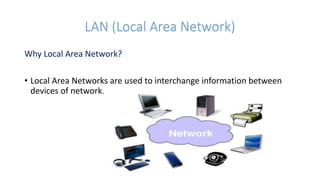
LAN (Local Area Network)
Why Local Area Network?
• Local Area Networks are used to interchange information between
devices of network.
INTRODUCTION
• Most commonly used network type
• Nodes are connected using cables
• Covers small areas
-Office
-laboratory
-Building or group of building
• very fast data rate(speed 10Mbps -1000Mbps)
• limited number of node can be attached
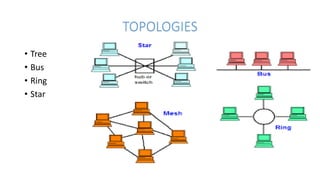
TOPOLOGIES
• Tree
• Bus
• Ring
• Star
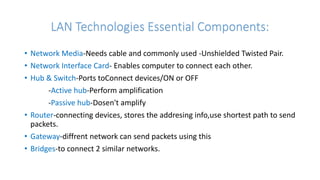
LAN Technologies Essential Components:
• Network Media-Needs cable and commonly used -Unshielded Twisted Pair.
• Network Interface Card- Enables computer to connect each other.
• Hub & Switch-Ports toConnect devices/ON or OFF
-Active hub-Perform amplification
-Passive hub-Dosen't amplify
• Router-connecting devices, stores the addresing info,use shortest path to send
packets.
• Gateway-diffrent network can send packets using this
• Bridges-to connect 2 similar networks.
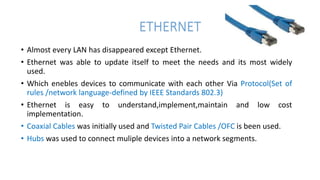
ETHERNET
• Almost every LAN has disappeared except Ethernet.
• Ethernet was able to update itself to meet the needs and its most widely
used.
• Which enebles devices to communicate with each other Via Protocol(Set of
rules /network language-defined by IEEE Standards 802.3)
• Ethernet is easy to understand,implement,maintain and low cost
implementation.
• Coaxial Cables was initially used and Twisted Pair Cables /OFC is been used.
• Hubs was used to connect muliple devices into a network segments.
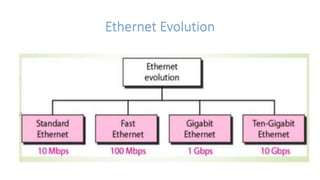
Ethernet Evolution
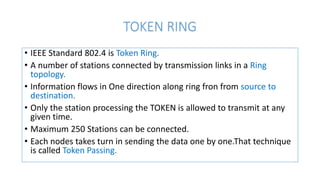
TOKEN RING
• IEEE Standard 802.4 is Token Ring.
• A number of stations connected by transmission links in a Ring
topology.
• Information flows in One direction along ring fron from source to
destination.
• Only the station processing the TOKEN is allowed to transmit at any
given time.
• Maximum 250 Stations can be connected.
• Each nodes takes turn in sending the data one by one.That technique
is called Token Passing.
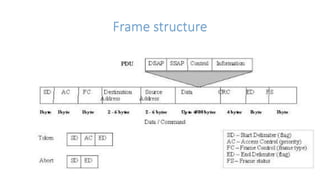
Frame structure
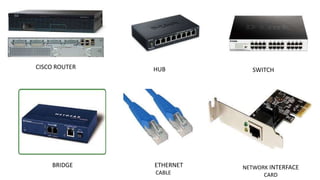
CISCO ROUTER HUB SWITCH
BRIDGE ETHERNET
CABLE
NETWORK INTERFACE
CARD
WAN (Wide Area Network)
Why Wide Area Network?
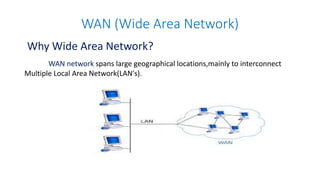
WAN network spans large geographical locations,mainly to interconnect
Multiple Local Area Network(LAN's).
INTRODUCTION
• WAN is a network that covers a broad area.
• Covers telecommunication network that links across
metropolitan,regional,or national boundries using private or public
network.
• Business and governemt entities utilize WANs
• To relay data among employees,clients,buyers and suppliers from
various locations.
• A WAN consists of two or more LAN's
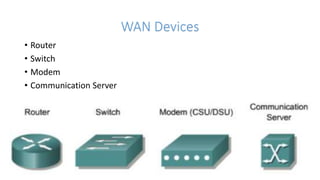
WAN Devices
• Router
• Switch
• Modem
• Communication Server
Connection Types
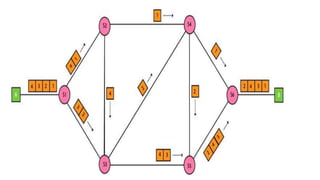
• Point-to-point technologies
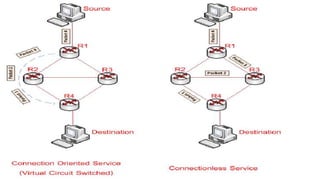
• Circuit-Switched technologies
• Packet-switched technologies
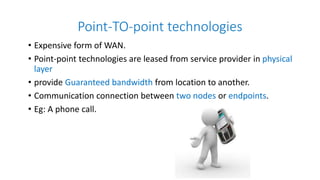
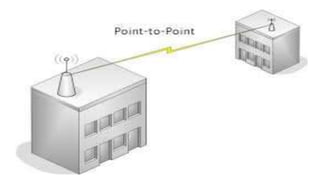
Point-TO-point technologies
• Expensive form of WAN.
• Point-point technologies are leased from service provider in physical
layer
• provide Guaranteed bandwidth from location to another.
• Communication connection between two nodes or endpoints.
• Eg: A phone call.
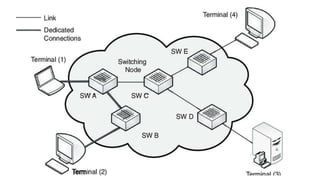
Circuit Switched
• This technology require call setup to ocour before information
transfer
• The session is torn down once the transmission is complete
• Circuit lines are low in speed compared to point-point lines.
• Number of nodes/endpoint are linked with a network if
interconnected switches.
• Unused bandwidth cannot be used by
by another network
• Eg :Dail up call
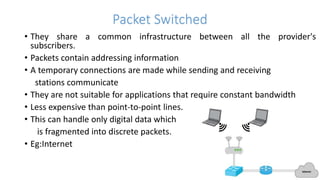
Packet Switched
• They share a common infrastructure between all the provider's
subscribers.
• Packets contain addressing information
• A temporary connections are made while sending and receiving
stations communicate
• They are not suitable for applications that require constant bandwidth
• Less expensive than point-to-point lines.
• This can handle only digital data which
is fragmented into discrete packets.
• Eg:Internet
Lan and wan technology

Lan and wan technology

  • 3.
    LAN (Local AreaNetwork) Why Local Area Network? • Local Area Networks are used to interchange information between devices of network.
  • 4.
    INTRODUCTION • Most commonlyused network type • Nodes are connected using cables • Covers small areas -Office -laboratory -Building or group of building • very fast data rate(speed 10Mbps -1000Mbps) • limited number of node can be attached
  • 5.
  • 6.
    LAN Technologies EssentialComponents: • Network Media-Needs cable and commonly used -Unshielded Twisted Pair. • Network Interface Card- Enables computer to connect each other. • Hub & Switch-Ports toConnect devices/ON or OFF -Active hub-Perform amplification -Passive hub-Dosen't amplify • Router-connecting devices, stores the addresing info,use shortest path to send packets. • Gateway-diffrent network can send packets using this • Bridges-to connect 2 similar networks.
  • 7.
    ETHERNET • Almost everyLAN has disappeared except Ethernet. • Ethernet was able to update itself to meet the needs and its most widely used. • Which enebles devices to communicate with each other Via Protocol(Set of rules /network language-defined by IEEE Standards 802.3) • Ethernet is easy to understand,implement,maintain and low cost implementation. • Coaxial Cables was initially used and Twisted Pair Cables /OFC is been used. • Hubs was used to connect muliple devices into a network segments.
  • 8.
  • 9.
    TOKEN RING • IEEEStandard 802.4 is Token Ring. • A number of stations connected by transmission links in a Ring topology. • Information flows in One direction along ring fron from source to destination. • Only the station processing the TOKEN is allowed to transmit at any given time. • Maximum 250 Stations can be connected. • Each nodes takes turn in sending the data one by one.That technique is called Token Passing.
  • 10.
  • 11.
    CISCO ROUTER HUBSWITCH BRIDGE ETHERNET CABLE NETWORK INTERFACE CARD
  • 12.
    WAN (Wide AreaNetwork) Why Wide Area Network? WAN network spans large geographical locations,mainly to interconnect Multiple Local Area Network(LAN's).
  • 13.
    INTRODUCTION • WAN isa network that covers a broad area. • Covers telecommunication network that links across metropolitan,regional,or national boundries using private or public network. • Business and governemt entities utilize WANs • To relay data among employees,clients,buyers and suppliers from various locations. • A WAN consists of two or more LAN's
  • 14.
    WAN Devices • Router •Switch • Modem • Communication Server
  • 15.
    Connection Types • Point-to-pointtechnologies • Circuit-Switched technologies • Packet-switched technologies
  • 16.
    Point-TO-point technologies • Expensiveform of WAN. • Point-point technologies are leased from service provider in physical layer • provide Guaranteed bandwidth from location to another. • Communication connection between two nodes or endpoints. • Eg: A phone call.
  • 18.
    Circuit Switched • Thistechnology require call setup to ocour before information transfer • The session is torn down once the transmission is complete • Circuit lines are low in speed compared to point-point lines. • Number of nodes/endpoint are linked with a network if interconnected switches. • Unused bandwidth cannot be used by by another network • Eg :Dail up call
  • 20.
    Packet Switched • Theyshare a common infrastructure between all the provider's subscribers. • Packets contain addressing information • A temporary connections are made while sending and receiving stations communicate • They are not suitable for applications that require constant bandwidth • Less expensive than point-to-point lines. • This can handle only digital data which is fragmented into discrete packets. • Eg:Internet