Lab Safety
General Safety Rules
1. Listen to or read instructions
carefully before attempting to do
anything.
2. Wear safety goggles to protect
your eyes from chemicals, heated
materials, or things that might be
able to shatter.
3. Notify your teacher if any spills or
accidents occur.
General Safety Rules
4. After handling chemicals, always
wash your hands with soap and
water.
5. During lab work, keep your hands
away from your face.
6. Tie back long hair.
General Safety Rules
7. Roll up loose sleeves.
8. Know the location of the fire
extinguisher, fire blanket, eyewash
station, and first aid kit.
9. Keep your work area uncluttered. Take
to the lab station only what is
necessary.
General Safety Rules
10. It is suggested that you wear
glasses rather than contact lenses.
11. Never put anything into your mouth
during a lab experiment.
12. Clean up your lab area at the
conclusion of the laboratory period.
13. Never “horse around” or play
practical jokes in the laboratory.
Chemical Safety
1. Wear protective goggles and a lab
apron whenever heating or pouring
hazardous chemicals.
2. Never mix chemicals together unless
you are told to do so (and then only in
the manner specified).
3. Never taste any chemicals (you should
never taste anything in the lab).
Chemical Safety
4. If you need to smell the odor of a
chemical, waft the fumes toward
your nose with one hand. Do not
put your nose over the container
and inhale the fumes.
5. Never pour water into a
concentrated acid. Acid
should be poured slowly into water.
Chemical Safety
6. Follow the instructions of your
teacher when disposing of all
chemicals.
7. Wash your hands after handling
hazardous chemicals.
Electrical Safety
1. Lay electrical cords where no
one can trip on them or get
caught in them.
2. Be sure your hands and your lab
area are dry before using
electrical equipment.
3. Never poke anything into
electrical outlets.
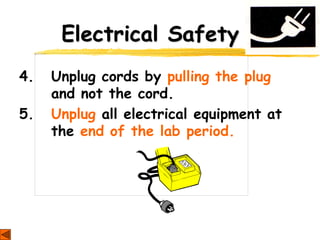
Electrical Safety
4. Unplug cords by pulling the plug
and not the cord.
5. Unplug all electrical equipment at
the end of the lab period.
Heating Safety
1. Let burners and hotplates cool
down before touching them. Test
to see if they are cool enough by
bringing the back of your hand
close to them.
2. Use tongs and/or protective gloves
to handle hot objects.
3. Never reach across an open flame
or burner.
First Aid
Injury: Burns
What To Do: Immediately flush with
cold water until burning
sensation is lessened.
First Aid
Injury: Cuts, bruises
What To Do: Do not touch an open wound
without safety gloves.
Pressing directly on minor
cuts will stop bleeding in a
few minutes. Apply cold
compress to bruises to
reduce swelling.
First Aid
Injury: Fainting
To Do: Provide fresh air and have the
person recline so that their
head is lower than the rest of
their body.
First Aid
Injury: Eyes
What To Do: Flush eyes immediately
with plenty of water for
several minutes. If a
foreign object is lodged in
the eye, do not allow the
eye to be rubbed.
First Aid
Injury: Poisoning
What To Do: Find out what substance
was responsible for the
poisoning and alert the
teacher immediately.
First Aid
Injury: Spills on the skin
What To Do: Flush with large
quantities of water. For
acid spills, apply baking
soda solution. For base
spills, apply vinegar or
boric acid.
First Aid
Injury: Electrical shock
What To Do: Shut off the current at
the source. Remove wire
with rubber gloves. Alert
the teacher immediately.
For Your Class
Before each lab I will remind you
All of the safety rules that pertain to the lab
that you will be carrying out
Other rules that may apply throughout the
lab.

Lab safety power point.pptm

  • 1.
  • 2.
    General Safety Rules 1.Listen to or read instructions carefully before attempting to do anything. 2. Wear safety goggles to protect your eyes from chemicals, heated materials, or things that might be able to shatter. 3. Notify your teacher if any spills or accidents occur.
  • 3.
    General Safety Rules 4.After handling chemicals, always wash your hands with soap and water. 5. During lab work, keep your hands away from your face. 6. Tie back long hair.
  • 4.
    General Safety Rules 7.Roll up loose sleeves. 8. Know the location of the fire extinguisher, fire blanket, eyewash station, and first aid kit. 9. Keep your work area uncluttered. Take to the lab station only what is necessary.
  • 5.
    General Safety Rules 10.It is suggested that you wear glasses rather than contact lenses. 11. Never put anything into your mouth during a lab experiment. 12. Clean up your lab area at the conclusion of the laboratory period. 13. Never “horse around” or play practical jokes in the laboratory.
  • 6.
    Chemical Safety 1. Wearprotective goggles and a lab apron whenever heating or pouring hazardous chemicals. 2. Never mix chemicals together unless you are told to do so (and then only in the manner specified). 3. Never taste any chemicals (you should never taste anything in the lab).
  • 7.
    Chemical Safety 4. Ifyou need to smell the odor of a chemical, waft the fumes toward your nose with one hand. Do not put your nose over the container and inhale the fumes. 5. Never pour water into a concentrated acid. Acid should be poured slowly into water.
  • 8.
    Chemical Safety 6. Followthe instructions of your teacher when disposing of all chemicals. 7. Wash your hands after handling hazardous chemicals.
  • 9.
    Electrical Safety 1. Layelectrical cords where no one can trip on them or get caught in them. 2. Be sure your hands and your lab area are dry before using electrical equipment. 3. Never poke anything into electrical outlets.
  • 10.
    Electrical Safety 4. Unplugcords by pulling the plug and not the cord. 5. Unplug all electrical equipment at the end of the lab period.
  • 11.
    Heating Safety 1. Letburners and hotplates cool down before touching them. Test to see if they are cool enough by bringing the back of your hand close to them. 2. Use tongs and/or protective gloves to handle hot objects. 3. Never reach across an open flame or burner.
  • 12.
    First Aid Injury: Burns WhatTo Do: Immediately flush with cold water until burning sensation is lessened.
  • 13.
    First Aid Injury: Cuts,bruises What To Do: Do not touch an open wound without safety gloves. Pressing directly on minor cuts will stop bleeding in a few minutes. Apply cold compress to bruises to reduce swelling.
  • 14.
    First Aid Injury: Fainting ToDo: Provide fresh air and have the person recline so that their head is lower than the rest of their body.
  • 15.
    First Aid Injury: Eyes WhatTo Do: Flush eyes immediately with plenty of water for several minutes. If a foreign object is lodged in the eye, do not allow the eye to be rubbed.
  • 16.
    First Aid Injury: Poisoning WhatTo Do: Find out what substance was responsible for the poisoning and alert the teacher immediately.
  • 17.
    First Aid Injury: Spillson the skin What To Do: Flush with large quantities of water. For acid spills, apply baking soda solution. For base spills, apply vinegar or boric acid.
  • 18.
    First Aid Injury: Electricalshock What To Do: Shut off the current at the source. Remove wire with rubber gloves. Alert the teacher immediately.
  • 19.
    For Your Class Beforeeach lab I will remind you All of the safety rules that pertain to the lab that you will be carrying out Other rules that may apply throughout the lab.