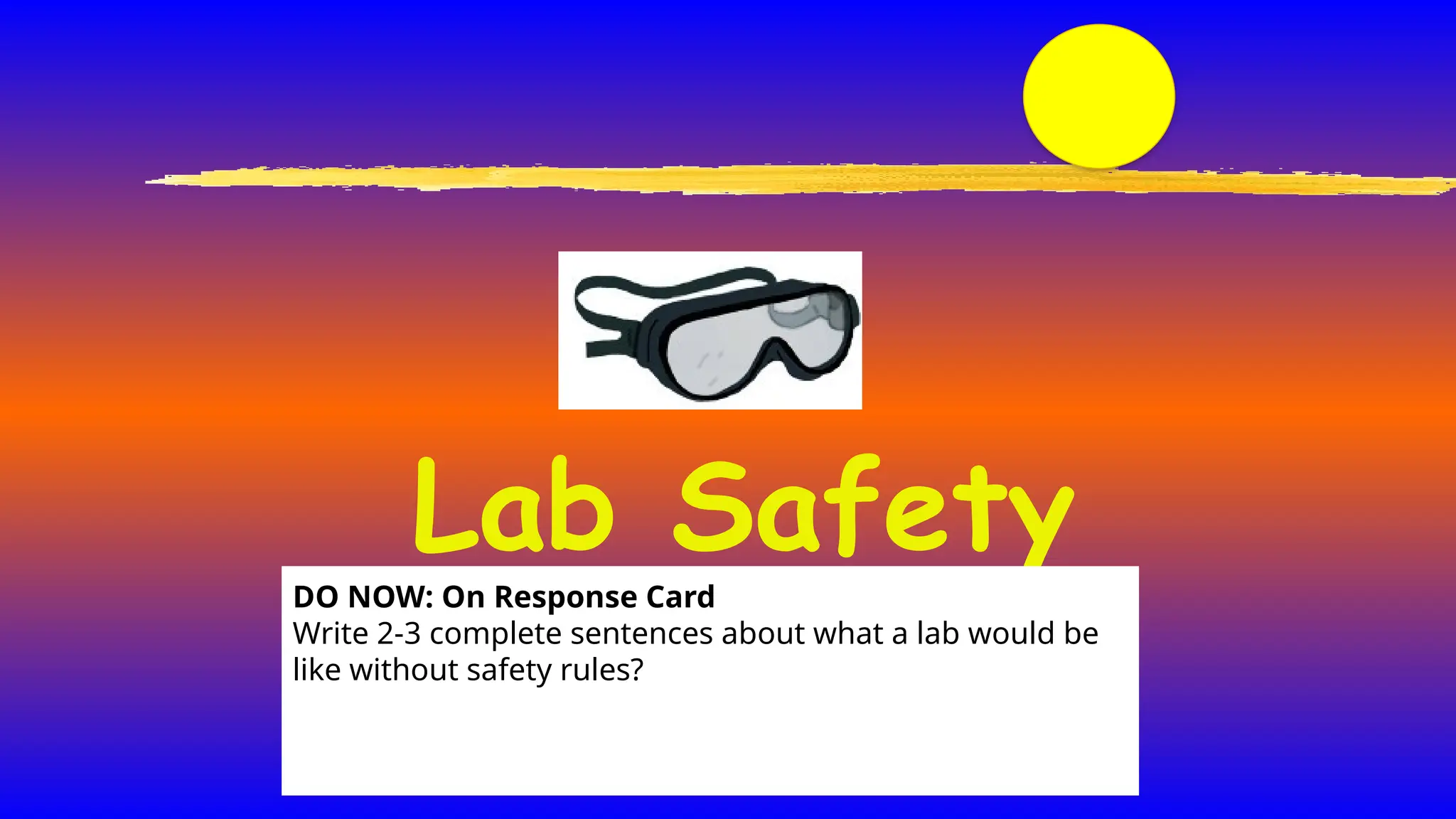
Lab Safety
DO NOW: On Response Card
Write 2-3 complete sentences about what a lab would be
like without safety rules?
Students will demonstrate safe practices during laboratory and field
investigations, including the appropriate use of safety showers, eyewash
fountains, safety goggles, and fire extinguishers.
Learning Objective
General Safety Rules
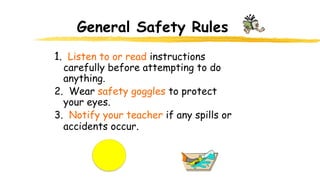
1. Listen to or read instructions
carefully before attempting to do
anything.
2. Wear safety goggles to protect
your eyes.
3. Notify your teacher if any spills or
accidents occur.
General Safety Rules
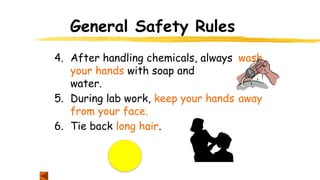
4. After handling chemicals, always wash
your hands with soap and
water.
5. During lab work, keep your hands away
from your face.
6. Tie back long hair.
Choral Response: Who do you notify if an accident
occurs?
True
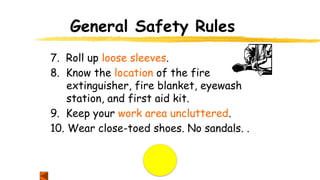
General Safety Rules
7. Roll up loose sleeves.
8. Know the location of the fire
extinguisher, fire blanket, eyewash
station, and first aid kit.
9. Keep your work area uncluttered.
10. Wear close-toed shoes. No sandals. .
Think Pair Share: Know the location of the
fire extinguisher, fire blanket, eyewash
station, and first aid kit.
Discuss with a partner next to you where are these
located in the classroom.
General Safety Rules
10. It is suggested that you wear
glasses rather than contact lenses.
Notify your teacher if you wear contact
lenses.
11. Never put anything into your mouth
during a lab experiment.
12. Clean up your lab area at the
conclusion of the laboratory
period.
13. Never “horse around” or play
practical jokes in the laboratory.
Glassware Safety
1. Chipped or cracked glassware should
not be used. Show it to the teacher.
2. Broken glassware should not be
disposed of in a classroom trash can.
There is a special glass disposal
container for it.
3. If a piece of glassware gets broken, do not try
to clean it up by yourself. Notify the teacher.
Glassware Safety
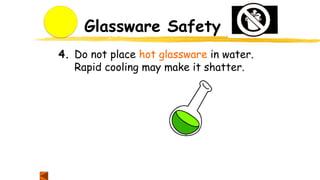
4. Do not place hot glassware in water.
Rapid cooling may make it shatter.
Modified Whip Around:
Why would you need to notify the teacher if you wear
contact lenses? (Hint: Glasses are recommended over
contact lenses)
False
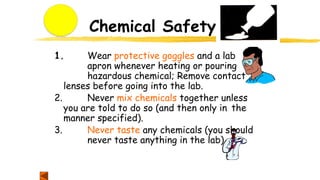
Chemical Safety
1. Wear protective goggles and a lab
apron whenever heating or pouring
hazardous chemical; Remove contact
lenses before going into the lab.
2. Never mix chemicals together unless
you are told to do so (and then only in the
manner specified).
3. Never taste any chemicals (you should
never taste anything in the lab).
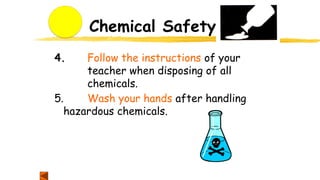
Chemical Safety
4. Follow the instructions of your
teacher when disposing of all
chemicals.
5. Wash your hands after handling
hazardous chemicals.
Is this statement true or false? You should wash your
hands when you touch chemicals.
True False
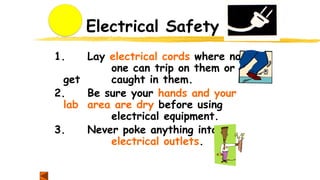
Electrical Safety
1. Lay electrical cords where no
one can trip on them or
get caught in them.
2. Be sure your hands and your
lab area are dry before using
electrical equipment.
3. Never poke anything into
electrical outlets.
Electrical Safety
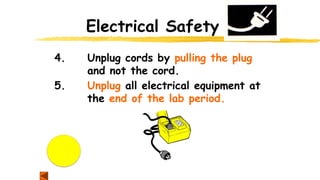
4. Unplug cords by pulling the plug
and not the cord.
5. Unplug all electrical equipment at
the end of the lab period.
Is this statement true or false? You should leave
everything plugged in when you leave the Laboratory.
True False
Heating Safety
1. Let burners and hotplates cool
down before touching them. Test
to see if they are cool enough by
bringing the back of your hand
close to them.
2. Use tongs and/or protective
gloves to handle hot objects.
3. Never reach across an open
flame or burner.
Heating Safety
4. Always point the top ends of test tubes that are
being heated away from people.
5. When heating a test tube, move it around
slowly over the flame to distribute the heat
evenly.
6. If a fire erupts, notify your instructor
immediately.
First Aid
● For any type of injury, immediately
notify your instructor.
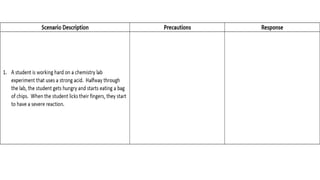
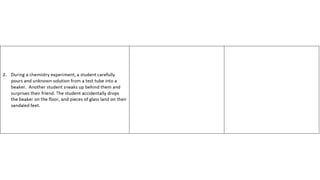
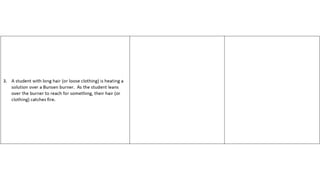
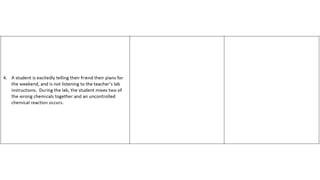
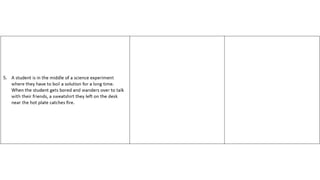
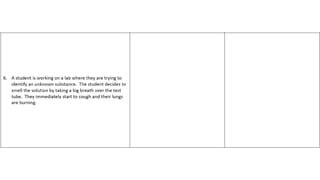
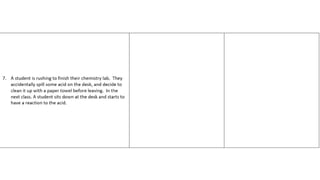
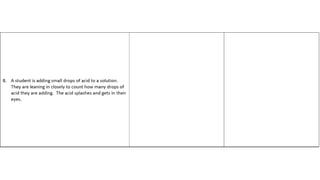
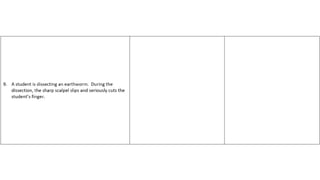
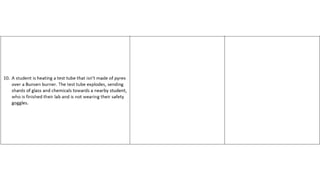
Lab Scenarios
As a group, identify what is wrong and discuss
how you would approach each scenario.
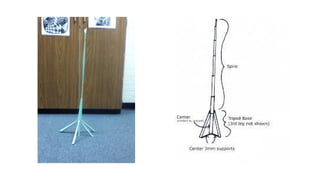
STEM CHALLENGE: Paper Tower
This activity will test your ability to problem solve and
communicate as a team.
You will have:
-3 pieces of paper
-tape/ Stapler/ Scissors
Your challenge: Build the tallest structure (can stand on
the floor)
• Extra consideration given for creativity and stability
Lab Safety for students in practice PowerPoint.pptx

Lab Safety for students in practice PowerPoint.pptx

  • 1.
    Lab Safety DO NOW:On Response Card Write 2-3 complete sentences about what a lab would be like without safety rules?
  • 2.
    Students will demonstratesafe practices during laboratory and field investigations, including the appropriate use of safety showers, eyewash fountains, safety goggles, and fire extinguishers. Learning Objective
  • 3.
    General Safety Rules 1.Listen to or read instructions carefully before attempting to do anything. 2. Wear safety goggles to protect your eyes. 3. Notify your teacher if any spills or accidents occur.
  • 4.
    General Safety Rules 4.After handling chemicals, always wash your hands with soap and water. 5. During lab work, keep your hands away from your face. 6. Tie back long hair.
  • 5.
    Choral Response: Whodo you notify if an accident occurs? True
  • 6.
    General Safety Rules 7.Roll up loose sleeves. 8. Know the location of the fire extinguisher, fire blanket, eyewash station, and first aid kit. 9. Keep your work area uncluttered. 10. Wear close-toed shoes. No sandals. .
  • 7.
    Think Pair Share:Know the location of the fire extinguisher, fire blanket, eyewash station, and first aid kit. Discuss with a partner next to you where are these located in the classroom.
  • 8.
    General Safety Rules 10.It is suggested that you wear glasses rather than contact lenses. Notify your teacher if you wear contact lenses. 11. Never put anything into your mouth during a lab experiment. 12. Clean up your lab area at the conclusion of the laboratory period. 13. Never “horse around” or play practical jokes in the laboratory.
  • 9.
    Glassware Safety 1. Chippedor cracked glassware should not be used. Show it to the teacher. 2. Broken glassware should not be disposed of in a classroom trash can. There is a special glass disposal container for it. 3. If a piece of glassware gets broken, do not try to clean it up by yourself. Notify the teacher.
  • 10.
    Glassware Safety 4. Donot place hot glassware in water. Rapid cooling may make it shatter.
  • 11.
    Modified Whip Around: Whywould you need to notify the teacher if you wear contact lenses? (Hint: Glasses are recommended over contact lenses) False
  • 12.
    Chemical Safety 1. Wearprotective goggles and a lab apron whenever heating or pouring hazardous chemical; Remove contact lenses before going into the lab. 2. Never mix chemicals together unless you are told to do so (and then only in the manner specified). 3. Never taste any chemicals (you should never taste anything in the lab).
  • 13.
    Chemical Safety 4. Followthe instructions of your teacher when disposing of all chemicals. 5. Wash your hands after handling hazardous chemicals.
  • 14.
    Is this statementtrue or false? You should wash your hands when you touch chemicals. True False
  • 15.
    Electrical Safety 1. Layelectrical cords where no one can trip on them or get caught in them. 2. Be sure your hands and your lab area are dry before using electrical equipment. 3. Never poke anything into electrical outlets.
  • 16.
    Electrical Safety 4. Unplugcords by pulling the plug and not the cord. 5. Unplug all electrical equipment at the end of the lab period.
  • 17.
    Is this statementtrue or false? You should leave everything plugged in when you leave the Laboratory. True False
  • 18.
    Heating Safety 1. Letburners and hotplates cool down before touching them. Test to see if they are cool enough by bringing the back of your hand close to them. 2. Use tongs and/or protective gloves to handle hot objects. 3. Never reach across an open flame or burner.
  • 19.
    Heating Safety 4. Alwayspoint the top ends of test tubes that are being heated away from people. 5. When heating a test tube, move it around slowly over the flame to distribute the heat evenly. 6. If a fire erupts, notify your instructor immediately.
  • 20.
    First Aid ● Forany type of injury, immediately notify your instructor.
  • 21.
    Lab Scenarios As agroup, identify what is wrong and discuss how you would approach each scenario.
  • 32.
    STEM CHALLENGE: PaperTower This activity will test your ability to problem solve and communicate as a team. You will have: -3 pieces of paper -tape/ Stapler/ Scissors Your challenge: Build the tallest structure (can stand on the floor) • Extra consideration given for creativity and stability

Editor's Notes

  • #5  T: “Everyone stand up…” ** wait for everyone to stand *** T: “If you think the answer is false, sit.” ** wait for people to sit*** T: “If you think the answer is true, sit.” call on a student to explain why they picked their answer
  • #7  T: “Everyone stand up…” ** wait for everyone to stand *** T: “If you think the answer is false, sit.” ** wait for people to sit*** T: “If you think the answer is true, sit.” call on a student to explain why they picked their answer
  • #11 T: “We will have a check for understanding on this questions. On the count of 3 we will hold up fingers for which answer we think is correct.If you think the answer is false, hold up 1 finger. “If you think the answer is true, hold up 2 fingers.” call on a student to explain why they picked their answer
  • #14 T: “We will have a check for understanding on this questions. On the count of 3 we will hold up fingers for which answer we think is correct.If you think the answer is false, hold up 1 finger. “If you think the answer is true, hold up 2 fingers.” call on a student to explain why they picked their answer
  • #17 T: “We will have a check for understanding on this questions. On the count of 3 we will hold up fingers for which answer we think is correct.If you think the answer is false, hold up 1 finger. “If you think the answer is true, hold up 2 fingers.” call on a student to explain why they picked their answer