Laboratory Manual
General Chemistry
Chem 101
Chemistry Laboratory
Safety Rules
In home, kitchen and bathroom are the sites of
accidents.
Also,
To avoid that we must some
instructions
Listen to or read instructions
carefully before attempting to do
anything.
General Policies
•Each student is expected to
attend each laboratory session and
to be in the laboratory on time.
Those students, who come early,
should wait inside the laboratory
but never gather in the corridors.
Remember that the lab is a place for
serious work!
Careless behavior may endanger yourself
and others and will not be tolerated!
Don’t work alone in the lab
• In case of a
problem, you may
need another
person to prevent
injury or even
save your life!
• Each student must wear a clean, ironed and buttoned up
laboratory coat to protect good clothing
Protect Your Eyes
• Appropriate eye protection
must be worn at all times!
Wear appropriate protective
clothing
• Your clothing should cover your legs
to the knees – shorts are not
appropriate for the laboratory
• Loose clothing should not be worn
because it may dip into chemicals or
fall into a flame and catch fire
Wear shoes that cover your feet.
• Sandals and open-toed
shoes do not protect
your feet from broken
glass that is frequently
found in the lab
• Also, leather shoes
protect your feet from
chemical spills
Do not eat, or drink in the lab.
• These activities are ways by which you
can accidentally ingest harmful
chemicals
Do not taste any chemical!
Do not smell any chemicals directly!
• If absoluteley
necessary to
smell, use your
hand to fan the
vapor to your
nose.
• After handling chemicals, always wash
your hands with soap and water.
• During lab work, keep your hands away
from your face.
• Tie back long hair.
• Roll up loose sleeves.
It is suggested that you wear glasses
rather than contact lenses.
Notify your teacher if any spills or
accidents occur.
Clean up your lab area at the conclusion
of the laboratory period
Know the location of the fire extinguisher,
fire blanket, eyewash station, and first aid
kit.
Glassware Safety
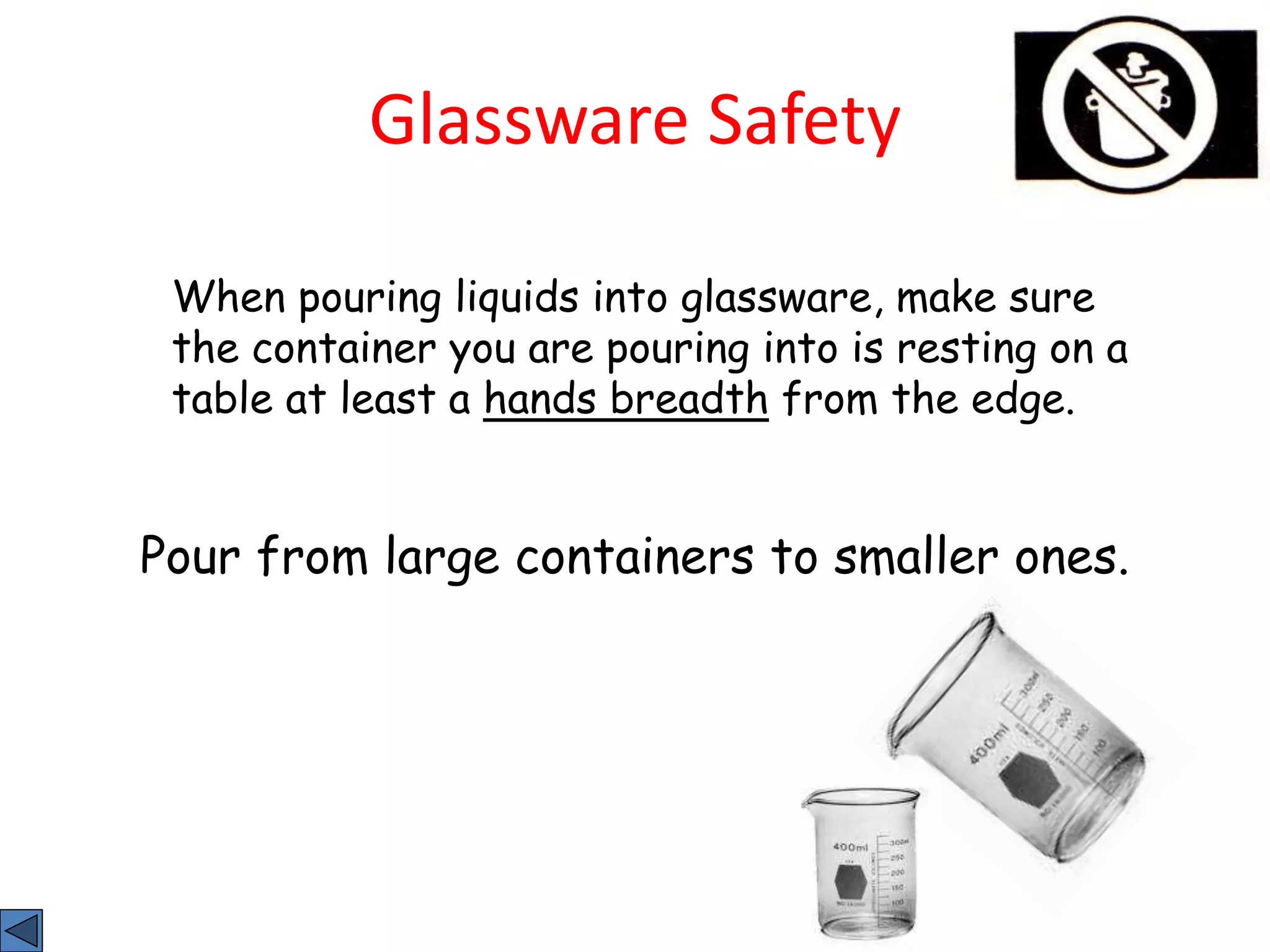
When pouring liquids into glassware, make sure
the container you are pouring into is resting on a
table at least a hands breadth from the edge.
Pour from large containers to smaller ones.
When inserting glass tubing into a rubber
stopper, apply a lubricant to the glass and use
a twisting motion.
Do not place hot glassware in water.
Rapid cooling may make it shatter.
Check glassware for stars or cracks.
Always ADD ACID to water
acid
water
“Do not spit into acid!” – a good phrase to
remember this rule.
Work with volatile chemicals under a fume
hood.
Heat test tubes at an angle, directing
the opening oppositely to you and
other people in the laboratory.
Handle hot glassware with gloves or beaker
tongs.
First light the match
THEN
Turn on the gas!
Do not pipet solutions by mouth!
• Use a rubber
suction bulb or
other device to
fill a pipet.
Wash your hands with soap and
water before leaving.
• This rule applies
even if you have
been wearing
gloves!
Know the hazards of the materials being
used.
• Read and reread labels carefully to make
sure that you are using the right
chemical.
Hazard Warning Symbols
Know how to dispose of waste
• Dispose of all waste materials according
to your instructional
? ? ? ?
Know the safety equipment
• Eye wash fountain
• Safety shower
• Fire extinguisher
• Emergency exits
Know how to use the safety equipment
• Eye wash Fountain
• Safety Shower
• Fire extinguisher
• Emergency Exit
First Aid
Injury: Burns
To do: Immediately flush with cold water
until burning sensation is lessened.
First Aid
Injury: Cuts, bruises
To do: Do not touch an open wound
without safety gloves. Pressing
directly on minor cuts will stop
bleeding in a few minutes. Apply cold
compress to bruises to reduce
swelling.
First Aid
Injury: Fainting
To do: Provide fresh air and have the
person recline so that their head is
lower than the rest of their body.
First Aid
Injury: The eyes
To do: Flush eyes immediately with
plenty of water for several minutes. If a
foreign object is lodged in the eye, do
not allow the eye to be rubbed.
First Aid
Injury: Poisoning
To do: Find out what substance was
responsible for the poisoning and alert
the teacher immediately.
First Aid
Injury: Spills on the skin
To do: Flush with large quantities of
water. For acid spills apply baking
soda solution. For base spills apply
vinegar or boric acid.
First Aid
Injury: Electrical shock
To do: Shut off the current at the source.
Remove wire with rubber gloves. Alert
the teacher immediately.
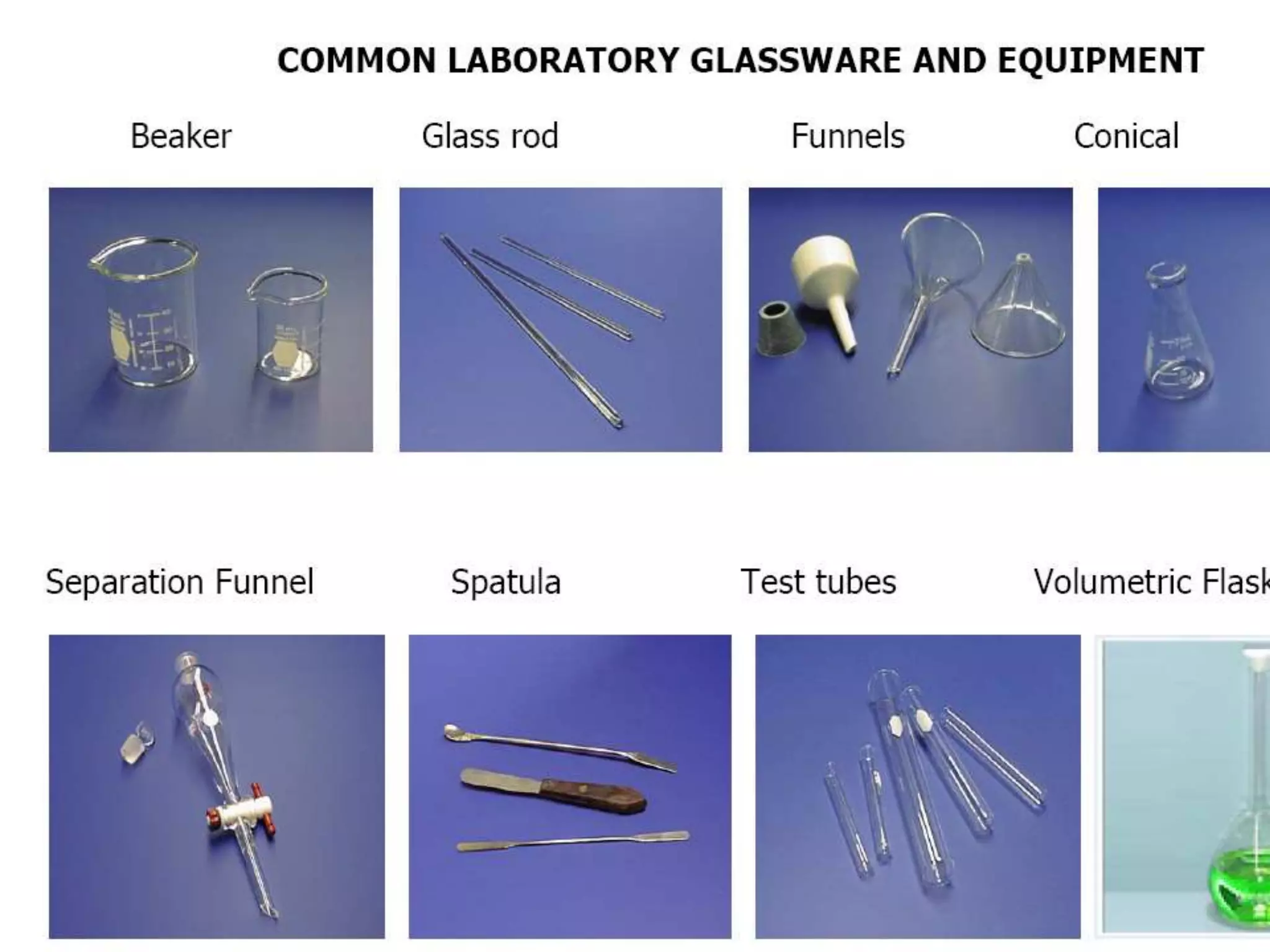
Condensers
Buchner Funnels
Hirsch Funnels
Distillation head
Adaptor Mantle

1-lab safety ..ppt

  • 1.
  • 2.
  • 3.
    In home, kitchenand bathroom are the sites of accidents. Also,
  • 4.
    To avoid thatwe must some instructions Listen to or read instructions carefully before attempting to do anything.
  • 5.
    General Policies •Each studentis expected to attend each laboratory session and to be in the laboratory on time. Those students, who come early, should wait inside the laboratory but never gather in the corridors.
  • 6.
    Remember that thelab is a place for serious work! Careless behavior may endanger yourself and others and will not be tolerated!
  • 7.
    Don’t work alonein the lab • In case of a problem, you may need another person to prevent injury or even save your life!
  • 8.
    • Each studentmust wear a clean, ironed and buttoned up laboratory coat to protect good clothing Protect Your Eyes • Appropriate eye protection must be worn at all times! Wear appropriate protective clothing • Your clothing should cover your legs to the knees – shorts are not appropriate for the laboratory • Loose clothing should not be worn because it may dip into chemicals or fall into a flame and catch fire
  • 9.
    Wear shoes thatcover your feet. • Sandals and open-toed shoes do not protect your feet from broken glass that is frequently found in the lab • Also, leather shoes protect your feet from chemical spills
  • 10.
    Do not eat,or drink in the lab. • These activities are ways by which you can accidentally ingest harmful chemicals
  • 11.
    Do not tasteany chemical!
  • 12.
    Do not smellany chemicals directly! • If absoluteley necessary to smell, use your hand to fan the vapor to your nose.
  • 13.
    • After handlingchemicals, always wash your hands with soap and water. • During lab work, keep your hands away from your face. • Tie back long hair. • Roll up loose sleeves.
  • 14.
    It is suggestedthat you wear glasses rather than contact lenses. Notify your teacher if any spills or accidents occur. Clean up your lab area at the conclusion of the laboratory period
  • 15.
    Know the locationof the fire extinguisher, fire blanket, eyewash station, and first aid kit.
  • 16.
    Glassware Safety When pouringliquids into glassware, make sure the container you are pouring into is resting on a table at least a hands breadth from the edge. Pour from large containers to smaller ones.
  • 17.
    When inserting glasstubing into a rubber stopper, apply a lubricant to the glass and use a twisting motion. Do not place hot glassware in water. Rapid cooling may make it shatter. Check glassware for stars or cracks.
  • 18.
    Always ADD ACIDto water acid water “Do not spit into acid!” – a good phrase to remember this rule.
  • 19.
    Work with volatilechemicals under a fume hood.
  • 20.
    Heat test tubesat an angle, directing the opening oppositely to you and other people in the laboratory.
  • 21.
    Handle hot glasswarewith gloves or beaker tongs.
  • 22.
    First light thematch THEN Turn on the gas!
  • 23.
    Do not pipetsolutions by mouth! • Use a rubber suction bulb or other device to fill a pipet.
  • 24.
    Wash your handswith soap and water before leaving. • This rule applies even if you have been wearing gloves!
  • 25.
    Know the hazardsof the materials being used. • Read and reread labels carefully to make sure that you are using the right chemical.
  • 26.
  • 27.
    Know how todispose of waste • Dispose of all waste materials according to your instructional ? ? ? ?
  • 28.
    Know the safetyequipment • Eye wash fountain • Safety shower • Fire extinguisher • Emergency exits
  • 29.
    Know how touse the safety equipment • Eye wash Fountain • Safety Shower • Fire extinguisher • Emergency Exit
  • 30.
    First Aid Injury: Burns Todo: Immediately flush with cold water until burning sensation is lessened.
  • 31.
    First Aid Injury: Cuts,bruises To do: Do not touch an open wound without safety gloves. Pressing directly on minor cuts will stop bleeding in a few minutes. Apply cold compress to bruises to reduce swelling.
  • 32.
    First Aid Injury: Fainting Todo: Provide fresh air and have the person recline so that their head is lower than the rest of their body.
  • 33.
    First Aid Injury: Theeyes To do: Flush eyes immediately with plenty of water for several minutes. If a foreign object is lodged in the eye, do not allow the eye to be rubbed.
  • 34.
    First Aid Injury: Poisoning Todo: Find out what substance was responsible for the poisoning and alert the teacher immediately.
  • 35.
    First Aid Injury: Spillson the skin To do: Flush with large quantities of water. For acid spills apply baking soda solution. For base spills apply vinegar or boric acid.
  • 36.
    First Aid Injury: Electricalshock To do: Shut off the current at the source. Remove wire with rubber gloves. Alert the teacher immediately.
  • 39.