La voz pasiva 
ALEJANDRO SOTO BARRAGÁN
¿Cuando usamos la voz pasiva? 
O Nosotros utilizamos la voz activa para 
enfocar la accion del verbo en el sujeto. 
O Pero cuando queremos dar mas 
importancia a la accion y no a quien la ha 
realizado , utilizamos la pasiva. 
O Voz activa: He ate all of the cookies. 
O Voz pasiva: All of the cookies were eaten
O Tambien utilizamos la voz pasiva cuando 
no sabemos quien fue el que realizo la 
acción. 
Por ejemplo: 
A civilian has been killed. (Un civil ha sido 
asesinado.)
¿Cómo formamos la pasiva? 
O Se forma la voz pasiva con el verbo 
auxiliar "to be" y el participio pasado del 
verbo. 
O Estructura: Sujeto + verbo auxiliar ("to 
be") + participio pasado. 
Ejemplo: The speech is written for the 
president. (El discurso está escrito para el 
presidente.)
Formacion de la pasiva 
■Present simple 
-Tourists visit the castle ( Active) 
-The castle is visited by the tourists (Pasive) 
■Past Simple 
-Tourists visited the castle ( Active) 
-The castle was visited by the tourists (Pasive) 
■ Present Perfect 
-Tourists have visited the castle 
-The castle has been visited by the tourists
■Past Perfect Simple 
Tourists had visited the castle 
The castle had been visited by the tourists 
■ Future simple ( will) 
Tourists will visit the castle 
The castle will be visited by the tourists 
■ Going to 
The car is going to be washed 
The car is going to be being washed
■ Modals verbs 
The car (can, must, should) be washed 
The car (can, must ,should) be being 
washed
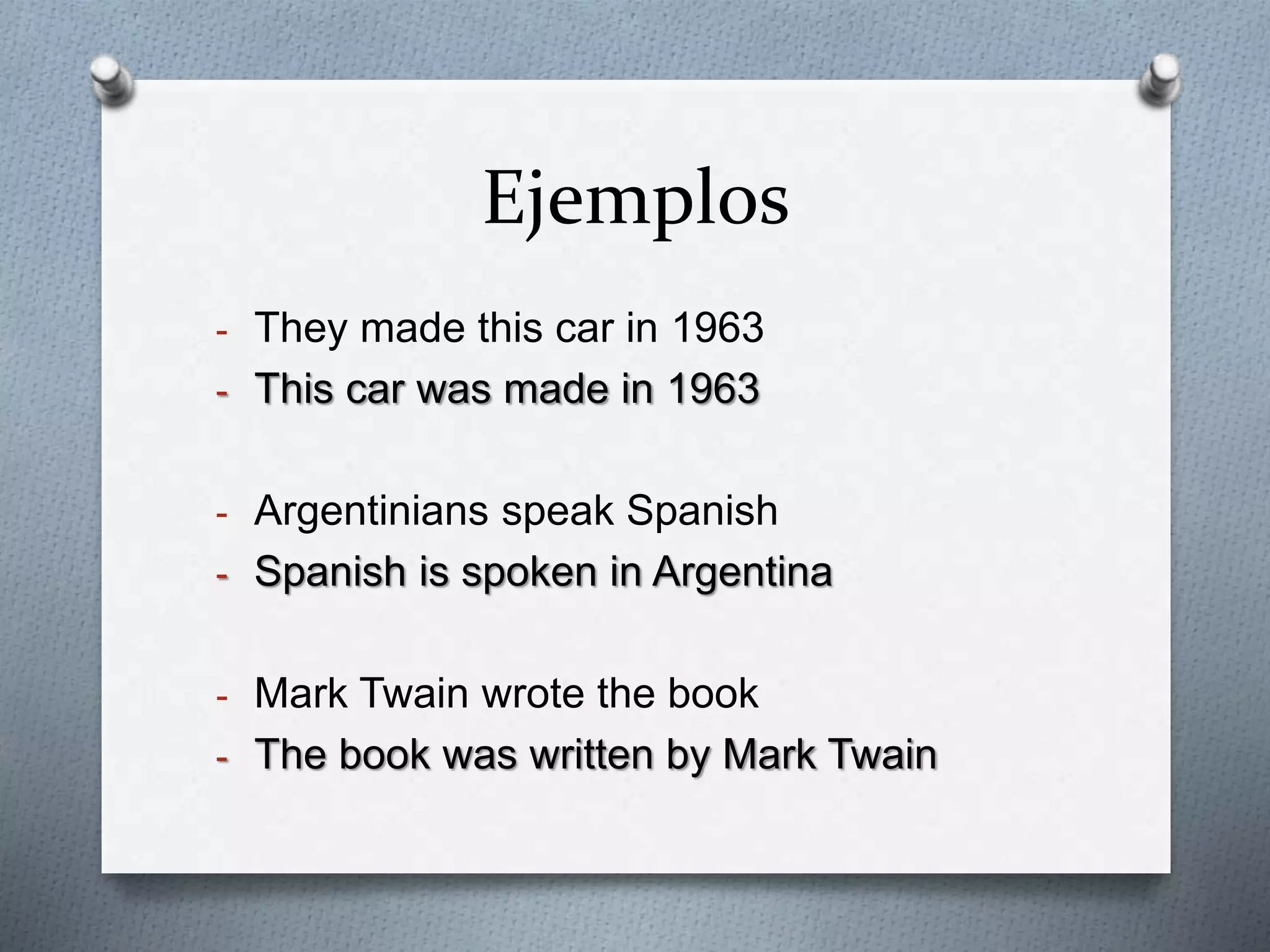
Ejemplos 
- They made this car in 1963 
- This car was made in 1963 
- Argentinians speak Spanish 
- Spanish is spoken in Argentina 
- Mark Twain wrote the book 
- The book was written by Mark Twain
- The housekeeper will clean the room 
- The room will be cleaned by the 
housekeeper 
- They say that women live longer than men 
- It is said that women live longer than 
men.

La voz pasiva

  • 1.
    La voz pasiva ALEJANDRO SOTO BARRAGÁN
  • 2.
    ¿Cuando usamos lavoz pasiva? O Nosotros utilizamos la voz activa para enfocar la accion del verbo en el sujeto. O Pero cuando queremos dar mas importancia a la accion y no a quien la ha realizado , utilizamos la pasiva. O Voz activa: He ate all of the cookies. O Voz pasiva: All of the cookies were eaten
  • 3.
    O Tambien utilizamosla voz pasiva cuando no sabemos quien fue el que realizo la acción. Por ejemplo: A civilian has been killed. (Un civil ha sido asesinado.)
  • 4.
    ¿Cómo formamos lapasiva? O Se forma la voz pasiva con el verbo auxiliar "to be" y el participio pasado del verbo. O Estructura: Sujeto + verbo auxiliar ("to be") + participio pasado. Ejemplo: The speech is written for the president. (El discurso está escrito para el presidente.)
  • 5.
    Formacion de lapasiva ■Present simple -Tourists visit the castle ( Active) -The castle is visited by the tourists (Pasive) ■Past Simple -Tourists visited the castle ( Active) -The castle was visited by the tourists (Pasive) ■ Present Perfect -Tourists have visited the castle -The castle has been visited by the tourists
  • 6.
    ■Past Perfect Simple Tourists had visited the castle The castle had been visited by the tourists ■ Future simple ( will) Tourists will visit the castle The castle will be visited by the tourists ■ Going to The car is going to be washed The car is going to be being washed
  • 7.
    ■ Modals verbs The car (can, must, should) be washed The car (can, must ,should) be being washed
  • 8.
    Ejemplos - Theymade this car in 1963 - This car was made in 1963 - Argentinians speak Spanish - Spanish is spoken in Argentina - Mark Twain wrote the book - The book was written by Mark Twain
  • 9.
    - The housekeeperwill clean the room - The room will be cleaned by the housekeeper - They say that women live longer than men - It is said that women live longer than men.