1
NUCLEIC ACIDS:
• Are biological molecules essential for known forms of life
on earth
• They include DNA and RNA
• Discovered by Friedrich Miescher in 1869
• They are named so because of their initial discovery in
nucleus
DNA stands for deoxyribose nucleic acid
This chemical substance is present in the nucleus
of all cells in all living organisms
DNA controls all the chemical changes which
take place in cells
The kind of cell which is formed is
controlled by DNA
The kind of organism which is produced is
controlled by DNA
DNA 2
DNA is a very large molecule made up of a long
chain of sub-units
The sub-units are called nucleotides
Each nucleotide is made up of
a sugar called(Pentose)
a phosphate group -PO4 and
an organic base
DNA molecule 3
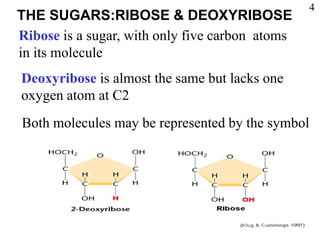
Ribose is a sugar, with only five carbon atoms
in its molecule
Deoxyribose is almost the same but lacks one
oxygen atom at C2
Both molecules may be represented by the symbol
THE SUGARS:RIBOSE & DEOXYRIBOSE
4
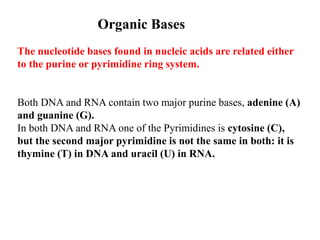
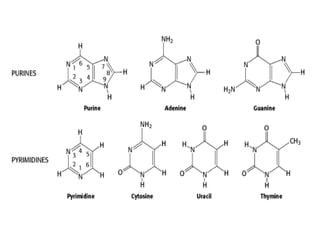
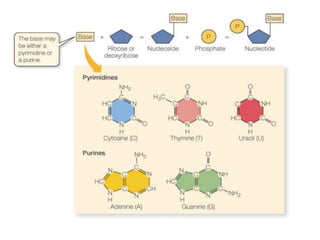
The nucleotide bases found in nucleic acids are related either
to the purine or pyrimidine ring system.
Both DNA and RNA contain two major purine bases, adenine (A)
and guanine (G).
In both DNA and RNA one of the Pyrimidines is cytosine (C),
but the second major pyrimidine is not the same in both: it is
thymine (T) in DNA and uracil (U) in RNA.
Organic Bases
ROLE OF PHOSPHODIESTER
LINKAGE
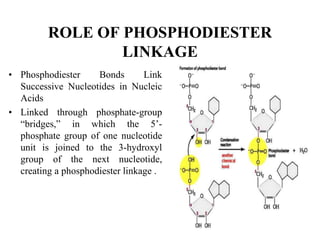
• Phosphodiester Bonds Link
Successive Nucleotides in Nucleic
Acids
• Linked through phosphate-group
“bridges,” in which the 5’-
phosphate group of one nucleotide
unit is joined to the 3-hydroxyl
group of the next nucleotide,
creating a phosphodiester linkage .
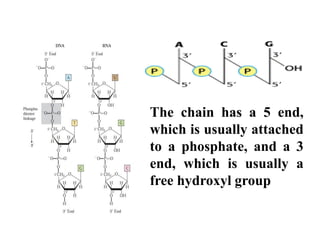
The chain has a 5 end,
which is usually attached
to a phosphate, and a 3
end, which is usually a
free hydroxyl group
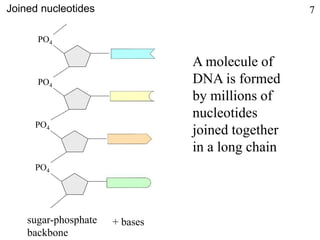
A molecule of
DNA is formed
by millions of
nucleotides
joined together
in a long chain
PO4
PO4
PO4
PO4
sugar-phosphate
backbone
+ bases
Joined nucleotides 7
PO4
PO4
PO4
PO4
PO4
PO4
PO4
PO4
PO4
PO4
PO4
PO4
PO4
PO4
PO4
PO4
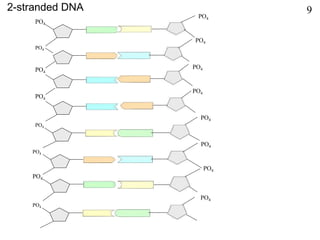
2-stranded DNA 9
PO4
PO4
PO4
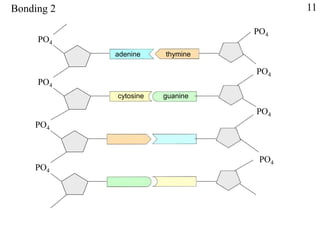
thymine
PO4
PO4
PO4
PO4
adenine
cytosine
PO4
guanine
Bonding 2 11
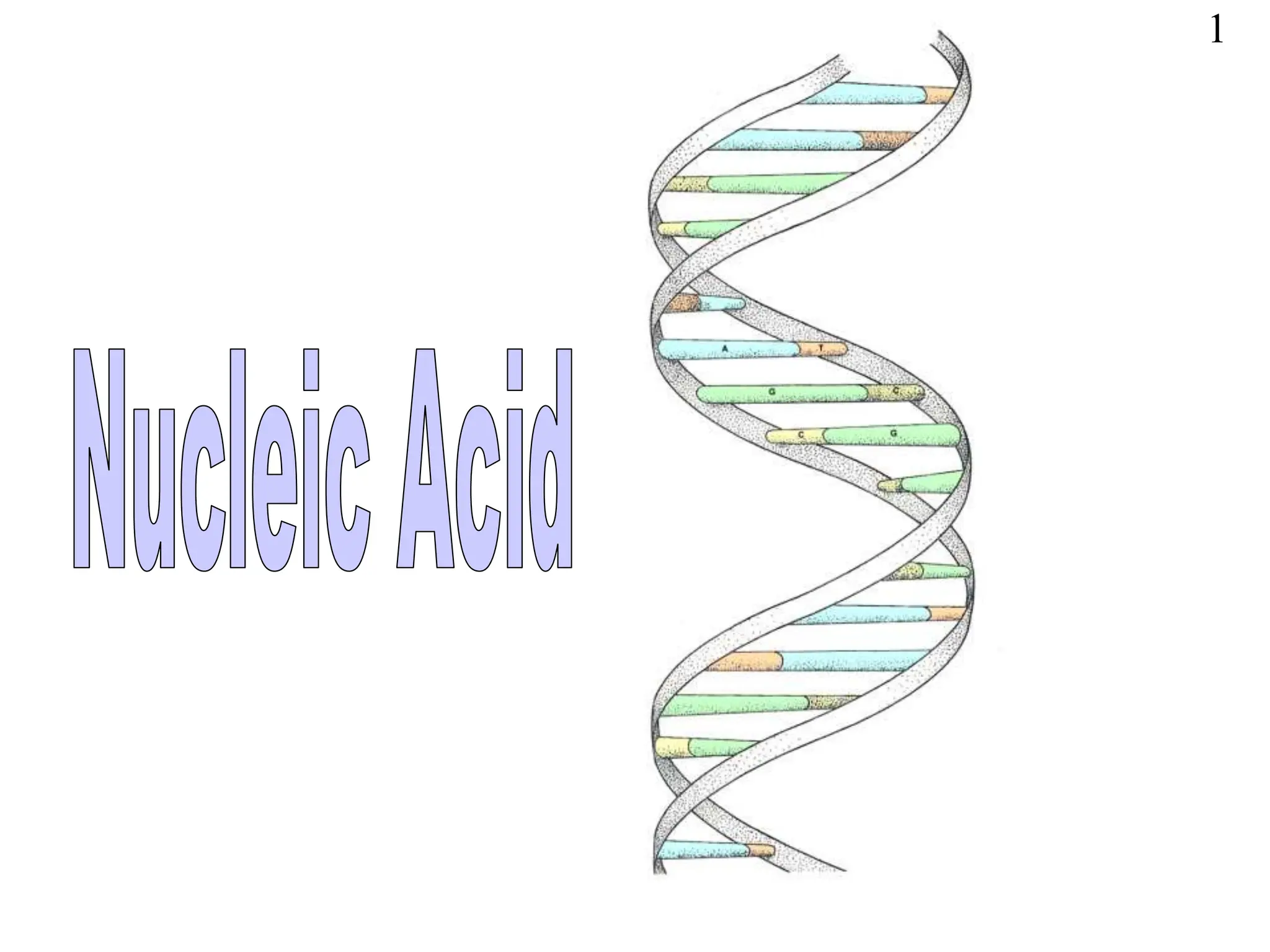
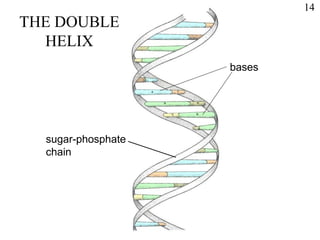
The paired strands are coiled into a spiral called
A DOUBLE HELIX
13
sugar-phosphate
chain
bases
THE DOUBLE
HELIX
14
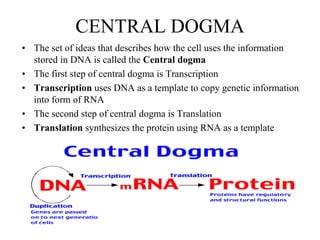
CENTRAL DOGMA
• The set of ideas that describes how the cell uses the information
stored in DNA is called the Central dogma
• The first step of central dogma is Transcription
• Transcription uses DNA as a template to copy genetic information
into form of RNA
• The second step of central dogma is Translation
• Translation synthesizes the protein using RNA as a template
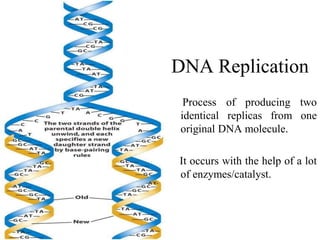
DNA Replication
Process of producing two
identical replicas from one
original DNA molecule.
It occurs with the help of a lot
of enzymes/catalyst.
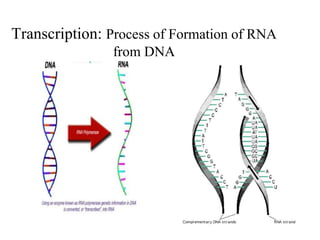
Transcription: Process of Formation of RNA
from DNA
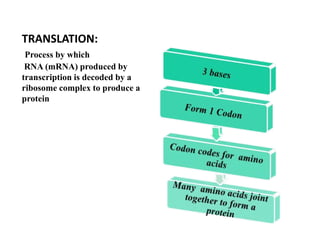
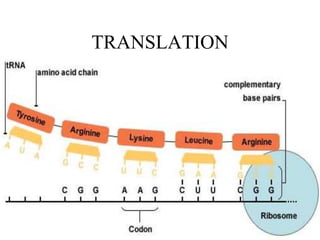
TRANSLATION:
Process by which
RNA (mRNA) produced by
transcription is decoded by a
ribosome complex to produce a
protein
TRANSLATION
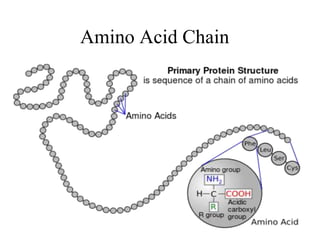
Amino Acid Chain

L7. Nucleic Acids.ppt

  • 1.
  • 2.
    NUCLEIC ACIDS: • Arebiological molecules essential for known forms of life on earth • They include DNA and RNA • Discovered by Friedrich Miescher in 1869 • They are named so because of their initial discovery in nucleus
  • 3.
    DNA stands fordeoxyribose nucleic acid This chemical substance is present in the nucleus of all cells in all living organisms DNA controls all the chemical changes which take place in cells The kind of cell which is formed is controlled by DNA The kind of organism which is produced is controlled by DNA DNA 2
  • 4.
    DNA is avery large molecule made up of a long chain of sub-units The sub-units are called nucleotides Each nucleotide is made up of a sugar called(Pentose) a phosphate group -PO4 and an organic base DNA molecule 3
  • 5.
    Ribose is asugar, with only five carbon atoms in its molecule Deoxyribose is almost the same but lacks one oxygen atom at C2 Both molecules may be represented by the symbol THE SUGARS:RIBOSE & DEOXYRIBOSE 4
  • 6.
    The nucleotide basesfound in nucleic acids are related either to the purine or pyrimidine ring system. Both DNA and RNA contain two major purine bases, adenine (A) and guanine (G). In both DNA and RNA one of the Pyrimidines is cytosine (C), but the second major pyrimidine is not the same in both: it is thymine (T) in DNA and uracil (U) in RNA. Organic Bases
  • 9.
    ROLE OF PHOSPHODIESTER LINKAGE •Phosphodiester Bonds Link Successive Nucleotides in Nucleic Acids • Linked through phosphate-group “bridges,” in which the 5’- phosphate group of one nucleotide unit is joined to the 3-hydroxyl group of the next nucleotide, creating a phosphodiester linkage .
  • 10.
    The chain hasa 5 end, which is usually attached to a phosphate, and a 3 end, which is usually a free hydroxyl group
  • 11.
    A molecule of DNAis formed by millions of nucleotides joined together in a long chain PO4 PO4 PO4 PO4 sugar-phosphate backbone + bases Joined nucleotides 7
  • 12.
  • 13.
  • 14.
    The paired strandsare coiled into a spiral called A DOUBLE HELIX 13
  • 15.
  • 16.
    CENTRAL DOGMA • Theset of ideas that describes how the cell uses the information stored in DNA is called the Central dogma • The first step of central dogma is Transcription • Transcription uses DNA as a template to copy genetic information into form of RNA • The second step of central dogma is Translation • Translation synthesizes the protein using RNA as a template
  • 17.
    DNA Replication Process ofproducing two identical replicas from one original DNA molecule. It occurs with the help of a lot of enzymes/catalyst.
  • 18.
    Transcription: Process ofFormation of RNA from DNA
  • 19.
    TRANSLATION: Process by which RNA(mRNA) produced by transcription is decoded by a ribosome complex to produce a protein
  • 20.
  • 21.