14
Developing Pricing
Strategies and Programs
1
Copyright © 2011 Pearson Education, Inc. Publishing as Prentice Hall 14-2
Chapter Questions

How do consumers process and evaluate
prices?

How should a company set prices initially for
products or services?

How should a company adapt prices to meet
varying circumstances and opportunities?

When should a company initiate a price
change?

How should a company respond to a
competitor’s price challenge?
Synonyms for Price

Rent

Tuition

Fee

Fare

Rate

Toll

Premium

Honorarium

Special assessment

Bribe

Dues

Salary

Commission

Wage

Tax
Copyright © 2011 Pearson Education, Inc. Publishing as Prentice Hall 14-3
The Internet Changes the
Pricing Environment –
By Providing Information
Copyright © 2011 Pearson Education, Inc. Publishing as Prentice Hall 14-4
Copyright © 2011 Pearson Education, Inc. Publishing as Prentice Hall 14-5
Common Pricing Mistakes

Determine costs and take traditional industry
margins

Failure to revise price to capitalize on market
changes

Setting price independently of the rest of the
marketing mix

Failure to vary price by product item, market
segment, distribution channels, and purchase
occasion
Copyright © 2011 Pearson Education, Inc. Publishing as Prentice Hall 14-6
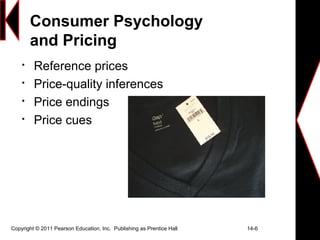
Consumer Psychology
and Pricing

Reference prices

Price-quality inferences

Price endings

Price cues
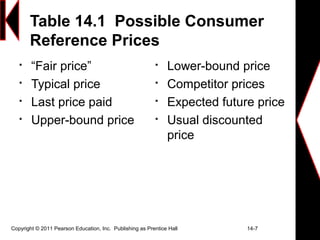
Table 14.1 Possible Consumer
Reference Prices

“Fair price”

Typical price

Last price paid

Upper-bound price

Lower-bound price

Competitor prices

Expected future price

Usual discounted
price
Copyright © 2011 Pearson Education, Inc. Publishing as Prentice Hall 14-7
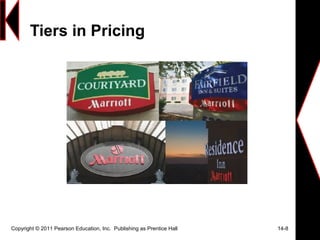
Tiers in Pricing
Copyright © 2011 Pearson Education, Inc. Publishing as Prentice Hall 14-8
Copyright © 2011 Pearson Education, Inc. Publishing as Prentice Hall 14-9
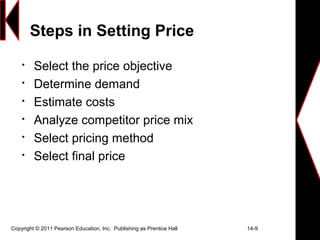
Steps in Setting Price

Select the price objective

Determine demand

Estimate costs

Analyze competitor price mix

Select pricing method

Select final price
Copyright © 2011 Pearson Education, Inc. Publishing as Prentice Hall 14-10
Step 1: Selecting the Pricing Objective

Survival

Maximum current profit

Maximum market share

Maximum market skimming

Product-quality leadership
Copyright © 2011 Pearson Education, Inc. Publishing as Prentice Hall 14-11
Step 2: Determining Demand

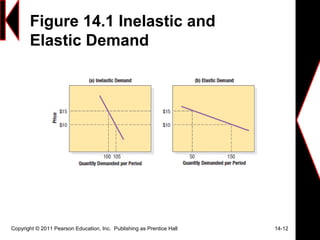
Price sensitivity

Estimate demand curves

Price elasticity of demand
Figure 14.1 Inelastic and
Elastic Demand
Copyright © 2011 Pearson Education, Inc. Publishing as Prentice Hall 14-12
Table 14.3 Factors Leading to
Less Price Sensitivity

The product is more distinctive

Buyers are less aware of substitutes

Buyers cannot easily compare the quality of substitutes

Expenditure is a smaller part of buyer’s total income

Expenditure is small compared to the total cost

Part of the cost is paid by another party

Product is used with previously purchased assets

Product is assumed to have high quality and prestige

Buyers cannot store the product
Copyright © 2011 Pearson Education, Inc. Publishing as Prentice Hall 14-13
Copyright © 2011 Pearson Education, Inc. Publishing as Prentice Hall 14-14
Step 3: Estimating Costs

Types of costs

Accumulated production

Activity-based cost accounting

Target costing
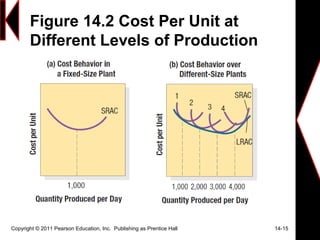
Figure 14.2 Cost Per Unit at
Different Levels of Production
Copyright © 2011 Pearson Education, Inc. Publishing as Prentice Hall 14-15
Cost Terms and Production

Fixed costs

Variable costs

Total costs

Average cost

Cost at different
levels of production
Copyright © 2011 Pearson Education, Inc. Publishing as Prentice Hall 14-16
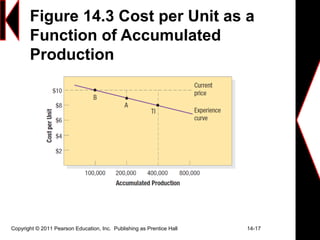
Figure 14.3 Cost per Unit as a
Function of Accumulated
Production
Copyright © 2011 Pearson Education, Inc. Publishing as Prentice Hall 14-17
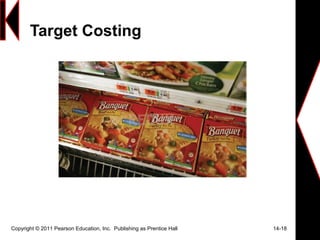
Target Costing
Copyright © 2011 Pearson Education, Inc. Publishing as Prentice Hall 14-18
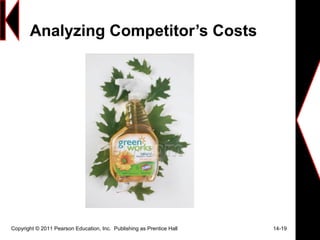
Analyzing Competitor’s Costs
Copyright © 2011 Pearson Education, Inc. Publishing as Prentice Hall 14-19
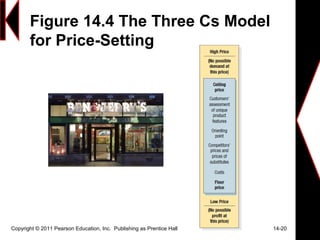
Figure 14.4 The Three Cs Model
for Price-Setting
Copyright © 2011 Pearson Education, Inc. Publishing as Prentice Hall 14-20
Copyright © 2011 Pearson Education, Inc. Publishing as Prentice Hall 14-21
Step 5: Selecting a Pricing Method

Markup pricing

Target-return pricing

Perceived-value pricing

Value pricing

Going-rate pricing

Auction-type pricing
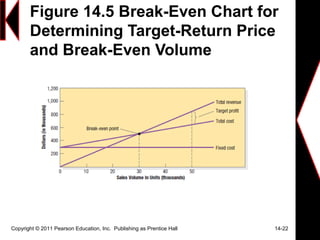
Figure 14.5 Break-Even Chart for
Determining Target-Return Price
and Break-Even Volume
Copyright © 2011 Pearson Education, Inc. Publishing as Prentice Hall 14-22
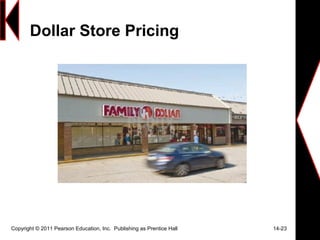
Dollar Store Pricing
Copyright © 2011 Pearson Education, Inc. Publishing as Prentice Hall 14-23
Copyright © 2011 Pearson Education, Inc. Publishing as Prentice Hall 14-24
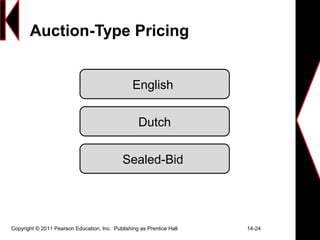
Auction-Type Pricing
English
Dutch
Sealed-Bid
Copyright © 2011 Pearson Education, Inc. Publishing as Prentice Hall 14-25
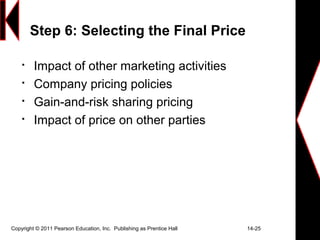
Step 6: Selecting the Final Price

Impact of other marketing activities

Company pricing policies

Gain-and-risk sharing pricing

Impact of price on other parties
Copyright © 2011 Pearson Education, Inc. Publishing as Prentice Hall 14-26
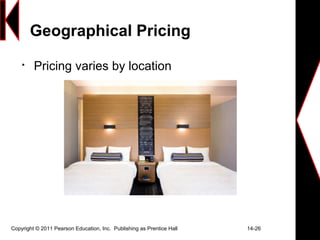
Geographical Pricing

Pricing varies by location
Price Discounts and Allowances

Discount

Quantity discount

Functional discount

Seasonal discount

Allowance
Copyright © 2011 Pearson Education, Inc. Publishing as Prentice Hall 14-27
Copyright © 2011 Pearson Education, Inc. Publishing as Prentice Hall 14-28
Promotional Pricing Tactics

Loss-leader pricing

Special-event pricing

Cash rebates

Low-interest financing

Longer payment terms

Warranties and service contracts

Psychological discounting
Copyright © 2011 Pearson Education, Inc. Publishing as Prentice Hall 14-29
Differentiated Pricing

Customer-segment pricing

Product-form pricing

Image pricing

Channel pricing

Location pricing

Time pricing

Yield pricing
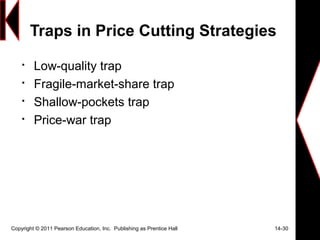
Traps in Price Cutting Strategies

Low-quality trap

Fragile-market-share trap

Shallow-pockets trap

Price-war trap
Copyright © 2011 Pearson Education, Inc. Publishing as Prentice Hall 14-30
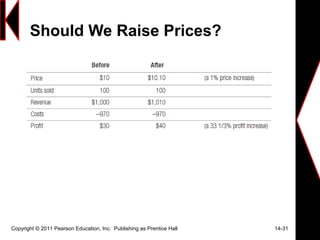
Should We Raise Prices?
Copyright © 2011 Pearson Education, Inc. Publishing as Prentice Hall 14-31
Copyright © 2011 Pearson Education, Inc. Publishing as Prentice Hall 14-32
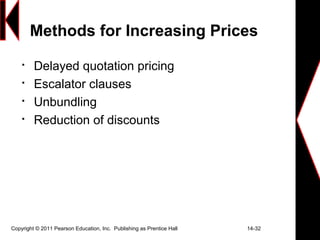
Methods for Increasing Prices

Delayed quotation pricing

Escalator clauses

Unbundling

Reduction of discounts
Copyright © 2011 Pearson Education, Inc. Publishing as Prentice Hall 14-33
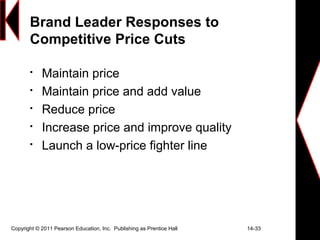
Brand Leader Responses to
Competitive Price Cuts

Maintain price

Maintain price and add value

Reduce price

Increase price and improve quality

Launch a low-price fighter line
For Review

How do consumers process and evaluate
prices?

How should a company set prices initially for
products or services?

How should a company adapt prices to meet
varying circumstances and opportunities?

When should a company initiate a price
change?

How should a company respond to a
competitor’s price challenge?
Copyright © 2011 Pearson Education, Inc. Publishing as Prentice Hall 14-34

Kotler mm 14e 14 ippt

  • 1.
  • 2.
    Copyright © 2011Pearson Education, Inc. Publishing as Prentice Hall 14-2 Chapter Questions  How do consumers process and evaluate prices?  How should a company set prices initially for products or services?  How should a company adapt prices to meet varying circumstances and opportunities?  When should a company initiate a price change?  How should a company respond to a competitor’s price challenge?
  • 3.
    Synonyms for Price  Rent  Tuition  Fee  Fare  Rate  Toll  Premium  Honorarium  Specialassessment  Bribe  Dues  Salary  Commission  Wage  Tax Copyright © 2011 Pearson Education, Inc. Publishing as Prentice Hall 14-3
  • 4.
    The Internet Changesthe Pricing Environment – By Providing Information Copyright © 2011 Pearson Education, Inc. Publishing as Prentice Hall 14-4
  • 5.
    Copyright © 2011Pearson Education, Inc. Publishing as Prentice Hall 14-5 Common Pricing Mistakes  Determine costs and take traditional industry margins  Failure to revise price to capitalize on market changes  Setting price independently of the rest of the marketing mix  Failure to vary price by product item, market segment, distribution channels, and purchase occasion
  • 6.
    Copyright © 2011Pearson Education, Inc. Publishing as Prentice Hall 14-6 Consumer Psychology and Pricing  Reference prices  Price-quality inferences  Price endings  Price cues
  • 7.
    Table 14.1 PossibleConsumer Reference Prices  “Fair price”  Typical price  Last price paid  Upper-bound price  Lower-bound price  Competitor prices  Expected future price  Usual discounted price Copyright © 2011 Pearson Education, Inc. Publishing as Prentice Hall 14-7
  • 8.
    Tiers in Pricing Copyright© 2011 Pearson Education, Inc. Publishing as Prentice Hall 14-8
  • 9.
    Copyright © 2011Pearson Education, Inc. Publishing as Prentice Hall 14-9 Steps in Setting Price  Select the price objective  Determine demand  Estimate costs  Analyze competitor price mix  Select pricing method  Select final price
  • 10.
    Copyright © 2011Pearson Education, Inc. Publishing as Prentice Hall 14-10 Step 1: Selecting the Pricing Objective  Survival  Maximum current profit  Maximum market share  Maximum market skimming  Product-quality leadership
  • 11.
    Copyright © 2011Pearson Education, Inc. Publishing as Prentice Hall 14-11 Step 2: Determining Demand  Price sensitivity  Estimate demand curves  Price elasticity of demand
  • 12.
    Figure 14.1 Inelasticand Elastic Demand Copyright © 2011 Pearson Education, Inc. Publishing as Prentice Hall 14-12
  • 13.
    Table 14.3 FactorsLeading to Less Price Sensitivity  The product is more distinctive  Buyers are less aware of substitutes  Buyers cannot easily compare the quality of substitutes  Expenditure is a smaller part of buyer’s total income  Expenditure is small compared to the total cost  Part of the cost is paid by another party  Product is used with previously purchased assets  Product is assumed to have high quality and prestige  Buyers cannot store the product Copyright © 2011 Pearson Education, Inc. Publishing as Prentice Hall 14-13
  • 14.
    Copyright © 2011Pearson Education, Inc. Publishing as Prentice Hall 14-14 Step 3: Estimating Costs  Types of costs  Accumulated production  Activity-based cost accounting  Target costing
  • 15.
    Figure 14.2 CostPer Unit at Different Levels of Production Copyright © 2011 Pearson Education, Inc. Publishing as Prentice Hall 14-15
  • 16.
    Cost Terms andProduction  Fixed costs  Variable costs  Total costs  Average cost  Cost at different levels of production Copyright © 2011 Pearson Education, Inc. Publishing as Prentice Hall 14-16
  • 17.
    Figure 14.3 Costper Unit as a Function of Accumulated Production Copyright © 2011 Pearson Education, Inc. Publishing as Prentice Hall 14-17
  • 18.
    Target Costing Copyright ©2011 Pearson Education, Inc. Publishing as Prentice Hall 14-18
  • 19.
    Analyzing Competitor’s Costs Copyright© 2011 Pearson Education, Inc. Publishing as Prentice Hall 14-19
  • 20.
    Figure 14.4 TheThree Cs Model for Price-Setting Copyright © 2011 Pearson Education, Inc. Publishing as Prentice Hall 14-20
  • 21.
    Copyright © 2011Pearson Education, Inc. Publishing as Prentice Hall 14-21 Step 5: Selecting a Pricing Method  Markup pricing  Target-return pricing  Perceived-value pricing  Value pricing  Going-rate pricing  Auction-type pricing
  • 22.
    Figure 14.5 Break-EvenChart for Determining Target-Return Price and Break-Even Volume Copyright © 2011 Pearson Education, Inc. Publishing as Prentice Hall 14-22
  • 23.
    Dollar Store Pricing Copyright© 2011 Pearson Education, Inc. Publishing as Prentice Hall 14-23
  • 24.
    Copyright © 2011Pearson Education, Inc. Publishing as Prentice Hall 14-24 Auction-Type Pricing English Dutch Sealed-Bid
  • 25.
    Copyright © 2011Pearson Education, Inc. Publishing as Prentice Hall 14-25 Step 6: Selecting the Final Price  Impact of other marketing activities  Company pricing policies  Gain-and-risk sharing pricing  Impact of price on other parties
  • 26.
    Copyright © 2011Pearson Education, Inc. Publishing as Prentice Hall 14-26 Geographical Pricing  Pricing varies by location
  • 27.
    Price Discounts andAllowances  Discount  Quantity discount  Functional discount  Seasonal discount  Allowance Copyright © 2011 Pearson Education, Inc. Publishing as Prentice Hall 14-27
  • 28.
    Copyright © 2011Pearson Education, Inc. Publishing as Prentice Hall 14-28 Promotional Pricing Tactics  Loss-leader pricing  Special-event pricing  Cash rebates  Low-interest financing  Longer payment terms  Warranties and service contracts  Psychological discounting
  • 29.
    Copyright © 2011Pearson Education, Inc. Publishing as Prentice Hall 14-29 Differentiated Pricing  Customer-segment pricing  Product-form pricing  Image pricing  Channel pricing  Location pricing  Time pricing  Yield pricing
  • 30.
    Traps in PriceCutting Strategies  Low-quality trap  Fragile-market-share trap  Shallow-pockets trap  Price-war trap Copyright © 2011 Pearson Education, Inc. Publishing as Prentice Hall 14-30
  • 31.
    Should We RaisePrices? Copyright © 2011 Pearson Education, Inc. Publishing as Prentice Hall 14-31
  • 32.
    Copyright © 2011Pearson Education, Inc. Publishing as Prentice Hall 14-32 Methods for Increasing Prices  Delayed quotation pricing  Escalator clauses  Unbundling  Reduction of discounts
  • 33.
    Copyright © 2011Pearson Education, Inc. Publishing as Prentice Hall 14-33 Brand Leader Responses to Competitive Price Cuts  Maintain price  Maintain price and add value  Reduce price  Increase price and improve quality  Launch a low-price fighter line
  • 34.
    For Review  How doconsumers process and evaluate prices?  How should a company set prices initially for products or services?  How should a company adapt prices to meet varying circumstances and opportunities?  When should a company initiate a price change?  How should a company respond to a competitor’s price challenge? Copyright © 2011 Pearson Education, Inc. Publishing as Prentice Hall 14-34