15
Designing and
Managing
Integrated Marketing
Channels
1
Chapter Questions

What is a marketing channel system and value
network?

What work do marketing channels perform?

How should channels be designed?

What decisions do companies face in
managing their channels?

How should companies integrate channels and
manage channel conflict?

What are the key issues with e-commerce and
m-commerce?
Copyright © 2011 Pearson Education, Inc. Publishing as Prentice Hall 15-2
Copyright © 2011 Pearson Education, Inc. Publishing as Prentice Hall 15-3
What is a Marketing Channel?
A marketing channel system is the
particular set of interdependent
organizations involved in the process of
making a product or service available for
use or consumption.
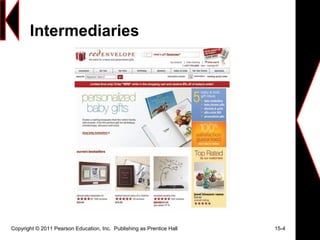
Intermediaries
Copyright © 2011 Pearson Education, Inc. Publishing as Prentice Hall 15-4
Copyright © 2011 Pearson Education, Inc. Publishing as Prentice Hall 15-5
Channels and
Marketing Decisions

A push strategy uses the manufacturer’s
sales force, trade promotion money, and
other means to induce intermediaries to
carry, promote, and sell the product to end
users

A pull strategy uses advertising, promotion,
and other forms of communication to
persuade consumers to demand the product
from intermediaries
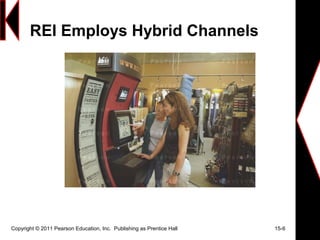
REI Employs Hybrid Channels
Copyright © 2011 Pearson Education, Inc. Publishing as Prentice Hall 15-6
Copyright © 2011 Pearson Education, Inc. Publishing as Prentice Hall 15-7
Buyer Expectations for
Channel Integration

Ability to order a product online and pick it up
at a convenient retail location

Ability to return an online-ordered product to a
nearby store

Right to receive discounts based on total
online and offline purchases
Copyright © 2011 Pearson Education, Inc. Publishing as Prentice Hall 15-8
Table 15.1 Channel Member
Functions

Gather information

Develop and disseminate persuasive
communications

Reach agreements on price and terms

Acquire funds to finance inventories

Assume risks

Provide for storage

Provide for buyers’ payment of their bills

Oversee actual transfer of ownership
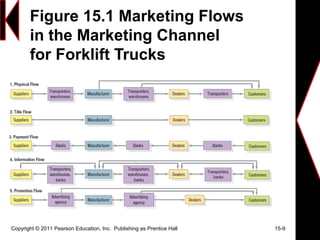
Figure 15.1 Marketing Flows
in the Marketing Channel
for Forklift Trucks
Copyright © 2011 Pearson Education, Inc. Publishing as Prentice Hall 15-9
Marketing Channel Levels
Copyright © 2011 Pearson Education, Inc. Publishing as Prentice Hall 15-10
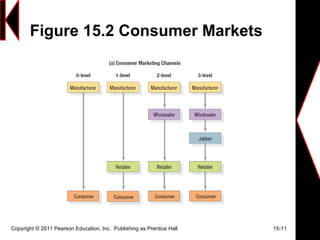
Figure 15.2 Consumer Markets
Copyright © 2011 Pearson Education, Inc. Publishing as Prentice Hall 15-11
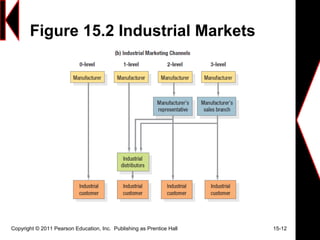
Figure 15.2 Industrial Markets
Copyright © 2011 Pearson Education, Inc. Publishing as Prentice Hall 15-12
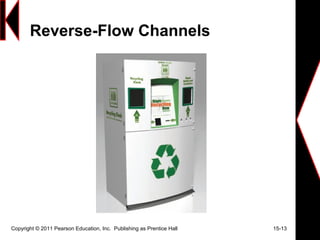
Reverse-Flow Channels
Copyright © 2011 Pearson Education, Inc. Publishing as Prentice Hall 15-13
Copyright © 2011 Pearson Education, Inc. Publishing as Prentice Hall 15-14
Designing a
Marketing Channel System

Analyze customer needs

Establish channel objectives

Identify major channel alternatives

Evaluate major channel alternatives
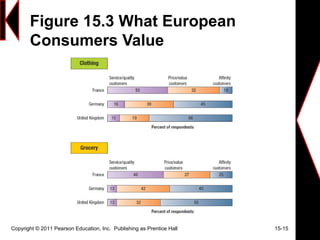
Figure 15.3 What European
Consumers Value
Copyright © 2011 Pearson Education, Inc. Publishing as Prentice Hall 15-15
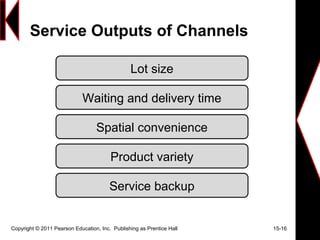
Service Outputs of Channels
Copyright © 2011 Pearson Education, Inc. Publishing as Prentice Hall 15-16
Lot size
Waiting and delivery time
Spatial convenience
Product variety
Service backup
Copyright © 2011 Pearson Education, Inc. Publishing as Prentice Hall 15-17
Identifying Channel Alternatives

Types of intermediaries

Number of intermediaries

Terms and responsibilities
Copyright © 2011 Pearson Education, Inc. Publishing as Prentice Hall 15-18
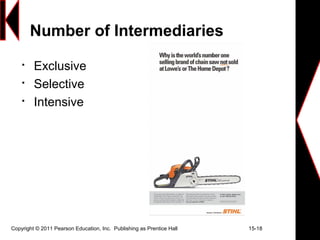
Number of Intermediaries

Exclusive

Selective

Intensive
Copyright © 2011 Pearson Education, Inc. Publishing as Prentice Hall 15-19
Terms and Responsibilities
of Channel Members

Price policy

Condition of sale

Distributors’ territorial rights

Mutual services and responsibilities
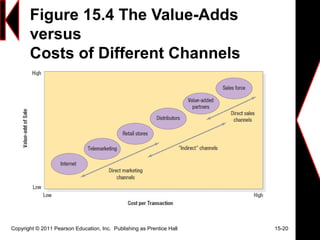
Figure 15.4 The Value-Adds
versus
Costs of Different Channels
Copyright © 2011 Pearson Education, Inc. Publishing as Prentice Hall 15-20
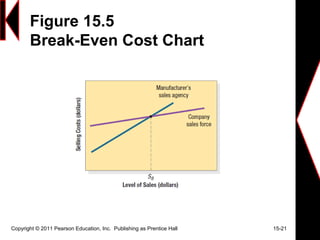
Figure 15.5
Break-Even Cost Chart
Copyright © 2011 Pearson Education, Inc. Publishing as Prentice Hall 15-21
Copyright © 2011 Pearson Education, Inc. Publishing as Prentice Hall 15-22
Channel-Management Decisions

Selecting channel members

Training channel members

Motivating channel members

Evaluating channel members

Modifying channel members
Copyright © 2011 Pearson Education, Inc. Publishing as Prentice Hall 15-23
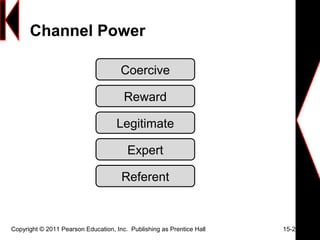
Channel Power
Coercive
Reward
Legitimate
Expert
Referent
Channel Integration and Systems

Vertical marketing
systems

Corporate VMS

Administered VMS

Contractual VMS

Horizontal
marketing systems

Multichannel
systems
Copyright © 2011 Pearson Education, Inc. Publishing as Prentice Hall 15-24
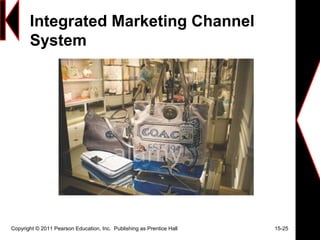
Integrated Marketing Channel
System
Copyright © 2011 Pearson Education, Inc. Publishing as Prentice Hall 15-25
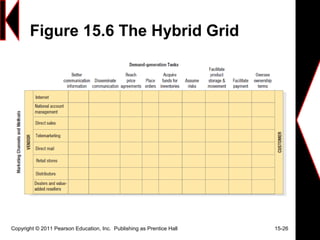
Figure 15.6 The Hybrid Grid
Copyright © 2011 Pearson Education, Inc. Publishing as Prentice Hall 15-26
Copyright © 2011 Pearson Education, Inc. Publishing as Prentice Hall 15-27
Channel Conflict

What types of conflict arise in channels?

What causes conflict?

What can marketers do to resolve it?
Copyright © 2011 Pearson Education, Inc. Publishing as Prentice Hall 15-28
Causes of Channel Conflict

Goal incompatibility

Unclear roles and rights

Differences in perception

Intermediaries’ dependence on manufacturer
Table 15.3 Strategies for
Managing Channel Conflict

Strategic
justification

Dual compensation

Superordinate goals

Employee exchange

Joint memberships

Cooptation

Diplomacy

Mediation

Arbitration

Legal recourse
Copyright © 2011 Pearson Education, Inc. Publishing as Prentice Hall 15-29
E-Commerce
Copyright © 2011 Pearson Education, Inc. Publishing as Prentice Hall 15-30
Pure-click
Brick-and-click
M-Commerce
Copyright © 2011 Pearson Education, Inc. Publishing as Prentice Hall 15-31
For Review

What is a marketing channel system and value
network?

What work do marketing channels perform?

How should channels be designed?

What decisions do companies face in
managing their channels?

How should companies integrate channels and
manage channel conflict?

What are the key issues with e-commerce and
m-commerce?
Copyright © 2011 Pearson Education, Inc. Publishing as Prentice Hall 15-32

Kotler mm 14e 15 ippt

  • 1.
  • 2.
    Chapter Questions  What isa marketing channel system and value network?  What work do marketing channels perform?  How should channels be designed?  What decisions do companies face in managing their channels?  How should companies integrate channels and manage channel conflict?  What are the key issues with e-commerce and m-commerce? Copyright © 2011 Pearson Education, Inc. Publishing as Prentice Hall 15-2
  • 3.
    Copyright © 2011Pearson Education, Inc. Publishing as Prentice Hall 15-3 What is a Marketing Channel? A marketing channel system is the particular set of interdependent organizations involved in the process of making a product or service available for use or consumption.
  • 4.
    Intermediaries Copyright © 2011Pearson Education, Inc. Publishing as Prentice Hall 15-4
  • 5.
    Copyright © 2011Pearson Education, Inc. Publishing as Prentice Hall 15-5 Channels and Marketing Decisions  A push strategy uses the manufacturer’s sales force, trade promotion money, and other means to induce intermediaries to carry, promote, and sell the product to end users  A pull strategy uses advertising, promotion, and other forms of communication to persuade consumers to demand the product from intermediaries
  • 6.
    REI Employs HybridChannels Copyright © 2011 Pearson Education, Inc. Publishing as Prentice Hall 15-6
  • 7.
    Copyright © 2011Pearson Education, Inc. Publishing as Prentice Hall 15-7 Buyer Expectations for Channel Integration  Ability to order a product online and pick it up at a convenient retail location  Ability to return an online-ordered product to a nearby store  Right to receive discounts based on total online and offline purchases
  • 8.
    Copyright © 2011Pearson Education, Inc. Publishing as Prentice Hall 15-8 Table 15.1 Channel Member Functions  Gather information  Develop and disseminate persuasive communications  Reach agreements on price and terms  Acquire funds to finance inventories  Assume risks  Provide for storage  Provide for buyers’ payment of their bills  Oversee actual transfer of ownership
  • 9.
    Figure 15.1 MarketingFlows in the Marketing Channel for Forklift Trucks Copyright © 2011 Pearson Education, Inc. Publishing as Prentice Hall 15-9
  • 10.
    Marketing Channel Levels Copyright© 2011 Pearson Education, Inc. Publishing as Prentice Hall 15-10
  • 11.
    Figure 15.2 ConsumerMarkets Copyright © 2011 Pearson Education, Inc. Publishing as Prentice Hall 15-11
  • 12.
    Figure 15.2 IndustrialMarkets Copyright © 2011 Pearson Education, Inc. Publishing as Prentice Hall 15-12
  • 13.
    Reverse-Flow Channels Copyright ©2011 Pearson Education, Inc. Publishing as Prentice Hall 15-13
  • 14.
    Copyright © 2011Pearson Education, Inc. Publishing as Prentice Hall 15-14 Designing a Marketing Channel System  Analyze customer needs  Establish channel objectives  Identify major channel alternatives  Evaluate major channel alternatives
  • 15.
    Figure 15.3 WhatEuropean Consumers Value Copyright © 2011 Pearson Education, Inc. Publishing as Prentice Hall 15-15
  • 16.
    Service Outputs ofChannels Copyright © 2011 Pearson Education, Inc. Publishing as Prentice Hall 15-16 Lot size Waiting and delivery time Spatial convenience Product variety Service backup
  • 17.
    Copyright © 2011Pearson Education, Inc. Publishing as Prentice Hall 15-17 Identifying Channel Alternatives  Types of intermediaries  Number of intermediaries  Terms and responsibilities
  • 18.
    Copyright © 2011Pearson Education, Inc. Publishing as Prentice Hall 15-18 Number of Intermediaries  Exclusive  Selective  Intensive
  • 19.
    Copyright © 2011Pearson Education, Inc. Publishing as Prentice Hall 15-19 Terms and Responsibilities of Channel Members  Price policy  Condition of sale  Distributors’ territorial rights  Mutual services and responsibilities
  • 20.
    Figure 15.4 TheValue-Adds versus Costs of Different Channels Copyright © 2011 Pearson Education, Inc. Publishing as Prentice Hall 15-20
  • 21.
    Figure 15.5 Break-Even CostChart Copyright © 2011 Pearson Education, Inc. Publishing as Prentice Hall 15-21
  • 22.
    Copyright © 2011Pearson Education, Inc. Publishing as Prentice Hall 15-22 Channel-Management Decisions  Selecting channel members  Training channel members  Motivating channel members  Evaluating channel members  Modifying channel members
  • 23.
    Copyright © 2011Pearson Education, Inc. Publishing as Prentice Hall 15-23 Channel Power Coercive Reward Legitimate Expert Referent
  • 24.
    Channel Integration andSystems  Vertical marketing systems  Corporate VMS  Administered VMS  Contractual VMS  Horizontal marketing systems  Multichannel systems Copyright © 2011 Pearson Education, Inc. Publishing as Prentice Hall 15-24
  • 25.
    Integrated Marketing Channel System Copyright© 2011 Pearson Education, Inc. Publishing as Prentice Hall 15-25
  • 26.
    Figure 15.6 TheHybrid Grid Copyright © 2011 Pearson Education, Inc. Publishing as Prentice Hall 15-26
  • 27.
    Copyright © 2011Pearson Education, Inc. Publishing as Prentice Hall 15-27 Channel Conflict  What types of conflict arise in channels?  What causes conflict?  What can marketers do to resolve it?
  • 28.
    Copyright © 2011Pearson Education, Inc. Publishing as Prentice Hall 15-28 Causes of Channel Conflict  Goal incompatibility  Unclear roles and rights  Differences in perception  Intermediaries’ dependence on manufacturer
  • 29.
    Table 15.3 Strategiesfor Managing Channel Conflict  Strategic justification  Dual compensation  Superordinate goals  Employee exchange  Joint memberships  Cooptation  Diplomacy  Mediation  Arbitration  Legal recourse Copyright © 2011 Pearson Education, Inc. Publishing as Prentice Hall 15-29
  • 30.
    E-Commerce Copyright © 2011Pearson Education, Inc. Publishing as Prentice Hall 15-30 Pure-click Brick-and-click
  • 31.
    M-Commerce Copyright © 2011Pearson Education, Inc. Publishing as Prentice Hall 15-31
  • 32.
    For Review  What isa marketing channel system and value network?  What work do marketing channels perform?  How should channels be designed?  What decisions do companies face in managing their channels?  How should companies integrate channels and manage channel conflict?  What are the key issues with e-commerce and m-commerce? Copyright © 2011 Pearson Education, Inc. Publishing as Prentice Hall 15-32