12
Setting Product Strategy
1
Chapter Questions

What are the characteristics of products and
how do marketers classify products?

How can companies differentiate products?

Why is product design important and what
factors affect a good design?
Copyright © 2011 Pearson Education, Inc. Publishing as Prentice Hall 12-2
Chapter Questions

How can a company build and manage its
product mix and product lines?

How can companies combine products to
create strong co-brands or ingredient brands?

How can companies use packaging, labeling,
warranties, and guarantees as marketing
tools?
Copyright © 2011 Pearson Education, Inc. Publishing as Prentice Hall 12-3
Copyright © 2011 Pearson Education, Inc. Publishing as Prentice Hall 12-4
What is a Product?
A product is anything that can be offered to
a market to satisfy a want or need, including
physical goods, services, experiences,
events, persons, places, properties,
organizations, information, and ideas.
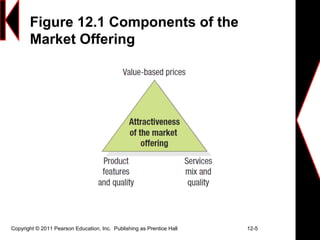
Figure 12.1 Components of the
Market Offering
Copyright © 2011 Pearson Education, Inc. Publishing as Prentice Hall 12-5
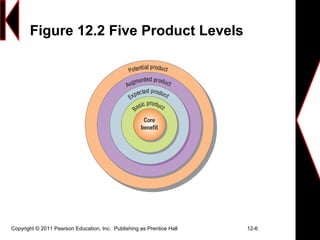
Figure 12.2 Five Product Levels
Copyright © 2011 Pearson Education, Inc. Publishing as Prentice Hall 12-6
Copyright © 2011 Pearson Education, Inc. Publishing as Prentice Hall 12-7
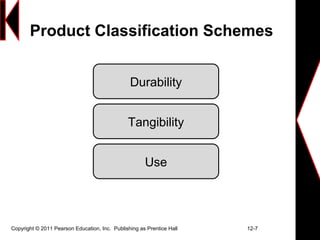
Product Classification Schemes
Durability
Tangibility
Use
Copyright © 2011 Pearson Education, Inc. Publishing as Prentice Hall 12-8
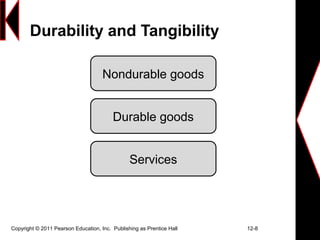
Durability and Tangibility
Nondurable goods
Durable goods
Services
Copyright © 2011 Pearson Education, Inc. Publishing as Prentice Hall 12-9
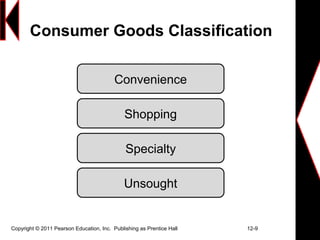
Consumer Goods Classification
Convenience
Shopping
Specialty
Unsought
Copyright © 2011 Pearson Education, Inc. Publishing as Prentice Hall 12-10
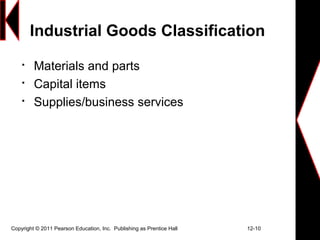
Industrial Goods Classification

Materials and parts

Capital items

Supplies/business services
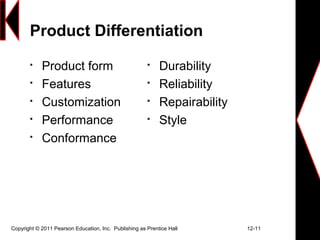
Product Differentiation

Product form

Features

Customization

Performance

Conformance

Durability

Reliability

Repairability

Style
Copyright © 2011 Pearson Education, Inc. Publishing as Prentice Hall 12-11
Copyright © 2011 Pearson Education, Inc. Publishing as Prentice Hall 12-12
Service Differentiation

Ordering ease

Delivery

Installation

Customer training

Customer consulting

Maintenance and repair

Returns
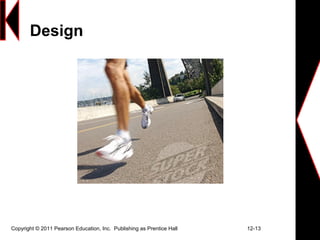
Design
Copyright © 2011 Pearson Education, Inc. Publishing as Prentice Hall 12-13
Copyright © 2011 Pearson Education, Inc. Publishing as Prentice Hall 12-14
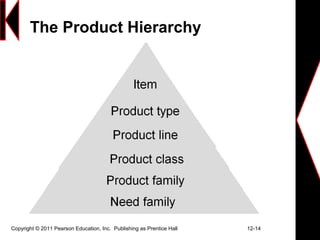
The Product Hierarchy
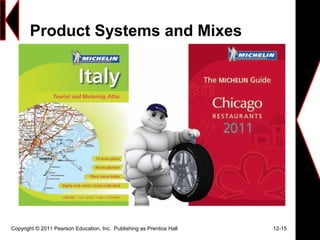
Product Systems and Mixes
Copyright © 2011 Pearson Education, Inc. Publishing as Prentice Hall 12-15
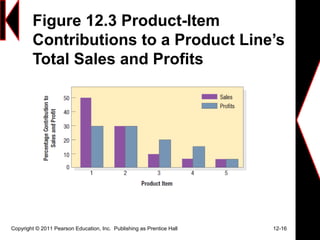
Figure 12.3 Product-Item
Contributions to a Product Line’s
Total Sales and Profits
Copyright © 2011 Pearson Education, Inc. Publishing as Prentice Hall 12-16
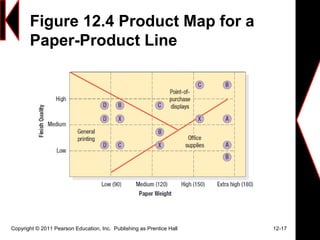
Figure 12.4 Product Map for a
Paper-Product Line
Copyright © 2011 Pearson Education, Inc. Publishing as Prentice Hall 12-17
Copyright © 2011 Pearson Education, Inc. Publishing as Prentice Hall 12-18
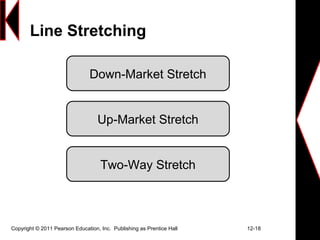
Line Stretching
Down-Market Stretch
Up-Market Stretch
Two-Way Stretch
Copyright © 2011 Pearson Education, Inc. Publishing as Prentice Hall 12-19
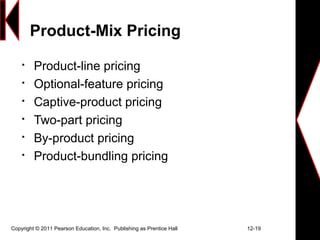
Product-Mix Pricing

Product-line pricing

Optional-feature pricing

Captive-product pricing

Two-part pricing

By-product pricing

Product-bundling pricing
Ingredient Branding
Copyright © 2011 Pearson Education, Inc. Publishing as Prentice Hall 12-20
Copyright © 2011 Pearson Education, Inc. Publishing as Prentice Hall 12-21
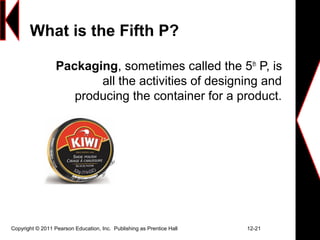
What is the Fifth P?
Packaging, sometimes called the 5th
P, is
all the activities of designing and
producing the container for a product.
Copyright © 2011 Pearson Education, Inc. Publishing as Prentice Hall 12-22
Factors Contributing to the
Emphasis on Packaging

Self-service

Consumer affluence

Company/brand image

Innovation opportunity
Copyright © 2011 Pearson Education, Inc. Publishing as Prentice Hall 12-23
Packaging Objectives

Identify the brand

Convey descriptive and persuasive
information

Facilitate product transportation and
protection

Assist at-home storage

Aid product consumption
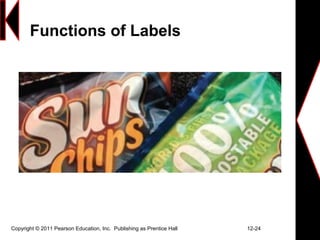
Functions of Labels
Copyright © 2011 Pearson Education, Inc. Publishing as Prentice Hall 12-24
For Review

What are the characteristics of products and
how do marketers classify products?

How can companies differentiate products?

Why is product design important and what
factors affect a good design?
Copyright © 2011 Pearson Education, Inc. Publishing as Prentice Hall 2-25
Also For Review

How can a company build and manage its
product mix and product lines?

How can companies combine products to
create strong co-brands or ingredient brands?

How can companies use packaging, labeling,
warranties, and guarantees as marketing
tools?
Copyright © 2011 Pearson Education, Inc. Publishing as Prentice Hall 12-26

Kotler mm 14e 12 ippt

  • 1.
  • 2.
    Chapter Questions  What arethe characteristics of products and how do marketers classify products?  How can companies differentiate products?  Why is product design important and what factors affect a good design? Copyright © 2011 Pearson Education, Inc. Publishing as Prentice Hall 12-2
  • 3.
    Chapter Questions  How cana company build and manage its product mix and product lines?  How can companies combine products to create strong co-brands or ingredient brands?  How can companies use packaging, labeling, warranties, and guarantees as marketing tools? Copyright © 2011 Pearson Education, Inc. Publishing as Prentice Hall 12-3
  • 4.
    Copyright © 2011Pearson Education, Inc. Publishing as Prentice Hall 12-4 What is a Product? A product is anything that can be offered to a market to satisfy a want or need, including physical goods, services, experiences, events, persons, places, properties, organizations, information, and ideas.
  • 5.
    Figure 12.1 Componentsof the Market Offering Copyright © 2011 Pearson Education, Inc. Publishing as Prentice Hall 12-5
  • 6.
    Figure 12.2 FiveProduct Levels Copyright © 2011 Pearson Education, Inc. Publishing as Prentice Hall 12-6
  • 7.
    Copyright © 2011Pearson Education, Inc. Publishing as Prentice Hall 12-7 Product Classification Schemes Durability Tangibility Use
  • 8.
    Copyright © 2011Pearson Education, Inc. Publishing as Prentice Hall 12-8 Durability and Tangibility Nondurable goods Durable goods Services
  • 9.
    Copyright © 2011Pearson Education, Inc. Publishing as Prentice Hall 12-9 Consumer Goods Classification Convenience Shopping Specialty Unsought
  • 10.
    Copyright © 2011Pearson Education, Inc. Publishing as Prentice Hall 12-10 Industrial Goods Classification  Materials and parts  Capital items  Supplies/business services
  • 11.
  • 12.
    Copyright © 2011Pearson Education, Inc. Publishing as Prentice Hall 12-12 Service Differentiation  Ordering ease  Delivery  Installation  Customer training  Customer consulting  Maintenance and repair  Returns
  • 13.
    Design Copyright © 2011Pearson Education, Inc. Publishing as Prentice Hall 12-13
  • 14.
    Copyright © 2011Pearson Education, Inc. Publishing as Prentice Hall 12-14 The Product Hierarchy
  • 15.
    Product Systems andMixes Copyright © 2011 Pearson Education, Inc. Publishing as Prentice Hall 12-15
  • 16.
    Figure 12.3 Product-Item Contributionsto a Product Line’s Total Sales and Profits Copyright © 2011 Pearson Education, Inc. Publishing as Prentice Hall 12-16
  • 17.
    Figure 12.4 ProductMap for a Paper-Product Line Copyright © 2011 Pearson Education, Inc. Publishing as Prentice Hall 12-17
  • 18.
    Copyright © 2011Pearson Education, Inc. Publishing as Prentice Hall 12-18 Line Stretching Down-Market Stretch Up-Market Stretch Two-Way Stretch
  • 19.
    Copyright © 2011Pearson Education, Inc. Publishing as Prentice Hall 12-19 Product-Mix Pricing  Product-line pricing  Optional-feature pricing  Captive-product pricing  Two-part pricing  By-product pricing  Product-bundling pricing
  • 20.
    Ingredient Branding Copyright ©2011 Pearson Education, Inc. Publishing as Prentice Hall 12-20
  • 21.
    Copyright © 2011Pearson Education, Inc. Publishing as Prentice Hall 12-21 What is the Fifth P? Packaging, sometimes called the 5th P, is all the activities of designing and producing the container for a product.
  • 22.
    Copyright © 2011Pearson Education, Inc. Publishing as Prentice Hall 12-22 Factors Contributing to the Emphasis on Packaging  Self-service  Consumer affluence  Company/brand image  Innovation opportunity
  • 23.
    Copyright © 2011Pearson Education, Inc. Publishing as Prentice Hall 12-23 Packaging Objectives  Identify the brand  Convey descriptive and persuasive information  Facilitate product transportation and protection  Assist at-home storage  Aid product consumption
  • 24.
    Functions of Labels Copyright© 2011 Pearson Education, Inc. Publishing as Prentice Hall 12-24
  • 25.
    For Review  What arethe characteristics of products and how do marketers classify products?  How can companies differentiate products?  Why is product design important and what factors affect a good design? Copyright © 2011 Pearson Education, Inc. Publishing as Prentice Hall 2-25
  • 26.
    Also For Review  Howcan a company build and manage its product mix and product lines?  How can companies combine products to create strong co-brands or ingredient brands?  How can companies use packaging, labeling, warranties, and guarantees as marketing tools? Copyright © 2011 Pearson Education, Inc. Publishing as Prentice Hall 12-26