Framework for Marketing Management
1
Defining Marketing
for the 21st Century
1
Chapter Questions
 Why is marketing important?
 What is the scope of marketing?
 What are some fundamental marketing
concepts and new marketing realities?
 What are the tasks necessary for successful
marketing management?
Copyright © 2011 Pearson Education, Inc. Publishing as Prentice Hall 1-2
What is Marketing?
Copyright © 2011 Pearson Education, Inc. Publishing as Prentice Hall 1-3
Marketing is an organizational function
and a set of processes for creating,
communicating, and delivering value
to customers and for managing
customer relationships in ways that
benefit the organization and its
stakeholders.
What is Marketing Management?
Copyright © 2011 Pearson Education, Inc. Publishing as Prentice Hall 1-4
Marketing management is the
art and science
of choosing target markets
and getting, keeping, and growing
customers through
creating, delivering, and communicating
superior customer value.
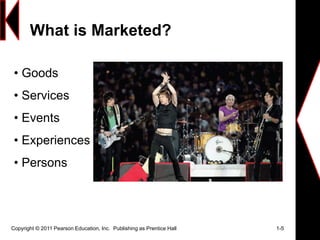
What is Marketed?
Copyright © 2011 Pearson Education, Inc. Publishing as Prentice Hall 1-5
• Goods
• Services
• Events
• Experiences
• Persons
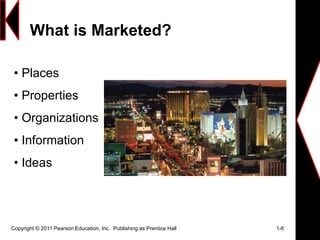
What is Marketed?
Copyright © 2011 Pearson Education, Inc. Publishing as Prentice Hall 1-6
• Places
• Properties
• Organizations
• Information
• Ideas
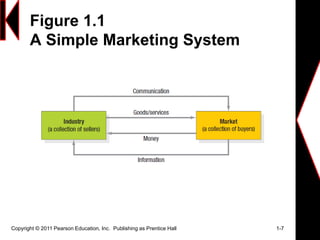
Figure 1.1
A Simple Marketing System
Copyright © 2011 Pearson Education, Inc. Publishing as Prentice Hall 1-7
Copyright © 2011 Pearson Education, Inc. Publishing as Prentice Hall 1-8
Key Customer Markets
 Consumer markets
 Business markets
 Global markets
 Nonprofit/Government markets
Core Concepts
 Needs, wants, and
demands
 Target markets,
positioning,
segmentation
 Offerings and
brands
 Value and
satisfaction
 Marketing channels
 Supply chain
 Competition
 Marketing
environment
 Marketing planning
Copyright © 2011 Pearson Education, Inc. Publishing as Prentice Hall 1-9
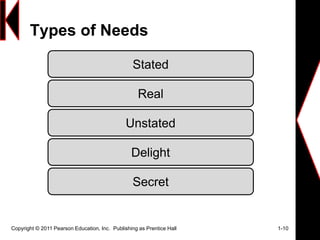
Types of Needs
Copyright © 2011 Pearson Education, Inc. Publishing as Prentice Hall 1-10
Stated
Real
Unstated
Delight
Secret
Target Markets,
Positioning & Segmentation
Copyright © 2011 Pearson Education, Inc. Publishing as Prentice Hall 1-11
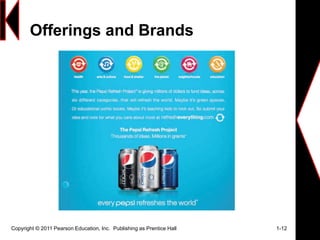
Offerings and Brands
Copyright © 2011 Pearson Education, Inc. Publishing as Prentice Hall 1-12
Value and Satisfaction
Copyright © 2011 Pearson Education, Inc. Publishing as Prentice Hall 1-13
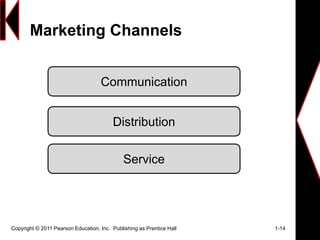
Marketing Channels
Copyright © 2011 Pearson Education, Inc. Publishing as Prentice Hall 1-14
Communication
Distribution
Service
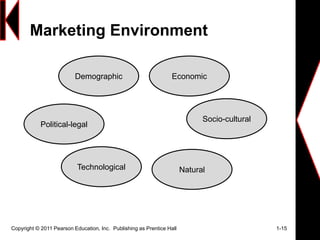
Marketing Environment
Copyright © 2011 Pearson Education, Inc. Publishing as Prentice Hall 1-15
Demographic Economic
Socio-cultural
NaturalTechnological
Political-legal
Major Societal Forces
 Network information
technology
 Globalization
 Deregulation
 Privatization
 Heightened competition
 Industry convergence
 Retail transformation
 Disintermediation
 Consumer buying power
 Consumer participation
 Consumer resistance
Copyright © 2011 Pearson Education, Inc. Publishing as Prentice Hall 1-16
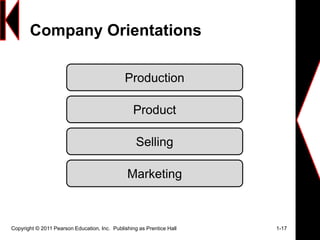
Company Orientations
Copyright © 2011 Pearson Education, Inc. Publishing as Prentice Hall 1-17
Production
Product
Selling
Marketing
Holistic Marketing
Copyright © 2011 Pearson Education, Inc. Publishing as Prentice Hall 1-18
Relationship Marketing
Copyright © 2011 Pearson Education, Inc. Publishing as Prentice Hall 1-19
Customers
Employees
Marketing Partners
Financial Community
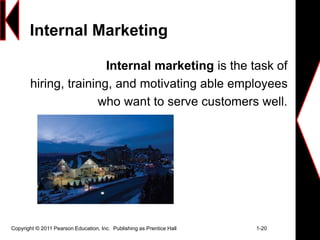
Internal Marketing
Internal marketing is the task of
hiring, training, and motivating able employees
who want to serve customers well.
Copyright © 2011 Pearson Education, Inc. Publishing as Prentice Hall 1-20
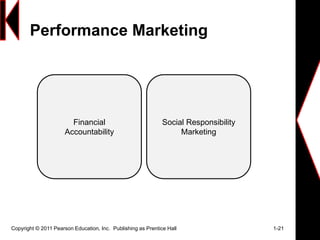
Performance Marketing
Copyright © 2011 Pearson Education, Inc. Publishing as Prentice Hall 1-21
Financial
Accountability
Social Responsibility
Marketing
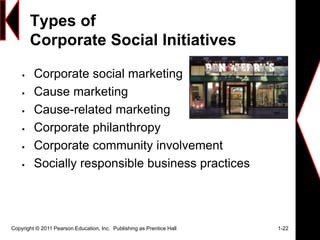
Types of
Corporate Social Initiatives
 Corporate social marketing
 Cause marketing
 Cause-related marketing
 Corporate philanthropy
 Corporate community involvement
 Socially responsible business practices
Copyright © 2011 Pearson Education, Inc. Publishing as Prentice Hall 1-22
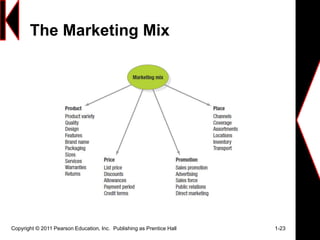
The Marketing Mix
Copyright © 2011 Pearson Education, Inc. Publishing as Prentice Hall 1-23
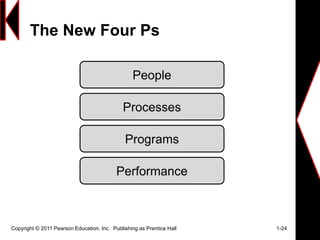
The New Four Ps
Copyright © 2011 Pearson Education, Inc. Publishing as Prentice Hall 1-24
Processes
People
Programs
Performance
Marketing Management Tasks
 Develop market strategies and plans
 Capture marketing insights
 Connect with customers
 Build strong brands
 Shape market offerings
 Deliver value
 Communicate value
 Create long-term growth
Copyright © 2011 Pearson Education, Inc. Publishing as Prentice Hall 1-25
For Review
 Why is marketing important?
 What is the scope of marketing?
 What are some fundamental marketing
concepts and new realities?
 What are the tasks necessary for successful
marketing management?
Copyright © 2011 Pearson Education, Inc. Publishing as Prentice Hall 1-26

Kotler framework 5e_01_sppt

  • 1.
    Framework for MarketingManagement 1 Defining Marketing for the 21st Century 1
  • 2.
    Chapter Questions  Whyis marketing important?  What is the scope of marketing?  What are some fundamental marketing concepts and new marketing realities?  What are the tasks necessary for successful marketing management? Copyright © 2011 Pearson Education, Inc. Publishing as Prentice Hall 1-2
  • 3.
    What is Marketing? Copyright© 2011 Pearson Education, Inc. Publishing as Prentice Hall 1-3 Marketing is an organizational function and a set of processes for creating, communicating, and delivering value to customers and for managing customer relationships in ways that benefit the organization and its stakeholders.
  • 4.
    What is MarketingManagement? Copyright © 2011 Pearson Education, Inc. Publishing as Prentice Hall 1-4 Marketing management is the art and science of choosing target markets and getting, keeping, and growing customers through creating, delivering, and communicating superior customer value.
  • 5.
    What is Marketed? Copyright© 2011 Pearson Education, Inc. Publishing as Prentice Hall 1-5 • Goods • Services • Events • Experiences • Persons
  • 6.
    What is Marketed? Copyright© 2011 Pearson Education, Inc. Publishing as Prentice Hall 1-6 • Places • Properties • Organizations • Information • Ideas
  • 7.
    Figure 1.1 A SimpleMarketing System Copyright © 2011 Pearson Education, Inc. Publishing as Prentice Hall 1-7
  • 8.
    Copyright © 2011Pearson Education, Inc. Publishing as Prentice Hall 1-8 Key Customer Markets  Consumer markets  Business markets  Global markets  Nonprofit/Government markets
  • 9.
    Core Concepts  Needs,wants, and demands  Target markets, positioning, segmentation  Offerings and brands  Value and satisfaction  Marketing channels  Supply chain  Competition  Marketing environment  Marketing planning Copyright © 2011 Pearson Education, Inc. Publishing as Prentice Hall 1-9
  • 10.
    Types of Needs Copyright© 2011 Pearson Education, Inc. Publishing as Prentice Hall 1-10 Stated Real Unstated Delight Secret
  • 11.
    Target Markets, Positioning &Segmentation Copyright © 2011 Pearson Education, Inc. Publishing as Prentice Hall 1-11
  • 12.
    Offerings and Brands Copyright© 2011 Pearson Education, Inc. Publishing as Prentice Hall 1-12
  • 13.
    Value and Satisfaction Copyright© 2011 Pearson Education, Inc. Publishing as Prentice Hall 1-13
  • 14.
    Marketing Channels Copyright ©2011 Pearson Education, Inc. Publishing as Prentice Hall 1-14 Communication Distribution Service
  • 15.
    Marketing Environment Copyright ©2011 Pearson Education, Inc. Publishing as Prentice Hall 1-15 Demographic Economic Socio-cultural NaturalTechnological Political-legal
  • 16.
    Major Societal Forces Network information technology  Globalization  Deregulation  Privatization  Heightened competition  Industry convergence  Retail transformation  Disintermediation  Consumer buying power  Consumer participation  Consumer resistance Copyright © 2011 Pearson Education, Inc. Publishing as Prentice Hall 1-16
  • 17.
    Company Orientations Copyright ©2011 Pearson Education, Inc. Publishing as Prentice Hall 1-17 Production Product Selling Marketing
  • 18.
    Holistic Marketing Copyright ©2011 Pearson Education, Inc. Publishing as Prentice Hall 1-18
  • 19.
    Relationship Marketing Copyright ©2011 Pearson Education, Inc. Publishing as Prentice Hall 1-19 Customers Employees Marketing Partners Financial Community
  • 20.
    Internal Marketing Internal marketingis the task of hiring, training, and motivating able employees who want to serve customers well. Copyright © 2011 Pearson Education, Inc. Publishing as Prentice Hall 1-20
  • 21.
    Performance Marketing Copyright ©2011 Pearson Education, Inc. Publishing as Prentice Hall 1-21 Financial Accountability Social Responsibility Marketing
  • 22.
    Types of Corporate SocialInitiatives  Corporate social marketing  Cause marketing  Cause-related marketing  Corporate philanthropy  Corporate community involvement  Socially responsible business practices Copyright © 2011 Pearson Education, Inc. Publishing as Prentice Hall 1-22
  • 23.
    The Marketing Mix Copyright© 2011 Pearson Education, Inc. Publishing as Prentice Hall 1-23
  • 24.
    The New FourPs Copyright © 2011 Pearson Education, Inc. Publishing as Prentice Hall 1-24 Processes People Programs Performance
  • 25.
    Marketing Management Tasks Develop market strategies and plans  Capture marketing insights  Connect with customers  Build strong brands  Shape market offerings  Deliver value  Communicate value  Create long-term growth Copyright © 2011 Pearson Education, Inc. Publishing as Prentice Hall 1-25
  • 26.
    For Review  Whyis marketing important?  What is the scope of marketing?  What are some fundamental marketing concepts and new realities?  What are the tasks necessary for successful marketing management? Copyright © 2011 Pearson Education, Inc. Publishing as Prentice Hall 1-26