Knowledge Management:
Disciplinary Background of Change Management
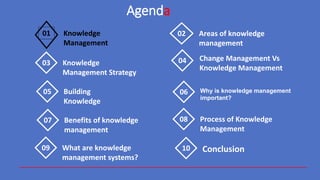
Agenda
Knowledge
Management
01 Areas of knowledge
management
02
Knowledge
Management Strategy
03
Change Management Vs
Knowledge Management
04
Building
Knowledge
05 Why is knowledge management
important?
06
Process of Knowledge
Management
08Benefits of knowledge
management
07
What are knowledge
management systems?
09 Conclusion10
Knowledge
Management
It is the conscious process of defining, structuring,
retaining and sharing the knowledge and experience of
employees within an organization.
The main goal of knowledge management is to
improve an organization's efficiency and save
knowledge within the company.
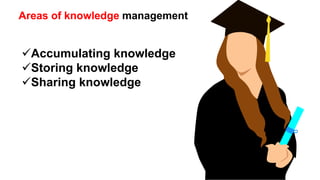
Areas of knowledge management
Accumulating knowledge
Storing knowledge
Sharing knowledge
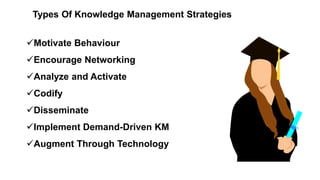
Types Of Knowledge Management Strategies
Motivate Behaviour
Encourage Networking
Analyze and Activate
Codify
Disseminate
Implement Demand-Driven KM
Augment Through Technology
Relationship Between Change Management and Knowledge
Management
While building knowledge is an important part of change
management, successful change does not begin with knowledge.
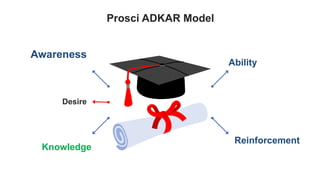
Knowledge is the third milestone in the Prosci ADKAR Model, a
simple but effective model for individual change made up of five
building blocks of change.
Successful change first builds awareness and desire, and then
knowledge. Once individuals have the knowledge to change,
they must move through the final milestones of ADKAR, ability
and reinforcement.
Prosci ADKAR Model
Awareness
Desire
Knowledge
Knowledge
Ability
Reinforcement
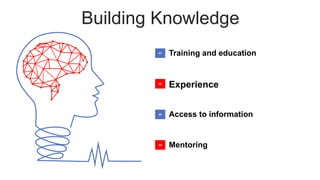
Building Knowledge
Training and education01
Experience02
Access to information03
Mentoring04
Why is knowledge management important?
For organization’s decision-making ability.
For best practices and employee turnover is reduced.
 overall expertise held within the organization.
Training of New Employees
Benefits of knowledge management
More efficient workplace
Faster, better decision making
Increased collaboration
Building organizational knowledge
Employee on boarding and training process is optimized
Increased employee happiness and retention, due to the
valuing of knowledge, training, and innovation
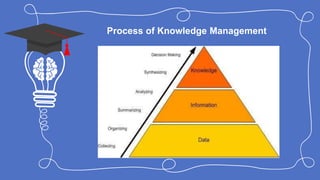
Process of Knowledge Management
What are knowledge management systems?
Feedback database
Research files
Conclusion
Knowledge management is an essential practice for
enterprise organizations. Organizational knowledge
adds long-term benefits to the organization in terms of
finances, culture and people.
Therefore, all mature organizations should take
necessary steps for knowledge management in order to
enhance the business operations and organization's
overall capability.
THANK YOU
Knowledge Management

Knowledge managment

  • 1.
  • 2.
    Agenda Knowledge Management 01 Areas ofknowledge management 02 Knowledge Management Strategy 03 Change Management Vs Knowledge Management 04 Building Knowledge 05 Why is knowledge management important? 06 Process of Knowledge Management 08Benefits of knowledge management 07 What are knowledge management systems? 09 Conclusion10
  • 3.
    Knowledge Management It is theconscious process of defining, structuring, retaining and sharing the knowledge and experience of employees within an organization. The main goal of knowledge management is to improve an organization's efficiency and save knowledge within the company.
  • 4.
    Areas of knowledgemanagement Accumulating knowledge Storing knowledge Sharing knowledge
  • 5.
    Types Of KnowledgeManagement Strategies Motivate Behaviour Encourage Networking Analyze and Activate Codify Disseminate Implement Demand-Driven KM Augment Through Technology
  • 6.
    Relationship Between ChangeManagement and Knowledge Management While building knowledge is an important part of change management, successful change does not begin with knowledge. Knowledge is the third milestone in the Prosci ADKAR Model, a simple but effective model for individual change made up of five building blocks of change. Successful change first builds awareness and desire, and then knowledge. Once individuals have the knowledge to change, they must move through the final milestones of ADKAR, ability and reinforcement.
  • 7.
  • 8.
    Building Knowledge Training andeducation01 Experience02 Access to information03 Mentoring04
  • 9.
    Why is knowledgemanagement important? For organization’s decision-making ability. For best practices and employee turnover is reduced.  overall expertise held within the organization. Training of New Employees
  • 10.
    Benefits of knowledgemanagement More efficient workplace Faster, better decision making Increased collaboration Building organizational knowledge Employee on boarding and training process is optimized Increased employee happiness and retention, due to the valuing of knowledge, training, and innovation
  • 11.
  • 12.
    What are knowledgemanagement systems? Feedback database Research files
  • 13.
    Conclusion Knowledge management isan essential practice for enterprise organizations. Organizational knowledge adds long-term benefits to the organization in terms of finances, culture and people. Therefore, all mature organizations should take necessary steps for knowledge management in order to enhance the business operations and organization's overall capability.
  • 14.