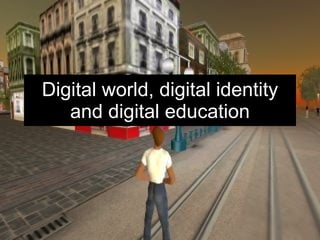
Digital world, digital identity and digital education
Content Knowledge society and technological  developments Impact on behaviour and identity Need for different skills Consequences  for education
Source: http://www.flickr.com/ photos/eisfrei/94971892/ Complex work, multidisciplinary  Service-based Out of the box thinking Networking Recognition of patterns Collaboration
Source:  http://www.slideshare.net/igorterhalle Technological developments Wireless & mobile technology (internet always available) Ubiquitous computing Democratisation technology (OSS, software on a stick, SaaS) Google Docs, Live@EDu Social software (easy to use, user generated content)
Generatieverschil Internetgebruik Figure: Social Technographics Profiles Differ Significantly By Age (source: Forrester / BusinessWeek)  Young Teens (12 - 17): 66% active  Youth (18 - 21): 83% active  Generation Y (18 - 26): 79% active  Generation X (27 - 40): 58% active  Young Boomers (41 - 50): 46% active  Older Boomers (51 - 61): 39% active  Seniors (62+): 30% active Creators Critics Collectors Joiners Spectators Inactives
Source:  Teachers divided over merits of  Facebook  and YouTube in the classroom Next generation applications: integral part of children’s personal lives (13-18 years): - 54%: use YouTube - 50%: use social networking sites - 47%: use Wikipedia in their spare time Teachers do use in education: 20% Wikipedia  5% YouTube Useful at school: - 44 per cent stated Wikipedia - 35 per cent chose instant messaging - 34 per cent said YouTube
Technology is influencing behaviour We shape our tools and afterwards our tools shape us (Marshall Mcluhan)  Blogging in the garden Twittering in the train Making phonecalls on the street Mailing from hotel rooms Virtual social networks Construct your own Top of the Pops Different ways of learning
Dark side of web 2.0… ‘ Happy slapping’ Privacy My ex…. My future ex  ( Tricia Walsh-Smith )  Web 2.0 hooliganism Shared ignorance
“ Everybody is a brand  on the internet” De Volkskrant, March 15 2008
My digital identity http://www.wilfredrubens.com Editor http://www.e-learning.nl http://twitter.com/wrubens  http://del.icio.us/wrubens http://www.bloglines.com/ public/wrubens http://www.flickr.com/photos/ wilfredrubens/ http://www.slideshare.net/wrubens LinkedIn, Facebook, Plaxo, Hyves  Different articles on technology enhanced learning (online)
Possible advantages digital identity Becoming famous Networking, contacts Work Freelance Benevolence But…it can work against you Source: Hans van Mestrum
This picture… Source: http://www.flickr.com/photos/asurroca/39864899/ Can be seen by her future employer
Trouw, 18 september 2008 Trouw, 27 september 2008
Source:  http://www.slideshare.net/igorterhalle We shape our tools and afterwards our tools shape us (Marshall Mcluhan)   Changing world Especially young people (increasingly) We develop a digital identity
21st Century Skills Source: http://www.21stcenturyskills.org
21st Century Skills  (examples) Learning and Innovation Skills  Creativity and Innovation Skills Critical Thinking and Problem Solving Skills Communication and Collaboration Skills Information, Media and Technology Skills Information Literacy Media Literacy ICT Literacy Life and Career Skills Flexibility & Adaptability Initiative & Self-Direction Social & Cross-Cultural Skills
Impact on education Information and Media literacy  (21st century skills) (5 measures)
Source: website Volkskrant, 21-2-2008
Teachers and parents often do not have a clue….
Fysical measures
Commands and orders Source: http://www.volkskrantblog.nl/pub/mm/tempest/699/Image/20%20geboden.jpg
Old school behaviourism Fysical measures Commands and orders But what do you really learn from this?
Formulating policies together Source: http://budtheteacher.com/wiki/index.php?title=Student_Created_Blog_Policies
Address on behaviour Source: http://www.flickr.com/photos/fedfil/2102181492/
Integration in curriculum Source: http://www.flickr.com/photos/koolwaaij/413673951/ Information literacy, digital identity, privacy Learning  by doing
Creating assignments on YouTube http://felipeno.blogspot.com/2007/07/niekee-centre-en-la-haya-holanda.html
Developing multimedia posters (http://www.glogster.com)
Integrative approach  21st Century Skills Learning and Innovation Skills  Creativity  and Innovation Skills Critical Thinking and Problem Solving Skills Communication and  Collaboration Skills Information, Media and Technology Skills Information Literacy Media Literacy ICT Literacy
[email_address] http://www.wilfredrubens.com Source:  http://www.slideshare.net/igorterhalle

Keynote EFODL congres

  • 1.
    Digital world, digitalidentity and digital education
  • 2.
    Content Knowledge societyand technological developments Impact on behaviour and identity Need for different skills Consequences for education
  • 3.
    Source: http://www.flickr.com/ photos/eisfrei/94971892/Complex work, multidisciplinary Service-based Out of the box thinking Networking Recognition of patterns Collaboration
  • 4.
    Source: http://www.slideshare.net/igorterhalleTechnological developments Wireless & mobile technology (internet always available) Ubiquitous computing Democratisation technology (OSS, software on a stick, SaaS) Google Docs, Live@EDu Social software (easy to use, user generated content)
  • 5.
    Generatieverschil Internetgebruik Figure:Social Technographics Profiles Differ Significantly By Age (source: Forrester / BusinessWeek) Young Teens (12 - 17): 66% active Youth (18 - 21): 83% active Generation Y (18 - 26): 79% active Generation X (27 - 40): 58% active Young Boomers (41 - 50): 46% active Older Boomers (51 - 61): 39% active Seniors (62+): 30% active Creators Critics Collectors Joiners Spectators Inactives
  • 6.
    Source: Teachersdivided over merits of Facebook and YouTube in the classroom Next generation applications: integral part of children’s personal lives (13-18 years): - 54%: use YouTube - 50%: use social networking sites - 47%: use Wikipedia in their spare time Teachers do use in education: 20% Wikipedia 5% YouTube Useful at school: - 44 per cent stated Wikipedia - 35 per cent chose instant messaging - 34 per cent said YouTube
  • 7.
    Technology is influencingbehaviour We shape our tools and afterwards our tools shape us (Marshall Mcluhan) Blogging in the garden Twittering in the train Making phonecalls on the street Mailing from hotel rooms Virtual social networks Construct your own Top of the Pops Different ways of learning
  • 8.
    Dark side ofweb 2.0… ‘ Happy slapping’ Privacy My ex…. My future ex ( Tricia Walsh-Smith ) Web 2.0 hooliganism Shared ignorance
  • 9.
    “ Everybody isa brand on the internet” De Volkskrant, March 15 2008
  • 10.
    My digital identityhttp://www.wilfredrubens.com Editor http://www.e-learning.nl http://twitter.com/wrubens http://del.icio.us/wrubens http://www.bloglines.com/ public/wrubens http://www.flickr.com/photos/ wilfredrubens/ http://www.slideshare.net/wrubens LinkedIn, Facebook, Plaxo, Hyves Different articles on technology enhanced learning (online)
  • 11.
    Possible advantages digitalidentity Becoming famous Networking, contacts Work Freelance Benevolence But…it can work against you Source: Hans van Mestrum
  • 12.
    This picture… Source:http://www.flickr.com/photos/asurroca/39864899/ Can be seen by her future employer
  • 13.
    Trouw, 18 september2008 Trouw, 27 september 2008
  • 14.
    Source: http://www.slideshare.net/igorterhalleWe shape our tools and afterwards our tools shape us (Marshall Mcluhan) Changing world Especially young people (increasingly) We develop a digital identity
  • 15.
    21st Century SkillsSource: http://www.21stcenturyskills.org
  • 16.
    21st Century Skills (examples) Learning and Innovation Skills Creativity and Innovation Skills Critical Thinking and Problem Solving Skills Communication and Collaboration Skills Information, Media and Technology Skills Information Literacy Media Literacy ICT Literacy Life and Career Skills Flexibility & Adaptability Initiative & Self-Direction Social & Cross-Cultural Skills
  • 17.
    Impact on educationInformation and Media literacy (21st century skills) (5 measures)
  • 18.
  • 19.
    Teachers and parentsoften do not have a clue….
  • 20.
  • 21.
    Commands and ordersSource: http://www.volkskrantblog.nl/pub/mm/tempest/699/Image/20%20geboden.jpg
  • 22.
    Old school behaviourismFysical measures Commands and orders But what do you really learn from this?
  • 23.
    Formulating policies togetherSource: http://budtheteacher.com/wiki/index.php?title=Student_Created_Blog_Policies
  • 24.
    Address on behaviourSource: http://www.flickr.com/photos/fedfil/2102181492/
  • 25.
    Integration in curriculumSource: http://www.flickr.com/photos/koolwaaij/413673951/ Information literacy, digital identity, privacy Learning by doing
  • 26.
    Creating assignments onYouTube http://felipeno.blogspot.com/2007/07/niekee-centre-en-la-haya-holanda.html
  • 27.
    Developing multimedia posters(http://www.glogster.com)
  • 28.
    Integrative approach 21st Century Skills Learning and Innovation Skills Creativity and Innovation Skills Critical Thinking and Problem Solving Skills Communication and Collaboration Skills Information, Media and Technology Skills Information Literacy Media Literacy ICT Literacy
  • 29.
    [email_address] http://www.wilfredrubens.com Source: http://www.slideshare.net/igorterhalle