The document discusses input/output (I/O) and file management in operating systems. It covers several key topics:
1) I/O devices are controlled by the OS and include input devices like keyboards and output devices like monitors. Files are managed through a logical, uniform view abstracted from physical storage properties.
2) A file is a collection of related information defined by its creator, such as programs, data, text, or formatted records. File management involves creation, deletion, mapping to storage, and backup.
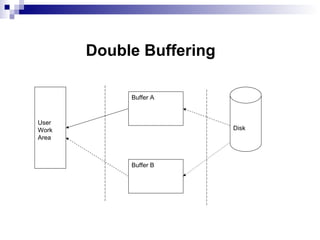
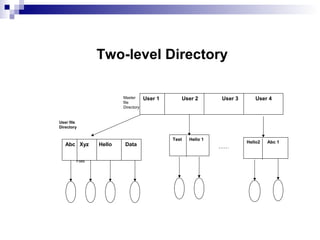
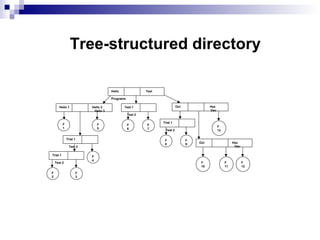
3) The OS implements I/O buffering and caching to improve performance and address speed mismatches between devices. It also performs disk scheduling and structures file storage through directories, indexing,