Oleh :
- Sulaiman al-zain
-humaizy
-Syaiful
--rizcha rinanda
-noviana kibas
- Maria
breast cancer
breast cancer
What is Breast Cancer. . .
.?
Breast cancer is a disease caused by
malignant cells (cancer) that grows in the
breast tissue.
These cells usually appear in the breast ducts
or lobula. Cancer cells can spread between
tissues or organs that exist and to other body
parts.
Section Header
Breast cancer is the second biggest cause of deathfor women today. In
Singapore, one of 16 women will be diagnosed withbreast cancer in her lifetime. Chinese
womenhave a higherrisk comparedwithMalays or Indians approximately10%to
20%. The highest cases occurred in the age group55-59 years.
The risk of developing breast cancer increases withage. The good news now is that more
women are nowable to fight breast cancerbecause of earlydetection and improving the
qualityof treatment.
Factors triggering this cancer is not yet known. But
this can be tracedfroma family history of breast
cancer, early menstrual cycle, or the possibility of
other riskfactors. Because it is so difficult to be sure,
each of us has the risk of breast cancer, especially
whenwe are aged40 years or more. Although the
causes are still unknown, but complete healing is
possible withearly detection through regular breast
examinations.
Signs of Breast Cancer:
• Anatomy of Breast
- Painless lumps in the breast
- Itching and rash are continuously around the -
nipple
- Bleeding or discharge from the nipple that is not usually
- Breast skin to swell and thicken
- Breast skin wrinkle or become concave
- Hilt sinking inside
 Clinicalexamination- particularlyif lumps,dischargefromthe nipple,or
breastchangesarenot uncommon.
 Mammograms- Thismethodcandetectchangessuchasdensityor the
occurrenceof abnormalcalciumdeposits.
 UltrasoundScan- Thismethodisusedto detectthespecificareathatis
foundina mammogramor canbe doneto detectabnormalconditionsthat
arenot visibleonthemammogram.An ultrasoundscancandistinguish
betweena solidmass,whichisthepossibilityof cancer,or cystsfilledwith
fluidwhichusuallyisnot a cancer.
Magnetic resonance imaging, MRI - In some cases,
patients should undergo MRI PET to obtain a
clearer examination resultsin the areaof
suspected cancer. This method is veryuseful for
youngerwomen because of the age they have
breast tissue densitygreater and conventional
visual testssuch as mammograms or ultrasounds
become less sensitive and specific for the detection
of breast cancer.
stage breast cancer
STADIUM 1
The tumor is still very small and
has not spread and there is no
point in lymph vessels
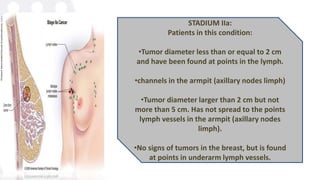
STADIUM IIa:
Patients in this condition:
•Tumor diameter less than or equal to 2 cm
and have been found at points in the lymph.
•channels in the armpit (axillary nodes limph)
•Tumor diameter larger than 2 cm but not
more than 5 cm. Has not spread to the points
lymph vessels in the armpit (axillary nodes
limph).
•No signs of tumors in the breast, but is found
at points in underarm lymph vessels.
• STADIUM IIB:
Patients in this condition:
1. The diameter of tumors larger than
2cm but not exceeding 5 cm.
• 2.The issuing spread at points in
underarm lymph vessels.
3.Diameter tumors larger than 5 cm
but has not spread.
• STADIUM III A:
Patients in this condition:
1. The diameter of tumors smaller than 5
centimeters and has spread to the
points in the underarm lymph vessels.
2. The diameter of the tumor is larger than
5 centimeters and has spread to the
points in the underarm lymph vessels.
STAGE III B:
The tumor has spread to the chest wall
or cause swelling can also fester in the
breast. Or diagnosed as Inflammatory
Breast Cancer.
Could have been or could also have
spread to the points on the lymph
vessels in the armpit and upper arm,
but did not spread to other parts of the
body organs.
• STADIUM IIIC:
As with stage IIIB, but has spread
to the points on the lymph vessels
in the group N3 (cancer has
spread more than 10 points below
the duct lymph collarbone).
• STADIUM 4:
The size of the tumor can be
whatever, but it has spread to
distant locations, namely:
Bones, lungs, liver or ribs.
Steps to Prevent Breast
Cancer
• 1.Avoid alcohol
The use of alcohol is the most established
for breast cancer. Health studies show
consuming more than one alcoholic drink a
day can increase the risk of breast cancer
as much as 20-25 percent.
Source: 10 Steps to Prevent Breast Cancer
http://bidanku.com/10-langkah-mencegah-
kanker-payudara#ixzz3JVbQrm4h
2. Consuming fruits and vegetables
Eat seven or more servings of vegetables and fruit every day.
Vegetables for breast cancer protection include all vegetables
(broccoli, cabbage, brussels sprouts, cauliflower), greens
(collards, kale, spinach), carrots and tomatoes. Fruits that have
more content to prevent breast cancer is orange, berry and
cherry.
3. Exercise regularly
Many studies have shown that regular exercise provides
powerful protection against breast cancer. Do it for 30 minutes
to perform moderate aerobic activity (brisk walking) on a
regular basis
so, if you want to
maintain your
health ???
Kanker payudara

Kanker payudara

  • 1.
    Oleh : - Sulaimanal-zain -humaizy -Syaiful --rizcha rinanda -noviana kibas - Maria breast cancer
  • 2.
    breast cancer What isBreast Cancer. . . .?
  • 3.
    Breast cancer isa disease caused by malignant cells (cancer) that grows in the breast tissue. These cells usually appear in the breast ducts or lobula. Cancer cells can spread between tissues or organs that exist and to other body parts.
  • 4.
  • 5.
    Breast cancer isthe second biggest cause of deathfor women today. In Singapore, one of 16 women will be diagnosed withbreast cancer in her lifetime. Chinese womenhave a higherrisk comparedwithMalays or Indians approximately10%to 20%. The highest cases occurred in the age group55-59 years. The risk of developing breast cancer increases withage. The good news now is that more women are nowable to fight breast cancerbecause of earlydetection and improving the qualityof treatment.
  • 7.
    Factors triggering thiscancer is not yet known. But this can be tracedfroma family history of breast cancer, early menstrual cycle, or the possibility of other riskfactors. Because it is so difficult to be sure, each of us has the risk of breast cancer, especially whenwe are aged40 years or more. Although the causes are still unknown, but complete healing is possible withearly detection through regular breast examinations.
  • 8.
    Signs of BreastCancer: • Anatomy of Breast - Painless lumps in the breast - Itching and rash are continuously around the - nipple - Bleeding or discharge from the nipple that is not usually - Breast skin to swell and thicken - Breast skin wrinkle or become concave - Hilt sinking inside
  • 10.
     Clinicalexamination- particularlyiflumps,dischargefromthe nipple,or breastchangesarenot uncommon.  Mammograms- Thismethodcandetectchangessuchasdensityor the occurrenceof abnormalcalciumdeposits.  UltrasoundScan- Thismethodisusedto detectthespecificareathatis foundina mammogramor canbe doneto detectabnormalconditionsthat arenot visibleonthemammogram.An ultrasoundscancandistinguish betweena solidmass,whichisthepossibilityof cancer,or cystsfilledwith fluidwhichusuallyisnot a cancer.
  • 11.
    Magnetic resonance imaging,MRI - In some cases, patients should undergo MRI PET to obtain a clearer examination resultsin the areaof suspected cancer. This method is veryuseful for youngerwomen because of the age they have breast tissue densitygreater and conventional visual testssuch as mammograms or ultrasounds become less sensitive and specific for the detection of breast cancer.
  • 12.
    stage breast cancer STADIUM1 The tumor is still very small and has not spread and there is no point in lymph vessels
  • 13.
    STADIUM IIa: Patients inthis condition: •Tumor diameter less than or equal to 2 cm and have been found at points in the lymph. •channels in the armpit (axillary nodes limph) •Tumor diameter larger than 2 cm but not more than 5 cm. Has not spread to the points lymph vessels in the armpit (axillary nodes limph). •No signs of tumors in the breast, but is found at points in underarm lymph vessels.
  • 14.
    • STADIUM IIB: Patientsin this condition: 1. The diameter of tumors larger than 2cm but not exceeding 5 cm. • 2.The issuing spread at points in underarm lymph vessels. 3.Diameter tumors larger than 5 cm but has not spread.
  • 15.
    • STADIUM IIIA: Patients in this condition: 1. The diameter of tumors smaller than 5 centimeters and has spread to the points in the underarm lymph vessels. 2. The diameter of the tumor is larger than 5 centimeters and has spread to the points in the underarm lymph vessels.
  • 16.
    STAGE III B: Thetumor has spread to the chest wall or cause swelling can also fester in the breast. Or diagnosed as Inflammatory Breast Cancer. Could have been or could also have spread to the points on the lymph vessels in the armpit and upper arm, but did not spread to other parts of the body organs.
  • 17.
    • STADIUM IIIC: Aswith stage IIIB, but has spread to the points on the lymph vessels in the group N3 (cancer has spread more than 10 points below the duct lymph collarbone).
  • 18.
    • STADIUM 4: Thesize of the tumor can be whatever, but it has spread to distant locations, namely: Bones, lungs, liver or ribs.
  • 19.
    Steps to PreventBreast Cancer • 1.Avoid alcohol The use of alcohol is the most established for breast cancer. Health studies show consuming more than one alcoholic drink a day can increase the risk of breast cancer as much as 20-25 percent. Source: 10 Steps to Prevent Breast Cancer http://bidanku.com/10-langkah-mencegah- kanker-payudara#ixzz3JVbQrm4h
  • 20.
    2. Consuming fruitsand vegetables Eat seven or more servings of vegetables and fruit every day. Vegetables for breast cancer protection include all vegetables (broccoli, cabbage, brussels sprouts, cauliflower), greens (collards, kale, spinach), carrots and tomatoes. Fruits that have more content to prevent breast cancer is orange, berry and cherry. 3. Exercise regularly Many studies have shown that regular exercise provides powerful protection against breast cancer. Do it for 30 minutes to perform moderate aerobic activity (brisk walking) on a regular basis
  • 22.
    so, if youwant to maintain your health ???