BREAST CANCER by  Kevin pineda  per 6
Semester 1 standars 4c  Students know  how mutations in the DNA sequence of a gene may or may not affect the expression of the gene, or the sequence of amino acids in an encoded protein.
Semester 2 standars 10d  Students know  there are important differences between bacteria and viruses with respect to their requirements for growth and replication, the body’s primary defenses against bacterial and viral infections, and effective treatments of those infections.
WHY DO I CHOSE THISE TOPIC  I CHOSE THIS TOPIC BECAUSE I WHANT TO GET MORE INFORMATION ABOUT THISE TOPIC
What is breast cancer ???
Breast cancer is a malignant tumor  Although breast cancer predominantly occurs in women it can also affect men
There are so many types of mutations  some are more common than others , and there are also combinations of cancer  The most common type of cancer is ducal carcinoma in situ (DCIS)
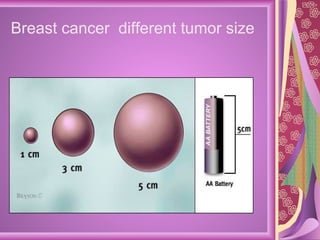
Breast cancer  different tumor size
Stages of breast cancer  There are 4 stages of breast cancer
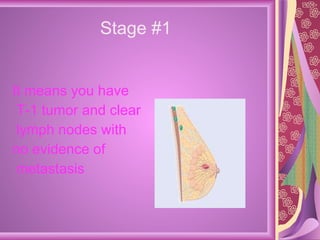
Stage #1 It means you have  T-1 tumor and clear lymph nodes with  no evidence of metastasis
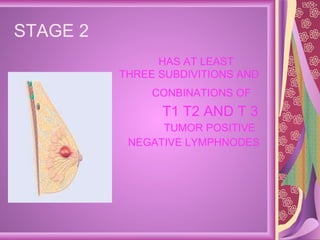
STAGE 2  HAS AT LEAST THREE SUBDIVITIONS AND CONBINATIONS OF   T1 T2 AND T 3  TUMOR POSITIVE  NEGATIVE LYMPHNODES
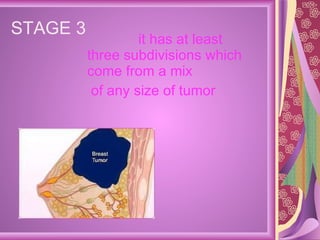
STAGE 3  it has at least three subdivisions which  come from a mix  of any size of tumor
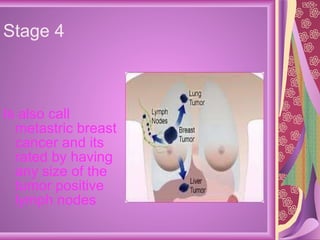
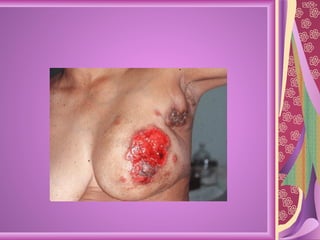
Stage 4 Is also call metastric breast cancer and its rated by having any size of the tumor positive lymph nodes
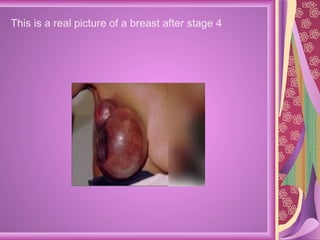
This is a real picture of a breast after stage 4
 
 
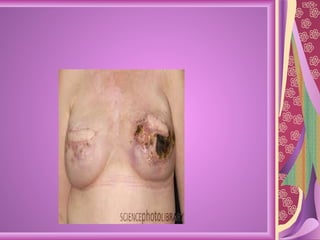
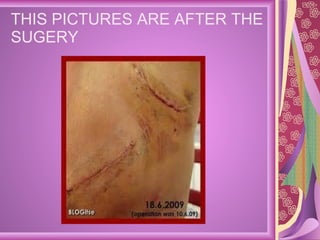
THIS PICTURES ARE AFTER THE SUGERY
 
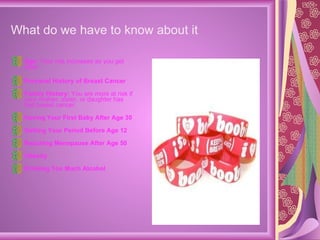
What do we have to know about it   Age:  Your risk increases as you get older. Personal History of Breast Cancer Family History:  You are more at risk if your mother, sister, or daughter has had breast cancer. Having Your First Baby After Age 30 Getting Your Period Before Age 12 Reaching Menopause After Age 50 Obesity Drinking Too Much Alcohol
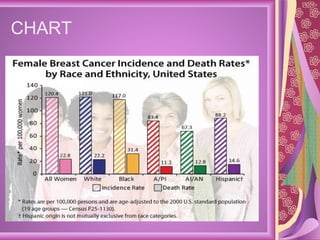
CHART
Facts about breast cancer  In 2011there were more than 2.6 million breast cancer survivors in the U.S  85% breast cancer occur in women who have no family history of breast cancer
Credits for web sites & pictures Dr.  Jaggernauth   2009 CANCER TREATMENT CENTER  http://www.cancercenter.com/search.cfm?q=BREAST+CANCER  NOVEMBER 10 4:33  CancerInformation.com last update: May 2010 cancer information  http://www.cancerinformation.com/  novemver 13 5:12 Marisa Weiss, M.D.   Page last modified on: August 30, 2011 breast cancer  http://www.breastcancer.org  navenver 7 8:25  Breast cancer tumor

Breast caner

  • 1.
    BREAST CANCER by Kevin pineda per 6
  • 2.
    Semester 1 standars4c Students know how mutations in the DNA sequence of a gene may or may not affect the expression of the gene, or the sequence of amino acids in an encoded protein.
  • 3.
    Semester 2 standars10d Students know there are important differences between bacteria and viruses with respect to their requirements for growth and replication, the body’s primary defenses against bacterial and viral infections, and effective treatments of those infections.
  • 4.
    WHY DO ICHOSE THISE TOPIC I CHOSE THIS TOPIC BECAUSE I WHANT TO GET MORE INFORMATION ABOUT THISE TOPIC
  • 5.
    What is breastcancer ???
  • 6.
    Breast cancer isa malignant tumor Although breast cancer predominantly occurs in women it can also affect men
  • 7.
    There are somany types of mutations some are more common than others , and there are also combinations of cancer The most common type of cancer is ducal carcinoma in situ (DCIS)
  • 8.
    Breast cancer different tumor size
  • 9.
    Stages of breastcancer There are 4 stages of breast cancer
  • 10.
    Stage #1 Itmeans you have T-1 tumor and clear lymph nodes with no evidence of metastasis
  • 11.
    STAGE 2 HAS AT LEAST THREE SUBDIVITIONS AND CONBINATIONS OF T1 T2 AND T 3 TUMOR POSITIVE NEGATIVE LYMPHNODES
  • 12.
    STAGE 3 it has at least three subdivisions which come from a mix of any size of tumor
  • 13.
    Stage 4 Isalso call metastric breast cancer and its rated by having any size of the tumor positive lymph nodes
  • 14.
    This is areal picture of a breast after stage 4
  • 15.
  • 16.
  • 17.
    THIS PICTURES AREAFTER THE SUGERY
  • 18.
  • 19.
    What do wehave to know about it Age:  Your risk increases as you get older. Personal History of Breast Cancer Family History:  You are more at risk if your mother, sister, or daughter has had breast cancer. Having Your First Baby After Age 30 Getting Your Period Before Age 12 Reaching Menopause After Age 50 Obesity Drinking Too Much Alcohol
  • 20.
  • 21.
    Facts about breastcancer In 2011there were more than 2.6 million breast cancer survivors in the U.S 85% breast cancer occur in women who have no family history of breast cancer
  • 22.
    Credits for websites & pictures Dr. Jaggernauth 2009 CANCER TREATMENT CENTER http://www.cancercenter.com/search.cfm?q=BREAST+CANCER NOVEMBER 10 4:33 CancerInformation.com last update: May 2010 cancer information http://www.cancerinformation.com/ novemver 13 5:12 Marisa Weiss, M.D. Page last modified on: August 30, 2011 breast cancer http://www.breastcancer.org navenver 7 8:25 Breast cancer tumor