FORMS OF DRAMA
Tragedy

   The drama exposes the plight and suffering of
    humans to its audience.

   The theme of a tragedy usually rotates around
    ruination of dynasty, downfall of
    man, emotional betrayals, moral
    setback, personal loss, death and denials. A
    tragedy when composed and enacted well can
    touch your sentiments deeply
Traditional Tragedies:


  the hero or heroine of the play is an "extraordinary
character“ who usually gets caught in a series of tragic
circumstances

 The hero then accepts responsibility for his or her
actions and at most times shows a willingness to
  suffer
for whatever they deserve.

   In traditional tragedy the language is verse

   In Traditional tragedies there are many morals, and
    hold
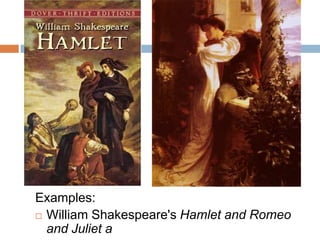
Examples:
 William Shakespeare's Hamlet and Romeo
  and Juliet a
Modern Tragedies


   characters are those who stand as symbolic
    figures for important segments of society

   focuses more on non-verbal expression.

   purpose was to express things through what is
    called the "subtext" of a play.

Ex. Lanford Wilson’s Fifth of July
   Henrik Ibsen's A Doll's House
   Arthur Miller's The Crucible
Tragicomedy
   a literary genre that blends aspects of
    both tragic and comic forms. Most often seen
    in dramatic literature

   In a tragicomedy, the action and subject matter
    seem to require a tragic ending, but it is
    avoided by a reversal which leads to a happy
    ending; sometimes the tragicomedy alternates
    serious and comic actions throughout the play.
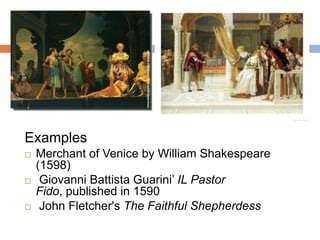
Examples
   Merchant of Venice by William Shakespeare
    (1598)
    Giovanni Battista Guarini’ IL Pastor
    Fido, published in 1590
    John Fletcher's The Faithful Shepherdess
Melodrama
   Melodrama is exaggeration of emotions. It's
    marked by surge of emotions, which is a
    technique to make the character and the plot
    more appealing to the audience.

   A melodrama often fails to derive applause
    because excessive display of emotions
    becomes sheer monotonous. On the contrary
    a superbly executed melodramatic plot can
    absorb you completely within it.
Examples:

Jacques Rousseau's Pygmalion
 Jacques Offenbach's Orpheus in the
  Underworld
A Tale of Mystery (1802) by Thomas Holcroft
he Castle Spectre (1797) by Matthew Gregory
  Lewis
The Woodsman's Hut (1814) by Samuel Arnold
The Broken Sword (1816) by William Dimond.
Musical
   a form of theatre that combines songs, spoken
    dialogue, acting, and dance.

   story and emotional content of the piece –
    humor, pathos, love, anger – are
    communicated through the
    words, music, movement and technical
    aspects of the entertainment as an integrated
    whole.
Examples:

Show Boat (1927)
Oklahoma! (1943).
West Side Story (1957),
The Fantasticks (1960),
Hair (1967),
A Chorus Line (1975),
Les Misérables (1985),
The Phantom of the Opera (1986),
MEMBERS:
   Juen, Jun Bryan
   Alba, Abigail
   Villarosa, Jan Nicole
   Mabus, Kyla Isabelle

Forms of Drama

  • 1.
  • 2.
    Tragedy  The drama exposes the plight and suffering of humans to its audience.  The theme of a tragedy usually rotates around ruination of dynasty, downfall of man, emotional betrayals, moral setback, personal loss, death and denials. A tragedy when composed and enacted well can touch your sentiments deeply
  • 3.
    Traditional Tragedies:  the hero or heroine of the play is an "extraordinary character“ who usually gets caught in a series of tragic circumstances  The hero then accepts responsibility for his or her actions and at most times shows a willingness to suffer for whatever they deserve.  In traditional tragedy the language is verse  In Traditional tragedies there are many morals, and hold
  • 4.
    Examples:  William Shakespeare'sHamlet and Romeo and Juliet a
  • 5.
    Modern Tragedies  characters are those who stand as symbolic figures for important segments of society  focuses more on non-verbal expression.  purpose was to express things through what is called the "subtext" of a play. Ex. Lanford Wilson’s Fifth of July Henrik Ibsen's A Doll's House Arthur Miller's The Crucible
  • 6.
    Tragicomedy  a literary genre that blends aspects of both tragic and comic forms. Most often seen in dramatic literature  In a tragicomedy, the action and subject matter seem to require a tragic ending, but it is avoided by a reversal which leads to a happy ending; sometimes the tragicomedy alternates serious and comic actions throughout the play.
  • 7.
    Examples  Merchant of Venice by William Shakespeare (1598)  Giovanni Battista Guarini’ IL Pastor Fido, published in 1590  John Fletcher's The Faithful Shepherdess
  • 8.
    Melodrama  Melodrama is exaggeration of emotions. It's marked by surge of emotions, which is a technique to make the character and the plot more appealing to the audience.  A melodrama often fails to derive applause because excessive display of emotions becomes sheer monotonous. On the contrary a superbly executed melodramatic plot can absorb you completely within it.
  • 9.
    Examples: Jacques Rousseau's Pygmalion Jacques Offenbach's Orpheus in the Underworld A Tale of Mystery (1802) by Thomas Holcroft he Castle Spectre (1797) by Matthew Gregory Lewis The Woodsman's Hut (1814) by Samuel Arnold The Broken Sword (1816) by William Dimond.
  • 10.
    Musical  a form of theatre that combines songs, spoken dialogue, acting, and dance.  story and emotional content of the piece – humor, pathos, love, anger – are communicated through the words, music, movement and technical aspects of the entertainment as an integrated whole.
  • 11.
    Examples: Show Boat (1927) Oklahoma!(1943). West Side Story (1957), The Fantasticks (1960), Hair (1967), A Chorus Line (1975), Les Misérables (1985), The Phantom of the Opera (1986),
  • 12.
    MEMBERS:  Juen, Jun Bryan  Alba, Abigail  Villarosa, Jan Nicole  Mabus, Kyla Isabelle