
Krishna Chaitanya T
Security & Privacy Research Lab
Infosys Labs
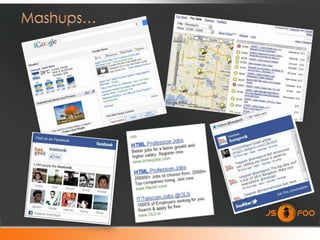
 A web application which combines content from
  multiple origins to create a new service

 Integrator-party combining the content

 Gadget-integrated content

 Provides more value add

 Fun, easy to DIY. It’s all JS madness!
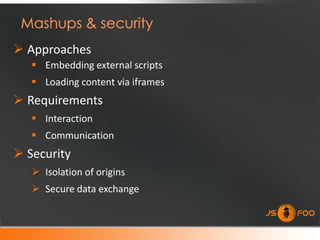
 Approaches
    Embedding external scripts
    Loading content via iframes
 Requirements
    Interaction
    Communication
 Security
    Isolation of origins
    Secure data exchange
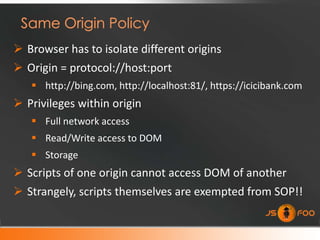
 Browser has to isolate different origins
 Origin = protocol://host:port
    http://bing.com, http://localhost:81/, https://icicibank.com
 Privileges within origin
    Full network access
    Read/Write access to DOM
    Storage
 Scripts of one origin cannot access DOM of another
 Strangely, scripts themselves are exempted from SOP!!
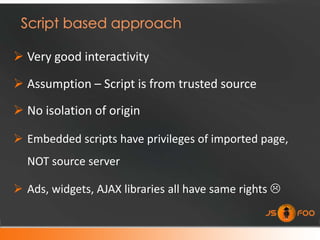
 Very good interactivity

 Assumption – Script is from trusted source

 No isolation of origin

 Embedded scripts have privileges of imported page,
  NOT source server

 Ads, widgets, AJAX libraries all have same rights 
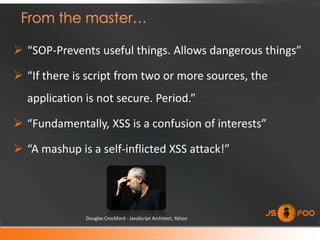
 “SOP-Prevents useful things. Allows dangerous things”

 “If there is script from two or more sources, the
  application is not secure. Period.”

 “Fundamentally, XSS is a confusion of interests”

 “A mashup is a self-inflicted XSS attack!”


              Douglas Crockford - JavaScript Architect, Yahoo
 Restricting JavaScript to a subset

 Object-capability security model
    Idea: If an object in JavaScript has no reference to
     “XMLHttpRequest” object, an AJAX call cannot be made.

 Popular JavaScript subsets:
    Caja (iGoogle)
    FBJS (Facebook)
    ADSafe (Yahoo)

 Learning curve, usability issues
 Separate security context for each origin

 Less interactive than JS approach

 Comply with SOP

   <!-- This is allowed -->
   <iframe src="sameDomainPage.html"> </iframe> //page in same origin
   alert(frames[0].contentDocument.body); //works fine

   <!-- This is **NOT** allowed -->
   <iframe src="http://crossDomain.com"> </iframe> //page outside origin
   alert(frames[0].contentDocument.body); //throws error
 Beware! Frames can be navigated to different origins!

 Frame navigation is NOT the same as SOP!

 Frame-Frame relationships
     Can script in Frame A modify DOM of Frame B?
     Can Script in Frame A “navigate” Frame B?
 <iframe src=“http://crossDomain.com"> </iframe>

 <!-- This is **NOT** allowed -->
 alert(frames[0].src); //throws error – SOP restriction

 <!-- This is allowed -->
 alert(frames[0].src=“http://bing.com”); //works fine - frame navigation
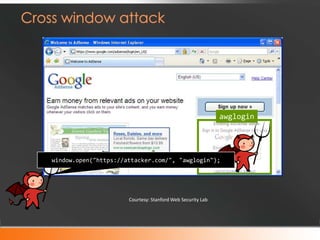
awglogin


window.open("https://attacker.com/", "awglogin");


                      Courtesy: Stanford Web Security Lab
top.frames[1].location = "http://www.attacker.com/...";
top.frames[2].location = "http://www.attacker.com/...";
                         ...


      Courtesy: Stanford Web Security Lab
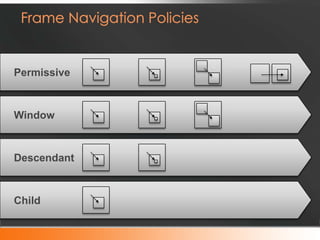
Permissive


Window


Descendant


Child
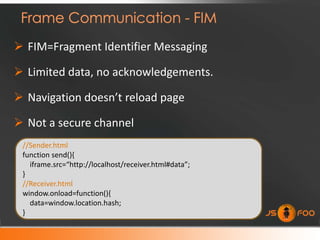
 FIM=Fragment Identifier Messaging

 Limited data, no acknowledgements.

 Navigation doesn’t reload page

 Not a secure channel
 //Sender.html
 function send(){
   iframe.src=“http://localhost/receiver.html#data”;
 }
 //Receiver.html
 window.onload=function(){
   data=window.location.hash;
 }
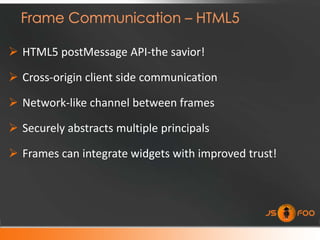
 HTML5 postMessage API-the savior!

 Cross-origin client side communication

 Network-like channel between frames

 Securely abstracts multiple principals

 Frames can integrate widgets with improved trust!
 Syntax:
otherwindow.postMessage(message, targetOrigin);


 targetOrigin can be a trusted source/wildcard *“*”+

//Posting message to a cross domain partner.
frames[0].postMessage(“Hello Partner!”, "http://localhost:81/");

//Retrieving message from the sender
window.onmessage = function (e) {
    if (e.origin == 'http://localhost') {
       //sanitize and accept data
    }
};
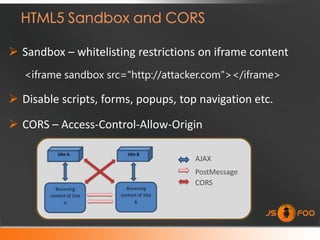
 Sandbox – whitelisting restrictions on iframe content
   <iframe sandbox src="http://attacker.com"></iframe>

 Disable scripts, forms, popups, top navigation etc.

 CORS – Access-Control-Allow-Origin

                                     AJAX
                                     PostMessage
                                     CORS
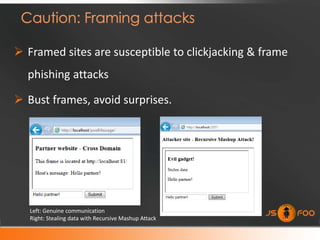
 Framed sites are susceptible to clickjacking & frame
  phishing attacks

 Bust frames, avoid surprises.


   Left: Genuine communication
   Right: Stealing data with Recursive Mashup Attack
References

 “Secure Frame Communication in Browsers”-Adam
  Barth, Collin Jackson, John Mitchell-Stanford Web
  Security Research Lab

 W3C HTML5 Specification -
  http://www.w3.org/TR/html5/

 Dive into HTML5 – http://diveintohtml5.info
http://novogeek.com

@novogeek

JSFoo Chennai 2012

  • 1.
    Krishna Chaitanya T Security& Privacy Research Lab Infosys Labs
  • 2.
     A webapplication which combines content from multiple origins to create a new service  Integrator-party combining the content  Gadget-integrated content  Provides more value add  Fun, easy to DIY. It’s all JS madness!
  • 4.
     Approaches  Embedding external scripts  Loading content via iframes  Requirements  Interaction  Communication  Security  Isolation of origins  Secure data exchange
  • 5.
     Browser hasto isolate different origins  Origin = protocol://host:port  http://bing.com, http://localhost:81/, https://icicibank.com  Privileges within origin  Full network access  Read/Write access to DOM  Storage  Scripts of one origin cannot access DOM of another  Strangely, scripts themselves are exempted from SOP!!
  • 6.
     Very goodinteractivity  Assumption – Script is from trusted source  No isolation of origin  Embedded scripts have privileges of imported page, NOT source server  Ads, widgets, AJAX libraries all have same rights 
  • 7.
     “SOP-Prevents usefulthings. Allows dangerous things”  “If there is script from two or more sources, the application is not secure. Period.”  “Fundamentally, XSS is a confusion of interests”  “A mashup is a self-inflicted XSS attack!” Douglas Crockford - JavaScript Architect, Yahoo
  • 8.
     Restricting JavaScriptto a subset  Object-capability security model  Idea: If an object in JavaScript has no reference to “XMLHttpRequest” object, an AJAX call cannot be made.  Popular JavaScript subsets:  Caja (iGoogle)  FBJS (Facebook)  ADSafe (Yahoo)  Learning curve, usability issues
  • 9.
     Separate securitycontext for each origin  Less interactive than JS approach  Comply with SOP <!-- This is allowed --> <iframe src="sameDomainPage.html"> </iframe> //page in same origin alert(frames[0].contentDocument.body); //works fine <!-- This is **NOT** allowed --> <iframe src="http://crossDomain.com"> </iframe> //page outside origin alert(frames[0].contentDocument.body); //throws error
  • 10.
     Beware! Framescan be navigated to different origins!  Frame navigation is NOT the same as SOP!  Frame-Frame relationships  Can script in Frame A modify DOM of Frame B?  Can Script in Frame A “navigate” Frame B? <iframe src=“http://crossDomain.com"> </iframe> <!-- This is **NOT** allowed --> alert(frames[0].src); //throws error – SOP restriction <!-- This is allowed --> alert(frames[0].src=“http://bing.com”); //works fine - frame navigation
  • 11.
  • 12.
    top.frames[1].location = "http://www.attacker.com/..."; top.frames[2].location= "http://www.attacker.com/..."; ... Courtesy: Stanford Web Security Lab
  • 13.
  • 14.
     FIM=Fragment IdentifierMessaging  Limited data, no acknowledgements.  Navigation doesn’t reload page  Not a secure channel //Sender.html function send(){ iframe.src=“http://localhost/receiver.html#data”; } //Receiver.html window.onload=function(){ data=window.location.hash; }
  • 15.
     HTML5 postMessageAPI-the savior!  Cross-origin client side communication  Network-like channel between frames  Securely abstracts multiple principals  Frames can integrate widgets with improved trust!
  • 16.
     Syntax: otherwindow.postMessage(message, targetOrigin); targetOrigin can be a trusted source/wildcard *“*”+ //Posting message to a cross domain partner. frames[0].postMessage(“Hello Partner!”, "http://localhost:81/"); //Retrieving message from the sender window.onmessage = function (e) { if (e.origin == 'http://localhost') { //sanitize and accept data } };
  • 17.
     Sandbox –whitelisting restrictions on iframe content <iframe sandbox src="http://attacker.com"></iframe>  Disable scripts, forms, popups, top navigation etc.  CORS – Access-Control-Allow-Origin AJAX PostMessage CORS
  • 18.
     Framed sitesare susceptible to clickjacking & frame phishing attacks  Bust frames, avoid surprises. Left: Genuine communication Right: Stealing data with Recursive Mashup Attack
  • 19.
    References  “Secure FrameCommunication in Browsers”-Adam Barth, Collin Jackson, John Mitchell-Stanford Web Security Research Lab  W3C HTML5 Specification - http://www.w3.org/TR/html5/  Dive into HTML5 – http://diveintohtml5.info
  • 20.