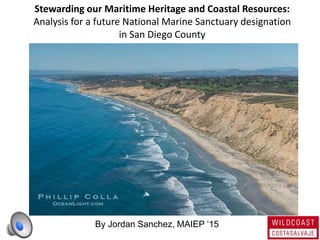
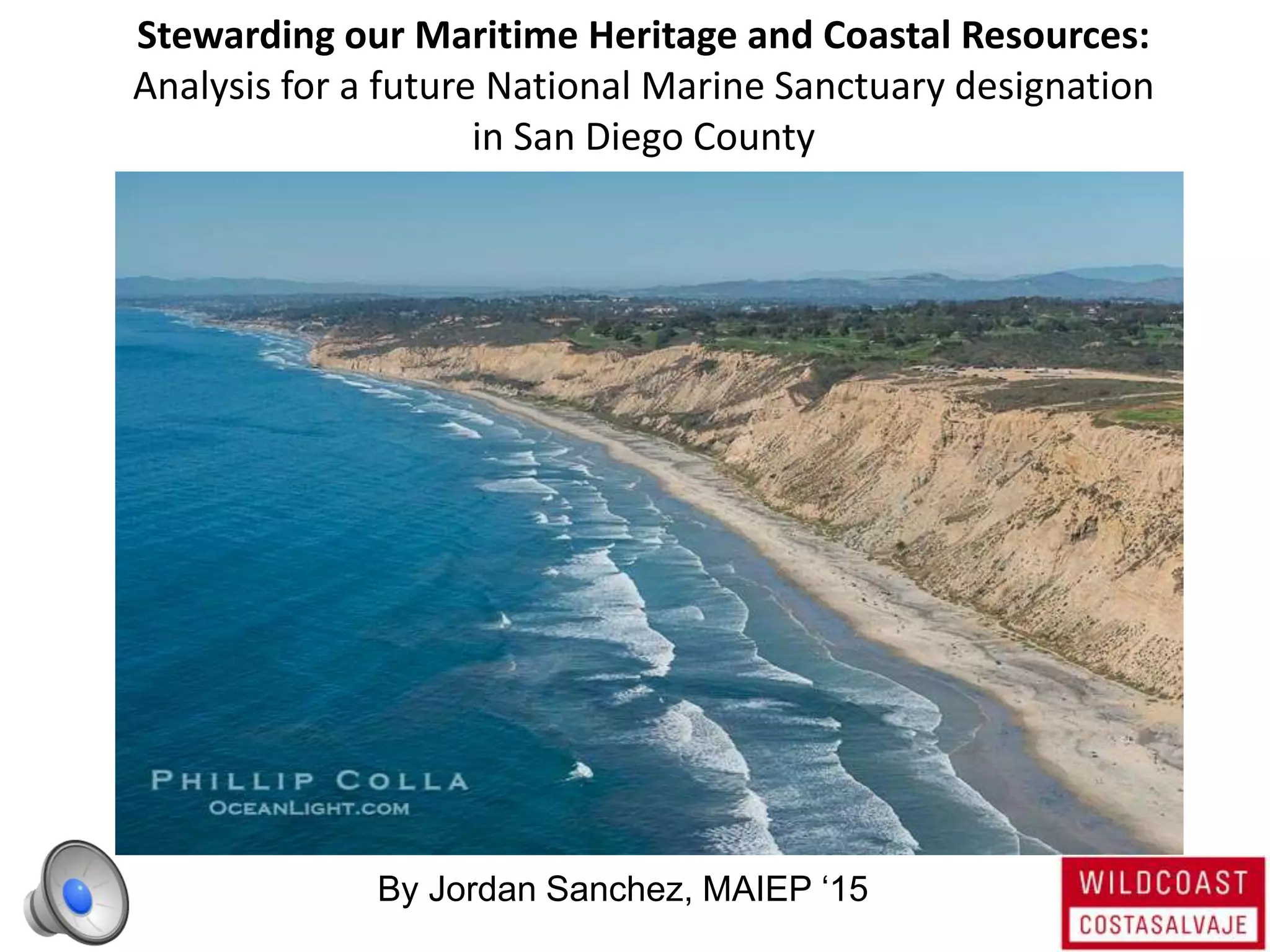
Stewarding our Maritime Heritage and Coastal Resources:
Analysis for a future National Marine Sanctuary designation
in San Diego County
By Jordan Sanchez, MAIEP ‘15
Ocean and Coastal Management Regime in SD County
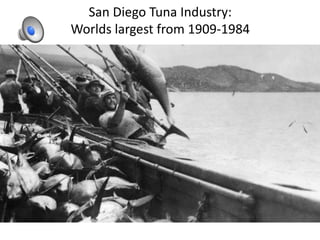
San Diego Tuna Industry:
Worlds largest from 1909-1984
Benefits of a NMS Designation in SD
1. Permanent ban on offshore oil
drilling and exploration, seabed
mining, and seismic testing
2. A Sanctuary designation would
promote scientific research and
bring NOAA funding into the region
3. Enhanced ocean education and
awareness for a large urban
community in San Diego County, a
first for the NMS Program
4. Would link together the existing
network of MPA’s and largest
remaining wetlands in California
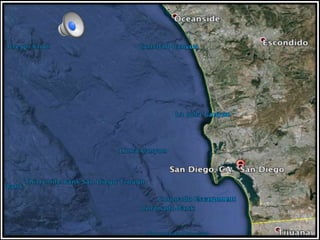
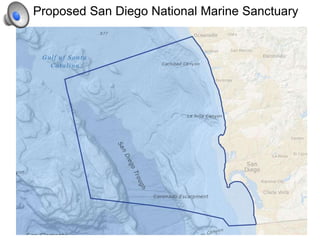
Proposed San Diego National Marine Sanctuary
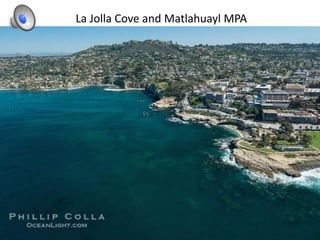
La Jolla Cove and Matlahuayl MPA
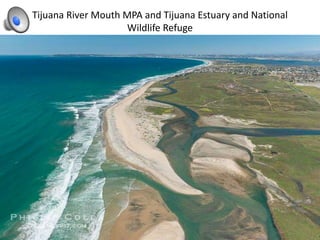
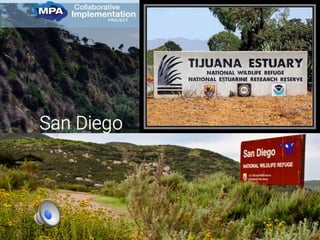
Tijuana River Mouth MPA and Tijuana Estuary and National
Wildlife Refuge
NMS Designation Criteria
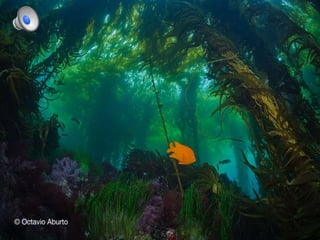
• Criteria 1- “The area's natural resources and
ecological qualities are of special significance and
contribute to: biological productivity or diversity;
maintenance or enhancement of ecosystem
structure and function; maintenance of
ecologically or commercially important species or
species assemblages; maintenance or
enhancement of critical habitat, representative
biogeographic assemblages, or both; or
maintenance or enhancement of connectivity to
other ecologically significant resources.”
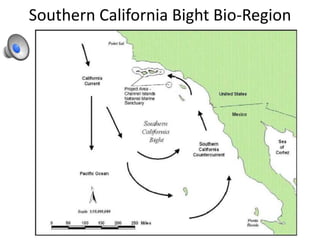
Southern California Bight Bio-Region
Criteria 2
“The area contains submerged maritime heritage
resources of special historical, cultural, or
archaeological significance, that: individually or
collectively are consistent with the criteria of eligibility
for listing on the National Register of Historic Places;
have met or which would meet the criteria for
designation as a National Historic Landmark; or have
special or sacred meaning to the indigenous people of
the region or nation.”
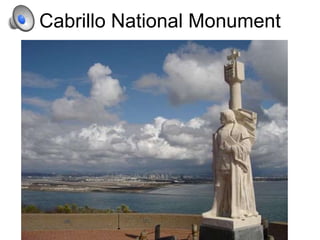
Cabrillo National Monument
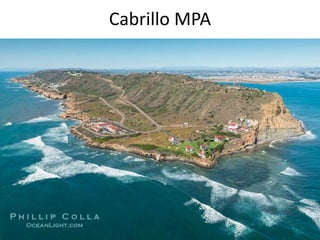
Cabrillo MPA
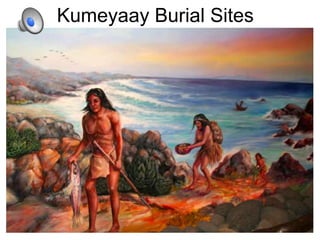
Kumeyaay Burial Sites
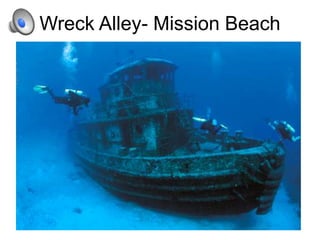
Wreck Alley- Mission Beach
Criteria 3
• “The area supports present and potential
economic uses, such as: tourism;
commercial and recreational fishing;
subsistence and traditional uses; diving;
and other recreational uses that depend
on conservation and management of the
area's resources.”
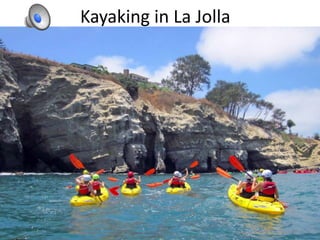
Kayaking in La Jolla
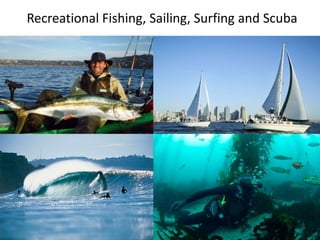
Recreational Fishing, Sailing, Surfing and Scuba
Criteria 4
• “The publically-derived benefits of the area,
such as aesthetic value, public recreation, and
access to places depend on conservation and
management of the area's resources.”
NMS Management Considerations
• Consideration 1- “The area provides or
enhances opportunities for research in
marine science, including marine
archaeology.”
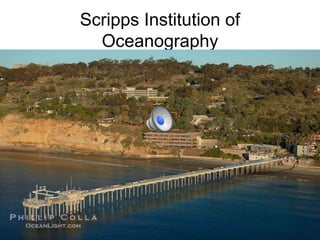
Scripps Institution of
Oceanography
Consideration 2
• “The area provides or enhances
opportunities for education, including the
understanding and appreciation of the
marine and Great Lakes environments.”
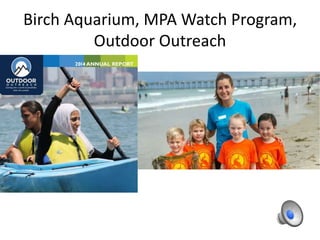
Birch Aquarium, MPA Watch Program,
Outdoor Outreach
Consideration 3
• “Adverse impacts from current or future
uses and activities threaten the area's
significance, values, qualities, and
resources.”
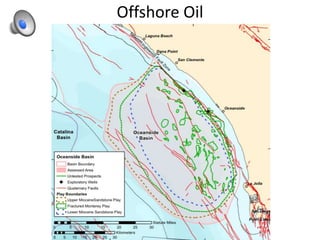
Offshore Oil
Consideration 4
• “A national marine sanctuary would
provide unique conservation and
management value for this area or
adjacent areas.”
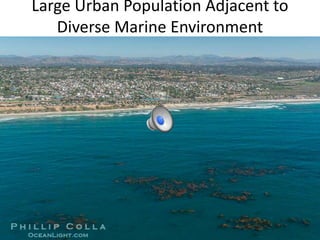
Large Urban Population Adjacent to
Diverse Marine Environment
Consideration 5
• “The existing regulatory and management
authorities for the area could be
supplemented or complemented to meet
the conservation and management goals
for the area.”
Criteria 6
• “There are commitments or possible
commitments for partnerships
opportunities such as cost sharing, office
space, exhibit space, vessel time, or other
collaborations to aid conservation or
management programs for the area.”
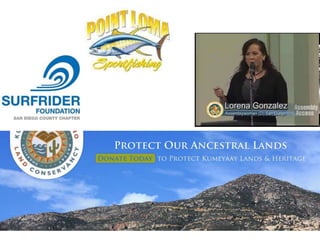
Criteria 7
• “There is community-based support for the
nomination expressed by a broad range of
interests, such as: individuals or locally-based
groups (e.g., friends of group, chamber of
commerce); local, tribal, state, or national elected
officials; or topic-based stakeholder groups, at the
local, regional or national level (e.g., a local
chapter of an environmental organization, a
regionally-based fishing group, a national-level
recreation or tourism organization, academia or
science-based group, or an industry association).”
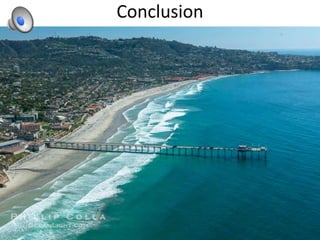
Conclusion

Jordan.sanchez wildcoast ipss

  • 1.
    Stewarding our MaritimeHeritage and Coastal Resources: Analysis for a future National Marine Sanctuary designation in San Diego County By Jordan Sanchez, MAIEP ‘15
  • 4.
    Ocean and CoastalManagement Regime in SD County
  • 5.
    San Diego TunaIndustry: Worlds largest from 1909-1984
  • 6.
    Benefits of aNMS Designation in SD 1. Permanent ban on offshore oil drilling and exploration, seabed mining, and seismic testing 2. A Sanctuary designation would promote scientific research and bring NOAA funding into the region 3. Enhanced ocean education and awareness for a large urban community in San Diego County, a first for the NMS Program 4. Would link together the existing network of MPA’s and largest remaining wetlands in California
  • 7.
    Proposed San DiegoNational Marine Sanctuary
  • 8.
    La Jolla Coveand Matlahuayl MPA
  • 9.
    Tijuana River MouthMPA and Tijuana Estuary and National Wildlife Refuge
  • 10.
    NMS Designation Criteria •Criteria 1- “The area's natural resources and ecological qualities are of special significance and contribute to: biological productivity or diversity; maintenance or enhancement of ecosystem structure and function; maintenance of ecologically or commercially important species or species assemblages; maintenance or enhancement of critical habitat, representative biogeographic assemblages, or both; or maintenance or enhancement of connectivity to other ecologically significant resources.”
  • 12.
  • 13.
    Criteria 2 “The areacontains submerged maritime heritage resources of special historical, cultural, or archaeological significance, that: individually or collectively are consistent with the criteria of eligibility for listing on the National Register of Historic Places; have met or which would meet the criteria for designation as a National Historic Landmark; or have special or sacred meaning to the indigenous people of the region or nation.”
  • 14.
  • 15.
  • 16.
  • 17.
  • 18.
    Criteria 3 • “Thearea supports present and potential economic uses, such as: tourism; commercial and recreational fishing; subsistence and traditional uses; diving; and other recreational uses that depend on conservation and management of the area's resources.”
  • 19.
  • 20.
  • 21.
    Criteria 4 • “Thepublically-derived benefits of the area, such as aesthetic value, public recreation, and access to places depend on conservation and management of the area's resources.”
  • 22.
    NMS Management Considerations •Consideration 1- “The area provides or enhances opportunities for research in marine science, including marine archaeology.”
  • 23.
  • 24.
    Consideration 2 • “Thearea provides or enhances opportunities for education, including the understanding and appreciation of the marine and Great Lakes environments.”
  • 25.
    Birch Aquarium, MPAWatch Program, Outdoor Outreach
  • 26.
    Consideration 3 • “Adverseimpacts from current or future uses and activities threaten the area's significance, values, qualities, and resources.”
  • 27.
  • 28.
    Consideration 4 • “Anational marine sanctuary would provide unique conservation and management value for this area or adjacent areas.”
  • 29.
    Large Urban PopulationAdjacent to Diverse Marine Environment
  • 30.
    Consideration 5 • “Theexisting regulatory and management authorities for the area could be supplemented or complemented to meet the conservation and management goals for the area.”
  • 32.
    Criteria 6 • “Thereare commitments or possible commitments for partnerships opportunities such as cost sharing, office space, exhibit space, vessel time, or other collaborations to aid conservation or management programs for the area.”
  • 33.
    Criteria 7 • “Thereis community-based support for the nomination expressed by a broad range of interests, such as: individuals or locally-based groups (e.g., friends of group, chamber of commerce); local, tribal, state, or national elected officials; or topic-based stakeholder groups, at the local, regional or national level (e.g., a local chapter of an environmental organization, a regionally-based fishing group, a national-level recreation or tourism organization, academia or science-based group, or an industry association).”
  • 35.