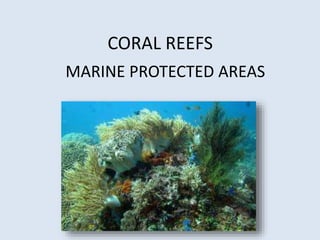
CORAL REEFS 
MARINE PROTECTED AREAS
What is marine protected area? 
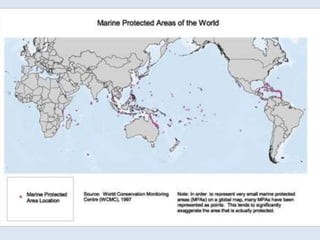
• A marine protected area (MPA) is an area of 
sea especially dedicated to the protection and 
maintenance of biodiversity, and of natural 
and associated cultural resources, and 
managed through legal or other effective 
means.
MPA’s include 
• Marine parks 
• nature reserves 
• locally managed marine 
areas that protect reefs 
• Sea grass beds 
• Ship wrecks 
• Archaeological sites 
• Tidal lagoons 
•Mudflats 
•Salt marshes 
•Mangroves 
•Rock platforms 
•Underwater areas 
on the coast . 
• the seabed in deep water, 
as well as open water (the 
water column)
History of MPA’s 
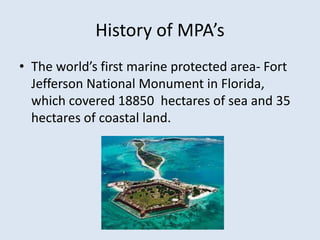
• The world’s first marine protected area- Fort 
Jefferson National Monument in Florida, 
which covered 18850 hectares of sea and 35 
hectares of coastal land.
Why marine protected areas? 
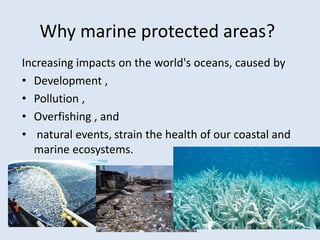
Increasing impacts on the world's oceans, caused by 
• Development , 
• Pollution , 
• Overfishing , and 
• natural events, strain the health of our coastal and 
marine ecosystems.
Why marine protected areas? 
Some of above impacts can include 
• decreased or damaged fish populations, 
bleached corals, 
• threatened or endangered species 
• limited job opportunities. 
MPAs are one type of ocean management tool 
that, when used effectively, help ensure healthy 
oceans. They may also protect historic artifacts 
such as shipwrecks that could otherwise be 
damaged by handling or theft.
Coral reef and MPA’s 
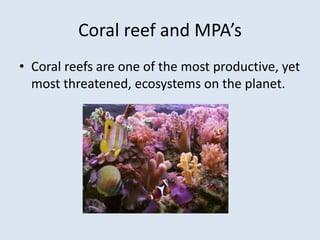
• Coral reefs are one of the most productive, yet 
most threatened, ecosystems on the planet.
• Marine protected areas (MPAs) provide place-based 
management of marine ecosystems 
through various degrees and types of 
protective actions. Habitats such as coral reefs 
are especially susceptible to degradation 
resulting from climate change, as evidenced 
by mass bleaching events over the past two 
decades.
Marine ecosystems are being altered by 
direct effects of climate change including 
• ocean warming 
• ocean acidification 
• rising sea level 
• changing circulation patterns 
• increasing severity of storms 
• changing freshwater influxes.
Design a MPA 
General recommendation 
• Size 
• Shape 
• Risk spreading(representation, replication, and 
spread) 
• Critical areas 
• Connectivity 
• Maintain ecosystem function 
• Ecosystem based management
Size 
• There is no ideal size applicable to all MPAs; 
size should be determined by the specific 
management objectives for each MPA and the 
species and habitats targeted for protection. 
• It should be minimum 10-20 km in diameter. 
BIGGER IS BETTER
Shape 
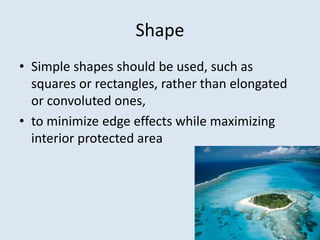
• Simple shapes should be used, such as 
squares or rectangles, rather than elongated 
or convoluted ones, 
• to minimize edge effects while maximizing 
interior protected area
Risk spreading 
• climate change will not impact marine species 
equally everywhere 
• Measure the SST( sea surface temperature)
Critical areas 
• Areas that are biologically and ecologically 
important 
• Areas that exhibits high productivity 
• Areas that may be naturally more resistant or 
resilient to the threat of climate change
Connectivity 
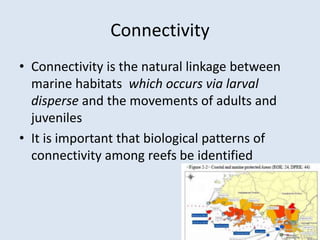
• Connectivity is the natural linkage between 
marine habitats which occurs via larval 
disperse and the movements of adults and 
juveniles 
• It is important that biological patterns of 
connectivity among reefs be identified
Eco system functions 
• MPAs should include large areas, a broad 
range of habitats, and a high diversity of 
species 
• Protecting functional groups is an important 
strategy for supporting ecosystem function
Ecosystem value 
• Scientists need to recognize the importance of 
maximizing the outputs of the services that 
ecosystem functions generate, quantifying 
and managing trade-offs among ecosystem 
services to benefit both humans and nature.
Marine protected areas in SriLanka 
There are only two sea areas that have been 
declared as marine sanctuaries especially to 
protect the coral reefs. They are the 
• Hikkaduwa Marine Sanctuary (declared in 1979) 
• The Bar Reef Marine Sanctuary (declared in 
1992) 
declared under section 2(2) of the Fauna and 
Flora Protection Ordinance (Chapter 469) as 
amended by Act No. 44 of 1964 and Act No. 1 of 
1970.
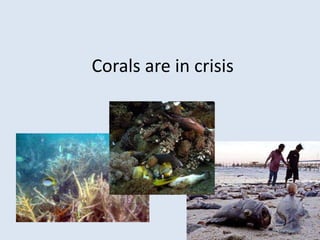
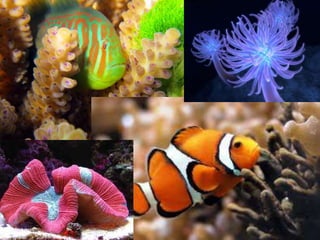
Corals are in crisis
Benefits 
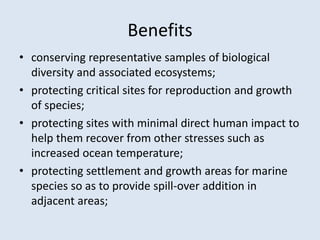
• conserving representative samples of biological 
diversity and associated ecosystems; 
• protecting critical sites for reproduction and growth 
of species; 
• protecting sites with minimal direct human impact to 
help them recover from other stresses such as 
increased ocean temperature; 
• protecting settlement and growth areas for marine 
species so as to provide spill-over addition in 
adjacent areas;
• providing focal points for education about 
marine ecosystems and human interactions 
with them; 
• providing sites for nature-based recreation 
and tourism; and 
• providing undisturbed control or reference 
sites serving as a baseline for scientific 
research and for design and evaluation of 
management of other areas.
Reference 
• THE BENEFITS OF MARINE PROTECTED AREAS 
• Designing Effective Coral Reef Marine Protected Areas A Synthesis Report 
Based on Presentations at the 9th International Coral Reef Symposium 
Bali, Indonesia October 2000 
• HISTORY OF MARINE PROTECTED AREAS: MEASUREMENTS, MECHANISMS 
& FUTURE OPPORTUNITIES Leonard Sonnenschein, President World 
Aquarium & Conservation for the Oceans Foundation Co-Founder, World 
Ocean Network 
• ISRS BRIEFING PAPER 1 MARINE PROTECTED AREAS (MPAS) IN 
MANAGEMENT OF CORAL REEFS 
• EFFECTIVE CORAL REEF MARINE PROTECTED AREAS (MPAs):The Coral Reef 
Alliance 
• Designing marine protected area networks to address the impacts of 
climate change Elizabeth McLeod, Rodney Salm, Alison Green, and Jeanine 
Almany
END.

Marine protected areas

  • 1.
    CORAL REEFS MARINEPROTECTED AREAS
  • 2.
    What is marineprotected area? • A marine protected area (MPA) is an area of sea especially dedicated to the protection and maintenance of biodiversity, and of natural and associated cultural resources, and managed through legal or other effective means.
  • 3.
    MPA’s include •Marine parks • nature reserves • locally managed marine areas that protect reefs • Sea grass beds • Ship wrecks • Archaeological sites • Tidal lagoons •Mudflats •Salt marshes •Mangroves •Rock platforms •Underwater areas on the coast . • the seabed in deep water, as well as open water (the water column)
  • 4.
    History of MPA’s • The world’s first marine protected area- Fort Jefferson National Monument in Florida, which covered 18850 hectares of sea and 35 hectares of coastal land.
  • 6.
    Why marine protectedareas? Increasing impacts on the world's oceans, caused by • Development , • Pollution , • Overfishing , and • natural events, strain the health of our coastal and marine ecosystems.
  • 7.
    Why marine protectedareas? Some of above impacts can include • decreased or damaged fish populations, bleached corals, • threatened or endangered species • limited job opportunities. MPAs are one type of ocean management tool that, when used effectively, help ensure healthy oceans. They may also protect historic artifacts such as shipwrecks that could otherwise be damaged by handling or theft.
  • 8.
    Coral reef andMPA’s • Coral reefs are one of the most productive, yet most threatened, ecosystems on the planet.
  • 9.
    • Marine protectedareas (MPAs) provide place-based management of marine ecosystems through various degrees and types of protective actions. Habitats such as coral reefs are especially susceptible to degradation resulting from climate change, as evidenced by mass bleaching events over the past two decades.
  • 10.
    Marine ecosystems arebeing altered by direct effects of climate change including • ocean warming • ocean acidification • rising sea level • changing circulation patterns • increasing severity of storms • changing freshwater influxes.
  • 11.
    Design a MPA General recommendation • Size • Shape • Risk spreading(representation, replication, and spread) • Critical areas • Connectivity • Maintain ecosystem function • Ecosystem based management
  • 12.
    Size • Thereis no ideal size applicable to all MPAs; size should be determined by the specific management objectives for each MPA and the species and habitats targeted for protection. • It should be minimum 10-20 km in diameter. BIGGER IS BETTER
  • 13.
    Shape • Simpleshapes should be used, such as squares or rectangles, rather than elongated or convoluted ones, • to minimize edge effects while maximizing interior protected area
  • 14.
    Risk spreading •climate change will not impact marine species equally everywhere • Measure the SST( sea surface temperature)
  • 15.
    Critical areas •Areas that are biologically and ecologically important • Areas that exhibits high productivity • Areas that may be naturally more resistant or resilient to the threat of climate change
  • 16.
    Connectivity • Connectivityis the natural linkage between marine habitats which occurs via larval disperse and the movements of adults and juveniles • It is important that biological patterns of connectivity among reefs be identified
  • 17.
    Eco system functions • MPAs should include large areas, a broad range of habitats, and a high diversity of species • Protecting functional groups is an important strategy for supporting ecosystem function
  • 18.
    Ecosystem value •Scientists need to recognize the importance of maximizing the outputs of the services that ecosystem functions generate, quantifying and managing trade-offs among ecosystem services to benefit both humans and nature.
  • 19.
    Marine protected areasin SriLanka There are only two sea areas that have been declared as marine sanctuaries especially to protect the coral reefs. They are the • Hikkaduwa Marine Sanctuary (declared in 1979) • The Bar Reef Marine Sanctuary (declared in 1992) declared under section 2(2) of the Fauna and Flora Protection Ordinance (Chapter 469) as amended by Act No. 44 of 1964 and Act No. 1 of 1970.
  • 20.
  • 21.
    Benefits • conservingrepresentative samples of biological diversity and associated ecosystems; • protecting critical sites for reproduction and growth of species; • protecting sites with minimal direct human impact to help them recover from other stresses such as increased ocean temperature; • protecting settlement and growth areas for marine species so as to provide spill-over addition in adjacent areas;
  • 22.
    • providing focalpoints for education about marine ecosystems and human interactions with them; • providing sites for nature-based recreation and tourism; and • providing undisturbed control or reference sites serving as a baseline for scientific research and for design and evaluation of management of other areas.
  • 24.
    Reference • THEBENEFITS OF MARINE PROTECTED AREAS • Designing Effective Coral Reef Marine Protected Areas A Synthesis Report Based on Presentations at the 9th International Coral Reef Symposium Bali, Indonesia October 2000 • HISTORY OF MARINE PROTECTED AREAS: MEASUREMENTS, MECHANISMS & FUTURE OPPORTUNITIES Leonard Sonnenschein, President World Aquarium & Conservation for the Oceans Foundation Co-Founder, World Ocean Network • ISRS BRIEFING PAPER 1 MARINE PROTECTED AREAS (MPAS) IN MANAGEMENT OF CORAL REEFS • EFFECTIVE CORAL REEF MARINE PROTECTED AREAS (MPAs):The Coral Reef Alliance • Designing marine protected area networks to address the impacts of climate change Elizabeth McLeod, Rodney Salm, Alison Green, and Jeanine Almany
  • 25.

Editor's Notes

  • #9 A wide variety of activities ranging from coastal development to global warming to over fishing have endangered coral reef health. Marine Protected Areas (MPAs) provide a comprehensive approach to addressing these threats and are one of the most promising solutions for the survival of coral reefs and the many benefits they provide to people.