Sonnet 19
On his blindness
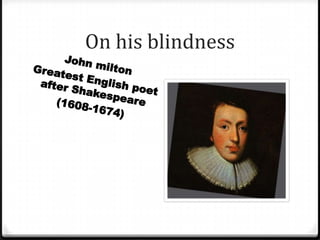
On his blindness
About poet
0 John Milton was born on December 9, 1608, in
London
0 lived on Bread Street in Cheapside
0 Milton began to lose his sight in 1644, but went
completely blind around 1650.
0 he died November 8, 1674 in London, England
The poem
0 On his blindness
0 The poet is blind.
0 This is a very religious poem.
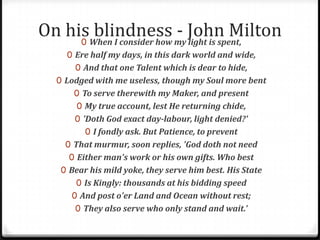
On his blindness - John Milton0 When I consider how my light is spent,
0 Ere half my days, in this dark world and wide,
0 And that one Talent which is dear to hide,
0 Lodged with me useless, though my Soul more bent
0 To serve therewith my Maker, and present
0 My true account, lest He returning chide,
0 'Doth God exact day-labour, light denied?'
0 I fondly ask. But Patience, to prevent
0 That murmur, soon replies, 'God doth not need
0 Either man's work or his own gifts. Who best
0 Bear his mild yoke, they serve him best. His State
0 Is Kingly: thousands at his bidding speed
0 And post o'er Land and Ocean without rest;
0 They also serve who only stand and wait.'
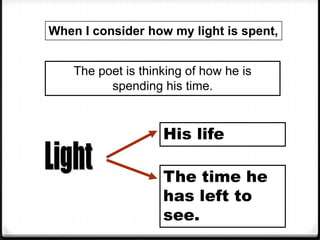
When I consider how my light is spent,
The poet is thinking of how he is
spending his time.
His life
The time he
has left to
see.
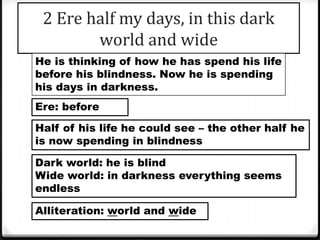
2 Ere half my days, in this dark
world and wide
He is thinking of how he has spend his life
before his blindness. Now he is spending
his days in darkness.
Ere: before
Half of his life he could see – the other half he
is now spending in blindness
Dark world: he is blind
Wide world: in darkness everything seems
endless
Alliteration: world and wide
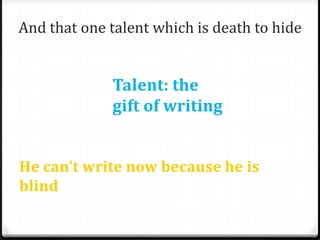
And that one talent which is death to hide
Talent: the
gift of writing
He can’t write now because he is
blind
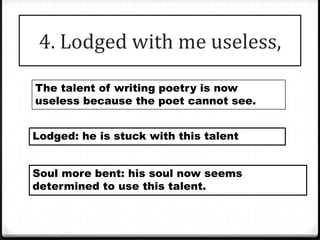
4. Lodged with me useless,
The talent of writing poetry is now
useless because the poet cannot see.
Lodged: he is stuck with this talent
Soul more bent: his soul now seems
determined to use this talent.
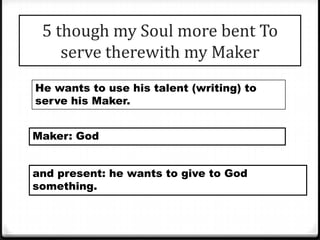
5 though my Soul more bent To
serve therewith my Maker
He wants to use his talent (writing) to
serve his Maker.
Maker: God
and present: he wants to give to God
something.
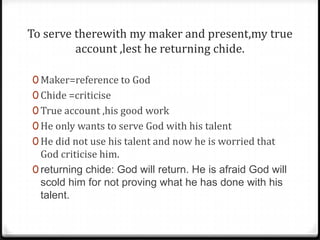
To serve therewith my maker and present,my true
account ,lest he returning chide.
0 Maker=reference to God
0 Chide =criticise
0 True account ,his good work
0 He only wants to serve God with his talent
0 He did not use his talent and now he is worried that
God criticise him.
0 returning chide: God will return. He is afraid God will
scold him for not proving what he has done with his
talent.
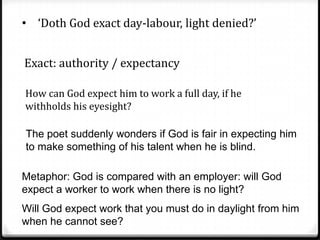
• ‘Doth God exact day-labour, light denied?’
Exact: authority / expectancy
How can God expect him to work a full day, if he
withholds his eyesight?
The poet suddenly wonders if God is fair in expecting him
to make something of his talent when he is blind.
Metaphor: God is compared with an employer: will God
expect a worker to work when there is no light?
Will God expect work that you must do in daylight from him
when he cannot see?
• I fondly ask, but Patience, to prevent That
murmur, soon replies
 fondly: showing affection and love.
 He shows God he asks this question as someone who loves
Him and not as someone who judges God.
 Personification: of the virtue (patience) and
he answers himself
 prevent: Patience wants to stop the complaint from
reaching God to protect the poet.
 Murmur: argue/ complain
• ‘God doth no need
Either man’s work or his own gifts:
God does not need anything from man.
God does not need work or gifts.
 God does not need your gifts because God gave
you the gifts/talents that you have
• Who best
Bear his mild yoke, they serve him best. His State
is Kingly:
 The image of an ox being yoked is used here.
 The one who copes well with the mild burden God has given
them, serves God well.
 The poet’s yoke is his blindness. If he accepts his blindness
and copes with it, he serves God well.
 God rules like a true King. He is a king.
 Kingly: to be proud
• thousands at his bidding speed
and post o’er Land and Ocean without rest
 Thousands at his bidding: there are thousands of people that
do what God commands.
 Speed: move fast
 Post: travel fast
 They travel around the world without rest
• They also serve who only stand and wait
 You don’t have to travel around the world to serve God. If you
only stand and wait, you also serve God.
 Stand and wait: are ready.
Poem
• Type: Petrarchan (Italian)
sonnet, consisting of an octave (8 lines)
and a sestet (6 lines).
• Stylistic devices:
Elision, Inversion, Alliteration and
Assonance.
• The genre of this poem is to learn
how to be who you are without
asking.
• The form of the poem is a Petrarchan
Sonnet a poem of 14 lines.
• The poem is organized by 14 lines of
pattern of rhyme.
• The poem contributes to the rhyme meaning
because at the end of each sentence words rhyme
with one another.
• Ex. wide, hide, chide, denied, need, speed, best, rest.
• Rhyme Scheme: ABBA, ABBA, CDE, and CDE.
themes of poem
0 The theme of the poem is: accepting the love of god
unconditionally even though you have a physical
disability.
0 The theme of the poem is: that God will always love
you no matter what happens to you in life.

John milton,on his blindness

  • 1.
  • 2.
  • 3.
    About poet 0 JohnMilton was born on December 9, 1608, in London 0 lived on Bread Street in Cheapside 0 Milton began to lose his sight in 1644, but went completely blind around 1650. 0 he died November 8, 1674 in London, England
  • 4.
    The poem 0 Onhis blindness 0 The poet is blind. 0 This is a very religious poem.
  • 5.
    On his blindness- John Milton0 When I consider how my light is spent, 0 Ere half my days, in this dark world and wide, 0 And that one Talent which is dear to hide, 0 Lodged with me useless, though my Soul more bent 0 To serve therewith my Maker, and present 0 My true account, lest He returning chide, 0 'Doth God exact day-labour, light denied?' 0 I fondly ask. But Patience, to prevent 0 That murmur, soon replies, 'God doth not need 0 Either man's work or his own gifts. Who best 0 Bear his mild yoke, they serve him best. His State 0 Is Kingly: thousands at his bidding speed 0 And post o'er Land and Ocean without rest; 0 They also serve who only stand and wait.'
  • 6.
    When I considerhow my light is spent, The poet is thinking of how he is spending his time. His life The time he has left to see.
  • 7.
    2 Ere halfmy days, in this dark world and wide He is thinking of how he has spend his life before his blindness. Now he is spending his days in darkness. Ere: before Half of his life he could see – the other half he is now spending in blindness Dark world: he is blind Wide world: in darkness everything seems endless Alliteration: world and wide
  • 8.
    And that onetalent which is death to hide Talent: the gift of writing He can’t write now because he is blind
  • 9.
    4. Lodged withme useless, The talent of writing poetry is now useless because the poet cannot see. Lodged: he is stuck with this talent Soul more bent: his soul now seems determined to use this talent.
  • 10.
    5 though mySoul more bent To serve therewith my Maker He wants to use his talent (writing) to serve his Maker. Maker: God and present: he wants to give to God something.
  • 11.
    To serve therewithmy maker and present,my true account ,lest he returning chide. 0 Maker=reference to God 0 Chide =criticise 0 True account ,his good work 0 He only wants to serve God with his talent 0 He did not use his talent and now he is worried that God criticise him. 0 returning chide: God will return. He is afraid God will scold him for not proving what he has done with his talent.
  • 12.
    • ‘Doth Godexact day-labour, light denied?’ Exact: authority / expectancy How can God expect him to work a full day, if he withholds his eyesight? The poet suddenly wonders if God is fair in expecting him to make something of his talent when he is blind. Metaphor: God is compared with an employer: will God expect a worker to work when there is no light? Will God expect work that you must do in daylight from him when he cannot see?
  • 13.
    • I fondlyask, but Patience, to prevent That murmur, soon replies  fondly: showing affection and love.  He shows God he asks this question as someone who loves Him and not as someone who judges God.  Personification: of the virtue (patience) and he answers himself  prevent: Patience wants to stop the complaint from reaching God to protect the poet.  Murmur: argue/ complain
  • 14.
    • ‘God dothno need Either man’s work or his own gifts: God does not need anything from man. God does not need work or gifts.  God does not need your gifts because God gave you the gifts/talents that you have
  • 15.
    • Who best Bearhis mild yoke, they serve him best. His State is Kingly:  The image of an ox being yoked is used here.  The one who copes well with the mild burden God has given them, serves God well.  The poet’s yoke is his blindness. If he accepts his blindness and copes with it, he serves God well.  God rules like a true King. He is a king.  Kingly: to be proud
  • 16.
    • thousands athis bidding speed and post o’er Land and Ocean without rest  Thousands at his bidding: there are thousands of people that do what God commands.  Speed: move fast  Post: travel fast  They travel around the world without rest
  • 17.
    • They alsoserve who only stand and wait  You don’t have to travel around the world to serve God. If you only stand and wait, you also serve God.  Stand and wait: are ready.
  • 18.
    Poem • Type: Petrarchan(Italian) sonnet, consisting of an octave (8 lines) and a sestet (6 lines). • Stylistic devices: Elision, Inversion, Alliteration and Assonance.
  • 19.
    • The genreof this poem is to learn how to be who you are without asking. • The form of the poem is a Petrarchan Sonnet a poem of 14 lines. • The poem is organized by 14 lines of pattern of rhyme. • The poem contributes to the rhyme meaning because at the end of each sentence words rhyme with one another. • Ex. wide, hide, chide, denied, need, speed, best, rest. • Rhyme Scheme: ABBA, ABBA, CDE, and CDE.
  • 20.
    themes of poem 0The theme of the poem is: accepting the love of god unconditionally even though you have a physical disability. 0 The theme of the poem is: that God will always love you no matter what happens to you in life.