Presentation Prepared by:
 Farwa Aqeel
TOPIC:
 Go & Catch a Falling Star
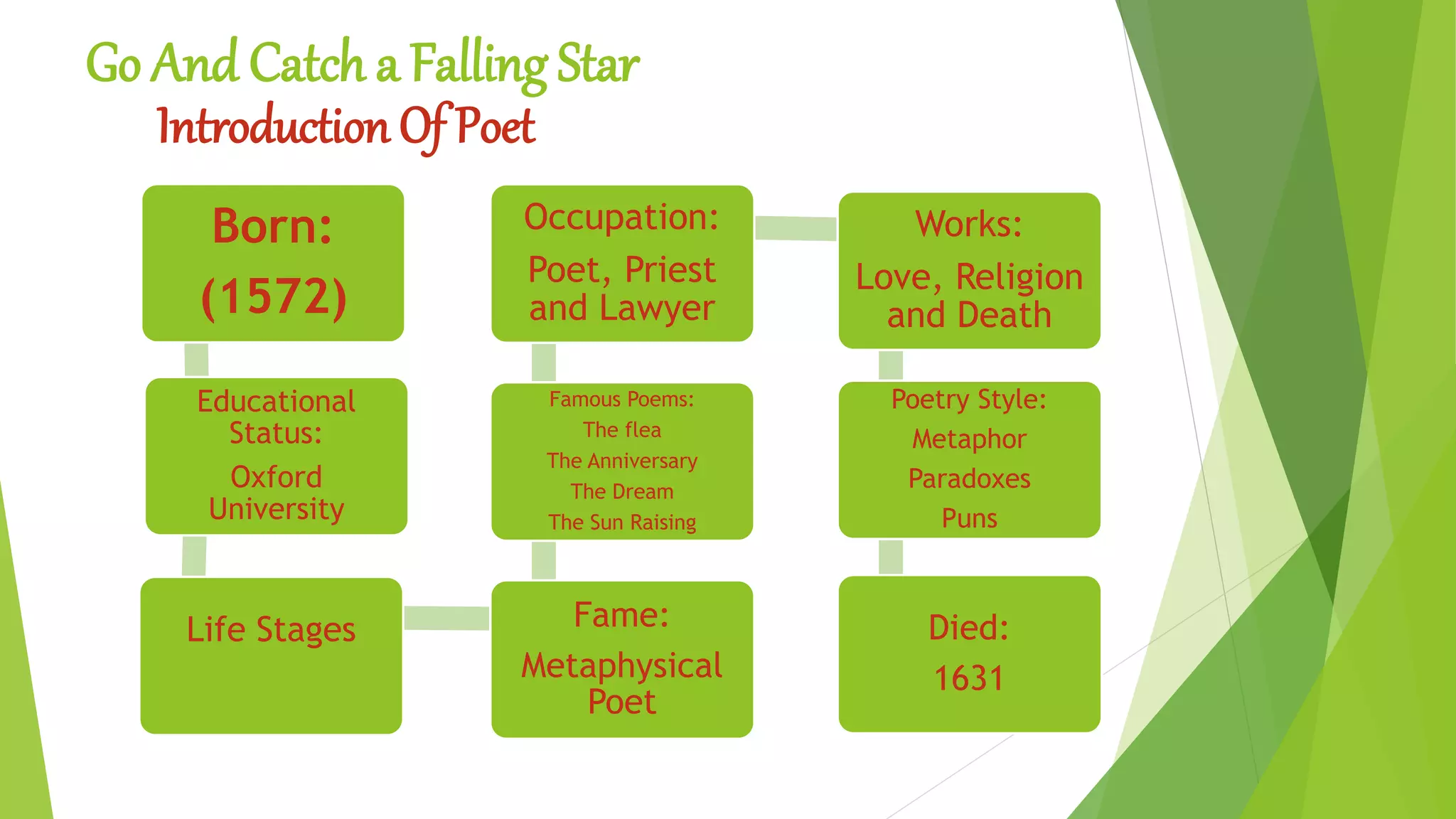
Go And Catch a Falling Star
Introduction Of Poet
Born:
(1572)
Educational
Status:
Oxford
University
Life Stages Fame:
Metaphysical
Poet
Famous Poems:
The flea
The Anniversary
The Dream
The Sun Raising
Occupation:
Poet, Priest
and Lawyer
Works:
Love, Religion
and Death
Poetry Style:
Metaphor
Paradoxes
Puns
Died:
1631
BORN:
Go And Catch a Falling Star
Introduction Of Poet
Born:
(1572)
Educational
Status:
Oxford
University
Life Stages Fame:
Metaphysical
Poet
Famous Poems:
The flea
The Anniversary
The Dream
The Sun Raising
Occupation:
Poet, Priest
and Lawyer
Works:
Love, Religion
and Death
Poetry Style:
Metaphor
Paradoxes
Puns
Died:
1631
OCCUPATION:
Go And Catch a Falling Star
Introduction Of Poet
Born:
(1572)
Educational
Status:
Oxford
University
Life Stages Fame:
Metaphysical
Poet
Famous Poems:
The flea
The Anniversary
The Dream
The Sun Raising
Occupation:
Poet, Priest
and Lawyer
Works:
Love, Religion
and Death
Poetry Style:
Metaphor
Paradoxes
Puns
Died:
1631
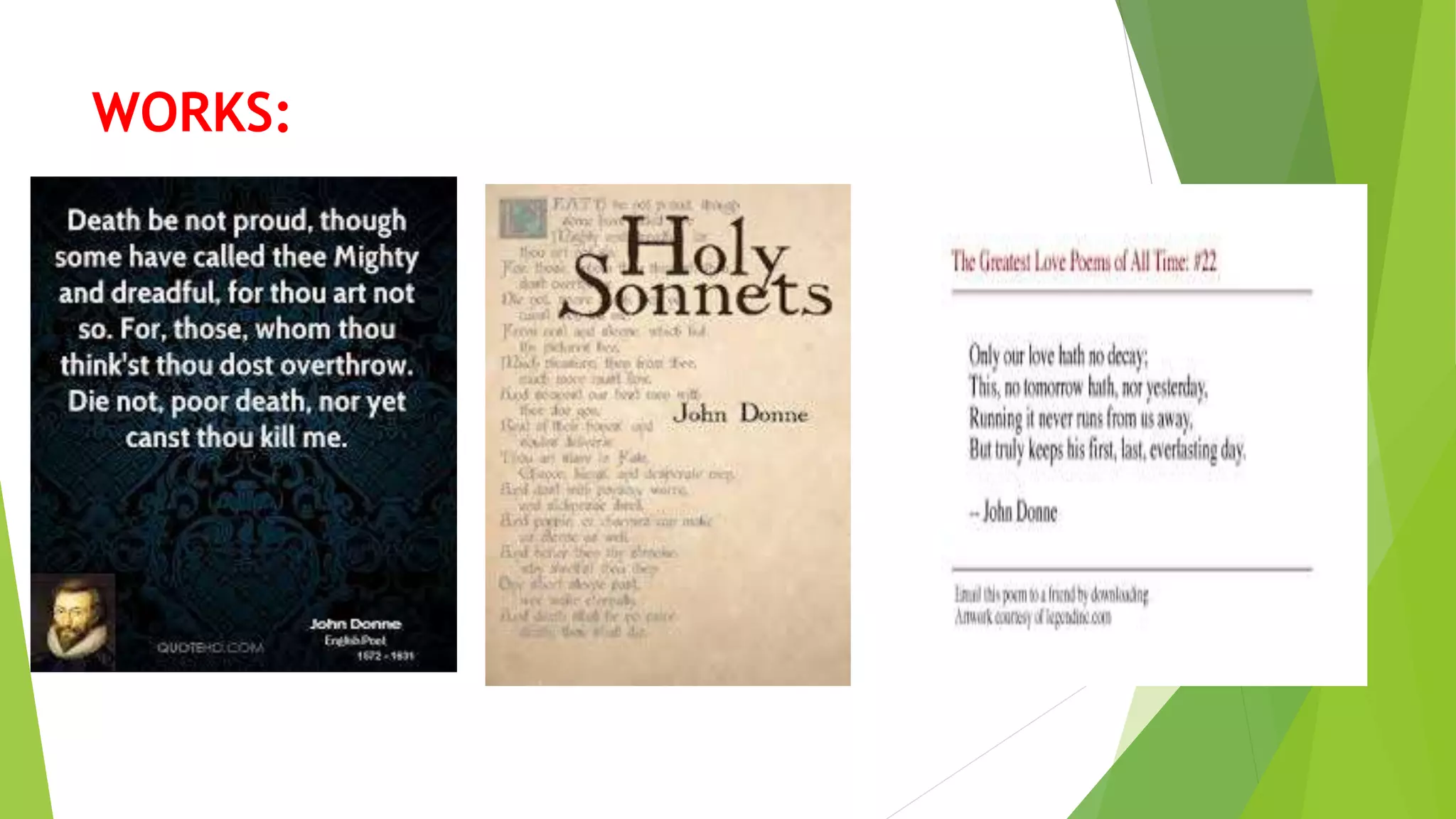
WORKS:
Go And Catch a Falling Star
Introduction Of Poet
Born:
(1572)
Educational
Status:
Oxford
University
Life Stages Fame:
Metaphysical
Poet
Famous Poems:
The flea
The Anniversary
The Dream
The Sun Raising
Occupation:
Poet, Priest
and Lawyer
Works:
Love, Religion
and Death
Poetry Style:
Metaphor
Paradoxes
Puns
Died:
1631
EDUCATIONAL STATUS:
Go And Catch a Falling Star
Introduction Of Poet
Born:
(1572)
Educational
Status:
Oxford
University
Life Stages Fame:
Metaphysical
Poet
Famous Poems:
The flea
The Anniversary
The Dream
The Sun Raising
Occupation:
Poet, Priest
and Lawyer
Works:
Love, Religion
and Death
Poetry Style:
Metaphor
Paradoxes
Puns
Died:
1631
FAMOUS POEMS:
Go And Catch a Falling Star
Introduction Of Poet
Born:
(1572)
Educational
Status:
Oxford
University
Life Stages Fame:
Metaphysical
Poet
Famous Poems:
The flea
The Anniversary
The Dream
The Sun Raising
Occupation:
Poet, Priest
and Lawyer
Works:
Love, Religion
and Death
Poetry Style:
Metaphor
Paradoxes
Puns
Died:
1631
POETRY STYLE:
Go And Catch a Falling Star
Introduction Of Poet
Born:
(1572)
Educational
Status:
Oxford
University
Life Stages Fame:
Metaphysical
Poet
Famous Poems:
The flea
The Anniversary
The Dream
The Sun Raising
Occupation:
Poet, Priest
and Lawyer
Works:
Love, Religion
and Death
Poetry Style:
Metaphor
Paradoxes
Puns
Died:
1631
LIFE STAGES:
1st
Stage
Life Stages
3rd
Stage
2nd
Stage
Go And Catch a Falling Star
Introduction Of Poet
Born:
(1572)
Educational
Status:
Oxford
University
Life Stages Fame:
Metaphysical
Poet
Famous Poems:
The flea
The Anniversary
The Dream
The Sun Raising
Occupation:
Poet, Priest
and Lawyer
Works:
Love, Religion
and Death
Poetry Style:
Metaphor
Paradoxes
Puns
Died:
1631
METAPHYSICAL POET:
Go And Catch a Falling Star
Introduction Of Poet
Born:
(1572)
Educational
Status:
Oxford
University
Life Stages Fame:
Metaphysical
Poet
Famous Poems:
The flea
The Anniversary
The Dream
The Sun Raising
Occupation:
Poet, Priest
and Lawyer
Works:
Love, Religion
and Death
Poetry Style:
Metaphor
Paradoxes
Puns
Died:
1631
Introduction of poem
 Metaphysical Song
 Early Age
 Impossible Tasks
 Emotions And Reasoning
 Steriotypical View
Theme:
In this poem he is trying to put forward his
opinion about the woman that every impossible
things can be made possible but we cannot find a
faithful woman.
Stanza 1
Go and catch a falling star,
Get with child a mandrake root,
Tell me where all past years are,
Or who cleft the devil’s foot,
Teach me to hear mermaids singing,
Or to keep off envy’s stinging,
And find
What wind
Serves to advance an honest mind.
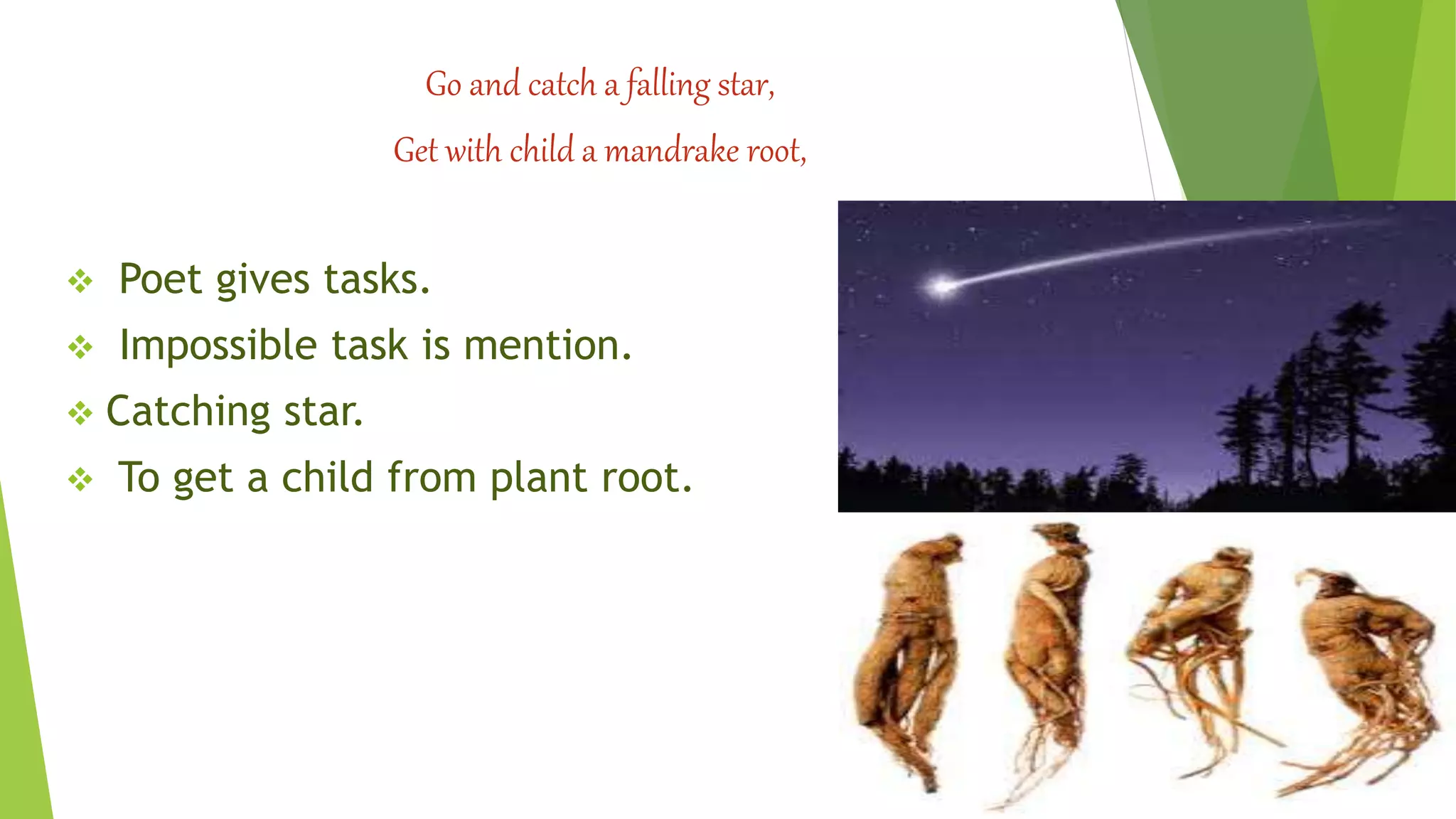
Go and catch a falling star,
Get with child a mandrake root,
 Poet gives tasks.
 Impossible task is mention.
 Catching star.
 To get a child from plant root.
Tell me where all past years are,
Or who cleft the devil’s foot,
 Poet is asking questions.
 Where the past years has gone?
 Who spilt the devils foot?
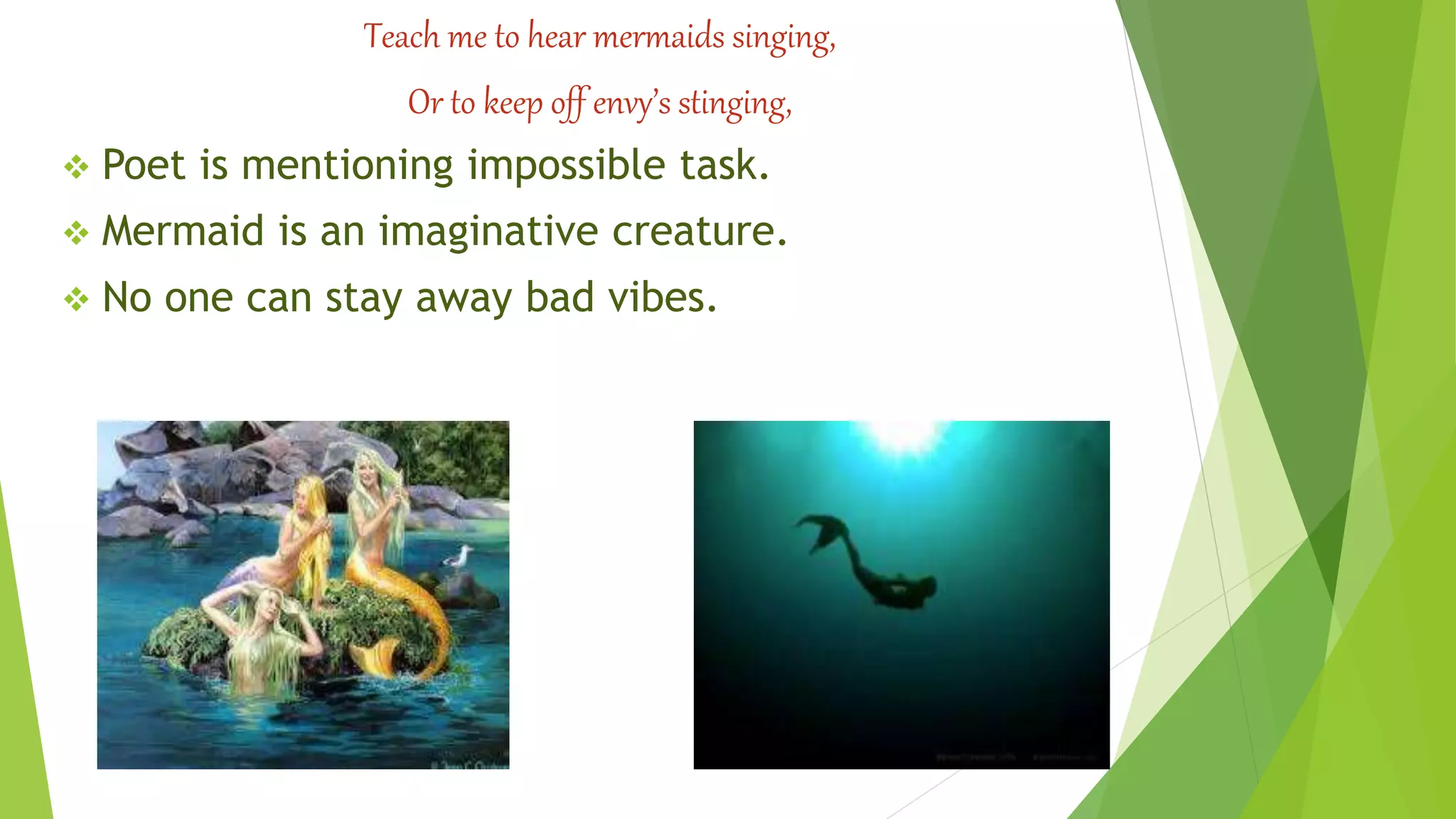
Teach me to hear mermaids singing,
Or to keep off envy’s stinging,
 Poet is mentioning impossible task.
 Mermaid is an imaginative creature.
 No one can stay away bad vibes.
And find
What wind
Serves to advance an honest mind.
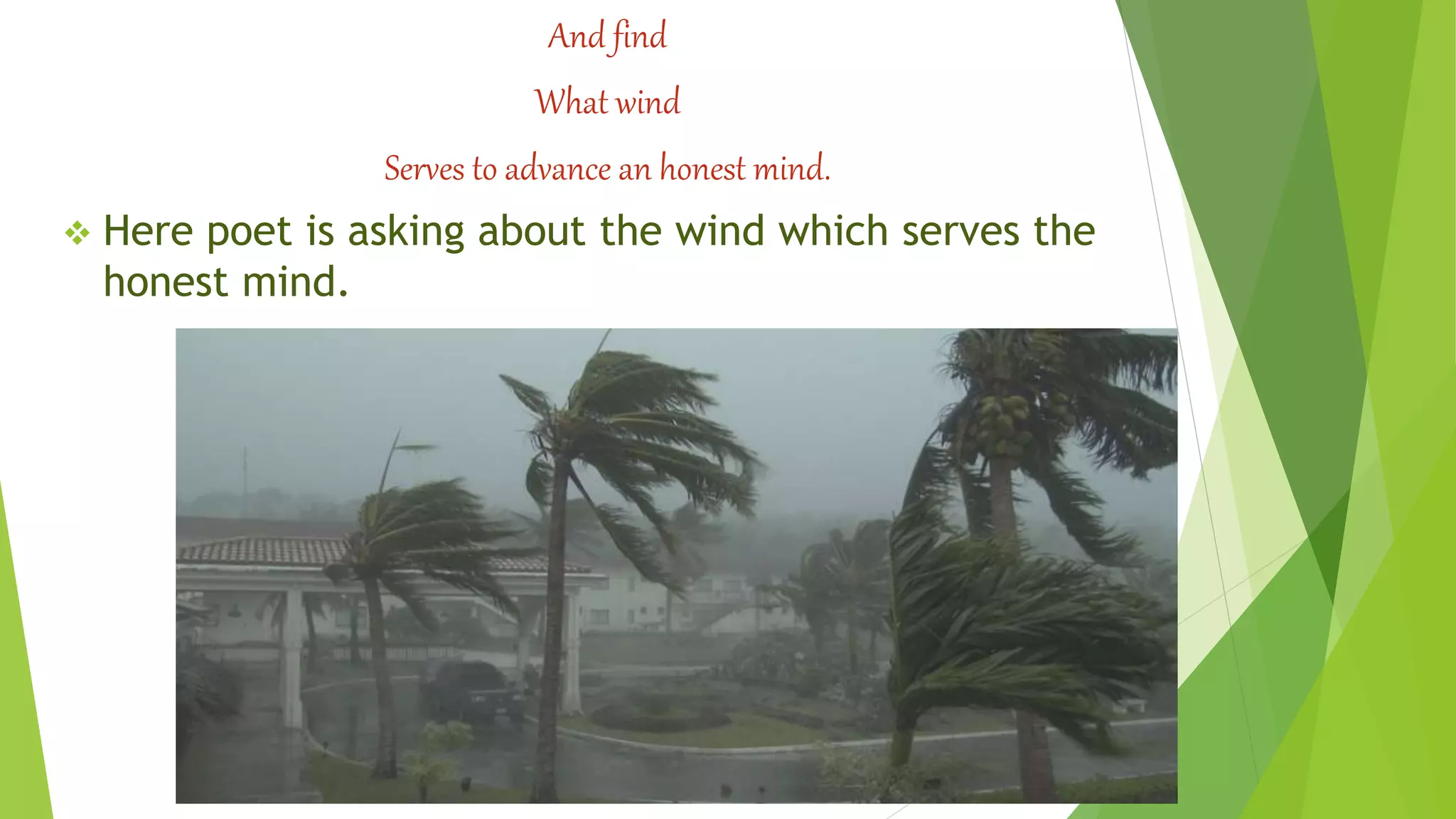
 Here poet is asking about the wind which serves the
honest mind.
Stanza 2
If thou be’st born to strange sights,
Things invisible to see,
Ride ten thousand days and nights,
Till age snow white hairs on thee,
Thou, when thou return’st, wilt tell me,
All strange wonders that befell thee,
And swear,
No where
Lives a woman true, and fair.
If thou be’st born to strange sights,
Things invisible to see,
 Talking about the people having rare sights.
 Things every normal person can’t see.
Ride ten thousand days and nights,
Till age snow white hairs on thee,
 People having strange sights have to explore the
world.
 Till Old Age.
Thou, when thou return’st, wilt tell me,
All strange wonders that befell thee,
 When the person return there must have strange
things happened in front of him.
And swear,
No where
Lives a woman true, and fair.
 Poet ask the person, he have to swear that no where in this
world you will find a true and fair woman.
 Main idea of the poem.
Stanza 3
If thou find’st one, let me know,
Such a pilgrimage were sweet;
Yet do not, I would not go,
Though at next door we might meet;
Though she were true, when you met her,
And last, till you write your letter,
Yet she
Will be
False, ere I come, to two, or three.
If thou find’st one, let me know,
Such a pilgrimage were sweet;
 Poet gives challenge to reader.
(Find a true women)
 Pilgrimage: A journey to holy place.
Yet do not, I would not go,
Though at next door we might meet;
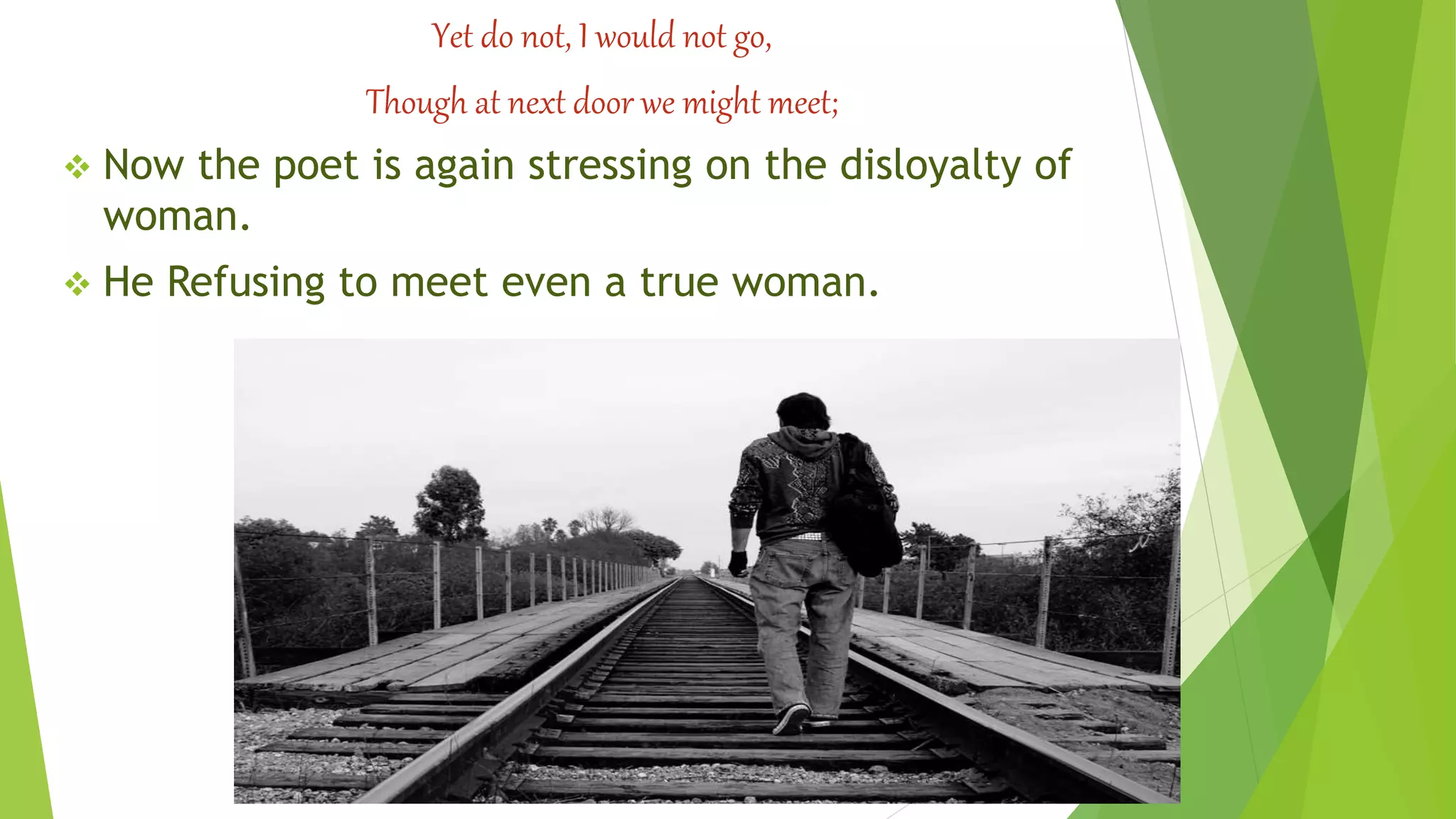
 Now the poet is again stressing on the disloyalty of
woman.
 He Refusing to meet even a true woman.
Though she were true, when you met her,
And last, till you write your letter,
 Women cannot be remain loyal for a long time but,
 If you find a true woman, she would be loyal when you
meet her and write a letter.
Yet she
Will be
False, ere I come, to two, or three.
 Poet thinks that woman cant remain loyal for long time.
 She must have betrayed two or three lovers ,by the time I
reach her or met her.
Conclusion:
The poet says that every impossible thing
can be made possible but one can never
ever find a true and loyal woman.
Go and Catch a Falling Star (Poem)

Go and Catch a Falling Star (Poem)

  • 3.
    Presentation Prepared by: Farwa Aqeel TOPIC:  Go & Catch a Falling Star
  • 5.
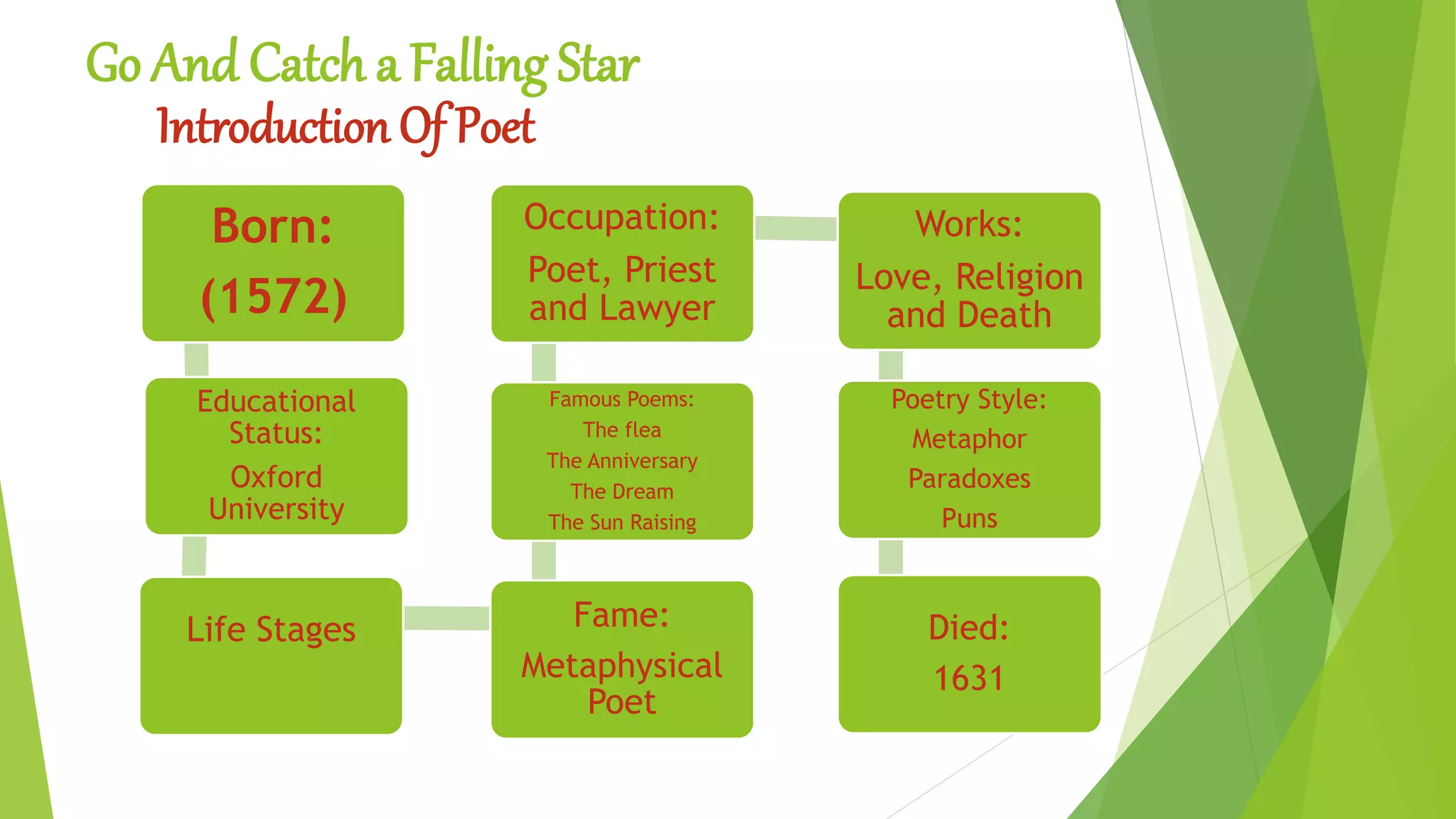
    Go And Catcha Falling Star Introduction Of Poet Born: (1572) Educational Status: Oxford University Life Stages Fame: Metaphysical Poet Famous Poems: The flea The Anniversary The Dream The Sun Raising Occupation: Poet, Priest and Lawyer Works: Love, Religion and Death Poetry Style: Metaphor Paradoxes Puns Died: 1631
  • 6.
  • 7.
    Go And Catcha Falling Star Introduction Of Poet Born: (1572) Educational Status: Oxford University Life Stages Fame: Metaphysical Poet Famous Poems: The flea The Anniversary The Dream The Sun Raising Occupation: Poet, Priest and Lawyer Works: Love, Religion and Death Poetry Style: Metaphor Paradoxes Puns Died: 1631
  • 8.
  • 9.
    Go And Catcha Falling Star Introduction Of Poet Born: (1572) Educational Status: Oxford University Life Stages Fame: Metaphysical Poet Famous Poems: The flea The Anniversary The Dream The Sun Raising Occupation: Poet, Priest and Lawyer Works: Love, Religion and Death Poetry Style: Metaphor Paradoxes Puns Died: 1631
  • 10.
  • 11.
    Go And Catcha Falling Star Introduction Of Poet Born: (1572) Educational Status: Oxford University Life Stages Fame: Metaphysical Poet Famous Poems: The flea The Anniversary The Dream The Sun Raising Occupation: Poet, Priest and Lawyer Works: Love, Religion and Death Poetry Style: Metaphor Paradoxes Puns Died: 1631
  • 12.
  • 13.
    Go And Catcha Falling Star Introduction Of Poet Born: (1572) Educational Status: Oxford University Life Stages Fame: Metaphysical Poet Famous Poems: The flea The Anniversary The Dream The Sun Raising Occupation: Poet, Priest and Lawyer Works: Love, Religion and Death Poetry Style: Metaphor Paradoxes Puns Died: 1631
  • 14.
  • 15.
    Go And Catcha Falling Star Introduction Of Poet Born: (1572) Educational Status: Oxford University Life Stages Fame: Metaphysical Poet Famous Poems: The flea The Anniversary The Dream The Sun Raising Occupation: Poet, Priest and Lawyer Works: Love, Religion and Death Poetry Style: Metaphor Paradoxes Puns Died: 1631
  • 16.
  • 17.
    Go And Catcha Falling Star Introduction Of Poet Born: (1572) Educational Status: Oxford University Life Stages Fame: Metaphysical Poet Famous Poems: The flea The Anniversary The Dream The Sun Raising Occupation: Poet, Priest and Lawyer Works: Love, Religion and Death Poetry Style: Metaphor Paradoxes Puns Died: 1631
  • 18.
  • 19.
    Go And Catcha Falling Star Introduction Of Poet Born: (1572) Educational Status: Oxford University Life Stages Fame: Metaphysical Poet Famous Poems: The flea The Anniversary The Dream The Sun Raising Occupation: Poet, Priest and Lawyer Works: Love, Religion and Death Poetry Style: Metaphor Paradoxes Puns Died: 1631
  • 20.
  • 21.
    Go And Catcha Falling Star Introduction Of Poet Born: (1572) Educational Status: Oxford University Life Stages Fame: Metaphysical Poet Famous Poems: The flea The Anniversary The Dream The Sun Raising Occupation: Poet, Priest and Lawyer Works: Love, Religion and Death Poetry Style: Metaphor Paradoxes Puns Died: 1631
  • 22.
    Introduction of poem Metaphysical Song  Early Age  Impossible Tasks  Emotions And Reasoning  Steriotypical View
  • 24.
    Theme: In this poemhe is trying to put forward his opinion about the woman that every impossible things can be made possible but we cannot find a faithful woman.
  • 26.
    Stanza 1 Go andcatch a falling star, Get with child a mandrake root, Tell me where all past years are, Or who cleft the devil’s foot, Teach me to hear mermaids singing, Or to keep off envy’s stinging, And find What wind Serves to advance an honest mind.
  • 27.
    Go and catcha falling star, Get with child a mandrake root,  Poet gives tasks.  Impossible task is mention.  Catching star.  To get a child from plant root.
  • 28.
    Tell me whereall past years are, Or who cleft the devil’s foot,  Poet is asking questions.  Where the past years has gone?  Who spilt the devils foot?
  • 29.
    Teach me tohear mermaids singing, Or to keep off envy’s stinging,  Poet is mentioning impossible task.  Mermaid is an imaginative creature.  No one can stay away bad vibes.
  • 30.
    And find What wind Servesto advance an honest mind.  Here poet is asking about the wind which serves the honest mind.
  • 31.
    Stanza 2 If thoube’st born to strange sights, Things invisible to see, Ride ten thousand days and nights, Till age snow white hairs on thee, Thou, when thou return’st, wilt tell me, All strange wonders that befell thee, And swear, No where Lives a woman true, and fair.
  • 32.
    If thou be’stborn to strange sights, Things invisible to see,  Talking about the people having rare sights.  Things every normal person can’t see.
  • 33.
    Ride ten thousanddays and nights, Till age snow white hairs on thee,  People having strange sights have to explore the world.  Till Old Age.
  • 34.
    Thou, when thoureturn’st, wilt tell me, All strange wonders that befell thee,  When the person return there must have strange things happened in front of him.
  • 35.
    And swear, No where Livesa woman true, and fair.  Poet ask the person, he have to swear that no where in this world you will find a true and fair woman.  Main idea of the poem.
  • 36.
    Stanza 3 If thoufind’st one, let me know, Such a pilgrimage were sweet; Yet do not, I would not go, Though at next door we might meet; Though she were true, when you met her, And last, till you write your letter, Yet she Will be False, ere I come, to two, or three.
  • 37.
    If thou find’stone, let me know, Such a pilgrimage were sweet;  Poet gives challenge to reader. (Find a true women)  Pilgrimage: A journey to holy place.
  • 38.
    Yet do not,I would not go, Though at next door we might meet;  Now the poet is again stressing on the disloyalty of woman.  He Refusing to meet even a true woman.
  • 39.
    Though she weretrue, when you met her, And last, till you write your letter,  Women cannot be remain loyal for a long time but,  If you find a true woman, she would be loyal when you meet her and write a letter.
  • 40.
    Yet she Will be False,ere I come, to two, or three.  Poet thinks that woman cant remain loyal for long time.  She must have betrayed two or three lovers ,by the time I reach her or met her.
  • 41.
    Conclusion: The poet saysthat every impossible thing can be made possible but one can never ever find a true and loyal woman.