RECRUITMENT POLICIES,
METHODS AND PROCEDURES
By:
FREDERIC G. VARGAS
LEARNING OBJECTIVES:
At the end of the discussion for this topic, we should
be able to;
 Describe the purpose of recruitment.
 Explain the importance of recruitment policies and
process.
 Identify the components of a good recruitment
policy.
 Familiarize and identify the basic sources and
methods of recruitment.
 Analyze and describe the advantages and
disadvantages of recruitment sources.
RECRUITING DEFINE AS;
Is the process of developing a pool of
qualified applicants who are interested in
working for the organization and from which
the organization might reasonably select the
best individual or individuals to hire for
employment. It involves finding and selecting
the right person for the right job.
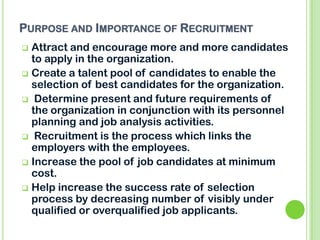
PURPOSE AND IMPORTANCE OF RECRUITMENT
 Attract and encourage more and more candidates
to apply in the organization.
 Create a talent pool of candidates to enable the
selection of best candidates for the organization.
 Determine present and future requirements of
the organization in conjunction with its personnel
planning and job analysis activities.
 Recruitment is the process which links the
employers with the employees.
 Increase the pool of job candidates at minimum
cost.
 Help increase the success rate of selection
process by decreasing number of visibly under
qualified or overqualified job applicants.
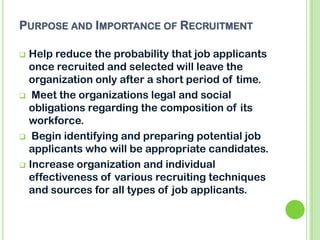
PURPOSE AND IMPORTANCE OF RECRUITMENT
 Help reduce the probability that job applicants
once recruited and selected will leave the
organization only after a short period of time.
 Meet the organizations legal and social
obligations regarding the composition of its
workforce.
 Begin identifying and preparing potential job
applicants who will be appropriate candidates.
 Increase organization and individual
effectiveness of various recruiting techniques
and sources for all types of job applicants.
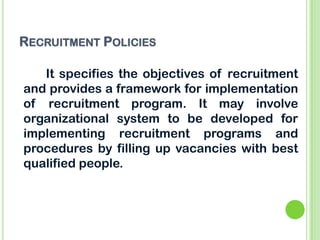
RECRUITMENT POLICIES
It specifies the objectives of recruitment
and provides a framework for implementation
of recruitment program. It may involve
organizational system to be developed for
implementing recruitment programs and
procedures by filling up vacancies with best
qualified people.
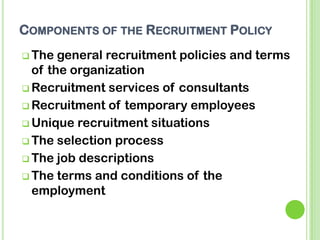
COMPONENTS OF THE RECRUITMENT POLICY
 The general recruitment policies and terms
of the organization
 Recruitment services of consultants
 Recruitment of temporary employees
 Unique recruitment situations
 The selection process
 The job descriptions
 The terms and conditions of the
employment
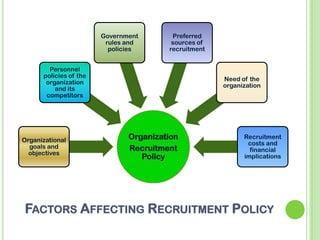
Organization
Recruitment
Policy
Organizational
goals and
objectives
Personnel
policies of the
organization
and its
competitors
Government
rules and
policies
Preferred
sources of
recruitment
Need of the
organization
Recruitment
costs and
financial
implications
FACTORS AFFECTING RECRUITMENT POLICY
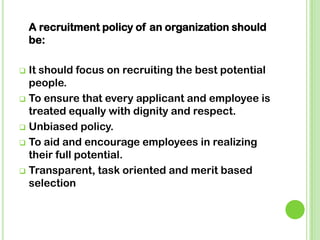
 It should focus on recruiting the best potential
people.
 To ensure that every applicant and employee is
treated equally with dignity and respect.
 Unbiased policy.
 To aid and encourage employees in realizing
their full potential.
 Transparent, task oriented and merit based
selection
A recruitment policy of an organization should
be:
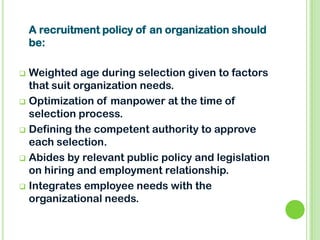
 Weighted age during selection given to factors
that suit organization needs.
 Optimization of manpower at the time of
selection process.
 Defining the competent authority to approve
each selection.
 Abides by relevant public policy and legislation
on hiring and employment relationship.
 Integrates employee needs with the
organizational needs.
A recruitment policy of an organization should
be:
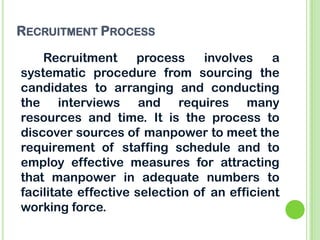
RECRUITMENT PROCESS
Recruitment process involves a
systematic procedure from sourcing the
candidates to arranging and conducting
the interviews and requires many
resources and time. It is the process to
discover sources of manpower to meet the
requirement of staffing schedule and to
employ effective measures for attracting
that manpower in adequate numbers to
facilitate effective selection of an efficient
working force.
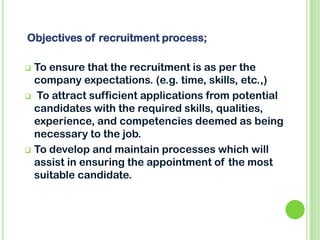
 To ensure that the recruitment is as per the
company expectations. (e.g. time, skills, etc.,)
 To attract sufficient applications from potential
candidates with the required skills, qualities,
experience, and competencies deemed as being
necessary to the job.
 To develop and maintain processes which will
assist in ensuring the appointment of the most
suitable candidate.
Objectives of recruitment process;
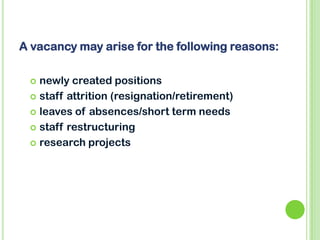
 newly created positions
 staff attrition (resignation/retirement)
 leaves of absences/short term needs
 staff restructuring
 research projects
A vacancy may arise for the following reasons:
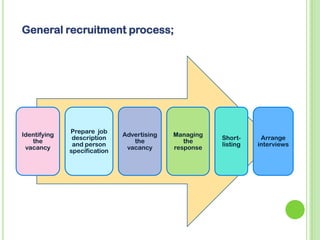
Identifying
the
vacancy
Prepare job
description
and person
specification
Advertising
the
vacancy
Managing
the
response
Short-
listing
Arrange
interviews
General recruitment process;
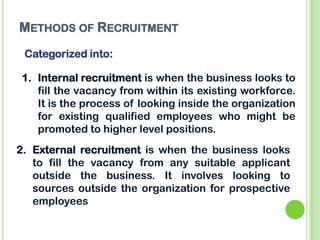
METHODS OF RECRUITMENT
Categorized into:
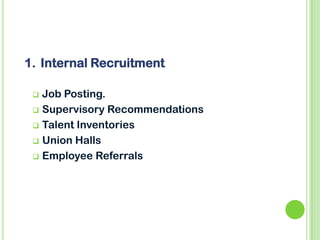
1. Internal recruitment is when the business looks to
fill the vacancy from within its existing workforce.
It is the process of looking inside the organization
for existing qualified employees who might be
promoted to higher level positions.
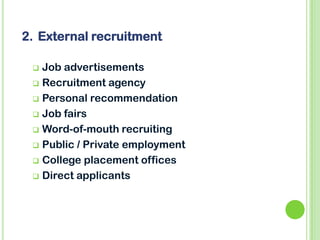
2. External recruitment is when the business looks
to fill the vacancy from any suitable applicant
outside the business. It involves looking to
sources outside the organization for prospective
employees
 Job Posting.
 Supervisory Recommendations
 Talent Inventories
 Union Halls
 Employee Referrals
1. Internal Recruitment
 Job advertisements
 Recruitment agency
 Personal recommendation
 Job fairs
 Word-of-mouth recruiting
 Public / Private employment
 College placement offices
 Direct applicants
2. External recruitment
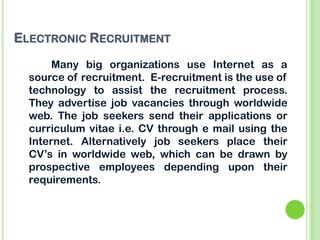
ELECTRONIC RECRUITMENT
Many big organizations use Internet as a
source of recruitment. E-recruitment is the use of
technology to assist the recruitment process.
They advertise job vacancies through worldwide
web. The job seekers send their applications or
curriculum vitae i.e. CV through e mail using the
Internet. Alternatively job seekers place their
CV’s in worldwide web, which can be drawn by
prospective employees depending upon their
requirements.
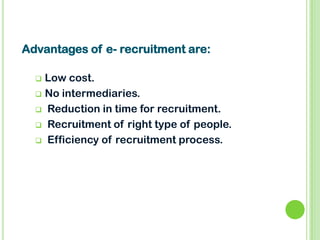
 Low cost.
 No intermediaries.
 Reduction in time for recruitment.
 Recruitment of right type of people.
 Efficiency of recruitment process.
Advantages of e- recruitment are:
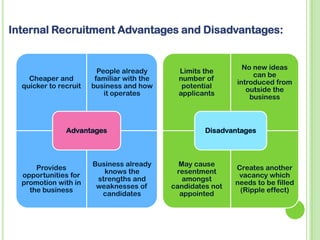
Cheaper and
quicker to recruit
People already
familiar with the
business and how
it operates
Provides
opportunities for
promotion with in
the business
Business already
knows the
strengths and
weaknesses of
candidates
Advantages
Limits the
number of
potential
applicants
No new ideas
can be
introduced from
outside the
business
May cause
resentment
amongst
candidates not
appointed
Creates another
vacancy which
needs to be filled
(Ripple effect)
Disadvantages
Internal Recruitment Advantages and Disadvantages:
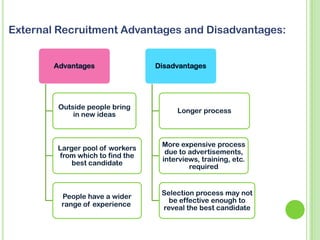
Advantages
Outside people bring
in new ideas
Larger pool of workers
from which to find the
best candidate
People have a wider
range of experience
Disadvantages
Longer process
More expensive process
due to advertisements,
interviews, training, etc.
required
Selection process may not
be effective enough to
reveal the best candidate
External Recruitment Advantages and Disadvantages:
THANK YOU!

Recruitment hrm

  • 1.
    RECRUITMENT POLICIES, METHODS ANDPROCEDURES By: FREDERIC G. VARGAS
  • 2.
    LEARNING OBJECTIVES: At theend of the discussion for this topic, we should be able to;  Describe the purpose of recruitment.  Explain the importance of recruitment policies and process.  Identify the components of a good recruitment policy.  Familiarize and identify the basic sources and methods of recruitment.  Analyze and describe the advantages and disadvantages of recruitment sources.
  • 3.
    RECRUITING DEFINE AS; Isthe process of developing a pool of qualified applicants who are interested in working for the organization and from which the organization might reasonably select the best individual or individuals to hire for employment. It involves finding and selecting the right person for the right job.
  • 4.
    PURPOSE AND IMPORTANCEOF RECRUITMENT  Attract and encourage more and more candidates to apply in the organization.  Create a talent pool of candidates to enable the selection of best candidates for the organization.  Determine present and future requirements of the organization in conjunction with its personnel planning and job analysis activities.  Recruitment is the process which links the employers with the employees.  Increase the pool of job candidates at minimum cost.  Help increase the success rate of selection process by decreasing number of visibly under qualified or overqualified job applicants.
  • 5.
    PURPOSE AND IMPORTANCEOF RECRUITMENT  Help reduce the probability that job applicants once recruited and selected will leave the organization only after a short period of time.  Meet the organizations legal and social obligations regarding the composition of its workforce.  Begin identifying and preparing potential job applicants who will be appropriate candidates.  Increase organization and individual effectiveness of various recruiting techniques and sources for all types of job applicants.
  • 6.
    RECRUITMENT POLICIES It specifiesthe objectives of recruitment and provides a framework for implementation of recruitment program. It may involve organizational system to be developed for implementing recruitment programs and procedures by filling up vacancies with best qualified people.
  • 7.
    COMPONENTS OF THERECRUITMENT POLICY  The general recruitment policies and terms of the organization  Recruitment services of consultants  Recruitment of temporary employees  Unique recruitment situations  The selection process  The job descriptions  The terms and conditions of the employment
  • 8.
    Organization Recruitment Policy Organizational goals and objectives Personnel policies ofthe organization and its competitors Government rules and policies Preferred sources of recruitment Need of the organization Recruitment costs and financial implications FACTORS AFFECTING RECRUITMENT POLICY
  • 9.
     It shouldfocus on recruiting the best potential people.  To ensure that every applicant and employee is treated equally with dignity and respect.  Unbiased policy.  To aid and encourage employees in realizing their full potential.  Transparent, task oriented and merit based selection A recruitment policy of an organization should be:
  • 10.
     Weighted ageduring selection given to factors that suit organization needs.  Optimization of manpower at the time of selection process.  Defining the competent authority to approve each selection.  Abides by relevant public policy and legislation on hiring and employment relationship.  Integrates employee needs with the organizational needs. A recruitment policy of an organization should be:
  • 11.
    RECRUITMENT PROCESS Recruitment processinvolves a systematic procedure from sourcing the candidates to arranging and conducting the interviews and requires many resources and time. It is the process to discover sources of manpower to meet the requirement of staffing schedule and to employ effective measures for attracting that manpower in adequate numbers to facilitate effective selection of an efficient working force.
  • 12.
     To ensurethat the recruitment is as per the company expectations. (e.g. time, skills, etc.,)  To attract sufficient applications from potential candidates with the required skills, qualities, experience, and competencies deemed as being necessary to the job.  To develop and maintain processes which will assist in ensuring the appointment of the most suitable candidate. Objectives of recruitment process;
  • 13.
     newly createdpositions  staff attrition (resignation/retirement)  leaves of absences/short term needs  staff restructuring  research projects A vacancy may arise for the following reasons:
  • 14.
  • 15.
    METHODS OF RECRUITMENT Categorizedinto: 1. Internal recruitment is when the business looks to fill the vacancy from within its existing workforce. It is the process of looking inside the organization for existing qualified employees who might be promoted to higher level positions. 2. External recruitment is when the business looks to fill the vacancy from any suitable applicant outside the business. It involves looking to sources outside the organization for prospective employees
  • 16.
     Job Posting. Supervisory Recommendations  Talent Inventories  Union Halls  Employee Referrals 1. Internal Recruitment
  • 17.
     Job advertisements Recruitment agency  Personal recommendation  Job fairs  Word-of-mouth recruiting  Public / Private employment  College placement offices  Direct applicants 2. External recruitment
  • 18.
    ELECTRONIC RECRUITMENT Many bigorganizations use Internet as a source of recruitment. E-recruitment is the use of technology to assist the recruitment process. They advertise job vacancies through worldwide web. The job seekers send their applications or curriculum vitae i.e. CV through e mail using the Internet. Alternatively job seekers place their CV’s in worldwide web, which can be drawn by prospective employees depending upon their requirements.
  • 19.
     Low cost. No intermediaries.  Reduction in time for recruitment.  Recruitment of right type of people.  Efficiency of recruitment process. Advantages of e- recruitment are:
  • 20.
    Cheaper and quicker torecruit People already familiar with the business and how it operates Provides opportunities for promotion with in the business Business already knows the strengths and weaknesses of candidates Advantages Limits the number of potential applicants No new ideas can be introduced from outside the business May cause resentment amongst candidates not appointed Creates another vacancy which needs to be filled (Ripple effect) Disadvantages Internal Recruitment Advantages and Disadvantages:
  • 21.
    Advantages Outside people bring innew ideas Larger pool of workers from which to find the best candidate People have a wider range of experience Disadvantages Longer process More expensive process due to advertisements, interviews, training, etc. required Selection process may not be effective enough to reveal the best candidate External Recruitment Advantages and Disadvantages:
  • 22.