Introduction to the LP-model

             Janne Støen
       Tallinn, October 2012
Learning environment and Pedagogical analysis

 A strategy to improve the learning environment through analysing the
  challenges the teachers meet

 The LP-model provides a working method in which the teachers
  collaborate in groups using specific principles

 The aim is to establish a learning environment where all students
  achieve the best social and academic learning

 The methodology involves a systematic approach to analysis and
  reflection, together with the development of appropriate measures
  and evaluation
A whole school approach


 Develop teachers' knowledge on inclusive education
  strategies for all pupils in ordinary schools
 Training the entire school staff in using a model for
  understanding and managing learning and behavioral
  problems.
A model based on research about:

 What can explain unrest and discipline problems in schools
 What do pupils learn in school (social and academic skills)
 What characterizes a good school
 What characterizes good teachers
 Learning- and class environment
Rutter et. al 1979
• Children’s behaviour and attitudes are shaped and influenced by their experiences in school

PISA 2007
• Good results are achieved when the teachers are skilled leaders who have a good, structured
   teaching
• Good results are obtained in schools that have a strong focus on learning and the learning
   process
• Results are connected to clear expectations

Hattie 2009
Important factors are:
• The relation between student and teacher
• Feedback to students
• Clear and unambiguous instructions on effort, goals and contribution
• Use of supportive dialogue, summaries and questions
• Class management
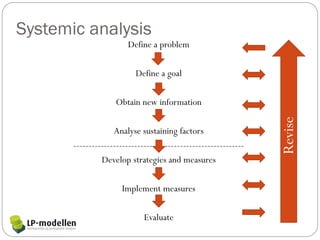
Systemic analysis
                        Define a problem

                           Define a goal

                    Obtain new information


                                                                  Revise
                    Analyse sustaining factors
       --------------------------------------------------------
                Develop strategies and measures

                      Implement measures

                              Evaluate
Different perspectives
 Individual
   Explains actions and learning outcome by relating them to
    individual traits, such as intelligence, a diagnosis (pathology),
    home-environment etc.
 Contextual
   Explains actions and learning outcome by relating them to
    factors in the learning environment, such as relations, class
    management, teaching skills etc.
 The actor’s
   Emphasizes the importance of finding out how the pupils
    involved view their situation
A systemic approach to identifying
obstacles
 Systemic theory emphasizes the importance of taking into
  account that we interact with different social systems
 Each individual participates in a system where we are affected
  and have an affect on other people in the system
 The way we communicate and act forms the structures that is
  unique to each system
What is systemic work in the LP-
model?
 The purpose is to influence a social system (like a school) to
  positive development
 The work is based on systemic theory, social interaction and
  mutual influence
 The work includes all the actors in the social system
 The work is organized systematically according to a plan
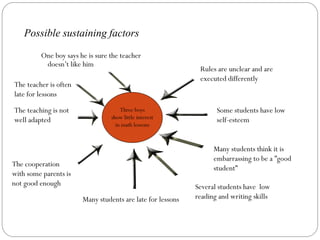
Possible sustaining factors

         One boy says he is sure the teacher
          doesn’t like him
                                                             Rules are unclear and are
                                                             executed differently
The teacher is often
late for lessons

The teaching is not                  Three boys                    Some students have low
well adapted                     show little interest              self-esteem
                                   in math lessons


                                                                  Many students think it is
                                                                  embarrassing to be a ”good
The cooperation
                                                                  student”
with some parents is
not good enough                                             Several students have low
                       Many students are late for lessons   reading and writing skills
The evaluation of LP schools shows that:
   Students exhibit better social skills in the form of self control,
      adjustment to the school norms and speaking their own mind
     There is a positive development regarding how students like and
      appreciate going to school, the learning environment has
      improved
     Relationships between students and teachers have improved and
      the atmosphere between students has also developed in a positive
      way
     The environment and culture within the school has improved and
      a stronger collaboration between the teachers has been established
     Parents are happier with the information they get from the school
      and the dialogue they have with the teachers
www.lp-modellen.no

Riskilaste konverents 2012: Janne Stoen

  • 1.
    Introduction to theLP-model Janne Støen Tallinn, October 2012
  • 2.
    Learning environment andPedagogical analysis  A strategy to improve the learning environment through analysing the challenges the teachers meet  The LP-model provides a working method in which the teachers collaborate in groups using specific principles  The aim is to establish a learning environment where all students achieve the best social and academic learning  The methodology involves a systematic approach to analysis and reflection, together with the development of appropriate measures and evaluation
  • 3.
    A whole schoolapproach  Develop teachers' knowledge on inclusive education strategies for all pupils in ordinary schools  Training the entire school staff in using a model for understanding and managing learning and behavioral problems.
  • 4.
    A model basedon research about:  What can explain unrest and discipline problems in schools  What do pupils learn in school (social and academic skills)  What characterizes a good school  What characterizes good teachers  Learning- and class environment
  • 5.
    Rutter et. al1979 • Children’s behaviour and attitudes are shaped and influenced by their experiences in school PISA 2007 • Good results are achieved when the teachers are skilled leaders who have a good, structured teaching • Good results are obtained in schools that have a strong focus on learning and the learning process • Results are connected to clear expectations Hattie 2009 Important factors are: • The relation between student and teacher • Feedback to students • Clear and unambiguous instructions on effort, goals and contribution • Use of supportive dialogue, summaries and questions • Class management
  • 6.
    Systemic analysis Define a problem Define a goal Obtain new information Revise Analyse sustaining factors -------------------------------------------------------- Develop strategies and measures Implement measures Evaluate
  • 7.
    Different perspectives  Individual  Explains actions and learning outcome by relating them to individual traits, such as intelligence, a diagnosis (pathology), home-environment etc.  Contextual  Explains actions and learning outcome by relating them to factors in the learning environment, such as relations, class management, teaching skills etc.  The actor’s  Emphasizes the importance of finding out how the pupils involved view their situation
  • 8.
    A systemic approachto identifying obstacles  Systemic theory emphasizes the importance of taking into account that we interact with different social systems  Each individual participates in a system where we are affected and have an affect on other people in the system  The way we communicate and act forms the structures that is unique to each system
  • 9.
    What is systemicwork in the LP- model?  The purpose is to influence a social system (like a school) to positive development  The work is based on systemic theory, social interaction and mutual influence  The work includes all the actors in the social system  The work is organized systematically according to a plan
  • 10.
    Possible sustaining factors One boy says he is sure the teacher doesn’t like him Rules are unclear and are executed differently The teacher is often late for lessons The teaching is not Three boys Some students have low well adapted show little interest self-esteem in math lessons Many students think it is embarrassing to be a ”good The cooperation student” with some parents is not good enough Several students have low Many students are late for lessons reading and writing skills
  • 11.
    The evaluation ofLP schools shows that:  Students exhibit better social skills in the form of self control, adjustment to the school norms and speaking their own mind  There is a positive development regarding how students like and appreciate going to school, the learning environment has improved  Relationships between students and teachers have improved and the atmosphere between students has also developed in a positive way  The environment and culture within the school has improved and a stronger collaboration between the teachers has been established  Parents are happier with the information they get from the school and the dialogue they have with the teachers
  • 12.