IVF TREATMENT
 In vitro fertilisation or IVF is a process by which an egg is fertilized by a sperm.
The fertilization takes place outside the body i.e in vitro ("in glass").
 The process includes monitoring and stimulating a woman's ovulatory process
removing ovum from the woman's ovaries and letting sperm fertilize them in a fluid
medium in a laboratory.
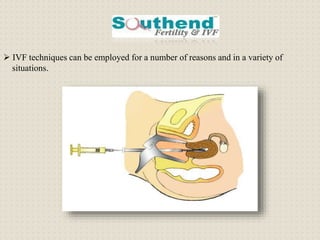
 IVF techniques can be employed for a number of reasons and in a variety of
situations.
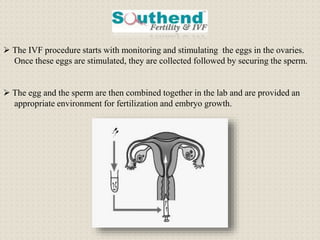
 The IVF procedure starts with monitoring and stimulating the eggs in the ovaries.
Once these eggs are stimulated, they are collected followed by securing the sperm.
 The egg and the sperm are then combined together in the lab and are provided an
appropriate environment for fertilization and embryo growth.
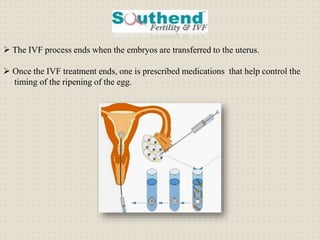
 The IVF process ends when the embryos are transferred to the uterus.
 Once the IVF treatment ends, one is prescribed medications that help control the
timing of the ripening of the egg.
 The fertilized egg also called zygote is cultured for 2–6 days in a growth medium
and is then implanted in the same or another woman's uterus, in order to establish
a successful pregnancy.
 The main factors that influence pregnancy as well as live birth rates after an IVF
treatment have been suggested to be maternal age, duration of infertility, bFSH
and number of oocytes, all reflecting ovarian function.
 The optimal age of a woman at the time of treatment is 23–39 years.
Contact Us:
Holy Angels Hospital
Vasant Vihar
New Delhi
India

Ivf treatment

  • 1.
    IVF TREATMENT  Invitro fertilisation or IVF is a process by which an egg is fertilized by a sperm. The fertilization takes place outside the body i.e in vitro ("in glass").  The process includes monitoring and stimulating a woman's ovulatory process removing ovum from the woman's ovaries and letting sperm fertilize them in a fluid medium in a laboratory.
  • 2.
     IVF techniquescan be employed for a number of reasons and in a variety of situations.
  • 3.
     The IVFprocedure starts with monitoring and stimulating the eggs in the ovaries. Once these eggs are stimulated, they are collected followed by securing the sperm.  The egg and the sperm are then combined together in the lab and are provided an appropriate environment for fertilization and embryo growth.
  • 4.
     The IVFprocess ends when the embryos are transferred to the uterus.  Once the IVF treatment ends, one is prescribed medications that help control the timing of the ripening of the egg.
  • 5.
     The fertilizedegg also called zygote is cultured for 2–6 days in a growth medium and is then implanted in the same or another woman's uterus, in order to establish a successful pregnancy.  The main factors that influence pregnancy as well as live birth rates after an IVF treatment have been suggested to be maternal age, duration of infertility, bFSH and number of oocytes, all reflecting ovarian function.  The optimal age of a woman at the time of treatment is 23–39 years.
  • 6.
    Contact Us: Holy AngelsHospital Vasant Vihar New Delhi India