In Vitro fertilization (IVF)
Janet OLAWOLE
Clinical Embryologist (Trainee)
Sameda clinics
Outlines
• Definition of IVF
• Indications of IVF
• Stimulation
• Egg collection/retrieval
• Events after egg collection
• Intracytoplasmic sperm injection (ICSI)
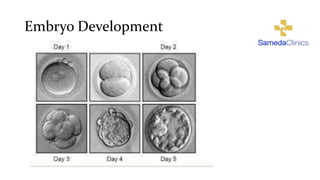
• Fertilization and Embryo Development
• Embryo transfer
• Side effect of IVF
In Vitro Fertilization-IVF
• In vitro fertilization is a process of fertilization where an egg is
combined with sperm outside the body. The process involves
monitoring and stimulating a woman's ovaries, removing an ovum
or ova from the ovaries and fertilizing them with sperms in a dish
in the laboratory.
Indications of IVF
• Blocked or damaged fallopian tubes
• Sperm abnormality
• Advanced woman’s age (age over 37 years)
• Unsuccessful intrauterine insemination after 3 cycles attempt
• Endometriosis
• Uterine problem
• Sex selection
• Unexplained infertility
Stimulation
• The goal is to obtain as many mature eggs as possible. This is done
by daily injections of gonadotropins.
• Regular monitoring of the follicles by ultrasound scan.
• After reaching certain size, the final maturation
of those follicles is done by giving HCG.
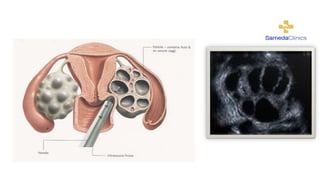
Egg Retrieval (oocytes)
• Egg retrieval is done 34 to 36 hours post HCG
injection.
• Retrieval is done under general anesthesia, using ultrasound guide.
• A needle is used to aspirate all the follicles.
• The follicular fluid is passed over to the embryologist, who
identifies and separates the eggs.
• The procedure takes about 15 to 20 minutes and not more than two
hours for the patient to recover.
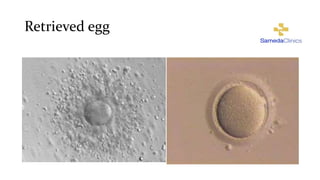
Retrieved egg
Events after Egg Collection
• Sperm production
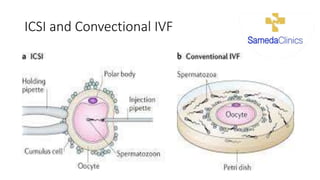
• Insemination of the sperm into the egg(conventional IVF)
or Sperm injection into the eggs(ICSI)
• Fertilization check (performed the next day approximately
18 hours after sperm injection or insemination of the
eggs.)
• Observation of growth
• Selection of embryos for transfer
ICSI and Convectional IVF
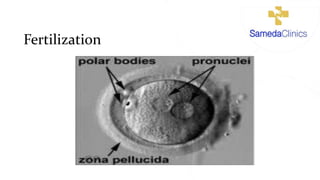
Fertilization
Embryo Development
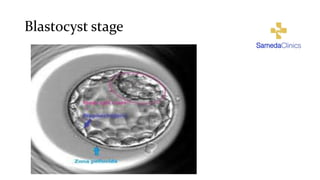
Blastocyst stage
Embryo transfer
• An embryo transfer is the final stage in the In Vitro Fertilization (IVF)
process where the fertilized egg—now an embryo—is placed in the woman’s
uterus.
• The embryo is loaded into a catheter, which is passed through the vagina
and cervix and into the uterus where it is deposited.
• There are different types of embryo transfers: cleavage transfer(day 3),
blastocyst transfer (day 5) or frozen embryo transfer.
Side Effects Of IVF
• Soreness or Bruising from Injections.
• Nausea.
• Small risk of damage to other pelvic organs during egg collection
• Mood Swings.
• Fatigue.
• Allergic Reactions.
• Mild Pelvic and Abdominal Pain.
• Multiple birth
Success
Chances of achieving pregnancy globally is between 25% and 30%.
However, the factors below affect probability of conception
• Age of the woman
• Condition of the sperm
• Coexisting uterine pathology like fibroids, polyps, scars in the
uterus
• Condition of the laboratory
• Expertise of the team
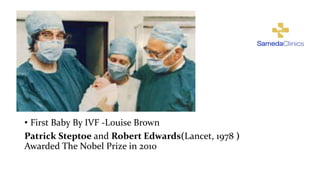
• First Baby By IVF -Louise Brown
Patrick Steptoe and Robert Edwards(Lancet, 1978 )
Awarded The Nobel Prize in 2010
Why IVF fails
IVF can fail at any of the various stages mentioned below:
• Treatment cancellation may occur at the stage of ovarian
stimulation due to inadequate follicular development.
• There may be failure to retrieve eggs at egg collection; retrieved
eggs may be immature or mature eggs may not fertilize.
• Poor development of embryos
• Some conditions may prevent the Embryo(s) from being
transferred
• Unexplained IVF failures – Possible autoimmune involvement
Thank you

INVITRO FERTILIZATION (IVF)

  • 1.
    In Vitro fertilization(IVF) Janet OLAWOLE Clinical Embryologist (Trainee) Sameda clinics
  • 2.
    Outlines • Definition ofIVF • Indications of IVF • Stimulation • Egg collection/retrieval • Events after egg collection • Intracytoplasmic sperm injection (ICSI) • Fertilization and Embryo Development • Embryo transfer • Side effect of IVF
  • 3.
    In Vitro Fertilization-IVF •In vitro fertilization is a process of fertilization where an egg is combined with sperm outside the body. The process involves monitoring and stimulating a woman's ovaries, removing an ovum or ova from the ovaries and fertilizing them with sperms in a dish in the laboratory.
  • 4.
    Indications of IVF •Blocked or damaged fallopian tubes • Sperm abnormality • Advanced woman’s age (age over 37 years) • Unsuccessful intrauterine insemination after 3 cycles attempt • Endometriosis • Uterine problem • Sex selection • Unexplained infertility
  • 5.
    Stimulation • The goalis to obtain as many mature eggs as possible. This is done by daily injections of gonadotropins. • Regular monitoring of the follicles by ultrasound scan. • After reaching certain size, the final maturation of those follicles is done by giving HCG.
  • 6.
    Egg Retrieval (oocytes) •Egg retrieval is done 34 to 36 hours post HCG injection. • Retrieval is done under general anesthesia, using ultrasound guide. • A needle is used to aspirate all the follicles. • The follicular fluid is passed over to the embryologist, who identifies and separates the eggs. • The procedure takes about 15 to 20 minutes and not more than two hours for the patient to recover.
  • 8.
  • 9.
    Events after EggCollection • Sperm production • Insemination of the sperm into the egg(conventional IVF) or Sperm injection into the eggs(ICSI) • Fertilization check (performed the next day approximately 18 hours after sperm injection or insemination of the eggs.) • Observation of growth • Selection of embryos for transfer
  • 10.
  • 11.
  • 12.
  • 13.
  • 14.
    Embryo transfer • Anembryo transfer is the final stage in the In Vitro Fertilization (IVF) process where the fertilized egg—now an embryo—is placed in the woman’s uterus. • The embryo is loaded into a catheter, which is passed through the vagina and cervix and into the uterus where it is deposited. • There are different types of embryo transfers: cleavage transfer(day 3), blastocyst transfer (day 5) or frozen embryo transfer.
  • 15.
    Side Effects OfIVF • Soreness or Bruising from Injections. • Nausea. • Small risk of damage to other pelvic organs during egg collection • Mood Swings. • Fatigue. • Allergic Reactions. • Mild Pelvic and Abdominal Pain. • Multiple birth
  • 16.
    Success Chances of achievingpregnancy globally is between 25% and 30%. However, the factors below affect probability of conception • Age of the woman • Condition of the sperm • Coexisting uterine pathology like fibroids, polyps, scars in the uterus • Condition of the laboratory • Expertise of the team
  • 17.
    • First BabyBy IVF -Louise Brown Patrick Steptoe and Robert Edwards(Lancet, 1978 ) Awarded The Nobel Prize in 2010
  • 18.
    Why IVF fails IVFcan fail at any of the various stages mentioned below: • Treatment cancellation may occur at the stage of ovarian stimulation due to inadequate follicular development. • There may be failure to retrieve eggs at egg collection; retrieved eggs may be immature or mature eggs may not fertilize. • Poor development of embryos • Some conditions may prevent the Embryo(s) from being transferred • Unexplained IVF failures – Possible autoimmune involvement
  • 19.