CLASSIFICATION
OF
VOWELS
JERICK MENDOZA
- There are five vowels in the English alphabet.
- (a, e, i ,o ,u )
- This are categorized according to their vowel
qualities, articulation of the tongue, the
stability of articulation, lengthening and
thickness, and voicing.
Vowels can be defined as speech sounds
produced without obstruction or audible
friction of the lung air passing through
the
oral passage. The tongue and the lips can
produce various resonating chambers by
assuming different shapes.
Vowel sounds are classified into certain
sets basing on the following main
factors.
1.The Shape of the Lips
2. The Raising of the Tongue
The Shape of the Lips
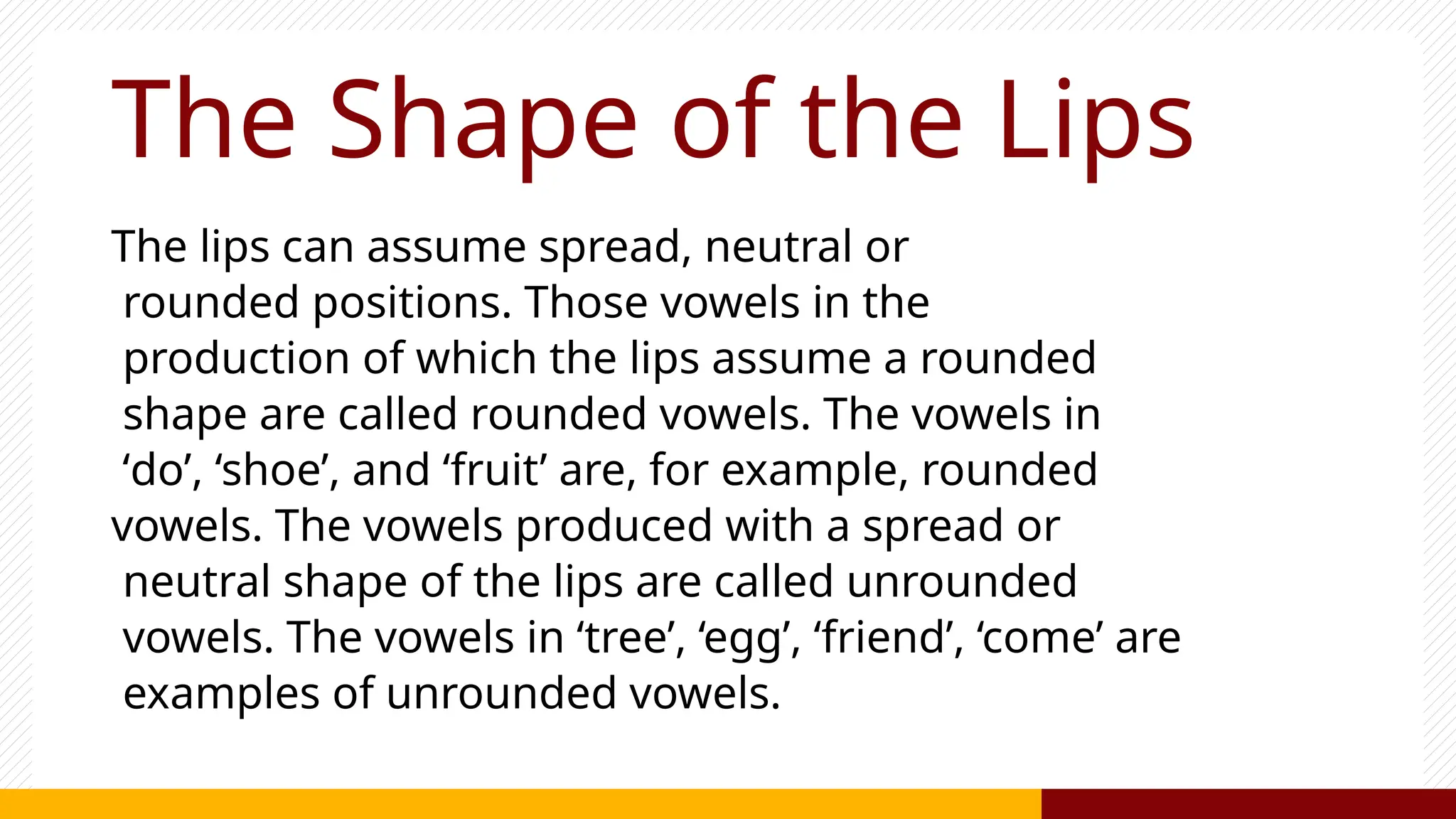
The lips can assume spread, neutral or
rounded positions. Those vowels in the
production of which the lips assume a rounded
shape are called rounded vowels. The vowels in
‘do’, ‘shoe’, and ‘fruit’ are, for example, rounded
vowels. The vowels produced with a spread or
neutral shape of the lips are called unrounded
vowels. The vowels in ‘tree’, ‘egg’, ‘friend’, ‘come’ are
examples of unrounded vowels.
The Raising of the Tongue
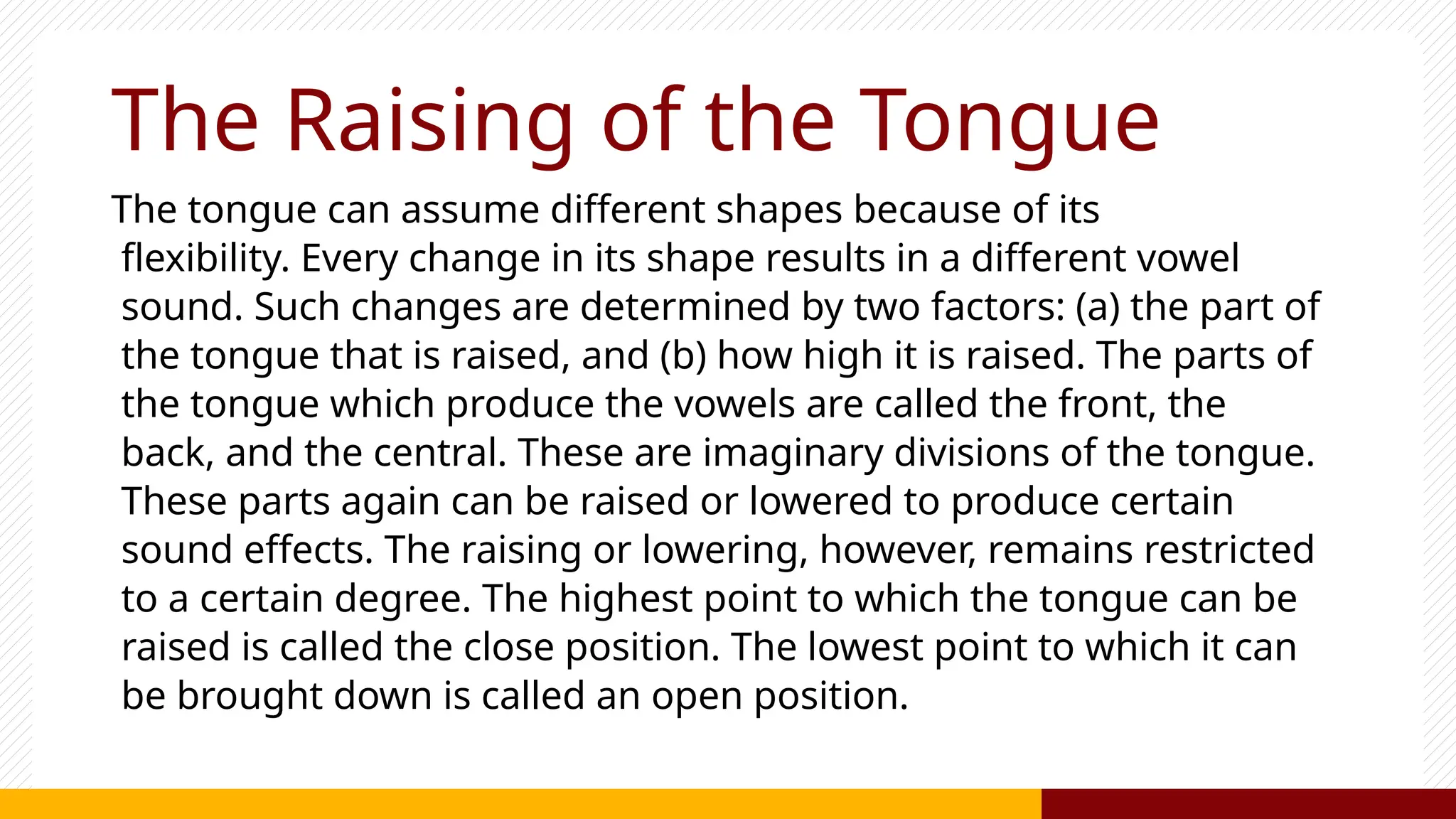
The tongue can assume different shapes because of its
flexibility. Every change in its shape results in a different vowel
sound. Such changes are determined by two factors: (a) the part of
the tongue that is raised, and (b) how high it is raised. The parts of
the tongue which produce the vowels are called the front, the
back, and the central. These are imaginary divisions of the tongue.
These parts again can be raised or lowered to produce certain
sound effects. The raising or lowering, however, remains restricted
to a certain degree. The highest point to which the tongue can be
raised is called the close position. The lowest point to which it can
be brought down is called an open position.
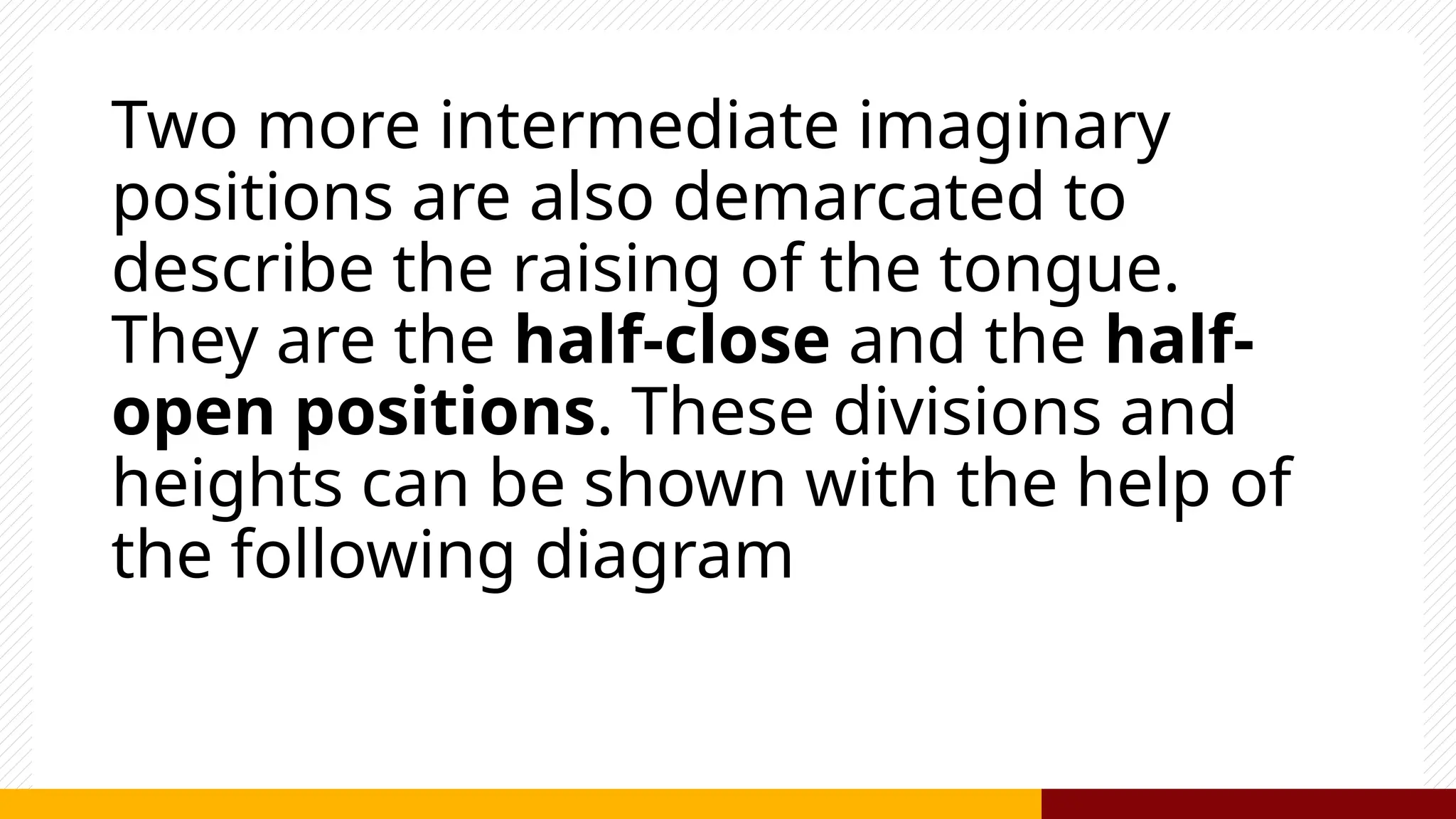
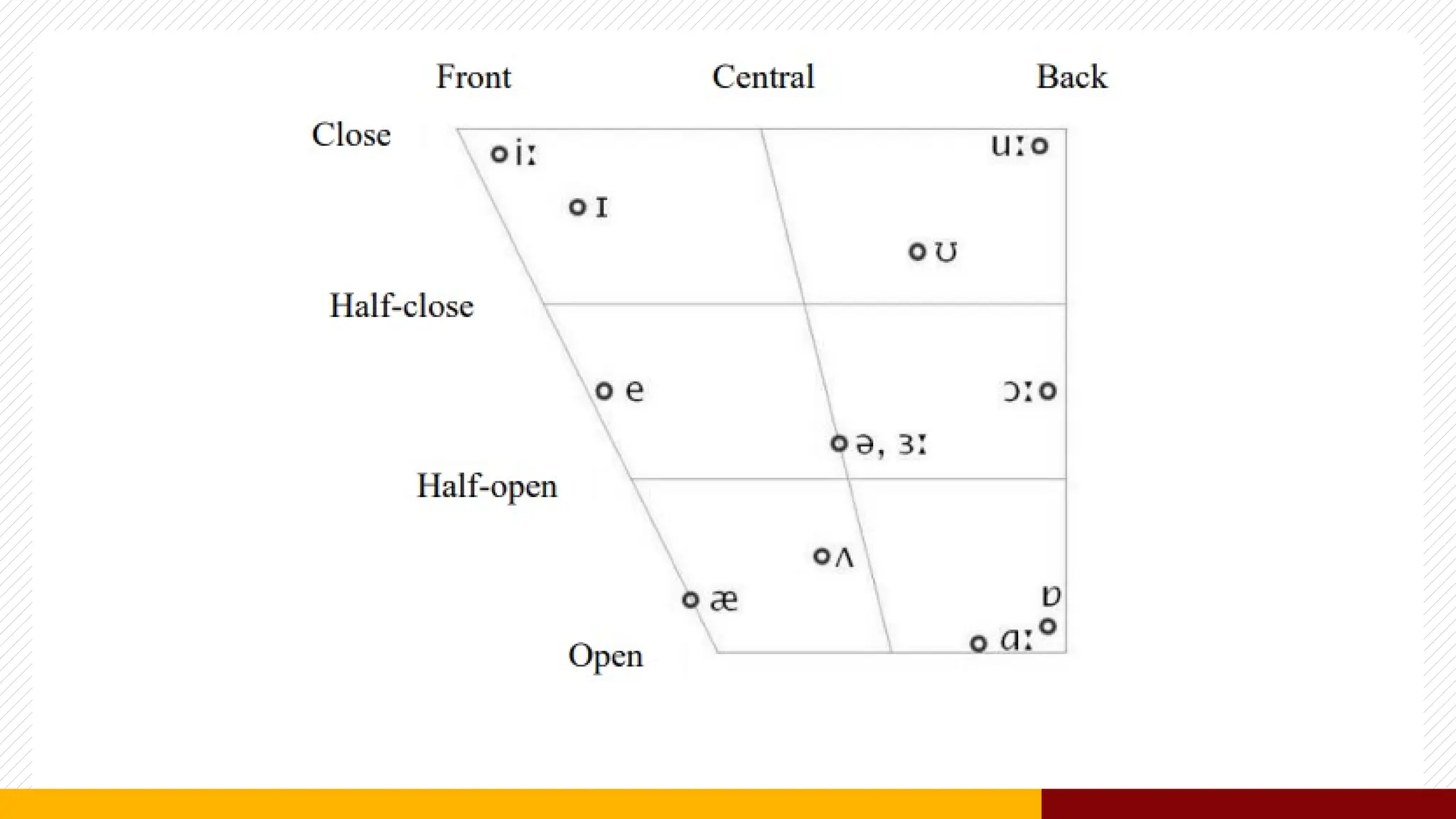
Two more intermediate imaginary
positions are also demarcated to
describe the raising of the tongue.
They are the half-close and the half-
open positions. These divisions and
heights can be shown with the help of
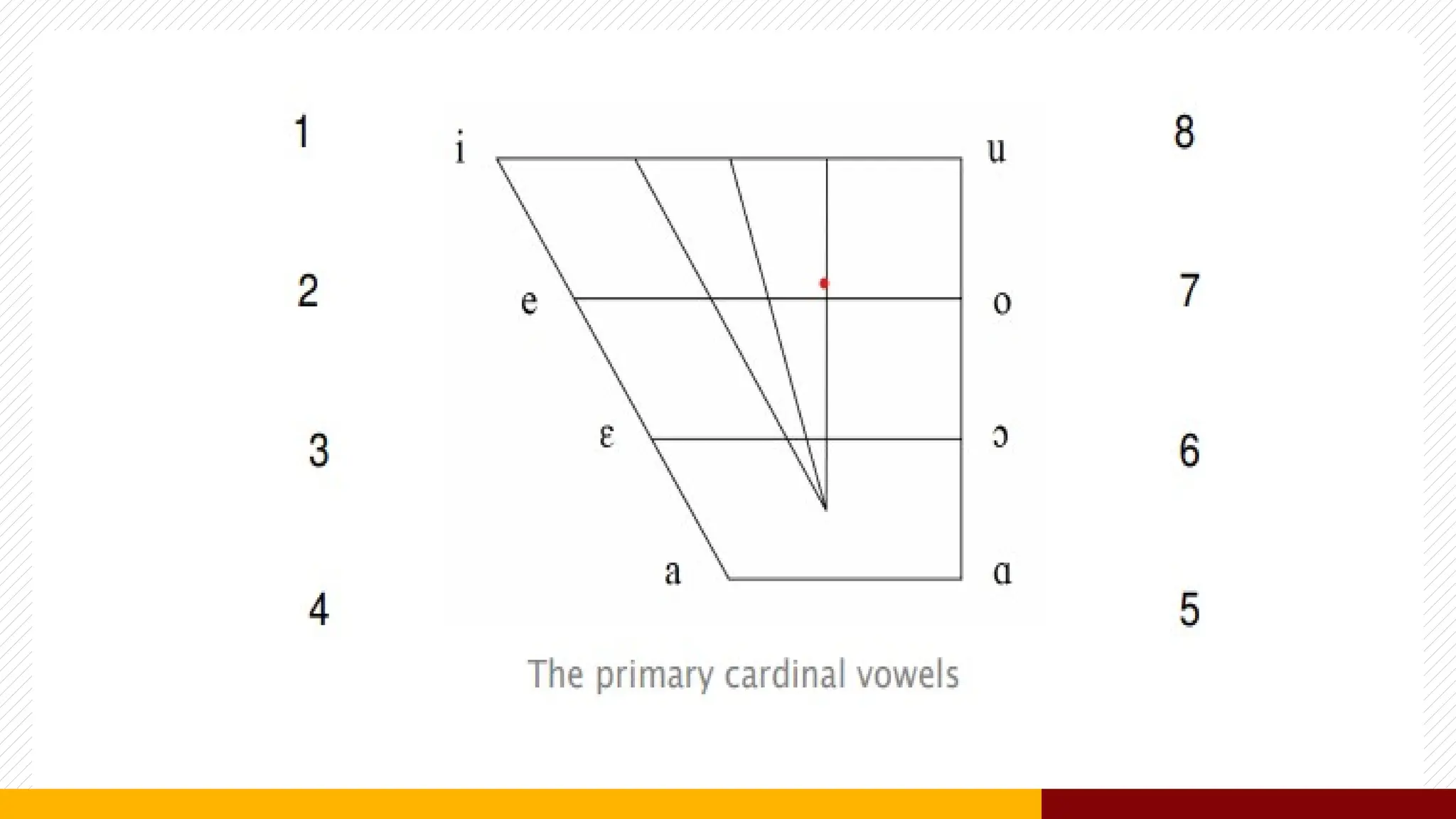
the following diagram
Primary Cardinal Vowels
The primary set [i e ɛ a ɑ ɔ o u],
are numbered 1 -8, (with 1 – 5
being unrounded and 6 - 8
rounded).
The cardinal vowels are auditorily agreed qualities
and must be learnt from a teacher who knows
how they sound, or from a recording. However,
vowels 1 and 5 can be given an articulatory
specification. No.1 is produced with the fronts
, closest position of the tongue which does not
produce audible friction, and No. 5 is produced
with the back, opens possible tongue
position, again without audible friction.
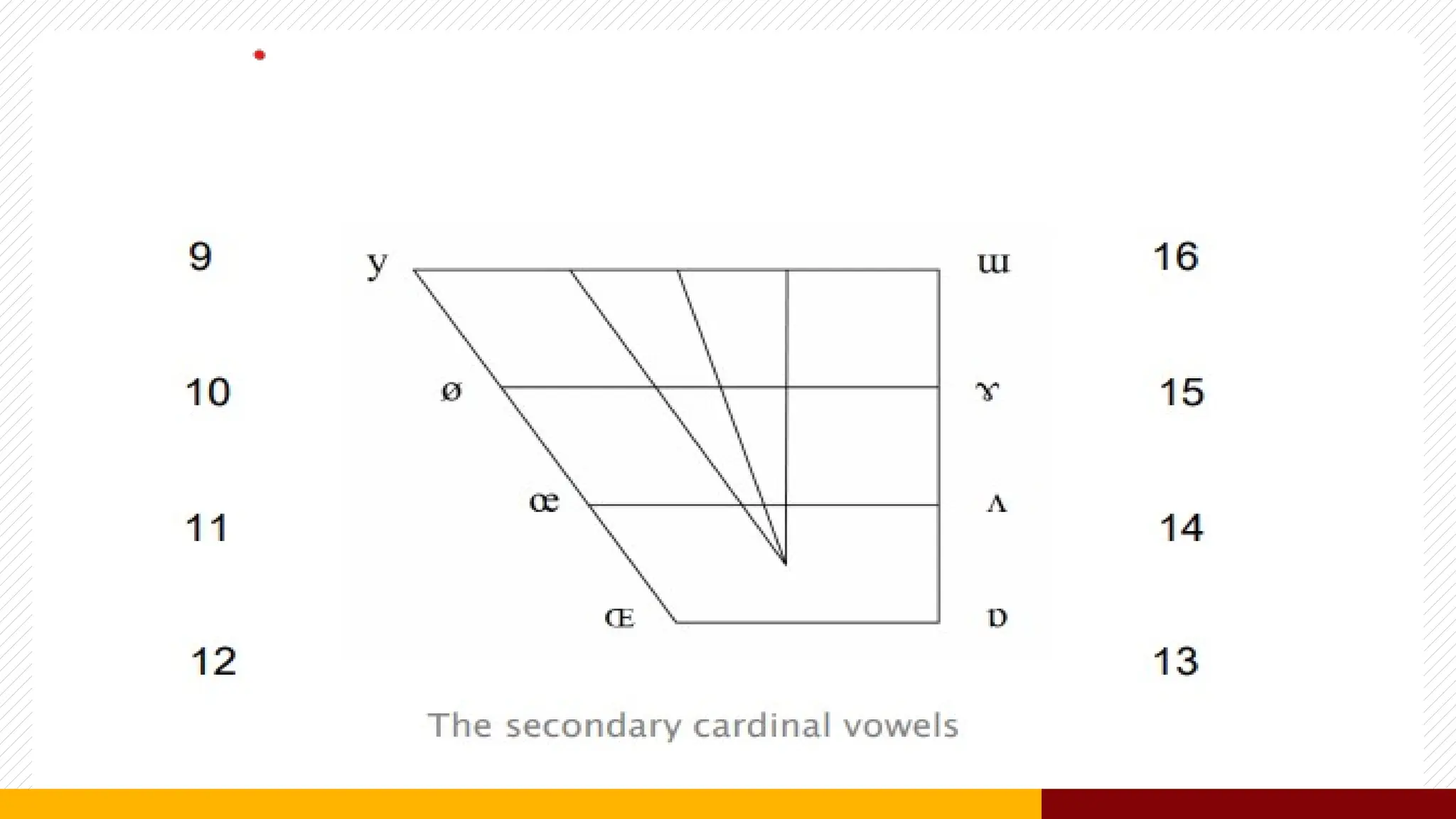
Secondary Cardinal Vowels
• The secondary cardinal vowels are [y Ø œ œ DA Y ш],
numbered 9-16. The secondary cardinal vowels are related
to the primary ones by reversing the lip- posture; so for
example vowel 1 (primary) is close, front, unrounded and so
vowel 9 (secondary) is close, front, rounded. To take another
example, vowel 8 is close, back, rounded -- so vowel 16 is
close, back, unrounded.
ITL2 (1).pptxddfsdfsdfsdfsdfsdfdsfdsfsdfsdf

ITL2 (1).pptxddfsdfsdfsdfsdfsdfdsfdsfsdfsdf

  • 1.
  • 2.
    - There arefive vowels in the English alphabet. - (a, e, i ,o ,u ) - This are categorized according to their vowel qualities, articulation of the tongue, the stability of articulation, lengthening and thickness, and voicing.
  • 3.
    Vowels can bedefined as speech sounds produced without obstruction or audible friction of the lung air passing through the oral passage. The tongue and the lips can produce various resonating chambers by assuming different shapes.
  • 4.
    Vowel sounds areclassified into certain sets basing on the following main factors. 1.The Shape of the Lips 2. The Raising of the Tongue
  • 5.
    The Shape ofthe Lips The lips can assume spread, neutral or rounded positions. Those vowels in the production of which the lips assume a rounded shape are called rounded vowels. The vowels in ‘do’, ‘shoe’, and ‘fruit’ are, for example, rounded vowels. The vowels produced with a spread or neutral shape of the lips are called unrounded vowels. The vowels in ‘tree’, ‘egg’, ‘friend’, ‘come’ are examples of unrounded vowels.
  • 6.
    The Raising ofthe Tongue The tongue can assume different shapes because of its flexibility. Every change in its shape results in a different vowel sound. Such changes are determined by two factors: (a) the part of the tongue that is raised, and (b) how high it is raised. The parts of the tongue which produce the vowels are called the front, the back, and the central. These are imaginary divisions of the tongue. These parts again can be raised or lowered to produce certain sound effects. The raising or lowering, however, remains restricted to a certain degree. The highest point to which the tongue can be raised is called the close position. The lowest point to which it can be brought down is called an open position.
  • 7.
    Two more intermediateimaginary positions are also demarcated to describe the raising of the tongue. They are the half-close and the half- open positions. These divisions and heights can be shown with the help of the following diagram
  • 9.
    Primary Cardinal Vowels Theprimary set [i e ɛ a ɑ ɔ o u], are numbered 1 -8, (with 1 – 5 being unrounded and 6 - 8 rounded).
  • 11.
    The cardinal vowelsare auditorily agreed qualities and must be learnt from a teacher who knows how they sound, or from a recording. However, vowels 1 and 5 can be given an articulatory specification. No.1 is produced with the fronts , closest position of the tongue which does not produce audible friction, and No. 5 is produced with the back, opens possible tongue position, again without audible friction.
  • 12.
    Secondary Cardinal Vowels •The secondary cardinal vowels are [y Ø œ œ DA Y ш], numbered 9-16. The secondary cardinal vowels are related to the primary ones by reversing the lip- posture; so for example vowel 1 (primary) is close, front, unrounded and so vowel 9 (secondary) is close, front, rounded. To take another example, vowel 8 is close, back, rounded -- so vowel 16 is close, back, unrounded.