IT Service Management (ITSM)Shafiq HamidDecember 2010
What is ITIL  A best practice framework  Drawn from both the public and private sectors internationally  ITIL describes how IT resources should be organised to deliver business value  ITIL Documents the processes, functions and roles of IT Service Management (ITSM)
Why ITILBest PracticeITIL practices represent the learning experiences and thought leadership of the world’s best in class service providers/organisationsTried & TestedOffers robust, mature and time-tested practices that have applicability to all types of service organizations
 useful and relevant in public and private sectors.
 Applicable to internal and external service providers, small, medium and large enterprise, and within any technical environmentNon-proprietaryPractices are applicable in any IT organization
 Not based on any particular technology platform, or industry type.
 Owned by the UK government and not tied to any commercial proprietary practice or solutionThe ITIL AdvantageReduce costs,
Streamline IT processes,
Improve IT department's services
Improve productivity
Improve customer/user satisfaction
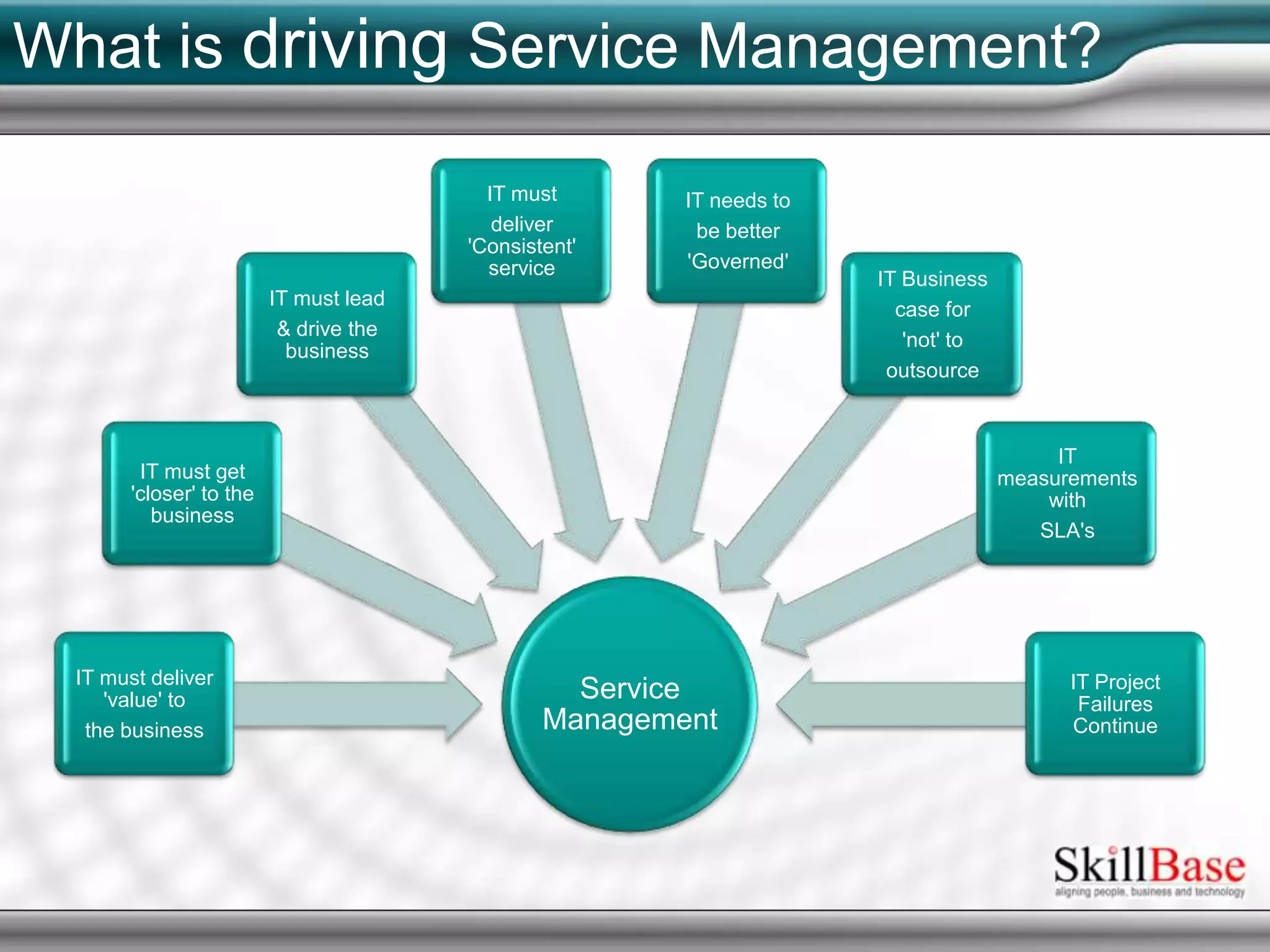
Improve knowledge-management at a company-wide level. What is driving Service Management?
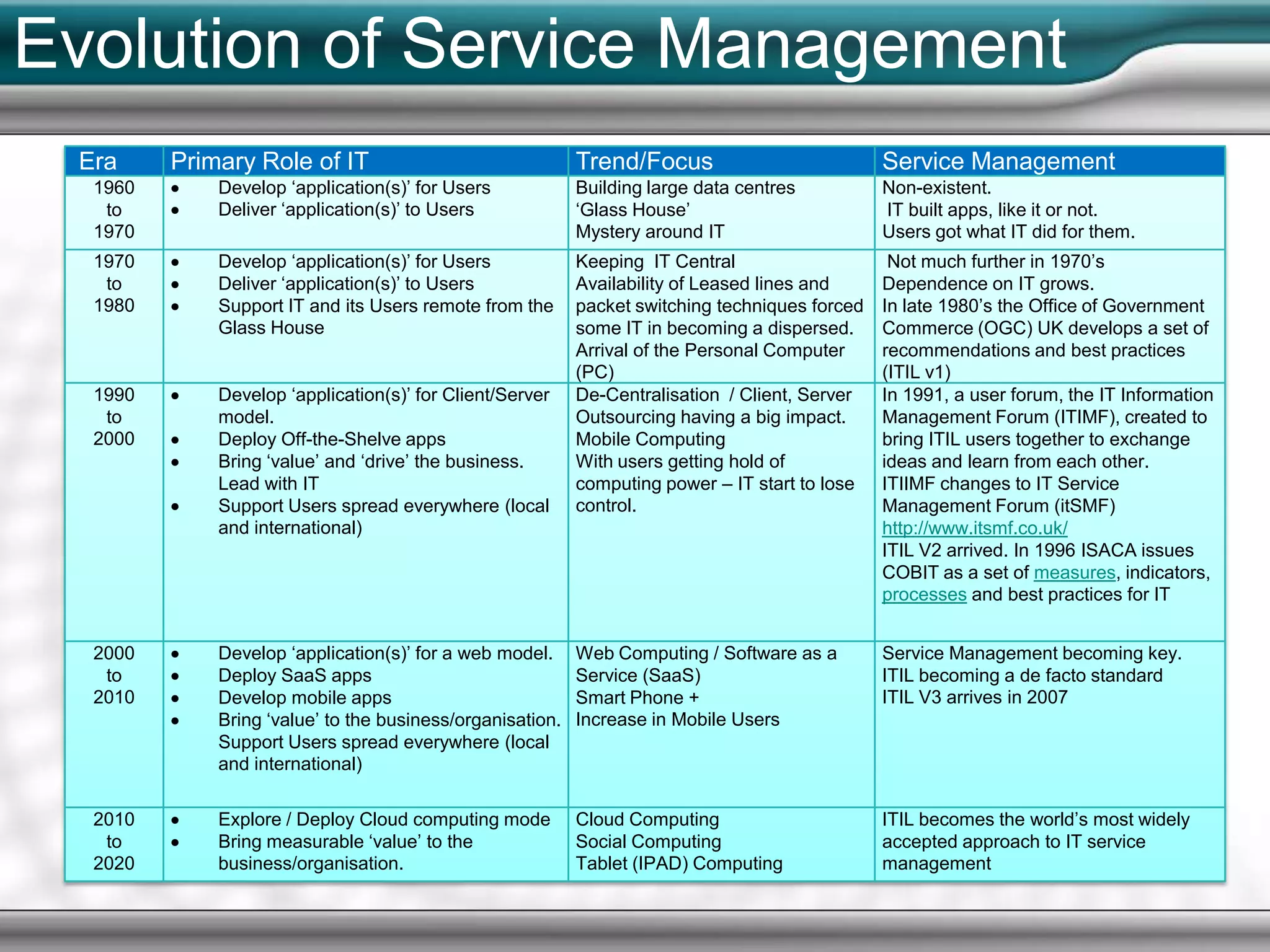
Evolution of Service Management
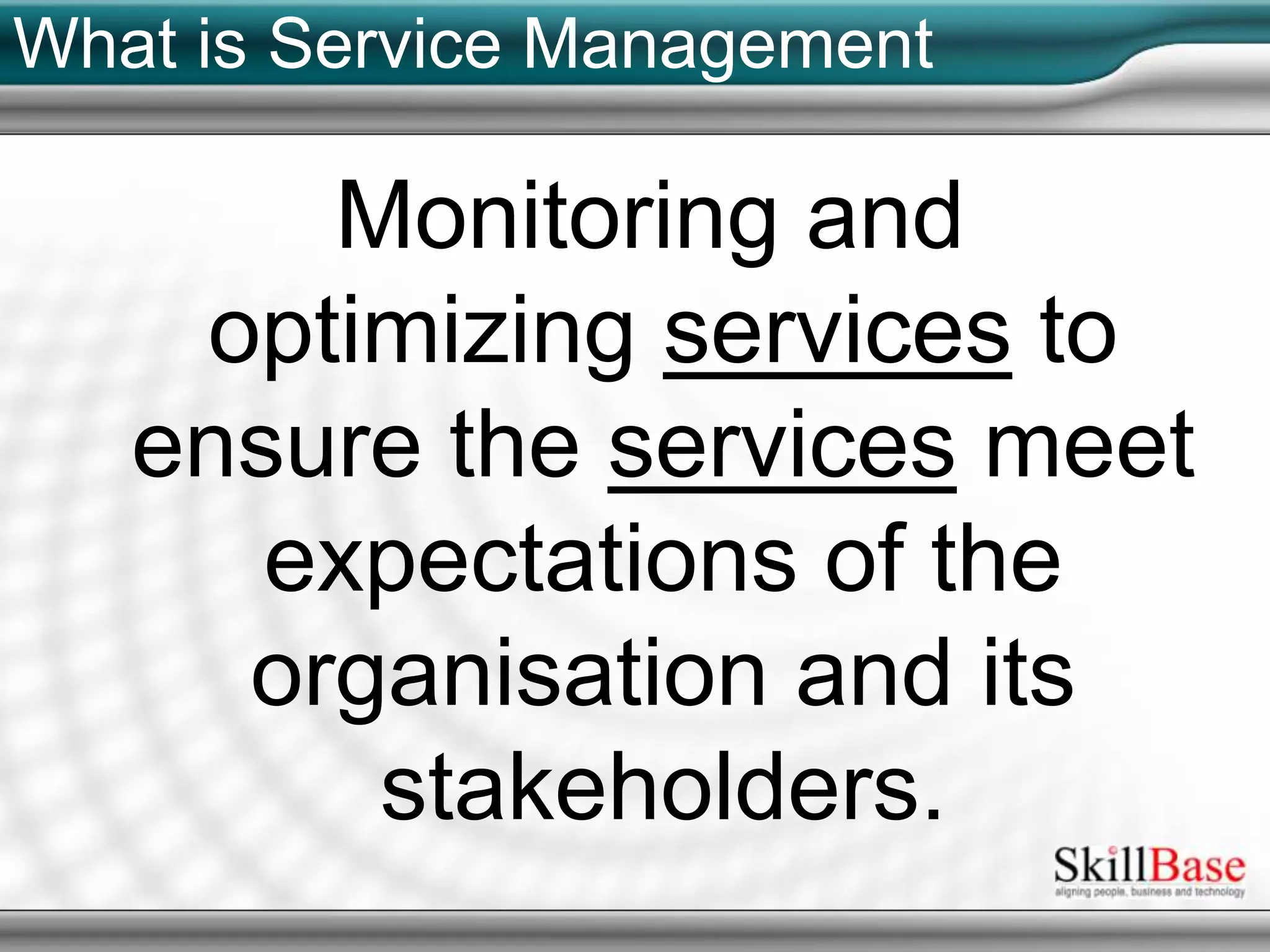
What is Service ManagementMonitoring and optimizing services to ensure the services meet expectations of the organisation and its stakeholders.
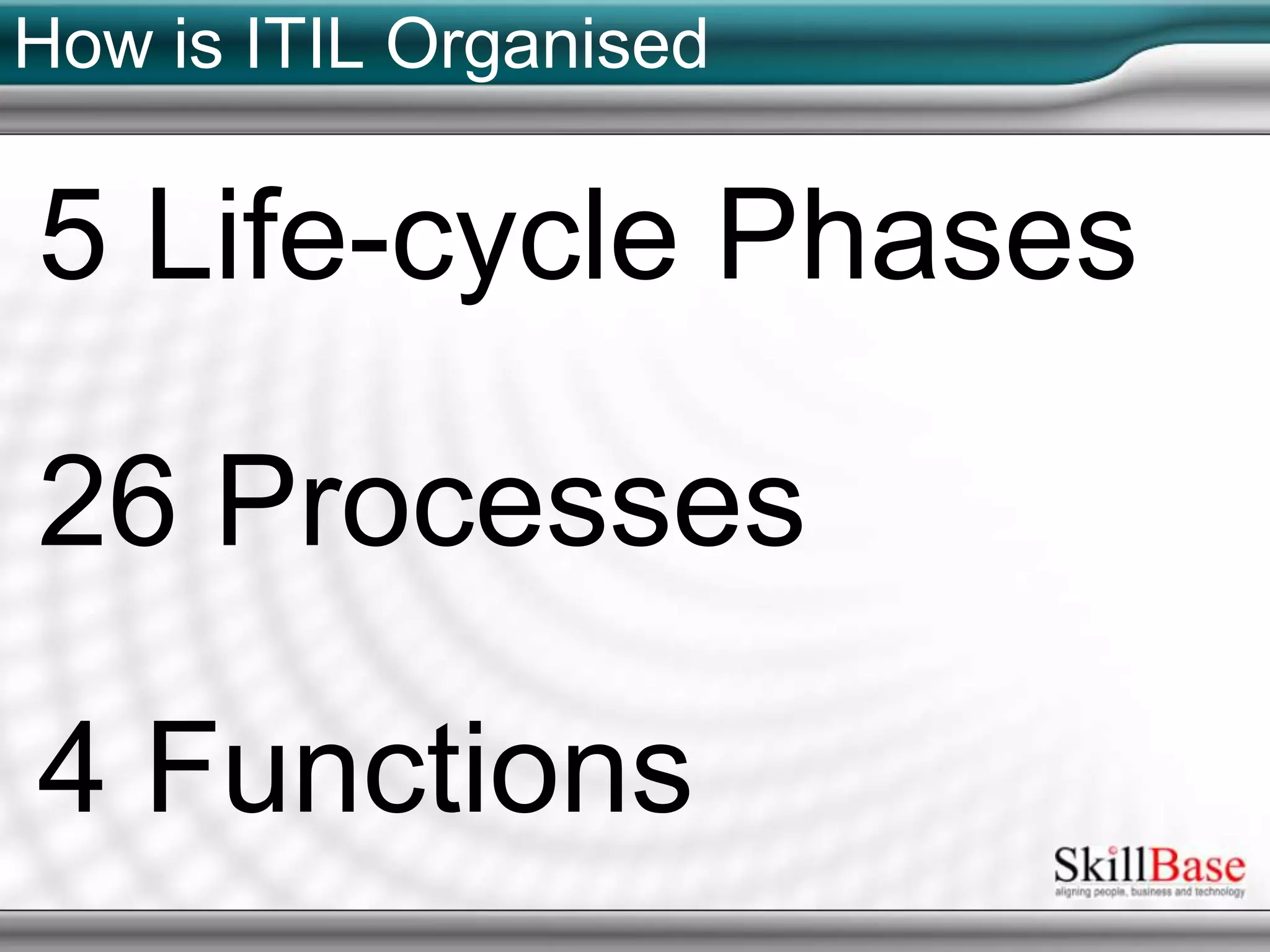
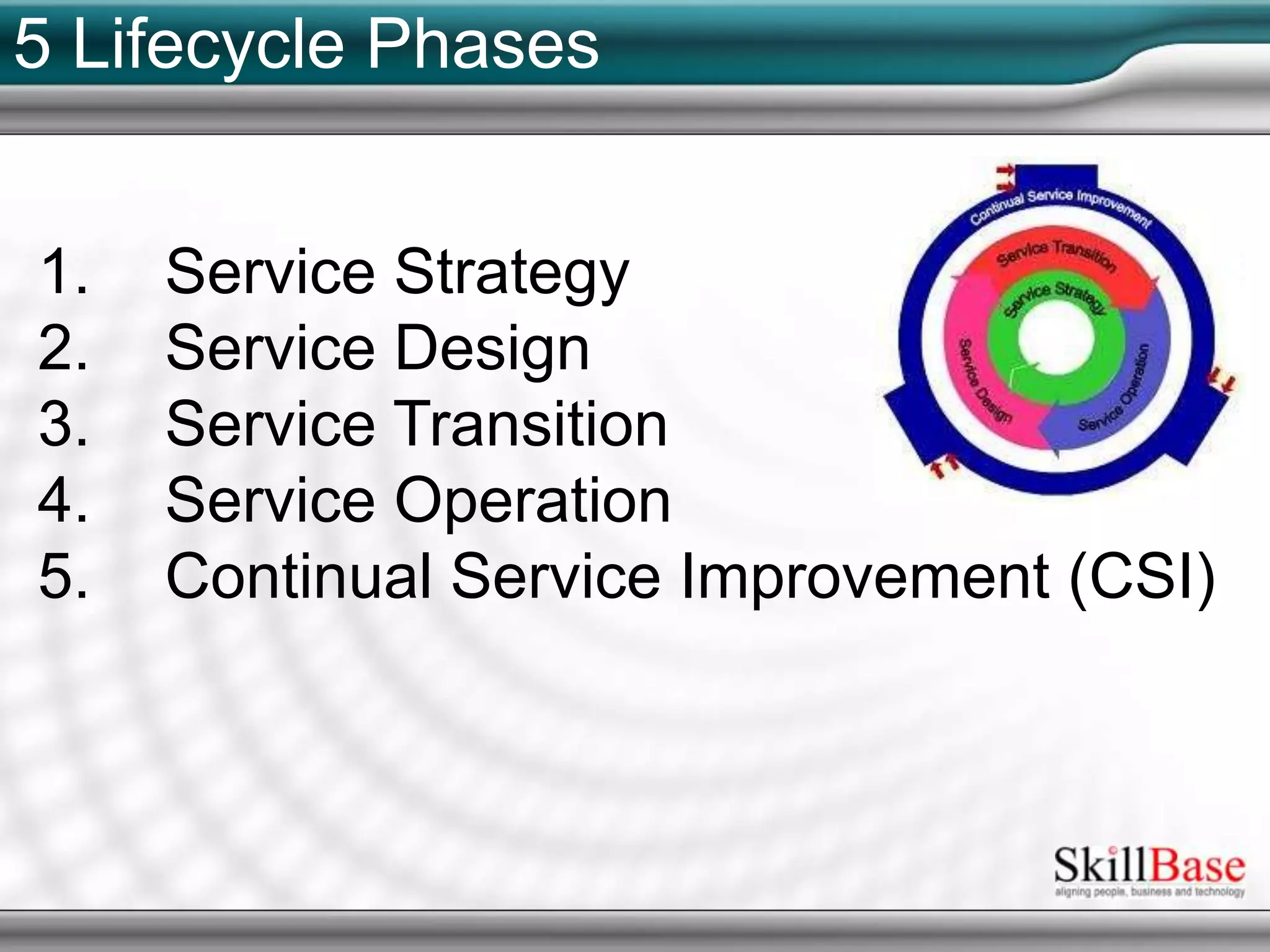
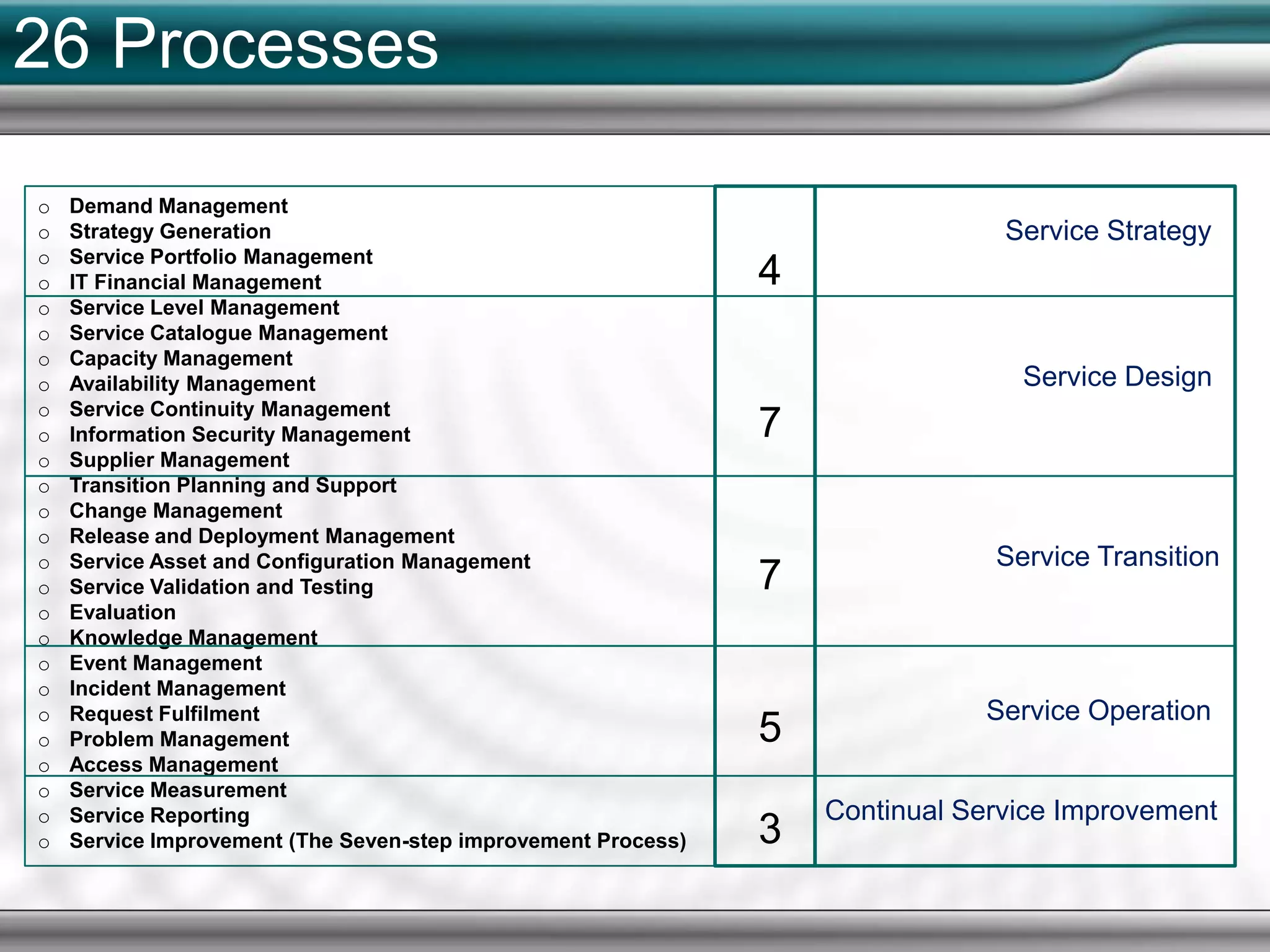
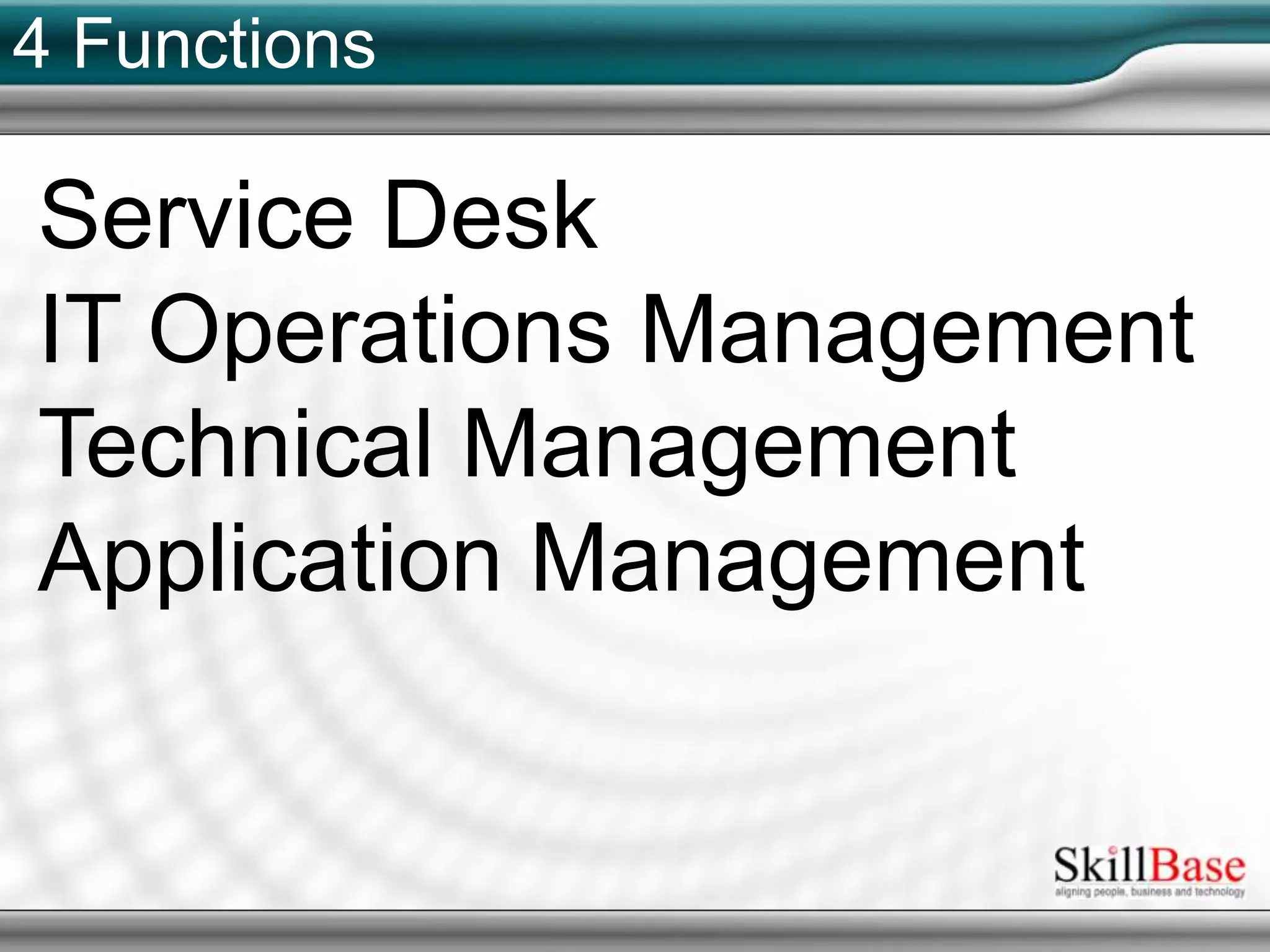
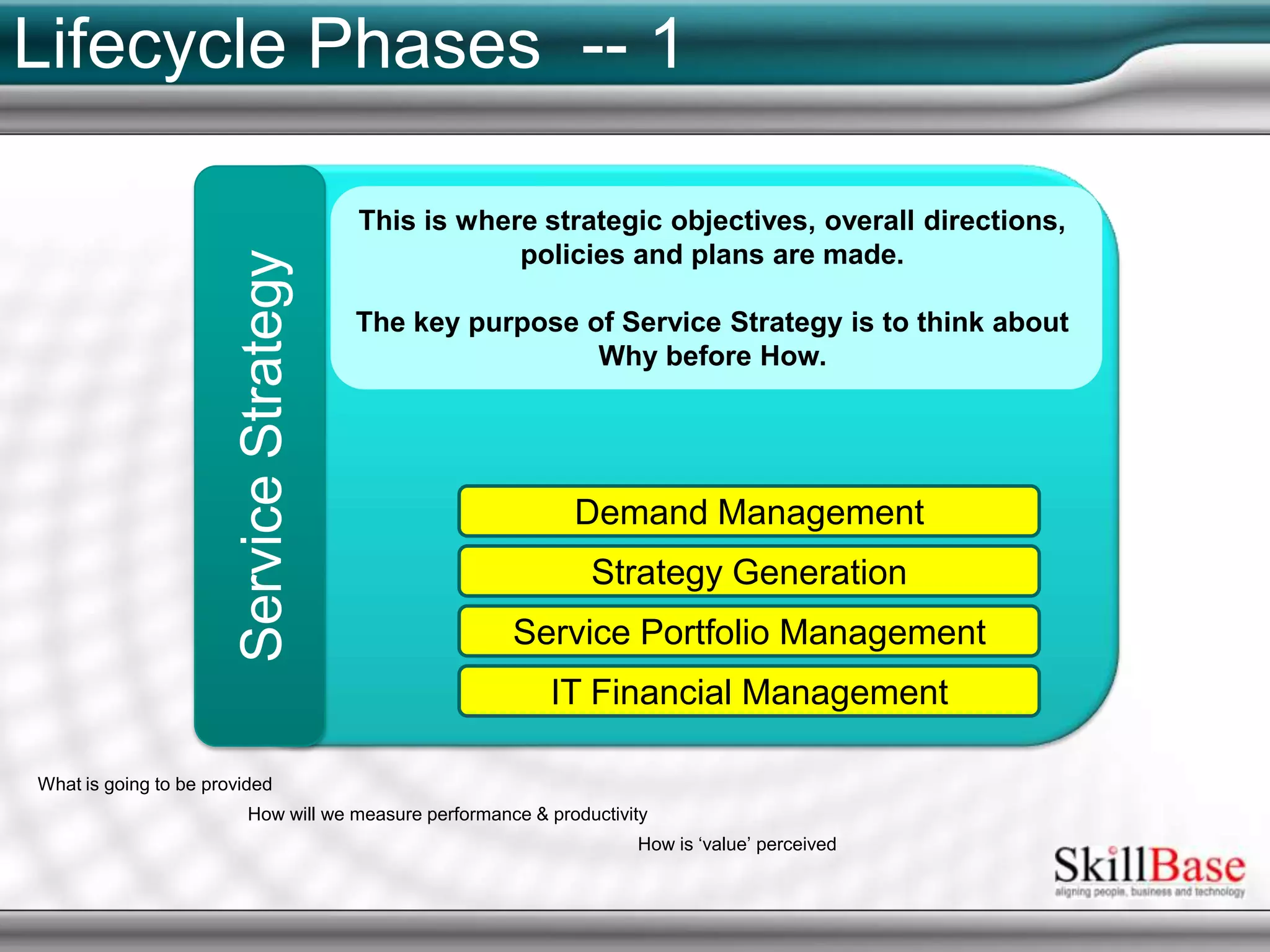
How is ITIL Organised5 Life-cycle Phases26 Processes4 Functions
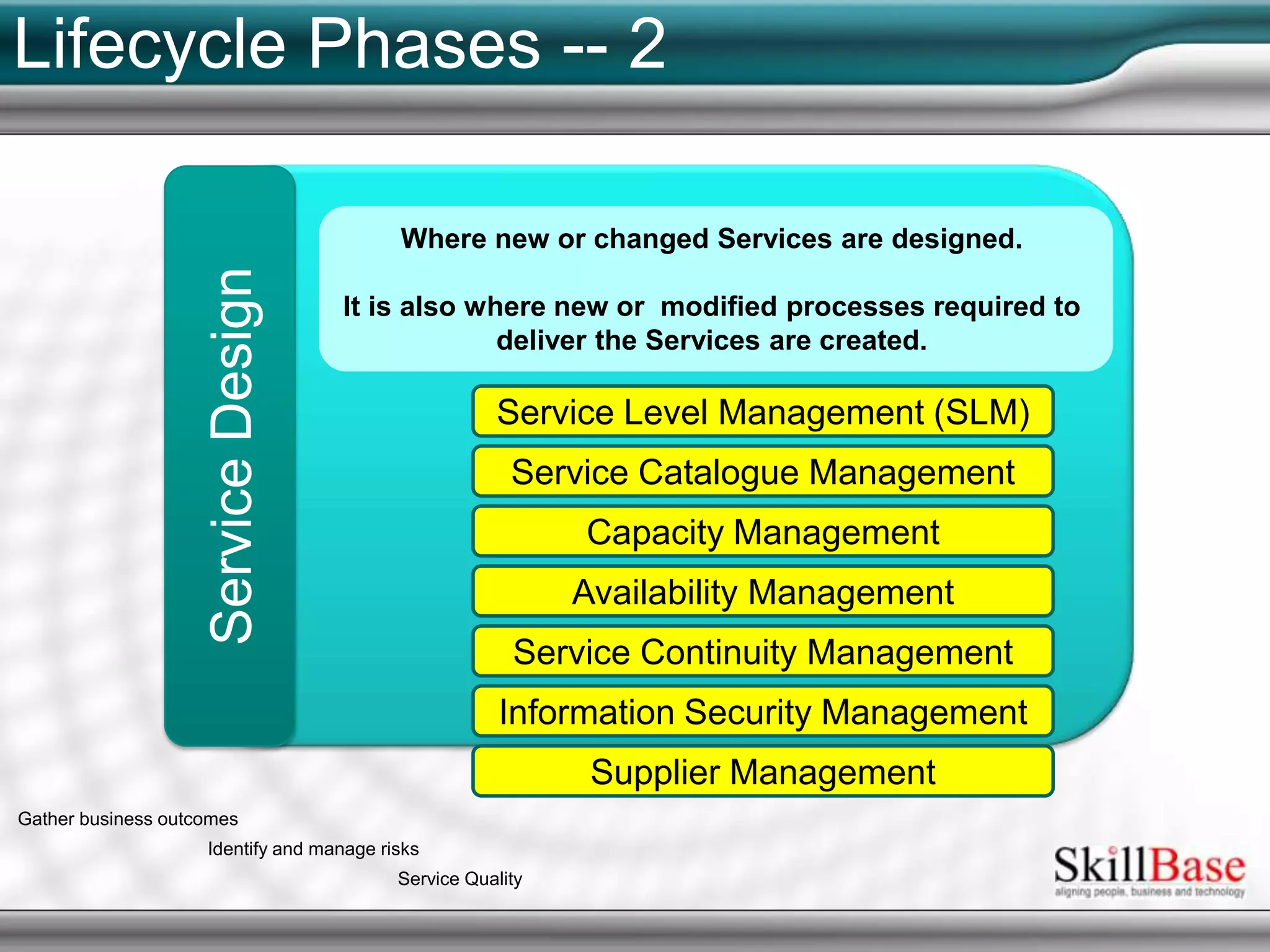
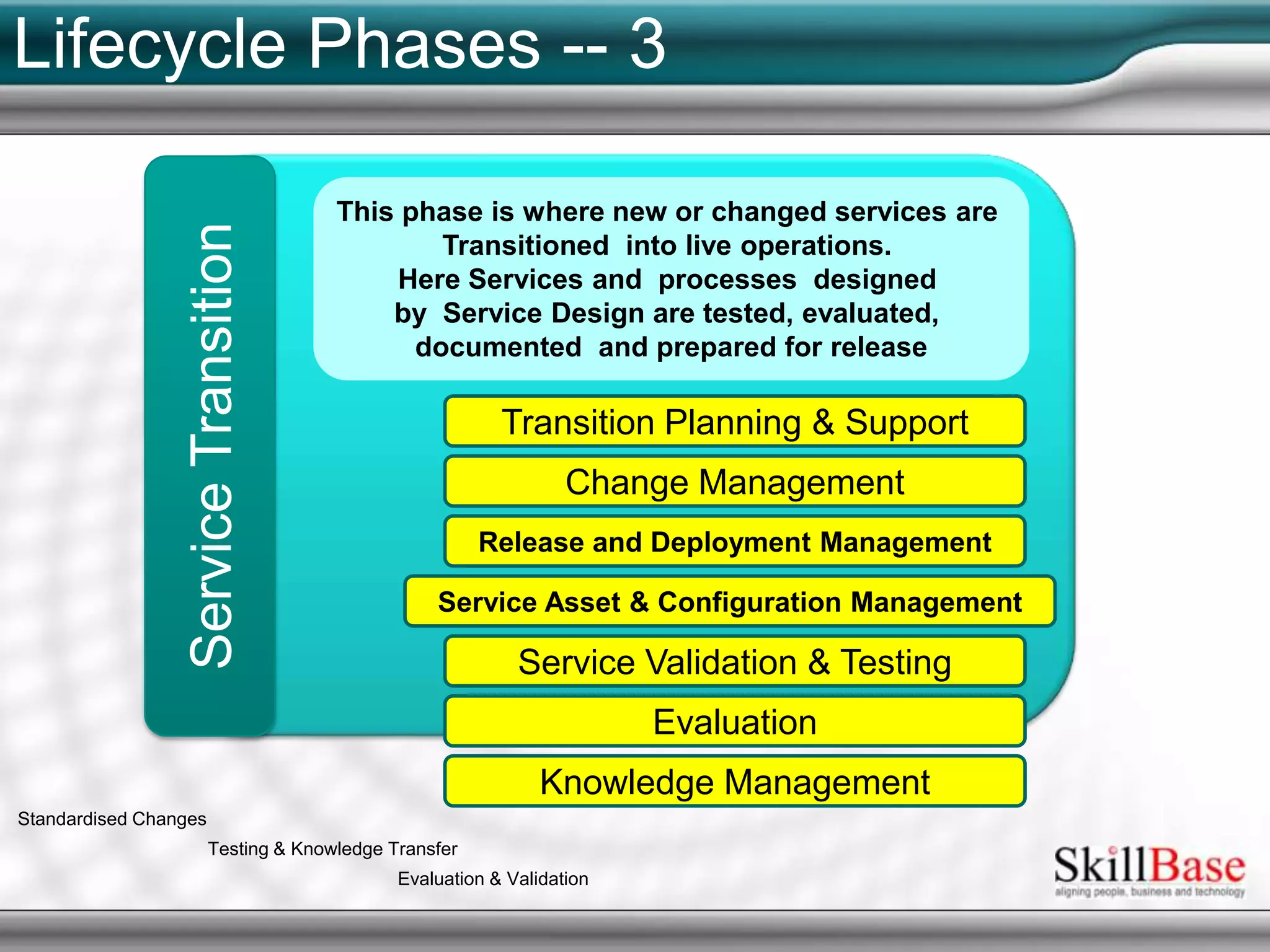
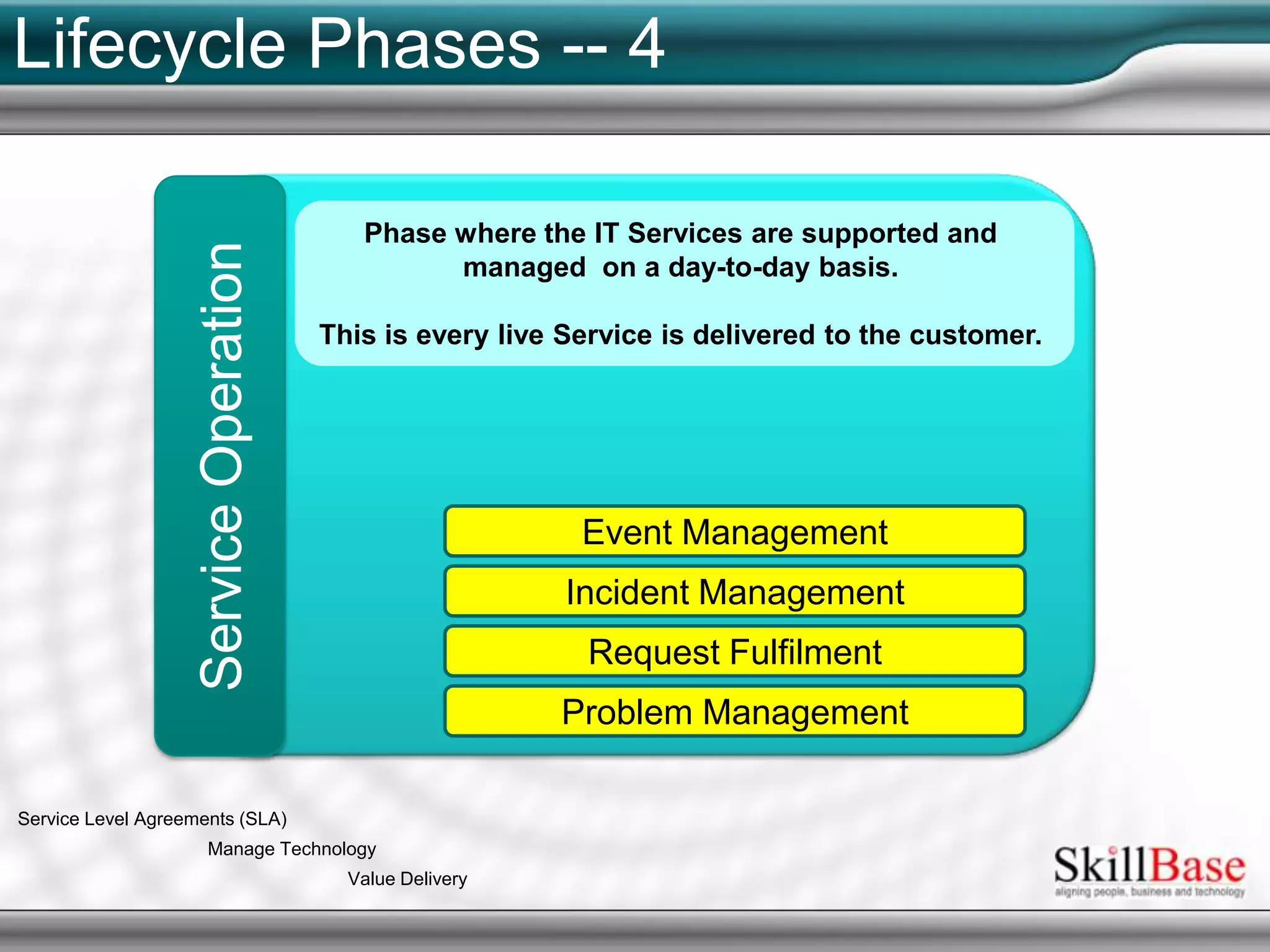
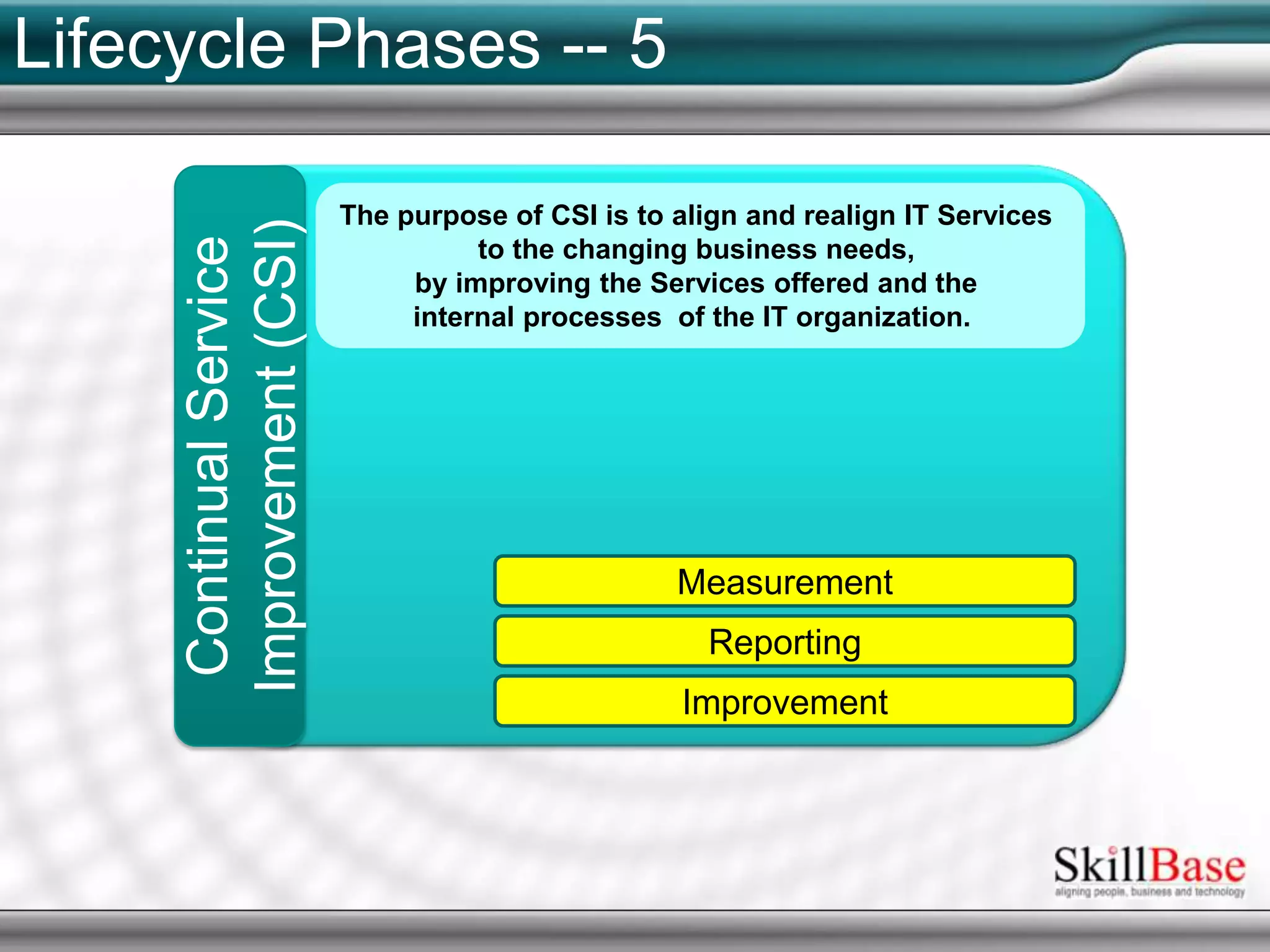
5 Lifecycle PhasesService StrategyService DesignService TransitionService OperationContinual Service Improvement (CSI)
26 ProcessesDemand Management

ITIL V3 Overiview Introduction

Editor's Notes

  • #2 The objective of this presentation is to give a basic, high-level ITIL V3 view to someone new to service management frameworks. The focus being:What is ITILWhy ITILThe ITIL AdvantageWhat is driving ITIL