ServiceStrategy
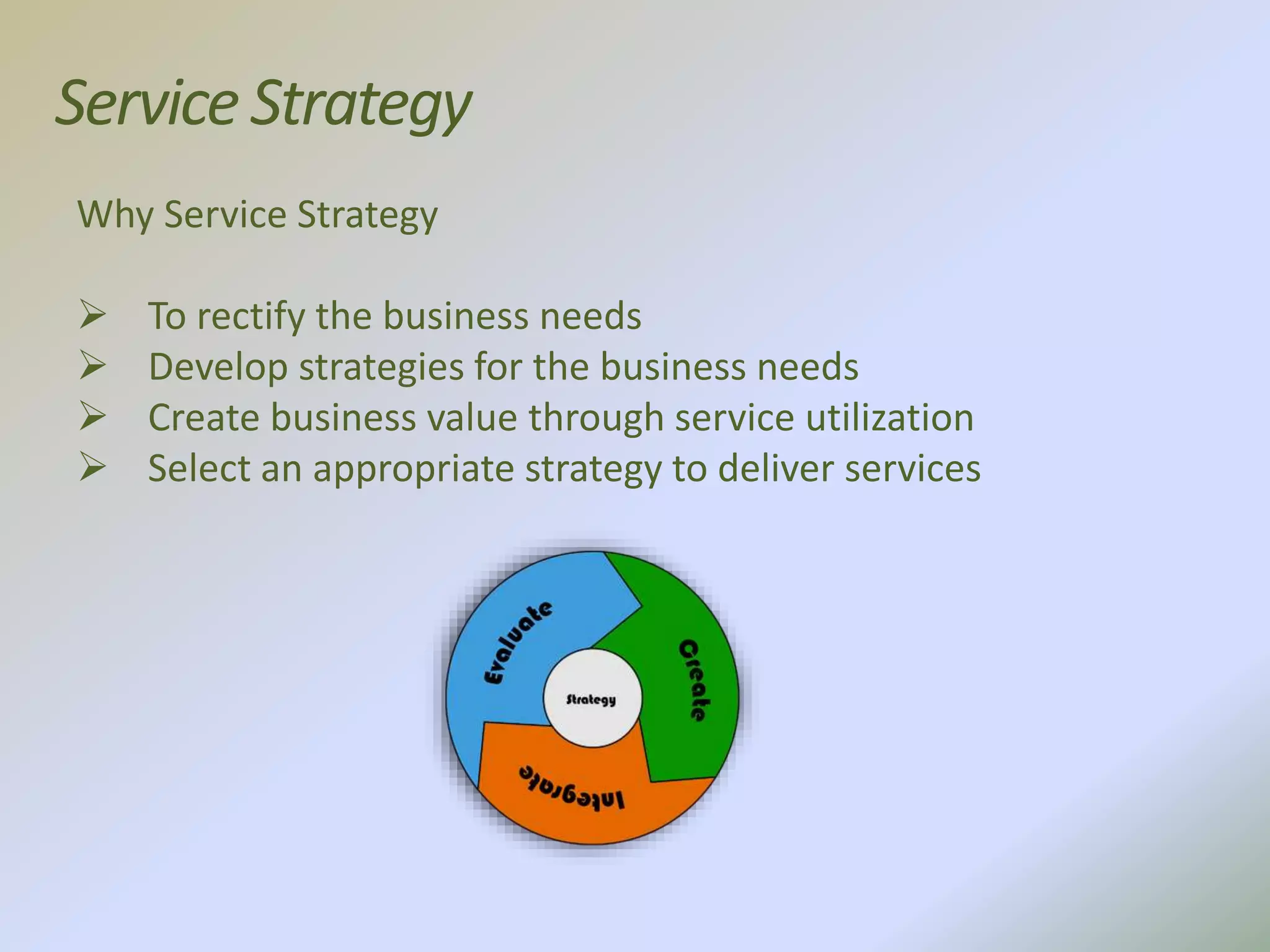
Why Service Strategy
 To rectify the business needs
 Develop strategies for the business needs
 Create business value through service utilization
 Select an appropriate strategy to deliver services
Service Strategy processes
IT Service Management
• IT service management (ITSM) refers to the implementation and
management of quality information technology services.
• Deals with how the IT resources and business practices together the
are delivered in intension that the end user should experience the
most desired result from the accessed IT resources.
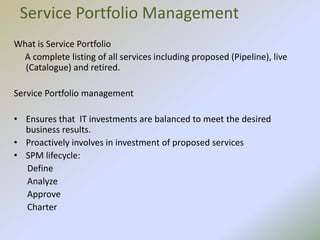
What is Service Portfolio
A complete listing of all services including proposed (Pipeline), live
(Catalogue) and retired.
Service Portfolio management
• Ensures that IT investments are balanced to meet the desired
business results.
• Proactively involves in investment of proposed services
• SPM lifecycle:
Define
Analyze
Approve
Charter
Service Portfolio Management
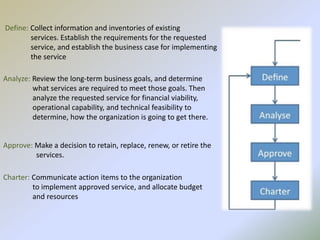
Define: Collect information and inventories of existing
services. Establish the requirements for the requested
service, and establish the business case for implementing
the service
Analyze: Review the long-term business goals, and determine
what services are required to meet those goals. Then
analyze the requested service for financial viability,
operational capability, and technical feasibility to
determine, how the organization is going to get there.
Approve: Make a decision to retain, replace, renew, or retire the
services.
Charter: Communicate action items to the organization
to implement approved service, and allocate budget
and resources
Financial Management of IT services
• The goal of Financial Management for IT Services (ITFM) is to
optimize the cost of IT Services while taking into account quality
and risk factors.
• It provides vital information that management needs to
guarantee efficient and cost-effective service delivery
Advantages of ITFM:
 Improved decision-making
 Inputs for Service Portfolio Management
 Financial compliance and control
Demand Management
• Demand management analyzes the service demand and
existing service provided.
• It guarantees there is balanced investment.
• It ensures that the service provider has sufficient capacity to
meet the required demand.
Business Relationship Management
• Business Relationship Management aims to maintain a
positive relationship with customers.
• Identifies the needs of existing and potential customers and
ensures that appropriate services are developed to meet
those needs.
Benefits if BRM:
 Effective communication between service providers and users
 Helps the service provider in understanding user
requirements.

Itil service strategy

  • 1.
    ServiceStrategy Why Service Strategy To rectify the business needs  Develop strategies for the business needs  Create business value through service utilization  Select an appropriate strategy to deliver services
  • 2.
  • 3.
    IT Service Management •IT service management (ITSM) refers to the implementation and management of quality information technology services. • Deals with how the IT resources and business practices together the are delivered in intension that the end user should experience the most desired result from the accessed IT resources.
  • 4.
    What is ServicePortfolio A complete listing of all services including proposed (Pipeline), live (Catalogue) and retired. Service Portfolio management • Ensures that IT investments are balanced to meet the desired business results. • Proactively involves in investment of proposed services • SPM lifecycle: Define Analyze Approve Charter Service Portfolio Management
  • 5.
    Define: Collect informationand inventories of existing services. Establish the requirements for the requested service, and establish the business case for implementing the service Analyze: Review the long-term business goals, and determine what services are required to meet those goals. Then analyze the requested service for financial viability, operational capability, and technical feasibility to determine, how the organization is going to get there. Approve: Make a decision to retain, replace, renew, or retire the services. Charter: Communicate action items to the organization to implement approved service, and allocate budget and resources
  • 6.
    Financial Management ofIT services • The goal of Financial Management for IT Services (ITFM) is to optimize the cost of IT Services while taking into account quality and risk factors. • It provides vital information that management needs to guarantee efficient and cost-effective service delivery Advantages of ITFM:  Improved decision-making  Inputs for Service Portfolio Management  Financial compliance and control
  • 7.
    Demand Management • Demandmanagement analyzes the service demand and existing service provided. • It guarantees there is balanced investment. • It ensures that the service provider has sufficient capacity to meet the required demand.
  • 8.
    Business Relationship Management •Business Relationship Management aims to maintain a positive relationship with customers. • Identifies the needs of existing and potential customers and ensures that appropriate services are developed to meet those needs. Benefits if BRM:  Effective communication between service providers and users  Helps the service provider in understanding user requirements.