
Service Strategy for the Fish and Chip Shop OwnerPatrick KeoghUXC Consultingpatrick.keogh@uxcconsulting.com.au
ITIL 2011The Service Strategy book has undergone the most significant change/improvement of all of the core publications.This presentation has been updated based on the ITIL 2011 improvements
What is this presentation about?Service Strategy book may appear theoretical or abstractAn example from day to day experience can make the ideas more concreteIT service strategy isn’t all that different to any service strategy“It all started several years ago when…”
Backstory –ITIL Foundation Certificate courseStudent taking early retirement “in a few weeks”.What are you going to do? “We’ve got a place down the coast.”“Not really ready forretirement, I want toopen some sort offoodbusiness.”“Haven’t decided whator where.”So…
Conclusion…This man needs a service strategy!ITIL ServiceStrategy canprovide great guidance.So on with the story…
First of all, what is a service strategy?Defining a strategy whereby a service provider will deliver services to meet a customer’s business outcomesDefining a strategy for how to manage those services.ITIL 2011 Service Strategy
4 P’s of Service StrategyPerspective  Describes the vision and direction of the organization. A strategic perspective articulates what the business of the organization is, how it interacts with the customer and how its services or products will be providedPositions  Describe how the service provider intends to compete against other service providers in the market. The position refers to the attributes and capabilities that the service provider has that set them apart from their competitors. Plans  Describe how the service provider will transition from their current situation to their desired situation. Patterns  Describe the ongoing, repeatable actions that a service provider will have to perform in order to continue to meet its strategic objectives.ITIL 2011 Service Strategy
Strategy Management for IT ServicesDefine the marketDevelop the offeringsDevelop strategic assetsPrepare for execution
Key ConceptsHow do these apply to the food service business?
1. Define the market
The geographyBawleyPointBatemansBayNarooma
The Market Space
The Customer PortfolioWhat clientele would I be trying to attract?What food services would this clientele use?What would the competition be?
2. Develop the offerings
Potential customersService preferences driven by age, income, background etc.What customer assets do they have?Their own kitchen / crockery / fridge?Somewhere to eat?“Locals”Weekenders/holiday residentsPassing trade
What customer outcomes?Somewhere quick to stop for lunch
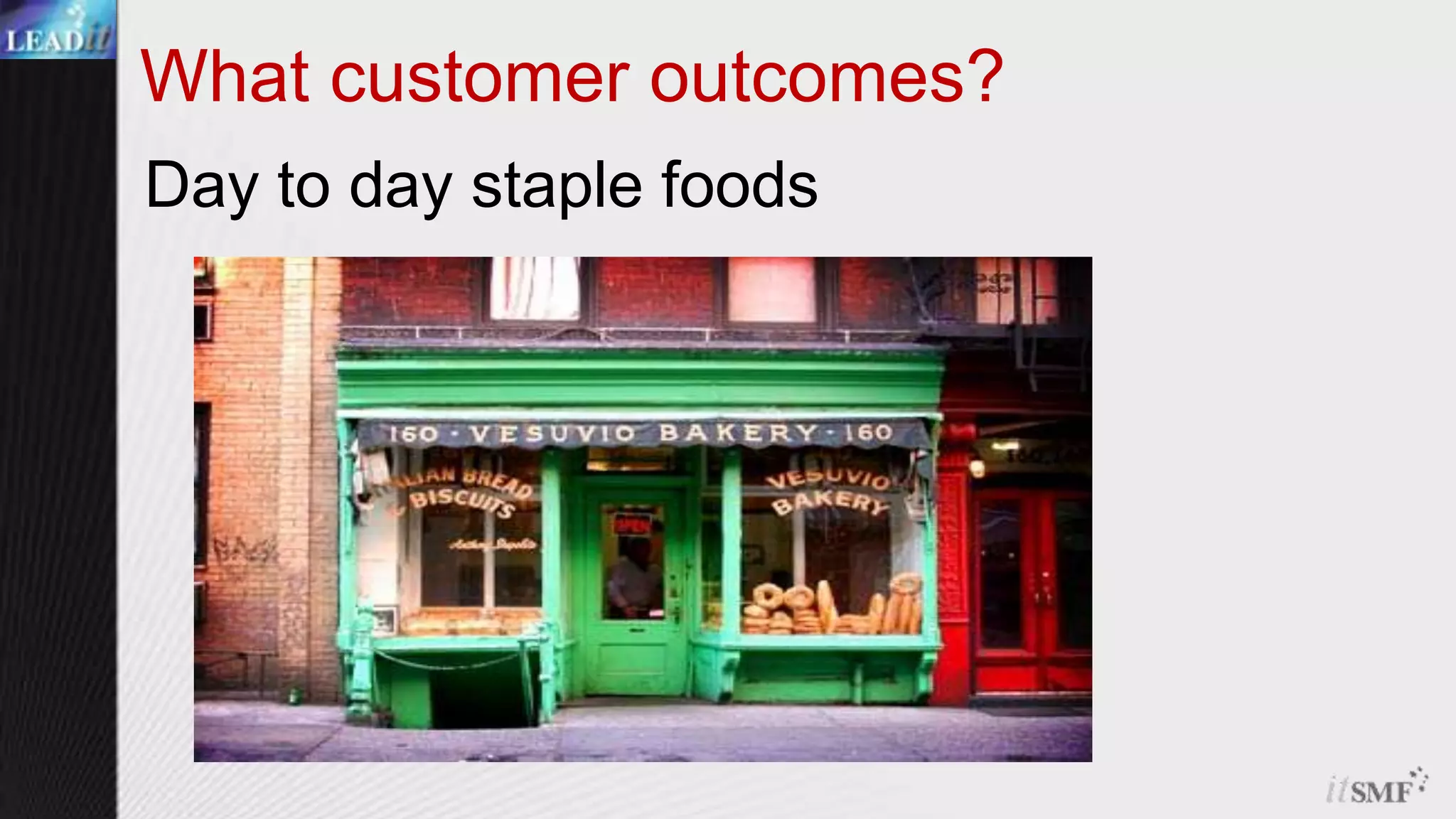
What customer outcomes?Day to day staple foods
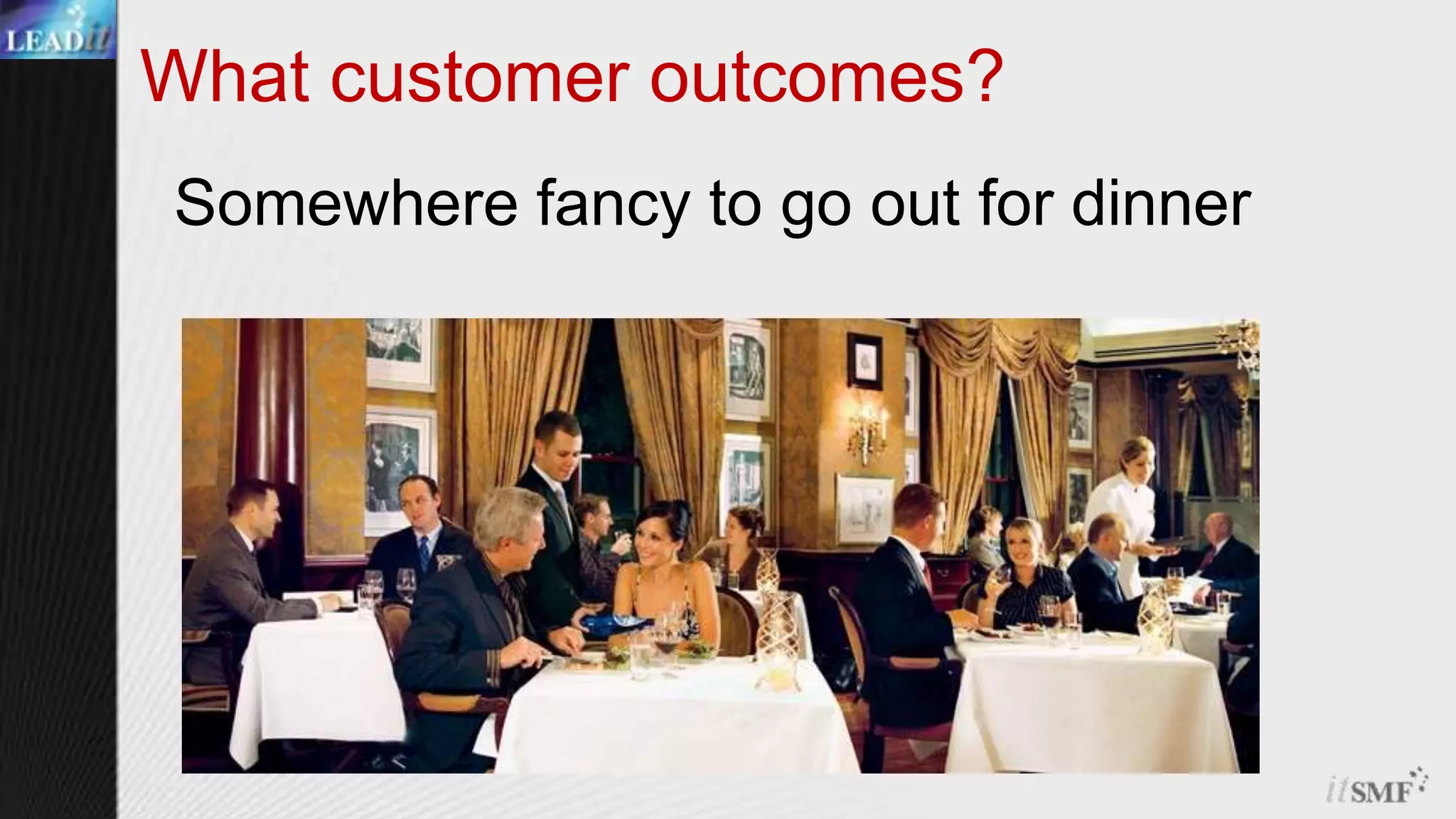
What customer outcomes?Somewhere fancy to go out for dinner
What customer outcomes?Somewhere to get family takeaway dinnerquickly and at low cost.
What customer outcomes?Morning coffeeor breakfastor brunch.
Different services for different customer outcomesEach of these will require its own specific service model.
A customer willhave multiple outcomes.
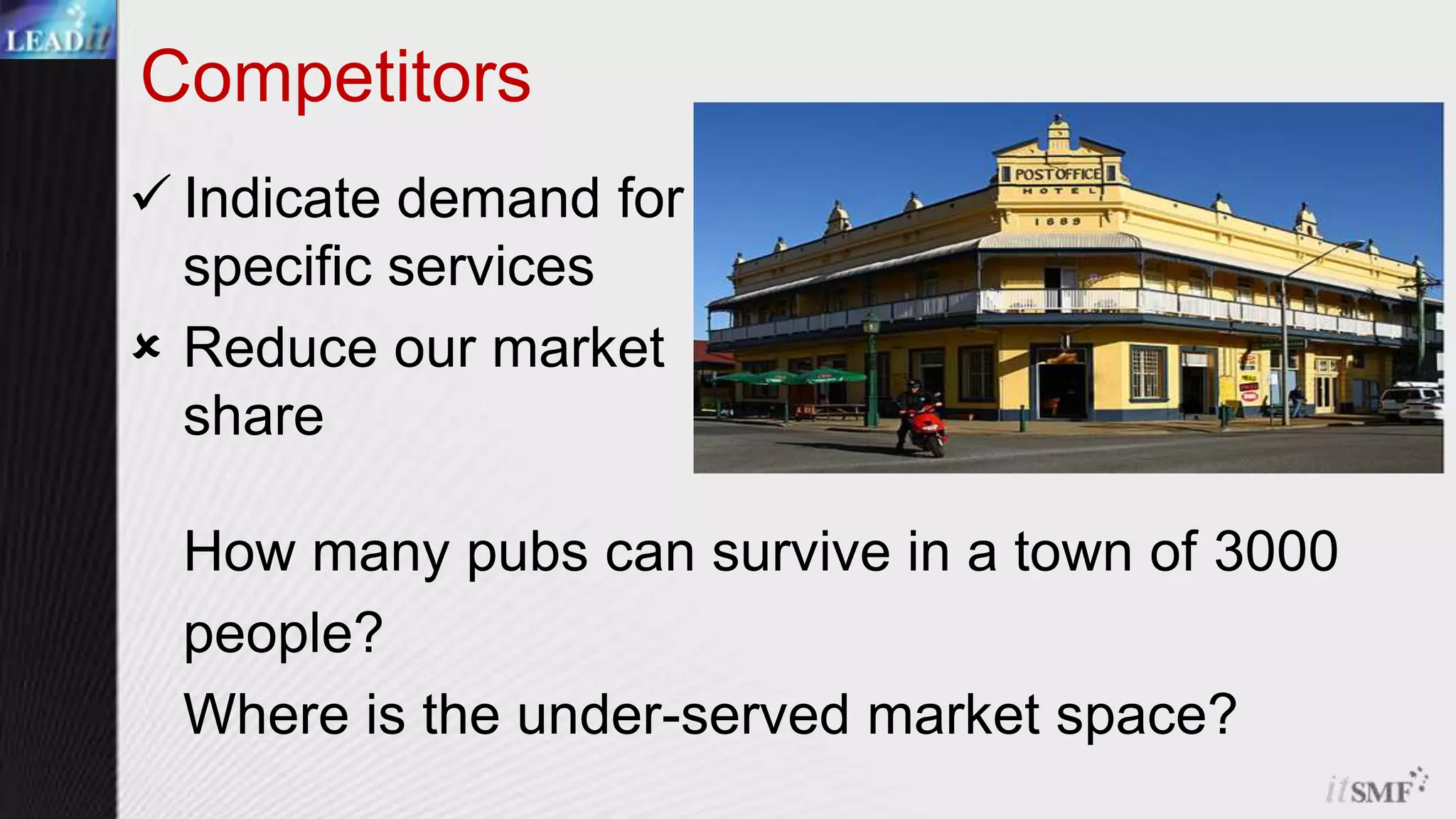
May draw on multiple services with their unique service models in order to achieve their outcomes.CompetitorsIndicate demand forspecific services
Reduce our marketshareHow many pubs can survive in a town of 3000	people?	Where is the under-served market space?
3. Develop Strategic Assets
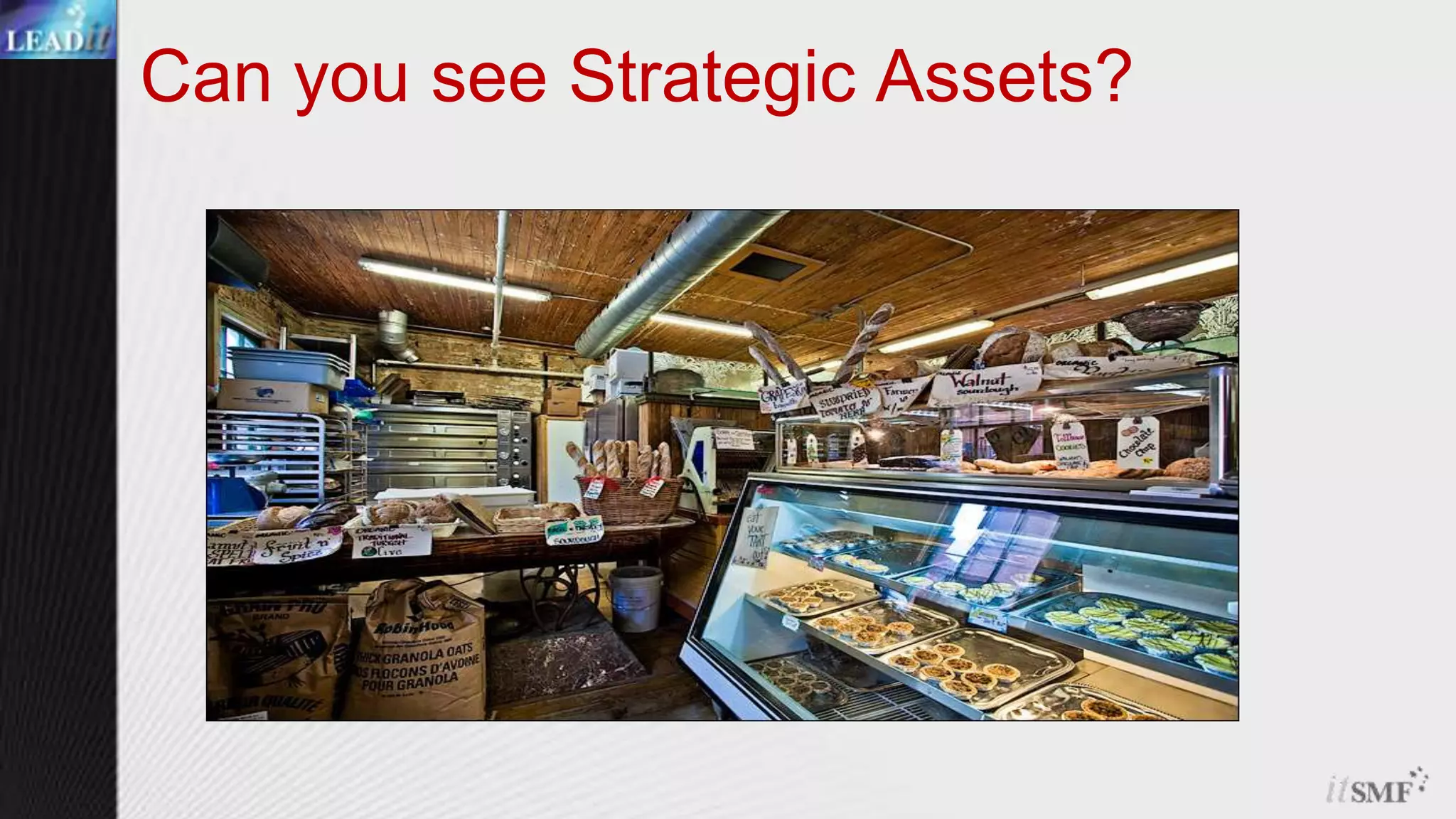
Can you see Strategic Assets?
4. Prepare for Execution
Key ActivitiesStrategic AssessmentSWOTCritical success factorsBusiness strategy and planSetting ObjectivesManagement strategy to ensure that objectives are metAligning Service Assets with Customer OutcomesExplorebusiness potential, expansion and growth
Service Economics
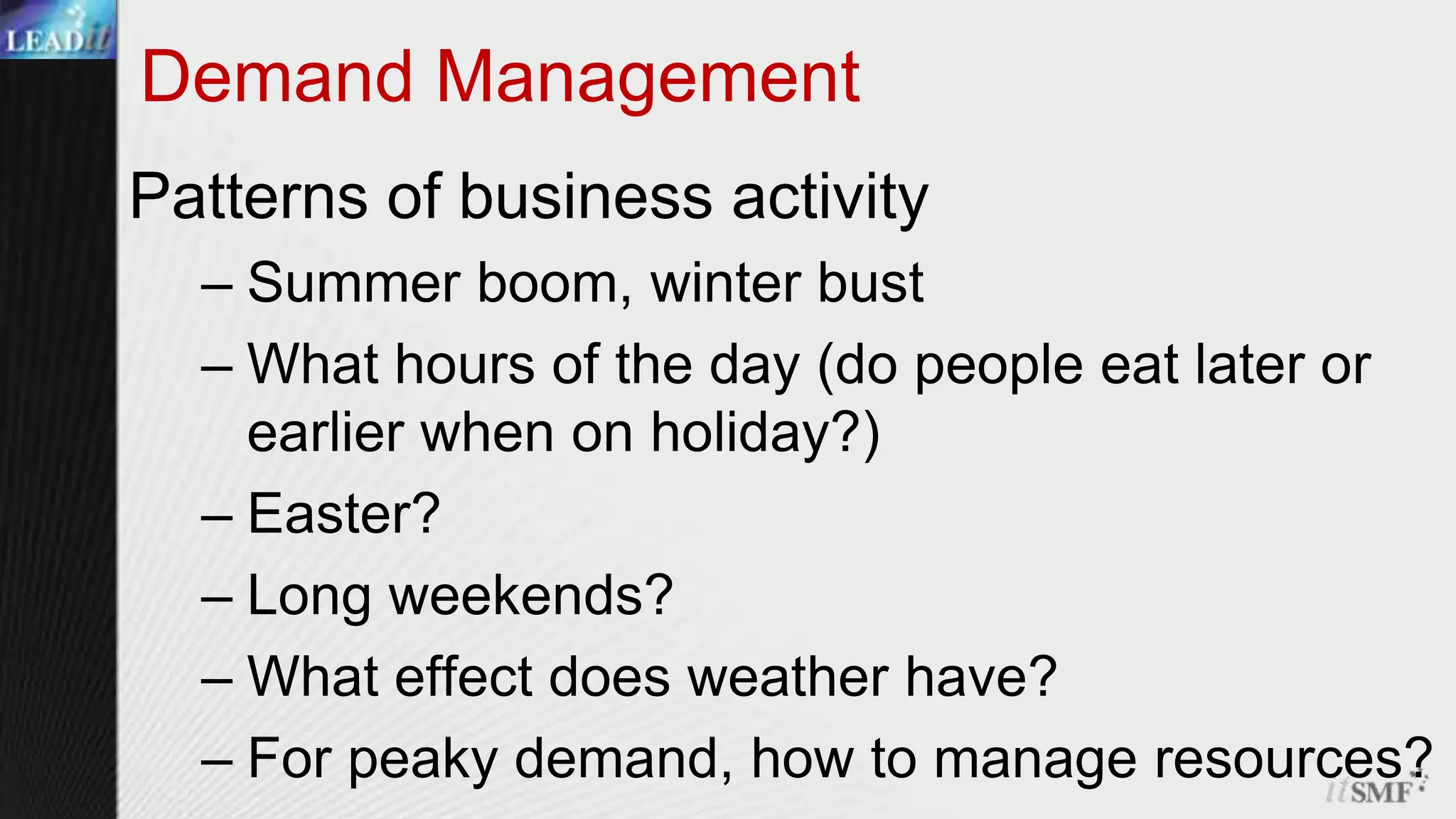
Demand ManagementPatterns of business activitySummer boom, winter bustWhat hours of the day (do people eat later or earlier when on holiday?)Easter?Long weekends?What effect does weather have?For peaky demand, how to manage resources?
Demand ManagementUser profilesCommonly acquired baskets of servicesIf we have a table of 4 how much do they spend and how long do they occupy the table? How about for a group of 8?Do customers spend more at lunch than at dinner or vice versa?On average how many customers with special dietary requirements will we get? Is it worth catering to vegans/special allergies etc.?What about small children?
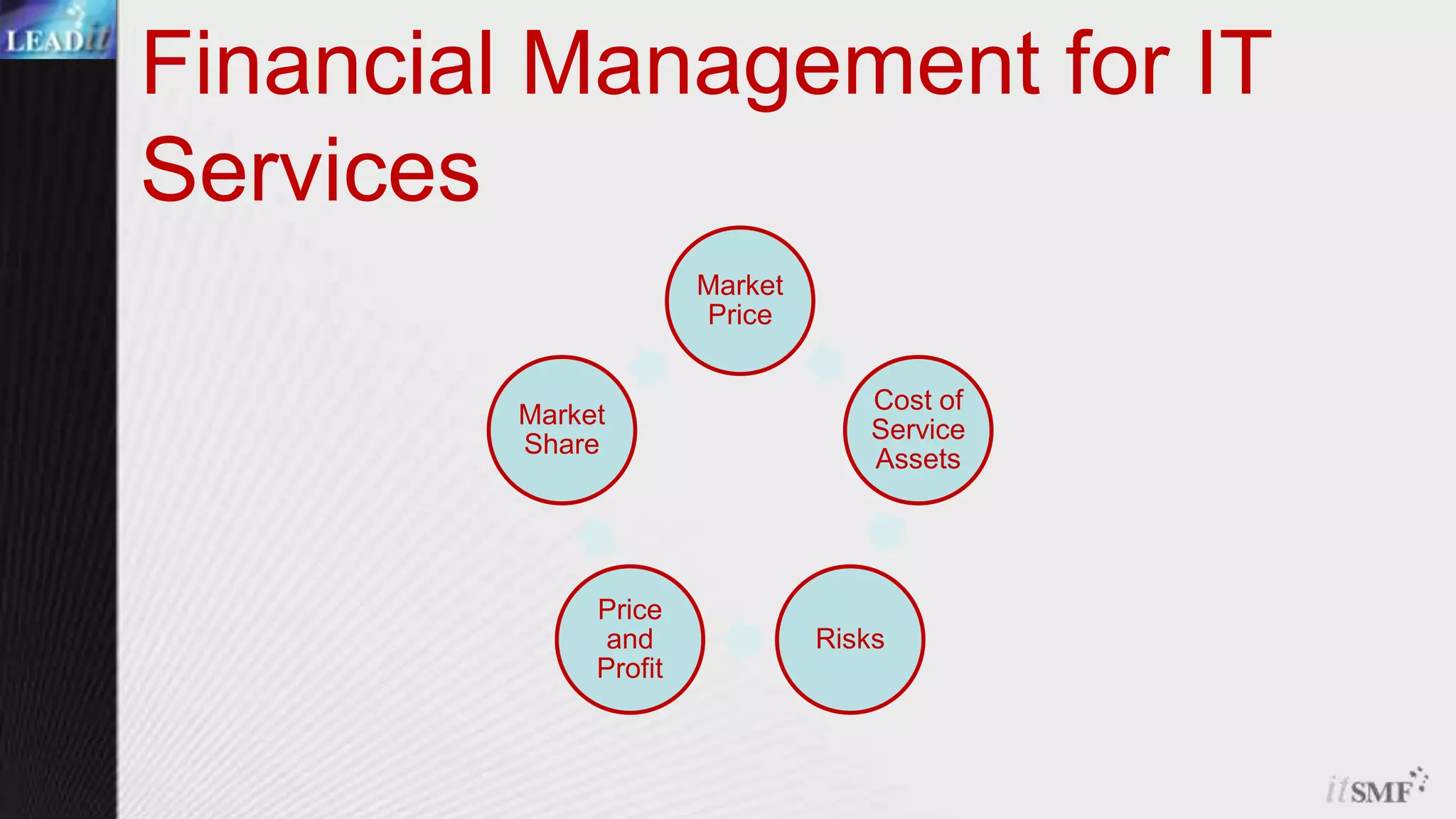
Financial Management for IT Services
Strategy and OrganisationOur organizational structure must align with our strategy:Hours of serviceCan we appoint managers that we can rely on?Balance skills and resources between “front of house” and the kitchen.
Service Management as a Strategic AssetWhat is it that McDonalds sells?Is it the best hamburger?Or is it predictable, timely service delivered at a good price?For McDonalds, Service Management is the business.
So my allegory comes to an end: what can we learn?Ideas and advice in ITIL Service Strategy are not new, and apply to all service organisations.Business intuitively apply these practices to some extent anyway.Make it real, make it concrete. It is about the customer and business viability.

Service strategy for the fish and chip shop

  • 1.
    Service Strategy forthe Fish and Chip Shop OwnerPatrick KeoghUXC Consultingpatrick.keogh@uxcconsulting.com.au
  • 2.
    ITIL 2011The ServiceStrategy book has undergone the most significant change/improvement of all of the core publications.This presentation has been updated based on the ITIL 2011 improvements
  • 3.
    What is thispresentation about?Service Strategy book may appear theoretical or abstractAn example from day to day experience can make the ideas more concreteIT service strategy isn’t all that different to any service strategy“It all started several years ago when…”
  • 4.
    Backstory –ITIL FoundationCertificate courseStudent taking early retirement “in a few weeks”.What are you going to do? “We’ve got a place down the coast.”“Not really ready forretirement, I want toopen some sort offoodbusiness.”“Haven’t decided whator where.”So…
  • 5.
    Conclusion…This man needsa service strategy!ITIL ServiceStrategy canprovide great guidance.So on with the story…
  • 6.
    First of all,what is a service strategy?Defining a strategy whereby a service provider will deliver services to meet a customer’s business outcomesDefining a strategy for how to manage those services.ITIL 2011 Service Strategy
  • 7.
    4 P’s ofService StrategyPerspective Describes the vision and direction of the organization. A strategic perspective articulates what the business of the organization is, how it interacts with the customer and how its services or products will be providedPositions Describe how the service provider intends to compete against other service providers in the market. The position refers to the attributes and capabilities that the service provider has that set them apart from their competitors. Plans Describe how the service provider will transition from their current situation to their desired situation. Patterns Describe the ongoing, repeatable actions that a service provider will have to perform in order to continue to meet its strategic objectives.ITIL 2011 Service Strategy
  • 8.
    Strategy Management forIT ServicesDefine the marketDevelop the offeringsDevelop strategic assetsPrepare for execution
  • 9.
    Key ConceptsHow dothese apply to the food service business?
  • 10.
  • 11.
  • 12.
  • 13.
    The Customer PortfolioWhatclientele would I be trying to attract?What food services would this clientele use?What would the competition be?
  • 14.
  • 15.
    Potential customersService preferencesdriven by age, income, background etc.What customer assets do they have?Their own kitchen / crockery / fridge?Somewhere to eat?“Locals”Weekenders/holiday residentsPassing trade
  • 16.
    What customer outcomes?Somewherequick to stop for lunch
  • 17.
    What customer outcomes?Dayto day staple foods
  • 18.
    What customer outcomes?Somewherefancy to go out for dinner
  • 19.
    What customer outcomes?Somewhereto get family takeaway dinnerquickly and at low cost.
  • 20.
    What customer outcomes?Morningcoffeeor breakfastor brunch.
  • 21.
    Different services fordifferent customer outcomesEach of these will require its own specific service model.
  • 22.
    A customer willhavemultiple outcomes.
  • 23.
    May draw onmultiple services with their unique service models in order to achieve their outcomes.CompetitorsIndicate demand forspecific services
  • 24.
    Reduce our marketshareHowmany pubs can survive in a town of 3000 people? Where is the under-served market space?
  • 25.
  • 26.
    Can you seeStrategic Assets?
  • 27.
    Can you seeStrategic Assets?
  • 28.
  • 29.
    Key ActivitiesStrategic AssessmentSWOTCriticalsuccess factorsBusiness strategy and planSetting ObjectivesManagement strategy to ensure that objectives are metAligning Service Assets with Customer OutcomesExplorebusiness potential, expansion and growth
  • 30.
  • 31.
    Demand ManagementPatterns ofbusiness activitySummer boom, winter bustWhat hours of the day (do people eat later or earlier when on holiday?)Easter?Long weekends?What effect does weather have?For peaky demand, how to manage resources?
  • 32.
    Demand ManagementUser profilesCommonlyacquired baskets of servicesIf we have a table of 4 how much do they spend and how long do they occupy the table? How about for a group of 8?Do customers spend more at lunch than at dinner or vice versa?On average how many customers with special dietary requirements will we get? Is it worth catering to vegans/special allergies etc.?What about small children?
  • 33.
  • 34.
    Strategy and OrganisationOurorganizational structure must align with our strategy:Hours of serviceCan we appoint managers that we can rely on?Balance skills and resources between “front of house” and the kitchen.
  • 35.
    Service Management asa Strategic AssetWhat is it that McDonalds sells?Is it the best hamburger?Or is it predictable, timely service delivered at a good price?For McDonalds, Service Management is the business.
  • 36.
    So my allegorycomes to an end: what can we learn?Ideas and advice in ITIL Service Strategy are not new, and apply to all service organisations.Business intuitively apply these practices to some extent anyway.Make it real, make it concrete. It is about the customer and business viability.
  • 37.
    RecommendationsTake your servicestrategy seriously.Strategy is not theoretical – it is real and practical. If our fish and chip shop owner can do it then so can you!Remember the power of saying “No, we don’t do that”.Treasure your service assets. It isn’t heroics that deliver service, it is service assets.
  • 38.

Editor's Notes

  • #17 Is there passing trade?Is there handy on-street parking?Do we have the right location?
  • #22 So you don’t “own” the customer… they will get some services elsewhere.
  • #25 To open a bakery I’ll need bakers ovens, mixing gear, knowledge (products, process, people)Do I have these?Can I get these?Can I afford these?
  • #26 To open a French restaurant I might need less equipment but I’ll need expert cooking skills, wait staff, more space, gourmet suppliers (products, process, people and partners)Can I get the staff I will need?
  • #32 Factors which determine financial viability