

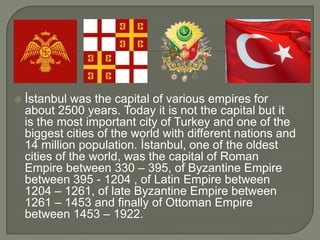
İstanbul was the capital of various empires for
about 2500 years. Today it is not the capital but it
is the most important city of Turkey and one of the
biggest cities of the world with different nations and
14 million population. İstanbul, one of the oldest
cities of the world, was the capital of Roman
Empire between 330 – 395, of Byzantine Empire
between 395 - 1204 , of Latin Empire between
1204 – 1261, of late Byzantine Empire between
1261 – 1453 and finally of Ottoman Empire
between 1453 – 1922.


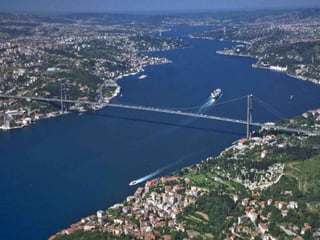
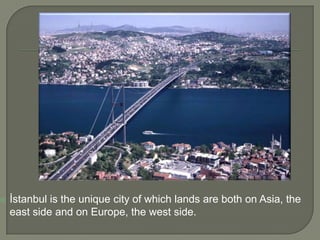
İstanbul is the unique city of which lands are both on Asia, the
east side and on Europe, the west side.
 İstanbul

was the European Capital of
Culture in 2010. The historical areas of
İstanbul were added to the List of
UNESCO World Heritage Sites in 1985.
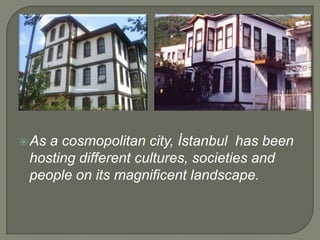
a cosmopolitan city, İstanbul has been
hosting different cultures, societies and
people on its magnificent landscape.

 As
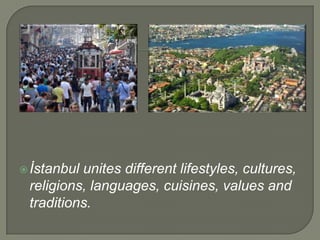
 İstanbul

unites different lifestyles, cultures,
religions, languages, cuisines, values and
traditions.
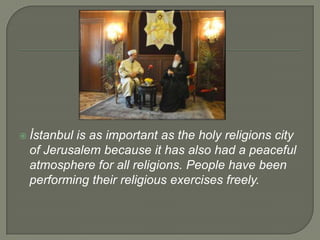
 İstanbul

is as important as the holy religions city
of Jerusalem because it has also had a peaceful
atmosphere for all religions. People have been
performing their religious exercises freely.
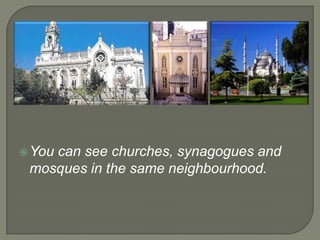
 You

can see churches, synagogues and
mosques in the same neighbourhood.
İstanbul different sects of
 Christians such as Orthodox, Catholic,
Protestant, Assyrian,
 Jewish such as Sephardic, Ashkenaz,
Karaites,
 Islam
 Jesuits and many others have their own
temples, schools, graveyards.
 In
 İstanbul

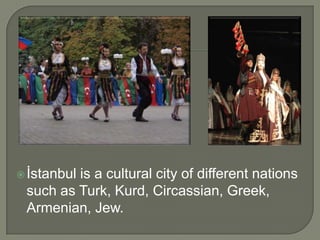
is a cultural city of different nations
such as Turk, Kurd, Circassian, Greek,
Armenian, Jew.
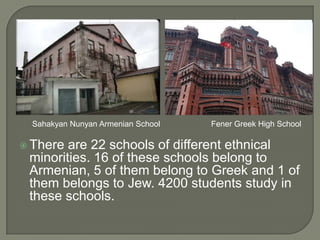
Sahakyan Nunyan Armenian School

 There

Fener Greek High School

are 22 schools of different ethnical
minorities. 16 of these schools belong to
Armenian, 5 of them belong to Greek and 1 of
them belongs to Jew. 4200 students study in
these schools.
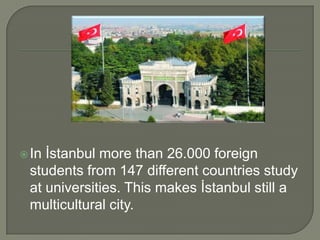
İstanbul more than 26.000 foreign
students from 147 different countries study
at universities. This makes İstanbul still a
multicultural city.

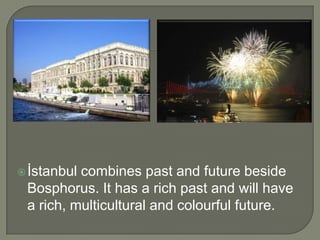
 In
 İstanbul

combines past and future beside
Bosphorus. It has a rich past and will have
a rich, multicultural and colourful future.
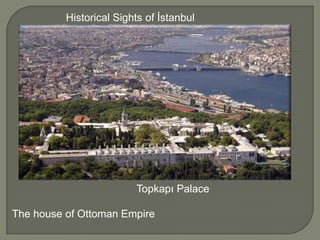
Historical Sights of İstanbul

Topkapı Palace
The house of Ottoman Empire
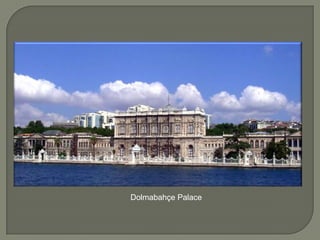
Dolmabahçe Palace
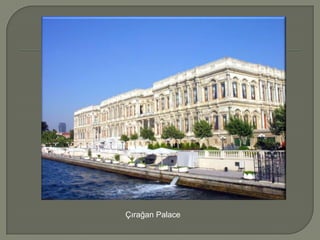
Çırağan Palace
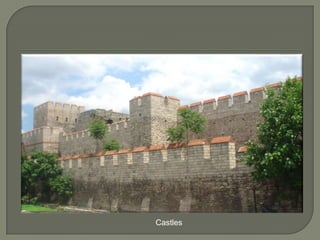
Castles
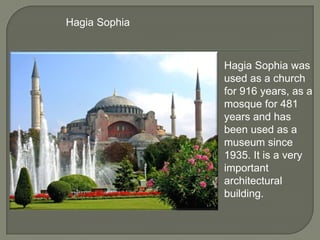
Hagia Sophia

Hagia Sophia was
used as a church
for 916 years, as a
mosque for 481
years and has
been used as a
museum since
1935. It is a very
important
architectural
building.
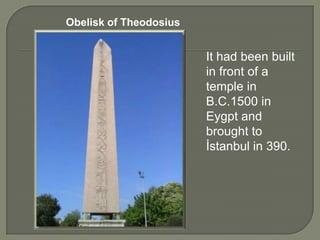
Obelisk of Theodosius

It had been built
in front of a
temple in
B.C.1500 in
Eygpt and
brought to
İstanbul in 390.
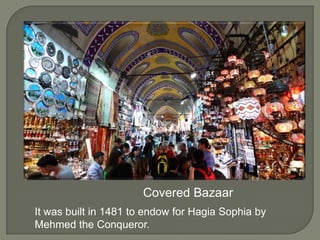
Covered Bazaar
It was built in 1481 to endow for Hagia Sophia by
Mehmed the Conqueror.
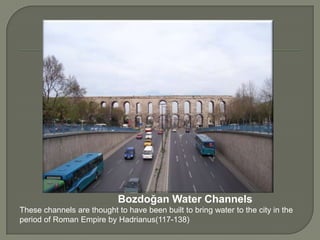
Bozdoğan Water Channels
These channels are thought to have been built to bring water to the city in the
period of Roman Empire by Hadrianus(117-138)
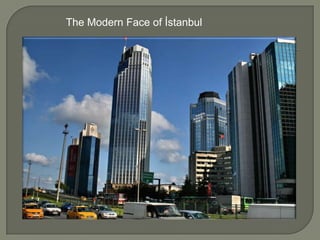
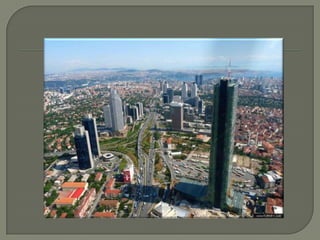
The Modern Face of İstanbul
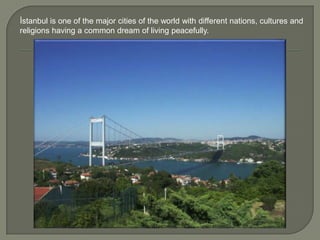
İstanbul is one of the major cities of the world with different nations, cultures and
religions having a common dream of living peacefully.
Istanbul presentation(1)

Istanbul presentation(1)

  • 3.
     İstanbul was thecapital of various empires for about 2500 years. Today it is not the capital but it is the most important city of Turkey and one of the biggest cities of the world with different nations and 14 million population. İstanbul, one of the oldest cities of the world, was the capital of Roman Empire between 330 – 395, of Byzantine Empire between 395 - 1204 , of Latin Empire between 1204 – 1261, of late Byzantine Empire between 1261 – 1453 and finally of Ottoman Empire between 1453 – 1922.
  • 4.
     İstanbul is theunique city of which lands are both on Asia, the east side and on Europe, the west side.
  • 5.
     İstanbul was theEuropean Capital of Culture in 2010. The historical areas of İstanbul were added to the List of UNESCO World Heritage Sites in 1985.
  • 6.
    a cosmopolitan city,İstanbul has been hosting different cultures, societies and people on its magnificent landscape.  As
  • 7.
     İstanbul unites differentlifestyles, cultures, religions, languages, cuisines, values and traditions.
  • 8.
     İstanbul is asimportant as the holy religions city of Jerusalem because it has also had a peaceful atmosphere for all religions. People have been performing their religious exercises freely.
  • 9.
     You can seechurches, synagogues and mosques in the same neighbourhood.
  • 10.
    İstanbul different sectsof  Christians such as Orthodox, Catholic, Protestant, Assyrian,  Jewish such as Sephardic, Ashkenaz, Karaites,  Islam  Jesuits and many others have their own temples, schools, graveyards.  In
  • 11.
     İstanbul is acultural city of different nations such as Turk, Kurd, Circassian, Greek, Armenian, Jew.
  • 12.
    Sahakyan Nunyan ArmenianSchool  There Fener Greek High School are 22 schools of different ethnical minorities. 16 of these schools belong to Armenian, 5 of them belong to Greek and 1 of them belongs to Jew. 4200 students study in these schools.
  • 13.
    İstanbul more than26.000 foreign students from 147 different countries study at universities. This makes İstanbul still a multicultural city.  In
  • 14.
     İstanbul combines pastand future beside Bosphorus. It has a rich past and will have a rich, multicultural and colourful future.
  • 15.
    Historical Sights ofİstanbul Topkapı Palace The house of Ottoman Empire
  • 16.
  • 17.
  • 18.
  • 19.
    Hagia Sophia Hagia Sophiawas used as a church for 916 years, as a mosque for 481 years and has been used as a museum since 1935. It is a very important architectural building.
  • 20.
    Obelisk of Theodosius Ithad been built in front of a temple in B.C.1500 in Eygpt and brought to İstanbul in 390.
  • 21.
    Covered Bazaar It wasbuilt in 1481 to endow for Hagia Sophia by Mehmed the Conqueror.
  • 22.
    Bozdoğan Water Channels Thesechannels are thought to have been built to bring water to the city in the period of Roman Empire by Hadrianus(117-138)
  • 23.
    The Modern Faceof İstanbul
  • 26.
    İstanbul is oneof the major cities of the world with different nations, cultures and religions having a common dream of living peacefully.