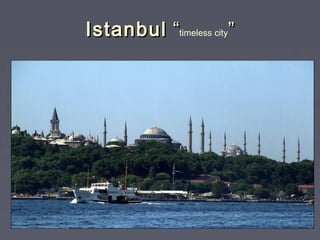
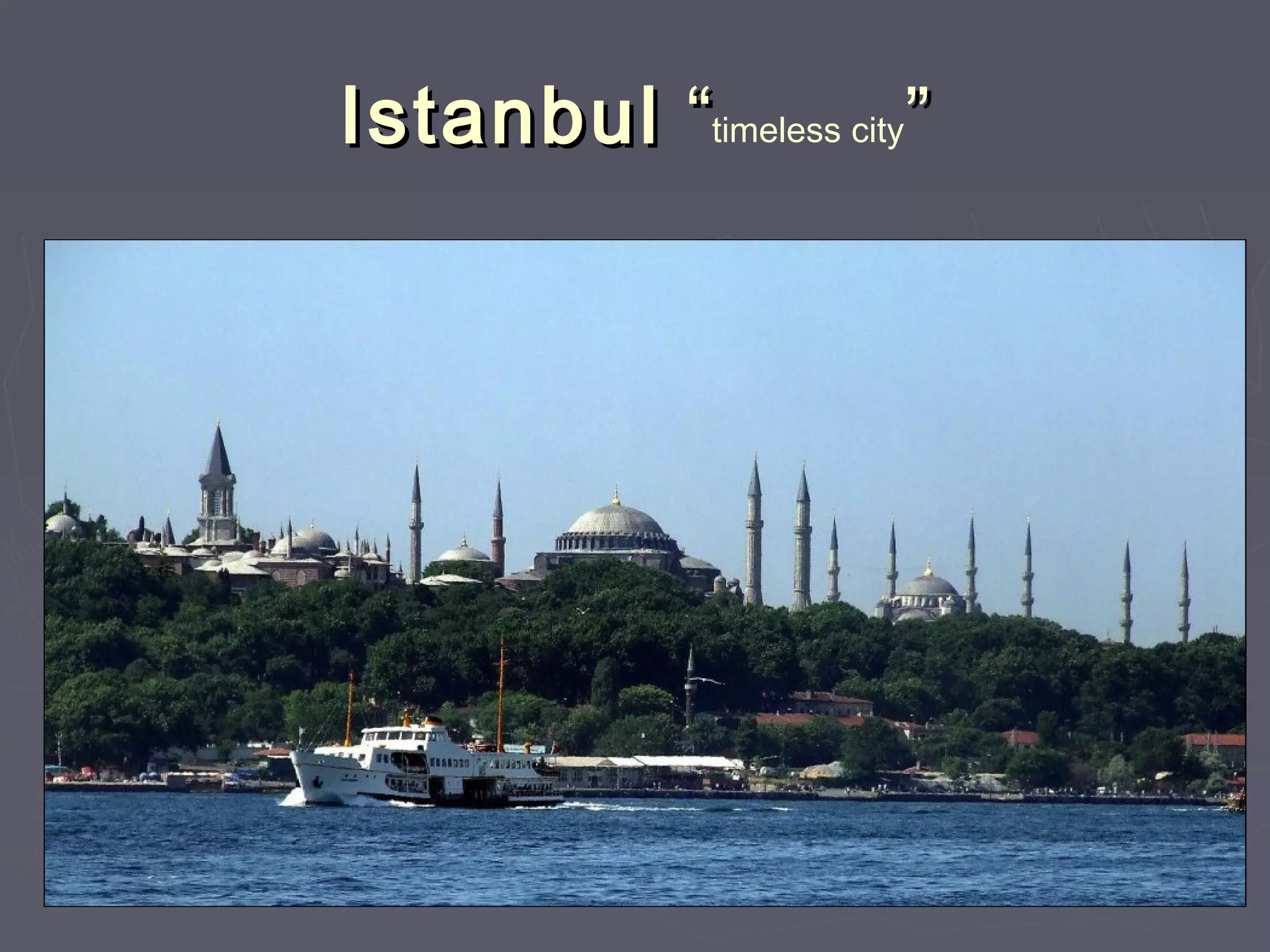
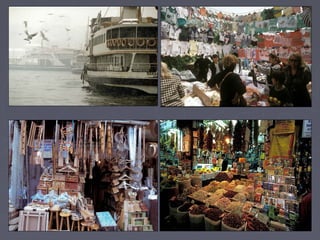
Istanbul “timeless city”
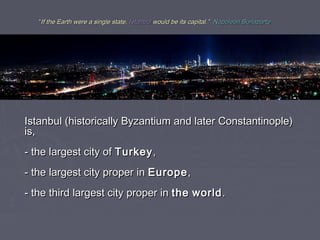
“If the Earth were a single state, Istanbul would be its capital.” Napoleon Bonaparte


Istanbul (historically Byzantium and later Constantinople)
is,
- the largest city of Turkey ,
- the largest city proper in Europe ,
- the third largest city proper in the world .
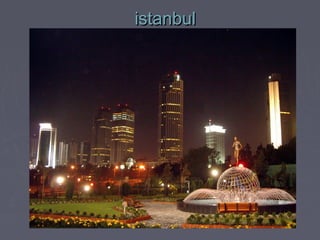
istanbul
Names
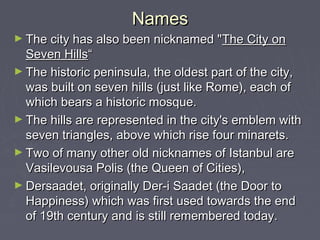
► The city has also been nicknamed " The City on
  Seven Hills“
► The historic peninsula, the oldest part of the city,
  was built on seven hills (just like Rome), each of
  which bears a historic mosque.
► The hills are represented in the city's emblem with
  seven triangles, above which rise four minarets.
► Two of many other old nicknames of Istanbul are
  Vasilevousa Polis (the Queen of Cities),
► Dersaadet, originally Der-i Saadet (the Door to
  Happiness) which was first used towards the end
  of 19th century and is still remembered today.
History


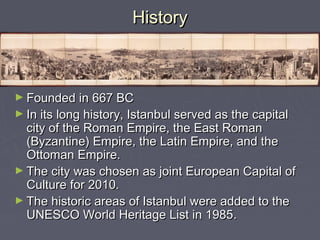
► Founded in 667 BC
► In its long history, Istanbul served as the capital
  city of the Roman Empire, the East Roman
  (Byzantine) Empire, the Latin Empire, and the
  Ottoman Empire.
► The city was chosen as joint European Capital of
  Culture for 2010.
► The historic areas of Istanbul were added to the
  UNESCO World Heritage List in 1985.
Conquest of Istanbul
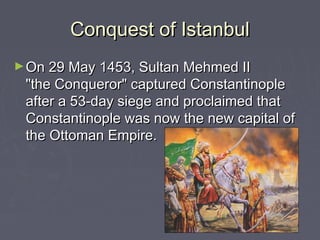
► On 29 May 1453, Sultan Mehmed II
 "the Conqueror" captured Constantinople
 after a 53-day siege and proclaimed that
 Constantinople was now the new capital of
 the Ottoman Empire.
Moving of Capital City


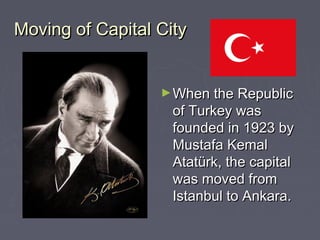
                  ► When the Republic
                    of Turkey was
                    founded in 1923 by
                    Mustafa Kemal
                    Atatürk, the capital
                    was moved from
                    Istanbul to Ankara.
Location


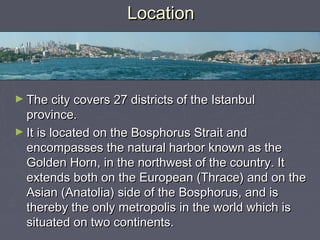
► The city covers 27 districts of the Istanbul
  province.
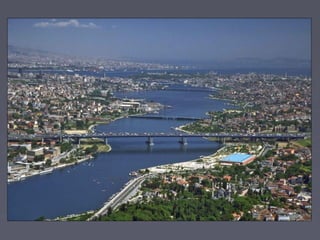
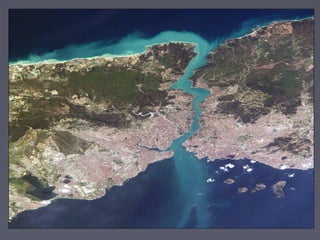
► It is located on the Bosphorus Strait and
  encompasses the natural harbor known as the
  Golden Horn, in the northwest of the country. It
  extends both on the European (Thrace) and on the
  Asian (Anatolia) side of the Bosphorus, and is
  thereby the only metropolis in the world which is
  situated on two continents.
Location

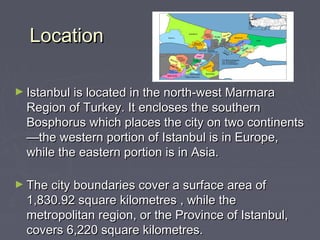
► Istanbul is located in the north-west Marmara
  Region of Turkey. It encloses the southern
  Bosphorus which places the city on two continents
  —the western portion of Istanbul is in Europe,
  while the eastern portion is in Asia.

► The city boundaries cover a surface area of
  1,830.92 square kilometres , while the
  metropolitan region, or the Province of Istanbul,
  covers 6,220 square kilometres.
Climate
► The city has a temperate climate with extremely
  hot and humid summers; and cold, wet, snowy
  winters.
► Humidity is generally rather high which can make
  temperatures feel much warmer or colder than
  they actually are.
► Snowfall is quite common, snowing for a week or
  two during the winter season, but it can be heavy
  once it snows. It is most likely to occur between
  the months of December and March.
Population
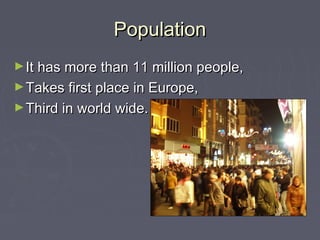
► It has more than 11 million people,
► Takes first place in Europe,
► Third in world wide.
Demographics
►   The population of the metropolis more than tripled during
    the 25 years between 1980 and 2005. Roughly 70% of all
    Istanbulites live in the European section and around 30% in
    the Asian section.

►   Due to high unemployment in the southeast of Turkey,
    many people from that region migrated to Istanbul, where
    they established themselves in the outskirts of the city.
►   Migrants, predominantly from eastern Anatolia arrive in
    Istanbul expecting improved living conditions and
    employment, which usually end with little success.

►   This results each year with new gecekondus at the
    outskirts of the city, which are later developed into
    neighbourhoods and integrated into the greater metropolis.
Religion
► The urban landscape of Istanbul is shaped by
  many communities. The religion with the largest
  community of followers is Islam.

► Religious minorities include Greek Orthodox
  Christians, Armenian Christians, Catholic
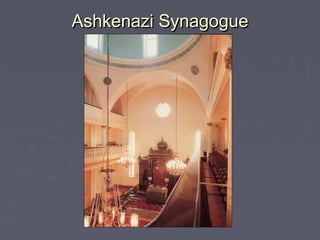
  Levantines and Sephardic Jews.

► According to the 2000 census, there were 2691
  active mosques, 123 active churches and 26
  active synagogues in Istanbul; as well as 109
  Muslim cemeteries and 57 non-Muslim
  cemeteries.
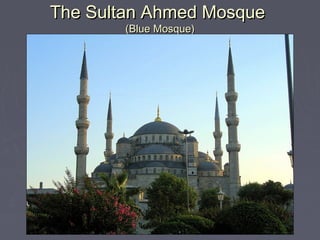
The Sultan Ahmed Mosque
        (Blue Mosque)
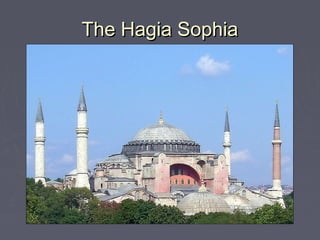
The Hagia Sophia
Ashkenazi Synagogue
Economy
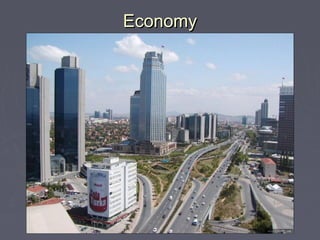
► Istanbul has always been the center of the
  country's economic life because of its location as
  an international junction of land and sea trade
  routes.

► The opening of specific markets in the city during
  the 1980s further strengthened the city's economic
  status.

► Inaugurated at the beginning of 1986, the Istanbul
  Stock Exchange (ISE) is the sole securities market
  of Turkey.
Economy
Tourism
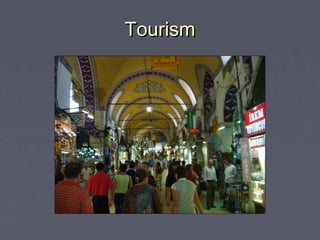
► Istanbul is one of the most important tourism spots
  of Turkey.
► There are thousands of hotels and other tourist
  oriented industries in the city, catering to both
  vacationers and visiting professionals.
► In 2006 a total of 23,148,669 tourists visited
  Turkey, most of whom entered the country through
  the airports and seaports of Istanbul and Antalya
Tourism
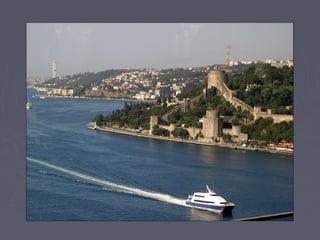
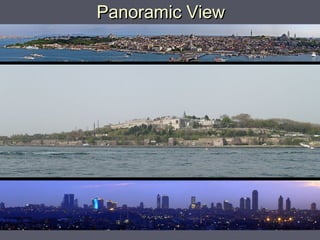
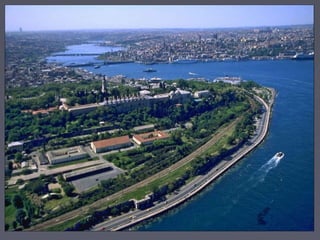
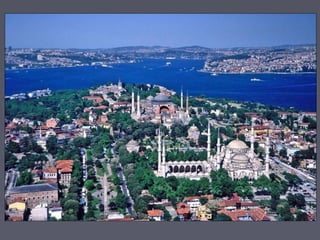
Panoramic View
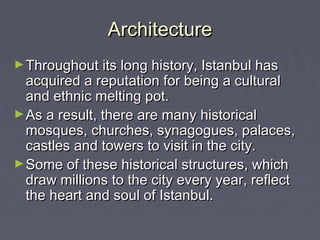
Architecture
► Throughout its long history, Istanbul has
  acquired a reputation for being a cultural
  and ethnic melting pot.
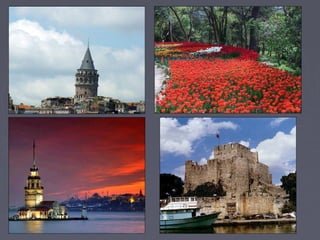
► As a result, there are many historical
  mosques, churches, synagogues, palaces,
  castles and towers to visit in the city.
► Some of these historical structures, which
  draw millions to the city every year, reflect
  the heart and soul of Istanbul.
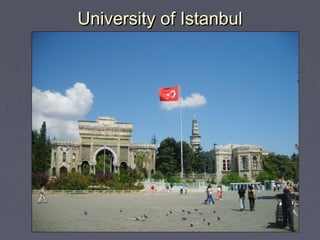
University of Istanbul
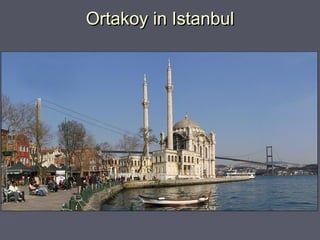
Ortakoy in Istanbul
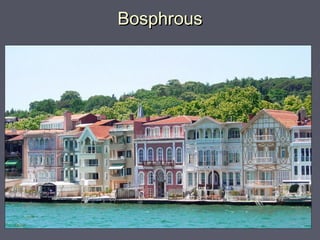
Bosphrous
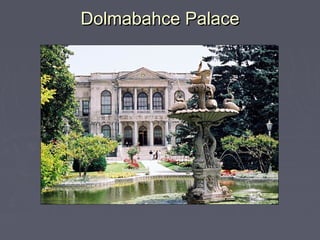
Dolmabahce Palace
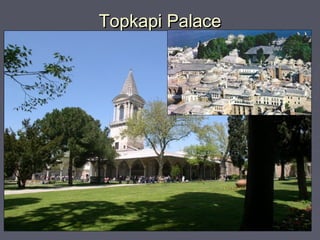
Topkapi Palace
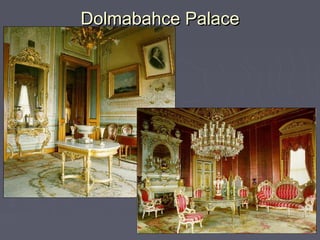
Dolmabahce Palace
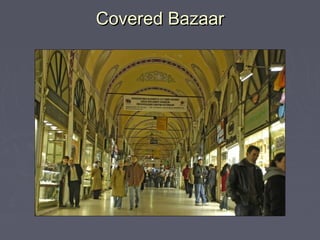
Covered Bazaar
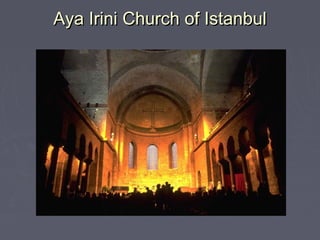
Aya Irini Church of Istanbul
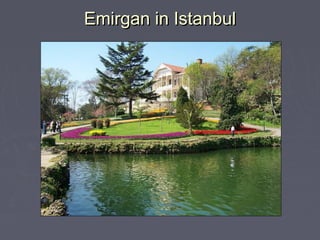
Emirgan in Istanbul
It’s impossible to explain Istanbul
using words. Unless you live in it…


        ► Thanks for your watching


                             ►   Prepared by Ismail KIRBAS

Istanbul presentation

  • 1.
  • 2.
    “If the Earthwere a single state, Istanbul would be its capital.” Napoleon Bonaparte Istanbul (historically Byzantium and later Constantinople) is, - the largest city of Turkey , - the largest city proper in Europe , - the third largest city proper in the world .
  • 3.
  • 4.
    Names ► The cityhas also been nicknamed " The City on Seven Hills“ ► The historic peninsula, the oldest part of the city, was built on seven hills (just like Rome), each of which bears a historic mosque. ► The hills are represented in the city's emblem with seven triangles, above which rise four minarets. ► Two of many other old nicknames of Istanbul are Vasilevousa Polis (the Queen of Cities), ► Dersaadet, originally Der-i Saadet (the Door to Happiness) which was first used towards the end of 19th century and is still remembered today.
  • 5.
    History ► Founded in667 BC ► In its long history, Istanbul served as the capital city of the Roman Empire, the East Roman (Byzantine) Empire, the Latin Empire, and the Ottoman Empire. ► The city was chosen as joint European Capital of Culture for 2010. ► The historic areas of Istanbul were added to the UNESCO World Heritage List in 1985.
  • 6.
    Conquest of Istanbul ►On 29 May 1453, Sultan Mehmed II "the Conqueror" captured Constantinople after a 53-day siege and proclaimed that Constantinople was now the new capital of the Ottoman Empire.
  • 7.
    Moving of CapitalCity ► When the Republic of Turkey was founded in 1923 by Mustafa Kemal Atatürk, the capital was moved from Istanbul to Ankara.
  • 8.
    Location ► The citycovers 27 districts of the Istanbul province. ► It is located on the Bosphorus Strait and encompasses the natural harbor known as the Golden Horn, in the northwest of the country. It extends both on the European (Thrace) and on the Asian (Anatolia) side of the Bosphorus, and is thereby the only metropolis in the world which is situated on two continents.
  • 9.
    Location ► Istanbul islocated in the north-west Marmara Region of Turkey. It encloses the southern Bosphorus which places the city on two continents —the western portion of Istanbul is in Europe, while the eastern portion is in Asia. ► The city boundaries cover a surface area of 1,830.92 square kilometres , while the metropolitan region, or the Province of Istanbul, covers 6,220 square kilometres.
  • 10.
    Climate ► The cityhas a temperate climate with extremely hot and humid summers; and cold, wet, snowy winters. ► Humidity is generally rather high which can make temperatures feel much warmer or colder than they actually are. ► Snowfall is quite common, snowing for a week or two during the winter season, but it can be heavy once it snows. It is most likely to occur between the months of December and March.
  • 11.
    Population ► It hasmore than 11 million people, ► Takes first place in Europe, ► Third in world wide.
  • 13.
    Demographics ► The population of the metropolis more than tripled during the 25 years between 1980 and 2005. Roughly 70% of all Istanbulites live in the European section and around 30% in the Asian section. ► Due to high unemployment in the southeast of Turkey, many people from that region migrated to Istanbul, where they established themselves in the outskirts of the city. ► Migrants, predominantly from eastern Anatolia arrive in Istanbul expecting improved living conditions and employment, which usually end with little success. ► This results each year with new gecekondus at the outskirts of the city, which are later developed into neighbourhoods and integrated into the greater metropolis.
  • 14.
    Religion ► The urbanlandscape of Istanbul is shaped by many communities. The religion with the largest community of followers is Islam. ► Religious minorities include Greek Orthodox Christians, Armenian Christians, Catholic Levantines and Sephardic Jews. ► According to the 2000 census, there were 2691 active mosques, 123 active churches and 26 active synagogues in Istanbul; as well as 109 Muslim cemeteries and 57 non-Muslim cemeteries.
  • 15.
    The Sultan AhmedMosque (Blue Mosque)
  • 16.
  • 17.
  • 18.
    Economy ► Istanbul hasalways been the center of the country's economic life because of its location as an international junction of land and sea trade routes. ► The opening of specific markets in the city during the 1980s further strengthened the city's economic status. ► Inaugurated at the beginning of 1986, the Istanbul Stock Exchange (ISE) is the sole securities market of Turkey.
  • 19.
  • 21.
    Tourism ► Istanbul isone of the most important tourism spots of Turkey. ► There are thousands of hotels and other tourist oriented industries in the city, catering to both vacationers and visiting professionals. ► In 2006 a total of 23,148,669 tourists visited Turkey, most of whom entered the country through the airports and seaports of Istanbul and Antalya
  • 22.
  • 24.
  • 25.
    Architecture ► Throughout itslong history, Istanbul has acquired a reputation for being a cultural and ethnic melting pot. ► As a result, there are many historical mosques, churches, synagogues, palaces, castles and towers to visit in the city. ► Some of these historical structures, which draw millions to the city every year, reflect the heart and soul of Istanbul.
  • 26.
  • 27.
  • 28.
  • 29.
  • 30.
  • 31.
  • 32.
  • 33.
    Aya Irini Churchof Istanbul
  • 34.
  • 49.
    It’s impossible toexplain Istanbul using words. Unless you live in it… ► Thanks for your watching ► Prepared by Ismail KIRBAS

Editor's Notes

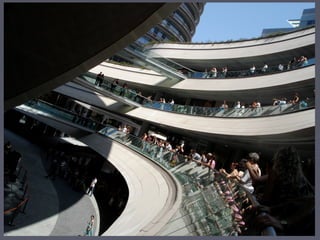
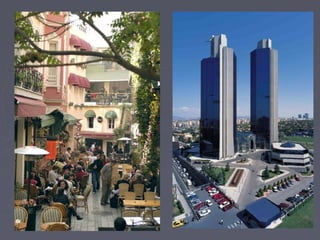
  • #4 Levent financial district
  • #17 Originally a church, later a mosque, now a museum, was the largest ever cathedral building in the world for a thousand years, until the completion of the Seville Cathedral in Spain
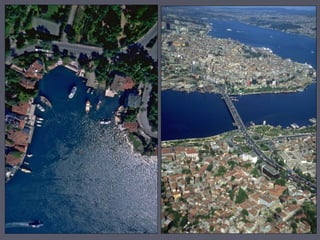
  • #38 Satelite View of Istanbul
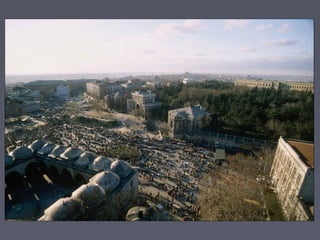
  • #39 Beyazit in Istanbul
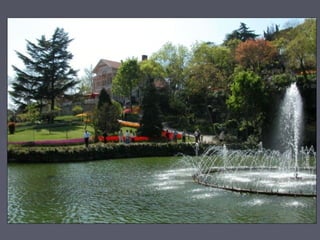
  • #42 Emirgan