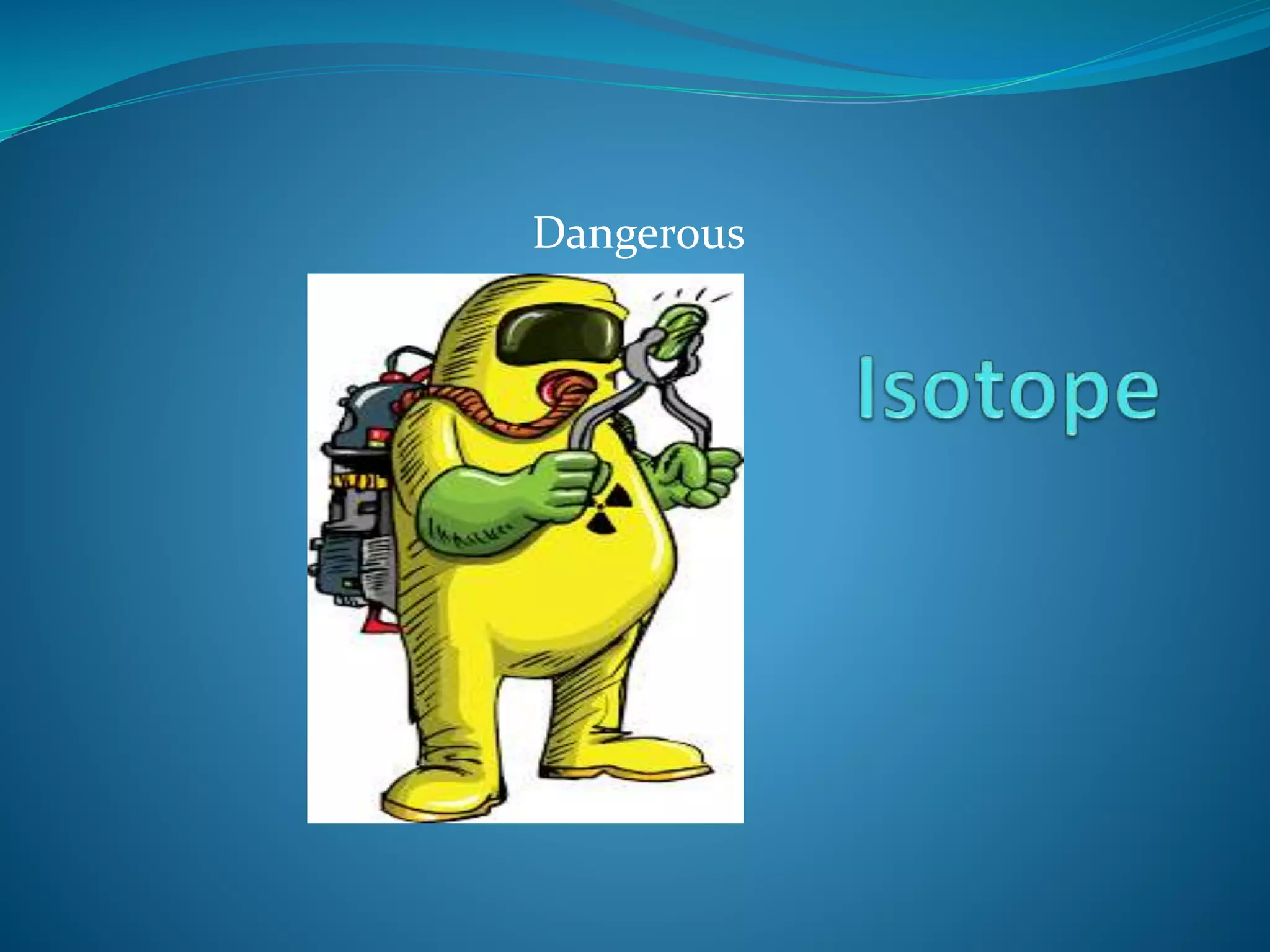
Dangerous
Definition
 Atoms with same atomic
number/number of proton but
different atomic weight (number
of protons+neutrons).
 So atoms may be different atomic
weight due to different neutron
number.
 Isotopes are variants of a
particular chemical element which
differ in neutron number. All
isotopes of a given element have
the same number of protons but
different numbers of neutrons in
each atom.
 The term isotope is formed from
the Greek roots isos ("equal") and
topos ("place"), meaning "the
same place“. So the meaning
behind the name is that different
isotopes of a single element
occupy the same position on
the periodic table.
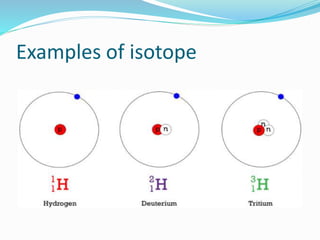
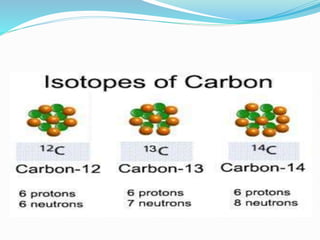
Examples of isotope
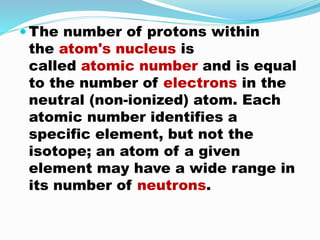
 The number of protons within
the atom's nucleus is
called atomic number and is equal
to the number of electrons in the
neutral (non-ionized) atom. Each
atomic number identifies a
specific element, but not the
isotope; an atom of a given
element may have a wide range in
its number of neutrons.
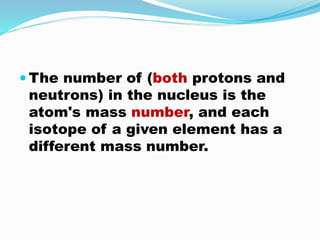
 The number of (both protons and
neutrons) in the nucleus is the
atom's mass number, and each
isotope of a given element has a
different mass number.
Types of isotope
 Stable isotope/ non radioactive
 Unstable isotope/ radioactive
isotope
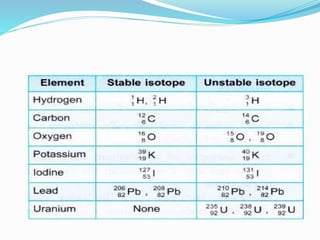
Stable isotope
 The first evidence for multiple
isotopes of a stable (non-
radioactive) element was found
by J. J. Thomsonin 1913 as part of
his exploration into the
composition of canal rays
(positive ions)
 Stability of an isotope depends on
the definite neutron to proton ratio
which is specific for a specific
atom.
 In low atomic weight atoms
stability achieved with neutron to
proton ratio around one
 In case high molecular weight
stability usually achieved by more
neutron than proton and the ratio
more than one (>1).
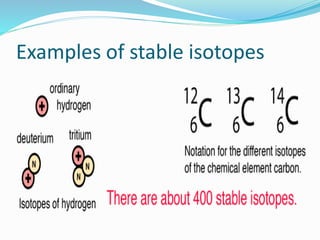
 Naturally occurring isotopes are
predominantly stable isotope.
Examples of stable isotopes
Unstable isotope (raidoactive)
 The existence of isotopes was
first suggested in 1913 by
the radiochemist Frederick Soddy
based on studies of
radioactive decay chains that
indicated about 40 different
species referred to
as radioelements (i.e. radioactive
elements) between uranium and
lead
Unstable isotope (raidoactive)
 Have the capacity to emit
radiation
 These isotopes neutron and
proton ratio far from stability ratio
 Isotopes of heavy elements are
usually unstable example: radium,
urenium
 Aim of radioactivity is to become
stable
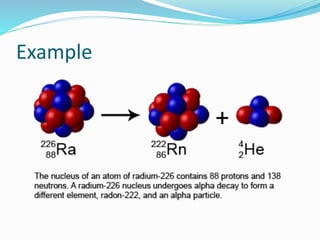
Example
Radioactive decay
 It is the spontaneous
decomposition or disintegration of
an unstable isotope of a definite
element in an attempt to become
a stable isotope with
simultaneous emission of
radiation (α,β,γ) and formation of
new element.
Radioactivity
 It is the spontaneous emission of
accelerated particles (radiation)
from an unstable isotope by radio
active decay.
Mechanisms of radio active decay
 Alpha decay: heavy atoms (atomic
number >70) may emit alpha
particles from radio active
nucleus.
 beta decay: atomic number <60
may emit beta particles.
 Positive beta decay: in case of
artificial isotope positive beta
particles (positron) emit.
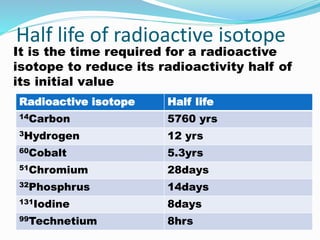
Half life of radioactive isotope
Radioactive isotope Half life
14Carbon 5760 yrs
3Hydrogen 12 yrs
60Cobalt 5.3yrs
51Chromium 28days
32Phosphrus 14days
131Iodine 8days
99Technetium 8hrs
It is the time required for a radioactive
isotope to reduce its radioactivity half of
its initial value
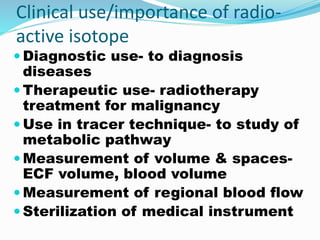
Clinical use/importance of radio-
active isotope
 Diagnostic use- to diagnosis
diseases
 Therapeutic use- radiotherapy
treatment for malignancy
 Use in tracer technique- to study of
metabolic pathway
 Measurement of volume & spaces-
ECF volume, blood volume
 Measurement of regional blood flow
 Sterilization of medical instrument
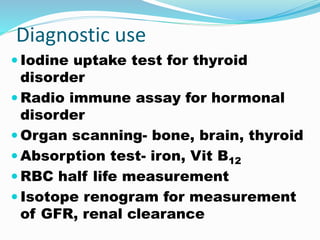
Diagnostic use
 Iodine uptake test for thyroid
disorder
 Radio immune assay for hormonal
disorder
 Organ scanning- bone, brain, thyroid
 Absorption test- iron, Vit B12
 RBC half life measurement
 Isotope renogram for measurement
of GFR, renal clearance
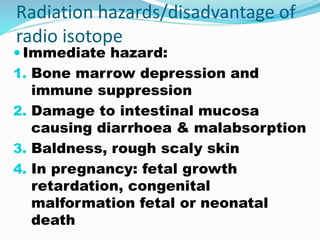
Radiation hazards/disadvantage of
radio isotope
 Immediate hazard:
1. Bone marrow depression and
immune suppression
2. Damage to intestinal mucosa
causing diarrhoea & malabsorption
3. Baldness, rough scaly skin
4. In pregnancy: fetal growth
retardation, congenital
malformation fetal or neonatal
death
 Delayed hazards: carcinogenesis,
sterility, neonatal death
 Genetic effect: DNA damage,
mutation
Radiosensitive tissue
 These are most rapidly dividing
tissue. Such as
Bone marrow
Gonads
Lymph node
Skin
Intestine

isotope with advantage and disadvantage

  • 1.
  • 2.
    Definition  Atoms withsame atomic number/number of proton but different atomic weight (number of protons+neutrons).  So atoms may be different atomic weight due to different neutron number.
  • 3.
     Isotopes arevariants of a particular chemical element which differ in neutron number. All isotopes of a given element have the same number of protons but different numbers of neutrons in each atom.
  • 4.
     The termisotope is formed from the Greek roots isos ("equal") and topos ("place"), meaning "the same place“. So the meaning behind the name is that different isotopes of a single element occupy the same position on the periodic table.
  • 5.
  • 7.
     The numberof protons within the atom's nucleus is called atomic number and is equal to the number of electrons in the neutral (non-ionized) atom. Each atomic number identifies a specific element, but not the isotope; an atom of a given element may have a wide range in its number of neutrons.
  • 8.
     The numberof (both protons and neutrons) in the nucleus is the atom's mass number, and each isotope of a given element has a different mass number.
  • 9.
    Types of isotope Stable isotope/ non radioactive  Unstable isotope/ radioactive isotope
  • 10.
    Stable isotope  Thefirst evidence for multiple isotopes of a stable (non- radioactive) element was found by J. J. Thomsonin 1913 as part of his exploration into the composition of canal rays (positive ions)
  • 11.
     Stability ofan isotope depends on the definite neutron to proton ratio which is specific for a specific atom.  In low atomic weight atoms stability achieved with neutron to proton ratio around one
  • 12.
     In casehigh molecular weight stability usually achieved by more neutron than proton and the ratio more than one (>1).  Naturally occurring isotopes are predominantly stable isotope.
  • 13.
  • 14.
    Unstable isotope (raidoactive) The existence of isotopes was first suggested in 1913 by the radiochemist Frederick Soddy based on studies of radioactive decay chains that indicated about 40 different species referred to as radioelements (i.e. radioactive elements) between uranium and lead
  • 15.
    Unstable isotope (raidoactive) Have the capacity to emit radiation  These isotopes neutron and proton ratio far from stability ratio  Isotopes of heavy elements are usually unstable example: radium, urenium  Aim of radioactivity is to become stable
  • 16.
  • 18.
    Radioactive decay  Itis the spontaneous decomposition or disintegration of an unstable isotope of a definite element in an attempt to become a stable isotope with simultaneous emission of radiation (α,β,γ) and formation of new element.
  • 19.
    Radioactivity  It isthe spontaneous emission of accelerated particles (radiation) from an unstable isotope by radio active decay.
  • 20.
    Mechanisms of radioactive decay  Alpha decay: heavy atoms (atomic number >70) may emit alpha particles from radio active nucleus.  beta decay: atomic number <60 may emit beta particles.  Positive beta decay: in case of artificial isotope positive beta particles (positron) emit.
  • 21.
    Half life ofradioactive isotope Radioactive isotope Half life 14Carbon 5760 yrs 3Hydrogen 12 yrs 60Cobalt 5.3yrs 51Chromium 28days 32Phosphrus 14days 131Iodine 8days 99Technetium 8hrs It is the time required for a radioactive isotope to reduce its radioactivity half of its initial value
  • 22.
    Clinical use/importance ofradio- active isotope  Diagnostic use- to diagnosis diseases  Therapeutic use- radiotherapy treatment for malignancy  Use in tracer technique- to study of metabolic pathway  Measurement of volume & spaces- ECF volume, blood volume  Measurement of regional blood flow  Sterilization of medical instrument
  • 23.
    Diagnostic use  Iodineuptake test for thyroid disorder  Radio immune assay for hormonal disorder  Organ scanning- bone, brain, thyroid  Absorption test- iron, Vit B12  RBC half life measurement  Isotope renogram for measurement of GFR, renal clearance
  • 24.
    Radiation hazards/disadvantage of radioisotope  Immediate hazard: 1. Bone marrow depression and immune suppression 2. Damage to intestinal mucosa causing diarrhoea & malabsorption 3. Baldness, rough scaly skin 4. In pregnancy: fetal growth retardation, congenital malformation fetal or neonatal death
  • 25.
     Delayed hazards:carcinogenesis, sterility, neonatal death  Genetic effect: DNA damage, mutation
  • 26.
    Radiosensitive tissue  Theseare most rapidly dividing tissue. Such as Bone marrow Gonads Lymph node Skin Intestine

Editor's Notes

  • #22 It is the time required for a radioactive isotope to reduce its radioactivity half of its initial value