The British Standards Institutionraising standards worldwide TMIssue 1 December, 2008                   QMS-030-01-EN-GX           © 2008 BSI Management Systems
ISO Internal Auditor  Compliance ManagementPrepared &Presented by Yamin K Hajeej
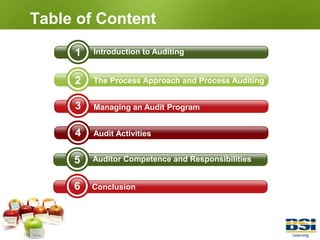
15Introduction to AuditingAuditor Competence and Responsibilities2364Table of ContentThe Process Approach and Process AuditingManaging an Audit ProgramAudit ActivitiesConclusion
Introduction toAuditing
AuditingWhat is an audit?Systematic, independent and documented process for obtaining audit evidence and evaluating it objectively to determine the extent to which audit criteria are fulfilled	        (ISO19011: 2002 clause 3.1)Why audit?Requirement of ISO 9001:2008
Monitor and measure the management system
Promote continuous improvement of the management systemPrinciples of Auditing4.0Principles relating to auditors:Ethical conduct
Fair presentation
Due professional carePrinciples relating to audit:Independence
Evidence-based approachNote: reference toISO 19011:2002Clause number
Benefits of AuditingVerifies conformity to requirementsIncreases awareness and understandingProvides a measurement of effectiveness of the management system to top managementReduces risk of management system failureIdentifies improvement opportunitiesContinuous improvement if performed regularly
Types of AuditRegistration / CertificationProductCustomer contractGap assessment / Pre-assessmentSurveillanceCombined audit / joint audit
The Process Approach and Process Auditing
Process ApproachThe process approach emphasize the importance of:Understanding and meeting requirementsLooking at processes in terms of added valueObtaining results of process performanceContinual improvement of process
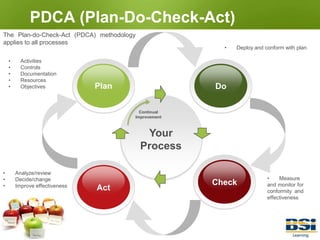
PlanYourProcessActDoCheckPDCA (Plan-Do-Check-Act)The Plan-do-Check-Act (PDCA) methodology applies to all processesDeploy and conform with plan
Activities
Controls
Documentation
Resources
ObjectivesContinualImprovementAnalyze/review
Decide/change
Improve effectiveness
Measure and monitor for conformity and effectivenessManagement System Standards and the Process ApproachISO 9001:2008:Is based upon the PDCA cycle which can be applied to processes
Applies the PDCA cycle to implementing, operating, monitoring, exercising, maintaining and improving the effectiveness of a QMSISO 19011:2002 does not explicitly mention process audits, but is written for application to all management system audits
Applying the Process Approach to AuditingAuditors can apply the process approach to auditing by ensuring the auditee:Can define the objectives, inputs, outputs, activities, and resources for its processesAnalyzes, monitors, measures, and improves its processesUnderstands the sequence and interaction of its processes
Process Auditing ApproachesIndividual Process:Input / Output / Value-added ActivityPlan-Do-Check-ActResourcesRelationship with other processes:Flow / Sequence / Linkage / CombinationInteraction / CommunicationEvidenceCustomer and supplier contract(s)
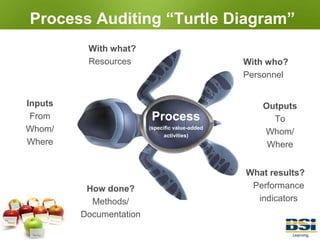
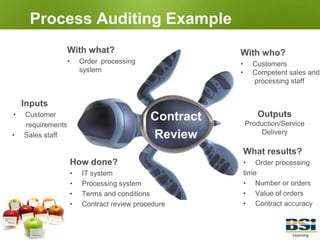
Process Auditing “Turtle Diagram”With what?ResourcesWith who?PersonnelInputsFrom Whom/WhereOutputsToWhom/WhereProcess(specific value-added activities)What results?PerformanceindicatorsHow done?Methods/Documentation
Process Auditing ExampleWith what?Order processing systemWith who?Customers
Competent sales and         processing staffInputsCustomer            requirementsSales staffOutputsProduction/Service DeliveryContractReviewWhat results?Order processing timeNumber or orders
Value of orders
Contract accuracyHow done?IT system
Processing system
Terms and conditions
Contract review procedureManaging an Audit Program
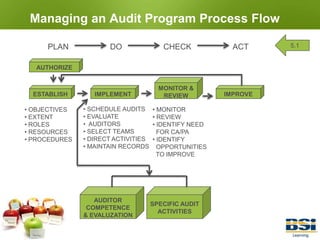
Managing an Audit Program Process Flow5.1PLANDOCHECKACTAUTHORIZEMONITOR &REVIEWESTABLISHIMPLEMENTIMPROVE SCHEDULE AUDITS
 EVALUATE
  AUDITORS
 SELECT TEAMS
 DIRECT ACTIVITIES
 MAINTAIN RECORDS
 OBJECTIVES
 EXTENT
 ROLES
 RESOURCES
 PROCEDURES
 MONITOR
 REVIEW
 IDENTIFY NEED  FOR CA/PA IDENTIFY   OPPORTUNITIES  TO IMPROVEAUDITORCOMPETENCE& EVALUZATIONSPECIFIC AUDITACTIVITIES
Audit Activities
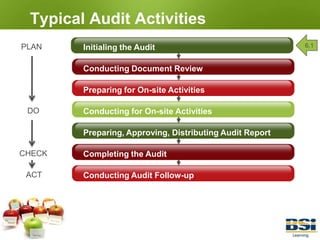
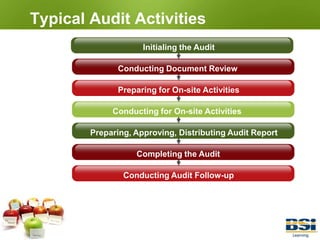
Typical Audit Activities6.1Initialing the AuditPLANConducting Document ReviewPreparing for On-site ActivitiesConducting for On-site ActivitiesDOPreparing, Approving, Distributing Audit ReportCompleting the AuditCHECKConducting Audit Follow-upACT
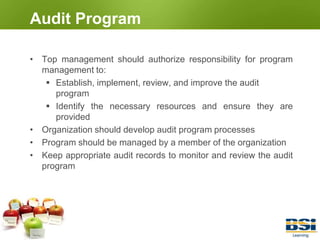
Audit ProgramTop management should authorize responsibility for program management to:Establish, implement, review, and improve the audit program
Identify the necessary resources and ensure they are provided
Organization should develop audit program processes
Program should be managed by a member of the organization
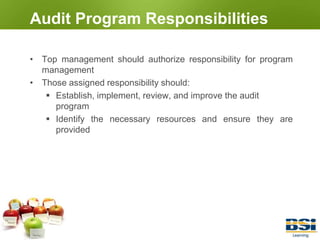
Keep appropriate audit records to monitor and review the audit programAudit Program ResponsibilitiesTop management should authorize responsibility for program managementThose assigned responsibility should:Establish, implement, review, and improve the audit program
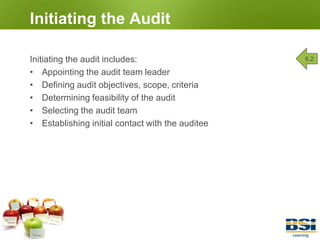
Identify the necessary resources and ensure they are providedInitiating the Audit6.2Initiating the audit includes:Appointing the audit team leaderDefining audit objectives, scope, criteriaDetermining feasibility of the auditSelecting the audit teamEstablishing initial contact with the auditee
Defining Audit Objectives, Scope, Criteria6.2.2Audit Objectives may include:Determining of the extent of conformity of auditee`s QMS with audit criteriaEvaluation of capability of QMS to ensure compliance with statutory, regulatory, and contractual requirementsEvaluation of effectiveness of the QMS to meet its objectivesIdentification of areas of improvement
Selecting the Audit Team6.2.4For Team size and competence, consider:Audit objectives, scope, criteria, and durationWhether audit is combined or jointCompetence of team to meet objectivesStatutory, regulatory, contractual and accreditation/certification requirementsIndependence of the team
Auditor Competence and Responsibilities
Auditor Competence7.1Auditor competence is based on:Personal attributes
Application of knowledge and skillsCompetence is to be developed, maintained, and improved
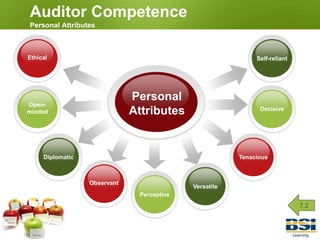
PersonalAttributesOpen-mindedDecisivePerceptiveEthicalObservantDiplomaticVersatileTenaciousSelf-reliantAuditor CompetencePersonal Attributes7.2
Auditor CompetenceGeneric Knowledge and skills7.3.1Auditor skills and competence could include:Audit principles, procedures, and techniquesManagement system and reference documentsOrganizational situationsLaws, regulations, and other requirements
Auditor CompetenceSpecific Knowledge and skills7.3.3Specific knowledge and skills for quality auditors could include:Quality methods and techniquesQuality terminologyQuality management tools and their applicationProcesses and products/services specific to the sector being audited
Auditor ResponsibilitiesArrive on timeMaintain confidentialityBe objective and ethicalSupport the audit team and team leaderPlan and prepare work documentsInform auditees of the audit processDocument and support all findingsKeep auditee informedSafeguard all documentsPrepare the audit report
Audit Activities(Continued)
Audit PlanningDetermine the objective of the auditIdentify specified requirementsDetermine audit duration and resources neededSelect the teamContact the auditee – agree the date(s)Draw up audit planBrief the teamPrepare work documents
Conducting Document Review6.3A review of documentation:Should be conducted prior to on-site audit activities unless deferring review is not detrimental to the effectiveness of the auditMay include relevant QMS documents, records, and previous audit reportsMay include a preliminary site visit
Prepare Work DocumentsPrepare work documentsUse as a reference and for recording audit proceedingsInclude checklists, sampling plans and forms, ISO 9001:2008 standard, etc.Keep checklists flexible to allow changes resulting from information collected during the auditSafeguard any confidential and proprietary informationRetain work documents and records
Checklists PreparationOne Approach is to:Identify audit scope and process(es) within scopeIdentify applicable factors (inputs, outputs, measures, resources, etc.)Use these points and other requirements	(ISO 9001-2008, system documentation, etc.) to:Plan what to look at
Plan what to look for (audit evidence) Prepare checklist
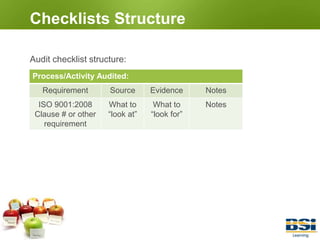
Checklists StructureAudit checklist structure:
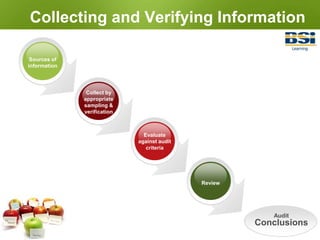
Conduct on-Site Audit Activities6.5Conduct opening meetingCommunicate during the auditExplain roles and responsibilities of participantsCollect and verify informationGenerate audit findingsPrepare audit conclusionsConduct closing meeting
Opening Meeting6.5.1Hold opening meeting with auditee top management and      those responsible for processes auditedMeeting may be informalChaired by team leaderAudit team presentPurpose is to confirm all prior arrangements

Iso Internal Auditor