ISO 9001:2008 Quality Management System
ISO, what is it and why do we have it? An evaluation of processes and our way of working, which we are audited on by an external source – twice a year ISO stands for  I nternational  S tandards  O rganisation ISO 9001:2008  -  Quality Management System (QMS) It helps us with both product and service oriented clients as well  as achieve standards of quality that are recognised and respected throughout the world Most of the RFI’s we receive require information on our ISO/QMS policies – so as well as ensuring we are as streamlined as possible it can help us win more pitches! It’s a level of Quality
Five main areas Quality Management System  – These are all our Processes, Briefs and working documents on the Intranet  2.  Management Responsibility  – The entire company is involved  3.  Company Resources  – Having the right people with the right skills to do the job and with the right equipment for the client 4.  Product & Service Realisation  – This is the job / the work we do 5.  Measurement, Analysis & Improvement  – We make sure that we know what we are trying to achieve for the client and put systems in place to be able to measure, analyse and improve
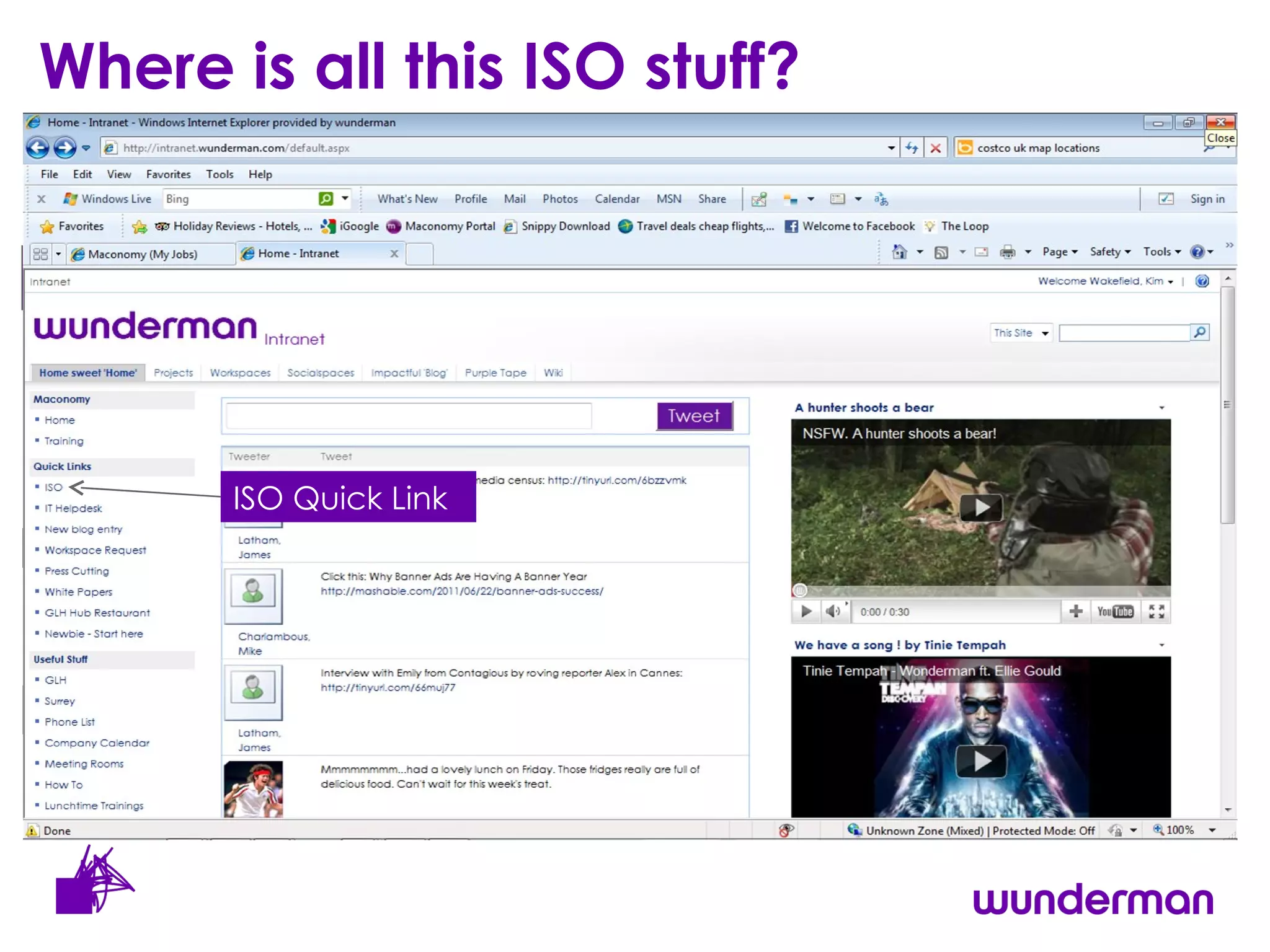
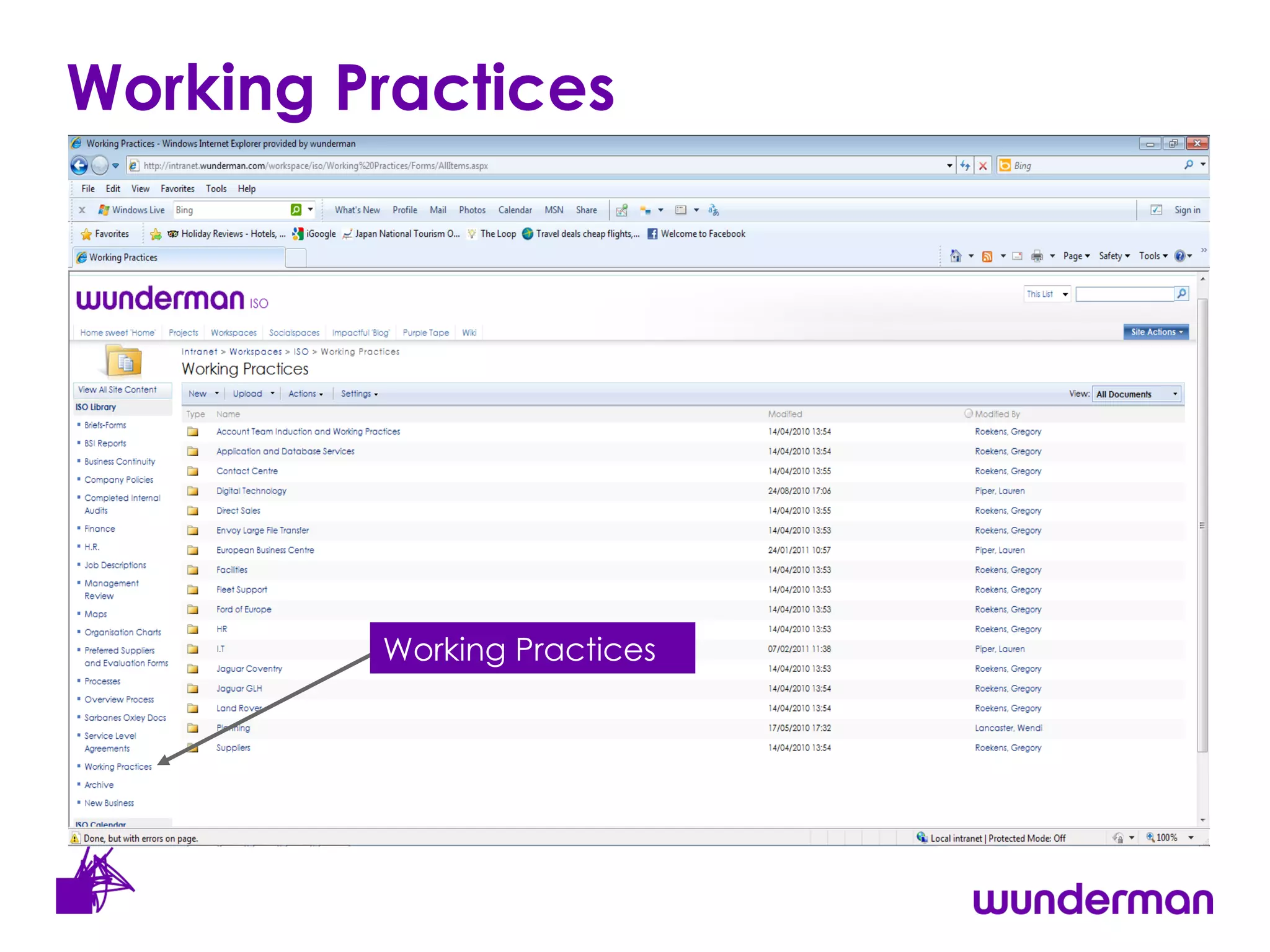
Where is all this ISO stuff? Briefs & Forms HR Processes Finance Job Descriptions Company Policies ISO Quick Link
Working Practices Working Practices
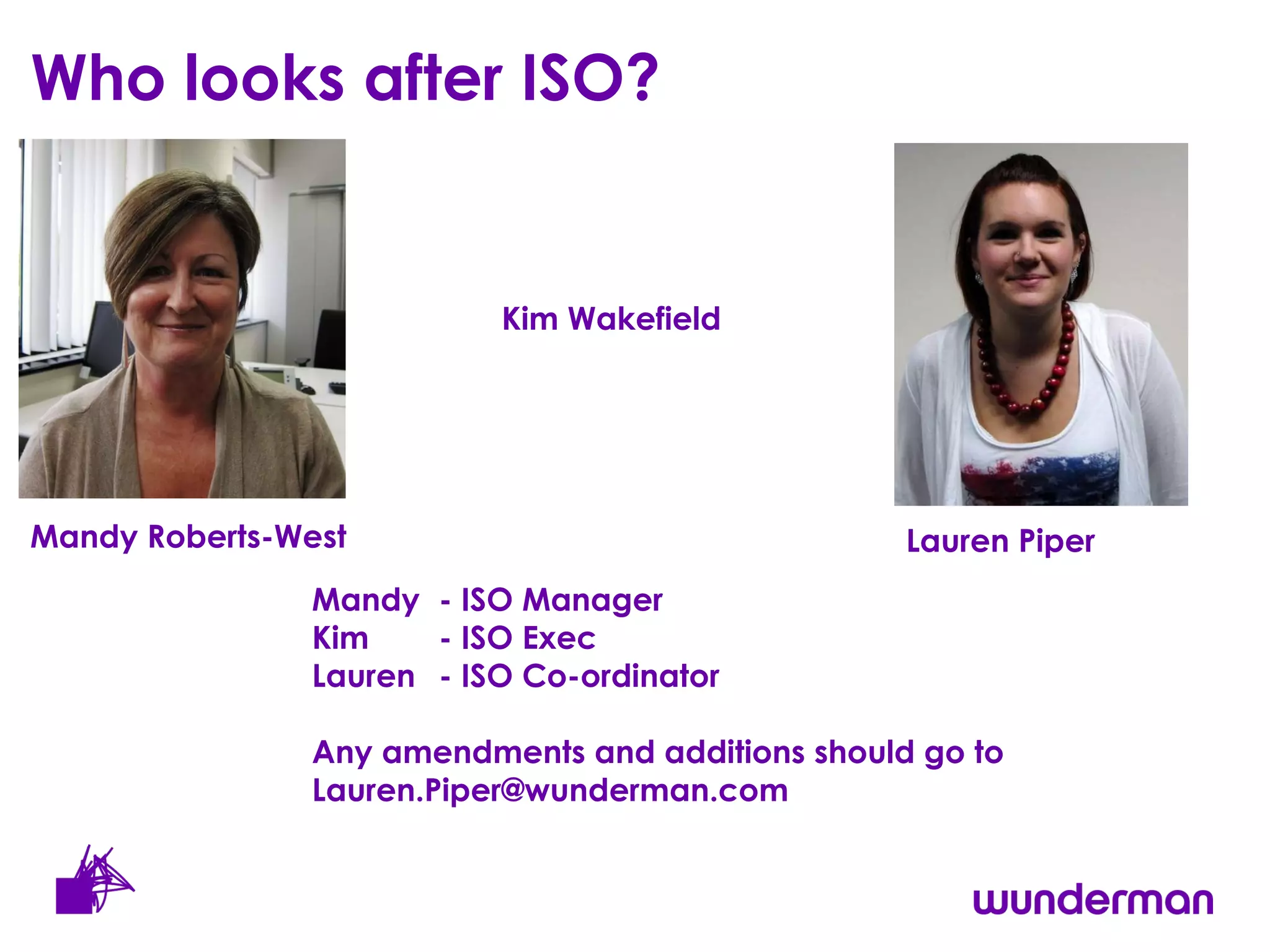
Who looks after ISO?  Kim Wakefield Lauren Piper Mandy Roberts-West Mandy - ISO Manager  Kim  - ISO Exec  Lauren  - ISO Co-ordinator  Any amendments and additions should go to Lauren.Piper@wunderman.com
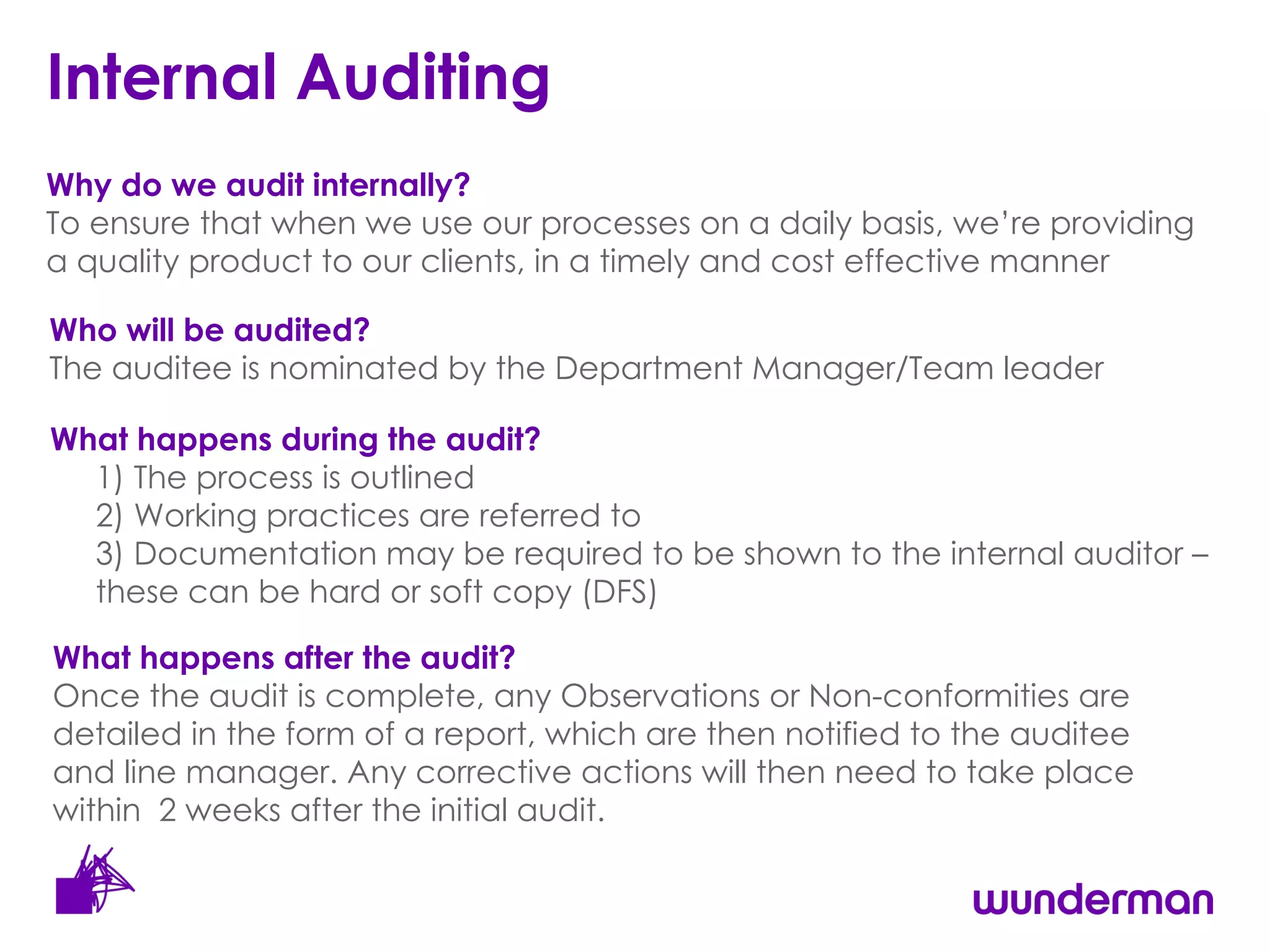
Internal Auditing Who will be audited? The auditee is nominated by the Department Manager/Team leader What happens during the audit?   1) The process is  outlined 2) Working practices are referred to  3) Documentation may be required to be shown to the internal auditor – these can be hard or soft copy (DFS) What happens after the audit? Once the audit is complete, any Observations or Non-conformities are detailed in the form of a report, which are then notified to the auditee  and line manager. Any corrective actions will then need to take place  within  2 weeks after the initial audit. Why do we audit internally?  To ensure that when we use our processes on a daily basis, we’re providing a quality product to our clients, in a timely and cost effective manner
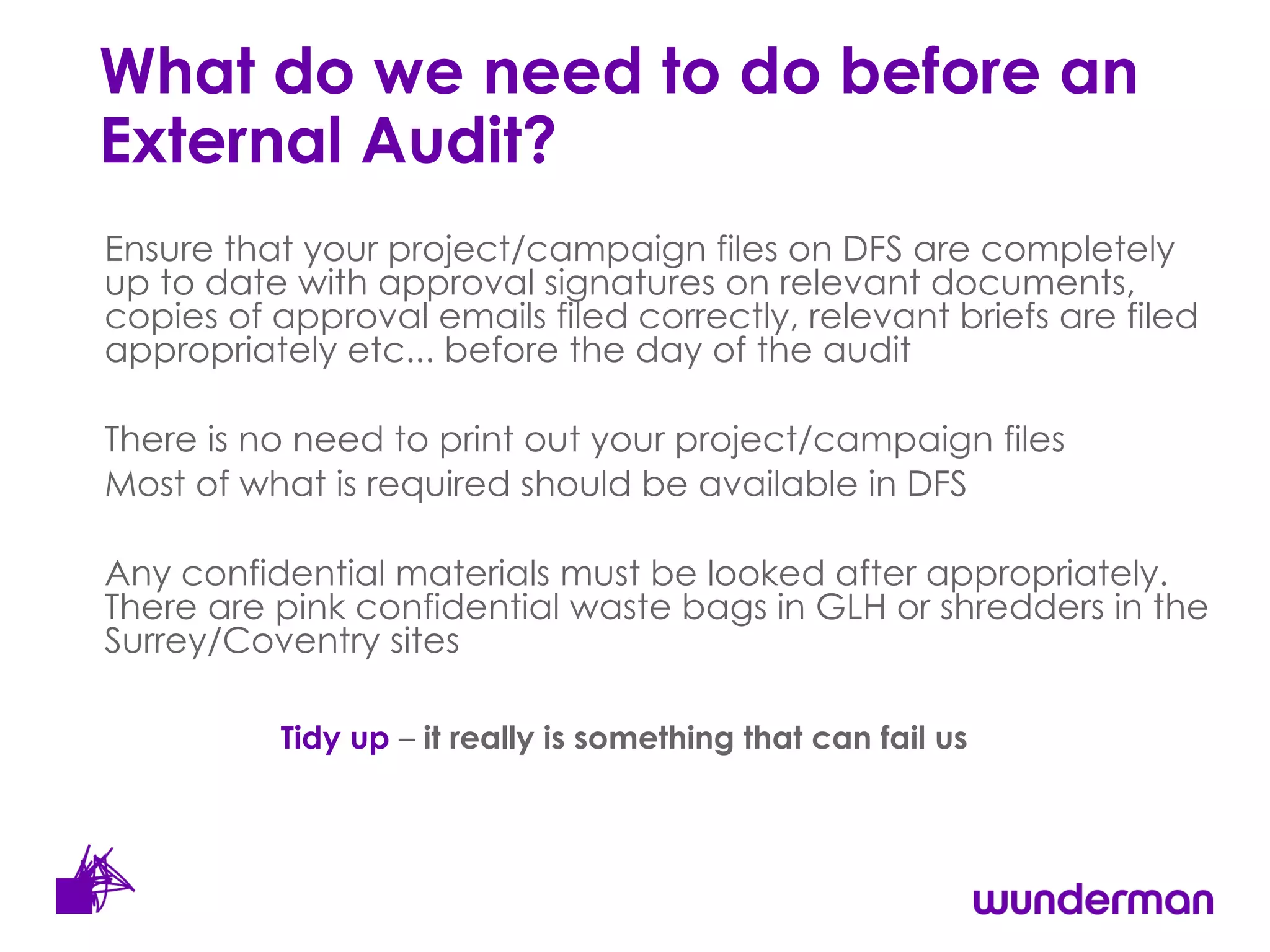
What do we need to do before an External Audit? Ensure that your project/campaign files on DFS are completely up to date with approval signatures on relevant documents, copies of approval emails filed correctly, relevant briefs are filed appropriately etc... before the day of the audit There is no need to print out your project/campaign files  Most of what is required should be available in DFS Any confidential materials must be looked after appropriately. There are pink confidential waste bags in GLH or shredders in the Surrey/Coventry sites Tidy up  –  it really is something that can fail us
What will the external audit be like?  For each external audit, there will be a proposed agenda.  This will be circulated prior to the audit dates to department heads, to ensure that departmental representation is available for each section of the audit Be prepared and organised well before the day of the audit Be prepared for any questions about who you are and the department you work in.
You may be asked questions like… Company Policies Company Objectives Job Descriptions  Performance Reviews Training – including evaluation forms Organisation Charts Compliments / Complaints
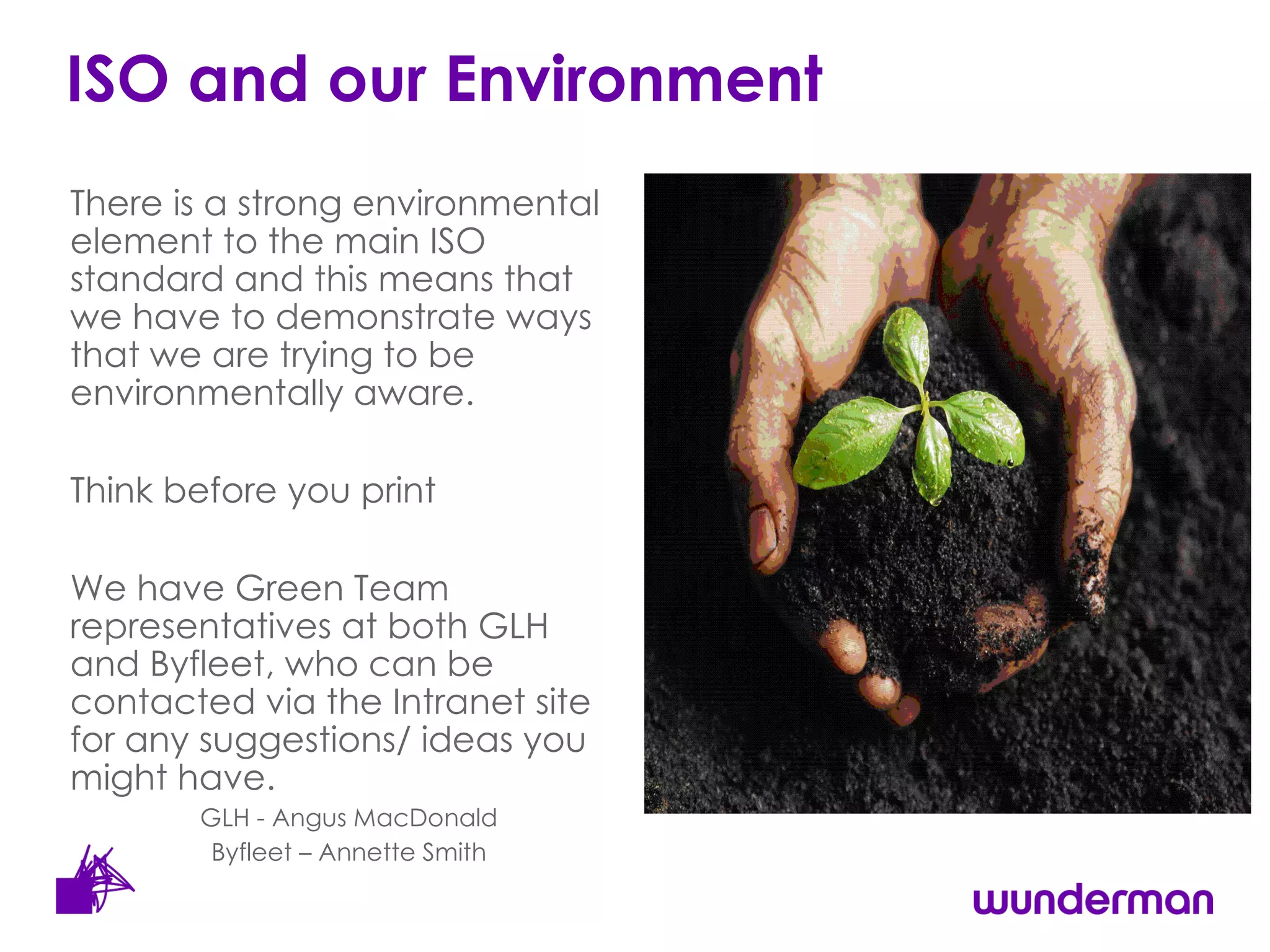
ISO and our Environment There is a strong environmental element to the main ISO standard and this means that we have to demonstrate ways that we are trying to be environmentally aware.  Think before you print We have Green Team representatives at both GLH and Byfleet, who can be contacted via the Intranet site for any suggestions/ ideas you might have.  GLH - Angus MacDonald Byfleet – Annette Smith
ISO and our Environmental facts Some of the lights at GLH are set on motion sensors Switch off your computer & monitor each night and remove your phone Charger – it still drawing in power even though it’s not charging Food recycling in the Hub Since the introduction of glasses and metal cutlery, we have been getting through 40,000 fewer plastic cups and items of plastic cutlery The various recycling bins have had a positive impact  Recycling activities promoted in an internal campaign, which won us a Silver DMA award
When are the next audits? 24 th  – 26 th  July 2012 Joint Byfleet, Coventry and GLH sites November 2012  Joint Byfleet and GLH sites
Any  Questions?

ISO Induction

  • 1.
    ISO 9001:2008 QualityManagement System
  • 2.
    ISO, what isit and why do we have it? An evaluation of processes and our way of working, which we are audited on by an external source – twice a year ISO stands for I nternational S tandards O rganisation ISO 9001:2008 - Quality Management System (QMS) It helps us with both product and service oriented clients as well as achieve standards of quality that are recognised and respected throughout the world Most of the RFI’s we receive require information on our ISO/QMS policies – so as well as ensuring we are as streamlined as possible it can help us win more pitches! It’s a level of Quality
  • 3.
    Five main areasQuality Management System – These are all our Processes, Briefs and working documents on the Intranet 2. Management Responsibility – The entire company is involved 3. Company Resources – Having the right people with the right skills to do the job and with the right equipment for the client 4. Product & Service Realisation – This is the job / the work we do 5. Measurement, Analysis & Improvement – We make sure that we know what we are trying to achieve for the client and put systems in place to be able to measure, analyse and improve
  • 4.
    Where is allthis ISO stuff? Briefs & Forms HR Processes Finance Job Descriptions Company Policies ISO Quick Link
  • 5.
  • 6.
    Who looks afterISO? Kim Wakefield Lauren Piper Mandy Roberts-West Mandy - ISO Manager Kim - ISO Exec Lauren - ISO Co-ordinator Any amendments and additions should go to Lauren.Piper@wunderman.com
  • 7.
    Internal Auditing Whowill be audited? The auditee is nominated by the Department Manager/Team leader What happens during the audit? 1) The process is outlined 2) Working practices are referred to 3) Documentation may be required to be shown to the internal auditor – these can be hard or soft copy (DFS) What happens after the audit? Once the audit is complete, any Observations or Non-conformities are detailed in the form of a report, which are then notified to the auditee and line manager. Any corrective actions will then need to take place within 2 weeks after the initial audit. Why do we audit internally? To ensure that when we use our processes on a daily basis, we’re providing a quality product to our clients, in a timely and cost effective manner
  • 8.
    What do weneed to do before an External Audit? Ensure that your project/campaign files on DFS are completely up to date with approval signatures on relevant documents, copies of approval emails filed correctly, relevant briefs are filed appropriately etc... before the day of the audit There is no need to print out your project/campaign files Most of what is required should be available in DFS Any confidential materials must be looked after appropriately. There are pink confidential waste bags in GLH or shredders in the Surrey/Coventry sites Tidy up – it really is something that can fail us
  • 9.
    What will theexternal audit be like? For each external audit, there will be a proposed agenda. This will be circulated prior to the audit dates to department heads, to ensure that departmental representation is available for each section of the audit Be prepared and organised well before the day of the audit Be prepared for any questions about who you are and the department you work in.
  • 10.
    You may beasked questions like… Company Policies Company Objectives Job Descriptions Performance Reviews Training – including evaluation forms Organisation Charts Compliments / Complaints
  • 11.
    ISO and ourEnvironment There is a strong environmental element to the main ISO standard and this means that we have to demonstrate ways that we are trying to be environmentally aware. Think before you print We have Green Team representatives at both GLH and Byfleet, who can be contacted via the Intranet site for any suggestions/ ideas you might have. GLH - Angus MacDonald Byfleet – Annette Smith
  • 12.
    ISO and ourEnvironmental facts Some of the lights at GLH are set on motion sensors Switch off your computer & monitor each night and remove your phone Charger – it still drawing in power even though it’s not charging Food recycling in the Hub Since the introduction of glasses and metal cutlery, we have been getting through 40,000 fewer plastic cups and items of plastic cutlery The various recycling bins have had a positive impact Recycling activities promoted in an internal campaign, which won us a Silver DMA award
  • 13.
    When are thenext audits? 24 th – 26 th July 2012 Joint Byfleet, Coventry and GLH sites November 2012 Joint Byfleet and GLH sites
  • 14.